Abutilon Indicum: Phytochemical Screening and Antimicrobial Assessment
 and Mhaveer Singh, Pooja Saini
School of Pharmaceutical Sciences, Faculty of Pharmacy, IFTM University, Moradabad, Uttar Pradesh, India
Corresponding Author Email: swatantrsngh@gmail.com
DOI : http://dx.doi.org/10.13005/ojc/420337
Download this article as:

The current scenario reflects customers' interest in natural medications, a growing interest in wellness, and a shift towards preventative healthcare. The market for herbal medicines is rapidly developing, and their potential as antibacterial agents has recently sparked widespread interest. The goal of this research is to look at the antibacterial capabilities and phytochemical composition of Abutilon indicum. The organic extract (ethanol, methaol, and hexane) and hydro extract of Abutilon indicum are evaluated against the fungus Candida albicans and a few bacterial species, including Shigella dysenteriae, Proteus vulagaris, and Salmonella typhimurium, using the Agar disc diffusion technique. The observed results demonstrated considerable antibacterial action against the microbiological pathogens tested. The plant's alcoholic extract contains antifungal and antibacterial effects. The outcomes of the study were compared with the well-known standard antimicrobial drugs such as nystatin for antifungal efficacy and streptomycin for antibacterial efficacy. The ethanol extract containing terpenoids, alkaloids, tannins, flavonoids, and steroids was found to have the strongest antibacterial impact of any of them. As a result, it has been determined that the plant's alcoholic extract contains antifungal and antibacterial characteristics.
KEYWORDS:Abutilon indicum; Antimicrobial activity; Agar disc diffusion method; Morphology; phytochemical screening
Introduction
The increasing interest in natural, plant-based alternatives to synthetic pharmaceuticals has led to a resurgence of herbal medications in global health practices in recent years.1 Herbal medications are gaining significance in contemporary healthcare, driven by scientific research, traditional knowledge, and rising consumer demand for natural alternatives2 The antimicrobial potential of herbal medications is well established, and the use of plants to combat diseases is expanding as safer medication options are sought. This trend is largely attributed to the global challenge of antimicrobial resistance (AMR), the limitations of conventional antibiotics, and a renewed focus on alternative and traditional therapies. Herbal remedies have been studied for their ability to inhibit a broad spectrum of infectious pathogens, including bacteria, yeasts, and other microorganisms. Many plants contain bioactive compounds such as alkaloids, flavonoids, phenolic acids, terpenoids, and essential oils with demonstrated antibacterial properties.3 These compounds may act through various mechanisms to reduce the pathogenicity of microorganisms.
Traditional medicines derived from medicinal plants are utilized by approximately 60% of the global population. Herbal formulations are often preferred due to their lower cost and lesser side effects, despite the availability of alternative treatments for various illnesses and complications.4 The demand for pharmaceuticals and plant-based nutritional supplements has increased in recent years. Researchers across disciplines, including microbiology, chemistry, ethnopharmacology, and botany, are actively seeking phytochemicals and drugs for the organic treatment of highly contagious diseases.5 Although 30 to 50% of current drugs are plant-derived, relatively few are employed as antimicrobials. Plants have historically been used by traditional healers to treat and prevent infectious diseases. Secondary metabolites such as terpenoids, tannins, alkaloids, flavonoids, saponins, and anthraquinones present in plants have demonstrated antibacterial properties.6
The shrub Abutilon indicum Linn. belongs to the Malvaceae family and can be found in India, Africa, Australia, and other arid regions of the world.7 The herb’s leaves, roots, spores, and seed oil are all widely used to cure a variety of ailments in ancient medical systems such as Ayurveda and Siddha. The roots might be utilized to treat hemorrhagic uterine discharge. The leaves can be used to treat a number of inflammations, including toothaches, lumbago, and piles[8]. Abutilon indicum, is also known as Atibala in Sanskrit, Kanghi in Hindi, and Country Mallow in English. Abutilon indicum a soft, hairy evergreen shrub, grows to a height of about three meters. The evergreen shrubberies are 1.9-2.5 cm long, cordiform, oblong, acicular, notched, and rarely subtrilobate. The cylindrical, white, stellate, hairy petiole measures 1.5-1.70 cm long. The golden blooms have peduncles that meet above the center9,10 Seeds are 3-5 mm in size and have a bean shape with obovate, tubercled, or stelliform black or brown hairs. The branches are 3.8-7.5 cm long, the petals are 9 mm long, the shafts are commonly 2.5-5.0 mm long, and the axillary is single and jointed together on top.11
The current study aims to determine the initial phytochemical components and antibacterial efficacy of various concentrations of Abutilon indicum shrub and branches. This study includes the evaluation the potency of plant’s extract towards micro-organisms, by agar disc diffusion method. Collection, authentication, isolation and characterization of phytoconstituents are done to discover the responsible group for the potentiality.
Experimental
Chemicals and Instruments
Soxhlet apparatus, rotatory evaporator, and autoclave are the major instruments used for the experimentation. Ethanol, methanol, hexane, hydrochloric acid, sulphuric acid, NaCl, ferric chloride, and lead acetate solution are the core chemicals, obtained from sigma Aldrich. Conventional drugs streptomycin and nystatin were purchased from the local market. Experimental glassware was of analytical grade and sterilized before experimentation. All the experimental work was carried out in the laboratory of Department of pharmacognosy, IFTM University, Moradabad, India.
Collection and authentication
The plant was obtained from the nursery of Bareilly, Uttar Pradesh. The plant’s sample sent to the Ministry of Environment, Forests & Climate Change, Botanical Survey of India, Central Regional Centre, Allahabad-211002, Uttar Pradesh, India for the verification. The plant was confirmed and authenticated by the Botanical Survey of India (BSI), Central Regional Centre in Allahabad, Uttar Pradesh (Uttar Pradesh) India under authentication number स.भा.व.स./म.क्षे.के./प्रषा./2023-24/792.
Extraction and isolation
Various organic and inorganic solvents were utilized to prepare the extracts of the plant. The continuous hot extraction process (soxhlet extraction) was employed for the extraction. The plants were ground and allowed to air dry. Using a Soxhlet apparatus, the powdered drug was refluxed in 500mL of methanol for 24 hours. Whatmann filter paper, No. 1, was used to filter the extract. After that, the filtrate was dried by evaporating the solvent using a rotatory evaporator. Extracts of ethanol, methanol, hexane, and DW (distilled water) are produced and kept safe.12 The dried extract was kept in sterile, labeled vials with a lid at 20°C. Active cultures were prepared by cultivating microorganisms in tubes of Muller-Hinton (MH)/ Potato dextrose agar (PDA) for microbes and Sabouraud dextrose Agar (SDA) broth for yeast. Stock cultures of microbes are kept at 4°C.
Phytochemical screening
Phytochemical screening was performed by following standard procedures. Prepared extracts were exposed to the chemical test for the detection of tannin, flavonoids, anthraquinones, saponin, cardiac glycoside, alkaloids, steroids, and terpenoids.27 All the tests were performed in the departmental laboratory.
Antimicrobial assay
The cultures of the bacterial colonies of S. typhimurium, S. dysenteria, P. vulagaris, and C. albicans were kept on nutrient agar media and maintained at 4°C. After forming colonies, they were cultivated from the School of Biotechnology, IFTM University, Moradabad3,14
Antibacterial potentiality15 of the extracts was identified by measuring the width of the zone of inhibition (ZOI). Standard procedure, agar disc diffusion method was employed to perform the activity.16-18 MH agar plates having an inoculum dimension of 106 colony-forming units (CFU) was prepared and covered with 4.0 mm discs saturated with each extract in a concentration of 100mg/mL. Similarly, antibiotic discs (6.0 mm in diameter) Streptomycin (20 μg/mL) for microbes, and Nystatin (20 μg/mL) for fungus were also employed as a positive control.19 Each plate also contained a blank disc by placing the solvent control alone in the middle. Every plate was incubated for 18 hours at 37°C for microbes and 48 hours at 28°C for fungus. Ethanolic extract elicited captivating findings among the four extracts, but the aqueous extract elicited no reaction.20
Results and Discussion
The plant’s methanolic extract had a maximum ZOI of 30.4 mm against Salmonella typhimurium, but the ethanolic extract had a maximum ZOI of 35.8 mm against the bacteria Shigella dysenteriae. The plant’s hexane extract had a ZOI of 21.5 mm against the bacterium Salmonella typhimurium. As a result, phytochemical screening of secondary metabolites was carried out using ethanolic extract,21 which exhibited the highest inhibition of any extract tested.
Table 1 displays the findings of the phytochemical screening conducted on the extracts from different portions of Abutilon indicum to determine if they contained tannin, flavonoid, alkaloid, antharaquinone, saponin, volatile oils, phlobatannin, cardiac glycosides, steroids and terpenoids. According to the results of the initial phytochemical screening investigation.22,23, Abutilon indicum leaves have modest levels of tannins and steroids, as well as trace quantities of cardiac glycosides, terpenoid, alkaloids, flavonoids, and saponins,. Steroids, tannins, and flavonoids are present in trace levels in Abutilon indicum roots. Moderate levels of flavonoids and trace quantities of steroids and saponins are found in the blooms24-26 Terpenoids, alkaloids, and saponins are present in trace concentrations in the stem. The entire plant was discovered to be devoid of antharaquinones. Because Gram-negative bacteria have a number of distinctive characteristics, such as a cell wall that renders them resistant to several types of antibiotics, treating Gram-negative bacterial infections can be challenging. Broad-spectrum antibiotics, such beta-lactams and carbapenems, have traditionally been used to treat infections. Researchers are now turning to natural resources, such as medicinal plants, because even these medications are no longer effective against some microorganisms. It is necessary to develop new, safe and herbal medications to treat Gram-negative bacterial infections. This study aids in the development of natural strategies to counteract some gram-negative bacteria’s resistance to drugs.
Table 1: Phytochemical investigation of Secondary Metabolites of Ethanolic extract
|
S. No. |
Secondary metabolites | Test | Parts of the plant | ||
| Leaf | Stem |
Root |
|||
|
1 |
Tannins | Braymer test | Negative | negative | positive |
| 2 | Flavonoids | Shinoda test | Positive | negative |
positive |
|
3 |
Anthraquinones | KOH test | Negative | negative | negative |
| 4 | Saponins | Frothing test | Positive | positive |
negative |
|
5 |
Cardiac glycosides | Killer-Killiani test | Positive | negative | negative |
| 6 | Alkaloids | Dragendorff’s test | Positive | positive |
negative |
|
7 |
Steroids | Liebermann Burchard test | Positive | negative | positive |
| a. Steroids test | Positive | negative | negative | ||
| 8 | Terpenoids | Liebermann Burchard test | Positive | positive |
negative |
|
|
Salkowski test | Positive | positive |
negative |
|
Positive= present, negative = absent
In Fig 1, a clear zone in the disc demonstrated the zone of inhibition by the different tested microbes. The results showed the anti-microbial activity of the ethanolic extract of the plant.
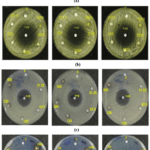 |
Figure 1: Zone of inhibition (in mm) by Agar disc diffusion method (a)S. typhimurium (b) C. albicans (c) S. dysenteriae (d) P. vulagaris Click here to View Figure |
Table 2: Result of Antimicrobial activity ofAbutilon indicum.
| Solvent extracts | Concentration
mL |
ZOI (in mm) ± SD* | |||
| S. typhimurium | S. dysenteriae | P. vulagaris | C. albicans | ||
| Methanol | 20 | 30.4 ± 0.5 | 27 ± 0.9 | – | 21 ± 0.6 |
| Ethanol | 20 | 19 ± 0.5 | 35.8 ± 0.1 | 26.4 ± 0.4 | 15.9 ± 0.7 |
| Aqueous | 20 | 33.5 ± 0.9 | 21 ± 0.7 | 19.3 ± 0.4 | 7.9 ± 0.8 |
| Hexane | 20 | 21.5 ± 0.4 | 5.8 ± 0.6 | – | 15.2 ± 0.4 |
| Streptomycin | 20 | 30 ± 0.8 | 35.5 ± 0.8 | 27 ± 0.5 | – |
| Nystatin | 20 | – | – | 37.2 ± 0.1 | |
*Standard deviation
Conclusion
The study assessed the phytochemical profile of the plant by conducting several qualitative tests for various phytochemicals. The different extracts were prepared using a Soxhlet continuous hot extractor with hexane, ethanol, methanol, and water as solvents. All extracts were evaluated for antimicrobial efficacy against S. typhimurium, S. dysenteriae, P. vulgaris, and C. albicans. Both Gram-positive and Gram-negative bacterial and fungal strains were tested using the Agar disc diffusion method. The zone of inhibition indicated that the alcoholic extract exhibited the highest activity against Shigella dysenteriae, while the hexane extract showed the lowest efficacy. Regarding antifungal activity, the methanol extract demonstrated the greatest effectiveness, whereas the aqueous extract displayed the weakest activity. Consequently, the plant may be further developed and investigated as a natural and potent antimicrobial agent by testing against additional Gram-positive and Gram-negative species, as our study found significant activity against Shigella dysenteriae compared with streptomycin for antibacterial and nystatin for antifungal assessment.
Data Availability Statement
Not applicable.
Funding source
Author receives no source of funds.
Conflict of interest
Author declares no conflict of interest.
Acknowledgements
The authors are grateful to Vice Chancellor of IFTM University, India, Prof. M. P. Pandey who provided laboratory space for the work in the department. The authors are also grateful to Sonu Nursery (Meerut, Uttar Pradesh, India) and Botanical survey of India, central regional centre, Allahabad, Uttar Pradesh, India.
References
- Kumar, M.; Kumar Patel, M.; Kumar, N.; Bajpai, A.B.; Siddique, K.H.M. Metabolomics and Molecular Approaches Reveal Drought Stress Tolerance in Plants. J. Mol. Sci.2021, 22, 9108.
CrossRef - Vadnere, G.P., Pathan, A.R., Kulkarni, B.U., Singhai, A.K. Abutilon indicum linn: a phytopharmacological review. Int J Res Pharm Chem.2013, 3:153-6.
- Gomaa, A., Samy, M., Desoukey, S., & Kamel, M. Phytochemistry and pharmacological activities of genus Abutilon: a review (1972-2015). Ad. Biomed. and Pharm. Sci, 2015,1(2), 56-74.
CrossRef - Dhanalakshmi, S.; Lakshmanan, K. K.; Subramanian, M. S. Pharmacognostical and phytochemical studies of Abutilon J. Res and Ed. in Ind. Med.1990, 9, 21-25.
- Sunil M, Vedavijaya T, Sree P K, et al. Phytochemical Analysis and Antioxidant Evaluation of the Ethanolic Extract of the Leaves of Abutilon indicum. Cureus, 2023, 15(10): e47703.
CrossRef - Khare, C. P. New York: Springer Science+Business Media; Indian Medicinal Plants: An Illustrated Dictionary. 2007.
CrossRef - Kirtiar, K. R.; Basu, B. D.: Indian Medicinal Plants, 2nd edn,Vol. I, Dehradun. 1994, 314-317.
- Prajapati, N. D.; Purohit, S. S.; Sharma, A. K.; Kumar, T. In A handbook of Medicinal Plants, 1 edn. Agrobios: Jodhpur, India, 2003, 3-4.
- Chopra, R. N.; Nair, S. L.; Chopra, I. C. Glossary of Indian Medicinal Plants, CSIR, 2 edn. New Delhi. 1956, 104-106.
- Nadakarni, A. K. Indian Materia Medica, Popular Prakashan (Pvt) Ltd. Bombay. 1995, 8-9.
- Kaushik, P.; Kaushik, D.; Khokra, S.; Chaudhary, B. Abutilon indicum (Atibala): Ethno‑botany, phytochemistry and pharmacology‑ a review. Int J Pharm Clin Res2009, 1, 4‑9.
- Bauer, A. W.; Kirby, W. M. M.; Sherris, J. C.; Turck, M. Antibiotic susceptibility testing by standardized single disc method. J. Clin. Pathol. 1966, 36, 493–496.
CrossRef - Leeja, L.; Thoppil, J. E.; Antimicrobial activity of methanol extract of Origanum majorana (Sweet marjoram). Environ. Bio.2007, 28(1), 145-146.
- Prabahar, A. E.; Thangabalan, B.; Chavala, A. S.; Sasi, K.; Kathiravan, M.; Karthikeyan, R. Antibacterial activity of various extracts of Abutilon indicum Sweet leaves, Pharm Res. 2009, 2(8), 1324-1325.
- National Committee for Clinical Laboratory Standards. Performance standards for antimicrobial disc susceptibility tests. PA: NCCLS Publications. 1993, 2-5.
- Awoyinka, O.; Balogun, I. O.; Ogunnowo, A. A. Phytochemical screening and in-vitro bioactivity of Cnidoscolus aconitifolius (Euphorbiaceae). J Med Plant Res.2007, 1(3), 63-65.
- Pottumarthy, S.; Fritsche, T. R.; Jone, R. N. Activity of gemifloxacin tested against Neisseria gonorrheae isolates including antimicrobial-resistant phenotypes. Microbiol. Infect. Dis.2006, 54, 127-134.
CrossRef - Bishnu, P. M.; Pankaj, B.; Pratibha, A.; Kashi, R. G.; Sanjiv, N.; Nabara, D. Evaluation of antibacterial activity of some traditionally used medicinal plants against human pathogenic bacteria. Res. Int. 2015, 15, 1-6.
CrossRef - Anitha, R.; Geetha, R. V.; Lakshmi, T. Evaluation of antimycotic activity of aqueous and ethanolic extracts of Aesculus hippocastanum- An in vitro study. J. Drug Dev. Res.2011, 3, 335-338.
- Kang, C. G.; Hah, D. S.; Kim, C. H.; Kim, Y. H.; Kim, E.; Kim, J. S. Evaluation of activity of the methanol extracts from traditional medicinal plants. Res.2011, 27(1), 31-36.
CrossRef - Poonkothai, M. Antibacterial activity of leaf extract of Abutilon indicum. Sci. Life. 2006, 26(1&2), 39-41.
- Khandelwal, K. R. Practical Pharmacognosy. 25th edn. Pune: Nirali Publication; 2015, 149‑156.
- Kokate, C. K. Practical Pharmacognosy. 4th edn. New Delhi: Vallabh Prakashan; 2005, 17‑28.
- Chakraborty, A. K.; Chandewar, A. V.; Charde, M. S. Phytochemical screening and in vivo fertility enhancing activity (Aphrodisiac) of Abutilon indicum roots on male wistar rats. J. Chem. Sci.2017, 2, 1‑9.
CrossRef - Shanmugapriya, S.; Anuradha, R. Phytochemical analysis and in vitro anti‑inflammatory activity of Abutilon indicum. Asian J. Sci. Technol. 2016, 7, 2980‑2983.
- Saini, A.; Singh, D. P.; Gautam, G. K.; Ashfaq, M.; Dwivedi, B. Evaluation of root and leaf extract of Abutilon indicum For antifungal activity. Int. J. Chem. Pharm. Sci2014, 2, 717‑721.
- Kokate, C. K.; Purohit, A.P.; Gokhale, S. B. Pharmacognosy (58th edition), Nirali Prakashan, New Delhi,
List of abbreviation
| ZOI | Zone of inhibition |
| Mm | Milimeter |
| KOH | Potassium hydroxide |
| % | Percent |
| S. No. | Serial Number |
| oC | Degree Celsius |
| mL | Mili litre |
| Cm | Centimetre |
| S. typhimurium | Salmonella typhimurium |
| P. vulgaris | Proteus vulagaris |
| S. dysenteriae | Shigella dysenteriae |
| C. albicans | Candida albicans |
 PlumX:
  Views: 688 Views
  PDF Downloads: 870
 Accepted on: 17 Oct 2025
Second Review by: Dr. Madhavi Nannapaneni
Final Approval by: Dr. Abdelwahab Omri


ISSN Online: 2231-5039