Process Optimization and Physicochemical Evaluation of Activated Carbons Produced from Shea Nut Shells (Vitellaria paradoxa)
 , Affoué Tindo Sylvie Konan1, Ignace Christian M’bra1, Koffi Siméonkouadio1,3, Tanoé Lucien Aketchi1,2, Daniel Yannick Djè1, Lynda Ekou1and Tchirioua Ekou1
1Laboratoire de Thermodynamique et Physico-Chimie du Milieu (LTPCM), Unité de Formation et de Recherche Sciences Fondamentales et Appliquées, Université Nangui ABROGOUA, Abidjan 02, Côte d’Ivoire
2 Centre de Recherches Océanologiques d’Abidjan, rue Roger Zinzou, BP V 18 Abidjan, Côte d’Ivoire
3Univ. Lille, CNRS, Centrale Lille, Univ. Artois, UMR 8181 - UCCS - Unité de Catalyse et Chimie du Solide, Lille, France.
Corresponding author E-mail: siratasoro36@gmail.com
DOI : http://dx.doi.org/10.13005/ojc/420223
Download this article as:

The conversion of agricultural waste into activated carbon offers a local and cost-effective solution for water treatment. Shea nutshells, which are abundant in rural areas, represent an underutilized raw material well-suited for the production of adsorbents. The objective of this study is to synthesize activated carbons (AC) from shea nuts (Vitellaria paradoxa) and then characterize them using physicochemical techniques. The precursors were chemically activated using orthophosphoric acid (H3PO4) and potassium hydroxide (KOH). The process was optimized using a Hadamard design, with the iodine number as the response parameter. The two activated carbons ACK-HP600-2 and ACK-HP400-5, which exhibited the highest iodine number values (351.995 and 414.912 mg/g, respectively), were characterized. Analysis of surface functional groups revealed an acidic character, with the point of zero charge ( ) of 5.73 for ACK-HP600-2 and 6.12 for ACK-HP400-5. The specific surface area, determined by the BET method, was 458.1637 m2/g for ACK-HP600-2 and 695.3626 m2/g for ACK-HP400-5. X-ray diffraction analysis showed that these activated carbons exhibit an amorphous structure. Images obtained by scanning electron microscopy (SEM) revealed random cavities as well as numerous interconnected pores. These materials exhibit good characteristics for use as adsorbents. Thus, shea shells, considered waste, are promising precursors for the local and economical production of activated carbons. The use of these activated carbons as adsorbents for wastewater treatment could also be considered.
KEYWORDS:Activated Carbon; Characterize; Hadamard plot; Synthesize; Shea nut shell
Introduction
The world is currently facing major environmental problems related to gaseous, liquid, and solid waste1. With technological advances and population growth, waste management is becoming a critical challenge, especially in developing countries2. Some waste decomposes naturally, but other waste, which is non-biodegradable or difficult to process, accumulates and pollutes the environment3. The processing of agricultural materials, whether artisanal or industrial, generates significantlignocellulosic residues, often disposed of by landfilling or incineration4. However, these methods are sometimes unsuitable due to the by-products resulting from their decomposition. To address this issue, many researchers around the world have developed low-cost activated carbons from agricultural waste5.
Activated carbons are carbonaceous materials that appear in the form of granules or black powder, characterized by a porous structure6. They are used in air filtration systems, desalination, wastewater treatment, and gold extraction operations7. They serve not only as adsorbents but also as catalystsupports. Theirproduction can be carried out in two ways: by physical activation or by chemical activation8. Physical activation results from thermal treatment and involves two main steps: carbonization (or pyrolysis) and activation9. As for chemical activation, various reagents such as KOH, NaOH, ZnCl2, and H3PO4 have been used as activating agents10. The efficiency of activated carbons prepared by chemical is approximately 3.7 times higher than that of those obtained by physical activation11.
Numerous studies have focused on the preparation of activated carbons from lignocellulosic precursors12. These precursors include corn stalks13, cotton seed cakes14, coconut shells15, peanut shells16, olive pits17, cola nut shells18, orange and lemon peels19, Moringa oleifera20, coffee husks21, wood22, wheat straw23, and fruit pits24.
With this in mind, the present study aims to utilize shea nut shells (Vitellaria paradoxa) to produce effective activated carbons for environmental remediation25. Shea is a wild species that grows naturally26; it is particularly valuable for its butter, which possesses medicinal, food, and cosmetic properties, and is relatively widespread in various African countries27. The nuts are widely marketed and consumed, while the shells end up in landfills, constituting a significant amount of waste that is difficult to degrade.
Thus, activated carbons will be prepared from shea nuts and then characterized using physicochemical methods.
Materials and Methods
Reagents
The reagents used in this study are listed in Table 1.
Table 1: Chemicals used
|
Chemicals |
Purity |
Sources |
|
Orthophosphoric acid (H3PO4) Molar mass = 98.00 g/mol, density = 1.70 |
85% | Merck |
| Potassium hydroxide (KOH)
Molar mass = 56.11 g/mol |
85% |
PanReac AppliChem |
|
Iodine (1.0 N) |
– | Prolabo |
| Hydrochloric acid (HCl) | 30% |
Prolabo |
|
Sodium hydroxide (NaOH) |
40% | Prolabo |
| Sodium thiosulfate (Na2S2O3.5H2O)
Molar mass = 248.18 g/mol |
99% |
PanReac AppliChem |
Plant Material
Shea nut shells (CK) (Fig. 1) were collected from a small-scale processing plant located in the town of Talléré (Korhogo, Côte d’Ivoire). The shea nuts were thoroughly washed several times with distilled water to remove impurities and pulp residues. They were then dried in an oven at 105 °C for 24 hours, followed by grinding and sieving to isolate particles with a particle size ranging from 0.5 to 2 mm.
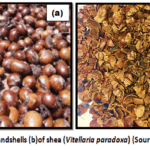 |
Figure 1: Nuts(a) andshells (b)of shea (Vitellaria paradoxa) (Source: Study’s photo) Click here to View Figure |
Methods
Preparation of Activated Carbon (AC)
The preparation of activated carbons wascarried out accordingto the conventional method28. The impact of various parameters was examined using an experimental design approach. In this study, a Hadamard design was used. This type of design allows for the rapid evaluation of the effects of factors on the desired outcome, with a reduced number of trials. It is generally used as an initial approach for screening factors. The model equation is written in the following form:

Where:
b0: Mean coefficient
b1: Effect of the factors Xi
y: Response predicted by the model
Table 2 presents the experimental range. The values of the variables and their variation limits were selected based on the literature and preliminary tests.
Table 2: Experimental range
|
Factors |
Level | |
| -1 |
+ 1 |
|
|
X1 : Particle size (mm) |
0.5 | 2 |
| X2 : Activating agents | KOH |
H3PO4 |
|
X3 : Concentration (mol/L) |
1 | 3 |
| X4 : Temperature (°C) | 400 |
600 |
|
X5 : Time (h) |
2 |
5 |
The experimental design is detailed in Table 3. The impregnation procedure consisted of bringing 20 g of shea nut shell powder (CK) into contact with 100 mL of an activator solution at the desired concentration. The mixture was stirred for 12 hours to promote interaction between the activator and the CK, then allowed to stand for 24 hours. After filtration, the substrate was dried in an oven at 105 °C for 24 hours,before being subjected to the carbonization step.
Table 3: Experimental design.
|
Exp. |
Particle size
(mm) |
Activating agent | Concentration
(mol/L) |
Carbonization temperature (°C) |
Carbonization time (h) |
|
1 |
2 | H3PO4 | 3 | 400 | 5 |
| 2 | 0.5 | H3PO4 | 3 | 600 |
2 |
|
3 |
0.5 | KOH | 3 | 600 | 5 |
| 4 | 2 | KOH | 1 | 600 |
5 |
|
5 |
0.5 | H3PO4 | 1 | 400 | 5 |
| 6 | 2 | KOH | 3 | 400 |
2 |
|
7 |
2 | H3PO4 | 1 | 600 | 2 |
| 8 | 0.5 | KOH | 1 | 400 |
2 |
The obtained activated carbons were subjected to multiple rinses with distilled water until the pH of the wash water reached a valuebetween 6 and 7. Theywere then dried at 105 °C for 24 hours. The iodine number was selected as the response parameter to assess their quality. Figure 2 presents a schematic representation of the entire activated carbonpreparation process.
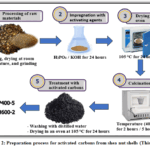 |
Figure 2: Preparation process for activated carbons from shea nut shells (This work). Click here to View Figure |
Statistical Analysis
All experimental data were analysed using the NEMROD-W software (Design-NEMROD-W, version 9901; LPRAI – Marseille, France). These data include the statistical significance of the models, assessed by analysis of variance (ANOVA) at a 95 % confidence level, the standard deviation (or experimental error), the coefficients of the postulated mathematical models, as well as the coefficients of determination29. The method for calculating the contributions ( ) associated with the various factors is given by equation 2.
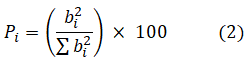
Pi: Contribution;
bi :Estimated coefficient of factor i.
Characterization of activated carbons
Iodine Number (IN) Determination
The iodine number is an essential characteristic for evaluating the microporosity of activated carbons30,31. It was determined according to the protocols described by Konan et al. (2020)32and Amadouet al. (2024)33. A 0.05 g sample of activated carbon was placedin contact with 15 mL of a 0.2 N iodine solution for 4 minutes. The mixture was then filtered, and 10 mL of the filtrate was titrated using a 0.1 N sodium thiosulfate solution, in the presence of a few drops of starch paste. A blank test was performed under the same conditions,without activated carbon. The iodine number (IN), expressed in mg/g, was calculated using equation 3.

Where:
Vb and Vs: Volumes (mL) of sodium thiosulfate usingin the control test and the test with the adsorbent, respectively;
N: Normality of the sodium thiosulfate solution;
m: Mass of activated carbon (g);
126.9: Molar mass of iodine(g/mol);
15 mL: Volume of the iodine solution;
10 mL: volume of the filtrate.
Point of Zero Charge (pHPZC)
The is defined as the pH of the aqueous solution at which the surface of the solid has a neutral electrical charge. This parameter was determined in accordance with the protocol by Yannick et al. (2023)34. A volume of 50 mL of a 0.1 M NaCl solution was distributed among several beakers. The initial pH (pH1) of each solution was adjusted (from 2 to 11) using 0.1 M NaOH and 0.1 M HCl solutions. A mass of 150 mg of activated carbon was added to each beaker, and the suspensions were kept under agitation for 48 hours at room temperature. After filtration, the final pH (pHf) was determined. The is obtained at the intersection of the curve representing ΔpH (where ΔpH = pHf – pHi ) as a function of with the x-axis.
Specific Surface Area Determination
The pore structure analysis was performed by nitrogen (N2) adsorption/desorption at 77 K, a reference method based on the Brunauer, Emmett, Teller (BET) theory. Measurement were performed using a Micromeritics TriStar II Plus analyser. Before analysis, the samples underwent primary vacuum degassing at 300 °C overnight to remove all traces of moisture. The specific surface area (SBET) was calculated using the BET method, while the total pore volume was estimated at a relative pressureP/P0 = 0.95 (where P is the equilibrium pressure and P0 is the saturated vapour pressure). Finally, the micropore volume was determined using the Dubinin-Astakhov equation to precisely characterize the material’s porosity.
X-ray Diffraction (XRD) Analysis
X-ray diffraction (XRD) is used to characterize the crystalline and amorphous phases present in a solid. This technique provides both quantitative analysis of the atomic arrangement within a solid and qualitative analysis for the identification of different compounds and their crystallographic structures. The measurements were performed on a Bruker D8 Advance diffractometer, equipped with a monochromatic Cu Kα1radiation source (40 kV, 30 mA). Data were collected over an angular range from 5 to 60°, with an acquisition step of 0.05° and a counting time of one second per step. The analyzed sample and the diffraction signal were recorded according to the following equation:
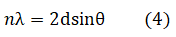
Where:
n: Diffraction order
λ: X-ray source wavelength
d: Inter-reticular spacing
θ: Glancing diffraction angle (Bragg angle)
Thermogravimetric Analysis (TGA)
The thermal stability of the activated carbon wascharacterized by thermogravimetric analysis (TGA). A 10 mg sample was subjected to a heating ramp of 10 °C/min, from ambient temperature (25 °C) up to 800 °C. To prevent oxidation, the procedure was conducted under a constant nitrogen flow with a purge gas flow rate of 50 cm3/min.
Scanning Electron Microscopy (SEM) Analysis
Scanning electron microscopy (SEM) was used to characterize the surface morphology and chemical composition of the adsorbents. Observations were performed on a JEOL JSM-7800F microscope at an acceleration voltage of 5.00 kV. To ensure optimal conductivity and obtain detailed images, the activated carbon samples were first coated with a 200 nm thick layer of carbon.
Results And Discussion
Identification of Influencing Factors
The objective of this section is to identify the factors that may influence the activated carbon preparation process. Table 4 presents the experimental design and the response obtained. The iodine number ranges from 159.843 to 414.912 mg/g. The best response was obtained in test number 5, with a value of 414.912 mg/g comparable to that reported by certain researchers, Dibi et al. (2021)35 and Amola et al. (2020)36.
Table 4: Experimental design and experimental response
|
Test |
Particle size
(mm) |
Activating agent | Concentration
(mol/L) |
Carbonization temperature (°C) | Carbonization time (h) | Response |
|
Iodine number (mg/g) |
||||||
|
1 |
2 | H3PO4 | 3 | 400 | 5 | 255.069 |
| 2 | 0.5 | H3PO4 | 3 | 600 | 2 |
351.995 |
|
3 |
0.5 | KOH | 3 | 600 | 5 | 312.884 |
| 4 | 2 | KOH | 1 | 600 | 5 |
159.843 |
|
5 |
0.5 | H3PO4 | 1 | 400 | 5 | 414.912 |
| 6 | 2 | KOH | 3 | 400 | 2 |
295.880 |
|
7 |
2 | H3PO4 | 1 | 600 | 2 | 295.880 |
| 8 | 0.5 | KOH | 1 | 400 | 2 |
255.069 |
The coefficients were estimated using the NEMROD-W software, and the results are presented in Table 5.
Table 5: Estimation of the various coefficients
|
|
b0 | b1 | b2 | b3 | b4 | b5 | Ecart-type (σ) |
2σ |
|
Iodine number |
290.00 | – 41.00 | 67.00 | 11.250 | -12.750 | 2.750 | 33.125 |
66.25 |
The coefficients obtained range from -41.00 to 67.00 for the iodine number. According to Assidjo et al. (2005)37, a coefficient is considered statistically significant if its absolute value exceeds 2σ (where σ is the standard deviation). Thus, it clearly appears that only the activating agent has an influence on the response (iodine number). The results show that activation with orthophosphoric acid (H3PO4) generates, in some cases, higher iodine numbers than those obtained with KOH activation. This finding corroborates the work of Ziezio et al. (2020)21and Tra et al. (2024)38, who identify orthophosphoric acid as a particularly effective activating agent for developing high specific surface areas and significant porous structures. Since experiments 2 and 5 yielded the highest iodine number values, the resulting activated carbons (ACK-HP600-2 and ACK-HP400-5) were selected for the remainder of the study.
Specific Surface Area
Figure 3 illustrates the N2 adsorption/desorption isotherms at 77 K. The curves show a significant increase in adsorption at low relative pressures (P/P0 < 0.1), followed by a weakly pronounced knee and a long, nearly horizontal plateau up to saturation (P/P0 ≈ 1.0). According to the International Union of Pure and Applied Chemistry (IUPAC) classification, these isotherms are Type I, characteristic of microporous adsorbents39,40.
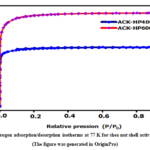 |
Figure 3: Nitrogen adsorption/desorption isotherms at 77 K for shea nut shell activated carbons Click here to View Figure |
(The figure was generated in OriginPro)
In this study, although the adsorption/desorption isotherms are similar for both samples, significant variations in adsorption capacities are observed depending on theH3PO4 concentration. Indeed, an increase in this concentration leads to an upward of the isotherm compared to the other carbon.The textural parameters derived from these isotherms are listed in Table 6.
The results show that the BET specific surface area and total pore volume increase with acid concentration. These results are consistent with the observations of Du et al. (2020)41, who noted that the micropore volume increases with increasing orthophosphoric acid concentration. Similarly, the average pore diameter increases with increasing orthophosphoric acid concentration. These results indicate that porosity development is accompanied by pore widening as the amount of H3PO4 increases. Indeed, during activation, under the effect of heat, orthophosphoric acid acts both as a dehydrating agent and as a catalyst. It promotes the pyrolytic decomposition of the precursor by catalyzing bond cleavage and the removal of non-carbon elements in the form of volatile compounds. At the same time, it facilitates the formation of a crosslinked structure through the establishment of phosphate bonds between biomolecular fragments. The combination of this pyrolytic decomposition and crosslinking leads to the formation of a disordered, porous carbon matrix, characteristic of activated carbons obtained by H3PO4 activation42,43. Similar effects of orthophosphoric acid content on porosity development have been observed using lignocellulosic precursors44.
Table 6: BET results of activated carbons
|
Active carbons |
BET specific surface area (m²/g) | Average pore diameter (nm) | Total pore volume (cm3/g) | Micropore volume (cm3/g) |
Mesopore volume (cm3/g) |
|
ACK-HP400-5 |
458.1637 | 1.8202 | 0.213074 | 0.190383 | 0.022691 |
| ACK-HP600-2 | 695.3626 | 1.8833 | 0.323914 | 0.279017 |
0.044897 |
The specific surface area values obtained (458.1637 and 695.3626 m2/g) fall within the typical range for microporous adsorbents, which is 500 to 2500 m²/g45. These results are comparable to those of Amola et al. (2020)36, who, using the same material as a precursor for activated carbons, obtained specific surface areas of 457.38 and 490.62 m2/g. Similar results (463.30 m2/g and 684 m2/g, respectively) were also observed by Negara et al. (2023)46 and Bakar et al. (2023)47during the chemical activation with orthophosphoric acid of cellulosic substrates such as bamboo and Nipah banana peels.These values are comparable to those of commercial activated carbons (500 to 2000 m2/g). Equivalent values were found for total pore volumes (0.515 m3/g) and micropore volumes (0.145 m3/g)48,49.
Point of Zero Charge (pHPZC)
The pH at the point of zerocharge (pHPZC) is the pH at which the net surface charge of the adsorbent is zero. It is used to evaluate the pH of adsorbents. Figure 4 shows the values, which are 5.73 for ACK-HP600-2 and 6.12 for ACK-HP400-5. These two activated carbons, therefore, exhibit acidic properties. This is due to the use of orthophosphoric acid as the activating agent. Some authors have obtained similar values (5.3 ‒ 6.8) using orthophosphoric acid50,12. At these points, the surface of the adsorbents is electrically neutral. When the pH of the solution is below these values, the adsorbent surface becomes protonated due to excessive competition with H+ ions. This promotes the removal of contaminants such as anions. At a pH above these values, the adsorbent surface is deprotonated by the ions present in the solution, favoring the adsorption of pollutants such as cations51.
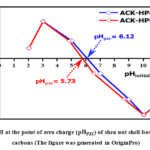 |
Figure 4: pH at the point of zero charge (pHPZC) of shea nut shell-based activated carbons Click here to View Figure |
(The figure was generated in OriginPro)
X-Ray Diffraction (XRD) Analysis
The diffractograms of the activated carbons (ACK-HP600-2 and ACK-HP400-5), shown in Figure 5, reveal the structural nature of the materials derived from shea nut shells (Vitellaria paradoxa). Both samples display two broad,low-intensity peaks around 25° (2θ ≈ 20 – 30°) and 43° (2θ ≈ 40 – 50°). The absence of narrow, sharp diffraction peaks confirms a predominantly amorphous structure, characteristic of chemically activated carbons. The use of orthophosphoric acid promotes this structural disorganization while developing a complex porous network, as highlighted by Jahan et al. (2023)52 and Alvez-Tovar et al. (2025)5. This disordered nature, reinforced by thermal activation, is a major asset for the effectiveness of activated carbons; it favors the creation of internal cavities, which is essential for their adsorption performance. Similar results have been reported by other researchers, such as Ramutshatsha-Makhwedzha et al. (2022)19and Charmas et al. (2022)53, who demonstrate that the amorphous morphology of activated agricultural waste is advantageous for promoting pore creation during the activation process.
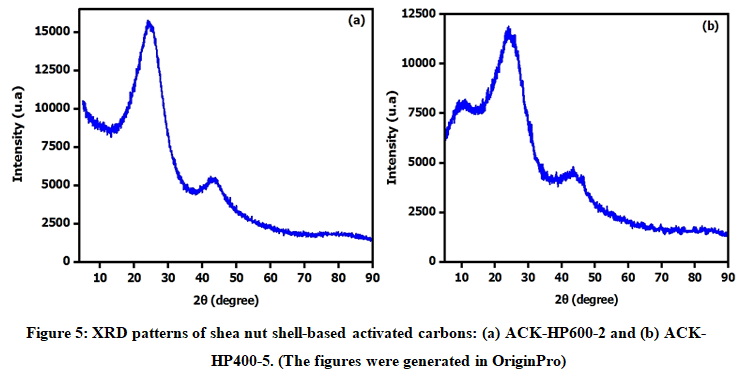 |
Figure 5: XRD patterns of shea nut shell-based activated carbons: (a) ACK-HP600-2 and (b) ACK-HP400-5. Click here to View Figure |
(The figures were generated in OriginPro)
Thermogravimetric Analysis (TGA)
Figure 6 illustrates the thermal decomposition profile of the activated carbon derived from shea nut shells. Examination of the TG and DTG curves traces the evolution of mass loss from room temperature up to 900 °C. The thermogram reveals three distinct phases.
The first phase, ranging from30 °C and 170 °C, is characterized by an endothermic peak centered at 100 °C. This phenomenon is mainly due to the evaporation of residual moisture and water from the H3PO4 solution. This process is accompanied by the release of light volatile compounds and gases (CO, CO2) resulting from initial interactions with the activating agent. The second stage, observed between 170 °C and 500 °C, is marked by rapid degradation and a more pronounced mass loss.Previous studies have shown that this phase corresponds to the thermal decomposition of lignocellulosic components, namely hemicellulose and cellulose54. Finally, above 500 °C, a third phase is characterized by the consolidation of the carbon structure. Low-intensity peaks are associated with this phase, reflecting a decrease in mass loss due to lignin decomposition. This final phase may be explained by the final oxidation of the carbonaceous material under the effect of orthophosphoric acid. This thermal behavior is consistent with results reported in the literature for other lignocellulosic precursors, particularly castor residues and Jatropha curcas fruit shells55,56.
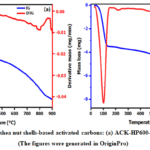 |
Figure 6: TG/DTG of shea nut shells-based activated carbons: (a) ACK-HP600-2, (b) ACK-HP400-5 Click here to View Figure |
(The figures were generated in OriginPro)
Scanning Electron Microscopy (SEM) Analysis
Scanning electron microscopy (SEM) analysis of the external and internal surfaces of the activated carbons was performed. Figure 7 illustrates the activated carbons treated with orthophosphoric acid solutions at various concentrations. The samples designated ACK-HP600-2 (Figures 7a, b), activated with a high acid concentration, reveal a rougher and more irregular surface, characterized by widely open and interconnected pores. In contrast, the surface of the ACK-HP400-5 material (Figures 7c, d), activated at a low concentration, appears more compact, with limited porosity. This difference demonstrates that a higher acid concentration produces a more pronounced effect on the opening of the carbon structure as well as on the increase in specific surface area, an essential parameter in adsorption processes12. The presence of open and interconnected pores also promotes contact between the surface of the carbonaceous material and the molecules to be adsorbed. The increase in porosity observed in the presence of a high H3PO4concentration can be attributed to the ability of this acid to induce dehydration reactions, as well as to break structural bonds within the biomass components, namely cellulose, hemicellulose, and lignin57. When the orthophosphoric acid concentration is low, its interaction with the lignocellulosic matrix remains insufficient. This results in a less irregular surface, with few cracks or cavities, but marked by the presence of whitish aggregates. Such a configuration limits optimal pore formation and keeps the carbon structure in a relatively closed state58,59. These observations align with those of Trisnaliani et al. (2026)60 and Lestari et al. (2024)61, according to whom an increase in H3PO4 content promotes the development of a more extensive porous architecture, through more complete removal of residual compounds and impurities.
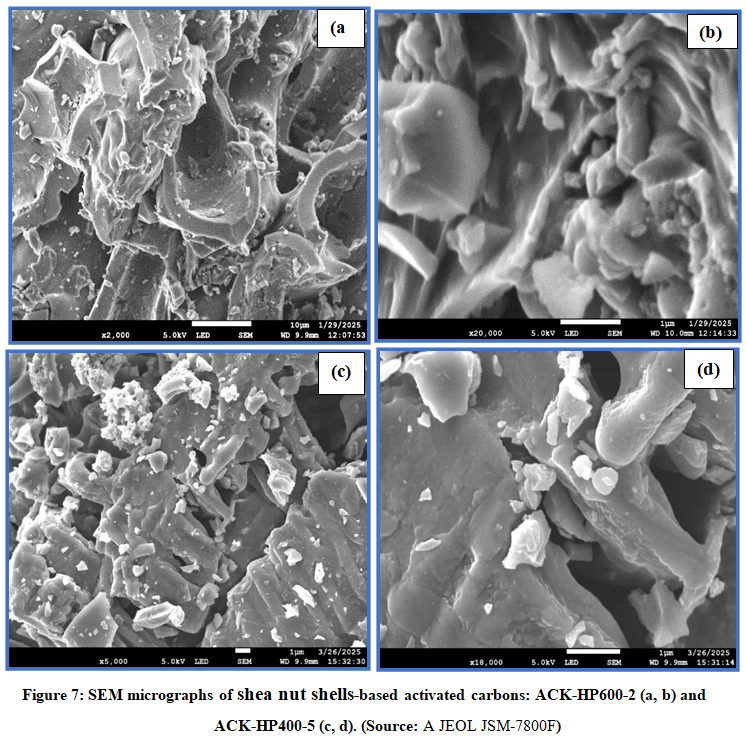 |
Figure 7: SEM micrographs of shea nut shells-based activated carbons: ACK-HP600-2 (a, b) and ACK-HP400-5 (c, d). Click here to View Figure |
(Source: A JEOL JSM-7800F)
Conclusion
The aims of this study was to synthesize activated carbons from shea nut shells. The influence of the parameters was investigated using a Hadamard design. Only the activating agent had an effect on the adsorption capacity of the prepared activated carbons. Further characterization was performed on the two activated carbons (ACK HP600-2 and ACK HP400-5) that exhibited high iodine number values (351.995 and 414.912 mg/g, respectively). These carbons exhibited an acidic character due to activation with orthophosphoric acid. These activated carbons are microporous. Their specific surface areas, 695.36 m2/g and 458.16 m2/g respectively, are comparable to those of certain activated carbons derived from agricultural residues as well as to those of some commercial products. These results confirm the technical feasibility of converting shea nut shells into high-performance adsorbents. The performance and durability of these carbons will be evaluated through adsorption tests on various pollutants, such as dyes and organic micropollutants.
Acknowledgement
The authors are grateful to Nangui ABROGOUA University and its Central Laboratory for providing the essential technical facilities and support that made this research possible.
Funding Sources
The authors declare that this study was self-funded and did not receive grants or financial backing from any third-party sources.
Conflict of Interest
The authors declare that they have no known competing financial interests or personal relationships that could have appeared to influence the work reported in this manuscript.
Data Availability Statement
Supporting data for the findings of this research are maintained by the authors and may be released upon request.
Ethical Approval Statement
The authors collectively affirm their consent for the publication of this research in its entirety.
Informed Consent Statement
All listed authors have reviewed the manuscript and approve its submission to this journal.
Authors’ Contributions
Sirata Ibrahima Francis SORO: Original draft preparation, Writing, Data curation, Software, Visualization
Affoué Tindo Sylvie KONAN: Writing, Formal analysis, Software
Ignace Christian M’BRA: Writing, Original draft preparation, Visualization
koffi SiméonKOUADIO: Review and editing, Formal analysis, Visualization
Tanoé Lucien AKETCHI: Investigation, Visualization
Daniel Yannick DJÈ: Investigation
Lynda EKOU: Conceptualization, Methodology
TchiriouaEKOU: Supervision, Validation
References
- Zuhara, S.; McKay, G., J. Environ. Chem. Eng.,2024,12(3), 112836, Doi:10.1016/j.jece.2024.112836.
CrossRef - Charmas, B.; Zięzio, M.; Jedynak, K.; Kucio, K., J. Therm. Anal. Calorim.,2023,148(14), 7403–7419, Doi:10.1007/s10973-023-12193-2.
CrossRef - Bouzid, T.; Grich, A.; Naboulsi, A.; Regti, A.; Tahiri, A., Inorg. Chem. Commun., 2023, 158, 111544, Doi:10.1016/j.inoche.2023.111544.
CrossRef - Metyouy, K.; Benkirane, L.; Sánchez, M. E.; Cara-Jiménez, J.; Plakas, K. V.; Chafik, T., Sustain. Chem. Environ.,2024,6, 100110, Doi:10.1016/j.scenv.2024.100110.
CrossRef - Alvez-Tovar, B.; Scalize, P. S.; Angiolillo-Rodríguez, G.; Albuquerque, A.; Ebang, M. N.; de Oliveira, T. F., Sustain., 2025,17(5), 1–25, Doi:10.3390/su17052036.
CrossRef - Cano, F. J.; Reyes-Vallejo, O.; Sanchez-Albores, R. M.; Sebastian, P. J., Sustainability., 2025, 17(99), 1–23, Doi:10.3390/su17010099.
CrossRef - Abdulkarim, M.; Ibrahim, I. L.; Mohammed, M.; Musah, M., FUDMA J. Sci.,2024, 8(3), 409–415, Doi:10.33003/fjs-2024-0803-2567.
CrossRef - Kiełbasa, K.; Bayar, Ş.; Varol, E. A.; Sreńscek-Nazzal, J.; Bosacka, M.; Michalkiewicz, B., Ind. Crops Prod., 2022, 187, 115416, Doi:10.1016/j.indcrop.2022.115416.
CrossRef - Tapia, Y. M.; Oliveira, T. F. de; Gabriel, E. F. M.; Scalize, P. S., Rev. Gest. Soc. E Ambient., 2023, 17(2), 1–19, Doi:10.24857/rgsa.v17n2-027.
CrossRef - Mfoumou, C. M.; Mbouiti, B. L.; Mougnala, S. B.; Tonda-mikiela, P.; Tchouya, G. R. F., Open J. Inorg. Chem.,2024, 14, 19–32, Doi:10.4236/ojic.2024.142002.
CrossRef - Kra, D. O.; Allou, N. B.; Atheba, P.; Drogui, P.; Trokourey, A., J. Encapsulation Adsorpt. Sci.,2019, 9, 63–82, Doi:10.4236/jeas.2019.92004.
CrossRef - Njewa, J. B.; Vunain, E.; Biswick, T., J. Chem.,2022, 1, 1-13, Doi:10.1155/2022/9975444.
CrossRef - Yurtay, A.; Kılıç, M., Diam. Relat. Mater.,2023, 131, 109603, Doi:10.1016/J.DIAMOND.2022.109603.
CrossRef - Malathi, S.; Sudha, R.; Anitha, P.; Maheswari, P.; Gomathi, M.; Poornima, K., Desalin. Water Treat.,2020, 196, 377–387, Doi:10.5004/dwt.2020.25571.
CrossRef - Singla, M. K.; Gupta, J.; Safaraliev, M.; Nijhawan, P.; Oberoi, A. S.; Menaem, A. A., Int. J. Hydrogen Energy.,2024, 61, 1417–1428, Doi:10.1016/j.ijhydene.2024.02.341.
CrossRef - Zhan, Y.; Zhou, H.; Guo, F.; Tian, B.; Du, S.; Dong, Y.; Qian, L., J. Energy Storage.,2021, 34, 102180, Doi:10.1016/j.est.2020.102180.
CrossRef - Saleem, J.; Shahid, U. Bin; Hijab, M.; Mackey, H.; McKay, G., Biomass Convers. Biorefinery.,2019, 9, 775–802, Doi:10.1007/s13399-019-00473-7.
CrossRef - Idris-Hermann, K. T.; Raoul, T. T. D.; Giscard, D.; Gabche, A. S., Chem. Sci. Int. J. , 2018, 23, 1–15, doi:10.9734/csji/2018/43411.
CrossRef - Ramutshatsha-Makhwedzha, D.; Mavhungu, A.; Moropeng, M. L.; Mbaya, R., Heliyon.,2022, 8(8), e09930, Doi:10.1016/j.heliyon.2022.e09930.
CrossRef - Raji, Y.; Nadi, A.; Mechnou, I.; Saadouni, M.; Cherkaoui, O.; Zyade, S., Diam. Relat. Mater.,2023, 135, 109834, Doi:10.1016/J.DIAMOND.2023.109834.
CrossRef - Zięzio, M.; Charmas, B.; Jedynak, K.; Hawryluk, M.; Kucio, K., Appl. Nanosci.,2020, 10(12), 4703–4716, Doi:10.1007/s13204-020-01419-6 .
CrossRef - Mohamad Yusop, M. F.; Nasehir Khan, M. N.; Zakaria, R.; Abdullah, A. Z.; Ahmad, M. A., Arab. J. Chem.,2023,16(6), 104780, Doi:10.1016/j.arabjc.2023.104780.
CrossRef - Agarwal, S.; Singh, A. P.; Mathur, S., Environ. Sci. Pollut. Res.,2023, 30, 41073–41094, Doi:10.1007/s11356-022-25066-2.
CrossRef - Khan, T. A.; Nouman, M.; Dua, D.; Khan, S. A.; Alharthi, S. S., J. Saudi Chem. Soc., 2022, 26(2), 101417, Doi:10.1016/j.jscs.2021.101417.
CrossRef - Musah, M.; Mathew, J. T.; Azeh, Y.; Badeggi, U. M.; Muhammad, A. I.; Abu, L. M.; Okonkwo, P. T.; Muhammad, K. T., FUDMA (FJS).,2024, 8(2), 338–344, Doi:10.33003/fjs-2024-0802-2370.
CrossRef - Balogun, O. S.; Aasa, O., FUDMA J. Sci., 2019, 3(3), 381–386.
- Kareem, I. A.; Sanni-Bamigbade, S. A.; Adekola, O. A.; Abioye, T. M., FUDMA J. Sci., 2025, 9, 369–374,Doi:10.33003/Fjs-2025-0905-3542.
CrossRef - Bedia, J.; Peñas-Garzón, M.; Gómez-Avilés, A.; Rodriguez, J. J.; Belver, C., J. Carbon Res.,2020, 6(21), 1–25, Doi:10.3390/c6020021.
CrossRef - Ano, J.; Henri Briton, B. G.; Kouassi, K. E.; Adouby, K., J. Environ. Chem. Eng., 2020, 8(5), 104292, Doi:10.1016/j.jece.2020.104292.
CrossRef - ASTM, D., ASTM D4607–94.,1994.
- Mamane, O. S.; Zanguina, A.; Daou, I.; Natatou, I., J. la Société ouest-Africaine Chim.,2016, 41, 59–67.
- Konan, A. T. S.; Richard, R.; Andriantsiferana, C.; Yao, K. B.; Manero, M.-H., J. Mater. Environ. Sci., 2020, 11(10), 1584–1598.
- Amadou Kiari, M. N.; Konan, A. T. S.; Sanda Mamane, O.; Kone, H.; Fanou, G. D.; Siragi Dounounou Boukari, M.; Ibrahim Grema, M. H.; Malam Alma, M. M.; Yao, K. B.,Mater. Sci. Forum., 2024, 1122, 91–98, Doi:10.4028/p-kd7gn9.
CrossRef - Yannick, D. D.; Zoungranan, Y.; Dobi-Brice, K. K.; Lynda, E.; Tchirioua, E., Sci. J. Chem., 2023, 11(5), 189–196, Doi:10.11648/j.sjc.20231105.12.
CrossRef - Dibi, K.; Meite, L.; Narcisse Aboua, K.; Baba Soro, D.; Kossonou Roland, G.; Karim Sory, T.; Konan, G.; Mamadou, K.,Int. J. Innov. Appl. Stud.,2021, 33(1), 214–221.
- Amola, L. A.; Kamgaing, T.; Raoul, D.; Tchuifon, T.; Atemkeng, C. D.; Anagho, S. G., J. Mater. Sci. Chem. Eng., 2020, 8, 53–72, Doi:10.4236/msce.2020.88006.
CrossRef - Assidjo, E.; Yao, B.; Akou, E.; Ado, G., J. Chemom., 2005, 19(10), 543–548, Doi:10.1002/cem.953.
CrossRef - Tra, D. B. T.; Soro, Y.; Briton, B. G. H., J. Mater. Environ. Sci., 2024, 15(12), 1825–1837.
- Bilias, F.; Sewu, D. D.; Woo, S. H.; Anastopoulos, I.; Verheijen, F.; Lehmann, J.; Teixeira, W. G.; Gasparatos, D.; Draper, K., Pure Appl. Chem., 2024, 96(11), 1541–1572, Doi:10.1515/pac-2021-0106.
CrossRef - Yaman, M.; Demirel, M. H., Pollution., 2020, 6(4), 935–944, Doi:10.22059/poll.2020.303546.828.
- Du, H.; Cheng, J.; Wang, M.; Tian, M.; Yang, X.; Wang, Q., Diam. Relat. Mater., 2020, 102, 107646, Doi:10.1016/j.diamond.2019.107646.
CrossRef - Zakaria, R.; Jamalluddin, N. A.; Abu Bakar, M. Z., Results Mater., 2021, 10(4), 100183, Doi:10.1016/j.rinma.2021.100183.
CrossRef - Rahmati, S.; Babadi, A. A.; Jahanian, A.; Moghaddam, L.; Beltramini, J.; Atanda, L.; Fraga, G.; Rackemann, D.,Bioresour. Technol., 2026, 450, 134477, Doi:10.1016/j.biortech.2026.134477.
CrossRef - Neme, I.; Gonfa, G.; Masi, C., Heliyon., 2022, 8(12), e11940, Doi:10.1016/j.heliyon.2022.e11940.
CrossRef - Yağmur, H. K., J. Chem. Eng. Japan., 2026, 59(1), 2639848, Doi:10.1080/00219592.2026.2639848.
CrossRef - Negara, D. N. K. P.; Widiyarta, I. M.; Nindhia, T. G. T.; Astika, I. M.; Kencanawati, C. I. P. K., AIP Conf. Proc., 2023, 2568(1), 040015, Doi:10.1063/5.0116315.
CrossRef - Bakar, N. A.; Othman, N.; Yunus, Z. M.; Altowayti, W. A. H.; Al-Gheethi, A.; Asharuddin, S. M.; Tahir, M.; Fitriani, N.; Mohd-Salleh, S. N. A.,Biomass Convers. Biorefinery., 2023, 13, 11085–11098, Doi:10.1007/s13399-021-01937-5.
CrossRef - Martín-Cruz, Y.; Bordón, P.; Saura-Cayuela, T.; Monzón, M.; Pulido-Melián, E., Bioresour. Technol. Reports.,2026, 33, 102531, Doi:10.1016/j.biteb.2025.102531.
CrossRef - Saleem, M., Pakistan J. Sci. Ind. Res. Ser. A Phys. Sci., 2021, 64(3), 254–264, Doi:10.52763/PJSIR.PHYS.SCI.64.3.2021.254.264.
CrossRef - Armand, A. E.; Augustin, Y. Y.; Urbain, K. Y.; Albert, T., Int. J. Innov. Appl. Stud.,2020, 29(4), 1161–1171.
- Gutierrez-Martinez, J.; Martinez-Vargas, D. R.; Vences-Alvarez, E.; Arjona-Jaime, P.; López-Cázares, M. I.; Rios-Saldaña, L. E.; Isaacs-Páez, E. D.; Quijano-Meza, M.; Rocha-Medina, C.; Rangel-Mendez, R., Curr. Opin. Solid State Mater. Sci.,2026, 40, 101247, Doi:10.1016/j.cossms.2025.101247.
CrossRef - Jahan, R. A.; Hassan, M. M.; Rana, A. A.; Karim, M. M., Adv. Chem. Eng. Sci., 2023, 13(03), 189–202, Doi:10.4236/aces.2023.133014.
CrossRef - Charmas, B.; Zięzio, M.; Tomaszewski, W.; Kucio, K., Colloids Surfaces A Physicochem. Eng. Asp., 2022, 645, 128889, Doi:10.1016/J.COLSURFA.2022.128889.
CrossRef - El Mansouri, F.; Pelaz, G.; Morán, A.; Da Silva, J. C. G. E.; Cacciola, F.; El Farissi, H.; Tayeq, H.; Zerrouk, M. H.; Brigui, J., Separations.,2022, 9(10), 1–19, Doi:10.3390/separations9100283.
CrossRef - Neme, I.; Gonfa, G.; Masi, C., Results Mater.,2022, 15, 100304, Doi:10.1016/j.rinma.2022.100304.
CrossRef - Tongpoothorn, W.; Sriuttha, M.; Homchan, P.; Chanthai, S.; Ruangviriyachai, C., Chem. Eng. Res. Des.,2011, 89, 335–340, Doi:10.1016/j.cherd.2010.06.012.
CrossRef - Mekuiko, A. Z.; Tchuifon, D. R. T.; Kouteu, P. A. N.; Fotsop, C. G.; Ngakou, C. S.; Kuete, H. I. T.; Bopda, A.; Tamo, A. K.; Anagho, S. G., Desalin. Water Treat., 2023, 300, 144–157, Doi:10.5004/dwt.2023.29708
CrossRef - Daniel, L. S.; Rahman, A.; Hamushembe, M. N.; Kapolo, P.; Uahengo, V.; Jonnalagadda, S. B.,Bioresour. Technol. Reports., 2023, 23, 101568,Doi:10.1016/j.biteb.2023.101568.
CrossRef - Divya, M. P.; Krishnamoorthi, S.; Ravi, R.; Jenner, V. G.; Baranidharan, K.; Raveendran, M.; Hemalatha, P., Adv. Bamboo Sci., 2025, 11(1), 100148, Doi:10.1016/j.bamboo.2025.100148.
CrossRef - Trisnaliani, L.; Febriana, I.; Wardana, S. K.; Larasati, T.; Tiara, B.; Triwibowo, A.; Arief Fauzana, L., ALKIMIA:Jurnal Ilmu Kim. dan Terap., 2026, 10(1), 31–41, Doi:10.19109/vxrt5e83.
- Lestari, D. D.; Amna, S.; Faisal, A.; Asmike; Zuliat, D., ALKIMIAJurnal Ilmu Kim. dan Terap., 2024, 8(1), 35–41, Doi:doi.org/10.19109/zj5sm953.
 PlumX:
  Views: 854 Views
  PDF Downloads: 1092
 Accepted on: 04 Apr 2026
Second Review by: Dr. Anurag Khatkar
Final Approval by: Dr. Tanay Pramanik


ISSN Online: 2231-5039