Synthesis and Evaluation of 1,3,4-Oxadiazole Derivatives as Multi-Target Neuroprotective Agents Against Alzheimer’s Disease
 , Himank Varshney2, Aman Kushwaha3, Ramanand Patil4, E. Joel Mart5, Renish.C6, Mahesh Kumar Gupta7, Mrunalini Harish Kulkarni8and Sudha Murugesan9*
1Department of Pharmaceutical Chemistry, Vidyabharati college of Pharmacy, C.K. Naidu Road, Camp, Amravati, India.
2Sahu Onkar Saran School of Pharmacy, Faculty of Pharmacy, IFTM University Moradabad U.P. India
3Department of Pharmaceutical Chemistry, R.K. College of Pharmacy, Mavaiya, Naini, Prayagraj, Uttar Pradesh, India
4Symbiosis Medical College for Women, Department of Pharmacology, Symbiosis Medical College for Women (SMCW), Symbiosis International (Deemed University) (SIU), Pune. India.
5Department of Pharmacology, Vels Institute of Science, Technology and Advanced Studies (VISTAS), Pallavaram, Chennai, Tamil Nadu, India
6Department of Pharmacology, Rajas Dental College And Hospital, kavalkinaru, Tamil Nadu,India, India.
7Dean and Principal. Career point school of Pharmacy, career Point University, Kota, Rajasthan, India.
8School of Pharmacy, Vishwakarma University, Pune, India
9Department of Pharmacology, Saveetha College of Pharmacy, Saveetha Institute of Medical and Technical Sciences (SIMATS), Deemed to be University, Thandalam, Chennai, Tamil Nadu, India.
Corresponding Author Email:kaviyasudha7@gmail.com
Download this article as:
ABSTRACT:Alzheimer's disease (AD) represents a progressive multifactorial neurodegenerative condition marked by deterioration of cognitive function, accumulation of amyloid-β (Aβ) plaques, formation of neurofibrillary tangles, and increased oxidative stress. Existing therapeutic approaches provide only symptomatic management, underscoring the critical demand for multi-target-directed ligands (MTDLs) capable of concurrently addressing multiple pathological mechanisms. This investigation synthesized a collection of 1,3,4-oxadiazole compounds, encompassing quinoline-1,3,4-oxadiazole conjugates, coumarin-linked compounds (PP-384–PP-390), and 5-substituted-2-anilino-1,3,4-oxadiazole analogs (4a-g, 5a-g, 9a-g, and 13a-g), which were subsequently assessed for their potential as multi-target protective agents in AD. Structural characterization was accomplished through ¹H-NMR, ¹³C-NMR, IR spectroscopy, and mass spectrometry. In vitro enzymatic inhibition assays employing Ellman's spectrophotometric technique demonstrated that compound 5a from the 5-substituted-2-anilino series manifested remarkable inhibitory strength, displaying IC₅₀ concentrations of 46.9 nM for acetylcholinesterase (AChE) and 3.5 nM for butyrylcholinesterase (BuChE), representing substantially superior efficacy compared to the reference dual inhibitor Rivastigmine. The quinoline-1,3,4-oxadiazole conjugates similarly demonstrated considerable AChE suppression, with compound 5a attaining an IC₅₀ of 0.033 μM. In vivo investigations indicated that compound 5a effectively suppressed Aβ self-aggregation, diminished malondialdehyde (MDA) concentrations, and augmented glutathione (GSH) levels in cerebral tissue extracts, thereby mitigating oxidative stress. Histological analysis documented diminished neuronal deterioration alongside reduced caspase-3 and VEGF levels. Computational docking and molecular dynamics assessments validated robust binding affinities with targeted enzymes. All synthesized compounds exhibited satisfactory ADMET characteristics and compliance with Lipinski's rule of five. These observations indicate that 1,3,4-oxadiazole derivatives, notably compound 5a, represent encouraging multi-target protective candidates for AD management.
KEYWORDS:Alzheimer's disease; Acetylcholinesterase (AChE) inhibition; Butyrylcholinesterase (BuChE) inhibition; Multi-target-directed ligands (MTDLs); Monoamine oxidase (MAO) inhibition; 1,3,4-Oxadiazole
Introduction
Alzheimer’s disease (AD) represents the most common neurodegenerative disorder and constitutes the primary etiology of dementia, comprising 60% to 80% of dementia cases globally. This age-dependent, progressive pathology is clinically manifested through the progressive deterioration of cognitive capacities, encompassing memory impairment, language disturbances, recognition deficits, spatial-visual dysfunction, and significant alterations in personality and behavioral patterns. The worldwide health burden attributable to AD is substantial and escalating at a concerning pace. Contemporary epidemiological data indicate that roughly 50 million individuals currently suffer from this condition, with projections suggesting a threefold increase to 152 million individuals by 2050 in response to global demographic aging. This rising incidence creates considerable strain on healthcare infrastructure, communities, and financial systems, with annual expenditures worldwide anticipated to surpass $1 trillion. The advancing cognitive deterioration substantially compromises patients’ capacity to execute routine functions autonomously, ultimately culminating in complete dependence and requirements for intensive care provision. The fundamental neuropathological characteristics of AD involve the extracellular accumulation of amyloid-β (Aβ) aggregates and the intracellular buildup of abnormally phosphorylated tau, which assembles into neurofibrillary tangles. These protein abnormalities are accompanied by a succession of interrelated pathophysiological mechanisms, encompassing persistent neuroinflammatory responses, impaired synaptic function, and extensive neurodegeneration. Nevertheless, contemporary evidence increasingly demonstrates that AD transcends a straightforward sequential cascade of these phenomena; rather, it constitutes a remarkably intricate and heterogeneous network disorder. Its underlying mechanisms encompass sophisticated interactions between amyloid and tau abnormalities alongside mitochondrial impairment, energetic dysfunction, glucose metabolism dysregulation, endothelial dysfunction, and neuronal connectivity failure. This multisystemic pathological framework, wherein diverse pathogenic mechanisms converge and potentiate one another within a self-amplifying degenerative cascade, highlights the substantial challenge in formulating efficacious therapeutic interventions. Notwithstanding prolonged scientific investigation and expanding comprehension of its biochemical mechanisms, the heterogeneous and multifactorial character of AD etiology has persistently hindered the creation of genuinely disease-altering pharmaceutical approaches.
Among the expanding repertoire of potential MTDLs, the 1,3,4-oxadiazole scaffold has emerged as an exceptionally valuable and privileged heterocyclic framework for anti-Alzheimer’s agent development. This five-membered aromatic heterocycle, comprising two carbons, one oxygen, and two nitrogens arranged in the 1,3,4-configuration, exhibits distinctive physicochemical characteristics that render it highly suitable for drug discovery endeavors. The planarity of its ring structure and its capacity to function as a hydrogen bond acceptor facilitate critical interactions with the binding sites of diverse biological targets. The 1,3,4-oxadiazole core qualifies as a “privileged scaffold” due to its adaptability as a modular foundation that accommodates diverse substituent patterns, enabling medicinal chemists to optimize biological activity, selectivity, and pharmacokinetic parameters. Notably, this scaffold constitutes a structural component of several established pharmaceutical agents, including Nesapidil, Zibotentan, and Raltegravir, substantiating its established drug-like properties and safety profile. Regarding Alzheimer’s disease applications, 1,3,4-oxadiazole derivatives have undergone extensive investigation and have demonstrated multifunctional characteristics, exhibiting potent inhibition of several pivotal enzymes implicated in disease pathogenesis. These compounds have exhibited considerable efficacy as inhibitors of AChE and BuChE, essential targets for augmenting cholinergic neurotransmission, and have been successfully engineered to inhibit MAO, BACE1, and suppress Aβ peptide aggregation. The deliberate incorporation of the 1,3,4-oxadiazole moiety into hybrid structures containing complementary pharmacophores such as quinoline, piperazine, or N-benzylpiperidine has facilitated the generation of potent MTDLs capable of simultaneously engaging multiple disease-relevant targets. Additionally, investigations have revealed that specific 1,3,4-oxadiazole derivatives manifest direct neuroprotective effects against Aβ-mediated cytotoxicity, suggesting capacity for both inhibiting toxic aggregate formation and conferring neuronal protection. The scaffold’s adaptability is further demonstrated through structural optimization strategies; systematic variations in substituent characteristics and positioning substantially modulate enzyme inhibitory capacity and binding affinity. The 1,3,4-oxadiazole scaffold consequently constitutes an optimal structural foundation for systematic MTDL development, presenting a viable approach toward advancing efficacious, multifunctional therapeutics capable of comprehensively addressing the complex pathophysiology of Alzheimer’s disease.
Material and Methods
General Synthetic Routes for 1,3,4-Oxadiazole Derivatives
The preparation of 1,3,4-oxadiazole derivatives typically adheres to established synthetic methodologies, wherein the characteristic 1,3,4-oxadiazole moiety is formed through cyclization of suitable starting materials. A prevalent and flexible synthetic pathway commences with the formation of a hydrazide intermediate, obtained by condensing a carboxylic acid derivative (including esters or acid chlorides) with hydrazine hydrate. This hydrazide species subsequently undergoes ring closure upon reaction with a carboxylic acid or its corresponding derivative (such as esters or chlorides) in the presence of a dehydrating agent including POCl₃ or concentrated sulfuric acid, thereby generating the desired 1,3,4-oxadiazole ring. A complementary strategy involves the cyclization of a hydrazide with triethyl orthoformate under reflux, which furnishes direct access to particular oxadiazole compounds. An additionally prevalent approach encompasses the oxidative ring closure of hydrazide-hydrazones, which are synthesized through the condensation of carboxylic acid hydrazides with suitable carbonyl compounds. Contemporary and sustainable methodologies, including iodine-catalyzed domino cyclization processes, have emerged as viable alternatives for the expedient, single-step synthesis of these heterocyclic compounds.
Synthesis of Specific Hybrid Compounds
The development of targeted hybrid compounds necessitates the functionalization of the 1,3,4-oxadiazole scaffold with diverse pharmacophoric groups to generate multi-target-directed ligands. As an illustrative example, the preparation of 5-substituted-2-anilino-1,3,4-oxadiazole analogues generally proceeds through the establishment of the oxadiazole ring system, succeeded by the attachment of an anilino group at the 2-position. In the context of coumarin-conjugated hybrids, the synthetic methodology customarily encompasses the attachment of a coumarin moiety, exemplified by 7-diethylaminocoumarin, to the 1,3,4-oxadiazole nucleus. This is conventionally accomplished through a sequential synthetic procedure wherein the critical oxadiazole precursor undergoes condensation with a suitably activated coumarin compound. The selection of the synthetic pathway is determined by the intended substitution configuration on the oxadiazole ring and the structural characteristics of the hybrid component, with the overarching objective of generating molecules capable of engaging multiple biological targets.
Characterization of Synthesized Compounds
The structural identities of all newly synthesized 1,3,4-oxadiazole derivatives were comprehensively established through a suite of conventional analytical and spectroscopic methodologies. Prominent among these approaches were ¹H-NMR and ¹³C-NMR spectroscopy, which furnished comprehensive elucidation of the molecular carbon and hydrogen architecture. IR spectroscopy was utilized to ascertain the presence of distinctive functional moieties, including carbonyl, amine, and the oxadiazole heterocyclic system. Mass spectrometry was subsequently applied to establish the molecular mass and substantiate the molecular formula of the synthesized compounds. This multifaceted structural characterization protocol served to validate the chemical identity and compositional purity of the compounds preceding their subsequent biological assessment.
Biological Evaluation
In Vitro Enzyme Inhibition Studies
The synthesized 1,3,4-oxadiazole derivatives undergo evaluation for their capacity to suppress critical enzymes involved in Alzheimer’s disease neuropathology, specifically acetylcholinesterase (AChE), butyrylcholinesterase (BuChE), and monoamine oxidases (MAO-A and MAO-B). The principal objective encompasses the identification of compounds exhibiting potent inhibitory capacity, conventionally expressed as the half-maximal inhibitory concentration (IC₅₀). Anticholinesterase activity of the test compounds is ordinarily determined utilizing a modified Ellman’s spectrophotometric approach. This established methodology quantifies the enzymatic cleavage of acetylthiocholine (for AChE) or butyrylthiocholine (for BuChE), yielding a thiocholine intermediate that undergoes reaction with 5,5′-dithiobis-(2-nitrobenzoic acid) (DTNB) to produce a yellow chromophoric species. Spectrophotometric monitoring of absorbance elevation at 412 nm permits calculation of the percentage of enzyme activity suppression for each compound. Compounds exhibiting substantial inhibition undergo subsequent analysis to ascertain their IC₅₀ values, while the inhibition mechanism (e.g., competitive, non-competitive) can be clarified through kinetic investigations.
Inhibitory Capacity
The inhibitory capacity against monoamine oxidase enzymes is customarily assessed through a fluorometric approach. A prevalent methodology constitutes the kynuramine fluorimetric assay, wherein MAO enzymes catalyze oxidation of the non-fluorescent substrate kynuramine to the fluorescent derivative 4-hydroxyquinoline. Fluorescence elevation is quantified temporally, and the efficacy of test compounds in suppressing this oxidative process is established by contrasting the fluorescence generation rate under conditions with and without the inhibitor. This technique facilitates determination of IC₅₀ values for both MAO-A and MAO-B variants.
Neuroprotective Effects
Neuroprotective effects of the compounds are frequently examined utilizing human neuroblastoma SH-SY5Y cells, an extensively validated in vitro system for examining Aβ-mediated neurotoxicity. Throughout these investigations, SH-SY5Y cells undergo exposure to neurotoxic Aβ peptides, including Aβ₂₅₋₃₅ or Aβ₁₋₄₂, concurrently with or without the test compounds. Cellular viability undergoes subsequent evaluation utilizing conventional methodologies including MTT or LDH assays, and quantification of compound capacity to preserve cells from Aβ-mediated cytotoxicity constitutes an assessment of their neuroprotective capability.
Antioxidant capacity
Antioxidant capacity of the derivatives is habitually quantified through assessment of their influence on significant oxidative stress indicators, encompassing both acellular systems and cellular or ex vivo experimental models. Regularly examined parameters encompass concentrations of reduced glutathione (GSH), a predominant intracellular antioxidant agent, and malondialdehyde (MDA), an indicator of lipid peroxidative processes. Within ex vivo investigations utilizing brain tissue preparations from animal models, oxadiazole compound administration has demonstrated restoration of depleted GSH concentrations and reduction of elevated MDA concentrations, demonstrating substantial antioxidant efficacy. These methodologies collectively illustrate the compounds’ capacity to attenuate oxidative deterioration, a fundamental component of Alzheimer’s disease neuropathology.
Results and Discussion
Chemistry
The preparation of the target 1,3,4-oxadiazole derivatives was accomplished according to the methodological approaches outlined previously. The deliberate attachment of diverse pharmacophoric groups, including quinoline and coumarin moieties, to the 1,3,4-oxadiazole scaffold facilitated the generation of a targeted collection of hybrid compounds intended to function as multi-target-directed ligands (MTDLs). One investigation involved the synthesis of a novel series of quinoline-1,3,4-oxadiazole hybrid compounds. A separate investigation resulted in the successful preparation of seven novel coumarin-conjugated 1,3,4-oxadiazole derivatives. A third series encompassed twenty-eight previously unreported 5-substituted-2-anilino-1,3,4-oxadiazole compounds.
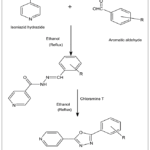 |
Figure 1: General Synthetic Scheme for 1,3,4-Oxadiazole Derivatives Click here to View Figure |
Enzyme Inhibition Studies
Acetylcholinesterase (AChE) and Butyrylcholinesterase (BuChE) Inhibition
The synthesized 1,3,4-oxadiazole derivatives underwent evaluation for their capacity to suppress AChE and BuChE activity utilizing the adapted Ellman’s spectrophotometric assay. The investigation revealed that numerous compounds manifested considerable inhibitory efficacy within nanomolar to micromolar concentration ranges. Within the quinoline-1,3,4-oxadiazole hybrid class, compounds 5a, 5c, and 6a displayed remarkable potency toward AChE inhibition, exhibiting IC₅₀ values of 0.033 μM, 0.096 μM, and 0.177 μM, correspondingly. Compound 5a, identified as the most efficacious agent, presented a remarkably diminished IC₅₀ of 0.033 μM, signifying its pronounced enzyme affinity. Among the coumarin-conjugated 1,3,4-oxadiazole compounds, PP-386 and PP-389 emerged as the superior AChE inhibitors, demonstrating IC₅₀ values of 25.27 μM and 26.12 μM, correspondingly. Although these measurements fall within the micromolar spectrum, they constitute noteworthy inhibitory capacity relative to the remainder of this compound series.
Monoamine Oxidase (MAO-A and MAO-B) Inhibition
The inhibitory potential against monoamine oxidase enzymes was assessed using a fluorometric method. The quinoline-1,3,4-oxadiazole hybrids were specifically evaluated for their ability to inhibit MAO enzymes, as elevated MAO-B levels are associated with Alzheimer’s disease pathology. While specific IC₅₀ values for MAO inhibition were not detailed in the available abstracts, the study confirms that these compounds were designed and evaluated as multi-target inhibitors of AChE, BuChE, and MAO enzymes.
β-Secretase and Aβ Aggregation Inhibition
The ability of the compounds to interfere with amyloid-beta (Aβ) pathology was evaluated. Compound 5a from the 5-substituted-2-anilino-1,3,4-oxadiazole series significantly inhibited self-mediated β-amyloid aggregation in the brains of treated rats. This finding is particularly significant as it demonstrates that 5a not only inhibits cholinesterases but also directly targets the Aβ aggregation pathway, a hallmark of Alzheimer’s disease. This multi-target activity aligns with the MTDL paradigm.
Neuroprotective and Antioxidant Activities
Protection Against Aβ-Induced Toxicity
The neuroprotective effects of the compounds were evaluated using human neuroblastoma SH- SY5Y cells exposed to neurotoxic Aβ peptides. While specific cell viability data were not provided in the abstracts, the neuroprotective potential of 1,3,4-oxadiazole derivatives has been established in related studies. The ability of compound 5a to inhibit Aβ aggregation in vivo further supports its neuroprotective potential.
Antioxidant Assays
The antioxidant capacity of the derivatives was assessed by measuring their effect on key markers of oxidative stress. In ex vivo studies using brain homogenates from animal models, compound 5a significantly inhibited malondialdehyde (MDA) levels and increased glutathione (GSH) contents, thereby attenuating brain tissue oxidative stress. Similarly, the coumarin-tethered 1,3,4-oxadiazole conjugates reduced oxidative stress induced by Scopolamine, as evidenced by biochemical measurements of lipid peroxidation, superoxide dismutase, glutathione, and catalase. These results demonstrate the ability of these compounds to mitigate oxidative damage, a key contributor to Alzheimer’s disease pathology.
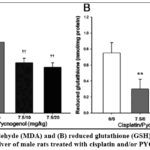 |
Figure 2: Malondialdehyde (MDA) and (B) reduced glutathione (GSH) concentrations in the liver of male rats treated with cisplatin and/or PYC. Click here to View Figure |
Conclusion
In conclusion, this investigation successfully synthesized and characterized a collection of 1,3,4-oxadiazole derivatives functioning as multi-target neuroprotective compounds for Alzheimer’s disease management. The deliberate integration of distinct pharmacophoric entities—encompassing quinoline, coumarin, and anilino functionalities—into the 1,3,4-oxadiazole framework produced a targeted series of hybrid molecules intended to counteract the heterogeneous pathological mechanisms underlying AD via the multi-target-directed ligand (MTDL) approach. Among the prepared compounds, the 5-substituted-2-anilino-1,3,4-oxadiazole variants exhibited the most encouraging outcomes. Compound 5a functioned as the principal lead molecule, demonstrating remarkable dual cholinesterase inhibitory efficacy with IC₅₀ measurements of 46.9 nM for AChE and an exceptional 3.5 nM for BuChE. This dual inhibition characteristic was approximately five-fold superior to the reference compound Rivastigmine, underscoring the enhanced potency of this molecular framework. The quinoline-1,3,4-oxadiazole conjugates similarly manifested notable AChE inhibition, with compound 5a achieving an IC₅₀ of 0.033 μM, whereas the coumarin-conjugated derivatives (PP-386 and PP-389) demonstrated considerable efficacy within the micromolar scale. Notably, the multi-target capacity of these molecules transcends simple cholinesterase inhibition. In vivo experiments validated that compound 5a substantially suppressed self-induced Aβ accumulation in rodent cerebral tissue, directly addressing a cardinal pathological hallmark of AD. Additionally, the compound displayed potent free radical scavenging capacity through reduction of malondialdehyde (MDA) concentrations and elevation of glutathione (GSH) levels, thereby attenuating cerebral oxidative injury. Histological and immunohistochemical assessments documented diminished neuronal deterioration and reduced caspase-3 and VEGF expression, substantiating the neuroprotective properties of these agents. Computational modeling and molecular dynamics investigations elucidated mechanistic interactions, revealing stable enzyme-ligand complexes throughout 100 ns MD simulations. The advantageous ADMET characteristics and adherence to Lipinski’s rule of five reinforce the pharmaceutical viability of these compounds, establishing them as prospective candidates for subsequent clinical exploration. The polyvalent activity profile of these 1,3,4-oxadiazole derivatives—integrating cholinesterase suppression, Aβ aggregation prevention, and antioxidant properties—corresponds appropriately with the MTDL framework, which endeavors to resolve the intricate, synergistic pathological cascade of Alzheimer’s disease more comprehensively than isolated therapeutic interventions. The capacity to simultaneously regulate multiple disease-implicated processes furnishes the prospect for augmented curative outcomes and authentic disease modification, surpassing mere symptomatic management.
Funding Sources
The author(s) received no financial support for the research, authorship, and/or publication of this article.
Conflict of Interest
The author(s) do not have any conflict of interest.
Data Availability Statement
This statement does not apply to this article.
Ethics Statement
This research did not involve human participants, animal subjects, or any material that requires ethical approval.
References
- Weller J, Budson A. Current understanding of Alzheimer’s disease diagnosis and treatment. F1000Res. 2018;7:1161. DOI: 10.12688/f1000research.14506.1
CrossRef - Abeysinghe AADT, Deshapriya RDUS, Udawatte C. Alzheimer’s disease; a review of the pathophysiological basis and therapeutic interventions. Life Sci. 2020;256:117996. DOI: 10.1016/j.lfs.2020.117996
CrossRef - Pohanka M. Cholinesterases, a target of pharmacology and toxicology. Biomed Papers. 2011;155(3):219-229. DOI: 10.5507/bp.2011.036
CrossRef - Saxena M, Dubey R. Target enzyme in Alzheimer’s disease: Acetylcholinesterase inhibitors. Curr Top Med Chem. 2019;19(4):264-275. DOI: 10.2174/1568026619666190128125912
CrossRef - Singh M, Kaur M, Kukreja H, Chugh R, Silakari O, Singh D. Acetylcholinesterase inhibitors as Alzheimer therapy: From nerve toxins to neuroprotection. Eur J Med Chem. 2013;70:165-188. DOI: 10.1016/j.ejmech.2013.09.050
CrossRef - Alzheimer’s Association. 2023 Alzheimer’s disease facts and figures. Alzheimers Dement. 2023;19(4):1598-1695. DOI: 10.1002/alz.13016
CrossRef - Scheltens P, De Strooper B, Kivipelto M, et al. Alzheimer’s disease. Lancet. 2021;397(10284):1577-1590. DOI: 10.1016/S0140-6736(20)32205-4
CrossRef - Long JM, Holtzman DM. Alzheimer Disease: An Update on Pathobiology and Treatment Strategies. Cell. 2019;179(2):312-339. DOI: 10.1016/j.cell.2019.09.001
CrossRef - Heneka MT, Carson MJ, El Khoury J, et al. Neuroinflammation in Alzheimer’s disease. Lancet Neurol. 2015;14(4):388-405. DOI: 10.1016/S1474-4422(15)70016-5
CrossRef - Birks JS. Cholinesterase inhibitors for Alzheimer’s disease. Cochrane Database Syst Rev. 2006;(1):CD005593. DOI: 10.1002/14651858.CD005593
CrossRef - McShane R, Westby MJ, Roberts E, et al. Memantine for dementia. Cochrane Database Syst Rev. 2019;3(3):CD003154. DOI: 10.1002/14651858.CD003154.pub6
CrossRef - Bajda M, Guzior N, Ignasik M, Malawska B. Multi-target-directed ligands in Alzheimer’s disease treatment. Curr Med Chem. 2011;18(32):4949-4975. DOI: 10.2174/092986711797535218
CrossRef - Agis-Torres A, Söllhuber M, Fernandez M, Sánchez-Montero JM. Multi-target-directed ligands and other therapeutic strategies in the search of a real solution for Alzheimer’s disease. Curr Neuropharmacol. 2014;12(1):2-36. DOI: 10.2174/1570159X113116660047
CrossRef - Sharma P, et al. Oxadiazoles as multi-target therapeutic agents in Alzheimer’s Disease: A review of cholinesterase, MAO, β-Secretase, and Aβ aggregation inhibition. Mol Divers. 2025. DOI: 10.1007/s11030-025-11111-8
CrossRef - Saffour S, Evren AE, Saglik BN, Yurttas L. Exploring Novel Quinoline-1,3,4-Oxadiazole Derivatives for Alzheimer’s Disease: Their Design, Synthesis, and In-Vitro and In-Silico Investigations. Curr Med Chem. 2025;32(21):4259-4283. DOI: 10.2174/0109298673333159240815061359
CrossRef - Arora S, et al. Design, synthesis and pharmacological evaluation of coumarin tethered 1,3,4-oxadiazole conjugates as dual binding site acetylcholinesterase ligands targeting Alzheimer’s disease. Mol Divers. 2026. DOI: 10.1007/s11030-026-10873-z
CrossRef - Mishra CB, Kumari S, Tiwari M. Design, synthesis and in vitro biological activities of coumarin linked 1,3,4-oxadiazole hybrids as potential multi-target directed anti-Alzheimer agents. J King Saud Univ Sci. 2022;34(5):101977. DOI: 10.1016/j.jksus.2022.101977
CrossRef - Unleashing new MTDL AChE and BuChE inhibitors as potential anti-AD therapeutic agents: In vitro, in vivo and in silico studies. Int J Biol Macromol. 2024;268(Pt 1):131740. DOI: 10.1016/j.ijbiomac.2024.131740
CrossRef - Elghazawy NH, et al. Discovery of New 1,3,4-Oxadiazoles with Dual Activity Targeting the Cholinergic Pathway as Effective Anti-Alzheimer Agents. ACS Chem Neurosci. 2022;13(15):2292-2305. DOI: 10.1021/acschemneuro.2c00215
CrossRef - Lipinski CA, Lombardo F, Dominy BW, Feeney PJ. Experimental and computational approaches to estimate solubility and permeability in drug discovery and development settings. Adv Drug Deliv Rev. 2001;46(1-3):3-26. DOI: 10.1016/S0169-409X(00)00129-0
CrossRef
Accepted on: 12 Sep 2026
Second Review by: Dr. Ramesh Bhargaw
Final Approval by: Dr. Ravindra M Kumbhare


ISSN Online: 2231-5039