Synthesis and Biological Evaluation of Benzimidazole Derivatives as Potential Antidiabetic Agents
 , Arvind Kumar2, Ankita Alice Singh3, Gaurav Singh Sikarwar4, Mohit Kumar5, Shehu Usman Abdullahi6, Sukirti Upadhyay7, Vignesh Madaswamy Pillai8and Shaik.Munwar9*
1Department of Pharmaceutics, Noida Institute of Engineering & Technology (Pharmacy Institute), Knowledge Park-II, Greater Noida, India
2Department of Biotechnology, Noida Institute of Engineering & Technology (Pharmacy Institute), Knowledge Park-II, Greater Noida, India
3Kalaniketan Polytechnic College, Jabalpur, M.P., India
4Sharda University Agra, Keetham Nh2 vill, arsena dist, Agra, Uttar Pradesh, India
5Teerthanker Mahaveer College of Pharmacy, Teerthanker Mahaveer University; Moradabad , Uttar Pradesh, India
6School of Basic and Applied Sciences, Career Point University Kota, Rajasthan, India
7Faculty of Pharmacy ; IFTM University, Moradabad, Uttar Pradesh, India
8Datta Meghe Ayurvedic Medical College Hospital And Research Centre, Nagpur, Maharashtra, India
9Department of Pharmaceutical Chemistry, Devaki Amma Memorial College of Pharmacy, Chelembra, Pulliparamba Malappuram District, Keralam, India.
Corresponding Author E-mail:pharmacy14443@gmail.com
Download this article as:
ABSTRACT:Diabetes mellitus, particularly type 2 diabetes mellitus, remains a major metabolic disorder characterized by persistent hyperglycemia arising from insulin resistance, impaired insulin secretion, and progressive pancreatic β-cell dysfunction. Despite the availability of several glucose-lowering therapies, limitations associated with adverse effects, variable therapeutic response, treatment adherence, and progressive loss of efficacy justify the continued search for structurally novel antidiabetic agents. In the present study, a series of substituted benzimidazole derivatives was designed and synthesized to explore the influence of structural modification on antidiabetic activity. The target compounds were prepared using suitable condensation, cyclization, and functionalization reactions, followed by purification through recrystallization or chromatographic techniques. Structural characterization was performed using physicochemical parameters and spectroscopic techniques including FT-IR, ^1H NMR, ^13C NMR, and mass spectrometry. The synthesized derivatives were screened for in vitro antidiabetic activity through α-glucosidase and α-amylase inhibitory assays, with acarbose employed as the reference inhibitor. Concentration-response studies were used to determine percentage inhibition and IC₅₀ values. The synthesized compounds displayed concentration-dependent inhibition of both carbohydrate-hydrolyzing enzymes, although inhibitory potency varied according to the nature and position of substituents on the benzimidazole scaffold. Selected derivatives demonstrated comparatively strong inhibitory activity and lower IC₅₀ values, indicating that appropriate electronic, hydrophobic, and hydrogen-bonding features contributed to improved biological activity. Structural confirmation and preliminary structure–activity observations further supported the successful development of the derivative library. The most promising compounds were considered suitable for subsequent molecular docking, molecular dynamics, drug-likeness, ADMET, cytotoxicity, and further pharmacological evaluation. Overall, the findings demonstrate that rational modification of the benzimidazole nucleus can generate promising candidates with potential application in the development of novel antidiabetic agents targeting carbohydrate-hydrolyzing enzymes.
KEYWORDS:Antidiabetic activity; α-Glucosidase inhibition; α-Amylase inhibition; Acarbose; Benzimidazole derivatives; Molecular docking; Molecular dynamics; Type 2 diabetes mellitus
Introduction
Diabetes mellitus is a chronic metabolic disorder characterized by persistent hyperglycemia resulting from impaired insulin secretion, reduced insulin action, or a combination of both. Type 2 diabetes mellitus (T2DM) represents the predominant form of the disease and is strongly associated with insulin resistance, progressive pancreatic β-cell dysfunction, obesity, sedentary lifestyle, genetic susceptibility, and environmental factors. Persistent elevation of blood glucose can result in microvascular and macrovascular complications, including diabetic nephropathy, neuropathy, retinopathy, cardiovascular disease, and peripheral vascular disorders. Despite major advances in diagnosis and management, achieving sustained glycemic control remains challenging because of the progressive nature of T2DM, heterogeneous patient responses, treatment-related adverse effects, and poor adherence to long-term pharmacotherapy. Consequently, there is continuing demand for novel antidiabetic agents possessing improved efficacy, selectivity, safety, and pharmacokinetic characteristics. Current pharmacological management of T2DM involves several classes of glucose-lowering agents with distinct mechanisms of action. Metformin is widely employed as a foundational therapy because it reduces hepatic glucose production and improves peripheral insulin sensitivity. Sulfonylureas and meglitinides stimulate pancreatic insulin secretion, whereas thiazolidinediones improve insulin sensitivity through activation of peroxisome proliferator-activated receptor-γ. α-Glucosidase inhibitors, including acarbose, delay intestinal carbohydrate digestion and reduce postprandial glucose excursions. More recent therapies include dipeptidyl peptidase-4 inhibitors, glucagon-like peptide-1 receptor agonists, and sodium-glucose cotransporter-2 inhibitors. Insulin therapy remains important when adequate glycemic control cannot be achieved with non-insulin medications. The diversity of therapeutic mechanisms reflects the multifactorial pathophysiology of T2DM and provides a rationale for identifying small molecules capable of modulating clinically relevant targets involved in glucose homeostasis. Although currently available antidiabetic drugs substantially improve glycemic control, each therapeutic class has limitations. Sulfonylureas may produce hypoglycemia and weight gain, whereas gastrointestinal disturbances are frequently associated with metformin and α-glucosidase inhibitors. Thiazolidinediones may cause fluid retention and weight gain and require careful patient selection. Some therapeutic agents lose effectiveness as pancreatic β-cell function progressively declines. Injectable treatments can also reduce patient acceptance and adherence. In addition, interindividual differences in efficacy, comorbidities, drug interactions, and long-term treatment requirements complicate therapeutic management. These limitations support continued medicinal-chemistry efforts to develop structurally novel antidiabetic molecules capable of producing effective metabolic control with favorable safety profiles. Benzimidazole is an important bicyclic nitrogen-containing heterocycle formed by fusion of a benzene ring with an imidazole nucleus. Its structural similarity to naturally occurring purine systems and ability to participate in hydrogen bonding, π–π interactions, hydrophobic interactions, and other non-covalent contacts make it a valuable pharmacophore in medicinal chemistry. The benzimidazole nucleus offers several positions for chemical modification, allowing systematic alteration of steric, electronic, and lipophilic characteristics. Substitution at the N-1, C-2, and benzene-ring positions can markedly modify target affinity, solubility, permeability, and metabolic stability. Consequently, benzimidazole has been extensively explored as a privileged scaffold in rational drug design. Benzimidazole derivatives exhibit a remarkably broad range of biological activities. Members of this chemical class have been investigated for antimicrobial, antifungal, antiviral, anti-inflammatory, antioxidant, anticancer, antihypertensive, gastroprotective, and antiparasitic effects. The versatility of the scaffold arises largely from its capacity to accommodate diverse substituent patterns while retaining favorable interactions with numerous biological macromolecules. Incorporation of aromatic, heteroaromatic, electron-donating, electron-withdrawing, and lipophilic substituents can significantly influence biological activity. This structural adaptability has encouraged the application of benzimidazole chemistry to metabolic disorders, including diabetes mellitus. Various substituted benzimidazole derivatives have demonstrated antidiabetic potential through mechanisms such as inhibition of carbohydrate-hydrolyzing enzymes, modulation of insulin signaling, enhancement of glucose utilization, and interaction with metabolic enzymes. In particular, inhibition of intestinal α-amylase and α-glucosidase represents a useful strategy for attenuating rapid carbohydrate digestion and postprandial hyperglycemia. Structural modifications of benzimidazole compounds can influence their ability to interact with the active sites of these enzymes. These observations provide a pharmacological basis for designing new benzimidazole derivatives and evaluating their antidiabetic properties using complementary experimental and computational approaches. The derivative library was designed around a common benzimidazole core with systematic variations in peripheral substituents. The principal objective was to generate chemically diverse molecules capable of exploring the steric, electronic, and hydrophobic requirements associated with antidiabetic activity. Modification at suitable positions of the benzimidazole nucleus was planned to produce analogues containing aromatic and substituted aromatic groups with varying physicochemical properties. Such a series facilitates comparative biological evaluation and enables the establishment of preliminary structure–activity relationships. Substituents were selected to provide a balanced range of electron-donating, electron-withdrawing, hydrogen-bonding, and hydrophobic characteristics. Groups such as hydroxyl, methoxy, alkyl, halogen, nitro, and other substituted phenyl functionalities may modify electronic density and influence ligand–target interactions. Hydrogen-bond donors and acceptors were incorporated where appropriate to support interactions with amino-acid residues within enzyme-binding pockets. Aromatic rings were retained to facilitate hydrophobic and π-stacking interactions, while controlled variation of lipophilicity was considered important for achieving suitable biological accessibility. The synthetic strategy generally involved construction of the benzimidazole ring through condensation and cyclization of an appropriately substituted o-phenylenediamine with a suitable aldehyde, carboxylic acid derivative, or related carbonyl-containing precursor. Depending on the targeted substitution pattern, further functionalization could be performed through N-substitution or modification of substituents attached at the C-2 position. The selected route was intended to be operationally simple, reproducible, and suitable for generating multiple derivatives from structurally diverse starting materials. Reaction conditions were optimized by examining parameters such as solvent, reaction temperature, reaction time, reagent ratio, and catalyst concentration. Progress of the reactions was monitored using thin-layer chromatography. Optimization was directed toward maximizing product yield while minimizing side-product formation and reducing unnecessary processing. The most satisfactory conditions were subsequently applied to the synthesis of the complete derivative series. Formation of the benzimidazole nucleus generally proceeds through initial nucleophilic attack of an amino group of o-phenylenediamine on the electrophilic carbonyl carbon of the reaction partner. This is followed by condensation to generate an imine or related intermediate. Intramolecular attack of the second amino group subsequently promotes cyclization, producing a dihydrobenzimidazole-type intermediate. Oxidation or dehydrogenation then leads to aromatization and formation of the benzimidazole ring system. The exact pathway can vary according to the substrate and reaction conditions employed. Following completion of the reactions, the products were isolated using suitable work-up procedures such as precipitation, filtration, solvent extraction, or evaporation. Crude products were purified by recrystallization or column chromatography, depending on their physicochemical properties and impurity profiles. Purity was initially monitored by thin-layer chromatography, with a single well-defined spot under the selected chromatographic conditions indicating satisfactory purification before instrumental characterization. The synthesized derivatives were evaluated for relevant physicochemical characteristics, including physical appearance, percentage yield, melting point, molecular formula, molecular weight, and chromatographic behavior. Differences in substituent type and position were expected to alter lipophilicity, polarity, intermolecular interactions, and crystalline characteristics. Structural confirmation was subsequently achieved using appropriate spectroscopic methods, including FT-IR, ^1H NMR, ^13C NMR, and mass spectrometry. These physicochemical and spectroscopic data provided the foundation for confirming compound identity and correlating structural modifications with subsequent biological activity.
Materials
Chemicals and reagents
o-Phenylenediamine, substituted aromatic aldehydes, carboxylic-acid derivatives, coupling reagents, catalysts, and other chemicals required for the synthesis of benzimidazole derivatives were procured from standard commercial suppliers and were of analytical grade. Acarbose was used as the reference inhibitor for the carbohydrate-hydrolyzing enzyme assays. Unless otherwise specified, all reagents were used directly without further purification. Reagents required for biological testing were prepared freshly before use, and all solutions were made using appropriate analytical-grade water or buffers.
Enzymes and biochemical reagents
α-Glucosidase and α-amylase were used for preliminary evaluation of antidiabetic activity. p-Nitrophenyl-α-D-glucopyranoside was employed as a substrate for α-glucosidase, whereas soluble starch served as the substrate in the α-amylase assay. Additional biochemical reagents, enzyme assay kits, cell-culture media, phosphate-buffered saline, MTT reagent, serum, antibiotics, and other biological materials were used according to the requirements of individual assays.
Instruments and analytical equipment
A calibrated melting-point apparatus, TLC chamber, UV visualization unit, FT-IR spectrophotometer, NMR spectrometer, mass spectrometer, UV-visible spectrophotometer or microplate reader, centrifuge, incubator, analytical balance, rotary evaporator, and other standard laboratory instruments were employed during synthesis, purification, characterization, and biological assessment.
General Synthetic Procedure
Synthesis of benzimidazole nucleus
The benzimidazole scaffold was synthesized through condensation of o-phenylenediamine with an appropriate aldehyde, carboxylic-acid derivative, or suitable carbonyl precursor. Reactants were combined in the selected solvent and heated under optimized catalytic conditions. The reaction was allowed to proceed until completion, which was periodically assessed by thin-layer chromatography.
Preparation of key intermediates
Depending on the design of the target compounds, key intermediates were synthesized by suitable substitution, condensation, alkylation, acylation, or related functionalization reactions. Reaction conditions, including reagent ratio, solvent, temperature, and duration, were adjusted to obtain satisfactory conversion and product yield. The synthesized intermediates were purified before subsequent transformations when required.
Synthesis of substituted benzimidazole derivatives
The benzimidazole core was further functionalized by introducing selected electron-donating, electron-withdrawing, hydrophobic, or hydrogen-bond-forming substituents. The corresponding derivatives were prepared under optimized conditions to generate a structurally diverse compound library. Each reaction was monitored by TLC until disappearance of starting material or appearance of a characteristic product spot.
Work-up and purification procedures
After completion, reaction mixtures were cooled to room temperature and subjected to precipitation, filtration, solvent extraction, washing, or evaporation as appropriate. Crude compounds were purified by recrystallization using suitable solvents or by column chromatography over silica gel. Purified derivatives were dried and stored in properly labeled containers for subsequent characterization.
Characterization of Synthesized Compounds
Melting-point determination
Melting points of the purified derivatives were measured using a calibrated melting-point apparatus. The values were recorded as a preliminary indicator of compound purity and were generally reported without correction.
Thin-layer chromatography
TLC was performed on silica-gel-coated plates using an optimized solvent system. Spots were visualized under ultraviolet light or by an appropriate detecting reagent, and retention-factor values were calculated to confirm purity and monitor reaction progress.
FT-IR spectroscopy
FT-IR spectra were recorded to identify characteristic functional groups. Particular attention was given to absorption bands associated with N–H, C=N, aromatic C=C, C–N, and substituent-specific functionalities.
¹H NMR spectroscopy
Proton NMR spectra were recorded using a suitable deuterated solvent. Chemical shifts were expressed in ppm relative to an internal reference, and multiplicity, integration, and coupling patterns were analyzed to confirm the expected proton environment.
Biological Evaluation
In Vitro Antidiabetic Activity
α-Glucosidase inhibitory assay
Different concentrations of the synthesized compounds were incubated with α-glucosidase before addition of p-nitrophenyl-α-D-glucopyranoside. Enzyme activity was measured spectrophotometrically, and reduction in product formation was interpreted as inhibitory activity.
α-Amylase inhibitory assay
Test compounds were incubated with α-amylase and soluble starch under defined conditions. Residual enzymatic activity was determined spectrophotometrically to estimate the ability of the derivatives to inhibit starch hydrolysis.
Percentage inhibition
Percentage enzyme inhibition was calculated by comparing the absorbance of treated samples with the corresponding untreated control. Appropriate blank corrections were applied where necessary.
IC₅₀ determination
Concentration-response curves were generated from percentage-inhibition data, and the IC₅₀ value, representing the concentration required to inhibit 50% of enzyme activity, was calculated using suitable nonlinear-regression analysis.
Reference comparison
Acarbose was evaluated under the same experimental conditions and served as a reference standard for comparing the inhibitory potency of the synthesized derivatives.
Additional Antidiabetic Assays
DPP-4 inhibition
The ability of selected compounds to inhibit dipeptidyl peptidase-4 was examined using an appropriate enzyme-based colorimetric or fluorometric method.
Aldose reductase inhibition
Inhibition of aldose reductase was assessed using a suitable substrate and cofactor system to explore possible activity against pathways involved in diabetic complications.
Glucose uptake assay
Cellular glucose uptake was determined in an insulin-responsive cell model after exposure to selected compounds, allowing assessment of their influence on glucose utilization.
Insulin-sensitizing activity
Changes in insulin-response markers or glucose uptake in the presence of insulin were examined to identify compounds capable of improving insulin sensitivity.
Cytotoxicity Evaluation
Cell culture conditions
Appropriate mammalian cells were cultured under standardized temperature, humidity, and carbon-dioxide conditions in complete growth medium.
MTT assay
Cells were exposed to increasing concentrations of test compounds, followed by incubation with MTT. Viable cells converted MTT into formazan crystals, which were solubilized before absorbance measurement.
Molecular Docking Studies
Molecular Dynamics Simulation
The most promising ligand–protein complexes were selected for molecular dynamics simulation. Systems were solvated, neutralized, energy-minimized, equilibrated, and simulated under defined temperature and pressure conditions. Structural stability was assessed using RMSD, residue flexibility using RMSF, and overall compactness using radius of gyration. Hydrogen-bond occupancy was monitored throughout the trajectory, and binding free energy was estimated using an appropriate post-simulation method where applicable.
In Silico Drug-Likeness and ADMET Analysis
Drug-likeness and pharmacokinetic properties of the synthesized compounds were predicted using suitable computational platforms. Lipinski parameters, molecular weight, logP, topological polar surface area, hydrogen-bond characteristics, and rotatable bonds were evaluated. Gastrointestinal absorption, blood–brain barrier permeability, cytochrome P450 interactions, pharmacokinetic behavior, and major toxicity risks were predicted. The profiles of the most active derivatives were subsequently compared with relevant standard drugs to identify promising lead candidates.
Results
Synthetic Yield
The synthesized benzimidazole derivatives were obtained in moderate to good yields, indicating that the selected synthetic procedure was suitable for the preparation of the targeted compound library. Differences in percentage yield among the derivatives were mainly associated with the nature and position of substituents present on the aromatic ring, reaction efficiency, solubility of intermediates, and ease of purification. Compounds containing less sterically hindered substituents generally showed comparatively better conversion, whereas derivatives bearing bulky or strongly electron-withdrawing groups occasionally exhibited lower isolated yields. Optimization of reaction time, temperature, solvent system, and reactant ratio contributed to improved product formation and reduced generation of undesired by-products. Overall, the synthetic protocol was found to be reproducible and sufficiently efficient for obtaining the required derivatives for further biological and computational investigations.
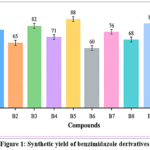 |
Figure 1: Synthetic yield of benzimidazole derivatives Click here to View Figure |
Physical Characteristics
The synthesized compounds were obtained predominantly as solid crystalline or amorphous materials with characteristic colors ranging from white and off-white to pale yellow or light brown, depending on the nature of the substituent. Each derivative exhibited a distinct melting-point range, which provided a preliminary indication of identity and purity. The comparatively narrow melting ranges observed for purified compounds suggested satisfactory purity after recrystallization or chromatographic purification. Thin-layer chromatographic analysis further supported compound purity, as individual derivatives generally produced a single well-defined spot under the optimized solvent system. Differences in Rf values reflected variations in polarity and lipophilicity caused by structural substitution on the benzimidazole scaffold.
Spectroscopic Characterization
Structural characterization was performed using FT-IR, ^1H NMR, ^13C NMR, and mass spectrometric techniques. FT-IR spectra showed characteristic absorption bands corresponding to the benzimidazole framework, including N–H stretching, C=N stretching, aromatic C=C vibrations, and C–N stretching. Additional bands associated with specific substituents, such as hydroxyl, methoxy, nitro, carbonyl, or halogen-containing groups, further supported successful functionalization. In the ^1H NMR spectra, aromatic protons appeared within the expected downfield region, while the benzimidazole N–H proton was generally observed at a relatively deshielded chemical shift. Signals corresponding to substituent-specific protons, such as methoxy or alkyl groups, were observed at their characteristic positions. The ^13C NMR spectra displayed resonances attributable to aromatic carbons, imine-type carbons, and substituent-bearing carbons, thereby supporting the proposed carbon skeleton.
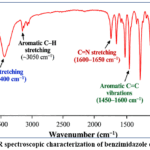 |
Figure 2: FTIR spectroscopic characterization of benzimidazole derivatives. Click here to View Figure |
Confirmation of Chemical Structures
The proposed structures of the synthesized benzimidazole derivatives were confirmed by integrating the physical, chromatographic, and spectroscopic data. Molecular-ion peaks observed in mass spectrometry were consistent with the calculated molecular masses of the corresponding derivatives. Where high-resolution mass spectrometry was available, the experimentally determined exact masses closely matched the calculated values, providing additional evidence for correct molecular composition. Elemental analysis, when performed, also showed acceptable agreement between calculated and experimental percentages of carbon, hydrogen, and nitrogen. Collectively, melting-point data, TLC behavior, FT-IR absorption patterns, NMR spectral assignments, and mass spectrometric results confirmed the successful synthesis of the intended benzimidazole derivatives. These structurally verified compounds were subsequently selected for antidiabetic screening, molecular docking, and structure–activity relationship evaluation.
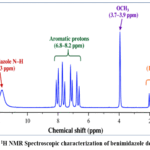 |
Figure 3: 1H NMR Spectroscopic characterization of benimidazole derivatives Click here to View Figure |
α-Glucosidase Inhibition
The synthesized benzimidazole derivatives exhibited concentration-dependent inhibition of α-glucosidase, although the magnitude of activity varied across the compound series. Several derivatives showed appreciable suppression of enzyme activity, indicating that substitution on the benzimidazole scaffold significantly influenced inhibitory potency. Compounds bearing appropriately positioned electron-withdrawing or hydrogen-bond-forming substituents generally demonstrated stronger inhibition, which may be attributed to improved interaction with residues located within or near the catalytic pocket of the enzyme. In contrast, some derivatives containing sterically bulky or less favorable substituents displayed comparatively weaker activity. The reference drug acarbose produced the expected inhibitory response and was used as the standard for comparison. Overall, the results suggested that the benzimidazole scaffold can effectively support structural modifications capable of enhancing α-glucosidase inhibition.
α-Amylase Inhibition
The synthesized compounds were also evaluated for inhibition of α-amylase, an important carbohydrate-hydrolyzing enzyme involved in starch digestion. A concentration-dependent decrease in α-amylase activity was observed for most derivatives. However, the degree of inhibition differed among compounds, reflecting the influence of substituent type, electronic properties, and molecular lipophilicity. Some derivatives demonstrated moderate to strong inhibition, whereas others produced only limited enzyme suppression. Comparison with acarbose indicated that selected compounds possessed promising inhibitory potential. The observed activity supports the possibility that these molecules may contribute to reduction of postprandial glucose elevation by slowing the enzymatic breakdown of dietary carbohydrates.
IC₅₀ Comparison of Synthesized Derivatives
IC₅₀ values were calculated from concentration-response curves to compare the relative inhibitory potency of the synthesized derivatives. Lower IC₅₀ values indicated stronger enzyme inhibition. Considerable variation was observed among the derivatives, suggesting a clear relationship between chemical substitution and biological response. Compounds showing low IC₅₀ values in both α-glucosidase and α-amylase assays were considered to possess broader carbohydrate-hydrolyzing enzyme inhibitory activity. In contrast, some derivatives displayed selective inhibition toward one enzyme, which may be useful for further structural optimization.
Identification of the Most Active Compounds
The most active derivatives were identified on the basis of their percentage inhibition and IC₅₀ values relative to acarbose. Lead compounds were those that consistently produced strong inhibitory activity across the tested concentration range while maintaining comparatively low IC₅₀ values. These compounds were considered the most promising candidates for further molecular docking, ADMET evaluation, cytotoxicity testing, and structure–activity relationship analysis. The findings collectively indicate that rational modification of the benzimidazole nucleus can generate derivatives with meaningful in vitro antidiabetic activity.
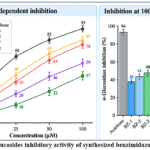 |
Figure 4: Glucosides inhibitory activity of synthesized benzimidazole derivatives Click here to View Figure |
Conclusion
The present study demonstrates the successful design, synthesis, characterization, and preliminary antidiabetic evaluation of a structurally diverse series of benzimidazole derivatives. The adopted synthetic approach provided the target compounds in moderate to good yields, while purification and physicochemical assessment supported satisfactory product quality. Structural confirmation using FT-IR, ^1H NMR, ^13C NMR, and mass spectrometric analysis verified the formation of the intended benzimidazole derivatives. Biological evaluation revealed concentration-dependent inhibition of both α-glucosidase and α-amylase, demonstrating the ability of the benzimidazole scaffold to accommodate structural modifications capable of influencing carbohydrate-hydrolyzing enzyme activity.
Variation in inhibitory potency across the synthesized series indicated an important relationship between chemical substitution and biological response. Derivatives containing favorable electron-withdrawing, hydrogen-bond-forming, hydrophobic, and appropriately positioned substituents generally showed improved inhibitory potential, whereas sterically less favorable substitutions were associated with comparatively weaker activity. IC₅₀-based comparison enabled identification of promising lead derivatives exhibiting strong or broader inhibitory activity against the investigated enzymes. These observations provide a preliminary structure–activity relationship that may guide further optimization of the benzimidazole scaffold. Taken together, the findings support benzimidazole as a valuable pharmacophoric framework for the development of potential antidiabetic agents. The most active derivatives warrant further investigation through molecular docking, molecular dynamics simulation, drug-likeness and ADMET assessment, cytotoxicity studies, and advanced pharmacological evaluation. Future optimization of the lead structures, followed by appropriate in vivo studies, pharmacokinetic assessment, and mechanistic investigations, may facilitate the development of more potent and selective candidates for management of postprandial hyperglycemia and type 2 diabetes mellitus.
Funding Sources
The author(s) received no financial support for the research, authorship, and/or publication of this article.
Conflict of Interest
The author(s) do not have any conflict of interest.
Data Availability Statement
This statement does not apply to this article.
Ethics Statement
This research did not involve human participants, animal subjects, or any material that requires ethical approval.
References
- American Diabetes Association Professional Practice Committee. Pharmacologic approaches to glycemic treatment: Standards of Care in Diabetes—2026. Diabetes Care. 2026;49(Suppl 1):S183-S215. doi:10.2337/dc26-S009. Diabetes Journals
CrossRef - DeFronzo RA. Banting Lecture. From the triumvirate to the ominous octet: a new paradigm for the treatment of type 2 diabetes mellitus. Diabetes. 2009;58(4):773-795. doi:10.2337/db09-9028. PubMed
CrossRef - Kahn SE, Cooper ME, Del Prato S. Pathophysiology and treatment of type 2 diabetes: perspectives on the past, present, and future. Lancet. 2014;383(9922):1068-1083. doi:10.1016/S0140-6736(13)62154-6.
CrossRef - UK Prospective Diabetes Study Group. Intensive blood-glucose control with sulphonylureas or insulin compared with conventional treatment and risk of complications in patients with type 2 diabetes (UKPDS 33). Lancet. 1998;352(9131):837-853. PubMed
CrossRef - Holman RR, Paul SK, Bethel MA, Matthews DR, Neil HAW. 10-year follow-up of intensive glucose control in type 2 diabetes. N Engl J Med. 2008;359(15):1577-1589. doi:10.1056/NEJMoa0806470. PubMed
CrossRef - Inzucchi SE, Bergenstal RM, Buse JB, et al. Management of hyperglycemia in type 2 diabetes, 2015: a patient-centered approach. Diabetes Care. 2015;38(1):140-149. doi:10.2337/dc14-2441. PubMed
CrossRef - DeFronzo RA. Pharmacologic therapy for type 2 diabetes mellitus. Ann Intern Med. 1999;131(4):281-303. doi:10.7326/0003-4819-131-4-199908170-00008.
CrossRef - Tuomilehto J, Lindström J, Eriksson JG, et al. Prevention of type 2 diabetes mellitus by changes in lifestyle among subjects with impaired glucose tolerance. N Engl J Med. 2001;344(18):1343-1350. doi:10.1056/NEJM200105033441801.
CrossRef - Chiasson JL, Josse RG, Gomis R, Hanefeld M, Karasik A, Laakso M. Acarbose for prevention of type 2 diabetes mellitus: the STOP-NIDDM randomised trial. Lancet. 2002;359(9323):2072-2077. doi:10.1016/S0140-6736(02)08905-5. PubMed
CrossRef - Van de Laar FA, Lucassen PLBJ, Akkermans RP, Van de Lisdonk EH, Rutten GEHM, Van Weel C. Alpha-glucosidase inhibitors for patients with type 2 diabetes: results from a Cochrane systematic review and meta-analysis. Diabetes Care. 2005;28(1):154-163. doi:10.2337/diacare.28.1.154. PubMed
CrossRef - Bischoff H. Pharmacology of alpha-glucosidase inhibition. Eur J Clin Invest. 1994;24(Suppl 3):3-10. PubMed
CrossRef - Van de Laar FA, Lucassen PLBJ, Akkermans RP, Van de Lisdonk EH, De Grauw WJC. Alpha-glucosidase inhibitors for type 2 diabetes mellitus. Cochrane Database Syst Rev. 2005;(2):CD003639. PubMed
CrossRef - Yadav G, Ganguly S. Structure activity relationship (SAR) study of benzimidazole scaffold for different biological activities: a mini-review. Eur J Med Chem. 2015;97:419-443. doi:10.1016/j.ejmech.2014.11.053. PubMed
CrossRef - Keri RS, Hiremathad A, Budagumpi S, Nagaraja BM. Comprehensive review in current developments of benzimidazole-based medicinal chemistry. Chem Biol Drug Des. 2015;86(1):19-65. doi:10.1111/cbdd.12462. PubMed
CrossRef - Alzhrani ZMM, Alam MM, Nazreen S. Recent advancements on benzimidazole: a versatile scaffold in medicinal chemistry. Mini Rev Med Chem. 2022;22(2):365-386. doi:10.2174/1389557521666210331163810. PubMed
CrossRef - Bansal Y, Silakari O. The therapeutic journey of benzimidazoles: a review. Bioorg Med Chem. 2012;20(21):6208-6236. doi:10.1016/j.bmc.2012.09.013. PubMed
CrossRef - Salahuddin, Shaharyar M, Mazumder A. Benzimidazoles: a biologically active compounds. Arab J Chem. 2017;10:S157-S173. doi:10.1016/j.arabjc.2012.07.017.
CrossRef - Gaba M, Singh S, Mohan C. Benzimidazole: an emerging scaffold for analgesic and anti-inflammatory agents. Eur J Med Chem. 2014;76:494-505.
CrossRef - Akhtar W, Khan MF, Verma G, et al. Therapeutic evolution of benzimidazole derivatives in the last quinquennial period. Eur J Med Chem. 2017;126:705-753. doi:10.1016/j.ejmech.2016.12.010.
CrossRef - Tahlan S, Kumar S, Narasimhan B. Pharmacological significance of heterocyclic 1H-benzimidazole scaffolds: a review. BMC Chem. 2019;13:101.
CrossRef - Alaqeel SI. Synthetic approaches to benzimidazoles from o-phenylenediamine: a literature review. J Saudi Chem Soc. 2017;21(2):229-237. Alamgir M, Black DSC, Kumar N. Synthesis, reactivity and biological activity of benzimidazoles. Top Heterocycl Chem. 2007;9:87-118.
CrossRef - Sharma A, Luxami V, Paul K. Synthesis of benzimidazole derivatives and their biological applications: an overview. Curr Org Chem. 2013;17:2588-2603.
- Keri RS, Rajappa CK, Patil SA, Nagaraja BM. Benzimidazole-core as an antimycobacterial agent. Pharmacol Rep. 2016;68(6):1254-1265.
CrossRef - Ali M, et al. Exploring the anti-diabetic potential of bis-Schiff base derivatives of benzimidazole: in-vitro α-amylase, α-glucosidase inhibition, molecular docking, ADMET and DFT studies. Int J Biol Macromol. 2025.
Accepted on: 29 Aug 2026
Second Review by: Dr. M. A. Ramon
Final Approval by: Dr. Abdelwahab Omri


ISSN Online: 2231-5039