Effect of Different Agronomic Practices on Soil Physicochemical Properties, Nutrient Availability and Productivity of Field Crops
 , Satyamaya Satapathy2*, K. Selvarani3, Devendra Singh4, Rajeev Sarraf5, Susree Snigdha Das6, Sushmita Konwar7, Amit Kumar Pandey8and Gurpreet Singh9
1AICRP on Sunflower, Odisha University of Agriculture and Technology, Bhubaneswar, Odisha, India
2Krishi Vigyan Kendra, Balangir, OUAT, Odisha, India
3Seed Science and Technology, Kalasalingam School of Agriculture and Horticulture, Kalasalingam Academy of Research and Education, Virudhunagar, Tamil Nadu, India
4Soil Science and Agricultural Chemistry, Banda University of Agriculture and Technology, Banda, Uttar Pradesh, India
5Institute of Biomedical & Natural Sciences (An Autonomous College), Manduwala, Dehradun, Uttarakhand, India
6Department of Agronomy, College of Agriculture, Odisha University of Agriculture and Technology, Bhubaneswar, Odisha, India
7Faculty of Agricultural Sciences and Technology, Assam down town University, Panikhaiti, Guwahati, Assam, India
8Department of Soil Science, Bihar Agricultural University, Sabour, Bhagalpur, India
9Department of Horticulture, Guru Kashi University, Talwandi Sabo, Bathinda, Punjab, India
Corresponding Author E-mail:ssatapathy@ouat.ac.in
Download this article as:
ABSTRACT:Soil health and crop productivity are strongly influenced by agronomic practices that regulate soil structure, nutrient availability, water dynamics, biological activity, organic carbon storage, and the overall resilience of agricultural systems. This review examines the major interactions between agronomic management and soil fertility, with emphasis on soil physicochemical properties, nutrient cycling, tillage systems, organic and inorganic fertilization, irrigation management, conservation agriculture, biofertilizers, weed management, precision agriculture, and crop-specific responses. Soil properties such as texture, structure, bulk density, porosity, water-holding capacity, pH, electrical conductivity, soil organic carbon, cation-exchange capacity, and aggregate stability determine the ability of soils to supply nutrients and support crop growth. Sustainable tillage, residue retention, organic amendments, balanced fertilization, diversified crop rotations, efficient irrigation, and microbial-based inputs can improve soil structure, nutrient-use efficiency, microbial activity, and water conservation. In contrast, excessive tillage, imbalanced fertilizer application, residue removal, inefficient irrigation, and continuous nutrient extraction may accelerate soil degradation, nutrient depletion, acidification, salinization, and greenhouse gas emissions. Conservation agriculture and integrated nutrient management provide important opportunities to improve soil organic carbon sequestration and long-term productivity, while precision agriculture, variable-rate nutrient application, remote sensing, drones, Internet of Things-based sensors, and artificial intelligence are creating new possibilities for site-specific agronomic management. The review also highlights the importance of managing acidic, saline, sodic, compacted, nutrient-deficient, and eroded soils through targeted reclamation and amendment strategies. Long-term field experiments remain essential for understanding changes in soil carbon stocks, nutrient balances, biological properties, and yield sustainability. Future research should integrate regenerative agriculture, climate-resilient cropping systems, nano-enabled and controlled-release fertilizers, microbiome-based soil management, digital decision-support systems, and long-term soil-health monitoring. Overall, sustainable agronomic management requires an integrated, site-specific approach that combines physical, chemical, biological, technological, and socioeconomic considerations to maintain soil fertility, improve resource-use efficiency, enhance crop productivity, and strengthen agricultural resilience under changing climatic conditions.
KEYWORDS:Agronomic practices; Biofertilizers; Conservation agriculture; Climate-resilient agriculture; Integrated nutrient management; Nutrient cycling; Precision agriculture; Soil health; Soil fertility; Soil organic carbon
Introduction
Soil quality is a fundamental determinant of sustainable agricultural production because it regulates plant growth, nutrient cycling, water availability, biological activity, and the overall resilience of agroecosystems. Productive soils provide a suitable physical environment for root proliferation while maintaining adequate supplies of water, oxygen, and essential mineral nutrients. In addition to supporting crop productivity, healthy soils contribute to important ecosystem services such as carbon sequestration, water purification, erosion control, nutrient recycling, and maintenance of biodiversity. Intensive cultivation, excessive tillage, unbalanced fertilization, residue removal, monocropping, and inappropriate irrigation can progressively deteriorate soil quality by reducing organic matter, disrupting soil structure, increasing compaction, and altering nutrient balances. Sustainable crop production therefore depends on management practices that maintain or improve soil physical, chemical, and biological functions. Conservation tillage, crop rotation, residue retention, organic amendments, integrated nutrient management, cover cropping, and efficient irrigation are increasingly recognized as important strategies for maintaining soil quality while sustaining high crop yields. Soil quality should consequently be considered not merely in terms of immediate nutrient supply but as the capacity of soil to function effectively over the long term under changing climatic and management conditions.
Relationship Between Agronomic Management and Soil Health
Agronomic management directly influences soil health through modifications in soil structure, organic carbon content, nutrient transformations, moisture dynamics, and microbial activity. Practices such as tillage, fertilization, irrigation, crop rotation, residue management, and organic amendment application can produce beneficial or adverse effects depending on their intensity and duration. Intensive conventional tillage, for example, may temporarily improve seedbed conditions but repeated soil disturbance accelerates organic matter decomposition and can reduce aggregate stability. In contrast, reduced or zero tillage combined with crop residue retention generally promotes carbon accumulation, improves soil aggregation, and enhances biological activity near the soil surface. Similarly, continuous use of high rates of mineral fertilizers without adequate organic inputs may result in soil acidification or nutrient imbalance, whereas integrated use of organic and inorganic nutrient sources can improve nutrient availability while maintaining soil organic matter. Crop diversification and inclusion of legumes further improve nutrient cycling, particularly biological nitrogen fixation. Thus, soil health is the cumulative outcome of interacting agronomic practices rather than the result of a single management intervention. Sustainable management seeks to optimize these interactions so that productivity is maintained without compromising long-term soil functions.
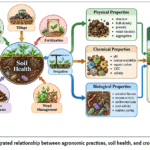 |
Figure 1: Integrated relationship between agronomic practices, soil health, and crop productivity Click here to View Figure |
Soil Physicochemical Properties as Indicators of Soil Fertility
Soil physicochemical properties provide measurable indicators of fertility and determine the capacity of soil to support crop growth. Physical characteristics such as texture, bulk density, porosity, aggregation, infiltration, and water-holding capacity regulate root penetration, aeration, water movement, and resistance to erosion. Chemical properties, including soil pH, electrical conductivity, organic carbon, cation-exchange capacity, and available nutrient concentrations, govern nutrient solubility, retention, and uptake by plants. These characteristics are strongly interconnected. For instance, soils rich in organic matter generally possess better aggregate stability, greater cation-exchange capacity, enhanced water-holding capacity, and improved nutrient availability. Monitoring changes in physicochemical indicators therefore provides an effective approach for evaluating the impact of agronomic practices and identifying soil degradation before substantial reductions in productivity occur.
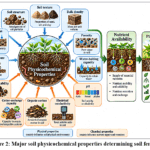 |
Figure 2: Major soil physicochemical properties determining soil fertility Click here to View Figure |
Nutrient Availability and Crop Productivity
Crop productivity is closely associated with the availability and balanced supply of essential plant nutrients. Nitrogen, phosphorus, and potassium are required in comparatively large quantities, while secondary nutrients and micronutrients are essential for physiological and biochemical processes. However, total nutrient concentration in soil does not necessarily represent plant-available nutrient status. Nutrient availability is controlled by soil pH, organic matter, moisture, temperature, microbial processes, mineral composition, and interactions among nutrients. Improper fertilization can cause nutrient deficiencies, toxicities, leaching losses, or environmental contamination. Agronomic strategies that synchronize nutrient release with crop demand can enhance nutrient-use efficiency and reduce losses. Integrated nutrient management, soil-test-based fertilization, biofertilizers, residue recycling, and precision nutrient application therefore provide important tools for improving both soil fertility and crop productivity.
Soil Texture and Structure
Soil texture represents the relative proportions of sand, silt, and clay and is largely an inherent soil characteristic. It strongly influences water retention, nutrient-holding capacity, aeration, and drainage. Soil structure, in contrast, describes the arrangement of primary soil particles into aggregates and can be substantially altered by management. Stable granular structures promote root growth, water infiltration, and gas exchange. Organic amendments, residue retention, reduced tillage, and biological activity generally improve soil structure, whereas repeated intensive tillage and compaction can promote structural degradation.
Bulk Density and Particle Density
Bulk density represents the mass of dry soil per unit bulk volume and is widely used as an indicator of soil compaction. High bulk density restricts root penetration and decreases pore space and infiltration. Particle density refers to the density of individual soil solids and is generally less responsive to short-term agronomic management. Conservation tillage, incorporation of organic materials, and increased soil organic carbon can gradually decrease bulk density and improve soil physical conditions.
Soil Porosity and Aeration
Soil porosity determines the proportion of pore spaces available for water and air movement. Macropores facilitate drainage and aeration, whereas micropores are particularly important for water retention. Compaction reduces total porosity and limits oxygen diffusion to plant roots. Practices that increase organic matter and promote aggregation improve pore connectivity and establish favorable conditions for root respiration and microbial processes.
Soil Moisture Retention and Water-Holding Capacity
Adequate soil moisture is essential for nutrient dissolution, transport, microbial activity, and crop physiological processes. Water-holding capacity is influenced by texture, structure, organic matter, and pore-size distribution. Clayey and organic-matter-rich soils usually retain more water than coarse-textured soils. Residue mulching, conservation tillage, compost, farmyard manure, and biochar can reduce evaporation and increase plant-available water, thereby improving crop performance under moisture-limited conditions.
Soil pH
Soil pH is among the most important chemical indicators of soil fertility because it regulates nutrient solubility and microbial activity. Most field crops perform effectively under slightly acidic to neutral conditions. Strong acidity may increase aluminium and manganese toxicity while reducing phosphorus availability, whereas alkaline conditions may limit the availability of iron, zinc, manganese, and phosphorus. Liming, fertilizer selection, organic amendments, and appropriate irrigation management can help maintain favorable soil pH.
Electrical Conductivity
Electrical conductivity reflects the concentration of soluble salts in the soil solution and is commonly used to assess salinity. Excessive salt accumulation increases osmotic stress, restricts plant water uptake, and may cause ionic toxicity. Irrigation quality, inadequate drainage, excessive fertilizer application, and high evaporation can increase soil salinity. Efficient irrigation scheduling, drainage, and balanced fertilization are therefore important for maintaining acceptable electrical conductivity.
Soil Organic Carbon and Organic Matter
Soil organic carbon and organic matter are central components of soil fertility and influence almost every soil function. They enhance nutrient retention, aggregate formation, microbial activity, water-holding capacity, and buffering against environmental stresses. Practices such as residue incorporation, manure and compost application, cover cropping, crop rotation, and reduced tillage can increase or preserve soil organic carbon. Maintaining adequate organic matter is particularly important for sustaining long-term productivity and improving soil resilience.
Cation-Exchange Capacity
Cation-exchange capacity represents the capacity of soil to retain positively charged nutrient ions such as calcium, magnesium, potassium, and ammonium. Soils containing greater quantities of clay and organic matter generally have higher cation-exchange capacities and are consequently better able to retain nutrients against leaching. Increasing soil organic matter through appropriate agronomic practices can therefore improve nutrient-retention capacity and fertilizer-use efficiency.
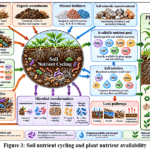 |
Figure 3: Soil nutrient cycling and plant nutrient availability Click here to View Figure |
Soil Aggregate Stability
Aggregate stability describes the resistance of soil aggregates to disruption by water, mechanical disturbance, or other external forces. Stable aggregates reduce erosion, improve pore continuity, promote infiltration, and protect organic carbon from rapid decomposition. Root exudates, microbial products, fungal hyphae, and organic matter act as binding agents. Reduced tillage, crop residue retention, organic amendments, and diversified cropping systems generally favor aggregate formation and stability.
Soil Temperature and Infiltration Characteristics
Soil temperature influences seed germination, root development, nutrient mineralization, microbial activity, and crop growth, while infiltration determines the rate at which water enters the soil profile. Agronomic management can substantially modify both characteristics. Crop residues and mulches buffer fluctuations in soil temperature, reduce evaporation, and protect the soil surface from crusting. Improved soil aggregation and continuous macropores under conservation practices enhance infiltration and reduce runoff. Consequently, management strategies that improve soil cover, organic matter, and structural stability can simultaneously create favorable thermal and hydrological conditions, thereby strengthening nutrient availability, water-use efficiency, and the productivity and resilience of field crops.
Soil Nutrient Availability and Plant Nutrition
Soil nutrient availability is one of the most important determinants of plant growth, crop productivity, and long-term agricultural sustainability. Although agricultural soils may contain considerable quantities of essential nutrients, only a fraction is present in forms that can be absorbed by plant roots. Nutrient availability is governed by complex interactions among soil pH, texture, moisture, temperature, organic matter, cation-exchange capacity, microbial activity, aeration, and management practices. Nitrogen is required in comparatively large amounts because it forms essential components of amino acids, proteins, enzymes, nucleic acids, chlorophyll, and several plant metabolites. Soil nitrogen occurs primarily in organic forms associated with soil organic matter and crop residues, whereas plants predominantly absorb nitrogen as nitrate and ammonium. Organic nitrogen becomes available through mineralization, during which soil microorganisms convert organic compounds into ammonium, followed by nitrification in well-aerated soils to form nitrate. Conversely, nitrogen can temporarily become unavailable through microbial immobilization when microorganisms utilize inorganic nitrogen while decomposing residues with a high carbon-to-nitrogen ratio. Nitrogen availability is also affected by losses through nitrate leaching, ammonia volatilization, surface runoff, and denitrification under waterlogged or anaerobic conditions. Thus, synchronization of nitrogen release with crop demand is essential for increasing nitrogen-use efficiency and minimizing environmental losses.
Phosphorus is indispensable for plant energy transfer, photosynthesis, respiration, nucleic-acid synthesis, membrane formation, root development, flowering, and seed formation. However, phosphorus availability is frequently limited even in soils containing substantial total phosphorus because phosphate ions readily interact with soil minerals. In acidic soils, soluble phosphorus may be strongly adsorbed or precipitated with iron and aluminium compounds, whereas in alkaline or calcareous soils it can react with calcium to form comparatively insoluble calcium phosphates. Consequently, phosphorus availability is generally greatest within moderately acidic to neutral soil pH conditions. Soil organic matter can enhance phosphorus availability by releasing organic acids that compete for adsorption sites and by supporting microorganisms capable of mineralizing organic phosphorus. Mycorrhizal fungi are also particularly important because their extensive hyphal networks explore a greater volume of soil than roots alone and can increase phosphorus acquisition. Because phosphate mobility in soil is relatively low, localized fertilizer placement, maintenance of favorable soil pH, organic amendments, and biologically active rhizospheres can substantially improve phosphorus-use efficiency.
Potassium is another essential macronutrient involved in osmoregulation, enzyme activation, stomatal movement, photosynthesis, carbohydrate transport, water-use efficiency, lodging resistance, and tolerance to abiotic stress. Soil potassium exists in solution, exchangeable, non-exchangeable, and mineral structural forms. Soil-solution potassium is immediately available to plant roots, while exchangeable potassium associated with clay minerals and organic colloids replenishes the soil solution as plants remove potassium. Non-exchangeable potassium can gradually become available, whereas structural potassium contained within primary minerals is released only slowly through weathering. Therefore, clay mineralogy, cation-exchange capacity, soil moisture, cropping intensity, and residue management strongly regulate potassium dynamics. Intensive crop removal without adequate replenishment can progressively reduce exchangeable reserves, even in soils traditionally considered rich in potassium. Returning crop residues can be especially effective because a large proportion of plant potassium is present in soluble ionic form and can rapidly return to soil following residue decomposition.
Sulfur contributes to sulfur-containing amino acids such as cysteine and methionine, proteins, vitamins, enzymes, and chloroplast functions. Most sulfur in surface soils is associated with organic matter and must undergo microbial mineralization before becoming available as sulfate, the major form absorbed by plants. Sulfur deficiencies have become increasingly important in intensively cultivated regions because of higher crop yields, reduced atmospheric sulfur deposition, greater use of concentrated fertilizers containing little sulfur, and removal of crop residues. Mineralization of organic sulfur is affected by temperature, moisture, aeration, residue quality, and microbial activity. Maintaining soil organic matter and supplying sulfur-containing fertilizers or organic amendments can therefore improve sulfur nutrition.
Calcium and magnesium perform both nutritional and soil-conditioning functions. Calcium contributes to cell-wall structure, membrane stability, root growth, cell signaling, and physiological regulation, whereas magnesium is the central atom of chlorophyll and is involved in numerous enzymatic and phosphorylation reactions. Both nutrients occur as exchangeable cations on soil colloids and their availability is strongly related to parent material, soil pH, cation-exchange capacity, leaching intensity, and competing cations. Acidic and highly weathered soils frequently contain low concentrations of exchangeable calcium and magnesium because they have been displaced by hydrogen and aluminium and subsequently leached. Liming acidic soils can simultaneously correct soil acidity and supply calcium, while dolomitic lime provides both calcium and magnesium.
Micronutrients, including iron, zinc, manganese, copper, boron, and molybdenum, are required in much smaller quantities but are equally essential for normal plant metabolism. Iron participates in electron transport, chlorophyll formation, and enzyme systems; zinc is involved in enzyme activation, protein synthesis, growth regulation, and auxin metabolism; manganese contributes to photosynthetic reactions and enzyme activation; and copper plays roles in redox reactions, lignification, and reproductive development. Boron is critical for cell-wall formation, membrane function, sugar transport, flowering, and pollen development, whereas molybdenum is required for nitrate reduction and biological nitrogen fixation. Their availability is particularly sensitive to soil pH. Iron, zinc, manganese, and copper generally become less soluble as soil pH increases, which explains why deficiencies are frequently observed in calcareous soils, while molybdenum availability generally increases with increasing pH. Organic matter can form soluble or stable complexes with micronutrients and thereby modify their mobility, retention, and plant availability. Excessive application of one nutrient may also induce antagonistic effects on the absorption of others; therefore, balanced fertilization should be based on soil testing, crop requirement, and site-specific nutrient management.
Mineralization and immobilization represent fundamental biological mechanisms regulating nutrient cycling. During mineralization, soil microorganisms decompose organic residues and release nutrients into inorganic forms that can subsequently be absorbed by plants. During immobilization, microorganisms incorporate available inorganic nutrients into their biomass, temporarily decreasing the amount available to crops. The balance between these processes depends strongly on residue composition, particularly its carbon-to-nitrogen ratio, lignin content, environmental conditions, and microbial population. Residues with narrow carbon-to-nitrogen ratios commonly mineralize nitrogen relatively rapidly, whereas cereal straw and other carbon-rich residues may initially cause nitrogen immobilization. As decomposition continues, microbial biomass eventually turns over and nutrients are released again. Efficient nutrient management therefore requires consideration not only of fertilizer inputs but also of biological nutrient cycling.
Nutrient-use efficiency describes the effectiveness with which applied or soil-derived nutrients are captured by crops and converted into economically useful yield. Improvement in nutrient-use efficiency requires synchronization of nutrient supply with crop demand, appropriate fertilizer rate, timing and placement, balanced nutrient application, improved soil structure, sufficient soil moisture, suitable crop varieties, residue recycling, organic amendments, and reduction of nutrient losses. Integrated nutrient management combining mineral fertilizers with organic resources can improve nutrient availability while maintaining soil organic matter and microbial activity. Such strategies can reduce dependence on excessive fertilizer applications and improve the resilience and sustainability of field-crop production systems.
Effect of Tillage Practices on Soil Properties and Crop Productivity
Tillage influences soil physical structure, organic matter dynamics, nutrient cycling, water relations, biological activity, weed management, root growth, and ultimately crop productivity. Conventional tillage commonly involves repeated plowing, harrowing, and seedbed preparation. It can temporarily reduce soil bulk density, loosen the surface layer, incorporate residues and fertilizers, and facilitate weed control and seedling establishment. However, frequent intensive disturbance breaks soil aggregates, accelerates organic-matter decomposition, exposes soil to wind and water erosion, disrupts biological habitats, and can produce compacted layers beneath the tilled zone. USDA-NRCS guidance notes that intensive tillage can damage soil structure, reduce organic matter and infiltration, and increase susceptibility to erosion and runoff. Consequently, the apparent short-term physical improvement associated with plowing may be accompanied by long-term deterioration when intensive tillage is continuously practiced without adequate residue or organic-matter management.
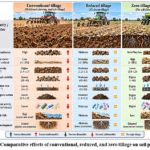 |
Figure 4: Comparative effects of conventional, reduced, and zero tillage on soil properties Click here to View Figure |
Minimum and reduced tillage decrease the frequency or intensity of mechanical soil disturbance while maintaining sufficient seedbed preparation for crop establishment. By leaving more crop residue at the soil surface, these systems generally reduce erosion, moderate soil temperature, conserve moisture, and limit rapid oxidation of organic carbon. Zero tillage or no-tillage involves direct sowing into undisturbed soil with crop residues retained at the surface. During the initial transition period, no-till soils may show greater surface bulk density than freshly cultivated soils; however, long-term management encourages the development of continuous root channels, earthworm pores, stable aggregates, and improved structural continuity. Evidence summarized by USDA-NRCS indicates that infiltration frequently increases under established no-till systems as continuous pores develop, while residue retention can further improve soil-water availability. No-till also reduces soil disturbance and fossil-fuel use and may support greater plant-available moisture and soil-carbon conservation.
Conservation tillage represents a broader management approach in which soil disturbance is minimized and sufficient residues are retained to protect the soil surface. The combined effects of reduced mechanical disruption and residue cover can improve aggregate stability, reduce crust formation, slow surface runoff, enhance infiltration, moderate evaporation, and protect soil against erosive rainfall. These improvements are particularly valuable in rainfed cropping systems where conservation of stored soil water determines crop performance during dry periods. Nevertheless, responses to conservation tillage vary with soil texture, climate, crop rotation, residue quantity, drainage, weed pressure, and duration of implementation. Deep tillage and subsoiling are used in soils containing mechanically resistant compacted layers that restrict root penetration, aeration, infiltration, and drainage. Breaking a restrictive hardpan can temporarily increase effective rooting depth and improve water movement, but benefits may be short-lived if heavy machinery or inappropriate field traffic causes recompaction. Deep tillage should therefore be applied selectively according to diagnosed soil constraints rather than as a routine operation.
Tillage systems strongly affect bulk density, porosity, aggregation, soil organic carbon, nutrient availability, and crop water relationships. Intensive cultivation disrupts aggregates and exposes physically protected organic matter to microbial decomposition, potentially accelerating carbon loss. Reduced tillage can promote organic-carbon accumulation near the surface, although the magnitude and depth distribution of carbon changes differ among soils, climates and crop rotations. No-till and conservation systems can increase surface residue retention and biological activity, thereby facilitating nutrient recycling. Reduced disturbance also protects fungal hyphae and soil fauna involved in aggregation and nutrient transformations. Through better aggregation and surface protection, conservation-based systems frequently improve rainfall infiltration and decrease runoff and evaporation. USDA-NRCS reports that long-term reduced/no-till soils often contain greater organic matter and moisture available for plant use, although outcomes depend on complementary practices such as crop rotation and residue retention. Crop-yield responses therefore depend on the interaction between tillage, soil type, climate, nutrient management, weed control, and cropping system rather than on tillage intensity alone.
Effect of Organic Amendments on Soil Fertility
Organic amendments are fundamental components of sustainable soil-fertility management because they provide nutrients while simultaneously influencing soil physical, chemical, and biological properties. Farmyard manure supplies nitrogen, phosphorus, potassium, sulfur and several micronutrients together with organic carbon. Regular application can improve aggregate stability, cation-exchange capacity, moisture retention, microbial activity, and nutrient-buffering capacity. Nutrients in farmyard manure are released gradually through decomposition, providing a longer-term nutrient source than many highly soluble mineral fertilizers. However, nutrient composition and release depend on animal species, feed, bedding material, storage conditions, decomposition stage, and application method.
Compost and vermicompost contain stabilized organic matter produced through controlled biological decomposition. Their incorporation can improve soil structure, water-holding capacity, cation exchange, microbial diversity, and nutrient availability. Vermicompost additionally contains biologically transformed organic matter produced through interactions between earthworms and microorganisms and often provides readily mineralizable nutrients and biologically active compounds. Green manuring involves growing crops, frequently legumes, and incorporating or retaining their biomass to add organic matter and nutrients. Leguminous green manures can contribute biologically fixed nitrogen while stimulating soil biological activity. Crop residues likewise play an important role in recycling nutrients removed from soil during plant growth. Their retention protects the soil surface, reduces erosion and evaporation, contributes carbon substrates for microorganisms, and returns substantial quantities of nutrients, particularly potassium. However, high-carbon residues may temporarily immobilize nitrogen during early decomposition.
Biochar is a relatively stable carbon-rich material produced by thermal conversion of biomass under limited oxygen conditions. Its porous structure and physicochemical properties can influence soil water retention, cation-exchange capacity, nutrient retention, microbial habitats, soil acidity, and carbon storage. Biochar effects vary substantially according to feedstock, pyrolysis conditions, application rate, soil properties, crop type, and environmental conditions; therefore, responses should not be assumed to be universally positive. Combining biochar with compost may provide complementary advantages because biochar can retain nutrients released by compost while compost supplies readily available nutrients and active microbial substrates. Reviews have reported improvements in soil quality and crop performance from biochar-compost combinations, although long-term field responses remain dependent on local soil and climatic conditions.
Poultry manure and other animal manures are valuable nutrient-rich amendments and can provide appreciable nitrogen, phosphorus, potassium, calcium and micronutrients. Poultry manure generally contains relatively high nutrient concentrations and can rapidly increase nutrient availability, but inappropriate application may result in nutrient accumulation, ammonia loss, nitrate leaching, phosphorus runoff, salinity, or sanitary concerns. Proper composting, application timing, rate adjustment, and incorporation can reduce these risks. Overall, organic amendments increase soil organic-carbon inputs and supply substrates that support bacteria, fungi, earthworms, and other soil organisms. Greater microbial activity promotes decomposition, nutrient mineralization, aggregate formation, and biologically mediated nutrient transformations. Carbon-based amendments such as compost and biochar can also contribute to improved soil aggregation and carbon storage.
The effect of organic amendments on nutrient release and crop productivity ultimately depends on synchronization between decomposition and plant nutrient demand. Unlike immediately soluble fertilizers, nutrients contained in organic materials are progressively released through biological mineralization. This gradual release can improve nutrient retention and decrease certain loss pathways, although nutrient availability during the early stages of crop growth may sometimes be insufficient if mineralization is slow. Combining well-characterized organic materials with carefully calculated mineral fertilizer rates can therefore provide both short-term nutrient supply and long-term soil-fertility improvement. Integrated management of organic amendments, balanced fertilization, residue retention, diversified crop rotations, and reduced soil disturbance provides a practical strategy for improving nutrient-use efficiency, soil organic carbon, microbial functioning, water conservation, and stable crop productivity. Rather than considering soil fertility only as the amount of fertilizer supplied, sustainable crop production requires management of the soil as an integrated physical, chemical, and biological system in which nutrient cycling, organic matter, water availability, soil structure, and plant-root processes operate together to determine productivity and long-term soil health.
Effect of Inorganic Fertilization on Soil Properties and Nutrient Availability
Inorganic fertilizers play a central role in modern crop production because they provide nutrients in concentrated and readily available forms, allowing farmers to correct nutrient deficiencies rapidly and support high crop yields. Their effects, however, extend beyond immediate nutrient supply and can substantially modify soil chemical properties, nutrient transformations, microbial activity, soil reaction, salinity, and nutrient-use efficiency. The magnitude and direction of these effects depend on fertilizer type, application rate, timing, soil characteristics, climatic conditions, cropping intensity, irrigation practices, and the balance among applied nutrients. Appropriate fertilizer management can improve crop nutrition and productivity, whereas excessive or imbalanced fertilization may reduce nutrient-use efficiency, acidify or salinize soils, and disturb nutrient relationships.
Nitrogen fertilization is particularly important because nitrogen is frequently the most yield-limiting nutrient in field crops. Nitrogen fertilizers such as urea, ammonium sulfate, ammonium nitrate, and other ammonium- or nitrate-based sources rapidly increase the pool of plant-available nitrogen. Following application, urea is hydrolyzed to ammonium, which may subsequently undergo nitrification to nitrate under aerobic conditions. These transformations provide nitrogen for plant uptake but also create pathways for losses through ammonia volatilization, nitrate leaching, denitrification, and surface runoff. Repeated application of ammonium-forming fertilizers may gradually acidify soil because nitrification releases hydrogen ions. Excessive nitrogen supply may also stimulate vegetative growth beyond optimum levels, delay maturity, increase lodging risk, and reduce the efficiency with which plants utilize applied nitrogen. Therefore, split application, synchronized nutrient supply, deep placement, controlled-release formulations, and integration with organic sources can improve nitrogen-use efficiency.
Phosphorus fertilization is essential for root development, energy transfer, flowering, seed formation, and early crop establishment. Common phosphorus fertilizers include diammonium phosphate, monoammonium phosphate, single superphosphate, triple superphosphate, and various compound fertilizers. Although soluble phosphorus fertilizers initially increase soil-solution phosphate, a considerable proportion may become adsorbed or precipitated depending on soil pH and mineralogy. In acidic soils, phosphorus may react strongly with iron and aluminium compounds, whereas in alkaline and calcareous soils it may precipitate with calcium. Consequently, repeated phosphorus application can increase total soil phosphorus without a proportionate increase in immediately available phosphorus. Localized placement near the root zone, maintenance of suitable soil pH, and integration with organic amendments can improve phosphorus availability and fertilizer-use efficiency.
Potassium fertilization supports enzyme activation, stomatal regulation, osmotic adjustment, photosynthesis, carbohydrate transport, water-use efficiency, and tolerance to drought and other stresses. Common potassium fertilizers include muriate of potash and sulfate of potash. Applied potassium enters the soil solution and can then be adsorbed onto exchange sites, fixed within certain clay minerals, absorbed by plants, or lost through leaching in coarse-textured soils. Long-term potassium removal through intensive cropping without adequate replenishment may deplete exchangeable and slowly available potassium pools. Conversely, excessive potassium application may interfere with magnesium and calcium uptake because these nutrients compete for absorption sites. Balanced potassium fertilization is therefore necessary to maintain both crop productivity and cationic nutrient balance.
Secondary nutrients such as sulfur, calcium, and magnesium, together with micronutrients such as iron, zinc, manganese, copper, boron, and molybdenum, are increasingly important in intensive production systems. Continuous use of highly concentrated fertilizers containing only nitrogen, phosphorus, and potassium can gradually induce deficiencies of these additional nutrients, particularly in soils with low native reserves. Sulfur fertilizers may improve protein synthesis and nitrogen utilization, while calcium- and magnesium-containing materials help maintain proper cation balance. Micronutrient fertilizers are especially important where soil pH, low organic matter, calcareous conditions, high phosphorus levels, or intensive nutrient removal limit their availability. However, micronutrients have a relatively narrow range between deficiency and toxicity, making correct dose and placement essential.
Balanced fertilization refers to the application of nutrients in amounts and proportions consistent with crop requirements and soil-supplying capacity. In contrast, imbalanced fertilization involves excessive application of one or more nutrients while neglecting others. Such imbalance may produce nutrient antagonism, reduce fertilizer-use efficiency, and ultimately limit crop response even when one nutrient is supplied in abundance. For example, excessive nitrogen without adequate phosphorus and potassium may promote vegetative growth but restrict reproductive development and weaken plant resistance to stress. Similarly, heavy phosphorus application can contribute to zinc deficiency, whereas excessive potassium may reduce magnesium uptake. Balanced nutrient management based on soil testing and crop nutrient demand is therefore more effective than repeated application of fixed fertilizer ratios.
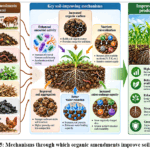 |
Figure 5: Mechanisms through which organic amendments improve soil fertility Click here to View Figure |
Long-term chemical fertilizer application can significantly influence soil pH. Ammonium-based nitrogen fertilizers are among the most important contributors to soil acidification because hydrogen ions are released during nitrification. Continued nitrogen fertilization without adequate liming may therefore decrease soil pH, increase exchangeable aluminium, reduce base saturation, and alter the availability of phosphorus, calcium, magnesium, and micronutrients. In contrast, certain fertilizers and irrigation waters may increase soil alkalinity under specific conditions. Soil pH should therefore be monitored in intensively fertilized systems so that corrective measures such as liming or acidifying amendments can be applied where required.
Excessive fertilizer use may also contribute to soil salinity and nutrient imbalance. Soluble fertilizer salts increase the osmotic concentration of soil solution, which can restrict water uptake by roots and reduce seed germination and plant growth. Salinity problems are particularly serious in irrigated regions with poor drainage and high evaporation. Accumulation of sodium, chloride, nitrate, or other ions may also alter soil structure and nutrient uptake. Nutrient imbalance may further arise from competitive interactions among ions or from changes in soil pH caused by prolonged fertilizer use.
When appropriately managed, inorganic fertilization can markedly increase crop yield and nutrient-use efficiency by supplying nutrients at critical growth stages. However, nutrient-use efficiency declines when fertilizer application exceeds crop demand or when nutrients are poorly synchronized with root uptake. Integrated approaches combining precise fertilizer rates, soil testing, split applications, improved fertilizer placement, irrigation management, crop rotation, residue recycling, and organic amendments can reduce losses and improve productivity. Thus, the long-term value of inorganic fertilizers depends not merely on the quantity applied but on their balanced, site-specific, and scientifically managed use within an integrated soil-fertility strategy. Irrigation and water-management practices are fundamental components of sustainable crop production because water availability directly influences nutrient transport, root activity, photosynthesis, soil microbial processes, and final crop yield. Conventional surface irrigation, including flood, basin, border, and furrow irrigation, remains widely used because of its simple operation and relatively low initial investment. However, its efficiency is often limited by non-uniform water distribution, deep percolation, runoff, evaporation, and poor control over the amount of water applied. Excessive surface irrigation may also contribute to nutrient leaching, temporary waterlogging, reduced soil aeration, and secondary salinization where drainage is inadequate. The effectiveness of surface irrigation depends on soil texture, field slope, land leveling, irrigation interval, infiltration rate, and management skill. Properly designed and scheduled surface systems can perform satisfactorily, but inefficient operation may lead to substantial losses of both water and nutrients.
Drip irrigation is a high-efficiency method in which water is supplied directly to the root zone through emitters at low flow rates. This localized delivery reduces evaporation and runoff while maintaining a favorable moisture regime around actively growing roots. Drip irrigation is particularly useful in arid and semi-arid regions, horticultural crops, row crops, and situations where irrigation water is limited or expensive. Because only a portion of the soil surface is wetted, weed growth between crop rows may also be reduced. The frequent application of small volumes of water can minimize moisture stress and promote more efficient nutrient uptake. Nevertheless, drip systems require careful filtration, pressure regulation, emitter maintenance, and periodic flushing to prevent clogging. Salt accumulation may occur near the margins of the wetted zone, particularly under saline irrigation water, making periodic leaching or rainfall important for salt control.
Sprinkler irrigation distributes water through pressurized nozzles in a manner resembling rainfall. It can provide relatively uniform water application on uneven terrain and is suitable for many soil and crop types. Sprinkler systems can be useful where land leveling is difficult and where light, frequent irrigation is desirable. However, their performance may decline under strong winds or high evaporative demand, and energy requirements may be greater than those of gravity-fed surface irrigation. Frequent wetting of foliage may also increase the risk of certain foliar diseases depending on crop and climatic conditions. The potential for nutrient loss by runoff is generally lower when application rates are matched to soil infiltration capacity, although nutrient leaching may still occur if excessive irrigation is practiced.
Alternate wetting and drying is an important water-saving strategy, particularly in irrigated rice systems. Instead of maintaining continuous flooding, the soil is allowed to dry to a predetermined threshold before irrigation is reapplied. This practice can substantially reduce irrigation-water use while maintaining acceptable yields when properly managed. Intermittent soil aeration may also influence nutrient transformations, root activity, methane emissions, and soil redox conditions. However, excessively severe drying can reduce crop performance, restrict nutrient availability, and increase plant stress. Successful alternate wetting and drying therefore requires careful monitoring of soil water status and crop growth stage.
Deficit irrigation involves deliberately applying less water than the full crop evapotranspiration requirement during selected growth stages or throughout the season. The objective is to maximize economic yield or water productivity rather than to achieve maximum biological yield per unit land area. Crops differ in their sensitivity to water stress at different developmental stages; therefore, mild deficits can often be imposed during relatively tolerant periods while sufficient water is supplied during critical stages such as flowering, fruit set, or grain formation. Deficit irrigation may improve water-use efficiency, but poorly timed or excessive stress can reduce leaf expansion, photosynthesis, nutrient uptake, reproductive development, and final yield. Its success depends on crop type, soil water-holding capacity, climatic demand, irrigation system, and accurate knowledge of stage-specific crop sensitivity.
Irrigation scheduling determines when water should be applied and how much should be supplied. Effective scheduling aims to maintain soil moisture within a range that prevents damaging water stress while minimizing drainage and evaporation losses. Scheduling may be based on soil-moisture measurements, crop evapotranspiration estimates, climatic data, plant indicators, irrigation-water balance, or combinations of these approaches. Modern soil-moisture sensors, weather-based decision tools, and remote-sensing systems allow irrigation to be adjusted more precisely to crop demand. Improved scheduling also benefits nutrient management because excessive irrigation can move soluble nutrients below the root zone, while insufficient soil moisture can reduce nutrient diffusion, mass flow, and root absorption.
Fertigation integrates fertilizer application with irrigation water and is particularly compatible with drip and sprinkler systems. It enables nutrients to be supplied in small, frequent doses closely synchronized with crop demand, thereby improving nutrient-use efficiency and reducing unnecessary accumulation in soil. Nitrogen and potassium fertilizers are commonly applied through fertigation because of their high solubility, while phosphorus and micronutrient fertilizers require careful selection to avoid precipitation and clogging. Fertigation can improve nutrient distribution within the root zone and allows rapid adjustment of fertilizer rates according to crop stage. However, inappropriate fertigation can increase the risk of nitrate leaching or salt accumulation if nutrient concentration and irrigation volume are poorly managed.
Water management has a strong influence on soil salinity and nutrient mobility. Excessive irrigation may leach nitrate, sulfate, boron, and other mobile ions beyond the effective rooting depth, whereas inadequate leaching in salt-affected regions can lead to progressive salt accumulation. Evaporation from the soil surface concentrates salts in the upper soil profile, particularly under arid conditions. The movement of phosphorus is comparatively limited because it is strongly adsorbed by soil minerals, whereas nitrate and chloride move readily with soil water. Potassium, calcium, magnesium, and micronutrients exhibit intermediate mobility depending on soil texture, exchange capacity, pH, and competing ions. Appropriate irrigation, drainage, and leaching management are therefore essential for maintaining a favorable root-zone environment.
Water-use efficiency reflects the relationship between crop production and the amount of water consumed or applied. It can be improved through precise irrigation scheduling, efficient delivery systems, mulching, residue retention, improved soil organic matter, drought-tolerant cultivars, conservation agriculture, and reduced non-productive evaporation. Drip irrigation and properly managed deficit irrigation can substantially improve water productivity in suitable crops and environments. Ultimately, sustainable irrigation management requires integration of water supply with soil characteristics, crop requirements, nutrient management, climatic variability, and drainage conditions so that productivity can be increased without degrading soil and water resources.
Conservation Agriculture and Soil Health
Conservation agriculture is a resource-conserving production system designed to maintain crop productivity while improving soil quality and reducing environmental degradation. It is built around three interconnected principles: minimum soil disturbance, permanent or semi-permanent soil cover, and crop diversification. These principles are intended to operate together rather than as isolated practices. By minimizing mechanical disturbance, retaining organic residues, and increasing biological diversity within the cropping system, conservation agriculture promotes more stable soil structure, greater biological activity, improved water relations, and more efficient nutrient cycling.
Minimum soil disturbance reduces the physical disruption caused by repeated plowing and intensive seedbed preparation. Frequent cultivation breaks aggregates, exposes protected organic matter to rapid decomposition, disturbs fungal networks, and increases vulnerability to erosion. Reduced or zero tillage allows soil pores created by roots and soil organisms to remain relatively intact and can gradually improve structural continuity. However, changes in bulk density and penetration resistance depend on soil type and management history, and some soils may experience temporary surface compaction during the transition from conventional tillage. For this reason, minimum disturbance should be accompanied by adequate residue management, diversified rooting systems, and controlled machinery traffic.
Permanent soil cover is maintained through crop residues, cover crops, mulches, or living vegetation. Surface cover protects soil from direct raindrop impact, reduces erosion, moderates soil temperature, decreases evaporation, and can improve infiltration. Organic residues also serve as substrates for decomposer organisms and contribute to soil organic-matter formation. As residue decomposition proceeds, nutrients are gradually released and become available for subsequent crops. The effectiveness of surface cover depends on residue quantity, quality, distribution, and climatic conditions. Residues with high carbon-to-nitrogen ratios may temporarily immobilize nitrogen, whereas leguminous residues often decompose more rapidly and contribute greater quantities of plant-available nitrogen.
Crop diversification is another core principle because continuous monocropping can increase pest and disease pressure, narrow the range of rooting patterns, and promote nutrient depletion from similar soil zones. Crop rotations and intercropping introduce differences in rooting depth, residue quality, nutrient demand, microbial associations, and seasonal soil cover. Legumes can contribute biologically fixed nitrogen, while deep-rooted species may capture nutrients from lower soil layers and return them to the surface through residues. Diversified systems can also suppress weeds and interrupt pest and pathogen cycles, improving overall system resilience.
Conservation agriculture can influence soil carbon sequestration by increasing organic-carbon inputs and reducing the rate at which soil organic matter is exposed to decomposition. Residue retention, cover crops, and reduced disturbance favor carbon accumulation particularly in surface layers. The amount of carbon stored, however, varies with climate, soil texture, cropping intensity, residue production, and the depth of soil considered. The major agronomic advantage lies not only in carbon storage itself but also in the associated improvements in aggregation, nutrient retention, microbial habitat, and water-holding capacity.
Soil physical properties may improve progressively under well-managed conservation agriculture. Greater aggregate stability reduces crusting and erosion, while continuous biopores produced by roots and earthworms can increase infiltration and facilitate deeper root growth. Improved residue cover reduces surface sealing and protects soil from extreme temperature fluctuations. These changes may enhance plant access to water, particularly during short dry periods. At the same time, poorly managed heavy traffic can still cause compaction, showing that conservation agriculture requires appropriate machinery and field-traffic management.
Nutrient cycling and soil biological activity are strongly influenced by conservation practices. Reduced disturbance preserves fungal hyphae, earthworm channels, and microbial habitats, while residue retention provides a continuous energy source for decomposer communities. Greater biological activity can stimulate mineralization, humus formation, aggregate stabilization, and nutrient transformations. Nutrient stratification may occur because residues and fertilizers remain concentrated near the surface under no-till conditions, while deeper nutrient distribution may become more dependent on root activity and biological mixing. Effective fertilizer placement is therefore important in some conservation systems.
The effects of conservation agriculture on crop productivity vary among environments and over time. Yield may initially remain unchanged, increase, or occasionally decline during the transition period, depending on weed management, soil compaction, residue levels, crop rotation, and climatic conditions. Over the longer term, improved soil structure, water conservation, erosion control, and nutrient cycling can contribute to more stable production, especially in environments exposed to drought and soil degradation. Conservation agriculture should therefore be viewed as an integrated management system rather than merely a reduction in tillage intensity.
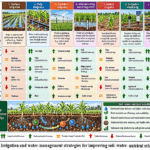 |
Figure 6: Irrigation and water-management strategies for improving soil–water–nutrient relationships Click here to View Figure |
Biofertilizers and Microbial-Based Agronomic Practices
Biofertilizers are formulations containing beneficial microorganisms that enhance plant nutrient acquisition, stimulate root development, improve biological activity, and support crop growth. They represent an important component of integrated nutrient management because microorganisms can mobilize nutrients already present in soil, reduce dependence on excessive mineral fertilizer application, and improve rhizosphere functioning. Their effectiveness depends on microbial strain, crop species, soil properties, climate, formulation quality, storage conditions, and compatibility with other agricultural inputs.
Nitrogen-fixing microorganisms convert atmospheric nitrogen into biologically useful forms. Symbiotic bacteria such as Rhizobium and related genera form associations with leguminous plants and produce root nodules in which biological nitrogen fixation occurs. Free-living and associative organisms such as Azotobacter, Azospirillum, and certain cyanobacteria can also contribute nitrogen to cropping systems. Biological nitrogen fixation can reduce the requirement for synthetic nitrogen fertilizers, particularly in legume-based rotations, and can improve soil nitrogen status for subsequent crops through residue decomposition.
Phosphate-solubilizing microorganisms increase the availability of sparingly soluble soil phosphorus. Various bacteria and fungi produce organic acids, phosphatases, and other compounds that release phosphate from calcium-, iron-, aluminium-, and organic phosphorus complexes. These microorganisms can improve phosphorus uptake, particularly in soils where total phosphorus is relatively high but plant-available phosphorus is limited. Their effectiveness is often enhanced when combined with organic amendments that provide carbon substrates and improve microbial survival.
Potassium-solubilizing microorganisms mobilize potassium from minerals such as feldspars and micas through acidification, chelation, and other weathering processes. Although mineral potassium is abundant in many soils, its release into plant-available forms can be slow. Potassium-solubilizing bacteria may therefore contribute to gradual replenishment of soil-solution potassium, particularly in nutrient-depleted systems. Their agronomic response varies according to mineralogy, soil moisture, root activity, and microbial adaptation.
Arbuscular mycorrhizal fungi establish symbiotic associations with the roots of many crop species. Their external hyphae extend beyond nutrient-depletion zones surrounding roots and effectively enlarge the volume of soil explored by the plant. These fungi are particularly important for phosphorus acquisition but can also improve uptake of zinc, copper and other relatively immobile nutrients. Mycorrhizal associations may also improve soil aggregation, water acquisition, and tolerance to drought or other stresses. Excessive phosphorus fertilization can suppress mycorrhizal colonization, emphasizing the need for balanced nutrient management.
Plant-growth-promoting rhizobacteria comprise a diverse group of beneficial bacteria capable of enhancing plant growth through multiple mechanisms. They may fix nitrogen, solubilize phosphorus, produce siderophores, synthesize phytohormones, enhance root development, induce systemic resistance, or reduce the activity of certain soil-borne pathogens. Because these mechanisms frequently operate simultaneously, their effects extend beyond nutrient supply and include improvements in plant establishment and stress tolerance.
Microbial inoculants can increase nutrient availability by accelerating nutrient transformation and improving the biological efficiency of the rhizosphere. Their contribution is particularly valuable when they are integrated with organic amendments, reduced fertilizer rates, suitable crop rotations, and conservation practices. Rather than replacing all mineral fertilizers, biofertilizers are often most effective as complementary inputs that improve the efficiency of existing nutrient resources.
The effects of biofertilizers on soil biological properties include increases in microbial biomass, enzymatic activity, rhizosphere diversity, decomposition, and nutrient cycling. Beneficial microorganisms can also influence root exudation and interactions among plants, microbes, and soil minerals. These changes may improve soil functional capacity over time, although responses can be inconsistent when environmental conditions are unfavorable or inoculant strains fail to establish successfully.
The contribution of biofertilizers to crop productivity therefore depends on successful colonization, compatibility with the host crop, and appropriate soil and agronomic conditions. When integrated into a broader soil-fertility strategy, microbial-based practices can improve nutrient-use efficiency, support crop productivity, reduce unnecessary fertilizer inputs, and strengthen biological processes that underpin soil health. Their greatest potential lies in combining targeted microbial functions with balanced fertilization, organic-matter management, water conservation, and diversified cropping systems to create more resilient and resource-efficient agricultural production systems.
Weed Management and Its Influence on Soil–Crop Relationships
Weed management is an essential component of sustainable crop production because weeds compete directly with crops for nutrients, water, light, and space, thereby reducing yield and resource-use efficiency. Mechanical weed control, including hand weeding, hoeing, inter-row cultivation, and mechanical weeders, provides an effective non-chemical approach, particularly in smallholder and organic farming systems. These methods can reduce weed pressure without introducing herbicide residues into the soil, although they may require considerable labour, fuel, and repeated field operations. Chemical weed management remains widely used because herbicides offer rapid and relatively economical control over large areas; however, repeated use of herbicides with similar modes of action can promote herbicide-resistant weed populations and may also influence non-target soil organisms. Cultural weed-control practices such as crop rotation, competitive cultivars, optimum planting density, timely sowing, intercropping, and stale seedbed techniques reduce weed establishment by modifying the cropping environment. Mulching and cover crops further suppress weeds by limiting light penetration, physically restricting weed emergence, and competing for available resources. Organic mulches additionally contribute carbon to the soil, improve moisture conservation, and regulate soil temperature. Weed competition is particularly damaging during critical crop-growth stages because weeds remove substantial quantities of nitrogen, phosphorus, potassium, and soil moisture. Severe competition can reduce nutrient uptake, root growth, photosynthesis, and final grain or biomass yield. Herbicides may also affect soil microbial communities and enzyme activities depending on the chemical class, dose, persistence, soil properties, and climatic conditions. Therefore, integrated weed management combining mechanical, cultural, biological, and judicious chemical approaches is preferable for maintaining crop productivity while minimizing ecological risks.
Precision agriculture and modern agronomic practices provide new opportunities to optimize resource use and reduce environmental losses. Soil testing and nutrient mapping form the foundation of site-specific nutrient management by identifying spatial variability in soil fertility and enabling fertilizer recommendations to be tailored to actual crop requirements. Variable-rate fertilizer application uses field maps, positioning systems, and automated machinery to apply different fertilizer rates within the same field, thereby reducing both nutrient deficiency and excessive application. Sensor-based nutrient management uses crop canopy sensors, chlorophyll meters, and spectral indices to estimate plant nutrient status in real time and guide fertilizer decisions. Remote sensing and geographic information systems further support monitoring of crop vigor, soil moisture, nutrient stress, and field variability at larger spatial scales. Drone-assisted crop and soil monitoring provides high-resolution information on crop health, weed distribution, disease symptoms, water stress, and nutrient deficiencies. Internet of Things-based soil monitoring integrates connected sensors that continuously measure parameters such as soil moisture, temperature, electrical conductivity, and sometimes nutrient status. Artificial intelligence and decision-support systems can process these data streams to recommend irrigation, fertilization, pest control, and harvesting schedules. Precision irrigation and fertigation systems deliver water and nutrients directly according to crop demand, improving water-use and nutrient-use efficiency while reducing leaching and runoff.
The effects of agronomic practices vary among major field crops. Wheat generally responds well to timely sowing, conservation tillage, balanced fertilization, residue retention, and crop rotation. In rice, water management is particularly important, with alternate wetting and drying and improved nutrient management helping reduce water consumption and methane emissions. Maize requires adequate nitrogen, moisture, and plant population management, while conservation agriculture can improve soil structure and yield stability. Barley benefits from moisture conservation and balanced nutrient supply, particularly under marginal conditions. Sorghum and millets are inherently more tolerant of heat and drought, but improved nutrient management, intercropping, and residue conservation can further improve productivity. Pulses contribute to biological nitrogen fixation and improve soil fertility within crop rotations. Oilseed crops benefit from balanced sulfur and nutrient management, while cotton responds strongly to efficient irrigation, fertigation, and integrated pest and nutrient management. Sugarcane, as a long-duration crop, requires substantial nutrient and water inputs, making residue recycling, drip irrigation, green manuring, and ratoon management especially important. Similar principles apply to other field crops, although the appropriate combination of agronomic practices must be adapted to crop-specific requirements and local conditions.
Agronomic practices also strongly influence soil biological properties. Organic amendments, residue retention, crop diversification, and reduced tillage generally increase soil microbial biomass and microbial diversity by providing additional carbon substrates and more stable habitats. Soil enzyme activities, including dehydrogenase, phosphatase, urease, and β-glucosidase, are often enhanced under management systems that increase organic matter and microbial activity. Earthworms and other soil fauna benefit from reduced mechanical disturbance and residue retention, contributing to improved aggregation, aeration, and nutrient cycling. Rhizosphere interactions are also affected because root exudates, microbial communities, and nutrient availability vary according to crop species and management. These biological processes regulate organic matter decomposition, nutrient mineralization, and cycling, and are therefore central to soil fertility and crop productivity.
Agronomic management also affects carbon sequestration and greenhouse gas emissions. Practices such as residue retention, reduced tillage, cover cropping, diversified rotations, manure application, and agroforestry can increase soil organic carbon stocks by enhancing carbon inputs and reducing decomposition losses. Carbon stabilization occurs through physical protection within soil aggregates, association with minerals, and transformation into relatively persistent microbial residues. Conversely, intensive tillage can accelerate carbon dioxide emissions by exposing organic matter to decomposition. Nitrous oxide emissions are strongly influenced by nitrogen fertilizer rate, soil moisture, and microbial processes, while methane emissions are especially important in continuously flooded rice soils. Improved fertilizer efficiency, alternate wetting and drying, residue management, and conservation agriculture can reduce the carbon footprint of crop production and contribute to climate-smart agriculture.
Problematic and degraded soils require targeted agronomic management. Acidic soils may be improved through liming and balanced fertilization, whereas saline soils require drainage, salt-tolerant crops, and efficient irrigation. Sodic soils may require gypsum or other calcium-based amendments combined with adequate leaching. Nutrient-deficient soils need balanced fertilization and organic amendments, while compacted soils benefit from reduced traffic, deep-rooted crops, organic matter addition, and, where necessary, subsoiling. Eroded and degraded soils require vegetation cover, contour farming, reduced tillage, residue retention, and soil amendments to rebuild structure and fertility. Comparative assessment of agronomic practices therefore needs to consider their effects on soil physical properties, soil chemistry, nutrient availability, biological activity, crop yield, resource-use efficiency, environmental sustainability, and economic feasibility.
Long-term agronomic experiments are particularly valuable because many soil changes occur slowly and may not be detected in short-term trials. Long-term fertilization studies demonstrate how continuous nutrient inputs influence soil fertility, nutrient balances, organic matter, and yield trends. Long-term tillage experiments reveal gradual changes in aggregation, bulk density, soil carbon, and biological properties, while residue-management studies show how sustained residue retention or removal affects carbon stocks and nutrient cycling. Monitoring soil organic carbon over decades helps determine whether particular management systems are sequestering or losing carbon. Similarly, long-term nutrient balances identify whether cropping systems are maintaining, accumulating, or depleting essential nutrients. Yield sustainability and soil resilience are ultimately determined by the capacity of a system to maintain productivity despite climatic stress, pest pressure, and resource limitations. For this reason, long-term experiments remain indispensable for identifying agronomic practices that are productive, environmentally sustainable, economically feasible, and capable of maintaining soil fertility for future agricultural production.
Constraints and Challenges
Soil and climatic variability remain major constraints in developing universally effective agronomic practices because soil texture, fertility, pH, organic matter, rainfall, temperature, and moisture availability differ widely across regions. These differences influence crop response to fertilizers, irrigation, tillage, and residue management. Excessive dependence on chemical fertilizers is another concern, as prolonged and imbalanced use may contribute to nutrient imbalance, soil acidification, reduced biological activity, nutrient losses, and environmental pollution. Residue-management limitations further complicate sustainable farming because crop residues are often removed for fodder or fuel, while residue burning causes nutrient loss and air pollution. Although residue retention, mulching, and composting can improve soil organic matter and moisture conservation, their adoption may be restricted by machinery, labour, and competing uses. Water scarcity is increasingly affecting crop productivity due to declining groundwater, irregular rainfall, and inefficient irrigation. Drip irrigation, sprinkler systems, rainwater harvesting, and improved irrigation scheduling can enhance water-use efficiency, but their cost may limit adoption. Soil degradation and nutrient mining also reduce long-term productivity through erosion, compaction, salinity, declining organic carbon, and continuous nutrient removal without adequate replenishment. Farmer adoption is often restricted by small landholdings, limited credit, high input costs, inadequate technical knowledge, labour shortages, and uncertain economic returns. Socioeconomic risks may therefore discourage farmers from adopting conservation or precision-based practices. Finally, the lack of site-specific recommendations reduces the efficiency of agronomic management because generalized fertilizer and irrigation schedules cannot account for field-level variability. Soil testing, precision nutrient management, local field trials, digital advisory systems, and region-specific recommendations are essential to improve input-use efficiency, sustain soil fertility, and increase crop productivity under diverse agroecological conditions.
Future Perspectives and Research Priorities
Future advances in sustainable agronomy will depend on integrating ecological principles, precision technologies, improved nutrient management, and long-term soil-health assessment into coordinated soil–crop management systems. Integrated soil–crop management emphasizes the simultaneous optimization of soil fertility, crop nutrition, irrigation, tillage, residue recycling, crop rotation, and biological processes so that productivity can be improved without degrading the resource base. Rather than treating soil and crops as separate components, this approach recognizes the continuous interactions among roots, nutrients, microorganisms, water, organic matter, and climatic conditions. Regenerative agriculture represents a closely related strategy that seeks to restore soil function through reduced tillage, permanent soil cover, crop diversification, cover cropping, organic amendments, residue retention, and greater dependence on biological nutrient cycling. These practices can increase soil organic matter, improve aggregation and infiltration, enhance microbial activity, and strengthen the resilience of agroecosystems. Climate-resilient agronomic practices will also become increasingly important because agriculture is being exposed to more frequent droughts, heat stress, irregular rainfall, flooding, and shifting growing seasons. Adaptation strategies such as drought- and heat-tolerant cultivars, adjusted sowing dates, water-conserving tillage, mulching, rainwater harvesting, efficient irrigation, diversified crop rotations, intercropping, and improved nutrient synchronization can help stabilize productivity under climatic uncertainty. At the same time, new nutrient-delivery technologies are emerging. Nano-enabled fertilizers and controlled-release nutrient formulations have the potential to improve nutrient-use efficiency by releasing nutrients gradually or delivering them more effectively to the root zone. This may reduce leaching, volatilization, fixation, and repeated fertilizer applications. However, widespread use will require careful assessment of cost-effectiveness, field performance, environmental persistence, and possible effects on soil organisms and food safety. Microbiome-based soil management is another promising area because beneficial bacteria, fungi, and other microorganisms can promote nutrient solubilization, biological nitrogen fixation, root development, pathogen suppression, and tolerance to abiotic stress. Future agronomy may increasingly employ microbial inoculants, mycorrhizal associations, plant-growth-promoting rhizobacteria, and management practices that conserve beneficial indigenous microbial communities. Nevertheless, their effectiveness can vary with soil type, crop genotype, climate, and existing microbial populations, making local validation essential. Digital and AI-assisted agronomy is expected to accelerate the transition toward more precise and efficient management. Remote sensing, satellite imagery, drones, soil and canopy sensors, automated weather stations, geographic information systems, machine-learning models, and decision-support platforms can provide real-time information on soil moisture, nutrient status, crop growth, weed pressure, pest occurrence, and yield variability. Artificial intelligence can integrate these datasets to support decisions on sowing time, fertilizer rates, irrigation scheduling, pesticide application, and harvesting. Such systems can reduce unnecessary input use and improve productivity, but their usefulness depends on reliable data, digital infrastructure, affordability, farmer training, and locally calibrated algorithms. Development of site-specific management strategies will therefore be crucial. Because soil texture, fertility, moisture, topography, and crop performance can vary considerably within and between fields, generalized recommendations often lead to inefficient input use. Soil testing, nutrient mapping, yield mapping, variable-rate technology, precision irrigation, and location-specific decision tools can help tailor agronomic practices to actual field requirements. This improves nutrient- and water-use efficiency while reducing environmental losses and production costs. Finally, long-term assessment of soil health and productivity is essential because many management effects emerge only after several years. Short-term increases in yield may conceal gradual declines in soil organic carbon, nutrient reserves, microbial diversity, or soil structure. Long-term experiments should therefore monitor physical indicators such as bulk density and aggregation, chemical indicators such as pH, nutrient balance, and organic carbon, and biological indicators such as microbial biomass, enzyme activity, and soil fauna. These measurements should be evaluated together with crop yield, profitability, water-use efficiency, greenhouse gas emissions, and resilience to stress. Such integrated long-term monitoring will provide a more reliable basis for identifying agronomic systems that are productive, economically viable, environmentally responsible, and capable of maintaining soil fertility for future generations. Overall, the future of agronomy lies in combining regenerative principles, climate resilience, biological management, precision technologies, and continuous soil-health evaluation into adaptive, site-specific systems that can sustain crop production under increasingly complex environmental and socioeconomic conditions.
Conclusion
Tillage, fertilization, irrigation, residue management, crop diversification, organic amendments, and biological inputs should therefore be considered complementary rather than independent management components. Reduced and conservation tillage can preserve soil structure, residues, moisture, biological habitats, and organic carbon, while organic amendments can improve nutrient retention, aggregation, microbial activity, and water-holding capacity. Inorganic fertilizers remain important for achieving high crop productivity, but their long-term benefits depend on balanced, soil-test-based, and synchronized application. Excessive or imbalanced fertilization may contribute to soil acidification, salinity, nutrient antagonism, nutrient losses, and lower nutrient-use efficiency. Likewise, improved irrigation scheduling, drip irrigation, deficit irrigation, alternate wetting and drying, and fertigation can conserve water and improve nutrient management when adapted to crop and soil requirements.
Biological processes are equally important for sustainable soil fertility. Biofertilizers, nitrogen-fixing microorganisms, phosphate- and potassium-solubilizing microorganisms, arbuscular mycorrhizal fungi, and plant-growth-promoting rhizobacteria can enhance nutrient acquisition, root growth, rhizosphere activity, and crop stress tolerance. Conservation agriculture and crop diversification further support microbial activity, soil fauna, nutrient cycling, soil carbon stabilization, and more resilient soil–plant relationships. Integrated weed management is also required because uncontrolled weed competition reduces nutrient and moisture availability, while excessive dependence on herbicides can create ecological and resistance-related problems. Modern precision-agriculture technologies are expanding the capacity to manage field variability more accurately. Soil testing, nutrient mapping, variable-rate application, remote sensing, drones, IoT-based soil monitoring, sensor-guided nutrient management, and AI-assisted decision-support systems can improve fertilizer and irrigation efficiency while reducing unnecessary inputs and environmental losses. However, the effectiveness of these technologies depends on reliable data, affordability, farmer training, local calibration, and supporting infrastructure. Agronomic recommendations should therefore become increasingly site-specific rather than relying on generalized management schedules.
Funding Sources
The author(s) received no financial support for the research, authorship, and/or publication of this article.
Conflict of Interest
The author(s) do not have any conflict of interest.
Data Availability Statement
This statement does not apply to this article.
Ethics Statement
This research did not involve human participants, animal subjects, or any material that requires ethical approval.
References
- Aloo, B. N., Tripathi, V., Makumba, B. A., & Mbega, E. R. (2022). Plant growth-promoting rhizobacterial biofertilizers for crop production: The past, present, and future. Frontiers in Plant Science, 13, 1002448. https://doi.org/10.3389/fpls.2022.1002448
CrossRef - Alvarez, R. (2005). A review of nitrogen fertilizer and conservation tillage effects on soil organic carbon storage. Soil Use and Management, 21(1), 38–52.
CrossRef - Backer, R., Rokem, J. S., Ilangumaran, G., Lamont, J., Praslickova, D., Ricci, E., Subramanian, S., & Smith, D. L. (2018). Plant growth-promoting rhizobacteria: Context, mechanisms of action, and roadmap to commercialization of biostimulants for sustainable agriculture. Frontiers in Plant Science, 9, 1473. https://doi.org/10.3389/fpls.2018.01473
CrossRef - Begum, N., Qin, C., Ahanger, M. A., Raza, S., Khan, M. I., Ashraf, M., Ahmed, N., & Zhang, L. (2019). Role of arbuscular mycorrhizal fungi in plant growth regulation: Implications in abiotic stress tolerance. Frontiers in Plant Science, 10, 1068. https://doi.org/10.3389/fpls.2019.01068
CrossRef - Bhattacharyya, P. N., & Jha, D. K. (2012). Plant growth-promoting rhizobacteria: Emergence in agriculture. World Journal of Microbiology and Biotechnology, 28, 1327–1350. https://doi.org/10.1007/s11274-011-0979-9
CrossRef - Blanco-Canqui, H., & Ruis, S. J. (2018). No-tillage and soil physical environment. Geoderma, 326, 164–200. https://doi.org/10.1016/j.geoderma.2018.03.011
CrossRef - Blanco-Canqui, H., & Wortmann, C. S. (2020). Does occasional tillage undo the ecosystem services gained with no-till? A review. Soil and Tillage Research, 198, 104534. https://doi.org/10.1016/j.still.2019.104534
CrossRef - Bouman, B. A. M., Lampayan, R. M., & Tuong, T. P. (2007). Water management in irrigated rice: Coping with water scarcity. International Rice Research Institute.
- Bünemann, E. K., Bongiorno, G., Bai, Z., Creamer, R. E., De Deyn, G., de Goede, R., Fleskens, L., Geissen, V., Kuyper, T. W., Mäder, P., Pulleman, M., Sukkel, W., van Groenigen, J. W., & Brussaard, L. (2018). Soil quality—A critical review. Soil Biology and Biochemistry, 120, 105–125. https://doi.org/10.1016/j.soilbio.2018.01.030
CrossRef - Carrijo, D. R., Lundy, M. E., & Linquist, B. A. (2017). Rice yields and water use under alternate wetting and drying irrigation: A meta-analysis. Field Crops Research, 203, 173–180. https://doi.org/10.1016/j.fcr.2016.12.002
CrossRef - Chen, J., Lü, S., Zhang, Z., Zhao, X., Li, X., Ning, P., & Liu, M. (2018). Environmentally friendly fertilizers: A review of materials used and their effects on the environment. Science of the Total Environment, 613–614, 829–839.
CrossRef - Compant, S., Samad, A., Faist, H., & Sessitsch, A. (2019). A review on the plant microbiome: Ecology, functions, and emerging trends in microbial application. Journal of Advanced Research, 19, 29–37. https://doi.org/10.1016/j.jare.2019.03.004
CrossRef - Doran, J. W., & Zeiss, M. R. (2000). Soil health and sustainability: Managing the biotic component of soil quality. Applied Soil Ecology, 15(1), 3–11. https://doi.org/10.1016/S0929-1393(00)00067-6
CrossRef - (2017). Voluntary guidelines for sustainable soil management. Food and Agriculture Organization of the United Nations.
- (2021). Recarbonizing global soils: A technical manual of recommended management practices. Food and Agriculture Organization of the United Nations.
- Fierer, N. (2017). Embracing the unknown: Disentangling the complexities of the soil microbiome. Nature Reviews Microbiology, 15, 579–590. https://doi.org/10.1038/nrmicro.2017.87
CrossRef - Gebbers, R., & Adamchuk, V. I. (2010). Precision agriculture and food security. Science, 327(5967), 828–831. https://doi.org/10.1126/science.1183899
CrossRef - Giller, K. E., Hijbeek, R., Andersson, J. A., & Sumberg, J. (2021). Regenerative agriculture: An agronomic perspective. Outlook on Agriculture, 50(1), 13–25.
CrossRef - Goulding, K. W. T. (2016). Soil acidification and the importance of liming agricultural soils with particular reference to the United Kingdom. Soil Use and Management, 32(3), 390–399.
CrossRef - Haddaway, N. R., Hedlund, K., Jackson, L. E., Kätterer, T., Lugato, E., Thomsen, I. K., Jørgensen, H. B., & Isberg, P. E. (2017). How does tillage intensity affect soil organic carbon? A systematic review. Environmental Evidence, 6, 30.
CrossRef - Harker, K. N., & O’Donovan, J. T. (2013). Recent weed control, weed management, and integrated weed management. Weed Technology, 27(1), 1–11.
CrossRef - Hobbs, P. R., Sayre, K., & Gupta, R. (2008). The role of conservation agriculture in sustainable agriculture. Philosophical Transactions of the Royal Society B: Biological Sciences, 363(1491), 543–555. https://doi.org/10.1098/rstb.2007.2169
CrossRef - (2022). Climate change 2022: Mitigation of climate change. Cambridge University Press.
- Jeffery, S., Verheijen, F. G. A., van der Velde, M., & Bastos, A. C. (2011). A quantitative review of the effects of biochar application to soils on crop productivity using meta-analysis. Agriculture, Ecosystems & Environment, 144(1), 175–187. https://doi.org/10.1016/j.agee.2011.08.015
CrossRef - Johnston, A. E., & Poulton, P. R. (2018). The importance of long-term experiments in agriculture: Their management to ensure continued crop production and soil fertility. European Journal of Soil Science, 69(1), 113–125.
CrossRef - Kah, M., Kookana, R. S., Gogos, A., & Bucheli, T. D. (2018). A critical evaluation of nanopesticides and nanofertilizers against their conventional analogues. Nature Nanotechnology, 13, 677–684.
CrossRef - Kassam, A., Friedrich, T., Shaxson, F., & Pretty, J. (2009). The spread of conservation agriculture: Justification, sustainability and uptake. International Journal of Agricultural Sustainability, 7(4), 292–320.
CrossRef - Kochian, L. V., Hoekenga, O. A., & Piñeros, M. A. (2004). How do crop plants tolerate acid soils? Mechanisms of aluminum tolerance and phosphorus efficiency. Annual Review of Plant Biology, 55, 459–493.
CrossRef - Lal, R. (2004). Soil carbon sequestration impacts on global climate change and food security. Science, 304(5677), 1623–1627. https://doi.org/10.1126/science.1097396
CrossRef - Lal, R. (2015). Restoring soil quality to mitigate soil degradation. Sustainability, 7(5), 5875–5895. https://doi.org/10.3390/su7055875
CrossRef - Lal, R. (2020). Regenerative agriculture for food and climate. Journal of Soil and Water Conservation, 75(5), 123A–124A.
CrossRef - Lehmann, J., & Joseph, S. (Eds.). (2015). Biochar for environmental management: Science, technology and implementation (2nd ed.). Routledge.
CrossRef - Liakos, K. G., Busato, P., Moshou, D., Pearson, S., & Bochtis, D. (2018). Machine learning in agriculture: A review. Sensors, 18(8), 2674. https://doi.org/10.3390/s18082674
CrossRef - Liu, R., & Lal, R. (2015). Potentials of engineered nanoparticles as fertilizers for increasing agronomic productions. Science of the Total Environment, 514, 131–139.
CrossRef - Luo, Z., Wang, E., & Sun, O. J. (2010). Can no-tillage stimulate carbon sequestration in agricultural soils? A meta-analysis of paired experiments. Agriculture, Ecosystems & Environment, 139(1–2), 224–231.
CrossRef - Minasny, B., Malone, B. P., McBratney, A. B., Angers, D. A., Arrouays, D., Chambers, A., Chaplot, V., Chen, Z. S., Cheng, K., Das, B. S., Field, D. J., Gimona, A., Hedley, C. B., Hong, S. Y., Mandal, B., Marchant, B. P., Martin, M., McConkey, B. G., Mulder, V. L., … Winowiecki, L. (2017). Soil carbon 4 per mille. Geoderma, 292, 59–86.
CrossRef - Mulla, D. J. (2013). Twenty five years of remote sensing in precision agriculture: Key advances and remaining knowledge gaps. Biosystems Engineering, 114(4), 358–371.
CrossRef - Munns, R., & Tester, M. (2008). Mechanisms of salinity tolerance. Annual Review of Plant Biology, 59, 651–681. https://doi.org/10.1146/annurev.arplant.59.032607.092911
CrossRef - Nadeem, S. M., Ahmad, M., Zahir, Z. A., Javaid, A., & Ashraf, M. (2014). The role of mycorrhizae and plant growth-promoting rhizobacteria in improving crop productivity under stressful environments. Biotechnology Advances, 32(2), 429–448.
CrossRef - Newton, P., Civita, N., Frankel-Goldwater, L., Bartel, K., & Johns, C. (2020). What is regenerative agriculture? A review of scholar and practitioner definitions based on processes and outcomes. Frontiers in Sustainable Food Systems, 4, 577723.
CrossRef - Norsworthy, J. K., Ward, S. M., Shaw, D. R., Llewellyn, R. S., Nichols, R. L., Webster, T. M., Bradley, K. W., Frisvold, G., Powles, S. B., Burgos, N. R., Witt, W. W., & Barrett, M. (2012). Reducing the risks of herbicide resistance: Best management practices and recommendations. Weed Science, 60(SP1), 31–62.
CrossRef - Palm, C., Blanco-Canqui, H., DeClerck, F., Gatere, L., & Grace, P. (2014). Conservation agriculture and ecosystem services: An overview. Agriculture, Ecosystems & Environment, 187, 87–105.
CrossRef - Paustian, K., Lehmann, J., Ogle, S., Reay, D., Robertson, G. P., & Smith, P. (2016). Climate-smart soils. Nature, 532, 49–57. https://doi.org/10.1038/nature17174
CrossRef - Philippot, L., Raaijmakers, J. M., Lemanceau, P., & van der Putten, W. H. (2013). Going back to the roots: The microbial ecology of the rhizosphere. Nature Reviews Microbiology, 11, 789–799.
CrossRef - Pittelkow, C. M., Liang, X., Linquist, B. A., van Groenigen, K. J., Lee, J., Lundy, M. E., van Gestel, N., Six, J., Venterea, R. T., & van Kessel, C. (2015). Productivity limits and potentials of the principles of conservation agriculture. Nature, 517, 365–368. https://doi.org/10.1038/nature13809
CrossRef - Poeplau, C., & Don, A. (2015). Carbon sequestration in agricultural soils via cultivation of cover crops—A meta-analysis. Agriculture, Ecosystems & Environment, 200, 33–41.
CrossRef - Qadir, M., Oster, J. D., Schubert, S., Noble, A. D., & Sahrawat, K. L. (2007). Phytoremediation of sodic and saline-sodic soils. Advances in Agronomy, 96, 197–247.
CrossRef - Rengasamy, P. (2010). Soil processes affecting crop production in salt-affected soils. Functional Plant Biology, 37(7), 613–620.
CrossRef - Rose, M. T., Cavagnaro, T. R., Scanlan, C. A., Rose, T. J., Vancov, T., Kimber, S., Kennedy, I. R., Kookana, R. S., & Van Zwieten, L. (2016). Impact of herbicides on soil biology and function. Advances in Agronomy, 136, 133–220.
CrossRef - Saiz-Rubio, V., & Rovira-Más, F. (2020). From smart farming towards agriculture 5.0: A review on crop data management. Agronomy, 10(2), 207. https://doi.org/10.3390/agronomy10020207
CrossRef - Schreefel, L., Schulte, R. P. O., de Boer, I. J. M., Schrijver, A. P., & van Zanten, H. H. E. (2020). Regenerative agriculture—The soil is the base. Global Food Security, 26, 100404.
CrossRef - Six, J., Conant, R. T., Paul, E. A., & Paustian, K. (2002). Stabilization mechanisms of soil organic matter: Implications for C-saturation of soils. Plant and Soil, 241, 155–176.
CrossRef - Smith, P. (2016). Soil carbon sequestration and biochar as negative emission technologies. Global Change Biology, 22(3), 1315–1324.
CrossRef - Smith, S. E., & Read, D. J. (2008). Mycorrhizal symbiosis (3rd ed.). Academic Press.
- Swanton, C. J., & Weise, S. F. (1991). Integrated weed management: The rationale and approach. Weed Technology, 5(3), 657–663.
CrossRef - Trivedi, P., Leach, J. E., Tringe, S. G., Sa, T., & Singh, B. K. (2020). Plant–microbiome interactions: From community assembly to plant health. Nature Reviews Microbiology, 18, 607–621.
CrossRef - USDA Natural Resources Conservation Service. (2024). Role of organic matter. U.S. Department of Agriculture.
- USDA Natural Resources Conservation Service. (2024). Soil health management. U.S. Department of Agriculture.
- USDA Natural Resources Conservation Service. (2024). Soil health on cropland. U.S. Department of Agriculture.
- van Groenigen, K. J., van Kessel, C., & Hungate, B. A. (2013). Increased greenhouse-gas intensity of rice production under future atmospheric conditions. Nature Climate Change, 3, 288–291.
CrossRef - Vessey, J. K. (2003). Plant growth promoting rhizobacteria as biofertilizers. Plant and Soil, 255, 571–586.
CrossRef - West, T. O., & Post, W. M. (2002). Soil organic carbon sequestration rates by tillage and crop rotation: A global data analysis. Soil Science Society of America Journal, 66(6), 1930–1946.
CrossRef - Wolfert, S., Ge, L., Verdouw, C., & Bogaardt, M. J. (2017). Big data in smart farming—A review. Agricultural Systems, 153, 69–80. https://doi.org/10.1016/j.agsy.2017.01.023
CrossRef - Zhang, N., Wang, M., & Wang, N. (2002). Precision agriculture—A worldwide overview. Computers and Electronics in Agriculture, 36(2–3), 113–132.
CrossRef - Zhang, X., Davidson, E. A., Mauzerall, D. L., Searchinger, T. D., Dumas, P., & Shen, Y. (2015). Managing nitrogen for sustainable development. Nature, 528, 51–59.
CrossRef - Agegnehu, G., Srivastava, A. K., & Bird, M. I. (2017). The role of biochar and biochar-compost in improving soil quality and crop performance: A review. Applied Soil Ecology, 119, 156–170.
CrossRef - Bhardwaj, A. K., Rajwar, D., Basak, N., Bhardwaj, N., Chaudhari, S. K., Bhaskar, S., Sharma, P. C., & Sharma, D. K. (2019). Nitrogen mineralization and availability at critical stages of rice under integrated nutrient management. Soil and Tillage Research, 190, 90–99.
- Choudhary, M., Datta, A., Jat, H. S., Yadav, A. K., Gathala, M. K., Sapkota, T. B., Das, A. K., Sharma, P. C., Jat, M. L., Singh, R., & Ladha, J. K. (2018). Changes in soil biology under conservation agriculture based sustainable intensification of cereal systems in Indo-Gangetic Plains. Geoderma, 313, 193–204.
CrossRef - Dimkpa, C. O., & Bindraban, P. S. (2018). Nanofertilizers: New products for the industry? Journal of Agricultural and Food Chemistry, 66(26), 6462–6473.
CrossRef - Francaviglia, R., Di Bene, C., Farina, R., & Salvati, L. (2017). Soil organic carbon sequestration and tillage systems in the Mediterranean agro-ecosystems: A review. Soil and Tillage Research, 168, 69–79.
- Ghosh, A., Bhattacharyya, R., Meena, M. C., Dwivedi, B. S., Singh, G., Agnihotri, R., & Sharma, C. (2018). Long-term fertilization effects on soil organic carbon sequestration in an Inceptisol. Soil and Tillage Research, 177, 134–144.
CrossRef - Jat, H. S., Datta, A., Choudhary, M., Yadav, A. K., Choudhary, V., Sharma, P. C., Gathala, M. K., Jat, M. L., & McDonald, A. (2019). Effects of tillage, crop establishment and diversification on soil organic carbon, aggregation, aggregate-associated carbon and productivity in cereal systems of semi-arid northwest India. Soil and Tillage Research, 190, 128–138.
CrossRef - Ladha, J. K., Jat, M. L., Stirling, C. M., Chakraborty, D., Pradhan, P., Krupnik, T. J., Sapkota, T. B., Pathak, H., Rana, D. S., Tesfaye, K., & Gerard, B. (2020). Achieving the sustainable development goals in agriculture: The crucial role of nitrogen management. Advances in Agronomy, 163, 39–116.
CrossRef - Meena, R. S., Kumar, S., Datta, R., Lal, R., Vijayakumar, V., Brtnicky, M., Sharma, M. P., Yadav, G. S., Jhariya, M. K., Jangir, C. K., Pathan, S. I., Dokulilova, T., Pecina, V., & Marfo, T. D. (2020). Impact of agrochemicals on soil microbiota and management: A review. Land, 9(2), 34.
CrossRef - Oldfield, E. E., Bradford, M. A., & Wood, S. A. (2019). Global meta-analysis of the relationship between soil organic matter and crop yields. SOIL, 5, 15–32.
CrossRef - Pretty, J., Benton, T. G., Bharucha, Z. P., Dicks, L. V., Flora, C. B., Godfray, H. C. J., Goulson, D., Hartley, S., Lampkin, N., Morris, C., Pierzynski, G., Prasad, P. V. V., Reganold, J., Rockström, J., Smith, P., Thorne, P., & Wratten, S. (2018). Global assessment of agricultural system redesign for sustainable intensification. Nature Sustainability, 1, 441–446.
CrossRef - Raliya, R., Saharan, V., Dimkpa, C., & Biswas, P. (2018). Nanofertilizer for precision and sustainable agriculture: Current state and future perspectives. Journal of Agricultural and Food Chemistry, 66(26), 6487–6503.
CrossRef - Robertson, G. P., & Vitousek, P. M. (2009). Nitrogen in agriculture: Balancing the cost of an essential resource. Annual Review of Environment and Resources, 34, 97–125.
CrossRef - Timsina, J. (2018). Can organic sources of nutrients increase crop yields to meet global food demand? Agronomy, 8(10), 214.
CrossRef - Zaman, M., Heng, L., & Müller, C. (Eds.). (2021). Measuring emission of agricultural greenhouse gases and developing mitigation options using nuclear and related techniques. Springer.
CrossRef
Accepted on: 13 Aug 2026
Second Review by: Dr. Lokesh Prajapati
Final Approval by: Prof. Luigi Campanella


ISSN Online: 2231-5039