Cross-Linked Composite Film: Synthesis, Properties, Antimicrobial Activity, and Potential Applications in Food Packaging
 , Narendra Singh1, Mohattib Ali1and Pramendra Kumar1*
¹Department of Applied Chemistry, M. J.P. Rohilkhand University, Bareilly, (U.P.), India.
²Department of Chemistry, Government Mahila Degree College, Budaun, (U.P.), India.
Corresponding Author Email: pramendra2002@gmail.com
Download this article as:
ABSTRACT:The antimicrobial cross-linked composite (SA-CA-GK) film was prepared using the crosslinker citric acid, sodium alginate, gum karaya, and glycerol as a plasticizer. Various characterization techniques, such as XRD, FTIR, TGA, and SEM, confirmed the successful crosslinking between sodium alginate and gum karaya. The mechanical characteristics of the cross-linked film, such as tensile strength, transmittance, elongation at break, thickness, and haze, were thoroughly evaluated. The cross-linked composite film possessed antimicrobial activity against three strains, and its effectiveness in packaging fruits to extend the shelf life was thoroughly examined and found to be positive. Additionally, a biodegradability study was conducted with favorable results.
KEYWORDS:Cross-linked film; Fruits packaging applications; Gum karaya; Sodium Alginate
Introduction
Food packaging protects food from environmental hazards that can cause degradation and deterioration, including light, temperature, humidity, microbes, smells, shocks, dust, compressive, and vibration forces 1, 2. Consumers’ ongoing desire for healthy and nutritious foods with prolonged shelf life and convenience prompted the development of unique and safe packaging approaches, which are also in high demand in modern society 3. Additionally, the food packaging industry faces enormous problems developing novel and more effective packaging designs that become attractive, safe, long-lasting (extended shelf life), and healthy. These challenges arise from changing retail practices, such as worldwide food distribution, as well as changing consumer lifestyles, which increase the demand for convenience foods like “ready to cook”, “ready to eat”, and “ready to use” 4, 5. Consequently, active packaging aims to satisfy customer requests for biodegradable, recyclable, and natural packaging materials 6.
Films and coatings are two widespread packaging supplies utilized in the food sector, with various applications. Their primary function is to protect food from a range of potential hazards, including physical, chemical, and biological causes, while also contributing to the preservation of flavor, antimicrobials, aroma, and antioxidants 7. Films and coatings prevent O2, CO2, and moisture from entering the food, extending its shelf life and improving its structural integrity and handling properties 8. The prevalence of petroleum-based polymer-derived plastics in producing these materials has surged in recent decades. Plastic, as defined by Derrick et al. (2002), is an organic polymer, either synthetic or semi-synthetic, recognized for its exceptional resistance to moisture, oils, and gases, as well as its robustness, ability to withstand stress, and corrosion resistance 9. However, its utilization of hazardous chemicals in plastic production has resulted in detrimental effects on both the environment and human health 10. An estimated 700,000 plastic bags and 400,000 plastic bottles are thrown away globally every minute, contributing to the appalling current condition of plastic pollution 11.
Polymers are non-biodegradable and persistent in the natural world, posing substantial environmental and health problems. A lot of plastics, notably petrochemical polymers, are challenging to decompose due to their corrosion resistance, allowing them to persist in the environment for centuries, even millennia 12. One of the most profound effects is biomagnification, which occurs when toxic polymer compounds escape into the soil or water sources and enter the food chain, rising in concentration at each subsequent level and causing health risks to diverse organisms. A few of these risks are groundwater contamination, air pollution, water pollution, and soil pollution. Because they are sustainable and biodegradable, natural polysaccharide films are becoming increasingly used in food packaging. However, their inherent properties, such as high viscosity, brittleness, or poor mechanical strength, as well as their tendency to be water-soluble or swell in humid conditions, make it challenging to prepare uniform and flexible films. Cross-linked films could be the best option for food/fruit packaging due to their improved properties. The mechanical flexibility and strength of the film can be enhanced by crosslinking sodium alginate and gum karaya, thereby reducing brittleness, which is often a concern in biopolymers. Moreover, crosslinking can modify the solubility of the film, making it more water-resistant while still being biodegradable. Therefore, cross-linked sodium alginate and gum karaya films present a promising solution for sustainable food packaging materials.
Alginate is a polysaccharide consisting of G-residue (guluronic acid) and M-residue (mannuronic acid) units via a (1,4) link. It is extracted from seaweed and utilized for commercial purposes in the pharmaceutical, food packaging, and biomedical industries 13, 14 due to its no toxicity, biodegradability, pH sensitivity, high compatibility, notable film-forming ability with low cost, and good oxygen barrier qualities. Because of its unique colloidal capabilities, sodium alginate can be more effectively utilized to make films and coatings 15-19. In the US, the FDA categorized alginates as generally considered safe (GRAS) 20. However, the low mechanical strength and lack of antimicrobial activity are drawbacks for the production of SA films that continue to limit their use, so they have to be modified for use in packaging 21-23. Cross-linking with another polymer via a crosslinker also significantly improves mechanical properties 24. As a highly reactive dialdehyde reagent, glutaraldehyde (GA) can combine with functional groups like imidazoles, amines, phenols, thiols, and hydroxyl groups to create covalent bonds. It is also commonly used as a cross-linking agent for biomedical applications, including enzyme and hydrogel formation, due to its effectiveness in stabilizing biomaterials, ease of accessibility, and economics. Still, it shows toxic effects that can pose health risks 25. In general, unmodified SA film is extremely brittle and delicate, which limits its applicability. Gum karaya is another polymer that can be cross-linked with sodium alginate.
The food industry frequently uses gum karaya (GK), an extract from the Sterculia plants, owing to its compatibility, affordability, great availability, and physicochemical qualities 26, and in 1974, the EEC briefly recognized GK as an food additive 27. GK is an anionic branching polysaccharide, which is made up of rhamnose, galactose, glucuronic acid, and galacturonic acid 28. According to reports (Hamdani et al., 2017; Vinod et al., 2010), GK has acetyl groups (8%), protein (1.2–1.63%), and lipids (1-2%) 28, 29. The chemical composition of gum karaya may influence its emulsifying ability 30, 31. According to some researchers, this gum may grow up to 60 times its original volume when soaked in an aqueous solution 32. Gum karaya is inexpensive, non-toxic,, biodegradable, eco-friendly, and regarded as safe for consumer health, much like the majority of exudate gums 33. GK is an excellent emulsification agent because of its high viscosity, acid stability, capacity to produce suspensions, and ability to bind water 34. Owing to these benefits, the food and pharmaceutical industries frequently use this biopolymer as an ingredient 32. Nevertheless, no research has been done on using gum karaya as a unique stabilizing and emulsifying material throughout the film preparation process. Unfortunately, karaya gum’s use in food/fruit packaging is quite limited because of several issues. Firstly, the high-viscosity solution produced by the poor water solubility of karaya gum presents several challenges with film preparation 35. Second, karaya film is highly brittle and has a low tensile strength 36.
Cross-linking is an attractive approach to improving the functional characteristics of polysaccharide films. Various crosslinking substances have been employed to crosslink polysaccharides, including glutaraldehyde and boric acid 37. However, the availability of crosslinking substances utilized in food/fruit packaging is limited because of their high price and toxicity. Citrus fruits are the source of citric acid, a naturally occurring, biobased polycarboxylic, non-toxic organic acid that can stabilize and cross-link polysaccharide structures 38. It can crosslink through ester bonds between the -COOH of the crosslinker and the -OH of SA and GK 39, 40. It’s also important to note that gum karaya and SA cross-linked films may become brittle and hard. So, plasticizers like glycerol may improve the processability as well as the flexibility of crosslinked SA and GK films by enhancing interchain spacing and minimizing interchain interactions. Additionally, the elongation of cross-linked composite films of SA and GK is enhanced by the mixing of plasticizers 41. Natural polymer films are frequently utilized in food or fruit packaging for their numerous benefits, including renewability, biodegradability, and environmental friendliness. However, their solubility poses a significant challenge 42. Various naturally occurring polymers, such as starch, gum karaya, sodium alginate, and gelatin, are sensitive to moisture and easily dissolve in humid conditions due to their high hydrophilicity. When natural polymer films dissolve in water, they lose some mechanical strength. The moisture level determines the brittleness or excessive flexibility of the film, which causes a loss of quality and shelf life and causes it to deteriorate more quickly than the food/fruit material 43.
The purpose of our work was to synthesis a cross-linked composite film using sodium alginate and SGK. It is hypothesized that this film would be insoluble and also have greater mechanical strength due to the uniform crosslinking of citric acid between the sodium alginate and gum karaya. The study included the synthesis, swelling behavior, solubility, thermal behavior, mechanical strengths, as well as antibacterial and biodegradable characteristics of the cross-linked film. It was found that the antimicrobial characteristics of this new cross-linked film are not compromised compared to the original composite. In this study, glycerol was used as a plasticizer to synthesize a superfruit edible cross-linked polymer film of sodium alginate and gum karaya with citric acid. The synthesized cross-linked polymer film was characterized using SEM, FTIR, XRD, and TGA techniques. This polymer film was developed to protect fruits such as apples and plums from the external environment.
Experimental section
Materials
Gum Karaya (GK) from Otto Chemika-Biochemical Reagents, India. Sodium Alginate (SA), viscosity (2% aq. Soln.) > 200 cps, loss on drying (at 110°C; for 4 hrs). A maximum of 15% was purchased from SDFCL Fine Chem. Limited, Mumbai, India. Citric acid (CA) anhydrous R 92% (M.W. 192.12) from OTTO Chemika. Glycerol, M.W. 92.09, from SDFCL SD Fine-Chemica Limited, Mumbai, India.
Deacetylated gum karaya (DGK)
The insoluble form of gum karaya was converted into its soluble counterpart via a deacetylation reaction, following a previously reported method 44. Briefly, 6 g of native gum karaya (Sterculia gum) was dispersed in 300 mL of distilled water and subjected to continuous stirring using a magnetic stirrer to obtain a homogeneous solution. It was performed at a constant pH of 9.5 at a temperature of 40 °C for 12 hours. The solution was neutralized to pH 7 after the deacetylation reaction by adding diluted HCl 45. It was then filtered using a sintered filter to remove unwanted particles from the solution. The neutralized gum karaya solution was precipitated in a fixed ratio of ethanol and water (as detailed in Table 1. The residue was dried for 24 hours in an oven at 40°C. The deacetylated dried gum karaya was ground in a ceramic mortar to produce a powder known as deacetylated gum karaya (DGK).
Synthesis of composite film (SA-GK)
The composite film (SA-GK) and cross-linked film (SA-CA-GK) were fabricated using the solution casting technique, as reported in the literature 46. Initially, a mixture of 2 g of sodium alginate and 2 g of deacetylated gum karaya was individuallydissolved in 200 mL distilled water in an Erlenmeyer flask to obtain homogeneous polymer solutions. The selected composition was based on previously published work, particularly the study by Wen et al. 47. Equal volumes (100 mL each) of the previously prepared sodium alginate and deacetylated gum karaya solutions were combined in predetermined ratios and subjected to magnetic stirring for 1 hour to form a homogeneous solution known as a composite solution. The composite solution was cast into Petri dishes and allowed to dry at ambient conditions (32 °C) for 72 h to form monolayer films. The prepared films were labelled as SA-GK1, SA-GK2, SA-GK3, SA-GK4, and SA-GK5, corresponding to different blending ratios of sodium alginate (SA) and gum karaya (GK). Here, SA and GK denote the individual polymers, whereas SA–GK represents their homogeneous composite system.Synthesis of cross-linked composite (SA-CA-GK) film
The remaining portions of sodium alginate solution (100 mL) and deacetylated gum karaya solution (100 mL) were combined and stirred magnetically for 1 hour to form a homogenous composite solution. Subsequently, citric acid, serving as a crosslinking agent, was added dropwise at concentrations ranging from 5–20 wt% of the total polymer content. The reaction mixture was stiring at 40°C for 3 hours with a magnetic stirring rate of 500 rpm to facilitate crosslinking between sodium alginate and gum karaya, resulting in the formation of a cross-linked composite system. Then, gently add a particular amount of glycerol over 10 minutes to prevent the brittle nature from breaking, resulting in a clear and transparent solution. the resulting solution is poured into culture (Petri) dishes and left at room tempetrature for 72 hours to form a cross-linked composite film. The prepared cross-linked films are known as SA-CA-GK1, SA-CA-GK2, SA-CA-GK3, SA-CA-GK4, and SA-CA-GK5, indicating different concentration of citric acid used for cross-linked between sodium alginate and gum karaya. The cross-linking % of the synthesized SA-CA-GK film was estimated using the equation (1).

Characterization of film
Study the mechanical properties of film
The universal testing machine was utilized to test the elongation at the break as well as tensile strength using the standard testing methodology IS 13360 (Pt.-5/Sec.3), while thickness gauges used via testing method IS 2508 were used to measure the cross-linked film thickness. Standard testing procedures, such as transmittance by IS 13360 (Pt.-9/Sec-3) and haze by IS 13360 (Pt.-9/Sec.3), were used for the mechanical tests. All samples were cross-linked films that were tested at least three times before measuring the average value of the calculation findings.
Film morphology
The study of film morphology of composite and cross-linked composite films was examined using SEM (JSM, 6490) at an accelerating voltage of 15 kV.
FT-IR analysis
The FTIR spectrometer (Model Nicole Summit) was used to analyze the cross-linked film and the composite film. At 25 °C, 50 scans with a range of 4000 to 500 cm-1 were performed.
Degree of crystallinity
The crystallinity of composite film and cross-linked composite film was analyzed using XRD. The samples were studied at a 2 theta angle range of 0° to 80° and a 6°/min steep angle at room temperature and 40 kV voltages.
Thermal analysis
Shimadzu’s TGA 50 was used to perform thermogravimetric analysis (TGA) of the composite film and cross-linked composite film under a nitrogen atmosphere.
Swelling study
For the swelling nature test, the composite films and cross-linked composite were cut into strips (dimensions: 2 cm × 4 cm). Then, the films were submerged in 20 mL of water at pH 2, 5, and 7. The pH of the distilled water was maintained by 0.1 M HCl. The swollen samples were retrieved at specific intervals, and the extra water was eliminated via filter paper. Subsequently, the water absorption ratio (%) was computed.46

Where W0 and W1 stand for the non-swelled and swollen weights of the film samples, respectively.
Antibacterial activities
The antibacterial characteristics of composite film and cross-linked composite film were investigated via agar well diffusion. The test microorganisms were S. aureus (MTCC-2940), E. coli (MTCC-2401), and P. aeruginosa (MTCC-2453), 3 pathogenic microbial strains. To verify they were microbial-free, 3 Petri dishes and 60 mL of nutrient agar medium were synthesized, followed by a 15-minute autoclave at 15 pressure and approximately 120 °C. After being poured onto the plates, the media were allowed to solidify. Separate applications of 20 µL were made for each pathogen. Three wells were punched out and extracted using forceps. Each well on the plates was filled with 40 µL of antibiotics. After a 24-hour incubation period, the ZOI’s diameter, which developed around the wells, was utilized to measure the plate’s antibacterial activity at the temperature of 37°C. The compounds’ potency was evaluated using the same testing protocols as those for the reference erythromycin. To ensure accuracy, each test was tried three times. The reference drug used to assess the tested compound’s effectiveness under the same test conditions was erythromycin 48.
MTT assay
The cytotoxicity test of the cross-linked composite film was conducted using the tetrazolium salt (MTT) by the previously described testing protocol 49, To summarize, 100μL of this cell solution was used to seed 26 wells in a 96-well plate. These plates were then incubated for a full day at 37 °C with 5% CO2 to encourage cell adherence. After incubation, 24 hours later, 100μL of new media was introduced to 96-well plates with the seeded cells. Next, concentrations of 6.5, 12.5, 25.0, 50.0, and 100.0 μg/mL of the freshly synthesized chemical were added. Only 0.1% of DMSO was used for the control cells. Following treatment, the cells were frozen for an additional night. Subsequently, the medium consisting of the cross-linked composite film was removed and substituted with a new cross-linked composite film. Before adding DMSO, incubate the plate at 37 degrees Celsius for an entire time of three hours and add 10μL of MTT solution (5mg/mL in PBS) to the water-insoluble formazan crystals to each well for dissolution. Cell viability was assessed by measuring the sample’s absorbance at 570 nm utilizing a microplate reader and comparing it to untreated cells.
Evaluation of soil burial degradation
The degradation of soil burial test was conducted in accordance with published reports 46. At a depth of 12 cm, small sample pieces (7 cm × 7 cm × 7 cm dimensions) were buried in earth soil at the Bareilly Campus of Rohilkhand University in India. The relative humidity (RH) was 60–65% and the average ambient temperature was 35 ± 5 °C. The samples were collected after 7 and 35 days, cleaned many times with distilled water, and baked at 50 degrees Celsius for 24 hours. Eq. (3) was used to compute the weight decrease.

Where, Wf (final) and Wi initial stand for the sample weights after and before the soil burial degradation test, respectively. An FTIR spectrophotometer called Nicolet Summit was utilized to record the IR of both the original and deteriorated copolymer films.
Food preservation evaluation
The effectiveness of the developed cross-linked composite film as an antimicrobial packaging material for fruit packaging was evaluated utilizing apple and plum fruits bought from a local market. The apples and plums were individually packaged in the cross-linked composite film, and all samples were stored at the ambient temperature.
Results and Discussion
The structure of sodium alginate (SA) contains -COOH (carboxyl) and -OH (hydroxyl) groups at the M blocks (mannuronic acid) as well as G block (guluronic acid) residues 42. Similarly, gum karaya (GK) also contains -COOH (carboxyl) and -OH (hydroxyl) groups at the rhamnose, galactose, and galacturonic acid units 50. The SA/DGK composite film exhibited high hydrophilicity due to the abundance of free −OH and 2-hydroxymethyl (−CH2−OH) and carboxy groups, which possess a strong affinity for hydrogen bonding. Citric acid (CA) acts as a crosslinking substance, which consist of three -COOH and one -OH 51.
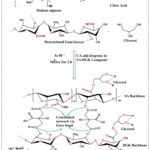 |
Scheme 1: Synthesis of cross-linked composite film Click here to View Scheme |
The carboxyl groups of citric acid (CA) cross-linked with the -OH of gum karaya (GK) and sodium alginate (SA) to create -COO- (ester bonds) when CA is added to the composite solution of SA and GK. These ester bonds create a 3-D network structure, linking the polymer chains of SA and GK through citric acid linkages, a reaction possessed by heat as shown in Scheme 1. The three-dimensional network of the citric acid cross-linked composite film has free carboxyl groups. These free carboxyl groups cross-linked with plasticizer glycerol via ester and hydrogen bonds to form a network structure within the cross-linked polymers. Cross-linked polymers are typically less soluble in solvents than non-cross-linked polymers. This is because the free hydrophilic group is cross-linked with a citric acid crosslinker as well as plasticizer glycerol. This structure makes it difficult for solvent molecules to separate the polymer chains and dissolve them. The cross-linked network structure formed by the citric acid crosslinker restricts the movement of SA and GK polymer chains, limiting the amount of solvent that can enter the polymer and reducing its ability to swell. As the degree of crosslinking rises, the polymer’s propensity to swell decreases. Natural polymers have a disadvantage in that they are easily biodegradable and typically decrease through cross-linking. The cross-linked network structure makes it more challenging for microbial enzymes and other biological agents to break down the polymer chains, thereby decelerating the degradation process.
Synthesis of cross-linked composite film
The homogeneous composite solution of sodium alginate and gum karaya polymer chain was cross-linked via the cross-linker citric acid and plasticizer glycerin. The strong covalent link that has formed between the two polymer chains makes this cross-linked film insoluble in the majority of solvents. As a plasticizer, glycerol has been used to help create films and keep them from brittleness. The crosslinking substance citric acid concentration was adjusted while maintaining the other parameters constant to produce the most favorable crosslinking conditions, as Fig. 1 illustrates. Scheme 1 is the general scheme for the synthesis of cross-linked films.
Optimization of Precipitation Efficiency for Deacetylated GK
The precipitation behaviour of deacetylated gum karaya was studied by varying the ethanol-to-water percentage. The findings indicate that the ethanol concentration influences the precipitation percentage, with higher ethanol percentages resulting in more effective precipitation. The observation from Table 1 below shows that the precipitation efficiency of deacetylated gum karaya increases as the ethanol-to-water percentage increases, indicating adequate precipitation due to ethanol’s ability to reduce gum karaya’s solubility in the aqueous phase. As the ethanol percentage decreases, precipitation drops, with significant reductions observed below 50% ethanol. This is because lower ethanol concentrations increase the solubility of gum karaya, reducing its ability to precipitate. At 30% ethanol, no precipitation occurs, suggesting that this concentration is insufficient to destabilize the gum karaya solution, allowing the polymer to remain dissolved. The optimal precipitation occurs at 80% ethanol, where the observed precipitation amount 0.9328 g, suggesting this is the most efficient ethanol-to-water ratio for precipitating deacetylated gum karaya. The optimal precipitation at 80% ethanol arises due to the ideal balance between ethanol’s precipitation effect and water’s role in maintaining controlled solubility and hydration.
Table 1: Precipitation % of deacetylated gum karaya (DGK)
|
Sn. |
Amount of Neutralized gum karaya solution (g) | Percentage ratio of ethanol with water | Expected precipitation | Amount of precipitation (mg) |
Optimization |
|
1. |
1g | 90% | 1g | 0.9072 | |
| 2. | 1g | 80% | 1g | 0.9328 |
Optimized |
|
3. |
1g | 70% | 1g | 0.9004 | |
| 4. | 1g | 60% | 1g |
0.8936 |
|
|
5. |
1g | 50% | 1g | 0.7932 | |
| 6. | 1g | 40% | 1g |
0.6336 |
|
|
7. |
1g | 30% | 1g | Not Precipitate |
|
Affects the ratio of sodium alginate (SA) and gum karaya (GK)
The study involves preparing a composite of SA and GK in different ratios, outlined in Table 2, to observe their solubility and swelling properties. The research found that as the ratio of SA increased, the solubility of the composite film also increased, but its brittleness decreased. Conversely, with a higher ratio of gum karaya, the solubility of the film decreased while its brittleness increased. At pH 7, it has been observed that SA-GK3 (SA 50% & GK 50%) is soluble within 5 minutes, but as SA % increases from 50% to 70% (SA-GK4 & SA-GK5), solubility time rises to 5 to 10 minutes, but their brittle nature decreases as shown in table 2. This is due to the hydrophilic, flexible nature of sodium alginate, which makes it dissolve faster and reduces brittleness, while lower solubility, rigidity, and cross-linking potential of gum karaya lead to slower dissolution and increased brittleness. The balance between these two polymers determines the overall properties of the composite film.
Table 2: Synthesis of a composite film in a fixed ratio of sodium alginate and gum karaya
|
Sample name |
Composite film | Sodium alginate | Gum karaya | Swelling nature (pH) | Swelling nature (pH) | Brittle nature |
| Composite film variation of Composition | SA-GK1 | 28 (70%) | 12 (30%) | Soluble within 5 minutes | pH: 7 |
Brittle nature increases as the % of DGK increases. |
|
SA-GK2 |
24 (60%) | 16 (40%) | ||||
| SA-GK3 | 20 (50%) |
20 (50%) |
||||
|
SA-GK4 |
16 (40%) | 24 (60%) | Soluble 10 minute | |||
| SA-GK5 | 12 (70%) |
28 (70%) |
Effect of citric acid concentration
The cross-linked composite film is denoted as SA-CA-GK1, SA-CA-GK2, SA-CA-GK3, SA-CA-GK4, and SA-CA-GK5, representing cross-linked films with various ratios of citric acid. In this crosslinking reaction, the other reaction parameters were kept constant. The findings are shown in Fig. 1a, indicating that the percentage of crosslinking increased as the crosslinker concentration rose from 2.6 × 10⁻⁴ to 7.8 × 10⁻⁴ mol L−1, reaching a peak of 89% with the SA-CA-GK4 cross-linked composite film. The larger quantity of crosslinkers and functional groups available in the composite during crosslinking resulted in a higher degree of crosslinking. However, with a further increase in the crosslinker concentration (1.0 × 10⁻³ mol L−1), the percentage of crosslinking began to decrease to 86%. This decline is likely due to the excessive crosslinker concentration, leading to saturation and an excess of unreacted crosslinker molecules. This saturation can impede the effective formation of additional crosslinks.
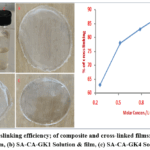 |
Figure 1: Crosslinking efficiency; of composite and cross-linked films: (a) composite solution & film, (b) SA-CA-GK1 Solution & film, (c) SA-CA-GK4 Solution & film. Click here to View Figure |
Effect of plasticizer
Glycerol is a plasticizer in cross-linked films, increasing flexibility and processability. Excessive glycerol can negatively impact the film’s mechanical, thermal, and physical characteristics. Therefore, the ideal glycerol concentration for cross-linked polymer weight is 10%.
FT-IR
FT-IR spectra of composite films formed by sodium alginate and gum karaya (SA-GK) and cross-linked films formed by crosslinking between sodium alginate and gum karaya with citric acid (SA-CA-GK) are depicted in Fig. 2. The FT-IR of the composite (SA-GK) film has 3410 cm-1 adsorption bands, which suggest a hydroxyl group (-OH) 52. However, in contrast, bands at 2917 cm-1 are considered to be related to -CH vibration. Additionally, at 1425 and 1619 cm-1 absorption bands correspond to carbonyl group vibrations, as seen in Fig. 2a and the fingerprint region’s peaks at 1160, 1083, and 1015 cm−1 (C−O−C vibrations in the gum’s sugar moieties) 34. On the other hand, the FTIR spectra (Fig. 2b) illustrate ester linkages that resulted from chemical reactions between the hydroxyl groups on the sodium alginate and gum karaya molecules with the carboxyl groups on the citric acid. It indicates that the ester linkage occurred at around 1732 cm-1 due to carbonyl vibrations. Research conducted by Ch’ng et al. (2017) indicated that ester linkages occurred at 1619 and 1733 cm-1 53. This band indicates the presence of ester or carboxylic acid groups, likely formed during cross-linking. This specific absorption peak confirms that crosslinking occurs between the sodium alginate and gum karaya composite via a citric acid crosslinker 54.
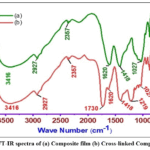 |
Figure 2: FT-IR spectra of (a) Composite film (b) Cross-linked Composite Film. Click here to View Figure |
SEM and EDX
SEM and EDX images (Fig. 3) of the composite and cross-linked composite film. The SEM picture revealed the composite film’s surface structure, which was smooth and homogeneous (Fig. 3a). In contrast, cross-linked film (SA-CA-GK) exhibited a distinctly different surface structure, porous with different kinds of flakes present on a porous, heterogeneous, rough, and layered surface (Fig. 3b). Therefore, SEM images supported the crosslinking of citric acid between a composite solution of sodium alginate and gum karaya. The element analysis indicates that the composite and cross-linked composite films have the same elements with varying percentage weights.
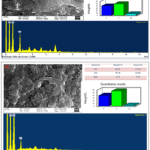 |
Figure 3: SEM micrographs and EDX spectra of (a) composite and (b) cross-linked composite film. Click here to View Figure |
XRD
The XRD spectra (Fig. 4) of composite film (SA-GK), and cross-linked composite film (SA-CA-GK) provide reliable and consistent results. The composite film XRD pattern, illustrated in Fig. 4a, displays a distinct peak at approximately 21.96, indicating its amorphous nature. Conversely, the XRD of the cross-linked composite film has a 2θ value with a broad peak at 19.6° with high intensity (Fig. 4b), indicating the amorphous nature increases after the crosslinking in composite material. The polymeric structure’s molecular weight increases due to the cross-linking reaction that generated covalent ester bonds and bridging molecules between gum karaya and sodium alginate, as indicated by the lower 2θ value. This result is in line with earlier research that showed the crystallinity was reduced by citric acid crosslinking 55.
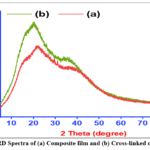 |
Figure 4: XRD Spectra of (a) Composite film and (b) Cross-linked composite film Click here to View Figure |
Thermal behavior of composite and cross-linked composite film
TGA curves were used to study the thermal degradation of cross-linked composite (SA-CA-GK) and composite (SA-GK) films. Fig. 5. shows weight loss (in mg and percentage) curves for cross-linked and composite films resulting from temperature-controlled heating. The parameters for TGA characteristics are:
- Onset indicates the temperature at which the degradation started.
- Midpoint indicates the temperature at which degeneration is highest.
- The end set indicates that all degeneration occurs.
- Weight loss at each phase, expressed as a percentage and mg.
Three phases can be seen in the composite film’s breakdown curves in Fig. 5a. The loss of H2O molecules from the SA-GK film’s amorphous structure in the first phase, which lasts from 29° to 187°C, while the second phase, which occurs from305° to 522°C, is linked to the dehydration of the saccharide ring and the depolymerization of the SA-GK film, with 421°C serving as the maximum decomposition temperature. On the other hand, the third phase, which occurs between 649° and 704°C, denotes the full breakdown of the composite film. In Fig. 5b, there were also three distinct processes in the degradation of the cross-linked film (SA-CA-GK4). The starting point involved a temperature range of 29°–187°C and a minor weight loss of 16.54 mg (91.88%), which is known as water loss. A weight loss of 06.97 mg (61.28%) in the 305°C to 522°C temperature range is required in the second phase. This suggests that the cross-linked film has greater thermal stability than the composite. Nevertheless, there is no discernible difference between the thermal stability of the composite film and films incorporating citric acid, as has been demonstrated by earlier studies 55, 56. Citric acid, which was effectively cross-linked into a composite solution of SA-GK and changed its molecular structure, was the cause of the increase in thermal stability. The SA-CA-GK film entirely disintegrates during the third phase, which occurs at 649°C to 705°C and is associated with a weight loss of about 3.49 mg (19.36%).
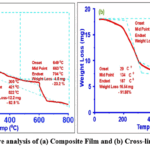 |
Figure 5: Comparative analysis of (a) Composite Film and (b) Cross-linked composite Film. Click here to View Figure |
Solubility and Swelling study
Solubility of composite and cross-linked film
In the swelling study, it was observed that composite (SA-GK) film with different ratios of sodium alginate and gum karaya was dissolved within 20 minutes at all pHs. As the ratio of gum karaya increases in the SA-GK film, the brittle nature of the film rises, but the solubility time increases as the ratio of gum karaya increases. Cross-linked composite (SA-CA-GK) film gives some exciting results regarding its swelling nature; the cross-linked film did not swell and was not soluble in pH 5 to 7.
Swelling study of cross-linked film
The swelling nature of SA-CA-GK4 was investigated at room temperature in three pH media solutions (pH 2, 5, and 7). The finding suggested that the swelling ability of the cross-linked rose with rising time but decreased with increasing pH, and the minimum swelling occurred at pH 7 and swelled until 12 days but was insoluble. The cross-linked composite film reached maximum swelling at pH 2 in 5 hours. It became soluble, while at pH 5, it reached maximum swelling in 12 days before becoming soluble, as shown in Fig. 6. Despite only swelling at pH 7, the cross-linked composite films are insoluble due to factors such as covalent bonds by the esterification between the -OH of SA and GK with the -COOH of citric acid, resulting in decreased hydrophilic groups, minimal hydrolytic degradation, balanced ionization, stability covalent crosslinks, and lower hydration, all of which combine to prevent dissolution at pH 7. The weight loss and thermal stable associated with the first phase of the TGA results (Fig. 5) further suggest that the cross-linking of the CA caused a drop in the moisture amount of the SA-CA-GK films. A few additional investigations revealed comparable findings of films that were cross-linked with CA (Seligra et al., 2016) 57. As previously shown 55, the citric acid crosslinking films consequently decrease in free hydrophilic groups, which is responsible for decreasing moisture content and swelling nature. The exceptional swelling ability of cross-linked composites at pH 2 is attributed to the protonation or lack of ionization of acidic groups (such as -COOH).
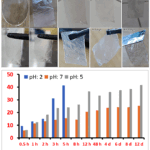 |
Figure 6: Study the swelling nature of cross-linked film. Click here to View Figure |
Mechanical strength
Tensile strength and elongation at break
The standard testing technique IS 13360 (Pt.-5/Sec-3) was used to test the elongation at the break as well as the tensile strength of SA-CA-GK film via the universal testing machine. The tensile strength is 78.4 MPa, while elongation at break is 4.7%. The composition of cross-linked films directly affects their mechanical characteristics. Earlier research reports explained that the tensile strength of CA cross-linked alginate (covalent bond) films shows low mechanical strength compared to Ca2+ ion-containing films. In the current study, the tensile strength of the citric acid’s cross-linked composite film of SA and GK is lower compared to graphene oxide sodium alginate 58.
Thickness
The cross-linked film is placed on a flat plate of thickness gauges used via the testing method IS: 2508, ensuring no wrinkles or folds. Before measuring, the gauge’s thickness is set to zero using standard reference material, and the thickness at five different points is distributed evenly over the sample. Ultimately, the mean of the three measurements was used to calculate the average thickness of the 23 µm cross-linked film.
Transmittance
The Transmittance test of the cross-linked composite per IS 13360 (Pt.-9/Sec-3) was conducted using standard testing protocols. To measure transmittance, the spectrophotometer’s light beam passes through the cross-linked film and measures the sample’s transmittance across the specified wavelength range. Lastly, the average transmittance is 91.3 %, calculated by recording the values.
Haze
The cross-linked film is placed in the haze meter to follow IS 13360 (Pt.-9/Sec-3), ensuring the sample is flat and free from wrinkles or bubbles. The fraction of light transmitted through the sample and the fraction of light scattered by the sample are measured, and the reading is recorded as 10.9 % as per the device’s instructions.
Antibacterial activity test
Food packaging is one of the most common uses of polymer film because it keeps food fresher longer, reduces contamination, and controls infections. Through the agar well diffusion approach, the antibacterial activity of SA-GK film and SA-CA-GK4 film was investigated via the approach of agar well diffusion against three pathogenic microbes responsible for food-borne diseases: S. aureus bacteria , which are gram-positive, while P. aeruginosa and E. coli bacteria are gram-negative. Fig. 7 tabulates the antibacterial activity values for cross-linked and composite films. It indicates that the composite film was less effective against all three pathogenic strains as compared to cross-linked films as well as the erythromycin drug used as a reference. The SA-CA-GK4, on the other hand, exhibited improved antimicrobial activity against each of the three pathogenic bacterial strains. This implies that the crosslinking of citric acid in SA-KG solution improves the antibacterial activity due to the antibacterial properties of citric acid. Moreover, incorporating an antibacterial medication into a cross-linked film (SA-CA-GK4) can boost its antibacterial activity.
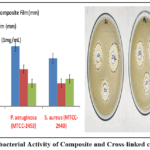 |
Figure 7: Antibacterial Activity of Composite and Cross-linked composite film. Click here to View Figure |
MTT assay
The findings of the experiments used to calculate the proportion of cells that survived after 65 hours are shown in Fig. 8. Cell viability appears to have decreased in a well containing a low-acidic cross-linked composite film solution, according to the MTT assay results. However, the cell viability results of the film are not correct data because it is soluble in an acidic medium, showing decreased cell viability.
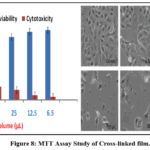 |
Figure 8: MTT Assay Study of Cross-linked film. Click here to View Figure |
Biodegradation in soil
The cross-linked composite film’s weight loss during the course of the 35-day soil burial test is shown in Fig. 9a. Initially, it was thin and transparent, but it eventually turned opaque and off-white. The weight loss percentage of the film reflects the biodegradation process caused by soil moisture and microorganisms. Following a 28-day burial of soil, the weight loss percentage of the cross-linked composite film was 45.89%, and after 35 days, it increased to 84.32% (Fig. 9b). The molecular structure of the film also changed alongside the weight loss. The cross-linked composite film’s IR spectra, as displayed in Fig. 9c, revealed peak absorption at 1730 cm−1 and around 2925 cm−1, respectively, following the soil burial test for 21 and 35 days. As biodegradation proceeds, these intensities gradually decrease. These findings, therefore, suggest that cross-linked composite film is biodegradable and appropriate for both animal and human digestion.
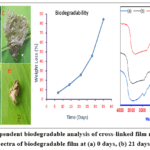 |
Figure 9: Time-dependent biodegradable analysis of cross-linked film monitored at 7 day interval. FTIR spectra of biodegradable film at (a) 0 days, (b) 21 days, and (c) 35 days. Click here to View Figure |
Fruits packaging study
Research was conducted to assess the potential use of the cross-linked film (SA-CA-GK) in fruit packaging. The study involved wrapping apples and plum fruits with the cross-linked composite film and comparing their preservation to unwrapped fruit. Apples were wrapped for 28 days and plums for 9 days at ambient temperature. Next, the fruit’s shelf life was assessed. Fig. 10 displays the comparison between wrapped and unwrapped fruit. The apple, kept as a control, turned dark reddish-brown with moldy spots and a foul smell. In contrast, the apple wrapped with the antimicrobial cross-linked composite film retained its red and green color without any decomposition smell, as shown in Fig. 10a. Similar outcomes were observed for the plum fruits within 9 days, as displayed in Fig. 10b. These findings clearly demonstrate the effective preservation capabilities of the SA-CA-GK4 film in food packaging.
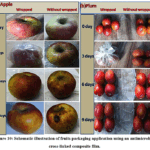 |
Figure 10: Schematic illustration of fruits packaging application using an antimicrobial cross-linked composite film. Click here to View Figure |
Conclusions
The cross-linked polymer film (SA-CA-GK4) exhibited favorable thermal stability, antibacterialactivity, biodegradability, flexibility, and transparencywith improved the mechanical performance. . The film was successfully synthesized via citric acid crosslinking in the presence of glycerol as a plasticizer. The proposed composition of the SA-CA-GK film was analyzed using FTIR, SEM, XRD, and TGA techniques. XRD analysis confirms the amorphous nature of the newly formed SA-CA-GK4 film. TGA assessment revealed that the SA-CA-GK film was more thermally stable than the SA-GK film at high temperatures. SEM images show crosslinking caused by a change in film morphology from the smooth homogeneous form in the composite film to rough heterogeneous surfaces in the SA-CA-GK film. Antibacterial studies against three pathogenic strains showed that the SA–CA–GK film exhibited significantly higher activity than both the SA–GK film and the tetracycline reference. Furthermore, soil burial tests confirmed its biodegradability. These findings highlight the potential of the developed cross-linked film as an effective, biodegradable antimicrobial packaging material for extending the shelf life of fruits such as apples and plums.This study offers a unique cross-linked composite film that may be efficiently used in food/fruit packaging, offering satisfactory antimicrobial activity and biodegradability.
Acknowledgment
All authors are indebted to the Department of Higher Education, Uttar Pradesh (India) for financial support as research project to conduct the research under the scheme of Research and Development of U.P. State Government. Brijesh Kumar is also very thankful to the Council of Scientific and Industrial Research (CSIR), New Delhi for the financial support in the form of a junior research fellowship to carry out this work.
Funding Sources
The author(s) received no financial support for the research, authorship, and/or publication of this article.
Conflict of Interest
The author(s) do not have any conflict of interest.
Data Availability Statement
The data supporting the findings of this study are available from the corresponding author upon reasonable request.
Ethical Approval Statement
This study does not involve any human or animal subjects.
Authors’ Contributions
Brijesh Kumar contributed to the main work such as study design, experiments, analysis, and writing. Narendra Singh and Mohattib Ali assisted in the experimental work and data collection. Pramendra Kumar supervised the study and revised the manuscript. All authors have read and approved the final manuscript.
References
- Thøgersen, J. Scandinavian Journal of Management 1996, 12 (3), 291-304.
CrossRef - Carocho, M.; Morales, P.; Ferreira, I. C. Trends in food science & technology 2015, 45 (2), 284-295.
CrossRef - Dobrucka, R.; Cierpiszewski, R. Polish Journal of Food and Nutrition Sciences 2014, 64 (1).
CrossRef - Restuccia, D.; Spizzirri, U. G.; Parisi, O. I.; Cirillo, G.; Curcio, M.; Iemma, F.; Puoci, F.; Vinci, G.; Picci, N. Food control 2010, 21 (11), 1425-1435.
CrossRef - Dainelli, D.; Gontard, N.; Spyropoulos, D.; Zondervan-van den Beuken, E.; Tobback, P. Trends in Food Science & Technology 2008, 19, S103-S112.
CrossRef - Lopez-Rubio, A.; Almenar, E.; Hernandez-Muñoz, P.; Lagarón, J. M.; Catalá, R.; Gavara, R. Food Reviews International 2004, 20 (4), 357-387.
CrossRef - Díaz-Montes, E.; Castro-Muñoz, R. Foods 2021, 10 (2), 249.
CrossRef - Versino, F.; Lopez, O. V.; Garcia, M. A.; Zaritzky, N. E. Starch‐Stärke 2016, 68 (11-12), 1026-1037.
CrossRef - Derraik, J. G. Marine pollution bulletin 2002, 44 (9), 842-852.
CrossRef - Machado, A. D. S.; Kloas, W.; Zarfl, C.; Hempel, S. DOI: https://doi. org/10.1111/gcb 14020, 1405-1416.
- Sabbah, M.; Porta, R. J. Appl. Biotechnol. Bioeng 2017, 2 (3), 00033.
- Li, W. C.; Tse, H. F.; Fok, L. Science of the total environment 2016, 566, 333-349.
CrossRef - Das, S.; Bera, D.; De, D.; Mondal, D.; Karmakar, P.; Das, S.; Dey, A. European Polymer Journal 2022, 180, 111608.
CrossRef - Karmakar, S.; Manna, S.; Kabiraj, S.; Jana, S. Food Hydrocolloids for Health 2022, 2, 100071.
CrossRef - Manuja, A.; Kumar, B.; Athira, S.; Sarkar, P.; Riyesh, T.; Kumar, N.; Tripathi, B.; Mann, B. Food Hydrocolloids for Health 2022, 2, 100050.
CrossRef - Acevedo, C. A.; López, D. A.; Tapia, M. J.; Enrione, J.; Skurtys, O.; Pedreschi, F.; Brown, D. I.; Creixell, W.; Osorio, F. Food and Bioprocess Technology 2012, 5, 1511-1520.
CrossRef - Marangoni Júnior, L.; Rodrigues, P. R.; da Silva, R. G.; Vieira, R. P.; Alves, R. M. V. Food and Bioprocess Technology 2021, 14, 2336-2346.
CrossRef - Wu, W.; Liu, T.; He, H.; Wu, X.; Cao, X.; Jin, J.; Sun, Q.; Roy, V. A.; Li, R. K. Colloids and surfaces B: Biointerfaces 2018, 167, 538-543.
CrossRef - Rhim, J.-W. LWT-Food science and technology 2004, 37 (3), 323-330.
CrossRef - Alharaty, G.; Ramaswamy, H. S. Journal of Composites Science 2020, 4 (3), 123.
CrossRef - Priyadarshi, R.; Roy, S.; Ghosh, T.; Biswas, D.; Rhim, J.-W. Sustainable Materials and Technologies 2022, 32, e00353.
CrossRef - Feng, M.; Yu, L.; Zhu, P.; Zhou, X.; Liu, H.; Yang, Y.; Zhou, J.; Gao, C.; Bao, X.; Chen, P. Carbohydrate polymers 2018, 196, 162-167.
CrossRef - bt Ibrahim, S. F.; Mohd Azam, N. A. N.; Mat Amin, K. A. In IOP Conference Series: Materials Science and Engineering, 2019; IOP Publishing: Vol. 509, p 012063.
CrossRef - Girón-Hernández, J.; Gentile, P.; Benlloch-Tinoco, M. Carbohydrate Polymers 2021, 271, 118429.
CrossRef - Pal, K.; Paulson, A. T.; Rousseau, D. In Handbook of biopolymers and biodegradable plastics, Elsevier, 2013; pp 329-363
CrossRef - Cao, T. L.; Song, K. B. Food Hydrocolloids 2019, 97, 105198.
CrossRef - Anderson, D. Food Additives & Contaminants 1989, 6 (2), 189-199.
CrossRef - Vinod, V.; Sashidhar, R.; Sarma, V.; Raju, S. S. Food chemistry 2010, 123 (1), 57-62.
CrossRef - Hamdani, A. M.; Wani, I. A.; Gani, A.; Bhat, N. A.; Masoodi, F. A. Innovative Food Science & Emerging Technologies 2017, 44, 74-82.
CrossRef - Dickinson, E. Food Hydrocolloids 2018, 78, 2-14.
CrossRef - Mirhosseini, H.; Amid, B. T. Food Research International 2012, 46 (1), 387-398.
CrossRef - Lujan-Medina, G. A.; Ventura, J.; Ceniceros, A. C. L.; Ascacio, J. A.; Valdés, D. B.-V.; Aguilar, C. N. Macromol. Indian J 2013, 9, 111-116.
- Additives, E. P. o. F.; Food, N. S. a. t.; Mortensen, A.; Aguilar, F.; Crebelli, R.; Di Domenico, A.; Frutos, M. J.; Galtier, P.; Gott, D.; Gundert‐Remy, U.; et al. EFSA Journal 2016, 14 (12), e04598.
- Padil, V. V. T.; Senan, C.; Černík, M. Journal of Agricultural and Food Chemistry 2015, 63 (14), 3757-3765.
CrossRef - Sarathchandiran, I.; Suresh, K. International Journal of Biopharmaceutics 2014, 5 (2), 142-151.
- Anupama, S.; Goyal, S.; Goyal, N. Der Pharmacia Lettre 2010, 2 (5), 39-48.
- Fan, H. Y.; Duquette, D.; Dumont, M.-J.; Simpson, B. K. International journal of biological macromolecules 2018, 120, 263-273.
CrossRef - Olsson, E.; Hedenqvist, M. S.; Johansson, C.; Järnström, L. Carbohydrate polymers 2013, 94 (2), 765-772.
CrossRef - Azeredo, H. M.; Waldron, K. W. Trends in Food Science & Technology 2016, 52, 109-122.
CrossRef - Reddy, O. S.; Subha, M.; Jithendra, T.; Madhavi, C.; Rao, K. C. Polymers and Polymer Composites 2021, 29 (3), 163-175.
CrossRef - Gao, C.; Pollet, E.; Avérous, L. Food Hydrocolloids 2017, 63, 414-420.
CrossRef - Abka-Khajouei, R.; Tounsi, L.; Shahabi, N.; Patel, A. K.; Abdelkafi, S.; Michaud, P. Marine drugs 2022, 20 (6), 364.
CrossRef - Vieira, M. G. A.; Da Silva, M. A.; Dos Santos, L. O.; Beppu, M. M. European polymer journal 2011, 47 (3), 254-263.
CrossRef - Patra, N.; Vojtová, L.; Martinová, L. Journal of Thermal Analysis and Calorimetry 2015, 122, 235-240.
CrossRef - Postulkova, H.; Chamradova, I.; Pavlinak, D.; Humpa, O.; Jancar, J.; Vojtova, L. Food Hydrocolloids 2017, 67, 148-156.
CrossRef - Pereira, R.; Tojeira, A.; Vaz, D. C.; Mendes, A.; Bártolo, P. International Journal of Polymer Analysis and Characterization 2011, 16 (7), 449-464.
CrossRef - Wen, L.; Liang, Y.; Lin, Z.; Xie, D.; Zheng, Z.; Xu, C.; Lin, B. Polymer 2021, 230, 124048.
CrossRef - Kumar, B.; Kumar, P. International Journal of Biological Macromolecules 2024, 268, 131604.
CrossRef - Kumar, B.; Panday, S. K.; Kumar, P. Bioactive Carbohydrates and Dietary Fibre 2023, 30, 100370.
CrossRef - Vinod, V. T. P.; Wacławek, S.; Senan, C.; Kupčík, J.; Pešková, K.; Černík, M.; Somashekarappa, H. RSC advances 2017, 7 (23), 13997-14009.
CrossRef - Raucci, M.; Alvarez‐Perez, M.; Demitri, C.; Giugliano, D.; De Benedictis, V.; Sannino, A.; Ambrosio, L. Journal of Biomedical Materials Research Part A 2015, 103 (6), 2045-2056.
CrossRef - Singh, B.; Pal, L. Journal of the mechanical behavior of biomedical materials 2012, 9, 9-21.
CrossRef - Ch’ng, Y. S.; Loh, Y. C.; Tan, C. S.; Ahmad, M.; Asmawi, M. Z.; Wan Omar, W. M.; Yam, M. F. Pharmaceutical biology 2017, 55 (1), 2083-2094.
CrossRef - Sharmin, N.; Sone, I.; Walsh, J. L.; Sivertsvik, M.; Fernández, E. N. Food Packaging and Shelf Life 2021, 29, 100733.
CrossRef - Wu, H.; Lei, Y.; Lu, J.; Zhu, R.; Xiao, D.; Jiao, C.; Xia, R.; Zhang, Z.; Shen, G.; Liu, Y. Food Hydrocolloids 2019, 97, 105208.
CrossRef - Chi, Y.; Maitland, E.; Pascall, M. A. International Journal of Food Science & Technology 2024, 59 (3), 1801-1813.
CrossRef - Seligra, P. G.; Jaramillo, C. M.; Famá, L.; Goyanes, S. Carbohydrate Polymers 2016, 138, 66-74.
CrossRef - Liu, S.; Li, Y.; Li, L. Carbohydrate polymers 2017, 160, 62-70.
CrossRef
Accepted on: 25 Apr 2026
Second Review by: Dr. Rumana Hoque
Final Approval by: Dr. Tawkir Sheikh


ISSN Online: 2231-5039