Advances in Alkyd Resins: Multifarious Coating Material Synthesized from Vegetable Oils ─ A Greener Approach
 , Mohd Amil Usmani, Abdul Moheman and Kahkashan Begum*
Department of Chemistry, Gandhi Faiz-E-Aam College (Affiliated to MJP Rohilkhand University, Bareilly), Shahjahanpur, UP, India
Corresponding Author Email: apkahkashanbegum@gmail.com
Download this article as:
ABSTRACT:Nowadays, efforts have been made to synthesize polymeric materials from bio-based natural and renewable resources to reduce reliance on the petroleum-derived materials. Alkyd resins, having ester linkages as the repeating units, developed from vegetable oils and are extensively used as a surface coating material owing to their unique characteristics and easy availability at a comparatively lower cost. Different vegetable oils as well as their fatty acids are utilized as the forerunners for the syntheses of alkyds. Using different non-traditional and contemporary seed oils to develop alkyds also enlightens on how to make useful use of these materials going to waste in every season and also to augments the feedstock. Numerous states of art technological variations have been performed unceasingly to improve the performances and augment the applications in different areas. In view to reduce the environmental contamination waterborne, hyperbranched and high solid alkyds were formulated. Furthermore, alkyd nanocomposites were developed by the incorporation of nanomaterials in the alkyd and modified alkyd resins both. Such modifications synergistically improve the physico-mechanical, physicochemical, anticorrosive and antimicrobial performances of the pristine polymeric resin remarkably.
KEYWORDS:Alkyd Resin; Alkyd nanocomposites; Coatings; Fatty Acids; Vegetable oils
Introduction
Significant efforts have been made in the recent past to synthesize bio-based monomers, polymers, and other practicable materials in order to reduce the dependency on the petrochemicals, which are classified as non-renewable resources 1-3. Furthermore, escalating prices of petrochemicals and different environmental issues make ethical derive to direct the research and development towards greener approach and uses of bio-based natural and sustainable materials for the replacement of materials obtained from resources of non-renewable origin in view to receive the ultimate goal of sustainable development 4-7. Numerous bio-based materials bestowed by the nature have been utilizing extensively as the precursors for the different valuable recipes for many decades such as carbohydrates, cashew nut shell liquid (CNSL), chitosan, lactic acid, wool fibre, proteins, lignin, vegetable oil (VO) and several others 8-9. Amongst various natural renewable resources VOs particularly those extracted from the different seeds are largely utilized by the scientific investigators owing to their physicochemical characteristics such as viscosity, density, inbuilt different functionalities for easy derivatizations to transformed into numerous useful products 10-11. Furthermore, their easy availability throughout the world, periodic renewability, eco-friendly characteristics and ability to reduce toxicity and other health related concerns 12. Numerous VOs in particular those from seeds of various plants like linseed, soybean, Pongamia glabra, Annona squamosa, castor, sunflower, Jatropha curcas and many others largely used for the development of various polymers. Common examples of bio-based polymers derived from these renewable resources are poly(ester)s, poly(urethane)s, poly(ester-amide)s, poly(ether-amide)s, and epoxies and their modified products in view of improving their resistance characteristics in variable service environments. These materials are largely used in different industries, such as coatings, adhesives, laminating, drug release system, tissue science, sustainable products, bio-printing, and many other biomedical and bioengineering applications13-17.
Among them VO-based poly(ester)s generally prepared by the poly(condensation) of the diol derived from VOs and dibasic acids traditionally known as alkyd resins and are amongst the early developed polymeric resins. Synthesis of poly(ester)s from bio-derived materials is more significant for research and development as it widely used in our daily life and attract considerable attraction due to their beneficial physico-mechanical performances and biodegradable characteristic as well18-19. Alkyd resins have got prominent position in the many industrial applications especially in the coatings, owing to cost effectiveness, ease of application and ability to protect the materials from different environmental attacks and also provide aesthetic appealing18. Furthermore, in view to improve the versatility of the alkyd resins in various service conditions and also to minimize the environmental issues, different state-of-the-art modifications have been performed 20-21. In this communication efforts have been made to overview the advances in VOs based alkyd resins as well as different strategies of modifications in view to envisage the further developments in the line to dedicate the future perspectives.
Vegetable Oil (VO)
The VOs have been playing significant role in glorying the world for the ancient time in different forms like in the form of coatings to protect and redecorate the articles. Structurally VOs are embedded with unsaturated and saturated fatty acids of different chain length through triglyceride linkage22. General structure of VO along with different amenable active sites are illustrated in Fig. 1.
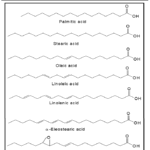 |
Figure 1: Vegetable oil and common fatty acids Click here to View Figure |
Distinctive of fatty acids and their relative availability in the VOs largely affect the physicochemical properties. Presence of unsaturation and nature of unsaturation both largely influence the characteristics of VOs. The number of unsaturation present in the VOs analytically measured with the help of iodine value (IV) as per standard reported methods22. On the basis of iodine value (IV), VOs are roughly divided into three categories: drying oils (IV > 130), semi-drying oils (IV 90-130), and non-drying oils (IV < 90). Common VOs along with their IV and major constituents’ fatty acids are given in Table 1 9, 16, 20-21, 23. Apart from these the fatty acids of many VOs are also have different inbuilt functionalities such as hydroxyl group, oxirane group, ester linkages, allylic, vinylic carbons and many other specific groups. These functionalities provide ample of amenable avenues for chemical reactions and feasible derivatizations 20, 24. Presence of these reactive sites in the different VOs can be easily identified qualitatively and quantitatively both with the help of different analytical methods as well as different spectral analyses 23.
VOs like soybean, castor, coconut, sunflower and many other edible and non-edible both have been extensively used in the synthesis of alkyds and modified alkyds5, 25. Utilizing edible oils as precursor for polymer synthesis has effective worries about its effect on food security. In view to theses, the utilization of non-edible oils in the polymer synthesis is a viable alternate for edible oils 26. Use of non-edible vegetable oil reduce the pressure on stock of edible oil and providing the significant uses of materials significantly born in the different part of the world. These acts also solve the problems of waste disposal on the earth surface and prevent the rotting away of different oilseeds in every session.
Table 1: Iodine values of different vegetable oils along with major fatty acids.
|
Name of Vegetable Oil |
Iodine value (IV) |
Major fatty acids |
|
Castor oil |
84-98 | Ricinoleic acid |
| Cotton seed oil | 130-140 |
Linoleic acid, Palmitic acid, Oleic acid |
|
Jatropha curcas seed oil |
100-110 | Oleic acid |
| Linseed oil | 175-185 |
Linolenic acid, Oleic acid, Linoleic acid |
|
Palm oil |
75-85 | Oleic acid, Palmitic acid |
| Pongamia glabra seed oil | 80-90 |
Oleic acid |
|
Corn oil |
120-130 | Linoleic acid, Oleic acid, Palmitic acid |
| Soybean oil | 125-135 |
Linoleic acid, Oleic acid |
|
Sunflower oil |
130-140 | Linoleic, Oleic acid |
| Rapeseed oil | 90-110 |
Oleic acid, Linoleic acid, Linolenic acid |
|
Olive oil |
78-90 | Oleic acid, Palmitic acid |
| Rubber seed oil | 137 |
Linolenic acid, Linoleic acid |
Utilization of VOs in the development of one of the oldest polymer alkyd resins an useful raw material in the coating and paint and related industries 3-4. Owing to comparatively reasonable material they have found applications more than other binders. Furthermore, their easy application under variable environmental conditions, durability, drying abilities, bending and flexibility of polymeric film, impact resistance ability and resistance to different environmental attack augment their versatility 5. Later on, these properties were further improved by different technical and chemical modifications.
Alkyds
A systematic scheme for the preparation of alkyd resin is provided in Fig 2. Preparation of poly(ester)s from renewable bio-based monomers is more significant for research and development as it is largely utilized in our everyday life and draw the considerable attention owing to their beneficial physic-chemical properties and biodegradable characteristic as well.
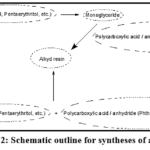 |
Figure 2: Schematic outline for syntheses of alkyds Click here to View Figure |
On the basis of composition of VO and polybasic acid commercially alkyds are grouped into different categories such as short, medium and long oil alkyds 25, 27. Short oil alkyd contains less than 40% of VO and mainly used in combination with other compatible polymers such amino resins where crosslinking with hydroxyl groups of alkyds with amino groups occurs on baking at suitable temperature and time. Medium oil alkyds have about 40-60% VO content and are typically synthesized from drying and semi-drying VOs, consequently being suitable for both air-drying and baking formulations. Long oil alkyds have more than 60% VOs and mostly developed using drying oils like linseed, sunflower, soybean etc. These alkyds have reported suitable for both external and internal applications owing to curing at ambient temperature. Numerous drying as well as semi-drying oils like castor, coconut, soybean, sunflower, linseed and many others are commercially used in the formulation of oil-based poly(ester)s 28-29. In addition to these many non-conventional VOs for example rubber seed, orange seed, Jatropha curcas, Albiziabenth, Pongamia glabra, Annona squamosa, tomato seed oil, melon seed oils and many others are spotted by the different scientific workers for the formulation of different alkyd resin in view to augment the spectrum of raw materials which ultimately arrest the escalating prices of the final product 10, 25-26, 30-32.
Short, medium, and long oil alkyd resins of Citrullus colocynthis seed oil (CCSO) comparatively richer in linoleic acid, as a renewable material were formulated utilizing oil, glycerol and phthalic anhydride in various ratios. Furthermore, Prunus mahaleb seed oil (PMSO), having conjugated fatty acid, was mixed with CCSO in various ratios in view of investigating the impact of PMSO on the characteristics of polymeric films. On the basis of different critical analyses authors reported that CCSO has promised to use as an useful raw material for application of surface coatings33.
Formulations of alkyd resins from rubber seed oil with variable composition of reacting materials (varying oil lengths) and their characterizations, emphasizing to molecular weight were performed using monoglyceride method. Polymeric resins’ performances pointedly depend on average molecular weight (Mav) as well as molecular weight distribution (MWD) 34. Properties of alkyd resins as binder is reported to best at a particular molecular size as it largely affects the storage stabilities and solubility in the various solvents. Therefore, it is desired to chemist to optimize the ratios of alkyd components as well as reaction conditions like temperature, pressure, heating rate and other required parameters through many trial experiments for the new non-traditional vegetable oils as they are attached with different fatty acids in different compositions prior to commercial productions18,34. Among different parameters determination of acid values periodically is an useful method to monitor the formation of required products and poly(condensation) as well 22. Aigbodion et al. (2001) has been reported for rubber seed oil (RSO) alkyd resin developed by using glycerol (polyol) and phthalic anhydride (polybasic acid) 50 % oil is optimal34. Hemp oil based alkyd resin synthesised and characterised and then used as high performance road marking pints. It has been reported that developed resin has promises for low VOC and eco-friendly 35.
Alkyd resins are generally synthesized from about 90% bio-based components, which include vegetable oils or their fatty acids and polyols such as glycerol and pentaerythritol received from biofuel production as well from agro-waste, excluding poly(acid) parts such as phthalic acid, isophthalic acid, maleic acid, adipic acid, and many others. In view to overcome these, numerous bio-based polyacids have been used to partially or fully replace the traditional polyacids of petrochemical components. Hulsbosch et al. (2018) reported that abundantly available glutamic acid, a non-essential amino acid, and its N-alkyl and N-acyl derivatives are appropriate for producing alkyd resins when combined with traditional aromatic polyacids36. Bio-based alkyd resins of soybean oil and linseed oil with furan-2,5-dicarboxylic acid obtained from dehydration of hexoaldaric acid or oxidation of 5-hydroxymethyl furfural. In this monoglycerides of these oils undergo poly(condensation) reaction with furan-2,5-dicarboxylic acid diester in varying ratios at high temperature to obtained bio-based alkyds. Formation of repeating ester moieties was confirmed by FTIR and NMR spectral analyses. It has been reported on the basis of gel permeation chromatography and rheology that molecular weight of the polymeric resin increases on increasing the relative amount of furan-2,5-dicarboxylic acid diester37. Alkyd resins of sunflower oil and linseed oil along with glycerol pentaerithritol as polyols and 2,5-furandicarboxalic acid as a poly basic acid were successfully developed. The developed alkyd resins were characterised by physic-chemical analyses as per standard reported method. The molecular structures were ascertained by FTIR and NMR spectral analyses. It has been reported that these resins show good thermal stability and outstanding adhesion. These result envisage the resulting polymer is suitable for indoor coatings38. Replacement of non-renewable poly(basic) acid with bio-based resources in view to produce alkyds for more sustainable and friendly to environment and their effect on the final products have been reported39.
Modified Alkyds
In view to make these polymers to more useful and friendlier to the environment as well, numerous modifications were made either through pre-polymerization or post polymerization.
Most of strategically art of modifications were made accomplished through the terminal groups of polymeric chain and in-built functionalities of daggling chain of fatty acids (Fig. 3). Modifications with acrylic monomers especially those categorized as hard monomer extensively used to confer the resistivity towards scratch 32, 40. Alkyd resins of linseed oil and sunflower oil along with recycled polyethylene terephthalate (PET) using pentaerytheritol and glycerol in view to provide suitable application to post-consumer PET. Recycling of PET is a partial solution of not only the solid waste management but also provide viable solution to the conservation of raw petrochemical products. The curing performances and other properties of the developed resins were investigated. The results especially salt spray and cathodic disbondment showed the strong adhesion of alkyd coatings using PET and steel substrate 41. In another report novel aldehyde-alkyd systems containing waste PET has been developed. Furthermore, aldehyde resin incorporated in both PET based alkyd resins and the reference alkyd without PET to produce the modified alkyd resins. It has been reported that the coating performances in different environments and thermal resistance performance of PET-based alkyd films were comparatively somewhat better than their reference counterparts. In addition to these in-situ aldehyde modification further improved the resistance to alkali, thermal stability and also minimize the loss in gloss in the PET-based alkyds42.
Tung oil having α-eleosteric acid as a major fatty acid, which have inbuilt conjugated system used for the synthesis of acrylated resin, by reacting isobornyl acrylate (IBOA), phthalic anhydride and glycerol. Amalgamation of IBOA in the developed polymeric resin was confirmed by the different physicochemical analytical techniques and FTIR, NMR spectral analyses. It has been reported that addition of IBOA augments the physic-mechanical performances and hydrophobicity of alkyd resins significantly. This is reasonably due to amalgamation of hexacyclic system in the polymeric resin which hindered the free movement of dangling hydrocarbon chain. Furthermore, improvement in thermal stability of the polymeric film was observed, reasonably due to generation of cyclohexene, naturally known for higher stability 43.
Alkyd resins of RSO, soybean oil and their blends in various ratios were prepared. It has been reported that viscosity is comparatively lower for soybean oil derived alkyds and blended oil based alkyds where soybean oil content is comparatively higher 44. In another report alkyd resins were prepared from blends of RSO and linseed oils in different proportions by monoglyceride process via phthalic anhydride as polybasic acid. It has been claimed that with the increase of linseed oil part in the blend systems, increase in IV occurs without significant compromise in darkening. Increasing the linseed oil ratio increases the unsaturation in the polymer system, which ultimately reduces the drying time. From these investigations it is clear that mixing of RSO with other VOs of high unsaturation is an extra valuable for formulation of alkyd resins45.
Waterborne alkyds
Waterborne (WB) coating systems, where water is mainly used as a solvent or where about 80% water component with low quantity of other solvents such as glycol ethers is employed. These are termed as water-dispersible/colloidal, water-soluble/water-reducible and emulsion. In these systems generally, hydrophilic group introduces in the fatty acid chain of the polymers (Fig. 3). WB coating materials are friendly to handle, friendly to human beings, reduces the environmental issues and economical burden as well16, 46. Many WB alkyds using different vegetable oils and fatty acids have been developed for mitigating the organic solvents. Maleinized and fumarized RSO based alkyd emulsions were developed by reacting RSO with maleic anhydride and fumaric acid in capricious ratios. Maleinized and fumarized RSO changed to respective monoglycerides on reaction with glycerol, which was reacted with phthalic anhydride to obtained alkyd resins followed by neutralization with triethylamine in view to make them to water soluble. The newly formulated alkyd resins reported for lesser volatile organic component in comparison to traditional solvent based alkyds. The performances of the polymeric films reported to show good protection performances in acids, brine and water 47.
The waste PET was glycolyzed by neopentyl glycol (NPG) and zinc acetate(catalyst). Glycolyzed PET, tall oil fatty acid and triethanolamine as a neutralizing agent were utilized for preparation of cost-effective and friendly to environment bio-based waterborne alkyd resins. Finally, waterborne alkyd-amino baking coating systems were developed by using waterborne alkyds having waste PET and amino resin (melamine formaldehyde resin). The developed PET based waterborne alkyd-amino baking films were reported for good physic-mechanical and chemical resistance performances. Furthermore, these systems show comparatively better alkali and organic solvent resistance performances. These investigations reveals that utilization of waste PET in water-based coatings, opens a fascinating process for environment friendly and systematic disposal of waste PET48
Castor oil based waterborne alkyd resin have been developed through monoglyceride method and phthalic acid (polyacid) followed by neutralization with triethylamine which was further treated with butylated melamine formaldehyde. The system reported to show comparatively better performances in terms of physic-mechanical and resistance to chemical in various environmental conditions, particularly in basics49.
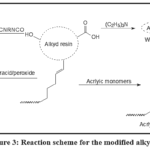 |
Figure 3: Reaction scheme for the modified alkyds Click here to View Figure |
Alkyd Nanocomposites
The performances of the both alkyd resins as well as different modified alkyd resins further augmented remarkably by incorporation of nano-sized materials owing to unique characteristics of the later materials such as high surface area to volume ratio, small sizes with high densities and high functionality per unit space 50-51. Alkyd nanocomposites reported to show good physic-mechanical, resistance to chemicals, resistance to corrosion, antimicrobial performances and resistance to fouling and thermal stability16, 52.
Alkyd resin-based nanocomposite coatings having variable amount of SiO2 and TiO2 nanoparticles (2-wt.% and 4-wt.%) were developed through solvent casting process. The developed coatings were evaluated for different physico-mechanical, chemical resistance and thermal properties. The incorporation of nanoparticles both silicon oxide and titanium oxide, contributed to the shifting of the characteristic thermal parameters glass transition temperature (Tg), curing reaction temperature (Tr) comparatively to the lower side, portentous improve the flexibility of the coating of nanocomposites. The remarkable Tr shifting towards the lower temperatures in case of nanocomposite structures due to the catalytic effect of the nanoparticles in the polymeric systems, consequently an improvement in curing52. Significant shifting in Tg was reported in alkyd resin having 4-wt % of TiO2 nanoparticles, which is also lower in comparison to the Tg of alkyd resin having SiO2 in equal proportion. Furthermore, it has been reported that better abrasion resistance was observed in case of nanocomposite coatings having SiO2 nanoparticles in compression to TiO2 nanocomposites53.
Alkyd resin of palm oil was developed via glyceride process and catalysed by SrO/Sr(OH)2 nanoparticles. Taking the acid value periodically use to monitor the degree of polymerization as well as poly(esterification) reactions. It has been claimed that well-dispersion of nano-particles in the reaction mixture which results a durable suspension, and hence augmentation in the reaction rate for both alcoholysis as well as poly(esterification) process. The antimicrobial activities of SrO/Sr(OH)2 based alkyd resins were studied using inhibition zone investigations. It has been envisaged that SrO/Sr(OH)2 nanoparticles hindered the bacterial metabolism54.
Effect of nano-ZnO in the different ratios on the silicon-modified waterborne alkyd coatings especially physico-mechanical and thermal stability characteristic was studied by Dhoke et al (2009)55. Silicon-modified alkyd-based waterborne coatings were formulated using hexamethylmethoxymelamine (HMMM) as a cross-linking agent and paratoluenesulphonic acid (p-TSA) as a catalyst. It has been reported that coatings obtained show synergistically improved performances especially thermal and mechanical properties with respect to pristine silicon modified alkyd resins 55. Alam et al (2009) have synthesized the nanoferite/alkyd nano-composite and reported to show improved performances in comparison to traditional alkyd resins 56-57. Alkyd resin combined with a range of additives, including gamma-aminopropyltriethoxysilane (KH550), HMMM, and nano-silica, followed by its incorporation into an acrylic resin emulsion. The resulting systems were applied on the tinplate and bamboo samples to investigate performances and reported to marked augmentation in adhesion strength, scratch resistance as well as decrease in absorption. This improvement was due to formation of multi-dimensional network structure obtain from the synergistic effect of alkyd resin, acrylic resin and the modifiers, which was supported by the DSC and FTIR analyses 58.
Chitosan a biopolymer, obtained from the waste shrimp shells and utilized for development of nanocomposite-based alkyd nanocoating along with synthesized ZnO and TiO2 in view to overcome the problem of marine biofouling and durability of marine vessels and structures. Alkyd resin-based nano-paints of these nanocomposites were applied on mild steel coupons for the investigation of different physicochemical analyses. Based on mesocosm experiments and field exposure studies, it has been reported that there is a significant decrease in both microfouling and macrofouling on the surfaces painted with chitosan/TiO2/ZnO59.
Modification of alkyd resin of sunflower oil fatty acid developed by partial replacement of monoglyceride with salicylic diethanol amine. The formation of different functional moieties was confirmed by FTIR and 1HNMR spectroscopies. Furthermore, green nano-biosynthesis method was employed to formulate ZnO and CuO/Zno followed by incorporation in modified alkyd resin to develop alkyd nano-composite. The developed nano-composite were characterized by TGA and SEM. The salicylic diethanol amine modified alkyd nano-composites show better film performances and protect the steel effectively from corrosion60.
TiO2 dispersed hyperbranched polyester of castor oil were developed and subsequently modified with poly(melamine-co-formaldehyde) isobutylated. The developed nano-composites were characterized as per standard techniques to investigate the molecular structure and degree of branching. The coating performances of the resulting nanocomposites were found to remarkably improved owing to convoluted diffusion channel which prevent the passage of corrosive ions and water by the synergistic effect of nanoparticles and s-triazene rings61.
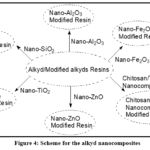 |
Figure 4: Scheme for the alkyd nanocomposites Click here to View Figure |
Conclusion and Future Perspectives
Alkyd resins are one of the oldest polymeric resin derived from the VOs largely used as the coating materials to protect the various articles from the different environmental attacks and also provide them aesthetic appearance. Due to the presence of repeating ester moieties these are biodegradable in nature. Numerous vegetables both edible and non-edible, polybasic acids and polyols have been reported to use for the syntheses of different types of alkyds. Performances of the resins mainly depend on the fatty acid composition of the VOs, polybasic acids, polyols.
In view to make the polymeric resins more eco-friendly, practicable and useful several amenable modifications have been performed. Efforts have been made to reduce the volatile organic solvent in manufacturing as well as in applications high solids, hyperbranched and waterborne alkyds were developed. Incorporation of nano-materials in the alkyd matrixes have been found to remarkably improve the thermal stability, antimicrobial activities, physico-mechanical and chemical resistance performances. In addition to these utilizations of non-traditional and nonconventional seed oils significantly going to waste in every session and their blends with other seed oils in the formulation of alkyd resin also discussed which ultimately increases the feed stock. Performances of different modified alkyd resins have found useful in different areas. Modification is the continuous process of scientific development; additional advancement is always required particularly in the direction towards environmental legislations. Formulation of environment friendly alkyd nano-composites by incorporation various nanomaterials in the water-based alkyds has prospective of synergistically improved performances.
Acknowledgement
Authors are thankful to the authorities of the Gandhi Faiz-e-Aam College, Shahjahanpur for providing the facilities and encouragement.
Funding Sources
The author(s) received no financial support for the research, authorship, and/or publication of this article.
Conflict of Interest
The author(s) do not have any conflict of interest.
Data Availability Statement
This statement does not apply to this article.
Ethics Statement
This research did not involve human participants, animal subjects, or any material that requires ethical approval.
References
- Ahamad S, I. G., Ahmad S. A, Hasnat A. , Synthesis and Characterization of Polyesteramide urethane derived from Melia Azedarach seed oil. . Oriental Journal of Chemistry., 2015, 31 (2), 1169-1173.
CrossRef - Hasnat, A.; Ahamad, S.; Ahmad, S. A., Synthesis and Characterization of Poly (ester-amide) of Adipic Acid and Fatty Amide of Melia Azedarach Seed Oil – An Eco-friendly Resource. Modern Organic Chemistry Research 2017, 2 (1), 5-10.
CrossRef - Sharmin, E.; Zafar, F.; Akram, D.; Alam, M.; Ahmad, S., Recent advances in vegetable oils based environment friendly coatings: A review. Industrial Crops and Products 2015, 76, 215-229.
CrossRef - Hasnat, A.; Naseem, M.; Ahmad, S., Studies on Iron Embedded Polyesteramide Resin Derived from Melia-azedarach Seed oil-A Renewable Resource. Oriental Journal of Chemistry 2016, 32, 2599-2604.
CrossRef - Samarth, N.; Mahanwar, P., Modified Vegetable Oil Based Additives as a Future Polymeric Material—Review. Open Journal of Organic Polymer Materials 2015, 05, 1-22.
CrossRef - Silva, R.; Maia, D.; Fernandes, F., Production of tung oil epoxy resin using low frequency high power ultrasound. Ultrasonics Sonochemistry 2021, 79, 105765.
CrossRef - Zhen, X.; Cui, X.; Al‐Haimi, A. A. N. M.; Wang, X.; Liang, H.; Xu, Z.; Wang, Z., Fully bio-based epoxy resins from lignin and epoxidized soybean oil: Rigid-flexible, tunable properties and high lignin content. International journal of biological macromolecules 2023, 127760.
CrossRef - Ahamad, S.; Ahmad, S.; Hasnat, A., Synthesis and Characterization of methyl Methacrylate Modified Poly (Ester-Amide) Resins from Melia Azedarach Seed Oil as Coating Material. Material Science Research India 2016, 13, 50-56.
CrossRef - Narine, S.; Kong, X., Vegetable Oils in Production of Polymers and Plastics.In Bailey’s Industrial Oil and Fat Products, F. Shahidi (Ed.) 2005, 6.
CrossRef
- Ibrahim, K.; Abu-Sbeih, K.; Altarawneh, I.; Bourghli, L., Preparation and Characterization of Alkyd Resins of Jordan Valley Tomato Oil. Journal of Polymers and the Environment 2014, 22.
CrossRef - Alam, M.; Alandis, N., Microwave Assisted Synthesis of Urethane Modified Polyesteramide Coatings from Jatropha Seed Oil. Journal of Polymers and the Environment 2011, 19, 784-792.
CrossRef - Le, D.; Samart, C.; Kongparakul, S.; Nomura, K., Synthesis of new polyesters by acyclic diene metathesis polymerization of bio-based α,ω-dienes prepared from eugenol and castor oil (undecenoate). RSC Advances 2019, 9, 10245-10252.
CrossRef - Hasnat A, N. M., Ahmad S. A. , Studies on Alumina Incorporated Polyesteramide Derived from Meliaazedarach Seed Oil. Oriental Journal of Chememistry., 2016, 32 (5), 2791-2796.
CrossRef - Mehrpouya, M.; Vahabi, H.; Janbaz, S.; Darafsheh, A.; Mazur, T.; Ramakrishna, S., 4D printing of shape memory polylactic acid (PLA). Polymer 2021, 124080.
CrossRef - Saraswat, R.; Shagun; Dhir, A.; Balan, A. S. S.; Powar, S.; Doddamani, M., Synthesis and application of sustainable vegetable oil-based polymers in 3D printing. RSC Sustainability 2024, 2, 1708-1737.
CrossRef - Verma, C.; Quraishi, M. A.; Alfantazi, A.; Rhee, K. Y., Biodegradable synthetic polymers in sustainable corrosion protection: Present and future scenarios. Advanced Industrial and Engineering Polymer Research 2023, 6 (4), 407-435.
CrossRef - Aly, K. I.; Sun, J.; Kuckling, D.; Younis, O., Polyester resins based on soybean oil: synthesis and characterization. Journal of Polymer Research 2020, 27 (9), 286.
CrossRef - Hasnat, A.; Moheman, A.; Usmani, M. A., Chapter 7 – Alkyd resins: Versatile bio-based coating materials. In Vegetable Oil-Based Polymers and their Surface Applications, Sharmin, E.; Zafar, F., Eds. Elsevier: 2024; pp 93-107.
CrossRef - Hasnat, A.; Usmani, M. A.; Moheman, A., Chapter 8 – Vegetable oil–based polyesteramide coatings. In Vegetable Oil-Based Polymers and their Surface Applications, Sharmin, E.; Zafar, F., Eds. Elsevier: 2024; pp 109-122.
CrossRef - Islam, M. R.; Beg, M. D. H.; Jamari, S. S., Development of vegetable-oil-based polymers. Journal of Applied Polymer Science 2014, 131 (18).
CrossRef - Sharma, V.; Kundu, P. P., Addition polymers from natural oils—A review. Progress in Polymer Science 2006, 31, 983-1008.
CrossRef - Hasnat, A., Vegetable Oil and its Significance in Sustainable Development. in book Emerging Trends of Plant Physiology for Sustainable Crop Production 2018, Edited By Zafar Abbas, Ajay Kumar Tiwari, and Pradeep Kumar., 69-86.
CrossRef - Samanta, A.; Kataria, N.; Dobhal, K.; Joshi, N. C.; Singh, M. P.; Verma, S.; Suyal, J.; Jakhmola, V., Wijs, Potassium Iodate, and AOCS Official Method to Determine the Iodine Value (IV) of Fat and Oil. Biomedical and Pharmacology Journal 2023, 16, 1201-1210.
CrossRef - Jašek, V.; Figalla, S., Vegetable Oils for Material Applications – Available Biobased Compounds Seeking Their Utilities. ACS polymers Au 2025, 5 (2), 105-128.
CrossRef - Guner, S.; Yagci, Y.; Erciyes, A., Polymers from triglyceride oils. Progress in Polymer Science 2006, 31, 633-670.
CrossRef - Clark, A. J.; Ross, A. H.; Bon, S. A. F., Synthesis and Properties of Polyesters from Waste Grapeseed Oil: Comparison with Soybean and Rapeseed Oils. Journal of Polymers and the Environment 2016, 25 (1), 1-10.
CrossRef - Hasnat, A., Modified Alkyd Resins as the Versatile Coating Materials derived fromVegetable Oils. Archives of Applied Science Research, 2017, 9(1), 7-12.
- Akintayo, C.; Adebowale, K. O., Synthesis and characterization of acrylated Albizia benth medium oil alkyds. Progress in Organic Coatings 2004, 50, 207-212.
CrossRef - Hofland, A., Alkyd resins: From down and out to alive and kicking. Progress in Organic Coatings 2012, 73(4), 274-282.
CrossRef - Dutta, N.; Karak, N.; Dolui, S., Stoving paint from Mesua ferrea L. seed oil based short oil polyester and MF resins blend. Progress in Organic Coatings., 2007, 58, 40-45.
CrossRef - Patel, V.; Varughese, J.; Krishnamoorthy, P.; Jain, R.; Singh, A.; Ramamoorty, M., Synthesis of alkyd resin from Jatropha and Rapeseed oils and their applications in electrical insulation. Journal of Applied Polymer Science 2008, 107, 1724-1729.
CrossRef - Aigbodion, A.; Okieimen, F.; Ikhuoria, E.; Bakare, I.; Obazee, E., Rubber seed oil modified with maleic anhydride and fumaric acid and their alkyd resins as binders in water‐reducible coatings. Journal of Applied Polymer Science 2003, 89, 3256-3259.
CrossRef - Mohamed Sbihi, H.; Shaikh, H.; Blidi, L. E.; Nehdi, I. A.; Samad, U. A.; Romdhani-Younes, M.; Al-Resayes, S. I., Preparation and Characterization of Alkyd Resins Based on Citrullus colocynthis Seed Oil. Journal of Renewable Materials 2018, 1-11.
CrossRef - Aigbodion, A.; Pillai, C., Synthesis and molecular weight characterization of rubber seed oil‐modified alkyd resins. Journal of Applied Polymer Science 2001, 79, 2431-2438.
CrossRef - Aksoy, K.; Sarı, M.; Cifci, A. S.; Aksoy, P.; Guler, A.; Tuzunoglu, N., Eco-friendly and high-performance road marking paint developed with hemp oil-based alkyd resins: synthesis, characterization, and application performance. Pigment & Resin Technology 2026, 55 (3), 516-528.
CrossRef - Hulsbosch, J.; Claes, L.; Jonckheere, D.; Mestach, D.; De Vos, D., Synthesis and characterisation of alkyd resins with glutamic acid-based monomers. RSC Advances 2018, 8, 8220-8227.
CrossRef - Janesch, J.; Bacher, M.; Padhi, S.; Rosenau, T.; Gindl-Altmutter, W.; Hansmann, C., Biobased Alkyd Resins from Plant Oil and Furan-2,5-dicarboxylic Acid. ACS Sustainable Chemistry & Engineering 2023, 11(50), 17625-17632.
CrossRef - Klushin, V.; Zubkov, I.; Petrenko, D.; Petrenko, A.; Yurieva, T.; Belichenko, T.; Yatsenko, A.; Kataria, Y.; Ulyankina, A., Biorenewable FDCA-Based Alkyd Resins for More Sustainable Wood Coatings. Polymers (Basel) 2025, 17 (22), 3022.
CrossRef - Dizman, C.; KaÇAkgİL, E., Alkyd resins produced from bio-based resources for more sustainable and environmentally friendly coating applications. Turkish Journal of Chemistry 2023, 47, 1-23.
CrossRef - Kanai, T.; Mahato, K.; Kumar, D., Synthesis and characterization of novel silicone acrylate–soya alkyd resin as binder for long life exterior coatings. Progress in Organic Coatings 2007, 58, 259-264.
CrossRef - El-Ghazawy, R.; Elsaeed, A., Corrosion Protective Coating Based on Alkyd Resins Derived from Recycled Poly (ethylene terephthalate) Waste for Carbon steel. International journal of electrochemical science 2013, 8, 5136-5152.
CrossRef - Erol, T.; Acar, I., Aldehyde-modified Alkyd Resins Based on Waste Poly(ethylene terephthalate) Prepared by in situ Reaction Method for Sustainable Versatile Coating Systems. Periodica Polytechnica Chemical Engineering 2025, 69(4), 586-611.
CrossRef - Xu, X.; Chen, L.; Guo, J.; Cao, X.; Wang, S., Synthesis and characteristics of tung oil-based acrylated-alkyd resin modified by isobornyl acrylate. RSC Adv. 2017, 7, 30439-30445.
CrossRef - Ifijen, I.; Odi, H.; Maliki, M.; Omorogbe, S.; Aigbodion, A., Correlative studies on the properties of rubber seed and soybean oil-based alkyd resins and their blends. Journal of Coatings Technology and Research 2021, 18, 459-467.
CrossRef - Otabor, G.; Ifijen, I.; Mohammed, F.; Aigbodion, A.; Ikhuoria, E., Alkyd resin from rubber seed oil/linseed oil blend: A comparative study of the physiochemical properties. Heliyon 2019, 5, e01621.
CrossRef - Aigbodion, A. I.; Okieimen, F. E.; Ikhuoria, E. U.; Bakare, I. O.; Obazee, E. O., Rubber seed oil modified with maleic anhydride and fumaric acid and their alkyd resins as binders in water-reducible coatings. Journal of Applied Polymer Science 2003, 89 (12), 3256-3259.
CrossRef - Aigbodion, A. I.; Okieimen, F.; Obazee, E.; Bakare, I. O., Utilisation of maleinized rubber seed oil and its alkyd resin as binders in water-borne coatings. Progress in Organic Coatings 2003, 46, 28-31.
CrossRef - Yun, X.; Xin-yi, Y.; Dun-hong, G.; Yong-bo, D.; Liang, S., Preparation and characterization of waterborne alkyd-amino baking coatings based on waste polyethylene terephthalate. Royal Society Open Science 2020, 7, 191447.
CrossRef - Pathan, S.; Ahmad, S., Synthesis, characterization and the effect of the s-triazine ring on physico-mechanical and electrochemical corrosion resistance performance of waterborne castor oil alkyd. Journal of Materials Chemistry A 2013, 1 (45), 14227-14238.
CrossRef - Díez-Pascual, A. M.; Rahdar, A., Composites of Vegetable Oil-Based Polymers and Carbon Nanomaterials. Macromol 2021, 1 (4), 276-292.
CrossRef - Hasnat, A.; Moheman, A.; Usmani, M. A.; Bhawani, S. A.; Alotaibi, K. M., Carbon Nanotube and Graphene-Reinforced Vegetable Oil-Based Nanocomposites. In Vegetable Oil-Based Composites: Processing, Properties and Applications, Bhawani, S. A.; Khan, A.; Mohmad Ibrahim, M. N.; Jawaid, M., Eds. Springer Nature Singapore: Singapore, 2024; pp 179-190.
CrossRef - Naik, R.; Jagtap, S.; Ratna, D., Effect of carbon nanofillers on anticorrosive and physico-mechanical properties of hyperbranched urethane alkyd coatings. Progress in Organic Coatings 2015, 87, 28-35.
CrossRef - Grozdanov, A.; Gentile, G.; Avella, M.; Dobreva, T.; Kotsilkova, R., Nanocomposite coatings based on alkyd resin with TiO2 and SiO2 nanoparticles. Mater Sci Eng Int J 2019, 3 (6), 210-215.
CrossRef - Sarmin, S.; Tharan, B.; Tarek, M.; Balakrishnaraja, R.; Karim, K.; Ong, H. R.; Abdullah, H.; Maksudur, M., Palm oil Derived alkyd resin synthesis catalyzed by SrO/Sr(OH)2 nanoparticles. Journal of Critical Reviews 2020, 7, 2131-2139.
CrossRef - Dhoke, S.; Bhandari, R.; Khanna, A., Effect of nano-ZnO addition on the silicone-modified alkyd-based waterborne coatings on its mechanical and heat-resistance properties. Progress in Organic Coatings 2009, 64, 39-46.
CrossRef - Alam, M.; Ray, A.; Ashraf, S.; Ahmad, S., Synthesis, Characterization and Performance of Amine Modified Linseed Oil Fatty Amide Coatings. Journal of Oil & Fat Industries 2009, 86, 573-580.
CrossRef - Alam, J.; Riaz, U.; Ahmad, S., High performance corrosion resistant polyaniline/alkyd ecofriendly coatings. Current Applied Physics 2009, 9, 80–86.
CrossRef - Gao, X.; Zhu, J.; Zhu, Y.; Xie, C.; Wu, X.; Pang, X.; Wang, W., A Novel Alkyd-Based Composite Modification System for Achieving High-Performance Acrylic Coatings on Bamboo. Polymers 2025, 17, 1051.
CrossRef - Sivakumar, L.; Kumar, A.; Perumal, D.; Thiyagarajan, M.; N, P.; Ramesh, S.; Rajadesingu, S.; Murugesan, P.; Rajaram, R.; Parthipan, P., Formulations of chitosan/TiO2/ZnO ternary nanocomposites-based alkyd nanopaint for marine anti-biofouling application. International Biodeterioration & Biodegradation 2025, 204, 106136.
CrossRef - Elfadel, R. G.; Refat, H. M.; El-Wahab, H. A.; Salem, S. S.; Owda, M. E.; Abdel Reheim, M. A. M., Preparation of new surface coating based on modified oil-based polymers blended with ZnO and CuZnO NPs for steel protection. Scientific Reports 2023, 13(1), 7268.
CrossRef - Bhat, S. I.; Ahmad, S., Oleo-hyperbranched polyester nanocomposites: Synthesis, characterization and electrochemical corrosion protection evaluation. Progress in Organic Coatings 2026, 213, 109963.
CrossRef
Accepted on: 25 Apr 2026
Second Review by: Dr. Rajendra K. Wanare
Final Approval by: Dr. Tanay Pramanik


ISSN Online: 2231-5039