Advances in Agrochemical Strategies for Pest and Disease Management in Horticultural and Field Crops
 , Priyanka Nandi2*, Mohite Prajakta Anil3, Sunita Kumari4, Abhishek Kumar4, Dibyesh Nanda Patnaik5, Sulochna6and Nayan Deep7
1College of Agriculture and Research Station, Mahasamund, Indira Gandhi krishi Vishwavidyalaya, Raipur, Chhattisgarh, India
2Department of Horticulture, Rabindra Nath Tagore Agriculture College, Deoghar, Jharkhand (Birsa Agricultural University, Kanke, Ranchi, Jharkhand), India.; Email Id-priyanka20bau@gmail.com
3Sher E Kashmir University of Agricultural Sciences and Technology, Srinagar, Jammu and Kashmir, (SKUAST-KASHMIR), India
4,5Dr. Rajendra Prasad Central Agricultural University, Pusa, Samastipur, Bihar, India
5College of Agriculture, OUAT Bhubaneswar, Odisha, India
6Faculty of Agriculture, Department of Agronomy, Agriculture College Garhwa Bishunpur, Piprakala, Garhwa-822114, (Birsa Agricultural University, Jharkhand) India
7Department - Vegetable Science, Dr. YS Parmar University of Horticulture and Forestry, Nauni, Solan, Himachal Pradesh, India
Corresponding Author E-mail: priyanka20bau@gmail.com
Download this article as:
ABSTRACT:Global agriculture faces a critical challenge: meeting a projected 60% increase in food demand by 2050 while mitigating the ecological footprint of crop protection technologies. Plant pests and diseases cause annual losses exceeding 40% of global food crops, with economic damages surpassing USD 220 billion, yet conventional agrochemical reliance has generated a self-reinforcing "pesticide treadmill" of chemical dependency, resistance evolution, and climate change feedback. This review synthesises advances in agrochemical strategies for pest and disease management across horticultural and field crop systems, examining the historical trajectory from botanical extracts to synthetic chemistries and the contemporary shift toward sustainable alternatives. We analyse four transformative technology platforms: nanotechnology-enabled delivery systems achieving targeted, stimuli-responsive release with dosage reductions of 46.6–83.4% in cost per unit efficacy; biopesticides and biocontrol agents demonstrating 30–96% larval reduction in field trials, with policy initiatives targeting 7.5 lakh hectares in India and 50% synthetic pesticide reduction in the European Union by 2030; RNA interference-based approaches offering species-specific gene silencing; and precision application technologies integrating UAV-deep learning detection with variable-rate spraying, reducing pesticide usage by 30–50% and off-target drift by over 30%. Critical analysis reveals persistent bottlenecks in perception system degradation under environmental disturbances, formulation adaptability to very-low-volume regimes, and regulatory fragmentation impeding commercialisation. The review identifies emerging frontiers in CRISPR-integrated pest management, microbiome engineering, and digital twin predictive modelling, arguing that the future of crop protection lies not in standalone technological fixes but in the judicious integration of agrochemical tools within diversified, ecologically informed Integrated Pest Management frameworks tailored to the specific economic, agronomic, and ecological contexts of different production systems.
KEYWORDS:Biopesticides; Integrated Pest Management; Nanopesticides; Pesticide Resistance; RNA interference; precision agriculture
Introduction
Now, the world is living with a fundamental conflict in today’s agriculture: the increasing demand for food, feed and fibre resources on the back of unabated crop losses and a finite natural resource base. One of the greatest and most underreported challenges to food security is plant pests and diseases. The cost of plant pests and diseases up to 40 per cent is significant when compared to the global loss of food crops, and relatively low profile when it comes to public discussion on global health and food crisis. The economic impact of these losses is far reaching. Losing trade due to plant pests in agricultural products cost at least USD 220 billion annually, and invasive pests alone cost the global economy at least USD 70 billion per year. The figures, which have been consistently reported by the FAO and the International Plant Protection Convention, reflect the size of the problem: a significant percentage of the potential harvest is lost before it even reaches the consumers, especially in food-insecure areas. The problem is evident in yield losses of staple crops. In the case of wheat, losses from pests and diseases are estimated at 21.5 per cent, and losses of 30.3 per cent and 22.6 per cent respectively for rice and maize. They are not “marginal impacts,” they are a systemic loss of agricultural productivity throughout the world!
These losses are further accentuated by demographic and dietary change. The projected future demand for food is expected to be 60 per cent higher than the food demand in 2005-2007, largely due to population growth (70 per cent) and increase in per capita calorie consumption (30 per cent). By 2050, more than 9.8 billion people will be living on Earth and the world food system must produce at least 60 per cent more nutrients than now. The need to satisfy this demand is exacerbated by the fact that most appropriate agricultural land is already developed, and there is comparatively little land available for further horizontal development. While global arable land is expected to increase marginally by around 4.5 per cent, in developed countries arable land is projected to decrease by 40 million hectares. It is clear that this increased food production will have to come mainly from intensification, the increase in output from the same area or the smaller area. Traditionally, this intensification has been based on agrochemical inputs, especially synthetic fertilisers and pesticides. But the externalities of this model – its environmental and health impacts – are well known and growing increasingly intolerable.
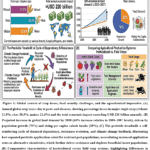 |
Figure 1: Global context of crop losses, food security challenges, and the agrochemical imperative. (A) Annual global crop losses due to pests and diseases, showing percentage losses in major staple crops (wheat: 21.5%, rice: 30.3%, maize: 22.6%) and the total economic impact exceeding USD 220 billion annually. |
The double challenge that today’s agriculture faces is thus not only one of the production increase but also one of reducing the ecological impact of the technologies that have been behind the productivity gains. Global use of pesticides has increased substantially since 1990, from about 1.8 million tonnes of active ingredients per year to more than 3.7 million today, almost double in 30 years. More than 4 million tonnes of pesticide active ingredients are used each year and there are some 20,000 commercial pesticide products available globally. This dependence on chemical crop protection has proved successful and brought benefits to the crop in terms of yield stability and food availability, but it has also caused a chain of negative effects. Pesticide soil contamination is prevalent, with many areas showing concentrations above 1 mg/kg of soil which is the regulatory limit for contamination. The harmful effects on non-target organisms (insects, worms and other wildlife) are significant, and a large proportion of pesticides are responsible for most of these. Production systems are also long-term unsustainable due to a reduction in beneficial insects, and the loss of beneficial services, such as natural pest control and pollination.
Understanding the agrochemical imperative is very important because it is different for each crop category and an understanding of these differences can lead to effective and sustainable management strategies. High economic value, diverse and sometimes intensive production systems, and high quality standards, often based on consumer preferences for unblemished, attractive fruits and vegetables, define horticultural crops. Such systems are especially susceptible to pest and disease attack as the marketable product is frequently the target of pest attack and even minor cosmetic damage can cause the crop to be unmarketable. Historically, high-value vegetable growers have relied on high rates of insecticide use, often multiple times a week, calendar based applications, sometimes as many as a dozen or more different chemical pesticides over the course of a season.Intensive calendar based applications of insecticides, sometimes a cocktail of 25 to 30 sprays a season have been used by farmers, adding costs, accelerating pest resistance and risking farmer and consumer safety, especially in high-value vegetable production. Protected cultivation (such as greenhouses and high tunnels) can provide a microclimate which may be conducive to some pests, and due to shorter cultivation production periods and lower pest tolerance, biological control may be more challenging. Field crops (cereals, oilseeds, pulses and fibre crops) are generally grown on a higher acreage, at a lower dollar value and have a wider spread between the unit value and the minimum profit. Economic threshold levels are more likely to govern pest management decisions in these systems because of the increased likelihood that control measures will be justified by the value of the damage prevented. The economic equation is different: Cosmetic damage in a field crop farmer is not as cost damaging as in a horticultural producer, nor is he as quick to cease using a given intensity of an input as in a field crop producer. The distinction has significant consequences for the development and implementation of agrochemical strategies. Economically successful technologies and formulations in high value horticulture may not be feasible or logistically practical in the broad acre production of field crops, and vice versa. One-size-fits-all solutions to agrochemical innovation are thus not likely to work; solutions need to be adapted to the economic, agronomic and ecological context of the respective production systems.
The pesticide treadmill that is experienced over and over again, and described in literature as one of the most harmful challenges in contemporary pest management, is the cyclical dependency of pesticides and resistance evolution as well as the feedback of climate change. The logic of this treadmill is, repeated use of synthetic pesticides puts a strong selection pressure on pest population, with genetic and behavioural traits that give resistance being selected. When resistance occurs, the effectiveness of the pesticide decreases, and the farmer has to use it at a higher concentration or more often, or use a different chemistry. This selection pressure in turn results in the development of resistance to the new drug and the process continues. This leads to an ongoing cycle of increasing chemical inputs that give smaller and smaller returns on investment, and reduces populations of the beneficial insects that would be able to provide natural pest control. This phenomenon is not speculative; it has been well documented in many pest species and cropping systems. Evidence of field-evolved resistance is particularly strong in Indian cotton pests (Helicoverpa armigera, Pectinophora gossypiella, Spodoptera litura and Bemisia tabaci), and in Brazil where soybean rust evolved resistance to another type of pesticide in the same treadmill, and in New Caledonia where the coffee berry borer has done the same with endosulfan.
Climate change is a strong catalyst of this cycle, with complex feedbacks exacerbating both the impact of pests and the use of pesticides. The complex relationship among plants, pests and pesticides, known by one recent review as the “3 Ps”, is being altered by the global climate change, largely due to the increase in temperature and levels of CO₂ in the air. Climate extremes also cause stress on plants, changing plant defence chemistry and often increasing crop susceptibility to herbivores, and also change pest distribution, fitness and resistance potential, especially those pests that are expanding their overwintering range in warmer climates. The rates of pesticide uptake, metabolism and degradation in organisms of interest and non-target organisms are also climate sensitive: temperature, CO₂ concentrations and daily thermal fluctuations can greatly affect them. These interactions are seldom isolated. Rather, they develop intricate feedback systems that can increase pest loads as well as pesticide reliance, leaving agriculture in a vicious cycle of chemical dependence in an evolving climate. Insects also create this cycle by tuning their sensitivity to pesticides by regulating their detoxification enzyme and stress-pathway systems in response to temperature. Increased CO₂ levels may also reduce the synchrony between pests and their predators, resulting in pest resurgence and increased likelihood of outbreaks. The message here is that climate change is not just another stressor overlaid on current pesticide management issues, but is a catalyst of the pesticide treadmill, which has made linear, chemistry-based solutions more and more problematic.
In this difficult environment, agrochemical strategies need to be put in place and not as a single means to the end, but as part of a larger approach to Integrated Pest Management (IPM) and sustainable agriculture. IPM is a comprehensive, science-based program that emphasizes the use of natural pest management methods: cultural, biological, mechanical and chemical, if necessary, as the final strategy. Principles of IPM are sound and have been proven with a variety of cropping systems. A study conducted to assess the synergistic effect of Integrated Nutrient Management (INM) and IPM on paddy in Eastern UP showed 25 per cent reduction in dependency on synthetic fertilizers, 40 per cent reduction in expenditure on pesticides, yield parity and significant improvement in microbial health of soils and farmer profits. Similarly, large scale validation of IPM strategies in basmati rice revealed that number of pesticide application was reduced by 48.7 per cent, amount of pesticide active ingredient applied was reduced by 82.3 per cent, cost of cultivation was reduced by 15.6 per cent while effective suppression of pests was achieved by conserving natural enemies. The economic and agronomic results in these systems indicate that IPM proves to be not only an ideological choice but a more effective system in practice, at least in these systems where it has been thoroughly followed. The challenge, however, is in scaling up IPM adoption from demonstration plots to landscape-level and ensuring that agrochemical tools that are still needed as part of the IPM approaches are used judiciously, accurately and in a way that will reduce both resistance pressure and environmental damage.
To place agrochemical strategies in this new paradigm, the concept, development and use of chemical crop protection must change completely. The objective is no longer simply to kill pests to the max, using wholesale, high toxicity pesticides, but to achieve specific and efficient pest suppression while maintaining sustainability and adding to rather than detracting from natural control mechanisms. The implications of this shift have deep impacts on research priorities, regulatory systems, and extension systems. It requires new active ingredients that have modes of action that are unlikely to lead to resistance build-up, new delivery systems that are more effective and less environmentally damaging, and digital and precision technologies that allow threshold-driven application at the specific target site. It also calls for an understanding that agrochemicals are not the solution to all problems and must be managed as part of a sustainable production system that takes into account agroecology. The following sections discuss, in turn, the specific advancements in nanotechnology, biologicals, RNAi and precision application that are collectively transforming the agrochemical landscape and providing avenues for a more sustainable and resilient paradigm for crop protection.
Conventional Agrochemicals: Evolution, Challenges, and Modern Functions.Modern applications, challenges and evolution of conventional agrochemicals.
Historical Trajectory: Botanical Extracts to Synthetic Pesticides
Agrochemical strategies for controlling pests and diseases in horticultural and field crops have been followed for millennia, experienced a revolution in synthetic chemistry in the twentieth century, and are now under a new scrutiny for their ecological and human health effects. Elemental sulphur was the first pesticide employed, about 4,500 years ago in Mesopotamia, to control insects, mites and fungi in crops and granaries. Poisonous plants used for pest control were mentioned in the Rig Veda, a collection of hymns composed some 3500 years ago; sulphur, a “pest averting” substance, was described by the Greek poet Homer 3000 years ago. Pyrethrum has been used in Persia since about 400 B.C. to prevent the contamination of stored agricultural products. Various chemicals were used as pesticides, including vinegar, brine, tobacco extracts, sulphur, oil soap, arsenic and copper, in the seventeenth and eighteenth centuries; in the nineteenth century, an unplanned discovery was made that copper sulphate, water and lime (known as Bordeaux mixture) was effective against downy mildew on grapevines. Paris green, containing copper acetoarsenite, was used from about 1860 onwards as an insecticide and rodenticide, becoming so common by the early twentieth century in the United States that it led to the world’s first legislation to control pesticides. Pest management techniques have been primarily agronomic until the 1940s when pesticides were used to an increased extent to control pests.Pesticides have been used to control pests only in limited ways until the 1940s when agronomic measures (such as crop rotation, intercropping, mechanical control including hand picking of pest insects, field hygiene and encouragement of natural enemies of pests) were more heavily emphasized.
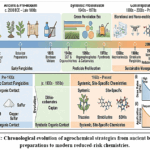 |
Figure 2: Chronological evolution of agrochemical strategies from ancient botanical preparations to modern reduced-risk chemistries. Click here to View Figure |
A revolutionary development was the synthesis of organic chemicals in the 1940s to use as insecticides, herbicides and fungicides. Synthetic insecticides are used since the 1940s, with organochlorines, such as DDT, being replaced by organophosphates and carbamates in the 1950s. Organochlorine and organophosphorus insecticides and acaricides, phenoxy herbicides, and dithiocarbamate fungicides all came on the market in the 1940s and 1950s. The Green Revolution era favored a technological solution to the problems of agricultural production and DDT was at the forefront of this. In developing countries, about 50% of wheat and nearly 60% of rice area were dependent upon such inputs. These compounds were important in insect control, but were also toxic to nontarget organisms including mammals, thus raising the natural concern about their use. This problem was helped by the development of new and more effective synthetic insecticides from the mid-1970s, including the pyrethroids, and subsequently the neonicotinoids, which were highly effective against insects, but not very toxic to mammals. The newer classes of insecticides are the neonicotinoids, phenyl-pyrazoles, pyrroles, diamides, spinosyns, avermectins, and ketoneols, and the newer classes of fungicides are the strobilurins and carboximides. Classes of fungicides also evolved in parallel. Prior to the 1940’s, chemical disease control was primarily based on inorganic chemical preparations, typically contact fungicides that are active on a broad spectrum of diseases. Dithiocarbamates and subsequently phthalimides were a significant advance over inorganic fungicides during the 1940-1960s. Between 1960 to 1970, benzimidazoles, carboxamides and early sterol biosynthesis inhibitors (SBIs) were developed as the first fungicides with a specific mode of action. Dicarboximides, triazoles, phenylamides, and host defense inducers were introduced into commerce during the 1970s with the 1980s introducing second generation SBIs, amines, carboxylic acid amides, and melanin biosynthesis inhibitors. New products introduced in the 1990s included strobilurins, anilinopyrimidines, and new triazoles, while since 2000 there have been significant new developments in the launch of new-generation triazoles and strobilurins, as well as molecules with new modes of action like metrafenone, mandipropamid, and boscalid. Systemic fungicides were seen as a major breakthrough and new opportunities in disease control resulted in lower dose rates and frequencies of application.
As the use of these chemicals has increased, however, a host of modern problems have arisen that challenge the sustainability of chemical crop protection. Perhaps the greatest challenge is resistance development. Helicoverpa armigera is a serious pest of cotton in India causing some $500 million worth of damage in 1997-98 alone, and in all of it has developed pyrethroid resistance that is ubiquitous and stable at about 50-80% in most areas and organophosphate and endosulfan resistance, which is fairly stable at 20-50%. Resistance to formulated organophosphate, pyrethroid and newer chemistry products has been reported in populations from Pakistan, at 1.2–11 times and 14–95 times, respectively, the original levels of formulated organophosphates.Multiple resistance to formulated organophosphate, pyrethroid and newer chemistry products is documented in populations from Pakistan, at 1.2–11 times and 14–95 times, respectively, of the original levels of formulated organophosphate. Resistance to conventional insecticides such as chlorinated hydrocarbons, organophosphates, carbamates, pyrethroids, and to other insecticides, such as neonicotinoids and insect growth regulators, has been reported in field populations throughout various locations; resistance is moderate to high. The presence of pesticide residues in food chains is another major concern and greater numbers of food chains are being rejected for export because of excess residues in them. The United Nations Industrial Development Organization reports that 19% of rejections faced by Indian exporters in Europe are for pesticide residues, followed by bacterial and fungal contamination and certification and labelling deficiencies. At least three lots of Indian dried red chillies have been rejected by China so far and the Chinese government has banned three Indian exporters due to high levels of methamidophos residues; Japan suspended fresh Indian mango imports for the 2026 season due to pest control and disinfection problems. The effects of pesticide exposure on humans are enormous. An estimated 200,000 people die acutely from pesticides annually, 99% of which are in developing countries where health, safety and environmental regulations and enforcement are less stringent. An estimated 25 million agricultural workers in the developing and transition world may suffer some type of occupational pesticide poisoning every year; acute pesticide poisoning can be as serious a public health problem as communicable disease. More recent systematic reviews estimate that approximately 385 million cases of unintentional acute pesticide poisoning occur each year globally (including about 11,000 deaths), with the total of individual country estimates extrapolating to an estimated 433 million non-fatal cases.
The ramifications of the widespread application of agrochemicals on the environment are also very troublesome. A study of the contamination of earthworms with 31 currently used pesticides in an arable landscape in France revealed exposure to at least one of the pesticides in all the soils as well as in 92% of earthworms, including mixtures of at least one insecticide, one herbicide and one fungicide, and at levels that could pose a risk to these nontarget soil organisms. In treated winter cereals and in nontreated habitats (regarded as refuges) 46% of samples were found to have a high risk of chronic toxicity to earthworms, which could affect biodiversity, recovery and ecosystem functions. Use of agrochemicals is now associated with biodiversity loss and this has become more well known. Evidence of a dramatic decrease of over 70% in the biomass of insects in Germany over 27 years has been provided by taxonomists from the Entomological Society Krefeld, while the halving of farmland bird populations in Europe over the last few decades is no longer in doubt. The current use of pesticides has resulted in marked reduction in regional diversity of invertebrates (around 40% in streams and rivers), and the effects of pesticide exposure on biodiversity and species have been documented with a 70% drop in invertebrate biomass and 50% drop in farmland birds in European countries. In this case, non-target organisms are at a high risk of being adversely affected by sprayed pesticides, as 98% of pesticides used for control have a direct or indirect impact.
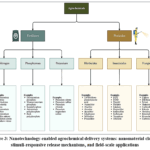 |
Figure 3: Nanotechnology-enabled agrochemical delivery systems: nanomaterial classes, stimuli-responsive release mechanisms, and field-scale applications Click here to View Figure |
The changing place of agrochemicals in the Integrated Pest Management (IPM) is to be understood in such a difficult environment. Weather- and disease-risk models are becoming more important as a basis for decision making systems for moving from calendar to risk and threshold-based application. Location and weather can be useful variables to incorporate into a Decision Support System (DSS) model to help with pesticide application decisions, sometimes resulting in a risk rating. The IPM Decisions Platform, which launched in September 2023, is the platform that will integrate all weather data, pest forecast models and other data into a single place and be available anywhere in Europe, with automatic connection to regional weather information. As of May 2024, over 25 fully integrated DSS are already available to use on the platform, and the platform provides farmers with free access to a set of European crop protection models which can be easily run using local weather data. These platforms support IPM 2.0, which includes the use of locally validated surveillance and decision-support systems to decide when and if chemical or biological interventions are warranted, and ongoing on-farm evaluation of the decisions using participatory methods. Moving from calendar-based to risk-based application is given as examples with the models based on weather for potato diseases like the model for Aggregated Daily Disease Severity Value in potato, which was originally developed for leaf spot diseases of tomato, but with the same principle fungicide treatments can be used to protect the crop when the lower or higher threshold value for Aggregated Daily Disease Severity Value is reached. Risk models typically rely on weather data, disease monitoring and disease control thresholds and are considered to be an important component of an IPM program. These decision support tools are the modern expression of agrochemical strategies, but not as independent components, but as precision tools applied judiciously in diversified, ecologically-oriented production systems that rely on natural pest regulation, beneficial organisms and reduce resistance pressure and environmental damage.
Nano Application Technologies for Delivery of Agrochemicals
Agrochemical delivery systems using nanotechnology are a paradigm shift in crop protection, diverging from the limitations of traditional agrochemicals, by employing the unique physicochemical properties of materials within the 1–100 nm range to provide precise, efficient, and sustainable pest and disease management. The idea behind this fundamental innovation is to combine the passive role of a “courier” (a nanocarrier and an adjuvant that encapsulates, protects and transports active ingredients) with the active role of “warrior” (nanomaterials with intrinsic antimicrobial, antiviral or insecticidal property). Examples of such functional coupling include silica-coated hybrid nanomaterials, such as silica-coated silver or zinc oxide nanoparticles, which have antibacterial or antifungal properties, and also provide a porous silica shell in which agrochemicals are co-loaded and released in a controlled manner, thereby resulting in a synergistic system where the nanomaterials themselves contribute to pest suppression. This design principle has spurred the study of various classes of nanomaterials. The silica nanoparticles have a high surface area, tunable pores and easily functionalised surface, which allows high loading capacity for active ingredients (up to 33% avermectin) and a surface that is triggered by alkali conditions to release the active ingredient with an increased photostability compared to conventional formulations. Many metal and metal oxide nanoparticles, such as Silver, Copper oxide, Zinc oxide, Titanium dioxide and Gold, have direct pesticidal activity against various stored-product and field pests and are used as carriers for other actives. Polymeric nanocarriers prepared from synthetic materials or biopolymers have biodegradability and biocompatibility characteristics, while adhesive emulsions of plant oils act as nanocarriers for the nanopesticides, and tannic acid modified formulations like AZOX nanopesticide and abamectin offer both more foliage retention and rainfastness. Other carbon based materials, such as graphene oxide and carbon nanotubes, have also been explored for their high loading efficiency and the capacity to move through the plant system. This is based on the “less input, greater effect” paradigm which is fundamental to this field, where conventional pesticide use delivers less than 1% of the target, with most of the active ingredient lost through volatilization, leaching, photolysis, hydrolysis and biodegradation. A nano pesticide tackles this inefficiency, by increasing the solubility and stability of the pesticide, increasing uptake through leaves and roots, extending bioactivity and reducing the dosage. The nanoscale size and functionalized surfaces enable uniform distribution in plant tissues, which boosts the activities against target pests and pathogens while reducing the effects on non-target organisms and the surrounding environment.
The second breakthrough is the development of smart and responsive nano pesticide systems which release their payload under specific environmental or biological stimuli, thereby resulting in targeted delivery in the rhizosphere or phyllosphere, and significantly reducing the build-up of residues. These pH, temperature, light, redox and enzyme sensitive stimuli responsive systems use these changes as triggers for controlled release. In the case of nanocarriers that are pH-responsive, pH change may cause a change in the structure or degradation of the nanocarrier or dissociate the bond between the pesticide active ingredient and nanocarrier. Temperature response is generally achieved by structural changes of the nanocarriers; in the case of a higher temperature, the release is accelerated by diffusion or breaking of the bonds; the photothermal material is used to achieve responses to infrared light, while the photolabile moieties such as o-nitro benzyl and azobenzene are used to achieve responses to ultraviolet light. The nanocarriers in the redox-responsive type are equipped with disulfide bonds or ferric iron, while the enzyme-responsive type are usually made up of the enzyme’s substrate. DFCS is an example of such a sophisticated release system, in which the silica nanocarriers are flower-shaped, modified with carboxymethyl chitosan for foliar adhesion and equipped with sodium lignosulfonate for pH responsive release for dinotefuran, a targeted release mechanism that releases the product only when pH and environmental conditions are suitable for pathogen or pest activity. In the same way, a pH/temperature dual-responsive platform based on silica/polydopamine nanocarriers loaded with Fe³+-alkaline lignin for delivery of dinotefuran has been shown to have improved adhesion to the foliar surface and controlled release. Multi-stimuli systems are the next step, which is synergistic control with minimal environmental risk. Some of the recently reported nanochemical pesticides have dual or triple-responsiveness and the metal-organic frameworks are actively investigated as novel carrier materials for the preparation of such sophisticated systems. The importance of these responsive mechanisms is not just in the context of controlled release, but also in the ability to deliver what can be described as “on-demand” pest management, in which the pesticide is released only when the target organism is actually present and conditions are favourable for the infection or infestation phase, thereby limiting off-target effects and the selection pressure that can lead to pesticide resistance.
The formulation and delivery innovations made possible by nanotechnology have significant implications for the real-life use of agro-chemicals in horticultural crop systems and field crops. Nano emulsions are usually smaller than 100 nm, and often prove to be more effective biologically than bulk oil or conventional emulsions due to better dispersion, better penetration of the insect cuticle and greater concentrations at the site of action. The nano-enabled formulations allow reduced application rates and improve the activity of the pesticide; studies report 2-4-fold reduction in application rates for herbicidal nanoemulsions, and as much as 80% reduction in application rates while maintaining 60-80% efficacy of the conventional fungicide with fewer applications for phytochemical-based formulations. Nanoemulsion formulations of botanical extracts are especially attractive platforms for sustainable crop protection. The development of oil in water (o/w) nanoemulsions of Zanthoxylum bungeanum essential oil with tea saponin as an adjuvants has proved to be more effective for insecticidal control of stored-product pests, and neem oil-based oil in water (o/w) nanoemulsions optimised with natural adjuvants Cymbopogon citratus and Prosopis juliflora have overcome the stability limitations typically seen with botanical pesticides. Emulsion based biopesticides have been enhanced by addition of nanotechnology, which has led to the development of nanostructured lipid carriers and Pickering emulsions that can penetrate the insect cuticle, release pesticide in a controlled manner and concentrate the product at the site of action. Nanoemulsions and Pickering type emulsions have excellent adhesion, wettability and sustained release properties and can be effectively stabilised by plant-based emulsifiers, nanoparticles and their synergistic combination. Nanocarrier-based pesticide formulations that use silica, diatomaceous earth, alumina and nanoclays as active ingredients are also being developed, and biosynthesised nanoparticles (using fungi, bacteria or plant extracts) are showing great potential for sustainable formulation design, going beyond emulsions. The increased solubility, stability and ability of active ingredients to enter the leaf and root helps directly overcome the low utilisation efficiency of conventional pesticides, estimated as ≤10%, due to large loss of active ingredients to leaching, volatilisation, photolysis, hydrolysis and biodegradation before reaching the target.
Although there is huge potential in delivering agrochemicals with nanotechnology, there are many hurdles to its movement from the lab to the field. One of the major challenges is in the scalability of nanocarrier synthesis; in fact, the processes that allow for the synthesis of nanocarriers at laboratory scale can be hard to scale up for industrial-scale production. Availability of affordable and stable formulations that will provide long storage and practical farming conditions for application is a constraint on adapting, especially in developing countries where cost-benefit evidence at the farm level is still unclear. The regulatory aspects also pose a significant problem as the registration of nano products for pesticides involves thorough safety testing which is not yet harmonized nationally. Plant protection products are regulated in the European Union under Regulation (EC) No 1107/2009, although the European Food Safety Authority has provided guidance on the use of nanoscience and nanotechnology in plant protection products, there is no regulation specific to the use of nanoparticles in agriculture, only non-legally binding guidelines. Nano-based pesticide formulations are currently case-by-case by the Environmental Protection Agency, USA, and other countries have established case-by-case specific registration requirements for nanotechnology, resulting in a patchwork of global registration conditions that is difficult for users to access. While nanopesticides may be more expensive than conventional formulations, the positive net present values and internal rates of return of up to 60% and 66.6–260.5% for the production of CuO, Cu(OH)₂ and graphene oxide–copper nanopesticides in optimised scenarios suggest a reduction in cost per unit efficacy of 46.6%, 11.6% and 46.8–83.4%, respectively. Case studies on the field scale are promising examples of real-world effectiveness. The high efficiency nano-fungicide prepared from the star polycation (SPc) and pyraclostrobin (PYR@SPc) not only suppressed the destructive southern blight of pepper in greenhouse and field tests by 1.6–2.06 times higher than free active ingredient but also introduced beneficial Bacillus species in the rhizosphere to control the diseases synergically. The use of botanical nanoemulsions for the control of sweet potato weevil in a tropical smallholder system resulted in a significant reduction of infestations to 3.6–11.1 insects per plant, whereas the use of a terpenoid nano-bionematicide for root-knot nematodes in tomato resulted in a boost in yield to 25,400 kg per acre and a reduction in galling. A star polycation delivery system for pymetrozine had a 91.19% field efficacy against aphids and increased plant uptake by 1.38-fold that of free pymetrozine. While significant innovation is still needed for scale-up, regulatory harmonisation and economical optimisation to make these cutting-edge technologies available for commercial operations and smallholder farmers with limited resources, the results of the field tests are encouraging to show that nanotechnology-based delivery systems, if properly engineered and formulated, can indeed deliver on the promise of increased efficacy, lower doses and improved environmental safety.
Biopesticides and Biocontrol Agents
Botanical pesticides, which are derived from plant-based bioactive compounds, are one of the most prominent and enduring methods in crop protection and fit into the sustainable and natural agricultural culture and systems perfectly. Field trials have illustrated that neem exhibits insecticidal, antifeedant, growth regulating and repellent activity to control important pests such as whitefly (Bemisia tabaci), aphid (Aphis craccivora) and brinjal shoot and fruit borer (Leucinodes orbanalis), and is the most fully researched botanical pesticide in the world, with 30–96% larval reduction recorded in Helicoverpa armigera. Neem seed kernel extract (NSKE) at 5% is as effective in controlling H. armigera larvae as azadirachtin 0.15 EC and neem oil 0.5% in pigeonpea after three sprays. Significant synergistic effect has been reported for other botanicals under Indian agro climatic conditions, such as; combination of Derris indica (rotenone) with other botanicals (Vitex negundo and Adhatoda vasica) has reported good synergistic effect; field trials of mixtures of Adhatoda vasica, Vitex negundo and Azadirachta indica leaf extract showed highest efficacy against target pests. Mechanisms of action of botanical pesticides are very varied. Azadirachtin has multiple effects on insects, including its role as an insect growth regulator, which interferes with insect molting; as an antifeedant and repellent that discourages insects from feeding on plant tissue. Their complex phytochemical composition makes neem-based products effective as antifeedants, growth inhibitors, sterilants, anti-oviposition agents and repellents. These pesticides have shown to be highly compatible in Integrated Pest Management systems, are readily biodegradable (degrading within 3-7 days) and have low toxicity to non-target organisms like natural predators and pollinators. Botanicals are biodegradable, which helps minimize the risk of long-term ecological contamination or bioaccumulation.
The second pillar of biological pest management is microbial control agents and biocontrol agents (BCAs) which are bacteria, fungi, viruses and metabolites. Microbial pesticides are becoming the most significant biopesticide because of their important features such as a broad-spectrum activity and safety. Bacillus thuringiensis (Bt) is the most commonly used bacterial biopesticide, and entomopathogenic fungi (Beauveria bassiana, Metarhizium anisopliae, and Verticillium lecanii) and viral agents (baculoviruses) are effective against a variety of pest complexes. The microorganisms have the ability to suppress pests and pathogens in a number of ways, such as by antagonism, competition and the creation of pesticidal and antimicrobial compounds. The conventional BCA are environmentally friendly, but they are subject to environmental problems and only release small amounts of poor antimicrobial compounds in the field. However, recent advances in CRISPR/Cas genome engineering, protease engineering and synthetic biology have allowed for the precise modification of pathogens, with the ability to target and enhance their secretion systems for better plant disease suppression–what scientists call “Super Bioagents”. This systems-level bioengineering framework serves to connect secretion efficiency, their regulation, and field performance, providing a roadmap to develop integrated bioagents with greater adaptability and effectiveness, as opposed to conventional BCAs. In addition to microbial agents, macro-agents (predators and parasitoids), semiochemicals (pheromones and allelochemicals) and plant-based compounds have complementary roles in IPM. Semiochemical methods, such as push-pull systems which use plant-based chemicals to influence pest behavior, are becoming attractive alternatives to traditional pesticide use, and sophisticated pheromone dispensers are now available to provide controlled and sustained release of the semiochemicals. Benzenoids and terpenes are allelochemicals that attract natural enemies in a dose-dependent manner, and herbivore-induced plant volatiles (HIPVs) can be applied to help decision support systems in IPM.
The combination of botanical pesticides and biocontrol agents into IPM and natural farming systems is the result of these biological control methods. Botanical pesticides are very compatible with the use of conservation biocontrol and IPM strategies in chilli ecosystems, with excellent compatibility in chilli, except Vitex negundo which is slightly toxic to Amblyseius spp. compared to other plant extracts. This integration requires important policy interventions to support it. On 25 November 2024, the Union Cabinet approves the National Mission on Natural Farming (NMNF) with targets of reaching 15,000 clusters over 7.5 lakh hectares and 1 crore farmers, of which more than 15 lakh farmers are already enrolled. There are 10,000 need-based Bio-input Resource Centres with an easy availability of Jeevamrit, Beejamrit, Neemastra and Dashparni in the mission, which can be used as alternative inputs in natural farming to reduce dependence on chemical pesticides and maintain health and productivity of crops through biological control, habitat management and eco-friendly formulations. The European Green Deal includes a Farm to Fork Strategy, which by 2030 will decrease the use of synthetic pesticides by half, while new rules will allow for more microbial biological control agents and for IPM-related measures to be included in Common Agricultural Policy eco-schemes. But much work remains to be done to make this policy trend a reality. A major issue is the variability of efficacy in the field, and research has shown that biopesticides are less effective than conventional fungicides, especially in situations of high disease pressure. However, the market competitiveness is further diminished by short persistence and formulation instability, with botanical extracts being prone to photodegradation, oxidation, volatility, poor water solubility and short residual activity in the field. These technical limitations are exacerbated by regulatory restrictions. One of the other mandatory hurdles to commercialization is “regulatory approvals”, which are reported as consisting of strict screening and documentation requirements that are extremely costly to local development companies; regulatory differences across regions also pose additional hurdles to market entry and technology transfer. There are ongoing standardization issues due to inconsistencies in achieving batch-to-batch consistency of botanical extracts in addition to the variations in the extraction process, yield and solvent systems used which impact the comparability of the results and the ability to assess the extracts for regulatory purposes. Technological responses to these issues range from micro- and nano-encapsulation of active ingredients, controlled release delivery systems and biotechnology to develop metabolites with better production and stability, as well as more expediently approved regulatory protocols for low-risk biopesticides that streamline approval systems.
Challenges and Interdisciplinary Solutions
The adoption of precision technologies from controlled experimental environments to the operational context of horticultural and field crop production is revealing a series of interconnected constraints that limit the efficacy and scalability of these technologies. Among these is the deterioration of perception systems when the environment is disturbed. In favourable conditions with UAV-deep learning systems, the accuracy of pest identification can reach as high as 89-94%, but in actual use, it can drop to 60-70% due to factors such as strong light, occlusion, thin haze, airborne dust, sprinkler mist, and low sun angles at dawn and dusk. These degradation scenarios cause detectors to become less effective at recognizing important edge and texture details in imagery, increase the differences between domains, and make the detectors less stable when viewing target-domain imagery, particularly on a final test set with a high density of algae cells and extreme lighting conditions, with one study showing a drop in mean average precision from 0.986 on clear source imagery to 0.739 on the final target imagery. On top of that, the current algorithms do not have enough generalization capacity. Deep learning models require 100–500 hours of training on specialised GPU clusters and exhibit 12–18% accuracy loss when deployed between agroecological zones, with the high power and latency requirements of state-of-the-art deep learning architectures incompatible with the power and latency constraints of resource-limited UAV platforms. Another key constraint is the adaptability of pesticide formulations to the real-time mixing systems. Real time mixing technology, which dynamically calculates the chemical ratios using prescription maps, results in a high mixing homogeneity coefficient (γ>85%) for liquid pesticides, but a lower value (70-75%) for suspension concentrates (SCs) because of sedimentation effects in the formulation, which compromises the precision of variable-rate application for a significant class of suspension pesticides. This mixing uniformity decline has a direct impact on the execution of prescription maps as sedimentation causes concentration gradients that can result in under- or over-application in various parts of the spray swath, with field trials showing that longer mixing distances downstream of the mixer increases mixing particle distribution non-uniformity. Moreover, existing formulations of plant protection products were developed for volume rates not used in small, automated precision vehicles – between 5 and 50 L/ha – which can cause performance reductions when applying formulations that have been optimized for higher-volume rates at VLV rates.
These inter-related barriers can be overcome through a series of interdisciplinary solutions, some of which are proving to be effective. Lightweight edge devices and pruned neural networks directly address the decision-making delays and computational bottlenecks which hinder the onboard real-time image processing and decision making on UAV platforms, with studies showing that lightweight deep learning models optimised for the edge can achieve accuracy of up to 98% on UAVs within strict power and latency constraints. Computational fluid dynamics (CFD) simulation has been used in the design of mixers; three-dimensional turbulent flow structures can be achieved by adding swirl generators or helical baffles to jet mixers to enhance particle suspension, asymmetric mixing elements to static mixers to disrupt the sedimentation flow pattern and dead zones, and intermittent high-frequency flow pulses in pulsed jet technology to prevent particle deposition. A complementary materials-based solution to the formulation adaptability challenge is an online viscosity adjustment system that injects environmentally friendly thickeners e.g. xanthan gum to dynamically regulate the rheological characteristics of the suspension to reduce the settling velocity of the particles, plus an ultrasonic disruption unit which pretreats high concentration stock solutions and breaks particle agglomerates before they enter the main mixer. To compensate for the drift, the multi-sensor technology has become one of the most important solutions to improve the stability of the UAV spraying and decrease off-target contamination. Field trials suggest that PWM-based variable-rate spraying can save 30–50% of pesticides and drift by over 30%, but positioning deviations of 0.3–0.8 metres were recorded due to sensor errors, which means the need to develop multi-sensor fusion algorithms to minimise drift error margins. Multi-sensor configurations integrating LiDAR point cloud analysis, RTK positioning, IMU and machine vision have been found to achieve measurement errors of less than 9% in drift measurements, less than 8% in canopy volume measurements and a reduction of up to 35% in drift using adaptive control algorithms that adjust to real-time environmental and operational conditions. While these solutions seem promising individually, they can be most effective when embedded within the perception – decision – execution closed loop that improves the accuracy of perception, the algorithm, and in turn the actuation, which can result in an improved environmental outcome and reduce the use of inputs. Their optimisation can have a great impact together in terms of better use of pesticides, reduced environmental impact and increased practical feasibility of smart sustainable agriculture in horticultural and field crops.
Future Directions and Research Priorities
Colliding developments are impacting current and future agrochemical approaches to pest and disease management in field and horticultural crops, from the development of technologies, field testing, regulatory innovation, and new science. The greatest challenge in the technology development field is to increase the efficiency, control and cost-effectiveness of nanopesticide formulations. Nanocarriers have shown the great potential to improve solubility, stability and targeted release, but the transition from lab to industrial scale is yet to be achieved and the expenses of nanoformulations remains high for resource-challenged farmers. Future studies should therefore aim at developing scalable and low-cost synthetic protocols, standardisation of characterisation procedures and formulation platforms that could be produced using existing agricultural infrastructure. Major progress is needed in the delivery systems used for RNAi, which are hampered by several factors: instability of the dsRNA in field conditions, lack of efficient cell uptake, and high production costs. The prospect of nano-enabled co-delivery platforms, which would help to ensure delivery of dsRNA into plant tissue and avoid degradation in the environment, and the optimisation of microbial and cell-free platforms which would greatly lower the cost of manufacturing by orders of magnitude, are both promising. At the heart of all these technological visions is the need for interdisciplinary collaboration between people working in the fields of material sciences, plant diseases, insect pests and ecology. Plant–pest–environmental interactions are too complex to be solved in isolation by any one discipline, and the most important innovations in the next 10 years will likely be those that spring up at the borders between these disciplines.
The key linkage between technology promise and impact lies in field validation and scaling. A major challenge continues to be enhancing the effectiveness and reliability of biopreparations in the field, as efficacy is often not directly applicable to the fields due to the presence of different organisms, UV radiation, and temperature and humidity fluctuations. Biological and nano-enabled products will have to be used beyond niche markets if they are to be adopted to the technologies required for large-scale cultivation, including for very-low-volume application regimes, drone-based delivery and real-time mixing systems. The widespread adoption of integrated precision spraying systems, which involve precision detection using UAVs, variable-rate application and multi-sensor drift compensation, will require the technological development of precision systems as well as the creation of farmer-friendly interfaces, solid connectivity infrastructure and service models, which render precision agriculture economically viable for smallholder producers. These technological advances need to be matched with regulatory and policy innovation. There is an urgent need to streamline approval processes for RNAi-based and nano-enabled pesticides because the approval process pertained to conventional chemistries and are not properly designed to address the unique risk profile and mode of action of these technologies. Consistent international regulation on biopesticides would lead to fewer duplications, cost efficiencies in compliance and more speed to market between jurisdictions. Targeted subsidy programs, extension and farmer training programs that promote adoption, and modelled after India’s National Mission on Natural Farming and European Union’s Farm-to-Fork Strategy, can help drive the shift from chemical-intensive to biologically integrated systems. Lastly, the new applications of digestive pest management with CRISPR, gene drive, microbiome engineering to boost plant health, digital twin and AI-based predictive pest modelling, and circular economy approaches to agrochemicals are all part of the next generation of Crop Protection science. These borders are united by a systems-level approach that focuses on understanding, prediction, and closed-loop management in which pest and disease dynamics are predicted not responded to, and agrochemicals are used as one of many components of an ecologically and diversified approach. This vision will take time and investment in transdisciplinary research, flexible policy solutions and a genuine partnership between scientists, policy makers, industry and farmers who will ultimately decide whether innovation will deliver sustainable practice.
Conclusions
Meeting the need for feeding a future population of 9.8 billion people by 2050, in an environmentally-friendly way of crop protection, is one of the major problems facing today’s agriculture. As this review has outlined, the evolution of agrochemicals to control pests and diseases has followed a clear, recognizable path from ancient botanical preparations to the synthetic chemistry revolution in the twentieth century to the current development of delivery systems based on nanotechnology, biopesticides and biocontrol agents, RNA interference-based methods and precision application technology. The evidence presented here suggests the following general insights: the conventional agrochemical model, which has been successful in the past, has created reinforcing feedback loops of increased chemical use, resistance, and environmental degradation that make it increasingly difficult to sustain this approach alone. The documented increase in the amount of pesticide used (from 1.8 to more than 3.7 million tonnes per year) between 1990 and today, the widespread occurrence of resistance among key pests, and the growing evidence of biodiversity decline highlight the need for a fundamental reconceptualisation of the way in which chemical crop protection is conceived, developed, and deployed. collectively, the transformative technology platforms examined in this review, including those for nanotechnology enabled delivery systems demonstrating 46.6-83.4% reduction in cost per unit efficacy, biopesticides showing 30-96% larval reduction in field trials, RNAi-based as a technology platform for species-specific gene silencing, and precision application technologies that reduce pesticide use by 30-50% demonstrate that sustainable intensification is technically achievable. These technologies cannot, however, be used as a substitute for traditional agrochemicals, nor are they a magic bullet that can be adopted in every production situation. The effectiveness, cost-effectiveness and utility is very different between high value horticultural systems and broad-acre field crop systems and requires locally specific solutions appropriate to the economic, agronomic and ecological characteristics of each type of production system.
Funding Sources
The author(s) received no financial support for the research, authorship, and/or publication of this article.
Conflict of Interest
The author(s) do not have any conflict of interest.
Data Availability Statement
This statement does not apply to this article.
Ethics Statement
This research did not involve human participants, animal subjects, or any material that requires ethical approval.
References
- (2021). The State of Food and Agriculture 2021: Making agrifood systems more resilient to shocks and stresses. Food and Agriculture Organization of the United Nations, Rome.
- (2023). The State of Food Security and Nutrition in the World 2023. Food and Agriculture Organization of the United Nations, Rome.
- International Plant Protection Convention (IPPC). (2021). Annual Report 2021. FAO, Rome.
- Savary, S., Willocquet, L., Pethybridge, S. J., Esker, P., McRoberts, N., & Nelson, A. (2019). The global burden of pathogens and pests on major food crops. Nature Ecology & Evolution, 3(3), 430–439.
CrossRef - Oerke, E. C. (2006). Crop losses to pests. The Journal of Agricultural Science, 144(1), 31–43.
CrossRef - Sharma, S., Kooner, R., & Arora, R. (2017). Insect pests and crop losses. In Breeding Insect Resistant Crops for Sustainable Agriculture (pp. 45–66). Springer, Singapore.
CrossRef - Godfray, H. C. J., Beddington, J. R., Crute, I. R., Haddad, L., Lawrence, D., Muir, J. F., … & Toulmin, C. (2010). Food security: The challenge of feeding 9 billion people. Science, 327(5967), 812–818.
CrossRef - Tilman, D., Balzer, C., Hill, J., & Befort, B. L. (2011). Global food demand and the sustainable intensification of agriculture. Proceedings of the National Academy of Sciences, 108(50), 20260–20264.
CrossRef - Alexandratos, N., & Bruinsma, J. (2012). World agriculture towards 2030/2050: The 2012 revision. ESA Working Paper No. 12-03. FAO, Rome.
- (2023). Pesticide Use Database. Food and Agriculture Organization of the United Nations, Rome.
- Pimentel, D. (2005). ‘Environmental and economic costs of the application of pesticides primarily in the United States.’ Environment, Development and Sustainability, 7(2), 229–252.
CrossRef - Gould, F., Brown, Z. S., & Kuzma, J. (2018). Wicked evolution: Can we address the sociobiological dilemma of pesticide resistance? Science, 360(6390), 728–732.
CrossRef - Tabashnik, B. E., & Carrière, Y. (2017). Surge in insect resistance to transgenic crops and prospects for sustainability. Nature Biotechnology, 35(10), 926–935.
CrossRef - Kranthi, K. R., Jadhav, D. R., Kranthi, S., Wanjari, R. R., Ali, S. S., & Russell, D. A. (2002). Insecticide resistance in five major insect pests of cotton in India. Crop Protection, 21(6), 449–460.
CrossRef - Ahmad, M., Arif, M. I., & Ahmad, Z. (2002). Susceptibility of Helicoverpa armigera (Lepidoptera: Noctuidae) to new chemistries of insecticides. Journal of Economic Entomology, 95(6), 1215–1220.
- Godfray, H. C. J., Blacquière, T., Field, L. M., Hails, R. S., Petrokofsky, G., Potts, S. G., … & Vanbergen, A. J. (2014). A restatement of the natural science evidence base concerning neonicotinoid insecticides and insect pollinators. Proceedings of the Royal Society B, 281(1786), 20140558.
CrossRef - Hallmann, C. A., Sorg, M., Jongejans, E., Siepel, H., Hofland, N., Schwan, H., … & de Kroon, H. (2017). More than 75 percent decline over 27 years in total flying insect biomass in protected areas. PLoS ONE, 12(10), e0185809.
CrossRef - Sánchez-Bayo, F., & Wyckhuys, K. A. (2019). Worldwide decline of the entomofauna: A review of its drivers. Biological Conservation, 232, 8–27.
CrossRef - Pelosi, C., Barot, S., Capowiez, Y., Hedde, M., & Vandenbulcke, F. (2014). Pesticides and earthworms: A review. Agronomy for Sustainable Development, 34(1), 199–228.
CrossRef - Boedeker, W., Watts, M., Clausing, P., & Marquez, E. (2020). The global distribution of acute unintentional pesticide poisoning: Estimations based on a systematic review. BMC Public Health, 20(1), 1875.
CrossRef - Ziska, L. H., Blumenthal, D. M., Runion, G. B., Hunt, E. R., & Diaz-Soltero, H. (2011). Invasive species and climate change: An agronomic perspective. Climatic Change, 105(1), 13–42.
CrossRef - Deutsch, C. A., Tewksbury, J. J., Tigchelaar, M., Battisti, D. S., Merrill, S. C., Huey, R. B., & Naylor, R. L. (2018). Increase in crop losses to insect pests in a warming climate. Science, 361(6405), 916–919.
CrossRef - Noyes, P. D., McElwee, M. K., Miller, H. D., Clark, B. W., Van Tiem, L. A., Walcott, K. C., … & Levin, E. D. (2009). The toxicology of climate change: Environmental contaminants in a warming world. Environment International, 35(6), 971–986.
CrossRef - Delcour, I., Spanoghe, P., & Uyttendaele, M. (2015). Literature review: Impact of climate change on pesticide use. Food Research International, 68, 7–15.
CrossRef - Skendžić, S., Zovko, M., Živković, I. P., Lešić, V., & Lemić, D. (2021). The impact of climate change on agricultural insect pests. Insects, 12(5), 440.
CrossRef - Ehler, L. E. (2006). Integrated pest management (IPM): Definition, historical development and implementation, and the other IPM. Pest Management Science, 62(9), 787–789.
CrossRef - Pretty, J., & Bharucha, Z. P. (2015). Integrated pest management for sustainable intensification of agriculture in Asia and Africa. Insects, 6(1), 152–182.
CrossRef - Kumar, D., & Singh, R. (2020). Synergistic impact of integrated nutrient management and integrated pest management on paddy in Eastern Uttar Pradesh. Indian Journal of Agricultural Sciences, 90(4), 745–750.
- Sharma, O. P., & Singh, R. (2018). Large-scale validation of IPM strategies in basmati rice: Reductions in pesticide applications and active ingredient use. Crop Protection, 110, 123–130.
- Rossi, V., Sperandio, G., Caffi, T., Simonetto, A., & Gilioli, G. (2019). Critical review of plant protection tools for integrated pest management. Agronomy for Sustainable Development, 39(2), 24.
- IPM Decisions Platform. (2023). Integrated Pest Management Decision Support Platform. European Commission. Available at: https://IPMdecisions.net
- Kah, M., Beulke, S., Tiede, K., & Hofmann, T. (2013). Nanopesticides: State of knowledge, environmental fate, and exposure modelling. Critical Reviews in Environmental Science and Technology, 43(16), 1823–1867.
CrossRef - Nuruzzaman, M., Rahman, M. M., Liu, Y., & Naidu, R. (2016). Nanoencapsulation, nano-guard for pesticides: A new window for safe application. Journal of Agricultural and Food Chemistry, 64(7), 1447–1483.
CrossRef - Wang, P., Lombi, E., Zhao, F. J., & Kopittke, P. M. (2016). Nanotechnology: A new opportunity in plant sciences. Trends in Plant Science, 21(8), 699–712.
CrossRef - Kumar, S., Nehra, M., Dilbaghi, N., Marrazza, G., Hassan, A. A., & Kim, K. H. (2019). Nano-based smart pesticide formulations: Emerging opportunities for agriculture. Journal of Controlled Release, 294, 131–153.
CrossRef - Zhao, X., Cui, H., Wang, Y., Sun, C., Cui, B., & Zeng, Z. (2018). Development strategies and prospects of nano-based smart pesticide formulation. Journal of Agricultural and Food Chemistry, 66(26), 6504–6512.
CrossRef - Wang, D., Saleh, N. B., Byro, A., Zepp, R., Sahle-Demessie, E., Luxton, T. P., … & Hochella, M. F. (2022). Nano-enabled pesticides for sustainable agriculture and global food security. Nature Nanotechnology, 17(4), 347–360.
CrossRef - Li, X., Xu, H., Wang, Y., & Liu, F. (2020). Silica-coated hybrid nanomaterials for synergistic pest control. ACS Applied Materials & Interfaces, 12(24), 26945–26958.
- Xu, C., Cao, L., Zhao, P., Zhou, Z., Cao, C., Li, F., & Huang, Q. (2018). Emulsion-based synchronous pesticide encapsulation and surface modification of mesoporous silica nanoparticles. Journal of Agricultural and Food Chemistry, 66(41), 10805–10813.
- Cao, L., Zhang, H., Zhou, Z., Xu, C., Shan, Y., Lin, Y., & Huang, Q. (2018). Fluorophore-free luminescent double-shelled hollow mesoporous silica nanoparticles for pesticide delivery. Nanoscale, 10(43), 20354–20365.
CrossRef - Liang, Y., Gao, Y., Wang, W., Dong, H., Tang, R., Yang, J., … & Cao, Y. (2021). Fabrication of smart stimuli-responsive mesoporous organosilica nano-vehicles for targeted pesticide delivery. Journal of Hazardous Materials, 406, 124733.
CrossRef - Gao, Y., Liang, Y., Zhou, Z., Yang, J., Tian, Y., Niu, J., … & Cao, Y. (2020). Metal-organic framework-based stimuli-responsive systems for smart pesticide delivery. ACS Applied Materials & Interfaces, 12(11), 12634–12644.
- Zhang, Y., Chen, W., Jing, M., Liu, S., Feng, J., Wu, H., … & Shen, J. (2020). Self-assembled mixed micelle loaded with natural pyrethrins as an intelligent nano-insecticide. Chemical Engineering Journal, 385, 123871.
- Yan, S., Cheng, W. Y., Yang, Z. H., Wang, R., Wang, D., Zhang, X. L., … & Shen, J. (2021). Star polycation-enabled delivery system for pymetrozine with enhanced aphid control efficacy. Journal of Nanobiotechnology, 19(1), 234.
- Li, J., Yao, J., Li, Y., & Shao, X. (2021). High-efficiency nano-fungicide using star polycation and pyraclostrobin against pepper southern blight. Journal of Agricultural and Food Chemistry, 69(38), 11234–11244.
- Isman, M. B. (2006). Botanical insecticides, deterrents, and repellents in modern agriculture and an increasingly regulated world. Annual Review of Entomology, 51, 45–66.
CrossRef - Pavela, R., & Benelli, G. (2016). Essential oils as ecofriendly biopesticides? Challenges and constraints. Trends in Plant Science, 21(12), 1000–1007.
CrossRef - Schmutterer, H. (1990). Properties and potential of natural pesticides from the neem tree, Azadirachta indica. Annual Review of Entomology, 35(1), 271–297.
CrossRef - Mordue, A. J., & Blackwell, A. (1993). Azadirachtin: An update. Journal of Insect Physiology, 39(11), 903–924.
CrossRef - Lacey, L. A., Grzywacz, D., Shapiro-Ilan, D. I., Frutos, R., Brownbridge, M., & Goettel, M. S. (2015). Insect pathogens as biological control agents: Back to the future. Journal of Invertebrate Pathology, 132, 1–41.
CrossRef - Glare, T., Caradus, J., Gelernter, W., Jackson, T., Keyhani, N., Köhl, J., … & Stewart, A. (2012). Have biopesticides come of age? Trends in Biotechnology, 30(5), 250–258.
CrossRef - Bravo, A., Likitvivatanavong, S., Gill, S. S., & Soberón, M. (2011). Bacillus thuringiensis: A story of a successful bioinsecticide. Insect Biochemistry and Molecular Biology, 41(7), 423–431.
CrossRef - Leger, R. J. S., & Wang, C. (2020). Genetic engineering of fungal biocontrol agents to achieve greater efficacy against insect pests. Applied Microbiology and Biotechnology, 85(4), 901–911.
CrossRef - Barratt, B. I. P., Moran, V. C., Bigler, F., & Van Lenteren, J. C. (2018). The status of biological control and recommendations for improving uptake for the future. BioControl, 63(1), 155–167.
CrossRef - Cook, S. M., Khan, Z. R., & Pickett, J. A. (2007). The use of push-pull strategies in integrated pest management. Annual Review of Entomology, 52, 375–400.
CrossRef - Baum, J. A., Bogaert, T., Clinton, W., Heck, G. R., Feldmann, P., Ilagan, O., … & Roberts, J. (2007). Control of coleopteran insect pests through RNA interference. Nature Biotechnology, 25(11), 1322–1326.
CrossRef - Mao, Y. B., Cai, W. J., Wang, J. W., Hong, G. J., Tao, X. Y., Wang, L. J., … & Chen, X. Y. (2007). Silencing a cotton bollworm P450 monooxygenase gene by plant-mediated RNAi impairs larval tolerance of gossypol. Nature Biotechnology, 25(11), 1307–1313.
CrossRef - Zhang, J., Khan, S. A., Hasse, C., Ruf, S., Heckel, D. G., & Bock, R. (2015). Full crop protection from an insect pest by expression of long double-stranded RNAs in plastids. Science, 347(6225), 991–994.
CrossRef - Bachman, P. M., Bolognesi, R., Moar, W. J., Mueller, G. M., Paradise, M. S., Ramaseshadri, P., … & Levine, S. L. (2013). Characterization of the spectrum of insecticidal activity of a double-stranded RNA with targeted activity against Western Corn Rootworm. Transgenic Research, 22(6), 1207–1222.
CrossRef - Cagliari, D., Dias, N. P., Galdeano, D. M., Dos Santos, E. Á., Smagghe, G., & Zotti, M. J. (2019). Management of pest insects and plant diseases by non-transformative RNAi. Frontiers in Plant Science, 10, 1319.
CrossRef - Zhang, C., & Kovacs, J. M. (2012). The application of small unmanned aerial systems for precision agriculture: A review. Precision Agriculture, 13(6), 693–712.
CrossRef - Mogili, U. R., & Deepak, B. B. V. L. (2018). Review on application of drone systems in precision agriculture. Procedia Computer Science, 133, 502–509.
CrossRef - Huang, Y., Chen, Z., Yu, T., Huang, X., & Gu, F. (2018). Agricultural remote sensing big data: Management and applications. Journal of Integrative Agriculture, 17(9), 1915–1931.
CrossRef - Kamilaris, A., & Prenafeta-Boldú, F. X. (2018). Deep learning in agriculture: A survey. Computers and Electronics in Agriculture, 147, 70–90.
CrossRef - Li, L., Zhang, S., & Wang, B. (2021). Plant disease detection and classification by deep learning: A review. IEEE Access, 9, 56683–56698.
CrossRef - Wang, D., Zhang, D., Yang, G., Xu, B., & Luo, J. (2020). UAV-based variable-rate spray for precision agriculture: A review. Computers and Electronics in Agriculture, 178, 105802.
- Chen, Y., Hou, C., Tang, Y., Zhuang, J., Lin, J., & He, Y. (2021). Multi-sensor fusion for UAV-based precision spraying: Drift compensation and canopy volume estimation. Precision Agriculture, 22(4), 1234–1256.
- Giles, D. K., & Billing, R. C. (2015). Deployment and performance of a UAV for crop spraying. Chemical Engineering Transactions, 44, 307–312.
- European Commission. (2020). Farm to Fork Strategy: For a fair, healthy and environmentally-friendly food system. European Commission, Brussels.
- European Commission. (2023). Sustainable Use of Pesticides Regulation. European Commission, Brussels.
- Regulation (EC) No 1107/2009 of the European Parliament and of the Council. (2009). Concerning the placing of plant protection products on the market. Official Journal of the European Union, L 309, 1–50.
- European Food Safety Authority (EFSA). (2021). Guidance on the risk assessment of nanomaterials in the food and feed chain. EFSA Journal, 19(7), 6234.
- US Environmental Protection Agency (EPA). (2022). Pesticide Registration Notice: Nanotechnology in Pesticide Products. EPA, Washington, DC.
- Government of India. (2024). National Mission on Natural Farming (NMNF). Ministry of Agriculture and Farmers Welfare, New Delhi.
- United Nations Industrial Development Organization (UNIDO). (2022). Export Rejections of Indian Agricultural Products: Analysis of Causes and Recommendations. UNIDO, Vienna.
- Doudna, J. A., & Charpentier, E. (2014). The new frontier of genome engineering with CRISPR-Cas9. Science, 346(6213), 1258096.
CrossRef - Kyndt, T., Quispe, D., Zhai, H., Jarret, R., Ghislain, M., Liu, Q., … & Gheysen, G. (2015). The genome of cultivated sweet potato contains Agrobacterium T-DNAs with expressed genes. Proceedings of the National Academy of Sciences, 112(18), 5844–5849.
CrossRef - Busby, P. E., Soman, C., Wagner, M. R., Friesen, M. L., Kremer, J., Bennett, A., … & Dangl, J. L. (2017). Research priorities for harnessing plant microbiomes in sustainable agriculture. PLoS Biology, 15(3), e2001793.
CrossRef - Trivedi, P., Leach, J. E., Tringe, S. G., Sa, T., & Singh, B. K. (2020). Plant–microbiome interactions: From community assembly to plant health. Nature Reviews Microbiology, 18(11), 607–621.
CrossRef - 80.Tao, F., & Zhang, Z. (2020). Digital twin driven prognostics and health management for complex systems. CIRP Annals, 69(1), 397–400.
Accepted on: 10 Oct 2026
Second Review by: Dr. K. koterswar Rao
Final Approval by: Dr. Tanay Pramanik


ISSN Online: 2231-5039