Synthesis, Characterization, Docking Study and Antibacterial Activity Assessment of Chalcones
 , Kapil Yadav2, Tanya Jain3, Sumit Yadav4, Arvind Kumar5, Mohd Haider6, Renu Sharma1and Mayur Porwal7
1Department of Pharmacy, Metro College of Health Sciences and Research, Plot No. 41, Knowledge Park III, Greater Noida, Uttar Pradesh, India.
2Department of Pharmacy, Shree Ji Institute of Pharmaceutical Education and Research, Bilari, Moradabad, Uttar Pradesh, India.
3Department of Pharmacy, Bhupal Noble's University, Udaipur, Rajasthan, India.
4HR Institute of Pharmacy, H.R.I.T University, Ghaziabad, Uttar Pradesh, India.
5School of Pharmaceutical Sciences, Faculty of Pharmacy, IFTM University, Lodhipur- Rajput, Moradabad, Uttar Pradesh, India.
6Faculty of Pharmacy, Swami Vivekanand Subharti University, Meerut, U.P., India.
7Teerthanker Mahaveer College of Pharmacy, Teerthanker Mahaveer University, Moradabad, U.P., India.
Corresponding Author E-mail:pharmacistankitgoel@gmail.com
DOI : http://dx.doi.org/10.13005/ojc/420403
Download this article as:

Antimicrobial resistance continues to rise globally, motivating new small-molecule scaffolds. We synthesized five chalcone derivatives (B1–B5) and characterized them by FT-IR and 1H NMR. Drug-likeness was assessed using SwissADME which showed that all compounds complied with Lipinski’s rule of five and possessed favourable drug like properties. Molecular docking against DNA gyrase (PDB 2XCT) with AutoDock Vina identified B5 as the top binder with binding score of -11.5 kcal/mol, followed by B4 and B3. Antibacterial activity was evaluated by agar well diffusion against Staphylococcus aureus and Escherichia coli at 50 and 100 µg/mL, using ciprofloxacin as a reference drug. B5 showed the largest zone of inhibition (up to 21 mm) correlating with docking predictions versus 23–25 mm for ciprofloxacin. The data suggest para-methoxy substitution improves antibacterial activity, meriting further studies on solubility enhancement, metabolic stability and in vivo validation.
KEYWORDS:AutoDock Vina; Antibacterial; Chalcone; DNA gyrase; Escherichia coli; SwissADME; Staphylococcus aureus;
Introduction
One of the biggest concerns in the world today is antibiotic resistance. Globally, antibiotic resistance is escalating to alarmingly high levels. Our ability to cure common infectious diseases is in jeopardy due to the latest resistance mechanisms that are growing and spreading around the world. As antibiotics lose their effectiveness, new groups of infectious diseases are becoming more challenging to cure.1 One global health issue that prompted researchers to create new antibiotics is the incidence of bacterial resistance to therapeutically used antibiotics. Therefore, in order to increase the effectiveness of antibiotics against microorganisms, new antibacterial drugs with minimal or no bacterial resistance are desperately needed.2,3
Infectious diseases have presented significant health challenges to people in recent years. These infections indicate a progressive reductionin susceptibility to the antimicrobial drugs now in use.4Furthermore, the antimicrobial drugs now available on the market have a number of disadvantages, including a limited antimicrobial spectrum, low efficacy, possible toxicity, and the slow emergence of microbial resistance. Thus, one of the most difficult problems in the antibacterial sector has always been creating novel chemicals with superior antibacterial activity.5
In medicinal chemistry, chalcones have been used extensively as a useful model for drug development. They are frequently found in many plant parts, including seeds and flowers, and have a straightforward structure. Many chalcone derivatives are synthetic because they are easy and convenient to prepare. These substances have demonstrated a wide range of pertinent biological actions and have the potential to treat a number of illnesses.6,7
Chalcones demonstrated a number of pharmacological activities, namely antimicrobial,8 anticancer,9 analgesic,10 anti-inflammatory,11 anticonvulsant,12 antioxidant,13 antiviral,14 anti-tubercular.15
Although numerous chalcone derivatives have been studied, research on aryl-oxoethoxy-substituted chalcones as antibacterial agents is limited, not to mention their interaction with DNA gyrase as a validated bacterial drug target. Therefore, the following research was planned to synthesize and characterize a set of chalcone derivatives (B1-B5), examine their physicochemical and drug-like properties in terms of SwissADME analysis, screen their binding interactions with DNA gyrase (PDB ID: 2XCT) by AutoDock Vina-based docking, and test their antibacterial potential against S. aureus and E. coli with ciprofloxacin as the comparative drug substance.
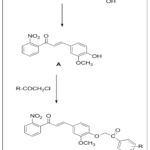 |
Figure 1: Scheme of synthesis of final derivatives Click here to View Figure |
This chalcone scaffold was altered in the replacement of the aryl-oxoethoxy substituents as a means of testing the roles of electronic and steric factors in antibacterial activity. Substituents with diamagnetic and electron-donating properties like para-methoxy were admitted, as they should strengthen the hydrogen bonding and the π-π interactions at the DNA gyrase binding site, whereas the electron-withdrawing and paramagnetic substituent like nitro was taken to learn about the conductance of higher polarity against the target binding affinity. A restrained library of derivatives (B1-B5) was generated in a systematic manner by varying substituents (-H,-OCH3,-CH3, and -NO2) across the phenyl ring to define preliminary structure-activity relationships and identify critical substituents that enhance drug-likeness, docking interactions and antibacterial activity.
Materials and Methods
Materials
All compounds wereutilized without additional purification after being acquired from CDH and S.D. fine chemicals of LR grade. The uncorrected melting points were determined using the open capillary tube technique. Thin Layer Chromatography (TLC)with silica gel glass plateswas usedto track reactions and spots were detected by iodine vapors. The FTIR spectrophotometer was used to perform the FTIR analysis. The Bruker Advance Neo spectrometer (500MHz) was used to record the 1HNMR and 13CNMR spectra.
Synthesis of Chalcone (A)
Chalcone (A) was prepared by the Claisen–Schmidt condensation method. 2-Nitroacetophenone (0.01 mol, 1.65 g) and 4-hydroxy-3-methoxybenzaldehyde (0.01 mol, 1.52 g) were dissolved in ethanol (50 mL) in a round-bottom flask (RBF) placed in an ice bath. Aqueous sodium hydroxide(20% w/v, 5 mL) was added to the reaction mixture dropwise and stirred continuously for 30 min at 0–5 °C. It was then agitated at room temperature for 6 h, and TLC was used to monitor the progress of reaction (silica gel, hexane:ethyl acetate 7:3). After completion, cold distilled water was used to dilute the reaction mixture (50 mL) and neutralized to pH 6 using 2 N HCl. The resultant precipitate was obtained using filtration, rinsed with cold water, and subsequently dried. The crude product was recrystallized from rectified methanol to yield pure chalcone (A) as a yellow crystalline solid.16
Synthesis of target compounds (B1-B5)
Chalcone (A) (0.01 mol) and the appropriate substituted 2-chloro-1-phenylethanone derivative (0.01 mol) were dissolved in dry acetonitrile (100 mL) in a RBF. Anhydrous potassium carbonate (0.02 mol, 2.76 g) was added, and the reaction mixture was refluxed under stirring for 18–20 h. TLC was used to track the reaction progress (silica gel, hexane:ethyl acetate 7:3). After completion, the mixture was cooled to room temperature, filtered to remove inorganic salts, and the solvent was evaporated under reduced pressure. The crude residue was washed thoroughly with water, dried, and purified by recrystallization from absolute ethanol to afford the corresponding chalcone derivatives (B1–B5) as crystalline solids in 63–72% yield.
(E)-3-(3-methoxy-4-(2-oxo-2-phenylethoxy)phenyl)-1-(2-nitrophenyl)prop-2-en-1-one (B1)
IR (KBr, cm-1) 3034 (C-H Str. Ar.), 2922 (CH Ali.), 1722 (C=O Str.), 1572 (C=C Str. Ar.), 1453 (C-C Str. Ar.), 1318 (C-N Str.), 1289 (N-O Str.); 1HNMR (500 MHz, DMSO-d6): 8.03 (d, 2H, Ar.), 7.99 (s, 1H, CH), 7.84 (d, 2H, Ar.), 7.61 (t, 1H, Ar.), 7.52 (t, 2H, Ar.), 7.46 (t, 1H, Ar.), 7.38 (s, 1H, CH), 7.19 (s, 1H, Ar.), 6.89 (d, 1H, Ar.), 5.19 (s, 2H, CH2), 3.78 (s, 3H, OCH3)
(E)-3-(3-methoxy-4-(2-(2-methoxyphenyl)-2-oxoethoxy)phenyl)-1-(2-nitrophenyl)prop-2-en-1-one (B2)
IR (KBr, cm-1) 3037 (C-H Str. Ar.), 2920 (CH Ali.), 1719 (C=O Str.), 1573 (C=C Str. Ar.), 1455 (C-C Str. Ar.), 1318 (C-N Str.), 1290 (N-O Str.); 1HNMR (500 MHz, DMSO-d6): 8.05 (d, 2H, Ar.), 7.99 (s, 1H, CH), 7.85 (d, 2H, Ar.), 7.59 (t, 1H, Ar.), 7.50 (t, 2H, Ar.), 7.46 (t, 1H, Ar.), 7.40 (s, 1H, CH), 7.19 (s, 1H, Ar.), 5.21 (s, 2H, CH2), 3.76 (s, 6H, OCH3)
(E)-3-(3-methoxy-4-(2-oxo-2-(p-tolyl)ethoxy)phenyl)-1-(2-nitrophenyl)prop-2-en-1-one (B3)
IR (KBr, cm-1) 3033 (C-H Str. Ar.), 2919 (CH Ali.), 1716 (C=O Str.), 1575 (C=C Str. Ar.), 1457 (C-C Str. Ar.), 1316 (C-N Str.), 1289 (N-O Str.); 1HNMR (500 MHz, DMSO-d6): 8.01 (d, 2H, Ar.), 7.95 (s, 1H, CH), 7.86 (d, 2H, Ar.), 7.56 (t, 1H, Ar.), 7.49 (t, 2H, Ar.), 7.48 (t, 1H, Ar.), 7.42 (s, 1H, CH), 7.21 (s, 1H, Ar.), 5.18 (s, 2H, CH2), 3.69 (s, 3H, OCH3), 1.88 (s, 3H, CH3)
(E)-3-(3-methoxy-4-(2-(4-nitrophenyl)-2-oxoethoxy)phenyl)-1-(2-nitrophenyl)prop-2-en-1-one (B4)
IR (KBr, cm-1) 3033 (C-H Str. Ar.), 2918 (CH Ali.), 1717 (C=O Str.), 1573 (C=C Str. Ar.), 1455 (C-C Str. Ar.), 1314 (C-N Str.), 1284 (N-O Str.);1HNMR (500 MHz, DMSO-d6): 8.0 (d, 2H, Ar.), 7.97 (s, 1H, CH), 7.81 (d, 2H, Ar.), 7.58 (t, 1H, Ar.), 7.46 (t, 2H, Ar.), 7.40 (t, 1H, Ar.), 7.35 (s, 1H, CH), 7.25 (s, 1H, Ar.), 5.23 (s, 2H, CH2), 3.71(s, 3H, OCH3),
(E)-3-(3-methoxy-4-(2-(4-methoxyphenyl)-2-oxoethoxy)phenyl)-1-(2-nitrophenyl)prop-2-en-1-one (B5)
IR (KBr, cm-1) 3031 (C-H Str. Ar.), 2925 (CH Ali.), 1715 (C=O Str.), 1570 (C=C Str. Ar.), 1457 (C-C Str. Ar.), 1318 (C-N Str.), 1280 (N-O Str.);1HNMR (500 MHz, DMSO-d6): 8.03 (d, 2H, Ar.), 7.95 (s, 1H, CH), 7.86 (d, 2H, Ar.), 7.61 (t, 1H, Ar.), 7.47 (t, 2H, Ar.), 7.39 (t, 1H, Ar.), 7.22 (s, 1H, CH), 7.09 (s, 1H, Ar.), 5.31 (s, 2H, CH2), 3.62 (s, 6H, OCH3)
ADME Evaluation
The pharmacokinetic properties and drug-likeness of the compounds B1-B5 were analyzed by SwissADME. In general, SwissADME profiling showed that the designed chalconederivates have drug-like properties that should be predictably suitable with medicinal chemistry issues that should be further optimised.17
Molecular Docking
A three-dimensional crystal structure of DNA gyrase (PDB ID: 2XCT) was downloaded from the Protein Data Bankand prepared for binding using AutoDockTools (MGLTools 1.5.7) with removal of crystallographic water molecules, polar hydrogens and charging with Gasteiger charges. The grid box to define the active site was set on co-crystallized ligand around the box of 50 x 50 x 54 as the axis of x, y and z. AutoDock Vinawas utilized to carry out docking simulations, and most favorable binding poses were chosen on the basisof binding affinity and orientation in the active pocket. Interactions between proteins and ligands, such as hydrogen bonds as well as hydrophobic contacts and electron cloud interactions were also analyzed and illustrated using Discovery Studio Visualizer to characterize key interaction residues.18
Antibacterial Activity Evaluation
Using the agar well diffusion method, the antibacterial activity of chalcone derivatives (B1-B5) was assessed against a few typical Gram-positive (S. aureus) and Gram-negative (E. coli) bacteria. Bacterial isolates were cultivated in Mueller- Hinton broth (MHB) and adjusted to a 0.5 McFarland optical density (1×10⁸CFU/mL). Standardized suspension was used by inoculating sterile Mueller -Hinton agar (MHA) plates and 6 mm wells punched aseptically. DMSO was used to dissolve the test compounds and tested at concentrations of 50 and 100 µg/mL. Ciprofloxacin (10 µg/mL) was used aspositive control, whereas DMSO was the negative control. Aliquots (100 µL) of each solution were added to the wells, and the plates were incubated at 37oC over a duration of 18-24 hours. The antibacterial activity was quantified by the diameter of the zone of inhibition (ZOI, mm) reaching each well. To make the measurement reliable, it was ensured that all the experiments were repeated thrice and the data is reported as mean ± SD (standard deviation).19,20
Results
Five chalcone derivatives (B1-B5) were prepared successfully as outlined in Scheme 1. The synthetic route involved an initial Claisen–Schmidt condensation of 2-nitroacetophenone with 4-hydroxy-3-methoxybenzaldehyde to afford the parent chalcone (A), followed by O-alkylation with substituted 2-chloro-1-phenylethanones in acetonitrile under basic conditions. The reaction proceeded smoothly to provide the desired compounds in moderate to good yields (63–72%).
The physicochemical data about the products, such as the melting point, Rf value, and percent yield have been tabulated and are presented in Table 1. All the compounds were obtained as sharp melting solids, a factor that indicates that these compounds are pure. The structures of B1-B5 were checked using FT-IR, 1H NMR and comparison of key signals within the series. Diagnostic 1H NMR signals were found in regions attributable to aromatic compounds, with signals appearing in the range of 7.0-8.0 ppm, the -OCH3 group (approximate δ = 3.6–3.8 ppm) and a distinct singlet place at 5.1-5.3 ppm due to the -OCH2-CO- moiety (approximate δ ~5.1–5.3 ppm). FT-IR spectra confirmed the successful synthesis, with the strong bands at around 1715-1725cm-1 corresponding to carbonyl group and typical C-O-C bands between 1250-1300cm-1.
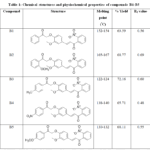 |
Table 1: Chemical structures and physiochemical properties of compounds B1-B5 Click here to View Table |
ADME Evaluation
SwissADME analysis confirmed that all chalcone derivatives (B1–B5) complied with Lipinski’s rule of five, indicating favorable oral bioavailability. As shown in Table 2, the compounds showed acceptable molecular weights (417.41–462.41 g/mol), moderate lipophilicity (consensus LogP 2.8–3.9), and TPSA values within drug-like limits, except B4, which exhibited slightly reduced gastrointestinal absorption due to higher polarity. It was anticipated that none of the compounds would pass through the blood-brain barrier, and all displayed good membrane permeability. Solubility was generally moderate to poor compared with ciprofloxacin. Overall, the derivatives exhibited drug-like properties comparable to ciprofloxacin, though structural alerts such as Michael acceptor and nitro groups highlight the need for further optimization.
Table 2: Results of ADME Evaluation
Compound |
MW
(g/mol) |
HBA | HBD | TPSA | Consensus
(Po/w) |
MR | GI absorption | BBB permeant | P-gp substrate | Lipinski
(violation) |
Bioavailability Score |
| B1 | 417.41 | 6 | 0 | 98.42 | 2.82 | 117.77 | High | No | No | 0 |
0.55 |
| B2 |
447.44 |
7 | 0 | 107.65 | 2.72 | 124.26 | High | No | Yes | 0 | 0.55 |
| B3 | 431.44 | 6 | 0 | 98.42 | 3.01 | 122.74 | High | No | Yes | 0 |
0.55 |
| B4 |
462.41 |
8 | 0 | 144.24 | 2.59 | 126.59 | Low | No | Yes | 0 | 0.55 |
| B5 | 447.44 | 7 | 0 | 107.65 | 2.94 | 124.26 | High | No | Yes | 0 |
0.55 |
| Ciprofloxacin |
331.34 |
5 | 2 | 74.57 | 2.24 | 95.25 | High | No | Yes | 0 |
0.55 |
Docking
Docking was also carried out to test the capability of the chalcone derivatives (B1-B5) to bind to DNA gyrase (PDB ID: 2XCT), a known target of antibacterial agents. Docking scores, summarized in Table 3, were negative and varied between -8.9 and -11.5 kcal/mol, which indicates a good binding affinity of all derivatives. The strongest interaction was observed with B5 (para-methoxy substitution), at-11.5 kcal/mol, and is in line with the best antibacterial potential. Structural analysis of the binding modes (Figure 1) demonstrated that B5 established stable hydrogen bonds and a 2D π-π stacking interaction with residues within the active site, explaining its enhanced biological values, as compared with B1-B4. The findings confirm DNA gyrase inhibition as a testable hypothesis regarding the mechanism of action of antibacterial action provided by the chalcone derivatives synthesized in the current study.
Table 3: Results of docking study of compounds B1-B5 and ciprofloxacin
| Target | H-Bond | Binding Energy (Kcal/mol) |
| 1 | ASP1096 | -9.1 |
| 2 | TYR1322, DTE3 | -8.9 |
| 3 | ARG1122, DTE8 | -11.0 |
| 4 | ASN1182, DTE3 | -11.0 |
| 5 | GLY1174, THR1181, DGE2, DGE4 | -11.5 |
| Ciprofloxacin | LYS1276, ASN1182, DGE2 | -9.5 |
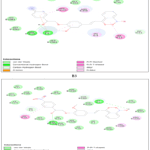 |
Figure 1: 2D interaction of B1-B5 and ciprofloxacin with DNA gyrase enzyme Click here to View Figure |
Antibacterial activity evaluation
Antibacterial potential of prepared compounds (B1-B5) was tested against S. aureus and E. coli by agar well diffusion test with ciprofloxacin as the control drug. Table 4 summarized the diameter of ZOI at 50 and 100 µg/mL concentration.
All the compounds showed antibacterial activity to some extent. Out of the derivatives, B5 (para-methoxy functional group) showed the highest ZOI of 16-21 mm, and B4 and B3 also indicated the moderate ZOI (13-18 mm). B1 (unsubstituted phenyl) and B2 ortho-methoxy) indicated relatively low inhibition with lowest ZOI against E. coli at 8 mm at the dose of 50 µg/mL. Antibacterial activity of ciprofloxacin (19-25 mm) performed as anticipated and as illustrated, was stronger in both bacterial strains.
Table 4: Results of antibacterial activity using agar diffusion method
| Compounds | ZOI (mm) | |||
| S. aureus | E. coli | |||
| 50 µg/ml | 100 µg/ml | 50 µg/ml | 100 µg/ml | |
| B1 | 11±0.56 | 15±0.97 | 10±0.81 | 13±0.72 |
| B2 | 10±0.41 | 12±0.41 | 8±0.34 | 11±0.91 |
| B3 | 15±0.72 | 17±0.80 | 13±0.31 | 16±0.98 |
| B4 | 15±0.88 | 18±0.45 | 14±0.43 | 17±0.43 |
| B5 | 18±0.51 | 21±0.67 | 16±0.60 | 21±0.50 |
| Ciprofloxacin | 20±0.55 | 25±0.64 | 19±0.48 | 23±0.72 |
Discussion
Chalcone derivatives (B1-B5) were successfully synthesized through a two-step process, and the overall yields were moderate to good. The initial Claisen–Schmidt condensation produced the parent chalcone (A), which was then modified by O-alkylation to introduce various substituted aryl-oxoethoxy groups. This strategy was straightforward and reproducible, and the characterization data (melting point, Rf value,IR, and 1H NMR) were all consistent with the expected structures. In particular, the appearance of methoxy singlets and diagnostic carbonyl stretching bands confirmed the successful modifications. Interestingly, small changes in substitution patterns were also reflected in chemical shifts, hinting at electronic effects that could later influence biological activity.21
The in-silico ADME results further supported the potential of these molecules as drug-like candidates. All derivatives satisfied Lipinski’s rule of five, which points toward good oral bioavailability. The predicted LogP values (2.8–3.9) suggested a reasonable balance between hydrophilicity and lipophilicity, favorable for passive absorption across cell membranes. Topological polar surface area (TPSA) values were mostly within the drug-like range, although B4, with a higher TPSA, showed slightly reduced predicted absorption. It is also worth noting that none of the compounds were expected to get through the blood brain barrier which is not necessarily a limitation for antibacterial agents. On the other hand, solubility predictions indicated moderate to poor aqueous solubility compared to ciprofloxacin, and metabolism studies suggested possible inhibition of CYP enzymes. These features do not rule out the compounds as leads, but they do highlight areas where further optimization may be necessary.22
Docking studies provided additional insight into the potential mechanism of action. All compounds displayed favorable binding energies with DNA gyrase, an essential bacterial enzyme and a validated antibacterial target.23The binding scores ranged from −8.9 to −11.5 kcal/mol, with B5 showing the strongest interaction (−11.5 kcal/mol). The docking poses indicated that B5 formed hydrogen bonds and π–π stacking interactions with active-site residues, which likely contributed to its superior biological activity. These predictions matched well with the experimental antibacterial assays, where B5 produced the largest inhibition zones against both S. aureus and E. coli. The SAR trend observed (B5 > B4 = B3 > B1 > B2) highlights the importance of para-substituents, especially electron-donating groups such as methoxy, in enhancing antibacterial activity. Although ciprofloxacin remained the most potent, the chalcone framework—particularly B5—appears promising as a scaffold for further antibacterial development.
Conclusion
The following paper presents the successful synthesis and characterization of chalcone derivatives (B1-B5), which were assessed in terms ofdrug-likeness, ability to interact with docking, and antibacterial activity. All compounds met Lipinski’s rule of five and exhibited good ADME properties though moderate solubility and predicted CYP inhibition provide the motivation to optimize these compounds further. Molecular docking showed a promising binding energy between the molecules and the DNA gyrase especially B5 (para-methoxy) that also showed the highest antibacterial activities in vitro confirming a good correlation between computational and experimental results. Although no derivative was superior to ciprofloxacin, the results indicate chalcones, in general, and B5, in particular, as potential candidates in the synthesis of antibacterial drugs, as they require further evaluations to increase solubility, test metabolic stability and validate their effectiveness inin-vivo models.
Acknowledgment
The authors express their sincere gratitude to Metro College of Health Sciences and Research, Greater Noida.
Funding Source
The authors received no financial support for the research, authorship and publication of this article.
Conflict of Interest
The author(s) do not have any conflict of interest.
Data Availability Statement
This research article contains all of the data that was obtained and examined.
Ethical Approval Statement
This study will not include any animal or human study.
Informed Consent Statement
This study will not include any animal or human study, informed consent was not required.
Author’s Contributions
- Ankit Goel: Writing &Research work;
- Kapil Yadav: Literature Survey;
- Tanya Jain: Pharmacokinetic Properties;
- Sumit Yadav: Introduction;
- Arvind Kumar: Manuscript preparation& Supervision;
- Mohd Haider: Antibacterial activity;
- Renu Sharma: Molecular Docking;
- Mayur Porwal: Manuscript correction& Supervision
References
- Rehman, I.; Gul,;Akhtar, M.; Amin, R.; FatimaR. J. Mol. Str. 2024, 1295, 136810
CrossRef - Salam, M. A.; Al-Amin, M. Y.; Salam, M. T.; Pawar, J. S.; Akhter, N.; Rabaan, A. A.; Alqumber, M. A. A. Healthcare (Basel). 2023, 11,
CrossRef
- Sharma, S.; Chauhan, A.; Ranjan, A.; Mathkor, D. M.; Haque, S.; Ramniwas, S.; Tuli, H. S.; Jindal, T.; Yadav, V. Frontiers Microbio. 2024, 15,
CrossRef - Mendapara, J. V.; Vaghasiya, M. D.; Rajani, D. P.; Ahmad, I.; Patel, H.; Kumari, P. Biochem. Mol. Toxicol. 2023, 37, e23526.
- Hu, Z.; Dong, H.; Si, Z.; Zhao, Y.; Liang, Y. 2023, 28, 7876.
CrossRef - Santos, T. L.;Araújo-Neto, J. B.; Silva, M. M. C.; Silva, M. E. P.; Carneiro, J. N. P.; Fonseca, V. J. A.; Coutinho, H. D. M. Microb. Pathogen. 2023, 180, 106129.
CrossRef - Malhi, D.S.; Kaur, N.; Kaur, M.; Han, H.; Bhowmik, P. K.; Husain, F.M.; Sohal, H.S.; Verma, M. 2025, 15, 281.
CrossRef - Kottapalle,; Markandewar, R.; Deshmukh, N.;Shinde, A. Res. Chem. 2025, 16, 102516.
CrossRef - Komirishetti,, Syed, T.; Mittapelli, V. Res. Chem. 2025, 15, 102294.
CrossRef - Tan, W.; He, L.; Zhang, S.; He, Z.; Liu, W.;Zhang, L.; Guan, L.; Wang, S. Chem. Biodivers. 2022, 19(3), e202100610.
CrossRef - Iqtadar, ; Naz, A.; Shah, S. A. A.; Ali, S.;Abdullah, S. J. Mol. Str. 2025, 1326, 141055.
CrossRef - Sharma, C. S.; Shekhawata, K. S.; Chauhan, C. S.; Kumar, N. Chem. Pharm. Res. 2013, 5, 450-454.
- Zheng, ; Li, Y.; Han, M.; Liu, X.; Hong, C.; Hu, L.; Wu, J.; Wang, J. Bioorgan. Med. Chem. Lett. 2025, 118,130086.
CrossRef - Zhan,; Mao, P.; Yuan, C.;Zhang, Y.; Zhang, T.; Liu, Y.; Tian, J.; Xue, W. J. Saudi Chem. Soc.2023, 27, 101590.
CrossRef - Aziafor, K.; Ruparelia, K.; Moulds, B.; Zloh, M.; Parish, T.; Brucoli, F. 2024, 29, 4539.
CrossRef - Syam, S.; Abdelwahab, S. I.; Al-Mamary, M. A.; Mohan, S. 2012, 17, 6179-6195.
CrossRef - Daina, A.; Michielin, O.; Zoete, V. Rep. 2017, 7, 42717.
CrossRef - Trott, O.;Olson, A. J. Comput. Chem. 2010, 31, 455-461.
CrossRef - Desai, C.; Bhavsar, A. M.; Baldaniya, B. B. Ind. J. Pharm. Sci. 2009, 71,90–94.
CrossRef - Mohammed, I.; Mansour, N. H.; Mahdi, L. S. Arabian J. Chem. 2017, 10, S3508-S3514.
CrossRef - Nawaz, T.; Tajammal, A.; Qurashi, A. W.; Nisa, M. U.; Binjawhar, D. N.; Iqbal, M., 2024, 10, e30618.
CrossRef - Rashid, H. U.; Khan, S.; Irum; Khan, A.; Ahmad, N.; Shah, T.; Khan, K. Royal Soc. Open Sci. 2024, 11(6), 240410.
CrossRef - Kumari, S.; Sharma, A.; Yadav, S. J. Chem. 2025, 41(3), 1002-1014.
CrossRef
 PlumX:
  Views: 1103 Views
  PDF Downloads: 499
 Accepted on: 10 Apr 2026


ISSN Online: 2231-5039