Polymer Chemistry in Biomedical Applications: A Review
 , Bhogi Santhosh Kumar2, S.Kalai Selvi3, Jayalakshmi.E4, J.Suresh Kumar5 and S.Balamuralitharan6
1Department of Chemistry, Assam Engineering College, Jalukbri, Kamrup(Metro), Assam-India.
2Division of Physics, Department of Basic Sciences and Humanities, GMR Institute of Technology, Rajam, Andhra Pradesh, India.
3Department of Chemistry, Velalar College of Engineering and Technology (Autonomous), Thindal, Erode, India
4Department of Mathematics, R.M.K. Engineering College, RSM Nagar, Kavarapettai, India.
5Sagi Rama KrishnamRaju Engineering College, Bhimavaram, India
6Adjunct Faculty, Department of Mathematics,Saveetha School of Engineering, SIMATS, Saveetha University, Chennai, Tamil Nadu, India.
Corresponding Author E-mail: unath123@rediffmail.com
DOI : http://dx.doi.org/10.13005/ojc/420437
Download this article as:

Polymer chemistry has become a virgin in contemporary biomedical science because of its flexibility, adjustable nature and wide range of application within healthcare technology. Polymers are central in enhancing the therapeutic efficacy and patient outcome with applications in drug delivery systems, tissue engineering scaffolds, diagnostic devices, and implantable medical devices. This review represents a useful report overlay of polymer chemical during biomedical application, the classifications of biomedical polymers, the synthesis process, correlation between the structure and property, and functionality in the living environment. The critical areas of application covered in this review include in the controlled delivery of drugs, regenerative medicine, wound, healing, biosensors and medical implants. Amid the numerous advantages, biocompatibility, biodegradability, and controlled functioning, polymer systems still have several solid constraints in their practice, such as chronic intoxication, immune responseAbnormalities, scaling problems, and regulatory obstacles. The review concludes with determining the future research directions that are focused on smart polymers, bio-inspired materials, personalized medicine and sustainable production of polymers. Overall, this paper demonstrates that polymer chemistry plays a crucial role in enabling the sphere of biomedical innovation, and can be applied in the present impediments that it has to overcome in order to achieve greater clinical acceptance.
KEYWORDS:Biomedical polymers; Biocompatibility; Drug delivery; Polymer chemistry; Smart polymers; Tissue engineering
Introduction
The study of polymer chemistry is one of the most ground breaking fields in modern biomedical science that provides an integrated platform as far as the design of materials that possess customary chemical, physical and biological characteristics.2 Polymer synthesis and functionalization approaches have enabled the development of bio-materials, not only bio- compatible, bio- degradable, but also extremely sensitive to physiological signals in the last several decades. The new possibilities of their applications in the field of drug delivery, tissue engineering, wound healing, diagnostic systems and implantable medical devices have been made by such innovations. Molecular design can also be done with polymers to meet complex biomedical requirements as compared to traditional biomaterials, which is indeed very rigid and will lead to tissue reaction in majority of cases. The fact that it can be used to regulate the molecular weight, structure and presentation properties of functional groups can help researchers to tune the mechanical behavior, degradation rate and cellular interactions and this makes polymers especially relevant to the problems of modern healthcare.
The urge to concentrate on polymer chemistry in biomedical usage is associated with the urgency to deploy materials that can overcome the drawbacks of the traditional therapeutic solutions. Conventional drug administration mechanisms are usually characterized by systemic toxicity, low bioavailability and lack of targeting, limiting the therapeutic effects.6 Drug delivery systems Polymer-based, including nanoparticles, micelles, and hydrogels, can offer solutions as they offer a means of controlled release and site-specific delivery, as well as protecting therapeutic agents against premature degradation. Likewise, in tissue engineering, polymers are fabricated to form scaffolds which resemble the extracellular matrix, which enable cell attachment, proliferation and differentiation. These are the capabilities that directly solve clinical problems like repair of organs, healing of chronic wounds and also restoration of complex tissues.
There are mainly three types of polymers used in biomedical applications namely natural, synthetic, and hybrid systems. Natural polymers, such as collagen, chitosan, gelatin and alginate, are biocompatible in nature and they are most analogous to natural environments of tissues.3 They are however limited in their mechanical strength, batch variability and degradation that in most cases limits their application in load-bearing or long term usage. Polyethylene glycol (PEG), polylactic acid (PLA), polyglycolic acid (PGA) and polycaprolactone (PCL) are synthetic polymers that offer tunable mechanical properties, degradation rate and increased reproducibility making these polymer types suitable as structural or long-term therapeutic agents. Hybrid polymers are polymers that are made using natural and synthetic polymers with the aim of merging the biological qualities of natural polymers with the structural and functional stability of synthetic polymers. This integrative method has given rise to the production of superior biomaterials that meet various biomedical needs at the same time; something that neither natural nor synthetic polymers alone could do.
Smart and stimuli-responsive materials (that are dynamically responsive to environmental changes) have also been possible through advances in the chemistry of polymers. Such polymers particularly come in handy when it comes to the targeted delivery of drugs because the polymers can be able to release therapeutic agents in specific physiological conditions that increase efficacy and minimize side effects.6 Moreover, polymer-based hydrogel and nanostructure have been demonstrated to have future applications in the minimally invasive treatment and regenerative therapy as they can be modeled to tissue-like forms, maintain cellular viability and provide biochemical signals. Care should be taken when coming up with these enhanced polymers considering chemical structure, functionalities, molecular weight, crosslinking density and surface nature which can all influence interactions with the biological systems.
The increasing interest of personalized medicine has also attracted the concern of the potential of polymer chemistry. Patient specific biomedical therapies demand patient specific materials including custom degradation rates, custom drug release profiles and custom tissue compatibility. Recent innovations in the additive manufacturing and 3D printing technologies allow creating polymeric scaffolds and devices with complex designs with a high level of accuracy to facilitate the transfer of laboratory discoveries to patient-centered medical applications. These advancements are the reasons why the fields of polymer chemistry and biomedical engineering, clinical medicine, and material science are extensively linked, and why it is vital in the medical field today.
Although great advancements have been made, a number of obstacles are still in the way of translating polymer based biomedical systems to clinical use. The key issues that need to be well-investigated are long-term biocompatibility, inconsistency of immune response, batch-to-batch reproducibility, and the toxicity of degradation by-products.5 Also, high volume of manufacturing and compliance with regulations are necessary conditions of commercial adoption but significant barriers. All these factors emphasize the role of scientific, engineering and regulatory thinking in the polymer based biomedical studies to promote successful development of safe and effective medical materials.
The aims of this review include to give an overview of polymer chemistry in the biomedical fields, to examine the functionalities of various polymer systems, to determine their applicability in different medical fields, and to find out the gaps in the research and possible future directions. In particular, the purpose of this review is to categorize polymers by type, evaluate their functionality/use in applications, discuss novel applications including smart systems and hybrid systems, and discuss challenges in translational applications that impede clinical utilization. The review will also seek to compile the available knowledge by undertaking a systematic review of the literature and also provide insights that would help guide future research and practice.
Overall, this article offers a rational analysis of the impact that the polymer chemistry has on biomedical performance. The multidisciplinary impacts of polymers in medicine are shown by the review by demonstrating the connections between the molecular design (polymers), their material properties and functional consequences.. Both scientific and practical limitations of polymeric materials are highlighted in the discussion and provide a balanced viewpoint that facilitates wise choice of materials, logical choice of design strategies, and planning transnationally. By so doing, the review provides a basis on which the polymer chemistry can be advanced towards coming up with next-generation biomedical solution.4
Novelty and Contribution
It is a novel review since it is a comprehensive and integrative review of polymer chemistry in biomedical applications. This review also compares polymer systems in various fields and brings out strengths and limitations of polymer systems as opposed to other studies that are overly narrow in that either they only look at natural or synthetic polymers or in areas where polymer systems have been employed (such as drug delivery or tissue engineering). The work provides a cohesive approach to polymer classification, synthesis techniques, functional performance, and clinical translation, where the understanding of polymer classification, synthesis, functional performance, and clinical translation is still incomprehensive and provides a unique insight into this field of research, often lacking in the literature.
One of the achievements of this paper is the analysis of the structure-property-function connections in polymers. The review brings out the importance of molecular properties, chain length, quantity of crosslinks and functionalization on the biocompatibility, mechanical performance, degradation behaviour and cellular interactions. All these ideas together will give the review a blueprint of the designing of polymers which will managerial the advanced biomedical needs. This particular approach is particularly relevant to the practice of researchers and practitioners who are interested in optimizing material performance to make it applicable in a specific clinical use.
Another valuable contribution is the focus on the problems of the trans-cultural difficulties and the practical limitations. The topics covered in the review are the variability of immune response, its long-term stability, its scalability, the manufacturability of its reproduction, and its regulations. The focus of such predicaments and laboratory discoveries will ensure that the discussion will be founded on applicability to the real-life. This applied perspective contributes value to the review in terms of interdisciplinary groups employing polymer design, biomedical engineering and clinical application.
Additionally, the review sets new trends and prospects of the field. It is indicated that in the future, the research potential is aimed at the smart and stimulus-responsible polymers, hybrid materials including natural and synthetic materials, bioinspired systems, sustainable techniques of synthesis. The review provides useful advice to researchers in order to achieve polymer-based biomedical solutions through examining how these emerging systems can overcome the existing constraints.
Another useful value of the review is that it assembles scattered information on the multiple applications of polymers. The insight into drug delivery, tissue engineering, wound healing, biosensing and implantable devices can be compared to see the broader perspective on material versatility and limitations. The presented integrative synthesis not only does open up possibilities in the selection of materials and design strategies, but also sheds light on gaps in current research thus calling on the development of new clinically relevant polymeric systems.
Finally, the key contributions of the review are that it gives a clear conceptual framework of transferring the principles of polymer chemistry to biomedical performance, a critical view of the material limitations, and outlook of pursuing translational and research prospects in the future. The incorporation of scientific rigidity and practical usefulness can ensure the review serves as a general level of information to academic researchers and applied scientists who have the aim of advancing the area of polymer chemistry in the biomedical domain.
On the whole, the provided work implies a new, multi-dimensional vision of polymer chemistry applications in the medical practice, in which the ability to enhance the functionality and prospects of the translation take the major role. This review could be seen as an evidence of practical applicability and new directions which makes the contribution of the review systematic and comprehensive, which gives it a ground to continue further research, innovation, and clinic practice in the given sphere.
Related Works
The polymer chemistry in biomedical utilization has grown in a tremendously quicker rate within the past few decades because of the increasing need of compounds, changeable and non-toxic on the one side, yet functionally flexible on the other side. The initial research was aimed at the development of polymers as the basic medical devices, including sutures, catheters, and prosthetic coating. These early pieces of research indicated the possibility of polymers to give mechanical flexibility, light-weight shape, and decreased pain to patients in comparison with conventional materials like metals or ceramics. Although these polymers were more of passive nature, it formed the basis of higher functional materials which could dynamically respond to the biological systems.8
Future studies focused on biodegradable polymers, and they demonstrated that they are useful as temporary implants and controlled drug delivery systems. The benefit of biodegradable polymers was the possibility of removing them surgically, once the therapeutic value is completed. As per performance analysis, polymer crystallinity, molecular weight and crosslinking density were identified to be crucial in determining rates of degradation and mechanical stability. These investigations showed that although polymer degradation could be customized to specific therapeutic needs, the volume of acidic products and unpredictable degradation rates were potential biological hazards, such as tissue inflammation and irritation in local areas.
Drug delivery systems that are based on polymers have been extensively examined to improve the therapeutic effect and reduce the side effects. Studies on polymeric nanoparticles, micelles, and polymer-drug conjugates found out that such systems were able to enhance the solubility, stability and circulation time of drugs, and give the drugs the ability to be released in a controlled and targeted manner. The modifications of the cellular uptake and bioavailability were demonstrated by surface functionalization and modification of polymer chemistry. Also, polymers that respond to environmental factors, including pH, temperature or enzyme concentration, showed a high potential of site-specific drug release. Though these benefits existed, unloading of drugs, premature release of drugs, and inconsistencies in physiological reactions were continuously observed which necessitated the necessity of accurate material engineering.10
Hydrogels are extremely hydrated networks of polymers that have been widely used in the biomedical field including wound healing, tissue scaffolds, and localized drug delivery. These cells are used to replicate the extracellular matrix through the provision of a moist and elastic environment that supports cell proliferation and migration. Investigations show that the composition of hydrogel, porosity, and crosslinking methods have a great impact on mechanical strength, degradation behavior, and bioactivity. Nevertheless, hydrogel-based systems tend to be poor in terms of structural integrity when loaded and can otherwise readily degrade in physiological environments. Composite and reinforced hydrogel innovations have been considered to overcome these limitations, which entails the combination of polymers and nanoparticles or fibers in order to boost mechanical functionality without interfering with biological compatibility.
In 2025 L. Abdulsalamet al., 13 introduced the other significant area of polymer chemistry research has been tissue engineering. Research studies conducted in polymer scaffolds in regenerative medicine have indicated that scaffold architecture, surface chemistry and mechanical properties are key indicators of cellular adhesion, proliferation and differentiation. Natural polymers include collagen, gelatin and chitosan which are highly bioactive but synthetic polymers offer more control of both structural and mechanical properties. As an attempt to combine biological functionality and mechanical stability, the use of natural and synthetic polymers in hybrid scaffolds has been developed. Research in this field also pointed out difficulties, such as the reproducibility of scaffolds fabrication, porosity, and interconnectivity consistency, and predictable kinetic degradation.
Polymer chemistry has also been used in the manufacture of implantable medical devices in addition to the delivery of drugs and tissue engineering. Functional polymer-based coating has been discovered to reduce adhesion of bacteria, reduce immune response and enhance longevity of devices. Polymer grafting or crosslinking could be used to improve the biocompatibility of a surface, although long-term implantation studies have shown problems with polymer wear, inflammation caused by degradation and contact with surrounding tissues. The results underline the idea that though polymers offer flexibility in designs, it is still not an easy task to balance mechanical stability with biological reactions.
The introduction of stimuli-responsive and smart polymers has greatly broadened the use of the polymers in biomedical applications.11 These materials can be made to alter properties based on environmental indicators, e.g. pH, temperature or enzymatic activity, enabling controlled drug delivery, self-healing scaffolds, owing to adaptive implants. Research proves that intelligent polymers have the potential to improve the precision of therapeutic applications and decrease the side effects of a systemic level, but research problems exist in the stability, reproducibility, and predictability of behavior in complex physiological environments. Multi-responsive polymers with the ability to respond to multiple stimuli have been studied further to expand the range of their applications, but also they are more complex to synthesize and characterize.
In 2025 S. Kiani et.al.7 suggested the polymer chemistry has also been used in biosensing and diagnostic applications. The biomolecules can be immobilized in functional polymers, enhance the detection signals, and can be used as flexible sensor platforms. Specifically, conductive polymers are known to enhance sensitivity and real-time biosensing of biological signals. Studies have shown that biosensors based on polymers can be reduced to a miniaturized size and be embedded into a point of care device, and provides a fast and precise diagnosis. Although these benefits are available, problems like signal drift, biofouling, and short working life still remain the factors limiting more clinical usage. The way to overcome these problems is to continue optimizing polymer chemistry, surface functionalization and material stability.
It has been demonstrated in comparative studies that no particular type of polymer is universally suitable in biomedical applications. Natural polymers are commonly better in biocompatibility and cell signaling but have shortcomings in the form of mechanical strength and predictability of degradation. Synthetic polymers have tunable characteristics, reproducibility, and scalability but might need to be modified with respect to their surfaces to be sufficiently biocompatible. Hybrid systems have been proposed as a remedy in order to combine the benefits of each but have added further complexity in synthesis, characterization, and regulatory approval. The reviews have outlined the significance of rational design and choice of polymer selection based on the application.
Scalability, reproducibility, and regulatory compliance are the key factors that are to be taken into consideration when scaling polymer-based systems out of the laboratory to clinical practice. Although studies conducted at a laboratory level always show promising results in terms of the material performance, the way to commercialisation is to consider the issue of consistency of manufacturing, stability of the material in the long term, and biocompatibility in large doses. Standardized testing procedures, quality control and consideration of regulative needs early in the process of the development of the polymer are becoming an acknowledged part of the strategy of the development of the polymer. Research findings have shown that these considerations when factored at the top of research can make the translation to clinical and industrial usage easier.
In 2025 A.-E.Segneanuet al., 1 proposed the allied studies jointly reveal that polymer chemistry has revolutionized biomedical materials through offering flexible, functional and biocompatible solutions. However, they also reveal underlie problems like the control of the degradation, immune compatibility, mechanical stability, reproducibility and transitional viability. The literature explains why the interdisciplinary approaches are needed to be combined using polymer chemistry, biomedical engineering, and clinical knowledge in order to develop materials not scientifically advanced, but functional. This suggests that as new natural, synthetic, and hybrid polymers are introduced, new creation of stimuli-responsive materials and smart can be achieved, additional research can bring more functionality, precision, and patient costumization.9
The reviewed literature has shown that polymer chemistry has enabled the phenomenal improvement in such fields as drug delivery, tissue engineering, wound healing, diagnostics, and implantable devices. In the meantime, innovation can be developed further to overcome the limitations in scalability, reproducibility, clinical translation, and regulation approval. The general perspective of the present researches would be a fine guideline to the architecture of the next generation polymeric material that are not only operable in biomedical, but can find use in an actual health-care solution.
Proposed Methodology
The suggested methodology is a systematic and well-organized plan of exploring and overcoming polymer chemistry studies related to biomedical applications. This methodology will be structured so as to be all encompassing in terms of the coverage of the relevant polymer systems, applications and translational aspects in addition to being understandable, reproducible and scientifically rigorous. This will combine both material categorization, applications analysis and performance analysis to produce valuable information on the contribution of polymer chemistry in biomedical engineering.12
The initial step of the methodology is on specifying the extent of the review. Polymer chemistry can be used in biomedical practices across many types of fields, such as drug delivery, tissue engineering, wound management, diagnostics, and implantable devices. In order to control this breadth, the methodology focuses on studies, which are able to directly illustrate polymer-biological interaction, the operation of the material in the physiological environment as well as the implication on the healthcare outcome. This limited area of focus is what makes this review application-oriented as opposed to theoretical.
During the second step, the use of appropriate literature is identified in well-known scientific databases and peer-reviewed publications. The focus is made on the research that deals with the methods of polymer synthesis, technologies of material modification, and the evaluation of biomedical performance. Experimental and applied research is deemed to have the capability of depicting the entire growth process of design of material to biomedical application. This step will allow finding out the prevalent polymer classes and material trends.
After the literature identification, a methodology is used to classify polymer systems based on classification framework into natural polymers, synthetic polymers, and hybrid polymeric materials. This classification is suitable to compare material benefits and limitations. The natural polymers are studied in terms of biological affinity and synthetic polymers are studied in terms of structural tunability and mechanical reliability. The hybrid systems are evaluated based on its capability to combine the advantages of the two categories of materials.
The second methodological step is to segregate the polymer systems application-based. All categories of polymers are mapped to their roles in biomedicine, including controlled drug delivery, scaffold, surface modification or biosensing. This is an organization that is application-oriented and is capable of assessing the impacts of the principles of polymer chemistry on biomedical performance in real-life situations. Particular attention is paid to such practical outcomes as biocompatibility, stability, and curative effect.
This is followed by a critical review step as it considers to review material-level performance indicators that are reported in literature. Parameters like degradation behavior, biological response, mechanical integrity and functional life span are studied and performed on qualitative basis. As an alternative to the numerical comparison, specific attention is paid to the disclosure of the typical aspects of the performance and the mentioned restrictions. This way of methodology can make the methodology flexible to a range of experimental cases and evaluation techniques.
It also includes having translational analysis in order to draw the clinical importance of polymer-based systems. The scalability, reproducibility, manufacturability, and regulatory issues are tackled on the basis of the outcomes of reported experimental results and the discourses on its applications. The step will make sure the review is not just highlighting laboratory success but also provides real-life deployment challenges.15
Comparative synthesis is done between polymer classes and use in order to ensure consistency and minimize bias. Because the material behavior resembles and differs, the similarities and differences are examined in order to find design strategies that will provide positive biomedical results consistently. The given comparative approach enhances the quality of the methodology and helps to reach evidence-based conclusions.
Lastly, the methodology uses synthesis and interpretation of results instead of simple aggregation of the studies. These insights are brought together and used to find out gaps in the research, unmet and emerging opportunities in polymer chemistry as used in biomedical applications. This systematic review is the basis of the discussion and conclusion parts of the review.
This figure 1 shows the methodological approach that is chronologically taken to conduct a systematic review of polymer chemistry in biomedical application. It shows the logical continuum of scope definition to findings analysis and interpretation.
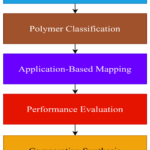 |
Figure 1: Methodological Framework for Polymer Chemistry Review Click here to View Figure |
Result and Discussions
The findings of polymer chemistry in biomedical applications were systematic review results whose outcomes provided definite trends in the material performance, application suitability, and translational feasibility. It is evident in the analysis that polymer based systems always exhibit high adaptivity levels over traditional biomaterials especially in drug delivery, tissue engineering and implantable devices. Figure 2 shows the polymer application in the key biomedical fields and graphically reflects that drug delivery systems represent the highest number of documented applications with tissue engineering and wound healing rapidly ranking next. This trend is an indication of the increased clinical need of the controlled and targeted solutions to therapy made possible by polymer chemistry.
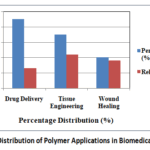 |
Figure 2: Distribution of Polymer Applications in Biomedical Domains Click here to View Figure |
The mentioned prevalence of the drug delivery application is directly linked with the capacity of the polymers to entrap therapeutic agents and control their release profiles. The literature has always shown enhanced therapeutic efficacy and minimized side effects with the application of polymer carriers in place of direct drug delivery. Figure 2 also reports a lower yet continuously growing role of polymers in diagnostics and biosensing, which may represent a new trend of developing multifunctional polymer scaffolds. This growth trend highlights the broadening use of polymers in addition to the conventional uses of polymers in therapeutics.
Figure 3 is a comparative analysis of natural and synthetic polymers in terms of their performance in the biomedical use. The chart illustrates that the natural polymers exhibit greater biological affinity and cellular contact capacity whereas synthetic polymers exhibit superiority in regard to mechanical stability and structural adjustability. It is evident in the graphic representation that no single polymer type can be considered superior over the rest; rather, performance depends on the application. This observation shows that there has been a rising trend in using hybrid polymer systems that combine the benefits of the two kinds of materials.
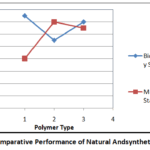 |
Figure 3: Comparative Performance of Natural Andsynthetic Polymers Click here to View Figure |
Figure 3 indicates that although natural polymers are preferred in relation to soft tissue applications, most natural polymers have variability and low durability to limit their long-term application. Synthetic polymers on the other hand have a predictable performance but can cause inflammatory effects in case they are not modified adequately. The graph increases the significance of surface functionalization and polymer blending as measures to improve the biomedical compatibility. These thoughts are supported with known experimental results of enhanced cell adhesion and lowering of immune response with optimized polymer chemistry.
Figure 4 demonstrates the trend in translational preparedness of polymer based biomedical systems. The figure splits reviewed literature into laboratory-scale, preclinical, and applied to a clinic levels. As demonstrated in the figure, there are still numerous systems based on polymers, which are at the laboratory assessment phase, and few systems which have passed well into clinical use. This image evidence reveals how there has always been a disconnect between material invention and clinical use of the invention.
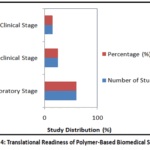 |
Figure 4: Translational Readiness of Polymer-Based Biomedical Systems Click here to View Figure |
Figure 4 exhibits a restricted clinical translation that could be caused by various practical issues which were addressed in reviewed studies. Scalability into manufacturing, long-term long-reproducibility, scalability, long-run safety and regulations continue to be significant challenges. Although laboratory outcome shows good functionality, inconsistencies during large-scale production repeatedly create clinical implementation restrictions. The figure supports the argument of standardized evaluation procedures and early-stage translational planning in research of polymer chemistry.
The comparison of the types of polymers and their characteristics of biomedical performance data is presented in Table 1. The table points out variations in biocompatibility, mechanical strength, degradation and suitability of use. The analysis reveals the biodegradable polymers of synthesis have presented a unique performance and controllability blend, which is especially appropriate in the short-term biomedical use. Nonetheless, the table also shows that natural polymers are always superior to synthetic polymers in the aspect of cellular response highlighting the significance of biological compatibility in medical applications.
Table 1: Comparison of Polymer Types and Biomedical performance
|
Polymer Type |
Biocompatibility Level | Mechanical Strength | Degradation Control |
| Natural Polymers | High | Low |
Moderate |
|
Synthetic Polymers |
Moderate | High | High |
| Hybrid Polymers | High | Moderate |
High |
The Table 1 interpretation indicates that there is a trade-off in selecting a material used in a biological process and engineering control in biomedical applications. Although a single type of polymer does not meet all of the biomedical needs, the relative statistics are showing overwhelming support in favor of composite and hybrid materials. These results also confirm the trends in Figures 2 and 3 where hybrid systems are going to be a possible remedy to material restrictions.
Table 2 also compares applications of polymers in various fields of biomedicine, such as drug delivery, tissue engineering, wound healing and implants. The table indicates that the drug delivery systems have the least functionality and flexibility whereas the implantable devices have the most stricter performance and safety requirements. This analogy points to the fact that the situations of use are one of the most important factors in polymer design strategies.
Table 2: Comparison of Polymer Applications Across Biomedical Domains
|
Biomedical Application |
Functional Efficiency | Clinical Adaptability | Implementation Complexity |
| Drug Delivery | High | High |
Moderate |
|
Tissue Engineering |
Moderate | Moderate | High |
| Medical Implants | High | Low |
High |
Table 2 is discussed to show that implantable devices need polymers with a long-lasting production of stability and low immune response, unlike polymer in drug delivery where just controlled degradation and release pattern is preferred. The table supports the significance of polymer chemistry application specific as opposed to generalized material development. These comparative lessons may be provided to learn why certain polymer regimes are successful in targeting specific biomedical functions and others fail to do so with translational barriers.
Overall, the joint discussion of the three figures and two tables has revealed that polymer chemistry has taken an enormous breakthrough to designing biomedical materials but it is constrained because of the translational concerns. The figures are acquired as a whole representation of good laboratory performance and a growing variety of application, whereas the tables will highlight material tradeoff and application specificity. These findings in combination support that the future developments in biomedical polymer chemistry will rely on coherent material design and manufacturing plans that are scalable and clinical fit evaluation frameworks.14
Conclusion
The future of biomedical applications based on polymers is the key to customizable biocompatible, and functional materials produced and enabling such applications. This review has discussed the principles of polymer chemistry, the major types of materials, the strategies of syntheses, and the varied uses of these types of materials in drug delivery, tissue engineering, wound healing, diagnostics, and medical devices. Polymers are the most versatile substances that could be adapted to amend a complicated medical issue.
Irrespective of these, there are practical constraints. Low biocompatibility in the long term, possible toxicity of the degradation products, unpredictable immune response and difficulties in scale-based manufacture are major obstacles to general clinical acceptance. Also, biomaterials that are based on polymers are still regulated in a challenging environment, which can retard their innovation and commercialization.
The emerging trends to be studied in the future include creating smart and stimuli-responsive polymers, biomimetic and hybrid materials, and more environmentally friendly strategies of the polymer synthesis. The future will see the field of polymer chemistry in healthcare expanded even more due to the development of personalized medicine, 3D printing, and the field of nanotechnology. The interdisciplinary cooperation in dealing with the current constraints will also be pivotal in translating the polymer-based biomedical innovations available in the laboratories to the clinical practice.
Funding Sources
The author(s) received no financial support for the research, authorship, and/or publication of this article.
Conflict of Interest
The author(s) do not have any conflict of interest.
Data Availability Statement
This statement does not apply to this article.
Ethics Statement
This research did not involve human participants, animal subjects, or any material that requires ethical approval.
References
- A-E. Segneanuet al., “Advancements in Hydrogels: A comprehensive review of natural and synthetic innovations for biomedical applications,” Polymers, vol. 17, no. 15, p. 2026, Jul. 2025, doi: 10.3390/polym17152026.
CrossRef - Md. M. H. Rumonet al., “Progress in hydrogel toughening: addressing structural and crosslinking challenges for biomedical applications,” Discover Materials, vol. 5, no. 1, Jan. 2025, doi: 10.1007/s43939-025-00178-x.
CrossRef - J. Zhao et al., “A comprehensive review of unlocking the potential of lignin-derived biomaterials: from lignin structure to biomedical application,” Journal of Nanobiotechnology, vol. 23, no. 1, p. 538, Jul. 2025, doi: 10.1186/s12951-025-03604-7.
CrossRef - S. Biswas, P. Dey, and G. Ghosh, “Polymeric microgels: Synthesis, and emerging biomedical applications,” Journal of Macromolecular Science Part A, vol. 62, no. 4, pp. 295–316, Mar. 2025, doi: 10.1080/10601325.2025.2471852.
CrossRef - N -M. Blebea, C. Pușcașu, R.-A. Vlad, and G. Hancu, “Chitosan-Based gel development: extraction, gelation mechanisms, and biomedical applications,” Gels, vol. 11, no. 4, p. 275, Apr. 2025, doi: 10.3390/gels11040275.
CrossRef - R. F. Herin, A. S. S. Judit, S. Sebastiammal, S. Shabna, S. S. J. Dhas, and C. S. Biju, “Functionalized ZNO NPS and Biopolymers-Coated ZNO NPs for Drug Delivery and Biomedical Applications—A Review,” Regenerative Engineering and Translational Medicine, vol. 11, no. 1, pp. 165–189, Sep. 2024, doi: 10.1007/s40883-024-00354-0.
CrossRef - S. Kiani, A. Dutta, S. A. Yong, S. Karamikamkar, and E. Behzadfar, “Emerging trend of carbon aerogel synthesis for biomedical applications,” Current Opinion in Green and Sustainable Chemistry, vol. 54, p. 101033, May 2025, doi: 10.1016/j.cogsc.2025.101033.
CrossRef - S. Ganguly and S. Margel, “Magnetic polymeric conduits in biomedical applications,” Micromachines, vol. 16, no. 2, p. 174, Jan. 2025, doi: 10.3390/mi16020174.
CrossRef - S. Kumar, A. Bhatt, and P. Purohit, “Carrageenan modifications: improving biomedical applications,” Journal of Polymers and the Environment, vol. 33, no. 4, pp. 1667–1688, Feb. 2025, doi: 10.1007/s10924-025-03501-y.
CrossRef - S. Karunanithi and K. Rajappan, “Biofunctionalizedagarose-based biopolymer composites for advanced biomedical applications: a review,” Polymer Bulletin, vol. 82, no. 10, pp. 4835–4877, Mar. 2025, doi: 10.1007/s00289-025-05718-2.
CrossRef - S. Vadu, U. Joshi, and A. Joshi, “A Methodical Evaluation of Polymer-Reinforced Nanocomposites for Biomedical Applications: A review,” in Lecture notes in networks and systems, 2025, pp. 103–121. doi: 10.1007/978-981-96-9196-8_7.
CrossRef - A. Abd-El-Aziz et al., “Advances in Coordination Chemistry of Schiff Base Complexes: A Journey from Nanoarchitectonic Design to Biomedical Applications,” Topics in Current Chemistry, vol. 383, no. 1, p. 8, Feb. 2025, doi: 10.1007/s41061-025-00489-w.
CrossRef - L. Abdulsalamet al., “Advanced Biocompatible and Biodegradable Polymers: A review of functionalization, smart systems, and sustainable applications,” Polymers, vol. 17, no. 21, p. 2901, Oct. 2025, doi: 10.3390/polym17212901.
CrossRef - É. Da Silva Santos, D. T. Uchida, and M. L. Bruschi, “Sericin from Bombyx Mori as a By-product for DLP 3D Printing in Pharmaceutical and Biomedical Applications,” AAPS PharmSciTech, vol. 26, no. 5, p. 111, Apr. 2025, doi: 1208/s12249-025-03108-5.
CrossRef - M. Aghajani, H. R. Garshasbi, S. M. Naghib, and M. R. Mozafari, “3D printing of hydrogel polysaccharides for biomedical applications: A review,” Biomedicines, vol. 13, no. 3, p. 731, Mar. 2025, doi: 10.3390/biomedicines13030731.
CrossRef
 PlumX:
  Views: 553 Views
  PDF Downloads: 107
 Accepted on: 27 Jan 2026
Second Review by: Dr. Saili Murti
Final Approval by: Dr. Ioana Stanciu


ISSN Online: 2231-5039