Occupational Exposure to Airborne Fiberglass Fibers Generated during Orthopedic Cast Removal: Exposure Assessment, SEM–EDX Characterization and Respiratory Health among Healthcare Workers
 , Irman Abdul Rahman2, Anuar Ithnin4, Siti Nurazwanni Wahishad5 and Normah Awang3*
1Centre for Medical and Health Sciences, Faculty of Medicine, Universiti Sultan Zainal Abidin, Kuala Terengganu 20400, Terengganu, Malaysia.
2School of Applied Physics, Faculty of Science and Technology, Universiti Kebangsaan Malaysia, 43600 Bangi, Selangor, Malaysia.
3Center for Toxicology and Health Risk Studies, Faculty of Health Sciences, Universiti Kebangsaan Malaysia, Jalan Raja Muda Abdul Aziz, 50300 Kuala Lumpur, Malaysia.
4Community Health Research Center, Faculty of Health Sciences, Universiti Kebangsaan Malaysia (UKM), Kuala Lumpur Campus, Jalan Raja Muda Abdul Aziz, 50300 Kuala Lumpur, Malaysia.
5School of Engineering and Technology, University of Technology Sarawak, 96000 Sibu, Sarawak, Malaysia
Corresponding author E-mail: norm@ukm.edu.my
DOI : http://dx.doi.org/10.13005/ojc/420401
Download this article as:

Orthopedic cast removal with oscillating saws may release airborne fiberglass fibers and dust into healthcare workers' breathing zones. This multicentre comparative cross-sectional study characterized airborne fiberglass fiber exposure during routine cast removal. It examined respiratory health among healthcare workers in five public hospitals in the Klang Valley, Malaysia. Personal and area air samples were collected and analyzed by phase-contrast microscopy in accordance with NIOSH NMAM 7400. Selected filter samples underwent scanning electron microscopy with energy-dispersive X-ray spectroscopy (SEM–EDX). Respiratory symptoms were assessed using a structured questionnaire, and pulmonary function was evaluated by spirometry. The study included 206 healthcare workers: 125 routinely involved in cast removal and 81 comparison workers. The highest mean concentrations were recorded in the POP room at Hospital A (personal: 1.63 fibres/mL; area: 2.17 fibres/mL), whereas measurements at the other hospitals were lower or below the analytical limit of detection. Exposed workers had higher prevalences of chronic cough, sputum production, wheezing, eye irritation, and skin irritation. Nasal irritation and shortness of breath did not differ significantly between groups. Mean FVC, FEV₁, and FEV₁/FVC did not differ significantly among participants with valid spirometry results. SEM–EDX identified elongated silicon- and oxygen-containing particles with elemental profiles compatible with fiberglass materials. These findings indicate that cast removal can produce appreciable airborne fiberglass fiber exposure under some clinical conditions. Because of the cross-sectional design, limited environmental sampling and incomplete spirometry data, the health findings should be interpreted as associations rather than evidence of causation.
KEYWORDS:Airborne fiberglass fibres; Fiberglass-containing dust; Healthcare workers; Occupational exposure; Orthopaedic cast removal; Respiratory symptoms; SEM–EDX
Introduction
Fiberglass-reinforced casts are now the preferred choice in orthopedics due to their high strength-to-weight ratio, quick curing, water resistance, and enhanced patient comfort over traditional plaster of Paris casts. 11,12 However, dust from these casts has been linked to respiratory injuries, as it may cause lung damage and disrupt normal repair processes. Although removing fiberglass casts using oscillating saws releases airborne fiberglass fibers, recent studies show that powered cast sawing produces inhalable and respirable particles, especially near the cutting point. Healthcare workers performing cast removal are therefore at risk of repeated inhalation exposure to fibers, which has been associated with respiratory irritation and other health issues. This underscores the need for effective protective measures in medical environments.
Fiberglass is classified as an artificial vitreous fiber (MMVF), also called a synthetic vitreous fiber (SVF). It mainly consists of amorphous silica, calcium oxide, aluminum oxide, and other inorganic oxides within a polymeric resin matrix.12,18 During mechanical cutting or removal of fiberglass orthopedic casts with oscillating cast saws, airborne fiberglass fibers and respirable dust of various lengths, diameters, and aerodynamic properties are produced. Fibers with small aerodynamic diameters can be inhaled and deposited throughout the respiratory tract, with deposition influenced by fiber size, breathing patterns, and airway structure. Evidence suggests that the biological impact and potential toxicity of inhaled MMVFs are primarily dictated by fiber length, diameter, and biopersistence in the lung. Occupational exposure generally causes temporary irritation of the eyes, skin, and upper respiratory tract. However, the risk of long-term respiratory effects depends on the level and duration of exposure, as well as the fibers’ physicochemical traits. Therefore, reducing airborne fiberglass fibers through engineering controls, local exhaust ventilation, and proper respiratory protection is essential to safeguard healthcare workers who remove fiberglass casts.
Several epidemiological studies of workers in fiberglass and other artificial vitreous fiber (MMVF) manufacturing industries have reported a higher prevalence of respiratory symptoms, including chronic cough, wheezing, sputum production, and dyspnea, particularly among individuals exposed to elevated airborne fiberglass fiber and dust concentrations over prolonged periods.1,18 Experimental and mechanistic studies have further demonstrated that inhaled synthetic vitreous fibers can initiate airway inflammation through oxidative stress, epithelial cell injury, activation of alveolar macrophages, and the subsequent release of pro-inflammatory cytokines. The magnitude of these biological responses is influenced by fiber dimensions, surface chemistry, exposure concentration, and bio-persistence within the respiratory tract.3 Nevertheless, most available evidence comes from industrial manufacturing environments, where fiber concentrations, exposure duration, and workplace processes differ substantially from those encountered in healthcare settings. Consequently, the potential respiratory risks associated with intermittent occupational exposure during routine fiberglass cast removal in orthopedic cast rooms remain insufficiently characterized, highlighting the need for exposure assessment and risk evaluation among healthcare workers.
Orthopedic clinics are a unique occupational environment where exposure to dust and airborne fiberglass fibers occurs intermittently but repeatedly during routine cast removal procedures. Unlike fiberglass manufacturing facilities, where engineering controls such as local exhaust ventilation (LEV), enclosure systems, and comprehensive industrial hygiene programs are routinely implemented, many hospital cast rooms rely primarily on general room ventilation. Consequently, respirable dust and airborne fiberglass fibers generated during cast removal may remain suspended within the breathing zone of healthcare workers and nearby patients, creating opportunities for repeated inhalation exposure.1,20 Although fiberglass cast removal has long been recognized as a source of airborne fiberglass fibers, quantitative occupational exposure assessments in hospital cast rooms remain relatively scarce. The available evidence is limited to a small number of studies, including investigations conducted in Malaysia, and there is a notable lack of published exposure data from healthcare facilities across Southeast Asia. This knowledge gap highlights the need for systematic exposure monitoring to characterize airborne fiberglass fiber concentrations better and inform evidence-based occupational health interventions in orthopedic clinical settings.
Current occupational exposure limits for airborne fiberglass fibers have been set by several international agencies, including the National Institute for Occupational Safety and Health (NIOSH), the Occupational Safety and Health Administration (OSHA), and the American Conference of Governmental Industrial Hygienists (ACGIH). These guidelines generally recommend an occupational exposure limit of approximately 1 fiber/mL for respirable fibers. However, few studies have examined whether airborne fiberglass fiber concentrations generated during routine orthopedic cast removal exceed these recommended limits in real-world clinical settings.2
In addition to environmental exposure assessment, evaluating respiratory health outcomes among exposed healthcare workers is essential for comprehensive occupational risk assessment. Standardized respiratory symptom questionnaires, when used with spirometry, provide complementary information by capturing both subjective respiratory complaints and objective indicators of pulmonary function. Spirometry is the recommended physiological test for detecting and monitoring work-related impairment in lung function and is widely used in occupational respiratory surveillance programs. Integrating quantitative environmental exposure monitoring with respiratory symptom assessment and pulmonary function testing enables a more comprehensive evaluation of exposure–response relationships. It facilitates the identification of workers at increased risk of adverse respiratory effects.1,5,9
Previous studies have primarily examined airborne dust and fiberglass fiber concentrations generated during orthopedic cast removal or the respiratory health of workers exposed to respirable dust in other occupational settings. Few studies have used an integrated approach that combines quantitative exposure assessment, respiratory symptom surveillance, and pulmonary function testing in the same study population. Published data on airborne fiberglass fiber exposure in hospital orthopedic cast rooms remain limited, particularly in Malaysia, where only a small number of investigations have quantified dust concentrations among healthcare workers during routine cast removal procedures.3,4,20 This paucity of evidence limits current understanding of occupational exposure profiles and associated respiratory health risks among orthopedic healthcare personnel, underscoring the need for comprehensive exposure monitoring and health surveillance in clinical settings.
Despite prior investigations into airborne fiberglass fiber exposure and respiratory health, relatively few studies have integrated environmental exposure assessment, physicochemical characterization of airborne fiberglass fibers, and respiratory health evaluation within the same healthcare workforce. To our knowledge, this is among the first multicenter studies in Malaysia to combine quantitative airborne fiberglass fiber monitoring, SEM–EDX characterization, respiratory symptom assessment, and spirometry among healthcare workers involved in orthopedic cast removal.9 This integrated approach offers a more comprehensive understanding of occupational exposure and its potential health implications in clinical settings.
This study aimed to measure occupational exposure to airborne fiberglass fibers released during orthopedic cast removal at select public hospitals in Malaysia and to examine its relationship with respiratory health among healthcare workers. Airborne fiberglass fiber concentrations were determined using the NIOSH NMAM 7400 method through personal and area air sampling. Respiratory symptoms were assessed using a standardized questionnaire, and pulmonary function was tested with spirometry. The results are intended to provide scientific evidence to improve occupational exposure controls, enhance respiratory health monitoring, and support the development of evidence-based safety guidelines in orthopedic healthcare environments.
Materials and Methods
Study Design
A multi-center comparative cross-sectional study was conducted to evaluate occupational exposure to airborne fiberglass fibers generated during routine orthopedic cast removal and to assess its association with respiratory health among healthcare workers. The study used an integrated occupational hygiene approach that included quantitative environmental exposure monitoring, physicochemical characterization of airborne fiberglass fibers by scanning electron microscopy coupled with energy-dispersive X-ray spectroscopy (SEM–EDX), respiratory symptom assessment with a standardized questionnaire, spirometric evaluation of pulmonary function, and assessment of occupational safety and health (OSH) practices. Airborne fiberglass fiber concentrations were measured through personal and area air sampling in accordance with the National Institute for Occupational Safety and Health (NIOSH) Manual of Analytical Methods (NMAM) 7400. The study was conducted between 2019 and 2021 across five public hospitals in the Klang Valley, Malaysia.
Study Setting
The study was conducted at five tertiary public hospitals in the Klang Valley, Malaysia: Hospital Kuala Lumpur (HKL), Hospital Canselor Tuanku Muhriz (HCTM), Hospital Kajang (HK), Hospital Putrajaya (HP), and Hospital Serdang (HS). These hospitals were purposively selected for their comprehensive orthopedic services and dedicated Plaster of Paris (POP) rooms, where fiberglass casts are routinely removed with oscillating cast saws. The participating hospitals have comparable orthopedic workloads, standardized fracture management protocols, and similar workplace practices, making them suitable for multi-center occupational exposure assessment.
Healthcare workers stationed in orthopedic clinics who routinely performed or assisted with fiberglass cast removal were classified as the exposed group, reflecting regular occupational exposure to airborne fiberglass fibers. Healthcare workers from orthopedic wards who were not routinely involved in cast removal procedures and had no direct occupational exposure to airborne fiberglass fibers were recruited as the control group. Selecting participants from the same hospitals minimized variability due to institutional practices and enabled comparisons between workers with different levels of occupational exposure.
Study Population
The study population comprised 206 healthcare workers recruited from the orthopedic departments of five participating public hospitals, including 125 occupationally exposed workers and 81 non-exposed controls. Participants represented a range of healthcare professions, including assistant medical officers, nurses, medical officers, physiotherapists, occupational therapists, and supporting healthcare personnel directly involved in orthopedic patient care. Healthcare workers assigned to orthopedic clinics who routinely performed or assisted with fiberglass cast removal procedures were classified as the exposed group because of their regular occupational exposure to airborne fiberglass fibers. Healthcare workers from orthopedic wards who were not routinely involved in cast removal procedures and had no direct occupational exposure to airborne fiberglass fibers were recruited as the control group. Recruiting participants from the same hospitals and clinical specialties helped minimize differences in workplace characteristics and facilitated comparisons between workers with contrasting levels of occupational exposure.
Eligibility Criteria
Healthcare workers were eligible if they were full-time employees of the orthopedic departments at the participating hospitals, had worked continuously for at least 6 months, were aged 18–60 years, and provided written informed consent before enrollment. Participants were recruited from comparable occupational settings and classified as either occupationally exposed (routine involvement in fiberglass cast removal) or non-exposed controls (no routine involvement in cast removal) based on their routine job responsibilities.
Participants were excluded if they had pre-existing chronic respiratory diseases unrelated to occupational exposure, an acute respiratory tract infection within the previous four weeks, prior pulmonary surgery, or any medical condition that could substantially affect pulmonary function. Individuals who were unable to produce acceptable and reproducible spirometry according to the 2019 American Thoracic Society/European Respiratory Society (ATS/ERS) Technical Statement on Spirometry were also excluded. In addition, participants who declined or withdrew informed consent were excluded from the final analysis.
Sample Size Determination
The sample size was calculated a priori to compare two independent proportions. The calculation used a two-sided significance level of 5%, 80% statistical power, and a 10% allowance for non-response, informed by respiratory symptom prevalence reported in occupational studies of synthetic vitreous fiber exposure. A total of 206 participants, including 125 exposed and 81 comparison workers, were included in the final analysis.
Airborne Fiberglass Fiber Sampling
Occupational exposure assessment was performed using both personal and area air sampling following the National Institute for Occupational Safety and Health (NIOSH) Manual of Analytical Methods (NMAM) Method 7400. Mixed cellulose ester (MCE) membrane filters (25 mm diameter; 0.8 μm pore size) mounted in conductive filter cassettes were used to collect fibers. Air sampling pumps were calibrated before and after each sampling session using a primary flow calibrator to ensure a constant flow rate of 2.0 L min⁻¹.
Personal Air Sampling
Personal air sampling was conducted to quantify healthcare workers’ occupational exposure to airborne fiberglass fibers generated during routine orthopedic cast removal procedures. Air samples were collected using a 25-mm mixed cellulose ester (MCE) membrane filter cassette (0.8-µm pore size) positioned within the participant’s breathing zone by attaching the cassette to the shirt collar or lapel. A calibrated personal air-sampling pump was secured to the participant’s waist with a belt clip to allow unobstructed movement during routine clinical activities. Sampling was performed continuously throughout normal cast removal procedures to obtain representative personal exposure measurements under typical workplace conditions. All sampling procedures were conducted in accordance with the National Institute for Occupational Safety and Health (NIOSH) Manual of Analytical Methods (NMAM) 7400, ensuring standardized collection of respirable airborne fiberglass fibers for subsequent microscopic analysis.
Area Air Sampling
Area air sampling was conducted to evaluate the spatial distribution of airborne fiberglass fibers in orthopedic clinics during routine fiberglass cast removal procedures. Sampling stations were established at three predefined locations in each participating hospital, namely the Plaster of Paris (POP) room, consultation room, and registration counter, to assess airborne fiberglass fiber concentrations at varying distances from the cast removal workstation. Air samples were collected using 25-mm mixed cellulose ester (MCE) membrane filter cassettes (0.8-µm pore size) connected to calibrated area air sampling pumps positioned at a fixed height corresponding to the approximate breathing zone of healthcare workers. Sampling was performed under routine clinical conditions to obtain representative measurements of airborne fiberglass fiber dispersion throughout the workplace. After sampling, all filter samples were transported to an ISO/IEC 17025-accredited laboratory for analysis by phase contrast microscopy (PCM) in accordance with the National Institute for Occupational Safety and Health (NIOSH) Manual of Analytical Methods (NMAM) 7400, using the Walton–Beckett graticule and standard fiber-counting criteria.
Fiber Counting and Airborne Fiberglass Fiber Concentration
Airborne fiberglass fiber concentrations were determined using phase contrast microscopy (PCM) in accordance with the National Institute for Occupational Safety and Health (NIOSH) Manual of Analytical Methods (NMAM) Method 7400. Air samples collected on 25-mm mixed cellulose ester (MCE) membrane filters (0.8-µm pore size) were prepared and analyzed by trained analysts using a Walton–Beckett graticule at 400× magnification. Fiber counting followed the standard NIOSH counting rules, including only fibers longer than 5 μm, with diameters <3 μm and an aspect ratio ≥3:1. Airborne fiberglass fiber concentrations were calculated from the number of fibers counted, the effective filter collection area, the sampled air volume, and the Walton–Beckett graticule field area, as specified in NIOSH NMAM 7400. Results were expressed as fibers/mL. Task-based results were not reported as 8-hour time-weighted averages unless the sampling duration and the corresponding TWA calculation were available. Results below the laboratory-reported analytical limit of detection are presented as <LOD.
Morphological Characterization of Fiberglass Fibers
Representative mixed cellulose ester (MCE) membrane filter samples collected during environmental monitoring were selected for physicochemical characterization using scanning electron microscopy coupled with energy-dispersive X-ray spectroscopy (SEM–EDX). SEM analysis was performed to evaluate the morphology of airborne fiberglass fibers, including fiber length, diameter, aspect ratio, surface texture, and fracture morphology resulting from mechanical fragmentation of fiberglass casts. Representative micrographs were acquired at multiple magnifications to characterize respirable elongated fibers generated during routine orthopedic cast removal.
Following morphological examination, energy-dispersive X-ray spectroscopy (EDX) was performed to determine the elemental composition of individual fibers. Elemental spectra were examined for silicon (Si), oxygen (O), calcium (Ca), aluminum (Al), sodium (Na), magnesium (Mg), and potassium (K), confirming that the airborne fiberglass fibers originated predominantly from E-glass fiberglass orthopedic casting materials. The combined SEM–EDX analysis simultaneously confirmed fiber morphology and chemical identity, thereby strengthening the accuracy of exposure characterization and supporting interpretation of the respiratory health findings.
SEM–EDX analysis was conducted at the Electron Microscopy Laboratory, National Institute of Occupational Safety and Health (NIOSH), Bangi, Malaysia, in accordance with the laboratory’s standard operating procedures for scanning electron microscopy and elemental analysis. Representative micrographs were acquired at an appropriate accelerating voltage, working distance, and magnification optimized for fiber characterization, and elemental spectra were obtained from representative fibers to confirm their inorganic composition. Instrument calibration and quality assurance procedures were performed in accordance with the laboratory’s standard operating procedures to ensure the accuracy and reproducibility of the measurements.
Respiratory Symptom Assessment
Respiratory health was assessed with a structured questionnaire adapted from established occupational respiratory health instruments. Trained investigators administered the questionnaire face-to-face using standardized procedures. The instrument collected demographic information, smoking status, occupational history, employment duration, frequency of cast-removal work, and respiratory or irritant symptoms, including cough, sputum production, wheezing, shortness of breath, nasal irritation, eye irritation, and skin irritation. The questionnaire was pilot tested before the main study to assess clarity, content relevance, and administration procedures.
Pulmonary Function Testing
Pulmonary function was assessed with a calibrated desktop spirometer in accordance with the 2019 American Thoracic Society/European Respiratory Society (ATS/ERS) Technical Statement on Spirometry.10 Spirometry was performed by trained personnel using standardized testing procedures. Participants were instructed to perform at least three acceptable forced expiratory maneuvers, and testing continued until the ATS/ERS criteria for acceptability and repeatability were met. The highest acceptable values of forced vital capacity (FVC), forced expiratory volume in one second (FEV₁), and the FEV₁/FVC ratio were recorded for analysis. Spirometer calibration was verified daily with a certified 3-L calibration syringe before data collection to ensure measurement accuracy and instrument reliability.
Statistical Analysis
Continuous variables were evaluated using histograms, Q–Q plots, and the Shapiro–Wilk test. Normally distributed data were summarized as means and standard deviations, whereas categorical variables were reported as frequencies and percentages. Between-group comparisons of categorical variables were performed using Pearson’s chi-square test; Fisher’s exact test was used when expected cell counts were insufficient. Pulmonary function parameters were compared using Welch’s independent-samples t-test because this test does not assume equal group variances. Crude odds ratios (ORs) with 95% confidence intervals (CIs) were calculated for respiratory and irritation symptoms. Environmental measurements were described by sampling site and sampling type. Because the environmental sample sizes were small and unequal, and several measurements were below the analytical limit of detection, no inferential between-hospital comparison was performed. Results below the detection limit were denoted <LOD and were not treated as numerical zeros. Statistical significance was defined as a two-sided p < 0.05.
Ethical Considerations
Ethical approval for this study was granted by the Medical Research and Ethics Committee (MREC) and registered with the National Medical Research Register (NMRR) (ref. no. 16-1113-30812 IIR). Approval was also obtained from the Research Ethics Committee of the National University of Malaysia (ref. no. UKMPP1/111/8/JEP-2018-403) and the Cyberjaya University College of Medical Sciences Ethics Committee. All participants provided written informed consent before enrollment.
Informed Consent Statement
Written informed consent was obtained from all participants before enrollment in the study. Participants received detailed information about the study’s objectives, procedures, potential risks and benefits, and their rights as research participants. Participation was entirely voluntary, and participants were informed that they could withdraw from the study at any time without penalty or consequence. All personal information was treated as confidential, and all data were anonymized before analysis to protect participants’ privacy.
Results and Discussion
Participant Characteristics
A total of 206 healthcare workers were included: 125 workers routinely involved in fiberglass cast removal and 81 comparison workers from orthopedic wards. The groups did not differ significantly in age category or work experience. Sex distribution and weekly working hours differed between groups (Table 1). These imbalances, along with smoking status and other respiratory risk factors, were considered when interpreting the unadjusted associations.
Table 1: Demographic and occupational characteristics of study participants
|
Characteristics |
Exposed (n = 125) | Control (n = 81) |
p-value |
|
Age (years), n (%) |
0.802 | ||
| 20–25 | 14 (11.2) | 9 (11.1) |
|
|
26–30 |
30 (24.0) |
25 (30.9) |
|
|
31–35 |
38 (30.4) |
21 (25.9) |
|
|
36–40 |
25 (20.0) |
17 (21.0) |
|
|
>40 |
18 (14.4) |
9 (11.1) |
|
|
Sex, n (%) |
0.001 | ||
| Male | 82 (65.6) |
30 (37.0) |
|
|
Female |
43 (34.4) |
51 (63.0) |
|
|
Working experience (years), n (%) |
0.324 |
||
|
0–1 |
30 (24.0) | 16 (19.8) | |
| 1–5 | 40 (32.0) | 28 (34.6) |
|
|
6–10 |
23 (18.4) | 22 (27.2) | |
| >10 | 32 (25.6) | 15 (18.5) |
|
|
Working hours/week, n (%) |
0.011 | ||
| 0–10 | 12 (9.6) | 13 (16.0) |
|
|
11–20 |
7 (5.6) |
5 (6.2) |
|
|
21–30 |
15 (12.0) |
1 (1.2) |
|
|
31–40 |
91 (72.8) |
62 (76.5) |
Data are presented as n (%). Pearson’s chi-square test was used to compare categorical variables. A p-value < 0.05 was considered statistically significant.
The marked difference in sex distribution is epidemiologically important because absolute pulmonary function measurements and the prevalence of certain respiratory symptoms may vary by sex. Weekly working hours also differed between groups and may reflect differences in cumulative exposure opportunity. These imbalances reinforce the need for adjusted analyses that account for sex, age, smoking status, employment duration, and working hours. Smoking, atopy, occupational category, and other respiratory risk factors also remain relevant considerations.
Airborne Fiberglass Fiber Concentrations during Orthopedic Cast Removal
Airborne fiberglass fibers were detected during routine cast removal, but concentrations varied substantially among hospitals and sampling locations (Table 2). The highest mean concentrations were observed in the POP room at Hospital A: 1.63 fibers/mL for personal samples and 2.17 fibers/mL for area samples. At Hospital B, the personal result was <LOD, and the POP-room area mean was 0.34 fibers/mL. Hospital C recorded means of 0.25 fibres/mL for personal sampling and 0.13 fibres/mL for POP-room area sampling. At Hospital D, the personal result was <LOD and the single POP-room area measurement was 0.38 fibres/mL. Both personal and POP-room area results at Hospital E were <LOD.
The results indicate a localized elevation at Hospital A rather than uniformly elevated concentrations across all five hospitals. Because several site-location combinations contained only one to four observations and many results were <LOD, inferential comparisons among hospitals were not performed. The values represent an exploratory description of exposure conditions during the sampled procedures rather than stable hospital-wide averages.
Table 2: Airborne fiberglass fiber concentrations in orthopedic clinics
|
Hospital |
Sampling Type | Location | N | Mean (fibres/mL) | SD |
Range (fibres/mL) |
|
A |
Personal | POP room | 3 | 1.63 | 0.76 | 1.02–2.48 |
| Area | POP room | 3 | 2.17 | 0.81 |
1.27–2.87 |
|
|
|
Area | Consultation room | 3 | 0.15 | 0.25 | 0.00–0.44 |
| Area | Registration counter | 3 | 0.70 | 0.70 |
0.00–1.40 |
|
|
B |
Personal | POP room | 4 | <LOD | <LOD | <LOD |
| Area | POP room | 3 | 0.34 | 0.30 |
0.00–0.57 |
|
|
|
Area | Consultation room | 2 | <LOD | <LOD | <LOD |
| C | Personal | POP room | 4 | 0.25 | 0.30 |
0.00–0.57 |
|
|
Area | POP room | 3 | 0.13 | 0.22 | 0.00–0.38 |
| Area | Consultation room | 3 | <LOD | <LOD |
<LOD |
|
|
|
Area | Registration counter | 3 | 0.13 | 0.22 | 0.00–0.38 |
| D | Personal | POP room | 2 | <LOD | <LOD |
<LOD |
|
|
Area | POP room | 1 | 0.38 | 0.00 | 0.38–0.38 |
| Area | Consultation room | 1 | <LOD | <LOD |
<LOD |
|
|
|
Area | Registration counter | 3 | 0.13 | 0.22 | 0.00–0.38 |
| E | Personal | POP room | 4 | <LOD | <LOD |
<LOD |
|
|
Area | POP room | 3 | <LOD | <LOD | <LOD |
| Area | Consultation room | 1 | <LOD | <LOD |
<LOD |
|
|
|
Area | Registration counter | 1 | <LOD | <LOD |
<LOD |
Values are presented as mean ± SD and range. N denotes the number of samples. Personal samples represent workers’ breathing-zone exposure, while area samples represent stationary monitoring. POP = plaster of Paris; LOD = limit of detection; SD = standard deviation; <LOD = concentration below the analytical detection limit.
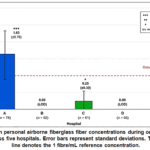 |
Figure 1: Mean personal airborne fiberglass fiber concentrations during orthopedic cast removal across five hospitals. Error bars represent standard deviations. The horizontal line denotes the 1 fibre/mL reference concentration. |
The environmental results are consistent with earlier reports that powered cast removal releases airborne fiberglass fiber near the cutting source.3,4,14 Nevertheless, the pronounced elevation at Hospital A and the lower or non-detectable values elsewhere indicate that exposure was not uniform across the five hospitals. Local conditions, including procedure frequency, room volume, general ventilation, operator technique, and housekeeping, may explain this variability. Still, these determinants were not measured consistently and cannot be evaluated from the study dataset.
Direct comparisons with previous studies require caution because sampling duration, analytical method, cast material, saw operation, and exposure metrics differ. The current measurements demonstrate that appreciable exposure can occur during routine clinical work, but they do not establish that all participating hospitals exceeded an occupational exposure limit. Task-based measurements were therefore interpreted separately from an 8-hour time-weighted exposure limit.
Morphological and Elemental Characterization of Airborne Fiberglass Fibers
SEM examination of selected filter samples identified elongated particles with smooth surfaces and irregular fractured ends. EDX spectra showed silicon and oxygen as the major elements, along with calcium, aluminum, sodium, magnesium, and potassium. This elemental profile is compatible with glass-based fibers used in composite orthopedic casting materials.6,13,17
SEM–EDX complemented PCM by providing morphological and elemental information. Nevertheless, PCM does not identify fiber composition, and SEM–EDX was performed only on selected particles. The findings therefore support the presence of fiberglass-compatible particles but do not establish that every PCM-counted fiber was fiberglass. Likewise, elemental detection of silicon should not be interpreted as confirmation of crystalline silica because crystallinity was not assessed.The observed morphology was used to complement PCM fiber counting by providing information on particle shape and elemental composition. SEM–EDX findings were interpreted as representative of the selected analyzed particles rather than all fibers present on the filters.
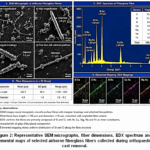 |
Figure 2: Representative SEM micrographs, fiber dimensions, EDX spectrum and elemental maps of selected airborne fiberglass fibers collected during orthopedic cast removal. |
The observed morphology and elemental profile are consistent with the glass component of the fiberglass-reinforced casting material and support the characterization of the exposure. They also provide biological plausibility for mucosal contact and inhalation. Elongated particles and associated dust may mechanically irritate the eyes, skin, and respiratory epithelium; deposited particles may also promote epithelial stress, macrophage activation, and local inflammatory signaling, depending on the deposited dose, dimensions, surface properties, and clearance.7,8,18 However, the present study did not measure inflammatory biomarkers or demonstrate a causal biological pathway. SEM–EDX of selected particles also cannot establish the identity of every fiber counted by PCM.
Respiratory and Irritation Symptoms
Workers routinely involved in cast removal reported a higher prevalence of chronic cough, sputum production, wheezing, eye irritation, and skin irritation than comparison workers (Table 3). Chronic cough showed the strongest association with cast-removal work (OR = 4.55; 95% CI: 2.48–8.37; p < 0.001), followed by sputum production (OR = 2.88; 95% CI: 1.61–5.14; p < 0.001), eye irritation (OR = 2.55; 95% CI: 1.39–4.69; p = 0.002), wheezing (OR = 2.25; 95% CI: 1.24–4.10; p = 0.007), and skin irritation (OR = 1.97; 95% CI: 1.06–3.65; p = 0.031). Nasal irritation and shortness of breath were more frequent among exposed workers, but the differences between groups were not statistically significant.
Table 3: Respiratory and irritation symptoms among healthcare workers
|
Symptom |
Exposed, n (%) | Comparison, n (%) | Crude OR (95% CI) |
p-value |
|
Chronic cough |
97 (77.6) | 35 (43.2) | 4.55 (2.48–8.37) | <0.001 |
| Nasal irritation | 78 (62.4) | 42 (51.9) | 1.54 (0.87–2.72) |
0.134 |
|
Sputum production |
77 (61.6) | 29 (35.8) | 2.88 (1.61–5.14) | <0.001 |
| Wheezing | 59 (47.2) | 23 (28.4) | 2.25 (1.24–4.10) |
0.007 |
|
Eye irritation |
59 (47.2) | 21 (25.9) | 2.55 (1.39–4.69) | 0.002 |
| Skin irritation | 49 (39.2) | 20 (24.7) | 1.97 (1.06–3.65) |
0.031 |
|
Shortness of breath |
37 (29.6) | 16 (19.8) | 1.71 (0.88–3.33) | 0.114 |
Values are n (%). OR, odds ratio; CI, confidence interval. p-values were obtained using Pearson’s chi-square test.
The observed symptom pattern is consistent with irritant exposure. Recent systematic reviews of artificial vitreous fibers, however, report heterogeneous evidence on non-malignant respiratory outcomes, reflecting differences in fiber composition, cumulative exposure, co-exposures, and outcome ascertainment.7,18 Mechanical contact with fibrous and non-fibrous cast particles may contribute to eye, skin, and airway irritation, while deposition in the respiratory tract may stimulate local epithelial and inflammatory responses. These associations should be interpreted cautiously because unadjusted estimates may be influenced by smoking, atopy, prior employment, non-fibrous cast dust, and differences in sex or working hours. The findings therefore indicate an elevated symptom burden among workers involved in cast removal but do not establish an independent causal effect of fiberglass exposure.
Pulmonary Function
Valid spirometry results were available for 134 participants, including 74 exposed and 60 comparison workers. Mean FVC, FEV₁, and FEV₁/FVC did not differ significantly between groups (Table 4).
Table 4: Pulmonary-function parameters in exposed and comparison groups
|
Parameter |
Exposed (n = 74), mean ± SD | Comparison (n = 60), mean ± SD |
p-value |
|
FVC (L) |
3.30 ± 0.75 | 3.37 ± 1.01 | 0.656 |
| FEV₁ (L) | 2.86 ± 0.68 | 2.68 ± 0.91 |
0.206 |
|
FEV₁/FVC (%) |
84.20 ± 6.88 | 82.80 ± 7.26 |
0.258 |
FVC, forced vital capacity; FEV₁, forced expiratory volume in one second; SD, standard deviation. p-values were calculated using Welch’s independent samples t-test.
The absence of significant differences in FVC, FEV₁, and FEV₁/FVC does not rule out transient respiratory irritation or subtle physiological effects. It may reflect genuinely preserved lung function, intermittent rather than continuous exposure, limited statistical power, incomplete spirometry participation, or the use of absolute rather than percentage-predicted values. Cross-sectional spirometry cannot determine whether lung function changed over time. Repeated exposure measurements and longitudinal pulmonary-function assessment would provide stronger evidence for temporal and exposure–response relationships.
Occupational Health Implications
The findings justify a targeted review of controls at locations where elevated airborne fiberglass fiber concentrations were measured. Following the hierarchy of controls, priority should be given to source capture, adequate room ventilation, equipment maintenance, and work practices that minimize dust generation and resuspension. Respiratory and eye protection, protective clothing, worker training, effective housekeeping, and periodic exposure assessment may complement engineering controls. Control recommendations should be proportionate to verified exposure levels and applicable occupational health requirements, rather than based solely on comparison with a generic fiber limit.
Periodic occupational health surveillance may be appropriate for workers who routinely perform cast removal, particularly when a workplace assessment confirms recurrent exposure. Surveillance could include a standardized respiratory questionnaire and technically acceptable spirometry, with a clear referral pathway for workers with persistent symptoms or abnormal findings. The effectiveness of any intervention should be evaluated using repeated exposure measurements and health indicators.
Strengths and Limitations
The study’s strengths include its multicenter clinical setting and the integration of personal and area sampling, PCM fiber counting, SEM–EDX characterization, symptom assessment, and spirometry. Several limitations require careful consideration. First, the number of environmental samples was small and uneven across hospitals; some location-specific results were based on a single observation; and many measurements were below the analytical detection limit. These factors may mean the measurements do not capture day-to-day, temporal, or spatial variability. Second, the cross-sectional design does not establish whether exposure preceded symptoms and cannot support causal inference. Third, symptoms were self-reported and may be affected by recall or reporting bias. Fourth, spirometry was available for only 134 of 206 participants, creating potential selection bias. Fifth, purposive hospital selection may limit generalizability. Sixth, differences in sex and working hours, together with smoking, atopy, and other occupational or environmental exposures, may confound the observed associations. Residual confounding remains possible because multivariable adjustment was not performed for the symptom estimates presented. Finally, SEM–EDX was conducted on selected particles and cannot establish the composition of every fiber counted by PCM.
Conclusion
Routine orthopedic cast removal generated measurable airborne fiberglass fibers, with the highest concentrations recorded in the POP room at Hospital A and lower or non-detectable levels at the other sampled hospitals. Workers involved in cast removal reported a higher prevalence of chronic cough, sputum production, wheezing, eye irritation, and skin irritation, whereas pulmonary function parameters did not differ significantly between groups. SEM–EDX analysis identified elongated particles with elemental profiles consistent with fiberglass materials. The findings support a targeted review of exposure controls in orthopedic cast-removal areas. Nevertheless, the small environmental sample, incomplete spirometry data, and cross-sectional design require cautious interpretation; the observed health differences represent associations and do not establish causation.
Acknowledgement
The authors express their sincere appreciation to the Director General of Health Malaysia and the management of the participating public hospitals for granting permission to conduct this study. The authors also acknowledge the healthcare workers who volunteered to participate in this research. Special thanks are extended to Universiti Kebangsaan Malaysia (UKM) for providing research facilities and technical support, particularly the laboratory staff involved in air sample analysis and SEM-EDX characterization. The authors are grateful to all individuals who contributed to the successful completion of this study.
Funding Sources
The authors received no financial support for the research, authorship, or publication of this article.
Conflict of Interest
The authors declare no conflicts of interest.
References
- Agency for Toxic Substances and Disease Registry (ATSDR).Toxicological Profile for Synthetic Vitreous Fibers. U.S. Department of Health and Human Services, Atlanta, GA.,
- American Conference of Governmental Industrial Hygienists (ACGIH).TLVs and BEIs: Threshold Limit Values for Chemical Substances and Physical Agents and Biological Exposure Indices. ACGIH, Cincinnati, OH.,
- Bakar, Z.A., Rahman, I.A. and Ithnin, A. Dust concentration and awareness of safety and health among orthopaedic clinic staffs in Hospital Kuala Lumpur, Malaysia. IOP Conference Series: Earth and Environmental Science., 2020, 489, 012016.
CrossRef - Bakar, Z.A., Kahar, A.W.M., Rahman, I.A., Ithnin, A. and Senik, N.S. Determination of occupational nuisance dust concentration from the casting room in the public hospital in Kuala Lumpur, Malaysia. AIP Conference Proceedings., 2021, 2339, 020249.
CrossRef - Blanc, P.D. and Torén, K. How much adult asthma can be attributed tooccupational factors? American Journal of Medicine., 2020, 133(6), 602–607.
- Callister, W.D. and Rethwisch, D.G. Materials Science andEngineering: An Introduction. 10th Ed., Wiley, Hoboken., 2020.
- Damien Mc., Ireny Iskandar, Sarah D., Matthew G., Martie van T.,Systematic review and meta-analysis of the epidemiology of man-made vitreous fibres and respiratory health outcomes, Annals of Work Exposures and Health, Volume 69, Issue 4., 2025, Pages 347–359, https://doi.org/10.1093/annweh/wxaf006
CrossRef - Ding, J., Li, J., & Qi, J. Characterization of dental dust particles and their pathogenicity to respiratory system: a narrative review. Clin Oral Invest27., 2023, 1815–1829, https://doi.org/10.1007/s00784-023-04910-w
CrossRef - Goldstein, J.I., Newbury, D.E., Michael, J.R., Ritchie, N.W.M.,Scott, J.H.J. and Joy, D.C. Scanning Electron Microscopy and X-ray Microanalysis. 4th Ed., Springer, New York., 2018.
CrossRef - Graham, B.L., Steenbruggen, I., Miller, M.R., Barjaktarevic, I.Z.,Cooper, B.G., Hall, G.L., Hallstrand, T.S., Kaminsky, D.A., McCarthy, K., McCormack, M.C., Oropez, C.E., Rosenfeld, M., Stanojevic, S., Swanney, M.P. and Thompson, B.R. Standardization of spirometryupdate. American Journal of Respiratory and Critical Care Medicine., 2019, 200(8), e70–e88.
CrossRef - Halanski, M.A. and Noonan, K.J. Cast and splint immobilization: Complications. Journal of the American Academy of Orthopaedic Surgeons., 2008, 16(1), 30–40.
CrossRef - Hull, D. and Clyne, T.W. An Introduction to Composite Materials. 2nd, Cambridge University Press, Cambridge., 1996.
CrossRef - International Agency for Research on Cancer (IARC). Man-Made Vitreous Fibres. IARC Monographs on the Evaluation of Carcinogenic Risks to Humans, Vol. 81. IARC, Lyon., 2002.
- Linsenmeyer, T.A., Smith, D. and Campion, M. Airborne particulate generated during fiberglass cast removal. Archives of Physical Medicine and Rehabilitation,1996, 77, 123–126.
- National Institute for Occupational Safety and Health (NIOSH). NIOSHManual of Analytical Methods (NMAM), Method 7400: Fibres. 5th Ed., NIOSH, Cincinnati, OH., 2019.
- Safe Work Australia. Workplace Exposure Standards for Airborne Contaminants. Safe Work Australia,, 2024.
- Shelby, J.E. Introduction to Glass Science and Technology. 2nd Ed.,Royal Society of Chemistry, Cambridge.,
CrossRef - Suder Egnot N., Allen H., Hazan R., Vater M.F., Denic-Roberts H.,LeClaire R., & Marsh G.M. Systematic review of epidemiological studies evaluating the association between exposure to man-made vitreous fibers and non-malignant respiratory diseases. Regul Toxicol Pharmacol.,2023, 139:105361. doi: 10.1016/j.yrtph.2023.105361, PMID: 36806369.
CrossRef - Scheinberg M., Nihalani S., & Mehta L. Evolution in Casting Techniques: A Narrative Review of Casting Methods, Techniques, and Innovation. Cureus Journal of Medical Science., 2024, 16(2): e53454. doi:10.7759/cureus.53454
CrossRef - Witkowska A, Wiszniewska M, Walusiak-Skorupa J. Rare occupationalrespiratory diseases. Med Pr Work Health Saf. 2020;71(1):89–104. doi:10.13075/mp.5893.00895.
CrossRef - World Health Organization (WHO). Environmental Health Criteria 77:Man-made Mineral Fibres. WHO, Geneva., 1988.
- Wytch, R., Ritchie, I. K., Clayton, R., Gregory, D. W., & Wardlaw,D. Dust emission during cutting of polyurethane-impregnated fiberglass bandages. Prosthetics and Orthotics International., 1988.
CrossRef - Berman, A.T., and Parks, B.G. Casting materials and techniques.In: Rockwood and Green’s Fractures in Adults. Lippincott Williams & Wilkins, Philadelphia., 1990.
 PlumX:
  Views: 1487 Views
  PDF Downloads: 705
 Accepted on: 25 Jul 2026
Second Review by: Dr. Naresh Batham
Final Approval by: Dr. Ravindra M Kumbhare


ISSN Online: 2231-5039