Navigating Advances and Challenges in Pharmaceutical Impurity Characterization and Quantification
 , Rajesh Kumar Sharma1and Bhupendra Singh2
1Teerthankar Mahaveer College of Pharmacy, Teerthankar Mahaveer University, Moradabad, India
2NGI College of Pharmacy, Neelkanth Group of Institutions, Meerut, India
Corresponding Author E-mail:architatiwari68@gmail.com
DOI : http://dx.doi.org/10.13005/ojc/420424
Download this article as:

Impurities are unavoidable foreign materials present in trace amounts in pharmaceuticals. Regulatory authorities like the FDA and EMA set guidelines to control impurity levels, ensuring drug safety and efficacy. Impurity profiling, which includes isolating, identifying, and characterizing impurities, is essential in maintaining these standards. The increasing complexity of drug formulations, due to advanced synthetic methods, novel excipients, and delivery systems like nanoparticles and liposomes, has led to more impurities. Analytical methods such as HPLC, GC, MS, NMR, FTIR, and hyphenated methods are used to detect and quantify impurities with extended accuracy and sensitivity.This review aims to explore both current and advanced methods for impurity detection, with a focus on recent advancements in analytical techniques and the complexity of formulations. It also examines the challenges of impurity detection, considering existing resources and newly updated regulatory guidelines for impurity control. This review aims to highlight the critical need for improved analytical techniques that minimize errors in impurity detection and enhance accuracy. Stringent regulatory guidelines and advanced analytical techniques like HPLC, MS, and NMR are vital for ensuring drug safety and quality. Continuous innovation in impurity analysis will be crucial to meet evolving standards.
KEYWORDS:Complexities of drugs; Genotoxic impurities; Hyphenated techniques; Impurity profiling
Introduction
Overview of impurity profile in Pharmaceuticals
Any component of a newly developed medicinal product that is not an essential component of the chemical entity is considered an impurity according to the International Council on Harmonisation. Tiny, undesirable chemicals that occur in the drug development process, such as API, solvent, or excipients, are known as impurities. In accordance with laws, ensure quality, efficacy, and safety of medications, and minimise dangers to patients and the environment, it is essential to detect trace contaminants. The medication’s efficacy, quality, and safety may be compromised by even a minute quantity of this contaminant.1 The emphasis on quality control has significantly increased in recent years, with both the bulk drug and pharmaceutical industries facing the challenge of consistently delivering top-notch products. Ensuring the purity of active pharmaceutical ingredients involves multiple factors. Raw materials play a crucial role, as their quality directly impacts the final product. The manufacturing process, including methods like crystallization and purification, also influences API purity. Vigorous quality control measures are imperative at every step to maintain the desired quality and purity standards.2,3 Organic, inorganic, residual solvent, and elemental impurities are the four main types of contaminants, as illustrated in Figure 1. Various sources can contribute to the formation of pharmaceutical impurities during manufacture.4 Packaging materials, such as containers, closures, and labels, can also contribute to impurities.5 These impurities may leach into the drug product over time, especially if the packaging materials are not inert or if there are compatibility issues.6 The incompatibility or instability in pharmaceutical formulations due to the interaction of ingredients in the formation of dosage forms, leading to the degradation of certain components. Thiamine is an example of this kind of impurity because, in the formulation of vitamin B complex, thiamine is degraded in the presence of nicotinamide.7 Layers within pharmaceutical products produce no benefits to patients, so strict control over raw materials, equipment, and manufacturing conditions can reduce the introduction of impurities during production. Analytical performances like HPLC and MS are also used to identify and enumerate impurities at trace levels.8 Impurity profiling is the cornerstone of pharmaceutical quality control; it assures ensures efficacy, safety, improves formulation, meets regulatory standards for impurity level in pharmaceuticals, and also helps identify the source of impurity.
The ICH Q3A guidelines provide a thorough explanation of how to conduct impurity profiling on both known and unknown contaminants in new pharmaceutical substances, while the ICH Q3B guidelines deal with contaminants that may have leached into the product during its degradation or interaction with additional ingredients.9 Under investigation impurity profiling gives all possible types of impurities and also different kinds of impurities present in pharmaceutical formulation.10 The objective of this current review is to navigate through currently available and some advanced methods of impurity detection. This review highlights the recent advances in analytical methods for impurity detection, especially discussing the challenges of impurity detection with the available resources. To give an insight into the serious need for such an analytical technique or to improve analytical processes, which can minimize errors in impurity detection and improve the results. This review will give an in-depth insight to the researchers and the educators for the updated information about impurity detection.
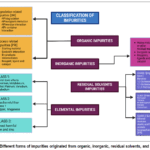 |
Figure 1: Different forms of impurities originated from organic, inorganic, residual solvents, and elements
|
Sources and Types of Impurities
Enantiomeric impurities
The scientific name for these mirrored copies is enantiomers. Due to these enantiomers, the drug results in different pharmacological activities. Some of them are active, less active, or remaining some causes adverse effects. Pharmaceutical companies are increasingly developing drugs that contain only the active enantiomer. This approach can improve drug efficacy and safety. However, the development and process for a single enantiomer drug can be a little costly and complex.6,11
Since opposite enantiomers require particular chiral stationary phases or mobile phases, HPLC, which has been utilised to detect drug ingredient impurities, is incapable of doing chiral analysis without specialised equipment. For this complication, various unique methods including CE-UV12, HPLC-CD13, MEKC-UV14, CZE-UV15 and CZE-LIF16, etc. helps in the separation of enantiomeric portion from chemical moiety.
Teratogenic impurities
Teratogenicity refers to the ability of a substance to cause birth defects by disrupting the normal development of an embryo or fetus. This is the side effect of many drugs like thalidomide.17 Class 2 solvents like acetonitrile, N-dimethyl formamide are dangerous to health and sometime causes irreversible toxicities such as teratogenicity or neurotoxicity.18-20
Genotoxic Impurities
Regulatory body: Endocrine-related carcinogens are defined in the ICH recommendations. ICH S2 (R1) as “a general phrase that pertains to any undesirable alteration in genetic material, taking into account the process by which the alteration is produced.21 To rephrase, genotoxicity is defined as an effect that damages or destroys a cell’s genetic material, specifically its DNA and RNA.22 Because they can cause cancer in humans at extremely low concentrations, possible genotoxic impurities (PGIs) in medications are a major cause for concern. These impurities often arise from reactive functional groups used in the synthesis of pharmaceuticals. Genotoxic impurities (GTIs) in pharmaceuticals can indeed be both organic and inorganic in nature. Alkyl halides, aromatic amines, epoxides, and nitrosamines are some examples of organic impurities, while cadmium, lead, and chromium, etc. are related to inorganic impurities.23-25 Because they can alkylate DNA bases on N-3 of adenine and N-7 of guanine, alkyl halides are regarded as possible genotoxic contaminants that are produced during the production of APIs through undesirable chemical reactions.26-28. Nitrosamines is category in which the amine group is linked with the nitroso group in their structures. They are of major concern because the ICH M7 guidelines classified them as class 1 impurities.29,30 The enzymes epoxide hydrolase and glutathione-S transferase, which are generated during metabolism, are involved in detoxification and the genotoxic activity of epoxides. Direct carcinogens include 2,4-diaminotoluene and 2,4-diaminoethylbenzene, as well as a small number of amines with nitro groups.31-33 Much smaller concentrations of elemental contaminants like As (arsenic), Hg (mercury), Cd (cadmium), and Pb (lead) are hazardous. Lead has been linked to adult cardiovascular problems, elevated blood pressure, reduced cognitive development, and renal tumours. Lead consumption mostly affects the human brain.34
Nitrosamine Impurities
Nitrosamine impurities may get into the formulation through reagents, catalysts, solvents, or raw materials, etc. These impurities are known as carcinogenic and mutagenic because their small exposure can results cancer. This major concern attracts regulatory authorities’ attention towards patients’ safety. In this context, regulatory authorities release the limit of impurities and classify them under class 1 impurities as per ICH guidelines. Various batches of generic drugs and drug products, including sartans and angiotensin II blockers, were voluntarily recalled from the market by the FDA and EMA in July 2018 due to the presence of N-Nitrosodiethylamine (NDEA) and N-Nitrosodimethylamine (NDMA) impurities, which are said to be carcinogenic. By causing genetic mutations, these Nitrosamine impurities affect DNA by causing chromosome breaks, rearrangements, or covalent bindings.35
Focus on controlling genotoxic impurities in pharmaceutical products
Definitive standards for medicinal substances and pharmaceutical products were published by ICH in the late 1990s. U.S. (USFDA), EU (EMA), and Japanese (PMDA) regulatory agencies have all accepted these standards. According to the ICH recommendations, a drug substance with a daily intake of up to 2 g is considered to have impurity levels of up to 0.15% (1500 ppm), or 1 mg. In most cases, no further study is necessary below this threshold. On the other hand, the product could be harmful if the threshold is crossed. In most cases, these limits are enough to detect typical contaminants that are caused by the procedure. Following recommendations from the USFDA and EMA, it was suggested that ICH limits might not be sufficient for genotoxic contaminants.36 The possible health concerns posed by these contaminants necessitate more stringent control measures.
In December 2002, the Safety Working Party (SWP) of the European Committee for Proprietary Medicinal Products published a “Position Paper on the Limits of Genotoxic Impurities” to address gaps in ICH regulations.37 Because of the increased risk of cancer, chromosomal damage, and genetic abnormalities that can result from genotoxic or carcinogenic contaminants, regulatory oversight of these substances has grown in recent years. Since the safety of patients is the main concern of regulatory authorities, the increased focus on genotoxicity in clinical development and drug licensing could cause delays.36 Because of the increased risk of cancer, chromosomal damage, and genetic abnormalities that can result from genotoxic or carcinogenic contaminants, regulatory oversight of these substances has grown in recent years. Since the safety of patients is the main concern of regulatory authorities, the increased focus on genotoxicity in clinical development and drug licensing could cause delays.38 Because there are many other organic chemicals present, although at lesser amounts, this demands analytical equipment that is both very sensitive and selective. In addition, because genotoxic impurities can originate from a variety of sources and include a wide variety of functional groups, it is possible that a single analytical approach will not be adequate to detect them all. Consequently, it may be necessary to choose a combination of analytical procedures. In the past, methods such as gas chromatography (with FID detectors) and HPLC with UV/vis detectors were commonly employed to analyse these contaminants. Mass spectrometers have recently seen a surge in detector applications due to their superior sensitivity and selectivity. Because these contaminants are reactive, it is important to manage them while also protecting the analysers from damage during sample extraction, storage, and analysis.39
ICH guideline M7, which is titled “Assessment and Control of DNA Reactive (Mutagenic) Impurities in Pharmaceuticals to Limit Potential Carcinogenic Risk,” lays out a system for assessing and controlling the dangers of toxic pharmaceutical contaminants. This guideline was created in 2013 to standardise the technical requirements for pharmaceutical registration worldwide. Its purpose is to keep products safe and effective while reducing the possibility of carcinogenic contaminants.
A risk assessment is conducted to determine the appropriate control techniques for genotoxic impurities, according to the ICH M7 guideline. These impurities are characterised according to their propensity to cause genetic mutations or chromosomal damage. [Table 1].
Table 1: Genotoxic impurities potential, risk assessment, and their control strategies
| Class | Definition | Risk Assessment and Control Strategies |
| 1 | Known Carcinogens and Strongly Suspected Carcinogens | Maintain control at or below the permissible limit for each compound |
| 2 | Alerting Structure, DNA Reactivity, and No Carcinogenicity Data | Maintain control within acceptable ranges (standardised or modified TTC) |
| 3 | Alerting Structure, No DNA Reactivity, or Inadequate mutagenicity Data | Perform a bacterial mutagenicity test or keep control levels within permissible ranges (standardised or modified TTC): A class 5 substance is considered nonmutagenic if When class 2 is applied, mutagenicity is established |
| 4 | There is no indication of genotoxicity and no system for alerting | Extravagance as a nonmutagenic impurity |
| 5 | The absence of an alerting structure, insufficient data, or the presence of an alerting structure with enough evidence to prove that the substance is not carcinogenic | Extravagance as a nonmutagenic impurity |
The safety of pharmaceuticals and their compliance with regulations depend on their prompt detection and control. These are chemical compounds with the potential to alter cellular genetic material, which in turn increases the risk of cancer. Guidelines on allowable levels for PGIs in pharmaceuticals are provided by several regulatory authorities with regard to genotoxic impurities.40
Importance of monitoring impurities in pharmaceutical products. Monitoring impurities in drugs is crucial to ensure their quality, efficacy, and safety. Impurities can affect stability, safety, and efficiency of pharmaceuticals, making their identification and control essential in drug development and manufacturing processes. Impurities in pharmaceuticals can originate from the synthesis of API itself, from raw materials like starting materials, solvents, catalysts, or excipients used in formulation, interaction between drug product and its packaging material, or environmental factors, and may also arise from exposure to conditions during transportation that introduce impurities or cause degradation of pharmaceuticals.41 For a pharmaceutical product to be completely safe for human consumption, even the tiniest amount of contaminants must be eliminated from the medication ingredient. Consequently, a crucial aspect of medication creation is the management of contaminants through quantitative or qualitative investigation.42 An assortment of regulatory bodies have put out standards to deal with impurity control, including, but not limited to,10,43
PMDA, ICH, The Canadian Drug and Health Agency, The Australian Department of Health and Ageing Therapeutic Goods, EMA, USFDA.
Regulatory authorities are also focusing not only purity profile of the drug but also on impurity profiling. For the safety and efficiency of drug product different pharmacopoeias like IP, USP, BP, and JP are also revising their monographs for the drug substances every year by introducing the permissible limit of different types of impurities.10
Use of advanced analytical techniques for impurity detection
It is possible to determine trace amounts and learn more about the structure of contaminants using a combination of analytical methods. Many variables, including the synthetic pathway, reaction conditions, starting material quality, reagents and solvents, purification stages, and storage conditions, determine kind and quantity of these contaminants.
Commonly employed for impurity detection and structural elucidation are spectroscopic as well as microchemical methods, such as TLC and GC-MS.44 and techniques like HPLC, GC, MS, and AAS are commonly employed to achieve such high sensitivity and accuracy in detecting trace or ultra-trace levels of impurities or substances present in pharmaceutical products. These methods are indeed critical for ensuring product safety and quality. There are different types of methods employed for the detection and identification of impurities currently in pharmaceutical formulations, as shown in Figure 2.41
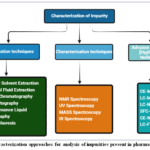 |
Figure 2: Characterization approaches for analysis of impurities present in pharmaceutical drugs |
As a result of recent advancements, LC-MS systems are now commonly utilised for complicated analysis of mixtures containing thermally labile and biologically essential compounds like domperidone. This is due to the mild nature of (APCI and APPI. The sensitivity and adaptability of APCI and APPI make them perfect for use in biochemical and pharmacological analysis. Several ionisation methods are employed in allethrin profiling to improve detection and identification capabilities; allethrin is a cyclopropane carboxylate ester. Combining the strengths of capillary electrophoresis with mass spectrometry, CE-MS allows for extremely precise separations and identifications.45 ESI, APPI, and APCI are all ionisation processes that can be utilised by this procedure. By applying an electric field inside a small capillary, CE-MS enables the high-resolution separation of analytes according to their charge-to-size ratio. Other approaches that can reduce the time needed for impurity quantification are GC/MS/MS, GC/DAD/MS, GC/DAD/MS/NMR, SFC/MS, CE/MS, and HPLC/MS.46 This separation is highly efficient and capable of resolving complex mixtures, including closely related compounds47-49 Table 2 details a few state-of-the-art analytical procedures utilised for detecting enantiomeric and genotoxic contaminants.
Table 2: Analytical Methods Used for Detection of Genotoxic and Enantiomeric Impurities Present in Pharmaceuticals [Fig.3 and Fig. 4]
| Type of Impurity | Drug | Impurity | Analytical Method | Optimized analytical conditions | References |
| Enantiomeric impurities | Magnesium-l-aspartate | d-aspartic acid | CZE-LIF | pH 7.0, 50 mM phosphate BGE, 18 mM (v/v) DMSO, 18 mM HP-β-CD, 20 kV, 25 °C | 50 |
| Alalevonadifloxacin | desfluoro analoglevonadifloxacinN-Boc analog of ALA | LC–MS/MS | 10 mM ammonium formate, C18 (250 x 4.6 mm I.D.) column, pH 2.1 [formic acid, acetonitrile], 295 nm,10 μL, 30°C | 51 | |
| Brivaracetam | (R, S)-brivaracetam,(S, S)-brivaracetam, (R, R)-brivaracetam | LC–MS | 10 mM ammonium bicarbonate :acetonitrile, IG-U (100 × 3.0 mm; 1.6 μm 40°C, 215 nm | 52 | |
| Netarsudil (NTS), latanoprost (LTP), and benzalkonium chloride (BZC) | – | HPLC-DAD | phosphate and sodium pentane sulfonate (pH 3.0) and acetonitrile, Zorbax-SB Phenyl column, flow rate 1.5 mL/min, 254 nm | 53 | |
| Vildagliptin | R-vildagliptin | CZE-UV | 20 mM SBE-α-CD, 75 mM Tris-acetate BGE, pH 4.75, 25 kV, 200 nm, 15 °C | 54 | |
| Montelukast | R, R-trans-montelukast, S, R-cis-montelukast R, S-cis-montelukast | MEKC-UV | 10 mM TM-γ-CD, 20 mM borate BGE, 10 mM SDS, 10 mM SBE-β-CD, pH 9.0, 18 kV, 254 nm, 15 °C | 55 | |
| Sitafloxacin | R,R,S-sitafloxacin, R,S,R-sitafloxacin S,S,R-sitafloxacin | CZE-UV | 15 mM d-phenylalanine, phosphate BGE, pH 4.5, 20 mM CuSO4, 20 mM γ-CD, 15 kV, 25 °C, 297 nm | 56 | |
| Lenalidomide | R-lenalidomide | CZE-UV | pH 6.5, 30 mM SBE-β-CD, 30 mM phosphate BGE, 12 kV, 210 nm, 10 °C | 57 | |
| R-lansoprazole | S-lansoprazole | CZE-UV | 20 mM γ-CD, 20 kV, 17 °C, 210 nm25 mM phosphate BGE, pH 7.0, 10 mM SBE-β-CD, | 58 | |
| S-citalopram | R-citalopram | CZE-UV | pH 7.0, 3 mM CM-β-CD, 25 mM phosphate BGE, 15 kV, 17.5 °C, 230 nm | 59 | |
| Linagliptin | S-linagliptin | CZE-UV | pH 6.10, 70 mM sodium acetate BGE,4.7 mM CM-β-CD, 28 kV, 25 °C, 200 nm | 60 | |
| R-solriamfetol | S-solriamfetol, R-phenylalaninol, S-phenylalaninol | CZE-UV | pH 4.5, 4 mM S-γ-CD, 45 mM Tris-acetate BGE, 19.5 kV, 21 °C, 200 nm | 61 | |
| Valsartan | – | HPLC-CD | ACN-water (0.01% acetic acid) (1:1), 233 nm | 62 | |
| Dextromethorphan | – | HPLC-CD | 23 mM docusate sodium (7:3), 23 mM, ACN-ammonium nitrate, pH*3.4, 280nm | 62 | |
| Rivaroxaban | (R)-Rivaroxaban | HPLC | acetonitrile (ACN): water pH 4.5 (92:8 v/v),(150 × 4.6 mm; 5 µm) column, 0.35 mL/min, 250 nm, 40 °C | 63 | |
| Imeglimin | – | LC-ESI-MS/MS | Methanol and 10 mM ammonium acetate (95:5 v/v ratio),(100 × 4.6 mm, 3 µm), 0.5 ml/minutes | 64 | |
| Solriamfetol | R-solriamfetol | HPLC | 0.15% diethylamine in methanol (MeOH), polysaccharide-based chiral columns, 2-propanol (IPA) or acetonitrile (ACN), 0.6 mL/min flow rate at 20 °C | 65 | |
| Mebeverine | – | LC-MS | acetonitrile: 10 mM ammonium acetate (85:15) 250 mm x 4.6 mm i.d, 5μm, 0.8 mL/min | 66 | |
| Genotoxic impurities | Siponimod | alcohol and aldehyde impurity | LC-MS/MS | ammonium acetate (0.02M), pH 4.2, and methanol in 45:55 (v/v) at 0.5 mL/min flow rate, Waters C18 (150 × 4.6 mm; 5 μm) column, | 67 |
| Febuxostat | – | GC-ECD | flow rate of 1.5 mL min−1,agitated at 250 rpm, Agilent J&W DB-624 (30 m × 0.32 mm, 1.8 μm film thickness), | 68 | |
| Ciprofloxacin | N-nitroso impurities | UPLC-ESI-MS/MS | acetonitrile, and methanol [475:500:25 v/v/v], Agilent Poroshell 120 Aq-C18 column (150 mm × 4.6 mm, 2.7 μm, 0.1% formic acid in a mixture of water, flow rate 0.5 mL/min. | 69 | |
| Posaconazole | BSKZ155, BSKZ117 and BSKZ160 | LC-MS/MS | 0.1% formic acid aqueous solution and acetonitrile as mobile phase, YMC-Triart C18 column, | 70 | |
| Doxofylline | methyl 4-methylbenzenesulfonate (PGI-1),ethyl 4-methylbenzenesulfonate (PGI-2), 2-hydroxyethyl 4-methylbenzenesulfonate (PGI-3), and 2-(4-methylphenyl) sulfonyloxyethyl 4-methylbenzenesulfonate (PGI-4) | (HPLC-UV) | C18 column (250 mm × 4.6 mm, 5 μm), 20% acetonitrile, flow rate of 1.0 mL/min | 71 | |
| Crisaborole | 4-(4-(4-bromo-3-formylphenoxy)-3- formylphenoxy) benzonitrile and 4-(4- Bromo-3-formyl-phenoxy)-benzonitrile | UPLC-MS/MS | column (4.6 mm ×75mm, 3.5 μm), acetonitrile [0.1% trifluoroacetic acid]+ water [0.1% formic acid] | 72 | |
| Crotamiton | Aromatic amine impurities | GC-FID | Column length 30 m, i.d. 0.53 mm, film thickness 1.0 µm, 40 °C | 73 | |
| Ranitidine | NDMAimpurity | LC-HRMS | Ace C18-AR, 3 µm 100 Å, 50 x 4.6 mm, 30 °C, 0.5 mL/min, 3 µL, 0.1% formic acid in water+ 0.1% formic acid in ACN, 3.5 kV | 74 | |
| Metformin | N-nitroso-dimethylamine (NDMA) | (LC-HRMS) | X Select CSH C18 2.5 µm, 3.0 x 150 mm, 0.3 mL/min, 3 µL, 0.1% formic acid in water+ 0.1% formic acid in Methanol, 3.5 kV, 30 °C | 75 | |
| valsartan | N-nitroso Valsartan and methyl N–((2′–(1H–tetrazol-5-yl)-[1,1′-biphenyl]−4-yl)methyl)-N-nitroso-L-valinate | UPLC-MS/MS | C18 column (150 mm × 4.6 mm, 2.5 µm), ammonium acetate aqueous solution (0.01 mol/L), 0.5 mL/min, | 76 | |
| Alogliptin | Pyridine, 3-aminopyridine, N, N-dimethylamine, and 4-dimethylaminopyridine | HPLC–MS | (250 mm × 3.9 mm, 3.5 µm) column, water-methanol (55:45, v/v), 0.5 mL/min | 77 | |
| Imatinib Mesylate | N-(5-amino-2-methylphenyl)-4-(3-pyridyl)-2-aminopyrimidine (IMA), N-(2-methyl-5-nitrophenyl)-4-(pyridin-3-yl) pyrimidin-2-amine (IMN) | LC–MS/MS | C18 (150 × 2.1 mm, 1.7 μm), 0.02 M ammonium formate buffer (pH 3.4) and acetonitrile (containing 0.05% formic acid), 0.4 mL min−1, 40 °C | 78 | |
| Sitagliptin | 7-nitroso-3-(trifluoromethyl)-5,6,7,8-tetrahydro-[1,2,4] triazolo [4,3-a] pyrazine (7-nitroso impurity) | (UPLC-MS/MS) | C18 column (100 mm × 4.6 mm,3.5 µm), 0.12% formic acid in water, with methanol, 0.6 mL/min, 40 °C | 79 | |
| Valsartan | N-Nitrosodimethylamine, N-Nitrosodiethylamine, N-Nitrosoethylisopropylamine, N-Nitrosodiisopropylamine | GC-MS/MS | 30 m x 0.25 mm, 0.5 µm, 70°C for 4 min, 3.0 mL/min, 70 eV in EI mode with 150°C “quadrupole temperature | 80 | |
| Cinnarizine | Cinnamyl chloride and Benzhydryl chloride | LC-MS/MS | C18 column 150× 4.6 mm ,5 μm, 1.0 mL/min flow rate, 0.1% Trifluoroacetic acid in water and 100% acetonitrile, | 81 |
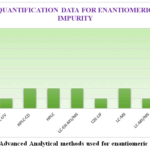 |
Figure 3: Advanced Analytical methods used for enantiomeric impurities |
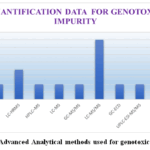 |
Figure 4: Advanced Analytical methods used for genotoxic impurities |
Challenges in impurity profiling
Identifying unknown impurities in pharmaceutical products
If unknown impurities are found in drug compounds or products over certain thresholds, it is essential to identify them to understand their chemical structures; this is an essential step in drug development. Improving synthetic processes and optimising formulations to minimise impurities can be achieved by conducting toxicological implications assessments and understanding the formation mechanisms of these impurities. This method is vital for these endeavours.82 Because they may disturb the efficacy and safety of medication products, unknown contaminants pose a big problem for the pharmaceutical business. Detecting drug contaminants at quantities as low as 0.1% can be a technical nightmare.83 Another obstacle to its identification and purification was the impurity’s instability in acidic chromatographic conditions. Still, you can turn this acidic instability to your advantage by studying the impurity’s deterioration, which will provide you with a wealth of knowledge about its structure.84
Challenges of impurity profiling using HPLC with UV/vis absorbance detection are significant and multifaceted, especially when dealing with analytes that lack suitable chromophores, possess high hydrophilicity, or exhibit ionic characteristics. Many substances do not have chromophores that absorb in the UV/visible range, making them difficult to detect with UV/vis absorbance detectors. Highly hydrophilic or ionic compounds often exhibit poor retention on conventional reversed-phase (RP) HPLC columns, leading to inadequate separation.85 In pharmaceuticals, having enantiomers, formidable analytical challenges are faced during separation, as the D/L isomers have identical physicochemical properties except for the stereochemical configuration.86 Drugs with enantiomers face difficulties in enantioseperations because of the choice of suitable chiral selectors and advanced understanding of underlying chiral recognition principles.87 Absence of reference standard is another challenge in impurity profiling because reference standards are needed not only for API in dosage form, but also required for impurity.88
Ensuring consistency in impurity profiling across different batches of drugs
When any drug is manufactured, it is processed in discrete “batches” of materials. Because exact replication of production conditions is nearly impossible, variations in impurity content will occur among final products from the same source. These variations are categorized as inter-batch variation and intra-batch variation. Inter-batch variation refers to differences in impurity profiles between different batches of the same drug produced by the same manufacturer or laboratory. Which are caused by raw material differences, process conditions, equipment differences, and human factors.89 Impurity standards play a critical role in ensuring consistency in impurity levels across different batches of pharmaceutical products, thereby maintaining product quality and safety. By adhering to these standards, manufacturers can ensure that impurity levels remain consistent across different batches, protecting patient health and meeting regulatory requirements.90 Maintaining consistent impurity profiles across different batches is essential for drug quality, safety, and efficacy. Through rigorous impurity profiling, manufacturers can identify and control impurities, ensuring that each batch meets the required standards and provides safe and effective treatment for patients.91
Addressing the impact of impurities on drug safety and efficacy
Ensuring the development of pharmaceutical items of high excellence is crucial for preserving the safety and effectiveness of drugs. Regulatory bodies and the manufacturing sector share this duty, as they are the ones responsible for establishing and enforcing rigorous quality standards and specifications. The clinical efficacy and safety of pharmaceutical drugs can be greatly exaggerated through a number of risk factors. These problems encompass issues with product quality, mistakes in pharmaceutical administration, and recognised side effects or adverse drug reactions (ADRs).92 These problems encompass issues with product quality, mistakes in pharmaceutical administration, and recognised side effects or ADRs. The recall of topical medicines Tetracycline-ABC and Dibecline that occurred on June 14, 2017, in the US, as a result of Phillips Company, emphasises how important it is to follow correct processing procedures while making pharmaceuticals. An error in processing that could have serious consequences for patients led to this recall.93
Recent developments in the impurity profile of Pharmaceuticals
The increasing complexity of drug formulations is leading to more impurities
The deterioration of drugs is caused by their intrinsic properties. Drug degradation occurs in formulated dosage forms because of the drug’s intrinsic properties. Depending on the inherent properties of the medicinal ingredient, the degradation process might be quite complex and involve either one or more chemical processes. Several factors can affect the degradation process. One of these is the formulation of the dosage form, which affects the product content. b. The procedure followed during the production of the dosage form. c. Environmental variables such as temperature, humidity, and light intensity during storage.
The pharmacological substance’s physical form (e.g., amorphous or crystalline) might also influence the degradation process’s characteristics. In order to minimise drug degradation and ensure stability and efficacy of the formed product, it is essential to understand the inherent features of the medicinal component and the functions of various excipients.94 The drug substance or formulation proteins could degrade or be altered by even minute amounts of reactive contaminants in excipients. Because of their enormous size and intricate structure, proteins are especially vulnerable to changes brought about by reactive excipient contaminants. Despite their minute concentrations, these contaminants pose a threat to the active medication’s stability and quality since they react with it and destabilise it as the product ages. Evaluating and understanding the potential implications of reactive impurities in the excipients used is crucial during medicinal product development.95
Herbal formulations have excellent therapeutic potential with fewer or no side effects, and they are also popular as traditional medicines that originate from plants. Tablets, capsules, powders, teas, and extracts from both fresh and dried plants are just a few of the various forms that phytoconstituents—active substances found in plants—are available in. Due to its accessibility and low cost, many communities depend on traditional medicine and natural remedies. Many problems with the effectiveness, standardisation, efficacy, and production processes of herbal formulations have arisen as a result of improper testing. In order to guarantee the safety of these items, results of research indicate that adequate quality inspections utilising innovative analytical techniques are necessary.96 Microbiological and degrading contamination, which increases formulation contaminants, can easily compromise liquid dosage forms.
Teva Pharmaceuticals USA recalled 60 mL bottles of Fluocinonide Topical Solution USP, 0.05%, because of deterioration and contaminants that caused the product to be sub-potent. Even though pre-formulation experiments were successful, this issue shows that different dosage forms can affect the drug’s stability.97 The absorption of environmental moisture is a major concern for pharmaceutical and nutraceutical solids that are very hygroscopic. Chemical degradation and solid-state transitions are two mechanisms that might cause substantial changes to their physicochemical properties due to their water-absorbing tendency. Hydrolysis, oxidation, photodegradation, and solid-state transitions such as polymorphic transformation, amorphous to crystalline transition, caking, and agglomeration all contribute to drug degradation, which in turn reduces the amount of active ingredients in the formulation and introduces impurities into the product. The therapeutic efficacy and longevity of these products may be negatively impacted by these alterations.98
Before or during the creation of pharmaceutical formulations, numerous investigations have been conducted to identify degradation products and the processes by which they degrade. The complexity of degradation studies can increase significantly when a combination product has dosage forms of more than one API. Degradation product may interfere in the formulation due to the interaction of API with solvent impurities, residual solvents, excipients, excipient impurities, salt, preservatives, excipient- preservative interaction, excipient degradation, extractables, leachable, and metal-ion catalyzed reaction, etc.94
In many instances, there are not enough reference standards available for all probable impurities. Identification and quantification of impurities become more difficult without reference standards. It is challenging to separate and quantify impurities or degradation products from analytes of interest due to coelution when they elute at a similar retention time as the analyte of interest.99
Regulatory requirements for impurity profiling
Impurity profiling, in addition to the purity profile, is essential to monitor a safer drug to reach the markets with high therapeutic effect, with no toxicity and without any side effects, because the presence of a minute amount of impurity results in low therapeutic effect, deterioration of the pharmaceutical drug product, and unstable product.100 To establish a thorough framework for the assessment and management of contaminants in medicinal substances and pharmaceutical goods, numerous national and regional standards have been put out. These regulations ensure that pharmaceuticals are of high quality, effective, and safe standards. Table 3 shows that regulatory restrictions are crucial in ensuring the safety and quality of pharmaceutical products. Impurities in APIs or DPs can significantly impact the efficacy and safety of medications. As a result, regulatory bodies such as the FDA or EMA have established stringent standards for pharmaceutical impurity levels.4
Table 3: Regulatory guidelines and their current revisions
| Section | Guidelines | Year | Current Revisions | |
| Q3 | A[R2] | Give Directions, Identify, and Qualify Impurities in New Medicinal Substances | 25 October 2006 | The revisions aimed to clarify inconsistencies, revise the decision tree, harmonize with the ICH Q3B Guideline, and address editorial issues. |
| B [R2] | Using chemical synthesis, create a new drug substance; then, identify and qualify any impurities in the product. | 2 June 2006 | The revision helped to clarify inconsistencies, align with updated scientific understanding, and ensure consistency with related guidelines, such as ICH Q3A.Ensure the guideline remains up-to-date and harmonized with related guidelines, maintaining high standards of quality in pharmaceuticals. | |
| C [R9] | Recommends Guidelines for an acceptable amount of Residual Solvents | 24 January 2024 | Revisions have been made to include new solvents and update PDE levels based on emerging toxicological information. | |
| D [R2] | Recommend Guidelines for an acceptable amount of Elemental Impurities |
|
Correction of Permitted Daily Exposures (PDEs) for Gold, Silver, and Nickel.Gold and Silver monographs have been updated.Cutaneous and transcutaneous routes for elemental impurity addition with restrictions. |
For NDAs, ICH has produced the Q3B (R2) guideline, which provides recommendations for addressing drug product impurities.
However, it’s noted that this guideline is also applicable to abbreviated ANDAs, providing a framework for assessing and controlling impurities. Regulatory agencies such as EMA, FDA, and ICH have published and revised regulations regarding genotoxic, mutagenic, and carcinogenic impurities. These guidelines, updated in 2006, 2008, and 2017, respectively, outline procedures for assessing, controlling, preventing, and reducing impurities in drug products. To provide a safe intake limit for unstudied substances with low carcinogenicity or other hazardous effects. Many marketing applications consider an exposure level of 1.5 μg per person per day (TTC) for each contaminant to be an acceptable qualification criterion.101 Concerns about genotoxicity and carcinogenicity are typically not warranted for contaminants below this level. An important guideline for the management of residual solvents in APIs, excipients, and medicinal products is ICH Q3C. It provides information on how to identify and handle solvents that pose a risk of cancer and genetic damage in the pharmaceutical industry by classifying them according to these hazards. 83, 102
Overview of guidelines from regulatory bodies
Regulatory agencies from various countries, such as the FDA in the USA, EMA, TGA in Australia, MHRA in the UK, and ICH, place a significant emphasis on impurity testing in APIs and pharmaceutical products globally. This stringent requirement aims to ensure the safety and efficacy of pharmaceutical products.103 To aid in the preparation of marketing authorisation applications for human medicines, EMA offers scientific recommendations on contaminants in pharmaceuticals and pharmaceutical ingredients. In order to guarantee the safety and effectiveness of medicinal products, these standards make sure that any contaminants that may form during production, storage, or interactions with packaging materials are detected, measured, and managed.104 In Q3A-Q3E, the ICH provides the standards for contaminants. The most recent update to the ICH recommendations for contaminants is detailed in Table 4.
Table 4: Purpose of Regulatory requirements and scientific/technical demands for impurity profiling
| Aim | Regulatory requirements |
| Ensure Compliance with Standards | Maintain impurity levels within regulatory limits. |
| Address Regulatory Queries | Respond to specific questions or concerns raised by regulatory agencies regarding impurities. |
| Facilitate Cleaning Validation | Develop procedures to ensure equipment is adequately cleaned to prevent cross-contamination of impurities. |
| Ensure Batch Consistency | Ensure that each production batch maintains consistent impurity profiles. |
| Support Risk Assessment | Provide data to support risk assessments regarding impurity profiles. |
| Document and Report Impurities | Provide detailed documentation for regulatory submissions. |
| Develop Control Strategies | Implement measures to control and minimize impurities during manufacturing. |
| Assess Toxicological Impact | Evaluate the potential toxic effects of impurities on patient safety. |
| Identify and Quantify Impurities | Determine the type and amount of impurities present in APIs and DPs. |
| Technical Demands | |
| Investigate Degradation Products | Identify impurities that arise from the degradation of APIs or DPs over time. |
| Support Shelf-life Determination | Provide data to determine and justify the shelf-life of the drug product. |
| Investigate New Synthesis Routes | Explore how different synthesis routes impact impurity profiles and optimize accordingly. |
| Optimize Formulation Stability | Study how impurities affect the stability of the final drug product. |
| Enhance Process Understanding | Gain deeper insights into the manufacturing process to identify sources of impurities. |
| Improve Analytical Methods | Develop and refine analytical techniques for better detection and quantification of impurities. |
Importance of setting impurity limits in pharmaceutical products
The main goal of impurity profiling is indeed focused on the control approaches of chemical and physical changes in APIs and drug products throughout the drug development process. These control strategies are vital for ensuring both the safety and efficacy of drugs. Impurities can pose significant safety risks, including toxicity, carcinogenicity, and allergic reactions. By profiling impurities, pharmaceutical companies can identify and control these harmful substances, ensuring that only safe levels of impurities are present in the final product. By assessing how impurities may affect the physical and chemical stability of a drug, manufacturers can predict potential performance changes. This assessment is crucial for ensuring that the drug remains effective and safe over its shelf life.
Impurity profiling is not a one-time activity but a continuous process throughout the drug’s lifecycle. It includes regular monitoring to detect any new impurities that may arise due to changes in manufacturing processes or environmental factors.105 Impurities in APIs have the potential to greatly impact the bioavailability, safety, and effectiveness of these substances.
Regulatory bodies like the US FDA and ICH have established strict guidelines and limits for allowable levels of impurities in APIs to guarantee the highest quality of pharmaceutical products.106 Indeed, the ICH recommendations give a wealth of information regarding the various pharmaceutical impurity categories and the permitted levels for each. In the ICH guideline, you can find further details on the different kinds of impurities and the maximum allowable levels in pharmaceutical drug products and drug substances. The aforementioned document’s Sections Q3A, Q3B, Q3C, and Q3D are concerned with chemical substances, as well as the requirements, testing protocols, and approval standards for novel medicinal drugs and pharmaceutical goods.36, Q6B, M7, and S9 all pertain to biotechnological and biological product specifications, testing procedures, and acceptance criteria, intending to minimise carcinogenic risk from DNA-reactive (mutagenic) impurities in pharmaceuticals.76 Drug safety and efficacy are dependent on pharmaceutical contaminants being effectively reduced and controlled. The goal of this procedure is to reduce patient risk of adverse health effects by setting impurity limits based on safety considerations. Commonly, these restrictions are based on maximum daily exposure levels. The TTC, Acceptable Intake (AI), Permissible Daily Exposure (PDE), and Staged TTC are important techniques in this field.107
Impurities in drug materials can significantly impact the safety and efficacy of pharmaceuticals. Physiologically highly active or toxic impurities have the potential to contribute to the drug’s side-effect profile, potentially making it inconsistent and unpredictable. This variability in the impurity profile, which can arise from differences in synthesis routes and other manufacturing factors, poses a risk to drug safety and patient health.108
The ICH Q3A/B guidelines primarily focus on quality aspects, setting limits on impurities based on their potential impact on product quality. On the other hand, ICH Q3C emphasizes safety considerations, establishing limits for specified and unspecified impurities to ensure patient safety[Table 5] .83,109 To determine if a particular impurity or a specific impurity profile is biologically safe at defined concentrations, it is necessary to qualify the impurity by collecting and analysing relevant data. When an impurity satisfies at least one of these criteria, we say that it is qualified. The levels and proposed acceptance criteria are within the range of what is found in human drug products approved by the FDA. Being a significant metabolite of the drug substance, they are also supported by scientific literature. Additionally, they have not been found to exceed the levels evaluated in comparative in vitro genotoxicity studies.
The ICH Q3A(R2) guidelines for medicinal substances and the ICH Q3B(R2) guidelines for medicinal products, as shown in Table 5, provide the qualification requirements. These cutoffs are derived from the highest recommended daily dosage of the medicinal compound or product.44
Table 5: Qualification threshold for drug substance and drug product110
| Maximum Daily Dose (MDD) | Identification Threshold | Reporting Threshold | Qualification Threshold |
| ≤ 2 g/day | 0.10% or 1.0 mg/day intake (whichever is lower) | 0.05% | 0.15% or 1.0 mg/day intake (whichever is lower) |
| > 2 g/day | 0.05% | 0.03% | 0.05% |
Establishment of safety-based impurity limits in medicinal products is crucial for ensuring their safety and effectiveness. These limits are designed to control the presence of impurities, which could otherwise pose significant health risks to patients.111
Challenges in meeting regulatory requirements for impurity profiling
Pharmaceutical companies aiming to register their products globally face significant challenges due to varying regulatory requirements across various regions. In the context of pharmaceutical manufacturing, controlling elemental impurities such as lead is crucial to ensure the safety and efficacy of drug products. Lead, often used as a catalyst in drug synthesis, is classified as a human toxicant under the ICH Q3D guideline, which sets a permissible daily exposure (PDE) limit of 0.5 parts per million (ppm). However, different countries may adopt varying standards for allowable impurity levels. The case studies explore these challenges by comparing the registration process in two hypothetical regions:
Region 1 (Country A) and Region 2 (Country B).112 Under ICH Q3D guidelines, lead is a class-1 elemental impurity, which is regarded as highly toxic. As specified in the guideline, 0.5 ppm is the maximum allowable PDE for lead. The lead concentration was controlled within 0.5 ppm by Country A based on ICH safety specifications. Country B’s decision to tighten the specification limit for lead to 0.1 ppm, following its regional regulatory body’s suggestion, is based on the rationale that lead offers no therapeutic benefits and poses significant health risks. In order to tighten the lead specification limit to 0.1 ppm by country B, as advised by its regional regulatory body, has necessitated the addition of a new step has been added in the API manufacturing process to fully scavenge lead. This added step, while crucial for ensuring compliance with the new safety standards, has led to increased manufacturing costs and extended production times.112
Conclusion
In conclusion, impurity profiling is a critical aspect of pharmaceutical development and manufacturing. Ensuring that impurities are monitored, controlled, and within regulatory limits is essential for producing safe, effective, and high-quality pharmaceutical products. The improved analytical technologies have tremendously enhanced the ability to identify impurities at very low concentrations. High-performance liquid chromatography (HPLC), gas chromatography (GC), mass spectrometry (MS), nuclear magnetic resonance (NMR) and a number of hyphenated methods (LC-MS/MS, GC-MS/MS, etc)113 have greatly increased sensitivity, specificity, and accuracy of analysis of impurities. To regulate the amount of impurities in pharmaceutical products, regulatory agencies in the world, including the International Council for harmonisation (ICH), U.S. Food and Drug Administration (FDA), and European Medicines Agency (EMA), have put precise guidelines including ICH Q3A, Q3B, Q3C, Q3D, and ICH M7. These guidelines offer a standardized system of identifying and qualifying contaminants and risk evaluation using toxicological thresholds and exposure limits. In spite of the great improvements, there are still a number of challenges in the profiling of impurities. These are the identification of unknown impurities, absence of reference standards, co-elution in chromatographic methods and difference in impurity profile among manufacturing batches. Moreover, the growing frequency of the genotoxic and nitrosamine impurities has increased the necessity of more sensitive analytical techniques and the effective risk assessment strategies30, 50. The constant observation of impurities, as well as process optimization and high-quality control measures, is thus necessary to reduce possible risks of pharmaceutical impurities.
The further development of impurity profiling will be oriented on introducing high-resolution analytical methods, automation, data analysis through artificial intelligence, and green analytical chemistry methods. The introduction of Quality by Design (QbD) principles and sophisticated process analytical technologies (PAT) can also help to improve the capacity of predicting, monitoring, and controlling impurities in the pharmaceutical production114. All these developments will enhance quality assurance systems in the pharmaceutical industry and promote production of safer, effective, and high-quality medicines in the healthcare sector of the world.
Acknowledgement
I extend my sincere thanks to my co-supervisor, Dr. Bhupendra Singh, for their invaluable guidance and feedback, which were crucial in shaping this review. I am also grateful to my supervisor, Dr. Rajesh Sharma, for their insightful discussions and suggestions that enhanced the quality of the manuscript. Special thanks to Teerthankar Mahaveer University, Moradabad, for their essential resources and support.
Funding Sources
The author(s) received no financial support for the research, authorship, and/or publication of this article.
Conflict of Interest
The author(s) do not have any conflict of interest.
Data Availability Statement
This statement does not apply to this article.
Ethics Statement
This research did not involve human participants, animal subjects, or any material that requires ethical approval.
Authors’ Contributions
Bhupendra Singh: Conceptualization, edited the final version of the manuscript;
Archita Tiwari: Data collection, write the original version of the manuscript.
Rajesh Sharma: Supervised the complete manuscript.
References
- Sonal Jesa Dsouza, D. S., R Narayana Charyulu, MP Gowrav and HK Pradeep, mpurities in Drug Substance-An Overview of ICH Q3A, Q3C and M7 Guidelines. international journal of pharmaceutical investigation 10 april, 2024, 14 (2).
CrossRef - Venkatesan, P.; Valliappan, K. J. J. o. p. s.; research, Impurity profiling: theory and practice. 2014, 6 (7), 254.
- Görög, S. J. T. T. i. A. C., The importance and the challenges of impurity profiling in modern pharmaceutical analysis. 2006, 25 (8), 755-757.
CrossRef - Liu, K.-T.; Chen, C.-H., Determination of impurities in pharmaceuticals: why and how? In Quality management and quality control-new trends and developments, IntechOpen London, UK: 2019; pp 1-17.
CrossRef - Tegeli, V.; Gajeli, G.; Chougule, G.; Thorat, Y.; Shivsharan, U.; Kumbhar, S. J. I. J. o. D. F.; Research, Significance of impurity profiling: A Review. 2011, 2 (4), 174-195.
- Pilaniya, K.; Chandrawanshi, H. K.; Pilaniya, U.; Manchandani, P.; Jain, P.; Singh, N., Recent trends in the impurity profile of pharmaceuticals. Journal of advanced pharmaceutical technology & research 2010, 1 (3), 302-10.
CrossRef - Ayre, A.; Varpe, D.; Nayak, R.; Vasa, N. J. A. R. P. B., Impurity profiling of pharmaceuticals. 2011, 1 (2), 76-90.
- Holm, R.; Elder, D. P., Analytical advances in pharmaceutical impurity profiling. European Journal of Pharmaceutical Sciences 2016, 87, 118-135.
CrossRef - Maggio, R. M.; Calvo, N. L.; Vignaduzzo, S. E.; Kaufman, T. S., Pharmaceutical impurities and degradation products: Uses and applications of NMR techniques. Journal of Pharmaceutical and Biomedical Analysis 2014, 101, 102-122.
CrossRef - Ruhela, G.; Kaushik, D. J. I. J. o. P. S.; Research, Regulatory Aspects for Impurity Profiling of Pharmaceutical Products: An Overview. 2017, 8 (7), 2808-2814.
- Xu Yang, X. Y.; Shi LiXuan, S. L.; Guan Tian, G. T.; Zhong SuYi, Z. S.; Zhou XueSi, Z. X.; Li DongMei, L. D.; Guo CuiXia, G. C.; Yang YuXuan, Y. Y.; Wang XiangNan, W. X.; Li ZhangYan, L. Z., Rapid separation of enantiomeric impurities in chiral molecules by a self-referential weak measurement system. 2018.
CrossRef - Hartung, S.; Minkner, R.; Olabi, M.; Wätzig, H. J. T. T. i. A. C., Performance of capillary electrophoresis instruments–state of the art and outlook. 2023, 163, 117056.
CrossRef - Makino, Y.; Urano, Y.; Nagano, T. J. J. o. C. A., Impurity profiling of ephedrines in methamphetamine by high-performance liquid chromatography. 2002, 947 (1), 151-154.
CrossRef - de Koster, N.; Clark, C. P.; Kohler, I. J. E., Past, present, and future developments in enantioselective analysis using capillary electromigration techniques. 2021, 42 (1-2), 38-57.
CrossRef - Řemínek, R.; Foret, F. J. E., Capillary electrophoretic methods for quality control analyses of pharmaceuticals: A review. 2021, 42 (1-2), 19-37.
CrossRef - Bolshakov, D.; Amelin, V. J. J. o. A. C., Capillary Electrophoresis in Assessing the Quality and Safety of Foods. 2023, 78 (7), 815-855.
CrossRef - Aral, H.; Vecchio-Sadus, A., Lithium: Environmental Pollution and Health Effects. In Encyclopedia of Environmental Health (Second Edition), Nriagu, J., Ed. Elsevier: Oxford, 2011; pp 116-125.
CrossRef - Jain, A.; Sharma, S. J. M. I. J. P. S., Recent trends in impurity profiling of pharmaceutical products. 2017, 3, 1-6.
- Dhangar, K. R.; Jagtap, R. B.; Surana, S. J.; Shirkhedkar, A. A. J. J. o. t. C. C. S., Impurity profiling of drugs towards safety and efficacy: theory and practice. 2017, 62 (2), 3543-3557.
CrossRef - Patil, P. P.; Kasture, V. S.; Prakash, K. V. J. I. J. P. C., Impurity profiling emerging trends in quality control of pharmaceuticals. 2015, 5 (01), 1-10.
- Patel, A. B.; Asnani, A. H.; Vyas, A. J.; Patel, N. K.; Patel, A. I.; Lumbhani, D. A. N. J. A. J. o. P. R., A brief review on genotoxic impurities in pharmaceuticals. 2021, 11 (3), 187-193.
CrossRef - POUNIKAR, A. R.; UMEKAR, M. J.; GUPTA, K. R. J. A. J. o. P.; Research, C., Genotoxic impurities: an important regulatory aspect. 2020, 10-25.
CrossRef - Jurowski, K.; Krośniak, M. J. T., The human health risk assessment of heavy metals impurities (Cd and Pb) in herbal medicinal products as menthae piperitae tinctura (Mentha× piperita L., folium) available in pharmacies from Poland. 2022, 10 (5), 273.
CrossRef - Shallan, A. I.; Abdel-Hakim, A.; Hammad, M. A.; Abou El-Alamin, M. M., Spectrofluorimetric determination of selected genotoxic impurities in pharmaceutical raw materials and final products. Scientific Reports 2022, 12 (1), 15319.
CrossRef - Patel, H. B.; Dave, R.; Vadariya, S.; Hirpara, H., A Brief Review on Genotoxic impurities in Pharmaceuticals for the identification, control and determination in drug substances.: A Review.
- Bolt, H. M.; Gansewendt, B. J. C. r. i. t., Mechanisms of carcinogenicity of methyl halides. 1993, 23 (3), 237-253.
CrossRef - Szekely, G.; Amores de Sousa, M. C.; Gil, M.; Castelo Ferreira, F.; Heggie, W. J. C. r., Genotoxic impurities in pharmaceutical manufacturing: sources, regulations, and mitigation. 2015, 115 (16), 8182-8229.
CrossRef - Sobol, Z.; Engel, M.; Rubitski, E.; Ku, W.; Aubrecht, J.; Schiestl, R. J. M. R. G. T.; Mutagenesis, E., Genotoxicity profiles of common alkyl halides and esters with alkylating activity. 2007, 633 (2), 80-94.
CrossRef - Pal, D. J. C. P. A., A Review on N-nitrosamine Impurity. 2024, 20 (1), 2-11.
CrossRef - Paglialunga, S.; van Haarst, A., The Impact of N-nitrosamine Impurities on Clinical Drug Development. Journal of Pharmaceutical Sciences 2023, 112 (5), 1183-1191.
CrossRef - Snodin, D. J. J. O. p. r.; development, Genotoxic impurities: from structural alerts to qualification. 2010, 14 (4), 960-976.
CrossRef - Jouyban, A.; Parsa, H. J. T.; testing, D., Genotoxic impurities in pharmaceuticals. 2012, 387-417.
CrossRef - Khadangale, V.; Patel, V. P.; Mandlik, P.; Nalkar, B., SCOPE OF FINDING GENETOXIC IMPURITIES IN PHARMACEUTICALS. 2020.
- Maithani, M.; Raturi, R.; Sharma, P.; Gupta, V.; Bansal, P., Elemental impurities in pharmaceutical products adding fuel to the fire. Regulatory Toxicology and Pharmacology 2019, 108, 104435.
CrossRef - Shaikh, T., Nitrosamine impurities in drug substances and drug products. 2020.
- Bercu, J. P.; Dobo, K. L.; Gocke, E.; McGovern, T. J. J. I. J. o. T., Overview of genotoxic impurities in pharmaceutical development. 2009, 28 (6), 468-478.
CrossRef - Robinson, D. I. J. O. P. R.; Development, Control of genotoxic impurities in active pharmaceutical ingredients: a review and perspective. 2010, 14 (4), 946-959.
CrossRef - Sharma, A., Review on identification and quantification of genotoxic impurities.
- Dr Sol Bobst (ToxSci Advisors LLC), G. S. I. T., Genotoxic impurities in pharmaceutical products. European Pharmaceutical review 20 December 2019, (6).
- Reddy, A. V.; Jaafar, J.; Umar, K.; Majid, Z. A.; Aris, A. B.; Talib, J.; Madhavi, G., Identification, control strategies, and analytical approaches for the determination of potential genotoxic impurities in pharmaceuticals: a comprehensive review. Journal of separation science 2015, 38 (5), 764-79.
CrossRef - Ahuja, S. S., Assuring quality of drugs by monitoring impurities. Advanced drug delivery reviews 2007, 59 (1), 3-11.
CrossRef - Primer, A., Pharmaceutical Impurity Analysis Overview. Agilent Technologies: USA, 2018.
- Aleluia, A. C. M.; Nascimento, M. d. S.; dos Santos, A. M. P.; dos Santos, W. N. L.; de Freitas Santos Júnior, A.; Ferreira, S. L. C., Analytical approach of elemental impurities in pharmaceutical products: A worldwide review. Spectrochimica Acta Part B: Atomic Spectroscopy 2023, 205, 106689.
CrossRef - Prabu, S. L.; Suriyaprakash, T. J. I. J. P. S. R. R., Impurities and its importance in pharmacy. 2010, 3 (2), 66-71.
- Shah, M.; Patel, N.; Tripathi, N.; Vyas, V. K., Capillary electrophoresis methods for impurity profiling of drugs: A review of the past decade. Journal of Pharmaceutical Analysis 2022, 12 (1), 15-28.
CrossRef - Ahuja, S. J. S. S.; Technology, Overview: isolation and characterization of impurities. 2004, 5, 1-25.
CrossRef - Bhagwat Ashlesha, B.; Khedkar, K. J. A. J. P. R. D., Impurity Profiling: A Review. 2022, 10, 135-143.
CrossRef - Mangamma, D. K.; Kumar, B. A.; Priyanka, Y. L.; Veneela, A. S. J. W. J. o. P. R., Impurity Profiling of Pharmaceuticals–A Review. 2019, 8, 429.
- Boob, D. N.; Navale, S. D.; Mahale, M.; Chavan, M. J. J. A. J. o. P. R., A Review on Impurities Profiling in Pharmaceutical Analysis. 2003, 3, 29-31.
- Orlandini, S.; Hancu, G.; Szabó, Z. I.; Modroiu, A.; Papp, L. A.; Gotti, R.; Furlanetto, S., New Trends in the Quality Control of Enantiomeric Drugs: Quality by Design-Compliant Development of Chiral Capillary Electrophoresis Methods. Molecules (Basel, Switzerland) 2022, 27 (20).
CrossRef - Patil, K. R.; Rane, V. P.; Ahirrao, V. K.; Yeole, R. D., Impurity Profiling of a Novel Anti-MRSA Antibacterial Drug: Alalevonadifloxacin. Journal of Chromatographic Science 2020, 58 (10), 951-960.
CrossRef - Baksam, V. K.; Nimmakayala, S. J. A. C. E., Development of HPLC method for isomeric impurities of key starting material of novel oral anticoagulant drug; Edoxaban Tosylate Monohydrate. 2024, 2326-2326.
CrossRef - Ashour, H. K.; Korany, M. A.; Abdelhamid, A. G.; Belal, T. S.; Gawad, D. A., HPLC-DAD method for concurrent estimation of netarsudil, latanoprost and benzalkonium chloride: Stability indicating study, impurity separation, assay of ophthalmic preparations and greenness/whiteness valuation. Microchemical Journal 2024, 204, 110929.
CrossRef - Kazsoki, A.; Fejős, I.; Sohajda, T.; Zhou, W.; Hu, W.; Szente, L.; Béni, S. J. E., Development and validation of a cyclodextrin‐modified capillary electrophoresis method for the enantiomeric separation of vildagliptin enantiomers. 2016, 37 (10), 1318-1325.
CrossRef - Flor, S.; Huala Juan, M.; Tripodi, V.; Lucangioli, S. J. E., Development of an enantioselective capillary electrophoretic method for the simultaneous determination of montelukast enantiomeric and diastereoisomeric forms and its main degradation product. 2016, 37 (17-18), 2420-2428.
CrossRef - Meng, R.; Kang, J. J. J. o. C. A., Determination of the stereoisomeric impurities of sitafloxacin by capillary electrophoresis with dual chiral additives. 2017, 1506, 120-127.
CrossRef - Szabó, Z. I.; Foroughbakhshfasaei, M.; Gál, R.; Horváth, P.; Komjáti, B.; Noszál, B.; Tóth, G. J. J. o. S. S., Chiral separation of lenalidomide by liquid chromatography on polysaccharide‐type stationary phases and by capillary electrophoresis using cyclodextrin selectors. 2018, 41 (6), 1414-1423.
CrossRef - Papp, L. A.; Hancu, G.; Gyéresi, Á.; Kelemen, H.; Szabó, Z. I.; Noszál, B.; Dubský, P.; Tóth, G. J. E., Chiral separation of lansoprazole and rabeprazole by capillary electrophoresis using dual cyclodextrin systems. 2019, 40 (21), 2799-2805.
CrossRef - Budău, M.; Hancu, G.; Muntean, D. L.; Papp, L. A.; Cârje, A. G.; Garaj, V. J. C., Enantioseparation of citalopram enantiomers by capillary electrophoresis: Method development through experimental design and computational modeling. 2020, 32 (8), 1119-1128.
CrossRef - Mai, X. L.; Pham, T. V.; Le, T. A. T.; Nguyen, B. T.; Nguyen, N. V. T.; Kang, J. S.; Mar, W.; Kim, K. H. J. J. o. S. S., A capillary electrophoresis method for the determination of the linagliptin enantiomeric impurity. 2020, 43 (24), 4480-4487.
CrossRef - Fejős, I.; Tóth, G.; Várnai, B.; Szabó, Z. I.; Köteles, I.; Malanga, M.; Béni, S. J. E., Enantioseparation of solriamfetol and its major impurity phenylalaninol by capillary electrophoresis using sulfated gamma cyclodextrin. 2021, 42 (17-18), 1818-1825.
CrossRef - Kirkpatrick, D.; Fain, M.; Yang, J.; Trehy, M. J. J. o. p.; analysis, b., Enantiomeric impurity analysis using circular dichroism spectroscopy with United States Pharmacopeia liquid chromatographic methods. 2018, 156, 366-371.
CrossRef - Olegário dos Santos, N.; Ribeiro Wingert, N.; Steppe, M., Quality by design approach for enantiomeric evaluation by RP-HPLC method of Rivaroxaban and its chiral impurity. Microchemical Journal 2023, 192, 108911.
CrossRef - Ramalingam, S.; Subramania, M. N.; Basuvan, B.; Jaganathan, R.; Dhavamani, A. J.; Kandukuri, N. K.; Parimi, R. V.; Bodduna, S. J. J. o. A. P. S., A sensitive direct chiral liquid chromatography tandem mass spectrometry method for the enantio—Selective analysis of imeglimin in formulation. 2023, 13 (7), 214-219.
CrossRef - Köteles, I.; Foroughbakhshfasaei, M.; Dobó, M.; Ádám, M.; Boldizsár, I.; Szabó, Z.-I.; Tóth, G., Determination of the Enantiomeric Purity of Solriamfetol by High-Performance Liquid Chromatography in Polar Organic Mode Using Polysaccharide-Type Chiral Stationary Phases. Chromatographia 2020, 83 (7), 909-913.
CrossRef - Gowramma, B.; Ramachandran, S. K.; Lakshmanan, K.; Kalirajan, R.; Meyyanathan, S. N.; Swaminathan, G., Development and validation of a chiral LC-MS method for the enantiomeric resolution of (+) and (-)-Mebeverine Hydrochloride in bulk drug by using polysaccharide-based chiral stationary phase. Analytical Chemistry Letters 2023, 13 (3), 313-320.
CrossRef - Reddy Vaka, P.; Sreenivasa Rao, B.; Manjula Bharathi, N.; Rekha, K., Optimization of LC-MS/MS Analytical Method for Trace Level Quantification of Potential Genotoxic Impurities in Siponimod Pure Drug and Formulations. International Journal of Advancement in Life Sciences Research 2024, 07 (02), 81-91.
CrossRef - Kavrentzos, A.; Vastardi, E.; Karavas, E.; Tzanavaras, P. D.; Zacharis, C. K. J. P., Analyzing Alkyl Bromide Genotoxic Impurities in Febuxostat Based on Static Headspace Sampling and GC-ECD. 2024, 17 (4), 422.
CrossRef - Nakka, S.; Katari, N. K.; Muchakayala, S. K.; Jonnalagadda, S. B.; Manabolu Surya, S. B. J. A. o., Synthesis and Trace-Level Quantification of Mutagenic and Cohort-of-Concern Ciprofloxacin Nitroso Drug Substance-Related Impurities (NDSRIs) and Other Nitroso Impurities Using UPLC-ESI-MS/MS─ Method Optimization Using I-Optimal Mixture Design. 2024, 9 (8), 8773-8788.
CrossRef - Li, F.; Yang, J.; Zheng, K.; Liu, W.; Qiu, X.; Luo, H., Five impurities in posaconazole: detection, genotoxicity prediction and action-mechanism analysis. Analytical Chemistry Letters 2024, 14 (2), 178-189.
CrossRef - Xiao, T.; Lin, H.; Lao, J.; Hu, X.; Chen, Y.; Lei, Y.; Xu, M. J. B. C., Simultaneous and trace‐level quantification of four benzene sulfonate potential genotoxic impurities in doxofylline active pharmaceutical ingredients and tablets using high‐performance liquid chromatography with ultraviolet detection. 2024, 38 (2), e5790.
CrossRef - Zhang, M.; Zou, Q. J. C. P. A., Determination of Two Potential Genotoxic Impurities in Crisaborole API by UPLC-MS/MS. 2023, 19 (6), 511-520.
CrossRef - Kalauz, A.; Kapui, I., Determination of potentially genotoxic impurities in crotamiton active pharmaceutical ingredient by gas chromatography. Journal of Pharmaceutical and Biomedical Analysis 2022, 210, 114544.
CrossRef - US Food and Drug Administration. “Liquid chromatography-high resolution mass spectrometry (LC-HRMS) method for the determination of NDMA in ranitidine drug substance and drug product. 2019.
- https://www.fda.gov/media/134914/download, “Liquid chromatography-high resolution mass spectrometry (LC-HRMS) method for the determination of NDMA in Metformin drug substance and drug product.”. 2020.
- Li, S.; Dong, L.; Tang, K.; Lan, Z.; Liu, R.; Wang, Y.; Wang, R.; Lin, H., Simultaneous and trace level quantification of two potential genotoxic impurities in valsartan drug substance using UPLC-MS/MS. Journal of Pharmaceutical and Biomedical Analysis 2022, 212, 114630.
CrossRef - Al-Sabti, B.; Harbali, J., HPLC–MS Analysis of Four Potential Genotoxic Impurities in Alogliptin Pharmaceutical Materials. Journal of AOAC INTERNATIONAL 2021, 105 (2), 362-369.
CrossRef - Wang, D.; Luo, L.; Peng, Y.; Wang, J.; Liang, J.; Xu, D.; Feng, H.; Zeng, L.; Wang, J., Detection of Two Genotoxic Impurities in Drug Substance and Preparation of Imatinib Mesylate by LC–MS/MS. Chromatographia 2020, 83 (7), 821-828.
CrossRef - Chittireddy, H.; Kumar, J. V.; Bhimireddy, A.; Shaik, M. R.; Khan, M.; Syed, F.; Khan, M.; Aldhuwayhi, F., Development and Validation for Quantification of 7-Nitroso Impurity in Sitagliptin by Ultraperformance Liquid Chromatography with Triple Quadrupole Mass Spectrometry. Molecules (Basel, Switzerland) 2022, 27, 8581.
CrossRef - Tummala, S. R.; Amgoth, K. P., Development of GC-MS/MS Method for Simultaneous Estimation of Four Nitrosoamine Genotoxic Impurities in Valsartan. Turkish journal of pharmaceutical sciences 2022, 19 (4), 455-461.
CrossRef - Mullangi, S.; Ravindhranath, K.; Yarala, M. R.; Panchakarla, R. K., A sensitive LC-MS/MS method for the determination of potential genotoxic impurities in Cinnarizine. Annales Pharmaceutiques Françaises 2023, 81 (1), 74-82.
CrossRef - Qiu, F.; Norwood, D. L., Identification of Pharmaceutical Impurities. Journal of Liquid Chromatography & Related Technologies 2007, 30 (5-7), 877-935.
CrossRef - Snodin, D. J.; McCrossen, S. D., Guidelines and pharmacopoeial standards for pharmaceutical impurities: Overview and critical assessment. Regulatory Toxicology and Pharmacology 2012, 63 (2), 298-312.
CrossRef - Alsante, K. M.; Boutros, P.; Couturier, M. A.; Friedmann, R. C.; Harwood, J. W.; Horan, G. J.; Jensen, A. J.; Liu, Q.; Lohr, L. L.; Morris, R.; Raggon, J. W.; Reid, G. L.; Santafianos, D. P.; Sharp, T. R.; Tucker, J. L.; Wilcox, G. E., Pharmaceutical impurity identification: a case study using a multidisciplinary approach. J Pharm Sci 2004, 93 (9), 2296-309.
CrossRef - Wahl, O. Impurity Profiling of Challenging Active Pharmaceutical Ingredients without Chromophore. Universität Würzburg, 2016.
- Badgujar, D.; Paritala, S. T.; Matre, S.; Sharma, N. J. C., Enantiomeric purity of synthetic therapeutic peptides: A review. 2024, 36 (3).
CrossRef - Maier, N. M.; Franco, P.; Lindner, W., Separation of enantiomers: needs, challenges, perspectives. Journal of Chromatography A 2001, 906 (1), 3-33.
CrossRef - Bari, S. B.; Kadam, B. R.; Jaiswal, Y. S.; Shirkhedkar, A. A. J. E. J. A. C., Impurity profile: significance in active pharmaceutical ingredient. 2007, 2 (1), 32-53.
CrossRef - UNITED NATIONS INTERNATIONAL DRUG CONTROL PROGRAMME Vienna. In DRUG CHARACTERIZATION/ IMPURITY PROFILING Background and Concepts, New york, 2001.
- Impurity standards. chemicea.
- Gupta Raghav, G. R.; Jain Suresh, J. S.; Gupta Ankit, G. A., A review on the impurity profile of pharmaceuticals. 2014.
- Naci, H.; Ioannidis, J. P. J. A. r. o. p.; toxicology, How good is “evidence” from clinical studies of drug effects and why might such evidence fail in the prediction of the clinical utility of drugs? 2015, 55, 169-189.
CrossRef - Soni, V.; Pandey, V.; Asati, S.; Tekade, R. K., Chapter 21 – Impact of Pharmaceutical Product Quality on Clinical Efficacy. In Dosage Form Design Considerations, Tekade, R. K., Ed. Academic Press: 2018; pp 731-771.
CrossRef - Pan, C.; Liu, F.; Motto, M., Identification of Pharmaceutical Impurities in Formulated Dosage Forms. Journal of Pharmaceutical Sciences 2011, 100 (4), 1228-1259.
CrossRef - Zhang, K.; Pellett, J. D.; Narang, A. S.; Wang, Y. J.; Zhang, Y. T., Reactive impurities in large and small molecule pharmaceutical excipients – A review. TrAC Trends in Analytical Chemistry 2018, 101, 34-42.
CrossRef - Thutkur, T.; Nunavath, R. S.; Nagappan, K., Unveiling the significance of impurity profiling: A comprehensive exploration of novel analytical techniques for ensuring quality and safety in herbal formulations. European Journal of Medicinal Chemistry Reports 2024, 11, 100166.
CrossRef - Parajulim, R. R.; Pokharel, P.; Shrestha, M. J. W. j. o. p.; sciences, p., Impurity profiling: An emerging approach for pharmaceuticals. 2018, 7 (4).
- Ng, L. H.; Ling, J. K. U.; Hadinoto, K. J. P., Formulation strategies to improve the stability and handling of oral solid dosage forms of highly hygroscopic pharmaceuticals and nutraceuticals. 2022, 14 (10), 2015.
CrossRef - The Complexities of Pharmaceutical Impurity Characterization: Challenges and Solutions. syn think research chemicals.
- Gogna, K. J. I. J. o. D. R. A., Regulatory aspects of impurity profiling. 2020, 8 (4), 45-54.
CrossRef - Teasdale, A.; Elder, D. P., Analytical control strategies for mutagenic impurities: Current challenges and future opportunities? TrAC Trends in Analytical Chemistry 2018,101, 66-84.
CrossRef - Kasper, P.; Müller, L., Genotoxic Impurities in Pharmaceuticals. In Genotoxicity and Carcinogenicity Testing of Pharmaceuticals, Graziano, M. J.; Jacobson-Kram, D., Eds. Springer International Publishing: Cham, 2015; pp 55-74.
CrossRef - Dahiya, D. P.; Saini, G.; Chaudhary, A.; Singh, B.; Sharma, P.; Thakur, V.; Thakur, N.; Vyas, M. J. J. o. P. R. I., A comprehensive review of quantifications, profiling, and regulations of pharmaceutical impurities. 2021, 23, 194-222.
CrossRef - Quality : Guidelines on impurities , EUROPEAN’S MEDICINES AGENCY. HEALTH, S. M., Ed. 1995-2024.
- Alsante, K. M.; Huynh-Ba, K. C.; Baertschi, S. W.; Reed, R. A.; Landis, M. S.; Furness, S.; Olsen, B.; Mowery, M.; Russo, K.; Iser, R.; Stephenson, G. A.; Jansen, P., Recent trends in product development and regulatory issues on impurities in active pharmaceutical ingredient (API) and drug products. Part 2: Safety considerations of impurities in pharmaceutical products and surveying the impurity landscape. AAPS PharmSciTech 2014, 15 (1), 237-51.
CrossRef - Nagpal, S.; Upadhyay, A.; R Bhardwaj, T.; Thakkar, A. J. C. P. A., A review on need and importance of impurity profiling. 2011, 7 (1), 62-70.
CrossRef - Singh, D.; Isharani, R. J. O. A. L. J., A Detailed Review on Analytical Methods to Manage the Impurities in Drug Substances. 2023, 10 (8), 1-18.
CrossRef - Görög, S., The importance and the challenges of impurity profiling in modern pharmaceutical analysis. TrAC Trends in Analytical Chemistry 2006, 25 (8), 755-757.
CrossRef - Leelaprasanna, R.; Ashritha, N., Pharmaceutical Drug Substance and Drug Products. 2020.
- Yasmeen, A.; Sofi, G.; Khan, K., A Review on Impurity Profiling and its Regulatory Aspects-An Important and Necessary Tool in Stability Studies.
- Elder, D. J. G. J. o. P.; Sciences, P., Safety Based Limits for the Control of Impurities in Drug Substances and Drug Products: A Review. 2017, 1 (4), 109-116.
CrossRef - Pokar, D.; Rajput, N.; Sengupta, P. J. I. J. o. P., Industrial approaches and consideration of clinical relevance in setting impurity level specification for drug substances and drug products. 2020, 576, 119018.
CrossRef - Meshram, R.; Gour, R.; Masih, P.; Bali, S.; Pandey, A. N., Hyphenated techniques in impurity profiling of Efavirenz: A review of LCMS, NMR and HPLC application. 2025.
CrossRef - Ettaboina, S. K.; Nannapaneni, S.; Katari, N. K.; Chollety, V. K. J. B. C., Development and Validation of an RP‐HPLC Method for Organic Impurity Profiling in Baclofen Utilizing Robustness Through a Quality‐by‐Design (QbD) Approach: A Comprehensive Forced Degradation Assessment. 2025, 39 (8), e70129.
CrossRef
 PlumX:
  Views: 455 Views
  PDF Downloads: 138
 Accepted on: 06 Mar 2026
Second Review by: Dr. Shreya Shanyal
Final Approval by: Dr. Abdelwahab Omri


ISSN Online: 2231-5039