Biological Effects of Nitrogen Derivatives Compounds on Seed Germination and Vegetative Development in Plant
 , Cristina Zlati*and Roxana Pașcu
"Ion Ionescu de la Brad” Iasi University of Life Science (IULS), 3 Mihail Sadoveanu Alley, Iasi, Romania.
corresponding Author E-mail:cristina.zlati@iuls.ro
DOI : http://dx.doi.org/10.13005/ojc/420413
Download this article as:

Numerous studies highlight the importance of nitrogen-containing heterocyclic derivatives in medicine, owing to their broad spectrum of biological activities, including antibacterial, antifungal, antimalarial, anticancer, antitubercular, and antihypertensive effects. These compounds are also of significant importance in agriculture, where they exhibit potential applications such as herbicides and plant growth regulators. This study was conducted to examine the effect of selected nitrogen heterocycles derivatives (pyridazine, phthalazine and metyl phtalazine derivatives, compounds with an excellent antimicrobial avtivity) on the germination and growth of Wheatgrass - the young shoots of the wheat plant (Triticum aestivum), recognized as a food with high nutritional and health benefits. The experiments revealed the sensitivity of wheat seeds to the action of the nitrogen heterocycles and the results indicate that the structure of the investigated compounds influences the experiment: the compound with pyridazine structure negatively affects the germination and growth of wheat plantlets (evidenced by a decrease in the number of plantlets in the lot, as well as reductions in their height and weight). In contrast, the compounds with phthalazine structure exhibit a stimulating effect on germination and growth of wheat plantlets (resulting in an increased number of plantlets in the lot, along with increased height and weight).
KEYWORDS:Antibacterial activity; Nitrogen Derivatives; Plant growth and Development; Synthesis; Seed germination; Wheatgrass
Introduction
Wheatgrass comprises the young, nutrient-rich shoots and vibrant green leaves that emerge from Triticum aestivum seeds shortly after germination and prior to jointing. Harvested at an early developmental stage—typically 7 to 10 days post-planting—wheatgrass is commonly consumed as fresh juice or powder. It serves as an excellent dietary supplement rich in bioactive compounds, including essential vitamins (A, C, E, B12), minerals (iron, calcium, magnesium), chlorophyll, and antioxidants.
Often classified as a “living food,” wheatgrass exhibits remarkable therapeutic potential. Studies have highlighted its efficacy in mitigating chronic diseases by reducing oxidative stress and improving hemoglobin levels in anemic patients.1-5 Furthermore, its potent anti-inflammatory properties inhibit pro-inflammatory markers, offering protection against systemic inflammation. In oncology, wheatgrass acts as a promising adjuvant therapy—particularly in colorectal cancer—by alleviating the adverse side effects of chemotherapy, while its detoxifying capacity supports cellular health and longevity.1-5
Optimal agronomic practices, crop technologies, and initial seed quality directly govern germination kinetics and the establishment of a uniform, vigorous crop canopy. Environmental temperature and humidity are critical regulatory factors: low temperatures decelerate germination, whereas high temperatures coupled with adequate moisture accelerate the process.6 Conversely, suboptimal cultivation conditions or soil parameters, such as deficient irrigation, prolonged rainfall, or nutrient-depleted soil, significantly degrade crop quality.6 Regarding seed quality, extensive research indicates that seed viability and early-stage seedling performance are intrinsically linked to the environmental and physiological conditions under which the parental seed was formed, developed, and matured.7-11
Heterocyclic nitrogen derivatives represent highly versatile scaffolds with significant potential across diverse scientific disciplines, including medicinal chemistry, optoelectronics, and agriculture.12-22
These compounds are invaluable for medicinal chemistry, due to their broad spectrum of biological activities, including antibacterial, antifungal, antiplasmodial, antitubercular, antiviral, anticancer, antihypertensive, diuretic, antithrombotic, and anticoagulant effects.23-38.
In optoelectronics, pyridazine-based compounds are highly noteworthy for their intense fluorescent properties, enabling their application in optical sensors, biosensors, electroluminescent materials, lasers, and semiconductor devices.39-44
Finally, derivatives of pyridazine, phthalazine, and methylphthalazine have proven valuable for agriculture, as potent herbicides and plant growth regulators.22,45-48
In this study, a straightforward synthetic methodology was employed to prepare a series of nitrogen heterocycles: pyridazine, phthalazine, and methylphthalazine derivatives (1–3). Previous evaluations confirmed that these compounds possess excellent, non-selective antimicrobial activity against Gram-positive bacteria, achieving particularly remarkable results against Sarcina lutea. The chemical structures of the synthesized derivatives were verified via spectral analysis, including Infrared (IR) and Nuclear Magnetic Resonance (NMR) spectroscopy.34
Building upon these findings, the primary objective of this research is to evaluate the physiological influence of these derivatives on the germination and early vegetative growth of wheat plantlets (Triticum aestivum). Experimental assays were conducted by treating 50-seed wheat samples with 5⋅10-3 molar solutions of the respective nitrogen derivatives over a 7-day period.21,45,46 Post-treatment phenotypic and quantitative determinations included assessing the total number of germinated plantlets per lot, overall seedling height, vigor index, and seedling dry weight (biomass).
Materials and Methods
Reagents: All chemicals and solvents used were of analytical reagent grade and used without further purification. All aqueous solutions were prepared using redistilled water.
Apparatus
Plant Growth Chamber: Seed germination was carried out in a Conviron growth chamber (model MP4030 G30) under strictly controlled temperature, humidity, and illumination conditions.
Melting Points: Melting points were determined using a MEL-TEMP II apparatus and are reported uncorrected.
Chromatography: Analytical thin-layer chromatography (TLC) was performed on commercial silica gel 60 F254 plates (Merck, Darmstadt, Germany). Chromatograms were visualized under ultraviolet (UV) light at lambda = 254 nm or 365 nm.
NMR Spectroscopy: Nuclear Magnetic Resonance 1H-NMR and 13C-NMR) spectra were recorded on a Bruker Avance III 500 MHz spectrometer (Bruker, Vienna, Austria) operating at 500 MHz for 1H and 125 MHz for 13C nuclei.
FT-IR Spectroscopy: Fourier-transform infrared (FT-IR) spectra were recorded as thin films on potassium bromide (KBr) pellets using a Bruker VERTEX 70 FT-IR spectrophotometer.
Biological material: Certified seed samples of spring wheat (Triticum aestivum), possessing a thousand-kernel weight (TKW) of 42.12 g/1000 seeds, were obtained from the Suceava Agricultural Research Station, Romania.
Synthesis and chemical characterization of the pyridazine compounds:
The synthesis of the pyridazine, phthalazine, and methylphthalazine derivatives (1–3) was adapted from established literature protocols.8-10,34 In a typical procedure, the respective starting heterocycle, pyridazine (a), phthalazine (b), or methylphthalazine (c) (1 mmol 1.0 equiv.), was dissolved in 5-7 mL of anhydrous benzene. Subsequently, 2-bromo-4′-methylacetophenone (1.1 mmol 1.1 equiv.) was added to the solution. The reaction mixture was stirred continuously at room temperature overnight. The resulting precipitate was isolated via filtration, thoroughly washed with cold benzene, and dried to yield the target quaternary salts (1–3) (Figure 1).
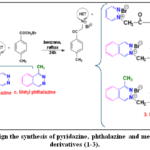 |
Figure 1: Design the synthesis of pyridazine, phthalazine and metyl phtalazine derivatives (1-3). Click here to View Figure |
The purity and the structure of the compounds (1 -3) have been proven on silica gel plates, by analytical thin-layer chromatography (TLC), under UV light and by NMR and IR (Figures 2 and 3).
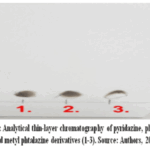 |
Figure 2: Analytical thin-layer chromatography of pyridazine, phthalazine and metyl phtalazine derivatives (1-3). Source: Authors, 2026. Click here to View Figure |
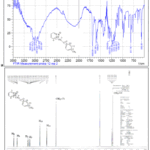 |
Figure 3: FT-IR spectra (a) and 1H-NMR spectra (b) for pyridazine derivative (1). Source: Authors, 2026. Click here to View Figure |
The synthesized compounds are stable in the air, at room temperature and can be kept in bottles (Figure 4).
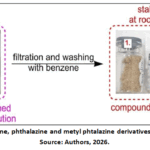 |
Figure 4: The pyridazine, phthalazine and metyl phtalazine derivatives (1-3) kept in bottles. Source: Authors, 2026. Click here to View Figure |
Following the discovery that these compounds possess remarkable activity against Gram-positive bacteria, with particularly prominent efficacy against Sarcina lutea, this research was extended to evaluate their physiological impact on the germination and early vegetative growth of wheatgrass (Triticum aestivum) plantlets. The preliminary results detailing these phenotypic effects are summarized in Table 1. Additionally, a structure–activity relationship (SAR) analysis was performed to correlate the specific chemical architectures of the heterocycles with their observed biological influences.34
Table 1: In vitro antibacterial and antifungal activities for nitrogen heterocycles.
|
Strain Product |
Staphylococcus aureus Oxford |
Sarcina luteea | Bacillus subtillis | Pseudomonas
aeruginosa |
Escherichia coli | Candida
albicans |
| Control | 12 | 10 | 14 | 17 | 14 |
16 |
|
1 |
29 | 55 | 30 | 19 | 14 | 16 |
| 2 | 24 | 51 | 27 | 18 | 14 |
17 |
|
3 |
24 | 51 | 28 | 17 | 15 |
16 |
A comparative analysis of the experimental data demonstrates that while pyridazine, phthalazine, and methylphthalazine derivatives all possess excellent, non-selective antimicrobial activity against Gram-positive bacteria, their physiological effects on plant development differ significantly. In all antimicrobial assays, the pyridazine derivative exhibited superior efficacy compared to its phthalazine counterpart. This indicates that the fusion of a benzene ring onto the pyridazine core diminishes antimicrobial potency.
Conversely, this structural modification proved highly advantageous for plant physiology, as the phthalazine-based scaffold significantly enhanced seed germination and vegetative development. Furthermore, the introduction of the methyl (-CH3) substituent in compound (3) exerted a negligible influence on both antimicrobial and phytophysiological outcomes (Figure 5).
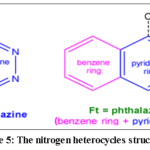 |
Figure 5: The nitrogen heterocycles structure. Click here to View Figure |
Procedure
Seed germination and seedling growth assays
To evaluate the broader biological utility of the synthesized nitrogen heterocycles, the physiological effects of compounds 1–3 on the seed germination and early development of wheatgrass (Triticum aestivum) seedlings were investigated. Following baseline evaluations in the Conviron MP4030 growth chamber, benchmarking experiments were conducted in Petri dishes using double-layered Whatman No. 1 filter paper at room temperature.
For these assays, uniform samples of fifty wheat seeds were immersed in 5 mL of a 5⋅10-3 M aqueous solution of the respective compound (1–3) for 1 hour. A control group (B) was prepared concurrently by treating seeds with redistilled water under identical conditions. All experimental treatments were performed in triplicate (Figure 6).
Following the initial 1-hour exposure, the seeds were transferred to Petri dishes lined with double filter paper, along with their respective treatment solutions. The dishes were monitored daily and watered periodically to maintain adequate moisture. Germination kinetics and seedling growth parameters were recorded at two distinct intervals:
Day 3 Post-Treatment: The germination rate (GR, %) was determined, with a seed considered successfully germinated upon the visible emergence of the coleorhiza (Figure 7).
Day 7 Post-Treatment: Comprehensive phenotypic and quantitative measurements were recorded (Figure 8).
At the end of the 7-day experimental period, the young wheatgrass plants were harvested from the remnants of their seed coats. The total number of viable plantlets per lot was recorded, and individual seedling height (H, expressed in cm) and seedling fresh weight (W, expressed in grams) were measured. These primary data were subsequently used to calculate the overall seedling vigor index (V) and total dry weight biomass (g).
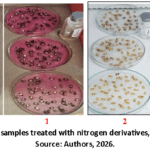 |
Figure 6: Wheat samples treated with nitrogen derivatives, on the first day. Source: Authors, 2026. Click here to View Figure |
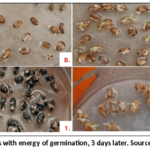 |
Figure 7: Samples with energy of germination, 3 days later. Source: Authors, 2026. Click here to View Figure |
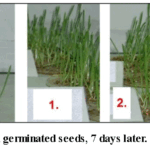 |
Figure 8: Samples with germinated seeds, 7 days later. Source: Authors, 2026. Click here to View Figure |
Statistics
To identify statistically significant differences between the treatment groups, the data were subjected to a post-hoc Tukey’s test α= 0.05).
Results
The experimental data presented in Table 2 demonstrate that the synthesized nitrogen heterocycles significantly influenced both the germination kinetics and the subsequent vegetative growth of the wheatgrass plantlets. Crucially, these physiological responses were directly governed by the core chemical architecture of the investigated compounds:
Pyridazine Derivative (1)
This compound exhibited a clear inhibitory effect on wheatgrass development. Its application resulted in a suppressed germination rate, as evidenced by a reduced number of viable plantlets per lot. Furthermore, it negatively impacted seedling elongation and biomass accumulation, causing a marked decrease in both plantlet height and weight.
Phthalazine and Methylphthalazine Derivatives (2 and 3)
In stark contrast, the benzofused phthalazine-based structures exerted a pronounced stimulating effect on the plantlets. These treatments led to an increase in the total number of successfully germinated seeds per lot, accompanied by a significant phenotypic enhancement in both seedling height and overall weight.
Table 2: Results on germination process and growth of wheatgrass plantlets.
|
Compound |
Germination Rate (GR, %) | Number of plantlets
in the lot |
Total height
(H, cm) |
Mean height
(Hm, cm) |
Dry weight
(W, g) |
Mean weight
Wm, mg |
Seedling Vigor
Index (SVI) |
| 1 | 63 ± 5 c | 19 ± 2 c | 154.24 ± 15.9 c | 6.5 ± 0.3 c | 0.96 ± 0.20 c | 31.66 ± 4.79 c |
409 ± 10 d |
|
2 |
91 ± 4 a | 44 ± 5 a | 249.33 ± 20.1 a | 7.6 ± 0.4 a | 1.26 ± 0.48 b | 45.00 ± 4.35 a | 691 ± 18 a |
| 3 | 91 ± 5 a | 43 ± 3 a | 247,72 ± 31.8 a | 7.0 ± 0.9 b | 1.28 ± 0.65 b | 42.45 ± 2.14 ab |
637 ± 16 b |
|
Control |
87 ± 3 b | 39 ± 2 b | 221.3 ± 21.2 b | 6.5 ± 0.7 c | 1.40 ± 0.20 a | 40.66 ± 5.93 b |
565,5 ± 6 c |
Values associated with the same lowercase letters are not significantly different at p ≤ 0.05 according to Tukey’s test.
The germination rate (GR) evaluates the cumulative percentage of germinated seeds at a specific time interval, serving as a key indicator of germination velocity and uniformity. As summarized in Table 1, the application of compounds 1–3 differentially modulated the early germination kinetics of the wheatgrass seeds.
By day 3 post-treatment, the pyridazine derivative (1) demonstrated a clear inhibitory effect, suppressing the germination rate by approximately 30% relative to the control. Specifically, the GR declined significantly from 87±3% in the control sample to 63±5% in the presence of compound 1. Conversely, the benzofused phthalazine derivatives (2) and (3) exhibited a distinct phytostimulatory effect. Treatment with these compounds accelerated early germination, yielding higher germination rates (91±4% for compound 2 and 91±5% for compound 3) compared to the untreated control group (87 ± 3%) (Figure 9).
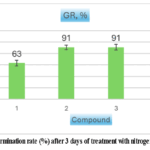 |
Figure 9: Seeds germination rate (%) after 3 days of treatment with nitrogen derivatives (1-3). Click here to View Figure |
The total number of viable plantlets established per lot is a crucial macroscopic indicator that directly reflects seedling vigor, initial growth dynamics, and early-stage stress tolerance. Seedling vigor governs the seed’s capacity to rapidly generate healthy, robust progeny across variable—including adverse—environmental conditions, whereas initial growth force dictates post-germination development rates and phenotypic robustness.
In this study, the number of viable plantlets per 50-seed lot was evaluated 7 days post-treatment. Because the pyridazine derivative (1) altered the early germination kinetics, it directly impacted final seedling establishment. The data revealed a substantial reduction in the number of viable plantlets, dropping from 39 in the control group to 19 in the presence of compound 1. Conversely, the phthalazine derivatives (2–3) exerted a distinct activating effect on seedling establishment. Treatment with these compounds enhanced the number of viable plantlets per lot, yielding values of 44±5 for compound 2 and 43±3 for compound 3, compared to the control (39±2) (Figure 10).
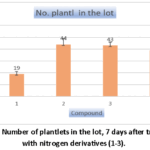 |
Figure 10: Number of plantlets in the lot, 7 days after treatment with nitrogen derivatives (1-3). Click here to View Figure |
The total seedling height (H), measured 7 days post-treatment, served as a highly sensitive morphological parameter for evaluating the influence of the investigated compounds on early wheatgrass development. Representing the cumulative shoot length per experimental unit, the baseline $H$ value for the control group was established at 221.30±21.20 cm.
In comparison to its pronounced inhibitory effect on initial germination kinetics, the pyridazine derivative (1) induced a less severe relative reduction in seedling elongation, yielding a cumulative height of 154.24±15.90 cm. Conversely, treatment with the phthalazine derivatives (2 and 3) resulted in increased cumulative heights of 249.33±20.10 cm and 247.72±31.80 cm, respectively. However, post-hoc statistical analysis indicated that these positive variations were not significantly higher than the untreated control group (Figure 11).
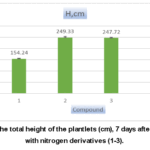 |
Figure 11: The total height of the plantlets (cm), 7 days after treatment with nitrogen derivatives (1-3). Click here to View Figure |
To determine seedling dry weight (W), the harvested wheatgrass plantlets were oven-dried at 80°C for 24 hours prior to gravimetric measurement. Interestingly, compared to the control group (1.40±0.20 g), all three chemical treatments resulted in lower cumulative dry biomass values per lot.
The pyridazine derivative (1) induced the most pronounced reduction in biomass accumulation, yielding a dry weight of only 0.96±0.20 g. Meanwhile, the phthalazine and methylphthalazine derivatives (2–3) exhibited an intermediate effect on dry weight. Treatment with these benzofused heterocycles resulted in cumulative biomass values of 1.26±0.48 g for compound 2 and 1.28±0.65 g for compound 3 (Figure 12).
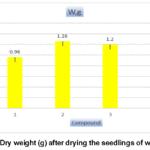 |
Figure 12: Dry weight (g) after drying the seedlings of wheatgrass. Click here to View Figure |
Determination of Seedling Vigor Index (SVI)
The Seedling Vigor Index (SVI) is a comprehensive physiological indicator that integrates both germination kinetics and physical seedling development to evaluate overall seed performance. The SVI for each treatment group was calculated using the standard mathematical formula [A]:
SVI = the mean height of plantlets in the lot x germination percentage
The Seedling Vigor Index (SVI) values calculated for the phthalazine and methylphthalazine derivatives (2–3) were substantially higher (691.00±18.00 and 637.00±16.00, respectively) than that of the untreated control group (565.50±6.00). Conversely, the pyridazine derivative (1) exhibited the lowest index within the experimental lot (409.00±10.00).
A comparative analysis of the data presented in Tables 1 and 2 highlights that the annulation of a benzene ring onto the pyridazine core—yielding the benzofused phthalazine and methylphthalazine architectures—differentially modulates both antimicrobial effectiveness and phytotoxicity. For compounds 2 and 3, this structural modification appears to attenuate antibacterial potency while simultaneously diminishing adverse effects on early plant growth. These structure–activity relationship (SAR) observations indicate that aromatic ring fusion within the heterocyclic system significantly alters the molecular electron distribution, steric configuration, and, consequently, the overall biological interaction profiles.
Discussion
The in vitro screening demonstrated that all three synthesized derivatives (1–3) possess high, non-selective antimicrobial efficacy against Gram-positive strains, with exceptionally profound inhibition zones recorded against Sarcina luteea. However, a precise structure-activity relationship (SAR) emerged when comparing the molecular architectures:
The Pyridazine Derivative. The standalone pyridazine derivative (1) demonstrated superior antibacterial potency across the board compared to its phthalazine counterparts.
Benzene Ring Fusion. The fusion of a benzene ring onto the pyridazine moiety—forming the phthalazine framework in compounds (2) and (3), consistently reduced the antibacterial action.
Alkyl Substitution. The inclusion of a methyl substituent (-CH3) in compound (3) yielded negligible differences in performance compared to compound (2), indicating that the steric and electronic influence of the small alkyl group plays a minor role in altering target interaction profiles in these systems.
This structural fusion likely alters the electronic distribution, molecular lipophilicity, and steric configurations of the molecules, directly impacting how they interface with biological membranes and enzyme active sites.
When transitioning from microbial systems to vegetative development models using wheatgrass (Triticum aestivum), an inverse biological relationship was uncovered. The very structure that maximized antibacterial capacity of the pyridazine core in compound (1), exerted a severe phytotoxic effect on plant growth. Conversely, the less bactericidal phthalazine frameworks (2 and 3) behaved as prominent plant growth stimulators.
The initial phase of plant establishment, represented by the 3-day Germination Rate (GR), highlighted this contrast sharply. While the control sample reached a standard germination rate of 87± 3%, the addition of compound (1) severely hindered early development, depressing the germination rate by roughly 30% down to 63 ± 5%. This suppression confirms that the pyridazine derivative interferes with the physiological signaling cascades or cellular energetic pathways required to successfully trigger coleorhizae emergence.
In contrast, treating seeds with phthalazine derivatives (2) and (3) accelerated and unified the germination kinetics, accelerating success rates up to 91± 4% and 91± 5% respectively.
The vegetative trends recorded 7 days post-treatment further underscored these structure-dependent pathways. The total number of viable plantlets established per 50-seed lot plunged from 39 in the control environment down to just 19 under the influence of compound (1). Concurrently, the cumulative height (H) of the remaining shoots collapsed to 154.24± 15.9 cm (compared to 221.3± 21.2 cm in the control), reflecting a comprehensive suppression of cellular elongation and division.
The structural modification embodied by phthalazine derivatives (2) and (3) completely inverted this dynamic. These lots successfully cultivated an increased number of plantlets 44± 5 and 43± 3, respectively. Additionally, they demonstrated higher total shoot lengths 249.33± 20.1 cm and 247.72± 31.8 cm, validating their role as positive agrochemical regulators that foster robust seedling vigor.
This total phenotypic health is comprehensively quantified by the Seedling Vigor Index (SVI), which factors in both germinative uniformity and physical elongation. While compound (1) generated a deficient SVI of 409± 10 relative to the control 565.5± 6, compounds (2) and (3) yielded significantly elevated indexes of 691± 18 and 637± 16, validating their efficacy in cultivating healthy, stress-resistant microgreens.
A compelling anomaly arose during dry biomass (W) evaluation. After 24 hours of oven-drying at 80°C, all treated variants, including the stimulatory phthalazines, registered total batch dry weights below the control mark of 1.40± 0.20 g. Compound (1) led the decline at a meager 0.96± 0.20 g, while compounds (2) and (3) occupied an intermediate space at 1.26± 0.48 g and 1.28± 0.65 g.
This tells us that while phthalazines significantly optimize cell expansion, vertical shoot elongation, and numerical germination rates, they alter the internal metabolic partitioning or carbon allocation strategies during early developmental windowing, resulting in slightly less dense tissue accumulation overall.
Biochemically, the aggressive phytotoxicity of the pyridazine derivative (1) can be explained through dual-action pathways. The highly potent antimicrobial profile of derivative (1) likely destroys or heavily destabilizes the micro-ecosystem and symbiotic microbiome present on the seed coat or growth medium. By wiping out beneficial, non-target bacterial strains essential for active nitrogen fixation, nutrient mobilization, and mineral uptake, the plantlet suffers from acute early-stage nutritional starvation.49-52
Simultaneously, the un-fused pyridazine core may directly interact with plant endogenous phytohormone pathways (such as auxins or gibberellins), acting as a synthetic growth inhibitor rather than an organizer.
By tailoring the molecular architecture through benzo fusion, the negative, substrate-level microbiome disruption is mitigated, opening up a specialized pathway where these heterocycles can be utilized as specialized agrochemicals, bio stimulants, or protective priming agents.
Conclusion
The test with nitrogen heterocycles, with antimicrobial activity: pyridazine derivative (1), phthalazine derivative (2) and methyl phthalazine derivative (3) were conducted to evaluate the influence on seed germination and early plant development of three nitrogen heterocycles. The preliminary results obtained from antimicrobial testing against both Gram positive and Gram-negative strains indicate that compound (1) exhibits superior antibacterial activity compared with derivatives (2) and (3).
In contrast, the biological effects observed on Triticum aestivum (wheatgrass) germination and plantlet development revealed an inverse relationship. The pyridazine derivative (1), although the most active antimicrobial agent, exerted the strongest inhibitory effect on seed germination and subsequent growth of wheatgrass plantlets. Meanwhile, phthalazine and methyl phthalazine derivatives (2) and (3) displayed a significantly milder impact on plant development. It is considered that the pronounced antimicrobial activity of derivative (1) disrupts the microbiome present in the growth substrate, including bacteria involved in nitrogen fixation and nutrient mobilization essential for early plant development. Consequently, appeared the observed reduction of germination rates and plant vigor.
These findings are relevant for better understanding the dual biological effects of heterocyclic nitrogen compounds and may inform their future applications in other fields as agriculture, biotechnology, or pharmacology.51-54
Funding Sources
The authors received no financial support.
Conflict of Interest
The authors declare that there is no conflict of interest regarding the publication of this research.
Data Availability
This treatment does not apply to this article
Ethical Approval
This research did not involve human participants, animal subjects or any material that requires ethical approval
Author Contributions
All authors have equal contributions. All authors have read and agreed to the published version of the manuscript.
References
-
- Satyava, R, S.; Kamboj, J. K.; Gandhi, V. Living Life the Natural Way –Wheatgrass and Health. Funct. food health dis., 2011, 1(11), 444-456.
CrossRef - Deepak, B.; Farha, R.H.; Sikalgar, R.; Prajna, P.S.; Rashmitha, A.; Yuvaraj, P.; Shrikanth, M. Therapeutic Potential of Wheatgrass Juice: A Comprehensive Narrative Review. J Pharm Bioallied Sci, 2025, 17, 153-154. DOI: 10.4103/jpbs.jpbs_179_25
CrossRef
- Neetu, M.; Renu, T.; Dhananjay, P.; Kamal, S.; Nagendra, S.C. Wheatgrass (Triticum aestivum): A Miraculous Microgreen. J. Future Foods, 2025, 5(3), 239-247. https://doi.org/10.1016/j.jfutfo.2024.07.003
CrossRef - Bar-Sela, G.; Tsalic, M.; Fried, G.; Goldberg, H. Wheat Grass Juice May Improve Hematological Toxicity Related To Chemotherapy In Breast Cancer Patients: A Pilot Study. Nutrition and cancer, 2007, 58(1), 43-48.
CrossRef - Avisar, A.; Cohen, M.; Katz, R.; Shentzer Kutiel T.; Aharon, A.; Bar-Sela, G. Wheatgrass Juice Administration and Immune Measures during Adjuvant Chemotherapy in Colon Cancer Patients: Preliminary Results, Pharmaceuticals 2020, 13(6), 129. https://doi.org/10.3390/ph13060129
CrossRef - Hasan, M.A.; Ahmed, J.U. Kernel Growth Physiology of Wheat Under Late Planting Heat Stress. J. of the Natl. Sci. Found. Sri Lanka. 2005, 33 (3), 193-204. doi: 10.4038/jnsfsr.v33i3.2325
CrossRef - Hasan, M. A.; Ahmed, J.A.; Hossain, T.; Khaleque, M.A.; Haque, M.M. Evaluation of the Physiological Quality of Wheat Seed as Influenced by High Parent Plant Growth Temperature. J. Crop Sci. Biotech. 2013, 16 (1), 69-74.
CrossRef - Datta, S.C.; Gutterman, Y.; Evenari, M. The Influence of The Origin of The Mother Plant on Yield and Germination of Their Caryopsis in Aegilops Ovata. Planta, 1972, 105, 155-164.
CrossRef - Peacock, H.A.; Hawkins, B.S. Effect of Seed Source on Seedling Vigor, Yield, and Lint Characters of Upland Cotton. Crop Sci. 1970, 10, 667-760.
CrossRef - Zlati, C.; Grădinariu, G.; Istrate, M.; Draghia. L. Histological Investigation on Graft Formation in Pear/Quince (Pyrus communis/Cydonia oblonga) Combinations. Acta Hortic. 2011, 923, 291-298. DOI: 10.17660/ActaHortic.2011.923.43 https://doi.org/10.17660/ActaHortic.2011.923.43
CrossRef - Grădinariu, G.; Zlati, C.; Istrate, M.; Draghia, L. Improvement of Grafting Union in Plum by Studying Graft Anatomy. Acta Hortic. 2011, 923, 283-290 DOI: 10.17660/ActaHortic.2011.923.42 https://www.ishs.org/ishs-article/923_42
CrossRef - Mangalagiu, I.I. Recent Achievements in the Chemistry of 1,2-diazines. Curr. Org. Chem. 2011, 15, 730–752. DOI: 10.2174/138527211794519050
CrossRef - Malik, A.; Mishra, R.; Mazumder, R.; Mazumder, A.; Mishra, P.S. A Comprehensive Study on Synthesis and Biological Activities of Pyridazine Derivatives. Res. J. Pharm. Technol. 2021, 14, 3423–3429.
CrossRef - Amariucai-Mantu, D.; Mangalagiu, V.; Mangalagiu, I.I. [3+n] Cycloaddition Reactions: A Milestone Approach for ElaboratingPyridazine of Potential Interest in Medicinal Chemistry and Optoelectronics. Molecules, 2021, 26, 3359. https://doi.org/10.3390/molecules26113359
CrossRef - Amariucai-Mantu, D.; Mangalagiu, V.; Danac, R.; Mangalagiu, I.I. Microwave Assisted Reactions of Azaheterocycles for Medicinal Chemistry Applications. Molecules, 2020, 25, 716. https://doi.org/10.3390/molecules25030716
CrossRef - Zbancioc, G.; Mangalagiu, I.I.; Moldoveanu, C.A. Review on the Synthesis of Fluorescent Five- and Six-Membered Ring Azaheterocycles. Molecules, 2022, 27, 6321. https://doi.org/10.3390/molecules27206321
CrossRef - Moldoveanu, C.; Mangalagiu, I.I.; Zbancioc, G. Fluorescent Azasteroids through Ultrasound Assisted Cycloaddition Reactions. Molecules, 2021, 26, 5098. https://doi.org/10.3390/molecules26175098
CrossRef - Cheng, Y.; Ma, B.; Wudl, F. Synthesis and Optical Properties of a Series of Pyrrolopyridazine Derivatives: Deep Blue Organic Luminophors for Electroluminescent Devices. J. Mater. Chem. 1999, 9, 2183–2188.
CrossRef - Mangalagiu, I.I.; Baban, C.; Mardare, D.; Rusu, G.I. On The Electrical Properties of Some New Stable Disubstituted Ylides in Thin Films. Appl. Surf. Sci. 1997, 108, 205–210.
CrossRef - Tikkinen, M.; Riikonen, J.; Luoranen, J. Covering Norway Spruce Container Seedlings with Reflective shading Cloth During Field Storage Affects Seedling Post-Planting Growth. New For. 2022, 53, 627–642.
CrossRef - Butnariu, R.; Risca, I.M.; Caprosu, M.; Drochioiu, G.; Mangalagiu, I.I. Biological Activity of Some New Pyridazine Derivatives in Wheat Germination Experiments. Rom. Biotechnol. Lett. 2008, 13, 3837–3842.
- Mantu, D.; Antoci, V.; Nicolescu, A.; Delenu, C.; Vasilache, V.; Mangalagiu, I.I. Synthesis, Stereochemical Studies and Antimycobacterial Activity of New Acetyl-Hydrazines Pyridazinone. Curr. Org. Synth. 2016, 14, 112–119.
CrossRef - Aricu, A.; Ciocarlan, A.; Lungu, L.; Barba, A.; Shova, S.; Zbancioc, G.; Mangalagiu, I.I.; D’Ambrosio, M.; Vornicu, N. Synthesis of New Antibacterial and Antifungal Drimane Sesquiterpenoids with Azaheterocyclic Units. Med. Chem. Res. 2016, 25, 2316–2323. DOI:10.3390/molecules27165082
CrossRef - Balan, A.M.; Miron, A.; Tuchilus, C.; Rotinberg, P.; Mihai, C.T.; Mangalagiu, I.I.; Zbancioc, G. Synthesis and in Vitro Analysis of Novel Dihydroxyacetophenone Derivatives with Antimicrobial and Antitumor Activities. Med. Chem. 2014, 10, 476–483. DOI: 10.2174/15734064113096660070
CrossRef - Kuchkova, K.; Aricu, A.; Barba, A.; Vlad, P.; Shova, S.; Secara, E.; Ungur, N.; Tuchilus, C.; Zbancioc, G.; Mangalagiu, I.I. Design, Syntheses and Antimicrobial Activity of Some Novel Homodrimane Sesquiterpenoids with Diazine Skeleton. Med. Chem. Res. 2014, 23, 1559–1568. https://doi.org/10.1007/s00044-013-0720-3
CrossRef - Antoci, V.; Mantu, D.; Cozma, D.G.; Usru, C.; Mangalagiu, I.I. Hybrid Anticancer 1,2-Diazine Derivatives with Multiple Mechanism of Action. Part 3. Med. Hyp. 2014, 82, 11–15. https://doi.org/10.1016/j.mehy.2013.10.024
CrossRef - Tucaliuc, R.; Cotea, V.; Niculaua, M.; Tuchilus, C.; Mantu, D.; Mangalagiu, I.I. New pyridazine—Fluorine Derivatives: Synthesis, Chemistry and Biological Activity. Part II. Eur. J. Med. Chem. 2013, 67, 367–372. DOI: 10.1016/j.ejmech.2013.04.069
CrossRef - Mantu, D.; Antoci, V.; Mangalagiu, I.I. Design, Synthesis and Antituberculosis Activity of Some New Pyridazine Derivatives: Bis-Pyridazine. Part IV. Infect. Disord. Drug Targets 2013, 13, 344–351. DOI: 10.2174/1871526514666140217144707
CrossRef - Mantu, D.; Luca, M.C.; Moldoveanu, C.; Zbancioc, G.; Mangalagiu, I.I. Synthesis and Antituberculosis Activity of Some New Pyridazine Derivatives. Part II. Eur. J. Med. Chem. 2010, 45, 5164–5168. DOI:10.1016/j.ejmech.2010.08.029
CrossRef - Zbancioc, A.M.; Zbancioc, G.; Tanase, C.; Miron, A.; Ursu, C.; Mangalagiu, I.I. Design, Synthesis and in Vitro Anticancer Activity of a New Class of Dual DNA Intercalators. Lett. Drug. Des. Discov. 2010, 7, 644–649. DOI:10.2174/157018010792929504
CrossRef - Luca, M.C.; Tura, V.; Mangalagiu, I.I. Considerations Concerning Design and Mechanism of Action of a New Class of Dual DNA Intercalators. Med. Hyp. 2010, 75, 627–629.
CrossRef - Balan, A.M.; Florea, O.; Moldoveanu, C.; Zbancioc, G.; Iurea, D.; Mangalagiu, I.I. Diazinium Salts with Dihydroxyacetophenone Skeleton: Syntheses and Antimicrobial Activity. Eur. J. Med. Chem. 2009, 44, 2275–2279. DOI: 10.1016/j.ejmech.2008.06.017
CrossRef - Butnariu, R.; Mangalagiu, I.I. New Pyridazine Derivatives: Synthesis, Chemistry And Biological Activity. Bioorg. Med. Chem. 2009, 17, 2823–2829. DOI: 10.1016/j.bmc.2009.02.028
CrossRef - Butnariu, R.; Caprosu, M.; Bejan, V.; Ungureanu, M.; Poiata, A.; Tuchilus, C.; Florescu, M.; Mangalagiu, I.I. Pyridazine and Phthalazine Derivatives with Potential Antimicrobial Activity. J. Heterocyclic Chem. 2007, 44, 1149–1152.
CrossRef - Moldoveanu, C.; Mangalagiu, G.; Drochioiu, G.; Caprosu, M.; Petrovanu, M.; Mangalagiu, I.I. New Antituberculosis Compounds Derived from Diazine. An. Stiint. Univ. “Al. I. Cuza” Iasi Chem. 2003, 11, 367–374.
- Ungureanu, M.; Mangalagiu, I.I.; Grosu, G.; Petrovanu, M. Antimicrobial Activity of Some New Pyridazine Derivatives. Ann. Pharm. Fr. 1997, 55, 69–72.
- Gradinariu G.; Istrate M.; Zlati C.; Corneanu G.; Petre L.; Gradinariu F.S. The National Germoplasm and New Sweet Cherry and Hybrids Obtained in Iasi, Romania. Acta Hort 760, ISHS, 2007, pp. 439-445. DOI: 10.17660/ActaHortic.2007.760.60 https://doi.org/10.17660/actahortic.2007.760.60
CrossRef - Zlati C.; Gradinariu G.; Istrate M.; Draghia L. Formation of Graft Union in Pear: A Histological Study by using Light Microscopy. Journal of American Pomological Society 65(4), 2011, 185-191, ISSN 1527-3741. https://doi.org/10.71318/apom.2011.65.4.185
CrossRef - Zbancioc, G.; Mangalagiu, I.I. Microwave-Assisted Synthesis of Highly Fluorescent Pyrrolopyridazine Derivatives. Synlett 2006, 5, 804–806.
CrossRef - Zbancioc, G.; Huhn, T.; Groth, U.; Deleanu, C.; Mangalagiu, I.I. Pyrrolodiazine Derivatives as Blue Organic Luminophores: Synthesis and Properties. Part 3. Tetrahedron 2010, 66, 4298–4306.
CrossRef - Zbancioc, G.; Mangalagiu, I.I. Pyrrolopyridazine derivatives as Blue Organic Luminophores: Synthesis and Properties. Part 2. Tetrahedron 2010, 66, 278–282. DOI:10.1016/j.tet.2009.10.110
CrossRef - Maftei, D.; Zbancioc, G.; Humelnicu, I.; Mangalagiu, I.I. Conformational Effects on the Lowest Excited States of Benzoylpyrrlopyridazine: Insights from PCM Time-Dependent DFT. J. Phys. Chem. A. 2013, 117, 3165–3175. DOI: 10.1021/jp311396m
CrossRef - Moldoveanu, C.; Amariucai-Mantu, D.; Mangalagiu, V.; Antoci, V.; Maftei, D.; Mangalagiu, I.I.; Zbancioc, G. Microwave Assisted Reactions of Fluorescent Pyrrolodiazine Building Blocks. Molecules 2019, 24, 3760. https://doi.org/10.3390/molecules24203760
CrossRef - Zbancioc, G.; Ciobanu, C.I.; Mangalagiu, I.I.; Moldoveanu, C. Ultrasound-Assisted Synthesis of Fluorescent Azatetracyclic Derivatives: An Energy-Efficient Approach. Molecules 2022, 27, 3180. https://doi.org/10.3390/molecules27103180
CrossRef - Tucaliuc, R.; Mangalagiu, V.; Mangalagiu, I. I. Pyridazinic Bioisosteres with Potential Applications in Medicinal Chemistry and Agriculture. Processes, 2023, 11(8), 2306-2046. https://doi.org/10.3390/pr11082306
CrossRef - Risca, I.M.; Zbancioc, G.; Moldoveanu, C.; Drochioiu, G.; Mangalagiu, I.I. Effect of Some New Monoquaternary Salts of Diazine on Germination and Seedling Growth of Norway Spruce (Picea abies (L.) Karsten). Rom. Biotechnol. Lett. 2006, 11, 2563–2568.
- Mangalagiu, I.I.; Risca, I.; Maftei, M.; Moldoveanu, C.; Murariu, M.; Drochioiu, G. Effect of Some New Monoquaternary Salts of Pyridazine on Germination and Seedling Growth of Wheat. Rom. Biotech. Lett. 2005, 10, 2495–2501.
- Tucaliuc, R.; Cotea, V.V.; Drochioiu, G.; Mangalagiu, I.I. Synthesis and the Effect of Some Pyridazine Derivatives in Germination and Seedling Growth of Wheat. Lucr. Stiint. Ser. Hortic. USAMV Iasi, 2011, 54, 109–114.
- Aatif, M.; Raza, M.A.; Javed, K.; Nashre-ul-Islam, S.M.; Farhan, M.; Alam, M.W. Potential Nitrogen-Based Heterocyclic Compounds for Treating Infectious Diseases: A Literature Review. Antibiotics 2022, 11, 1750. https://doi.org/10.3390/antibiotics11121750
CrossRef - Pașcu, R.; Zlati, C.; Calance, Al.; Bernardis, R.; Dodu, D. Methods of rehabilitation of a degraded area in Orăştie. Scientific Papers Series B. Horticulture, Vol. LXV, nr. 1, 2021 “Agriculture for Life, Life for Agriculture” Conference Proceedings, pp. 664-673 (684-693), ISSN: 2285-5653, eISSN: 2286-1580. https://horticulturejournal.usamv.ro/pdf/2021/issue_1/Art91.pdf
- Ullah, F.; Ullah, S.; Khan, M.F.A.; Mustaqeem, M.; Paracha, R.N.; Rehman, M.F.u.; Kanwal, F.; Hassan, S.S.u.; Bungau, S. Fluorescent and Phosphorescent Nitrogen-Containing Heterocycles and Crown Ethers: Biological and Pharmaceutical Applications. Molecules 2022, 27, 6631. https://doi.org/10.3390/molecules27196631
CrossRef - Burcă, I.; Diaconescu, A.-M.; Badea, V.; Péter, F. Synthesis, Characterization, Antimicrobial and Anticancer Evaluation of Novel Heterocyclic Diazene Compounds Derived from 8-Quinolinol. Pharmaceuticals 2026, 19, 4. https://doi.org/10.3390/ph19010004
CrossRef - Buțerchi, I.; Ciurlă, L.; Enache, I.-M.; Patraș, A.; Teliban, G.-C.; Irimia, L.-M. Valorisation of Beetroot Peel for the Development of Nutrient-Enriched Dehydrated Apple Snacks. Foods 2025, 14, 2560. https://doi.org/10.3390/foods14152560
CrossRef - Zlati, C.; Pașcu, R.; Florea, M.; Dascălu, M.; Sonea, A.P.; Istrate, M. Evaluation of Walnut (Juglans regia L.) Grafting Performance by Optimizing Methods and Execution Periods Using TOPSIS Multicriteria Analysis. Horticulturae 2026, 12, 742. https://doi.org/10.3390/horticulturae12060742
CrossRef
- Satyava, R, S.; Kamboj, J. K.; Gandhi, V. Living Life the Natural Way –Wheatgrass and Health. Funct. food health dis., 2011, 1(11), 444-456.
 PlumX:
  Views: 456 Views
  PDF Downloads: 108
 Accepted on: 25 Jun 026
Second Review by: Dr. Surya Pratap
Final Approval by: Dr. Pounraj Thanasekaran


ISSN Online: 2231-5039