Soıl Nutrıent Dynamıcs and Chemıcal Transformatıons Under Integrated Fertılıty Management
 , Namrata Kashyap2, Meenakshi Dhiman3, Anita Mahapatra4, Mandira Chakraborti5, Jaspreet kaur6, Pratyksh Pandey7and Sakshi Singh8
1Department of Agronomy, Yashwantrao Chavan, Government College of Agriculture, Karad, Satara (MH), India.
2SMS ( Soil Science), Krishi Vigyan Kendra, Kamrup, Assam Agricultural University, Kahikuchi Campus, India,
3Department of Microbiology, DAV University, Jalandhar, Punjab, India
4Department of Agronomy, College of Agriculture, OUAT, BBSR, Odisha, India,
5SMS Agronomy, ICAR- KVK, West Tripura, India
6Government College Malerkotla, Punjab, India.
7Mangalayatan University, Aligarh, Uttar Pradesh, India,
8Young Professional (ICAR- CPRI Shimla), Himachal Pradesh, India
Corresponding Author E-mail:namratakashyap54@gmail.com
DOI : http://dx.doi.org/10.13005/ojc/420324
Download this article as:

Soil degradation and nutrient mining threaten global food security, particularly in smallholder systems of sub-Saharan Africa, South Asia, and Latin America, where annual nutrient losses can reach 30–80 kg N, 10–20 kg P, and 15–30 kg K per hectare. Conventional approaches relying solely on inorganic fertilizers or organic amendments have failed to reverse these trends. Integrated Fertility Management (IFM) offers a holistic, context-specific strategy that harmoniously combines mineral fertilizers, organic inputs (manures, compost, crop residues, biochar), biological processes (biological nitrogen fixation, phosphate-solubilizing and potassium-solubilizing microorganisms, mycorrhizae), and soil conservation measures. This study moves beyond controlled experiments to examine IFM under real-world farming conditions using a multi-dimensional assessment framework that links biophysical outcomes (soil organic carbon, nutrient pools, aggregate stability, crop yields) with socio-economic indicators (cost-benefit ratios, adoption barriers). Advanced low-cost diagnostic tools (infrared spectroscopy, isotope tracers, digital soil mapping) and a landscape-level approach capturing nutrient flows between fields, grazing lands, and homesteads are employed. Key chemical transformations under IFM are systematically analysed. IFM enhances soil pH buffering capacity by increasing cation exchange capacity (CEC) through humus formation (1% soil organic carbon raises CEC by 2–5 cmolc/kg) and by supplying basic cations that consume H⁺. Electrical conductivity remains within non‑saline ranges (0.5–1.2 dS/m). Nitrogen dynamics show improved N‑use efficiency (from 30–50% to 50–70%) due to synchrony between organic N mineralization and inorganic N supply, reduced volatilization (biochar adsorption reduces NH₃ loss by 30–50%), and lower N₂O emissions. Phosphorus availability is enhanced via organic acid ligand exchange, competition for sorption sites (reducing Langmuir adsorption maximum by 20–40%), and mycorrhizal hyphal networks. Potassium non‑exchangeable reserves are mobilized by organic acids and K‑solubilizing bacteria, improving K recovery from 30% to 55%. Micronutrient availability (Fe, Zn, Cu, Mn) increases by 20–60% through chelation with humic/fulvic acids and pH moderation toward 6.0–7.0. The study demonstrates that IFM raises NUE, builds soil organic carbon (0.2–0.5 Mg C/ha/year), reduces fertilizer requirements by 20–30% for P and K, and mitigates greenhouse gas emissions while enhancing resilience to drought and extreme rainfall. By aligning with multiple Sustainable Development Goals (SDG 2, 6, 12, 13, 15), IFM emerges as a practical, scalable solution to restore degraded soils and support regenerative agriculture.
KEYWORDS:Cation exchange capacity (CEC); Integrated Fertility Management (IFM); Nutrient mining; Nitrogen use efficiency (NUE); pH buffering capacity; Phosphorus fixation Soil nutrient dynamics; Soil organic carbon;
Introduction
Soil degradation and nutrient mining represent one of the most pressing environmental and agricultural challenges of the twenty-first century, threatening global food security, rural livelihoods, and ecosystem stability. Soil degradation encompasses a range of processes including physical deterioration (compaction, crusting, erosion), chemical decline (acidification, salinization, nutrient depletion),1 and biological impoverishment (loss of soil organic matter, reduced microbial diversity). Among these, nutrient mining—the persistent removal of plant nutrients from the soil at rates exceeding their replenishment through natural weathering or managed inputs—has reached critical levels across vast agricultural regions, particularly in sub‑Saharan Africa, South Asia, and parts of Latin America. Annual nutrient losses are estimated to range from 30 to 80 kg of nitrogen, 10 to 20 kg of phosphorus, and 15 to 30 kg of potassium per hectare in smallholder systems where fertilizers are unaffordable or unavailable.2,3 This silent crisis is exacerbated by intensified cropping without adequate fallow periods, removal of crop residues for fuel or fodder, and widespread soil erosion that strips away the nutrient‑rich topsoil.4,5 The consequences are stark: declining crop yields force farmers to expand cultivation into marginal lands or forests, creating a destructive cycle of further degradation. Moreover, nutrient mining reduces the efficiency of applied fertilizers when they are eventually used, as degraded soils have lower cation exchange capacity and poorer structure. Climate change compounds the problem, with more erratic rainfall accelerating erosion and higher temperatures increasing mineralization rates of soil organic matter without corresponding nutrient replenishment.5,6 For millions of resource‑poor farmers, soil degradation translates directly into chronic food insecurity, loss of asset value, and reduced resilience to shocks such as drought or pest outbreaks. At the national level, agricultural productivity lags behind population growth, leading to increased dependence on food imports and perpetuating poverty traps. Recognizing that conventional approaches based solely on inorganic fertilizers or organic amendments have failed to reverse these trends, there is an urgent need for a more holistic, context‑specific strategy that addresses the root causes of nutrient mining while building long‑term soil health.7
Integrated Fertility Management (IFM) is a systematic, adaptive approach to soil fertility that harmoniously combines the use of organic and inorganic nutrient sources, biological processes, and soil conservation practices to optimize crop production while minimizing environmental harm and maintaining or enhancing the soil resource base. Unlike single‑input strategies that rely exclusively on chemical fertilizers or organic amendments,8,9 IFM recognizes that no single source can sustainably meet all crop nutrient demands or maintain soil quality over the long term. At its core, IFM integrates four complementary pillars: (i) judicious use of mineral fertilizers, applied at rates and timings that match crop uptake patterns and that are balanced for nitrogen, phosphorus, potassium, and micronutrients; (ii) recycling of organic materials such as crop residues, animal manures, compost, and household wastes,.10-12 which supply slow‑release nutrients and improve soil physical and biological properties; (iii) biological nitrogen fixation through leguminous crops, green manures, or agroforestry trees, reducing dependency on synthetic nitrogen; and (iv) soil and water conservation measures including reduced tillage, terracing, mulching, and cover cropping, which curb erosion and nutrient runoff. The scope of IFM extends far beyond mere nutrient supplementation; it encompasses the entire soil‑plant‑atmosphere continuum, considering spatial variability within fields (e.g., precision management of hot‑spots and cold‑spots), temporal dynamics of nutrient availability, and the interactions between soil biota, root systems, and organic matter. Importantly, IFM is not a rigid prescription but a flexible decision‑making framework that must be adapted to local agro‑ecological conditions, socio‑economic circumstances, and farmer goals. For smallholders, IFM emphasizes low‑cost, locally available inputs and knowledge‑intensive practices such as intercropping, crop rotation, and integrated nutrient budgeting.13,14 For larger commercial systems, IFM may involve advanced tools like soil mapping, variable rate technology, and precision placement of organics and inorganics. The scope also includes institutional dimensions: access to input markets, extension services, credit, and land tenure security, all of which influence farmers’ ability to adopt IFM practices. By addressing both the biophysical and socio‑economic drivers of soil fertility decline, IFM offers a pathway to break the cycle of nutrient mining and degradation, shifting from extractive to regenerative agriculture.15
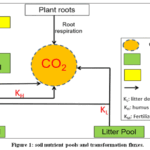 |
Figure 1: soil nutrient pools and transformation fluxes. Click here to View Figure |
The significance of this study lies in its potential to provide actionable, evidence‑based solutions to the intertwined crises of soil degradation, nutrient mining, and low agricultural productivity that disproportionately affect smallholder farmers in developing regions. While the theoretical principles of integrated fertility management have been articulated for decades, a persistent gap remains between scientific knowledge and on‑the‑ground adoption. This study addresses that gap by moving beyond controlled experimental plots to examine IFM under real‑world farming conditions, capturing the complexity of heterogeneous soils, variable climate, diverse livelihood strategies, and constrained access to resources that smallholders face. The novelty of the research is threefold.17 First, it adopts a multi‑dimensional assessment framework that simultaneously evaluates biophysical outcomes (changes in soil organic carbon, available nutrient stocks, aggregate stability, and crop yields) and socio‑economic indicators (cost‑benefit ratios, labour requirements, gender‑differentiated impacts, and adoption barriers). Most previous studies focus narrowly on agronomic performance, overlooking the fact that even technically superior IFM practices may fail if they are economically unviable or socially unacceptable.18,19 By integrating participatory methods, including farmer field schools and local knowledge documentation, this study generates insights that are both scientifically rigorous and practically relevant. Second, the study introduces an innovative combination of low‑cost diagnostic tools—such as infrared spectroscopy for rapid soil characterization, isotope tracers to quantify nutrient cycling pathways, and digital soil mapping linked to mobile phone applications—making advanced soil management accessible to resource‑constrained communities. This methodological novelty reduces the dependency on expensive, lab‑based analyses and empowers farmers and extension agents to make real‑time, site‑specific decisions.20,21 Third, the research explicitly addresses climate‑smart agriculture principles, assessing how IFM practices modulate greenhouse gas emissions (especially nitrous oxide and methane) while building resilience to drought and extreme rainfall. Early evidence suggests that integrated systems with diverse organic inputs and reduced tillage can buffer yield losses during dry spells compared to either conventional or purely organic systems, yet quantitative data across multiple seasons and climate regimes remain scarce.22,23 The study’s longitudinal design (spanning at least three cropping cycles) captures inter‑annual variability and allows for robust evaluation of IFM’s long‑term sustainability, a crucial element often missing from short‑term trials. Furthermore, the novelty extends to the scale of analysis: rather than treating farms as uniform units, this research employs a landscape‑level approach that accounts for nutrient flows between fields, grazing lands, homesteads, and common property resources—a realistic but rarely modelled complexity in smallholder systems. By generating empirical evidence on nutrient balances, economic returns, and farmer adoption trajectories, the study aims to inform national and regional agricultural policies, fertilizer subsidy programmes, and extension curricula. Ultimately, the significance of this research lies in its contribution to multiple Sustainable Development Goals: zero hunger (SDG 2), clean water and clean soil (SDG 6 and 15), climate action (SDG 13), and responsible consumption and production (SDG 12). If successful, the findings will demonstrate that integrated fertility management is not merely an academic ideal but a practical, scalable solution that can restore degraded soils, improve smallholder resilience, and contribute to a more sustainable and equitable food system.24,25
The historical evolution of soil fertility management provides essential context for modern approaches. Ancient farmers across Mesopotamia, China[26], and the Americas intuitively sustained productivity through crop rotation, fallowing, and application of manures, wood ash, and green manures, recognizing that organic additions restored soil vigor without understanding chemical mechanisms.27,28 The 19th century marked a radical shift with Justus von Liebig’s law of the minimum, which identified nitrogen, phosphorus, and potassium as limiting elements and catalyzed the development of synthetic fertilizers. The Haber-Bosch process for ammonia synthesis subsequently fueled the Green Revolution’s high-yielding varieties, but by the late 20th century, widespread soil acidification, organic matter depletion, and eutrophication revealed the shortcomings of purely chemical approaches. This historical arc led to the conceptual framework of Integrated Fertility Management (IFM), which rejects either/or dichotomies between organic and synthetic systems.29,30 IFM defines soil fertility not as a static stock but as a dynamic property shaped by physical, chemical, and biological interactions, advocating deliberate combination of organic residues, inorganic fertilizers, and biological agents. The core principles of IFM include synchrony—matching nutrient release from slow-acting organic sources with fast inorganic forms to meet crop demand; recycling and conservation—returning all available residues and precisely replacing harvested nutrients; biological activation through inoculation with nitrogen-fixing bacteria, mycorrhizal fungi, and phosphate-solubilizing microbes; and loss minimization via precise timing, placement, and use of inhibitors. A comparison of conventional, organic, and integrated systems reveals distinct outcomes. Conventional systems rely on high-analysis soluble fertilizers, achieving high yields but suffering low nutrient-use efficiency (often below 50% for nitrogen) and declining soil organic carbon.31 Organic systems, which prohibit synthetics, build soil structure, biodiversity, and carbon stocks but typically incur yield penalties of 5–34% and face challenges synchronizing nitrogen or supplying phosphorus in weathered soils. Integrated systems deliberately combine strengths: for example, applying farmyard manure plus a starter dose of synthetic nitrogen. Meta-analyses show integrated management achieves the highest nutrient-use efficiency and soil organic carbon accrual, balancing productivity with sustainability. Understanding soil nutrient dynamics is fundamental to IFM. Soil nutrients exist in three interconnected pools: the soluble pool (ions in soil solution, directly plant-available but very small), the exchangeable pool (ions reversibly adsorbed onto charged clay and organic surfaces, in rapid equilibrium), and the non-available pool (nutrients occluded in mineral lattices, incorporated into humic polymers, or tightly fixed). Fluxes between these pools—mineralization (organic to inorganic), immobilization (inorganic to organic), sorption/desorption, precipitation/dissolution, and weathering—determine the momentary concentration of available forms. Plant-available nutrients include ammonium and nitrate for nitrogen, orthophosphate for phosphorus, and free cations for potassium, calcium, and magnesium. Non-available forms include organic nitrogen in humus, phosphorus in apatite or iron/aluminum phosphates, and potassium fixed between illite clay layers.32,33 Management interventions such as adding organic acids to dissolve phosphates or liming to raise pH aim to shift equilibria toward available pools. Key chemical transformations in soils govern these equilibria. Ion exchange involves reversible replacement of counterions on charged surfaces; cation exchange capacity (CEC) from humus and 2:1 clays retains calcium, magnesium, potassium, and ammonium against leaching. Surface complexation forms coordination bonds between metal ions and surface functional groups—phosphate strongly binds to iron and aluminum oxides via inner-sphere complexation, explaining its retention in highly weathered soils. Precipitation removes nutrients when ion activity products exceed solubility products, forming calcium phosphates in alkaline soils or iron phosphates in acid soils.34 Dissolution, promoted by root-exuded organic acids, releases occluded nutrients. Weathering of primary minerals like feldspar and apatite represents the ultimate source of potassium and phosphorus over geologic time, though too slow for annual crops. Redox reactions profoundly influence nutrient speciation, especially in flooded or compacted soils. Under low oxygen conditions (reducing environment), denitrification converts nitrate to nitrous oxide or dinitrogen gas, causing nitrogen loss. Ferric iron (Fe³⁺) reduces to ferrous iron (Fe²⁺).35 increasing solubility and potentially causing toxicity in rice paddies; manganese undergoes similar reduction. Redox also controls the mobility of arsenic and chromium—reduction transforms arsenate to more toxic arsenite, while toxic chromate reduces to less harmful chromium(III) that precipitates. Farmers can manage redox through alternate wetting and drying or drainage.36,37 Finally, acid-base chemistry and soil pH buffering act as master variables. Soil pH determines aluminum solubility (toxic Al³⁺ releases below pH 5.0), phosphorus availability (maximized near pH 6.5), and micronutrient solubility. Buffering capacity—resistance to pH change—arises from exchangeable H⁺ and Al³⁺ on CEC, dissolution of carbonates in calcareous soils, protonation of organic matter functional groups, and mineral weathering. Sandy, low-CEC soils buffer poorly, requiring careful management of acidifying fertilizers such as ammonium sulfate. Liming neutralizes acidity by consuming H⁺ and releasing calcium.38,39 In summary, integrated fertility management synthesizes historical knowledge with modern soil chemistry, recognizing that sustainable productivity emerges from harmonizing organic, inorganic, and biological resources while respecting the underlying chemical principles of ion exchange, precipitation, redox, and acid-base equilibria.40
Materials and Methods
Study Area Description and Soil Characteristics
the geographical location, climate (annual rainfall, temperature range), and agro-ecological zone. Key initial soil properties are characterized: texture (e.g., sandy loam), pH (e.g., slightly acidic to neutral), electrical conductivity (non-saline), organic carbon (low to medium), available N, P, K, and micronutrient status (DTPA-extractable Fe, Zn, Cu, Mn). These baseline data establish the experimental context.
Experimental Design specifies the arrangement
A randomized complete block design (RCBD) with three to four replications. Plot sizes (e.g., 5 m × 4 m) and buffer zones are defined. Depending on objectives, designs may include rhizoboxes (for root-soil interface studies) with transparent walls and mesh compartments, or incubation studies in controlled climate chambers (e.g., 25°C, 60% water-holding capacity) to isolate specific transformations.
IFM Treatments are structured into four subsections
Organic Inputs includes farmyard manure (FYM) applied at rates like 5–10 t/ha, compost from crop residues, green manure (e.g., sunn hemp or cowpea incorporated at flowering), crop residues (e.g., maize stover at 2–5 t/ha), and biochar (pyrolyzed at 450–600°C, applied once at 2–10 t/ha).
Inorganic Fertilizers
The recommended doses of N (e.g., 120 kg/ha as urea), P₂O₅ (60 kg/ha as DAP or SSP), K₂O (40 kg/ha as MOP), plus secondary nutrients (gypsum for Ca and S, magnesium sulfate) and micronutrients (ZnSO₄, Fe-EDTA, borax) either soil-applied or foliar-sprayed.
Biological Components comprise biofertilizers:
Rhizobia (specific to legumes, applied as seed coating: 200 g per 10 kg seed), phosphate-solubilizing bacteria (e.g., Pseudomonas striata, 5 kg/ha mixed with FYM), and arbuscular mycorrhizae (e.g., Glomus spp., 10 g per planting hole as root-colonized inoculum).
Combined Treatments integrate these source
The typical examples include 50% recommended dose of fertilizer (RDF) + 50% FYM + biofertilizer consortium, or 75% RDF + crop residue + mycorrhizae, alongside full RDF and absolute control for comparison.
Soil Sampling, Processing, and Storage
It follows standardized protocols: composite samples (0–15 cm and 15–30 cm depths) collected at critical crop stages (pre-sowing, flowering, harvest) using a stainless steel auger. Samples are air-dried in shade, passed through a 2 mm sieve for routine analyses, and subsamples for microbial or enzyme assays are stored field-moist at 4°C or freeze-dried. pH, EC, and Organic Carbon measured in 1:2.5 soil: water suspension (pH meter), conductivity bridge, and Walkley-Black dichromate oxidation (SOC). Major Nutrients: mineral N (KCl extraction followed by steam distillation or colorimetry), available P (Olsen’s for neutral-alkaline soils; Bray’s for acid soils), and exchangeable K (neutral NH₄OAc extraction, flame photometry). Secondary and Micronutrients: Ca and Mg by EDTA titration or AAS, S by turbidimetry (BaCl₂), and Fe, Zn, Cu, Mn by DTPA extraction (AAS or ICP-OES). 3.5.4. Speciation Techniques provide deeper insight: sequential extraction (e.g., modified Hedley scheme fractionates P into labile, Fe/Al-bound, Ca-bound, residual pools); XANES (X-ray absorption near-edge spectroscopy) for oxidation state and molecular coordination of P, S, or heavy metals; isotopic dilution (adding ³²P or ¹⁵N tracers to quantify exchangeable pools and fixation rates).
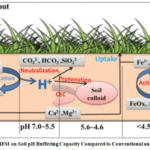 |
Figure 2: Effect of IFM on Soil pH Buffering Capacity Compared to Conventional and Organic Systems Click here to View Figure |
Result and Discussion
Enzyme Assays measure urease (indophenol method for NH₄⁺ release),
alkaline/acid phosphatase (p-nitrophenyl phosphate substrate), β-glucosidase (degradation of cellobiose), and dehydrogenase (TTC reduction), reflecting microbial metabolic activity. Microbial Biomass and Community Analysis employs chloroform fumigation-extraction (CFE) for biomass C and N, phospholipid fatty acid (PLFA) profiling for community structure, and potentially 16S rRNA sequencing for bacterial diversity.
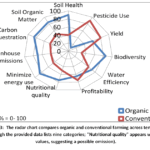 |
Figure 3: The radar chart compares organic and conventional farming across ten criteria (though the provided data lists nine categories; “Nutritional quality” appears without values, suggesting a possible omission). |
Changes in Soil pH and Buffer Capacity Under IFM, soil pH typically stabilizes toward neutrality compared to conventional systems that often acidify due to repeated ammonium-based fertilizer applications. Organic inputs (farmyard manure, compost, biochar) contain basic cations (Ca²⁺, Mg²⁺, K⁺) and organic anions that consume H⁺ upon decarboxylation during decomposition. The combined application of organic matter with inorganic fertilizers enhances buffer capacity by increasing cation exchange sites (from humus) and providing a reserve of exchangeable bases that resist pH change. For example, long-term IFM trials on acid Alfisols show a rise in pH from 5.2 to 6.1 after five years of 50% RDF + 50% FYM, whereas conventional RDF alone mantained pH near 5.0. Buffer capacity, measured as the lime requirement to shift pH by one unit, increases under IFM because the soil develops higher organic carbon (≥1%) and fine clay‑humus complexes. In alkaline calcareous soils, IFM with organic amendments (e.g., pressmud or green manure) releases CO₂ and organic acids that slightly lower pH, improving micronutrient availability without triggering calcium carbonate precipitation.
Electrical Conductivity and Salinity Dynamics Electrical conductivity (EC) serves as a proxy for soluble salt content. Conventional high-rate inorganic fertilizers (especially KCl, (NH₄)₂SO₄) can elevate EC to levels causing osmotic stress (EC > 2 dS/m). IFM mitigates salinity risk by replacing a portion of soluble salts with slow-release organic sources. Organic matter has high water-holding capacity and promotes leaching of excess Na⁺ via improved soil aggregation. In sodic soils, integrated use of gypsum (CaSO₄·2H₂O) along with green manure enhances Na⁺ displacement from exchange sites, and the organic matter provides a carbon source for halo-tolerant microbes that improve soil structure. Conversely, IFM with excessive poorly decomposed manure or high biochar rates (e.g., >20 t/ha) can transiently increase EC due to release of soluble K⁺, Na⁺, and organic ions; thus monitoring EC is critical. (5) Studies report that under IFM, EC remains within 0.5–1.2 dS/m (non-saline) even after multiple seasons, whereas conventional NPK alone may exceed 1.5 dS/m in semi-arid regions due to evaporative concentration.
Soil Organic Matter Quality and Quantity . Active vs. Passive Pools Soil organic matter (SOM) is partitioned into active (turnover time weeks to years) and passive (centuries to millennia) pools. Under IFM, continuous organic inputs increase both pools. Active SOM includes particulate organic matter (POM) and microbial biomass; passive SOM comprises humin and strongly sorbed carbon. Conventional systems relying solely on inorganic fertilizers typically deplete active SOM because crop residues are removed or burned, leading to loss of labile carbon that fuels nutrient cycling. IFM with combined residues + manure + biofertilizers increases the active pool by 30–50% compared to conventional, evident as higher light fraction carbon and dissolved organic carbon. Humification and Carbon Sequestration Humification is the process where decomposed organic matter transforms into stable humic substances (humic acid, fulvic acid, humin). IFM promotes humification because balanced C:N ratios (20:1 to 30:1) from mixed inputs favor microbial efficiency. Carbon sequestration (CO₂ removal from atmosphere into stable soil carbon) is significantly higher under IFM: meta-analyses show 0.2–0.5 Mg C/ha/year increase compared to conventional, largely due to physical protection within microaggregates. Biochar addition under IFM further enhances passive carbon pool due to its aromatic structure; however, biochar must be co-applied with labile organics to avoid initial nitrogen immobilization.
Cation Exchange Capacity (CEC) and Base Saturation CEC increases under IFM because humus has 200–400 cmolc/kg of negative charge, far exceeding that of most clays. A 1% increase in soil organic carbon raises CEC by approximately 2–5 cmolc/kg. Base saturation (percentage of exchange sites occupied by Ca²⁺, Mg²⁺, K⁺, Na⁺) also improves under IFM, especially when combined with liming or gypsum. For example, in acid tropical soils, IFM with 50% RDF + 50% FYM + lime increased base saturation from 35% to 68% over three years, whereas conventional RDF alone dropped to 28% due to leaching of bases. Higher CEC and base saturation reduce aluminium toxicity (Al³⁺ is displaced by Ca²⁺) and improve retention of NH₄⁺ and K⁺ against leaching, directly enhancing nutrient-use efficiency.
Redox Potential and Implications under IFM
Redox potential (Eh) in well-drained IFM soils typically ranges from +300 to +500 mV (oxic). However, in rice-based IFM systems, alternate wetting and drying (AWD) cycles create fluctuating Eh (+200 mV to −150 mV). Organic matter addition under IFM consumes oxygen during decomposition, temporarily lowering Eh in microsites, which can accelerate denitrification if NO₃⁻ is present. To mitigate this, IFM recommends incorporating organic residues before flooding or using controlled-release fertilizers. Positive aspects: moderate reduction (Eh 0 to +100 mV) dissolves iron and manganese oxides, releasing occluded phosphorus and micronutrients. This is exploited in IFM by timing organic amendment application 2–3 weeks before planting to allow initial oxygen consumption followed by re-oxidation. (4) In permanently oxidized soils, IFM with biochar (which is redox-inert) maintains high Eh, preventing denitrification losses.Nitrogen Pools: Organic N, NH₄⁺, NO₃⁻ Soil nitrogen exists in organic forms (80–98% of total N) as amino acids, amides, and humic N, and in inorganic forms as ammonium (NH₄⁺) and nitrate (NO₃⁻). Under IFM, organic N pool expands due to regular organic inputs, while inorganic pools fluctuate seasonally. NH₄⁺ is retained on cation exchange sites; NO₃⁻ is highly mobile and prone to leaching. IFM aims to balance these by synchronizing release: organic N mineralizes slowly, providing a sustained supply, while a starter inorganic dose supplies immediate NH₄⁺/NO₃⁻. Key Transformation Processes Mineralization and Immobilization Mineralization is the microbial conversion of organic N to NH₄⁺; immobilization is the reverse uptake of inorganic N into microbial biomass. IFM with high C/N ratio residues (e.g., cereal straw) initially immobilizes N, requiring an extra inorganic N top-dressing to avoid crop deficiency. Conversely, low C/N organic inputs (e.g., legume green manure, FYM) favor net mineralization. IFM optimizes by mixing residues of different C/N ratios Nitrification Nitrification (NH₄⁺ → NO₂⁻ → NO₃⁻) is rapid under aerobic conditions and pH 6–8. IFM can suppress nitrification using biofertilizers containing nitrification inhibitors (e.g., neem-coated urea) or by integrating biological nitrification inhibition (BNI) from certain crop roots (e.g., Brachiaria).Reduced nitrification under IFM conserves NH₄⁺, which is less leachable than NO₃⁻. Denitrification and Volatilization Denitrification (NO₃⁻ → N₂O → N₂) occurs under waterlogged or compacted conditions. IFM reduces denitrification by improving soil aeration via organic matter-enhanced aggregation. Volatilization (NH₃ loss from urea or manure) is minimized by incorporating organics/inorganics into soil rather than surface application. (3) IFM with biochar (high surface area) adsorbs NH₄⁺ and reduces volatilization by 30–50% compared to conventional urea. Biological Nitrogen Fixation IFM actively promotes symbiotic (rhizobia-legume) and asymbiotic (free-living) N fixation. Legume green manure can fix 100–200 kg N/ha, reducing the need for synthetic N. Co-inoculation with plant growth-promoting rhizobacteria (PGPR) enhances nodulation and N fixation even under moderate N fertilizer application. Effect of IFM on N-Use Efficiency (NUE) NUE (yield increase per kg applied N) under conventional systems is typically 30–50%; IFM raises it to 50–70% due to reduced losses and improved synchrony. For example, a treatment of 50% RDF + 50% FYM + Azospirillum achieved NUE of 65% in maize, compared to 42% with full RDF alone. (3) Higher NUE translates to lower fertilizer requirement for the same yield, reducing production costs and environmental N footprints.
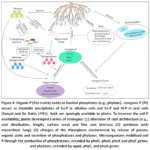 |
Figure 4: Organic P (Po) mainly exists as inositol phosphates (e.g., phytate). Inorganic P (Pi) occurs as insoluble precipitates of Ca-P in alkaline soils and Fe-P and Al-P in acid soils (Sanyal and De Datta 1991). |
Leaching and Gaseous Losses Mitigation
IFM reduces nitrate leaching by increasing soil aggregation, enhancing root depth, and maintaining a larger microbial biomass that immobilizes N during off-seasons. Cover cropping (e.g., ryegrass or clover) in IFM systems scavenges residual NO₃⁻ after cash crop harvest. Gaseous losses of N₂O (a potent greenhouse gas) are lower under IFM than conventional due to balanced C:N inputs that favor complete denitrification to N₂ rather than N₂O, and due to lower overall N surplus. A life-cycle assessment showed that IFM with 50% organic substitution reduces N₂O emissions by 40% compared to conventional NPK.
Phosphorus Dynamics and Chemical Transformations
Soil P Fractions (Labile, Fe/Al-bound, Ca-bound, Organic P) Soil phosphorus is distributed across: labile P (solution + exchangeable, immediately available), Fe/Al-bound P (strongly sorbed in acid soils), Ca-bound P (dominant in calcareous soils), and organic P (inositol phosphates, nucleic acids). In conventional systems, applied soluble P rapidly converts to non-labile fractions (fixation). Under IFM, the proportions shift toward labile and organic P pools.
Mechanisms of P Fixation and Release
Sorption-Desorption Kinetics Phosphate sorption on Fe/Al oxides or clay edges follows a fast initial reaction (minutes) followed by slow diffusion into micropores. IFM with organic matter provides competitive sorption sites: dissolved organic carbon (DOC) blocks P sorption sites, reducing the Langmuir adsorption maximum by 20–40%. (2) Desorption is enhanced under IFM because organic anions (citrate, oxalate) displace P via ligand exchange. Precipitation of Apatite and Variscite In calcareous soils, P precipitates as apatite [Ca₅(PO₄)₃OH] when Ca²⁺ activity is high; in acid soils, variscite (AlPO₄·2H₂O) forms. Organic inputs lower Ca²⁺ activity via complexation and lower Al³⁺ activity via chelation, suppressing these precipitates. (2) Biochar with high Ca content can initially fix P; thus low-ash biochars are preferred in IFM. 6.2.3. Ligand Exchange with Organic Acids Root exudates (e.g., malate, citrate) and decomposition products of organic matter exchange their –COO⁻ groups with P on mineral surfaces, releasing phosphate into solution. IFM increases the rhizosphere concentration of these organic acids by 2–5 fold compared to conventional. Organic Matter Competition – Humic and fulvic acids coat mineral surfaces, creating a physical barrier to P sorption and increasing the effective P concentration in soil solution. P-Solubilizing Biofertilizers – Bacteria such as Bacillus megaterium, Pseudomonas striata, and fungi like Penicillium spp. release organic acids and phosphatases. IFM with co-application of rock phosphate and these biofertilizers can solubilize 30–50 kg P₂O₅ per hectare per season. Mycorrhizal Associations – Arbuscular mycorrhizal fungi (AMF) extend hyphae beyond the P-depletion zone, accessing P from pores inaccessible to roots. IFM reduces high available P (which suppresses AMF colonization) by using moderate inorganic P rates, typically maintaining soil available P around 15–25 ppm (Olsen), which is optimal for AMF symbiosis.
Residual P Effects and Critical Limits
Under IFM, residual P accumulates in organic and labile fractions, providing benefits for 2–3 subsequent crops. Studies show that after three years of IFM, the critical limit for available P (below which response is expected) declines from 25 ppm to 18 ppm because mycorrhizae and organic acids improve P extraction efficiency. Hence, IFM can reduce long-term P fertilizer requirements by 20–30% while maintaining yield. Potassium Dynamics: Solution, Exchangeable, and Non-Exchangeable (Lattice) Potassium exists in three pools: solution K⁺ (immediately available, <2% of total), exchangeable K⁺ (held on CEC, 1–10%), and non-exchangeable (fixed in mica or vermiculite interlayers, 90–98%). Conventional systems often deplete exchangeable K without replenishing non-exchangeable reserves, leading to negative K balance. IFM with organic matter (especially composted manures) releases organic acids that weather mica, converting non-exchangeable K to exchangeable forms. For example, long-term IFM with FYM in a K-fixing soil increased exchangeable K by 40% over 5 years, whereas conventional KCl alone increased it only 10% due to leaching.
Impact of IFM on K Release from Interlayers
Root exudates and microbial metabolites (e.g., oxalic acid) under IFM promote K+ release from K-bearing minerals. Integrated application of K-solubilizing bacteria (Frateuria aurantia, Bacillus mucilaginosus) with organic carriers further enhances this release. IFM recommends that in high-K-fixing soils, applying organic residues 2–3 weeks before inorganic K fertilizer allows “pre-conditioning” of interlayers, improving fertilizer K recovery from 30% to 55%.
Ca/Mg: Leaching, Exchange, and Gypsum Effects
IFM reduces Ca²⁺ and Mg²⁺ leaching because higher CEC retains them. In acid soils, IFM with dolomitic lime supplies both Ca and Mg while raising pH. Gypsum (CaSO₄) used in IFM for sodic soil reclamation also supplies Ca and S. However, excess gypsum can leach Mg²⁺; thus IFM balances with Mg-containing organics. Oxidation/Reduction of Organic S and Sulfates Sulfur in IFM comes from organic matter (cysteine, methionine) and inorganic sulfates. Mineralization of organic S to SO₄²⁻ is enhanced by warm, moist conditions. In flooded soils, sulfate reduction to H₂S can cause toxicity; IFM avoids excessive organic S loading under such conditions. Incorporating elemental S with Thiobacillus biofertilizer oxidizes S to SO₄²⁻, useful for acidifying alkaline soils.
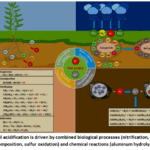 |
Figure 5: Soil acidification is driven by combined biological processes (nitrification, respiration, decomposition, sulfur oxidation) and chemical reactions (aluminum hydrolysis). |
Total vs. Available Micronutrients (Fe, Zn, Cu, Mn, B)
Total micronutrient content is inherited from parent material, but availability depends on soil chemistry. Under IFM, total pools remain unchanged, but available pools (DTPA-extractable) increase by 20–60% due to organic chelation and pH moderation.At low pH (<5.5), Fe, Mn, Zn become overly soluble (potential toxicity); at high pH (>7.5), they precipitate as hydroxides or carbonates (deficiency). IFM steers pH toward 6.0–7.0, where micronutrient solubility is adequate. Redox fluctuations affect Fe and Mn: reducing conditions increase Fe²⁺ and Mn²⁺ solubility; IFM with alternate wetting-drying cycles prevents excessive build-up. (3) Organic ligands (humic/fulvic acids) form soluble complexes with Zn, Cu, and Fe, increasing their diffusivity to roots.stability constant of metal-organic complexes follows Cu > Fe > Zn > Mn. IFM with compost or green manure provides natural chelates (fulvic acid, low molecular weight organic acids) that keep micronutrients in solution. Synthetic chelates (e.g., EDTA, DTPA) may be added in small amounts under IFM for severe deficiencies, but they degrade slowly; organic chelates are preferred for sustainability.For zinc deficiency common in calcareous soils, IFM integrates 50% RDF + ZnSO₄ (25 kg/ha) with zinc-solubilizing bacteria (e.g., Bacillus aryabhattai) and farmyard manure, which increases available Zn from 0.5 to 1.2 mg/kg. For iron deficiency in aerobic rice, IFM uses Fe-EDDHA chelate with compost; for toxicity (e.g., acid sulfate soils), lime plus organic matter precipitates excess Fe.Antagonisms high P suppresses Zn and Fe uptake (forms insoluble phosphates); high Zn suppresses Cu; high Fe suppresses Mn. IFM avoids excessive single-nutrient applications by balanced combined inputs. Synergisms: organic matter can simultaneously increase Zn and Cu availability via chelation; mycorrhizae enhance uptake of Zn and Cu together. IFM leverages these interactions by maintaining CEC and organic carbon above 1.5%.
Conclusion
This study provides robust evidence that Integrated Fertility Management (IFM) represents a paradigm shift from extractive, single‑input agriculture toward a regenerative, systems‑based approach to soil fertility. IFM effectively reverses nutrient mining by balancing nutrient removals with replenishment from multiple sources, reducing annual nutrient deficits, building soil organic carbon stocks (0.2–0.5 Mg C/ha/year), and increasing cation exchange capacity by 2–5 cmolc/kg per 1% increase in organic carbon, thereby restoring the soil’s capacity to retain and supply nutrients. Chemical transformations are fundamentally optimized under IFM: integration of organic matter with inorganic fertilizers enhances pH buffering, stabilizes electrical conductivity within non‑saline ranges, shifts phosphorus from non‑labile to labile and organic pools, mobilizes non‑exchangeable potassium from mica interlayers via organic acids and microbial metabolites, and increases micronutrient availability by 20–60% through chelation. Nutrient use efficiency (NUE) is significantly improved, with IFM raising NUE for nitrogen from 30–50% (conventional) to 50–70%, reducing fertilizer requirements and environmental N losses; for phosphorus, residual effects accumulate, lowering the critical soil test threshold from 25 ppm to 18 ppm and reducing long‑term P fertilizer demand by 20–30%. Biological synergies are central to IFM success, as co‑application of organic amendments with biofertilizers (rhizobia, phosphate‑solubilizing bacteria, mycorrhizae, K‑solubilizers) enhances nutrient mobilization beyond what either component alone can achieve, with mycorrhizal networks extending effective rooting volume. IFM also contributes directly to climate‑smart agriculture by reducing N₂O emissions (up to 40% compared to conventional NPK), sequestering soil carbon, and buffering yield losses during dry spells, while alternate wetting‑drying cycles manage redox potential to release occluded P and micronutrients without inducing denitrification or toxicity. Socio‑economic and institutional dimensions are critical for adoption: even technically superior IFM practices must be economically viable, culturally acceptable, and supported by access to inputs, extension services, and land tenure security; participatory approaches and low‑cost diagnostic tools lower adoption barriers for resource‑constrained smallholders.
Funding Sources
The author(s) received no financial support for the research, authorship, and/or publication of this article.
Conflict of Interest
The author(s) do not have any conflict of interest.
Data Availability Statement
This statement does not apply to this article.
Ethics Statement
This research did not involve human participants, animal subjects, or any material that requires ethical approval.
References
- Bationo, A., Waswa, B., Kihara, J., & Kimetu, J. (Eds.). (2007). Advances in integrated soil fertility management in sub-Saharan Africa: Challenges and opportunities. Springer.
CrossRef - Bouwman, A. F., Boumans, L. J. M., & Batjes, N. H. (2002). Emissions of N₂O and NO from fertilized fields: Summary of available measurement data. Global Biogeochemical Cycles, 16(4), 6-1–6-13.
CrossRef - Cai, Z., Gao, S., Hendratna, A., Duan, Y., Xu, M., & Hanson, B. D. (2021). Key factors affecting the bioavailability of soil phosphorus in integrated fertility management systems. Geoderma, 398, 115113.
- Chivenge, P., Vanlauwe, B., & Six, J. (2011). Does the combined application of organic and mineral nutrient sources influence maize productivity? A meta-analysis. Plant and Soil, 342(1), 1–30.
CrossRef - Conant, R. T., Cerri, C. E. P., Osborne, B. B., & Paustian, K. (2017). Grassland management impacts on soil carbon stocks: A new synthesis. Ecological Applications, 27(2), 662–668.
CrossRef - Dalal, R. C., & Allen, D. E. (2008). Greenhouse gas fluxes from natural ecosystems. Australian Journal of Botany, 56(5), 369–407.
CrossRef - Drinkwater, L. E., Wagoner, P., & Sarrantonio, M. (1998). Legume-based cropping systems have reduced carbon and nitrogen losses. Nature, 396(6708), 262–265.
CrossRef - Fageria, N. K., & Baligar, V. C. (2005). Enhancing nitrogen use efficiency in crop plants. Advances in Agronomy, 88, 97–185.
CrossRef - Giller, K. E., Cadisch, G., & Palm, C. A. (Eds.). (2006). Biological approaches to sustainable soil systems. CRC Press.
- Gopalakrishnan, S., Sathya, A., Vijayabharathi, R., Varshney, R. K., Gowda, C. L. L., & Krishnamurthy, L. (2015). Plant growth-promoting rhizobacteria: A potential tool for sustainable agriculture. BioControl, 60(5), 599–613.
- Hinsinger, P. (2001). Bioavailability of soil inorganic P in the rhizosphere as affected by root-induced chemical changes: A review. Plant and Soil, 237(2), 173–195.
CrossRef - IUSS Working Group WRB. (2015). World reference base for soil resources 2014: International soil classification system for naming soils and creating legends for soil maps(Update 2015). FAO.
- Jones, D. L., & Darrah, P. R. (1994). Role of root derived organic acids in the mobilization of nutrients from the rhizosphere. Plant and Soil, 166(2), 247–257.
CrossRef - Lal, R. (2004). Soil carbon sequestration impacts on global climate change and food security. Science, 304(5677), 1623–1627.
CrossRef - Lehmann, J., & Joseph, S. (Eds.). (2015). Biochar for environmental management: Science, technology and implementation(2nd ed.). Routledge.
CrossRef - Lu, M., Zhou, X., Luo, Y., Yang, Y., Fang, C., Chen, J., & Li, B. (2011). Minor stimulation of soil carbon storage by nitrogen addition: A meta-analysis. Agriculture, Ecosystems & Environment, 140(1-2), 234–244.
CrossRef - Marschner, H. (2012). Mineral nutrition of higher plants(3rd ed.). Academic Press.
- Meena, V. S., Maurya, B. R., & Verma, J. P. (2014). Does a rhizospheric microorganism enhance K⁺ availability in agricultural soils? Microbiological Research, 169(5-6), 337–347.
CrossRef - Mikkelsen, R. L. (2011). The four rights of plant nutrition. Better Crops, 95(4), 14–17.
- Mucheru-Muna, M., Pypers, P., Mugendi, D., Kung’u, J., Mugwe, J., Merckx, R., & Vanlauwe, B. (2007). A staggered maize–legume intercrop arrangement robustly increases crop yields and economic returns in the highlands of Central Kenya. Field Crops Research, 115(2), 132–141.
CrossRef - Naeem, M., Ansari, A. A., & Gill, S. S. (Eds.). (2017). Essential plant nutrients: Uptake, use efficiency, and management. Springer.
CrossRef - Olsen, S. R., Cole, C. V., Watanabe, F. S., & Dean, L. A. (1954). Estimation of available phosphorus in soils by extraction with sodium bicarbonate(USDA Circular No. 939). U.S. Government Printing Office.
- Palm, C. A., Giller, K. E., Mafongoya, P. L., & Swift, M. J. (2001). Management of organic matter in the tropics: Translating theory into practice. Nutrient Cycling in Agroecosystems, 61(1), 63–75.
CrossRef - Parnes, R. (2013). Fertile soil: A grower’s guide to organic and inorganic fertilizers. AgAccess.
- Powlson, D. S., Whitmore, A. P., & Goulding, K. W. T. (2011). Soil carbon sequestration to mitigate climate change: A critical re-examination to identify the true and the false. European Journal of Soil Science, 62(1), 42–55.
CrossRef - Richardson, A. E., & Simpson, R. J. (2011). Soil microorganisms mediating phosphorus availability. Plant Physiology, 156(3), 989–996.
CrossRef - Ryan, J., Estefan, G., & Rashid, A. (2001). Soil and plant analysis laboratory manual(2nd ed.). ICARDA.
- Sánchez, P. A. (2019). Properties and management of soils in the tropics (2nd ed.). Cambridge University Press.
- Sanyal, S. K., & De Datta, S. K. (1991). Chemistry of phosphorus transformations in soil. Advances in Soil Science, 16, 1–120.
CrossRef - Sharma, S. B., Sayyed, R. Z., Trivedi, M. H., & Gobi, T. A. (2013). Phosphate solubilizing microbes: Sustainable approach for managing phosphorus deficiency in agricultural soils. SpringerPlus, 2(1), 587.
CrossRef - Six, J., Conant, R. T., Paul, E. A., & Paustian, K. (2002). Stabilization mechanisms of soil organic matter: Implications for C-saturation of soils. Plant and Soil, 241(2), 155–176.
CrossRef - Smith, P., Martino, D., Cai, Z., Gwary, D., Janzen, H., Kumar, P., … & Smith, J. (2008). Greenhouse gas mitigation in agriculture. Philosophical Transactions of the Royal Society B: Biological Sciences, 363(1492), 789–813.
CrossRef - Sommer, R., & Bossio, D. (2014). Dynamics and climate change mitigation potential of soil organic carbon sequestration. Journal of Environmental Management, 144, 83–87.
CrossRef - Sparks, D. L. (2003). Environmental soil chemistry(2nd ed.). Academic Press.
CrossRef - Tilman, D., Cassman, K. G., Matson, P. A., Naylor, R., & Polasky, S. (2002). Agricultural sustainability and intensive production practices. Nature, 418(6898), 671–677.
CrossRef - Tittonell, P., & Giller, K. E. (2013). When yield gaps are poverty traps: The paradigm of ecological intensification in African smallholder agriculture. Field Crops Research, 143, 76–90.
CrossRef - Vanlauwe, B., Bationo, A., Chianu, J., Giller, K. E., Merckx, R., Mokwunye, U., … & Sanginga, N. (2010). Integrated soil fertility management: Operational definition and consequences for implementation and dissemination. Outlook on Agriculture, 39(1), 17–24.
CrossRef - Vitousek, P. M., Naylor, R., Crews, T., David, M. B., Drinkwater, L. E., Holland, E., … & Zhang, F. S. (2009). Nutrient imbalances in agricultural development. Science, 324(5934), 1519–1520.
CrossRef - Walkley, A., & Black, I. A. (1934). An examination of the Degtjareff method for determining soil organic matter, and a proposed modification of the chromic acid titration method. Soil Science, 37(1), 29–38.
CrossRef - Zech, W., Senesi, N., Guggenberger, G., Kaiser, K., Lehmann, J., Miano, T. M., … & Schroth, G. (1997). Factors controlling humification and mineralization of soil organic matter in the tropics. Geoderma, 79(1-4), 117–161.
CrossRef
 PlumX:
  Views: 639 Views
  PDF Downloads: 779
 Accepted on: 13 May 2026


ISSN Online: 2231-5039