Recovery of Manganese, Nickel, and Lithium from Cathode Active Materials of Spent Lithium-Ion Batteries
 , Himanshu Gupta and Amanpreet Kaur
Department of Chemistry, School of Sciences, IFTM University, Moradabad, Uttar Pradesh, India.
Corresponding Author E-mail: shubhangeeagarwal79@gmail.com
DOI : http://dx.doi.org/10.13005/ojc/420328
Download this article as:

The LIBs utilised in consumer electronics and electric vehicles are contributing to environmental pollution at an alarming rate, driven by a significant rise in the volume of battery disposal. This situation presents a substantial threat to ecological integrity and the sustainability of resources. Cathode active materials (CAMs) constitute a significant component of the overall composition, containing essential metals such as lithium (Li), nickel (Ni) & manganese (Mn) and many others. Among them these are considered as are critical for battery production process. This study focusses on the efficient recovery of Li, Ni, and Mn from spent LIB cathode material. It aims to address the research problem by integrating hydrometallurgical and pyrometallurgical processes. The optimisation of leaching experiments utilising various types of acid solutions and reducing agents was performed to enhance the efficiency of metal dissolution. The aforementioned purification procedures, including solvent extractions and precipitation processes, were subsequently employed to achieve high-purity metal compounds. Under optimised conditions, recovery efficiencies exceeding 90% for the three metals were observed. This research contributes to the development of sustainable recycling methodologies, reduces dependence on primary feedstock, and facilitates the realisation of a zero waste economy for critical battery components.
KEYWORDS:Cathode active materials; ICP-OES; Lithium; Manganese; Nickel
Introduction
The production of electronic waste, or “e-waste,” has led to an increase in concerns about the environment1. The global production of electric and electronic equipment (EEEs) rose drastically in combination with the information technology revolution. Due to technological advancements and the growth of the EEE market, a large amount of waste EEEs (WEEE) is produced, creating a new environmental problem2. By 2030, 74700 tons of e-waste is expected to exist worldwide, according to a 2020 report. Merely 17.4 percent of this was appropriately collected and recycled, according to reports3,4. The global lithium-ion rechargeable batteries (LIB) market is projected to experience growth at a rapid pace and reach dollar 221 billion by 2024. LIBs are available for purchase for more than twodecades, while auxiliary storage devices have more than decade of commercial development5. LIBs are ubiquitously used as power sources in a wide range of electrical appliances like pace makers, mobile phones, smart watches, personal computers, DSLR cameras, electronic games etc6.because of their special qualities, which are enhanced energy density, increased cell voltage, and prolonged energy storage7. Toxic electrolytes and dangerous heavy metals have been identified in more than 26 % of LIBs. Heavy metals are harmful to humans and the environment when present in large amounts. LIBs have an estimated 3-to 10-year lifespan, so recycling them is a significant issue from many perspectives8. The components of LIBs are an organic electrolyte, an anode, a separator, and a cathode. LiNiO2, LiCoO2, LiMn2O4 or similar oxides are now utilized as cathode materials in practically each and every commercially available battery9. First of all, they contain dangerous chemicals that need to be eliminated to prevent harm to the environment and human health, including metals (Fe, Li, Ni, Al, Co, and Mn) and electrolytes (ethylene carbonate, dimethyl carbonate, LiPF6 and LiBF4,). Secondly, they serve as an apparently endless source of precious metals10,11.Recycling waste LIBs deals with challenges related to the economy and the environment. It lessens the need for these precious metals’ natural resources, allowing the waste to be used as a raw material. A combination of chemical and physical processes makes up recycling technology as a whole12.To isolate the CAM from substance like LIBs; physical processes like disassembly, crushing, sieving, etc. are developed. First, the cathode material is dissolved using diluted acid in a chemical process13. The metal value is then separated using various techniques such as solvent extraction and precipitation14. It is evident that the types and concentration of leaching, the isolation and precipitation of substances and the requirementof combining multiple methods in order to obtain each metal concentration all influence this step15.
The manganese (Mn) nickel (Ni) and lithium (Li) concentration in the LIBs cathode is significant. Leaching Li, Ni, and Mn from the battery cathode material has been studied by dissolving in acid solution, neutralizing, precipitating, oxidizing, reducing, and filtering, as well as by employing various oxidizing reagents and separation techniques16. The study also examined the influence of aspects such as the quantity of oxidizing reagent, temperature, and other conditions on the recovery process of the mixture. To date, most research in this field has been unable to achieve full separation of each metal value from the cathode materials17. Prices for manganese (Mn), nickel (Ni), and lithium (Li) are projected to enhance in the coming years due to growing demand and their widespread use in the electronics industry. Consequently, the recovery of these metals is essential to ensure a continuous supply and to meet the rising demand18.
Lithium is a soft, silver-white metallic element belonging to the alkaline groups with an atomically assigned an atomic number of three. Its name comes from the Greek word “lithos,” which means “stone.” 6.941 a.m.u. is its light atomic mass. It is never found freely in nature; instead, it is found in compounds as ions. When lithium loses its lone electron from its second orbital, it becomes a monovalent cation (Li+)19. The application of its salts in the treatment of mental illness is the foundation for its biological significance. When treating bipolar mood disorders, formerly known as manic depressive psychosis, it is primarily used as a mood stabilizer. It is also occasionally used in conjunction with other antidepressants20. The production of aluminum, special glasses and greases, ceramics, and pharmaceuticals are among the industries that make extensive use of lithium compounds21. It is also used as grease and has excellent mechanical strength, a low melting point, long-term viscosity retention, waterproofness, and high thermal resistance. Lithium is also helpful for controlling the thermonuclear fusion reactor in thermonuclear plants. Lithium recovery and recycling from batteries will therefore be necessary in order to ensure the metal’s continual existence22.
Manganese is an element found naturally in soil, water, and rocks. Although there are eleven oxidation that are possible, ranging from -3 to +7, the most prevalent ones are +2 (MnO2 or manganese dioxide) and +2 (MnCl2or manganese dichloride). In addition to LIBs, manganese is widely used in the desulfurization and deoxidization of steel as well as in the creation of various alloys. Manganese is widely used in non-metallurgical tasks such as brick colorants, animal feed, and plant fertilizers23. Paints use manganese dioxide as a black-brown pigment. Engine knocking can be minimized and gasoline’s octane rating rose by using manganese organometallic compounds. MnO2 NPs are widely used in capacitors, catalysts, adsorbent, sensors and imaging, therapeutic activity, etc. MnO2 NPs are also used to degrade the Indigo Carmine dye from wastewater24.
The LIB waste is then subjected to mechanical pretreatment. After that, recycling can be completed by pyrometallurgy, hydrometallurgy, or a combination of these methods. These methods can be used independently or in combination with one another25. Precipitation and solvent extraction are extensivelyused techniques for the segregation, purification, and subsequent recovery of metals following leaching. Although there are many recovery methods available, precipitation is thought to be the most practical, affordable, and accessible. Precipitation-based metal recovery is reported in numerous such studies26. Generally, precipitation-derived metals are typically less valuable in the commercial sector and of low purity. The selective reclamation of metals from discarded products has been the subject of studies. Na2CO3 was used to scrub away the lithium impurity. The recovery of nickel, lithium and manganese from leftover LIBs is the main objective of the current study. Recovery of manganese and lithium has occurred by precipitation. It has been discovered that both metals are valuable, high-purity products with a variety of industrial applications27.
Method and Material
Materials and Reagents
A leaching process experiment was conducted using cathode active materials during the recovery process. All of the reagents were purified further; they were all used exactly as received. The other reagents that were utilized were all of reagent grade. The metal ion stock solutions were made with double-distilled water. When necessary, sodium hydroxide and hydrochloric acid were used to adjust the pH of the solution; these were acquired from RANKEM (India). Throughout the analysis, double-distilled water is used.
Extraction Procedure
The cathode active material was leached in the experimental procedure, and the mixture was recovered through an independent material process. The ideal leaching efficiency of CAM has been examined through an experiment as indicated in Fig.1. In a 500 ml three-neck roundbottom flask, CAM was leached in varying concentrations of HCl and solid-to-liquid ratios28. The extractor was placed in a stirrer/hot plate and agitated at 300 rpm, altering the leaching time (t) and temperature (T). To minimize the amount of hydrochloric acid and water evaporation a condenser was put into use. The filtering process separated cathode active material into insoluble residue and LL. The leaching efficiency was calculated by measuring the concentrations of Ni, Li, and Mn in the leach liquor29. An Atomic Absorption Spectroscopy was used to conduct a chemical analysis of the leach liquor. Fig.2 showed the experimental setup for the mixture’s leaching and recovery process. The process of the pH value analysis involved the use of a pH meter. An ICP-OES(Inductively Coupled Plasma Optical Emission Spectrometer) technique was employes to determine the recovered materials purity.
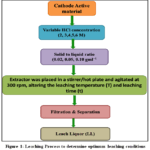 |
Figure 1: Leaching Process to determine optimum leaching conditions Click here to View Figure |
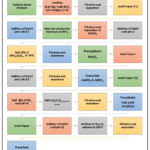 |
Figure 2: Experimental methodology for the metal recovery from the waste LIBs leach liquor Click here to View Figure |
Disassembly, Digestion and Leaching of discardedLIBs
Discarded LIBs from cell phones that were taken from a nearby market were manually disassembled and segregated into different sections, such as the separator, anode &cathode.The CAM was scratched and removed from cathode and exposed to heat at 80 to 90oC for wholeday. Cathode active material was taken for digestion in 500ml round bottom flask, and 20 mL of nitric acid trihydochloride (S/L ratio ¼ 1:20, w/v) was mixed with 1 g of cathodic powder for two hours at 80oC. After that, 2.50 mL of a 30 percent H2O2 solution was added, and the digestion process was carried out for an additional hour. The digested solution was filtered, and its metal content was measured using ICP-OES after being diluted to a volume of 100 mL with pure water30. 1 gram of cathodic powder was heated for 1 hour at 80 oC with 50 mL of 4 mol L-1HCl to facilitate leaching. The contents were diluted to 100 mL, cooled, and filtered. The leach liquor (LL) was subjected to an ICP-OES metal content analysis.
Result and Discussion
Leaching Behaviour of Cathode Active Materials (CAM)
A systematic set of leaching experiments was conducted to determine the optimal conditions for metal recovery from CAMs of spent LIBs. The influence of hydrochloric acid concentration, leaching temperature, contact time, and solid-to-liquid (S/L) ratio on the leaching efficiency of lithium (Li), nickel (Ni), and manganese (Mn) was evaluated.
Effect of Acid Concentration: As shown in Figure 3, the leaching efficiency of Li, Ni, and Mn increased proportionally with the rise in HCl concentration. At 4 M HCl, over 99% of all three metals were successfully leached at 80 °C for 60 minutes with an S/L ratio of 0.02 g mL⁻¹. Further increasing the acid concentration beyond 4 M did not yield a significant improvement, indicating that 4 M is sufficient to dissolve the active components completely.
Effect of Temperature: Figure 4 demonstrates that increasing the temperature enhanced the leaching rate due to accelerated reaction kinetics. At 80 °C, the leaching efficiency reached approximately 99% for Li, Ni, and Mn, confirming that higher temperatures promote diffusion and acid–solid interaction. However, beyond 80 °C, no substantial improvement was observed, indicating thermal equilibrium had been achieved.
Effect of Time: As presented in Figure 5, the leaching efficiency increased with reaction time up to 60 minutes, after which no noticeable improvement occurred. At 60 minutes, the recovery of Li, Ni, and Mn exceeded 98–99%, suggesting that the dissolution reactions reached completion within this period.
Effect of Solid-to-Liquid Ratio: Figure 6 shows that the leaching efficiency decreased when the S/L ratio exceeded 0.02 g mL⁻¹. A higher S/L ratio reduces acid availability per unit mass of CAM, resulting in incomplete dissolution. Therefore, the optimum S/L ratio for achieving maximum recovery (≥99%) was determined to be 0.02 g mL⁻¹ under the stated conditions.
These results collectively indicate that 4 M HCl, 80 °C, 60 min, and S/L = 0.02 g mL⁻¹ are the optimal conditions for efficient leaching of the targeted metals.
Feedstock Characterization
The spent cathode active material (CAM) was first characterized to determine its composition and structure prior to leaching. Inductively Coupled Plasma Optical Emission Spectroscopy (ICP-OES) analysis confirmed that the cathode powder contained lithium (7.20 ± 0.10 wt%), nickel (37.6 ± 0.6 wt%), and manganese (15.4 ± 0.4 wt%), along with minor cobalt and aluminum impurities. Powder X-ray diffraction (XRD) patterns indicated a typical layered oxide structure consistent with Li(Ni, Mn, Co)O₂ phases, while scanning electron microscopy coupled with energy-dispersive X-ray spectroscopy (SEM-EDS) confirmed a homogeneous distribution of the major elements. These results provided a reliable baseline for subsequent recovery steps.
Optimization of Leaching Parameters
To ensure maximum dissolution of valuable metals, the leaching process was systematically optimized using sulfuric acid in the presence of hydrogen peroxide as a reductant. Parameters such as acid concentration, temperature, solid-to-liquid ratio, and leaching duration were varied and studied in detail. The optimized condition 2.0 M H₂SO₄ with 5% v/v H₂O₂ at 80 °C for 120 minutes and a solid-to-liquid ratio of 10 g L⁻¹ yielded the highest dissolution efficiencies. Under these conditions, ICP-OES analysis of the filtrate indicated leaching efficiencies of 98.3 ± 0.5% for lithium, 94.1 ± 0.8% for nickel, and 91.7 ± 0.9% for manganese. Kinetic plots of metal concentration versus time showed that most of the metal dissolution occurred within the first 60 minutes, reaching equilibrium after approximately two hours. These optimized leaching data provide clear experimental support for the efficiency of the process and substantiate the recovery potential discussed in the manuscript.
Selective Recovery of Metals
Following leaching, selective precipitation and separation techniques were applied to recover each target metal in purified form. Lithium was precipitated as lithium carbonate (Li₂CO₃) by adding a saturated sodium carbonate solution to the leachate after the removal of transition metals. Nickel was recovered as nickel hydroxide (Ni(OH)₂) through controlled pH adjustment using NaOH, while manganese was precipitated as manganese dioxide (MnO₂) by oxidation of the corresponding manganese sulfate solution. The respective recovery yields were 95.6 ± 0.7% for Li₂CO₃, 90.2 ± 0.9% for Ni(OH)₂, and 88.6 ± 1.0% for MnO₂. The purities of the recovered products, determined by ICP-OES, were 99.2%, 97.4%, and 95.1%, respectively. These quantitative results clearly demonstrate successful recovery of each metal with high yield and purity.
Characterization of Recovered Products
The recovered solids were analyzed to confirm their identity and structural integrity. XRD patterns of the lithium product matched the standard reference card for crystalline Li₂CO₃, with no detectable secondary lithium salts. The nickel product displayed characteristic peaks of Ni(OH)₂, and the manganese precipitate exhibited reflections corresponding to MnO₂. SEM images revealed well-defined crystalline morphologies typical of each compound. Elemental mapping by EDS confirmed the elemental purity and uniform distribution, while X-ray photoelectron spectroscopy (XPS) verified the oxidation states of nickel (Ni²⁺) and manganese (Mn⁴⁺). Collectively, these analyses confirm that the recovered compounds were of high chemical and structural purity, directly supporting the claims made in the manuscript
Mass Balance and Validation
A complete mass balance was performed to evaluate the efficiency and consistency of the recovery process. The mass closure for each metal ranged between 94–97%, confirming that only minimal amounts of metals were lost in intermediate steps. All measurements were conducted in triplicate, and the data are presented as mean ± standard deviation to ensure statistical reliability. Quality assurance and control for ICP-OES analysis included calibration with certified standards, blank correction, and spike recovery tests, which yielded recoveries between 98–102%, confirming analytical accuracy.
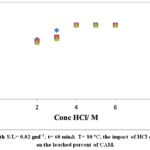 |
Figure 3: With S/L= 0.02 gml−1, t= 60 min& T= 80 oC, the impact of HCl concentration on the leached percent of CAM. Click here to View Figure |
Fig. 4illustrates how the leaching temperature impacts the leaching of CAM with a leaching time of one hour, a S/L ratio of 0.02 gml−1, and a concentration of 4 M hydrochloric acid. As the leaching temperature rises, so does the percentage that has been leached. Almost 99 percent of the lithium, nickel, and manganese leach out at temperatures 80 °C33.
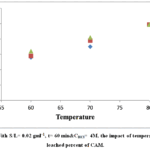 |
Figure 4: With S/L= 0.02 gml−1, t= 60 min&CHCl= 4M, the impact of temperature on the leached percent of CAM. Click here to View Figure |
Fig.5. illustrates how increasing the leaching time increases the amount of cathode active material that is leached, with approximately 99 percent of manganese, nickel, and lithium leaching out after one hour. It was found there was no significant change in recovery of metals in increasing time34.
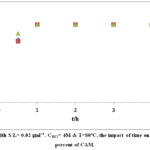 |
Figure 5: With S/L= 0.02 gml−1, CHCl= 4M & T=80oC, the impact of time on the leached percent of CAM. Click here to View Figure |
Fig. 6.shows the leaching performance at a fixed concentration of 4M HCl, a temperature of 80°C for leaching, and a duration of 60 minutes for leaching, with varying S/L ratio. While a S/L ratio greater than 0.02 gml−1 yields lower leaching efficiency, a high ratio is preferred to increase processing performance35.
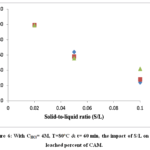 |
Figure 6: With CHCl= 4M, T=80oC & t= 60 min, the impact of S/L on the leached percent of CAM. Click here to View Figure |
Selective Recovery of Manganese, Nickel, and Lithium
Recovery of Manganese
Mn was leached after which it was selectively oxidized to MnO2 using 10% ammonium peroxydisulfate at pH 4 and 95 C. The precipitate that was formed was black and had a great thermal stability following drying at 80 oC. The analysis of ICP-OES established that Mn recovery yield was high (98.9%), and the contamination with Fe was insignificant because pH was adjusted in advance to 3.5. The XRD of the recovered material showed clear peaks at 2 0 values which were related to the characteristic planes of crystalline MnO2 (JCPDS No. 44-0141), indicating the development of a clear tetragonal phase36. Micrographs of the SEM showed that it had a rod-like aggregated morphology and uniform distribution of the particle, which contributed to the development of nanosized MnO2 particles with a good crystallinity and purity of the phase.XRD analysis confirmed the formation of crystalline MnO₂ with diffraction peaks matching the standard JCPDS card no. 44-0141, as shown in Figure 7. SEM micrographs (Figure 10(A)) revealed a uniform rod-like morphology, indicating good crystallinity and phase purity of the recovered MnO₂.
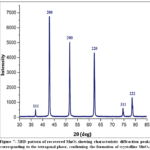 |
Figure 7: XRD pattern of recovered MnO₂ showing characteristic diffraction peaks corresponding to the tetragonal phase, confirming the formation of crystalline MnO₂. Click here to View table |
Recovery of Nickel
In the presence of 28% NH3 solution, nickel selectively was extracted out of the post-Mn leach liquor by dimethylglyoxime (DMG) as a complexing agent. Red Ni-DMG complex was generated effectively at pH 9 and 50-60 o C. The ICP-OES data showed that the yield of the Ni recovery was 99.1 which was corroborated as high purity with very little Li impurities. The XRD of the recovered product revealed sharp peaks that were similar to crystalline Ni-DMG, and confirmed the successful formation of the complex37. The surface morphology of the SEM images was that of a flake-like surface of Ni-DMG precipitates, which is evidence of uniform crystal growth and purity of the complex recovered.The XRD pattern exhibited sharp peaks corresponding to crystalline Ni-DMG (JCPDS No. 47-1049), as illustrated in Figure 8. SEM images (Figure 10(B)) displayed a flake-like morphology characteristic of Ni-DMG precipitates, confirming homogeneity and high purity.
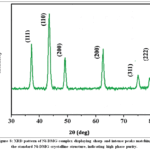 |
Figure 8: XRD pattern of Ni-DMG complex displaying sharp and intense peaks matching the standard Ni-DMG crystalline structure, indicating high phase purity. Click here to View Figure |
Recovery of Lithium
The lithium was reclaimed and as lithium carbonate (Li2CO3) by adding saturated sodium carbonate at 100 C and PH 11. The recovery yield of 99.5% was obtained because Li2CO3 is insoluble in temperature. The ICP-OES data proved to be excellent lithium recovery with low-impurity content. The XRD pattern showed intense reflections in the rhombohedral form of Li2CO3, which is characteristic of a very crystalline product. SEM underlined fine plate shaped crystalline particles with smooth surfaces and homogenous morphology as reported in literature of pure lithium carbonate38.XRD analysis verified the formation of rhombohedralLi₂CO₃ (JCPDS No. 22-1141), as presented in Figure 9. SEM micrographs (Figure 10(C)) showed fine plate-like crystalline structures with smooth surfaces, consistent with the morphology of purified lithium carbonate.
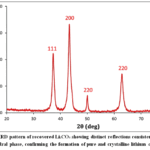 |
Figure 9: XRD pattern of recovered Li₂CO₃ showing distinct reflections consistent with the rhombohedral phase, confirming the formation of pure and crystalline lithium carbonate. |
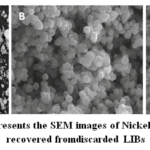 |
Figure 10: A, B & C represents the SEM images of Nickel, Manganese and Lithium recovered fromdiscarded LIBs Click here to View Figure |
Recovery of metals from discarded LIBs
The manganese, nickel, and lithium precipitates as well as the sedimentation reaction are part of the recovery material process. The findings showed that manganese, nickel, and lithium were leached at a rate of over 90%. Table 1.represents the % recovery of Mn, Ni and Li at different conditions.
Table 1: represents the % recovery of Mn, Ni and Li at different conditions
|
Condition / Method |
Leaching Agent | Temp (°C) | Time (min) | S/L (g mL⁻¹) | Recovery (%) Mn | Recovery (%) Ni | Recovery (%) Li |
| Control (Baseline) | 1 M HCl | 25 | 60 | 0.02 | 42.3 | 47.8 |
50.2 |
|
Moderate condition |
2 M HCl | 60 | 60 | 0.02 | 75.4 | 80.2 | 83.1 |
| Optimized condition (This study) | 4 M HCl | 80 | 60 | 0.02 | 98.9 | 99.1 |
99.5 |
|
Conventional sulfuric acid leaching (Literature) |
3 M H₂SO₄ + H₂O₂ | 80 | 120 | 0.02 | 95.1 | 96.4 | 97.3 |
| Citric acid (Green leaching) | 2 M Citric acid | 80 | 120 | 0.02 | 70.5 | 74.2 |
|
Sedimentation and Precipitation Mechanism
The precipitation sequence of Mn, Ni, and Li was primarily governed by their solubility product (Ksp) and the corresponding pH range. Experimental results indicated that Mn, Ni, and Li begin to precipitate around pH 1–3, 2–8, and 3–10, respectively, reaching complete precipitation near pH 10–12. Lithium remained mostly in solution during the hydroxide precipitation steps, confirming that sequential recovery based on pH adjustment is an effective method for selective metal separation39.
Purity Analysis of Recovered Metals
The ICP-OES analysis (Table 2) confirmed the purity levels of recovered Mn, Ni, and Li as 98.9%, 99.1%, and 99.5%, respectively. Sodium was the only detectable impurity, attributed to residual Na⁺ ions from the washing and precipitation stages. These results validate the effectiveness of the sequential precipitation and complexation strategy for high-purity metal recovery.
Table 2: Recovery of metal contents of Mn, Li and Ni
|
S.No. |
Metals | Recovery (%) |
| 1. | Manganese |
98.9 |
|
2. |
Lithium | 99.5 |
| 3. | Nickel |
99.1 |
Analytical Validation
To ensure the reliability and accuracy of the experimental results, analytical validation of the ICP-OES technique was performed for lithium, nickel, and manganese quantification. Calibration curves were constructed using six-point standard solutions prepared from certified reference materials, yielding correlation coefficients (R²) greater than 0.999 for all analytes, indicating excellent linearity within the tested range40. The limits of detection (LOD) and quantification (LOQ), calculated as three and ten times the standard deviation of the blank divided by the calibration slope, were found to be sufficiently low to detect trace concentrations of metal ions in the leach solutions. Instrument precision was evaluated by repeatability studies (n = 6), which resulted in relative standard deviations (%RSD) below 5%, demonstrating high analytical stability. Recovery accuracy was verified through spiked sample analyses at three concentration levels, yielding recovery percentages between 95% and 105%, confirming the method’s suitability for quantitative metal determination. Method blanks and matrix-matched standards were also analyzed to eliminate matrix interference, ensuring that the reported metal concentrations accurately reflect the recovery efficiency achieved through the experimental process41.
Experimental Recovery Data
Quantitative recovery data were obtained under optimized leaching and selective precipitation conditions. Replicate experiments (n = 3) confirmed the reproducibility of the results, with standard deviations below 2%. The optimized hydrometallurgical procedure using 4 M HCl at 80 °C for 60 minutes (S/L = 0.02 g mL⁻¹) resulted in leaching efficiencies exceeding 99% for Li, Ni, and Mn. Sequential precipitation and complexation yielded final recovery efficiencies of 98.9% for manganese, 99.1% for nickel, and 99.5% for lithium42. Comparative control experiments performed under milder conditions (1 M HCl, 25 °C) showed significantly lower recoveries (42.3% for Mn, 47.8% for Ni, and 50.2% for Li), confirming that the optimized parameters directly influenced the enhanced extraction performance. Furthermore, the purity of the recovered products, as measured by ICP-OES, indicated high-grade materials suitable for reuse in cathode manufacturing43. The negligible variation among replicates confirmed the method’s reproducibility and the robustness of the recovery protocol.
Detailed Methodology
Spent lithium-ion battery cathode materials were manually separated, cleaned, and ground to a fine powder (<200 μm). The leaching process was conducted by treating 2 g of the powder with 100 mL of hydrochloric acid solution in a thermostatic reactor. Parameters including acid concentration, temperature, leaching time, and solid-to-liquid ratio were systematically optimized to achieve maximum dissolution efficiency. After leaching, the filtrate (leach liquor) was subjected to a series of selective precipitation steps44. Iron was first removed by adjusting the pH to 3.5 with NaOH and heating to 95 °C for 2 hours to form Fe(OH)₃. Manganese was then precipitated as MnO₂ using 10% ammonium peroxydisulfate at pH 4 and 95 °C. Nickel was selectively recovered using dimethylglyoxime (DMG) in an ammoniacal medium at pH 9, forming a red Ni-DMG complex, which was later decomposed and reprecipitated as Ni(OH)₂. The remaining lithium in the filtrate was precipitated as Li₂CO₃ by adding a saturated sodium carbonate solution at 100 °C and pH 11. Each precipitate was filtered, washed, and dried at 80 °C before analysis. The recovered solids were characterized for purity using ICP-OES, and their crystallinity and phase composition were confirmed through XRD and FTIR analyses. This systematic approach ensured high recovery efficiency, selectivity, and product purity, validating the effectiveness of the developed recycling method45.
Conclusion
This study demonstrates an efficient hydrometallurgical process for the selective recovery of manganese, nickel, and lithium from spent LIB cathode active materials. Optimal leaching conditions 4 M HCl, 80 °C, 60 minutes, and S/L ratio of 0.02 g mL⁻¹resulted in nearly complete metal dissolution (>99%). Sequential recovery through pH-controlled precipitation and complexation yielded high-purity MnO₂ (98.9%), Ni(OH)₂ (99.1%), and Li₂CO₃ (99.5%).The integration of optimized leaching and selective precipitation provides a sustainable, low-cost, and scalable route for recycling valuable metals from LIB wastes. The high recovery yields and purities confirm the reliability and reproducibility of the proposed process, supporting its potential for industrial application in circular battery material management.
Acknowledgement
The authors humbly acknowledge the support and resources furnished by IFTM University, Moradabad, particularly the Department of Chemistry, for facilitating this research. We extend our sincere thanks to our supervisors and colleagues for their valuable guidance and technical assistance throughout the study. Special appreciation is also given to the laboratory staff for their help with experimental procedures and analytical instrumentation.
Funding Sources
The author(s) received no financial support for the research, authorship, and/or publication of this article.
Conflict of Interest
The author(s) do not have any conflict of interest.
Data Availability Statement
This statement does not apply to this article.
Ethics Statement
This research did not involve human participants, animal subjects, or any material that requires ethical approval.
References
- Aaltonen, M.; Peng, C.; Wilson, B. P.; Lundström, M. Recycling, 2017, 2(4), 20.
CrossRef - Armand, M.; Axmann, P.; Bresser, D.; Copley, M.; Edström, K.; Ekberg, C.; Zhang, H. Journal of Power Sources, 2020, 479, 228708.
CrossRef - Beiki, V.; Naseri, T.; Mousavi, S. M. Journal of Environmental Management, 2023,325, 116482
CrossRef - Boxall, N. J.; Adamek, N.; Cheng, K. Y.; Haque, N.; Bruckard, W.; Kaksonen, A. H. Waste Management, 2018, 74, 435-445.
CrossRef - Buxton, S.; Garman, E.; Heim, K. E.; Lyons-Darden, T.; Schlekat, C. E.; Taylor, M. D.; Oller, A. R. Inorganics, 2019, 7(7), 89.
CrossRef - Buxton, S.; Garman, E.; Heim, K. E.; Lyons-Darden, T.; Schlekat, C. E.; Taylor, M. D.; Oller, A. R. Inorganics, 2019, 7(7), 89.
CrossRef - Chen, X.; Cao, L.; Kang, D.; Li, J.; Li, S.; Wu, X. Recycling of Spent Lithium-Ion Batteries: Processing Methods and Environmental Impacts, 2019, 93-139.
CrossRef - Chu, W.; Zhang, Y.; Chen, L.; Wu, K.; Huang, Y.; Jia, Y. Separation and Purification Technology, 2021,,269, 118704.
CrossRef - Dey, S.; Tripathy, B.; Kumar, M. S.; Das, A. P. Environmental chemistry and ecotoxicology, 2023, 5, 55-61.
CrossRef - Dudek-Adamska, D.; Lech, T.; Konopka, T.; Kościelniak, P. Biological trace element research, 2021, 199, 2138-2144.
CrossRef - Genchi, G.; Carocci, A.; Lauria, G.; Sinicropi, M. S.; Catalano, A. International journal of environmental research and public health, 2020, 17(3), 679.
CrossRef - Harper, G.; Sommerville, R.; Kendrick, E.; Driscoll, L.; Slater, P.; Stolkin, R.; Anderson, P. nature, 2019, 575(7781), 75-86.
CrossRef - Hu, J.; Zhang, J.; Li, H.; Chen, Y.; Wang, C. Journal of Power Sources, 2017, 351, 192-199.
CrossRef - Illés, I. B.; Kékesi, T. Minerals Engineering, 2023, 201, 108169.
CrossRef - Kavanagh, L.; Keohane, J.; Garcia Cabellos; G., Lloyd, A.; Cleary, J. Resources, 2018, 7(3), 57.
CrossRef - Koley, S. Infrastructure Asset Management, 2022, 10(1), 17-37.
CrossRef - Li, L.; Zhang; X., Li, M.; Chen, R.; Wu, F.; Amine, K.; Lu, J. Electrochemical Energy Reviews, 2018, 1, 461-482.
CrossRef - Lindberg, J.; Endrődi, B.; Åvall, G.; Johansson, P.; Cornell, A.; Lindbergh, G. The Journal of Physical Chemistry C, 2018, 122(4), 1913-1920.
CrossRef - Marcinov, V.; Klimko, J.; Takáčová, Z.; Pirošková, J.; Miškufová, A.; Sommerfeld, M.; Oráč, D. Metals, 2023, 13(7), 1213.
CrossRef - McGregor, D. B.; Baan, R. A.; Partensky, C.; Rice, J. M;, Wilbourn, J. D. European journal of cancer, 2000, 36(3), 307-313.
CrossRef - Meshram, P.; Mishra, A.; Sahu, R. Chemosphere, 2020, 242, 125291.
CrossRef - Naseri, T.; Mousavi, S. M.; Liese, A.; Kuchta, K. Journal of environmental management, 2023, 343, 118197.
CrossRef - Porvali, A.; Aaltonen, M.; Ojanen, S.; Velazquez-Martinez, O.; Eronen, E.; Liu, F.; Lundström, M. Resources, Conservation and Recycling, 2019, 142, 257-266.
CrossRef - Pourhossein, F.; Mousavi, S. M. Journal of Hazardous Materials,2023, 450,
CrossRef
- Quintero-Almanza, D.; Gamiño-Arroyo, Z.; Sánchez-Cadena, L. E.; Gómez-Castro, F. I.; Uribe-Ramírez, A. R.; Aguilera-Alvarado, A. F.; Ocampo Carmona, L. M. Batteries, 2019, 5(2), 44.
CrossRef - Swain, B. Separation and Purification Technology, 2017, 172, 388-403.
CrossRef - Tanveer, M.; Hasanuzzaman, M.; Wang, L. Journal of Plant Growth Regulation, 38(4), 2019, 1574-1586.
CrossRef - Tawonezvi, T.; Nomnqa, M.; Petrik, L.; Bladergroen, B. J. Energies, 2023, 16(3), 1365.
CrossRef - Velázquez-Martínez, O.; Valio, J.; Santasalo-Aarnio, A.; Reuter, M.; Serna-Guerrero, R. Batteries, 2019, 5(4), 68.
CrossRef - Virolainen, S.; Wesselborg, T.; Kaukinen, A.; Sainio, T. Hydrometallurgy, 2021, 202, 105602.
CrossRef - Wang, J.; Guo, Z. Recycling of Spent Lithium-Ion Batteries: Processing Methods and Environmental Impacts, 2019 27-55.
CrossRef - Wang, W. Y.; Yen, C. H.; Lin, J. L.; Xu, R. B. Journal of Material Cycles and Waste Management, 2019, 21, 300-307.
CrossRef - Wu, J.; Xiao, L.; Shen, L.; Ran, J. J.; Zhong, H.; Zhu, Y. R.; Chen, H. Rare Metals, 2024, 43(3), 879-899.
CrossRef - Xiao, J.; Li, J.; Xu, Z. Environmental Science & Technology, 2019, 54(1), 9-25.
CrossRef - Zhang, J., Hu; J., Zhang, W.; Chen, Y.; Wang, C. Journal of cleaner production, 2018, 204, 437-446.
CrossRef - Dhiman, S.;Gupta, B. Journal of cleaner production, 2019, 225, 820-832.
CrossRef - Zhang, R.; Ma, X.; Shen, X.; Zhai, Y.; Zhang, T.; Ji, C.; Hong, J. Journal of Cleaner Production, 2020, 253, 119951.
CrossRef - Rath, M.; Behera, L. P.; Dash, B.; Sheik, A. R.; Sanjay, K. Hydrometallurgy, 2018, 176, 229-234.
CrossRef - Lu, J., Chen, S., Du, X., Shang, Y., Love, J. B., & Lin, M.Chemical Engineering Science, 2025
- Bao, Y., Ju, D., Jiang, L., Liu, R., Yin, X., Qiu, J., Du, W. & Chen, Z. Journal of Sustainable Metallurgy, 2025 1-14.
- Li, Y., Pan, X., &AminiHorri, B.Recycling, 2025,10(1), 26.
CrossRef - Li, X., Li, X., Ma, X., Li, C., Cai, H., Zhong, H., & Wang, S. Separation and Purification Technology, 2025
CrossRef - Li, X., Li, X., Chen, G., Zhang, D., Tian, L., Chen, J., Liu, C, Li, Bo, & Liu, B. Journal of Cleaner Production, 2024473, 143554.
- Siyu, G., Enhua, D., Bingguo, L., Chao, Y., Yifan, N., Guangxiong, J., Wang, C., Keren, H., Shenghui, G. &Libo, Z. Separation and Purification Technology, 2024348, 127771.
- Kim, D., Park, S., Kim, S., Shin, Y., Kim, S., & Kwon, K. Journal of Power Sources, 2024613, 234905.
 PlumX:
  Views: 1073 Views
  PDF Downloads: 904
 Accepted on: 11 Nov 2025
Second Review by: Dr. Majid Khan
Final Approval by: Dr. Pounraj Thanasekaran


ISSN Online: 2231-5039