Preliminary Phytochemical study and Antimicrobial Evaluation of Ethanolic Extract of Argyreia nervosa for the Development of a Nanomiemgel Formulation in Wound Management
 and Shikha Jaiswal
Department of Pharmacy.Oriental University Indore, (M. P.), India.
Corresponding AUthor E-mail: devananddongre@gmail.com
DOI : http://dx.doi.org/10.13005/ojc/420312
Download this article as:

The present study aimed to evaluate the phytochemical and antimicrobial properties of ethanolic leaf extract of Argyreia nervosa, with a focus on its application in developing nanomiemgel formulations for wound management. The extract was obtained through Soxhlet extraction using 99.9% ethanol, yielding 4.72% w/w. Preliminary phytochemical screening revealed the presence of alkaloids, flavonoids, tannins, saponins, and glycosides, while terpenoids were not significantly detected. These bioactive compounds are known for their roles in anti-inflammatory, antioxidant, antimicrobial, and wound healing activities, making the extract a potential candidate for topical applications.Antimicrobial activity was assessed using the agar well diffusion method against Staphylococcus aureus. At 10 µg/mL, the extract showed a moderate zone of inhibition (8 mm), while at 20 µg/mL, a significant zone of 15 mm was observedcomparable to the standard antibiotic Mupirocin. Ethanol alone, used as a control, displayed a minor inhibition zone of 5 mm. These results indicate a concentration-dependent antimicrobial activity of the extract.The findings support the potential of Argyreia nervosaethanolic extract as an active ingredient in advanced wound care formulations such as nanomiemgel. The presence of multiple phytoconstituents with synergistic therapeutic effects suggests enhanced wound healing and infection control. Future research should explore the formulation, evaluation, and wound healing in-vivo potential
KEYWORDS:Argyreia nervosa; Antimicrobial activity; Ethanolic extract; Mupirocin MIC method; Nanomiemgel; Phytochemical screening; Wound healing; Zone of inhibition
Introduction
Wound healing remains a significant global challenge, particularly due to infection, delayed recovery, and limited accessibility to effective treatments. In recent years, natural plant-based remedies have drawn increased attention in pharmaceutical and biomedical research for their bioactive properties and safety profile (Mandal et al., 2020). Argyreia nervosa, a medicinal herb commonly used in traditional Ayurvedic medicine, is known for its antimicrobial, anti-inflammatory, and wound healing activities (Kumar et al., 2015). Its phytochemical richness, including alkaloids, flavonoids, tannins, and saponins, contributes to its therapeutic effects (Pradeep et al., 2014).
Advances in nanotechnology have opened new frontiers for drug delivery, especially in the development of nanomiemgels a hybrid system combining nanoemulsions and nanomicelle. Nanomiemgels enhance drug penetration, retention, and controlled release at the site of application, making them highly suitable for topical wound treatment (Nanda &Saroha, 2017). The integration of herbal extracts such as Argyreia nervosa into nanomiemgels offers a promising strategy for developing novel bioactive wound healing formulations.
The present study explores the preliminary investigation of Argyreia nervosa leaf extract, including Soxhlet extraction, yield calculation, and qualitative phytochemical screening. This foundational work aims to evaluate its potential as a phytopharmaceutical ingredient for incorporation into a nanomiemgel formulation, which may serve as a safe, effective, and natural wound healing agent.
Chronic wounds and infections pose a significant burden on healthcare systems, particularly in low-resource settings where access to modern wound dressings is limited. Herbal medicines offer an economical and accessible alternative, especially when combined with novel drug delivery platforms. One such medicinal plant is Argyreia nervosa, widely recognized for its wound healing properties in folk medicine (Kumar et al., 2015). However, scientific validation of its bioactive profile and formulation potential is still under exploration.
The fusion of traditional herbal knowledge with nanotechnology through nanomiemgel systems offers a smart approach to maximize therapeutic efficacy while minimizing side effects. This preliminary study focuses on the Soxhlet extraction, phytochemical screening, and yield analysis of Argyreia nervosa leaves to evaluate its suitability for nanomiemgel-based wound treatment.
Phytochemical Tests
Phytochemicals are naturally occurring bioactive compounds found in plants that contribute to their medicinal properties and therapeutic potential. These secondary metabolites, which include alkaloids, flavonoids, tannins, saponins, glycosides, terpenoids, and phenolic compounds, play a significant role in plant defense mechanisms and have been extensively studied for their pharmacological activities such as antioxidant, anti-inflammatory, antimicrobial, and wound healing effects (Sasidharan et al., 2011; Edeoga et al., 2005).
Preliminary phytochemical screening is an essential step in the evaluation of medicinal plants. These qualitative tests help detect the presence of various classes of phytoconstituents, providing a biochemical basis for the plant’s traditional uses and guiding further analytical or pharmacological studies (Tiwari et al., 2011). Methods such as Mayer’s and Dragendorff’s tests are used to identify alkaloids, while the Shinoda test helps detect flavonoids. Similarly, ferric chloride tests for tannins, foam tests for saponins, and Liebermann-Burchard tests for terpenoids are routinely employed in natural product research.
In the current study, phytochemical tests were carried out on the ethanolic leaf extract of Argyreia nervosa to determine the presence of key bioactive compounds. This foundational analysis supports the use of the extract in topical formulations such as nanomiemgels for wound healing applications.
Antimicrobial Properties
The increasing resistance of pathogens to conventional antibiotics has prompted the exploration of medicinal plants for their antimicrobial properties. Argyreia nervosa, a well-known plant in traditional medicine, has been reported to exhibit various pharmacological activities, including antimicrobial and wound healing effects (Kumar et al., 2015; Pradeep et al., 2014). Phytochemicals such as alkaloids, flavonoids, and phenolic compounds, commonly present in Argyreia nervosa, are known to contribute to its bioactivity against microbial strains (Edeoga et al., 2005; Tiwari et al., 2011).
To assess the antimicrobial potency of plant extracts, the Minimum Inhibitory Concentration (MIC) method is widely employed due to its sensitivity and reproducibility. This method allows for the quantitative determination of the lowest concentration of a compound that inhibits visible growth of a microorganism. The ethanolic extract of Argyreia nervosa has been previously evaluated for antimicrobial activity using agar diffusion methods, but limited data exists using MIC-based assays (Sasidharan et al., 2011).
Evaluating the MIC of Argyreia nervosa extract not only helps in understanding its antimicrobial potential but also serves as a foundation for the development of advanced drug delivery systems such as nanomiemgels, particularly for wound management applications (Nanda &Saroha, 2017; Mandal et al., 2020).
Plant Profile
Argyreia nervosa
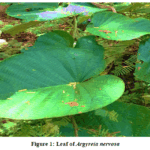 |
Figure 1: Leaf of Argyreia nervosa Click here to View Figure |
Botanical Name: Argyreia nervosa (Burm.f.) Bojer
Family: Convolvulaceae
Common Names: Elephant Creeper, Hawaiian Baby Woodrose, Vidhara (Sanskrit), SamudraShokha (Hindi)
Vernacular Names: Marathi: Samudrashok, Tamil: Vidharaikai, Kannada: Samudrashoka, Malayalam: Arivegam, Telugu: Samudrashoka
Argyreia nervosa, commonly known as Hawaiian Baby Woodrose, is a large, woody climber recognized for its heart-shaped leaves and trumpet-shaped purple flowers. The plant’s distinguishing features include a silvery, hairy underside of the leaves and thick, twining stems. It bears woody seed pods that contain brown, furry seeds (Kumar et al., 2013). Native to India and Southeast Asia, the species is widely distributed in tropical and subtropical regions and has become naturalized in Hawaii (Rastogi&Mehrotra, 1990). Traditionally, its leaves, roots, and seeds are utilized in Ayurveda as a rasayana or rejuvenator and are employed in the treatment of ulcers, wounds, skin infections, and inflammation (Prajapati et al., 2003). The plant is also regarded for its nervine tonic, aphrodisiac, and antioxidant properties (Rao et al., 2011). Phytochemical analysis reveals the presence of various bioactive compounds such as alkaloids, flavonoids, saponins, tannins, terpenoids, and glycosides (Deshmukh et al., 2012). These constituents are responsible for a broad spectrum of pharmacological activities, including antimicrobial, anti-inflammatory, antioxidant, wound healing, hepatoprotective, and immunomodulatory effects (Patel &Savaliya, 2010).
Reported Medicinal Properties:
Several studies have reported the wound healing and anti-infective properties of Argyreia nervosa, supporting its use in traditional medicine for treating cuts, ulcers, and chronic wounds (Kumar et al., 2015; Pradeep et al., 2014).
Materials and Methods
Materials Required
Chemicals and Reagents
Table 1: Chemicals and Reagents
|
Sr. No. |
Chemical / Reagent | Purpose / Used For | Concentration / Remarks |
| 1 | Ethanol (99.9%) | Solvent for extraction |
Analytical grade |
|
2 |
Mayer’s Reagent | Alkaloid detection (cream ppt) | Potassium mercuric iodide solution |
| 3 | Dragendorff’s Reagent | Alkaloid detection (orange ppt) |
Bismuth nitrate in acetic acid |
|
4 |
Concentrated Hydrochloric Acid (HCl) | Flavonoid detection (Shinoda test) | Used with magnesium turnings |
| 5 | Magnesium Turnings | Flavonoid detection (Shinoda test) |
Small quantity |
|
6 |
Ferric Chloride Solution (1%) | Tannin detection | Aqueous solution |
| 7 | Distilled Water | Solvent / foam test |
Purified water |
|
8 |
Acetic Anhydride | Terpenoid detection (Liebermann-Burchard) | Used with concentrated H₂SO₄ |
| 9 | Concentrated Sulfuric Acid (H₂SO₄) | Terpenoid detection |
Handle with care |
|
10 |
Chloroform | Glycoside detection (Borntrager’s test) | Used after hydrolysis |
|
11 |
Ammonia Solution (NH₄OH) | Glycoside detection | Used for color development |
| 12 | Dilute Hydrochloric Acid (2N) | Glycoside hydrolysis (Borntrager’s test) |
Mild acidic conditions |
Table 2: List of Instruments and Apparatus
|
Sr. No. |
Equipment/Apparatus | Model | Manufacturer |
| 1 | Analytical Weighing Balance | Shimadzu |
Shimadzu, Japan |
|
2 |
Refrigerator | – | Godrej |
| 3 | Distillation Unit (Water) | – |
Borosil Glass Works Ltd. |
|
4 |
Soxhlet Apparatus | Standard Glassware |
Borosil Glass Works Ltd. |
Soxhlet Extraction of Argyreia Nervosa Leaf
To begin, 50 g of dried and powdered Argyreia nervosa leaves were placed in a Soxhlet extractor. Then, 500 mL of ethanol (99.9%) was added to the Soxhlet apparatus, and the setup was heated to 60°C. The extraction process was allowed to continue for 8 hours to ensure continuous extraction. After the extraction was complete, the extract was concentrated by evaporating the solvent. Finally, the dried extract was stored in an airtight container at 4°C for future use.
Determination of Extraction Yield of Argyreia nervosa Leaf Extract
Weigh a known amount of the powdered Argyreia nervosa leaf material using an analytical balance, and record the initial weight in grams. Next, perform the extraction using a suitable solvent (e.g., ethanol) and evaporate the solvent air until the extract reaches a constant weight. The remaining residue after evaporation is the leaf extract. Once the solvent is completely removed, weigh the remaining extract, whether solid or concentrated liquid, and record its weight. Finally, calculate the extraction yield by applying the formula:

Preliminary Phytochemical Investigation of Argyreia nervosa Leaf Extract
Alkaloids Test
Mayer’s Test
A small quantity of the ethanolic extract of Argyreia Nervosa was treated with Mayer’s reagent (potassium mercuric iodide solution). The test aimed to detect the presence of alkaloids based on the formation of a precipitate.
Dragendorff’s Test
A small quantity of the ethanolic extract of Argyreia Nervosa was mixed with Dragendorff’s reagent (bismuth nitrate in an acidic solution) to confirm the presence of alkaloids.
Flavonoids Test
Shinoda Test (Magnesium-HCl Test)
A few drops of concentrated hydrochloric acid (HCl) and magnesium turnings were added to the ethanolic extract of Argyreia Nervosa in a test tube. This test was performed to detect the presence of flavonoids, which react with magnesium and HCl to form a color change.
Tannins Test
Ferric Chloride Test
A few drops of 1% ferric chloride solution were added to the ethanolic extract. The presence of tannins was detected based on the formation of a color change when ferric chloride interacted with tannins in the extract.
Saponins Test
Foam Test
A small quantity of the ethanolic extract of Argyreia Nervosa was mixed with water and shaken vigorously for a few minutes. This test helped to detect saponins, which are known to form persistent foam when mixed with water.
Terpenoids Test
Liebermann-Burchard Test
A few drops of acetic anhydride were added to the ethanolic extract, followed by the addition of concentrated sulfuric acid. This test was carried out to check for the presence of terpenoids, which would cause a color change upon reaction with these reagents.
Glycosides Test
Borntrager’s Test
The ethanolic extract of Argyreia Nervosa was treated with dilute hydrochloric acid and heated. After cooling, the mixture was extracted with chloroform, and ammonia solution was added to detect the presence of glycosides based on the formation of a pink or red color in the ammonia layer.
Antimicrobial Properties by MIC Method
The antimicrobial properties of Argyreia nervosaethanolic leaf extract were evaluated using the zone of inhibition method. In this experiment, four agar plates were prepared to test the effectiveness of the extract against Staphylococcus aureus.
The first plate contained only ethanol as a control. The second plate was treated with 10 µg/mL of the ethanolic extract of Argyreia nervosa leaves. The third plate received 20 µg/mL of the same ethanolic extract. Finally, the fourth plate contained a standard antimicrobial formulation, Mupirocin topical cream, which was diluted in ethanol and served as the positive control.
The plates were incubated for 48 hours at 27° C and the zones of inhibition around the test samples were measured to assess the antimicrobial activity. This experiment aimed to compare the antimicrobial efficacy of Argyreia nervosaethanolic leaf extract against Staphylococcus aureus with the standard Mupirocin formulation.
Result and Discussion
Determination of Extraction Yield
Initial weight of Plant Material: 50 gm
Weight of Extract (After Evaporation): 2.36 gm

= 0.0472×100
= 4.72 %
The extraction yield is a critical parameter in the evaluation of the efficiency and feasibility of any extraction process. In the case of Argyreia nervosa leaf extract, the initial plant material used weighed 50 grams, and the final weight of the extract obtained after ethanol evaporation was 2.36 grams.
Preliminary Phytochemical Investigation
Table 3: Preliminary Phytochemical Investigation of Argyreia nervosa Leaf Extract
|
Phytochemical |
Test | Observation | Result |
| Alkaloids | Mayer’s Test, Dragendorff’s Test | Creamy white precipitate, orange-red precipitate |
Pass |
|
Flavonoids |
Shinoda Test | Pink color formation | Pass |
| Tannins | Ferric Chloride Test | Greenish-black color |
Pass |
|
Saponins |
Foam Test | Persistent foam | Pass |
| Terpenoids | Liebermann-Burchard Test | No significant color change |
Fail |
|
Glycosides |
Borntrager’s Test | Pink/red color in ammonia layer |
Pass |
The leaf extract of Argyreia nervosa (also known as the Elephant creeper) has been found to contain a variety of bioactive compounds with potential therapeutic applications, particularly in the domain of wound healing. This discussion explores the findings from the preliminary phytochemical investigation of Argyreia nervosa leaf extract, which has shown the presence of alkaloids, flavonoids, tannins, saponins, terpenoids, and glycosides. Each of these classes of compounds plays a significant role in medicinal properties, particularly in the context of formulating a nanomicelle gel for topical wound healing.
Alkaloids are a class of nitrogenous compounds that have been shown to possess a range of pharmacological properties, including anti-inflammatory, analgesic, and antimicrobial activities. In the context of wound healing, alkaloids may facilitate the regeneration of damaged tissue by promoting cellular proliferation and migration. The presence of alkaloids in the Argyreia nervosa leaf extract, as confirmed by Mayer’s and Dragendorff’s tests, suggests its potential as an active ingredient in a nanomicelle gel formulation. Nanomicelles, due to their ability to solubilize hydrophobic compounds, can encapsulate alkaloids, ensuring better penetration and sustained release at the wound site. The encapsulation of alkaloids within nanomicelles enhances their therapeutic efficacy by enabling deeper skin penetration, thus accelerating the healing process.
Flavonoids, detected in Argyreia nervosa leaf extract through the Shinoda test, are polyphenolic compounds with potent antioxidant properties. Antioxidants are essential in wound healing as they neutralize free radicals, which are often elevated at the site of injury due to inflammatory responses. Excessive oxidative stress can hinder wound healing by damaging cells, impairing collagen synthesis, and reducing the formation of granulation tissue. The antioxidant action of flavonoids, when encapsulated in nanomicelles, can reduce oxidative damage at the wound site, thus promoting faster and more efficient healing. The nanomicelle system, with its ability to encapsulate both hydrophobic and hydrophilic compounds, allows for the delivery of flavonoids in a stable and bioavailable form, ensuring their localized effect in wound care.
Tannins, identified in the leaf extract through Ferric Chloride testing, are polyphenolic compounds known for their astringent properties and antimicrobial activities. Tannins bind to proteins and other macromolecules, forming complexes that inhibit microbial growth and promote tissue tightening and sealing at the wound site. In the context of a nanomicelle gel formulation, tannins could serve as an essential component in preventing infection and facilitating wound closure. The nanocarriers can ensure the controlled release of tannins, allowing them to act on the wound area without being degraded by enzymatic processes or losing their potency due to environmental factors. Their antimicrobial action, combined with astringency, would be highly beneficial in preventing secondary infections, a common complication in wound healing.
Saponins are glycosides with detergent-like properties that have been shown to exhibit anti-inflammatory, immunomodulatory, and wound-healing activities. The presence of saponins in Argyreia nervosa leaves, as indicated by the Foam test, suggests their potential to enhance the nanomicelle gel’s therapeutic action. Saponins can modulate the inflammatory response by reducing the production of pro-inflammatory cytokines, which are often elevated during the early stages of wound healing. Furthermore, they can promote collagen synthesis and stimulate fibroblast proliferation, both essential steps in the formation of new tissue. Encapsulating saponins within nanomicelles can ensure their targeted delivery to the wound site, allowing for prolonged activity and minimizing potential systemic side effects.
Although terpenoids were found to yield no significant color change during the Liebermann-Burchard test, their presence in Argyreia nervosa leaves is still of interest. Terpenoids are a diverse group of compounds with recognized anti-inflammatory, analgesic, and antimicrobial properties. These properties make terpenoids a promising candidate for wound healing, particularly for managing pain and inflammation at the wound site. In nanomicelle formulation, terpenoids could be encapsulated to improve their bioavailability and skin penetration. The nanocarriers protect terpenoids from rapid metabolism and degradation, ensuring they remain active at the site of action for a longer duration. Even though the test did not show a strong reaction, the potential of terpenoids to promote healing, especially in combination with other phytochemicals, should not be dismissed in the context of wound care.
Glycosides, identified in Argyreia nervosa leaf extract through Borntrager’s test, are compounds consisting of a sugar and a non-sugar component. Glycosides have demonstrated a wide range of pharmacological activities, including anti-inflammatory and antimicrobial effects, which are crucial in the wound healing process. By promoting the formation of new tissue, enhancing collagen production, and reducing the risk of infection, glycosides play an important role in the regeneration of damaged skin. In nanomicelle gel formulations, glycosides can be encapsulated to facilitate their controlled and localized release at the wound site. The ability of nanomicelles to improve the stability and solubility of glycosides ensures their consistent therapeutic effect, leading to improved healing outcomes.
Antimicrobial Properties by MIC Method
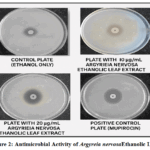 |
Figure 2: Antimicrobial Activity of Argyreia nervosaEthanolic Leaf Click here to View Figure |
Table 4: Antimicrobial Activity of Argyreia nervosaEthanolic Leaf Extract against Staphylococcus aureus
|
Treatment |
Observed Zone of Inhibition (mm) | Ethanol Control (mm) |
Net Antimicrobial Activity (mm) |
|
Ethanol Only (Negative Control) |
5 | 5 | 0 |
| 10 µg/mL Argyreia nervosa Extract | 8 | 5 |
3 |
|
20 µg/mL Argyreia nervosa Extract |
15 | 5 | 10 |
| Mupirocin (Positive Control) | 15 | 5 |
10 |
The antimicrobial potential of Argyreia nervosaethanolic leaf extract against Staphylococcus aureus was evaluated using the zone of inhibition method. The ethanol control plate displayed a 5 mm inhibition zone, indicating that ethanol itself has slight antibacterial activity. When treated with 10 µg/mL of the extract, a moderate inhibition zone of 8 mm was observed, suggesting mild antimicrobial action at this concentration. Notably, at 20 µg/mL, the extract produced a larger inhibition zone of 15 mm, demonstrating a concentration-dependent increase in antibacterial effectiveness. For comparison, the positive control using Mupirocin also showed a 15 mm inhibition zone, highlighting its strong antibacterial property and serving as a reference standard. These findings indicate that Argyreia nervosa possesses promising antibacterial activity, particularly at higher concentrations.
Conclusion
The extraction of Argyreia nervosa leaf using ethanol by Soxhlet method resulted in a yield of 4.72%, indicating efficient recovery of bioactive constituents. This moderate yield, in combination with the positive results from phytochemical analysis, supports the suitability of the extract for further development into nanomicelle and nanoemulsion based topical formulations. The extract, rich in flavonoids, alkaloids, and saponins key wound-healing agents can be effectively incorporated into advanced drug delivery systems. The phytochemical profile of Argyreia nervosa leaf extract indicates the presence of several bioactive compounds, each contributing to the potential efficacy of a nanomiemgel for topical wound healing. Alkaloids, flavonoids, tannins, saponins, terpenoids, and glycosides all exhibit properties that are highly beneficial in the wound healing process. The nanomicelle&nanoemulsion based formulation offers a promising method for encapsulating and delivering these phytochemicals to the wound site, ensuring better stability, bioavailability, and sustained therapeutic action.
The combination of these compounds in a nanomicelle gel could result in a synergistic effect that enhances wound healing by promoting cell proliferation, reducing inflammation, preventing infection, and accelerating tissue regeneration. Future research and development should focus on optimizing the nanomicelle formulation, testing its efficacy in clinical settings, and exploring the potential for enhancing the delivery of other bioactive compounds that can further promote wound healing. The antimicrobial evaluation of Argyreia nervosaethanolic leaf extract against Staphylococcus aureus demonstrated a dose dependent antibacterial activity. At a concentration of 10 µg/mL, the extract showed a modest zone of inhibition with a net antimicrobial activity of 3 mm, while at 20 µg/mL, it exhibited a significant inhibitory effect equivalent to the standard antibiotic Mupirocin, both yielding a net inhibition of 10 mm. The negative control (ethanol alone) showed no inhibitory activity beyond the solvent’s effect, confirming that the antimicrobial action was due to the phytoconstituents present in the extract. These results suggest that Argyreia nervosa leaf extract possesses promising antibacterial properties, especially against Gram-positive bacteria like Staphylococcus aureus. This supports its potential inclusion in topical formulations, such as nanomicelle-based wound healing gels, where antimicrobial action is essential to prevent infection and support tissue regeneration. Further studies on a broader range of microbial strains and in vivo models are recommended to validate and optimize its clinical applicability. This confirms a concentration-dependent antimicrobial activity of Argyreia nervosaethanolic leaf extract.
Funding Sources
The author(s) received no financial support for the research, authorship, and/or publication of this article.
Conflict of Interest
The author(s) do not have any conflict of interest.
Data Availability Statement
This statement does not apply to this article.
Ethics Statement
This research did not involve human participants, animal subjects, or any material that requires ethical approval.
References
- Edeoga, H. O., Okwu, D. E., &Mbaebie, B. O. (2005). Phytochemical constituents of some Nigerian medicinal plants. African Journal of Biotechnology, 4(7), 685–688.
CrossRef - Kumar, S., Singh, N., & Garg, V. K. (2015). Wound healing potential of Argyreia nervosa leaf extract in rats. Asian Journal of Pharmaceutical and Clinical Research, 8(3), 209–212.
- Mandal, S., Yadav, S., Roy, A., &Mandal, V. (2020). Phytopharmaceuticals in wound healing: A review. Current Drug Research Reviews, 12(1), 3–11. https://doi.org/10.2174/1573407111666180604154722
- Nanda, A., &Saroha, K. (2017). Nanomiemgels: An emerging approach for topical drug delivery. International Journal of Pharmaceutical Sciences and Research, 8(10), 4118–4125. https://doi.org/10.13040/IJPSR.0975-8232.8(10).4118-25
- Pradeep, K., Mohan, C. V. R., & Rajesh, K. (2014). Phytochemical and pharmacological profile of Argyreia nervosa: A review. International Journal of Pharmacy and Pharmaceutical Sciences, 6(5), 8–11.
- Rastogi, R. P., &Mehrotra, B. N. (2002). Compendium of Indian medicinal plants (Vol. 3). New Delhi: Publications & Information Directorate, CSIR.
- Sasidharan, S., Chen, Y., Saravanan, D., Sundram, K. M., & Yoga Latha, L. (2011). Extraction, isolation and characterization of bioactive compounds from plants’ extracts. African Journal of Traditional, Complementary and Alternative Medicines, 8(1), 1–10. https://doi.org/10.4314/ajtcam.v8i1.65226
CrossRef - Tiwari, P., Kumar, B., Kaur, M., Kaur, G., &Kaur, H. (2011). Phytochemical screening and extraction: A review. InternationalePharmaceuticaSciencia, 1(1), 98–106.
- Edeoga, H. O., Okwu, D. E., &Mbaebie, B. O. (2005). Phytochemical constituents of some Nigerian medicinal plants. African Journal of Biotechnology, 4(7), 685–688.
CrossRef - Kumar, S., Singh, N., & Garg, V. K. (2015). Wound healing potential of Argyreia nervosa leaf extract in rats. Asian Journal of Pharmaceutical and Clinical Research, 8(3), 209–212.
- Mandal, S., Yadav, S., Roy, A., &Mandal, V. (2020). Phytopharmaceuticals in wound healing: A review. Current Drug Research Reviews, 12(1), 3–11. https://doi.org/10.2174/1573407111666180604154722
- Nanda, A., &Saroha, K. (2017). Nanomiemgels: An emerging approach for topical drug delivery. International Journal of Pharmaceutical Sciences and Research, 8(10), 4118–4125. https://doi.org/10.13040/IJPSR.0975-8232.8(10).4118-25
- Pradeep, K., Mohan, C. V. R., & Rajesh, K. (2014). Phytochemical and pharmacological profile of Argyreia nervosa: A review. International Journal of Pharmacy and Pharmaceutical Sciences, 6(5), 8–11.
- Sasidharan, S., Chen, Y., Saravanan, D., Sundram, K. M., & Yoga Latha, L. (2011). Extraction, isolation and characterization of bioactive compounds from plants’ extracts. African Journal of Traditional, Complementary and Alternative Medicines, 8(1), 1–10. https://doi.org/10.4314/ajtcam.v8i1.65226
CrossRef - Tiwari, P., Kumar, B., Kaur, M., Kaur, G., &Kaur, H. (2011). Phytochemical screening and extraction: A review. InternationalePharmaceuticaSciencia, 1(1), 98–106.
- Deshmukh, V. N., Patil, M. J., &Naikwade, N. S. (2012). Phytochemical and pharmacological profile of Argyreia nervosa: A review. Journal of Applied Pharmaceutical Science, 2(8), 15-21.
- Kumar, S., Malhotra, R., & Kumar, D. (2013). Euphoric and medicinal plants in Indian traditional system. International Journal of Research in Ayurveda and Pharmacy, 4(3), 367-373.
- Patel, R. J., &Savaliya, P. J. (2010). Pharmacological screening and phytochemical investigation of Argyreia nervosa. Pharmacologyonline, 3, 684-693.
- Prajapati, N. D., Purohit, S. S., Sharma, A. K., & Kumar, T. (2003). A handbook of medicinal plants: A complete source book. Agrobios.
- Rao, K. S., Raju, R. R., & Reddy, K. N. (2011). Ethnomedicinal importance of Argyreia nervosa. Indian Journal of Natural Products and Resources, 2(1), 89-94.
- Rastogi, R. P., &Mehrotra, B. N. (1990). Compendium of Indian Medicinal Plants (Vol. 2). Central Drug Research Institute & National Institute of Science Communication.
 PlumX:
  Views: 759 Views
  PDF Downloads: 962
 Accepted on: 20 Dec 2025
Second Review by: Dr. Sumit Kumar
Final Approval by: Dr. Ayssar Nahle


ISSN Online: 2231-5039