Physical-Chemical, and Morphological Characterization of Untreated and Alkali-Treated Burmese Silk Orchid Fiber
 , G. Suresh Kumar1, R. Meenakshi Reddy1, N. Ananthakrishna2, Y.V. Mohan Reddy1 and K. Madhava Reddy1
1Department of Mechanical Engineering, G. Pulla Reddy Engineering College, Kurnool, Andhra Pradesh, India.
2Department of Mechanical Engineering, MBU, erstwhile Sree Vidyanikethan Engineering College, Tirupati, Andhra Pradesh, India.
Corresponding Author E-mail: madhusudhanr4@gmail.com
DOI : http://dx.doi.org/10.13005/ojc/420317
Download this article as:

The physical and chemical properties of the fiber are influential parameters in predicting the strength of the composite. Standard testing methods were employed to assess the chemical properties such as wax, cellulose, hemicellulose, lignin, and moisture content of Burmese silk orchid (BSO) fiber, and outcomes were compared with the different plant fibers. In this study, BSO fibers were subjected to 5%, and 10% alkali-treatment using sodium hydroxide (NaOH) solution, and the influence of alkali- treatment on fiber properties was investigated. Alkali-treated fibers have more cellulose content (82.58%) and lower content of hemicellulose (8.14%), lignin (5.52%), and moisture (6.94%) as compared to untreated BSO fiber. The existence and absence of impurities on the facet of untreated and alkali-treated fibers were determined using scanning electron microscopy (SEM). Using Fourier Transform Infrared (FTIR) spectroscopy, the chemical bonds and functional groups found in the fibers were identified. Finally, the physical-chemical properties, FTIR, and SEM characterization of BSO fiber indicate that it is a significant reinforcing component in polymer composites. The novelty of this work is exploration of new natural fiber material for reinforcement with resins like epoxy and manufacture of composite materials for appropriate use. According to the study's characterization, these fibers are utilized in textile and non-load-bearing applications, like partition boards and car interior components.
KEYWORDS:Burmese Silk Orchid Fiber (BSO); FTIR; Physical-chemical properties; SEM
Introduction
To protect the environment, various countries have implemented strict laws and regulations to limit solid waste in material manufacturing industries such as automobile, building, and packing. Natural fibers have the potential to replace synthetic and traditional materials due to their bio-degradability, light in weight, ecological sustainability, abundant availability, low cost, and moderate strength1. The use of natural fibers would aid in the reduction of harmful effects like solid waste disposal, land and sea fill, hazardous waste, and greenhouse gas emissions2. These fibers have limitations such as quick moisture absorption, hydrophilicity, and incompatibility with polymers owing to its different chemical structures. However, these can be overcome through various surface treatment methods to achieve adequate use. Several researchers investigated the Physical-chemical characteristics of recently found fibers namely Azadirachta indica, Careya Arborea, kapok fiber, Carex panicea stem, and Burmese silk orchid3-7.
The term “natural fibers” refers to a kind of fibers that are obtained from the different organs of plants or animals and are created by geological processes. These can be made into threads or yarns and then woven or knitted into fabrics8. In recent days, researchers have chosen fibers namely jute, flax, soybean, and kenaf fibers for their investigation. The main components of plant fibers are cellulose, hemicellulose, lignin, and wax9. Since plant fibers have a higher content of cellulose and lignin, they are categorized as lingo-cellulosic fibers. These components support the plant’s growth10, 11. Physical parameters of the fiber, such as density and diameter, play a vital role in the selection of reinforcing elements of a polymer composite12. The density of a fiber is defined as a ratio of mass per unit volume. Specific strength (strength/density) and specific modulus (Young’s modulus/density) are two important design considerations for transportation, automobile, and aerospace applications because the lower the density, lower the weight of the design13. Recently, a number of researchers have found the novel fibers and examined their chemical compositions. Sakji et al.,14 carried out a thorough investigation of the fiber’s physical and chemical compositions that were isolated from Pergularia Tomentosa L seeds. These fibers contain high cellulose content (43.8%) and high lignin content (8.6 %) than other fibers. The physical and chemical properties of the acacia concinna fiber, which is isolated from the bark of the plant, were investigated by Amutha et al.,15 The high cellulose content (59.43wt%), low hemicellulose content (12.78wt%), and low density (1365kg/m3) of these fiber results show that they are suitable for use as reinforcement in polymer composites. The physical and chemical properties of kenaf fibers derived from the bast of the plant are studied by Bhambure et al.,16 The fibre diameter, bundle strength, moisture content and water absorption of the fibers have been evaluated.
The main drawback of using natural fibers in polymer composites is their hydrophilicity. Natural fibers absorb water or moisture from the environment, resulting in poor adhesion between the matrix and fiber and, as a result, composite failure occurs17. Some natural fibers, such as jute, hemp, sisal, flax and others, have been recognized, characterized, and utilized in a different types of industries, notably automobiles, infrastructure, sports, and packing, because of their low production and maintenance costs18, 19. To address today’s requirements, researchers are being motivated to search for alternative natural fibers with comparable properties20. Boopathi et al.,12 examined the density, chemical and mechanical properties of borassus fiber both untreated and treated with NaOH solution. The above properties improved when fiber was treated with NaOH from 5% to 15% concentration. Results revealed that the fiber density is less than the man-made fiber and NaOH treatment improved the density values considerably. The FT-IR spectra reveal that impurities and other constituents were removed from the fiber upon increasing the alkali treatment from 5% to 15% NaOH concentration. The FT-IR spectra confirmed the observation made by De Andrade Silva et al.,21 that hemicellulose was eliminated from the fiber after alkali treatment. Kar et al.,22 collected raw Calamus tenuis cane fibers, processed with alkali, and analyzed their physical, chemical, mechanical and SEM characterization to determine their appropriateness as reinforcement in polymer composite.
Based on the literature, a lacuna identified in the characterization of Burmese silk orchid (BSO) fibers. This fiber was chosen because it comes from a renewable source, which makes it inexpensive, lightweight, and environmentally friendly. It is also available in abundance in India. Explorations of their physical, chemical, and mechanical properties are important. In this study, investigation is done on the physical, and chemical characteristics of untreated BSO fibers against fibers treated with NaOH at concentrations ranging from 5% to 10%. The findings were compared to those of various types of natural fibers published in the literature. The physical properties of BSO fibers, such as diameter, and density were assessed using an air wedge interferometer, and pycnometer. Standard testing methods were employed to assess the chemical contents such as wax, cellulose, hemicellulose, lignin, and moisture content of BSO fiber, and outcomes are compared with the other plant fibers from the literature to better understand their behavior. Scanning electron microscopy analysis showed the existence and absence of contaminants present on the untreated fiber and alkali-treated fibers and morphology. FTIR characterization was used to extend the applicability of fiber to structural applications.
Materials and Methods
This section specifies and describes the materials and methods used in the present work.
Materials
The Burmese silk orchid (BSO) tree is native to southern India, which includes the states of Andhra Pradesh, Tamil Nadu, Telangana, Kerala, and Karnataka. The chemical substances required for characterization namely sodium hydroxide, petroleum benzene, sodium chloride, sulfuric acid, ammonia, and hydrochloric acid, were obtained from an in-house laboratory and were of high purity (chemistry lab at G. Pulla Reddy Engineering College (Autonomous): Kurnool).
Fiber extraction
Fresh stalks of Burmese silk orchid (BSO) fiber bundles were collected from Nakkalapalli village, Sri Sathya sai district, Andhra Pradesh, India. These fiber bundles were soaked in water for 15 days followed by hand rasping and rinsing in running water till the unnecessary greasy material was dissolved and fine fiber was extracted. Subsequently, the final isolated fibers were then thoroughly rinsed in water to remove any remaining residue. To get rid of any moisture or dampness, the fibers were removed and let to dry in the sun for a week. The fibers were beaten up and combed smoothly to separate long fibers from undesirable short fibers and remove impurities.
Alkali treatment
Alkaline solution was prepared in two separate beakers by combining 5% and 10% NaOH concentrations with distilled water, and BSO fibers were soaked in the solution for 2 hours at room temperature. After that, all of these fibers were subsequently rinsed with clean water to remove any surplus NaOH that might have stuck to their surfaces. Still, any NaOH leftover in the fiber was neutralized with a 2.5% HCl solution at ambient temperature. Finally, the fibers were rinsed with distilled water once more and allowed to dry for a whole day at room temperature. Figure 1 shows the untreated, and NaOH treated BSO fibers.
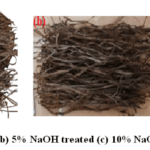 |
Figure 1: (a) Untreated, (b) 5% NaOH treated (c) 10% NaOH treated BSO fibers [7]. Click here to View Figure |
Physical properties
Density of fiber
The density of a fibre material is defined as its mass per unit volume. This characteristic affects both its strength-to-weight ratio and processing characteristics. The liquid Pycnometer method was used to find the density of the BSO fiber. At first, all fibers were cut to the size of 5 to 6 mm and then the fibers were dried in an oven at a temperature of 105 °C to eliminate the moisture in the fiber. The mass of dried fibers (Mf) was determined to be four decimals using an analytical balance (SHYMZOU model AY220). Measure the mass of the pycnometer when it is clean, dry, and empty (M1) and then transfer the distilled water into the pycnometer, and then measure the mass (M2). The dried fibers were kept in the pycnometer and filled with distilled water up to the bottom of the neck and the stopper then measured the mass (M3) i.e…., (Pycnometer + Fiber + Water = M3) 23.
The following equation was used to calculate the density of fiber
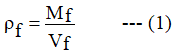
Where Vf is the volume of the fiber can be calculated using the following equation.

Where Wd = density of the distilled water depends on the temperature
Fiber diameter
Fiber diameter is the width or thickness of an individual fiber, commonly measured in micrometers (µm) for natural fibers. The BSO fiber’s diameter was done using the air wedge shearing interferometer. At one end, the two optical glass plates are connected together and stacked. BSO fiber is introduced near the opposite end, resulting in the formation of an air wedge gap. For this experiment, the sodium vapor lamp serves as monochromatic light, and the interference was seen using a traveling microscope. To determine the bandwidth, the alternate fringes that were bright and dark were used as a basis for calculation of fiber diameter. This was calculated using the formula below,
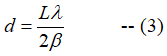
Where d – BSO fiber diameter (m), L – distance between the knotted end of the glass plate and the fiber (m), β = bandwidth, λ – wave length12.
Chemical properties
Moisture content
Moisture content refers to the amount of moisture present in a fiber material. The ASTM D 2495-01 test standard was used to evaluate the fiber’s moisture content. First, the container was tared to zero, and then a 2 gram fiber sample was inserted, weighted, and labeled as (A). Set the oven to 100±10oC for two hours to dry this sample, and then use desiccators to cool it down. To balance the air pressure, the stopper was immediately opened before being weighed once more. The bottle was put back in the oven for one hour, cooled, and then weighed again. This process was continued hourly until a consistent weight (B) was reached. The following formula was used to calculate the moisture content (%)12.

Cellulose content
Cellulose content is the amount of cellulose found in a natural fiber. A weighted amount of BSO fiber was dipped in a solution containing 1.72 % sodium chloride (NaCl) and adds a few drops of sulfuric acid (H2SO4) in water. Provide a sixty minutes soak time for the cellulose sample. After that, the extra fluid was suctioned out and ammonia added. The leftover material was weighed after being rinsed with distilled water and allowed to dry at room temperature. Cellulose content (%) was determined by using the following formula12.

Lignin content
Lignin content is the percentage of lignin found in a natural fiber. The BSO fiber sample was weighed and submerged in a solution of 12.5 mL sulfuric acid and 300 mL water at room temperature. Stir for two minutes with a glass rod and allow the solution to stand for two hours. A two-hour reflux time interval was given to it. The chemical solvents have been eliminated and their leftovers weighed. The leftover material was identified as the lignin content12.
Hemi cellulose content
Hemicellulose content is the quantity of hemicellulose present in natural fiber. The dried BSO fiber was weighed and soaked in a 5% NaOH solution at atmospheric temperature for 2 hours before being balanced with HCl. After drying in an oven, weight of the fiber was calibrated, and the variation in weight indicates the existence of hemicellulose content12.
Morphological Analysis (SEM Analysis)
SEM is a potent imaging method that scans a sample’s surface using a concentrated beam of high-energy electrons. Signals are created when the electron beam interacts with the sample; these signals are then picked up and transformed into incredibly detailed pictures. A JEOL/MP SEM Machine was utilized to visualize the morphology and microstructure of the untreated and alkali-treated fibers. Fibers were cleaned, dried, and coated with a thin layer (3μm) of gold to improve the conductivity.
FT-IR spectroscopy
Fourier Transform Infrared (FTIR) spectroscopy is an effective method for analyzing samples of unknown composition. This study was carried out on powdered untreated and alkali-treated fiber samples using a Thermo Nicolet Avatar 370 model. This spectroscopy examines a sample using modulated mid-infrared energy. Absorption bands and functional groups were identified based on the matching of infrared (IR) ray wavelengths with the vibrational wavelength of a bond in a sample. Plotting a graph between the wave number and absorption bands can help us understand the structure of molecules and their functional groups. The FTIR spectra of untreated and treated fibers were acquired with 32 scans at a resolution of 4 cm−1, and the wave numbers varying from 400 cm-1 to 4000 cm-1.
Results and Discussion
Physical properties of BSO fiber
Density of fiber
The density value of untreated BSO fibers (which contains amorphous fiber constituents such as hemicelluloses, lignin, pectin, waxy substances, and other impurities) is 0.9970 g/cm3, and after 5% NaOH treatment, the density value increased by 13%. That might be because the alkali treatment removed the (non-cellulosic components such as hemicelluloses, pectin, and other impurities that are less dense) amorphous or non-cellulosic fiber constituents on the fiber surface. As a result, the volume of the fiber decreases, while the change in fiber mass is minimal24. As the alkali treatment was increased to 10% NaOH, the fiber density decreased slightly to 6.9% as compared to 5% NaOH. However, compared to untreated fiber, 10% alkali-treated fiber still increases fiber density by 9.8%. The fiber was damaged by the chemical reaction with sodium hydroxide (NaOH) at higher (10%) concentrations. Treatment with 10% alkali resulted in some loss of cellulose content of the fiber, resulting in a reduction in fiber mass. As a result, higher concentrations of NaOH (10%) treatment reduce density12, 25. The density values of BSO fiber were found to be lower than those of synthetic fibers. This property investigated the possibility of using BSO fibers as strengthening element in weightless composite structures. Furthermore, biodegradability is an advantage for using this fiber in composite structures. Table 1 displays the variation of densities of untreated and treated BSO fiber.
Table 1: Variation of densities of BSO fiber with alkali treatment
| S. No | Types of Fiber | Density (g/cm3) |
| 1 | Untreated fiber | 0.9970 |
| 2 | 5% NaOH treated fiber | 1.1275 |
| 3 | 10% NaOH treated fiber | 1.1050 |
Fiber diameter
Fiber diameter has a considerable impact on both the tensile strength of the fiber and the tensile strength of the composite when employed as reinforcement. Because natural fibers do not have constant diameters, 50 BSO fiber samples were tested, and the diameter of the fiber at the two ends and central portion of the fibers was also assessed. The mean diameter was determined, for untreated and treated BSO fibers, and the outcomes are shown in Table 2. According to the results, the diameters of the fibers decreased as the percentage of alkali treatment increased. This was mainly because the alkali treatment eliminated contaminants from the fiber surface.
Table 2: Diameters of BSO fiber
| S.No | Types of Fiber | Highest
diameter (µm) |
Least
diameter (µm) |
Mean
diameter (µm) |
| 1 | Untreated fiber | 302.46 | 234.22 | 293.34 |
| 2 | 5% NaOH treated fiber | 283.78 | 218.56 | 268.42 |
| 3 | 10% NaOH treated fiber | 253.26 | 208.34 | 242.58 |
Chemical properties of BSO fiber
The outcomes of the untreated and alkali treatment of BSO fibers with different NaOH concentrations are displayed in Table 3. The alkali treatment altered the chemical properties of the fiber. The untreated BSO fiber consists of 0.59 % wax, moisture 7.30 %, 69.98 % cellulose, 5.80 % lignin, and 13.86 % hemicelluloses. After the cellulosic fiber was treated with alkali, it expanded and dissolved the hemicellulose and other impurities from its surface. The cellulose micro-fibrils were not much affected by the alkali treatment. The elimination of impurities led to improved mechanical properties. Table 4 compares the chemical content of untreated BSO fiber with other fibers.
Table 3: Chemical properties of BSO fibers
|
S. No |
Fiber type | Moisture Content
(wt. %) |
Cellulose Content
(wt. %) |
Lignin
Content (wt. %) |
Hemicellulose content (wt. %) |
| 1 | Untreated fiber | 7.30 | 69.98 | 5.80 | 13.86 |
| 2 | 5% NaOH treated fiber | 6.94 | 82.58 | 5.52 | 8.14 |
| 3 | 10% NaOH treated fiber | 6.58 | 80.22 | 4.98 | 2.44 |
Table 4: Comparison of chemical content of untreated BSO fiber with various other fibers
| Fiber Name | Moisture
Content (%) |
Cellulose
(Wt. %) |
Hemi
celluloses (Wt. %) |
Lignin
(Wt. %) |
Reference |
| BSO | 7.30 | 69.98 | 13.86 | 5.80 | Present Paper |
| Acacia concinna | 8.21 | 73.1 | 9.41 | 12.04 | [15] |
| Prosopis Juliflora | 9.48 | 61.65 | 16.14 | 17.11 | [26] |
| Acacia Arabica | – | 68.10 | 9.36 | 16.86 | [27] |
| Sansevieria cylindrica | 3.08 | 79.7 | 10.13 | 3.8 | [28] |
| Cyperuspangorei | 9.19 | 68.5 | 17.88 | [29] | |
| Grewia Tilifolia | 23 | 62.80 | 21.20 | 14.90 | [30] |
| Oil palm empty fruit bunch | – | 65 | 29 | 17.5 | [31] |
| Agave Americana | 7.69 | 68.42 | 4.85 | 4.85 | [32] |
| Henequen | – | 60 | 28 | 8 | [33] |
| Acacia pennata fiber | 13.44 | 51.38 | 30.30 | 20.96 | [34] |
Moisture content
Table 3 displays the results of the standard procedure used to access the moisture content of the BSO fibers. Untreated fibers had a moisture content of 7.30%, while fibers treated with 5% and 10% NaOH had moisture contents of 6.94%, 6.58%, and 7.30%, respectively. The untreated fiber has higher moisture content than the treated fibers, due to the existence of hemicelluloses, lignin, and extra contaminants on the fiber substrate and also due to presence of free hydroxyl groups in the fiber32. The moisture content of untreated fiber drops from 7.30% to 6.58% after treatment with 5% and 10% NaOH. The elimination of amorphous hemicelluloses from the raw BSO fiber could be the cause of this28. Table 4 shows that when compared to BSO fiber, Sansevieria cylindrica fiber28 has the lowest moisture content, while the remaining fibers—Acacia concinna 15, Acacia pennata34, Prosopis juliflora26, Cyperuspangorei29, Grewiatilifolia30, and Agave Americana32 fibers—have the highest moisture content. Higher moisture absorption leads to insufficient fiber-matrix interfacial bonding, which reduces mechanical properties. After alkali treatment, there is less moisture absorption and better interfacial bonding, which leads to improved mechanical properties32.
Lignin content
The evaluation of the lignin content obtained for untreated, 5% and 10 % BSO fiber was measured and displayed in Table 3. Table 4 compares the lignin content of different untreated fibers with that of untreated BSO fiber. Lignin content of untreated, 5%, and 10% NaOH treated fiber was determined to be 5.80%, 5.52%, and 4.98%, respectively. The untreated fiber has high lignin content when compared with the NaOH-treated fibers. The lignin content of untreated fiber drops from 5.52% to 4.98% after treatment with 5% and 10% NaOH. Table 4 shows that when compared to BSO fiber, Sansevieria cylindrical28 and Agave Americana32 fibers have the lowest lignin content, while the remaining fibers—Acacia concinna15, Prosopis juliflora26, Acacia Arabica27, Cyperuspangorei29, Grewiatilifolia30, Oil palm empty fruit bunch31, and Henequen 33 fibers—have the highest lignin content. The cause for the reduction of lignin content in fibers via alkali treatment, which makes lignin soluble and washing it away. The reduction in lignin content in fibers after alkali treatment is due to solubilization and removal of lignin28, 29.
Hemi cellulose content
Hemicellulose content of the untreated and treated BSO fiber was measured and results are presented in Table 3. Hemi cellulose content of untreated, 5%, and 10% NaOH treated fiber is found to be 13.86%, 8.14%, and 2.44%, respectively. The untreated fiber has higher hemicellulose content when compared with the NaOH-treated fibers. After being treated with 5%, and 10% NaOH, untreated fibers hemi cellulose content decreases from 8.14% to 2.44%. Following alkali treatment, the content of hemicellulose reduces because the alkali treatment breaks down hemicelluloses into soluble components that are subsequently washed away, leaving mostly cellulose left from fiber28, 29. Table 4 shows that when compared to BSO fiber, Acacia concinna15, Acacia Arabic27, Sansevieria cylindrical28. Agave Americana32 fibers have the lowest hemi cellulose content, while the remaining fibers— Prosopis juliflora26, Acacia pennata34, Grewiatilifolia30, Oil palm empty fruit bunch31, and Henequen33 fibers—have the highest hemi cellulose content.
Cellulose content
The cellulose content in the untreated and treated BSO fiber was measured and results were placed in Table 3. Table 4 compares the cellulose content of untreated BSO fibers with different untreated fibers. The cellulose content of untreated, 5%, and 10% NaOH-treated fiber is found to be 69.98%, 82.58%, and 80.22%, respectively. The untreated fiber has lower cellulose content than the other NaOH-treated fibers. So after 5% NaOH treatment, cellulose content rises to 82.58% and then slightly falls to 10% NaOH (80.22%), still higher than in untreated fiber. The increase in cellulose content of fibers with alkali treatment is mostly attributed to the elimination of non-cellulosic components like lignin and hemicellulose from the fibers30, 31. Table 4 shows that when compared to BSO fiber, Prosopisjuliflora26, Acacia Arabica27, Acacia pennata34, Cyperuspangorei29, Grewia tilifolia30, Oil palm empty fruit bunch31, Agave Americana32, Henequen33 fibers have the lowest cellulose content, while the remaining fibers- Acacia concinna15, Sansevieria cylindrical28-have the highest cellulose content. Because of its high cellulose content, the fiber has good tensile strength and tensile modulus.7
Morphological Analysis (SEM Analysis)
The SEM instrument was used to study the surface morphological changes of the untreated and alkali-treated BSO fiber. Figure 2(a)-2(c) depicts pictures of the chosen untreated and treated fiber (5% and 10% NaOH) samples. Referring to Figure. 2 (a), waxes and contaminants were detected on the exterior surface of untreated BSO fiber with SEM image, which reveals the presence of lignin, wax, and other dirt and debris. Figure 2(b) shows the SEM images of 5 % alkali-treated (NaOH) fibers. It demonstrates that the majority of surface impurities were eliminated after 5% NaOH treatment. The alkali-treated fibers have a clear and rough surface compared to the untreated fiber. Its rough surface promotes mechanical interlocking as well as increasing the effective surface area that resin can moisten. This rough surface enhances the interaction between the fiber and matrix. However, Figure 2(c) shows an SEM image of 10% alkali-treated (NaOH) fibers. It reveals that fibers were damaged and voids were formed due to the chemical reaction with alkali treatment (NaOH) at higher (10%) concentrations.
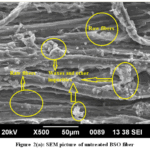 |
Figure 2(a): SEM picture of untreated BSO fiber Click here to View Figure |
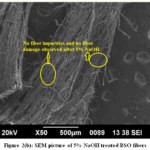 |
Figure 2(b): SEM picture of 5% NaOH treated BSO fibers Click here to View Figure |
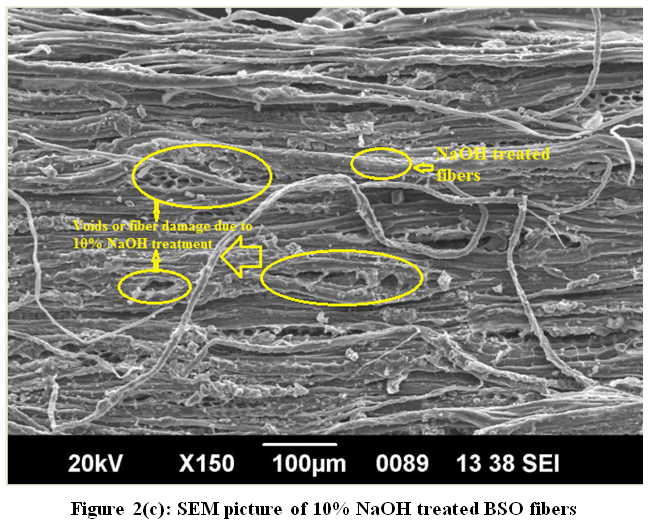 |
Figure 2(c): SEM picture of 10% NaOH treated BSO fibers Click here to View Figure |
Fourier Transform Infrared Spectroscopy (FTIR Spectroscopy)
The FTIR Spectra of untreated, 5% and 10% NaOH treated BSO fibers are presented in Figure 3. Using this, the wave numbers, functional groups, and fiber constituents – such as cellulose, hemicellulose, and lignin- of the fibers can be identified. The broad, prominent peak that appears at 3327 cm-1 is the presence of the H-bonded O-H group in cellulose35-37. The medium peak at 2916 cm-1 corresponds to the stretching of C-H in cellulose and lignin35-37. The narrow and medium peak was seen around 1624 cm-1 indicating the stretching of C=C benzene in lignin36-39. The peak at 1421 cm-1 shows C-H bending of cellulose, hemicellulose, and lignin35, 37. The peak around 1369 cm-1 confirms the In-the-plane C-H bending of cellulose, hemicellulose, and lignin37, 38. The peak at 1315 cm-1 represents the C–H asymmetric deformation of cellulose, hemicellulose, and lignin36, 37. The peak at 1158 cm-1 is attributed to the C-O-C asymmetrical stretching of cellulose36-38. The peak around 1103 cm-1 is recognized as the in-plane cellulose ring stretching36, 39. The strong peak around 1028 cm-1 assigned to Semicircular aromatic ring stretching mixed with C – H in-plane bending of cellulose35, 40, 41. The peak around 896 cm-1 and 777 cm-1 is caused by to C─OH (β-glycosidic linkages) of cellulose38, 39, 41. The slight reduction and shifting of peaks were seen due to the partial elimination of hemicellulose and lignin components of the fiber after NaOH treatment35,36.
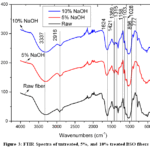 |
Figure 3: FTIR Spectra of untreated, 5%, and 10% treated BSO fibers Click here to View Figure |
Conclusion
In this study, the physical and chemical properties of untreated Burmese Silk Orchid (BSO) fibers were compared with NaOH treated fibers. Structural and morphological analysis was performed on untreated and NaOH treated fibers. The extraction, physical, chemical, and morphological properties of BSO fiber was investigated, and the following conclusions were drawn.
The diameter of BSO fibers was measured. The average value was calculated because it was determined that the fiber diameter was not constant over the length. With an increase in alkali treatment percentage, the diameter of the fiber decreased.
The density values of the BSO fiber appear to be lower than those of the synthetic fibers, and it has been noted that these fibers could be employed for developing composite structures that are lightweight. The density values have been improved by the alkali process.
A chemical study shows that untreated BSO fibers contain 7.3% moisture, 69.98% cellulose, 5.80% lignin, and 13.86% hemicellulose. These values were altered after being treated with 5% and 10% NaOH for two hours.
Evidence was provided by the morphological investigation showing surface impurities existed in untreated fiber and were eliminated from the fibers after the alkali treatment process. Furthermore, it was imagined that the alkali-treated fibers’ increased surface area would result in enhanced fiber interfacial properties when used in composite materials. It was shown that fiber damage occurs when fibers are exposed to 10% alkali treatment or higher.
The findings of the study and the outcomes of two different NaOH treatments demonstrated that 5% alkali treatment enhanced the characteristics of the BSO fibers compared to untreated and 10% alkali-treated fibers. Consequently, the 5% NaOH-treated BSO fiber may be used as strengthening element in the composites.
FT-IR analysis showed that the untreated, 5% NaOH and 10% NaOH treated BSO fibers included the chemical functional groups -OH, C-H, C-O-C, and C=C.
The above characterizations strongly suggest that These BSO fibers are eco-friendly, sustainable, and suitable for use as reinforcement in polymer composites. These composites are employed in a variety of industries, including household, packaging, and automotive applications.
The novelty of this study is the universe has a variety and abundance of natural fiber resources that may be identified, characterized, and utilized in polymer composites for relevant applications.
Acknowledgement
The authors are grateful to the Management of G. Pulla Reddy Engineering College (Autonomous): Kurnool, for providing the facility to carry out this research. The authors extend their thanks to STIC Cochin, Kerala, for providing the testing facility for FTIR and SEM characterization.
Funding Sources
The author(s) received no financial support for the research, authorship, and/or publication of this article.
Conflict of Interest
The author(s) do not have any conflict of interest.
Data Availability Statement
This statement does not apply to this article.
Ethics Statement
This research did not involve human participants, animal subjects, or any material that requires ethical approval.
References
- Thyavihalli Girijappa, Y. G., Mavinkere Rangappa, S., Parameswaranpillai, J., Siengchin, S. Mater., 2019, 6, 226. https://doi.org/10.3389/fmats.2019.00226
CrossRef - Madhu, P., Sanjay, M. R., Pradeep, S., Bhat, K. S., Yogesha, B., Siengchin, S. Mater. Res. Technol., 2019, 8(3), 2597-2604. https://doi.org/10.1016/j.jmrt.2019.03.006
CrossRef - Manimaran, P., Senthamaraikannan, P., Murugananthan, K., Sanjay, M. R. Nat. Fibers, 2018, 15(1), 29-38. https://doi.org/10.1080/15440478.2017.1302388
CrossRef - Rao, H. J., Singh, S., & Janaki Ramulu, P. Nat. Fibers, 2023, 20(1), 2128147. https://doi.org/10.1080/15440478.2022.2128147
CrossRef - Yeo, K. F. H., Dong, Y., Xue, T., Chen, Z., Zhang, N., Yang, Y., Han L, Liu M, Kouediatouka A N, Mouguegue H P PL , Wang, W. Res., 2023, 228, 115822. https://doi.org/10.1016/j.envres.2023.115822
CrossRef - Keskin, O. Y., Koktas, S., Seki, Y., Dalmis, R., Kilic, G. B., Albayrak, DBiomass Convers Biorefin, 2024, 14(13), 13901-13912. https://doi.org/10.1007/s13399-022-03458-1
CrossRef - REDDY, B., REDDY, R. M., KUMAR, G. S., KUMAR, V. S., REDDY, Y. V. M., REDDY, K. J. Chem., 2025, 41(1). http://dx.doi.org/10.13005/ojc/410110
CrossRef - Reddy, B. M., Reddy, R. M., Reddy, B. C. M., Reddy, P. V., Rao, H. R., Reddy, Y. M. Test., 2020, 91, 106782. https://doi.org/10.1016/j.polymertesting.2020.106782
CrossRef - Ilyas, R. A., Sapuan, S. M., Ishak, M. R. Polym., 2018, 181, 1038-1051. https://doi.org/10.1016/j.carbpol.2017.11.045
CrossRef - Sanyang, M. L., Sapuan, S. M., Jawaid, M., Ishak, M. R., Sahari, J. Bioresour., 2016, 11(2), 4134-4145. https://doi.org/10.15376/biores.11.2.4134-4145
CrossRef - Ahmed, J., Balaji, M. A., Saravanakumar, S. S., Senthamaraikannan, P. Nat. Fibers, 2021, 18(10), 1460-1471. https://doi.org/10.1080/15440478.2019.1691121
CrossRef - Boopathi, L., Sampath, P. S., Mylsamy, K. J. C. P. B. E. Part B: Eng., 2012, 43(8), 3044-3052. https://doi.org/10.1016/j.compositesb.2012.05.002
CrossRef - Rao, K. M. M., Rao, K. M. Struct., 2007, 77(3), 288-295. https://doi.org/ 10.1016/j.compstruct.2005.07.023
CrossRef - Sakji, N., Jabli, M., Khoffi, F., Tka, N., Zouhaier, R., Ibala, W., Mohamed H, Durand, B. Polym., 2016, 17, 2095-2104. https://doi.org/ 10.7007/s12221‑016‑6461‑4
CrossRef - Amutha, V., Senthilkumar, B. Nat. Fibers, 2021, 18(11), 1661-1674. https://doi.org/10.1080/15440478.2019.1697986
CrossRef - Bhambure, S., Rao, A. S., Senthilkumar, T. Indian J. Fibre Text. Res., 2022, 47, 432-436. DOI: 10.56042/ijftr.v47i4.52876
CrossRef - Rajan, B. S., Balaji, M. S., AB, M. A. N. Res. Express, 2019, 6(6), 065315. DOI 10.1088/2053-1591/ab0ca5
CrossRef - Cheung, H. Y., Ho, M. P., Lau, K. T., Cardona, F., Hui, D. Part B: Eng., 2009, 40(7), 655-663. https://doi.org/10.1016/j.compositesb.2009.04.014
CrossRef - Mohammed, L., Ansari, M. N., Pua, G., Jawaid, M., Islam, M. S. J. Polym. Sci., 2015, 2015(1), 243947. https://doi.org/10.1155/2015/243947
CrossRef - Reddy, B. M., Reddy, Y. V. M., Reddy, B. C. M., Kumar, G. S., Reddy, P. V., Rao, H. R. Compos., 2021, 42(1), 309-319. https://doi.org/10.1002/pc.25826
CrossRef - de Andrade Silva, F., Chawla, N., de Toledo Filho, R. D. Sci. Technol., 2008, 68(15-16), 3438-3443. https://doi.org/10.1016/j.compscitech.2008.10.001
CrossRef - Kar, A., Saikia, D., Pandiarajan, N. Biomass Convers. Biorefin., 2024, 15, 7881–7899. https://doi.org/10.1007/s13399-024-05560-y
CrossRef - de OR Maciel, N., Ribeiro, C. G., Ferreira, J., da S. Vieira, J., Marciano, C. R., Vieira, C. M., Margem, Monteiro, S. N. In Characterization of Minerals, Metals, and Materials, 2017, 11-19. https://doi.org/10.1007/978-3-319-51382-9_2
CrossRef - Shenoy Heckadka, S., Nayak, S. Y., Joe, T., Zachariah N, J., Gupta, S., Kumar NV, A., Matuszewska, M. Nat. Fibers, 2022, 19(4), 1531-1543. https://doi.org/10.1080/15440478.2020.1784817
CrossRef - Kommula, V. P., Reddy, K. O., Shukla, M., Marwala, T., Rajulu, A. V. J. Polym. Anal. Charact., 2014, 19(8), 693-708. https://doi.org/10.1080/1023666X.2014.954186
CrossRef - Reddy, P. V., Prasad, P. R., Krishnudu, D. M., Hussain, P. Today Proc., 2019, 19, 384-387. https://doi.org/10.1016/j.matpr.2019.07.618
CrossRef - Manimaran, P., Saravanakumar, S. S., Mithun, N. K., Senthamaraikannan, P. J. Polym. Anal. Charact., 2016, 21(6), 548-553. https://doi.org/10.1080/1023666X. 2016.1177699
CrossRef - Sreenivasan, V. S., Somasundaram, S., Ravindran, D., Manikandan, V., Narayanasamy, R. Des., 2011, 32(1), 453-461. https://doi.org/10.1016/j.matdes.2010.06.004
CrossRef - Mayandi, K., Rajini, N., Pitchipoo, P., Jappes, J. W., Rajulu, A. V. J. Polym. Anal. Charact., 2016, 21(2), 175-183. https://doi.org/10.1080/1023666X.2016.1132064
CrossRef - Jayaramudu, J., Guduri, B. R., Rajulu, A. V. (2010). Characterization of new natural cellulosic fabric Grewia tilifolia. Polym., 2010, 79(4), 847-851. https://doi.org/10.1016/j.carbpol.2009.10.046
CrossRef - Hassan, A., Salema, A. A., Ani, F. N., Bakar, A. A. Compos., 2010, 31(12), 2079-2101. https://doi.org/10.1002/pc.21006
CrossRef - Mylsamy, K., Rajendran, I. Reinf. Plast. Compos., 2010, 29(19), 2925-2935. https://doi.org/10.1177/0731684410362817
CrossRef - Cazaurang‐Martinez, M. N., Herrera‐Franco, P. J., Gonzalez‐Chi, P. I., Aguilar‐Vega, M. Appl. Polym. Sci., 1991, 43(4), 749-756. https://doi.org/10.1002/app.1991.070430412
CrossRef - Sheeba K J,Alagarasan J K, Dharmaraja J, Kavitha S A, Shobana S, Arvindnarayan S, Vadivel M, Lee M, Retnam K P, Res., 2023, 233, 116415. https://doi.org/10.1016/j.cscm.2023.e02443
CrossRef - Yap, M. G. S., Que, Y. T., Chia, L. H. L. (1991). Appl. Polym. Sci., 1991, 43(11), 2083-2090. https://doi.org/10.1002/app.1991.070431115
CrossRef - Reddy, K. O., Reddy, K. R. N., Zhang, J., Zhang, J., Varada Rajulu, A. Nat. Fibers, 2013, 10(3), 282-296. https://doi.org/10.1080/15440478.2013.800812
CrossRef - Bakri, M. K. B., Jayamani, E. In International Conference on Futuristic Trends in Engineering, Science, Humanities, and Technology (FTESHT-16), 2016, 167-174. DOI:10.1007/s00289-019-02824-w
CrossRef - Fan, M., Dai, D., Huang, B. Fourier transform-materials analysis, 2012, 3, 45-68. DOI: 10.5772/35482
CrossRef - Yang, H., Yan, R., Chen, H., Lee, D. H., Zheng, C. Fuel, 2007, 86(12-13), 1781-1788. https://doi.org/10.1016/j.fuel.2006.12.013
CrossRef - Ramraji, K., Rajkumar, K., Sabarinathan, P. Inst. Mech. Eng. Pt. L J. Mater. Des. Appl., 2019, 233(11), 2311-2322. https://doi.org/10.1177/1464420719849616
CrossRef - Szczepanik, B., Słomkiewicz, P., Garnuszek, M., Czech, K., Banaś, D., Kubala-Kukuś, A., Stabrawa, I. Mol. Struct., 2015, 1084, 16-22. https://doi.org/10.1016/j.molstruc.2014.12.008
CrossRef
 PlumX:
  Views: 658 Views
  PDF Downloads: 1025
 Accepted on: 17 Oct 2025
Second Review by: Dr. Bryan M. Wong
Final Approval by: Dr. Naeem Uddin Siddiqui


ISSN Online: 2231-5039