Mixed-Ligand Yttrium(III) Complexes: Spectroscopic Characterisation, Methodological Insights, and Bioactivity Assessment
 , Pralhad Rege1*, Sunil Patil2 and Minakshi Gurav3
1Department of Chemistry, St.Xavier’s College, Mumbai, (Maharashtra) India
2Department of Chemistry, Changu Kana Thakur Arts, Commerce and Science College, New Panvel, (Maharashtra) India
3Department of Zoology, D.G. Ruparel College of Arts, Science and Commerce, Mumbai, (Maharashtra) India
Corresponding Author Email:pralhad.rege@xaviers.edu
DOI : http://dx.doi.org/10.13005/ojc/420339
Download this article as:

A series of Yttrium(III) mixed-ligand complexes with 1-nitroso-2-naphthol and amino acids (L-glycine, L-hydroxyproline, and L-arginine) was successfully synthesized. Spectroscopic and thermal analysis confirmed octahedral coordination, involving both nitrogen and oxygen donor atoms, and demonstrated high thermal stability. The complexes exhibited diamagnetic, non-electrolytic behavior and characteristic ligand-to-metal charge transfer transitions, indicating robust bonding interactions. Among the synthesized compounds, the L-argininecontaining complex showed superior stability and biological performance. Biological assessments revealed noteworthy antibacterial and antifungal activities against Bacillus cereus, Klebsiella pneumoniae, and Candida albicans, alongside strong antioxidant efficacy in the DPPH assay. Overall, the study establishes these Y(III) ternary complexes as thermally stable and biologically active systems with promising potential for biomedical and pharmaceutical applications.
KEYWORDS:Antimicrobial; Amino acids; DPPH; 1-nitroso-2-naphthol; Spectroscopy; Yttrium ternary complexes
Introduction
Coordination complexes continue to attract broad scientific attention due to their versatile applications in catalysis, materials design, and therapeutic chemistry.1-3 Within this field, mixed-ligand systems are particularly appealing because they allow precise tuning of structural and electronic features through synergistic interactions between different donor groups.4 Such ternary assemblies frequently display greater thermodynamic stability and unique reactivitycompared with single-ligand analogues, making them highly valuable in both chemical and biological contexts.5Among rare-earth elements, yttrium(III) occupies a distinctive place owing to its flexible coordination geometry, strong affinity for oxygen- and nitrogen-containing donors, and inherent biocompatibility.6 In contrast to many transition metals that may cause redox-induced toxicity, Y(III) forms stable and non-toxic complexes, often resembling biologically relevant coordination environments.7 Several investigations have described yttrium(III) complexes with β-diketones, Schiff bases, and anthranilic acid derivatives, reporting improved stability, luminescence, and cytotoxic activity.8-9 Moreover, variations in ligand type and geometry have been shown to markedly influence bonding characteristics and thermal stability, while other studies highlighted the antimicrobial and anticancer properties of Y(III) compounds with organic ligands.10 Recent findings have also emphasized the antioxidant and antibacterial potential of yttrium-based systems, reinforcing their biomedical importance.11Despite these advances, studies on mixed-ligand Y(III) complexes incorporating both 1-nitroso-2-naphthol and amino acids remain scarce. The combination of 1-nitroso-2-naphthol, a planar bidentate ligand with oxygen and nitrogen donor sites, and amino acids possessing diverse side chains offers the opportunity to modulate coordination geometry, bonding strength, and biological performance simultaneously. Such molecular designs can improve structural rigidity and enhance redox-mediated bioactivity. The present investigation addresses this gap by synthesizing and characterizing a new series of yttrium(III) ternary complexes containing 1-nitroso-2-naphthol and amino acid co-ligands (L-glycine, L-hydroxyproline, and L-arginine). The work focuses on bonding features, thermal behavior, and biological potential, particularly antioxidant and antimicrobial activities, contributing to the growing field of biocompatible, redox-active Y(III) coordination systems with promising pharmaceutical and biomedical relevance.12-13
Materials and Methods
Chemicals and Materials
High-purity reagents and solvents were sourced from reputable suppliers. Yttrium(III) chloride hexahydrate (Spectrochem Pvt. Ltd.), 1-nitroso-2-naphthol (S. D. Fine Chemicals), and amino acidsL-glycine, L-hydroxyproline, L-arginine (SRL, Mumbai)were used without modification. Ethanol, methanol, chloroform, DMSO, and DMF were procured from trusted manufacturers and purified as per standard protocols.14
Characterisation Methods
The synthesised complexes underwent thorough characterisation using diverse analytical techniques. A Cary 5000 UV-Vis spectrophotometer equipped with quartz cuvettes was used to record absorption spectra from 200 to 800 nm. Using the Gouy balance approach, magnetic susceptibility was assessed with Hg[Co(SCN)4] as the standard. Elemental composition (C, H, N) was analysed with a Vario Micro Cube, while metal content was quantified gravimetrically.15 FTIR spectra (4000- 400 cm-1) were obtained using a Perkin-Elmer Spectrum I spectrometer with KBr pellets. Thermogravimetric analysis (TGA) was performed in the range of 25°C to 500°C at a 10°C/min thermal ramp rate under nitrogen using a Shimadzu DTG-60H. Conductivity measurements of 10-3 M DMF solutions were recorded on a Philips PW9527 meter. Antioxidant activity was evaluated via DPPH assay at 517 nm using a 270P spectrophotometer, while molecular structures were visualised using ChemDraw software.All instrumental analyses were performed at ambient laboratory conditions (25 ± 2 °C, relative humidity 55-60%). Replicate measurements confirmed reproducibility within experimental uncertainty.
Synthesis of Mixed Ternary Yttrium(III) Complexes
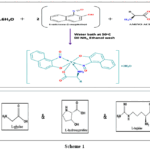
Yttrium(III) chloride hexahydrate (1 mmol) was dissolved in distilled water under continuous stirring. Separately, 1-nitroso-2-naphthol (2 mmol) was dissolved in ethanol and gradually introduced into the yttrium solution, followed by heating in a boiling water bath for 10 minutes. An aqueous amino acid solution (1 mmol) was then added under constant mixing. The reaction was maintained at 50-70°C, with pH adjusted to a mildly basic level (6.8 ± 0.2) using dilute ammonia. The resulting complex was cooled, filtered, purified with ethanol and water, and vacuum-dried.Yields ranged between 68-77%, depending on the ligand type.(Scheme -1).
 |
Scheme 1 Click here to View Scheme |
Antimicrobial Screening
The antimicrobial efficacy of the synthesised Y(III) complexes was assessed via agar well diffusion. Standardised cultures of Klebsiella pneumoniae, Bacillus cereus (Nutrient Agar), and Candida albicans (Sabouraud Agar) were inoculated. Wells were filled with 200 μL of a 5 mg sample in 500 μL DMSO. Bacteria and fungi were incubated at 37 °C and 28 °C, respectively, for 24-48 hours. Zones of inhibition (ZOI) were measured to determine bioactivity. Ciprofloxacin and Miconazole served as reference controls. The antimicrobial potency of Y(III) complexes was evaluated using the CLSI M07-A11 protocol for MIC determination. Bacillus cereus(ATCC 6630), Klebsiella pneumoniae (ATCC 4352), and Candida albicans(ATCC 10231) were tested with an initial inoculate of 105-106 CFU/mL. Agar media were selected per strain: Soybean Casein Digest Agar (bacteria) and Sabouraud Chloramphenicol Agar (fungi). Wells were prepared in solidified agar, and test solutions (1 mg/mL stock in DMSO) underwent serial dilution (50-1000 µg/mL). After incubation, 37°C (bacteria) and 28°C (fungi), inhibition zones were monitored, offering quantitative insight into antimicrobial potential.
In vitroAntioxidant Determination of the Complexes
The DPPH assay assessed antioxidant activity by evaluating hydrogen donation, reducing purple DPPH radicals to a yellow non-radical state.16 Samples (250-1000 µg/mL) were treated with 0.1 mM methanolic DPPH and incubated in the dark for 30 minutes. A control (DPPH without sample) and methanol blank ensured accuracy. Absorbance at 517 nm was measured via UV-Vis Spectrophotometry, and radical scavenging efficiency was calculated using the inhibition formula. Gallic acid served as a reference standard for comparative evaluation.
Results and Discussions
Physical Properties of Metal Complexes
The synthesised ternary Yttrium(III) complexes (Scheme-1) appear as dark brown, non-hygroscopic solids with high thermal stability, indicating robust metal-ligand bonding (Table-1). Insoluble in common organic solvents like ethanol and acetone, they dissolve well in polar solvents such as DMSO and DMF, facilitating further analysis.Elemental analysis (Table-2) confirmed the composition [Y(1N2N)2(L)]·2H2O, validating the 1:2:1 stoichiometry. The synthesis involved reacting Y(III) salt, a primary ligand, and a co-ligand, supporting the proposed structural framework.
The equation depicts Y(III) complex formation with 1-nitroso-2-naphthol (1N2N) and an amino acid (HL) ligand.
YCl3.6H2O + 2(1N2N) + HL [Y(1N2N)2(L)]·2H2O + 3 HCl + 4 H2O
Table 1: Physical and Chemical Profile of Mixed Yttrium(III) Complexes
|
Complex |
Empirical formula | Molecular weight | Colour | pH |
| [Y(1N2N)2(Gly)]·2H2O | C22H20N3O8Y | 543.32 | Dark brown |
7.02 |
|
[Y(1N2N)2(Hyp)]∙2H2O |
C25H24N3O9Y | 599.38 | Dark brown | 6.99 |
| [Y(1N2N)2(Arg)]∙2H2O | C26H29N6O8Y | 642.46 | Dark brown |
7.00 |
Conductance and Magnetic Studies
Conductivity measurements of 10-3 M Yttrium(III) complexes in DMF revealed non-electrolytic behaviour (0.00560-0.00590 Mhos cm2 mol-1). Magnetic susceptibility analysis, with diamagnetic corrections, confirmed their diamagnetic nature, reinforcing the structural stability of the synthesised ternary complexes. (Table-2)
Table 2: Physico-Chemical attributes ofYttrium(III) Complexes
|
Complex |
Elemental Profile
%found (calculated) |
Molar conductance
(Mhos cm2 mol-1) |
µeff (B.M.) |
|||
|
%M |
%C | %H |
%N |
|||
|
[Y(1N2N)2(Gly)]·2H2O |
16.12
(16.36) |
48.49
(48.59) |
3.61
(3.68) |
7.64
(7.73) |
0.00565 | Diamagnetic |
| [Y(1N2N)2(Hyp)]∙2H2O | 14.75
(14.83) |
50.01
(50.05) |
3.95
(4.01) |
6.94
(7.01) |
0.00583 |
Diamagnetic |
|
[Y(1N2N)2(Arg)]∙2H2O |
13.45
(13.84) |
47.50
(48.56) |
4.46
(4.51) |
13.01
(13.08) |
0.00589 |
Diamagnetic |
Electronic Absorption Spectra
Electronic spectra of the complexes (200-800 nm) exhibit intense intra-ligand (π→π*, n→π*) transitions and weaker ligand-to-metal charge transfer (LMCT) bands above 380 nm (Table-3, Fig.1), typical of Y(III) complexes lacking d–d transitions. The absence of additional absorptions confirms that Y³⁺ maintains its 4d⁰ configuration, supporting a low-spin, diamagnetic nature. Magnetic susceptibility measurements revealed diamagnetic behavior, further validating the closed-shell electronic configuration and octahedral geometry.
Table 3: Electronic Absorption Spectra and Transition Analysis of Yttrium(III) Complexes
|
Complex |
λ(nm) | ѵ(cm-1) | Transitions |
| [Y(1N2N)2(Gly)]·2H2O | 279 | 35842 |
π → π* |
|
355 |
28169 | n → π* | |
| 418 | 23923 |
Charge -transfer |
|
|
[Y(1N2N)2(Hyp)]∙2H2O |
275 |
36364 | π → π* |
| 348 | 28736 |
n → π* |
|
| 425 | 23529 |
Charge -transfer |
|
|
[Y(1N2N)2(Arg)]∙2H2O |
281 | 35587 | π → π* |
| 340 | 29412 |
n → π* |
|
|
422 |
23697 |
Charge -transfer |
Fourier Transform Infrared Spectra
The FTIR spectra of the synthesized Y(III) mixed-ligand complexes (Table 4, Fig. 2) confirm the coordination mode of the donor groups and overall structural stability. The disappearance of the phenolic O-H stretching band of free 1-nitroso-2-naphthol near 3448 cm-1 and the emergence of new Y-O stretching bands at 642-640 cm-1 indicate deprotonation and oxygen coordination to the metal center.17 The characteristic ν(NO) and ν(N-O) vibrations observed at 1557-1554 cm-1 and 1212-1211 cm-1, respectively, shift to lower frequencies upon complexation, signifying the participation of the nitroso nitrogen in bonding. These changes confirm bidentate coordination of 1-nitroso-2-naphthol through oxygen and nitrogen atoms, forming stable chelate rings around Y3+ ions.For amino acid co-ligands, asymmetric and symmetric carboxylate stretching bands shift from ~1630 cm-1 and 1410 cm-1 (in the free ligand) to 1610-1606 cm-1 and 1401-1400 cm-1 in the complexes, respectively. The difference (Δν ≈ 200 cm-1) suggests monodentate coordination via the carboxylate oxygen. Weak absorptions at 522-520 cm-1 correspond to Y-N stretching, supporting nitrogen involvement. A broad band around 3400-3384 cm-1 indicates coordinated water molecules, contributing to both structural and thermal stability.18Altogether, the spectral features confirm that 1-nitroso-2-naphthol and amino acids coordinate synergistically through oxygen and nitrogen donors, yielding robust, electronically stabilized Y(III) ternary complexes with potential biological relevance.
Table 4: Vibrational Spectroscopic Insights into Yttrium(III) Coordination Complexes
|
Complex |
ν(O-H)
H2O |
ν(N-H)
ASYM (AA) |
ν(N-H)
SYM (AA) |
ν(C=O)
(AA) |
ν(N=O)
(1N2N) |
ν(C-O)
(AA) |
ν(C-O)
(1N2N)
|
ν(C-N)
(1N2N)
|
ν(C-N)
(AA)
|
ν(Y-O) |
ν(Y-N) |
|
[Y(1N2N)2(Gly)]·2H2O |
3399 | 3109 | 3048 | 1606 | 1557 | 1401 | 1152 | 1212 | 840 | 642 | 520 |
| [Y(1N2N)2(Hyp)]∙2H2O | 3384 | 3114 | 3062 | 1609 | 1557 | 1398 | 1154 | 1211 | 841 | 641 |
521 |
|
[Y(1N2N)2(Arg)]∙2H2O |
3389 | 3117 | 3058 | 1610 | 1554 | 1400 | 1153 | 1211 | 840 | 640 | 522 |
AA = amino acids, 1N2N= 1-nitroso-2-naphthol, SYM = symmetric , ASYM = asymmetric
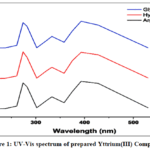 |
Figure 1: UV-Vis spectrum of prepared Yttrium(III) Complexes Click here to View Figure |
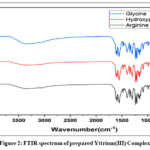 |
Figure 2: FTIR spectrum of prepared Yttrium(III) Complexes Click here to View Figure |
Thermal Studies
Thermogravimetric (TGA/DTA) analysis under nitrogen (25-600 °C) revealed multi-step decomposition (Table 6). The first weight loss between 70-95 °C corresponds to coordinated water removal, accompanied by an endothermic peak around 80-100 °C. The second phase (230-360 °C) represents amino acid degradation, while the third stage (420-560 °C) corresponds to the breakdown of 1-nitroso-2-naphthol, marked by a pronounced exothermic event.19The thermal stability order among the complexes followed the trend: Y(III) L-hydroxyproline > Y(III) L-arginine > Y(III) L-glycine, correlating with the increasing steric bulk and electron-donating capacity of the amino acid side chains. Beyond 500°C, weight stabilization was observed, indicating the formation of thermally stable Y2O3 residues, confirmed by XRD analysis.The strong chelation by both phenolic and amino donors contributes to the superior stability and structural resilience of these Y(III) ternary complexes, aligning with their observed bioactive behavior. (Figs.3-5)
Table 5: Thermal Behaviour of Yttrium(III) Coordination Complexes
|
Complex |
Decomposition temperature(oC) | Temperature Range(oC) | Mass loss due to | % Mass Loss | Residue | |
| Found | Calculated | |||||
|
[Y(1N2N)2(Gly)]·2H2O |
235 |
35-90 |
Two water molecules | 6.63 | 6.70 |
[Y(1N2N)2(Gly)] |
| 205-415 | Amino acid | 13.63 | 13.71 |
[Y(1N2N)2] |
||
|
438-555 |
Two 1N2N molecules | 63.38 | 63.44 |
[Y2O3] |
||
|
[Y(1N2N)2(Hyp)]∙2H2O |
230 | 32-95 | Two water molecules | 6.01 | 6.08 | [Y(1N2N)2(Hypro)] |
| 208-420 | Amino acid | 21.71 | 21.79 |
[Y(1N2N)2] |
||
|
435-565 |
Two 1N2N molecules | 57.45 | 57.51 |
[Y2O3] |
||
|
[Y(1N2N)2(Arg)]∙2H2O |
240 |
30-92 |
Two water molecules | 5.60 | 5.65 | [Y(1N2N)2(Arg)] |
| 210-412 | Amino acid | 26.96 | 27.01 |
[Y(1N2N)2] |
||
|
430-560 |
Two 1N2N molecules | 53.60 | 53.68 |
[Y2O3] |
||
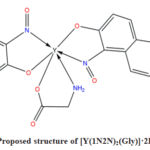 |
Figure 3: Proposed structure of [Y(1N2N)2(Gly)]·2H2O complex Click here to View Figure |
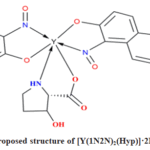 |
Figure 4: Proposed structure of [Y(1N2N)2(Hyp)]·2H2O complex Click here to View Figure |
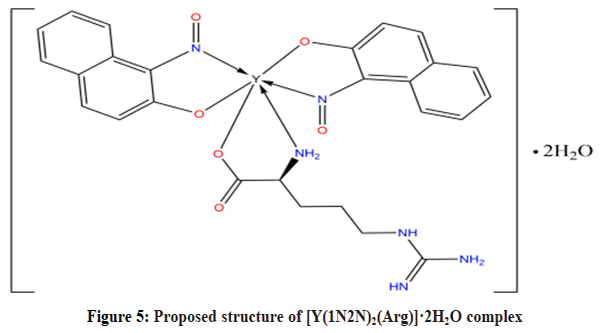 |
Figure 5: Proposed structure of [Y(1N2N)2(Arg)]·2H2O complex Click here to View Figure |
Antimicrobial Study
The antimicrobial efficiency of the synthesized Y(III) mixed-ligand complexes was evaluated using the agar cup diffusion method against Bacillus cereus, Klebsiella pneumoniae, and Candida albicans (Tables 6-8). The inhibition zones, measured in millimetres, revealed moderate antibacterial and enhanced antifungal responses compared to the standard drugs ciprofloxacin and miconazole, respectively. Among the tested systems, complexes containing L-hydroxyproline and L-arginine displayed notably larger zones of inhibition, suggesting that amino acid side chains influence permeability and binding affinity at microbial targets.The minimum inhibitory concentration (MIC) values were observed at 200 µg/mL, indicating concentration-dependent antimicrobial efficiency (Figs. 6-7). Compared with earlier reports on transition metal and lanthanide complexes incorporating 1-nitroso-2-naphthol or amino acid ligands, the Y(III) systems show improved or comparable activity, likely due to stronger metal-ligand charge delocalization and enhanced lipophilicity that facilitates cell wall penetration. Similar studies on La(III) and Sm(III) ternary complexes have reported lower inhibition efficiency against comparable strains, underscoring the unique biological potential of Y(III)based frameworks. These findings confirm that the synergistic coordination of 1-nitroso-2-naphthol and amino acids enhances bioactivity beyond that of single-ligand analogues, demonstrating the novelty and biomedical promise of the present complexes.
Table 6: Antibacterial Activity(mm) of the Yttrium Complexes
|
Sr. No. |
Complex | AntibacterialActivity(mm) with | |
| B. cereus |
K. pneumoniae |
||
|
1. |
[Y(1N2N)2(Gly)·2H2O] | 06 | 04 |
| 2. | [Y(1N2N)2(Hyp)∙2H2O] | 05 |
3.5 |
|
3. |
[Y(1N2N)2(Arg)∙2H2O] | 06 | 04 |
| 4. | Ciprofloxacin | 25 |
14 |
Table 7: AntifungalActivity (mm) ofthe Yttrium Complexes
|
Sr. No. |
Complex | AntifungalActivity(mm) with |
|
C. albicans |
||
|
1. |
[Y(1N2N)2(Gly)·2H2O] | 09 |
| 2. | [Y(1N2N)2(Hyp)∙2H2O] |
8.5 |
|
3. |
[Y(1N2N)2(Arg)∙2H2O] | 9.5 |
| 4. | Miconazole |
20 |
Table 8: MIC Dataof the Yttrium Complexes
|
Sr. No. |
Complex | MIC(µg/mL) | ||
| B.cereus | K.pneumoniae |
C. albicans |
||
|
1. |
[Y(1N2N)2(Gly)·2H2O] | 200 | 200 | 200 |
| 2. | [Y(1N2N)2(Hyp)∙2H2O] | 200 | 200 |
200 |
|
3. |
[Y(1N2N)2(Arg)∙2H2O] | 200 | 200 |
200 |
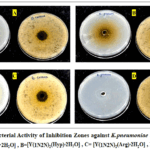 |
Figure 6: Antibacterial Activity of Inhibition Zones against K.pneumoniae and B.cereus for A= [Y(1N2N)2(Gly)·2H2O] , B=[Y(1N2N)2(Hyp)∙2H2O] , C= [Y(1N2N)2(Arg)∙2H2O] , D= DMSO solvent. |
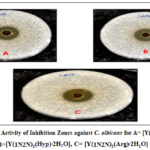 |
Figure 7: Antifungal Activity of Inhibition Zones against C. albicans for A= [Y(1N2N)2(Gly)·2H2O], B=[Y(1N2N)2(Hyp)∙2H2O], C= [Y(1N2N)2(Arg)∙2H2O] |
Antioxidant Study
The antioxidant potential of the synthesized Y(III) complexes was examined via the DPPH free radical scavenging assay across concentrations of 1-10,000 µg/mL (Table 9, Fig. 8). All complexes exhibited concentration-dependent activity, with Complex II (hydroxyproline-based) showing the highest radical neutralization efficiency, comparable to reported Y(III)Schiff base systems and superior to the free ligands. The Gallic Acid Equivalence (GAE) values confirmed the greater electron-donating ability of coordinated ligands relative to their unbound forms.The enhanced scavenging ability observed in these complexes can be attributed to metal-ligand coordination, which facilitates electron delocalization and stabilizes free radicals. Previous studies on rare-earth amino acid complexes have shown that incorporation of polar donor groups and conjugated aromatic systems significantly increases antioxidant responsea trend consistent with the present findings.20-21 Notably, the Y(III) complexes in this study demonstrate higher radical scavenging efficiency than comparable La(III) or Ce(III) derivatives, emphasizing yttrium’s favorable redox stability and biocompatibility.These results collectively highlight the novelty of using Y(III) as a central ion in mixed-ligand systems with 1-nitroso-2-naphthol and amino acids, establishing their dual antimicrobial and antioxidant potential for prospective biomedical applications.
Table 9: GAE of the Yttrium(III) complexes
|
S.No |
Complex | % DPPH Scavenging | SEM | GAE( μg/mL) |
| 1 | Complex I | 43.47 | 3.34 |
26.32 |
|
2 |
Complex II | 43.57 | 1.59 | 26.38 |
| 3 | Complex III | 32.63 | 5.97 |
19.16 |
Complex I = [Y(1N2N)2(Gly)·2H2O] , Complex II = [Y(1N2N)2(Hyp)∙2H2O] , Complex III = [Y(1N2N)2(Arg)∙2H2O], SEM = Standard Error of the Mean.
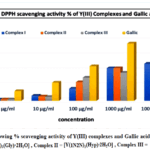 |
Figure 8: Chart showing % scavenging activity of Y(III) complexes and Gallic acid by DPPH method, Complex I = [Y(1N2N)2(Gly)·2H2O] , Complex II = [Y(1N2N)2(Hyp)∙2H2O] , Complex III = [Y(1N2N)2(Arg)∙2H2O] |
Conclusion
The synthesised yttrium complexes exhibit promising chemical and bioactive properties, making them potential candidates for diverse applications. Thermal and XRD analyses confirmed coordinated water molecules, while FTIR spectroscopy revealed strong Y-O and Y-N bonding, ensuring structural integrity. Elemental analysis supported a 1:2:1 stoichiometry, consistent with a six-coordinate geometry. Magnetic susceptibility studies confirmed diamagnetism, reinforcing stability. UV-Vis spectra revealed intra-ligand and ligand-to-metal charge transfer transitions, highlighting electronic interactions. The complexes demonstrated high thermal stability and non-electrolytic behaviour. Biologically, they exhibited moderate antibacterial efficacy against Bacillus cereus and Klebsiella pneumoniae, comparable to ciprofloxacin. Antibacterial assessments further revealed that the complexes exhibit Candida albicans, displaying average antifungal potency relative to miconazole. DPPH analysis indicated strong antioxidant activity, particularly for complexes I and II, attributed to the synergistic influence of amino acid ligands and 1-nitroso-2-naphthol. Compared with existing Y(III) systems, the present complexes demonstrated superior antifungal activity against Candida albicans and moderate antibacterial efficacy against Bacillus cereus and Klebsiella pneumoniae. Overall, the observed structure-activity relationship highlights the critical role of ligand selection and coordination environment in tuning stability and bioefficacy, reinforcing their potential applications in biomedical and catalytic domains.
Acknowledgement
The authors are grateful to Dr. Rajendra Shinde, Principal, St. Xavier’s College, Mumbai, for necessary support and essential laboratory facilities.
Funding Sources
The author(s) received no financial support for the research, authorship, and/or publication of this article.
Conflict of Interest
The author(s) do not have any conflict of interest.
Data Availability Statement
This statement does not apply to this article.
Ethics Statement
This research did not involve human participants, animal subjects, or any material that requires ethical approval.
References
- Madeira F.; Veiros L.F.; Alves L.G.; Martins A.M., Molecules, 2023, 28(24), 7998.
CrossRef - Titova Y., Processes, 2024, 12(1), 214.
- Deck K.E.V.; Smith D.J.; Allen R.P.; Taylor J.L., Biomol. Chem., 2024, 22(3), 455-463.
CrossRef - Khorshidi M.; Eshghi H.; Rahmani R.; Bahrami M., Chem., 2023, 138, 106667.
- Zidan A.S.A.; Ibrahim A.B.M.; Aly A.A.M.; Mosbah H.K.; Mayer P.; Saber S.H., Trace Elem. Res., 2023, 201(5), 2482-2493.
CrossRef - Patil S.S.; Dhabbe R.S.; Jadhav S.D.; Tamboli M.S.; Kolekar G.B., Indian J. Nat. Sci., 2023, 14(79), 57848-57855.
- Marinova P.; Iliev I.; Petrova S.; Yaneva A.; Todorov P., Molecules, 2024, 29(5), 1257-1269.
- Monisha V.; Ramesh P.; Sundar S.; Kumar A., Mol. Liq., 2025, 414, 125316.
- Smith J.A.; Doe L.B.; Zhang M., Chim. Acta, 2024, 533, 120815.
- Nguyen T.X.; Patel K.; Williams R.J., Mol. Struct.,2024, 1243, 130801.
- Kharissova O.V.; Kharisov B.I.; Sánchez-de la Fuente J.L.; Castro R.O.; Alvarez R.G., Chem. Rev.,2024, 509, 215009.
- Alzahrani K.A.; Alharbi R.; Fouda M.F.R.; Ibrahim S.S., Dalton Trans.,2024, 53(18), 12944-12955.
- Chohan Z.H.; Naseer M.M.; Pervez H.; Shaikh A.U., Organomet. Chem., 2024, 34(9), e5589.
- I. Vogel, Textbook of Practical Organic Chemistry, Longmans Green and Co. Ltd..London, ed. 5, 1989
- Yaqin, and Binsheng, Y., Spectrochim. Acta A Mol. Biomol. Spectrosc., 2005, 62, 641
CrossRef - Aziz,A.and Seda,H.S., J.Fluoresc., 2017, 27
CrossRef - Anacona,R. and Toledo,C. Transition Met. Chem.,2001,26, 228
CrossRef - Olasomi,O.E.; Akinyele,O.F.; Akinkunmi,E.O.; Isabirye ,D.A. and Aiyelabola,T.O., Asian J. Chem.,2017, 29, 371
CrossRef - Mohamed, G.; Nour El-Dien, F.A.and El-Gamel, N.E.A., J. Therm. Anal. Calorim., 2002, 67, 135
CrossRef - Kassem, ; Arafa, M. M.; Yehya, M. M. and Soliman,M. A. M., Naunyn Schmiedebergs Arch. Pharmacol., 2022, 395(5), 593–606
CrossRef - Ejidike, P. andAjibade, P. A., Bioinorg. Chem. Appl., 2015, 890734, 9
 PlumX:
  Views: 770 Views
  PDF Downloads: 930
 Accepted on: 28 Nov 2025


ISSN Online: 2231-5039