Formulation and Evaluation of a Nanomiemgel of Argyreia nervosa for the Treatment of Wounds
 and Shikha Jaiswal*
Department of Pharmacy.Oriental University Indore, (M. P.), India.
Corresponding Author E-mail: sikhajaiswal@yahoo.com
DOI : http://dx.doi.org/10.13005/ojc/420307
Download this article as:

The present study focuses on the formulation, characterization, and evaluation of three topical nano-based delivery systemsNanomicelles (NMI), Nanoemulsions (NEM), and Nanomiemgel (NMG)prepared using extracts of Argyreia nervosa, a medicinal plant known for its anti-inflammatory and wound-healing properties. Nanoemulsions were formulated using an oil–surfactant system, nanomicelles were developed via solvent evaporation and micellization, and Nanomiemgel was produced by integrating both nanocarriers into a Carbopol-based gel matrix. All formulations were assessed for physicochemical properties, including pH, spreadability, viscosity, grittiness, homogeneity, surface morphology (SEM), and in-vitro drug release using a Franz diffusion cell.Results demonstrated that all three formulations possessed pH values within the acceptable range for topical application (6.80–7.22). Spreadability analysis revealed superior application behavior in NMG (5.8 cm) compared to NEM (5.2 cm) and NMI (4.1 cm). Viscosity measurements indicated that NMG exhibited the highest structural consistency, supporting prolonged skin retention. Grittiness and homogeneity evaluations confirmed that NMG possessed the smoothest texture and most uniform particle dispersion. SEM analysis showed well-distributed nanoparticles within the gel matrix, with particle sizes predominantly between 100–500 nm. Drug release studies revealed a sustained and controlled release profile from NMG, achieving 98.27% release within 5 hours, indicating efficient encapsulation and diffusion dynamics.The Nanomiemgel formulation demonstrated superior physicochemical stability, enhanced spreadability, improved tactile properties, and controlled drug release compared to NMI and NEM. These findings suggest that NMG offers a promising topical delivery platform for Argyreia nervosa extract, with strong potential for wound-healing and dermatological applications.
KEYWORDS:Argyreia nervosa; Controlled release; Drug release; Herbal formulation; Nanomicelles; Nanoemulsion; Nanomiemgel; Nanotechnology; Physicochemical evaluation; SEM analysis; Topical delivery; Wound healing;
Introduction
A wound is defined as a rupture or opening in the skin caused by the disturbance of normal anatomical skin structure (Singer & Clark, 1999). The skin, as the largest organ of the body, plays a crucial role in protection, regulation, and sensation, and any disruption to its integrity can lead to complex physiological and pathological consequences. Wound damage affects multiple structures, including the epidermis, dermis, basement membrane, blood vessels, and nerves, disrupting the body’s natural barrier and defense mechanisms (Kumar et al., 2007).Wound healing is a complex, multi-stage process encompassing hemostasis, inflammation, proliferation, and remodeling. Immediately after injury, hemostasis occurs as the body forms a clot to stop bleeding and releases growth factors to promote repair. The inflammatory phase follows, during which immune cells clear debris and protect against infection. In the proliferation phase, new tissue forms through collagen synthesis, angiogenesis, and epithelialization. Finally, the remodeling phase strengthens and reorganizes collagen, resulting in mature, functional tissue (Singer & Clark, 1999; Kumar et al., 2007).
Herbal plants have long been used to support wound healing due to their anti-inflammatory, antimicrobial, and tissue-regenerative properties. For example, Calendula officinalis extracts have demonstrated wound-healing activity and enhanced tissue repair in experimental models (Parente et al., 2012; Fronza et al., 2009). Additionally, Argyreia nervosa leaf extracts have shown efficacy in accelerating wound closure, likely through anti-inflammatory and antioxidant effects (Singhal et al., 2011). These findings highlight the therapeutic potential of plant-based interventions in promoting wound repair and support further research into their mechanisms and applications.Wound healing is a critical physiological process that restores the integrity of the skin after injury. The skin, being the largest organ of the body, acts as a barrier against physical, chemical, and microbial threats, and any disruption to its structure can lead to significant health complications (Almadani et al., 2021). The process of wound healing involves a complex interplay of cellular and molecular mechanisms, including hemostasis, inflammation, proliferation, and tissue remodeling (Ding et al., 2025; Al Mamun et al., 2024). Aging, chronic diseases, and environmental factors can impair these mechanisms, resulting in delayed or abnormal healing (Khalid et al., 2022).
Recent advances in molecular biology have improved our understanding of the cellular pathways and signaling molecules involved in wound repair, providing new opportunities for therapeutic intervention (Ding et al., 2025; Biomedicines, 2023). Emerging technologies, including bioengineered skin substitutes, growth factor therapies, and nanotechnology-based formulations, are increasingly being explored to enhance the healing process and reduce complications (International Journal of Molecular Sciences, 2020; Journal of Drug Delivery Science and Technology, 2025). Despite these advancements, challenges remain in translating basic research into effective clinical therapies, particularly in chronic wounds and in populations with impaired healing capacity (Visha&Karunagaran, 2022).
Materials and Methods
Plant Material
The leaves of Argyreia nervosa were collected from the herbal garden of Samarth College of Agriculture, Deulgaon Raja. The collected plant material was authenticated by Dr. NitinMehetre, Botanist and Principal of ShriGajananMaharajKrushi and ShaikshanikSanstha, Samarth College of Agriculture, Deulgaon Raja, District Buldhana, Maharashtra, India.
Chemicals
All chemicals obtained and procured from Ozone International, Mumbai, provided by Dolphin Chemicals.
Plant Profile.
Scientific Name:Argyreia nervosa
Common Names: Blue Dawn Flower, Elephant Creeper, Hawaiian Baby Woodrose
Family:Convolvulaceae
Type: Perennial Climbing Vine (or Creeper)
Formulation
Formulation of nano-emulsion
Table 1: Preparation of Nano-emulsion
| Sr. No. | Ingredient | Quantity |
| 1 | Dried Leaf Extract | 2 g |
| 2 | Olive Oil | 10 mL |
| 3 | Lanolin | 3 g |
| 4 | Tween 80 | 10 mL |
| 5 | Oleic Acid | 2 mL |
| 6 | Distilled Water | q.s. to 100 mL |
The preparation of the nanoemulsion began with the formation of the oil phase. In a clean beaker, 10 mL of Olive Oil, 3 g of Lanolin, and 2 mL of Oleic Acid were combined and gently heated to 40–50°C until the lanolin completely dissolved, resulting in a uniform oil phase.Separately, 2 g of the Dried Leaf Extract was dissolved in a sufficient quantity of Distilled Water, and the mixture was stirred and heated to 40°C to ensure complete dissolution of the extract. After this, 10 mL of Tween 80 was slowly added to the aqueous phase with continuous stirring to obtain a homogeneous solution. Tween 80 served as the surfactant to reduce the interfacial tension and stabilize the system.Once both phases were prepared, the oil phase was added dropwise into the aqueous phase under continuous stirring using a magnetic or overhead stirrer. After complete addition, the coarse emulsion obtained was subjected to high-shear homogenization. A sonicator was used in short bursts of 15–20 seconds to prevent overheating, and homogenization was continued until nano-sized droplets were formed. The process was carried out until the desired nanoemulsion droplet size (below 200 nm) was achieved. Finally, Distilled Water was addedto make the final volume 100 mL.
Formulation of nanomicelles
Table 2: Preparation of Nanomicelles
| Sr. No. | Ingredient | Quantity |
| 01 | Argyreia nervosa Extract | 2 g |
| 02 | Polyethylene Glycol (PEG) | 10 g |
| 03 | Acetone | 30 mL |
| 04 | Distilled Water | q.s. to 100 g |
The preparation of the nanomicelles began by dissolving the required ingredients in an organic solvent. Polyethylene Glycol (PEG) (10 g) was first dissolved in 30 mL of Acetone to obtain a clear and uniform solution. PEG acted as the surfactant in the system. After this, 2 g of Argyreia nervosa extract was added to the PEG–acetone mixture. The mixture was stirred, and slight warming was applied when necessary to ensure that the extract dissolved completely and was uniformly dispersed.Once a clear solution was obtained, it was added drop by drop into Distilled Water to 100 g with continuous stirring. The presence of acetone helped maintain solubility during mixing, and as the solution came into contact with water, initial micelle formation began.The entire mixture was then transferred to a rotary evaporator, and acetone was removed under reduced pressure at 40–50°C until the solvent completely evaporated. Removal of acetone allowed the PEG and plant extract to self-assemble into stable nanomicelles in the aqueous medium.After solvent evaporation, the dispersion was treated with a sonicator. Short sonication cycles were used to break any remaining aggregates and to ensure the formation of uniform, stable nanomicelles of the desired size.
Formulation of Nanomiemgel
Table 3: Preparation of Nanomiemgel
| Sr. No. | Ingredient | Quantity |
| 01 | Nanoemulsion | 40 g |
| 02 | Nanomicelle | 40 g |
| 03 | Carbopol 940 | 1 g |
| 04 | Triethanolamine | 1 mL (q.s. for pH adjustment) |
| 05 | Distilled Water | q.s. to 100 g |
The preparation of the Nanomiemgel began by combining the two nonsystems. 40 g of Nanoemulsion and 40 g of Nanomicelles were taken in a clean beaker and mixed gently to obtain a uniform 1:1 blend.Separately, the gel base was prepared by dispersing 1 g of Carbopol 940 in approximately 50 mL of distilled water. The dispersion was allowed to hydrate, and then the pH was adjusted to 6.5–7.0 by adding 1 mL of Triethanolamine, which served as the neutralizing agent. This resulted in the formation of a smooth and transparent gel base.Once the gel base was ready, the previously mixed nanoemulsion–nanomicelle blend was added slowly to the Carbopol gel under continuous stirring. The mixing process was continued until a uniform and consistent Nanomiemgel was obtained. Finally, distilled water was added to make the final weight 100 g. The prepared Nanomiemgel was transferred to an appropriate container and stored at 4°C until further use.
Evaluation of Nanomiemgel
pH
The pH of the Nanomicelles, Nanoemulsion, and Nanomiemgel formulations of Argyreia nervosa was measured using a digital pH meter to assess their stability and potential impact on zeta potential. Prior to measurement, the pH meter was calibrated with buffer solutions of pH 4 and 7 to ensure accuracy, and calibration was performed each time before testing. The electrode was then immersed in each formulation, and the pH readings were recorded after the meter had stabilized. All measurements were taken at room temperature (approximately 25°C ± 2°C) and were done in triplicate to ensure reliability. The average pH value of the three readings was calculated for each formulation, ensuring that any significant pH variations, which could affect the stability and performance of the nanocarriers, were identified and addressed.
Spreadability Test
To assess the spreadability of Nanomicelles, Nanoemulsion, and Nanomiemgel formulations of Argyreia nervosa, a standardized procedure was followed. A 0.5 g amount of each formulation was applied to a clean surface of glass slide, and a gentle shear force was applied using for 1 minute. The formulation was then allowed to spread, and the diameter of the spread area was measured after 1 minute. This process was repeated in triplicates for each formulation to ensure consistency, and the spread diameters were compared to evaluate the extent to which the formulations evenly distributed on the surface. The results provided insights into the spreadability of the formulations, which was essential for ensuring an even and controlled application of the active ingredients, ultimately influencing the efficacy of topical treatments.
Viscosity
The Brookfield Viscometer was calibrated according to the manufacturer’s instructions, and the spindle 4 was attached. A 50 ml, of each formulation Nanomicelles, Nanoemulsions, and Nanomiemgel was placed in a clean container that fit the Brookfield Viscometer. The gel sample was rotated at the lowest speed setting (0.3 RPM), and the corresponding dial reading was recorded. The speed was then increased to 0.6 RPM, and the dial reading was noted again, followed by a final rotation at 1.5 RPM with the dial reading recorded. For each speed, the dial reading was multiplied by the corresponding factor from the Brookfield Viscometer manual to calculate the viscosity at each speed.
Grittiness
A small amount (approximately 0.5 g) of each formulation Nanomicelles (NMI), Nanoemulsion (NEM), and Nanomiemgel (NMG) of Argyreia nervosa was taken for testing. The evaluator applied each formulation separately to the inner forearm and gently rubbed it using their fingertips. The texture was assessed by feeling for any coarse particles, graininess, or unevenness. Each formulation was rated for grittiness on a scale from 0 (no grittiness) to 4 (severe grittiness). This process was repeated for all formulations, and the observations were recorded to compare the smoothness and sensory feel of each product.
Homogeneity
Approximately 0.5 g of each formulation (Nanomicelles, Nanoemulsion, and Nanomiemgel) was applied to a clean glass plate. Each sample was visually inspected for any signs of separation, uneven texture, or phase separation. The formulations were gently mixed with a spatula to assess uniformity in texture and distribution. Additionally, a small portion of each formulation was examined under a microscope to observe the evenness of particle distribution. The procedure was repeated for all formulations to ensure consistency and stability.
Scanning Electron Microscopy (SEM)
The Nanomiemgel formulation of Argyreia nervosa was prepared for Scanning Electron Microscopy (SEM) by first placing a small amount (approximately 1-2 mg) on a clean aluminum stub. The sample was evenly spread across the surface of the stub using a spatula to ensure proper coverage. To enhance the sample’s conductivity and prevent charging artifacts, it was coated with a thin layer of gold or platinum using a sputter coater for about 1-2 minutes, ensuring a uniform coating. The prepared sample was then placed in the SEM chamber, and the chamber was evacuated to create a vacuum environment. The sample was examined under the SEM at various magnifications 500x to observe its surface morphology, particle size, shape, and distribution. The SEM was operated at an accelerating voltage of 5-10 kV, which allowed clear imaging of the nanoparticles. High-resolution images were captured at different magnifications to analyze the surface structure, particle dispersion, and any potential aggregation or irregularities. These images were stored and analyzed using SEM software to measure particle size, shape, and uniformity. The resulting data from the SEM analysis was used to assess the quality and characteristics of the Nanomiemgel formulation, providing valuable insights into its morphology and effectiveness for topical application.
Scanning Electron Microscopy (SEM)
A small drop of this diluted sample was transferred onto a carbon-coated copper grid (200 mesh). The drop was allowed to settle briefly, after which the excess liquid was removed with filter paper. To improve image contrast, the grid was treated with 1% phosphotungstic acid and left to dry at room temperature.After drying, the grid was placed in a JEOL JEM-2100 TEM (Japan) operated at 80–120 kV. Images were captured at different magnifications to observe the shape, arrangement, and size of the nanodroplets. The particles showed a rounded appearance and were evenly distributed, with sizes falling in the typical nanoscale range of 20–200 nm.
Drug Release of NMG (Nanomiemgel) of Argyreia Nervosa
In-vitro drug release for the Nanomiemgel (NMG) of Argyreia nervosa was determined using a Franz diffusion cell and a synthetic membrane. A 1 g sample of the test formulation was uniformly dispersed on the membrane surface and fixed onto the diffusion cell. The cell’s receiver phase contained phosphate buffer (pH 6.8). The temperature of 37°C was maintained by a water bath circulating between two shells that encompassed the chamber.
The Franz diffusion cell was placed in the receiver phase space with a magnetic stirrer to maintain sink conditions. The cell was further placed on a magnetic mixer, and the cell mouth was covered with parafilm to prevent evaporation from the donor phase. At specified time intervals, 1 ml samples were withdrawn, and after each sampling, the aliquots were replaced with fresh phosphate buffer (pH 6.8) to maintain a consistent volume in the receiver phase throughout the experiment. The test was repeated three times for each sample, and the absorbance was measured using a standard curve of apparent concentration. The apparent concentration was then converted to the actual concentration using the following equation:

Where:
Cn = Actual concentration in sample n
C = Apparent concentration in sample n
Cn-1 = Actual concentration in sample n − 1
Vt = Volume of receiver phase
V = Sample volume
Result
pH
Table 4: pH of Nano-micelles,Nanoemulsions and Nanomiemgel
|
Sr. No |
Physical Test | Nanomicelles
(NMI) |
Nanoemulsion
(NEM) |
Nanomiemgel (NMG) |
| 01 | pH | 7.22 | 6.80 |
6.99 |
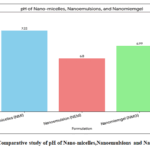 |
Figure 1: Comparative study of pH of Nano-micelles,Nanoemulsions and Nanomiemgel Click here to View Figure |
Spreadability Test
Table 5: Spreadability study of Nano-micelles Nanoemulsions&Nanomiemgel
|
Sr. No |
Test | Nanomicelles
(NMI) |
Nanoemulsions
(NEM) |
Nanomiemgel
(NMG) |
|
01 |
Spreadability Study | 4.1 cm | 5.2 cm |
5.8 cm |
Viscosity
Table 6: Viscosity study of Nano-micelles Nanoemulsions&Nanomiemgel
|
Formulation |
Speed (RPM) | Dial Reading | Factor |
Viscosity(cP) |
|
Nanomicelles |
0.3 | 12.5 | 100 | 1250.0 |
| Nanomicelles | 0.6 | 14.3 | 100 |
1430.0 |
|
Nanomicelles |
1.5 | 18.7 | 100 | 1870.0 |
| Nanoemulsions | 0.3 | 10.4 | 100 |
1040.0 |
|
Nanoemulsions |
0.6 | 12.8 | 100 | 1280.0 |
| Nanoemulsions | 1.5 | 15.3 | 100 |
1530.0 |
|
Nanomiemgel |
0.3 | 20.6 | 100 | 2060.0 |
| Nanomiemgel | 0.6 | 25.4 | 100 |
2540.0 |
|
Nanomiemgel |
1.5 | 30.2 | 100 |
3020.0 |
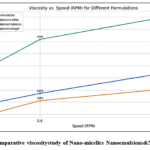 |
Figure 2: Comparative viscositystudy of Nano-micelles Nanoemulsions&Nanomiemgel Click here to View Figure |
Grittiness
Table 7: Observation Table for Grittiness Study of Nanomicelles, Nanoemulsion, and Nanomiemgel of Argyreia nervosa
|
Formulation |
Amount Applied (g) | Area Tested | Grittiness
Scale (0–4) |
Observation |
|
Nanomiemgel |
0.5 | Inner forearm | 1 | Slightly smooth with minimal particles |
| Nanomiemgel | 0.5 | Inner forearm | 1 |
Slight roughness detected |
|
Nanomiemgel |
0.5 | Inner forearm | 0 |
Completely smooth, no grittiness |
0: No grittiness, 1: Slight grittiness, 2: Mild grittiness, 3: Moderate grittiness, 4: Severe grittiness
Homogeneity
Table 8: Observation Table for Grittiness Study of Nanomicelles, Nanoemulsion, and Nanomiemgel of Argyreia nervosa
|
Formulation |
Visual Homogeneity | Mixing Uniformity | Microscopic Observation |
Overall Homogeneity |
|
Nanomiemgel |
Slightly uneven | Minor clumping | Particles slightly aggregated | Moderate |
| Nanomiemgel | Mostly uniform | Smooth | Particles moderately dispersed |
Good |
|
Nanomiemgel |
Completely uniform | Smooth and even | Evenly distributed fine particles |
Excellent |
Scanning electron microscopy (SEM)
Figure 3: Scanning Electron Microscopy (SEM) image of the Nanomiemgel formulation of Argyreia nervosa
Scanning electron microscopy (SEM)
Figure 4: Scanning Electron Microscopy (SEM) image of the Nanomiemgel formulation of Argyreia nervosa
Drug Release of NMG (Nanomiemgel) of Argyreia Nervosa
Table 9: Drug Release of NMG (Nanomiemgel) of Argyreia Nervosa
|
Time (minutes) |
% Release | Time Interval (min) | Change in % Release |
| 60 | 74.89 | — |
— |
|
120 |
82.45 | 60 | 7.56 |
| 180 | 89.34 | 60 |
6.89 |
|
240 |
94.58 | 60 | 5.24 |
| 300 | 98.27 | 60 |
3.69 |
Figure 5: Drug release from the Nanomiemgel of Argyreia nervosa
Discussion
The pH values of all formulations were within the safe and skin-friendly range, ensuring they would not cause irritation on topical application. Spreadability results showed that NMG had the highest Spreadability, meaning it can be applied more easily and evenly on the skin. In contrast, NMI was thicker and less spreadable, while NEM showed moderate ease of application.The viscosity study further supported these results. NMG showed the highest viscosity, indicating a stable gel structure that can stay on the skin longer and offer controlled drug release. NMI and NEM had lower viscosities, which explains their thinner consistency and comparatively lower retention.In terms of grittiness and homogeneity, NMG again demonstrated superior qualities. It was completely smooth, with no particle sensation during application. The microscopic and visual evaluation also confirmed that NMG had excellent uniformity, with evenly distributed nanoparticles and no aggregation. NMI and NEM showed slight roughness or minor clumping but were still generally acceptable.SEM imaging supported these observations, revealing well-distributed nanoparticles embedded in the gel matrix of NMG, The TEM findings confirmed that the nanomiemgel possessed uniformly distributed, spherical nanosizeddroplets, indicating successful formulation and good colloidal stability.confirming its structural stability and smooth texture. The particle size range of 100–500 nm further indicated good formulation control.Finally, the drug release study revealed that NMG provides a slow, sustained, and controlled release, reaching nearly complete release (98.27%) by 5 hours. The absence of a large initial burst release suggests that the drug was well-entrapped and released gradually over time, making it suitable for prolonged therapeutic action.
Conclusion
The study concludes that the Nanomiemgel (NMG) formulation offers the best combination of Spreadability, viscosity, smoothness, homogeneity, stability, and sustained drug release. Its superior performance can be attributed to the incorporation of a gel matrix, which enhances application properties while maintaining the benefits of nano-delivery. Therefore, NMG stands out as the most promising and patient-friendly formulation for topical delivery of Argyreia nervosa extract.
Funding Sources –
The author(s) received no financial support for the research, authorship, and/or publication of this article.
Conflict of Interest
The author(s) do not have any conflict of interest.
Data Availability Statement
This statement does not apply to this article.
Ethics Statement
This research did not involve human participants, animal subjects, or any material that requires ethical approval.
References
- Kumar, B., Vijayakumar, M., Govindarajan, R., &Pushpangadan, P. (2007). Ethnopharmacological approaches to wound healing: Exploring medicinal plants of India. Journal of Ethnopharmacology, 114, 103–113. https://doi.org/10.1016/j.jep.2007.08.010
CrossRef - Parente, L. M. L., de FreitasParreira, M. L., & de Sousa, F. C. (2012). Wound healing and anti‑inflammatory effect in animal models of Calendula officinalis Evidence-Based Complementary and Alternative Medicine, 2012, Article 375671. https://doi.org/10.1155/2012/375671
CrossRef - Fronza, M., Heinzmann, B., Hamburger, M., Laufer, S., &Merfort, I. (2009). Determination of the wound healing effect of Calendula extracts using the scratch assay with 3T3 fibroblasts. Journal of Ethnopharmacology, 126(3), 463–467. https://doi.org/10.1016/j.jep.2009.09.014
CrossRef - Singhal, A. K., Gupta, H., &Vahti, V. S. (2011). Wound healing activity of Argyreia nervosa leaves extract. International Journal of Applied and Basic Medical Research, 1(1), 36–39. https://pubmed.ncbi.nlm.nih.gov/2377677
CrossRef - Singer, A. J.,& Clark, R. A. F. (1999). Cutaneous wound healing. New England Journal of Medicine, 341(10), 738–746. https://doi.org/10.1056/NEJM199909023411006
CrossRef - Almadani, Y. H.,Vorstenbosch, J., Davison, P. G., & Murphy, A. M. (2021). Wound healing: A comprehensive review. Seminars in Plastic Surgery, 35(3), 141–144. https://doi.org/10.1055/s-0041-1731791
CrossRef - Al Mamun, A., Shao, C., Geng, P., Wang, S., & Xiao, J. (2024). Recent advances in molecular mechanisms of skin wound healing and its treatments. Frontiers in Immunology, 15, Article 1395479. https://doi.org/10.3389/fimmu.2024.1395479
CrossRef - (2023). Basic and clinical research in wound healing. Biomedicines, 11(5), 1380. https://doi.org/10.3390/biomedicines11051380
CrossRef - Ding, Z., Nuch, K. S., Han, M., Shim, J., Chien, P. N., &Heo, C. Y. (2025). Cellular and molecular mechanisms of wound repair: From biology to therapeutic innovation. Cells, 14(23), 1850. https://doi.org/10.3390/cells14231850
CrossRef - International Journal of Molecular Sciences. (2020). Skin wound healing process and new emerging technologies for skin wound care and regeneration, 21(7), 2623. https://doi.org/10.3390/ijms21072623
CrossRef - Journal of Drug Delivery Science and Technology. (2025). Wound healing in the modern era: Emerging research, biomedical advances, and transformative clinical approaches, 110, Article 107058. https://doi.org/10.1016/j.jddst.2025.107058
CrossRef - Khalid, K. A.,Nawi, A. F. M., Zulkifli, N., Barkat, M. A., & Hadi, H. (2022). Aging and wound healing of the skin: A review of clinical and pathophysiological hallmarks. Life, 12(12), 2142. https://doi.org/10.3390/life12122142
CrossRef - Visha, M. G.,&Karunagaran, M. (2022). A review on wound healing. International Journal of Clinicopathological Correlation, 3(2), 50–59.
CrossRef
 PlumX:
  Views: 708 Views
  PDF Downloads: 1063
 Accepted on: 27 Dec 2025
Second Review by: Dr. Naresh Batham
Final Approval by: Dr. B. K. Sharma


ISSN Online: 2231-5039