Coconut (Cocos nucifera) Husk Extract: A Potential Natural Food Preservative for Tomatoes
 and Ryan Viloria Cabanatan*
Natural and Applied Sciences Department, College of Arts and Sciences, Nueva Ecija University of Science and Technology, Cabanatuan City, Philippines.
Corresponding Author E-mail: rycabanatan@gmail.com
DOI : http://dx.doi.org/10.13005/ojc/420321
Download this article as:

The postharvest preservation of tomatoes using natural plant-based alternatives to synthetic chemicals has attracted considerable research attention. This study evaluated the potential of aqueous coconut (Cocos nucifera) husk extract (ACHE) as a natural preservative for tomatoes through qualitative phytochemical screening and physicochemical analysis during 14 days of ambient-temperature storage. Phytochemical screening confirmed the presence of phenolics, flavonoids, tannins, and saponins—bioactive classes associated with antioxidant and antimicrobial activity. Tomatoes were treated with ACHE at 25% and 50% concentrations (v/v) and soaking durations of 0, 30, and 60 minutes. All ACHE-treated samples exhibited significantly lower weight loss (6.32–9.31%) compared to the untreated control (18.07%) (p < 0.05), with no significant differences among treated groups. Soaking duration significantly influenced firmness, with 30–60-minute treatments yielding higher values (4.83–4.90 kg/cm²) relative to controls (4.33–4.37 kg/cm²). Total soluble solids (TSS) and pH were significantly affected by both concentration and soaking duration. Optimal physicochemical preservation was observed at moderate treatment conditions (25–50% concentration, 30 minutes soaking), while prolonged exposure at higher concentration adversely affected firmness and elevated pH. Since all samples exhibited pH values above 4.6, ACHE alone is insufficient for microbial safety and must be complemented by additional preservation strategies. These findings demonstrate the practical potential of ACHE as a sustainable natural preservative; however, further research including microbial validation and treatment optimization is required.
KEYWORDS:Coconut Husk Extract; Natural Preservative; Postharvest Quality; Phytochemicals; Physicochemical Properties; Tomatoes
Introduction
Postharvest losses of fruits and vegetables remain a major global challenge, particularly in developing countries where inadequate cold-chain infrastructure accelerates quality deterioration.1–3 Tomatoes (Solanum lycopersicum L.) are especially susceptible to rapid postharvest deterioration due to their high moisture content, active respiratory metabolism, and vulnerability to microbial spoilage.2,23 These characteristics result in significant economic losses and reduced food security across the value chain.1–3
The use of synthetic chemical preservatives to extend shelf life has raised persistent concerns regarding residue toxicity, environmental impact, and consumer safety.12,25 Consequently, there is growing scientific and industrial interest in natural, plant-derived alternatives that offer preservation efficacy without these adverse effects.12,25
Coconut (Cocos nucifera L.) is one of the most economically important tree crops in tropical countries, including the Philippines, where it represents both a significant agricultural commodity and a source of underutilized by-products.5,7 Coconut husk—the fibrous mesocarp fraction—is generated in large quantities as agricultural waste. Despite its lignocellulosic composition, coconut husk is also rich in bioactive phytochemicals including phenolics and flavonoids, which have been reported to exhibit potent antioxidant and antimicrobial activities.14–17,36,39
Phenolic compounds, flavonoids, tannins, and saponins constitute a diverse class of secondary metabolites that can inhibit microbial growth, scavenge free radicals, and retard oxidative deterioration in fresh produce.25–32 Their application as natural food preservatives offers the dual benefit of waste valorization and sustainable preservation technology.
Despite the recognized phytochemical richness of coconut-derived materials, limited studies have systematically assessed the application of aqueous coconut husk extract (ACHE) as a postharvest treatment for fresh tomatoes. Therefore, this study aimed to evaluate the preservative effectiveness of ACHE through qualitative phytochemical characterization and assessment of key physicochemical quality parameters—weight loss, firmness, total soluble solids (TSS), and pH—during 14 days of ambient storage.
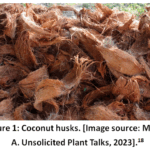 |
Figure 1: Coconut husks. [Image source: Mall, A. Unsolicited Plant Talks, 2023].18 Click here to View Figure |
Materials and Methods
Apparatus and Reagents
Apparatus used in this study included test tubes, beakers, a glass stirring rod, graduated cylinders, pipettes, an aspirator, a digital analytical balance, a blender, an electric juicer, a penetrometer (8 mm probe), a digital refractometer, a digital pH meter, Erlenmeyer flasks, and cheesecloth. Reagents employed were ferric chloride solution (5% and 10% w/v), iodine solution, and distilled water.
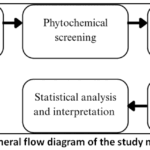 |
Figure 2: General flow diagram of the study methodology. Click here to View Figure |
Plant Material Collection and Extraction
Fresh coconut husks were collected, washed thoroughly under running water to remove surface contaminants, and air-dried. The dried husks were coarsely ground into powder using a blender. Aqueous extraction was performed by the maceration method.19 Five hundred grams (500 g) of coarsely powdered coconut husk were placed in a sealed container, and 1000 mL of distilled water was added to completely submerge the material. The mixture was macerated for a minimum of three days with periodic stirring. The resulting miscella was separated from the marc by filtration through cheesecloth. The filtrate was subsequently concentrated by evaporation on a water bath to obtain the crude aqueous extract. Treatment concentrations of 25% and 50% (v/v) were prepared by proportional dilution of the crude extract with distilled water.
Qualitative Phytochemical Screening
The presence of phenolic compounds, flavonoids, tannins, saponins, and alkaloids in ACHE was determined through standard qualitative phytochemical tests.20,21 The procedures and indicators of positive results are summarized in Table 1.
Table 1: Qualitative phytochemical screening tests applied to aqueous coconut husk extract (ACHE).
| Phytochemical | Procedure | Indicator of Positive Test |
| Phenolic Compounds | Ferric Chloride Test: Add a few drops of 5% ferric chloride solution to 3 mL of extract. | Dark green or bluish-black coloration. |
| Flavonoids | Ferric Chloride Test: Add a few drops of 10% ferric chloride solution to aqueous extract solution. | Green precipitate. |
| Tannins | Braymer’s Test: Add 3 mL distilled water and 3 drops of 10% ferric chloride solution to 1 mL of extract. | Blue-green coloration. |
| Saponins | Foam Test: Add 5 mL distilled water to 2 mL of extract; shake vigorously for 30 seconds. | Persistent foam lasting ≥10 minutes. |
| Alkaloids | Iodine Test: Add a few drops of iodine solution to 3 mL of extract solution. | Blue coloration disappearing on boiling and reappearing on cooling. |
Preparation and Treatment of Tomato Samples
Fresh ripe tomatoes of uniform size and maturity were obtained from a local market. Fruits were washed thoroughly under running water, air-dried, and individually weighed prior to treatment. Triplicate samples (n = 3) were assigned to each treatment combination. All samples were stored at ambient room temperature (approximately 27–30 °C) and evaluated after 14 days of storage.
Seven treatment groups were established based on ACHE concentration and soaking duration, as presented in Table 2.
Table 2: Treatment combinations of ACHE concentration and soaking duration applied to tomatoes.
| Treatment | ACHE Concentration (% v/v) | Soaking Duration |
| T1 (Control) | 0% | Not soaked |
| T2 | 25% | 0 min (dipped only) |
| T3 | 50% | 0 min (dipped only) |
| T4 | 25% | 30 min |
| T5 | 50% | 30 min |
| T6 | 25% | 60 min |
| T7 | 50% | 60 min |
T1 served as the untreated control. T2 and T3 were immersed briefly (dipped) in 25% and 50% ACHE, respectively, without a defined soaking period. T4 and T5 were soaked in 25% and 50% ACHE, respectively, for 30 minutes. T6 and T7 were soaked in 25% and 50% ACHE, respectively, for 60 minutes.
Physicochemical Evaluation
Weight Loss. Percentage weight loss was calculated from initial and final fruit masses measured before treatment and after 14 days of storage, using the formula:22
% Weight Loss = [(Initial Weight − Final Weight) / Initial Weight] × 100
Firmness. Fruit firmness was measured using a penetrometer fitted with an 8 mm diameter probe. Whole fruit samples were held steady on a firm surface and the probe was inserted to the marked depth on the probe shaft.22,23 Results are expressed in kg/cm².
Total Soluble Solids (TSS). Whole fruits were processed through an electric juicer and filtered through cheesecloth. TSS was measured using a digital refractometer and expressed as degrees Brix (°Brix).22
pH. Juice obtained by the same procedure as for TSS was used for pH determination with a calibrated digital pH meter.
Statistical Analysis
One-way analysis of variance (ANOVA) was performed to evaluate the effects of ACHE concentration and soaking duration on each physicochemical parameter. Tukey’s Honest Significant Difference (HSD) post hoc test was applied to identify significant pairwise differences among treatment means (α = 0.05). All analyses were conducted using statistical software, and results are expressed as mean ± standard deviation (SD).
Results and Discussion
Qualitative Phytochemical Screening
Phytochemical screening identifies the major classes of bioactive secondary metabolites present in plant extracts and provides a preliminary indication of their functional properties.24 The results of qualitative phytochemical screening of ACHE are presented in Table 3 and illustrated in Figure 3.
Table 3: Results of qualitative phytochemical screening of aqueous coconut husk extract (ACHE).
| Phytochemical | Observation | Result |
| Phenolic Compounds | Dark green coloration | Positive |
| Flavonoids | Green precipitate formed | Positive |
| Tannins | Blue-green coloration | Positive |
| Saponins | Persistent foam (≥10 min) | Positive |
| Alkaloids | No color change observed | Negative |
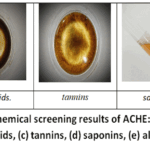 |
Figure 3: Qualitative phytochemical screening results of ACHE: (a) phenolic compounds, (b) flavonoids, (c) tannins, (d) saponins, (e) alkaloids. Click here to View Figure |
Table 3 shows that ACHE contains phenolic compounds, flavonoids, tannins, and saponins, while alkaloids were not detected. These findings are consistent with previous reports on coconut husk phytochemistry by Khan, Zafar, Shaikh, Faiz, Zafar, and Nasim (2025)35, Arivalagan, Roy, Yasmeen, Pavithra, Jwala, Shivasankara, Manikantan, Hebbar, and Kanade (2018)36, and Lima, Sousa, Meneses, Ximenes, Júnior, Vasconcelos, Lima, Patrocínio, Macedo, and Vasconcelos (2015)37.
Phenolic compounds, including flavonoids and tannins, are the primary antioxidant constituents of plant extracts.38,39 They donate hydrogen atoms to neutralize free radicals, thereby terminating the oxidative chain reaction responsible for cellular damage and food spoilage.38 Additionally, phenolic compounds exhibit broad-spectrum antimicrobial activity by inhibiting the growth of foodborne pathogens through suppression of biofilm formation and toxin production.40 Flavonoids display particularly diverse antimicrobial mechanisms targeting multiple biochemical pathways in pathogenic microorganisms.41 Tannins contribute to plant defense against insect pests and pathogens through protein-binding and enzyme inhibitory mechanisms,42–44 which also underlie their relevance in food preservation.
Saponins were also confirmed in ACHE, consistent with the findings of Ukaoma, Iwu, Udensi, Ukachukwu, Anyika, Nwogwugwu, Umeh, Kenechukwudozie, Duru, Chinakwe, Nnadozie, and Anyanwu (2024)45. Saponins possess significant antifungal, antimicrobial, insecticidal, and molluscicidal activities attributed to their foam-forming properties in aqueous media.46 Their utility in food systems extends to emulsification, foaming, and stabilization functions.47
The negative result for alkaloids in ACHE diverges from some previously published reports indicating alkaloid presence in coconut husk.47,48 This discrepancy is most likely attributable to differences in solvent system and extraction method: aqueous maceration selectively extracts water-soluble phytochemicals, while alkaloids are predominantly soluble in organic solvents such as methanol or ethanol.49,50 Therefore, the absence of alkaloids in ACHE does not negate the alkaloid content of coconut husk per se, but reflects the selective nature of aqueous extraction. Despite the absence of alkaloids, the presence of phenolics, flavonoids, tannins, and saponins in ACHE establishes a phytochemical basis for its antioxidant and antimicrobial preservative potential.
Physicochemical Quality Parameters During Storage
The physicochemical changes in tomatoes after 14 days of storage under the various ACHE treatments are summarized in Table 4.
Table 4: Physicochemical changes in tomatoes after 14 days of storage under different ACHE treatments (mean ± SD; n = 3).
| Treatment | Weight Loss (%) | Firmness (kg/cm²) | TSS (°Brix) | pH |
| T1 (0%) | 18.07 ± 4.66a | 4.33 ± 0.31 | 1.93 ± 0.20e | 5.24 ± 0.01b |
| T2 (25%, 0 min) | 7.40 ± 0.34b | 4.37 ± 0.25 | 3.00 ± 0.15d | 5.21 ± 0.02c |
| T3 (50%, 0 min) | 6.32 ± 0.89b | 4.33 ± 0.12 | 3.60 ± 0.15c | 5.17 ± 0.00d |
| T4 (25%, 30 min) | 6.86 ± 1.11b | 4.83 ± 0.35 | 4.00 ± 0.15a | 5.16 ± 0.01d |
| T5 (50%, 30 min) | 6.83 ± 2.76b | 4.88 ± 0.31 | 3.80 ± 0.10b | 5.17 ± 0.01d |
| T6 (25%, 60 min) | 8.69 ± 3.63b | 4.90 ± 0.30 | 4.00 ± 0.06a | 5.18 ± 0.01d |
| T7 (50%, 60 min) | 9.31 ± 2.65b | 4.30 ± 0.36 | 3.00 ± 0.10d | 5.36 ± 0.01a |
Note: Means within a column sharing the same superscript letter do not differ significantly (Tukey HSD, p > 0.05).
Weight Loss
All ACHE-treated tomatoes exhibited significantly lower weight loss (6.32–9.31%) compared to the untreated control (18.07%) (p < 0.05). However, no significant differences were observed among the treated groups themselves, indicating that ACHE presence rather than treatment intensity was the primary factor influencing weight loss reduction.
The reduction in weight loss is primarily attributable to decreased transpiration and respiration rates resulting from the formation of a semi-permeable bioactive coating on the fruit surface.50 The antimicrobial phytochemicals in ACHE may further contribute by inhibiting surface microbial colonization, which accelerates tissue breakdown and moisture loss.40 These findings corroborate those of Gurjar, Gurjar, Jangid, and Sharma (2025)23, who reported significant weight loss reduction in tomatoes treated with plant-derived edible coatings. Although a slight numerical increase in weight loss was noted at longer soaking durations (T6–T7: 8.69–9.31%), this trend was not statistically significant, suggesting no detrimental effect of extended ACHE exposure on weight retention within the range tested.
Firmness
Firmness is a critical quality attribute determining consumer acceptability and marketability of fresh tomatoes.50 Soaking duration significantly influenced fruit firmness, whereas extract concentration alone did not produce a consistent effect. Tomatoes treated for 30–60 minutes (T4–T6) exhibited higher firmness values (4.83–4.90 kg/cm²) compared to untreated controls and 0-minute dipped samples (T1–T3: 4.30–4.37 kg/cm²). This improvement is attributed to the inhibition of cell wall-degrading enzymes (e.g., polygalacturonase and pectin methylesterase) and stabilization of pectic polysaccharides in the cell wall by phenolic compounds and flavonoids in ACHE.35,27,29
Notably, T7 (50%, 60 min) exhibited the lowest firmness value (4.30 kg/cm²) among treated groups, suggesting that prolonged exposure at high extract concentration may induce mild osmotic stress or excessive interaction between extract components and the fruit cell wall, resulting in tissue weakening. The absence of a clear concentration-dependent firmness response may also reflect the physical barrier imposed by the hydrophobic tomato cuticle, which limits the penetration of hydrophilic aqueous extract components.51,52 These results collectively indicate that soaking duration is a more critical determinant of firmness retention than concentration within the ranges studied.
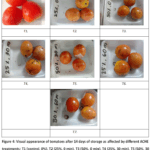 |
Figure 4: Visual appearance of tomatoes after 14 days of storage as affected by different ACHE treatments: T1 (control, 0%), T2 (25%, 0 min), T3 (50%, 0 min), T4 (25%, 30 min), T5 (50%, 30 min), T6 (25%, 60 min), and T7 (50%, 60 min). |
Total Soluble Solids (TSS)
TSS is widely used as a practical indicator of fruit ripening and sugar content, as it reflects the concentration of dissolved solids (primarily sugars and organic acids) in fruit juice.53 Treated tomatoes exhibited significantly higher TSS values (3.00–4.00 °Brix) compared to the untreated control (1.93 °Brix) (p < 0.05). The highest values were recorded in T4 (25%, 30 min) and T6 (25%, 60 min), both at 4.00 °Brix.
The elevated TSS in treated groups is primarily attributable to the concentration effect of reduced moisture loss: as free water loss is minimized by the ACHE surface coating, dissolved solids become more concentrated in the remaining juice.26 While phytochemicals in ACHE may modulate metabolic activity and thereby influence sugar metabolism, direct inhibition of sugar degradation was not quantified in this study. Therefore, the observed TSS increase is more appropriately attributed to moisture retention concentration effects rather than confirmed metabolic suppression.53–55 Both concentration and soaking duration, as well as their interaction, significantly influenced TSS, indicating that ACHE treatment conditions modulate the physicochemical changes associated with ripening progression.
pH
The pH of fruit tissue reflects the balance of organic acids and influences both taste quality and microbial safety in food preservation.5 For prevention of pathogen growth, particularly Clostridium botulinum, a pH below 4.6 is required (USDA; World Health Organization, 2023). All tomato samples in this study—across all treatments—exhibited pH values ranging from 5.16 to 5.36, placing them firmly in the low-acid food category where microbial safety cannot be assured without additional intervention.
Soaking duration, concentration, and their interaction significantly affected pH (p < 0.05). Moderate treatments (T2–T6) exhibited slightly lower pH values (5.16–5.21) compared to the control (5.24), suggesting partial retention of organic acids attributable to slowed metabolic activity. However, T7 (50%, 60 min) showed a significant pH increase (5.36), which may reflect leaching of organic acids during prolonged soaking or their degradation under extended extract exposure. Although the absolute pH changes were numerically small (<0.2 units), they were statistically significant and may carry practical implications for microbial stability over extended storage periods.
Study Limitations
This study has several limitations that should be acknowledged. First, microbial analysis was not performed; therefore, while the phytochemical profile of ACHE suggests antimicrobial potential, no direct microbiological evidence of microbial inhibition during storage is available. Given that all treatments yielded pH values above 4.6, the microbial safety of ACHE-treated tomatoes cannot be confirmed from the present data alone. Second, evaluation was limited to 14 days of ambient storage; the performance of ACHE under refrigerated conditions or over longer storage periods remains unknown. Third, only physicochemical parameters were measured; nutritional attributes (e.g., lycopene, vitamin C, antioxidant capacity) and sensory quality were not assessed. Fourth, a single tomato variety was used; results may differ across cultivars with varying cuticle thickness, ripening rates, and metabolic profiles. Fifth, the ACHE concentration range (25–50%) and soaking durations (0, 30, 60 min) may not represent the full optimization space, and the optimal treatment conditions identified here require validation in scaled-up or field-level experiments.
Conclusion
This study demonstrated the potential of aqueous coconut husk extract (ACHE) as a natural, plant-derived preservative for fresh tomatoes. Qualitative phytochemical screening confirmed the presence of phenolics, flavonoids, tannins, and saponins in ACHE—bioactive compounds with established antioxidant and antimicrobial properties—while alkaloids were absent, likely due to the selective solubility characteristics of aqueous extraction. Application of ACHE at 25–50% concentration and 0–60-minute soaking durations significantly reduced weight loss in all treated tomatoes compared to the untreated control, with no statistically significant differences among treatment groups. Soaking duration was identified as the more critical factor in firmness retention, with 30–60-minute treatments yielding significantly improved firmness, while prolonged exposure at higher concentration (T7: 50%, 60 min) negatively affected firmness and elevated pH. TSS was significantly higher in all treated groups, primarily reflecting moisture retention–related concentration effects. Optimal preservation was observed at moderate treatment conditions (25–50% concentration, 30 minutes soaking). However, since all samples exhibited pH values above 4.6, ACHE alone is insufficient to guarantee microbial safety, and complementary preservation strategies are necessary. These findings confirm the functional value of ACHE as a sustainable alternative to synthetic preservatives, while underscoring the need for treatment optimization and comprehensive safety validation.
Recommendations
Based on the findings and limitations of this study, the following directions for future research are recommended:
Microbial validation studies: Future investigations should include quantitative microbial analysis—total plate count, yeast and mold counts, and specific pathogen enumeration—during storage to directly assess the antimicrobial efficacy of ACHE and confirm microbial safety of treated tomatoes.
Quantitative phytochemical characterization: Total phenolic content (TPC), total flavonoid content (TFC), tannin content, and in vitro antioxidant capacity (DPPH, FRAP assays) should be quantified to establish dose–response relationships between phytochemical content and preservative efficacy.
Extended and refrigerated storage trials: Evaluation under refrigerated conditions (4–10 °C) and over extended storage periods (21–28 days) would provide more comprehensive shelf-life data and practical guidance for cold-chain applications.
Sensory and nutritional assessment: Organoleptic attributes (color, odor, taste, texture) and nutritional parameters (lycopene, vitamin C, antioxidant activity) should be included in future studies to assess the impact of ACHE treatment on overall consumer acceptability and nutritional value.
Optimization and scale-up: Response surface methodology (RSM) or similar optimization approaches should be applied to identify optimal ACHE concentration and soaking duration combinations, followed by pilot-scale or farm-level validation studies.
Multiple cultivar evaluation: The effect of ACHE should be assessed across different tomato varieties and other perishable commodities to determine the generalizability of findings.
Acknowledgement
The authors gratefully acknowledge the Natural and Applied Sciences Department, College of Arts and Sciences, Nueva Ecija University of Science and Technology (NEUST), for providing the laboratory facilities and institutional support necessary to conduct this research. The support of all individuals who contributed to the completion of this study is likewise duly acknowledged.
Funding Sources
The author(s) received no financial support for the research, authorship, and/or publication of this article.
Conflict of Interest
The author(s) do not have any conflict of interest.
Data Availability Statement
This statement does not apply to this article.
Ethics Statement
This research did not involve human participants, animal subjects, or any material that requires ethical approval.
Author Contributions
Aubrey Ritz Eloisa D. King contributed to conceptualization, experimental design, laboratory execution, data acquisition, and original manuscript preparation. Ryan V. Cabanatan provided supervision, guidance, critical manuscript review, and editing.
References
- Conde, M. A. A.; De Asis, G. S. Agrikultura CRI J. 2021, 1.
- Khalid, S.; Hassan, S. A.; Javaid, H.; Zahid, M.; Naeem, M.; Bhat, Z. F.; Abdi, G.; Aadil, R. M. J. Agric. Food Res. 2024, 15, 100962.
CrossRef - Yolanda, G. M.; Darwanto, D. H.; Ardhi, M. K. Agraris. 2022, 8 (2), 123–138.
CrossRef - Lima, E. B. C.; Sousa, C. N. S.; Meneses, L. N.; Ximenes, N. C.; Júnior, M. A. S.; Vasconcelos, G. S.; Lima, N. B. C.; Patrocínio, M. C. A.; Macedo, D.; Vasconcelos, S. M. M. Braz. J. Med. Biol. Res. 2015, 48 (11), 953–964.
CrossRef - Moreno, M. L.; Kuwornu, J. K. M.; Szabo, S. Int. J. Fruit Sci. 2020, 20 (sup2), S524–S541.
CrossRef - Devi, M.; Ghatani, K. J. Ethn. Foods. 2022, 9 (1).
CrossRef - Philippine Statistics Authority (PSA). Coconut; Manila, Philippines, 2023.
- Azeta, O.; Ayeni, A. O.; Agboola, O.; Elehinafe, F. B. Sci. Afr. 2021, 13, e00909.
CrossRef - Obeng, G. Y.; Amoah, D. Y.; Opoku, R.; Sekyere, C. K. K.; Adjei, E. A.; Mensah, E. Energies. 2020, 13 (9), 2178.
CrossRef - Department of Agriculture. Manila, Philippines, 2014.
- Vallabani, N. V. S.; Gruzieva, O.; Elihn, K.; Juárez-Facio, A. T.; Steimer, S. S.; Kuhn, J.; Silvergren, S.; Portugal, J.; Piña, B.; Olofsson, U.; Johansson, C.; Karlsson, H. L. Environ. Res. 2023, 231 (Pt 2), 116186.
CrossRef - Ahmad, S. R.; Gokulakrishnan, P.; Giriprasad, R.; Yatoo, M. A. Crit. Rev. Food Sci. Nutr. 2020, 55 (11), 1503–1513.
CrossRef - Schraufnagel, D. E. Exp. Mol. Med. 2020, 52 (3), 311–317.
CrossRef - Ramaswamy, N. L. CORD. 2015, 31 (1), 6.
CrossRef - Thebo, N. K.; Simair, A. A.; Mangrio, G. S.; Ansari, K. A.; Bhutto, A. A.; Lu, C.; Sheikh, W. A. Med. 2016, 3 (2), 12.
CrossRef - Mazaya, G.; Karseno, K.; Yanto, T. Turkish J. Agric. – Food Sci. Technol.2020, 8 (5), 1090–1097.
CrossRef - Heenataj, B.; Kushmitha, V.; Ramesh Babu, N. G. Int. J. Eng. Res. Manage. 2017, 4 (8). ISSN: 2349-2058.
- Mall, A. The Benefits of Coconut Husk as a Growing Medium. Unsolicited Plant Talks. 2023.
- Abubakar, A.; Haque, M. J. Pharm. Bioallied Sci. 2020, 12 (1), 1–10.
CrossRef - Shaikh, J. R.; Patil, M. Int. J. Chem. Stud. 2020, 8 (2), 603–608.
CrossRef - Wachira, S. W.; Mukherjee, P. K.; Harwansh, R. K.; Bahadur, S.; Duraipandiyan, V.; Al-Dhabi, N. A. In Elsevier eBooks; 2023; pp 757–768.
CrossRef - Bejar, F.; Aquino, R.; Sabijon, J.; Bejar, E.; Mante, L. E.; Corrales, R.; Afable, M. L. Austrian J. Agric. Econ. Rural Stud. 2020, 16 (06).
- Gurjar, K.; Gurjar, P. K. S.; Jangid, R.; Sharma, K. J. Sci. Res. Rep. 2025, 31 (6), 377–385.
CrossRef - Dubale, S.; Kebebe, D.; Zeynudin, A.; Abdissa, N.; Suleman, S. J. Exp. Pharmacol. 2023, 15, 51–62.
CrossRef - Redondo-Blanco, S.; Fernández, J.; López-Ibáñez, S.; Miguélez, E. M.; Villar, C. J.; Lombó, F. J. Food Prot. 2019, 83 (1), 163–171.
CrossRef - Biswas, O.; Kandasamy, P.; Nanda, P. K.; Biswas, S.; Lorenzo, J. M.; Das, A.; Alessandroni, L.; Lamri, M.; Das, A. K.; Gagaoua, M. Food Mat. Res. 2023, 3 (1).
CrossRef - Panche, A. N.; Diwan, A. D.; Chandra, S. R. J. Nutr. Sci. 2016, 5, e47.
CrossRef - Ribeiro, M. M. S.; Viganó, J.; Meireles, M. A. A.; Veggi, P. C. In Studies in Natural Products Chemistry; 2022; pp 289–328.
- Górniak, I.; Bartoszewski, R.; Króliczewski, J. Phytochem. Rev. 2018, 18 (1), 241–272.
CrossRef - Hassanpour, H. S.; Doroudi, A. Avicenna J. Phytomed. 2023, 13 (4), 354–376. https://doi.org/10.22038/AJP.2023.21774.
- Ozogul, Y.; Ucar, Y.; Tadesse, E. E.; Rathod, N.; Kulawik, P.; Trif, M.; Esatbeyoglu, T.; Ozogul, F. Appl. Food Res. 2025, 5 (1), 100738.
CrossRef - Sharma, K.; Kaur, R.; Kumar, S.; Saini, R. K.; Sharma, S.; Pawde, S. V.; Kumar, V. Food Chem. Adv. 2023, 2, 100191.
CrossRef - Othman, L.; Sleiman, A.; Abdel-Massih, R. M. Front. Microbiol. 2019, 10, 911.
CrossRef - Gan, J.; Feng, Y.; He, Z.; Li, X.; Zhang, H. J. Food Qual. 2017, 1–10.
CrossRef
- Khan, N. S.; Zafar, N. S. B.; Shaikh, N. M.; Faiz, N. M.; Zafar, N. S. H. A.; Nasim, N. S. Kashf J. Multidiscip. Res. 2025, 2 (01), 128–137.
CrossRef - Arivalagan, M.; Roy, T. K.; Yasmeen, A. M.; Pavithra, K. C.; Jwala, P. N.; Shivasankara, K. S.; Manikantan; Hebbar, K. B.; Kanade, S. R. LWT. 2018, 92, 116–126.
CrossRef - Lima, E. B. C.; Sousa, C. N. S.; Meneses, L. N.; Ximenes, N. C.; Júnior, M. A. S.; Vasconcelos, G. S.; Lima, N. B. C.; Patrocínio, M. C. A.; Macedo, D.; Vasconcelos, S. M. M. Braz. J. Med. Biol. Res. 2015, 48 (11), 953–964.
CrossRef - Mark, R.; Lyu, X.; Lee, J. J. L.; Parra-Saldívar, R.; Chen, W. N. J. Func. Foods. 2019, 57, 233–254.
CrossRef - Shahidi, F.; Ambigaipalan, P. J. Funct. Foods. 2015, 18, 820–897.
CrossRef - Takó, M.; Kerekes, E. B.; Zambrano, C.; Kotogán, A.; Papp, T.; Krisch, J.; Vágvölgyi, C. Antioxidants. 2020, 9 (2), 165.
CrossRef - Wu, Y.; Jiang, L.; Ran, W.; Zhong, K.; Zhao, Y.; Gao, H. Food Chem. 2024, 460, 140476.
CrossRef - Hussain, T.; Singh, S.; Danish, M.; Pervez, R.; Hussain, K.; Husain, R. Biol. Prod. Sust. Agric. 2020, 1–13.
CrossRef - Demis, E. Middle East Res. J. Agric. Food Sci. 2024, 4 (02), 76–85.
CrossRef - Tibebu, C. Trends Tech. Sci. Res. 2018, 2.
CrossRef - Ukaoma, A. A.; Iwu, I. C.; Udensi, J. U.; Ukachukwu, V. I.; Anyika, L. C.; Nwogwugwu, N. U.; Umeh, S. I.; Kenechukwudozie, O. Q.; Duru, C. C.; Chinakwe, E. C.; Nnadozie, R. I.; Anyanwu, C. O. Afr. J. Biomed. Res. 2024, 27 (3S), 7015–7019.
- Shen, X.; Shi, L.; Pan, H.; Li, B.; Wu, Y.; Tu, Y. Ind. Crops Prod. 2016, 95, 140–147.
CrossRef - Shaikh, J. R.; Patil, M. Int. J. Chem. Stud. 2020,8 (2), 603–608.
CrossRef - Mungwari, C. P.; King’ondu, C. K.; Sigauke, P.; Obadele, B. Rev. Sci. Afri. 2025, 27.
CrossRef - Gligor, O.; Clichici, S.; Moldovan, R.; Muntean, D.; Vlase, A.-M.; Nadăș, G. C.; Matei, I. A.; Filip, G. A.; Vlase, L.; Crișan, G. Plants.2023, 12 (4), 712.
CrossRef - Gidado, M. J.; Gunny, A.; Gopinath, S.; Ali, A.; Wongs-Aree, C.; Salleh, N. J. Agri. Food Res. 2024, 17.
CrossRef - Lara, I.; Heredia, A.; Dominguez, E. Front. Plant Sci. 2019, 10.
CrossRef - Ali, A.; Muhammad, M. T. M.; Sijam, K.; Siddiqui, Y. Food Chem. 2011, 124 (2).
CrossRef - Kabas, A.; Ercan, U.; Kabas, O.; Moiceanu, G. Appl. Sci. 2024, 14 (17). https://doi.org/10.3390/app14177741.
CrossRef - Kumar, R.; Rajput, R. Curr. J. Appl. Sci. Technol. 2023, 42 (47).
CrossRef - Miranda, M.; Bai, J.; Pilon, L.; Torres, R.; Casals, C.; Solsona, C.; Teixidó, N. Foods. 2024, 13 (18).
CrossRef
 PlumX:
  Views: 1249 Views
  PDF Downloads: 941
 Accepted on: 25 Apr 2026
Second Review by: Dr. Lakshmi Agarwal
Final Approval by: Dr. Neeraj Kumar


ISSN Online: 2231-5039