Synthesis, Characterization, and Biological Applications of Phenyl Hydrazine Derivatives- A Review
 , Ronak G. Trivedi, Sushil N. Pandey , Deep S. Pateland Hiren M. Patel
Department of Chemical Science, Parul Institute of Applied Sciences, Parul University, Vadodara, Gujarat, India.
Corresponding Author E-mail:somaiyachintan11@gmail.com
DOI : http://dx.doi.org/10.13005/ojc/420222
Download this article as:

This review highlights the synthesis, characterization, and biological potential of phenyl hydrazine derivatives, focusing on anti-inflammatory, anticancer, antimicrobial, antimalarial, and antioxidant activities. Phenyl hydrazine derivatives were analyzed using advanced methods such as FTIR, ¹³C NMR, and ¹H NMR spectroscopy to achieve precise structural elucidation. Anti-inflammatory activity was examined via molecular docking analysis with inflammatory proteins and in vivo testing using the carrageenan-induced rat paw oedema model. The anticancer potential of these derivatives was evaluated against MCF-7 breast cancer and Caco-2 colorectal carcinoma cell lines, showing higher cytotoxicity than doxorubicin and cisplatin. Additionally, their antimicrobial activity was assessed against Gram-positive and Gram-negative bacteria such as E. coli and S. aureus, demonstrating broad-spectrum antimicrobial activity.
KEYWORDS:Anti-Inflammatory; Anticancer; Antimicrobial; Antimalarial; Antioxidant; Antiviral; Phenyl Hydrazine
Introduction
Phenyl hydrazine and its derivatives were formerly established to exhibit numerous biological activities mainly anti-inflammatory, Anti-cancer, antimicrobial activities. Thus, the search for new multi-functional therapeutic compounds has gradually increased in recent years due to the rising number of inflammatory conditions7,14, cancer6,7,10,20, microbes as antioxidant6, as antimalarial11 and as antiviral2. Inflammation is also considered as a part of body’s defense mechanism against injuries or infections though chronic inflammation is responsible for various diseases such as cancer, cardiovascular diseases and autoimmune diseases. This linked the demand for the synthesis of new anti-inflammatory agents that are able to interact with active inflammatory processes more selectively and with fewer side-effects. The ability of phenyl hydrazine derivatives also drew interests that it has anticancer properties. Cancer is among the most fatal diseases worldwide, and hence it requires that there must be new therapeutic agents that are efficient in targeting the tumor cells without affecting normal cells. Phenyl hydrazine derivatives have the efficacy for the cytotoxicity toward the cancerous cells of various types of cancer, especially in the breast and colon cancers20, where cisplatin originally used induces many side effects. These derivatives’ ability to suppress cancer cell growth, together with their reduced cytotoxic effects, makes them favorable targets for future oncomolecular drug development.
Apart from the anti-inflammatory and anticancer effects, the phenyl hydrazine derivatives have been observed to have remarkable antimicrobial activities and this comes in handy given the present world crisis of increased antimicrobial resistance. New bacterial resistant strains have developed very quickly, making many of the conventional antibiotics almost useless, therefore there is demand for new antimicrobial agents. Phenyl hydrazine derivatives with the above novel molecular structure have excellent antifungal and antibacterial properties that combat gram-positive and gram-negative bacterial infections. The other properties consist of anti-oxidant, anti-viral, and anti-malarial where phenyl hydrazine moiety showed its effectiveness as a metal chelating agent and chelate promoter for SARS Cov-2 inhibition (COVID-19)2 andwas found to be effective against Plasmodium Falciparum11 – Malaria causing parasite.
Anti-Inflammatory Activity
Inflammation, a key physiological reaction to infections and tissue injury, begins with mechanisms that repair tissue and eliminate pathogens, aiding in restoring homeostasis at the affected areas. Synthesis of p-phenylenediamine-phenylhydrazine-formaldehyde terpolymer was carried out and polymer was analyzed using FTIR, 13C and 1H NMR spectroscopy.The signals appeared at 6.6–7.6 (δ) ppm is assigned to all the protons of aromatic ring. The signal showed at 10.4 (δ) ppm is assigned to the –NH bridge in the terpolymeric ligand. The signal observed at 4.8 (δ) ppm is assigned to the Ar-N-CH2 linkages. The signal appeared at 2.5 (δ) ppm is assigned to the methylene group in the terpolymer.IR spectrum shows the corresponding peaks at 118.81, 112.36, 113.98, 119.17, 115.16 and 115.89 (δ) ppm with respect to C1–C6 of the aromatic ring of p-phenylenediamine. The peak appeared at 129.41, 128.80, 119.37, 129.28, 129.98 and 137.33 (δ) ppm, is assigned to the C1–C6 of the aromatic ring of phenyl hydrazine. The peak appeared at 40.58 (δ) ppm is assigned to the –CH2 group in the terpolymer.DFT was used to determine the HOMO-LUMO energies and other electronic quantities of the product employing the Gaussian 09 software. Also, to predict the biological activity of the synthesized polymer, the molecular docking was carried out against three inflammatory proteins. Some of them include 6JD8, 4CYF, and 5TKB. Commercial drug-Ibuprofen was employed as reference drug to assess the efficiency of the investigated compound14.
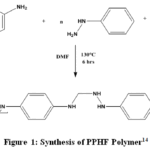 |
Figure 1: Synthesis of PPHF Polymer14 Click here to View Figure |
The novel pyrazole and arylhydrazone compounds were created using 1-(4-chlorophenyl)-4,4,4-trifluorobutane-1,3-dione. The carrageenan-induced rat paw oedema paradigm was used to evaluate the in vivo anti-inflammatory properties of the newly synthesized compounds. Additionally, an in vitro COX inhibition experiment was used to examine the inhibitory effect on ovine COX-1 and COX-2. Furthermore, molecular docking studies were conducted to examine the COX-2 inhibitors and active inhibitor7.
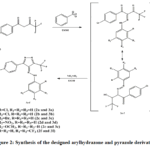 |
Figure 2: Synthesis of the designed arylhydrazone and pyrazole derivative7 Click here to View Figure |
Anti-cancer or Anti-tumor activity
Anticancer potential of Ruthenium (II) complexes has caught considerable attention and excitation of investigations on oncology in the past decades since the introduction of metal-based chemotherapeutics. In this work, new ruthenium complexes were synthesized and analyzed by IR, Proton and Carbon NMR spectra3.
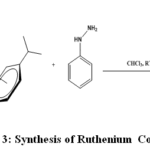 |
Figure 3: Synthesis of Ruthenium Complex3 Click here to View Figure |
The paper reports that the novel hydrazone compound 1-(5-bromo-2,3-dimethoxybenzylidene)-2-(pyridine-2-yl) hydrazine (5Br2DM2PH) exhibits potent anticancer activity against human breast (MCF-7) and colon (Caco-2) cancer cell lines.
The MTT assay was used to determine the in vitro cytotoxic effect of 5Br2DM2PH on the cancer cell lines MCF-7 and Caco-2. The molecule is more potent than the chemotherapy medication cisplatin, according to the results.
Cytotoxicity Results: 16.8 μM was the IC50 value (concentration needed for half -maximal inhibition of cellular growth) for MCF-7 breast cancer cells. The IC50 value for Caco-2 colon cancer cells was 11.8 μM. Cisplatin’s IC50 values are 81.4 µM for the colon cancer cell line Caco-2 and 76 µM for the human breast cancer cell line MCF-7. It shows 5Br2DM2PH has a stronger anticancer effect compared to cisplatin, a widely used chemotherapy drug, on both breast and colon cancer cell lines20.
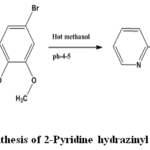 |
Figure 4: Synthesis of 2-Pyridine hydrazinyl Schiff Base20 Click here to View Figure |
The pyrazole is one of the essential nitrogen-containing heterocycles abundant in agrochemicals, catalysis and serves as an important pharmacophore for synthesizing natural products and commercial drugs. Interestingly, these important scaffolds display various biological properties, including Antiviral, analgesic, Estrogen Receptor Agonistic and cannabinoid receptor antagonistic properties. They can also act as ligands in coordination compounds and are employed as optical brighteners, UV protection components, and supramolecular assembly units. In addition to their medicinal actions, these polysubstituted pyrazoles, are used as ligands in cross coupling reactions and very recently as dyes5.
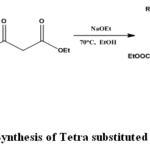 |
Figure 5: Synthesis of Tetra substituted Pyrazoles5 Click here to View Figure |
Substituting the R group of phenyl hydrazine ring with different atoms will give different derivatives of pyrazoles with corresponding applications. Here by changing the R group with fluorine F then the pyrazole derivative formed will have anti-cancer properties.
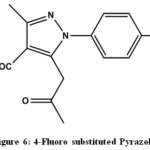 |
Figure 6: 4-Fluoro substituted Pyrazole5 Click here to View Figure |
The Newly synthesized pyrazole derivatives from 4-amino antipyrine as an intermediate were analyzed through IR, Proton and carbon-13 NMR techniques. A series of highly active compounds having IC50 values ranging from 30.68 to 60.72 µM, were all produced and tested as cytotoxic activity against the breast cancer cell line MCF7 after comparing with standard drug Doxoribucin which has the IC50 value of 71.8 µM10.
Table 1: In-vitro anticancer screening of compounds 2–9 against human breast cancer cell line (MCF-7)
|
Compound No. |
IC₅₀ (μg/mL) | IC₅₀ (μM) |
| 2 | 48.2 |
173.83 |
|
3 |
38.0 | 116.56 |
| 4 | 34.9 |
111.50 |
|
5 |
23.5 | 60.72 |
| 6 | 40.9 |
128.61 |
|
7 |
38.0 | 104.11 |
| 8 | 28.6 |
85.12 |
|
9 |
38.9 |
109.58 |
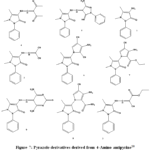 |
Figure 7: Pyrazole derivatives derived from 4-Amino antipyrine10 Click here to View Figure |
Anti-Oxidant Properties
A new p-nitrophenyl hydrazone derivatives (3a–f) were synthesized and characterized as well as evaluated for the presence of antioxidants. The preparation of these compounds involves refluxing (p-nitrophenyl) hydrazine with 4-substituted salicylaldehydes. The Molecular structures of compounds were determined through mass spectra, 1H, Carbon NMR, and infrared spectral studies. Tests were conducted to assess the anti-oxidant properties of these hydrazone derivatives in the areas of free radical scavenging, reducing power, metal chelation, and overall antioxidant capacity. All the compounds exhibited appreciable anti-oxidant activity, among them compound 3a which bears the shortest chain length has shown maximum activity and it was consistent in all assays6.
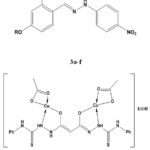 |
Figure 8: Copper Complex of 3a-f6 Click here to View Figure |
Antifungal and Antibacterial Properties
Using Proton and Carbon NMR, and Electron spray ionization based mass analysis, these compounds—1-(1-(4-Chlorophenyl)-2-(phenylsulfonyl)ethylidene)-2-phenylhydrazine were produced, described, and examined.IR ν 3341 (NH) cm−1; 1H NMR (DSMO-d6) δ 5.17 (s, 2H, CH2), 6.82–6.85 (m, 1H, ArH), 7.12 (d, J = 7.5 Hz, 2H, ArH), 7.23–7.26 (m, 2H, ArH), 7.32 (d, J = 8 Hz, 2H, ArH), 7.53–7.56 (m, 2H, ArH), 7.59–7.63 (m, 1H, ArH), 7.71 (d, J = 8.5 Hz, 2H, ArH), 9.81 (s, D2O exchangeable, 1H, NH); 13C NMR (DSMO-d6) δ 51.54, 113.00, 120.06, 127.26, 127.88, 128.12, 128.93, 128.97, 131.88, 133.93, 136.50, 139.26, 144.46; MS (ESI) m/z 384.7 The synthetic compound’s anticandidal activity were monitored against 4 species of Candida—C. albicans, C. krusei, C. parapsilosis, and C. glabrata—and contrasted with that of the common anticandidal medication, fluconazole. The synthesized chemical likewise exhibits a comparable binding relationship with fluconazole at the active site of CYT P450 14α-sterol demethylase, according to the docking result. Furthermore, the molecule possess the strong cytotoxicity against the MCF10A human breast cell line, which is normally non-tumorogenic9.
Table 2: Minimum inhibitory concentration (MIC) in μmol/mL of compound
|
Compound |
C. albicans | C. krusei | C. parapsilosis | C. glabrata |
| 1 | 0.39 | 0.195 | 0.39 |
1.56 |
|
Fluconazole |
0.195 | — | 1.56 |
1.56 |
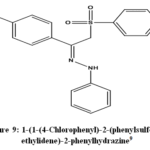 |
Figure 9: 1-(1-(4-Chlorophenyl)-2-(phenylsulfonyl)ethylidene)-2-phenylhydrazine9 Click here to View Figure |
Phenyl pyrazolines, isoxazoles containing heterocycles were also prepared from chalcones derived from s-triazine. The chalcones were synthesized by reacting the substituted acetophenone in DMF with different aromatic aldehyde. These chalcones were then subjected to further reactions: the treatment with phenyl hydrazine hydrochloride produced phenyl pyrazolines while reaction with hydroxylamine hydrochloride afforded isoxazoles the reactions being carried out in alkaline conditions. The obtained compounds were characterized using IR spectroscopy and by elemental analysis of their empirical formula by Proton and Carbon NMR. All of the recently produced compound’s antibacterial properties were evaluated against various bacterial and fungal stains16.
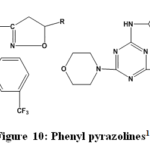 |
Figure 10: Phenyl pyrazolines16 Click here to View Figure |
In the current study, 2,3-diaryloxirane-2,3-dicarbonitriles underwent various chemical transformation with various nucleophiles including hydrazine, methyl hydrazine, phenylhydrazine, hydroxylamine, thiosemicarbazide and 2-amino-5-phenyl-1,3,4-thiadiazole led to the formation of pyrazole. The pyrazoles were further subjected to reaction with aromatic aldehydes and/or methyl glycinate to afford Schiff bases and pyrazolo[3,4-b]-pyrazinone derivative were also observed. Further reaction of Schiff bases with ammonium acetate and/or hydrazine hydrate resulted to imidazolopyrazole and pyrazolotriazine system. When the reaction of the pyrazolo[3,4-b]-pyrazinone with chloroacetic acid and/or diethyl malonate was carried out, the obtained compound was a tricyclic compound and a triketone. Also, the compound was treated with active methylene reagents including acetylacetone and/or cyclopentanone to form adducts and on heating with ammonium acetate, the compound gave 3-pyridone derivatives4.
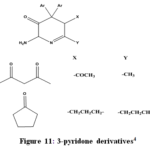 |
Figure 11: 3-pyridone derivatives4 Click here to View Figure |
In this work, some new Phenyl hydrazine Schiff base and its Copper (II) and Zinc (II) complexes were prepared and characterized using UV-Visible, Infrared and NMR techniques. Gram-negative, bacteria Pseudomonas aeruginosa and gram-positive bacteria, E. coli and Staphylococcus aureus were shown to be susceptible to these chemicals. Overall, the copper (II) complex was found to be most efficient with bacterial inhibition compared with the zinc (II) complex and individual ligands12.
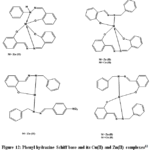 |
Figure 12: Phenyl hydrazine Schiff base and its Cu(II) and Zn(II) complexes12 Click here to View Figure |
Sulphonamide phenyl hydrazone derivatives were synthesized and their thermal and biological characteristics were investigated. The ligands and the heterochelates of iron (III) complex were characterized with the help of diverse spectroscopic analysis such as ¹H NMR, IR, elemental analysis, thermal analysis, and mass spectral analysis. According to the biological tests carried out against Gram Positive as well as negative bacteria revealed that hetero-chelates exhibit moderate antibacterial performance, suggesting deep exploration of the topic18.
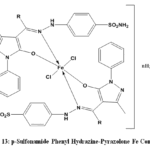 |
Figure 13: p-Sulfonamide Phenyl Hydrazine-Pyrazolone Fe Complex18 Click here to View Figure |
Further, it investigates the catalytic, synthetic and thermal and biological properties of sulphonamide phenyl hydrazone derivatives. Several ligands and Manganese (III) based heterochelates were prepared using various acyl chloride reagents. Evaluation of ligands were done using Infrared technique, Proton NMR, and elemental analysis; the hetero-chelates were characterized by thermal methods; TGA/DTG, DSC and mass spectroscopy. The bacterial inhibition of these compounds were checked in test tube against Gram positive as well as gram negative bacteria; the results encourages future research17.
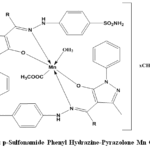 |
Figure 14: p-Sulfonamide Phenyl Hydrazine-Pyrazolone Mn Complex17 Click here to View Figure |
| Ligand | R | x | y | |
| 1 | L₁ | –CH₃ | 2 |
1.5 |
|
2 |
L₂ | –CH₂CH₃ | 2 | 3 |
| 3 | L₃ | –CH₂CH₂CH₃ | 1 |
1.5 |
|
4 |
L₄ | –C₆H₅ | – | 1 |
| 5 | L₅ | –C₆H₅NO₂ | 1 |
0.5 |
Table 3: Analytical and physical data of heterochelates
|
Compounds |
Formula Weight | Color (% Yield) | C | H | Mn | N | O | S |
| [Mn(L₁)₂Ac·H₂O] ·2Ac·1.5H₂O | 1047 | Greenish yellow (71) | 49.86 (49.84) | 4.44 (4.40) | 6.08 (6.00) | 15.32 (15.29) | 17.49 (17.47) |
7.08 (7.00) |
|
[Mn(L₂)₂Ac·H₂O] ·2Ac·3H₂O |
1043 | Brown (73) | 50.93 (50.90) | 4.73 (4.70) | 5.85 (5.82) | 14.87 (14.84) | 16.98 (16.95) | 6.82 (6.79) |
| [Mn(L₃)₂Ac·H₂O] ·Ac·1.5H₂O | 1044 | Cream (69) | 51.94 (51.90) | 5.01 (4.98) | 5.69 (5.65) | 14.43 (14.41) | 16.49 (16.46) |
6.64 (6.60) |
|
[Mn(L₄)₂Ac·H₂O] ·H₂O |
1046 | Light yellow (68) | 55.48 (55.44) | 4.29 (4.26) | 5.31 (5.28) | 13.49 (13.47) | 15.41 (15.38) | 6.21 (6.17) |
| [Mn(L₅)₂Ac·H₂O] ·Ac·0.5H₂O | 1184 | Dark yellow (73) | 51.08 (51.02) | 3.78 (3.75) | 4.89 (4.86) | 14.91 (14.87) | 19.87 (19.82) |
5.71 (5.67) |
Table 4: Antimicrobial effects of the ligands and their heterochelates
|
Sr. No. |
Compounds | Gram +ve (Bacillus megaterium) | Gram –ve (E. coli) |
| Ref. Drug (Penicillin) | PEnicillin | 35 |
20 |
|
1 |
L₁ | 17 | 10 |
| 2 | L₂ | 10 |
06 |
|
3 |
L₃ | 06 | 07 |
| 4 | L₄ | 20 |
30 |
|
5 |
L₅ | 15 | 20 |
| 6 | MnL₁ | 06 |
05 |
|
7 |
MnL₂ | 15 | 20 |
| 8 | MnL₃ | 23 |
15 |
|
9 |
MnL₄ | 13 | 11 |
| 10 | MnL₅ | 08 |
08 |
The thermal and biological characteristics of newly synthesized Ni (II) complexes with pyrazolone ligands were evaluated. These ligands were synthesized from a range of 4-acyl pyrazolones. The newly formed compounds were also investigated with Proton and Carbon NMR, Infrared technique, UV-vis spectra and elemental analysis. The generated Ni (II) complexes were described using thermal analysis profiles TGA/DTG and DSC, elemental analysis, and UV-Vis and IR spectra. Antibacterial and antimalarial activities of the synthesized compounds were determined and the results obtained showed some positive acts that call for further studies19.
|
Sr. No. |
Ligand |
R Group |
|
1 |
L₁ | –CH₃ |
| 2 | L₂ |
–CH₂CH₃ |
|
3 |
L₃ | –CH₂CH₂CH₃ |
| 4 | L₄ |
–C₆H₅ |
|
5 |
L₅ | –C₆H₅NO₂ |
| 6 | L₆ |
–C₄H₃O |
Table 5: Antimicrobial Effect of Ligands and Metal Complexes (Zone of Inhibition in mm).
|
S. No. |
Compounds | Gram-Positive(Bacillus megaterium) | Gram-Negative(E. coli) |
| — | Ref. Drug(Penicillin) | 35 |
28 |
|
1 |
L₁ | 17 | 10 |
| 2 | L₂ | 10 |
06 |
|
3 |
L₃ | 06 | 07 |
| 4 | L₄ | 20 |
24 |
|
5 |
L₅ | 15 | 20 |
| 6 | L₆ | 13 |
17 |
|
7 |
ML₁ | 19 | 15 |
| 8 | ML₂ | 11 |
09 |
|
9 |
ML₃ | 10 | 08 |
| 10 | ML₄ | 23 |
26 |
|
11 |
ML₅ | 19 | 20 |
| 12 | ML₆ | 17 |
19 |
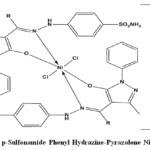 |
Figure 15: p-Sulfonamide Phenyl Hydrazine-Pyrazolone Ni Complex19 Click here to View Figure |
The entire set of new mononuclear complexes based on 3-(2-(2,4,6-trichlorophenyl) hydrazono) butan-2-one oxime as a ligand having transition metal ions of Cd(II), Zn(II), Cu(II), Ni(II), Co(II), Fe(II), Mn(II), and VO(II). The complexes were studied by several physicochemical techniques. Quantum Molecular calculations explicate the binding site of the ligand, and electronic parameters of both free-ligand and its complexes. Coordination occurred through imine nitrogen of hydrazone group and the nitrogen atom of oxime group, forming complexes via ML and M2L methods. They were identified as a quite rich geometrical architecture displaying different geometrical configurations. As mentioned above the ESR spectra of the Cu²⁺ complexes exhibited axial symmetry and the paramagnetic electron was there in the d(x2-y2) orbital revealing substantial covalency of bonding. Thermogravimetric analysis revealed that the complexes decomposed into 4 stages, beginning with the loss of coordinated H2O molecules and dehydration, followed by complete decomposition to form metal oxides. While the free ligand showed no antimicrobial activity. Some of its metal complexes demonstrated varying levels of antimicrobial effectiveness15.
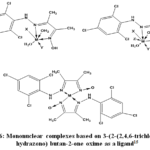 |
Figure 16: Mononuclear complexes based on 3-(2-(2,4,6-trichlorophenyl) hydrazono) butan-2-one oxime as a ligand15 Click here to View Figure |
The formation of the various hydrazone derivatives such as phenylhydrazine, 4-methoxybenzaldehyde, 4-nitrobenzaldehyde and benzenesulfanohydrazones and their Cu(II) complexes were carried out.The infrared spectra showed sharp absorption at 1616 cm-1 attributed to azomethine groups (C=N). The sharp absorption at 3013 cm-1 was assigned to H-C=N band of the azomethine group. From the IR spectra results it was found that the Schiff base ligands are bidentate in nature binding through azomethine nitrogen and another nitrogen atom.
Table 6: Elemental analysis results for copper complexes
|
Complex |
Molecular weight(g/mlo) | %C | %N | %H | |||
| Calc. | Found | Calc. | Found | Calc. |
Found |
||
|
1 |
681 | 52.86 | 52.42 | 12.33 | 12.12 | 3.23 | 3.14 |
| 2 | 931 | 56.71 | 52.21 | 6.01 | 5.82 | 4.73 |
4.68 |
Table 7: In-vitro antibacterial activity values of the synthesized hydrazone Schiff base and Cu(II) complexes
|
|
Zone of Inhibition (mm) | Zone of Inhibition (mm) | ||
| S. aureus | E. coli | K. pneumoniae |
P. aeruginosa |
|
|
1 |
6 | 8 | 6 | 7 |
| 2 | 6 | 6 | 6 |
6 |
|
3 |
6 | 6 | 6 | 6 |
| 4 | 9 | 10 | 15 |
6 |
|
5 |
8 | 6 | 6 | 6 |
| +Ve. Control | 24 | 23 | 11 |
14 |
|
–Ve. Control |
6 | 6 | 6 | 6 |
Bacterial susceptibility testing revealed that the Cu(II) complex of compound 2 has a stronger antibacterial interference with Klebsiella pneumoniae with 15mm of antibacterial zone, compared to ceftriaxone with inhibition zone of 11mm which may be as a result of increased lipophilicity of Cu(II) complex of compound 21.
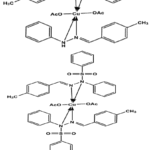 |
Figure 17: Hydrazone derivatives1 Click here to View Figure |
A novel set of Schiff bases are prepared by reacting phenylhydrazine (1) and 2,4-dinitrophenylhydrazine (2) with different aldehydes. Here the reactions took place with complimentarily high purity and efficiency towards the yields. The structures of the synthesized compounds were further verified using elemental analysis, Mass Analysis, IR, electronic spectral analysis. These compounds were also assessed in light of their ability to inhibit microorganisms growth8.
Table 8: IR spectral data (cm⁻¹) of synthesized compounds
|
Compound |
C–N (1360–1800) | C=C (1400–1600) | C=N (1650–1700) | CH (Al, 2850–3000) | CH (Ar, 3000–3100) | N–H (3300–3500) |
| 1 (dpa) | 1118 | 1373 | 1650 | 2940 | 1339 |
3233 |
|
2 (bpd) |
1136 | 1371 | 1643 | 2936 | 3152 | 3298 |
| 3 (dhd) | 1139 | 1381 | 1660 | 2971 | 3120 |
3232 |
|
4 (bdh) |
1136 | 1337 | 1655 | 2971 | 3099 |
3233 |
Table 9: Antibacterial activity (zone of inhibition, mm) of synthesized compounds
|
Compound |
Staphylococcus aureus | E. coli | Inhibition Zone (mm) |
| Control (Ceftriaxone) | 25 | 22 |
18 |
|
1 (dpa) |
8 | 7 | 10 |
| 2 (bpd) | 9 | 8 |
9 |
|
3 (dhd) |
8 | 7 | 8 |
| 4 (bdh) | 9 | 8 |
9 |
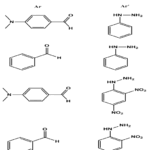 |
Figure 18: Schiff bases were prepared from phenylhydrazine (1) and 2,4-dinitrophenylhydrazine (2) with different aldehydes8 Click here to View Figure |
The preparation and study of a number of hydrazone based mononuclear complexes of general formula [(arene)MLCl]PF6, where M=Ru, Rh, Ir were carried out. They were further characterized by X-ray crystallography and established a piano stool geometry with ligand behaving as NN’ chelation. The Ligand in some complexes can chelate through the two nitrogen atoms of pyridine to form a 6-membered metallocycle while in other complexes, it only coordinates through one nitrogen of hydrazone and one pyridine nitrogen that also forms a five-membered metallocycle. Antibacterial efficacy of the complexes was evaluated against both Gram-negative as well as Gram-positive bacteria and all complexes inhibited bacterial growth13.
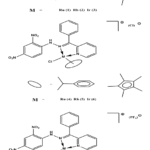 |
Figure 19: Hydrazone complexes13 Click here to View Figure |
The two-fold suppression of the primary protease (Mpro) and the NSP10/NSP16 methyltransferase complex as potential therapeutic targets for COVID-19 was determined. The focus is on a newly synthesized Schiff-base ligand formed from the condensation of (4-chloro-3-methyl phenyl) hydrazine and 2-pyridine-carboxaldehyde, along with +2 complexes of Ni, Pd, Pt, Zn, and Hg. Characterization of these compounds was carried out using Infrared, Proton and Carbon NMR, and elemental analysis. The infrared spectrum of the Schiff-base (Cmpy) ligand showed a band at 3240 cm−1 due to the stretching vibration of the NH group, and a new band displayed at 1606 cm−1 due to the ν(C=N) azomethine group, whereas the ν(C=N) of the pyridyl ring displayed at 1689 cm−1.The 1H NMR spectrum of the Cmpy ligand showed four singlet peaks at δH = 11.25 ppm, 7.80 ppm, 7.65 ppm, and 2.38 ppm attributed to the protons of the NH, CH=N, H8, and CH3 group, respectively. In the 1H NMR spectra of the M(II) complexes, the azomethine proton signals at 7.80–7.85 ppm (s, 1H) for complexes. Antibacterial testing revealed that the Zn complex exhibited maximum activity against Pseudomonas aeruginosa and Staphylococcus aureus. Molecular docking studies shows that ligand and its Ni and Zn complexes had excellent binding energies with Mpro and NSP16, ranging from −5.9 to −7.2 kcal/mol. The metal complexes displayed 100% binding affinity with the active site of the NSP16 receptor, marking the first reported use of these metal complexes as two-fold suppressors of Mpro and NSP16 in SARS-CoV-22.
Table 10: Molecular docking results of synthesized metal complexes
|
Pharmaceutical Name |
Binding Percentageᵃ | Score ± SD (kcal/mol)ᵇ | RMSD (L–H) |
| Ni Complex | 22 | −5.9 to −6.0 |
29.46 – 32.52 |
|
Zn Complex |
22 | −6.2 to −7.2 |
0.00 – 4.22 |
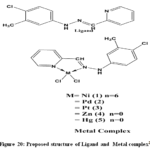 |
Figure 20: Proposed structure of Ligand and Metal complex2 Click here to View Figure |
Chromium (III) complexes of pyrazolone phenylhydrazone ligands were synthesized, characterized and its anti-microbial efficacy was analyzed. The compounds were characterized using NMR, mass, IR, UV-visible spectral studies and thermal analysis. In the IR spectra of ligands (L1-L5), sharp peak is observed in the 1531-1560 cm-1range, corresponding to the acyclic azomethine group. In the complexes, where the ligands coordinate to the metal through the nitrogen atom, a reduction in electron density in the azomethine link is expected, resulting in the appearance of a peak in the 1512-1535 cm–1range37 The electronic properties and chemical reactivity was determined by using computational studies employing DFT studies. The antibacterial examination presented here demonstrated significant activity against both Gram-positive as well as negative microorganisms, indicating the possibility of these complexes to be used as virucidal agents21.
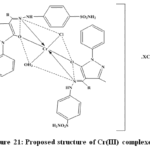 |
Figure 21: Proposed structure of Cr(III) complexes21 Click here to View Figure |
|
Sr. No. |
Ligand | R Group |
| 1 | L₁ |
–CH₃ |
|
2 |
L₂ | –CH₂CH₃ |
| 3 | L₃ |
–CH₂CH₂CH₃ |
|
4 |
L₄ | –C₆H₅ |
| 5 | L₅ |
–C₆H₄NO₂ |
Table 11: Antimicrobial Effects of the Ligands (L₁–L₆) and their Cr(III) Complexes, Zone of Inhibition (mm).
|
S. No. |
Compound | Gram-positive (Bacillus subtilis) | Gram-negative (E. coli) |
| Ref. Drug | Penicillin | 35 |
23 |
|
1 |
L₁ | 12 | 7 |
| 2 | L₂ | 10 |
6 |
|
3 |
L₃ | 13 | 8 |
| 4 | L₄ | 15 |
10 |
|
5 |
L₅ | 20 | 13 |
| 6 | L₆ | 17 |
10 |
|
7 |
[Cr(L₁)₂(H₂O)₂]Cl·H₂O | 15 | 10 |
| 8 | [Cr(L₂)₂(H₂O)₂]Cl·2H₂O | 17 |
12 |
|
9 |
[Cr(L₃)₂(H₂O)₂]Cl·2H₂O | 18 | 15 |
| 10 | [Cr(L₄)₂(H₂O)₂]Cl·2H₂O | 22 |
17 |
|
11 |
[Cr(L₅)₂(H₂O)₂]Cl·2H₂O | 27 | 20 |
| 12 | [Cr(L₆)₂(H₂O)₂]Cl·2H₂O | 25 |
18 |
In the present investigation, new Zn(II) complexes from 4-acyl pyrazolone ligands were synthesized and fully described. With increased efficiency, structure and stability of synthesized products were supported by NMR, IR, UV-visible spectroscopy, and thermal analysis (TGA/DTG, DSC). These complexes were tested for antibacterial activity, and have shown promising results, making them useful as stable modules for material science and in medicine22.
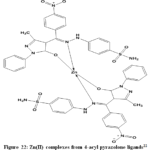 |
Figure 22: Zn(II) complexes from 4-acyl pyrazolone ligands22 Click here to View Figure |
Anti-Malarial Property
A novel series of fluoro-substituted pyrazolylpyrazolines was synthesized with good to excellent yields (77–88%) using pyrazole chalcones and substituted phenyl hydrazine hydrochlorides under microwave irradiation. The synthesized compounds were tested for antibacterial, antifungal, antituberculosis, and antimalarial activities and demonstrated strong antimalarial activity against Plasmodium falciparum, outperforming quinine (IC50 0.268)11.
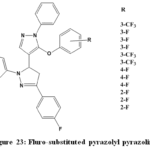 |
Figure 23: Fluro-substituted pyrazolyl pyrazolines11 Click here to View Figure |
Conclusion
The review sheds the light on the preparation, analytical assessment, and bioactivity assessment of the different phenyl hydrazine derivatives with the ability to work in various therapeutic classifications such as anti-inflammatory, anti-cancer and anti-microbial fields. These derivatives were proved by in vitro and in vivo biological activities to have good activity and high selectivity for anti-inflammatory agents as well as anti-cancer cell proliferation. Indeed, the molecular docking and DFT studies proved to give important and valuable information regarding their interaction with target proteins. The anti-cancer activity especially towards the breast, colon and human liver cancer cell has made it a prominent chemotherapeutic agent in the treatment of cancer similar to that of cisplatin. Furthermore, suppression of their growth as antimicrobial or antifungal agents against diverse pathogens such as fungi, bacteria, and protozoa will also exhibit an account of their effectiveness towards looming antibiotic resistance.
Acknowledgement
The authors express their sincere gratitude to the Department of Chemical Science, Parul Institute of Applied Sciences, Parul University, Vadodara, Gujarat, India, for providing the essential facilities and continuous academic support.
Funding Sources
The author(s) received no financial support for the research, authorship, and/or publication of this article.
Conflict of Interest
The author(s) do not have any conflict of interest.
Data Availability Statement
This statement does not apply to this article.
Ethics Statement
This research did not involve human participants, animal subjects, or any material that requires ethical approval.
References
- Abera, S., Dessalegn, T., Endale, M. (2018). Synthesis and Antibacterial Activity of Phenylhydrazone Schiff Base Derivatives and their Copper (II) Complexes,2018, 10(6s)
- Al-Janabi, A. S., Elzupir, A. O., Abou-Krisha, M. M., Yousef, T. A.New dual inhibitors of SARS-CoV-2 based on metal complexes with Schiff-base 4-chloro-3-methyl phenyl hydrazine: Synthesis, DFT, antibacterial properties and molecular docking studies, Inorganics, 2023,11(2), 63.
CrossRef - Atanasković, A., Eichhorn, T., Milenkovic, D., Dimić, D., Kaluđerović, G, Dimitrić Marković, J. Synthesis, spectroscopic, and theoretical analysis of Ru (II)-phenylhydrazine complex, 2023
- Azab, M. E., Rizk, S. A., Amr, A. E. G. E. Synthesis of some novel heterocyclic and schiff base derivatives as antimicrobial agents, Molecules, 2015,20(10),18201-18218.
CrossRef - Bakanas, I. J., Moura‐Letts, G. Synthesis of Tetrasubstituted Pyrazoles from Substituted Hydrazines and β‐Keto Esters, European Journal of Organic Chemistry, 2016, 32, 5345-5349.
CrossRef - El‐Gammal, O. A., Abdel‐Latif, E., Farag, M. G., Abdel‐Rhman, M. H. Synthesis, characterization, and anticancer activity of new binuclear complexes of 2, 2′‐malonylbis (N‐phenylhydrazine‐1‐carbothioamide), Applied Organometallic Chemistry, 2021, 35(5),6194.
CrossRef - Magda, A. A., Abdel-Aziz, N. I., Alaa, A. M., El-Azab, A. S., Asiri, Y. A., ElTahir, K. E. Design, synthesis, and biological evaluation of substituted hydrazone and pyrazole derivatives as selective COX-2 inhibitors: Molecular docking study, Bioorganicmedicinal chemistry, 2011,19(11),3416-3424.
CrossRef - Gabra, N. M., Samir, B. M., Zaki, H. A., Elhag, M. A., Babiker, A. H. Synthesis and Anti-Microbial Activities of Some Novel Schiff Bases,International Journal of Science and Research, 2015,2319-7064
- Ghabbour, H. A., Qabeel, M. M., Eldehna, W. M., Al-Dhfyan, A., Abdel-Aziz, H. A. Design, Synthesis, and Molecular Docking of 1‐(1‐(4‐Chlorophenyl)‐2‐(phenylsulfonyl) ethylidene)‐2‐phenylhydrazine as Potent Nonazole Anticandidal Agent, Journal of Chemistry, 2014, 154357.
CrossRef - Ghorab, M. M., El-Gazzar, M. G., Alsaid, M. S. Synthesis, characterization and anti-breast cancer activity of new 4-aminoantipyrine-based heterocycles, International Journal of Molecular Sciences, 2014, 15(5), 7539-7553.
CrossRef - Karad, S. C., Purohit, V. B., Raval, D. K. Design, synthesis and characterization of fluoro substituted novel pyrazolylpyrazolines scaffold and their pharmacological screening, European journal of medicinal chemistry, 2014,84,51-58.
CrossRef - Abebe, H., Lamma, T., Filkale, A., Kure, D. SYNTHESIS, CHARACTRIZATION AND ANTIBACTERIAL ACTIVITY OF SCHIFF BASES DERIVED FROM PHENYL HYDRAZINE DERIVATIVES AND THEIR Cu (II) and Zn (II) COMPLEXES.(2024).
CrossRef - Lapasam, A., Dkhar, L., Joshi, N., Poluri, K. M., Kollipara, M. R. Antimicrobial selectivity of ruthenium, rhodium, and iridium half sandwich complexes containing phenyl hydrazone Schiff base ligands towards B. thuringiensis and P. aeruginosa bacteria, Inorganica Chimica Acta, 2019, 484, 255-263.
CrossRef - Mujafarkani, N., Bassey, V., Tokono, J. J., Ahamed, A. J., Benjamin, I., Agurokpon, D. C.,Louis, H. Synthesis, characterization, and molecular modeling of phenylenediamine-phenylhydrazine-formaldehyde terpolymer (PPHF) as potent anti-inflammatory agent, Heliyon, (2023),9(7).
CrossRef
- Shakdofa, M. M., Morsy, N. A., Rasras, A. J., Al‐Hakimi, A. N., Shakdofa, A. M. Synthesis, characterization, and density functional theory studies of hydrazone–oxime ligand derived from 2, 4, 6‐trichlorophenyl hydrazine and its metal complexes searching for new antimicrobial drugs, Applied Organometallic Chemistry, 2021, 35(2), 6111.
CrossRef - Solankee, A., Tailor, R. Synthesis, characterisation and biological screening of s-triazine based chalcones and its derivatization into phenyl pyrazolines, isoxazoles, International Letters of Chemistry, Physics and Astronomy, 2015,47, 109-119.
CrossRef - Somaiya, C. P., Patel, D. S., & Jani, D. H. Mn (III) heterochelates: Synthesis, Spectroscopic, Thermal and In-Vitro Biological screening, 2019
- Somaiya, C. P., Patel, D. S., Jani, D. H. Synthesis, Spectroscopic, Thermal and in-vitro Biological studies of some pyrazolone based Fe (III) heterochelates, Journal of Applicable Chemistry, 2019, 8(3),1135-1145.
- Somaiya, C. P., Patel, N. M., Prajapati, V. P., Bhavsar, S. H., Shah, J. H., Shevale, A. D. Synthesis, characterization, thermal and biological evaluation of 4-acyl pyrazolone based Ni (II) complexes as potential antibacterial and anti-malarial agents, 2023
- Noma, S. A. A., Erzengin, M., Tunç, T., Balcıoğlu, S. Synthesis, characterization and biological assessment of a novel hydrazone as potential anticancer agent and enzyme inhibitor, Journal of Molecular Structure, 2020, 1205,127550.
CrossRef - Somaiya, C. P., Patel, D. S., Jani, D. H., Thanki, D. R. (2024). Synthesis, characterization, thermal aspects, density functional theory study and in vitro antibacterial evaluation of Cr (III) complexes based on pyrazolone phenylhydrazone ligands, Indian Journal of Chemistry, 2024, 1015-1027
- Somaiya, C.P,Yadav, Da,Dadhaniya Hr,Patel Vj,Raulji, Jb. COMPREHENSIVE INVESTIGATION OF THERMAL AND BIOLOGICAL PROPERTIES OF NOVEL ZN(II) PYRAZOLONE LIGANDS,International Journal of Biology Pharmacy and Allied Sciences, 2024 ,13, 5523-5536.
CrossRef
 PlumX:
  Views: 1060 Views
  PDF Downloads: 1102
 Accepted on: 23 Feb 2026
Second Review by: Dr. Naresh Batham
Final Approval by: Dr. Pounraj Thanasekaran


ISSN Online: 2231-5039