Spectrophotometric Analysis of Olive Oil

University of Bucharest, Faculty of Chemistry, Department of Physical Chemistry, 4-12 Elisabeta Blvd, Bucharest, Romania.
Corresponding Author E-mail:istanciu75@yahoo.com
DOI : http://dx.doi.org/10.13005/ojc/420235
Download this article as:

This study investigates the oxidative degradation of olive oil subjected to controlled thermal treatment, using spectrophotometric analysis as a rapid and reliable assessment method. Samples of extra virgin olive oil were heated at 110°C and 130°C for durations of 5 and 10 hours to simulate prolonged cooking conditions. Oxidative changes were monitored by measuring absorbance at specific wavelengths corresponding to primary and secondary oxidation products, including conjugated dienes and trienes. Results revealed a progressive increase in absorbance values with both temperature and heating time, indicating accelerated lipid oxidation under more intense thermal conditions. Oils heated at 130°C exhibited significantly higher levels of oxidation compared to those treated at 110°C, particularly after 10 hours. The formation of secondary oxidation products was more pronounced at longer exposure times, suggesting advanced degradation stages. Spectral shifts further confirmed structural modifications in fatty acid chains. The findings demonstrate that spectrophotometry is an effective tool for evaluating thermal oxidation in olive oil. Moreover, the study highlights the detrimental impact of high temperatures and extended heating on oil quality, with implications for nutritional value and safety. These results emphasize the importance of temperature control during cooking and food processing to preserve the integrity of olive oil.
KEYWORDS:Analysis; Olive Oil; Spectrophotometric
Introduction
Spectrophotometry is a field of electromagnetic spectroscopy concerned with quantitatively measuring how a material reflects or transmits light as a function of wavelength. It employs instruments called spectrophotometers, which are photometers capable of detecting the intensity of light beams across different wavelengths. While spectrophotometry is most frequently used in the ultraviolet, visible, and infrared regions, modern spectrophotometers are able to analyze wide portions of the electromagnetic spectrum, including X-rays, ultraviolet, visible light, infrared, and microwave radiation.
Spectrophotometry is an analytical technique based on measuring how much light is absorbed by substances, particularly colored compounds. Key features of spectrophotometers include spectral bandwidth (the range of wavelengths that can pass through a sample), percent transmittance, the logarithmic absorbance range, and in some cases, percent reflectance. These instruments are commonly used to measure the transmittance or reflectance of liquids, transparent or opaque solids such as polished glass, and gases.
Although many biochemical substances naturally absorb visible light and can be analyzed using colorimetric methods, colorless compounds can often be chemically converted into colored forms through chromogenic reactions to enable measurement. Spectrophotometers may also be configured to measure diffusivity across wavelength ranges typically spanning 200–2500 nm, using appropriate controls and calibration standards that vary depending on the wavelength being analyzed.
One common application of spectrophotometry is determining the equilibrium constant of a chemical reaction in solution. In such reactions, reactants and products continuously convert into one another until equilibrium is reached. Spectrophotometry can be used to measure light transmission through the solution at equilibrium, allowing the concentrations of specific reactants or products to be calculated based on how much light is absorbed.
Light absorption occurs due to interactions between light and the electronic and vibrational energy levels of molecules. Each molecule has a unique set of energy levels determined by its chemical structure, causing it to absorb light at specific wavelengths and exhibit distinct spectral characteristics.
Spectrophotometers are widely used across numerous scientific disciplines, including physics, chemistry, biochemistry, materials science, chemical engineering, and molecular biology. They also play a critical role in various industries such as semiconductor manufacturing, optics, laser production, printing, and forensic science. In laboratory settings, spectrophotometry is commonly applied to enzyme activity assays, protein concentration measurements, enzyme kinetics studies, and ligand-binding analyses. With proper calibration and control, spectrophotometers can identify substances within a sample and accurately quantify their concentrations based on observed wavelengths.
Olive oil is widely recognized for its nutritional value, sensory qualities, and central role in the Mediterranean diet. Rich in monounsaturated fatty acids, particularly oleic acid, as well as bioactive compounds such as phenolics, tocopherols, and pigments, olive oil has been associated with numerous health benefits, including antioxidant, anti-inflammatory, and cardioprotective effects. However, despite its relative stability compared to polyunsaturated oils, olive oil is still susceptible to oxidative degradation, especially when exposed to elevated temperatures during cooking or industrial processing. Thermal oxidation not only deteriorates the sensory attributes of the oil—such as flavor, aroma, and color—but also reduces its nutritional quality and may lead to the formation of potentially harmful compounds.
Oxidation of olive oil is a complex process involving a series of chemical reactions that primarily affect its unsaturated fatty acids. These reactions typically begin with the formation of primary oxidation products, such as hydroperoxides, which are relatively unstable and can further decompose into secondary oxidation products including aldehydes, ketones, and conjugated dienes and trienes. The rate and extent of these reactions are influenced by several factors, including temperature, duration of heating, oxygen availability, light exposure, and the presence of natural antioxidants. Among these, temperature and time are particularly critical in culinary contexts, where oils are often subjected to prolonged heating.
Understanding the oxidative behavior of olive oil under controlled thermal conditions is essential for evaluating its stability and suitability for cooking applications. In domestic and industrial settings, olive oil is frequently heated at temperatures ranging from moderate (around 100–120°C) to high (above 130°C), often for extended periods. Such conditions can accelerate lipid peroxidation and significantly alter the chemical composition of the oil. Therefore, studying the effects of specific temperature-time combinations—such as heating at 110°C and 130°C for 5 and 10 hours—provides valuable insights into the degradation kinetics and mechanisms involved.
Analytical techniques play a crucial role in monitoring and quantifying oxidative changes in oils. Traditional methods, such as peroxide value and anisidine value measurements, are widely used but can be time-consuming and require chemical reagents. In contrast, spectrophotometric analysis offers a rapid, sensitive, and non-destructive alternative for assessing oxidation. This technique is based on measuring the absorbance of oil samples at specific wavelengths in the ultraviolet (UV) and visible regions, which correspond to the presence of conjugated double bonds and other chromophoric groups formed during oxidation.
In particular, the determination of specific extinction coefficients at wavelengths such as 232 nm and 270 nm is commonly employed to evaluate the concentration of conjugated dienes and trienes, respectively. These compounds serve as indicators of primary and secondary oxidation products. An increase in absorbance at these wavelengths reflects the progression of oxidative reactions and the accumulation of degradation products. Additionally, spectrophotometric methods can detect subtle structural changes in fatty acids, providing a comprehensive picture of oil deterioration.
The application of spectrophotometry to the study of thermally oxidized olive oil is especially advantageous due to its simplicity and efficiency. It allows for continuous monitoring of oxidation without extensive sample preparation, making it suitable for both research and quality control purposes. Moreover, spectrophotometric data can be correlated with other physicochemical parameters to enhance the understanding of oxidation processes.
This study focuses on the spectrophotometric evaluation of olive oil subjected to controlled heating at two different temperatures, 110°C and 130°C, over periods of 5 and 10 hours. These conditions were selected to simulate realistic cooking scenarios and to investigate the combined effects of temperature and time on oxidative stability. By analyzing the absorbance spectra of the oil samples, the study aims to quantify the formation of oxidation products and to identify trends associated with thermal degradation.
The choice of temperatures reflects common culinary practices, where oils are often heated to moderate or relatively high levels depending on the cooking method. For example, sautéing and slow cooking may involve temperatures around 110°C, while frying and roasting can reach or exceed 130°C. Similarly, the selected time intervals represent short-term and prolonged heating, allowing for the assessment of both early and advanced stages of oxidation.
An important aspect of this investigation is the comparison between the two temperature regimes and their impact on oxidation kinetics. It is expected that higher temperatures will accelerate the rate of oxidation, leading to more pronounced changes in absorbance values and greater accumulation of degradation products. Additionally, extending the heating duration from 5 to 10 hours is likely to amplify these effects, providing insight into the time-dependent nature of lipid oxidation.
The outcomes of this research have practical implications for both consumers and the food industry. From a nutritional perspective, minimizing oxidative degradation is essential to preserve the health-promoting properties of olive oil. From a technological standpoint, understanding the limits of thermal stability can inform guidelines for cooking practices and industrial processes. Furthermore, the use of spectrophotometric methods as a monitoring tool can contribute to improved quality control and product evaluation.
In summary, the oxidative stability of olive oil under thermal stress is a critical factor influencing its quality and safety. Spectrophotometric analysis provides a valuable approach for investigating these changes, offering rapid and reliable detection of oxidation products. By examining the effects of heating at 110°C and 130°C for 5 and 10 hours, this study aims to deepen the understanding of thermal oxidation mechanisms and to highlight the importance of temperature and time control in preserving the integrity of olive oil.
Material and Methods
Commercial extra virgin olive oil was used as the study sample. All reagents employed were of analytical grade. Solvents used for spectrophotometric analysis, such as cyclohexane or iso-octane, were of high purity to ensure minimal background absorbance. Quartz cuvettes with a path length of 1 cm were used for all measurements.
Olive oil samples were divided into four groups and subjected to controlled heating at two temperatures: 110°C and 130°C. For each temperature, samples were heated for 5 hours and 10 hours, respectively. Approximately equal volumes of oil were placed in open glass containers to allow exposure to atmospheric oxygen, simulating typical cooking conditions. Heating was carried out in a temperature-controlled oven with continuous monitoring to maintain stable thermal conditions. After heating, samples were cooled to room temperature in the absence of light and stored in dark containers until analysis.
The T60V spectrophotometer is a compact, high-performance instrument designed for measurements in the visible region, featuring a fixed spectral bandwidth of 2 nm and a wavelength range of 325–1100 nm. This visible-range spectrophotometer operates within the same wavelength limits and is equipped with a switched-mode power supply that accepts input voltages from 95 to 240 V AC. It is supplied as standard with either a universal 5-cell changer with variable path length or a fixed path-length 8-cell changer. The T60V spectrophotometer offers the precision and capabilities of an advanced analytical instrument while remaining cost-effective.
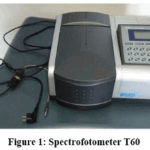 |
Figure 1: Spectrofotometer T60 Click here to View Figure |
Spectrophotometric measurements were performed using a UV-Vis spectrophotometer. Oil samples were diluted in cyclohexane to an appropriate concentration to ensure absorbance readings within the linear range of the instrument. Absorbance was measured at 232 nm and 270 nm, corresponding to the presence of conjugated dienes and trienes, respectively. These parameters are commonly used as indicators of primary and secondary oxidation products.
A blank sample containing only solvent was used for baseline correction. Each measurement was conducted in triplicate to ensure reproducibility, and average values were calculated.
The specific extinction coefficients (K232 and K270) were calculated based on absorbance values and dilution factors. Results were compared across different temperature and time conditions to evaluate the extent of oxidative degradation. Statistical analysis was performed to assess significant differences between sample groups.
Results and Discussion
When olive oil was oxidized at 100 °C for periods of 5 and 10 hours, no noticeable changes were observed in the shape of the transmittance spectrum. Therefore, to better identify potential modifications in the spectral shape, the olive oil was oxidized for 5 and 10 hours at higher temperatures of 110 °C and 130 °C, as shown in Figure 2.1-5 The transmittance spectrum of unoxidized olive oil closely matches those reported by other researchers in the relevant scientific literature.6-8
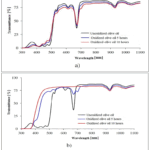 |
Figure 2: Variation of transmittances of olive oils, oxidized at temperatures of 110ºC (a) and 130 ºC (b) Click here to View table |
Figure 2a shows that the spectral profiles of olive oil oxidized at 110 °C for 5 and 10 hours remain largely similar to that of the reference (unoxidized) oil. However, comparison of the transmittance spectra after oxidation reveals hypochromic shifts in the wavelength ranges of 330–420 nm, 520–650 nm, and 670–1100 nm, along with hyperchromic shifts in the regions around 450–470 nm and at 662 nm. When the oxidation temperature is increased from 110 °C to 130 °C, significant alterations in the transmittance spectra are observed for oils oxidized for both 5 and 10 hours (Figure 2b). In this case, the spectra of oxidized oils shift toward the ultraviolet region, accompanied by a substantial reduction or complete disappearance of the characteristic peaks present in the unoxidized oil. As a consequence of oxidation, peaks associated with carotenoids and chlorophyll are lost, reflecting the degradation of these pigments that are responsible for the oil’s color.9-18
In this study, the transmittance spectra of both unoxidized and oxidized olive oil were systematically investigated using a spectrophotometric method following thermal treatment. The olive oil samples were subjected to controlled heating for durations of 5 and 10 hours at temperatures ranging from 110 °C to 130 °C in order to simulate thermal conditions commonly encountered during food processing and cooking. This approach enabled a comprehensive evaluation of the effects of temperature and heating time on the optical properties and oxidative stability of olive oil.
The results demonstrated that heating significantly influenced the transmittance spectra of olive oil, with clear differences observed between unoxidized and oxidized samples. As the temperature increased and heating time was prolonged, a progressive change in transmittance values was recorded, indicating the formation of oxidation products. These changes can be attributed to thermal degradation processes, including the breakdown of natural antioxidants, the formation of conjugated dienes and trienes, and the accumulation of secondary oxidation compounds. Such chemical transformations alter the molecular structure of the oil, leading to increased light absorption and corresponding reductions in transmittance across the measured spectral range.
A comparison between samples heated for 5 hours and those heated for 10 hours revealed that extended heating intensified the observed spectral changes. This finding highlights the time-dependent nature of oxidative reactions in olive oil and confirms that prolonged exposure to elevated temperatures accelerates oxidation. Moreover, the differences in transmittance spectra between samples heated at 110 °C and those heated at 130 °C underscore the strong influence of temperature on oxidation kinetics. Higher temperatures were associated with more pronounced spectral alterations, reflecting greater levels of oxidative degradation.
The distinction between unoxidized and oxidized olive oil was clearly evident in the spectrophotometric measurements. Unoxidized samples exhibited relatively stable transmittance characteristics, while oxidized samples showed notable deviations, confirming the sensitivity of the spectrophotometric method for detecting oxidation-related changes. These results demonstrate that transmittance spectroscopy can serve as a reliable, non-destructive analytical technique for monitoring the thermal oxidation of olive oil and assessing its quality during heating processes.
Overall, this study confirms that spectrophotometric analysis of transmittance spectra is an effective tool for evaluating the impact of thermal treatment on olive oil. The observed dependence of transmittance on heating temperature and duration provides valuable insight into the oxidative behavior of olive oil under thermal stress. These findings have practical implications for food processing, quality control, and consumer safety, as they contribute to a better understanding of how heating conditions affect olive oil stability and quality. Future research may focus on correlating spectrophotometric data with chemical oxidation indices to further enhance the applicability of this method in oil quality assessment.
Conclusion
This study demonstrated the effectiveness of spectrophotometric analysis in monitoring the oxidative stability of olive oil subjected to controlled thermal conditions. By evaluating absorbance at characteristic wavelengths associated with primary and secondary oxidation products, it was possible to assess the extent of lipid degradation under varying temperatures and heating durations.
The results clearly indicate that both temperature and exposure time play decisive roles in the oxidation process. Olive oil heated at 110 °C exhibited relatively minor changes in spectral profiles, even after 10 hours, suggesting a degree of thermal stability under moderate conditions. This behavior can be attributed to the presence of natural antioxidants, which help delay the onset of lipid peroxidation and limit the formation of conjugated dienes and trienes.
In contrast, samples heated at 130 °C showed significant increases in absorbance values at both 232 nm and 270 nm, reflecting accelerated formation of primary oxidation products and their subsequent breakdown into secondary compounds. The effect was particularly pronounced after 10 hours of heating, indicating advanced oxidative degradation and substantial alteration of the oil’s chemical composition.
Overall, the findings highlight the sensitivity and practicality of spectrophotometry as a rapid analytical tool for evaluating thermal oxidation in edible oils. Moreover, the study underscores the importance of controlling cooking temperatures and durations to preserve the nutritional quality and safety of olive oil. Prolonged exposure to high temperatures should be avoided, as it promotes the formation of potentially harmful degradation products.
These results contribute to a better understanding of the thermal behavior of olive oil and provide useful insights for both consumers and the food industry in optimizing its use under heat processing conditions.
Funding Sources
The author(s) received no financial support for the research, authorship, and/or publication of this article.
Conflict of Interest
The author(s) do not have any conflict of interest.
Data Availability Statement
This statement does not apply to this article.
Ethics Statement
This research did not involve human participants, animal subjects, or any material that requires ethical approval.
References
- Zgherea, Gh., Analize Fizico – Chimice, Ed. Fundaţiei Universitare “Dunărea de Jos” Galaţi, pp. 74-80, 88-94, 2002.
- Sancez-Gimeno, A.C., Negueruela, A.I., Benito, M., Vercet, A., Oria, R., 2008, Some physical changes in Banjo Aragon extra virgin olive oil during the frying process, Food Chemistry, 110, pp. 654-658.
CrossRef - Şolea, L.C., Creţu, R., Spectrophotometric and rheological study on oxidized soybean oils, The Annals of „Dunărea de Jos” University of Galati, Fascicle XIV, Mechanical Engineering, ISSN 1224 – 5615, Galati University Press, 2013 – trimisă spre publicare.
- van der Vaart, K., Depypere, F., Graef, V. D., Schall, P., Fall, A., Bonn, D., & Dewettinck, K., 2013, Dark chocolate’s compositional effects revealed by oscillatory rheology, European Food Research and Technology, 236(6), 931-942.
CrossRef - Stanciu I., 2019, Journal of Science and Arts, 3(48), 703-708.
- Stanciu I., 2019, Journal of Science and Arts, 4(49), 938-988.
CrossRef - Stanciu I., 2011, Journal of Science and Arts, 1, 55-58.
CrossRef - Stanciu I., 2018, Journal of Science and Arts, 18(2), 453-458.
- Meneghetti S.M.P., Meneghetti M.R., Wolf C.R., Silva E.C., Lima G.E., Coimbra M.D. A., … & Carvalho, S.H.,2006, Journal of the American oil chemists’ society, 83(9), 819-822.
CrossRef - Penciu S., Beldescu A., Studiul potenţialului de export al României: Uleiuri Vegetale, Centrul Român pentru Promovarea Comerţului şi Investiţiilor Străine, 2012.
- Sheibani A., Ghotbaddini-Bahraman, N. A. S. E. R., & Sadeghi, F. A. T. E. M. E. H., 2014, Oriental Journal of Chemistry, 30(3), 1205-1209.
CrossRef - Stanciu I. 2023. Some methods for determining the viscosity index of hydraulic oil, Indian Journal of Science & Technology, 16(4), 254-258
CrossRef - Stanciu 2023, Rheological behavior of corn oil at different viscosity and shear rate, Oriental Journal of Chemistry, 39(2), 335-339
CrossRef - Stanciu I. 2023, Rheological characteristics of corn oil used in biodegradable lubricant, Oriental Journal of Chemistry, 39(3), 592-595
CrossRef - Stanciu I. 2023, Effect of temperature on rheology of corn (Zea mays) oil, Oriental Journal of Chemistry, 39(4), 1068-1070
CrossRef - Stanciu I., 2021, Oriental Journal of Chemistry, 37(1), 247-249
CrossRef - Stanciu I., 2021, Oriental Journal of Chemistry, 37(2), 440-443
CrossRef - Stanciu I., 2021, Oriental Journal of Chemistry, 37(4), 864-867.
CrossRef
 PlumX:
  Views: 746 Views
  PDF Downloads: 1013
 Accepted on: 06 Apr 2026
Second Review by: Dr. Mohan Tewari
Final Approval by: Dr. Tanay Pramanik


ISSN Online: 2231-5039