Evaluation of the Acid Neutralizing Capacity of Commercially Available Antacids
 , Chinnolla Lokeshand Kodi Ajay
Department of Pharmaceutical Chemistry, Gokaraju Rangaraju College of Pharmacy, Hyderabad 500090, Telangana, India.
Corresponding Author E-mail:karuna.barla@gmail.com
DOI : http://dx.doi.org/10.13005/ojc/420224
Download this article as:

The potency of antacids is generally defined by their acid neutralizing capacity (ANC), which is a measure of how much hydrochloric acid (HCl) a single dose of an antacid will neutralize. In this research, the objective was to test and compare the ANC of a variety of commercially bought antacid preparations. A standard back titration technique was used, involving a known excess of HCl added to an assigned dose of each antacid, and subsequent titration against standardized sodium hydroxide (NaOH) to quantify unreacted acid. The difference indicated the quantity of acid neutralized by each sample. Outcomes revealed major disparity in ANC between various brands, corresponding with variability in active ingredients and formulations' strengths. This research is based on science to understand how antacids work and contributes to informed decisions in clinical practice and consumer consumption.Moreover, the method employed is very simple and cost-effective that gives the information about the ANC of different formulations that can help the consumer to choose the best formulation if ANC is available on the label.
KEYWORDS:Acid Neutralizing Capacity (ANC); Antacids; Back Titration; Commercial Formulations; Hydrochloric Acid (HCl); Titration
Introduction
Gastric acidity excess is a prevalent gastrointestinal disease that can produce discomfort, acid reflux, heartburn, and peptic ulcers. Antacids are general over-the-counter (OTC) medications designed to neutralize stomach acid and are commonly used to get immediate relief from these 1 symptoms (Lanza, 1995). These medications usually consist of simple compounds like magnesium hydroxide, aluminum hydroxide, calcium carbonate, or sodium bicarbonate, which neutralize the hydrochloric acid (HCl) in the stomach to create neutral salts 2 and water (Brunton et al., 2011).
The acid neutralizing capacity (ANC) of an antacid is a very important parameter that makes the antacid effective. It is the quantity of acid that can be neutralized by one unit dose of the antacid. More effective products have higher ANC 3 and are better at controlling gastric pH and symptom relief (FDA, 1985). Although they are commonly used, consumers tend to be unaware of the variation in ANC among different commercially available products. Formulation, dosage, and active ingredient variability cause variations 4 in therapeutic efficacy and side effects (Almurshedi et al., 2016). Certain antacid products will neutralize more acid in the stomach than others. The ability of an antacid to neutralize acid is determined by measuring its Antacid Neutralizing Capacity (ANC).ANC quantifies the capacity of the antacid to neutralize acids (pH of 3.5 to 4). The requirement of the US FDA is that an antacid must have a neutralizing capacity of ≥5 mEq per dose. The best antacids ought to possess a high acid neutralization capacity and quick gastric acid qualities.
Correct assessment of ANC is essential for comparison of the effectiveness of various antacids. A standard method includes back titration, wherein an excess amount of acid of known amount is mixed with the antacid and titrated with a standard base after reaction with the remaining acid. This work will assess and compare the ANC of various commercially available antacids by using this titrimetric technique and provide a scientific basis for comparison and choice by the consumer.
Materials and Methods
Materials
Samples of 8 antacids were collected from the local pharmacies, NaOH pellets, HCl, phenolphthalein indicatorwere procured form Sd fine-Chem Ltd.
Methods
The reagents were prepared and standardized, and both the test preparation and procedure followed the guidelines outlined in the United States Pharmacopoeia.
Preparation of reagents
Preparation of 1N Hydrochloric acid (HCl) solution
HCl 1N was prepared by carefully adding 83.3 mL of concentrated hydrochloric acid (about 37% w/w) to 700 to 800 mL of distilled water containing 1-liter [5] volumetric flask, never put water into acid, as this creates risk of hazardous splashing. Make up the volume with the distilled water. Let the solution cool, since dilution sets free heat. The solution is mixed well to achieve an equal concentration.
Preparation of 0.5N Sodium hydroxide (NaOH) solution
NaOH 0.5N, is prepared by dissolving 20 grams of NaOH pellets in 700–800 mL of distilled water in a clean 1-liter beaker or volumetric flask. Carefully NaOH pellets were added into the water with constant stirring using a glass rod or magnetic stirrer. Always water to be added to NaOH, not vice versa, since the dissolution is very exothermic and splashing could occur when the order is reversed. Let the solution cool to room temperature after all the NaOH has fully dissolved. After cooling, volume is made up to the mark to prepare 1-liter solution with distilled water. The solution was stirred well to mix it uniformly.
Preparation of phenolphthalein indicator
Accurately weighed quantity equivalent to 0.5 gram of the powder of phenolphthalein was added to 50 mL of 95% ethanol containing beaker. The solution was mixed well with a glass rod or magnetic stirrer until the phenolphthalein is fully dissolved. If needed, the solution is warmed very slightly to facilitate dissolution, but don’t heat it to the point of boiling or evaporating. After the phenolphthalein is dissolved, the solution was poured into a dry, clean amber glass reagent bottle through a funnel. Amber glass is ideal to prevent the light from destroying the quality of the indicator over time.
Procedure
The 8 sample tablets procured were labelled as A1 to A8and were crushed to fine powder and weigh the drug equivalent to1 gram using a digital balance and pour the drug into conical flask. The burette was filled with 0.5N NaOH and attach it to the burette stand. HCl 1N 25 ml was added to conical flask and mixed for 15 minutes. Phenolphthalein indicator 2 to 3 drops was added [5-11] andtitrate the sample against the 0.5N NaOH. Repeat the same procedure for each sample for three times and record the readings for each time. The composition of each sample is given in the Table 1.
Calculations
Eq.(1) M???? ?? ??????????????? = M???? ?? ???? ????? – M???? ?? ?????? ???????? = (?????? ??? ? ???????? ???) – (?????? ???? ? ???????? ???? )
Eq. (2) A??????????????? ???????? ??????? ?? ??????? = Moles of HCL neutralized ÷Grams of ???????
Table 1: Samples and their composition
|
S.No |
Sample Name | Composition |
|
1 |
A1 |
– Sarjakshara (Alkaline salt) – 250 mg – Kukkutanda Twak Bhasma (Calx of egg shells) – 120 mg – Shankha Bhasma (Mn) (Calx of conch shells) – 50 mg – Pudina Taila (Mentha piperita oil) – 0.003 ml |
| 2 | A2 |
– Extract of Nisoth (Ipomoea turpethum, Rt. Bk.) – 500 mg – Powders of Lavang (Syzygium aromaticum, Bd.) – 125 mg – Sunthi (Zingiber officinale, Rz.), Kalimirch (Piper nigrum, Fr.), Elaichi (Elettaria cardamomum, Fr.), Amalaki (Emblica officinalis, P.), Pipali (Piper longum, Fr.), Haritaki (Terminalia chebula), Vidanga (Embelia ribes, Sd.), Tejpatra (Cinnamomum tamala, Lf.), Musta (Cyperus rotundus, Tr), Bibhitaka (Terminalia bellirica, P.), Krishna Lavan – each 11.35 mg |
|
3 |
A3 |
Powders: – Sutshekar Ras – 75 mg – Shankha Bhasma – 50 mg – Muktashukti Bhasma – 45 mg – Suvarna Gairika – 35 mg – Apamargakshara, Jahar Mohra Pishti, Cuminum cyminum (Fr.), Nardostachys jatamansi (Rz.), Kapardika Bhasma, Yashad Bhasma – each 15 mg Extracts: – Emblica officinalis (Fr.) – 44 mg – Asparagus racemosus (Rt.) – 17 mg – Glycyrrhiza glabra (Rt.) – 15 mg – Terminalia chebula (Fr.) – 7 mg – Symplocos racemosa (St. Bk.) – 5.5 mg – Terminalia bellirica (Fr.) – 4 mg – Ficus glomerata (Bk.) – 3.5 mg – Andropogon muricatus (Rt.) – 2 mg Preservatives: Sodium Benzoate, Potassium Sorbate, Sorbic Acid Colours: Titanium Dioxide, Lake of Sunset Yellow FCF |
|
4 |
A4 |
– Pushkaramula (Inula racemosa) – 1 g – Erandamula (Ricinus communis) – 1 g – Yavam (Hordeum vulgare) – 1 g – Dhanwayashamula (Tragia involucrata) – 1 g |
|
5 |
A5 |
– Haritaki (Terminalia chebula) – 70 mg – Vibhitaki (Terminalia bellirica) – 70 mg – Amalaki (Emblica officinalis) – 70 mg – Pippali (Piper longum) – 80 mg – Shunthi (Zingiber officinale) – 80 mg – Yashtimadhu (Glycyrrhiza glabra) – 80 mg – Vrukshamla (Garcinia indica) – 80 mg – Jeeraka (Cuminum cyminum) – 40 mg – Ajamoda (Apium graveolens) – 40 mg – Vacha (Acorus calamus) – 8 mg – Jatiphala (Myristica fragrans) – 8 mg – Saindhava Lavana (Rock salt) – 8 mg – Hingu (Ferula asafoetida) – 4 mg – Cincha Kshara (Classical preparation) – 25 mg |
|
6 |
A6 |
– Dried Aluminium Hydroxide Gel – 300 mg – Magnesium Aluminium Silicate – 50 mg – Magnesium Hydroxide – 25 mg – Simethicone – 25 mg |
|
7 |
A7 | – Activated Dimethicone – 50 mg – Magnesium Hydroxide – 250 mg – Dried Aluminium Hydroxide – 250 mg – Magnesium Aluminium Silicate Hydrate – 50 mg |
| 8 | A8 |
– Aluminium Hydroxide – 250 mg – Dimethicone – 50 mg – Milk of Magnesia – 250 mg |
Results And Discussion
The present study compares eight commercially available antacid samples, including herbal, herbomineral, and modern formulations. The discussion is based on their composition and statistical data from three trials (T1, T2, T3), along with parameters such as average performance, standard deviation, standard error, and ANC.The results are represented in the Table 2.
Sample A1 contains traditional Ayurvedic mineral drugs12 like Sarjakshara (alkaline salt), Kukkutanda Twak Bhasma (calx of egg shell), and Shankha Bhasma (conch shell calx) mixed with Pudina Taila (Mentha piperita oil). They are all traditionally employed to control acidity and digestive indigestion. It has ANC of 17.2, the highest among the tested samples. The moderate standard deviation (1.53) and standard error (0.88) reflect acceptable consistency. This preparation might be more appropriate for chronic digestive imbalance than for acute symptomatic relief. Sample A2 has a wide range of herbal extracts13 like Nisoth, Lavang, Sunthi, Kalimirch, Elaichi, Amalaki, etc. These plants have digestive, carminative, and antioxidant activities. With an ANC of 11.85, this formulation is proven to be effective for a large population with basic digestion issues. Its richness in composition and polyherbal synergy probably account for the consistent results between trials. Sample A3 is a harmonized herbomineral formula made from powders14 of Sutshekar Ras, Shankha Bhasma, Muktashukti Bhasma, and combinations of various herbal extracts like Emblica officinalis, Asparagus racemosus, and Glycyrrhiza glabra. With a mean of 26.67 and lowest standard deviation among herbal mixtures (1.15), the sample is extremely consistent in effectiveness. Its ANC of 11.7 is just below Sample 2, reflecting similar pharmacological activity. The combination of both minerals and herbs will improve bioavailability and therapeutic synergy. This sample is a good and well-rounded digestive support product. Sample A4 contains15 Pushkaramula, Erandamula, Yavam, and Dhanwayashamula. These are popular for their anti-inflammatory, anti-spasmodic, and mild laxative activities. It has the lowest ANC of 9.7, which indicates that although it provides symptomatic relief with great efficiency, its primary pharmacological effect is weaker. It would be most suitable for the treatment of mild to moderate conditions.. Sample A5 consists of a traditional Triphala base16 (Haritaki, Vibhitaki, Amalaki) supplemented with digestive stimulants like Pippali, Shunthi, and Hingu. It exhibits a high mean score (29.33), but the maximum standard deviation (2.08) in all samples reveals that responses from users were extremely variable in nature. The ANC of 10.35 implies moderate pharmacological activity. This variation can be due to subject differences in gut health, metabolic response towards polyherbs, or the existence of more potent gastrointestinal stimulants. As effective as it is, this preparation might not be well tolerated in sensitive subjects without the need for dosage modifications. Sample A6 is a typical contemporary antacid with ingredients like17 Dried Aluminium Hydroxide Gel, Magnesium Hydroxide, Simethicone, and Magnesium Aluminium Silicate. It has good ANC of 10.2. The synthetic ingredients have quick and consistent acid-neutralizing effects, which render it dependable. Sample 6 is best suited for treating acute cases of hyperacidity since it gives quick and predictable output. Sample A7 contains18 Activated Dimethicone, which has anti-foaming activity, so this drug is especially useful for gas and bloating. Its ANC of 12.0 is greater than Sample 6, suggesting strong drug action. A standard deviation of 1.0 indicates good consistency. The increased ANC may represent improved utility in the treatment of flatulence, even though user relief was slightly less. Sample A8 blends Aluminium Hydroxide, Milk of Magnesia, and Dimethicone. It has a lower average score (22.67) but a high ANC (13.7), indicating robust biochemical potential but potentially less desirable user results. The standard deviation (1.15) indicates medium consistency. This sample might be [19]quick-acting or very strong, perhaps contributing to the gap between drug strength and reported relief.The graphical representation of the results is represented in the Figure 1.
Table 2: Average, standard deviation, standard error and Acid neutralizing capacity of samples
|
S.No |
Marketed Drugs | T1 | T2 | T3 | Average | Standard deviation | Standard error | ANC mEq/g |
| 1 | A1 | 14 | 17 | 16 | 15.66667 | 1.527525232 | 0.881917104 |
17.2 |
|
2 |
A2 | 28 | 26 | 25 | 26.33333 | 1.527525232 | 0.881917104 | 11.85 |
| 3 | A3 | 26 | 26 | 28 | 26.66667 | 1.154700538 | 0.666666667 |
11.7 |
|
4 |
A4 | 31 | 31 | 30 | 30.66667 | 0.577350269 | 0.333333333 | 9.7 |
| 5 | A5 | 31 | 27 | 30 | 29.3333 | 2.081665999 | 1.201850425 |
10.35 |
|
6 |
A6 | 30 | 29 | 30 | 29.66667 | 0.577350269 | 0.333333333 | 10.2 |
| 7 | A7 | 27 | 26 | 25 | 26 | 1 | 0.577350269 |
12 |
|
8 |
A8 | 22 | 24 | 22 | 22.66667 | 1.154700538 | 0.666666667 |
13.7 |
Sample ANC calculation using product A1.
Total mEq = (25 × N HCl) – (V NaOH × N NaOH).
N HCl =1.0 M N NaOH= 0.5 M V NaOH= 15.6mL
Total mEq = (25×1.0) – (15.6×0.5) = 17.2
A??????????????? ???????? ??????? ?? ??????? = 17.2÷1 = 17.2mEq/g of antacid
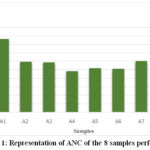 |
Figure 1: Representation of ANC of the 8 samples performed. Click here to View Figure |
Table 3: Samples Best for and their remarks
|
Sample |
Best For | Remarks |
| A 1 | Potency |
High ANC, moderate response |
|
A 2 & 3 |
Digestive Health | Consistent, polyherbal blends |
| A4 | Reliability |
Top average, very low variability |
|
A 5 |
Broad-spectrum herbal | High variability, very effective for some |
| A6 | Acid control |
Modern antacid, highly consistent |
|
A7 |
Gas relief | Good for bloating, higher ANC |
| A8 | Quick relief |
Strong ANC, less tolerable |
Conclusion
The comparative evaluation of eight marketed antacid formulations revealed noticeable variations in their ANC, which ranged from 9.7 to 17.2 mEq/g. Among the tested samples, A1 demonstrated the highest ANC value of 17.2 mEq/g, indicating a superior ability to neutralize gastric acid and, consequently, greater therapeutic potential in relieving acidity. In contrast, A4 exhibited the lowest ANC of 9.7 mEq/g, suggesting comparatively lower neutralizing efficiency.The determination of the acid-neutralizing capacity of different commercially sold antacids showed wide differences in their efficiency. Of the products tested, some showed greater capacity to neutralize gastric acid, reflecting better therapeutic value in alleviating acid-related discomforts. The differences in ANC values can be attributed to the nature and proportion of active ingredients present in each formulation, including the use of herbal, herbomineral, or synthetic components.These differences underscore the need to choose an antacid not merely on brand name or price but also on its true neutralizing capability. In general, the experiment emphasizes the importance of educated consumer decision-making and additional standardization of the quality of over-the-counter antacid products.
Acknowledgement
The authors wish to thank Principal, Professor Dr. M. Ganga Raju and Gokaraju Rangaraju Educational Society, Hyderabad, for their support.
Funding Sources
The author(s) received no financial support for the research, authorship, and/or publication of this article.
Conflict of Interest
The author(s) do not have any conflict of interest.
Data Availability Statement
This statement does not apply to this article.
Ethics Statement
This research did not involve human participants, animal subjects, or any material that requires ethical approval.
References
- Lanza, F.L. Am. J. Gastroenterol., 1995, 90(11), 2032–2041.
- Brunton, L.L.; Chabner, B.A.; Knollmann, B.C. Goodman & Gilman’s: The Pharmacological Basis of Therapeutics, 2011, 12th ed., McGraw-Hill.
- FDA. Fed. Regist., 1985, 50(89), 21676–21694.
- Almurshedi, A.S.; Al-Jenoobi, F.I.; Alam, M.A.; Al-Mohizea, A.M. Saudi Pharm. J., 2016, 24(5), 547–552.
- Yafout, M.; Elhorr, H.; Sbai El Otmani, I.; Khayati, Y. Med. Pharm. Rep., 2022, 95(1), 80–87.
CrossRef - Ayensu, I.; Bekoe, S.O.; Adu, J.K.; Brobbey, A.A.; Appiah, E. Scientific African, 2020, 8, e00347.
CrossRef - Divya, J.O.; Rasheed, F.M. J. Sci. Res. (BHU), 2021, 65(4), 93–95.
- Alalor, C.A.; Avbunudiogba, J.A.; Builders, F.P.; Okpara, L.O. East Afr. Sch. J. Med. Sci., 2019, 2(1), 12–16.
- Yashika, S.; Gunjan, S.; Bushra C,; Mayur, R. B,;Yogesh K,; Meena, Godha,; Sanjay, N,; Mohseen. Afr.J.Bio.Sc.2024,6(6) (2024) 9336-9350.
- Venturini CL, Damazo AS, Silva MJD, Muller JAI, Oliveira DM, Figueiredo FF, Serio BFD, Arunachalam K, Martins DTO. J Ethnopharmacol. 2024, 318(Pt B):116972.
CrossRef - Sangeetha, K,; Senthilkumar, G,; Ambikapathy, V,;Panneerselvam, A. Biological Forum – An International Journal, 2023,15(6): 211-214.
- Nadkarni, K.M. Indian Materia Medica, 1976, Vol. 1 & 2, Popular Prakashan, Mumbai.
- Sharma, P.V. Dravyaguna Vigyan, 1999, Vol. 1 & 2, Chaukhambha Bharati Academy, Varanasi.
- Government of India. The Ayurvedic Pharmacopoeia of India, 1989–2020, Vol. I–IX, Ministry of AYUSH.
- Vaidya, B.; Sharma, R.K. Charaka Samhita, 2005, Vol. I–IV, Chaukhambha Sanskrit Series.
- Trease, G.E.; Evans, W.C. Pharmacognosy, 2009, 16th ed., Saunders Elsevier.
- Tripathi, K.D. Essentials of Medical Pharmacology, 2018, 8th ed., Jaypee Brothers Medical Publishers.
- Daniel, W.W. Biostatistics: A Foundation for Analysis in the Health Sciences, 2010, 9th ed., Wiley.
- Chow, S.C.; Liu, J.P. Design and Analysis of Clinical Trials, 2013, 3rd ed., Chapman & Hall/CRC.
 PlumX:
  Views: 4304 Views
  PDF Downloads: 1366
 Accepted on: 19 Mar 2026
Second Review by: Dr. Sumit Kumar
Final Approval by: Dr. Ayssar Nahle


ISSN Online: 2231-5039