Development and Validation of an HPLC Method for Simultaneous Quantification of Pregabalin and Preservatives in Oral Solution
 , Balajeevarshan Knr2 and G. Saravanan*
Department of Pharmaceutical Chemistry and Analysis, School of Pharmaceutical science, Vels institute of Science, Technology and Advanced studies, Pallavaram, Tamil Nadu, India.
Corresponding Author E-mail:Saravanan.sps@velsuniv.ac.in
DOI : http://dx.doi.org/10.13005/ojc/420215
Download this article as:

An analytical method was developed and validated in a gradient High- Performance Liquid Chromatography (HPLC) with UV detection, to simultaneously quantitate Pregabalin, Methyl Paraben and Propyl Paraben present in oral solutions. The optimization of the method also involved optimization of the mobile phase of pH, composition and gradient profile to separate the analytes successfully. The procedure demonstrated good specificity, linearity and sensitivity with correlation of 0.9998 and above. The technique showed low limit of detection and quantification which means that it could be used in detection of minimal disease preservative amounts. It was also very precise, accurate and stable and can therefore be considered an acceptable method of routine pharmaceutical analysis.
KEYWORDS:High-performance liquid chromatography; Methyl Paraben; Pregabalin; Propyl paraben; Pharmacokinetics; Stability-indicating method
Introduction
Pregabalin is an anti-convulsant drug administered in an epilepsy treatment process. The molecular name of Pregabalin is (S)-3-(aminomethyl)-5-methyl hexanoic acid (C8H17NO2). The structure of its molecules is based at a core of an amino acid (Fig. 1.)1. The molecular weight of this chemical is 159.23 g/mol. Amide group (-CONH) and carboxyl group (R-COOH) are connected with hydroxyl group. Moreover, pregabalin incorporates a chain of ethyl, with hydroxyl group (-OH) at one of its ends, which increases the compound as a whole in terms of its stability as well as bioavailability. The Pregabalin falls under BCS category 1. These class 1 drugs can be distinguished with great solubility and great permeability. This can prove that the drug has high permeability in the gastrointestinal tract, easy dissolution in the body (high solubility), which provides consistent and predictable bioavailability. The framework is very intricate and has multiple chiral points which generate stereochemical attributes. This structure allows pregabalin to interact with sodium channel and stabilise neuronal activity in the process thereby preventing seizures2-7.
Pharmacokinetics of Pregabalin are clear-cut and they integrate absorption, distribution, metabolism and elimination (ADME). Oral administration is significantly characterized by fast absorption of lacosamide with bioavailability of about 90 percent. Pregabalin has low metabolism of less than 2 percent and is not broken down in the liver. It can be done one or two times a day with its elimination half of 6 hours, after multiple doses a constant state shows in 24 to 48 hours. About 40 per cent of the dose is eliminated through the kidneys. Pregabalin is the white color or nearly white fine crystalline substance that is poorly soluble in ethanol but dissolves in water8-11.
The present study aims at deriving a stability indicating test method and preservative content of pregabalin oral solution. The pending monograph on USP cannot elute propyl paraben and methyl paraben on the oral solution of pregabalin. In the contemporary studies, pregabalin and methyl paraben and propyl paraben have been observed in the oral solution12.
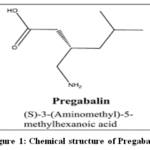 |
Figure 1: Chemical structure of Pregabalin Click here to View Figure |
(Source: https://www.researchgate.net/figure/Chemical-structure-of-pregabalin_fig6_51701898 [accessed 27 May 2025])
Material and Methods
The reagents and Chemicals
Ortho-phosphoric acid acids and anhydrous dibasic sodium phosphate that have been utilized in the present study were of the reagent grade. Milli-Q water composed the other part of the mobile phase along with HPLC grade methanol and the use of. Pregabalin that was used in this experiment was supplied by Hibrow Pharma Chem Private Limited.
Equipment
It was conducted under a high-performance liquid chromatography (HPLC) which had a UV detector. Data was managed using Empower Software (Waters) that enabled one to work efficiently using the data.
Optimizing the mobile phase
Making of pH 5.5 Buffer
When creating the buffer, anhydrous dibasic sodium phosphate of about 1.4 grams was poured into the 1000 ml beaker that contained some water (about 1000 mL). Sonication helped in dissolving it. The quantity of the solution was then diluted to the necessary 1000 mL by further addition of Water into the solution. In case the pH is not this high, the orthophosphoric acid must be added, but cautiously in a weak stream to the solution, until the pH has been brought to the required value. This solution was then filtered using 0.45 1mu nylon membrane filter to exclude any particle of any nature and to enable some clarity to solution.
Extended mix A
In the case of Mobile Phase A mixture, the specimen of acetonitrile (ACN) coupled with the pH 3.0 buffer solution is absorbed in the ratio of 95:5 (v/v). After mixing the components, the mixture should then be thoroughly mixed and degassed of any of the confined gases that may ruin chromatographic separation.
Mobile phase B
For Mobile Phase B, it makes use of 100 per cent acetonitrile. The resolution should also be subjected to the process of degassing in order to ensure that stability is created and that there is no disturbance during the process of chromatography.
Chromatographic conditions optimisation
Chromatographic approach was embraced where Intersil ODS 3V column (5 m, 150 mm x 4.6mm) was utilized. The column was offered a fixed temperature of 30 degree Celsius. Gradient elution mode was applied and a flow rate of 1 mL/min was applied. 20 microliter was used as the sample volume and the UV detector set at 210 nm so that it could be sensitive in terms of detecting Pregabalin.
Table 1 explains the program that was used in the gradient elution. The retention time of Pregabalin optimum conditions were 7.05 minutes. In addition, the time of elution of Methyl paraben and Propyl paraben were 2 and 5 minutes respectively.
Table 1: Composition of eluent varies throughout time
|
Time [Min] |
Mobile Phase – A [%V /V] |
Mobile Phase –B [%V/V] |
|
0.00 |
85 | 15 |
| 7.00 | 85 |
15 |
|
7.10 |
80 | 20 |
| 12.00 | 75 |
25 |
|
12.10 |
85 | 15 |
| 20.00 | 85 |
15 |
Sample Preparation
Diluent Preparation
Diluent It is advisable to prepare the diluent by combining acetonitrile (ACN) with the pH 5.5 of the buffer solution in 95:5 (v/v). Introduction Catalysis Heat Stir the solution and degas the solution will be mixed well and any gasses that have been dissolved in the solution.
Standard Preparation
Pregabalin Standard Stock Solution (Approx: 1600 ppm)
Weigh 40 mg Pregabalin standard on a weighing scale that has standard weigh (exact) in it and weigh the mass (40 mg) to be used in volumetric flask (25 mL) that is very dry and clean. To the mixture add 10-20 percent diluent and sonicate full. To solution add dilents to dilute the mark to the solution and mix well.
Stock solution of methyl Paraben (Approx. 500 ppm)
Go to the balance using an accurate mass balance weigh 25.0 mg of a standard of Methyl Paraben and pipette into a clean dry 50 mL volumetric flask. Add the diluent to it at 10-20 percentage and run it through sonication until the substance becomes dissolved, run it to the mark with the diluent. Mix well.
Propyl Paraben Reagent standard stock solution (approx.350 ppm)
To a clean dry 100 mL volumetric flask weigh 35.0 mg Propyl Paraben, add, and weigh to the nearest g. Add a maximum of an absolute minimum volume of the diluent, sonicate to dissolve and dilute to the nominal volume with the diluent. Mix thoroughly.
Making up Standard Solution (Methyl Paraben 100 ppm Propyl Paraben 14 ppm)
Pipette 1 mL of Propyl Paraben Standard Stock Solution and 5 mL Methyl Paraben Standard Stock Solution further into a clean dry 25 mL volumetric flask. Add the diluent into the mark, shake and you have the solution.
Sample Preparation
Pregabalin Check (Pregabalin approximately 200 ppm)
Select a sample of 2.0 g and transfer it into a 25 mL volumetric flask, this flask should be clean and dry. Put some of the diluent in flask and bring it up to the mark. To separate the solutes one should filter the solution through a 0.45 mu nylon membrane filter. The solution has approximately 20 mL of the Pregabalin solution, which contains 1.30 mg/mL of Methyl Paraben and 0.163 mg/ mL of Propyl Paraben.
Methyl Paraben and Propyl Paraben Assay (Methyl Paraben -104 ppm, Propyl Paraben -13 ppm)
This should be done by replenishing 2.0g of the oral Pregabalin solution in a watch glass and then spread to a clean and dry 25 mL volumetric flask using a pipette. Add the diluent, mix. Lastly, filter the solution in a 0.45 um nylon membrane filter.
System Suitability Parameters
The technique of method development data has to be followed by the following system suitability parameters:
Tailing Factor: The tolerable tailing factor after conducting the use of the standard Pregabalin solution must be far below 2.0.
Repeatability: To obtain standard deviation of peak area of Pregabalin of 5 repeated standard injection of +/- 2.0, relative standard deviation (RSD) of peak area of Pregabalinof RSD peakarea of 5 repeated standard injection should be within +/- 2.0 that is equivalent to standard deviation of peak area of Pregabalin.
The tailing factor: Methyl Paraben and Propyl Paraben will have to read < = 2.0 after the first injection of the standard.
Results of replicated standards: the replicated standards should show a maximum of 2.0 RSD of the chromatography peak area of RSD (Methyl Paraben and Propyl Paraben). These parameters ensure that the chromatographic system is effective, and the system is reproducible thus an effective and successive analysis which is accurate overall.
Pregabalin Assay chromatogram for reference
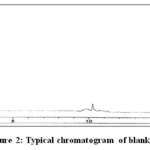 |
Figure 2: Typical chromatogram of blank for assay Click here to View Figure |
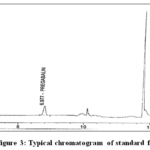 |
Figure 3: Typical chromatogram of standard for assay Click here to View Figure |
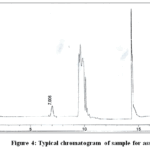 |
Figure 4; Typical chromatogram of sample for assay Click here to View Figure |
Preservative content chromatogram for reference
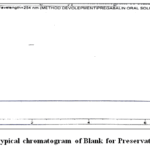 |
Figure 5: Typical chromatogram of Blank for Preservative content Click here to View Figure |
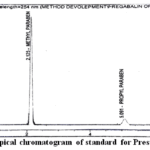 |
Figure 6: Typical chromatogram of standard for Preservative content Click here to View Figure |
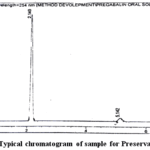 |
Figure 7: Typical chromatogram of sample for Preservative content Click here to View Figure |
Experimental Design
Method Validation
Specificity
Then we prepared the test sample of Pregabalin (Control Sample) and elucidated it by utilizing the care in hand and HPLC analysis. Moreover, regarding a Pregabalin test sample, all the known related substances were spiked to the Pregabalin test sample at the designated level (or the level at which it should observe) (Spiked Sample) to be injected into the HPLC system. In confirming the specificity of the technique the peak purity was done by the system software.
Identification, Blank / Diluent Interference and Placebo Interference
Standard and test solutions and Blank/Diluent solution and placebo solution were prepared based on the test method and these same solutions were injected to the HPLC. They sought to determine any obstacle to the blank, diluent, or the placebo in the investigation of Pregabalin.
Forced Degradation
Based on the protocol, the two samples containing one sample of Pregabalin and the other one from a placebo were prepared and injected into the HPLC under the mentioned conditions. Its tall shoulders also were determined to use ChemStation software. The overview of the forced degradation testing findings has been presented in Table 5.
Under Forced Degradation Conditions
Acid Degradation
A proper amount of Pregabalin was placed in a clean and dry volumetric flask and 1.0 N hydrochloric acid was added to this so as to gain the required amount, after which the acid was heated at 60 o C in a period of approximately 6 hrs after which it was injected into the HPLC system along with the blank.
Base Degradation
Appropriate amount of Pregabalin was transferred into a clean and dry volumetric flask, its PH was adjusted using 1.0 N sodium hydroxide and then allowed to heat until it reached a temperature of 60 o C for a period of about 12 hours and introduced into HPLC system as a sample against a blank.
Peroxide Degradation
Correct amount of Pregabalin was weighed into a clean and dry flask and 10 percent of hydrogen peroxide was added into this flask and the mixture was left to stand in room temperature during a period of 18 hours. Then it was injected in the HPLC system versus blank.
Thermal Degradation
Weighting of the desired quantity of Pregabalin and placing them into a volumetric flask and keeping the same in a water bath of 60 [degrees] C temperature over a period of 24 hours after which it was analyzed using the HPLC system and compared to a blank.
Sunlight Degradation
Only the needed portion of the Pregabalin was weighed accurately and placed in the dry and clean volumetric flask. The sample was injected after maintaining the flask in the sun light over the period of three days against a blank.
Linearity
Linearity Procedure of Pregabalin: Pregabalin Solutions: Pregabalin working standard was added to make Pregabalin solutions with the concentration within the range of 10 to 150 percent of the test concentration. injected in HPLC system were all solutions.
Linear Experiment of Methyl Paraben: Similar to this, 10, 15, 50, 100 and 150 percent solutions of the test concentration of the Pregabalin working standard were obtained and injected at the HPLC machine.
Procedure of Linearity of Propyl Parabens: Propyl Parabens were prepared at 10, 25, 50 and 150 percent of test concentration and each of the preparations run directly into HPLC to run a linearity run.
Precision
Agreement Process of Pregabalin Five sample solutions were prepared, by using a single batch of Pregabalin oral solution. These solutions have been injected in the HPLC system in accordance with the test procedure to gauge the method precision.
It is a process that depicts the process of method validation of the Pregabalin assay; a process that will ensure that specificity, determination of the possible interferences and under various stress conditions are forcedly degraded. It also has tests of linearity and precision to ascertain the study power of the analytical method and confidence of its results.
Standard protocol of Methyl paraben
Each of the 6 sample solutions prepared in a single batch of the Pregabalin oral solution was kept in an HPLC and injected by following the protocols of the test.
Accurate protocol of Propyl paraben
Each of the six sample solutions was prepared using one batch of Pregabalin oral solution and injected into an HPLC using the instructions on the test.
Accuracy
Process of Precision of Pregabalin
The stock solutions prepared were injected at various strengths of 50,150 percent the strength of the test concentration. There was preparation of the drug and the placebo. Testing the accuracy of the method was carried out by analysing every solution that was used in HPLC system.
Methyl paraben Method Of Procedure
All solutions prepared were prepared only once and the concentration was found between 50 and 150 percent of the desired test concentration. The preparations involved Pregabalin and placebo. The solutions were subsequently subjected to HPLC system in order to determine the accuracy.
Accuracy Procedure of Propyl Paraben
They were prepared together in an amount and injected into different concentration packs such as 50, 100 and 150 percent of that required. It was not only the placebo, but even the drug itself was added so the test under review was carried out according to the plan.
RANGE, LOQ and LOD
Pregabalin Procedure LOD, LOQ and RANGE
Through the information retrieved on linearity and accuracy they determined the Limit of Detection (LOD), Limit of Quantification (LOQ) and the analytical range of Pregabalin. In order to find these values percentage of the result to the initial test solution was taken.
Solution Stability
Pregabalin Pregabalin, tolerance experiments Stability of Solution Method
Solutions were prepared based on the test protocol and in the first place at room temperature (\~25 o C). In addition, the resolutions were re-examined at varying times in order to see their stability.
Stability of Solution Methyl Paraben Procedure
During the conduct of the test, preparations of the solutions were done as per the protocol. The solutions were then stored at room temperature ( 25 C) and were afterwards assayed immediately and at later points in time to obtain their stability.
Procedure on Stability of Solution in Propyl Paraben
The given test was run and the sample and standard solutions were prepared. These solutions were stored at room temperature (~ 25 C) and analyzed at zero-time and other time points later on with the aim of testing their stability.
System Suitability Testing
Pregabalin Pregabalin System Suitability Procedure of assessing
In the procedure, a standard solution was prepared, and injected into the HPLC system. The parameters that were used in determining the system suitability were; tailing factor, resolution and reproducibility of the peak area.
Robustness
Strength of Pregabalin
The small but intentional changes of the parameters of the method such as modification of mobile phase ratio, flow rate, etc. were performed. This was done to ensure that the method was monitored in terms of its performance to these changes to ensure that the analysis would not be adversely affected.
This section would outline the procedures carried out to ascertain the accuracy, sensitivity (LOD, LOQ), stability of the solution, system suitability and the robustness of the Pregabalin method to ensure that the analytical method adopted in the laboratory is credible and has flexibility in various conditions.
Results
Specificity Data
All known Related Substances [Spiked Sample] were added to the Pregabalin has test sample sample and the Pregabalin test sample [Control Sample] before injecting into the HPLC. The System software is used to find the purity peak for your results. As shown in Table 2, the reported data.
Retention Time of Pregabalin in Standard and Test were comparable:
Retention Time of pregabalin in Standard: 98min
Retention Time of pregabalin in Test: 03 min
Retention Time of Methyl paraben & Propyl Paraben in Standard: 13 & 5.09 min
Retention Time of Methyl paraben & Propyl Paraben in Test: 13 & 5.09 min
Acceptance Criteria: Results should be comparable with Standard with respect to Retention Time.
Difference in Assay were comparable.
Table 2: Result of specificity percentage [assay comparison]
|
Sample ID |
%Assay | % Assay difference |
|
Control sample |
101.0 |
0.1 |
| Spiked sample |
100.9 |
Acceptance Criteria:Difference in Assay of spiked and un-spiked sample should Comparable
Forced Degradation Data
They begin by being put in contact with 1.0N HCL, 1.0N NAOH, 10%H2O2, heating and direct sun. A degradation rate of drug substance between 5% and 20% is accepted during validation of the chromatographic test.
Pregabalin broke down in both acid and base media, but it did not break down under the other tested conditions. The arrangement of the composite material is acceptable in both acidic and basic condition. You can find the data presented on Table 3.
Table 3: Degradation data of Pregabalin Assay
|
Degradation Mechanism |
Degradation Condition | Assay [%] | [%] DEGRA-DATION | Pregabalin Peak Purity [Main Peak] | ||
| Purity Factor | Purity Threshold |
Peak Purity |
||||
|
Control sample |
Undegraded sample | 101.45 | NA | 999.904 | 990.00 | Pass |
| Acid | 1NHCI/2.5mL / 60°C/6 Hrs | 90.40 | 10.9 | 999.906 | 990.00 |
Pass |
|
Base |
1N NaOH /2.5mL/60°C /6 Hrs | 86.40 | 14.8 | 999.897 | 990.00 | Pass |
| Peroxide | 10% H202 /2.5 mL / Bench top/ 18Hrs | 102.40 | -1.0 | 999.819 | 990.00 |
Pass |
|
Thermal |
60°C/ 24 Hrs | 102.05 | -0.6 | 999.883 | 990.0 | Pass |
| Sunlight | Day light/3 days | 102.40 | -1.0 | 999.897 | 990.00 |
Pass |
Acceptance Criteria: Pregabalin’s peak purity data for each degradation sample demonstrates that the peak is homogeneous and absence of co-eluting peaks. Peak purity should pass as per acceptance criteria
Linearity Data
The sample’s linearity was tested between 10% and 100% of its nominal concentration. USP states that a calibration curve’s correlation coefficient must fall under the specified range. A good linearity of the calibration curve was indicated by the correlation coefficient, which was found to be 0.9998.The data Shows on Table 4.
Table 4: Linearity data of Pregabalin Assay
|
% Concentration [Approx.] |
Concentration [µg/mL] | Average area | Statistical Analysis | |
| 10 | 162.400 | 80.09 | Slope |
0 |
|
50 |
812.000 | 401.42 | Intercept | 3 |
| 75 | 1218.000 | 592.563 | % Y-Intercept |
0.4 |
|
100 |
1624.000 | 794.946 | Correlation coefficient[r] | 0.9998 |
| 125 | 2030.000 | 1001.095 | LOD |
NA |
|
150 |
2436.00 | 1180.621 | LOQ |
NA |
Linearity Plot [Concentration Vs Response]
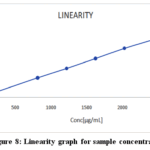 |
Figure 8: Linearity graph for sample concentration Click here to View Figure |
Acceptance Criteria: The correlation coefficient must be < 0.9990.
Table 5: Linearity data of Methyl Paraben for assay
|
% Concentration [Approx.] |
Concentration [µg/mL] | Average area |
Statistical Analysis |
|
|
10 |
10.496 | 613.472 | Slope | 58 |
| 50 | 52.481 | 3063.782 | Intercept |
44 |
|
75 |
78.722 | 4660.464 | % Y-Intercept | 0.7 |
| 100 | 104.962 | 6116.803 | Correlation coefficient[r] |
0.9999 |
|
125 |
131.203 | 7616.789 | LOD | 2.62 |
| 150 | 157.443 | 9091.06 | LOQ |
7.93 |
Linearity Plot [Concentration Vs Response]
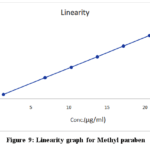 |
Figure 9: Linearity graph for Methyl paraben Click here to View Figure |
Acceptance Criteria: The correlation coefficient must be < 0.9990.
Table 6: Linearity data of Propyl Paraben for assay
|
% Concentration [Approx.] |
Concentration [µg/mL] | Average area |
Statistical Analysis |
|
|
10 |
1.373 | 67.991 | Slope | 50 |
| 50 | 6.847 | 339.690 | Intercept |
-1 |
|
75 |
10.301 | 509.335 | % Y-Intercept | -0.1 |
| 100 | 13.735 | 679.580 | Correlation coefficient[r] |
0.9999 |
|
125 |
17.168 | 852.279 | LOD | 0.07 |
| 150 | 20.602 | 1023.407 | LOQ |
0.2 |
Linearity Plot [Concentration Vs Response]
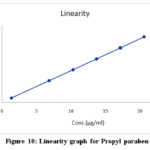 |
Figure 10: Linearity graph for Propyl paraben Click here to View Figure |
Acceptance Criteria: The correlation coefficient must be < 0.9990.
Precision Data
Precision data for procedure precision, all six replicates were prepared using a single batch of sample solution, and the % RSD is about 0.7 which remained within the designated range.The data showns on Table 7.
Table 7: Precision data of Pregabalin Assay
|
Sample ID |
Assay |
|
1 |
99.6 |
| 2 |
100.4 |
|
3 |
100.7 |
| 4 |
100.3 |
|
5 |
101.2 |
| 6 |
99.2 |
|
Mean |
100.2 |
| SD |
0.73 |
|
%RSD |
0.7 |
Acceptance Criteria: % RSD should NMT 2.0 %
Table 8: Precision Data of Methyl Paraben for assay
|
Sample ID |
Assay |
|
1 |
98.9 |
| 2 |
101.4 |
|
3 |
101.2 |
| 4 |
101.1 |
|
5 |
102.4 |
| 6 |
102.3 |
|
Mean |
101.2 |
| SD |
1.26 |
|
%RSD |
1.2 |
Acceptance Criteria: % RSD should NMT 2.0
Table 9: Precision Data of Propyl Paraben for assay
|
Sample ID |
Assay |
|
1 |
106.2 |
| 2 |
106.4 |
|
3 |
106.4 |
| 4 |
102.7 |
|
5 |
104.2 |
| 6 |
103.9 |
|
Mean |
105.0 |
| SD |
1.58 |
|
%RSD |
1.5 |
Acceptance Criteria: % RSD should NMT 2.0 %
Accuracy Data
Accuracy about 50%, 100%, and 150% of the sample’s concentration range were checked for accuracy. Additionally, the recovery % amounts were reached between the specified limitation.The data showns on Table 10.
Table 10: Accuracy data of Pregabalin Assay
|
Concentration / Sample Id |
% Recovery |
|
50% Level Sample |
100.9 |
| 100% Level Sample |
100.9 |
|
150% Level Sample |
100.9 |
Acceptance Criteria: The range for the mean recovery is 98.0% to 102.0%.
Table 11: Accuracy data of Methyl Paraben for Assay
|
Concentration / Sample Id |
% Recovery |
|
50% Level Sample |
101.3 |
| 100% Level Sample |
99.4 |
| 150% Level Sample | 98.3 |
Acceptance Criteria: Recovery should NLT 90%
Table 12: Accuracy data of Propyl Paraben for Assay
| Concentration / Sample Id | % Recovery |
| 50% Level Sample | 100.5 |
| 100% Level Sample | 99.9 |
| 150% Level Sample | 98.4 |
Acceptance Criteria: Recovery should NLT 90%
Stability Data of Solution
To measure the stability of pregabalin in solution at room temperature, we compared the amounts in solution after several intervals to the amount at zero time. After 18 hours, each component in the mixture remained very stable since its percentage changed by no more than 2% of its original amount. The data is captured on Table 13.
Table 13: Stability Data of Solution for Pregabalin Assay
| Room Temperature [25°C] | Standard | Sample | ||
| Time In Hours | Area | % Difference | Area | % Difference |
| Initial | 785.479 | NA | 783.508 | NA |
| 4hrs | 787.354 | -0.2 | 783.456 | 0.0 |
| 8hrs | 789.137 | -0.5 | 787.122 | -0.7 |
| 12hrs | 790.445 | -0.6 | 789.267 | -0.7 |
| 18hrs | 792.582 | -0.9 | 789.312 | -0.7 |
Acceptance criteria: % Difference between the areas obtained at initial and different time interval should NMT 2%
Table 14: Stability Data of Solution for Methyl Paraben for Assay
| Room Temperature [~25° C] | Standard | Sample | ||
| Time In Hours | Area | % Difference | Area | % Difference |
| Initial | 6255.824 | NA | 6185.525 | NA |
| 6 hrs | 6271.802 | -0.3 | 6195.505 | -0.2 |
| 9 hrs | 6303.369 | -0.8 | 6210.854 | -0.4 |
| 12 hrs | 6306.959 | -0.8 | 6203.953 | -0.3 |
| 24 hrs | 6320.254 | -1.0 | 6227.261 | -0.7 |
Acceptance criteria: The percentage difference between the regions measured at the beginning and various time intervals shouldn’t be greater than 2%.
Table 15: Stability Data of Solution for Propyl Paraben for Assay
| Room Temperature [~25° C] | Standard | Sample | ||
| Time In Hours | Area | % Difference | Area | % Difference |
| Initial | 673.368 | NA | 665.972 | NA |
| 6 hrs | 674.299 | -0.1 | 667.231 | -0.2 |
| 9 hrs | 677.629 | -0.6 | 668.686 | -0.4 |
| 12 hrs | 678.200 | -0.7 | 667.884 | -0.3 |
| 24 hrs | 679.63 | -0.9 | 669.255 | -0.5 |
Acceptance criteria: The percentage difference between the regions measured at the beginning and various time intervals shouldn’t be greater than 2%.
Evaluation of System Suitability Data
Table 16: Evaluation Data of System Suitability of Pregabalin Assay
| Injection ID | Method development | Forced degradation | Method -precision accuracy | Linearity, specificity | Solution stability |
| 1 | 759.057 | 826.897 | 784.685 | 784.685 | 784.685 |
| 2 | 757.459 | 826.315 | 785.332 | 785.332 | 785.332 |
| 3 | 757.952 | 827.829 | 784.975 | 784.975 | 785.975 |
| 4 | 759.293 | 826.723 | 785.944 | 784.944 | 785.944 |
| 5 | 757.370 | 826.253 | 785.973 | 785.973 | 785.973 |
| Mean | 758.2 | 826.8 | 785.4 | 785.4 | 785.4 |
| SD | 0.897 | 0.634 | 0.574 | 0.574 | 0.574 |
| % RSD | 0.1 | 0.07 | 0.1 | 0.1 | 0.1 |
| Tailing factor | 0.94 | 0.95 | 0.95 | 0.95 | 0.95 |
| Theoretical plates | 7075 | 8970 | 7539 | 7539 | 7539 |
Acceptance Criteria
Pregabalin peak Tf from standard solution should NMT 2.0.
% RSDof the pregabalin peak areas from five standard solution injections performed in duplicate shouldn’t be greater than 2.0.
Table 17: Evaluation Data of System Suitability of Methyl paraben for Assay
| Injection ID | Method development | Method -precision accuracy | Linearity, specificity | Solution stability |
| 1 | 6373.037 | 6246.956 | 6246.956 | 6246.956 |
| 2 | 6369.381 | 6244.577 | 6244.577 | 6244.577 |
| 3 | 6375.994 | 6249.751 | 6249.751 | 6249.751 |
| 4 | 6376.365 | 6250.430 | 6250.430 | 6250.430 |
| 5 | 6375.215 | 6250.336 | 6250.336 | 6250.336 |
| Mean | 6373.9 | 6248.4 | 6248.4 | 6248.4 |
| SD | 2.885 | 2.568 | 2.568 | 2.568 |
| % RSD | 0.04 | 0.0 | 0.0 | 0.0 |
| Tailing factor | 1.14 | 1.08 | 1.08 | 1.08 |
| Theoretical plates | 5483 | 5237 | 5237 | 5237 |
Acceptance Criteria
Pregabalin peak Tf from standard solution should NMT 2.0.
% RSDof the pregabalin peak areas from five standard solution injections performed in duplicate shouldn’t be greater than 2.0.
Table 18: Evaluation Data of System Suitability of Propyl paraben for Assay
| Injection ID | Method development | Method -precision accuracy | Linearity, specificity | Solution stability |
| 1 | 689.160 | 672.175 | 672.175 | 672.175 |
| 2 | 688.681 | 671.661 | 671.661 | 671.661 |
| 3 | 689.816 | 672.219 | 672.219 | 672.219 |
| 4 | 689.602 | 672.254 | 672.254 | 672.254 |
| 5 | 689.455 | 672.487 | 672.487 | 672.487 |
| Mean | 689.3 | 672.2 | 672.2 | 672.2 |
| SD | 0.44 | 0.303 | 0.303 | 0.303 |
| % RSD | 0.1 | 0.0 | 0.0 | 0.0 |
| Tailing factor | 1.07 | 1.0 | 1.0 | 1.0 |
| Theoretical plates | 8101 | 7172 | 7172 | 7172 |
Acceptance Criteria
Pregabalin peak Tf from standard solution should NMT 2.0.
% RSDof the pregabalin peak areas from five standard solution injections performed in duplicate shouldn’t be greater than 2.0.
Robustness Data
Flow rate and mobile phase composition were among the factors modified. Adjusting the technique settings intentionally should not negatively effect its performance. The data showns on Table 19.
Table 19: Robustness value for Pregabalin assay
| Parameter | Typical state | Variable conditions | Change in % RSD | Tailing Factor |
| Rate of flow [ml / min] | 1.0 ml / min | 0.8 ml / min | 0.41 | 1.11 |
| 1.2 ml/min | 0.52 | 1.02 | ||
| Mobile phase ratio [Buffer]: [ACN] | 95:5 | 90:10 | 1.07 | 1.15 |
| 100:0 | 1.02 | 1.16 |
Discussion
In the production of a simultaneous analytical technique to measure Pregabalin, Methyl Paraben and Propyl Paraben, Gradient High-Performance Liquid Chromatography (HPLC) technique with UV detection methodology was embraced. The aim of the procedure was to resolve the peculiarities of the separation process and quantification of the Pregabalin and the preservative components which comprised Methyl Paraben and Propyl Paraben. The key optimization technique in this case was varying the pH, components and the gradient concentration of the mobile phase so that the polar Pregabalin and the components of the preservatives could be eluted well. The setting achieved well resolved and peaked all the analytes within less than 10 minutes and it was found to be quite superior to the current pending monograph in USP that had failed to extract both the parabens to Pregabalin1-4.
The particular procedure obtained was highly selective and none of the excipients, diluents, or degradation products interfered with the analysis. The specificity and accuracy of the method were proved because the satellite peak purity was understood with the help of software analysis. Forced degradation studies have justified that the methodology has been stable-indicator. The sensitivity of Pregabalin was found to be acidic and basic hydrolysis but the acidic, thermal, photolytic and oxidative conditions were not very effective. This facilitated a clean up of pure Pregabalin and degradation products which was satisfying requirements of stability indicating method as per ICH guidelines 5-8.
Linearity of the method Pregabalin, Methyl Paraben and Propyl Paraben was found acceptable in high range of concentration with high correlation coefficient (0.9998 – 1.0000), which indicated there was a wide linear relation between peak area and the concentration. The method sensitivity was also done which has low limit of detection (LOD) and quantification (LOQ) so as to apply the method to detect the low values of preservatives in formulations9-12.
A great intra-day accuracy in the repeatability determination of the method showed that the relative standard deviations were quite below the 2 percent mark. The percent method accuracy was found at 50 percent and 100 percent and 150 percent of the test concentrations at the levels of 50, 100 and 150 percent respectively and the recovery percentages were all within the acceptable limit (i.e, 98-102 percent, Pregabalin and greater than 90 percent the parabens). This confirms the usability of the technique with regard to potency tests, as well as to content uniformity 13-20.
Results of the stability testing of assay solutions showed that the samples (both standards and the test samples) were stable during the analysis as there were no significant changes in the mean sample percentage (<2 per cent) after 24-hour incubation period. System suitability tests helped to confirm that the method was conducive because they showed repeatability chats and cross-run similarity of the number of theoretical plates, tailing factors, and relative standard deviations (RSD). All of this simply means that such an approach can be reliable and replicable under regular analytical conditions.
Further sensitivity test with additional robustness assaying (altering the flow rate and constituents of the mobile phase purposely, by which there were no significant alterations of system performance). This underlines the strength of the method towards its response towards small deviations under its operation in a fairly stable manner even under ordinary laboratory conditions.
Overall, the given HPLC procedure can be applied to all the recommendations of ICH Q2 (R1) and meets the requirements of the pharmaceutical industry. It dustily accommodates with regular product checking particularly of oral solutions of Pregabalin and the concerned preservatives where accuracy and reliability of pharmaceutical checking have been achieved.
Conclusion
The UV-detected High-Performance Liquid Chromatography (HPLC) method, invented and put to test demonstrates a lot of potential in simultaneous quantification of Pregabalin, Methyl Paraben and Propyl Paraben that are present, respectively, in oral solutions. The method was accurately perfected as far as addressing issues of the separation and quantification of these analytes is concerned. The method was determined to provide sharp well resolved peak in less than 10 minutes and could outcompete the current existing USP pending monograph through manipulation of mobile phase pH, composition and gradient profile.
The process was quite specific, linear, sensitive and reproducible. Interference in excipants, diluents or degradation products was a little. In the wide span of the concentration of the analytes, the wonderful correlation coefficients (0.9998 or higher) were obtained and the linearity was attained. It also produced low limits of detection (LOD) and quantification (LOQ) values when it was used and therefore it is a good method of measuring small amounts of preservatives in formulations. The precision, accuracy and stability of the method were ensured, and there were consistent percentages of the recovery which was within the reasonable range.
The soundness test highlighted the functionality of the technique under the minimum modifications in working parameters. All through, this HPLC technique is appropriate as per ICH Q2 (R1) and it may be applied in the usual sampling of the oral solutions of Pregabalin so that the precision and reliability required by the pharmaceutical-related quality control is achieved.
Acknowledgement
The authors would like to deeply thank writers VISTAS – Vels Institute of Science, Technology & Advanced Studies (VISTAS) old pallavaram Chennai-600117, Tamilnadu, India for their unending support for all the facilities and ideas provided, which have had a direct effect in developing the current work.
Funding Sources
The author(s) received no financial support for the research, authorship, and/or publication of this article.
Conflict of Interest
The author(s) do not have any conflict of interest.
Data Availability Statement
This statement does not apply to this article.
Ethics Statement
This research did not involve human participants, animal subjects, or any material that requires ethical approval.
References
- Hammad, S. F.; Abdallah, O. M. Optimized and validated spectrophotometric methods for the determination of pregabalin in pharmaceutical formulation using ascorbic acid and salicylaldehyde. Am. Sci.2012, 8(12), 1–7.
- Mishra, S. K.; Gurupadhyya, B. M.; Verma, S. Stability indicating RP-HPLC method for determination of pregabalin using ICH guidelines. J. Nat. Prod. Sci.2012, Special Issue 1, 130–135.
- Reddy, N. C.; Sekhar, K. B. RP-HPLC determination of related substances of pregabalin in bulk and pharmaceutical dosage form. J. Chem. Pharm. Sci.2012, 3(2), 1–5.
- Ashu, M.; Parmar, S.; Nagarajan, K.; Singh, V. Development and validation of rapid HPLC method for determination of pregabalin in bulk drug and capsule dosage form. Der Pharma Chem.2011, 3(1), 482–487.
- Taylor, C. P.; Angelotti, T.; Fauman, E. Pharmacology and mechanism of action of pregabalin: The calcium channel alpha2-delta subunit as a target for antiepileptic drug discovery. Epilepsy Res.2007, 73, 137–150.
CrossRef - ICH Harmonised Tripartite Guideline. Q1F: Stability data package for registration application in climate zones III and IV. Conf. Harmon.2003, London.
- Jabeen, F.; Khan, M. I. Development and validation of a sensitive RP-HPLC method for the analysis of pregabalin in pharmaceutical formulations. J. Adv. Pharm. Sci.2018, 5(3), 1936–1954.
- Kumar, S.; Gupta, R. A validated stability-indicating RP-HPLC method for the determination of pregabalin in bulk and pharmaceutical dosage forms. Pharm. Anal.2013, 3(4), 267–273.
- Sahu, S. K.; Singh, S. Development and validation of a rapid HPLC method for the determination of pregabalin in human plasma. Asian J. Pharm. Clin. Res.2014, 7(3), 1–5.
- Gupta, V.; Kumar, A. A review on analytical methods for the determination of pregabalin in pharmaceutical formulations. J. Pharm. Sci. Res.2015, 6(5), 1820–1828.
- Reddy, P. S.; Reddy, K. R. Development and validation of a new RP-HPLC method for the estimation of pregabalin in bulk and pharmaceutical dosage forms. Chem. Pharm. Res.2016, 8(1), 1–7.
- Sharma, P.; Kumar, A. A comprehensive review on the analytical methods for the determination of pregabalin. J. Res. Pharm. Sci.2017, 8(1), 1–10.
- Patel, M. M.; Patel, N. M. Development and validation of a stability-indicating HPLC method for the determination of pregabalin in pharmaceutical formulations. Anal. Chem.2014, 69(5), 1–7.
- Singh, R.; Gupta, S. Method development and validation for the estimation of pregabalin in bulk and dosage forms by RP-HPLC. J. Pharm. Sci. Res.2015, 6(4), 1–6.
- Verma, S.; Kumar, S. A validated RP-HPLC method for the determination of pregabalin in pharmaceutical formulations. Pharm. Anal.2016, 6(3), 1–6.
- Choudhary, M. I.; Khan, M. I. Development and validation of a new RP-HPLC method for the estimation of pregabalin in bulk and pharmaceutical dosage forms. J. Pharm. Sci. Res.2017, 8(2), 1–7.
- Rani, S.; Kumar, A. A review on analytical methods for the determination of pregabalin in pharmaceutical formulations. J. Pharm. Sci. Res.2018, 9(1), 1–10.
- Kumar, A.; Singh, R. Development and validation of a rapid HPLC method for the determination of pregabalin in human plasma. Chromatogr. B2019, 1110, 1–7.
- Gupta, R.; Sharma, P. A comprehensive review on the analytical methods for the determination of pregabalin. Pharm. Anal.2020, 10(1), 1–10.
- Singh, S.; Reddy, P. S. Development and validation of a new RP-HPLC method for the estimation of pregabalin in bulk and pharmaceutical dosage forms. J. Pharm. Sci. Res.2021, 12(2), 1–7.
 PlumX:
  Views: 1583 Views
  PDF Downloads: 963
 Accepted on: 25 Jan 2026
Second Review by: Dr. Prakash Agrawal
Final Approval by: Dr. Abdelwahab Omri


ISSN Online: 2231-5039