A Comprehensive Review on the Antimicrobial Activity of Sulphonamides and their Derivatives
 and Anjana G V*
Department of pharmaceutical chemistry, SRM College of Pharmacy, SRM Institute of Science and Technology, Kattankulathur, Chengalpattu District, India.
Corresponding Author E-mail:anjanag@srmist.edu.in
DOI : http://dx.doi.org/10.13005/ojc/420219
Download this article as:

Sulphonamides have been foundational synthetic agents in antimicrobial chemotherapy since their initial discovery. This review provides a comprehensive survey of the antimicrobial activity of sulphonamides and their numerous synthetic derivatives against a wide array of pathogenic microbes, including bacteria, fungi, and protozoa. The core mechanism of action involves the competitive inhibition of dihydropteroatesynthetase, which disrupts folic acid synthesis essential for microbial DNA production. In light of the global challenge of multidrug resistance, this review also highlights recent advancements, including the development of sulphonamide-based hybrid molecules, metal complexes, and nano-formulations designed for increased efficacy and lower toxicity. The work can be of great reference to research persons in the area of medicinal chemistry and antimicrobial agent’s development.
KEYWORDS:Antimicrobial Activity; Metal Complexes; Multidrug Resistance Infections; Nano-Formulations; Sulphonamides; Synergistic Formulations
Introduction
The story of the discovery of sulphonamides is the most entertaining and educative parts of medicinal-chemistry which underlines the importance of intelligent design and luck in drug discovery. It heralded the entry into the chemotherapeutic phase with the Sulphonamides opening the possibility of directly assaulting microbial infection1. They are also known as sulfa drug, and they are the best cause of treatment against infections caused by bacteria, till the arrival of penicillin in 19412.Sulphonamide moiety are extensively identified in several drug candidates that demonstrate pertinent biological activity3. At present, over 30 drugs with this functional group are utilized in the clinical settings, which includes the antihypertensive drug bosentan, alongside antifungal, anti-inflammatory agents, antagonistic non peptidic vasopressin receptor, and the translation initiation inhibitors4. Diverse biological activities are associated with sulfonamides, which include effects on bacteria and protozoa, as well as their function as inhibitors of the dihydropteroate synthase and thus hindering the synthesis of the dihydrofolic acid5.Although a few classes of antibiotics have been developed and made widely available in the past century, bacterial resistance remains a global problem. It is now clinically essential to create novel families of antibiotics because of the increase in drug resistance.Globally, there is still a significant need for antibacterial drugs with innovative methods of action. Treating bacterial infections is difficult due to the rise in multidrug-resistant microbial pathogens and the appearance of unstoppable diseases.Some specific examples of sulphonamides used as drugs includes antimalarial pyrimethamine, antibiotic sulfisoxazole, and sulfapyridine, herbicidal penoxsulam, antimigraineaimotripin, and antiretroviral amprenavir6,7. Developing new synthetic analogues that are efficient against bacterial targets is necessary. In medicinal chemistry, creating the novel, less hazardous, minimally demanding, and highly dynamic sulfonyl or sulphonamide-bearing analogues is a popular area of study8-20.
General Structure of Sulphonamides
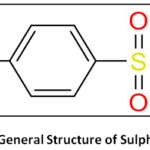 |
Figure 1: General Structure of Sulphonamides Click here to View Figure |
Mechanism and methods of action
Antibiotics and other drugs for chemotherapy are usually used to either eradicate or inhibit germs. The sulphonamides are the competitive antagonists. Sulphonamides are structural equivalents of the p-amino benzoic acid and are also used to manufacture the folic acid which is vital for bacteria so that they can produce DNA.As Sulphonamides and PABA possess similar structures.Sulphonamides can be used to inhibit, dihydropteroatesynthetase, which is key enzyme in the formation of folate. This will eventually culminate in the inhibition of the formation of dihydrofolate and tetrahydrofolate hence stalling the growth of DNA in bacteria and thus prevents the multiplication of the bacteria.Since sulphonamides prevent cell division, they are considered as bacteriostatic rather than antibacterial medications21.
Antimicrobial Activity of Sulphonamides
Kratky and his colleagues prepared some series of sulphonamide derivatives, including 5 chlorosalicylicacid. The prepared compounds are subsequently accessed for in vitro antimicrobial property, which encompasses both gram negative as well as gram positive bacteria, various species of mycobacterium and fungi. When compared to all derivatives, compound 1 was more active towards S. aureus with Minimum Inhibitory Concentration of 15.62 µmol/L. whereas compound 2 and 3 shows good activity against Mycobacterium kansasii with concentration of 1-4µmol/L. Compounds showing such activity were mentioned below22.
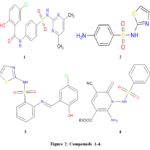 |
Figure 2: Compounds 1-4. |
A series of pyridine-based N-sulphonamides was prepared by Assam and his coworkers. Further antiviral and antibacterial efficacy of the developed compounds has been evaluated. With notable IC50 and CC50 values in which two of the synthesized compounds, 4 and 5, demonstrated a viral decrease of over 50% against HSV-1 and CBV4.Moreover, both the potent compounds 4 and 5 demonstrates inhibitory action on the protein (Hsp90alpha), with IC50 values such as 10.24 µg/ml and 4.48 µg/ml respectively. IC50 values have been determined to be lower when 4 and 5 are combined with acyclovir than when acyclovir is administered alone.
The interaction between compound 4 and 5 and the Hsp90α enzyme’s active region were determined by molecular modelling research. The compounds exhibiting such activity are shown below23.
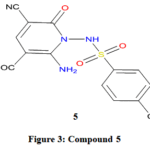 |
Figure 3: Compound 5. |
A series of some novel α-aminophosphonates containing the sulfisoxazole group were prepared by sabry and his colleague’s through microwave reaction. The prepared derivatives were tested on various bacterial species and C. albicans yeast in order to find its antimicrobial potency. Among all synthesized derivatives, compound 6 appeared as the most promising agent, exhibiting potent as well as broad spectrum anti-bacterial activity. The MIC (minimum inhibitory concentration) values for compound 6 and sulfisoxazole against S. typhi were found to be 94.2 and 205.7 μM, respectively, indicating approximately 2.1 times greater potency for compound 6. Additionally, the MIC values for 6 and sulfisoxazole against L. monocytogenes were recorded at 102.8 and 187.0 μM, respectively24.
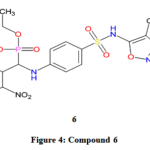 |
Figure 4: Compound 6 |
Hussein developed a series of new sulphonamide carbamates, and the resulting compounds were accessed for its invitro antimicrobial property. Four gram positive (S. aureus, Bacillus subtilis, S. pyogenes, Methicillin – Resistant Staphylococcus aureus) and then three gram negative (Proteus vulgaris, Erwiniacarotovora, and Escherichia coli) bacteria were selected to measure the anti -bacterial activity, whereas a single stain of fungi (C. albicans) was used to measure antifungal activity. Compared to other compounds, compound 8 and 7 shows potent anti-microbial activity towards the selected organisms. Penicillin and Ampicillin and were taken as the standard drugs. The most active compounds were shown below25.
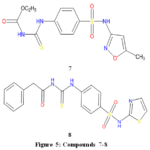 |
Figure 5: Compounds 7-8 |
Bilbao-Ramos et al synthesize some N-benzenesulfonamides of amine substituted rings. The compounds that were synthesized are further evaluated for anti-leishmanial and trypanocial activity. TrypanosomacruziandLeishmaniasppare employed in studying invitro anti-microbial activity. Among synthesized derivatives compounds 9, 10 and 11 exhibit such antimicrobial activity. Compound 9 and 11 shows more potent activity against Leishmania spp. Promastigotes nuclease activity assay were performed so as to investigate the mode of action and interactions of selected sulphonamides with DNA of pUC18 plasmid. The most active compounds exhibiting such activity were shown below26.
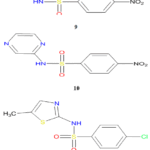 |
Figure 6: Compounds 9-11 |
Singh and coworkers prepared several substituted pyridosulphonamides.The resulting sulphonamides were subsequently tested for their antimicrobial properties. Various strains of bacteria were employed to evaluate the antimicrobial efficacy. Compounds 12, 13, and 14 demonstrated antibacterial property against the bacterial strains utilized in the antimicrobial testing. Screening of the anti- microbial activity was measured using cup plate technique. Standard drugs used were Fluconazole and Co-trimoxazole. The most active compounds were shown below27.
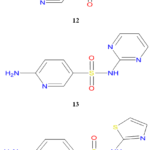 |
Figure 7: Compounds 12-14. |
Ikpa et al. prepared several derivatives of benzothiazole that include sulphonamides. The antibacterial property of the prepared compounds was tested. Agar well diffusion techniques were used in the evaluation of the antibacterial property of the synthesized derivatives. Both gram positive and gram negative bacteria such as S. aureus and E. coli were employed in the assessment of the antibacterial property. Ampicillin was taken as a reference drug. When compared with other compounds, both compounds 15 and 16 have maximum activity against the bacteria used. For the synthesized compounds both zone of inhibition and MIC was tested. MIC of compound 16 was identified as <50(μg/mL) against E.coliand S.aureuswhereas minimum inhibitory concentration of 15 was found to be 50 μg/mL against S.aureus and <50(μg/mL) against E.coli28.
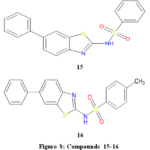 |
Figure 8: Compounds 15-16 |
Baufas et al. prepared some derivatives which include a sulphonamide moiety, which were then accessed for invitro antimicrobial property against both positive and negative strains of bacteria using the dilution technique. Minimum inhibitory concentration against the compounds was investigated. They study was conducted using strains such as E. coli and S. aureus. Among the synthesized derivatives, compounds 17-20 reveal significant activity against several bacterial strains. Compound 17 shows MIC of 2μg/mL as against S. aureus, whereas compounds 18, 19, and 20 have MIC of 32 μg/mL, 256 μg/mL, 512μg/mL respectively. The active compounds were presented below29.
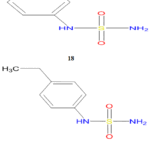 |
Figure 9: Compounds 17-20. |
Argyropoulou et al. synthesized various benzthiazole and thiazole derivatives containing benzenesulfonamides and assessed their antimicrobial properties using the serial double dilution method. In the study strains B. subtilisand S. aureus (gram positive), E. coli (gram negative), C. tropicalisand S. cerevisiae were employed to test antimicrobial property. Standard drugs such as ampicillin, sulfamethoxazole and miconazole are used in their study. With a MIC of 12 μg/mL, compound 21 showed the most antibacterial activity against S. aureusand B. subtilis among all produced derivatives. Furthermore, with minimal inhibitory concentrations of 12 μg/mL and 3 μg/mL, respectively, compound 22 has significant against S. aureusand B. subtilis. Some of the compounds exhibits synergistic effect when combined with trimethoprim in contrast to B.subtilisand also S.aureus. The most potent compounds were shown below30.
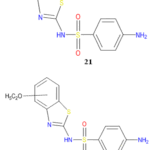 |
Figure 10: Compounds 21-22 |
Several 2-thiouracil-5-sulphonamide derivatives were prepared by Fathalla and his coworkers. Its antimicrobial activities were determined through disc diffusion as well as broth dilution techniques to test the resultant compounds. Many different bacterial strains of both gram negative as well as gram positive nature and also fungi were taken to evaluate the anti-microbial property. Among the prepared derivatives, compounds 23 and 24 exhibited significant anti-bacterial activity, demonstrating MIC of 1.25 μg/L, 412 μg/L and 125 μg/L against B. subtilis, E. coli, S. aureus respectively. In addition to that compound 25 and 26 exhibits antifungal activity against Microsporiumcanis and Sporotrichumschenkii. The most potent compounds were shown below31.
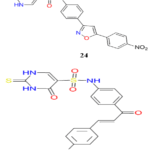 |
Figure 11: Compounds 23-25 |
Abedl Hafez produced a variety of novel sulpha drugs featuring selenium, these were investigated for their ability to inhibit the growth of both gram-positive and gram-negative bacteria. Gram negative bacterial strains like E. coli and S. marcescens have been utilized in their study, along with gram positive strains like P. aeruginosa, B. cereus and S. aureus. Sulfadiazine, sulfadimidine, sulfaacetamide are utilized as standard drug for their study. Among the synthesized compounds, compound 27 exhibited significant antibacterial property towards all bacterial strains. The anti-bacterial efficacy was assessed using a MIC of 10mg/ml. The most active compound was depicted as below32.
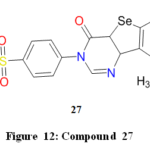 |
Figure 12: Compound 27 Click here to View Figure |
Some series of novel sulphonamides exhibiting antimicrobial activity was prepared by Fahim and Ismael and those compounds are further evaluated for anti-microbial activity. In their research, they employ both gram positive (S. pneumoniae, B. subtilis) and gram negative (E. coli, P. aeruginosa) bacterial strains in addition to three types of fungi (A. fumigatus, Syncephalastrum racemosum and Geotrichum candidum).Among the various compounds prepared, compound 28 demonstrates significant anti-bacterial property towards the bacterial strains used in study. Amphotericin B, Ampicillin and Gentamicin were taken as reference drugs33.
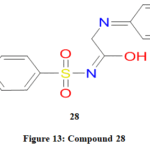 |
Figure 13: Compound 28 |
Onyeije et al developed some series of compounds possessing sulphonamides from branched chain amino acid and the prepared compounds are further subjected to antimicrobial study. E. coli, C. albicans, S. aureus were utilized in their research. Their research indicated that among the synthesized compounds, compound 31 demonstrates significant antifungal (C. albicans) and antibacterial (S. aureus) properties, while potent antibacterial property was exhibited by compounds 29 and 30 against both S. aureusand E. coli respectively. The most active compound were shown below34.
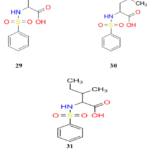 |
Figure 14: Compounds 29-31 |
Rambabu et al prepared some series of heterocyclic compounds having sulphamido moiety and further studied for anti-microbial activity for prepared compounds. The effects of the prepared compounds as anti-bacterial agents were determined by B. subtilisand S. aureus (gram positive) as well as S. typhiand E. coli (gram-negative) bacteria using agar cup plate methods. Compounds 32, 33, 35, 37, and 38 demonstrated significant antimicrobial property against all used bacterial strains. In contrast, compounds 34, 36, 37, and 39 exhibited antifungal effects against both A. nigerand C. albicansspecies. The active compounds are shown below35.
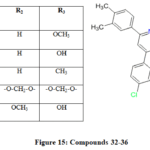 |
Figure 15: Compounds 32-36 |
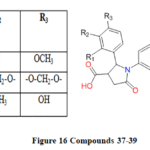 |
Figure 16 Compounds 37-39. |
A number of new aliphatic sulphonamides were prepared by Ozbek and his colleagues. It was subsequently examined for its anti-microbial properties towards multiple bacterial and fungal strains. Different bacteria such as S. aureusand B. cereus (gram positive) and E. coli (gram negative) and also fungal organism such as Candida albicans were included in the study. Disc diffusion and MIC were utilized to determine the assessment. Out of all other compounds, compound 40 exhibited both antifungal and antibacterial activities with MIC of 225,180,315,216,128 µg/mL against the E. coli and B. cereus, C. albicans, S. aureus and L. monocytogenesrespectively. In addition to that compound 41 exhibits potent antifungal activity against fungal strain only as compared to standard drug ketoconazole36.
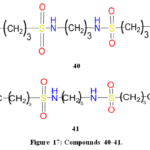 |
Figure 17: Compounds 40-41. |
Abdul Qadir et al, have synthesized several novel sulphonamides and these are then tested anti-bacterial property against gram positive as well as gram negative strains of bacteria including S. aureus, B. subtilis, E. coli, K. pneumoniae. The antibacterial property were evaluated by determining the MIC and zone of inhibition. Both are measured in μg/ml and mm respectively. With the MIC of 7.80 μg/ml, compounds 42 and 43 exhibited significant antibacterial property towards the E. coli in comparison to others. Ciprofloxacin were taken as a standard drug. The most active compounds are shown below37.
Some novel 5-aryl thiopenes possessing sulphonylacetamide were developed by Noreen and his co-workers. Prepared compounds then examined for its antibacterial and antiurease activity by agar well diffusion methods and indophenol method respectively. Among all the prepared compounds, compound 50 exhibits significant antiurease activity having IC50 17.1 μg/mL, while the remaining compounds 44-49, demonstrate antibacterial property towards E. coli, B. subtilis, S. typhi, P. aeruginosa. Ampicillin was utilized as an reference drug. The potent compounds showing antibacterial activity were mentioned below38.
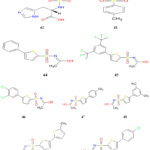 |
Figure 18: Compounds 42-50 |
Several effective derivatives of sulphonamides were prepared by Alsughayer and his coworkers. The derivatives that are prepared were examined for antibacterial property. Further antibacterial property was assessed using the Minimum Inhibitory Concentration method. Among all synthesized derivatives, compound 51 has potent activity on S.aureus and E.coli and compound 52 shows effect on E.coli whereas compound 53 shows potent effect against P.aeruginosa and B.subtilis39.
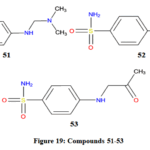 |
Figure 19: Compounds 51-53 |
Conclusion
Sulphonamides and their derivatives are a milestone in the sphere of antimicrobial therapy connecting the past and the present. They have structural flexibility that can be customized with changes that boost their activity against resistant strains. Despite the challenges posed by the resistance, new sulphonamide hybrids and nano-formulations are promising agents that overcome the resistance hurdles. They have antibacterial, antifungal, antiviral, and antiparasitic properties which should be further investigated beyond the traditional applications. With their nobled history, sulphonamides still play a crucial, although changing, role in the antimicrobial armamentarium. Not only is their direct efficacy highlighted in this review but also the extraordinary structural plasticity that has enabled the preparation of a wide range of derivatives with improved potency, spectrum and/or reduced toxicity. With antibiotic resistance growing ever higher, it is possible that reinvented sulphonamides can still become the unsung heroes in the antimicrobial armamentarium and show that even thoroughly investigated scaffolds have hidden potential.
Acknowledgement
The author would like to express sincere gratitude to Department of pharmaceutical chemistry for providing the necessary resources and support for the preparation of this review. We also acknowledge the contributions of colleagues and peers who offered valuable feedback and insights during the development of this manuscript. No specific funding was received for this work.
Funding Sources
The author(s) received no financial support for the research, authorship, and/or publication of this article.
Conflict of Interest
The author(s) do not have any conflict of interest.
Data Availability Statement
This statement does not apply to this article.
Ethics Statement
This research did not involve human participants, animal subjects, or any material that requires ethical approval.
References
- Shepherd, R. G. Sulfanilamides and Other p-Aminobenzoic Acid Antagonists. In Medicinal Chemistry; Burger, A., Ed.; Vol. 1; Wiley Interscience: Toronto, 1969; 255.
- 2.Varagic, V. M.; Milosevic, M. Farmakologija; MPM: Beograd, 2009.
- Gaffer, H. E. Antimicrobial Sulphonamide Azo Dyes. Color. Technol.2019, 135 (6), 484–500.
CrossRef - Kołaczek, A.; Fusiarz, I.; Ławecka, J.; Branowska, D. Biological Activity and Synthesis of Sulfonamide Derivatives: A Brief Review. Curr. Issues Pharm. Med. Sci.2014, 68 (7), 620–628.
- Elmongy, E. I.; Alanazi, W. S.; Aldawsari, A. I.; Alfaouri, A. A.; Binsuwaidan, R. Antimicrobial Evaluation of Sulfonamides after Coupling with Thienopyrimidine Coplanar Structure. Pharmaceuticals2024, 17 (2), 188.
CrossRef - Ugwu, D. I.; Eze, F. U.; Ezeorah, C. J.; et al. Synthesis, Structure, Hirshfeld Surface Analysis, Non-Covalent Interaction, and In Silico Studies of 4-Hydroxy-1-[(4-Nitrophenyl)Sulfonyl]Pyrrolidine-2-Carboxylic Acid. J. Chem. Crystallogr.2023, 53, 386–399.
CrossRef - Raiguru, B. P.; Panda, J.; Mohapatra, S.; Nayak, S. Recent Developments in the Synthesis of Hybrid Antimalarial Drug Discovery.Bioorg.Chem.2023, 139, 106706.
CrossRef - Chen, X.; Leng, K. P. J.; Rakesh, N.; Darshini, T.; Shubhavathi, H. K.; Vivek, N. M.; Qin, H. L. Synthesis and Molecular Docking Studies of Xanthone Attached Amino Acids as Potential Antimicrobial and Anti-Inflammatory Agents. Med. Chem. Commun.2017, 8, 1706–1719.
CrossRef - Chang, Q.; Wang, W.; Regev-Yochay, G.; Lipsitch, M.; Hanage, W. P. Antibiotics in Agriculture and the Risk to Human Health: How Worried Should We Be? Evol. Appl.2015, 8, 240–247.
CrossRef - Palumbi, S. R. Humans as the World’s Greatest Evolutionary Force. Science2001, 293, 1786–1790.
CrossRef - Qin, H. L.; Liu, J.; Fang, W. Y.; Ravindar, L.; Rakesh, K. P. Indole-Based Derivatives as Potential Antibacterial Activity against Methicillin-Resistance Staphylococcus aureus (MRSA). Eur. J. Med. Chem.2020, 194, 112245.
CrossRef - Wang, M.; Rakesh, K. P.; Leng, J.; Fang, W. Y.; Ravindar, L.; Gowda, D. C.; Qin, H. L. Amino Acids/Peptides Conjugated Heterocycles: A Tool for the Recent Development of Novel Therapeutic Agents. Bioorg. Chem.2018, 76, 113–129.
CrossRef - Xu, M.; Wu, P.; Shen, F.; Ji, J.; Rakesh, K. P. Chalcone Derivatives, and Their Antibacterial Activities: Current Development. Bioorg.Chem.2019, 91, 103133.
CrossRef - Zha, G. F.; Rakesh, H. M.; Manukumar, C. S. S.; Long, S. Pharmaceutical Significance of Azepane-Based Motifs for Drug Discovery: A Critical Review. Eur. J. Med. Chem.2019, 162, 465–494.
CrossRef - Li, C.; Sridhara, M. B.; Rakesh, K. P.; Vivek, H. K.; Manukumar, H. M.; Shantharam, C. S.; Qin, H. L. Multi-Targeted Dihydrazones as Potent Biotherapeutics. Bioorg. Chem.2018, 81, 389–395.
CrossRef - Zha, G. F.; Leng, J.; Darshini, N.; Shubhavathi, T.; Vivek, H. K.; Asiri, A. M.; Marwani, H. M.; Rakesh, K. P.; Mallesha, N.; Qin, H. L. Synthesis, SAR and Molecular Docking Studies of Benzo[d]thiazolehydrazones as Potential Antibacterial and Antifungal Agents. Bioorg. Med. Chem. Lett.2017, 27, 3148–3155.
CrossRef - Suree, N.; Jung, M. E.; Clubb, R. T. Recent Advances towards New Anti-Infective Agents that Inhibit Cell Surface Protein Anchoring in Staphylococcus aureus and Other Gram-Positive Pathogens. Mini-Rev. Med. Chem.2007, 10, 991–1000.
CrossRef - Mohammed, Y. H. E.; Manukumar, H. M.; Rakesh, K. P.; Karthik, C. S.; Mallu, P.; Qin, H. L. Vision for Medicine: Staphylococcus aureus Biofilm War and Unlocking Keys for Anti-Biofilm Drug Development. Microb.Pathog.2018, 123, 339–347.
CrossRef - Zhang, X.; Manukumar, H. M.; Rakesh, K. P.; Karthik, C. S.; Prasad, H. S. N.; Swamy, S. N.; Mallu, P.; Mohammed, Y. H. E.; Qin, H. L. Role of BPC@AgNPs in Bap-Dependent Multicellular Behavior of Clinically Important MRSA Biofilm Adherence: A Key Virulence Study. Microb.Pathog.2018, 123, 275–284.
CrossRef - Zhang, X.; Manukumar, H. M.; Rakesh, K. P.; Qin, H. L. Master Mechanisms of Staphylococcus aureus: Consider Its Excellent Protective Mechanisms Hindering Vaccine Development. Microbiol. Res.2018, 212–213, 59–66.
CrossRef - Rakesh, K. P.; Manukumar, H. M.; Srivastava, S.; Chen, X.; Long, S.; Karthik, C. S.; Mallu, P.; Qin, H. L. Combating a Master Manipulator: Staphylococcus aureusImmunomodulatory Molecules as Targets for Combinatorial Drug Discovery. ACS Comb. Sci.2018, 20, 681–693.
CrossRef - El-Qaliei, M. I. H.; El-Gaby, M.; Ammar, Y. A.; Ali, M. A.; Hussein, F. M.; Faraghally, F. A. Sulfonamides: Synthesis and Recent Applications in Medicinal Chemistry. Egypt. J. Chem.2020, 63 (12), 5289–5327.
- Krátký, M.; Vinšová, J.; Volková, M.; Buchta, V.; Trejtnar, F.; Stolaříková, J. Antimicrobial Activity of Sulfonamides Containing 5-Chloro-2-Hydroxybenzaldehyde and 5-Chloro-2-Hydroxybenzoic Acid Scaffold. Eur. J. Med. Chem.2012, 50, 433–440.
CrossRef - Azzam, R. A.; Elsayed, R. E.; Elgemeie, G. H. Design and Synthesis of a New Class of Pyridine-Based N-Sulfonamides Exhibiting Antiviral, Antimicrobial, and Enzyme Inhibition Characteristics. ACS Omega2020, 5 (40), 26182–26194.
CrossRef - Sabry, E.; Mohamed, H. A.; Ewies, E. F.; Kariuki, B. M.; Darwesh, O. M.; Bekheit, M. S. Microwave-Assisted Synthesis of Novel Sulfonamide-Based Compounds Bearing α-Aminophosphonate and Their Antimicrobial Properties. J. Mol. Struct.2022, 1266, 133-553.
CrossRef - Hussein, M. F. New Sulfonamide Hybrids: Synthesis, In Vitro Antimicrobial Activity and Docking Study of Some Novel Sulfonamide Derivatives Bearing Carbamate/Acyl-Thiourea Scaffolds. Mediterr. J. Chem.2018, 7 (5), 370–385.
CrossRef - Bilbao-Ramos, P.; Galiana-Roselló, C.; Dea-Ayuela, M. A.; González-Alvarez, M.; Vega, C.; Rolón, M.; et al. Nuclease Activity and Ultrastructural Effects of New Sulfonamides with Anti-Leishmanial and Trypanocidal Activities. Parasitol. Int.2012, 61 (4), 604–613.
CrossRef - Singh, S.; Chawla, P.; Chawla, V.; Saraf, S. K. Syntheses and Characterization of Some Novel Substituted Pyridosulfonamide Derivatives as Antimicrobial Agents. J. Chem. Pharm. Res.2013, 196–200.
- Ikpa, C. B. C.; Onoja, S. O.; Okwaraji, A. O. Synthesis and Antibacterial Activities of Benzothiazole Derivatives of Sulphonamides. Acta Chem. Malays.2020, 4 (2), 55–57.
CrossRef - Boufas, W.; Dupont, N.; Berredjem, M.; Berrezag, K.; Becheker, I.; Berredjem, H.; et al. Synthesis and Antibacterial Activity of Sulfonamides: SAR and DFT Studies. J. Mol. Struct.2014, 1074, 180–185.
CrossRef - Argyropoulou, I.; Geronikaki, A.; Vicini, P.; Zani, F. Synthesis and Biological Evaluation of SulfonamideThiazole and Benzothiazole Derivatives as Antimicrobial Agents. Arkivoc2009, (6), 89–102.
CrossRef - Fathalla, O. A.; Awad, S. M.; Mohamed, M. S. Synthesis of New 2-Thiouracil-5-Sulphonamide Derivatives with Antibacterial and Antifungal Activity.Arch. Pharm. Res.2005, 28 (11), 1205–1212.
CrossRef - Abdel-Hafez, Sh. H. Synthesis of Novel Selenium Containing Sulfa Drugs and Their Antibacterial Activities. Russ. J. Bioorg. Chem.2010, 36 (3), 370–376.
CrossRef - Fahim, A.; Ismael, E. Synthesis, Antimicrobial Activity and Quantum Calculations of Novel Sulphonamide Derivatives. Egypt. J. Chem.2019, 62 (8), 1427–1440.
- Onyeije, U. C.; Onugha, C. F.; Egbujor, M. C.; Emeruwa, C. N.; Amasiat, I. S. Synthesis, Characterisation and Antimicrobial Activities of Sulphonamides from Branched Chain Amino Acids. Chem. Sci. Rev. Lett.2023, 6 (11), 297–301.
- Nunna, R.; Ramachandran, D.; Modi, V. B.; Goswami, K. J. Synthesis, Characterization and Antimicrobial Activity of Some Novel Heterocyclic Compounds Having Sulphamido Moiety. Chem. Sci. Trans.2014, 3 (2), 486–493.
- Özbek, N.; Katırcıoğlu, H.; Karacan, N.; Baykal, T. Synthesis, Characterization and Antimicrobial Activity of New Aliphatic Sulfonamide. Bioorg. Med. Chem.2007, 15 (15), 5105–5109.
CrossRef - Abdul Qadir, M.; Ahmed, M.; Iqbal, M. Synthesis, Characterization, and Antibacterial Activities of Novel Sulfonamides Derived through Condensation of Amino Group Containing Drugs, Amino Acids, and Their Analogs. Biomed. Res. Int.2015, 1–7.
CrossRef - Noreen, M.; Rasool, N.; Gull, Y.; Zubair, M.; Mahmood, T.; Ayub, K.; et al. Synthesis, Density Functional Theory (DFT), Urease Inhibition and Antimicrobial Activities of 5-Aryl Thiophenes Bearing Sulphonylacetamide Moieties. Molecules2015, 20 (11), 19914–19928.
CrossRef - Alsughayer, A.; Elassar, A. Z. A.; Mustafa, S.; Sagheer, F. A. Synthesis, Structure Analysis and Antibacterial Activity of New Potent Sulfonamide Derivatives. J. Biomater. Nanobiotechnol.2011, (2), 144–149.
 PlumX:
  Views: 968 Views
  PDF Downloads: 1076
 Accepted on: 01 Mar 2026
Second Review by: Dr. Vinod Sisodiya
Final Approval by: Dr. Abdelwahab Omri


ISSN Online: 2231-5039