Scientific Impacts and Chemistry of Climacteric Fruit: Current Knowledge and Future Prospects
R. Hema Krishna
Department of Chemistry, Amrita Sai Institute of Science and Technology, Bathinapadu, Andhra Pradesh, India
Corresponding Author E-mail: hkravuri32@gmail.com
DOI : http://dx.doi.org/10.13005/ojc/410517
Download this article as:

The aim of this manuscript is to study the scientific impacts and Chemistry of climacteric fruit (Banana): Current knowledge and future prospects. Bananas are a popular and nutritious fruit that come from the Musa plant species. Bananas are climacteric fruits, meaning they continue to ripen after being harvested .They are typically yellow when ripe, though they can also be green when unripe or even red in some varieties. Bananas are known for being a good source of vitamins (especially vitamin C and vitamin B6), minerals (like potassium and magnesium), and dietary fiber. Bananas are typically eaten raw but can also be used in various dishes such as smoothies, baked goods, or fried for a crunchy snack. They're especially known for being energy-boosting because of their high carbohydrate content, mostly in the form of natural sugars like glucose, fructose, and sucrose. Overall, bananas offer a wide range of health benefits, making them a convenient, nutritious food to include in your daily diet. Bananas have a range of scientific impacts across various fields, from agriculture to nutrition and even biotechnology. This review aims to provide comprehensive insights for readers, enabling them to identify research on the future prospects of bananas with significant potential for growth in areas such as biotechnology, sustainability, and the development of new banana-based products. Advances in genetic engineering and farming techniques hold the promise of creating more resilient banana crops, while innovative uses of banana byproducts could transform the banana industry in exciting new directions.
KEYWORDS:Bananas; Chemistry of Banana; Climacteric fruit; Health benefits; Panama disease; Side effects
Introduction
More than 300 types of are cultivated throughout the world. These are grouped according to the number of chromosome sets present and the proportion of genomes of M. acuminata (A) and M. balbisiana (B). The global banana market, valued at approximately USD 25 billion, is indeed a significant industry with impressive growth projections. The 4.5% compound annual growth rate (CAGR) between 2022 and 2027 suggests that the banana market is on a steady upward trajectory. The Cavendish variety, which dominates international trade, has become the go-to banana due to its resilience in transport and its ability to be grown in large-scale commercial operations, though it faces growing concerns regarding sustainability and disease (like Panama disease).1,2 India, as the largest producer of bananas, plays a crucial role in the supply chain, contributing a large share of bananas to both domestic consumption and export markets. Despite this, much of the global banana trade is concentrated in a few countries like Ecuador, the Philippines, and Costa Rica, which export the bulk of Cavendish bananas. The industry’s growth could be influenced by several factors, such as increasing demand for healthy snacks, more international trade, and innovations in banana farming and distribution, possibly addressing challenges like climate change and disease. Panama disease, also known as Fusarium wilt, is a fungal disease caused by the soil-borne fungus Fusarium oxysporum f.sp. cubense (Foc). This disease has had a significant impact on the banana industry; especially since it affects the most widely grown banana variety in the world was the Cavendish banana.2-4
Insects inside a banana.
It’s usually because the fruit was infested by tiny pests before or during harvest. Some common insects that might infest bananas include:
Banana weevils: These small beetles burrow into the fruit, often causing visible damage. The larvae can sometimes be found inside the banana.
Fruit flies: They are attracted to overripe fruit and can lay eggs in the banana. The larvae, or maggots, might develop inside the fruit.
Ants: In rare cases, ants may be found inside the banana if they have made a nest in it, but they generally don’t harm the fruit.
Mealy bugs or aphids: These tiny pests could also infest bananas, although they’re more likely to appear on the plant rather than inside the fruit itself.
While it might seem unsettling, the insects typically don’t pose a major health risk, as they are generally small and won’t cause harm once the fruit is peeled. If you spot any insects or damage, it’s best to discard that banana and check others for any issues.4,5
Panama disease
Panama disease a devastating disease of bananas caused by the soil-inhabiting fungus species Fusarium oxysporum forma specialis cubense. A form of fusarium wilt, Panama disease has shown in figure 1, is widespread throughout the tropics and can be found wherever susceptible banana cultivars are grown. Notoriously difficult to control, the disease decimated global plantations of the Gros Michel banana in the 1950s and ’60s, which had dominated the commercial industry until its downfall. Its replacement, the modern Cavendish, has been threatened with a strain of the disease known as Tropical Race (TR) 4 since the 1990s; in 2019 TR 4 was confirmed in Colombia, marking the first appearance of the strain in the Americas.6
The Fusarium fungus invades young roots or root bases, often through wounds. Some infections progress into the rhizome (root like stem), followed by rapid invasion of the rootstock and leaf bases. Spread occurs through vascular bundles, which become discolored brown or dark red, and finally purplish or black. The outer edges of older leaves turn yellow. Within a month or two, all but the youngest leaves turn yellow, wilt, collapse, and hang downward, covering the trunk (pseudostem) with dead brown leaves. All aboveground parts are eventually killed, although fresh shoots may form at the base. These later wilt and the entire plant dies, usually within several years.7 The Fusarium fungus then continues to thrive in surrounding soil, preventing the success of future plantings. Although the best long-term control is to breed and grow highly resistant cultivars, most bananas are sterile and are grown clonally, making the development of new, resistant cultivars difficult. The pathogen cannot be fully controlled with soil fungicides or fumigants.8,9 Here’s a breakdown of the disease and its impact:
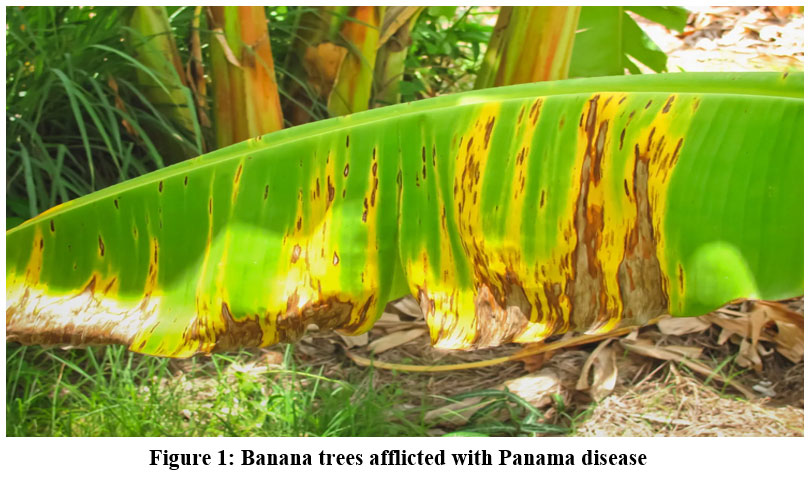 |
Figure 1: Banana trees afflicted with Panama disease |
Types of Panama Disease
Tropical Race 1 (TR1): The strain that devastated the Gros Michel variety in the mid-20th century, a banana cultivar that was once dominant in global trade before it was replaced by the Cavendish due to the disease.
Tropical Race 4 (TR4): The more aggressive and more recent strain of Panama disease, which specifically threatens Cavendish bananas. TR4 has spread to several major banana-producing regions, including Southeast Asia, Australia, and parts of Africa and Central America.10
Symptoms
Initially, Panama disease affects the roots of banana plants, causing wilting and yellowing of the leaves. As the disease progresses, the plant becomes stunted and eventually dies.
The fungus attacks the vascular system of the banana plant, preventing the plant from taking up water and nutrients, leading to its collapse.11
Spread and Impact
Soil-borne Nature: The fungus can persist in the soil for decades, making it very difficult to control once it has infected a farm. It spreads through soil, water, infected plant material, and agricultural tools.
Economic Threat: As the Cavendish banana is the dominant export variety, Panama disease poses a significant risk to global banana trade. Its spread threatens the livelihoods of millions of people who depend on banana farming and the multibillion-dollar global banana industry.
Loss of Crop: Infected farms often need to be abandoned, resulting in substantial financial losses. This is particularly concerning for countries that rely heavily on banana exports.12
Control and Prevention
Quarantine Measures: Preventing the movement of infected soil and plant material is crucial. Efforts to implement strict quarantine measures in affected regions are ongoing, but the fungus can spread even with these measures in place.
Genetic Resistance: Research is being conducted into developing banana varieties that are resistant to Panama disease, especially to Tropical Race 4. However, developing resistant varieties is a long-term and challenging process.13
Soil Management: Techniques like crop rotation, soil sterilization, and careful management of irrigation systems are being tested to help manage the disease’s spread.
Future of the Banana Industry
The continued threat of Panama disease raises important questions about the future sustainability of the banana industry. As Cavendish bananas dominate global trade, finding a long-term solution, whether through disease-resistant crops or improved farming techniques, will be vital for ensuring the continued availability of bananas for global consumers.14 In short, Panama disease is a major threat to the banana industry and with the Cavendish banana being so susceptible, the industry is faced with challenges of both maintaining production and addressing the potential spread of the disease. Research into alternative banana cultivars, including those with genetic resistance, is crucial for safeguarding the global banana market.15
Banana metabolism
Banana metabolism refers to the biochemical processes that occur in the banana plant (and the fruit itself) as it grows and ripens. These processes involve several key steps that influence the development, nutritional content, and eventual ripening of the banana. Here’s a brief overview of the main aspects of banana metabolism:
Photosynthesis
Like all plants, bananas rely on photosynthesis to produce energy. During this process, the banana plant absorbs sunlight through its leaves and converts carbon dioxide and water into glucose (a type of sugar) and oxygen. This glucose serves as the primary energy source for the plant’s growth, including the development of the bananas.16
Carbohydrate Metabolism
Bananas are known for their high carbohydrate content, especially starch. During the ripening process, the starch in the banana undergoes a transformation into simpler sugars such as glucose, sucrose, and fructose. This process is facilitated by enzymes like amylase, which break down the starch. As a result, the banana becomes sweeter as it ripens.17
Ripening Process
The ripening of bananas involves several hormonal and enzymatic changes:
Ethylene: A plant hormone that plays a key role in the ripening of bananas. Ethylene triggers the conversion of starches to sugars, softens the fruit, and changes the color of the peel (from green to yellow).
Respiration: Bananas undergo increased respiration as they ripen, meaning they take in more oxygen and release carbon dioxide. This increase in metabolism helps facilitate the breakdown of starches and the production of sugars.
Enzymatic Changes: Various enzymes such as amylase (which breaks down starches) and pectinase (which softens the fruit by breaking down pectin) are active during ripening.18
Nutrient Storage and Synthesis
Bananas store nutrients such as potassium, vitamin C, and fiber in the fruit. As the fruit ripens, the levels of some nutrients, like vitamin C, can decrease, while sugars and other components like antioxidants may increase.
Protein and Fat Metabolism
Bananas are low in protein and fat, but the small amounts they contain are important for growth. Proteins are synthesized in the plant to support new tissue growth, while the fat metabolism is generally low compared to other types of fruits.19
Post-Harvest Metabolism
After bananas are harvested, their metabolism continues to influence their shelf life and quality. If they are stored at room temperature, they will continue to ripen due to the production of ethylene. Refrigeration slows down the ripening process but can cause the peel to darken. In summary, banana metabolism involves the production and conversion of sugars, the breakdown of starch, and various enzymatic processes that result in the banana ripening and becoming sweeter.
Scientific impacts of banana.
Bananas have a range of scientific impacts across various fields, from agriculture to nutrition and even biotechnology. Here are some of the key scientific impacts of bananas:
Agriculture and Crop Science
Genetics and Breeding
Bananas are a major crop in many tropical and subtropical regions, and researchers have studied the genetics of bananas to improve yield, disease resistance, and fruit quality. The most commonly cultivated bananas are triploid (having three sets of chromosomes), which makes them sterile and unable to reproduce through seeds. This has led to breeding challenges and reliance on cloning (through suckers or tissue culture).20
Banana Disease Resistance
Bananas are susceptible to diseases like Panama disease (caused by the Fusarium oxysporum fungus) and Black Sigatoka (a fungal disease). Scientists are working on breeding or genetically engineering banana plants that are resistant to these diseases to ensure stable production and food security.
Banana Plant Biotechnology
Advances in biotechnology, such as genetic modification (GM) and gene editing, are being used to create banana varieties that are more resistant to disease, drought, and other stressors. For example, genetically modified bananas have been developed to produce higher levels of vitamin A (pro-vitamin A) to combat nutrient deficiencies in regions where bananas are a staple food.21
Nutrition and Health Sciences
Nutritional Value
Bananas are an important source of essential nutrients, including potassium, vitamin C, vitamin B6, fiber, and magnesium. The high potassium content is particularly notable because potassium helps maintain proper heart function, nerve function, and muscle function. Research on bananas’ health benefits has emphasized their role in reducing the risk of high blood pressure and supporting cardiovascular health.
Digestive Health
The dietary fiber in bananas, particularly pectin, helps regulate digestion and promotes gut health. Bananas are often recommended as a food to help with digestive disorders like gastrointestinal reflux disease (GERD), as they are gentle on the stomach.
Prebiotic Effects
Bananas contain resistant starch (in unripe bananas) and fructooligosaccharides (FOS), both of which act as prebiotics. Prebiotics are substances that support the growth of beneficial gut bacteria, which can improve digestion, immune function, and overall health.22
Climate and Environmental Science
Banana Plant and Soil Interaction
The banana plant can have a positive impact on soil structure, as its large root system helps prevent erosion and promotes soil aeration. Bananas are often grown in agro forestry systems, where they help maintain biodiversity and reduce the environmental impact of monoculture farming.
Carbon Footprint and Sustainability
While bananas are an important agricultural commodity, their environmental impact, especially in terms of transportation (due to global export), has been a subject of study. Researchers are working on finding ways to make banana farming more sustainable, such as using organic farming methods, reducing pesticide use, and improving water efficiency.23
Economic Science
Global Trade and Economics
Bananas are one of the most traded fruits in the world. Research into the economics of banana production and trade has helped inform policies related to labor, fair trade, and sustainability. Issues such as the economic dependence of certain countries on banana exports (e.g., Ecuador, the Philippines, and Costa Rica) are critical to understanding global agricultural markets and the impact of international trade agreements.
Biotechnology and Genetic Engineering
Banana Genome Research
The banana genome has been sequenced to better understand its genetic makeup, which is crucial for breeding programs aimed at improving bananas for better resistance to diseases, improved yield, and enhanced nutritional quality. Sequencing the genome also helps researchers develop bananas with enhanced properties such as improved resistance to stress and better ripening control.24
Banana-Derived Products
The banana plant has more uses than just the fruit. Research has explored the potential of banana plants as a source of materials like biodegradable plastics, fibers for textiles, and even bio-fuels. By using parts of the banana plant that are usually discarded, researchers are developing sustainable, eco-friendly products.25
Food Science
Banana Ripening Process
The process of ripening bananas involves complex biochemical changes, including the breakdown of starches into sugars, the production of ethylene gas, and the softening of the fruit due to the breakdown of pectin. Understanding the ripening process is crucial for improving the shelf life and quality of bananas during transport and storage.
Banana Flour and Gluten-Free Products
As a gluten-free food, bananas (particularly green bananas) are being studied for their potential to make gluten-free flours and other products. Green banana flour, which is rich in resistant starch, has gained attention for its potential health benefits and as an alternative to traditional flours in baking and cooking.26
Cultural and Psychological Impact
Food Security
Bananas are a staple food in many parts of the world and have an important role in ensuring food security in tropical and subtropical countries. The banana plant’s ability to grow in diverse environments and provide food year-round has significant implications for nutrition in these regions.27
Psychological and Social Impact
Bananas have a positive psychological impact in many societies due to their widespread availability, low cost, and pleasant taste. They are often associated with comfort and are commonly given to children or used in many traditional recipes.28
Innovative Uses in Medicine
Banana Peel Extracts
Researchers have explored the medicinal properties of banana peels, which contain antioxidants, antimicrobial properties, and nutrients that may contribute to various health benefits. Studies have examined the potential for banana peel extracts to aid in wound healing, reduce cholesterol, and improve skin health.
Types of bananas
There are several types of bananas, each varying in size, flavor, and texture. Here’s an overview of the main types:
Cavendish Banana (The Common Banana)
Appearance: Long, yellow with smooth skin.
Flavor: Sweet and mild.
Texture: Soft, creamy when ripe.
Uses: This is the most widely available type of banana in grocery stores worldwide. It’s great for eating fresh, in smoothies, or for baking (like banana bread).
Origin: Primarily grown in tropical regions like Central and South America.
Plantain
Appearance: Larger, thicker, and more rigid than the Cavendish. They are typically green when unripe and turn yellow to black when fully ripe.
Flavor: Less sweet than the Cavendish banana and starchier when green. When ripe, they can develop a sweeter, richer taste.
Texture: Firm, even when ripe.
Uses: Plantains are often cooked before eating, whether fried, boiled, or baked. They are popular in many African, Caribbean, and Latin American cuisines.
Ripening: Plantains are best used when they’re fully ripe (yellow with black spots) for sweetness or when green for a more starchy texture.29,30
Red Banana
Appearance: Smaller and reddish-purple skin, turning slightly brown when ripe.
Flavor: Sweet, but with a slight raspberry or strawberry-like flavor.
Texture: Creamy and soft when ripe.
Uses: Can be eaten raw, in smoothies, or baked. Red bananas are less common but prized for their unique taste and are often found in specialized markets.
Origin: Commonly grown in Southeast Asia, Central America, and parts of Africa.31
Apple Banana (or Manzano Banana)
Appearance: Smaller and thicker with a distinctive, stubby shape. The skin is typically yellow when ripe, often with some spots.
Flavor: A sweet, apple-like flavor with hints of strawberry.
Texture: Creamy and smooth, with a slightly firmer bite than the Cavendish.
Uses: Great for snacking, smoothies, or in fruit salads. These are particularly popular in Latin American and Pacific Island countries.
Origin: Grown in Central and South America, and parts of Southeast Asia.32,33
Burro Banana
Appearance: Shorter and more squat with a square shape and a thick, greenish-yellow skin when ripe.
Flavor: Tart and slightly tangy, with a lemony flavor.
Texture: Firm and creamy with a unique, dense texture.
Uses: Often eaten raw when fully ripe, but can also be cooked. Burro bananas are great in savory dishes, as they add a zesty contrast.
Origin: Commonly grown in Central and South America.34
Gold finger Banana
Appearance: Similar in size to the Cavendish but with a thinner, smoother peel. It has a yellow skin with a green tint when unripe.
Flavor: Mildly sweet and less tangy than some other types.
Texture: Firm, even when ripe.
Uses: Often used in the same way as Cavendish bananas, such as in baking, smoothies, and eating raw. They’re a great all-purpose banana.
Origin: Developed as a hybrid in Central America and the Caribbean.35
Blue Java Banana (Ice Cream Banana)
Appearance: Slender and blue-silver in color when unripe, turning silvery-gray when fully ripe.
Flavor: Very sweet with a flavor reminiscent of vanilla ice cream.
Texture: Creamy, often compared to the texture of ice cream when frozen.
Uses: This banana is often used in desserts, smoothies, or as a frozen treat (it’s even called the “ice cream banana” for this reason).
Origin: Native to Southeast Asia, but increasingly grown in tropical regions worldwide.36
Manzano Banana (or Apple Banana)
Appearance: Small, stubby bananas with a slight bend.
Flavor: Sweet with apple-like and berry-like notes.
Texture: Firm yet tender when ripe.
Uses: Popular in smoothies, fruit salads, and eaten raw as a snack.
Origin: Grown in Central America, parts of Asia, and the Philippines.37
Red Dacca Banana
Appearance: Similar to the Red Banana but slightly larger.
Flavor: Sweet, with a richer, almost caramel-like flavor.
Texture: Dense and creamy when ripe.
Uses: Mostly eaten fresh, in smoothies, or desserts.
Origin: Found in parts of Africa and Asia.38
Key Differences between Types
Taste: While most bananas are sweet, varieties like plantains and Burro bananas are less sweet and more starchy or tangy.
Texture: Some bananas, like the Cavendish and Red bananas, have a soft, creamy texture, while others like Plantains and Burro bananas have firmer, denser textures that make them ideal for cooking.
Ripening and Usage: Some bananas (like the Cavendish) are best eaten fresh, while others (like plantains) are typically cooked, and some (like Blue Java) are popular for their dessert-like qualities.
Key components of a Banana
Bananas are made up of several key components that contribute to their nutritional value. Here’s a breakdown of the typical composition of a medium-sized banana (about 118 grams):
Macronutrients
Carbohydrates (approx. 27 grams): Natural Sugars (glucose, fructose, and sucrose) – around 14 grams. Dietary Fiber – about 3 grams, which helps with digestion,Protein – around 1.3 grams, Fat – about 0.3 grams. Bananas have very little fat, making them a low-fat fruit.
Vitamins and Minerals
Vitamin C – around 10% of the daily recommended intake. It’s an antioxidant and supports immune function.
Vitamin B6 – a significant amount, around 20-25% of the daily intake. It aids in metabolism and brain function.
Potassium – about 400-450 mg, which is roughly 10% of the recommended daily intake. Potassium helps regulate blood pressure and supports heart function.
Magnesium – around 32 mg. Important for muscle function and energy production.
Manganese – small but notable amounts, essential for metabolism and bone health.
Folate – a small amount, which supports cell function and DNA synthesis.39
Water Content
Bananas are made up of about 74% water, which contributes to their refreshing texture and hydrating properties. Other Compounds:
Antioxidants like dopamine and catechins, which help neutralize harmful free radicals in the body.
Tannins and other phenolic compounds, which contribute to the fruit’s antioxidant properties.40
Ripening Stages of Banana
Bananas also contain resistant starch when unripe, which functions as a pre biotic to support gut health. This composition makes bananas a great, balanced source of energy, along with a good variety of vitamins and minerals. Bananas go through several distinct ripening stages, and each stage impacts the fruit’s taste, texture, and nutritional properties.41 Here’s a breakdown of the typical ripening stages of a banana has shown in figure 2:
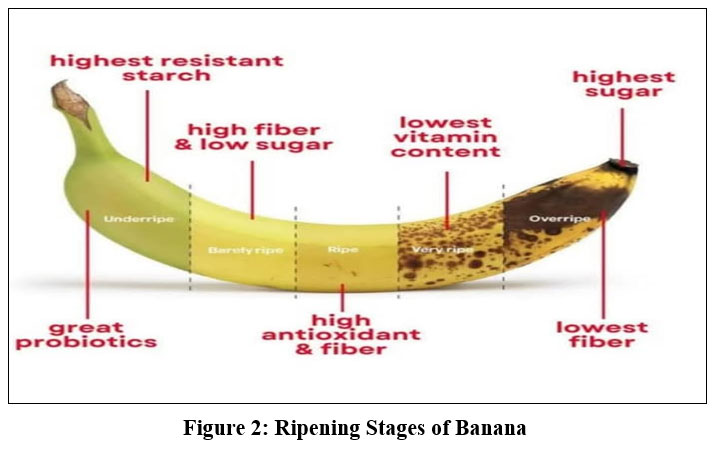 |
Figure 2: Ripening Stages of Banana. |
Green (Under ripe) Stage
Appearance: The banana is fully green and firm.
Texture: Very firm and starchy, not sweet.
Taste: Bitter or flavorless.
Nutritional Content: High in resistant starch, which is not easily digestible, but can be beneficial for gut health.
Uses: Often used in cooking or frying (e.g., plantains) or allowed to ripen further.42
Breaker Stage (Early Yellow Stage)
Appearance: The banana begins to show small hints of yellow, but still has a lot of green.
Texture: Slightly firmer than ripe bananas.
Taste: The fruit starts to become a bit sweeter but still has a starchier taste.
Nutritional Content: The starch is beginning to convert into sugars, but still contains a good amount of resistant starch.
Uses: This stage is often not used much for fresh eating but is an early indicator of ripening.
Yellow with Some Green (Ripe but Not Fully) Stage
Appearance: The banana is mostly yellow with some green at the ends or top.
Texture: Softer, more palatable but still a bit firm.
Taste: Sweetness is more noticeable, and the flavor is beginning to develop.
Nutritional Content: The banana has begun to convert starch into sugar, making it more digestible.
Uses: Ideal for smoothies, breakfast, or snacking.43
Fully Ripe (Yellow) Stage
Appearance: The banana is fully yellow with no green left.
Texture: Soft and easily mashable. The banana is sweet and creamy.
Taste: Very sweet with a mild, pleasant flavor.
Nutritional Content: Higher sugar content (fructose, glucose, and sucrose). The starch has mostly converted to sugars, making it easier to digest.
Uses: Great for fresh eating, smoothies, baking (like banana bread), and other recipes.44
Overripe (Spotted or Brown) Stage
Appearance: The banana has brown spots or is fully brown/black.
Texture: Very soft and mushy, sometimes even liquefied.
Taste: Intensely sweet, with a very soft texture.
Nutritional Content: Very high sugar content; the starch has almost completely turned into sugars.
Uses: Overripe bananas are perfect for baking (especially banana bread or muffins), smoothies, or as a natural sweetener for recipes.
Blackened (Overripe and Decaying) Stage
Appearance: The banana is mostly black and may appear shriveled or discolored.
Texture: Very mushy and often overly soft.
Taste: Very sweet, but also may begin to ferment if left too long.
Nutritional Content: Sugar content is at its peak, but it may start to lose some nutritional benefits as the fruit begins to degrade.
Uses: While still edible, it is best used in baked goods or smoothies. If it’s too far gone, it may not be suitable for consumption.45
Key Changes during Ripening
Starch to Sugar Conversion: As bananas ripen, starches in the fruit are converted into simple sugars, which increases the sweetness and digestibility of the fruit.
Texture Softening: The fruit’s cell walls break down, making the banana softer.
Flavor Development: The natural sugars develop and the banana’s flavor becomes sweeter and richer.
Ripening Process and Ethylene
Bananas are climacteric fruits, meaning they continue to ripen after being harvested. They release a gas called ethylene, which speeds up the ripening process. This is why bananas ripen faster when kept together or when placed in a paper bag (to trap the ethylene gas).46
Health benefits Banana
Bananas are not only delicious but also packed with numerous health benefits. Here’s a breakdown of the key health benefits they offer:
Rich in Nutrients
Bananas are a great source of several essential vitamins and minerals, including:
Vitamin C: Important for immune system health, skin health, and wound healing.
Vitamin B6: Crucial for brain health, metabolism, and the production of neurotransmitters.
Potassium: Helps maintain heart health, regulates blood pressure, and supports proper muscle and nerve function.
Magnesium: Supports muscle and nerve function, helps regulate blood sugar levels, and promotes bone health.
Supports Heart Health
High in Potassium: Bananas are rich in potassium, an essential mineral that helps lower blood pressure by counteracting the effects of sodium. This can reduce the risk of heart disease and stroke.
Heart-Healthy Fiber: The fiber in bananas can help lower cholesterol levels, further benefiting heart health.
Aids Digestion
Rich in Fiber: Bananas are a good source of both soluble and insoluble fiber, which helps maintain regular bowel movements, prevent constipation, and promote a healthy gut.
Prebiotic Effect: Unripe bananas contain resistant starch, which acts as a prebiotic, feeding beneficial gut bacteria and improving gut health.
Relieves Heartburn: Bananas are often used as a natural remedy for heartburn or acid reflux due to their ability to soothe the digestive system.47
Provides Quick Energy
Natural Sugars: Bananas contain a mix of natural sugars (glucose, fructose, and sucrose) that provide an immediate and easily digestible source of energy. This makes bananas an excellent snack before or after exercise.
Carbohydrates: The high carbohydrate content in bananas, especially when they’re ripe, provides energy that can sustain you throughout the day.
Helps with Muscle Function
Potassium & Magnesium: Both potassium and magnesium play vital roles in muscle function and preventing cramps. Eating a banana after exercise helps replenish electrolytes lost in sweat, preventing muscle cramps and improving recovery.
Supports Healthy Skin
Vitamin C: Bananas help promote collagen production in the skin, which supports its elasticity and overall health.
Antioxidants: Bananas contain compounds like dopamine and catechins that act as antioxidants, protecting the skin from oxidative damage and premature aging.
May Aid Weight Management and Helps in Maintaining Blood Sugar Levels
Filling Fiber: Bananas are rich in fiber, which helps you feel full longer and prevents overeating. The fiber also supports healthy digestion and reduces bloating.
Low in Calories: A medium-sized banana has around 100 calories, making it a nutritious and satisfying snack that can be part of a healthy weight management plan.
Moderate Glycemic Index: Although bananas contain natural sugars, their glycemic index (GI) is moderate. This means they provide a slow, steady release of energy rather than causing a rapid spike in blood sugar.
Fiber & Resistant Starch: The fiber and resistant starch in bananas help moderate blood sugar levels and improve insulin sensitivity, which may be beneficial for people with type 2 diabetes.48
Improves Mood and Mental Health
Vitamin B6: This vitamin plays a role in serotonin and dopamine production, neurotransmitters that regulate mood, behavior, and emotions. As a result, bananas can help improve mood and reduce symptoms of depression and anxiety.
Natural Sugars: The natural sugars in bananas also help increase the release of energy, preventing feelings of fatigue or irritability.49,50
Good for Kidney Health and Supports Bone Health
Potassium: Potassium helps maintain proper kidney function by regulating fluid balance and preventing kidney stones. However, people with kidney disease should consult with a doctor before consuming too many potassium-rich foods[.
Magnesium & Vitamin C: Both magnesium and vitamin C are vital for strong bones. Magnesium helps improve calcium absorption, while vitamin C supports collagen production, which is important for bone structure.
Incorporate Bananas into Your Diet:
Smoothies: Add a banana to your smoothie for a creamy texture and natural sweetness.
Banana Bread: Overripe bananas are perfect for baking banana bread or muffins.
Snacking: Bananas are a convenient, portable snack.
With Nut Butter: Spread peanut butter or almond butter on a banana for a protein-packed snack.
Frozen: Freeze slices of banana for a cool, healthy treat or to add to smoothies.
Overall, bananas offer a wide range of health benefits, making them a convenient, nutritious food to include in your daily diet.51
Potential side effects of bananas
While bananas are generally a healthy and nutritious fruit, eating them in excess or under certain conditions can have some adverse effects. Here are some potential side effects to be aware of:
Weight Gain
High in Carbohydrates: Bananas are relatively high in natural sugars and carbohydrates, which can contribute to weight gain if consumed in large quantities, especially if you are not balancing them with physical activity. Moderation is key.
Caloric Density: Although bananas are a low-calorie food, eating multiple bananas throughout the day could add up in calories, which may be a concern if you’re trying to manage your weight.52
High Potassium Levels
Hyperkalemia: Bananas are rich in potassium, which is great for most people, but consuming too many can lead to hyperkalemia, a condition where potassium levels in the blood become too high. This can affect heart function and cause symptoms like irregular heartbeats, nausea, and muscle weakness.
Risk for Kidney Disease: People with kidney disease need to monitor their potassium intake because the kidneys may not be able to process the excess potassium properly. It’s best for individuals with kidney conditions to consult a doctor about their banana consumption.53
Blood Sugar Spikes
Moderate Glycemic Index: Bananas have a moderate glycemic index (GI), meaning they can cause a moderate increase in blood sugar levels. This may not be a concern for most people but can affect those with diabetes or those managing blood sugar levels. Overripe bananas (with higher sugar content) could potentially cause a quicker rise in blood glucose levels.
Digestive Issues
Fiber: Bananas are a good source of fiber, but eating too many in one sitting may cause digestive issues, such as bloating, gas, or even diarrhea, especially in individuals who are not used to a high-fiber diet.
Resistant Starch: Unripe bananas contain resistant starch, which is not easily digestible and can cause bloating or an upset stomach in some people, particularly when eaten in large quantities.
Migraine Triggers
Tyramine Content
Bananas contain tyramine, a naturally occurring compound that, in some people, can trigger migraines or headaches. If you suffer from migraines, it’s a good idea to pay attention to whether bananas may be contributing to your symptoms.54
Potential for Allergies
Latex-Banana Syndrome
Some people with a latex allergy may also experience a reaction to bananas. This is called latex-fruit syndrome, where the body reacts to proteins found in both latex and certain fruits (bananas, avocados, chestnuts, etc.). Symptoms may include itching, swelling, or more severe allergic reactions.
Interference with Medication
Beta-Blockers
For individuals on beta-blocker medications (commonly prescribed for heart conditions), eating too many bananas may be problematic due to the high potassium content. These medications can increase potassium levels, and eating bananas in excess may exacerbate the effect, potentially leading to hyperkalemia.55
Tooth Decay
Natural Sugars
Although the sugars in bananas are natural, eating too many without brushing your teeth afterward can contribute to tooth decay. The natural sugars can interact with bacteria in the mouth, leading to plaque buildup and cavities.
Mitigate Adverse Effects:
Moderation: Like with any food, moderation is key. Eating one or two bananas a day is generally safe and offers health benefits without overloading on calories, sugar, or potassium.
Balance with Other Foods: Pairing bananas with protein or healthy fats (e.g., nut butter or yogurt) can help balance blood sugar levels and provide a more complete nutrient profile.
Monitor Potassium Intake: If you have kidney disease or other conditions that affect potassium levels, limit your intake of high-potassium foods like bananas and check with a healthcare provider for personalized advice.
In most cases, bananas are a healthy and beneficial food choice. However, paying attention to how your body reacts and eating them in moderation will help you enjoy their benefits without experiencing adverse effects.56
Cultural, symbolic, and traditional value OF Banana
Bananas have held significant cultural, symbolic, and traditional value across various societies for centuries. They are not only a staple food but also play a crucial role in rituals, celebrations, and even in ancient traditions. Below are some traditional values associated with bananas in different cultures:
Cultural Significance
Symbol of Prosperity and Fertility
In many cultures, bananas are seen as symbols of prosperity, abundance, and fertility. In Southeast Asia, for example, bananas are often used in rituals and offerings to deities, as they are considered a fruit of prosperity. The shape of the banana is sometimes linked to the male reproductive organ, representing fertility and growth.
Sacred Fruits
In Hinduism, bananas are considered sacred and are often used in religious rituals. Bananas are offered to deities during worship, and the plant itself is revered. The banana tree is sometimes seen as a representation of the goddess Lakshmi, the goddess of wealth and prosperity.
Symbol of Hospitality
In many African and Asian cultures, offering bananas to guests is a sign of hospitality. Bananas are commonly served in festivals, weddings, and other community gatherings to represent goodwill and generosity.57,58
Traditional Uses in Rituals and Ceremonies
Religious Offerings
In India, bananas are used in religious ceremonies and as offerings in temples. The fruit is considered pure and is often placed on altars as part of prayers or during festivals such as Navaratri or Ganesh Chaturthi.
New Year Celebrations
In Thailand, bananas are used during Songkran, the traditional Thai New Year, where offerings are made to elders, and bananas are part of the food rituals. Similarly, in other cultures, bananas are used during harvest festivals or celebrations to mark the New Year or seasonal changes.
Wedding Ceremonies
In parts of Africa and India, bananas are often used in wedding ceremonies as part of traditional rituals. In African cultures, banana trees are sometimes used to decorate venues as symbols of fertility, prosperity, and well-being for the new couple.59
Healing and Medicinal Traditions
Traditional Medicine: Bananas are often used in traditional medicine for their purported healing properties. In many African, Asian, and Caribbean cultures, different parts of the banana plant (fruit, leaves, and even the peel) are believed to have medicinal uses.
Banana Peels: In some traditions, the peel is used for its anti-inflammatory properties, often applied to the skin for conditions like bruises or burns.
Digestive Health: The fruit has been used for centuries in folk medicine to treat digestive issues like diarrhea and constipation. In Ayurveda (traditional Indian medicine), bananas are considered beneficial for balancing the body’s doshas, particularly for calming the stomach.
Banana in Folklore: In some cultures, bananas are believed to have magical or protective qualities. In Haitian Vodou, for example, bananas are used in rituals to connect with spirits, and banana leaves are used in various spiritual ceremonies.60
Symbol of Life and Growth
Banana Tree as a Life Symbol: The banana tree holds symbolic meaning in many cultures as a representation of life and growth. The tree itself is often planted in gardens for both practical use and to symbolize vitality, long life, and the continuing cycle of life. The bananas, growing in clusters, are also seen as a symbol of family unity and community strength in many parts of the world.
Bananas in African Mythology: In some African myths, bananas are considered sacred fruits, linked to stories of creation and the sustenance of life. The plant’s ability to produce abundant fruit even in harsh conditions makes it a symbol of resilience.61
Social and Economic Importance
Staple Food: In many countries, especially in tropical regions of Africa, Southeast Asia, and Latin America, bananas are a vital staple food. They provide a low-cost source of calories and nutrition, and banana farming supports the livelihoods of millions of people.
Plantains (a variety of banana) are essential in the cuisines of West Africa, the Caribbean, and parts of Latin America, where they are often boiled, fried, or baked.
Economic Symbol: In countries like Ecuador, Costa Rica, and the Philippines, bananas are one of the largest agricultural exports, bringing in substantial revenue. The banana trade has historical significance, having shaped economies and even geopolitical dynamics in some regions.62
Banana in Folklore and Mythology
Banana as a Symbol of Luck: In many cultures, bananas are believed to bring good luck and are often used in rituals to ensure a bountiful harvest, good fortune, or prosperity in life.
Banana Tree Spirits: In some African traditions, the banana tree is considered to be inhabited by spirits. In these cultures, it’s believed that planting a banana tree near the home brings protection and good fortune to the household.63
Bananas in Festivals
Harvest Festivals: In regions where bananas are a major crop, they are often central to harvest festivals, where they are offered to gods or ancestors. For example, in parts of India, bananas are included in the harvest celebrations for good fortune and abundant crops.
Festivals of Abundance: In Jamaica, bananas are used in festivals such as the Jamaican Festival to celebrate the harvest and cultural heritage of the island. The banana is seen as a symbol of the fruits of the earth and the blessings of nature.64
Specific cultural use or ritual involving bananas
Bananas have deep cultural significance and are involved in various rituals and ceremonies across the world. Here are some specific cultural uses and rituals involving bananas:
Bananas in Hinduism (India)
Offerings to Deities: Bananas are commonly offered to gods and deities in Hindu rituals. The banana tree is considered sacred and is associated with Lakshmi, the goddess of wealth, and Vishnu, one of the principal deities of Hinduism. During religious festivals like Navaratri or Ganesh Chaturthi, bananas are placed on altars as offerings, symbolizing abundance, prosperity, and blessings.
Banana Leaves: In many Hindu rituals, especially during weddings and special ceremonies, banana leaves are used as part of the ceremonial food presentation. The leaves are used as plates to serve meals, which is considered both auspicious and hygienic. The banana tree’s green leaves symbolize freshness and purity.
Banana Plant as a Symbol of Prosperity: In rural parts of India, planting a banana tree near the home is believed to bring prosperity and good luck. It is also associated with fertility.65
Bananas in Thai Culture (Thailand)
Songkran Festival (Thai New Year): During Songkran, which marks the Thai New Year in April, bananas are used in traditional rituals. The banana leaf boats are made to float in water as part of the ceremony to honor ancestors and spirits of the water. Bananas are also placed in these boats, symbolizing good fortune and blessings for the coming year.
Banana in Traditional Thai Medicine: Bananas play a role in traditional Thai medicine. The fruit and the peel are used to treat a variety of ailments, from digestive issues to skin irritation. Banana blossoms are also used in Thai cuisine and medicine as a remedy for diarrhea and other gastrointestinal issues.66,67
Bananas in African Cultures
West African Rituals: In many parts of West Africa, the banana tree and its fruits are considered sacred. The banana tree is often planted near homes or villages to protect the community from evil spirits and to ensure bountiful harvests. Bananas are sometimes used in rituals to invoke fertility and prosperity.
Sacred Banana in African Traditional Religion: In some African cultures, bananas are offered to deities during ancestral worship or spirit possession ceremonies. The banana is seen as a symbol of fertility and life, and bananas are often included in ritual sacrifices to ensure a good harvest and spiritual balance.68
Bananas in Caribbean and Latin American Cultures
Bananas in Voodoo (Haiti): In Haitian Vodou, bananas hold spiritual significance and are used in various rituals. The fruit is associated with the spirit of Damballah, the serpent god who is considered a creator deity and symbol of life. Bananas, along with other fruits, are offered to Damballah in prayers for protection, guidance, and fertility. Banana leaves may also be used for blessings and ritual offerings.
Banana in Jamaican Festival: In Jamaica, bananas are a key part of the Jamaican Festival, a celebration of the country’s cultural heritage. Bananas are used in cooking and as part of the festival’s food offerings, particularly in dishes like fried plantains and banana fritters. The banana symbolizes the agricultural wealth of the island and the connection to the land.
Bananas in Religious Festivals: In parts of Latin America (e.g., Guatemala, Honduras), bananas are often used in harvest festivals like Fiesta de la Candelaria. During these festivals, bananas are offered to the gods and deities to express gratitude for the harvest, prosperity, and well-being.69
Bananas in Filipino Culture (Philippines)
Banana and Ancestral Worship: In Filipino culture, bananas have long been part of ritual offerings, especially in the Tagalog and Visayan regions. Banana trees are planted around homes as a form of protection from spirits and to ensure good fortune.
Banana and Weddings: In some Filipino wedding traditions, bananas (or plantains) are used during the “panliligaw” (courtship) and wedding ceremonies. Bananas symbolize fertility and abundance, and the fruit is often included in the food offerings at the wedding feast.
Bananas in Indigenous Cultures (Polynesia)
Bananas as a Sacred Food in Tahiti and Other Pacific Islands: In many Polynesian cultures, bananas are sacred foods, often reserved for special occasions or offered to spirits as a sign of respect. In Tahiti, bananas were historically part of the offerings to Tāne, the god of forests and fertility.
Banana Leaves as Clothing or Sacred Objects: In some Pacific Island cultures, banana leaves are used for making traditional clothing and headpieces. These leaves are also woven into ceremonial mats used in weddings, feasts, and religious events.
Bananas in East Asian Cultures
Bananas in Traditional Chinese Medicine: In Traditional Chinese Medicine (TCM), bananas are believed to have a cooling effect on the body and are used to treat conditions related to heat, such as coughing and sore throat. The fruit is often recommended for those who need to balance the body’s yin and yang. Some believe that eating bananas helps to replenish fluids and soothe internal heat.
Banana as Symbol of Good Luck: In Japan, bananas are sometimes given as a gift during New Year’s celebrations. Bananas are considered a symbol of good luck and abundance, and gifting them is seen as a way to wish prosperity and well-being in the coming year.70
Scientific interest involving bananas
One recent area of scientific interest involving bananas pertains to their genetic diversity and potential for disease resistance. Researchers have been studying the banana genome to identify specific genes that could make bananas more resilient to threats such as the Panama disease, caused by the fungus Fusarium oxysporum. Additionally, scientists have been exploring the potential health benefits of bananas beyond their nutritional content, including the antibacterial and anti-inflammatory properties of certain compounds found in banana peels and other parts of the fruit. Another exciting area of research involves the use of nanotechnology in banana cultivation. Innovations include developing nanosensors to monitor soil health and crop conditions, which can help optimize yield and sustainability.71 Nanotechnology is being explored in various agricultural applications, including banana cultivation, to enhance sustainability, improve disease resistance, and increase yields. Here are several ways nanotechnology is being applied in banana farming:
Nanosensors: These are tiny sensors that can monitor soil conditions such as moisture, nutrient levels, and pH. By providing real-time data, nanosensors can help farmers optimize irrigation and fertilization practices, leading to better crop health and yield.
Nano-fertilizers: Nanotechnology can be used to create fertilizers that are more efficient and effective. Nano-fertilizers can increase nutrient uptake by plants, reduce wastage, and minimize environmental impact. This targeted delivery can enhance banana growth and resilience.
Pesticide Delivery: Nanoparticles can be used to encapsulate pesticides, allowing for controlled release and reducing the amount of chemicals needed. This targeted approach can help protect banana plants from pests and diseases while minimizing chemical runoff and environmental damage.72,73
Disease Resistance: Nanotechnology can aid in the development of plant-based solutions to combat diseases like Panama disease and Black Sigatoka. Nanoparticles can be used to enhance the delivery of biopesticides or gene-editing tools that improve the banana plants’ resistance to pathogens.
Water Conservation: Nanotechnology might contribute to developing materials that increase water retention in the soil, which is crucial for banana cultivation, especially in regions facing water scarcity.
Food Preservation: In the post-harvest stage, nanotechnology can be applied to create coatings that extend the shelf life of bananas by reducing oxidation and microbial growth.
Research Applications: Researchers are using nanotechnology in genetic studies of bananas to better understand their genome and identify markers for traits such as yield, disease resistance, and environmental adaptability.74
Chemistry of banana
This study reviews the antidepressants and anti anxiety effects of bananas. Bananas contain Carbohydrates, protein, vitamins, and minerals. Raw and mature bananas contain bioactive compounds such as phenolic compounds, steroids, biogenic amine, carotenoids, and phytosterols that have a positive effect on health, especially as antioxidants. Both anti anxiety and antidepressants were reported positive, but not all were significant. The phenolic compounds in bananas are mainly flavonoids, which have antioxidant effects based on their ability to scavenge oxygen free radicals and inhibit oxidative enzymes that cause the emergence of reactive oxygen species. The flavonoids content of bananas ranged from 0.40-7.45 quercetin equivalent per 100-gram .The antioxidant effect rises as the banana ripens. Bananas, particularly their peels, are rich sources of antioxidants. These compounds, primarily phenolic compounds, are crucial in neutralizing harmful free radicals, thereby mitigating oxidative stress. They can contribute to various health benefits, including antidepressants and ant anxiety. In addition to containing tryptophan, bananas contain serotonin. Serotonin is a physiologically active amine and neurotransmitter that regulates mammals’ mood, sleep, and anxiety. Phenolic compounds are secondary metabolites in high amounts of bananas and provide many benefits, such as preventing cardiovascular disease, cancer, diabetes, and obesity. Phenolic compounds in bananas show antioxidant effects by limiting the production of reactive oxygen species (ROS), scavenging ROS, and activating antioxidant enzymes . There are more than 40 phenolic compounds in banana peels that have been identified and can be divided into four groups, namely hydroxycinnamic acid (predominantly ferulic acid), flavonols (predominantly rutin and its conjugates), flavan-3-ol (the most dominant group of phenolic compounds), and catecholamines.75
The chemistry of bananas is fascinating, as bananas contain a variety of compounds that contribute to their taste, nutritional value, and health benefits. Here’s a breakdown of the major chemical components found in bananas
Carbohydrates
Starch: Bananas are rich in starch, especially when they are unripe. As the banana ripens, the starches convert into simpler sugars. The transition from starch to sugars is one of the key factors that makes ripe bananas taste sweeter. Unripe bananas: High starch content (about 70-80% of the total weight). Ripe bananas: About 20% sugar, including fructose, glucose, and sucrose.
Sugars: In ripe bananas, the starch is broken down into natural sugars like glucose, fructose, and sucrose, which give bananas their sweetness.
Proteins
Bananas contain small amounts of protein, around 1-2% of their total weight. While bananas are not a significant protein source, they do contain a variety of amino acids, including:
Tryptophan: This amino acid is a precursor to serotonin, a neurotransmitter associated with mood regulation.
Leucine and valine: Branched-chain amino acids (BCAAs) important for muscle recovery and repair.
Fiber
Bananas are an excellent source of dietary fiber, particularly pectin and cellulose. Pectin is a soluble fiber that helps in digestion and can help regulate blood sugar levels. Fiber also contributes to the banana’s ability to promote gut health.
Soluble fiber (pectin): Increases as the banana ripens.
Insoluble fiber (cellulose): More prominent in unripe bananas.
Vitamins and Minerals
Bananas are packed with several essential vitamins and minerals:
Vitamin C: An antioxidant that helps in immune function and skin health. Bananas contain moderate levels of vitamin C.
Vitamin B6 (pyridoxine): Important for brain development and function. Bananas are an excellent source of vitamin B6.
Potassium: One of the most well-known nutrients in bananas, potassium helps maintain fluid balance, supports muscle function, and is vital for heart health.
Magnesium: Important for muscle and nerve function, as well as energy production.
Manganese: Plays a role in bone health and the metabolism of nutrients.
Phytochemicals
Dopamine: Bananas contain dopamine, a neurotransmitter often associated with pleasure and reward. While dopamine in bananas does not cross the blood-brain barrier, it contributes to the banana’s overall health benefits, including acting as an antioxidant.
Catechins: A type of antioxidant found in bananas that may help reduce the risk of cardiovascular diseases.
Flavonoids: These compounds have antioxidant properties and may have anti-inflammatory effects.
Organic Acids
Citric acid: Found in smaller amounts in ripe bananas, contributing slightly to their acidic taste.
Malic acid: This organic acid is also present in bananas and contributes to their tartness, especially in unripe bananas.
Amino Acids: In addition to tryptophan, bananas contain several other amino acids in small amounts, such as: Aspartic acid,Glutamic acid, Alanine, Serine.
Water
Bananas are composed of about 74-75% water, which contributes to their overall hydration properties.
Banana Peel Compounds
The peel of a banana contains additional bioactive compounds, including:
Tannins: These compounds have antioxidant properties and may help reduce inflammation.
Polyphenols: Found in the peel, polyphenols also act as antioxidants.
Phenolic compounds: Which have antimicrobial and anti-inflammatory properties.
Ripening Process Chemistry
The chemical composition of a banana changes significantly as it ripens:
Ethylene: This hormone is produced by bananas (and other fruits) during ripening. It triggers enzymes that break down starch into sugars, softens the fruit, and leads to the development of the characteristic sweet taste.
Alpha-amylase enzyme: This enzyme breaks down starch into maltose (a sugar), increasing sweetness.
Lignin: In the peel and fiber, lignin increases as the banana ripens, contributing to the fruit’s overall soft texture.
Summary of Banana Chemistry
Bananas are primarily composed of water, carbohydrates (mainly starch that turns into sugars as they ripen), and fiber.
They are rich in potassium, vitamin B6, and vitamin C.
Bananas contain important antioxidants, amino acids (like tryptophan), and other bioactive compounds with health benefits.
Their ripening process involves chemical changes, including starch breakdown and the release of ethylene, which influences their texture and taste.76,77
Future prospects of bananas
The future prospects of bananas are promising, especially as researchers and industry experts continue to explore ways to overcome challenges and unlock the full potential of this important fruit. Several areas of focus, including agricultural innovation, biotechnology, sustainability, and global trade, are poised to shape the future of bananas.78 Here are some key areas where bananas may evolve in the coming years:
Genetic Engineering and Biotechnology
Disease Resistance: Bananas, particularly the Cavendish variety, are highly susceptible to diseases like Panama disease (Fusarium wilt), which threatens global banana production. Future prospects involve genetic modification (GM) and gene editing techniques like CRISPR to develop banana varieties resistant to diseases. Researchers are working on breeding bananas that can withstand these diseases without compromising quality or yield.
Enhanced Nutritional Content: Scientists are also focusing on genetically modifying bananas to enhance their nutritional profile. This could include increasing the levels of vitamins (such as Vitamin A and iron) to help address nutritional deficiencies, particularly in developing countries where bananas are a staple food.
Improved Ripening Control: One area of innovation is the ability to control or slow down the ripening process. This could help reduce post-harvest losses, extending the shelf life of bananas and reducing waste, which is a significant issue in the global banana supply chain.79
Sustainability and Climate Adaptation
Climate Resilience: Bananas are vulnerable to climate change, including droughts, floods, and shifting weather patterns. Future banana cultivation will need to focus on developing banana varieties that are more resilient to changing climate conditions. This could involve breeding for drought tolerance, resistance to extreme temperatures, or improved water efficiency.80
Sustainable Farming Practices: As the global demand for bananas increases, there is a growing push for more sustainable farming practices. Future banana farms may adopt organic farming, agro forestry systems, and other sustainable practices that reduce environmental impact, such as using fewer pesticides, promoting soil health, and conserving water resources.
Carbon Footprint Reduction: Reducing the carbon footprint associated with banana farming and transport will be crucial. Innovations such as more energy-efficient packaging, eco-friendly transportation methods, and localized production for regional markets could help reduce the environmental impact of bananas.
Advances in Banana Byproducts
Utilization of Banana Plant Parts: The banana plant (not just the fruit) has valuable byproducts that can be used in various industries. Research into the potential of banana peels, stems, and leaves for products like biodegradable plastics, textiles, paper, and biofuels could expand the uses of bananas beyond food. This could provide additional income sources for banana farmers and reduce waste.
Banana Flour and Gluten-Free Products: The demand for gluten-free products is on the rise, and green banana flour is gaining popularity as a nutritious, gluten-free alternative. As more research is conducted on banana byproducts, we may see a variety of banana-based food products that cater to niche markets, such as those requiring gluten-free, high-fiber, or low-glycemic foods.81
Health and Wellness
Functional Foods: Bananas could become even more prominent in the health and wellness sector. Beyond their current nutritional benefits, bananas may be used in products targeting gut health, such as Prebiotic-rich foods. Resistant starch from green bananas is already being explored as a prebiotics that promotes the growth of beneficial gut bacteria, which could lead to new product lines in the functional food market.
Banana-Based Supplements: Research into the health benefits of bananas could lead to the development of supplements or fortified foods. For example, banana-derived products might be used to develop supplements aimed at improving digestive health, managing blood sugar levels, or boosting potassium intake.
Banana Production and Global Trade
Diversification of Banana Varieties: As the Cavendish banana faces challenges with diseases like Panama disease, the industry is exploring the possibility of diversifying the varieties of bananas grown for export. New varieties may emerge to replace or complement the Cavendish in global markets, offering different flavors, textures, and nutritional profiles.
Local and Regional Banana Production: In some regions, there is a push to develop more localized banana production to reduce dependency on global trade and the risks associated with monoculture farming. This could mean more regional banana varieties emerging in the market and the development of smaller-scale banana farms that are better suited to local climates and consumer preferences.
Fair Trade and Ethical Sourcing: As consumers become more aware of the ethical and environmental impacts of their food choices, there is a growing trend towards fair trade bananas and ensuring that farmers receive a fair price for their crops. Future trends may see more certifications and sustainability standards within the banana industry, with a focus on improving labor conditions, reducing pesticide use, and promoting eco-friendly farming practices.82
Technological Innovation in Farming
Precision Agriculture: The adoption of technologies like drones, satellite imaging, and Internet of Things (IoT) devices in banana farming is likely to increase. These tools can help farmers monitor soil conditions, pest infestations, and water usage more efficiently, improving crop management and reducing resource waste.
Automation and Robotics: In response to labor shortages and the need for more efficient farming, automation could play a role in future banana production. Robots and automated systems may be used for harvesting, sorting, and packaging bananas, improving efficiency and reducing reliance on manual labor.83
Public Awareness and Education
Promoting Banana Diversity: Bananas come in many different varieties, from the sweet dessert bananas to cooking bananas like plantains. Educating consumers about the diversity of banana types and how they can be used in different culinary applications will help drive demand for a wider range of bananas, especially in new markets.
Nutritional Education: As awareness of the health benefits of bananas grows, particularly their role in heart health, digestion, and nutrient intake, there may be an increased focus on incorporating bananas into daily diets globally. Public health campaigns could encourage increased consumption of bananas, especially in regions where they are underutilized.84
Global Food Security
Bananas as a Staple Food: As the global population grows and climate change threatens food security, bananas could play an even more vital role in ensuring food stability, particularly in tropical regions. Future efforts may focus on enhancing the productivity and resilience of banana farming to meet the needs of a growing population while minimizing environmental and economic risks.85
Conclusions
The scientific impacts of bananas span a wide range of disciplines, including agriculture, nutrition, biotechnology, environmental science, and food technology. Bananas not only provide important nutrients but also play a vital role in global trade and food security. Ongoing research continues to explore innovative ways to enhance banana cultivation, improve sustainability, and maximize the health benefits of this widely consumed fruit.
Bananas are more than just a nutritious food item; they are embedded with cultural, religious, and symbolic meanings in many parts of the world. From being a symbol of fertility and prosperity to serving as offerings in religious ceremonies, bananas have a deep-rooted value that transcends their nutritional benefits. They represent life, growth, abundance, and well-being across various traditions and cultures.
Bananas hold deep cultural, spiritual, and symbolic value in various traditions around the world. From being sacred offerings to gods and ancestors, to symbolizing fertility, prosperity, and abundance, bananas are integral to rituals, festivals, and medicinal practices across different cultures. Their versatility as both a food and a spiritual symbol makes them a unique part of many cultural traditions.
The devotional importance of bananas extends beyond their physical nourishment. They embody principles of growth, sharing, and connection to the divine, reminding people of the value of simplicity and gratitude in their spiritual journeys. Whether as a symbol in rituals or as a source of sustenance, bananas carry deep meaning and offer insights into living a fulfilled life.
The applications of nanotechnology have the potential to revolutionize banana cultivation, making it more efficient, sustainable, and resilient to environmental challenges. While some of these technologies are still in research phases, they hold promise for future agricultural practices.
The use of bananas as antianxiety and antidepressant treatment still seems far from expectations. Although sufficient scientific reasons exist to enforce the use of bananas for treatment, the numbers of preclinical and clinical studies were rare. More clinical studies are needed to support using bananas as a mood booster.
The unique chemistry of bananas is its distinctive taste, texture, and nutritional value, making it a widely consumed and beloved fruit around the world.
The future prospects of bananas are bright, with significant potential for growth in areas such as biotechnology, sustainability, and the development of new banana-based products. Advances in genetic engineering and farming techniques hold the promise of creating more resilient banana crops, while innovative uses of banana byproducts could transform the banana industry in exciting new directions. As bananas continue to be a key player in global nutrition and trade, their role in both local economies and global food security will remain critical in the years to come.
Acknowledgements
The author is thankful to Almighty God for the wisdom, grace, and strength he gave me to complete this manuscript. The special thanks are presented to Dr. M. Sasidhar – Principal, Dr. K. Sai Manoj -CEO, Sri K. Rama Mohana Rao Secretary and Correspondent, Sri K. Lakshmi Karthik President and Sri K. Ramesh babu- Industrialist, Chairman of Amrita Sai Institute of Science and Technology whose candor, patience, understanding, and demonstration of empathy inspired me throughout this challenging journey of writing this manuscript. The author also gratefully acknowledges all the members of the S&H, CRT departments.
Funding Sources
The author(s) received no financial support for the research, authorship, and/or publication of this article.
Conflict of Interest
The author(s) do not have any conflict of interest.
Data Availability Statement
This statement does not apply to this article.
Ethics Statement
This research did not involve human participants, animal subjects, or any material that requires ethical approval.
Author Contributions.
All authors contributed to data analysis, drafting, and revising of the article and agreed to be responsible for all the aspects of this work.
References
- Dormond H, Boschini C & Rojas A, Effect of two levels of ripe banana peel on milk production by dairy cattle, Agron Costarricense, 22 (1998a) 43-49.
- Dormond H, Boschini C & Zuniga A M, Effect of four levels of ripe banana peel on rumen degradability of dry matters from Kikuyo grass (Pennnisetum clandestinum) and African Star grass (Cynodon nlemfluensis) in Jersey cows, Agron Costarricense, 22 (1998b) 163-172.
- Adeniji T A, Barimalaa I S, Tenkouano, A, Sanni L O & Hart A D, Antinutrients and heavy metals in new Nigerian Musa hybrid peels with emphasis on utilization in livestock production, Fruits, 63 (2008) 65-73.
CrossRef - Faturoti B O, Emah G N, Isife B I, Tenkouano A & Lemchi J, Prospects and determinants of adoption of IITA plantain and banana based technologies in three Niger Delta States of Nigeria, Afric J Biotechnol, 5 (2006) 1319-1323.
- Tewari H K, Marwaha S S & Rupal K, Ethanol from banana peels, Agric Wastes, 16 (1986) 135-146.
CrossRef - Tewari H K, Marwaha S S, Rupal K & Singh L, Production of ethyl alcohol from banana peels, J Res Punjab Agric Univ, 22 (1985) 703-711.
- Castro-Gomez R J H, Tamburini E R & Cal-Vidal J, Alcohol from tropical crop residues, Pesquisa Agro Brasil, 23 (1988) 1151-1159.
- Ilori M O, Adebusoye S A, Lawal A K & Awotiwon O A, Production of biogas from banana and plantain peels, Adv Environ Biol, 1 (2007) 33-38.
- Udosen E O & Enang M I, Chemical composition and soaping characteristics of peels from plantain (Musa paradisiaca) and banana (Musa sapientum), Global J Pure Appl Sci, 6 (2000) 79-81.
CrossRef - Eddy N O & Ebenso E E, Adsorption and inhibitive properties of ethanol extracts of Musa sapientum peels as a green corrosion inhibitor for mild steel in H2SO4, Afric J Pure Appl Chem, 2 (2008) 46-54.
- Memon J R, Memon S Q, Bhangar M I, Memon G Z, El- Turki A & Allen G C, Characterization of banana peel by scanning electron microscopy and FT-IR and its use for cadmium removal, Colloids Surfaces B: Biointerfaces, 66 (2008) 260-265.
CrossRef - Kambuou R N, Status of banana R & D, production and consumption in Papua New Guinea, report published in advancing banana and plantain R & D in Asia and the Pacific, in Proc 1st BAPNET Steering Committee Meeting (BAPNET, Los Banos, Laguna, Philippines) 2002, 125-138.
- Khanum F, Swamy M S, Sudarshana Krishna K R, Santhanam K & Viswanathan K R, Dietary fibre content of commonly fresh and cooked vegetables consumed in India, Pl Foods Hum Nutr, 55 (2000) 207-218
CrossRef - Katongole C B, Bareeba F B, Sabiiti E N & Ledin I, Nutritional characterization of some tropical urban market crops wastes, Anim Feed Sci Technol, 142 (2008) 275-291.
CrossRef - Uma S, Kalpana S, Sathiamoorthy S & Kumar V, Evaluation of commercial cultivars of banana (Musa spp.) for their suitability for the fibre industry, Pl Genetic Resour Newslett, 142 (2005) 29-35.
- Baree A, Peumans W J, Menu-Bouaouiche L, Van-Damme E J K, May G D, Herrera A F, Leuven F V & Rouge P, Purification and structural analysis of an abundant thaumatin- like protein from ripe banana fruit, Planta, 211 (2000) 791- 799.
CrossRef - Rüdiger H & Gabius H J, Plant lectins: Occurrence, biochemistry, functions and applications, Glycoconjugate J, 18 (2001) 589-613.
CrossRef - Peumans W J, Zhang W L, Barre A, Astoul C H, Balint- Kurti P J, Rovira P, Rou#e P, May G D, Van-Leven F, Truffa- Bachi P & Van-Damme E J M, Fruit-specific lectins from banana and plantain, Planta, 211 (2000) 546-554.
CrossRef - Phirke N V, Patil R P, Chincholkar S B & Kothari R M, Recycling of banana pseudostem waste for economical production of quality banana, Resour Conserv Recycl, 31 (2001) 347-353.
CrossRef - Namasivayam C & Kanchana N, Waste banana pith as adsorbent for color removal from wastewaters, Chemosphere, 25 (1992) 1691-1705.
CrossRef - Namasivayam C, Prabha D & Kumutha M, Removal of direct red and acid brilliant blue by adsorption on to banana pith, Biores Technol, 64 (1998) 77-79.
CrossRef - Yavuz Ö & Audin A H, Removal of direct dyes from aqueous solution using various adsorbents, Polish J Environ Stud, 15 (2006) 155-161.
- Subramanian P R, Kadirvel R, Viswanathan K & Chandrasekaran D, In vitro studies and short-term feeding trial in lambs to evaluate plantain sheath (Musa sapientum) as a feed for ruminants, Anim Feed Sci Technol, 20 (1988) 343-348.
CrossRef - Baig M M V, Baig M L B, Baig M I A & Yasmeen M, Saccharification of banana agro-waste by cellulolytic enzymes, Afr J Biotechnol, 3 (2004) 447-450.
CrossRef - Hassan N M, Banana industry and R&D in Malaysia, Advancing banana and plantain R & D in Asia and the Pacific, in Proc 1st BAPNET Steering Committee Meeting (BAPNET, Los Banos, Laguna, Philippines) 2002.
- Valmayor R V, Jamaluddin S H, Silayoi B, Kusumo S, Danh L D, Pascua O C & Espino R R C, Banana cultivar names and synonyms in Southeast Asia, in Advancing Banana and Plantain R & D in Asia and the Pacific, 1999.
- Ortiz R & Vuylsteke D, Quantitative variation and phenotypic correlations in banana and plantain, Sci Hortic, 72 (1998) 239-253.
CrossRef - Sharrock S & Lustry C, Nutritive value of banana, in INIBAP Annual Report (INIBAP, Montpellier, France) 2000, 28-31.
- Wall M M, Ascorbic acid, vitamin A, and mineral composition of banana (Musa sp.) and papaya (Carica papaya) cultivars grown in Hawaii, J Food Comp Anal, 19 (2006) 434-445.
CrossRef - Anhwange B A, Chemical composition of Musa sapientum (banana) peels, J Food Technol, 6 (2008) 263-268.
- Archibald J G, Nutrient composition of banana skins, J Dairy Sci, 32 (1949) 969-971. Adisa V A & Okey E N, Carbohydrate and protein composition of banana pulp and peel as influenced by ripening and mold contamination, Food Chem, 25 (1987) 85-91.
CrossRef - Marriott J, Robinson M & Karikari S K, Starch and sugar transformation during the ripening of plantains and bananas, J Sci Food Agric, 32 (1981) 1021-1026.
CrossRef - Yang S F & Hoffman N E, Ethylene biosynthesis and its regulation in higher plants, Annu Rev Plant Physiol, 35 (1984) 155-89. Cheirsilp B & Umsakul K, Processing of banana-based wine product using pectinase and alpha-amylase, J Food Process Engg, 31 (2008) 78-90.
CrossRef - Lehmann U & Robin F, Slowly digestible starch-its structure and health implications: a review, Trends in Food Sci Technol, 18 (2007) 346-355.
CrossRef - Aparicio-Saguilán A, Sáyago-Ayerdi S, Vargas-Torres G A, Tovar J, Ascencio-Otero T E & Bello-Pérez L A, Slowly digestible cookies prepared from resistant starch-rich lintnerized banana starch, J Food Compos Anal, 20 (2007) 175-181.
CrossRef - Agunbiade S O, Olanlokun J O & Olaofe O A, Quality of chips produced from rehydrated dehydrated plantain and banana, Pak J Nutr, 5 (2006) 471-473.
CrossRef - Loeseck H W, Chemical changes during ripening bananas: chemistry physiology and technology, Interscience, 4 (1950) 67-118.
- Lustre A O, Sorano M S, Morga N S, Balagot A H & Tunac M M, Physico-chemical changes in ‘Saba’ bananas during normal and acetylene-induced ripening, Food Chem, 1 (1976) 125-137.
CrossRef - Akaninwor J O & Sodje M, The effect of storage on the nutrient composition of some Nigerian food stuffs: banana and plantain, J Appl Environ Manage, 9 (2005) 9-11.
CrossRef - Smith N J, Tucker G A & Jeger M J, Softening and cell wall changes in bananas and plantains, tropical fruit: technical aspects of marketing, Aspects of Appl Biol, 20 (1989) 57-65.
- Emaga T H., Robert C, Ronkart S N, Wathelet B & Paquot M, Dietary fibre components and pectin chemical features of peels during ripening in banana and plantain varieties, Biores Technol, 99 (2008) 4346-4354.
CrossRef - Prasanna V, Prabha T N & Tharanathan R N, Fruit ripening phenomena—an overview, Critical Rev Food Sci Nutr, 47 (2007) 1-19.
CrossRef - Kanazawa K & Sakakibara H, High content of dopamine, a strong antioxidant, in ‘Cavendish’ banana, J Agric Food Chem, 48 (2000) 844-848.
CrossRef - Alothman M, Bhat R & Karim A A, Antioxidant capacity and phenolic content of selected tropical fruits from Malaysia, extracted with different solvents, Food Chem, 115 (2009) 785- 788.
CrossRef - 28 Wuyts N, De Waele D & Swennen R, Extraction and partial characterization of polyphenol oxidase from banana (Musa acuminata Grande naine) roots, Plant Physiol Biochem, 44 (2006) 308-314.
CrossRef - Wainwright H & Hughes P, Changes in banana pulp colour during ripening, Fruits, 45 (1989) 25-28.
- Englberger L, Darnton-Hill I, Coyne T, Fitzgerald M H & Marks G C, Carotenoid-rich bananas: a potential food source for alleviating vitamin A deficiency, Food Nutr Bull, 24 (2003) 303-318.
CrossRef - Drury R, Donnison I, Bird C R & Seymour G B, Chlorophyll catabolism and gene expression in the peel of ripening banana fruits, Physiol Plantar, 107 (1999) 32-38.
CrossRef - Yang X T, Zhang Z Q, Joyce D, Huang X M, Xu L Y & Pang X Q, Characterization of chlorophyll degradation in banana and plantain during ripening at high temperature, Food Chem, 114 (2009) 383-390.
CrossRef - Aurore G, Parfait B & Fahrasmane L, Bananas-raw materials for making processed food products, Trends in Food Sci Technol, 20 (2009) 78-91.
CrossRef - Ruales J, Pólit P & Nair B M, Evaluation of the nutritional quality of flakes made of banana pulp and full-fat soya flour, Food Chem, 36 (1990) 31-43.
CrossRef - Clarke W P, Radnidge P, Lai T E, Jensen P D & Hardin M T, Digestion of waste bananas to generate energy in Australia, Waste Manage, 28 (2008) 527-533.
CrossRef - Ultra V U, Mendoza D M & Briones A M, Chemical changes under aerobic composting and nutrient supplying potential of banana residue compost, Renewable Agric Food Syst, 20 (2005) 113-125.
CrossRef - Cordeiro N, Belgacem M N, Torres I C & Moura J C V P, Chemical composition and pulping of banana pseudo-stems, Ind Crops Prod, 19 (2004) 147-154.
CrossRef - Oliveira L, Cordeiro N, Evtuguin D V, Torres I C & Silvestre A J D, Chemical composition of different morphological parts from ‘Dwarf Cavendish’ banana plant and their potential as a non-wood renewable source of natural products, Ind Crops Prod, 26 (2007) 163-172.
CrossRef - Guo, Y. et al. Plant disease identification based on deep learning algorithm in smart farming. Discret. Dyn. Nat. Soc. 2020, 1–11 (2020).
CrossRef - Freeman, C., Kulic, D. & Basir, O. An evaluation of classifier specific filter measure performance for feature selection. Pattern Recogn. 48(5), 1812–1826 (2015).
CrossRef - Wang, Q., Qi, F., Sun, M., Qu, J. & Xue, J. Identification of tomato disease types and detection of infected areas based on deep convolutional neural networks and Object detection techniques. Comput. Intell. Neurosci. 2019, 1–5 (2019). https://www.forestryimages.org/browse/detail.cfm?imgnum=5556347.
CrossRef - Beyene, H., Joshi, N. A. & Kotecha, K. Plant diseases prediction using image processing and machine learning techniques: Survey. Int. J. Comput. Appl. 1(8), 2250–1797 (2018).
CrossRef - Liang, W.-J., Zhang, H., Zhang, G.-F. & Cao, H.-X. Rice blast disease recognition using a deep convolutional neural network. Sci. Rep. 9(1), 2869 (2019). https://apps.lucidcentral.org/pppw_v10/ text/web_full/entities/banana_streak_disease_215.htm
CrossRef - Lopez, M. A. et al. Traceable Ecosystem and strategic framework for the creation of an integrated pest management system for intensive farming. Int. J. Interact. Multimed. Artif. Intell. 6(3), 47–54 (2020).
CrossRef - Azhar, R., Tuwohingide, D., Kamudi, D. & Suciati, N. Batik image classification using SIFT feature extraction, bag of features and support vector machine. Sci. Direct 72, 24–30 (2015).
CrossRef - Saleem, M. H., Potgieter, J. & Mahmood Arif, K. Plant disease detection and classification by deep learning. Plants 8(11), 468 (2019).
CrossRef - Liao, W., Ochoa, D., Zhao, Y., Rugel, G. M. V. & Philips, W. Banana disease detection by fusion of close range hyperspectral image and high-resolution RGB image. IEEE Xplore (2018).
CrossRef - Selvaraj, M. G. et al. AI-powered banana diseases and pest detection. Plant Methods 15(1), 92 (2019).
CrossRef - Sharath, D. M., Akhilesh, S. A., Rohan, M. G. & Prathap, C. Image based plant disease detection in pomegranate plant for bacte-rial blight. In International Conference on Communication and Signal Processing, IEEE Advancing Technology of Humanity, pp. 0645–0649 (2019).https://www.biisc.org/ pest/banana-bunchy-top-virus/
CrossRef - Kumari, C. U., Prasad, S. J. & Mounika, G. Leaf disease detection: Feature extraction with K-means clustering and classification with ANN. In Proceedings of the Third International Conference on Computing Methodologies and Communication (ICCMC 2019). IEEE Xplore, pp.1095–1098 (2019).
CrossRef - Ramesh, S., Hebbar, R., Niveditha, M., Pooja, R., Prasad Bhat, N., Shashank, N. & Vinod, P. V. Plant disease detection using machine
- Sanga, S., Machuve, D. & Jomanga, K. Mobile-based deep learning models for banana disease detection. Eng. Technol. Appl. Sci. Res. 10(3), 5674–5677 (2020).
CrossRef - Jayanthi, G., Archana, K. S. & Saritha, A. Analysis of automatic rice disease classification using image processing techniques. Int. J. Eng. Adv. Technol. 8(3S) (2019).
CrossRef - Uwamahoro, F., Berlin, A., Bylund, H., Bucagu, C. & Yuen, J. Management strategies for banana Xanthomonas wilt in Rwanda include mixing indigenous and improved cultivars. Agron. Sustain. Dev. 39(2), 22 (2019).
CrossRef - Korkmaz, S. & Binol, H. Classification of molecular structure images by using ANN, RF, LBP, HOG, and size reduction methods for early stomach cancer detection. J. Mol. Struct. 1156, 255–263 (2018).
CrossRef - Jeyabharathi, J., Devi, S., Krishnan, B., Samuel, R., Anees, M. I. & Jegadeesan, R. Human ear identification system using shape and structural feature based on SIFT and ANN classifier. In 2022 International Conference on Communication, Computing and Internet of Things (IC3IoT), Chennai, India, pp. 01–06 (2022). https://doi.org/10.1109/IC3IOT53935.2022.9767893
CrossRef - Sinkar, S. V. & Deshpande, A. M. Object recognition with plain background by using ANN and SIFT based features. In 2015 International Conference on Information Processing (ICIP), Pune, India, pp. 575–580 (2015). https://doi.org/10.1109/INFOP.2015. 7489450.
CrossRef - Yang QS, Gao J, He WD, Dou TX, Ding LJ, Wu JH, Li CY, Peng XX, Zhang S, Yi GJ. Comparative transcriptomics analysis reveals difference of key gene expression between banana and plantain in response to cold stress. BMC Genomics. 2015;16(1):446.
CrossRef - Yang YY, Shan W, Yang TW, Wu CJ, Liu XC, Chen JY, Lu WJ, Li ZG, Deng W, Kuang JF. MaMYB4 is a negative regulator and a substrate of RING-type E3 ligases MaBRG2/3 in controlling banana fruit ripening. Plant J.2022;110(6):1651–69.
CrossRef - Yin Q, Qin WQ, Zhou ZB, Wu AM, Deng W, Li ZG, Shan W, Chen JY, Kuang JF, Lu WJ. Banana MaNAC1 activates secondary cell wall cellulose biosynthesis to enhance chilling resistance in fruit. Plant Biotechnol J. 2024;22(2):413–26.
CrossRef - Zhu H, Chen CJ, Zeng J, Yun Z, Liu YL, Qu HX, Jiang YM, Duan XW, Xia R. MicroRNA528, a hub regulator modulating ROS homeostasis via target- ing of a diverse set of genes encoding copper-containing proteins in monocots. New Phytol. 2020a;225(1):385–99.
CrossRef - Zhu XY, Song ZY, Li QM, Li J, Chen WX, Li XP. Physiological and transcriptomic analysis reveals the roles of 1-MCP in the ripening and fruit aroma qual- ity of banana fruit (Fenjiao). Food Res Int. 2020b;130: 108968.
CrossRef - Zhu WJ, Li H, Dong PF, Ni XT, Fan ML, Yang YJ, et al. Low temperature-induced regulatory network rewiring via WRKY regulators during banana peel browning. Plant Physiol. 2023; 193(1):855–73.
CrossRef - Anuradha C, Chandrasekar A, Backiyarani S, Thangavelu R, Giribabu P, Uma S. Genome-wide analysis of pathogenesis-related protein 1 (PR-1) gene family from Musa spp. and its role in defense response during stresses.Gene. 2022;821:146334.
CrossRef - Awasthi P, Khan S, Lakhani H, Chaturvedi S, Shivani, Kaur N, Singh J, Kesar- wani AK, Tiwari S. Transgene-free genome editing supports CCD4 role as a negative regulator of β-carotene in banana. J Exp Bot. 2022;73(11):3401–16
CrossRef - Meng J, Hu B, Yi GJ, Li XQ, Chen HB, Wang YY, Yuan WN, Xing YQ, Sheng QM, Su ZX, Xu CX. Genome-wide analyses of banana fasciclin-like AGP genes and their differential expression under low-temperature stress in chill- ing sensitive and tolerant cultivars. Plant Cell Rep. 2020;39(6):693–708.
CrossRef - Miao H, Sun P, Liu J, Wang J, Xu B, Jin Z. Overexpression of a novel ROP gene from the banana (MaROP5g) confers increased salt stress tolerance. Int J Mol Sci. 2018;19(10):3108.
CrossRef - Mingmanit Y, Boonsrangsom T, Sujipuli K, Ratanasut K, Inthima P. Pollen viabili- ties and gene expression profiles across Musa genomes. AoB Plants. 2023;15(4):plad052.
CrossRef
 PlumX:
  Views: 848 Views
  PDF Downloads: 501
 Accepted on: 12 Sep 2025
Second Review by: Dr. Rashim Mohammad
Final Approval by: Dr. Pounraj Thanasekaran