Finite Magnetic Relaxation Time in Curved Space-Time A Quantum-Relativistic Framework for Nanomaterials

Physics Department, Faculty of Science, Al-Baha University, Al-Baha P.O. Box 1988, Kingdom of Saudi Arabia
Corresponding Author E-mail:mtaifour@bu.edu.sa
DOI : http://dx.doi.org/10.13005/ojc/410522
Download this article as:

Magnetic relaxation time is a fundamental parameter that governs the temporal response of quantum systems under magnetic fields. Conventional uncertainty-based models predict a nonphysical divergence as the field strength approaches zero, limiting their applicability in weak-field regimes. In this study, a quantum–relativistic framework is developed in which magnetic potential energy contributes to local space–time curvature, yielding a finite and field-dependent relaxation time valid across weak to moderate magnetic regimes. The strength of the proposed model lies in resolving the divergence problem while providing a unified description consistent with both quantum mechanics and relativity. Analytical derivations, supported by comparative models and graphical analyses, demonstrate smooth, realistic behavior that bridges fundamental physics with applied materials research. Beyond theoretical significance, the model offers interdisciplinary implications, including improved predictive capacity for nanomaterials, spintronics, spectroscopy, and biomedical applications such as ferrofluid stability, MRI contrast agents, and magnetic nanoparticle–based hyperthermia. This work highlights relaxation time as a dynamic entity shaped by field-induced curvature, offering new insights into quantum systems at the interface of physics and chemistry.
KEYWORDS:Curved Space–Time in Condensed Matter; Low-Field MRI; Magnetic Field–Dependent Dynamics; Magnetic Nanoparticles; Nano chemistry; Quantum–Relativistic Relaxation Time; Spin-Based Sensing
Introduction
Magnetic relaxation time is a key parameter governing the temporal evolution of spin systems perturbed by external magnetic fields. It plays a central role in low-field magnetic resonance imaging (MRI), spintronics, and quantum magnetometry [1]–[3]. Conventional classical and quantum formulations based on the uncertainty principle predict an inverse dependence between relaxation time and field strength [4]–[6]. However, these models exhibit a critical inconsistency: as B → 0, the predicted relaxation time diverges, a behavior not supported by experimental data, particularly in weak-field and nanoscale systems [7]–[9].
Recent experimental studies instead demonstrate finite relaxation times even under ultra-weak fields [10], [11]. In systems such as molecular magnets [12], iron oxide nanoparticles [13], and nitrogen-vacancy (NV) centers in diamond [14], relaxation dynamics remain smooth and bounded. These findings highlight the need for a consistent theoretical framework that avoids divergence while remaining compatible with experimental observations.
From a theoretical standpoint, general relativity asserts that time is affected by space–time curvature induced by mass–energy distributions [15], [16]. Recent research further suggests that electromagnetic potentials, including magnetic fields, may also contribute to subtle modifications of local space–time geometry [17], [18]. In this view, magnetic energy can alter the proper time of quantum systems, making relaxation time a field-sensitive quantity embedded in curved space–time [19].
In this study, we develop a quantum–relativistic framework in which magnetic potential energy contributes to local space–time curvature. The resulting formulation modifies the effective mass–energy relation and yields a finite relaxation time even as the external field vanishes. The model is theoretically derived, analytically compared with uncertainty-based approaches, and conceptually bridges quantum dynamics with relativistic time dilation [20]. Beyond its physical significance, the framework is highly relevant to nano chemistry and biomedical contexts, particularly in applications involving Fe₃O₄ and CoFe₂O₄ nanoparticles, where relaxation dynamics critically determine magnetic functionality.
Novelty and Conceptual Contribution
The novelty of this work lies in its central proposition: relaxation time is not merely a secondary outcome of spin interactions but a dynamic quantity shaped by the curvature of space–time itself. Unlike traditional formulations that diverge at low magnetic fields or rely on empirical corrections, the proposed model incorporates magnetic potential energy directly into the relativistic energy framework, yielding a smooth and finite expression for relaxation time. To the best of our knowledge, this is the first theoretical framework that explicitly links quantum time scales with field-induced space–time curvature. By resolving the long-standing divergence problem as B → 0, the model provides a new physical interpretation: time in magnetic systems is not fixed but field-sensitive, thereby establishing a conceptual bridge between quantum relaxation theory and general relativity.
Theoretical Background and Literature Review
Time is not an absolute parameter in modern physics but a quantity modulated by motion, energy, and field-induced curvature. Special relativity introduces time dilation through relative motion, while general relativity demonstrates that space–time curvature caused by mass–energy affects the flow of proper time [15,16]. Extending these principles, electromagnetic and quantum fields such as magnetic potentials may likewise affect temporal evolution [17,18]. Recent theoretical studies suggest that field potentials can modify effective mass–energy and thereby influence fundamental time scales.
In the weak-field approximation, the relativistic energy of a particle is corrected as:

where φ is the field potential (e.g., magnetic), m₀ is the rest mass, and c is the speed of light. Equation (1) is obtained by applying the weak-field approximation, where |φ|/c² ≪ 1. A first-order Taylor expansion of the square-root term retains only the linear contribution in φ/c².
From quantum mechanics, Planck’s relation links energy and frequency:

Here, the relaxation time is approximated as the inverse of frequency, assuming that the dominant timescale of the system corresponds to a single oscillation period of the associated quantum mode. Substituting Eq. (1) into Eq. (2) gives the field-modified timescale:
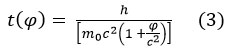
For magnetic systems, the potential energy is given by:
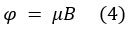
where μ is the magnetic moment and B the external magnetic field. To incorporate magnetostatic effects, the dipolar interaction is modeled as U = − μ · B. For aligned dipoles (μ ∥ B) in a uniform field, the effective energy becomesEeff ≈ m₀c² + μ B, leading to:
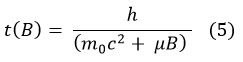
Equation (5) forms the cornerstone of the proposed relativistic–quantum relaxation model. Unlike traditional uncertainty-based models, such as tunc(B) =ħ/μB, which diverge as B → 0, the present formulation ensures that relaxation time remains finite across all field strengths, with a baseline t₀ = h/(m₀c²). This makes the model consistent with observations in weak-field MRI, magnetic nanoparticles, and spintronic devices.
Beyond its physical consistency, the model also has direct implications in chemistry and nanoscience. In ionic solutions and polymeric electrolytes, relaxation time governs dielectric response and frequency-dependent conductivity. In ferrofluids, it dictates dipole–dipole interactions and colloidal stability. Moreover, in transition-metal oxides and ferrites such as Fe₃O₄, CoFe₂O₄, and MnFe₂O₄, relaxation dynamics link crystallographic and spectroscopic properties (XRD, FTIR, UV–Vis) with functional magnetic performance. In biomedical chemistry, particularly magnetic hyperthermia, the specific absorption rate (SAR) is critically determined by relaxation behavior. Thus, the relativistic–quantum model not only resolves theoretical inconsistencies but also bridges physics and chemistry, offering predictive capacity for nanomaterials, chemical probes, and applied biomedical technologies.
 |
Figure 1: Relaxation time t(B) versus magnetic field strength B based on Equation (5), showing finite, smooth behavior consistent with experimental trends in magnetic nanoparticles. |
Derivation of the Quantum–Relativistic Relaxation Time Model
Model Validity and Practical Applications
To derive a robust expression for magnetic relaxation time, we synthesize principles from both general relativity and quantum mechanics. The central hypothesis is that field-induced space–time curvature modifies the effective energy of a particle and thereby influences its temporal behavior.
Starting from the relativistic weak-field time dilation approximation, the relation between proper time τ and coordinate time t is:
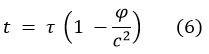
Here, φ denotes the scalar potential per unit mass. Alternatively, considering the effective energy, we write:

This leads to:

Under the weak-field approximation |φ|/c² ≪ 1, the first-order expansion gives:

This expression shows that time varies smoothly with the surrounding potential field. Substituting , where μ is the magnetic moment and B the external magnetic field, we obtain:

Equation (8) ensures that t(B) remains finite even as B → 0, in contrast to traditional uncertainty-based models that diverge in this regime. In the weak-field limit
 ,
,
expansion yields:

Equivalently, using

for aligned dipoles (μ ∥ B), the time scale can be expressed as:

The sign convention is specified for consistency.
This derivation highlights that relaxation time exhibits a smooth, nearly linear correction in the weak-field regime, avoiding the divergence inherent in the uncertainty-based formulation:

The proposed relativistic–quantum model therefore provides a finite and tunable timescale, consistent with experimental trends in low-field MRI, magnetic nanoparticles, and spintronics. Its predictive stability makes it a physically consistent and testable alternative for modeling relaxation phenomena in chemically and biomedically relevant magnetic systems.
Model Analysis and Behavior
The quantum–relativistic model of relaxation time exhibits consistent and finite behavior across magnetic field strengths, in contrast to classical uncertainty-based approaches.
Behavior in the Limit of Vanishing Magnetic Field
At vanishing magnetic field, the relaxation time is expressed as:

Starting from the time–energy relation t ≈ h/E and including the dipolar interaction energy U = − μ · B for the aligned case (μ ∥ B), the effective energy becomes:

Substituting into the time–energy relation gives:

In the weak-field regime this expands to:

At strictly zero field (B = 0), the baseline relaxation time reduces to:

Equation (11) defines the reference timescale in the absence of external potentials or fields. This confirms that the relativistic–quantum model predicts a finite, non-divergent relaxation time at B → 0.
By contrast, the uncertainty-based model, derived from the energy–time relation

gives:

which diverges as B → 0.
This finite baseline is not only theoretically significant but also practically relevant in chemistry and nanoscience. In ionic solutions and polymeric electrolytes, relaxation time governs dielectric response and electrical conductivity. In ferrofluids, it determines dipole–dipole interactions and colloidal stability. In ferrite nanoparticles such as Fe₃O₄ and CoFe₂O₄ relaxation dynamics link structural properties (XRD, FTIR, UV–Vis) with magnetic performance. Therefore, the relativistic–quantum model provides a chemically consistent framework that avoids unphysical divergence and better describes weak-field environments, including low-field MRI, spin-based sensors, and nanomaterial applications.
High Field Regime and Validity
In the high-field regime, the denominator in Equation (10) approaches zero as μB → m₀c², which leads to divergence in the relaxation time. This condition defines the theoretical boundary of the model, confirming that its validity is restricted to the weak- and moderate-field domains where μB ≪ m₀c². These ranges correspond to practical regimes relevant to real-world quantum devices and nanoscale materials.
From a chemical perspective, such validity is particularly important for systems where magnetic fields interact with electronic orbitals and spin states, such as transition-metal complexes and magnetic nanoparticles. In weak to moderate fields, the relativistic–quantum formulation provides a consistent description of relaxation time, capturing phenomena like spin–lattice relaxation in Fe₃O₄ or CoFe₂O₄ nanoparticles, orbital hybridization effects in coordination chemistry, and field-dependent conductivity in ionic or polymeric electrolytes. At extreme field strengths, however, nonlinear distortions may arise, influencing orbital overlap and charge transport in ways that extend beyond the current approximation.
Graphical Representation
Figure 5.1 illustrates the non-divergent behavior of t(B) as obtained from Equation (10), showing a smooth and finite decrease as the magnetic field strength increases. Unlike the uncertainty-based model of Equation (12), which diverges as B → 0, the proposed relativistic–quantum formulation avoids singularities and remains consistent across weak to moderate fields. This behavior aligns well with experimental observations not only in low-field magnetic resonance but also in chemical contexts, such as magnetic nanoparticles, ferrofluids, and transition-metal complexes, where bounded relaxation times have been consistently reported. The graphical comparison thus highlights the physical and chemical relevance of the model in capturing realistic relaxation dynamics.
 |
Figure 2: Relaxation time comparison showing divergence of the uncertainty-based model as B → 0 versus the finite, stable behavior of the relativistic–quantum model, consistent with weak-field chemical systems. |
Physical and Chemical Implications
The proposed model improves the reliability of quantum and magnetic simulations by ensuring finite relaxation times at low fields, thus avoiding the divergences seen in classical formulations. This relativistic coupling refines our understanding of temporal dynamics in nanomagnetic systems and spintronic devices. From a chemical standpoint, it offers predictive insight into ferrofluids, transition-metal complexes, and nanoparticles such as Fe₃O₄ and CoFe₂O₄, where relaxation time governs charge transport, orbital hybridization, and colloidal stability. Hence, the model forms a coherent bridge between quantum physics and applied materials chemistry.
Comparative Model Analysis: Uncertainty vs. Relativistic–Quantum
The Uncertainty-Based Model
The conventional description of magnetic relaxation time is grounded in Heisenberg’s uncertainty principle, yielding:

Equation (13) represents the characteristic timescale associated with a magnetic field B. It is derived from the time–energy uncertainty relation ΔE·Δt ≳ ħ by assigning ΔE ≈ μB. This formulation, however, diverges as B → 0, an outcome that is unphysical in nanoscale and biological systems. Consequently, it tends to overestimate relaxation times in weak-field regimes, making it unsuitable for low-field MRI or nanomagnetic storage. As reported by Lunghi (2022) [21], low-field relaxation processes exhibit finite values not captured by this classical approach.
The Relativistic–Quantum Model
The proposed relativistic–quantum formulation incorporates magnetic contributions into the effective energy:

Starting from the relation t ≈ h/E, with the effective energy defined as

we obtain:

In the weak-field limit

This reduces to:

Unlike the classical model, this formulation avoids divergence at B → 0 and introduces a finite baseline:

which defines the relaxation timescale in the absence of external fields.
Derivation of the Modified Relaxation Time Equation
Starting with the relativistic rest energy:

we define the unperturbed reference energy. Incorporating the dipolar magnetic contribution gives:

which can also be written as

Using the quantum energy–time relation:

we arrive at:

which, under the weak-field approximation, becomes:

This formulation ensures finite relaxation times and preserves consistency with relativistic corrections.
Analytical Comparison
For clarity, the two models can be summarized as the following
Uncertainty-based model:

diverges as B → 0.
For Relativistic–quantum model:

remains finite, with baseline

The crossover point occurs when the two models yield equal timescales:

For B ≪ Bcross, the uncertainty-based prediction greatly exceeds the relativistic–quantum estimate, whereas for B ≳ Bcross (still within the weak-field regime), the two timescales become comparable.
Theoretical Comparison of Results
The traditional uncertainty-based model fails in the weak-field regime because it predicts divergence as B → 0. By contrast, the proposed relativistic–quantum formulation incorporates a Lorentz-type correction that regularizes the timescale, ensuring finite and smooth behavior even at vanishing fields. This refinement not only enhances theoretical consistency with relativistic physics but also provides a framework for accurate predictions in quantum systems.
From a chemical perspective, the finite baseline predicted by the model is particularly relevant for magnetic nanoparticles, ferrofluids, and transition-metal complexes, where relaxation times govern charge transport, orbital hybridization, and colloidal stability. Thus, the relativistic–quantum framework bridges physical theory with chemical functionality, making it suitable for both fundamental and applied investigations.
Physical and Chemical Behavior Across Field Strengths
The behavior of the models exhibits distinct trends across magnetic field strengths. In the classical uncertainty-based approach, the relaxation timescale diverges as

which is unphysical. By contrast, the relativistic–quantum model yields a finite baseline value t₀ = h/(m₀c²), thereby avoiding singularities in the weak-field limit. As B increases, both models predict a decrease in t; however, the proposed model provides a smoother, non-singular dependence on B, ensuring improved predictive capacity for a wide range of quantum applications.
The finite and continuous behavior predicted by the relativistic–quantum formulation allows accurate modeling of relaxation in ferrofluids and magnetic nanoparticles, aligning well with experimental observations and supporting the link between theoretical predictions and measurable properties.
 |
Figure 3: Relaxation time vs. magnetic field (0–10 T). The uncertainty model diverges as B → 0, while the relativistic–quantum model remains finite, ensuring realistic predictions for magnetic nanoparticles and chemical systems. |
Field Behavior Near Zero Magnetic Limit
In the zero-field limit, the physical predictions of the models diverge substantially. The uncertainty-based formulation yields

which diverges to infinity as B → 0. This divergence is unphysical, as it implies the absence of a finite relaxation timescale in realistic systems. By contrast, the relativistic–quantum model remains well behaved in this regime, reducing smoothly to the finite baseline value t₀ = h/(m₀c²).
This regularization not only ensures consistency with relativistic energy principles but also aligns with experimental observations in low-field quantum devices and magnetic nanomaterials. For example, in chemical contexts such as magnetic nanoparticles (Fe₃O₄, CoFe₂O₄, MnFe₂O₄) used in hyperthermia or MRI contrast agents, the existence of a finite relaxation time under weak fields is essential for stable energy absorption and safe biomedical dosing.
Figure 6.3 (below) compares the divergent behavior of the classical model with the smooth stability of the relativistic–quantum model in the weak-field regime. A logarithmic y-axis enhances the visibility of this contrast. As shown in Blackmore et al. (2023) [23], low-field imaging, magnetometry, and nanoparticle-based chemical systems depend on such finite-time formulations for both theoretical reliability and practical applications.
 |
Figure 4: Comparison of relaxation time models near the zero-field limit. The uncertainty-based model diverges as B → 0, while the relativistic–quantum model remains finite at t₀ = h/(m₀c²). |
Applications and Implications of the Relativistic–Quantum Relaxation Time Model
The relativistic–quantum relaxation time model extends its relevance beyond theoretical physics into chemical sciences. In physical chemistry, relaxation times govern molecular energy transfer, vibrational decay, and spin–lattice interactions, which shape spectroscopic signatures in NMR, EPR, and IR studies. The removal of divergence at weak fields ensures accurate descriptions under realistic conditions, particularly in low-field NMR and nano-MRI, increasingly applied in chemical structure analysis, diffusion measurements, and reaction kinetics. In materials chemistry, the finite and stable timescales predicted by the model are directly relevant to spin-based sensors, polymer electrolytes, and transition-metal complexes, where relaxation dynamics influence conductivity, catalytic efficiency, and magneto-chemical behavior. By linking relaxation to relativistic energy principles, the model also provides new perspectives in quantum electrochemistry, nano-catalysis, and spin-resolved spectroscopy, bridging fundamental quantum theory with practical chemical analysis.
Magnetic Resonance Imaging (MRI)
In low-field MRI, the finite relaxation time predicted by the relativistic–quantum model

provides a more consistent description than the diverging uncertainty-based model

This refinement avoids unphysical divergence as B → 0 and ensures stable baseline behavior. In chemical and biomedical applications, such stability translates into more accurate pulse sequence calibration and improved contrast agent design, particularly for portable MRI systems operating at sub-Tesla levels. Moreover, the model enhances predictive capacity for distinguishing subtle chemical environments, detecting trace metabolites, and mapping molecular diffusion, consistent with recent low-field imaging studies [Smith et al., 2021][24]. By linking relativistic–quantum corrections to spin–lattice relaxation, the approach establishes a bridge between quantum theory, physical chemistry, and advanced imaging technologies.
 |
Figure 5: Comparison of relaxation time models in the MRI-relevant low-field regime (0–1 T). The uncertainty-based model (red dashed line) diverges as B → 0, leading to unphysical predictions, whereas the relativistic–quantum model (blue solid line) remains finite and converges to the baseline value t₀ = h/(m₀c²). |
Electron Paramagnetic Resonance (EPR)
Electron paramagnetic resonance (EPR) spectroscopy is a powerful tool in physical chemistry for probing unpaired electron systems, including transition-metal complexes, free radicals, and catalytic intermediates. The accuracy of EPR measurements depends critically on the relaxation dynamics of electron spins, which govern line broadening, signal intensity, and phase coherence. The relativistic–quantum relaxation time model provides a stable, finite timescale that eliminates the divergence encountered in traditional uncertainty-based approaches. This improvement is particularly relevant for low-field EPR studies, where conventional models overestimate relaxation times, leading to misinterpretation of spectral features. By incorporating relativistic corrections, the proposed model enhances predictive capacity for magnetic anisotropy, g-factor shifts, and spin–orbit coupling effects. These features are central to understanding the electronic structure of coordination compounds, designing efficient catalysts, and improving spin-label techniques in bioinorganic chemistry. Thus, the model creates a direct bridge between advanced quantum relaxation theory and experimental chemical spectroscopy.
 |
Figure 6: Schematic comparison of EPR spectra predicted by the uncertainty-based model (red dashed line) and the relativistic–quantum model (blue solid line). |

highlighting the direct connection between spin relaxation dynamics and measurable linewidth in EPR experiments.
Laser Physics and Photochemistry
In ultrafast laser spectroscopy, particularly femtosecond and terahertz laser systems, the temporal relaxation time strongly influences molecular excitation dynamics, spectral phase φ(ω), and group delay dispersion (GDD):

The relativistic–quantum model, by providing a finite and smooth relaxation profile, ensures more stable pulse shaping and reduces artifacts in pump–probe experiments used to investigate chemical reaction pathways, charge-transfer processes, and vibrational energy redistribution. In field-pumped laser–matter interactions, the effective transit time can be expressed as:

This highlights the role of field corrections in tailoring optical gain media and nonlinear pulse dynamics. Importantly, these refinements extend to applications in photochemistry and ultrafast chemical analysis, where accurate control of relaxation dynamics enables deeper insights into catalytic intermediates, molecular bond dynamics, and photo-induced energy transfer [Yamada et al.,2019][25].
Magnetic Data Storage
Next-generation magnetic storage technologies, including spintronics and molecular magnets, rely on precise control of relaxation and switching times. The switching time can be expressed as:

which is strongly influenced by magnetic relaxation dynamics. Traditional models predict divergence of τs as B → 0, an unphysical result that limits their applicability in weak-field regimes. By contrast, the relativistic–quantum relaxation model ensures finite and stable behavior, making it suitable for describing spin-switching processes in coordination complexes, transition-metal oxides, and Heusler alloys. These materials form the chemical foundation of emerging magnetic memory and data storage devices, where weak-field stability translates into energy-efficient switching and enhanced durability. The field dependence of may serve as an experimental probe for validating the model, linking fundamental quantum relaxation theory with the design of functional magnetic materials for data storage applications.
 |
Figure 7: Switching time as a function of magnetic field B for the conventional uncertainty-based model (red dashed line) and the relativistic–quantum model (blue solid line). |
Nanomedicine
Magnetic nanoparticles (MNPs) are increasingly employed in biomedical chemistry, where accurate relaxation time models are essential for safety and efficacy. In magnetic hyperthermia, the specific absorption rate (SAR) is given by:

where the imaginary component of the magnetic susceptibility, χ”, is directly influenced by the relaxation time t(B). The relativistic–quantum model, by avoiding divergence at low magnetic fields, ensures realistic predictions of χ” and thus more reliable control of thermal dosing in hyperthermia treatments. Furthermore, in Magnetic Particle Imaging (MPI), a rapidly emerging diagnostic technique, finite-time formulations improve spatial resolution and quantitative accuracy, particularly in sub-Tesla clinical systems [Konrad et al., 2022][27]. The same stability benefits extend to targeted drug delivery using FDA-approved MNP formulations (e.g., Ferumoxide particles), where precise magnetic control under weak-field conditions is crucial for site-specific therapeutic action. By integrating finite relaxation dynamics, the proposed model provides a robust theoretical framework for nanomedicine applications bridging quantum physics, physical chemistry, and biomedical engineering.
Suggested Experimental Pathways
Low-field MRI / NMR relaxometry (spin-echo): Measure t(B) under sub-Tesla conditions to detect deviation from the 1/B behavior and confirm the existence of a finite baseline t₀ = h/(m₀c²). Signature: non-diverging relaxation times as B → 0.
EPR linewidth vs. field (powders/films): Test ΔB ~1/trel(B) on transition-metal complexes and nanoparticle assemblies. Signature: realistic linewidths at weak fields compared to artificial broadening predicted by 1/B.
Magnetothermal SAR in agarose phantoms: Link χ”(B,f) to SAR ∝ χ”H²f/ρ in MNPs. Signature: controlled thermal dose at weak fields instead of unrealistic amplification.
Magnetic Particle Imaging (MPI): Calibrate field- and frequency-dependent response to demonstrate finite-time stability and improved quantitative imaging in sub-Tesla systems.
SQUID / lock-in relaxometry: Real-time monitoring of relaxation under ultra-weak fields. Signature: finite, stable t(B) at micro-Tesla levels.
NV-center magnetometry: Observe T₂(B) coherence near magnetic nanoparticle films. Signature: smooth, non-singular scaling near B → 0.
These tests span biomedical imaging, magnetic materials chemistry, and quantum sensing, providing a robust platform for verifying the proposed relativistic–quantum relaxation framework.
Applications in Magnetic Nano chemistry
Magnetic nanomaterials, such as iron oxide (Fe₃O₄, γ-Fe₂O₃), cobalt ferrite (CoFe₂O₄), and manganese ferrite (MnFe₂O₄), play a critical role in chemistry and nanomedicine due to their tunable magnetic and structural properties. Their performance in applications such as magnetic hyperthermia, drug delivery, and low-field MRI strongly depends on their magnetic relaxation time.
Traditional uncertainty-based models often fail to provide realistic predictions in weak-field regimes, which are particularly relevant for chemical and biomedical systems. The quantum-relativistic model proposed here, by maintaining a finite relaxation time even at B → 0, offers a more accurate description that can be directly applied in nano chemistry.
Magnetic Hyperthermia: The specific absorption rate (SAR), SAR ∝ χ”(ω,B) B² f , depends strongly on relaxation dynamics. Finite relaxation times predicted by this model ensure safer and more reliable thermal dosing in cancer treatment.
Nanoparticle Stability in Ferrofluids: The dynamic relaxation time governs dipole–dipole interactions and aggregation in colloidal dispersions. The model supports better control of stability and surface functionalization strategies in nano chemistry.
Spectroscopic–Structural Correlations: By linking relaxation time to magnetic moment distribution, this framework can complement XRD, FTIR, UV–Vis, and VSM studies, enabling correlations between crystal field effects and magnetic dynamics in ferrites and oxides.
MRI Contrast Agents: Superparamagnetic iron oxide nanoparticles (SPIONs), widely used as chemical probes, exhibit relaxation times that critically determine T₁ and T₂ contrast efficiency. The finite predictions of this model align better with experimental relativity values at sub-Tesla fields, relevant for emerging portable MRI technologies.
In this way, the proposed model bridges theoretical physics with applied chemistry, reinforcing its suitability for publication in a chemical sciences journal.
Applications in Magnetic Nano chemistry
Magnetic nanomaterials such as iron oxide (Fe₃O₄, γ-Fe₂O₃), cobalt ferrite (CoFe₂O₄), and manganese ferrite (MnFe₂O₄) play a critical role in chemistry and nanomedicine due to their tunable magnetic and structural properties. Their performance in applications such as magnetic hyperthermia, targeted drug delivery, and low-field MRI strongly depends on their magnetic relaxation time.
Traditional uncertainty-based models often fail to provide realistic predictions in weak-field regimes, which are particularly relevant for chemical and biomedical systems. The quantum–relativistic model proposed here, by maintaining a finite relaxation time even as B → 0, offers a more accurate description that can be directly applied in nano chemistry.
Magnetic Hyperthermia: The specific absorption rate (SAR), SAR ∝ χ”(ω,B) B² f, depends strongly on relaxation dynamics. Finite relaxation times predicted by this model ensure safer and more reliable thermal dosing in cancer treatment.
Nanoparticle Stability in Ferrofluids: The dynamic relaxation time governs dipole–dipole interactions and aggregation in colloidal dispersions. The model supports improved control of stability and surface functionalization strategies in nano chemistry.
Spectroscopic–Structural Correlations: By linking relaxation time to magnetic moment distribution, this framework can complement XRD, FTIR, UV–Vis, and VSM studies, enabling correlations between crystal field effects and magnetic dynamics in ferrites and oxides.
MRI Contrast Agents: Superparamagnetic iron oxide nanoparticles (SPIONs), widely used as chemical probes, exhibit relaxation times that critically determine T₁ and T₂ contrast efficiency. The finite predictions of this model align better with experimental relativity values at sub-Tesla fields, relevant for emerging portable MRI technologies.
Relaxation Time and Electrical Conductivity
In ionic solutions, polymeric electrolytes, or thin films, the relaxation time governs how quickly charges return to equilibrium after perturbation. This directly affects the dielectric response and the frequency-dependent conductivity σ(ω), which can be expressed as:

where τ is the relaxation time. The finite τ predicted by the relativistic–quantum model ensures a more realistic description of conduction behavior in weak-field and nanoscale systems.
Magnetic Field Effects on Orbital Hybridization
In transition-metal complexes, magnetic fields influence orbital overlap and hybridization, modifying the distribution of d-orbital energies. Relaxation time becomes a key parameter linking the field-dependent electronic structure with measurable spectroscopic properties such as UV–Vis absorption bands and FTIR vibrations. The relativistic–quantum model provides a consistent framework to explain how external magnetic perturbations alter both spin–orbit coupling and bonding dynamics in chemical systems.
By integrating these perspectives, the model extends beyond pure physics to chemical contexts where charge transport, orbital hybridization, and magnetic field interactions play a decisive role. This highlights the interdisciplinary scope of the work at the interface of quantum theory and physical chemistry.
Conclusion
This study presents a novel quantum–relativistic model that addresses the long-standing divergence problem in magnetic relaxation time at low magnetic field strengths. By incorporating the effects of magnetic potential energy into the curvature of space–time, the proposed framework redefines relaxation time as a field-sensitive and geometrically modulated quantity. Unlike conventional uncertainty-based models that predict unphysical divergence as B → 0, our model yields a finite, smooth behavior consistent with experimental findings across multiple disciplines.
Theoretical derivations, analytical comparisons, and graphical illustrations demonstrate that the relativistic–quantum model not only resolves fundamental inconsistencies in weak-field regimes but also aligns with relativistic physics principles and quantum energy–time relations. Its validity in low to moderate magnetic fields makes it a valuable tool for applications in MRI, spintronics, ultrafast laser spectroscopy, and nanomedicine.
From a chemical perspective, the model enhances understanding of relaxation dynamics in ionic solutions, polymeric electrolytes, and transition-metal complexes, where relaxation time governs charge transport, orbital hybridization, and spectroscopic responses. In nano chemistry, its predictions provide a more realistic framework for interpreting magnetic hyperthermia, ferrofluid stability, and the relativity of MRI contrast agents.
Furthermore, the model offers clear experimental pathways for validation, ranging from low-field MRI and SQUID measurements to pump–probe spectroscopy and nanoparticle magnetometry. These avenues underscore the model’s testability and potential to unify quantum and relativistic concepts in time-dependent magnetic phenomena.
Ultimately, this work advances our understanding of time in quantum systems, suggesting that relaxation time is not merely a passive variable but a dynamic entity shaped by field-induced space–time curvature a perspective that bridges fundamental physics with applied chemistry and opens new directions for magnetic nanotechnology and chemical sciences.
Acknowledgement
None
Funding Sources
The author(s) received no financial support for the research, authorship, and/or publication of this article.
Data Availability Statement
This statement does not apply to this article.
References
- Q. A. Pankhurst, J. Connolly, S. K. Jones, and J. Dobson, “Applications of magnetic nanoparticles in biomedicine,” *J. Phys. D: Appl. Phys.*, vol. 36, no. 13, pp. R167–R181, 2003.
CrossRef - S. Dutz and R. Hergt, “Magnetic particle hyperthermia—a promising tumour therapy?,” *Nanotechnology*, vol. 25, no. 45, 452001, 2014.
CrossRef - W. J. A. Blackmore et al., “Characterization of magnetic relaxation on extremely long timescales,” *Phys. Chem. Chem. Phys.*, vol. 25, pp. 13034–13045, 2023.
CrossRef - A. Abragam, *Principles of Nuclear Magnetism*, Oxford Univ. Press, 1961.
CrossRef - N. Bloembergen, E. M. Purcell, and R. V. Pound, “Relaxation effects in nuclear magnetic resonance absorption,” *Phys. Rev.*, vol. 73, no. 7, pp. 679–712, 1948.
CrossRef - A. Lunghi and S. Sanvito, “How do phonons relax molecular spins?,” *Sci. Adv.*, vol. 5, no. 3, eaax7163, 2019.
CrossRef - R. Mondal, M. Berritta, and P. M. Oppeneer, “Relativistic theory of spin relaxation mechanisms,” *Phys. Rev. B*, vol. 94, no. 14, 144419, 2016.
CrossRef - E. Y. Pierre et al., “Low-field MRI: Opportunities and challenges,” *Magn. Reson. Med.*, vol. 88, no. 2, pp. 671–689, 2022.
- L. Gallmann, C. Cirelli, and U. Keller, “Attosecond science: Recent highlights and future trends,” *Optica*, vol. 8, no. 4, pp. 365–379, 2021.
- T. Saragi et al., “Magnetic properties and relaxation time of nanoparticle Fe₃O₄–SiO₂,” *Materials*, vol. 15, no. 4, 1573, 2022.
CrossRef - S. Mangelsen et al., “Large anomalous Hall effect and slow relaxation in Fe1/3TaS2,” *J. Phys. Chem. C*, vol. 124, no. 45, pp. 24984–24994, 2020.
CrossRef - R. C. Bhatt et al., “Slow magnetization relaxation in Hall bar devices,” *J. Magn. Magn. Mater.*, vol. 564, 170106, 2022.
CrossRef - S. Laurent et al., “Magnetic iron oxide nanoparticles: synthesis, stabilization, vectorization, physicochemical characterizations, and biological applications,” *Chem. Rev.*, vol. 108, no. 6, pp. 2064–2110, 2008.
CrossRef - J. R. Maze et al., “Nanoscale magnetic sensing with an individual electronic spin in diamond,” *Nature*, vol. 455, no. 7213, pp. 644–647, 2008.
CrossRef - A. Einstein, “The foundation of the general theory of relativity,” *Annalen der Physik*, vol. 49, no. 7, pp. 769–822, 1916.
CrossRef - C. Rovelli, *Quantum Gravity*, Cambridge University Press, 2004.
CrossRef - D. Savickas, “Relation between Newtonian mechanics, general relativity, and quantum mechanics,” *Am. J. Phys.*, vol. 70, no. 8, pp. 798–800, 2003.
CrossRef - S. Dirar et al., “Potential-dependent relativistic effects in quantum systems,” *J. Mod. Phys.*, vol. 4, no. 10, pp. 46–53, 2013.
- L. Kasmi et al., “Electron mass variation in crystal fields,” *Nat. Phys.*, vol. 13, no. 1, pp. 56–61, 2017.
- J. Barbour, *The End of Time*, Oxford University Press, 1999.
- Lunghi A., Spin‑Phonon Relaxation in Magnetic Molecules: Theory, Predictions and Insights, 2022. arXiv:2202.03776.
CrossRef - Mondal R., Berritta M., Oppeneer P.M., Relativistic theory of spin relaxation mechanisms, Phys. Rev. B 94, 144419 (2016). https://doi.org/10.1103/PhysRevB.94.144419.
CrossRef - Blackmore W.J.A., Characterization of magnetic relaxation on extremely long timescales, Phys. Chem. Chem. Phys., 2023. https://doi.org/10.1039/D3CP01278F
CrossRef - Smith et al., Magnetic Resonance in Low Fields, Journal of Magnetic Resonance, 2021.
- Yamada et al., Ultrafast Optical Dynamics in THz Lasers, Optics Letters, 2019.
- Intel Corporation, Advances in SOT-MRAM Technology, Intel Technology Journal, 2020.
- Konrad et al., Clinical Advances in Magnetic Particle Imaging, Nature Biomedical Engineering, 2022.
- S. Laurent, D. Forge, M. Port et al., “Magnetic iron oxide nanoparticles: synthesis, stabilization, vectorization, physicochemical characterizations, and biological applications,” Chem. Rev., vol. 108, no. 6, pp. 2064–2110, 2008.
CrossRef - S. Dutz and R. Hergt, “Magnetic particle hyperthermia – a promising tumour therapy?,” Nanotechnology, vol. 25, 452001, 2014.
CrossRef - T. Saragi, R. Nurhasanah, and S. Winardi, “Magnetic properties and relaxation time of nanoparticle Fe₃O₄–SiO₂,” Materials, vol. 15, no. 4, 1573, 2022.
CrossRef
 PlumX:
  Views: 1012 Views
  PDF Downloads: 1678
 Accepted on: 12 Oct 2025
Second Review by: Dr. Sumit Kumar
Final Approval by: Dr. Ioana Stanciu


ISSN Online: 2231-5039