The Chemistry of Saffron (Crocus Sativus L.): Nature’s Red Gold
 and Hülya ÇELİK2*
1Ağrı İbrahim Çeçen University, Faculty of Pharmacy, Ağrı, Turkey.
2Agrı Ibrahim Cecen University, Faculty of Pharmacy Basic Pharmaceutical Sciences Department / Fundamental Sciences of Pharmacy, Agri, Turkey.
Corresponding Author E-mail:hycelik@agri.edu.tr
DOI : http://dx.doi.org/10.13005/ojc/410215
Download this article as:

Crocus sativus L., known as saffron, is a plant of great medicinal, commercial and historical importance, which has been used for various purposes from ancient times to the present day. Saffron, which is often used to add flavor and color to dishes, is one of the most expensive spices in the world, which is quite difficult to cultivate due to the use of only dried stigma parts. Nowadays, with the increasing number of effective applications of saffron in the medical field and alternative medicine, it is of interest to many researchers. Saffron has many beneficial effects such as supporting digestion, pain relieving properties, calming effects, being good for insomnia, strengthening memory and increasing concentration. In addition, experiments on laboratory animals show that saffron can also be effective on cancer treatment. Therefore, as a result of extensive research on saffron, it is possible to expand the use of saffron in modern medicine. With a better understanding of the potential health benefits of saffron and the promotion of its proper use, the saffron plant could become an important source in the medical field in the future.
KEYWORDS:Modern Medicine; Saffron; Spice
Introduction
Saffron (Crocus sativus L.) is a medicinal plant from the Iridaceae family, cultivated in various regions across Asia, Africa, and Europe. It is a perennial herb, standing approximately 30 cm tall, with long leaves and cup-shaped purple blossoms. This hardy plant thrives in sunlight and tolerates temperatures below 15°C. It grows well in clay and calcareous soils with a pH range of 6 to 7. The saffron flowers contain three reddish-orange protrusions that possess a delightful aromatic scent. After being hand-picked, these protrusions are separated, dried, and prepared for use as saffron. Known for over 4000 years in human history, saffron has frequently served as a tonic and antidepressant in traditional medicine. Recently, it has gained popularity among consumers due to its positive effects on human health 1,2.
Animal studies have validated the antioxidant, anti-inflammatory, anticancer, antidiabetic, and antihypertensive properties of saffron. Its antioxidant and anti-inflammatory capabilities are primarily linked to crocin, a compound found in saffron stigmas. Additionally, crocetin and crocin have been observed to help alleviate symptoms of Alzheimer’s disease. Safranal, a monoterpene aldehyde extracted from saffron essential oil, exhibits various biological activities, including antihyperglycemic, anti-inflammatory, and antioxidant properties3.
This study explores topics such as the historical significance, medicinal and commercial importance, chemical composition, and health benefits of saffron. The research emphasizes the potential applications and impacts of saffron in the medical field, showcasing its multifaceted uses and importance from a healthcare perspective.
Saffron Plant in the Historical Process
Based on evidence from archaeological inscriptions, various depictions, and works of art, it appears that saffron cultivation has a history of more than 4000 years. Today, there is a widespread belief that the cultivation of saffron began in Iran for the first time. According to this view, saffron is thought to have been first cultivated in the Zagros Mountains, around Mount Alvand, located in present-day Hamedan. The first traces of saffron in Iran date back to the time of the “Achaemenian”, an ancient Persian dynasty. In addition, it is known that the Zoroastrians, who fled from the region with the entry of the Arabs into Iran, went to India and introduced saffron there. It is also known that the word saffron appears in the oldest texts of Kashmir 4.
The spread of saffron in the Mediterranean basin took place mainly through Arab traders. It is also known that saffron was first transported to most European countries, especially France, especially to Central and Northern Europe, at the time of the Crusades5.
In Anatolia, traces of the use of saffron can be found in written and visual sources since the Hittite period. During the Ottoman period, saffron production drew attention with the sale of saffron to England in 1858. In addition, the use of the word saffron in the naming of various places such as settlements, inns and monasteries during this period shows the importance given to the plant6.
However, it has been stated that the best quality saffron in Anatolia comes from Cilicia, the field called Corycus in Strabo and later historical texts. Corycus, probably named after “Crocus”, is known as an ancient settlement where very high quality saffron was obtained in the 4th century BC5.
Cultivation of saffron in the world
Today, saffron cultivation is carried out in major regions such as Iran, Afghanistan, India, Italy, Spain, Greece, Morocco and Turkey (Figure 1)7. Iran has a production level that started in 2007 with an average of 230 tons of saffron production in a year and increased up to 376 tons in 2017. This amount accounts for more than 90% of global production, and Iran has been recognized as the world’s largest producer of saffron. However, it is observed that production productivity in Iran decreased from 5.1 kg/ha in 1982 to 3.5 kg/ha in 2017. This decline can be due to a variety of factors, including reduced soil fertility, a lack of quality onions, difficulties in combating pests, improper processing methods, climate change, and counterfeiting 8.
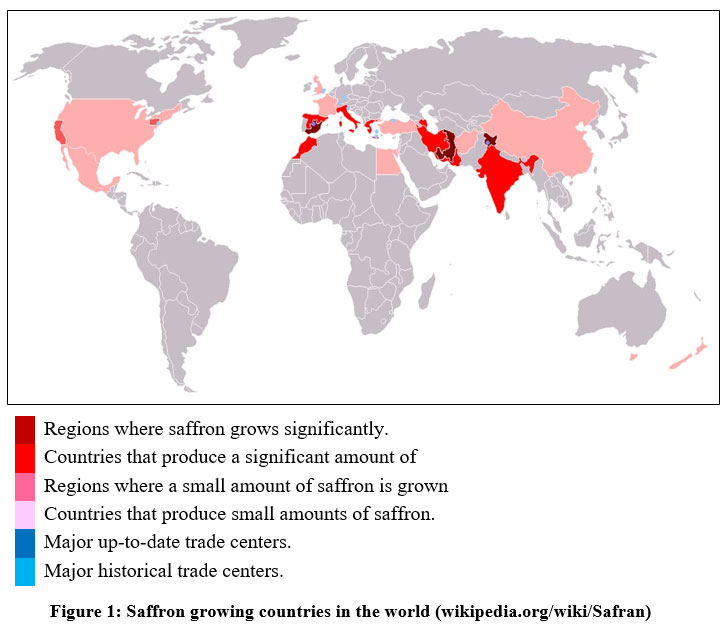 |
Figure 1: Saffron growing countries in the world (wikipedia.org/wiki/Safran). |
In India, the decline in saffron cultivation is evident as annual production fell from 15.85 tonnes in 1997 to 9.6 tonnes in 2015. In addition, it is observed by the current statistics that there has been a serious decrease in saffron cultivation in European countries9.
Turkey is one of the oldest saffron production centers in the world, and a large part of the country has suitable conditions for saffron cultivation. There is a common perception among producers that saffron cultivation is possible wherever viticulture or wheat cultivation can be done 10.
In the 2019-2020 season, the number of cities where saffron is grown for commercial purposes in Turkey increased to 31. In provinces such as Denizli, Muğla, Hatay, Isparta and Ankara, saffron cultivation has been started simultaneously in several centers. In the East, successful saffron production in Van, Gümüşhane and Şanlıurfa is noteworthy. In addition, positive results have been obtained from scientific studies conducted in cities such as Istanbul, Tekirdağ, Kocaeli, Şanlıurfa and Bursa. Trial plantings were also carried out in Bilecik 11.
Agricultural Management of Saffron and Its Potential Applications
Saffron holds a unique position globally, both in terms of its agricultural production process and economic value. The challenges faced in its cultivation highlight the delicate nature and specific requirements of the plant. Saffron stands out as a crop that requires careful management to adapt to cold weather conditions and minimize yield loss. Fertilization practices and field management methods play a crucial role in enhancing saffron productivity. Scientific research reveals that saffron is not only an agricultural product but also has broad applications in the healthcare, food, and pharmaceutical industries due to its pharmacological properties. The pharmacokinetics of saffron—absorption, distribution, metabolism, and excretion—are still being extensively studied, providing an essential foundation for understanding its biological activity.
Additionally, clinical studies aimed at determining effective and safe dosage ranges offer valuable insights into optimizing saffron’s use in healthcare. These dosage optimization efforts are crucial for maximizing its therapeutic potential while ensuring user safety.Finally, exploring possible interactions between saffron and other drugs and establishing its safety profile is a significant step toward improving its reliability in the healthcare industry. Such research facilitates the safe integration of saffron into pharmaceutical products.12
Saffron Plant Uses
Paint İndustry
It has been discovered that saffron leaves contain anthocyanidins, which are responsible for the purple color of the flowers. Cotton fabrics dyed with biodyes derived from saffron flower wastes have been reported to show good color durability properties. Researchers have found that saffron successfully stains not only natural substrates, but also synthetics. The results also showed that saffron can successfully dye cotton and wool and is similarly effective to direct or acid synthetic dyes commonly used for dyeing industrially. This property potentially makes saffron an ideal dye material for the textile industry and has the ability to replace synthetic yellow dyes.13
Food İndustry
Saffron spice is obtained from the dried stigmas of the plant. Because the collection and separation of stigmas is a laborious process, saffron spice is difficult to obtain and therefore an expensive spice. Since saffron stigmas have a high level of humidity, the drying process is necessary. After the drying process is finished, the saffron stigmas shrink to 20% of their size. This means that up to 200 g of ready-to-consume saffron spice can be obtained from 1 kg of saffron stigma.14
Cosmetics İndustry
Saffron has many pharmacological activities that are beneficial for skin health and therefore its use as a cosmetic is widespread. The saffron plant contains many important compounds such as crocin, safranal, crocetin, and picrocrocin. These compounds have the effects of protective, anti-aging, anti-wrinkle, anti-blemish, facial tonic from the harmful effects of the sun, and can produce color and fragrance pigments. For this reason, saffron is used as an active astringent in herbal cosmetics.15
Pharmaceutical İndustry
Among the common uses of saffron in the pharmaceutical industry; We can count that it has important effects such as calming and stimulating the nervous system, giving vitality and refreshment to the body, regulating sleep, improving gas problems, relaxing the stomach and relieving indigestion, stopping itching and coughing, relieving earache, and showing an aphrodisiac effect through smell.16
The use of Saffron in Traditional Medicine
The saffron plant was of great importance in many ancient civilizations due to its medicinal value. Extracts and tinctures of saffron have been used for centuries for their antispasmodic, carminative, calming, stimulating, digestive system regulating and aphrodisiac effects. Furthermore, saffron has been included in the pharmacopoeia of many countries.17
The ancient Egyptians preferred saffron to cure diseases of the digestive system and to improve the health of the liver and stomach. In ancient Rome, aromatic waters, oils and ointments prepared with saffron were used for therapeutic purposes. In ancient medicine, saffron is known to help treat various diseases. It gives strength and refreshment to the body, regulates sleep, calms the nervous system, and helps to increase sweat and urine excretion.18
Safran Taxonomy
The saffron plant is classified into the Magnoliophyta section, the Liliopsida class and the Asparagales order. It is a member of the Iridaceae family and the genus Crocus (Table 2). The genus Crocus consists of 9 species, namely Crocus cartwrightianus and its derivatives, C. sativus, C. pallasii, C. moabiticus, C. oreocreticus, C. thomasii, C. badriaticus, C. asumaniae, and C. mathewii. Saffron (Crocus sativus L.), cultured for the cultivation of its stigmas, which are used as a high-value spice.19
Botanical Review of the Saffron Plant
Table 1: Saffron (Crocus sativus L.) botanical classification
| Realm | Plantae |
| Part | Magnoliophyta |
| Class | Liliopsida |
| Subclass | Liliidae |
| Team | Asparagales |
| Family | Iridaceae |
| Kind | Crocus |
| Kind | Crocus sativus L. |
Saffron is a perennial plant that can grow 25-40 cm tall. Bulbs, leaf structure, and flower stamens are the main parts of the saffron plant (Figure 2)20. Saffron is a triploid species, which means that its number of chromosomes is 2n=24. Therefore, the plant does not have a mechanism of sexual reproduction, and the plant reproduces vegetatively only through bulbs. Since chromosome pairing in triploids is dysregulated during meiosis, this results in insufficiency in gamete development. This leads to the fact that the plant does not produce viable seeds. Only 4-5 baby onions per year can be obtained with traditional methods 21.
 |
Figure 2: Structure of saffron plant (wikipedia.org/wiki/Safran). |
The bulb of saffron (Figure. 3) is an organ derived from the stem, formed by shortening nodes and intermediate nodes. The tubers are 3–5 cm in diameter and covered with brown sheaths.22 Ripe saffron tubers usually have one to three dominant upper buds to germinate in the following season, as well as many dormant side buds. Each side bud has the same developmental potential as the primary upper shoot. However, the lateral buds enter a state of rest after only a few leaves have formed. A large number of side buds in the onion system allows the plant to quickly heal damage and adjust growth depending on environmental factors. In addition, the saffron plant has two types of roots: fibrous and thin fibrous roots, which are located at the base of the main tuber, and contractile roots, which form at the base of the lateral buds. Contractile roots have a thicker appearance that maintains the depth of the tuber in the soil.23
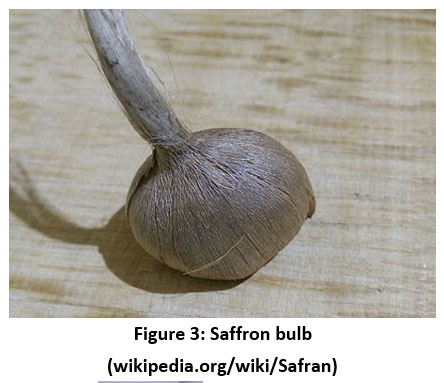 |
Figure 3: Saffron bulb |
(wikipedia.org/wiki/Safran)
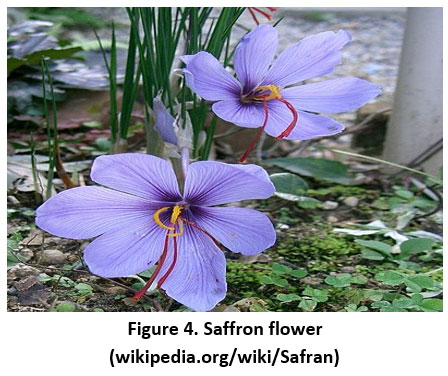 |
Figure 4: Saffron flower |
(wikipedia.org/wiki/Safran)
The leaves range from five to eleven per bud; They are very narrow and green in color, between 1.5 and 2.5 mm wide, between 20 and 60 cm in length.9 The inner part is a whitish band, and the outer part is a rib. This anatomical structure allows the layer to circulate on its main axis and, if necessary, to be enclosed in a tube that limits evaporation.24
The flowers of the saffron plant (Figure 4) are usually purple in color and have a three-hillock structure. The flower has three male stamens, usually yellow in color. However, the most commercially important organ is the female organ. This organ consists of the ovary, the oviduct and the mound (stigma) of dark red color. The part of saffron that is used is the hillock (stigma) part, which has three parts. The pistil is in the center of the tubular ovary, orange-red in color, and the stigma is pale yellow in color.25
The Chemistry of the Saffron Plant
Crocus sativus L.is a mixture of various chemical components, including primary metabolites such as polysaccharides, proteins, fats, and vitamins; secondary metabolites from different classes such as carotenoids, monoterpenoids, flavonoids, and anthocyanins (Table 2). 26
Table 2: Bioactive compounds present in saffron plant
| COMPOUND | CHEMICAL FORMULA | ||
| Flavonoids | |||
| 1 | Kaempferol | C15H10O6 | |
| 2 | Kuercetin | C15H10O7 | |
| 3 | Naringia | C15H12O5 | |
| 4 | Mirisetin | C15H10O8 | |
| 5 | Rhamnetin | C16H12O7 | |
| Seskiterpen | |||
| 1 | Cedrol | C15H26O | |
| Monoterpenes | |||
| 1 | Safranal | C10H14O | |
| 2 | Pyrocrosin | C16H26O7 | |
| 3 | Alfa-pinene | C10H16 | |
| Diterpenler | |||
| 1 | Krosetin | C20H24O4 | |
| 2 | Dimethylcrocetin | C22H28O4 | |
| Tetraterpenler | |||
| 1 | Krosin | C44H64O24 | |
| 2 | Fitoen | C40H64 | |
| 3 | Zeaccent | C40H56O2 | |
| 4 | Alfa-carotene | C40H56 | |
| 5 | Beta-carotene | C40H56 | |
| Steroids | |||
| 1 | Stigmasterol | C29H48O | |
| 2 | Beta-sitosterol | C29H50O | |
| 3 | Campesterol | C28H48O | |
| Phenylpropanoid | |||
| 1 | Chlorogenic acid | C16H18O9 | |
| 2 | Caffeic acid | C9H8O4 | |
| 3 | Ferulic acid | C10H10O4 | |
| 4 | P- Kumarik Asit | C9H8O3 | |
| Anthocyans | |||
| 1 | Petunidin | C16H13O7+(Cl-) | |
| 2 | Myrtle | C21H21ClO12 | |
| 3 | Malvidin | C17H15O7+ |
Flavonoids
Flavonoids, one of the most abundant bioactive components in the saffron plant, exhibit anti-inflammatory, antioxidant, antibacterial, and anti-cancer activities. Those found in saffron usually consist of flavonoids such as flavonoids and their glycosides and flavonols and their glycosides, among which chemferol (Figure 5) and its glycosides are common. Flavonoids are found in many parts of the plant.27
The most abundantFlavonolkaempferolglikozidiIt accounts for 84% of total flavonols, while isorhamentin glycosides and quercetin account for only 8.7% and 9.3%, respectively.28
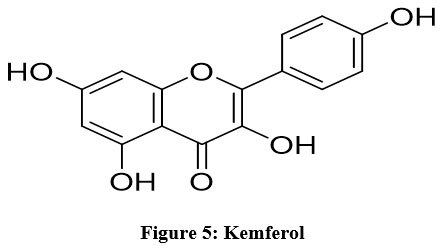 |
Figure 5: Kemferol |
Monoterpenoid
Two of saffron’s main components, picrocrocin and safranal, are produced from carotenoid oxidation products and are responsible for the bitter taste and smell of the plant . Picrocrocin is the precursor to saffron, the principal component of the essential oil responsible for the smell of saffron. The safranal content can be as high as 1%.29
Pyrocrosin
Picrocrocin is a monoterpene glycoside compound responsible for the characteristic bitter taste of saffron. Chemically, it is represented by the formula (4-(β-D-glucopyranosyl)-2,6,6-trimethylcyclohex-1-en-1-carboxaldehyde) and plays a significant role in defining the taste profile of saffron. During drying and processing, it breaks down under the influence of heat or enzymatic hydrolysis into safranal, the main aromatic component of saffron. This transformation is regarded as a critical parameter in evaluating saffron quality. Additionally, the pharmacological properties of picrocrocin, such as its stomach-protective and appetite-stimulating effects, have been explored in scientific studies. Picrocrocin (Figure 6) is the main factor responsible for the bitter taste of bile and is formed by the oxidative breakdown of the carotenoid zeaxanthin. It makes up 4% of the mass of dry saffron.30 Picrocrocin with insecticidal properties is one of the characteristic features of saffron. Picrocrocin, formed by the oxidative breakdown of the zeaxanthin carotenoid, is a glucoside derivative of saffronal. After drying, saffron decomposes enzymatically under the influence of temperature into picrocrocin D-glucose and a free safranal molecule. Safranal is an important ingredient that makes up the characteristic aroma of saffron.31
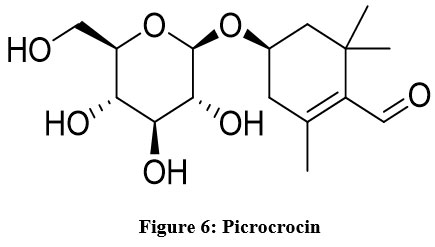 |
Figure 6: Picrocrocin. |
Safranal
Safranal (Figure 7), Crocus sativus L. It is an organic compound obtained from its flowers and found in saffron. The volatile compound responsible for the characteristic aroma of saffron is safranal. Saffron’s distinctive golden-yellow color originates from the water-soluble crocin and lipophilic crocetin compounds. Its bitter taste is attributed to the compound picrocrocin, which undergoes decomposition during the drying process, forming safranal, the key contributor to saffron’s unique aroma. It is formed in the process of drying and storing bile by hydrolysis of picrocrocin and is an aldehyde-shaped flavoring 32. It is also the main ingredient responsible for the essential oil’s characteristic odor. The molecular formula of saffronis C 10H14O. This is a monoterpene aldehyde and the aglycone of picrocrocin. Remarkably, fresh saffron stigmas do not contain safranal. This occurs through the action of β-glucosidase on picrocrocin during the post-harvest drying and storage process. In some samples, safranal can account for up to 70% of the total volatile components. The maximum absorbance value for safranal is 330 nm. Safranal makes up about 30% to 70% of saffron’s essential oil and 0.001% to 0.006% of its dry matter. Furthermore, safran is known to have high antioxidant potential and show cytotoxicity against cancer cells in vitro 33.
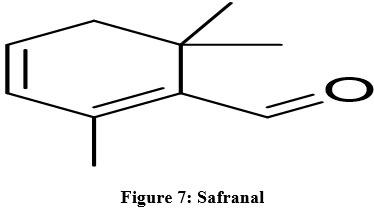 |
Figure 7: Safranal |
Diterpenoidler Diterpenoids, one of the most important active ingredients of the C. sativus plant, refer to esters formed by the carboxyl group and the hydroxyl group of glucose, gentiobiose and triglucose in the formation of compounds called crocetin. A total of 18 compounds have been summarized, among which are 4 different crocetins containing cis and trans forms 34.
Crocetin
Crocetin is one of the primary carotenoids that imparts saffron its characteristic red-orange color. Due to its lipophilic nature, it is soluble in oil and contributes to saffron’s coloring capacity. When the main component of saffron, crocin, undergoes hydrolysis, it converts into crocetin, enhancing the intensity of its color. Crocetin (Figure 8) is a conjugated polyene dicarboxylic acid and a fat-soluble hydrophobic compound. Crocetin is a carotenoid pigment found between 9.5–10.8% in dry saffron35. Thanks to its water-soluble properties, crocetin makes saffron an ideal product for coloring in water-based dishes. Crocetin, a natural carotenoid, is also found in crocus flowers. It is a component that forms the centre of the chemical structure of crocin and is responsible for its colour.36
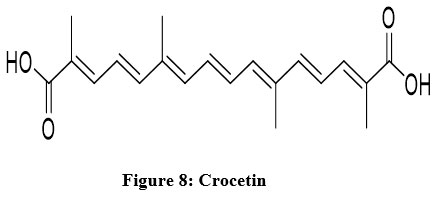 |
Figure 8: Crocetin |
Tetraterpenoid
The major 7 compounds of various fat-soluble carotenoids isolated and identified from stigma and petals are: crocin, phytoene, zeaxanthin, lycopene, alpha-carotene, beta-carotene, and tetrahydrolicopene. The major compound of tetraterpenoids from stigma is crocin, and it is one of the main active ingredients in stigma and is the only tetraterpenoid found in common with stigmanin in petals.37
Flavonoids, one of the most abundant bioactive components in the saffron plant, exhibit anti-inflammatory, antioxidant, antibacterial, and anti-cancer activities. Those found in saffron usually consist of flavonoids such as flavonoids and their glycosides and flavonols and their glycosides, among which chemferol (Figure 5) and its glycosides are common. Flavonoids are found in many parts of the plant27.
Crocin, the primary carotenoid compound in saffron, is responsible for its bright golden-yellow color. This water-soluble molecule exhibits potent antioxidant properties, effectively preventing cellular damage. Moreover, various scientific studies have reported crocin’s neuroprotective, anti-inflammatory, and anti-cancer potential. Crocin (Figure 9) is a rare hydrophilic carotenoid that gives a golden-orange color. It makes up more than 10% of the mass of dry saffron and is more commonly used in food and pharmaceuticals because it has a higher solubility than other carotenoids. It is a diester composed of the gentiobiose disaccharide and crocetin dicarboxylic acid. It has a bright red color and dissolves in water, forming a red-orange solution. It is also the major component responsible for the color of saffron and is also known to be a powerful antioxidant38.
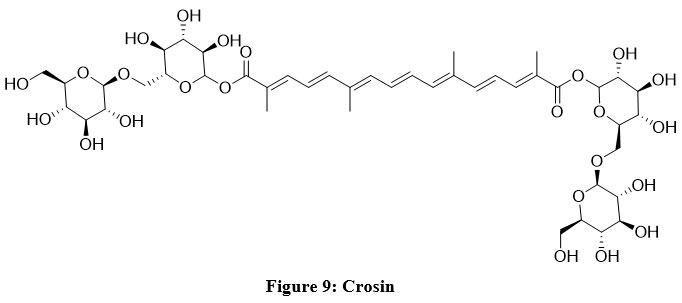 |
Figure 9: Crosin |
Nitrogenous compounds
In various Crocus species, nitrogen-containing compounds have been studied only in C. sativus stigmas and nitrogenous compounds have been found. These compounds, vitamin B2, riboflavin, thiamine, vitamin B6, vitamin C, vitamin A, and vitamin E have been discovered39.
Steroids and phenylpropanoids
Only two phytosterols, b-sitosterol and stigmasterol, have been isolated and identified from the stigma, while steroids have not been found in the petals.40. Phenylpropanoids refer to compounds in which a phenyl group is attached to three carbons. A total of four phenylpropanoic acid compounds have been isolated from the stigma and petals; chlorogenic acid, sinapic acid, p-coumaric acid, caffeic acid, and ferulic acid41. Chlorogenic acid is an ester formed by the condensation of caffeic acid and quinic acid. Such compounds are mostly found in the stigma, and only sinapic acid is derived from the petals42.
Anthocyans
Anthocyanins were quantified for the first time in C. sativus petals. A group of researchers has identified the following anthocyanins in pink and purple saffron leaves: petunidin, pelargonidin 3,5-glycosides, 3,5 cyanidin-diglycosides43. Monomeric anthocyanins have been measured in the extract of C. sativus petals. Purple saffron petals are very rich in anthocyanins, and this raw material can be used as a potential alternative to the natural color sources of anthocyanins for the food and pharmaceutical industry44.
Triterpenoid saponinler
Triterpenoid saponins are often deposited in saffron corps. Oleanan-type triterpenoid saponin has been discovered in saffron corps: azafrin 1 and azafrin 2 isomers with different configurations of three variants 23.
Medicinal effects of saffron and its components
Traditional and alternative medicine has a significant impact on current trends in preclinical and clinical research of medicinal plants. Since saffron is a popular folk remedy in many countries, recent preclinical studies have confirmed the wide application of saffron and the use of related Crocus species for medicinal purposes (Figure 10).
 |
Figure 10: Important biological activities of the saffron plant and its components. |
Antimicrobial Effect
It is known that microorganisms that are multiple resistant to antibiotics are increasing alarmingly around the world. As a modulus of treatment against microorganisms, natural products or derivatives of medicinal plants are recognized as a good source of antimicrobial agents without side effects. Different parts of Crocus sativus, especially the stamen and petal, have been used as a good source of antimicrobial agents45.
Crocus sativus extracts have shown to have an improved activity against various strains of bacteria [46]. Furthermore, the antibacterial effects of other mixtures, e.g., aqueous, ethanolic, and methanolic extracts of flower petal, against foodborne pathogens were measured, and the results confirmed that these extracts showed antimicrobial activity against most pathogenic bacteria47.
Antioxidant Effect
Crocetin, crocin, safranal, and phenolic compounds from C. sativus stigmas exhibit potent intracellular free radical scavenging activity and protect cells and tissues against oxidation .50 milligrams of saffron dissolved in 100 ml of milk twice daily has been administered to human subjects, and significant reduction in lipoprotein oxidation susceptibility was seen in patients with coronary artery disease. This demonstrates the potential of saffron as an antioxidant. Crocin has been found to have greater antioxidant capacity than alpha-tocopherol in neuronal differentiated pheochromocytoma cells deprived of glucose. The deficiency of glucose led to peroxidation of cell membrane lipids and decreased intercellular superoxide dismutase activity. These effects were reversed by crocin, which showed that crocin is a unique and effective antioxidant that combats oxidative stress in neurons48.
Anti-inflammatory Effect
Substances containing Crocus sativus and safranal have shown protective effects on serum inflammatory markers in sensitized guinea pigs. In a study on the antinoceptive and anti-inflammatory effects of ethyl alcohol and aqueous extracts, flower petal extracts of saffron were studied in mice. The results showed that both extremities had anti-nociceptive effects against chemically induced pain. At the same time, ethyl alcohol extract has been observed to reduce chronic inflammation and not affect acute inflammation. The observed effects can be attributed to the presence of compounds such as flavonoids, tannins, anthocyanins, alkaloids, and soap. The results of a similar study showed that crocin and safranal, the components contained in bile, suppressed the inflammatory pain response and reduced the number of neutrophils49.
Antidiabetic Effect
Diabetes is one of the chronic medical conditions that pose a great threat to human lives. Crocin is the primary anti-diabetic active ingredients of picrocrocin, crocetin, safranal, and C. sativus. AST, superoxide dismutase (SOD), glutathione (GSH), creatinine, cholesterol and triglyceride levels were measured in kidney and blood in rats with nicotinamide and streptozotocin-induced diabetes. After diabetes is triggered, 50 mg/kg of crosine therapy has been shown to help normalize blood sugar, reduce blood lipid, cholesterol and other parameters, and alleviate some complications of diabetes50.
Other findings have shown that saffron at doses of 40 and 80 mg/kg significantly increases body weight and increases serum TNF-α, decreases blood glucose levels and glycosylated serum protein levels. Similarly, another study shows that crocin significantly reduces blood glucose levels. It found that oral administration of saffron extract significantly increased body weight and regulated serum insulin level in diabetic rats compared to disease control groups.51
Antihypertensive Effect
Hypertension is one of the most common metabolic disorders and is the leading cause of many cardiovascular diseases. Various drugs are available on the market to control hypertension, but most of them cause adverse reactions. Saffron and its bioactive components may control hypertension and protect against cardiovascular damage.52
In a human study of men aged 60–70 years with hypertension, 200 mg of saffron, along with resistance training, lowered systolic blood pressure, diastolic blood pressure, and mean arterial pressure. This healing effect of saffron on blood pressure has been observed to be accompanied by a significant increase in the level of nitric oxide and adiponectin and a noticeable decrease in endothelin-1 concentration.53
Cardioprotective Effect
Crocetin, the main active ingredient of saffron, has been found to reduce the level of lactate dehydrogenase activity and increase the potency of mitochondria in a cardiomyocyte treated with noradrenaline, suggesting its cardioprotective effect.
In a study conducted on humans, the use of 100 mg of saffron per day for 6 weeks was seen to improve quality of life and improve appetite in atherosclerosis patients. In saffron-treated patients, it was observed that the physical and social domain of quality of life increased compared to those treated with placebo.54 It has also been observed that 100 mg/kg/day of crosine reduces heart damage due to periodontitis by alleviating MDA (Malondialdehyde) and increasing glutathione, superoxide dismutase, catalase in rats.55
Anticonvulsant Effect
Crocus sativus L.The anticonvulsant activities of safranal and crocin, which are stigma components, were evaluated in mice using pentylenetetrazole-induced convulsions in mice. Safranal reduced the duration of seizures, delayed the onset of tonic convulsions, and protected mice from death. Crocin did not exhibit anticonvulsant activity.56 Hosseinzadeh et al. conducted a study on different doses of intracerebroventricular (brain ventricles) injection and peripheral administration of safranal on metrazole-induced seizures in mice . Safranal reduced the incidence of both types of seizures in peripheral administration but not in intracerebroventricular injection. The authors concluded that a possible mechanism of action could be the modulation of the GABA-benzodiazepine receptor complex by safranal. Sadeghnia et al. investigated the effect of a single intraperitoneal administration of safranal on acute experimental seizure models in 2008. The results showed that safran may have some antiabsence seizure properties by regulating Gamma Amino Butyric Acid (GABA) receptor activity.57
Antidepressant Effect
Depression is a well-known neurological disorder that affects the quality of life of many people around the world. Sadness, lack of motivation, insomnia, and anorexia have been listed as symptoms of depression.58 In an experimental model of cerebral ischemia, injecting 30, 100, 300 mg/kg of saffron extract into the body improved anxiety-like behaviors and cognitive deficits59. In a clinical trial, the therapeutic effect of 1 mg of saffron for 1 month on depressed patients was evaluated. Patient health survey results showed a significant therapeutic effect after 1 month of treatment with saffron. According to biochemical analysis, a decrease in symptoms of depression was caused by a decrease in CRP level and increased access to serotonin by the brain60.
Sun et al. reported that 25 and 50 mg/kg of crocin improved schizophrenia-like symptoms in rats exposed to MK-801. The healing effects of crocin have been accompanied by increased expression of SIRT1 and BDN and the alleviation of oxidative stress in hippocampus tissue.61
Anticancer effect
The main components of saffron, namely crocin, crocetin, picrocrocin, and safranal, are responsible for various properties ranging from its color and aroma to its medicinal effects. Studies have revealed that saffron exhibits selective toxicity, targeting cancer cells without harming normal cells. By suppressing tumor growth through antioxidant, anti-inflammatory, and apoptotic mechanisms, saffron is considered a potential agent in cancer treatment.62
The active constituents of saffron demonstrate anti-cancer effects in breast cancer cells by inducing apoptosis, inhibiting cell division, and modulating signaling pathways such as PI3K/AKT, NF-κB, and MAPK, which are involved in cancer progression. Clinical studies suggest that saffron may alleviate chemotherapy-induced side effects, reduce serum tumor marker levels, and improve quality of life. While the use of saffron as an adjunct therapy in breast cancer appears promising, more extensive clinical research is needed to fully understand its efficacy and safety63,64.
Alzheimer effect
Safran (Crocus sativus L.), Alzheimer hastalığında bilişsel bozulmayı azaltmaya yönelik nöroprotektif etkiler göstermiştir. Yapılan preklinik çalışmalar, safranın glutamat seviyelerini düzenlediğini, oksidatif stresi azalttığını ve Aβ ile tau protein agregasyonlarını modüle ettiğini ortaya koymaktadır. Klinik araştırmalar, safranın donepezil ve memantin ile benzer terapötik etkiler sunduğunu ancak daha iyi bir güvenlik profili sağladığını göstermiştir65.
Safran, nörolojik hastalıkların tedavisinde umut verici bir bitki olup, özellikle Alzheimer, depresyon ve Parkinson gibi bozukluklarda etkili olabileceği belirtilmiştir. İçeriğindeki crocin gibi biyoaktif bileşenler sayesinde antioksidan özellikler gösterir, nöroinflamasyonu azaltır ve nörotransmitterleri düzenler. Klinik ve preklinik çalışmalar, safranın bilişsel işlevler ve ruh hali üzerindeki olumlu etkilerini desteklemektedir.66
Conclusion
Referred to as the “golden herb” due to its value and versatility, saffron is among the most expensive spices worldwide. Its production is labor-intensive, as each saffron flower yields only a small quantity of stigmas, making their collection a meticulous and time-consuming process. Consequently, saffron holds significant material value.
In recent years, there has been a substantial increase in studies exploring the health benefits of spices. The utilization of saffron has long held importance, reinforced over time by expanding research. Since antiquity, saffron has been used as a dye, fragrance, food additive, and more. Research has uncovered that saffron extends beyond its traditional uses, displaying beneficial effects on various biological disorders.
The remarkable properties of saffron are attributed to its unique chemical composition. Saffron extract and its bioactive components—crocin, crocetin, picrocrocin, and safranal—exhibit a wide range of activities, including antimicrobial, antioxidant, anti-inflammatory, antidiabetic, antiparkinsonian, antidepressant, cardioprotective, and antitumor effects. Given these diverse benefits, further exploration of saffron’s chemistry may offer valuable insights and applications in the fields of healthcare, food, and pharmaceuticals.
Acknowledgement
This study was prepared by my student İsmail YILDIZ from Agri İbrahim Cecen University Faculty of Pharmacy research project thesis
Funding Sources
The author(s) received no financial support for the research, authorship, and/or publication of this article.
Conflict of Interest
The author(s) do not have any conflict of interest.
Data Availability Statement
This statement does not apply to this article.
Ethics Statement-
This research did not involve human participants, animal subjects, or any material that requires ethical approval.
References
- Cardone, L.; Castronuovo, D.; Perniola, M.; Cicco, N.; Candido, V. Saffron (Crocus sativus L.), mıyorsunthe king of spices: An overview., Scientia Hortic., 2020, 272, 109560, DOI:10.1016/j.scienta.2020.109560.
CrossRef - Bukhari, S. I.; Manzoor, M.; Dhar, M. A comprehensive review of the pharmacological potential of Crocus sativus and its bioactive apocarotenoids., Pharmacother., 2018, 98, 733–745, https://doi.org/10.1016/j.biopha.2017.12.090..
CrossRef - Anaeigoudari, F.; Anaeigoudari, A.; Kheirkhah-Vakilabad, A. A review of therapeutic impacts of saffron (Crocus sativus L.) and its constituents., Rep., 2023, 11, e15785, DOI: 10.14814/phy2.15785.
CrossRef - Wenger, T. History of saffron., Longhua Chinese Med., 2022, 5, DOI: 10.21037/lcm-21-67.
CrossRef - Caiola, M. G.; Canini, A. Looking for Saffron’s (Crocus sativus L.) Parents., Plant Sci. Biotechnol., 2010, Global Sci. Books, 1–14.
- Şahin, G. Tarihsel Süreçte Safran (Crocus sativus L.) ve Safranin Günümüzdeki Durumu., Uluslararası Anadolu Sosyal Bilimler Dergisi., 2021, 5(1), 173–214.
CrossRef - Yasmin, S.; Nehvi, F. A. Saffron as a valuable spice: A comprehensive review., J. Agric. Res., 2013, 8(3), 234–24.
- Koocheki, A.; Moghaddam, P. R.; Seyyedi, S. M. Depending on mother corm size, the removal of extra lateral buds regulates sprouting mechanism and improves phosphorus acquisition efficiency in saffron (Crocus sativus L.)., Crops Prod., 2019, 141, 111779.
CrossRef - Mukhter, I.; Ganie, A. U. R.; Ahad, B.; Ahmad, S.; Chowdhary, R.; Seerat, S. Qualitative analysis of factors influencing the decline of saffron (Crocus sativus) cultivation in the Valley of Kashmir, India: need of regaining its legacy., Soc. Pol. Sci., 2020, 3(3).
CrossRef - Çınar, A. S.; Önder, A. Anadolu’nun Kültürel Mirası: Crocus sativus L. (Safran)., FABAD J. Pharm. Sci., 2019, 44(1), 79–88.
- Şahin, G. Tarihsel Süreçte Safran (Crocus sativus L.) ve Safranin Günümüzdeki Durumu., Uluslararası Anadolu Sosyal Bilimler Dergisi., 2021, 5(1), 173–214.
CrossRef - Gresta, F.; Lombardo, G. M.; Siracusa, L.; Ruberto, G. Saffron, an alternative crop for sustainable agricultural systems: A review. Sustainable Agriculture, Springer, 2009, 355-376.
CrossRef - Lachguer, K.; Boudadi, I.; Fayzi, L.; El Merzougui, S.; El Bouchti, M.; Cherkaoui, O.; Serghini, M. A. Natural extraction of dyes from saffron ‘Crocus sativus L’ flower waste, cotton dyeing, and antioxidant effectiveness., , 2023, 9(3), 890–906.
- Hasan, I.; Ansari, A. H.; Sherwani, A. M.; Zulkifle, M. The incredible health benefits of saffron: A review., Pharm. Res., 2011, 4, 2156–2158.
- Spence, C. Saffron: The colourful spice., J. Gastronomy Food Sci., 2023, 100821.
CrossRef - Khazdair, M. R.; Boskabady, M. H.; Hosseini, M.; Rezaee, R.; Tsatsakis, A. M. The effects of Crocus sativus (saffron) and its constituents on nervous system: A review., Avicenna J. Phytomed., 2015, 5(5), 376.
- Winterhalter, P.; Straubinger, M. Saffron – renewed interest in an ancient spice., Food Rev. Int., 2000, 16(1), 39–59.
CrossRef - Khorasany, A. R.; Hosseinzadeh, H. Therapeutic effects of saffron (Crocus sativus L.) in digestive disorders: A review., J. Basic Med. Sci., 2016, 19(5), 455.
- Alsayied, N. F.; Fernández, J. A.; Schwarzacher, T.; Heslop-Harrison, J. S. Diversity and relationships of Crocus sativus and its relatives analysed by inter-retroelement amplified polymorphism (IRAP)., Bot., 2015, 116(3), 359–368.
CrossRef - Nehvi, F.; Khan, M.; Lone, A.; Maqhdoomi, M. I. Impact of microbial inoculation on growth and yield of saffron in Kashmir., Acta Hortic., 2010, 850(27), 171–174.
CrossRef - Husaini, A. M.; Haq, S. A. U.; Jiménez, A. J. L. Understanding saffron biology using omics-and bioinformatics tools: stepping towards a better Crocus phenome., Biol. Rep., 2022, 49(6), 5325–5340.
CrossRef - Crozet, A.; de Sus-Rousset, H.; de Durfort, S.-J. Crocus sativus L. (Iridaceae), le safran (I)., Phytothérapie., 2012, 10(2), 121–125.
CrossRef - Ahrazem, O.; Rubio-Moraga, A.; Nebauer, S. G.; Molina, R. V.; Gomez-Gomez, L. Saffron: its phytochemistry, developmental processes, and biotechnological prospects., Agric. Food Chem., 2015, 63(40), 8751–8764.
CrossRef - Teusher, E.; Anton, R.; Lobstein, A. Plantes aromatiques: Épices, aromates, condiments et huiles essentielles., Tec & Doc., Paris – Lavoisier – Éd. Médicales Internationales, 2005, 32.
- Srivastava, R.; Ahmed, H.; Dixit, R. K.; Saraf, S. A. Crocus sativus L.: a comprehensive review., Rev., 2010, 4(8), 200.
CrossRef - Li, X.; Xie, J.; Fan, H.; Tan, J.; Zhang, D.; Bao, Y.; Ma, H. Stigma and petals of Crocus sativus L.: Review and comparison of phytochemistry and pharmacology., Arabian J. Chem., 2023, 16(8), 104918.
CrossRef - Li, C. Y.; Lee, E. J.; Wu, T. S. Antityrosinase principles and constituents of the petals of Crocus sativus., Nat. Prod., 2004, 67, 437–440.
CrossRef - Goupy, P.; Vian, M. A.; Chemat, F.; Caris-Veyrat, C. Identification and quantification of flavonols, anthocyanins and lutein diesters in tepals of Crocus sativus by ultraperformance liquid chromatography coupled to diode array and ion trap mass spectrometry detections., Crops Prod., 2013, 44, 496–510.
CrossRef - Avila-Sosa, R.; Nevárez-Moorillón, G. V.; Ochoa-Velasco, C. E.; Navarro-Cruz, A. R.; Hernández-Carranza, P.; Cid-Pérez, T. S. Detection of saffron’s main bioactive compounds and their relationship with commercial quality., , 2022, 11(20), 3245.
CrossRef - Surgun Acar, Y.; İşkil, R.; Bürün, B. Safran (Crocus sativus L.) Bitkisinde Biyoteknolojik Çalışmalar., Inst. Sci. Technol., 2017, 7(2), 259–268.
CrossRef - Escribano, J.; Alonso, G. L.; Coca-Prados, M.; Fernández, J. A. Crocin, safranal and picrocrocin from saffron (Crocus sativus L.) inhibit the growth of human cancer cells in vitro., Cancer Lett., 1996, 100(1–2), 23–30.
CrossRef - Christodoulou, E.; Kadoglou, N. P.; Kostomitsopoulos, N.; Valsami, G. Saffron: a natural product with potential pharmaceutical applications., Pharm. Pharmacol., 2015, 67(12), 1634–1649.
CrossRef - Kyriakides, M. L.; Kyriakides, D. A. Crocus sativus – Biological active constituents., Nat. Prod. Chem., 2002, 26, 293–312.
CrossRef - Tung, N. H.; Shoyama, Y. New minor glycoside components from saffron., Nat. Med., 2013, 67, 672–676.
CrossRef - Raina, B. L.; Agarwal, S. G.; Bhatia, A. K.; Gaur, G. S. Changes in pigments and volatiles of saffron (Crocus Sativus L.) during processing and storage., Sci. Food Agric., 1996, 71, 27–32.
CrossRef - Hosseinzadeh, H.; Sadeghnia, H. R. Protective effect of safranal on pentylenetetrazol-induced seizures in the rat: Involvement of GABAergic and opioids systems., , 2006, 13(3), 119–127.
- Maggi, M. A.; Consonni, R.; Cagliani, L. R.; et al. Saffron and retinal neurodegenerative diseases: Relevance of chemical composition. Journal of Anatomy, 2023, 243.2: 265-273.
CrossRef - Ali, A.; Yu, L.; Kousar, S.; Khalid, W.; Maqbool, Z.; Aziz, A.; Qin, H. Crocin: Functional characteristics, extraction, food applications and efficacy against brain-related disorders., Nutr., 2022, 9, 1009807.
CrossRef - Hashemi, P.; Erim, F. B. Analysis of vitamin B2 in saffron stigmas (Crocus sativus L.) by capillary electrophoresis coupled with laser-induced fluorescence detector., Food Anal. Methods., 2016, 9, 2395–2399.
CrossRef - Feizy, J.; Reyhani, N. Gas chromatographic determination of phytosterols and fatty acids profile in saffron petals., Chem. Trans., 2016, 4, 389–397.
- Gismondi, A. Biochemical, antioxidant and antineoplastic properties of Italian saffron (Crocus sativus L.)., J. Plant Sci., 2012, 3, 1573–1580.
CrossRef - Loizzo, M. R.; Marrelli, M.; Pugliese, A.; et al. Crocus cancellatus subsp. damascenus stigmas: Chemical profile, and inhibition of α-amylase, α-glucosidase and lipase, key enzymes related to type 2 diabetes and obesity., Enzyme Inhib. Med. Chem., 2016, 31, 212–218.
CrossRef - Lotfi, L.; Kalbasi-Ashtari, A.; Hamedi, M.; Ghorbani, F. Effects of enzymatic extraction on anthocyanins yield of saffron tepals (Crocus sativus) along with its color properties and structural stability., Food Drug Anal., 2015, 23, 210–218.
CrossRef - Khazaei, K. M.; Jafari, S. M.; Ghorbani, M.; Kakhki, A. H.; Sarfarazi, M. Optimization of anthocyanin extraction from saffron petals with response surface methodology., Food Anal. Methods., 2016, 9, 1993–2001.
CrossRef - Vahidi, H.; Kamalinejad, M.; Sedaghati, N. Antimicrobial Properties of Crocus sativus L., Iranian J. Pharm. Res., 2002, 1, 33–35.
- Muzaffar, S.; Rather, S. A.; Khan, K. Z. In vitro bactericidal and fungicidal activities of various extracts of saffron (Crocus sativus L.) stigmas from Jammu and Kashmir, India., Cogent Food Agric., 2016, 2(1), 1158999.
CrossRef - Gandomi, H.; Misaghi, A.; Abbaszadeh, S.; Azami, L.; Shariatifar, N.; Tayyar, N. Antibacterial effect of aqueous and alcoholic extracts from petal of saffron (Crocus sativus) on some foodborne bacterial pathogens., Med. Plants., 2012, 11, 189–196.
- Maqbool, Z.; Arshad, M. S.; Ali, A.; Aziz, A.; Khalid, W.; Afzal, M. F.; Lorenzo, J. M. Potential role of phytochemical extract from saffron in development of functional foods and protection of brain-related disorders., Med. Cell. Longevity., 2022, 6480590.
CrossRef - Bukhari, S. I.; Manzoor, M.; Dhar, M. K. A comprehensive review of the pharmacological potential of Crocus sativus and its bioactive apocarotenoids., Pharmacother., 2018, 98, 733–745.
CrossRef - Wali, A. F.; Alchamat, H. A. A.; Hariri, H. K.; Hariri, B. K.; Menezes, G. A.; Zehra, U.; Ahmad, P. Antioxidant, antimicrobial, antidiabetic and cytotoxic activity of Crocus sativus L. petals., Sci., 2020, 10(4), 1519.
CrossRef - Sani, A.; Tajik, A.; Seiiedi, S. S.; Khadem, R.; Tootooni, H.; Taherynejad, M.; Deravi, N. A review of the anti-diabetic potential of saffron., Metab. Insights., 2022, 15, 11786388221095223.
CrossRef - Razavi, B. M.; Hosseinzadeh, H. Saffron: a promising natural medicine in the treatment of metabolic syndrome., Sci. Food Agric., 2017, 97(6), 1679–1685.
CrossRef - Anaeigoudari, F.; Anaeigoudari, A.; Kheirkhah-Vakilabad, A. A review of therapeutic impacts of saffron (Crocus sativus L.) and its constituents., Rep., 2023, 11(15), e15785.
CrossRef - Ahmadikhatir, S.; Ostadrahimi, A.; Safaiyan, A.; et al. Saffron (Crocus sativus L.) supplements improve quality of life and appetite in atherosclerosis patients: a randomized clinical trial., Res. Med. Sci., 2022, 27, 30.
CrossRef - Ghaffari, S.; Roshanravan, N. Saffron: An updated review on biological properties with special focus on cardiovascular effects., Pharmacother., 2019, 109, 21–27.
CrossRef - Srivastava, R.; Ahmed, H.; Dixit, R. K.; Dharamveer; Saraf, S. A. Crocus sativus L.: A comprehensive review., Rev., 2010, 4, 200–208.
CrossRef - Hosseinzadeh, H.; Talebzadeh, F. Anticonvulsant evaluation of safranal and crocin from Crocus sativus in mice., , 2005, 76(7–8), 722–724.
CrossRef - Zhong, K.; Wang, R. X.; Qian, X. D.; Yu, P.; Zhu, X. Y.; Zhang, Q.; Ye, Y. L. Neuroprotective effects of saffron on the late cerebral ischemia injury through inhibiting astrogliosis and glial scar formation in rats., Pharmacother., 2020, 126, 110041.
CrossRef - Ahmad, S.; Azhar, A.; Tikmani, P.; Rafique, H.; Khan, A.; Mesiya, H.; Saeed, H. A randomized clinical trial to test efficacy of chamomile and saffron for neuroprotective and anti-inflammatory responses in depressive patients., , 2022, 8, e10774.
CrossRef - Sun, X. J.; Zhao, X.; Xie, J. N.; Wan, H. Crocin alleviates schizophrenia-like symptoms in rats by upregulating silent information regulator-1 and brain-derived neurotrophic factor., Comprehensive Psychiatry., 2020, 103, 1–7.
CrossRef - Shakeri, M.; Tayer, A. H.; Shakeri, H.; Jahromi, A. S.; Moradzadeh, M.; Hojjat-Farsangi, M. Toxicity of saffron extracts on cancer and normal cells: A review article., Asian Pac. J. Cancer Prev., 2020, 21(7), 1867.
CrossRef - Mokhtarian, R.; Rajabi, S.; Zahedian, S.; Jafarinejad-Farsangi, S.; Hadizadeh, M.; Sadeghinejad, M. The effect of saffron and its extracts on the treatment of breast cancer: A narrative review., Annales Pharmaceutiques Françaises., 2024, 82(4), 629–640.
CrossRef - Uzunhisarcıklı, E. Akciğer kanseri ve meme kanseri hücrelerinde safranal bileşiğinin sitotoksik aktivitesinin gerçek zamanlı izlenmesi., Faculty of Pharmacy of Ankara University., 2023, 47(3), 907–914.
CrossRef - D’Onofrio, G.; Nabavi, S. M.; Sancarlo, D.; Greco, A.; Pieretti, S. Crocus sativus L. (Saffron) in Alzheimer’s disease treatment: Bioactive effects on cognitive impairment. Current Neuropharmacology, 2021, 19(9), 1606–1616.
CrossRef - Bej, E.; Volpe, A. R.; Cesare, P.; Cimini, A.; d’Angelo, M.; Castelli, V. Therapeutic potential of saffron in brain disorders: From bench to bedside. Phytotherapy Research, 2024, 38(5), 2482–2495.
CrossRef
 PlumX:
  Views: 7562 Views
  PDF Downloads: 2637
 Accepted on: 02 Apr 2025
Second Review by: Dr. Majid Khan
Final Approval by: Dr. Tanay Pramanik


ISSN Online: 2231-5039