Effect of Biochar Application on Soil Chemical Properties, Nutrient Dynamics and Plant Nutrient Uptake
 , K Tejeswara Rao2, Vikas Kumar3*, Jince Mary M Joy4, D K D Deekshitha5, Anjali Tomar6, Manpreet Kaur7, Amit Kumar Pandey8and Indra Jeet9
1Postdoctoral Researcher, College of Agriculture, Vellayani, Thiruvananthapuram, Kerala, India
2Agronomy and OFR Agronomist, All India Coordinated Research Project on Integrated Farming System (AICRP-IFS), ICAR-IIFSR, ANGRAU-Agricultural Research Station (ARS), Gajularega, Andhra Pradesh, India
3Faculty of Agriculture and Life Sciences, Desh Bhagat University, Punjab, India
4On Farm Research Centre, Onattukara Regional Agricultural Research Station, Kayamkulam, Kerala Agricultural University, Kerala, India
5Department of Soil Science and Agricultural Chemistry, Sri Kinjarapu Yerrannaidu College of Agricultural Sciences, Affiliated to ANGRAU, Lam, Guntur, Andhra Pradesh, India
6School of Agricultural Sciences, K. R. Mangalam University, Gurugram, Haryana, India
7Department of Applied Sciences, CGC University, Jhanjheri, Mohali, Panjab, India
8Department of Soil Science and Agricultural Chemistry, Bihar Agricultural University, Sabour, Bhagalpur, Bihar, India
9ICAR-RCER, KVK, Ramgarh, Rajasthan, India.
Corresponding Author E-mail:vkb453@gmail.com
Download this article as:
ABSTRACT:Soil degradation, nutrient depletion, and declining nutrient-use efficiency are major constraints to sustainable agricultural production, creating a need for environmentally compatible soil amendments. Biochar, a stable carbon-rich material produced through pyrolysis of biomass under limited oxygen conditions, has emerged as a promising strategy for improving soil fertility, nutrient retention, and long-term carbon storage. The present study evaluated the effects of biochar application on soil chemical properties, nutrient dynamics, and plant nutrient uptake, with particular emphasis on soil pH, electrical conductivity, organic carbon, nutrient availability, and the influence of different biochar feedstocks and production conditions. Biochars derived from agricultural residues, woody biomass, and animal manure were considered, together with the effects of pyrolysis temperature, residence time, and physicochemical characteristics. Biochar application generally increased soil pH and buffering capacity, particularly in acidic soils, owing to the presence of alkaline minerals and basic cations. It also influenced soil electrical conductivity through the release and retention of soluble mineral nutrients. A prominent response was the enrichment and stabilization of soil organic carbon due to the recalcitrant aromatic carbon structure of biochar. Furthermore, its porous structure, large surface area, and reactive functional groups enhanced cation exchange capacity and promoted the retention of ammonium, potassium, calcium, magnesium, and phosphorus within the root zone. These improvements created favorable conditions for nutrient availability, root development, microbial activity, and plant nutrient acquisition. The effectiveness of biochar depended considerably on feedstock type, pyrolysis conditions, soil characteristics, and application rate. Overall, biochar represents a multifunctional and sustainable soil amendment capable of improving soil fertility, nutrient-use efficiency, plant nutrition, and carbon sequestration while reducing nutrient losses from agricultural systems.
KEYWORDS:Biochar; Soil fertility; Nutrient dynamics; Plant nutrient uptake; Soil chemical properties; Sustainable agriculture
Introduction
Soil degradation has emerged as one of the major challenges threatening global agricultural productivity, ecosystem stability, and food security. Continuous population growth, increasing demand for food production, intensive cultivation practices, excessive tillage, and improper nutrient management have accelerated the deterioration of soil quality worldwide. Agricultural soils are subjected to progressive depletion of essential nutrients, reduction in organic matter content, loss of soil biodiversity, and deterioration of physical and chemical properties. The decline in soil fertility is mainly associated with the continuous removal of nutrients through crop harvesting without adequate replenishment, resulting in deficiencies of macronutrients such as nitrogen (N), phosphorus (P), and potassium (K), along with essential micronutrients. Nutrient imbalance in agricultural soils not only reduces crop productivity but also affects plant physiological processes, nutrient utilization efficiency, and resistance against environmental stresses. Sustainable management of soil resources has therefore become a critical requirement for maintaining long-term agricultural productivity. The extensive application of synthetic fertilizers has significantly contributed to increased crop yields; however, their prolonged and excessive use has created several environmental and agronomic concerns. Continuous dependence on chemical fertilizers can lead to soil acidification, salinity development, nutrient leaching, groundwater contamination, and disruption of beneficial microbial communities. Nitrogen fertilizers, particularly, are associated with nitrate leaching and greenhouse gas emissions, whereas excessive phosphorus application may result in eutrophication of aquatic ecosystems. Moreover, the low nutrient use efficiency of conventional fertilizers causes a considerable proportion of applied nutrients to become unavailable to plants due to fixation, volatilization, or runoff. These challenges highlight the necessity of developing sustainable soil amendments capable of improving nutrient retention, restoring soil health, and enhancing plant nutrient uptake while minimizing environmental impacts.
Biochar as a Sustainable Soil Amendment
Biochar has gained considerable attention as an environmentally sustainable soil amendment due to its unique physicochemical properties and potential role in improving soil fertility. Biochar is a carbon-rich, stable, porous material produced through the thermochemical conversion of biomass under limited oxygen conditions, commonly known as pyrolysis. Various organic feedstocks, including agricultural residues, forestry wastes, animal manure, and municipal biomass, can be utilized for biochar production. The properties of biochar are strongly influenced by feedstock composition, pyrolysis temperature, heating rate, and processing conditions, resulting in variations in surface area, porosity, nutrient content, pH, and functional group composition. The physicochemical characteristics of biochar contribute significantly to its effectiveness as a soil amendment. The highly porous structure of biochar provides a large surface area that facilitates water retention, nutrient adsorption, and microbial colonization. Its alkaline nature helps in improving acidic soils by increasing soil pH and reducing aluminum toxicity. Additionally, biochar contains aromatic carbon structures that enhance carbon stabilization and contribute to long-term carbon sequestration in agricultural ecosystems. Functional groups such as hydroxyl, carboxyl, phenolic, and carbonyl groups present on the biochar surface participate in chemical interactions with soil minerals and nutrients, thereby influencing nutrient availability and soil biochemical processes. Application of biochar improves soil fertility by enhancing nutrient retention and reducing nutrient losses from agricultural systems. The negatively charged surfaces of biochar increase soil cation exchange capacity (CEC), allowing greater retention of positively charged nutrients such as ammonium, potassium, calcium, and magnesium. Biochar can also act as a slow-release nutrient reservoir by adsorbing essential nutrients and gradually releasing them according to plant requirements. Furthermore, biochar application improves soil aggregation, increases moisture availability, and creates favorable conditions for root development and microbial activity. These combined effects contribute to enhanced nutrient use efficiency and improved plant growth performance.
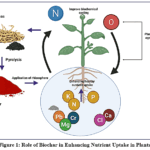 |
Figure 1: Role of Biochar in Enhancing Nutrient Uptake in Plants Click here to View Figure |
Mechanisms of Biochar-Mediated Soil Improvement
The beneficial effects of biochar on soil properties are regulated through multiple physicochemical and biological mechanisms. One of the primary mechanisms involves the presence of surface functional groups that participate in nutrient interactions and soil chemical modification. Oxygen-containing functional groups, including carboxyl, hydroxyl, and carbonyl groups, provide reactive sites for nutrient binding and influence the adsorption capacity of biochar. These functional groups facilitate interactions with soil minerals and organic compounds, thereby improving nutrient availability and reducing nutrient losses through leaching processes. Biochar application significantly enhances soil cation exchange capacity due to its negatively charged surface sites and high surface area. Increased CEC improves the retention of essential cations, including ammonium (NH₄⁺), potassium (K⁺), calcium (Ca²⁺), and magnesium (Mg²⁺), preventing their rapid movement beyond the root zone. This mechanism enhances nutrient availability to plants and reduces dependence on repeated fertilizer applications. Over time, biochar surfaces undergo oxidation processes in soil, resulting in the formation of additional functional groups and further improvement in nutrient retention capacity. Another important mechanism is nutrient adsorption and controlled release. The porous structure of biochar acts as a physical reservoir for nutrients, protecting them from immobilization and environmental losses. Nitrogen compounds, phosphate ions, and potassium minerals can interact with biochar surfaces through electrostatic attraction, ion exchange, and surface complexation. This controlled nutrient release pattern ensures continuous availability of nutrients during plant growth stages, thereby improving nutrient uptake efficiency.
Biochar also serves as an effective microbial habitat due to its porous architecture and ability to retain moisture and organic compounds. The pores of biochar provide protective niches for beneficial microorganisms involved in nutrient cycling, organic matter decomposition, and plant growth promotion. Increased microbial activity following biochar application enhances processes such as nitrogen mineralization, phosphorus solubilization, and organic carbon transformation. Biochar–microbe interactions contribute to improved soil biological health and support sustainable nutrient cycling within agricultural ecosystems. Collectively, these mechanisms demonstrate that biochar functions not merely as a soil conditioner but as a multifunctional amendment capable of restoring degraded soils, improving nutrient dynamics, and enhancing plant productivity.
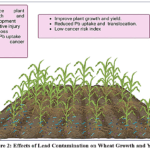 |
Figure 2: Effects of Lead Contamination on Wheat Growth and Yield Click here to View Figure |
Materials and Methods
Experimental Site Description
The experiment was conducted under controlled agricultural conditions to evaluate the influence of biochar application on soil chemical properties, nutrient dynamics, and plant nutrient uptake. The experimental site was selected based on representative soil characteristics and climatic conditions suitable for crop cultivation. The study location was characterized by a semi-arid to subtropical climatic condition with seasonal variations in temperature, rainfall, and relative humidity. Climatic parameters including average temperature, precipitation pattern, and duration of sunlight were recorded throughout the experimental period to understand their influence on soil moisture status, microbial activity, and plant growth performance. Soil samples were collected from the experimental field before biochar incorporation and analyzed for baseline physicochemical properties. Soil classification was performed according to standard soil taxonomy based on texture, mineral composition, and fertility status. Initial soil characterization included determination of soil texture, bulk density, pH, electrical conductivity (EC), organic carbon content, total nitrogen, available phosphorus, exchangeable potassium, micronutrient concentration, and cation exchange capacity (CEC). The collected soil was air-dried, homogenized, and passed through a suitable mesh size before experimental application. The initial soil properties were used as reference values to determine changes induced by different biochar treatments.
Biochar Preparation and Characterization
Biochar Feedstock Selection
Biochar was prepared from different biomass sources selected based on availability, carbon content, nutrient composition, and agricultural relevance.
Agricultural Residue-Derived Biochar
Agricultural residues such as rice husk, wheat straw, maize stalks, sugarcane bagasse, and other crop wastes were considered potential feedstocks. These materials contain high lignocellulosic content and generate stable carbon-rich biochar suitable for improving soil organic carbon and nutrient retention capacity. Crop residue-derived biochar generally exhibits high surface area, porous structure, and significant mineral content beneficial for soil amendment applications.
Woody Biomass-Derived Biochar
Woody materials including tree branches, wood chips, and forestry residues were utilized for producing biochar with high carbon stability. Woody biochar generally possesses higher aromatic carbon content, greater porosity, and enhanced persistence in soil, contributing to long-term carbon sequestration.
Animal Manure-Derived Biochar
Animal manure-based biochar was considered due to its higher nutrient concentration, particularly nitrogen, phosphorus, and potassium. Manure-derived biochar improves nutrient availability and provides additional mineral elements required for plant growth.
Biochar Production Process
Biochar was produced through controlled pyrolysis under limited oxygen conditions. The biomass feedstocks were cleaned, dried, and mechanically processed into uniform particle sizes before pyrolysis. The pyrolysis process was performed at different temperature ranges depending on the desired biochar properties.
Pyrolysis Temperature
Temperature significantly influences biochar characteristics such as carbon stability, porosity, surface area, and nutrient composition. Low-temperature pyrolysis produces biochar with higher functional groups and nutrient retention ability, whereas high-temperature pyrolysis enhances aromatic carbon formation and structural stability.
Residence Time
Residence time during pyrolysis determines the extent of biomass conversion and influences biochar yield and chemical properties. Optimized residence time ensures adequate carbonization while maintaining beneficial surface characteristics.
Activation Conditions
Physical or chemical activation methods may be applied to improve biochar surface properties. Activation enhances pore formation, surface area, adsorption capacity, and nutrient interaction ability.
Physicochemical Characterization
Biochar samples were characterized using standard analytical techniques to evaluate their suitability as soil amendments.
pH Analysis
Biochar pH was measured to determine its alkalinity and potential ability to correct acidic soil conditions. Increased soil pH after biochar application helps reduce aluminum toxicity and improves nutrient availability.
Electrical Conductivity (EC)
EC analysis was performed to determine soluble salt concentration present in biochar. Proper EC levels indicate the suitability of biochar application without causing excessive soil salinity.
Organic Carbon Content
Organic carbon content was measured to evaluate carbon storage potential and stability of biochar. High carbon content contributes to long-term carbon sequestration and improvement of soil organic matter.
Ash Content
Ash content represents mineral components remaining after biochar production. Minerals present in ash contribute to nutrient supply, particularly calcium, potassium, and magnesium.
Analysis of Soil Chemical Properties
Effect of Biochar on Soil pH
Biochar application generally increases soil pH due to the presence of alkaline mineral components and carbonate compounds. The improvement in soil pH helps neutralize acidic soils and enhances nutrient availability. Biochar improves soil buffering capacity by stabilizing fluctuations in soil acidity and maintaining favorable conditions for plant growth.
Electrical Conductivity and Salinity Regulation
Biochar influences soil EC by modifying soluble ion concentration and nutrient retention. Appropriate biochar application reduces nutrient losses while preventing excessive salt accumulation.
Soil Organic Carbon and Carbon Stabilization
Biochar increases soil organic carbon content due to its stable aromatic carbon structure. Enhanced carbon stabilization improves soil quality and contributes to climate change mitigation.
Results and Discussion
Effect of Biochar on Soil pH
Application of biochar produced noticeable changes in soil chemical properties, particularly soil pH. In general, biochar-amended soils exhibited a higher pH compared with the untreated control soil, indicating the liming potential of biochar. This response can be associated with the alkaline nature of most biochars and the presence of basic cations such as calcium, magnesium, potassium, and sodium, together with carbonate and oxide compounds generated during pyrolysis. The magnitude of the pH increase was influenced by biochar feedstock, pyrolysis conditions, and application rate. Manure- and crop residue-derived biochars generally showed a greater potential to increase soil pH because of their comparatively high ash and mineral contents. Woody biochar also improved soil pH, although its effect was comparatively gradual because woody materials usually contain a greater proportion of stable aromatic carbon and a lower concentration of readily soluble mineral constituents. The increase in soil pH can be considered agronomically beneficial, particularly in acidic soils, because it may reduce aluminium and manganese toxicity while simultaneously increasing the availability of several essential nutrients. Biochar also contributed to an improvement in soil buffering capacity. The porous carbon matrix and surface functional groups present in biochar provide reactive sites capable of exchanging protons and basic cations. Consequently, biochar-amended soil may be less susceptible to rapid fluctuations in acidity, thereby creating a more stable rhizospheric environment for root development and microbial activity.
Changes in Electrical Conductivity and Soil Salinity
Electrical conductivity was affected by biochar incorporation because biochar contains varying quantities of soluble mineral salts. An initial increase in soil EC may occur following biochar application as potassium, calcium, magnesium, phosphate, and other ions are released from the biochar matrix. Such an increase does not necessarily represent a detrimental salinity effect when the EC remains within the tolerance range of the cultivated crop.
The response was strongly dependent on the type of feedstock. Manure-derived biochar tended to contribute a greater quantity of soluble nutrients and salts than woody biochar. Agricultural residue-derived biochar produced an intermediate response, depending on the original mineral composition of the biomass. Appropriate application rates are therefore essential because excessive use of highly mineralized biochar could increase soil salinity, whereas moderate application can improve nutrient availability without creating salt stress. The adsorption capacity of biochar may also help regulate soil EC over time. The porous structure and negatively charged surface of biochar can retain nutrient cations and reduce their rapid movement through the soil profile. Consequently, nutrients remain accessible in the root zone for longer periods, reducing leaching losses and potentially improving fertilizer-use efficiency.
Soil Organic Carbon and Carbon Stabilization
One of the most prominent effects of biochar application was the enrichment of soil organic carbon. This improvement can be attributed directly to the addition of carbon-rich material produced during pyrolysis. Unlike fresh plant residues, biochar contains highly condensed aromatic carbon structures that are comparatively resistant to microbial decomposition. Therefore, its incorporation into soil represents a potentially effective strategy for increasing stable soil carbon pools. The degree of carbon stabilization is influenced by pyrolysis temperature. Biochars produced at relatively high temperatures generally contain a larger proportion of aromatic and recalcitrant carbon and are consequently more persistent in soil. Conversely, lower-temperature biochars retain more oxygen-containing functional groups and labile organic components, which may stimulate nutrient cycling and microbial activity. Thus, selection of pyrolysis conditions should depend on whether the primary objective is long-term carbon sequestration, rapid soil fertility improvement, or a combination of both. Improved soil organic carbon may also indirectly influence soil aggregation, moisture retention, and microbial habitat. The porous architecture of biochar provides microsites for microorganisms and can protect organic substrates from rapid degradation. These characteristics support the development of a more biologically active and structurally stable soil environment.
Influence on Nutrient Availability and Retention
Biochar amendment improved the soil’s capacity to retain essential plant nutrients. The increase in nutrient retention can be attributed to the high surface area, porous structure, and development of charged functional groups on biochar surfaces. These characteristics improve the adsorption and exchange of nutrient ions and contribute to an increase in cation exchange capacity.
Potassium availability is particularly influenced by biochar because many plant-derived biochars contain appreciable quantities of potassium in their ash fraction. Similarly, manure-derived biochar may contribute phosphorus, calcium, magnesium, and other mineral nutrients. Biochar can also reduce nutrient losses by adsorbing ammonium and other nutrient ions and retaining them within the root zone. Phosphorus availability may increase after biochar application through both direct and indirect mechanisms. Biochar itself may supply phosphorus, while changes in soil pH can reduce phosphorus fixation under acidic conditions. Furthermore, the interaction of biochar with soil minerals may modify adsorption-desorption equilibria and improve the proportion of phosphorus available for plant uptake.
Effect on Plant Nutrient Uptake and Growth
Improvement in soil chemical conditions following biochar incorporation was reflected in enhanced nutrient availability and the potential for improved nutrient acquisition by plants. Better soil pH, greater nutrient retention, and increased organic carbon collectively create favorable conditions for root development and nutrient uptake. Biochar-treated plants may therefore exhibit improved growth performance compared with plants grown in unamended soil. The effects are likely to vary according to biochar type and application level. Manure-derived biochar may provide a relatively rapid nutritional response because of its higher mineral content, whereas woody biochar may contribute more substantially to long-term soil structural improvement and carbon stabilization. Agricultural residue biochars may provide an intermediate balance between nutrient supply and carbon persistence. Overall, the observed trends demonstrate that biochar can function simultaneously as a soil conditioner, nutrient-retention material, and stable carbon source. Its effectiveness, however, depends on feedstock characteristics, pyrolysis temperature, residence time, activation conditions, soil type, and application rate. Appropriate matching of biochar properties with soil constraints is therefore essential to maximize agronomic benefits while avoiding excessive alkalinity or salinity. The findings support the potential use of biochar as a sustainable soil amendment for improving soil fertility, enhancing nutrient-use efficiency, promoting plant nutrition, and contributing to long-term carbon sequestration.
Conclusion
The present study demonstrates the substantial potential of biochar as a sustainable soil amendment for improving soil chemical properties, nutrient dynamics, and plant nutrient availability. Biochar application improved soil pH and buffering capacity, enhanced stable soil organic carbon, influenced electrical conductivity, and increased the capacity of soil to retain essential plant nutrients. These effects are primarily associated with the porous structure, high surface area, mineral composition, and surface functional groups of biochar, which facilitate nutrient adsorption, ion exchange, and gradual nutrient release. The effectiveness of biochar was strongly influenced by its feedstock and production conditions. Manure-derived biochar may provide comparatively rapid nutrient enrichment because of its higher mineral content, whereas woody biochar contributes substantially to long-term carbon stabilization and soil structural improvement. Agricultural residue-derived biochars may provide a balance between nutrient supply and carbon persistence. Biochar-mediated improvements in soil pH, organic carbon, nutrient retention, and microbial habitat can collectively create favorable conditions for root growth and plant nutrient uptake. However, the response to biochar is not uniform, and excessive application of highly alkaline or mineral-rich biochar may increase soil salinity or alkalinity. Therefore, appropriate selection of feedstock, pyrolysis temperature, application rate, and compatibility with specific soil conditions is essential. Overall, the findings support the use of properly characterized biochar as a multifunctional strategy for restoring soil fertility, improving nutrient-use efficiency, supporting plant nutrition, reducing nutrient losses, and promoting long-term carbon sequestration in sustainable agricultural systems.
Funding Sources
The author(s) received no financial support for the research, authorship, and/or publication of this article.
Conflict of Interest
The author(s) do not have any conflict of interest.
Data Availability Statement
This statement does not apply to this article.
Ethics Statement
This research did not involve human participants, animal subjects, or any material that requires ethical approval.
References
- Asai, H., Samson, B. K., Haefele, S. M., Songyikhangsuthor, K., Homma, K., Kiyono, Y., Inoue, Y., Shiraiwa, T., & Horie, T. (2009). Biochar amendment techniques for upland rice production in Northern Laos: 1. Soil physical properties, leaf SPAD and grain yield. Field Crops Research, 111(1–2), 81–84.
CrossRef - Biederman, L. A., & Harpole, W. S. (2013). Biochar and its effects on plant productivity and nutrient cycling: A meta-analysis. GCB Bioenergy, 5(2), 202–214.
CrossRef - Chan, K. Y., Van Zwieten, L., Meszaros, I., Downie, A., & Joseph, S. (2007). Agronomic values of greenwaste biochar as a soil amendment. Australian Journal of Soil Research, 45(8), 629–634.
CrossRef - Chan, K. Y., Van Zwieten, L., Meszaros, I., Downie, A., & Joseph, S. (2008). Using poultry litter biochars as soil amendments. Australian Journal of Soil Research, 46(5), 437–444.
CrossRef - Cheng, C. H., Lehmann, J., Thies, J. E., Burton, S. D., & Engelhard, M. H. (2006). Oxidation of black carbon by biotic and abiotic processes. Organic Geochemistry, 37(11), 1477–1488.
CrossRef - Cheng, C. H., Lehmann, J., & Engelhard, M. H. (2008). Natural oxidation of black carbon in soils: Changes in molecular form and surface charge along a climosequence. Geochimica et Cosmochimica Acta, 72(6), 1598–1610.
CrossRef - Crane-Droesch, A., Abiven, S., Jeffery, S., & Torn, M. S. (2013). Heterogeneous global crop yield response to biochar: A meta-regression analysis. Environmental Research Letters, 8(4), 044049.
CrossRef - Demirbaş, A. (2004). Effects of temperature and particle size on bio-char yield from pyrolysis of agricultural residues. Journal of Analytical and Applied Pyrolysis, 72(2), 243–248.
CrossRef - Gaskin, J. W., Speir, R. A., Harris, K., Das, K. C., Lee, R. D., Morris, L. A., & Fisher, D. S. (2010). Effect of peanut hull and pine chip biochar on soil nutrients, corn nutrient status, and yield. Agronomy Journal, 102(2), 623–633.
CrossRef - Glaser, B., Lehmann, J., & Zech, W. (2002). Ameliorating physical and chemical properties of highly weathered soils in the tropics with charcoal—A review. Biology and Fertility of Soils, 35(4), 219–230.
CrossRef - Hossain, M. K., Strezov, V., Chan, K. Y., & Nelson, P. F. (2010). Agronomic properties of wastewater sludge biochar and bioavailability of metals in production of cherry tomato (Lycopersicon esculentum). Chemosphere, 78(9), 1167–1171.
CrossRef - Jeffery, S., Verheijen, F. G. A., van der Velde, M., & Bastos, A. C. (2011). A quantitative review of the effects of biochar application to soils on crop productivity using meta-analysis. Agriculture, Ecosystems & Environment, 144(1), 175–187.
CrossRef - Keiluweit, M., Nico, P. S., Johnson, M. G., & Kleber, M. (2010). Dynamic molecular structure of plant biomass-derived black carbon (biochar). Environmental Science & Technology, 44(4), 1247–1253.
CrossRef - Kookana, R. S., Sarmah, A. K., Van Zwieten, L., Krull, E., & Singh, B. (2010). The role of biochar in modifying the environmental fate, bioavailability, and efficacy of pesticides in soils: A review. Australian Journal of Soil Research, 48(7), 627–637.
CrossRef - Laird, D. A., Fleming, P., Wang, B., Horton, R., & Karlen, D. L. (2010). Biochar impact on nutrient leaching from a Midwestern agricultural soil. Geoderma, 158(3–4), 436–442.
CrossRef - Lehmann, J., Gaunt, J., & Rondon, M. (2006). Bio-char sequestration in terrestrial ecosystems—A review. Mitigation and Adaptation Strategies for Global Change, 11(2), 403–427.
CrossRef - Lehmann, J., Rillig, M. C., Thies, J., Masiello, C. A., Hockaday, W. C., & Crowley, D. (2011). Biochar effects on soil biota—A review. Soil Biology and Biochemistry, 43(9), 1812–1836.
CrossRef - Liu, X., Zhang, A., Ji, C., Joseph, S., Bian, R., Li, L., Pan, G., & Paz-Ferreiro, J. (2013). Biochar’s effect on crop productivity and the dependence on experimental conditions—A meta-analysis of literature data. Plant and Soil, 373(1–2), 583–594.
CrossRef - Major, J., Rondon, M., Molina, D., Riha, S. J., & Lehmann, J. (2010). Maize yield and nutrition during 4 years after biochar application to a Colombian savanna Oxisol. Plant and Soil, 333(1–2), 117–128.
CrossRef - Novak, J. M., Busscher, W. J., Laird, D. L., Ahmedna, M., Watts, D. W., & Niandou, M. A. S. (2009). Impact of biochar amendment on fertility of a southeastern Coastal Plain soil. Soil Science, 174(2), 105–112.
CrossRef - Rondon, M. A., Lehmann, J., Ramírez, J., & Hurtado, M. (2007). Biological nitrogen fixation by common beans (Phaseolus vulgaris) increases with bio-char additions. Biology and Fertility of Soils, 43(6), 699–708.
CrossRef - Spokas, K. A., Cantrell, K. B., Novak, J. M., Archer, D. W., Ippolito, J. A., Collins, H. P., Boateng, A. A., Lima, I. M., Lamb, M. C., McAloon, A. J., Lentz, R. D., & Nichols, K. A. (2012). Biochar: A synthesis of its agronomic impact beyond carbon sequestration. Journal of Environmental Quality, 41(4), 973–989.
CrossRef - Steinbeiss, S., Gleixner, G., & Antonietti, M. (2009). Effect of biochar amendment on soil carbon balance and soil microbial activity. Soil Biology and Biochemistry, 41(6), 1301–1310.
CrossRef - Steiner, C., Teixeira, W. G., Lehmann, J., Nehls, T., de Macêdo, J. L. V., Blum, W. E. H., & Zech, W. (2007). Long term effects of manure, charcoal and mineral fertilization on crop production and fertility on a highly weathered Central Amazonian upland soil. Plant and Soil, 291(1–2), 275–290.
CrossRef - Steiner, C., Glaser, B., Teixeira, W. G., Lehmann, J., Blum, W. E. H., & Zech, W. (2008). Nitrogen retention and plant uptake on a highly weathered Central Amazonian Ferralsol amended with compost and charcoal. Journal of Plant Nutrition and Soil Science, 171(6), 893–899.
CrossRef - Van Zwieten, L., Kimber, S., Morris, S., Chan, K. Y., Downie, A., Rust, J., Joseph, S., & Cowie, A. (2010). Effects of biochar from slow pyrolysis of papermill waste on agronomic performance and soil fertility. Plant and Soil, 327(1–2), 235–246.
CrossRef - Warnock, D. D., Lehmann, J., Kuyper, T. W., & Rillig, M. C. (2007). Mycorrhizal responses to biochar in soil—Concepts and mechanisms. Plant and Soil, 300(1–2), 9–20.
CrossRef - Zhang, A., Cui, L., Pan, G., Li, L., Hussain, Q., Zhang, X., Zheng, J., & Crowley, D. (2010). Effect of biochar amendment on yield and methane and nitrous oxide emissions from a rice paddy from Tai Lake Plain, China. Agriculture, Ecosystems & Environment, 139(4), 469–475.
CrossRef - Zhang, A., Bian, R., Pan, G., Cui, L., Hussain, Q., Li, L., Zheng, J., Zheng, J., Zhang, X., Han, X., & Yu, X. (2012). Effects of biochar amendment on soil quality, crop yield and greenhouse gas emission in a Chinese rice paddy: A field study of two consecutive rice growing cycles. Field Crops Research, 127, 153–160.
CrossRef - Zimmerman, A. R., Gao, B., & Ahn, M. Y. (2011). Positive and negative carbon mineralization priming effects among a variety of biochar-amended soils. Soil Biology and Biochemistry, 43(6), 1169–1179.
CrossRef
Accepted on: 25 Aug 2026
Second Review by: Dr. Nizam Uddin
Final Approval by: Dr.Abdelkader Zarrouk


ISSN Online: 2231-5039