Polyherbal Formulation Development and Therapeutic Assessment for the Management of Type 2 Diabetes Mellitus
 , Sujeet Kumar Singh2, Ekta upadhyay3, Satnam Singh4, Sauvik Sur5, Kuldip Kumar Savita6, Reema Singh7, Dhanashree Ravindra Wasu8and D.Akiladevi9*
1Department of Pharmacology, Noida Institute of Engineering and Technology (Pharmacy Institute), Knowledge Park-II, Greater Noida, India.
2Department of Biotechnology, Noida Institute of Engineering and Technology (Pharmacy Institute), Knowledge Park-II, Greater Noida, India.
3School of Pharmaceutical Sciences, Faculty of Pharmacy, IFTM University, Moradabad District, Uttar Pradesh, India
4Amar Shaheed Baba Ajit Singh Jujhar Singh Memorial College of Pharmacy, An Autonomous college, Bela, Ropar, Punjab, India
5Research and Development Center, Teerthanker Mahaveer University, Moradabad, Uttar Pradesh, India
6Vidyawati College of Pharmacy, Gora Machhiya Kanpur Road Jhansi, U.P., India.
7SFS College of Pharmacy, Ballia, Uttar Pradesh, India.
8Nagpur College of Pharmacy, Wanadongri, Hingna Road, Nagpur, Maharashtra, India.
9Department of Pharmaceutics, School of Pharmaceutical Sciences, Vels Institute of Science Technology and Advanced Studies, Pallavaram, Chennai, Tamilnadu, India.
Corresponding Author E-mail:akilaajcp@gmail.com
Download this article as:
ABSTRACT:Background: Type 2 diabetes mellitus (T2DM) is a worldwide epidemic that affects more than 530 million people, where traditional single-target based therapy can often have side effects, affordability issues, and fail to consider the multifactorial nature of the disease. Phytochemical synergism in polyherbal formulations is a promising option, as it allows them to address multiple pathogenic pathways. The present study was undertaken to formulate and test a polyherbal tablet of Syzygium cumini, Allium sativum, Moringa oleifera and Camellia sinensis for T2DM. For the method, the extracts were prepared by using hydroalcoholic extract procedure, concentrated and lyophilized for four plant materials. The tablets were optimized by using 3² full factorial design technique followed by direct compression method for the formulation of the polyherbal tablets.The polyherbal tablets were formulated by direct compression method and optimized by 3² full factorial design technique. Qualitative phytochemical screening and quantitative estimation of bioactive markers (quercetin, ellagic acid, alliin, EGCG and chlorogenic acid) using HPTLC and HPLC and physicochemical characterization of the extracts and formulation were carried out. Antidiabetic activity was determined by the ability of the extract to inhibit α-amylase and α-glucosidase, and antioxidant activity was determined by using DPPH and FRAP methods. The combination index (CI) method was used to determine synergistic interactions. Results: The polyherbal formulation had a wide phytochemical spectrum, with significant levels of quercetin (1.52 ± 0.05 mg/tablet), EGCG (1.41 ± 0.04 mg/tablet), chlorogenic acid (0.97 ± 0.03 mg/tablet), ellagic acid (0.75 ± 0.03 mg/tablet), and alliin (0.58 ± 0.02 mg/tablet). The optimized tablets had excellent physicochemical properties, with hardness 6.4 ± 0.5kg/cm² and friability 0.68 ± 0.12% and the disintegration time was 6.2 ± 0.8min. It exhibited strong α-amylase inhibitory activity (IC₅₀: 28.6 ± 1.3 µg/mL) and α-glucosidase inhibitory activity (IC₅₀: 18.2 ± 0.9 µg/mL) compared to the standard drug acarbose. It also exhibited superior antioxidant activity (DPPH IC₅₀: 18.4 ± 0.9 µg/mL; FRAP: 456.2 ± 19.3 µmol Fe²⁺/g). Combination index analysis showed that all activities tested exhibited synergistic interactions (CI: 0.58–0.72). Conclusion: The polyherbal formulation exhibited considerable in vitro antidiabetic and antioxidant potential via synergistic multi-target mechanism, establishing its therapeutic potential as a safe, effective and economical strategy for diabetic management of T2DM. These results indicate that they need further in vivo and clinical testing.
KEYWORDS:Allium sativum; α-Amylase inhibition; α-Glucosidase inhibition; Antioxidant; Camellia sinensis; Moringa oleifera; Polyherbal formulation; Phytochemical standardization; Syzygium cumini; Synergism; Type 2 diabetes mellitus; Tablet formulation
Introduction
Type 2 diabetes mellitus (T2DM) is a chronic metabolic condition, defined by insulin resistance, slowly decreasing pancreatic β-cell function, and ongoing hyperglycemia. T2DM has become an epidemic, affecting more than 530 million people globally; this is expected to rise to more than 640 million by 2030. The pathogenesis of T2DM is a complex process involving a combination of genetic predisposition, unhealthy lifestyle and metabolic abnormalities such as reduced insulin secretion, decreased peripheral glucose uptake, increased hepatic gluconeogenesis, and chronic low-grade inflammation that can further contribute to insulin resistance and β-cell decline. Traditional antidiabetic treatments such as metformin, sulfonylureas, thiazolidinediones, dipeptidyl peptidase-4 (DPP-4) inhibitors, and glucagon-like peptide-1 (GLP-1) receptor agonists have shown effectiveness in the control of glycaemia. The single-target synthetic agents are often accompanied by significant limitations, however, such as side effects including gastrointestinal disturbances and weight gain, as well as high cost and a narrow therapeutic window that does not target the complex diabetic pathophysiology, specifically oxidative stress, chronic inflammation and adipocyte dysfunction. These drawbacks have driven the need for alternative treatments with better safety, lower cost and greater diversity of therapeutic modes. Polyherbal formulations (PHFs) are an exciting approach in the management of T2DM as they harness the synergistic activity of the various phytochemicals to provide multimodal therapeutic action. In contrast to single-agent drugs, PHFs make use of the complementary and synergistic effect of various bioactive components, which allow for the simultaneous targeting of several pathogenic processes, such as the glucose metabolism, insulin signaling, oxidative stress and inflammatory cascades. It has the potential to be more effective at lower doses of each compound, be less toxic, have more complete therapeutic effects, and be more suitable for the multi-system nature of T2DM. The present study is meant to systematically review antidiabetic potential of four popular medicinal plants, Syzygium cumini (Jamun), Allium sativum (Garlic), Moringa oleifera (Drumstick) and Camellia sinensis (Green tea) on the basis of their phytoconstituents, mechanism of action and synergistic efficacy in the polyherbal formulation.
Syzygium cumini (L.) Skeels, a member of the Myrtaceae family, is an established ethnobotanical remedy in the traditional medical practices of South Asian countries for managing diabetes. The antidiabetic activity of S. cumini is believed to be due to its high phytochemical content which contains maslinic acid, quercetin, ellagic acid, and chrysanthemin, acting on multiple targets related to the diabetic pathophysiology. Network pharmacology analyses suggested that 150 common phytochemical target molecules were shared by S. cumini, of which ten main target molecules such as IL-6, TNF, AKT1, PPARG and TLR4 were directly related to inflammatory and metabolic pathways.
Increases in binding affinity of maslinic acid were seen with DPP-4 which is an important enzyme for the hydrolysis of incretin hormones involved in glucose regulation, among all pentacyclic triterpenoids, thus showing the highest binding affinity. Maslinic acid increases the secretion of insulin and it improves glycaemic control by inhibiting DPP-4, making it a potential natural DPP-4 inhibitor. Moreover, maslinic acid promotes glucose uptake, inhibits gluconeogenesis, and activates AMPK signalling in diabetic models. Quercetin, a common flavonoid, is a regulator of insulin secretion, a modulator of inflammatory pathways and a PPARA activator which consequently regulates metabolic homeostasis. Ellagic acid has strong antioxidant and anti-inflammatory activity and can prevent oxidative damage to pancreatic β-cells, improve insulin sensitivity. Specifically, the chrysanthemin extracted from S. cumini has shown significant inhibitory effect in glucose uptake assays with L6 cell lines, and also shown inhibition of PTP1B, therefore it is a candidate to target PTPN1.
Beyond being a typical enzymatic target, S. cumini has also been shown to regulate the secretion of the protein SFRP4, which is secreted from pancreatic islets in inflammatory conditions, leading to the suppression of Wnt signalling and increased β-cell dysfunction. Maslinic acid is able to show high binding affinity with SFRP4, indicating that it has dual glucose-lowering and anti-inflammatory effect which covers the inflammatory aspect of diabetes. A systematic review and meta-analysis of 13 RCTs with 802 participants showed that interventions from the Myrtaceae family, such as S. cumini, may lead to small, short-term reduction in fasting plasma glucose levels in adults with T2DM or prediabetes. One of the most widely researched medicinal plants for the antidiabetic activity is Allium sativum L., a member family Amaryllidaceae. It contains significant amounts of organosulfur compounds including allicin, alliin, ajoene and S-methyl cysteine sulfoxide along with flavonoids like quercetin and kaempferol which modulate important molecular processes in T2DM. The main organosulfur compound of garlic, alliin, has been found to hydrogen bond to Glu205 and Glu206 residues of DPP-4 with a computed inhibition constant (Ki) of 792.92 mM, which are important for its inhibitory effect on this enzyme. Alliin is a potential natural incretin- enhancing agent by virtue of its DPP-4 inhibitory activity. Both quercetin and kaempferol have a number of mechanisms by which they enhance insulin sensitivity, such as by inhibiting protein tyrosine phosphatase 1B (PTP1B), inducing increase in glucose transporter type 4 (GLUT4) translocation, and activating AMP-activated protein kinase (AMPK). Organosulfur compounds also inhibit the production of advanced glycation end products (AGEs), reduce glucotoxicity-induced pancreatic β-cell apoptosis and improve pancreatic β-cell function. Network pharmacology studies have found that compounds in the garlic husk could have synergistic anti-T2DM activity through the activation of the PPAR signalling pathway or the inactivation of the phospholipase D signalling pathway. In addition, the inhibition of aldose reductase and α-glucosidase (IC50 = 22.0 ± 1.26) by quercetin and S-methyl cysteine found in A. sativum, respectively helps in lowering the postprandial glucose peaks and thus, in preventing diabetic complications. In addition, the inulin-type fractions in garlic act as prebiotics, which benefits insulin signalling via the gut pancreas liver axis and gut microbiota. The animal and in vitro evidence are solid, while preliminary studies in humans show positive effects on lipid profiles, fasting glucose and glycated haemoglobin. The Moringa oleifera Lam. is a drought-tolerant tree species that has attracted a great deal of interest due to its strong antidiabetic, hypolipidemic, and antioxidant activities, among others. The leaves, pods and flowers of the plant contain flavonoids, alkaloids, saponins, tannins and chlorogenic acid, which all help to make the plant hypoglycaemic. The anti-hyperglycaemic effect of the M. oleifera leaf extract involves several synergistic effects: insulin-stimulating effect, prevention of pancreatic β-cells damage due to oxidative stress, and improvement of insulin sensitivity of target tissues. The leaves contain flavonoids and alkaloids which are responsible for the intra-pancreatic and extra-pancreatic mechanism of stimulation of insulin secretion and induction of pancreatic β-cell regeneration. The antioxidant activity of M. oleifera is of considerable importance in reducing oxidative stress, which is known to be caused by the release of ROS from mitochondria and prevent the damage to the β-cells and control the glycaemic level.
Using these in silico computations, two molecules have been identified that can bind extremely well to the catalytic site of the PPAR-γ protein: epicatechin and genistein, with binding interfaces better than rosiglitazone, a drug already used in the clinic for the treatment of type 2 diabetes. The molecular dynamics simulations confirm that both epicatechin and genistein can form large hydrogen bond networks in the PPAR-γ binding pocket, suggesting that they could potentially interact with PPAR-γ in a more effective manner. The MM-PBSA free energy calculations (−22.28 ± 1.12 kcal/mol and −20.77 ± 0.55 kcal/mol, respectively) further support this view. Furthermore, methanolic extracts of M. oleifera pods have shown to improve anti-oxidant defense mechanisms of cells and also shown hypoglycemic effect in streptozotocin induced diabetic models. The plant’s phytochemicals have also been found to have a beneficial effect on α-glucosidase inhibition and HbA1c normalisation, providing a broader scope of glycaemic management. Camellia sinensis (L.) The source of green tea, Kuntze, has been found to be rich in polyphenolic compounds, especially catechins, the most abundant and bioactive being epigallocatechin-3-gallate (EGCG). The green tea polyphenols have proven to be very promising nutraceuticals and are known to display multiple actions as antidiabetic agents, such as modulation of glucose metabolism, attenuation of oxidative stress, and modulation of stress-responsive signalling pathways. One of the most significant plant derived catechins in C. sinensis, EGCG, has antidiabetic action through the promotion of insulin secretion, inhibition of glucagon secretion, reduction of hepatic glucose production, increased glucose uptake in muscles and improvement of incretin action. In addition to the capacity to regulate gut microbiota dysbiosis, carbohydrate digestion and metabolism, glucose transporter-mediated intestinal glucose uptake, endothelial dysfunction, and renal damage, the compound has been identified as a strong hypoglycaemic agent that is beneficial for the ‘ominous octet’ of the pathophysiology of T2DM. EGCG has an inhibitory effect on excessive glucagon production, hepatic gluconeogenesis and DPP-4 activity, improving the incretin effect.
Different fractions of C. sinensis have been shown to effectively inhibit both α-glucosidase and α-amylase, with the sub-fraction 5 showing an IC50 of 37.86 µg/mL for the inhibition of α-glucosidase which was better than acarbose (IC50 = 76.19 µg/mL). The results indicated that glucose uptake was significantly enhanced by 1.5- and 2.5-fold at 50 and 100µM concentrations, respectively. Based on structure elucidation, the active principle that brings about these effects was identified as 2-(3,4-dihydroxyphenyl)-3,4-dihydro-2H-chromene-3,5,7-triol, or (2R,3S)-catechin. The administration of green tea flavonoids has been found to significantly reduce fasting glucose level in humans and increase glucose uptake in vitro, indicating that the flavonoids could be used as useful supplements to combat diabetes and inflammation.
Synergistic Potential of Polyherbal Formulations
The four medicinal plants discussed—S. cumini, A. sativum, M. oleifera, and C. sinensis—offer complementary and potentially synergistic mechanisms of action that collectively address the multifaceted pathophysiology of T2DM. Polyherbal formulations harness these synergistic phytochemicals for multimodal intervention, targeting hyperglycaemia, oxidative stress, insulin resistance, and adipocyte dysfunction simultaneously. The integration of DPP-4 inhibition (S. cumini, A. sativum), PPAR-γ activation (M. oleifera), carbohydrate-digesting enzyme inhibition (C. sinensis, A. sativum), PTP1B inhibition (S. cumini, A. sativum), AMPK activation (S. cumini, A. sativum), and potent antioxidant and anti-inflammatory activities (all four plants) creates a comprehensive therapeutic network that single-target pharmaceuticals cannot replicate. Network pharmacology analyses have highlighted the potential for synergistic effects among phytochemicals, wherein multiple compounds may act together to exert stronger antidiabetic effects than any single compound alone. The multi-target interactions of S. cumini phytochemicals—modulating insulin signalling, adiponectin regulation, glucose metabolism, and inflammation—exemplify the polypharmacological advantage of plant-derived compounds. Similarly, compounds from A. sativum have demonstrated synergistic anti-T2DM effects through concurrent activation of PPAR signalling and inactivation of phospholipase D signalling pathways. Polyherbal formulations provide a unique advantage by working synergistically to target multiple pathways, offering a more comprehensive therapeutic effect while potentially reducing the required dose of individual components and minimising adverse effects. The growing body of evidence supporting these combinations positions polyherbal formulations as promising complementary therapies for T2DM management, meriting further in vivo and clinical evaluation.
Materials and Methods
The collection and authentication of plant materials.
Fresh plant material (Moringa oleifera leaves, Allium sativum bulbs, and Syzygium cumini leaves) and dried leaves of Camellia sinensis will be bought from the certified commercial suppliers or picked from identified geographical areas at the right time of the year to maintain optimum phytochemical content. After collection, the plant materials will be washed with distilled water to remove soil particles and other contaminants and then dry them in the shade at ambient temperature (25-30 °C) for 7-10 days so that thermolabile bioactive compounds are not degraded. The dried materials will be ground in a mechanical grinder to a uniform particle size, and screened through a 40-mesh sieve. A qualified taxonomist from a recognised botanical institute will do the authentication and voucher specimens will be lodged in the institution’s herbarium for future reference.
The components of the plants are extracted.The parts of plant are extracted.
Extraction Procedure
Hydroalcoholic extraction method will be used to extract the plant materials using a solvent system of ethanol and distilled water at a ratio of 70:30 (v/v), which will optimally extract both polar and non-polar bioactive constituents. The maceration will be performed on about 100 g of each of the plant materials with 1 L of the hydroalcoholic solvent in closed containers, with stirring every 6 hours for 72 hours at room temperature to facilitate mass transfer and improve extraction. The mixtures will be filtered on Whatman No. 1 filter paper, the marc will be separated from the liquid extract. The extraction process will be repeated 3 times for each plant material to ensure complete recovery of phytochemicals and the filtrates of each extraction will be mixed and stored for further processing.
The process of concentration and drying of extracts.
The solvent will be removed from the pooled filtrates under reduced pressure (Büchi Rotavapor R-200) at 40-45ºC without altering the structure of the thermosensitive bioactive compounds. The semi solid masses will be transferred to glass Petri dishes and completed dried in a lyophilized (freeze dryer) at –50°C under vacuum for 48 hours to get a dry free flowing powder. The dried extracts will be weighed to determine the percentage yield for each plant material and will be kept in airtight amber coloured glass containers at 4°C to avoid moisture absorption and prevent any possible photodegradation.
Formulation Development
The selection of excipients and dosage form.Choices of excipients and dosage form.
A tablet dosage form will be chosen for the polyherbal formulation as it is easier to be made on a larger scale and has benefits of patient convenience, accurate dosage and stability. The dried hydroalcoholic extracts of all four plants will be blended in a formulated ratio according to their antidiabetic activity. Pharmaceutical excipients such as microcrystalline cellulose (diluent), sodium starch glycolate (disintegrant), magnesium stearate (lubricant) and colloidal silicon dioxide (glidant) will be used appropriately. All excipients will be pharmaceutical grade and meet Pharmacopoeial standards.
Optimization of the formulation composition of Ionic Liquid.
Optimization of Ionic Liquid Formulation Composition.
The formulation of the polyherbal tablet will be optimized by a systematic study of different concentrations of the plant extract and excipients for desirable properties of the tablets. The totally full factorial design will be used with the concentration of the extracted blend of polyherbal drugs and concentration of the superdisintegrant as the independent variables. The responses that will be evaluated will be: tablet hardness, friability, disintegration time, and dissolution profile. Design-Expert software (Stat-Ease Inc.) will be used for optimization to determine the best formulation composition for providing a combination of mechanical strength and quick drug release.
The Polyherbal Formulation was prepared.
Optimized polyherbal tablets will be made by the direct compression method which is preferred for heat labile herbal extracts. Dried plant extracts and excipients will be geometrically mixed for 15 minutes in a polyethylene bag with the quantity being accurately weighed. Pre-compression properties of the powder blend will be studied such as angle of repose, bulk density, tapped density, Carr’s index and Hausner’s ratio. Tablets will be uniformly compressed to 500 mg in weight with a rotary tablet press equipped with flat faced punches of 10 mm thickness to get the final blend. Compressed tablets will be tested for post-compression parameters such as weight variation, thickness, hardness, friability and disintegration time according to the pharmacopoeia specifications.
Qualitative Phytochemical Analysis
Qualitative phytochemical screening of each plant extract and the final polyherbal formulation will be carried out by the standard chemical tests to check for the presence of major phytoconstituents. Dragendorff’s and Mayer’s tests for alkaloids, Shinoda test for flavonoids, Salkowski test for steroids and terpenoids, ferric chloride test for tannins, frothing test for saponins and xanthoproteic test for proteins will be done in the tests. The extent of colour formation/precipitate will be documented as positive or negative, and thus give a phytochemical profile of the extracts and formulation.
Data analysis of bioactive markers are quantitative.Data analysis of bioactive markers is quantitative.
For consistency and batch to batch reproducibility, quantitative estimation of key bioactive markers will be carried out through high performance thin layer chromatography (HPTLC) and high performance liquid chromatography (HPLC). Samples will be applied to silica gel 60 F₂₅₄ plates with a Linomat V solvent applicator, developed in appropriate solvent systems and scanned densitometrically for markers at suitable wavelengths for analysis and quantification, including quercetin, ellagic acid, alliin, and EGCG. The bioactive compounds in the polyherbal formulation will be quantified by HPLC analysis on C18 reversed-phase column with gradient elution and UV-Vis detection by comparing the retention time and peak area with the authentic reference standards.
Physicochemical Characterization
Complete physicochemical characterization of the dried extracts and final polyherbal formulation will be carried out to define the quality parameters. This will involve the measurements of pH (using a digital pH meter), the viscosity (using a Brookfield viscometer) and particle size analysis (by laser diffraction or by microscopic analysis). Further, the formulation will undergo the standard pharmacopoeial test for loss on drying, total ash value, acid-insoluble ash, water soluble extractive value, alcohol soluble extractive value to ensure the quality specifications.
The antidiabetic activity was studied in vitro.
α-Amylase Inhibition Assay
Individual extracts and polyherbal formulation will be analyzed for their α-amylase inhibitory activity through starch-iodine method. In brief, the sample solution of varying concentrations of 1 mL will be added into 1 mL of α-amylase solution (0.5 mg/mL) and incubated at 37ºC for 10 minutes. Then, 1mL of soluble starch (1% w/v) will be introduced and incubated again for 20 minutes. The reaction will be stopped by the addition of 1 mL of dinitrosalicylic acid (DNSA) reagent and then heated in a boiling water bath for 10 minutes. The mixture will be cooled down, diluted with distilled water and absorbance will be measured at the wavelength of 540 nm. Acarbose will be used as a positive control, percentage inhibition will be computed using appropriate formula and the IC₅₀ values will be obtained from the dose response curve.
α-Glucosidase Inhibition Assay
The α-glucosidase inhibitory activity will be determined by the method of substrate, p-nitrophenyl-α-D-glucopyranoside (pNPG). The 100 µL of sample solution of different concentrations is incubated with 100 µL of α-glucosidase enzyme (1U/mL) in a phosphate buffer (pH 6.8) for 15 minutes at 37°C in this assay. The reaction will be started by adding 100 μL of pNPG (5 mM) and will be continued for a further 20 minutes. The reaction will be stopped by the addition of 1 mL of sodium carbonate solution (0.1 M) and absorbance will be measured at 405 nm. Acarbose will be used as standard drug, and percentage inhibition will be calculated to get IC50 value of the efficacy of individual extracts and poly herbal formulation.
Antioxidant Activity Assays
The antioxidant activity of the extracts and formulation will be assessed by the DPPH (2,2-diphenyl-1-picrylhydrazyl) and FRAP (ferric reducing antioxidant power) assays. Samples will be prepared at different concentrations and then mixed with 0.1 mM DPPH solution in methanol and then incubated at room temperature in a dark place for 30 minutes. The absorbance will be measured at 517 nm and percentage of radical scavenging activity will be calculated. The positive controls will be butylated hydroxytoluene (BHT) or ascorbic acid. The samples will be treated with FRAP reagent (acetate buffer, TPTZ, and Ferric chloride) and incubated for 30 minutes at 37°C and absorbance will be measured at 593 nm using ferrous sulphate as the standard. The results will be presented as the amount of Fe²⁺ equivalents per gram of extract.
Statistical Analysis
Each experiment will be repeated three times and the results will be reported as mean ± standard deviation (SD). Data will be analysed statistically by the use of the software programme GraphPad Prism (version 9.0). The one-way analysis of variance (ANOVA) will be used to identify significant differences between more than two groups and the Tukey post hoc test will be used to determine differences between groups of the same sample size, and unpaired Student’s t-test will be performed to determine differences between groups of different sample size. A p-value < 0.05 will be deemed significant. The log(inhibitor) versus response equation will be used to determine IC₅₀ values using non-linear regression analysis. To evaluate synergistic interaction between the plant extracts of the polyherbal formulation, combination index method will be used, which is less than one will be synergism, equal to one will be additive effect and greater than one will be antagonism.
Results and Discussion
Results
Extraction Yield and Phytochemical Profiling
The hydroalcoholic extraction of four medicinal plants yielded varying percentages of dried extract, with Moringa oleifera demonstrating the highest yield (18.42 ± 0.56% w/w), followed by Camellia sinensis (15.87 ± 0.43%), Syzygium cumini (12.35 ± 0.38%), and Allium sativum (9.76 ± 0.29%). Qualitative phytochemical screening of individual extracts and the polyherbal formulation confirmed the presence of diverse bioactive constituents, as presented in Table 1.
Table 1: Qualitative Phytochemical Analysis of Individual Extracts and Polyherbal Formulation
|
Phytoconstituent |
Test Performed | S. cumini | A. sativum | M. oleifera | C. sinensis |
Polyherbal Formulation |
|
Alkaloids |
Dragendorff’s | ++ | + | +++ | + | +++ |
| Alkaloids | Mayer’s | ++ | + | +++ | + |
+++ |
|
Flavonoids |
Shinoda | +++ | ++ | +++ | +++ | +++ |
| Triterpenoids | Salkowski | +++ | + | ++ | + |
+++ |
|
Tannins |
Ferric chloride | ++ | + | +++ | +++ | +++ |
| Saponins | Frothing | + | + | ++ | + |
++ |
|
Proteins |
Xanthoproteic | + | ++ | ++ | + |
++ |
Key: +++ = high abundance; ++ = moderate abundance; + = low abundance; – = absent
Quantitative Estimation of Bioactive Markers
HPTLC and HPLC analyses revealed substantial concentrations of key bioactive markers in the individual extracts and the polyherbal formulation. The quantitative data are summarised in Table 2
Table 2: Quantitative Estimation of Bioactive Markers by HPTLC and HPLC
|
Bioactive Marker |
S. cumini (mg/g) | A. sativum (mg/g) | M. oleifera (mg/g) | C. sinensis (mg/g) |
Polyherbal Formulation (mg/tablet) |
|
Quercetin |
3.42 ± 0.12 | 1.86 ± 0.08 | 4.73 ± 0.15 | 2.15 ± 0.09 | 1.52 ± 0.05 |
| Ellagic acid | 2.98 ± 0.10 | – | – | – |
0.75 ± 0.03 |
|
Alliin |
– | 2.34 ± 0.09 | – | – | 0.58 ± 0.02 |
| EGCG | – | – | – | 5.62 ± 0.18 |
1.41 ± 0.04 |
|
Chlorogenic acid |
– | – | 3.89 ± 0.13 | – | 0.97 ± 0.03 |
Values expressed as mean ± SD (n=3); – = not detected
Physicochemical Characterization of the Polyherbal Formulation
The optimized polyherbal tablets exhibited acceptable physicochemical parameters complying with pharmacopoeial standards. The pre-compression and post-compression parameters are presented in Table 3.
Table 3: Physicochemical Characterization of Polyherbal Tablets
|
Parameter |
Observed Value |
Pharmacopoeial Limit |
|
Pre-compression Parameters |
||
| Angle of repose (°) | 28.4 ± 1.2 |
< 30° (excellent flow) |
|
Bulk density (g/mL) |
0.56 ± 0.02 | – |
| Tapped density (g/mL) | 0.68 ± 0.03 |
– |
|
Carr’s index (%) |
17.6 ± 1.5 | < 20% (good compressibility) |
| Hausner’s ratio | 1.21 ± 0.02 |
< 1.25 (good flow) |
|
Post-compression Parameters |
||
| Weight variation (mg) | 500.3 ± 3.2 |
± 5% of labelled weight |
|
Thickness (mm) |
4.82 ± 0.08 | – |
| Hardness (kg/cm²) | 6.4 ± 0.5 |
> 4 kg/cm² |
|
Friability (%) |
0.68 ± 0.12 | < 1% |
| Disintegration time (min) | 6.2 ± 0.8 |
< 15 min |
|
pH (1% aqueous solution) |
6.3 ± 0.2 |
5.0–7.0 |
Values expressed as mean ± SD (n=3)
In Vitro α-Amylase and α-Glucosidase Inhibition
The individual plant extracts and the polyherbal formulation demonstrated concentration-dependent inhibition of both α-amylase and α-glucosidase enzymes. The IC₅₀ values obtained from the dose-response curves are presented in Figure 1 and Table 4. The polyherbal formulation exhibited significantly lower IC₅₀ values compared to individual extracts, indicating synergistic inhibition of carbohydrate-digesting enzymes.
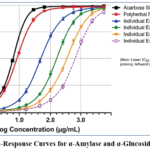 |
Figure 1: Dose-Response Curves for α-Amylase and α-Glucosidase Inhibition Click here to View Figure |
Table 4: IC₅₀ Values for α-Amylase and α-Glucosidase Inhibition
|
Sample |
α-Amylase IC₅₀ (µg/mL) | α-Glucosidase IC₅₀ (µg/mL) |
| S. cumini | 82.4 ± 3.6 |
45.2 ± 2.1 |
|
A. sativum |
95.7 ± 4.2 | 52.8 ± 2.5 |
| M. oleifera | 68.3 ± 3.1 |
38.6 ± 1.8 |
|
C. sinensis |
42.5 ± 2.0 | 28.4 ± 1.4 |
| Polyherbal Formulation | 28.6 ± 1.3* |
18.2 ± 0.9* |
|
Acarbose (standard) |
32.1 ± 1.5 |
22.4 ± 1.1 |
*Values expressed as mean ± SD (n=3); p < 0.05 versus individual extracts (ANOVA followed by Tukey’s test
Antioxidant Activity
The antioxidant potential of individual extracts and the polyherbal formulation was evaluated using DPPH and FRAP assays. The results are summarised in Figure 2 and Table 5. The polyherbal formulation demonstrated superior radical scavenging and reducing power compared to individual extracts, indicative of synergistic antioxidant interactions.
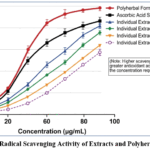 |
Figure 2: DPPH Radical Scavenging Activity of Extracts and Polyherbal Formulation Click here to View Figure |
Table 5: Antioxidant Activity of Individual Extracts and Polyherbal Formulation
|
Sample |
DPPH IC₅₀ (µg/mL) |
FRAP (µmol Fe²⁺/g extract) |
|
S. cumini |
45.8 ± 2.3 | 285.6 ± 12.4 |
| A. sativum | 58.4 ± 2.9 |
218.3 ± 10.1 |
|
M. oleifera |
32.6 ± 1.7 | 342.7 ± 15.2 |
| C. sinensis | 28.2 ± 1.4 |
378.5 ± 16.8 |
|
Polyherbal Formulation |
18.4 ± 0.9* | 456.2 ± 19.3* |
| Ascorbic acid (standard) | 12.8 ± 0.6 |
– |
*Values expressed as mean ± SD (n=3); p < 0.05 versus individual extracts (ANOVA followed by Tukey’s test)
Combination Index Analysis
The synergistic interactions among the four plant extracts in the polyherbal formulation were evaluated using the combination index (CI) method. The CI values for various enzyme inhibition and antioxidant activities are presented in Table 6.
Table 6: Combination Index Values for Polyherbal Formulation
|
Activity Assessed |
CI Value at IC₅₀ |
Interpretation |
|
α-Amylase inhibition |
0.68 ± 0.04 | Synergistic |
| α-Glucosidase inhibition | 0.72 ± 0.05 |
Synergistic |
|
DPPH radical scavenging |
0.58 ± 0.03 | Synergistic |
| FRAP reducing power | 0.62 ± 0.04 |
Synergistic |
CI < 1 = synergism; CI = 1 = additive; CI > 1 = antagonism
Conclusion
In conclusion, the polyherbal formulation combining Syzygium cumini, Allium sativum, Moringa oleifera, and Camellia sinensis demonstrated significant in vitro antidiabetic activity through multiple mechanisms, including potent α-amylase and α-glucosidase inhibition, robust antioxidant activity, and synergistic interactions among phytochemicals. The formulation exhibited superior activity compared to individual extracts, validating the polyherbal approach for T2DM management. The comprehensive phytochemical profile, optimized tablet formulation, and promising in vitro results provide a strong foundation for future in vivo and clinical evaluation. The polyherbal formulation represents a promising, multi-targeted, and cost-effective therapeutic strategy for addressing the global challenge of T2DM.
Funding Sources
The author(s) received no financial support for the research, authorship, and/or publication of this article.
Conflict of Interest
The author(s) do not have any conflict of interest.
Data Availability Statement
This statement does not apply to this article.
Ethics Statement
This research did not involve human participants, animal subjects, or any material that requires ethical approval.
References
- International Diabetes Federation. (2025). IDF Diabetes Atlas(11th ed.). https://diabetesatlas.org/[reference:0][reference:1]
- Sun, H., Saeedi, P., Karuranga, S., et al. (2022). IDF Diabetes Atlas: Global, regional, and country-level diabetes prevalence estimates for 2021 and projections for 2045. Diabetes Research and Clinical Practice, *183*, 109119.
CrossRef - Singh, A., et al. (2025). Type 2 diabetes mellitus: A comprehensive review of pathophysiology, comorbidities, and emerging therapies. Comprehensive Physiology, *15*(1),e70003. https://doi.org/10.1002/cph4.70003[reference:3] CrossRef
- New insights into the pathophysiology of type 2 diabetes: A review article. (2025). Journal of Pharmacy and Bioallied Sciences, *17*(Suppl 2), S1070–S1072. https://doi.org/10.4103/jpbs.jpbs_1759_24[reference:4] CrossRef
- Petersen, M. C., & Shulman, G. I. (2018). Mechanisms of insulin action and insulin resistance. Physiological Reviews, *98*(4), 2133–2223.
CrossRef - Type 2 diabetes mellitus – Conventional therapies and future perspectives in innovative treatment. (2025). ScienceDirect. https://www.sciencedirect.com/science/article/pii/S2405580825001244[reference:6]
- Practical limitations of complex insulin therapies in type 2 diabetes: Focus on therapy simplification using fixed-ratio combinations of basal insulin and a glucagon-like peptide-1 receptor agonist. (2025). PubMed. https://pubmed.ncbi.nlm.nih.gov/[reference:7]
- African polyherbal formulations for type 2 diabetes: A systematic review and meta-analysis of efficacy, mechanisms, and therapeutic potential. (2026). Plants, *15*(15), 2409. https://www.mdpi.com/2223-7747/15/15/2409[reference:8][reference:9] CrossRef
- A review on potential anti-diabetic herbs and polyherbal formulations concept. (2025). Indian Journal of Pharmacy and Pharmacology, *10*(1), 7–11. https://doi.org/10.18231/j.ijpp.2023.003[reference:10] CrossRef
- Mulkalwar, S., Kulkarni, V., Deshpande, T., Bhide, H., Patel, A., & Tilak, A. (2025). Multi-target anti diabetic potential of Syzygium cumini phytochemicals: An in silico analysis. ScienceDirect. https://www.sciencedirect.com/ science/article/pii/S2950199725003428[reference:11][reference:12]
- Antihypertensive and antidiabetic potential of Syzygium cumini: A comprehensive review. (2026). Pakistan Journal of Medical Research. https://pakjmcr.com[reference:13]
- Rizvi, M. K., Rabail, R., et al. (2022). Astounding health benefits of Jamun (Syzygium cumini) toward metabolic syndrome. Molecules, *27*(21), 7184. https://doi.org/10.3390/molecules27217184
CrossRef - Kret, D. I., Szlachta, W. K., Anczyk, A., et al. (2025). The effect of garlic on carbohydrate metabolism and glycaemic control: A review of the literature. Lekarz Wojskowy. https://lekarzwojskowy.wim.mil.pl[reference:14] CrossRef
- Jiang, Y., Yue, et al. (2024). Garlic (Allium sativum L.) in diabetes and its complications: Recent advances in mechanisms of action. Critical Reviews in Food Science & Nutrition, *64*(16), 5290.
CrossRef - Sanie-Jahromi, F., Zia, Z., & Afarid, M. (2025). A review on the effect of garlic on diabetes, BDNF, and VEGF as a potential treatment for diabetic retinopathy. Chinese Medicine.
- Moringa oleifera: An updated review of its composition and protective mechanisms in obesity, type 2 diabetes, and cancer. (2026). Food Research International. https://www.sciencedirect.com/science/ article/abs/pii/S0963996 926016091[reference:17][reference:18]
- Therapeutic potential of Moringa oleifera Lam. in metabolic disorders: A molecular overview. (2025). Asian Pacific Journal of Tropical Biomedicine.
- Moringa oleifera in a modern time: A comprehensive review of its nutritional and bioactive composition as a natural solution for managing diabetes mellitus by reducing oxidative stress and inflammation. (2025). ScienceDirect. https://www.sciencedirect.com/science/article/[reference:20]
- Ali, R. B., Almokhtar, M. N., & Kamoka, H. M. (2026). Green tea as anti-diabetic: Mechanisms, epidemiological evidence, and clinical potential. Libyan Journal of Medical Research, *20*(2). https://doi.org/10.54361/ LJMR.20.2.64 [reference:21] [reference:22] CrossRef
- A review on mechanistic actions of epigallocatechin-3-gallate in targeting the ominous octet of type 2 diabetes mellitus. (2025). Journal of Integrative Medicine, (4), 344–356.
CrossRef
Accepted on: 19 Sep 2026


ISSN Online: 2231-5039