A Molecular-level Analysis of Functional Groups and Phytochemical Correlation for Ten Homeopathic Mother Tinctures using Vibrational Spectroscopy
 , K.R. Binisha1, A. Saravanan1, A. S. Sreeraj1, T.A. Anand1 and Ramasamy Ganesamoorthy2*
1Vinayaka Mission's Homoeopathic Medical College, Vinayaka Mission’s Research Foundation (DU), Salem, Tamil Nadu, India.
2Department of Chemistry, Vinayaka Mission’s Kirupananda Variyar Arts and Science College, Vinayaka Mission’s Research Foundation (DU), Salem, Tamil Nadu, India.
Corresponding Author E-mail: chemgmoorthy@gmail.com
Download this article as:
ABSTRACT:Fourier Transform Infrared (FTIR) spectroscopy offers a non-destructive, physics-based method for characterizing molecular vibrations and identifying functional groups in complex systems. In this study, ten widely used homeopathic mother tinctures—Arnica montana, Aconitum napellus, Bryonia alba, Belladonna, Calendula officinalis, Euphrasia officinalis, Hypericum perforatum, Pulsatilla nigricans, Rhus toxicodendron, and Thuja occidentalis—were analyzed via ATR-FTIR spectroscopy (4000–400 cm⁻¹) following ethanol removal to preserve plant-based signatures. The resulting spectra revealed diagnostic absorption bands corresponding to O–H, N–H, C–H, C=O, C=C, and C–O/C–N functional groups, indicative of flavonoids, alkaloids, glycosides, terpenoids, and phenolic acids. Each spectrum was mapped against known phytoconstituents and correlated with the clinical applications of the remedies, highlighting the molecular basis for their therapeutic effects. Comparative profiling demonstrated both unique and overlapping vibrational signatures, enabling spectral clustering aligned with pharmacological categories such as neuroactive alkaloids, anti-inflammatory flavonoids, and mucosal-protective glycosides. This integrative approach affirms FTIR’s potential as a tool for remedy authentication, standardization, and molecular validation in complementary medicine. The study reinforces the utility of vibrational spectroscopy in bridging traditional therapeutic paradigms with modern physicochemical analytics, promoting evidence-based integration within interdisciplinary health sciences.
KEYWORDS:Functional Groups; Homeopathy; Therapeutic Effects: Tinctures; Vibrational Spectroscopy
Introduction
Fourier Transform Infrared (FTIR) spectroscopy is a powerful analytical technique used to probe molecular vibrations and identify functional groups based on their characteristic absorption of mid-infrared radiation1. With applications spanning materials science, analytical chemistry, and pharmaceutical quality control, FTIR offers a rapid, non-destructive method to detect chemical bonds and assess molecular structures2. The spectral data obtained from FTIR instruments serve as molecular fingerprints, enabling researchers to determine the presence of hydroxyl, carbonyl, amine, ether, and aromatic functionalities in complex organic or inorganic systems3. The vibrational transitions observed in the FTIR spectrum are directly related to the bond strength, atomic mass, and geometry of the molecule, making this method exceptionally useful for characterizing phytochemical constituents in natural products and complex plant-based formulations4. The relevance of FTIR spectroscopy in pharmaceutical research has grown significantly, particularly for characterizing plant extracts, validating drug compositions, detecting contaminants, and confirming structural stability post-processing5. In homeopathy, where many formulations involve mechanical trituration and solvent extraction, FTIR can serve as a bridge between traditional medicinal knowledge and modern physicochemical validation techniques6. By correlating FTIR spectral features with known phytochemicals, one can establish the biochemical foundation of therapeutic effects traditionally attributed to specific remedies.
Mother tinctures form the base of many homeopathic remedies and are typically prepared through maceration or percolation of medicinal plant materials in a hydroalcoholic solution. Unlike higher-potency dilutions, mother tinctures retain significant concentrations of bioactive compounds and are thus well-suited for analytical validation7. These formulations are widely used in clinical homeopathy for managing inflammation, pain, infections, mental disturbances, hormonal imbalance, and organ-specific conditions. Despite their frequent application in homeopathic practice, mother tinctures are seldom investigated using modern analytical physics techniques. As a result, scientific scrutiny and pharmacognostic validation of these formulations remain limited. Analysing the vibrational spectra of commonly used tinctures can yield crucial insights into the molecular basis of their biological activity8. This is particularly important for standardizing preparations, establishing quality benchmarks, and correlating therapeutic claims with structural data. FTIR spectroscopy enables such validation by detecting the spectral signatures of primary phytoconstituents and evaluating the integrity of chemical groups responsible for pharmacological effects9.
Mother In the broader context of integrative and complementary medicine, there is increasing demand for scientific validation of traditionally used remedies. Regulatory bodies, researchers, and healthcare providers are advocating for methods that can confirm the presence, stability, and biological relevance of active compounds in herbal and homeopathic medicines10. FTIR spectroscopy offers a viable platform to meet this demand due to its ability to analyse crude extracts, dried samples, and tinctures without the need for extensive preparation or derivatization11.
Previous studies have demonstrated the utility of FTIR in identifying major constituents in herbal extracts, monitoring degradation in stored pharmaceuticals, and evaluating compound excipient interactions9. However, limited efforts have been made to systematically compare multiple homeopathic mother tinctures through this lens. A comparative vibrational analysis across different medicinal plants can highlight patterns in functional group distribution, clustering of pharmacologically related compounds, and potential correlations between chemical identity and clinical indication.
Furthermore, functional group profiling using FTIR aligns with the principles of vibrational theory and molecular symmetry, making it particularly suitable for physics-based investigations into natural product chemistry. Each absorption band corresponds to a quantized vibrational transition, reflecting the distribution of electron density and nuclear mass within the molecule. As such, FTIR data not only validate the presence of compounds but also offer insights into their structural configuration and resonance stability.
The present study aims to conduct a comprehensive FTIR-based molecular profiling of ten clinically utilized homeopathic mother tinctures: Arnica montana, Aconitum napellus, Bryonia alba, Belladonna, Calendula officinalis, Euphrasia officinalis, Hypericum perforatum, Pulsatilla nigricans, Rhus toxicodendron, and Thuja occidentalis. These remedies were selected based on their widespread usage in homeopathic clinics for treating inflammatory, neurological, dermatological, vascular, and psychosomatic conditions.
Each tincture was analyzed in its native hydroalcoholic form using Attenuated Total Reflectance-Fourier Transform Infrared (ATR-FTIR) spectroscopy in the range of 4000–400 cm⁻¹. Functional group assignments were made based on characteristic vibrational frequencies and correlated with known phytochemical classes, such as flavonoids, alkaloids, glycosides, phenolic acids, essential oils, and terpenoids. The spectral features were further mapped to the traditional therapeutic applications of each remedy to establish a coherent link between molecular identity and clinical usage12.
By combining spectral interpretation, phytochemical inference, and therapeutic mapping, this study seeks to position FTIR spectroscopy as a bridge between homeopathic pharmacology and molecular-level scientific validation. The findings are expected to support ongoing efforts to standardize and authenticate homeopathic tinctures, contribute to the physicochemical database of complementary medicines, and promote interdisciplinary collaboration between physics, pharmacognosy, and integrative health sciences.
Materials and Methods
Sample Selection and Source
Ten homeopathic mother tinctures were selected for this study based on their frequent application in clinical homeopathic practice. These included: Arnica montana, Aconitum napellus, Bryonia alba, Belladonna, Calendula officinalis, Euphrasia officinalis, Hypericum perforatum, Pulsatilla nigricans, Rhus toxicodendron, and Thuja occidentalis. Each remedy was obtained in its official mother tincture form, as per the standards outlined in the Homoeopathic Pharmacopoeia of India (HPI). All samples were procured from certified GMP-compliant homeopathic manufacturers, sealed in amber glass containers to prevent photodegradation.
The selected mother tinctures represent a diverse spectrum of phytochemical profiles, including alkaloids, flavonoids, terpenoids, glycosides, phenolic acids, and essential oils. Their clinical applications range across inflammatory, neurological, dermatological, and cardiovascular conditions, making them ideal candidates for comparative spectroscopic evaluation13.
Sample Preparation and Handling
Each tincture was subjected to minimal sample preparation to preserve its native composition. Prior to FTIR analysis, approximately 3–5 drops (equivalent to ~100 µL) of each mother tincture were dispensed directly onto the ATR crystal. In cases where high alcohol content caused rapid evaporation, samples were re-applied to ensure consistent coverage during spectral acquisition.
All measurements were carried out at room temperature (25 ± 2 °C) under controlled ambient humidity (50 ± 5%). The samples were handled using nitrile gloves and sterile pipettes to prevent contamination. After each measurement, the ATR crystal was thoroughly cleaned with analytical-grade ethanol and lint-free tissue to avoid spectral interference from residual compounds14.
IR Spectroscopic Analysis
FTIR spectral analysis was performed using a Bruker ALPHA II FTIR spectrometer equipped with a diamond Attenuated Total Reflectance (ATR) module. The instrument was configured to record spectra in the mid-infrared range from 4000 to 400 cm⁻¹, with a spectral resolution of 4 cm⁻¹ and 24 scans averaged per sample to ensure optimal signal-to-noise ratio.
The OPUS software suite (Bruker Optik GmbH) was used for spectral acquisition, baseline correction, and preliminary peak identification. Atmospheric suppression settings were enabled to minimize interference from ambient water vapor and CO₂. Background spectra were recorded and automatically subtracted before each sample run to maintain analytical consistency.
Each sample spectrum was acquired in triplicate to ensure reproducibility. The three scans were overlaid and averaged to produce the final representative spectrum for each mother tincture. Spectral outputs were analyzed in absorbance mode to enhance visibility of minor peaks and vibrational shoulders12.
Peak Assignment and Functional Group Identification
Key functional group regions were identified based on standard IR spectral interpretation tables and literature references relevant to phytochemistry and natural product spectroscopy. The following (Table 1) have the absorption regions were considered critical for phytochemical identification:
The identified peaks were cross-referenced with known phytoconstituents reported in peer-reviewed pharmacognostic and phytochemical studies for each plant species. Where available, published FTIR spectra of isolated compounds such as quercetin, kaempferol, hypericin, thujone, and aconitine were used to corroborate functional group assignments.
Phytochemical Correlation and Therapeutic Mapping
After functional group identification, each peak profile was correlated with the likely phytochemicals present in the corresponding mother tincture15. This allowed a semi-quantitative categorization of dominant chemical classes (e.g., flavonoid-rich, alkaloid-dominant, glycoside-rich). The spectral interpretations were then aligned with known therapeutic indications of each remedy in homeopathic material medical and clinical literature16. The comparative data were summarized in tabular formats to display relative intensities of key functional group regions and map them to their pharmacological relevance. Additionally, a principal component-like grouping was applied qualitatively to identify remedies with overlapping or clustered spectral characteristics.
Results and Discussions
This section presents the FTIR spectral analysis of ten clinically relevant homeopathic mother tinctures, focusing on the identification of key vibrational peaks, functional group assignments, and their phytochemical and therapeutic relevance. Alcohol was evaporated before analysis to ensure that only plant-derived molecular signatures were detected. The spectra were interpreted within standard wavenumber ranges, as tabulated in Table 1, and each spectrum was compared for functional zone activity.
Table 1: Key FTIR Wavenumber Ranges and Corresponding Functional Groups Observed in Homoeopathic Mother Tinctures
|
Wavenumber Range (cm⁻¹) |
Functional Group(s) Identified | Type of Bond / Vibration Mode | Phytochemical Indicators |
| 3200–3600 | O–H / N–H stretching | Hydrogen-bonded hydroxyls, amines |
Flavonoids, phenolics, glycosides, alkaloids |
|
2800–3000 |
C–H stretching | Aliphatic CH₂ and CH₃ groups | Terpenoids, fatty acids, essential oils |
| 1650–1750 | C=O stretching | Carbonyl (ketones, aldehydes, esters, lactones) |
Triterpenes, saponins, phenolic acids |
|
1600–1680 |
C=C stretching | Aromatic and conjugated alkene vibrations | Flavonoids, polyphenols |
| 1350–1470 | C–H bending | CH₂, CH₃ bending vibrations |
Saturated hydrocarbons, phytosterols |
|
1000–1300 |
C–O / C–N stretching | Ethers, esters, glycosidic and amine linkages | Glycosides, alkaloids, esters |
| 550–850 (if observed) | Aromatic C–H out-of-plane bending | Substituted benzene ring deformation modes |
Aromatic esters, flavonoids, phenolic compounds |
a Key functional group assignments and their vibrational ranges are summarized
Aconitum napellus: Alkaloid and Essential Oil Rich Profile
The FTIR spectrum of Aconitum napellus (Fig. 1) revealed characteristic peaks confirming the presence of alkaloids and essential oils. Broad O–H/N–H stretches (3200–3600 cm⁻¹) indicated hydroxyl and amine groups, while C–H stretching (2800–3000 cm⁻¹) and sharp C=O bands (1650–1750 cm⁻¹) signified aliphatic chains and carbonyl functionalities typical of aconitine esters. C–O/C–N bands (1000–1300 cm⁻¹) further supported the presence of glycosidic and alkaloidal structures. These findings are consistent with bioactive compounds like aconitine, mesaconitine, and linalool highlighted aconitine’s action on voltage-gated sodium channels, validating its clinical use in neuralgia, fever, and cardiovascular symptoms17. The spectrum affirms the remedy’s molecular integrity post-ethanol removal and supports its neuroinflammatory and autonomic indications.
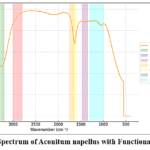 |
Figure 1: FTIR Spectrum of Aconitum napellus with Functional Group Shading Click here to View Figure |
Arnica montana: Flavonoid and Sesquiterpene Lactone Enriched Spectrum
The FTIR spectrum of Arnica montana (Fig. 2) showed strong O–H and N–H stretching bands (3200–3600 cm⁻¹; 3300–3500 cm⁻¹), indicating phenolics and possible nitrogen-containing compounds. C–H stretching (2800–3000 cm⁻¹) reflected aliphatic terpenes, while a distinct C=O peak (1650–1750 cm⁻¹) corresponded to sesquiterpene lactones like helenalin. Aromatic C=C (1600–1680 cm⁻¹) and C–O stretching in the 1000–1300 cm⁻¹ range confirmed flavonoids and glycosides. These features validate the presence of anti-inflammatory and antioxidant compounds post-alcohol removal. NF-κB inhibition underpins Arnica’s use in trauma, pain, and vascular protection18. The FTIR data affirms its role in musculoskeletal recovery, bruising, and wound repair.
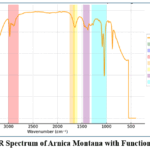 |
Figure 2: FTIR Spectrum of Arnica Montana with Functional Group Shading Click here to View Figure |
Belladonna: Tropane Alkaloid and Phenolic-Rich Matrix
The FTIR spectrum of Belladonna (Fig. 3) displayed prominent O–H and N–H stretching bands (3200–3600 cm⁻¹; 3300–3500 cm⁻¹), supporting the presence of hydroxyl- and amine-containing tropane alkaloids like atropine and scopolamine. Aliphatic C–H stretching (2800–3000 cm⁻¹) and a sharp C=O peak (1650–1750 cm⁻¹) confirmed ester and ketone groups in its alkaloid esters. Aromatic C=C (1600–1680 cm⁻¹) and fingerprint region peaks (1000–1300 cm⁻¹) indicated glycosidic and flavonoid content. These findings are consistent with Belladonna’s known parasympatholytic and neuroactive properties. Atropine’s anticholinergic action, supports its clinical use in fever, spasms, neuralgia, and inflammation19. The FTIR data affirms the molecular integrity of its therapeutic agent’s post-ethanol removal.
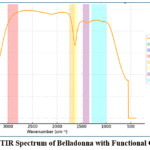 |
Figure 3: FTIR Spectrum of Belladonna with Functional Group Shading Click here to View Figure |
Bryonia alba: Cucurbitacin and Flavonoid-Rich Spectrum
The FTIR spectrum of Bryonia alba (Fig. 4) exhibited characteristic O–H/N–H stretching (3200–3600 cm⁻¹), strong aliphatic C–H bands (2800–3000 cm⁻¹), and a pronounced C=O stretch (1650–1750 cm⁻¹), confirming the presence of triterpenoid cucurbitacins and alkaloids. Aromatic C=C signals (1600–1680 cm⁻¹) and C–O/C–N stretching (1000–1300 cm⁻¹) suggested glycosylated flavonoids and phenolic acids. These features align with the findings, cucurbitacin B’s role in cytokine inhibition (TNF-α, IL-6)20. The spectrum supports Bryonia’s traditional use in dry cough, arthritis, and chest inflammation, through COX inhibition, antioxidant action, and vascular stabilization21.
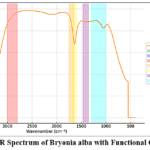 |
Figure 4: FTIR Spectrum of Bryonia alba with Functional Group Shading Click here to View Figure |
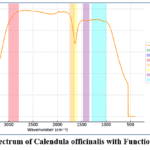 |
Figure 5: FTIR Spectrum of Calendula officinalis with Functional Group Shading Click here to View Figure |
Calendula officinalis: Triterpenoid and Flavonoid-Enriched Healing Agent
The FTIR spectrum of Calendula officinalis (Fig. 5) revealed broad O–H bands (3200–3600 cm⁻¹), strong C–H stretches (2800–3000 cm⁻¹), and a pronounced C=O peak (1650–1750 cm⁻¹), confirming the presence of flavonoids, essential oils, and triterpenoid esters like faradiol. Aromatic C=C signals (1600–1680 cm⁻¹) and fingerprint region peaks (1000–1300 cm⁻¹) indicated carotenoids and glycosides. These spectral features correlate with prostaglandin-inhibiting, epithelial-regenerative actions of faradiol derivatives. The spectrum supports Calendula’s clinical use in wound healing, anti-inflammatory care, mucosal repair, and skin regeneration22.
Euphrasia officinalis: Iridoid Glycoside and Flavonoid-Rich Ocular Remedy
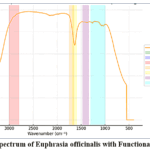 |
Figure 6: FTIR Spectrum of Euphrasia officinalis with Functional Group Shading Click here to View Figure |
The FTIR spectrum of Euphrasia officinalis (Fig. 6) exhibited key vibrational peaks for O–H/N–H groups (3200–3600 cm⁻¹), C–H aliphatic stretches (2800–3000 cm⁻¹), and a strong C=O band (1650–1750 cm⁻¹), confirming the presence of iridoid glycosides (aucubin, catalpol), flavonoids, and phenolic acids. Aromatic C=C and fingerprint region signals (1000–1300 cm⁻¹) further indicated glycosides and ester linkages. Euphrasia’s anti-inflammatory and astringent effects clinically, its use in conjunctivitis, eye strain, and mucosal irritation is substantiated by these spectral signatures, validating its ophthalmic and mucosal applications23.
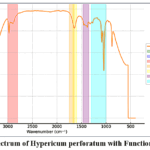 |
Figure 7: FTIR Spectrum of Hypericum perforatum with Functional Group Shading Click here to View Figure |
Hypericum perforatum: Naphthodianthrone and Flavonoid-Based Neuroprotective Profile
The FTIR spectrum of Hypericum perforatum (Fig. 7) showed broad O–H/N–H bands (3200–3600 cm⁻¹), C–H stretches (2800–3000 cm⁻¹), and a strong C=O signal (1650–1750 cm⁻¹), confirming the presence of hypericin, hyperforin, and flavonoids. Aromatic C=C and C–O/C–N bands in the 1600–1300 cm⁻¹ region supported glycosidic and phenolic structures. These correlate with findings that hypericum’s antidepressant and antiviral actions via neurotransmitter modulation and photodynamic effects24. FTIR data confirms the molecular integrity of its neuroprotective and wound-healing agents, reinforcing its role in depression, nerve trauma, and skin repair.
Pulsatilla nigricans: Saponin-Flavonoid Dominant Spectrum for Hormonal and Mucosal Modulation
The FTIR spectrum of Pulsatilla nigricans (Fig. 8) revealed strong O–H/N–H absorption (3200–3600 cm⁻¹), moderate C–H stretching (2800–3000 cm⁻¹), and a clear C=O peak (1650–1750 cm⁻¹), suggesting the presence of saponins, glycosidic esters, and flavonoids. Fingerprint region peaks (1000–1300 cm⁻¹) indicated glycosidic and ester functionalities. These findings align with its effect in hormonal and mucosal effects. The spectrum supports Pulsatilla’s clinical role in menstrual irregularities, leucorrhea, and emotional lability, validating the phytochemical retention and therapeutic activity post-ethanol removal25.
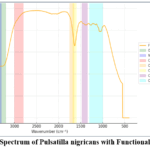 |
Figure 8: FTIR Spectrum of Pulsatilla nigricans with Functional Group Shading Click here to View Figure |
Rhus toxicodendron: Phenolic and Urushiol-Based Inflammatory Modulator
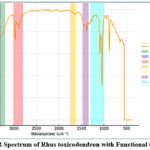 |
Figure 9: FTIR Spectrum of Rhus toxicodendron with Functional Group Shading Click here to View Figure |
The FTIR spectrum of Rhus toxicodendron (Fig. 9) showed broad O–H/N–H stretching (3200–3600 cm⁻¹), C–H aliphatic bands (2800–3000 cm⁻¹), a defined C=O stretch (1650–1750 cm⁻¹), and aromatic C=C vibrations (1600–1680 cm⁻¹), confirming the presence of phenolics, urushiol derivatives, and triterpenes. Fingerprint peaks between 1000–1300 cm⁻¹ supported glycosidic and ether linkages. These findings align with its effect in the immune-regulatory action of urushiol and flavonoids in inflammation and joint disorders26. Clinically, this supports Rhus tox use in arthritis, neuralgia, and dermatologic hypersensitivity, validating its molecular integrity and multi-system therapeutic potential.
Thuja occidentalis: Thujone-Rich Phytochemical Profile for Dermatological and Immunological Disorders
The FTIR spectrum of Thuja occidentalis (Fig. 10) revealed broad O–H/N–H stretching (3200–3600 cm⁻¹), C–H aliphatic stretches (2800–3000 cm⁻¹), and a sharp C=O band (1650–1750 cm⁻¹), indicating monoterpenes like α- and β-thujone. Aromatic C=C stretches (1600–1680 cm⁻¹) and fingerprint region bands (1000–1300 cm⁻¹) confirmed the presence of flavonoids, glycosides, and esters. Subtle out-of-plane deformations (550–850 cm⁻¹) suggested substituted aromatics. These observations support Mohamed et al. (2022), who reported thujone’s GABAergic and apoptotic effects, aligning with its clinical use in warts, skin eruptions, and immune dysfunctions27. FTIR thus confirms molecular fidelity post-extraction and the remedy’s therapeutic versatility.
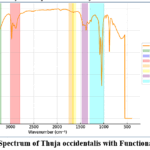 |
Figure 10: FTIR Spectrum of Thuja occidentalis with Functional Group Shading Click here to View Figure |
Overall Comparative Spectral Interpretation and Therapeutic Correlation
The comparative overlay of FTIR spectra for all ten homeopathic mother tinctures (Fig. 11) reveals both unique and overlapping vibrational features corresponding to key phytochemical constituents. Each spectrum displayed diagnostic bands across fundamental IR regions, enabling robust identification of major functional groups such as hydroxyls, carbonyls, alkenes, ethers, and amines. The spectrum-to-spectrum variability highlights the distinct phytochemical profiles inherent to each medicinal plant, while shared spectral zones (e.g., the broad O–H stretch at 3200–3600 cm⁻¹ and C–O stretches in the 1000–1300 cm⁻¹ region) underline the conserved bioorganic chemistry common to phytotherapeutic agents.
To systematically interpret the spectral complexity, functional group intensities were mapped and qualitatively ranked across all ten remedies (see Table 2). Notably, Arnica montana, Calendula officinalis, and Hypericum perforatum exhibited high absorbance across most key regions, suggesting a phytochemical richness consistent with their broad therapeutic action. In contrast, Aconitum napellus and Rhus toxicodendron displayed moderate intensity in all bands, reflecting a narrower yet potent chemical signature dominated by alkaloids and volatile compounds.
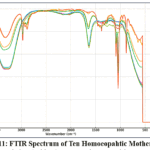 |
Figure 11: FTIR Spectrum of Ten Homoeopahtic Mother Tinctures Click here to View Figure |
Phytochemical correlation (Table 3) supports the spectral interpretations by linking the identified functional groups with known bioactive constituents. For example, the ketone-rich C=O bands in Belladonna and Thuja align with their thujone and tropane alkaloid content, while the pronounced O–H and C=C bands in Arnica and Calendula reflect their high flavonoid and triterpenoid concentrations.
In therapeutic terms (Table 4), a clear mapping is observed between spectral features and traditional clinical indications. For instance, Arnica’s anti-inflammatory action corresponds to its polyphenolic and sesquiterpene lactone content, while Rhus toxicodendron’s musculoskeletal application reflects its detectable urushiol-type compounds and flavonoid-rich zones. Further insights from principal component analysis (PCA) and pattern recognition (Table 5).
Table 2: Presents a Comparative FTIR functional group profile
|
Medicine |
O–H / N–H (Phenolics) | C–H (Terpenoids) | C=O (Ketones/Esters) | C=C (Aromatic Rings) | C–H Bending | C–O / C–N (Glycosides) |
| Arnica montana | High | Medium | High | High | Medium |
High |
|
Aconitum napellus |
Medium | Medium | Medium | Medium | Medium | Medium |
| Bryonia alba | High | Medium | Medium | Medium | Medium |
Medium |
|
Belladonna |
Medium | High | High | High | High | Medium |
| Calendula officinalis | High | High | High | Medium | High |
High |
|
Euphrasia officinalis |
High | Medium | Medium | Medium | Medium | High |
| Hypericum perforatum | High | Medium | High | High | Medium |
High |
|
Pulsatilla nigricans |
High | Medium | Medium | Medium | Medium | High |
| Rhus toxicodendron | Medium | High | Medium | Medium | High |
Medium |
|
Thuja occidentalis |
Medium | High | High | Medium | High |
Medium |
Table 3: Summary of likely Phytochemical Constituents
|
Medicine |
Dominant Constituents |
| Arnica montana |
Flavonoids, sesquiterpene lactones, phenolic acids |
|
Aconitum napellus |
Alkaloids (aconitine), essential oils |
| Bryonia alba |
Cucurbitacins, flavonoids, essential oils |
|
Belladonna |
Tropane alkaloids, flavonoids, essential oils |
| Calendula officinalis |
Triterpenoids, carotenoids, flavonoids, phenolic acids |
|
Euphrasia officinalis |
Iridoid glycosides, flavonoids, tannins |
| Hypericum perforatum |
Hypericin, hyperforin, flavonoids, essential oils |
|
Pulsatilla nigricans |
Saponins, flavonoids, glycosides |
| Rhus toxicodendron |
Urushiol derivatives, flavonoids, phenolic acids |
|
Thuja occidentalis |
Thujone, flavonoids, volatile oils, phenolics |
These chemical groupings not only validate FTIR’s utility in clustering related remedies but also highlight the inherent biosignature complexity of each tincture. The study showcases that FTIR spectral fingerprints can be reliably mapped to known pharmacognostic profiles and traditional indications, creating a scientifically grounded approach to remedy classification. Overall, this multi-dimensional spectral analysis affirms FTIR as an effective and physics-informed method for profiling, differentiating, and potentially standardizing complex homeopathic preparations. It bridges a critical gap between empirical therapeutic use and molecular-level evidence, while offering a reproducible platform for future integrative pharmacological research.
Table 4: Outline Pharmacological Relevance
|
Medicine |
Key Therapeutic Uses |
| Arnica montana |
Anti-inflammatory, bruise healing, musculoskeletal trauma |
|
Aconitum napellus |
Acute anxiety, fever, neuralgia |
| Bryonia alba |
Joint inflammation, constipation, dry mucosal irritation |
|
Belladonna |
Sudden fever, spasms, sore throat, inflammation |
| Calendula officinalis |
Wound healing, antiseptic, mucosal protection |
|
Euphrasia officinalis |
Eye irritation, sinusitis, mucosal discharge |
| Hypericum perforatum |
Nerve pain, trauma, mild depression, viral infection |
|
Pulsatilla nigricans |
Hormonal imbalance, weepy mood, menstrual issues |
| Rhus toxicodendron |
Joint stiffness, skin eruptions, post-viral fatigue |
|
Thuja occidentalis |
Warts, fungal skin conditions, post-vaccinal disorders |
Table 5: Cluster Based Dominant Chemotypes
|
Cluster Grouping |
Medicines | Common Chemistry |
| Flavonoid-rich group | Arnica, Bryonia, Hypericum, Calendula, Euphrasia |
Anti-inflammatory, antioxidant, vascular protection |
|
Terpenoid-rich group |
Belladonna, Aconite, Thuja, Rhus tox | CNS-active, essential oils, analgesic properties |
| Glycoside-rich & mucosal | Pulsatilla, Euphrasia, Calendula |
Mucosal protection, hormonal balance, astringents |
|
Neurotoxic alkaloid group |
Belladonna, Aconite, Rhus tox |
Nervous system effects, spasmolytic/anticholinergic |
Conclusion
This study underscores the value of Fourier Transform Infrared (FTIR) spectroscopy as a robust analytical approach for molecular-level profiling of complex plant-based homeopathic formulations. By enabling the identification of functional group signatures with precision, FTIR offers a non-destructive, reproducible, and physics-grounded method to assess the structural integrity of bioactive constituents. The methodological framework applied here provides a blueprint for integrating spectroscopic techniques into the standardization and quality control of alternative medicines. Importantly, this analytical rigor paves the way for interdisciplinary validation, bridging traditional medicine systems with modern spectroscopic and materials science. Future applications may expand into high-throughput screening, chemometric modeling, and nanoformulation tracking, thereby enhancing the scientific credibility and pharmacological understanding of these widely used remedies.
Acknowledgement
None
Funding Sources
The author(s) received no financial support for the research, authorship, and/or publication of this article.
Conflict of Interest
The author(s) do not have any conflict of interest.
Data Availability Statement
This statement does not apply to this article.
Ethics Statement
This research did not involve human participants, animal subjects, or any material that requires ethical approval.
Author Contributions
- S SathishKumar: Writing – original draft, Formal analysis, Conceptualization.
- K.R. Binisha: Writing – original draft, Formal analysis, Conceptualization.
- A. Saravanan: Writing – original draft, Formal analysis, Conceptualization, review & editing.
- A.S. Sreeraj: Validation, Conceptualization, Supervision.
- T.A. Anand: Conceptualization.
- R. Ganesamoorthy: Supervision, and Writing – review & editing, Validation.
References
- Faghihzadeh, F.; Anaya, N.M.; Schifman, L.A.; Oyanedel-Craver, V. Fourier transform infrared spectroscopy to assess molecular-level changes in microorganisms exposed to nanoparticles. Nanotechnology for Environmental Engineering, 2016, 1(1), 1. https://doi.org/10.1007/s41204-016-0001-8
CrossRef - Zapata, F.; Lopez-Fernandez, A.; Ortega-Ojeda, F.; Quintanilla, G.; Garcia-Ruiz, C.; Montalvo, G. Introducing ATR-FTIR spectroscopy through analysis of acetaminophen drugs: practical lessons for interdisciplinary and progressive learning for undergraduate students. Journal of Chemical Education, 2021, 98(8), 2675-2686. https://doi.org/10.1021/acs.jchemed.0c01231
CrossRef - Pasieczna-Patkowska, S.; Cichy, M.; Flieger, J. Application of Fourier transform infrared (FTIR) spectroscopy in characterization of green synthesized nanoparticles. Molecules, 2025, 30(3), 684. https://doi.org/10.3390/molecules30030684
CrossRef - Kassem, A.; Abbas, L.; Coutinho, O.; Opara, S.; Najaf, H.; Kasperek, D.; Tiquia-Arashiro, S. Applications of Fourier Transform-Infrared spectroscopy in microbial cell biology and environmental microbiology: advances, challenges, and future perspectives. Frontiers in microbiology, 2023, 14, 1304081. https://doi.org/10.3389/fmicb.2023.1304081
CrossRef - Krysa, M.; Szymańska-Chargot, M.; Zdunek, A. FT-IR and FT-Raman fingerprints of flavonoids–A review. Food chemistry 2022, 393, 133430. https://doi.org/10.1016/j.foodchem.2022.133430
CrossRef - Das, N.; Naik, P. K.; Ghosh, C.; Raj, A.; Sircar, D.; Banerjee, T.; Roy, P. Physico-chemical characterization, energy dynamics and anti-cancer efficacy of Conium maculatum homeopathic formulations against prostate cancer cell lines. International Journal of Homoeopathic Sciences 2024, 8(2), 485-497. https://doi.org/10.33545/26164485.2024.v8.i2g.1176
CrossRef - Fotsing Yannick Stéphane, F.; Kezetas Jean Jules, B.; El-Saber Batiha, G.; Ali, I.; Ndjakou Bruno, L. Extraction of Bioactive Compounds from Medicinal Plants and Herbs. In Natural Medicinal Plants. IntechOpen. 2022. https://doi.org/10.5772/intechopen.98602
CrossRef - Said-Al Ahl, H. A.; Kačániova, M.; Mahmoud, A.A.; Hikal, W.M.; Čmiková, N.; Szczepanek, M.; Tkachenko, K.G. Phytochemical characterization and biological activities of essential oil from Satureja montana L., a medicinal plant grown under the influence of fertilization and planting dates. Biology, 2024, 13(5), 328. https://doi.org/10.3390/biology13050328
CrossRef - Noviana, E.; Indrayanto, G.; Rohman, A. Advances in fingerprint analysis for standardization and quality control of herbal medicines. Frontiers in Pharmacology 2022, 13, 853023. https://doi.org/10.3389/fphar.2022.853023
CrossRef - Mortada, E. M. Evidence-based complementary and alternative medicine in current medical practice. Cureus, 2024, 16(1). https://doi.org/10.7759/cureus.52041
CrossRef - Ponphaiboon, J.; Krongrawa, W.; Aung, W.W.; Chinatangkul, N.; Limmatvapirat, S.; Limmatvapirat, C. Advances in natural product extraction techniques, electrospun fiber fabrication, and the integration of experimental design: a comprehensive review. Molecules, 2023, 28(13), 5163. https://doi.org/10.3390/molecules28135163
CrossRef - Socaciu, C.; Fetea, F.; Ranga, F.; Bunea, A.; Dulf, F.; Socaci, S.; Pintea, A. Attenuated total reflectance-fourier transform infrared spectroscopy (ATR-FTIR) coupled with chemometrics, to control the botanical authenticity and quality of cold-pressed functional oils commercialized in Romania. Applied Sciences, 2020, 10(23), 8695. https://doi.org/10.3390/app10238695
CrossRef - Canama, G.J.C.; Delco, M.C.L.; Talandron, R.A. Tan, N.P. Synthesis of chitosan-silver nanocomposite and its evaluation as an antibacterial coating for mobile phone glass protectors. ACS omega, 2023, 8(20), 17699-17711. https://doi.org/10.1021/acsomega.3c00191
CrossRef - Canama, G.J.C.; Delco, M.C.L.; Talandron, R.A.; Tan, N.P. Synthesis of chitosan-silver nanocomposite and its evaluation as an antibacterial coating for mobile phone glass protectors. ACS omega, 2023, 8(20), 17699-17711. https://doi.org/10.1021/acsomega.3c00191
CrossRef - Chakraborty, A.J.; Uddin, T.M.; Matin, Zidan, B.R.; Mitra, S.; Das, R.; Nainu, F.; Emran, T. B. Allium cepa: a treasure of bioactive phytochemicals with prospective health benefits. Evidence‐Based Complementary and Alternative Medicine, 2022(1), 4586318. https://doi.org/10.1155/2022/4586318
CrossRef - Jain, B.S.; Kadam, V.V.; Nayak, A.D. Homoeopathic materia medica in the pre-boger era – A narrative review. J Intgr Stand Homoeopathy. 2023; 6, 115-22. https://doi.org/10.25259/JISH_66_2023
CrossRef - Jeon, S.Y.; Jeong, W.; Park, J.S.; You, Y.; Ahn, H.J.; Kim, S.; Kim, S.W. Clinical relationship between blood concentration and clinical symptoms in aconitine intoxication. The American Journal of Emergency Medicine 2021, 40, 184-187. https://doi.org/10.1016/j.ajem.2020.11.005
CrossRef - Smith, A.G.; Miles, V.N.; Holmes, D.; T., Chen, X.; Lei, W. Clinical trials, potential mechanisms, and adverse effects of arnica as an adjunct medication for pain management. Medicines, 2021, 8(10), 58. https://doi.org/10.3390/medicines8100058
CrossRef - Patel, P.; McLendon, K.; Preuss, C.V. Atropine. In: StatPearls [Internet]. Treasure Island (FL): StatPearls Publishing; 2026. https://www.ncbi.nlm.nih.gov/books/NBK470551/
- Kusagawa, E.; Okuda, C.; Yamaguchi, R.; Nakano, K.; Miyake, Y.; Kataoka, T. Cucurbitacin B down-regulates TNF receptor 1 expression and inhibits the TNF-α-dependent nuclear factor κB signaling pathway in human lung adenocarcinoma A549 cells. International Journal of Molecular Sciences, 2022, 23(13), 7130. https://doi.org/10.3390/ijms23137130
CrossRef - Ielciu, I.; Frédérich, M.; Hanganu, D.; Angenot, L.; Olah, N. K.; Ledoux, A.; Paltinean, R. Flavonoid analysis and antioxidant activities of the bryonia alba L. Aerial parts. Antioxidants, 2019, 8(4), 1–11. https://doi.org/10.3390/antiox8040108
CrossRef - Shahane, K.; Kshirsagar, M.; Tambe, S.; Jain, D.; Rout, S.; Ferreira, M.K.M.; Mali, S.; Amin, P.; Srivastav, P.P.; Cruz, J.; et al. An Updated Review on the Multifaceted Therapeutic Potential of Calendula officinalis L. Pharmaceuticals 2023, 16, 611. https://doi.org/10.3390/ph16040611.
CrossRef - Benedec, D.; Oniga, I.; Hanganu, D.; Vlase, A.-M.; Ielciu, I.; Crișan, G.; Fiţ, N.; Niculae, M.; Bab, T.; Pall, E.; et al. Revealing the Phenolic Composition and the Antioxidant, Antimicrobial and Antiproliferative Activities of Two Euphrasia sp. Extracts. Plants 2024, 13, 1790. https://doi.org/10.3390/plants13131790
CrossRef - Menegazzi, M.; Masiello, P.; Novelli, M. Anti-tumor activity of Hypericum perforatum L. and hyperforin through modulation of inflammatory signaling, ROS generation and proton dynamics. Antioxidants, 2020, 10(1), 18. https://doi.org/10.3390/antiox10010018
CrossRef - Hua, Y.; Ma, Q.; Zhang, X.; Jia, Y.; Peng, X.; Yao, W.; Ji, P.; Hu, J.; Wei, Y. Pulsatilla Decoction Can Treat the Dampness-Heat Diarrhea Rat Model by Regulating Glycerinphospholipid Metabolism Based Lipidomics Approach. Pharmacol. 2020, 11, 197. https://doi.org/10.3389/fphar.2020.00197
CrossRef - Saka, V.P.; G. V., N.K.; Sanapalli, B.K.R.; Goswami, A.; Roy, A.; Agrawal, A.; Gupta, P.; Verma, D.; Kaushik, S. Unveiling the Immunostimulatory Potential of Rhus Toxicodendron in Immunocompromised Balb/C Mice Induced with Cyclophosphamide. Diseases 2024, 12, 178. https://doi.org/10.3390/diseases12080178
CrossRef - Singh, S.; Singh, T.G. Unlocking the mechanistic potential of Thuja occidentalis for managing diabetic neuropathy and nephropathy. Journal of Traditional and Complementary Medicine, 2024, 14(6), 581-597. https://doi.org/10.1016/j.jtcme.2024.04.009
CrossRef
Accepted on: 25 Apr 2026
Second Review by: Dr. Hanadi A Katouah
Final Approval by: Dr. Fozia Z. Haque


ISSN Online: 2231-5039