Pharmacological Activities of Rosmarinus officinalis: A Review
 , Ishita Ranjan, Pramukh Choudhary, Shahma Shirin and Anjana G V*
Department of Pharmaceutical Chemistry, SRM College of Pharmacy, Faculty of Medicine and Health Sciences, SRM Institute of Science and Technology, Kattankulathur, Chengalpattu, India.
Corresponding Author Email: anjanag@srmist.edu.in
Download this article as:
ABSTRACT:Rosemary (Rosmarinus officinalis) is an aromatic evergreen plant indigenous to the Mediterranean region, valued for its, medicinal, and ornamental uses. Renowned for its robust flavor and fragrance, it is a staple in kitchens, used to enhance the taste of meats, vegetables, and breads. Beyond its culinary applications, rosemary is rich in antioxidants and contains anti-inflammatory and antimicrobial compounds, making it beneficial for digestion, memory enhancement, and overall health. It has been used in traditional medicine and aromatherapy to boost cognitive function and relieve stress for a long time. Culturally, rosemary symbolizes remembrance and fidelity, often featured in rituals and ceremonies. The herb is also easy to grow, thriving in sunny environments and well-drained soil, making it a popular choice for gardens. Rosemary’s combination of versatility, health benefits, and cultural significance ensures its enduring role as a cherished plant across culinary, medicinal, and decorative domains.
KEYWORDS:Anti-cancer; Carnosic acid; Rosemary; Rosmarinic acid
Introduction
Rosemary (Rosmarinus officinalis) emerged in the Mediterranean region; it is now grown globally. It can be cultivated using seeds, cuttings, or root division.1 This plant is an evergreen herb with aromatic leaves that can be harvested multiple times a year. Polyphenols are significant in rosemary, including carnosol, rosmarinic acid and carnosic acid. These compounds are known for their inflammation modulating, oxidative stress reducing, and antimicrobial properties. Rosmarinic acid is known particularly for its antioxidant properties and its effects on inflammatory mediators. Rosemary may help with conditions like bronchial asthma, spasmogenic disorders, peptic ulcers, inflammatory diseases, and many more.
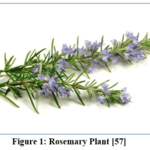 |
Figure 1: Rosemary Plant57 Click here to View Figure |
They have variety of applications in food industries such as Rosemary serves as a flavoring agent, spice condiment, and preservative. The use of natural extracts as substitutes for synthetic food additives is becoming increasingly popular. R. officinalis extracts are valued for their antioxidant, antibacterial, and antifungal properties, which contribute to food preservation. They are also used for commercial and industrial purposes for its qualities.2 Spain is a significant exporter and processor of rosemary, utilizing it for its antioxidant properties. The European Food Safety Authority (EFSA) approves the use of rosemary extracts in food and beverages. The beneficial effects of rosemary are achieved through mechanisms like inhibiting oxidative stress, reducing inflammatory mediators (e.g., TNF-α, IL-6), and regulating apoptosis and MAPK signaling pathways. The process of extracting its compounds and their impact on flavor, color, and odor is an important aspect of its application in food. This review emphasizes the interest in rosemary’s therapeutic properties and its active components. Carnosol, rosmarinic acid and carnosic acid are emphasized for their roles in health benefits and food applications.3
Table 1: Composition of rosemary
|
Serial no. |
Composition | Molecular formula | Parts from which it extracted | Pharmacological activity |
| 1 | Rosmarinic Acid | C18H16O8 | Leaves |
Antioxidant,Anti-inflammatory, Antimicrobial,Neuroprotective, Anticancer Cardioprotective,Antidiabetic.31 |
|
2 |
Ursolic Acid | C30H48O3 | Leaves | Anti-inflammatory, Antioxidant, Anticancer, Antimicrobial, Metabollic Benefits, Neuroprotective effects, Cardio protective effects |
| 3 | Carnosic Acid | C20H28O4 | Leaves |
Antioxidant, Anti-inflammatory, Neuroprotective, Anticancer, Antimicrobial, Cardiovascular benefits.28 |
|
4 |
Caffeic Acid | C9H8O4 | Leaves | Anti-inflammatory, Antioxidant, Anticancer, Antimicrobial, Metabolic benefits, Neuroprotective, Cardioprotective effects |
| 5 | Betulunic Acid | C30H48O3 | Leaves |
Antitumor, Antiviral, Anti-inflammatory, Antioxidant, Neuroprotective effects, Antimicrobial |
|
6 |
Pantothenic Acid | C9H17NO5 | Young leaves and shoots | Energy metabolism, Wound healing, Stress response, Neuroprotective effects, Cholesterol regulation, Antioxidant |
| 7 | Rosmanol | C20H26O5 | Leaves |
Anti- inflammatory, Antioxidant, Antimicrobial, Neuroprotective Effects, Antispasmodic |
|
8 |
Carnosol | C20H26O4 | Leaf trichomes | Anti-inflammatory, Antioxidant, Antimicrobial, Anticancer, Neuroprotective effects, metabolic regulation |
| 9 | Camphene | C10H16 | Leaves |
Anti- inflammatory, Antioxidant, Antimicrobial, Analgesic effects, Respiratory benefits, Potential anti-cancer activity |
|
10 |
Limonene | C10H16 | Leaves | Anti-inflammatory, Antioxidant, Antimicrobial, Anticancer, Mood enhancement, Digestive health, Metabolic benefits |
| 11 | Camphor | C10H16O | Leaves |
Anti-inflammatory, Analgesic properties, Respiratory benefits, Stimulant effects, Anxiolytic properties, Neuroprotective effects .56 |
|
12 |
Borneol | C10H18O | Aerial parts | Anti-inflammatory, Analgesic effects, Antimicrobial, Neuroprotective effects, Cognitive enhancement, Sedative effects, Antioxidant |
| 13 | Cineole | C10H18O | Leaves |
Anti-inflammatory, Antioxidant, Antimicrobial, Mood enhancement, Cognitive enhancement, Analgesic effects, Expectorant properties |
|
14 |
Linalool | C10H18O | Flowers and leaves | Anti-inflammatory, Analgesic
effects, Anxiolytic effects, Antimicrobial, Neuroprotective effects, Antioxidant, Sedative effects |
| 15 | Verbinol | C20H36O | Flowers and leaves |
Anti-inflammatory, Antioxidant, Antimicrobial, Anticancer, Sedative effects |
|
16 |
Niacin | C6H5NO2 | Flowering tops and leaves | Lipid regulation, Vasodilatory effects, Metabolic
support, Neuroprotective effects, Anti-inflammatory skin health |
| 17 | Thiamine | C12H17N4OS | Leaves |
Energy metabolism, Nervous system support, Cardiovascular health, Antioxidant, Neuroprotective effects, Role in digestion |
|
18 |
Folate | C19H19N7O6 | Leaves | DNA synthesis and Repair, Red blood cell formation, Neural tube development, Amino acid metabolism, Antioxidant, Cognitive function, Potential cancer prevention |
| 19 | Riboflavin | C17H20N4O6 | Leaves |
Energy metabolism, Antioxidant,Red blood cell production, Skin and Eye health, Neuro protective effects, Metabolism of other vitamins, Potential migraine |
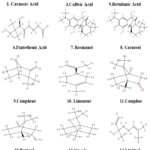 |
Scheme 1: Structures of active constituents of rosemary Click here to View Scheme |
Pharmacological activity of rosemary
Anti-microbial
The aerial parts and essential oil of Rosmarinus officinalis (rosemary) have been investigated for their antibacterial, antifungal, antioxidant, and antiproliferative activities. Various studies highlight the potential of rosemary as a natural source of bioactive compounds.
Rosemary essential oil and its major constituents have demonstrated antibacterial activity, although the oil itself often showed lower efficacy compared to its pure major components. Among oral pathogens, S. mitis was the most susceptible, while E. faecalis was the most resistant. In one study, Rosmarinus officinalis oil inhibited ethidium bromide efflux, indicating its potential to target bacterial efflux pumps, though not necessarily NorA pumps.
The essential oil, particularly rich in compounds like 1,8-cineole, camphor, and α-pinene, exhibited notable antioxidant properties, reducing DPPH radicals in a dose-dependent manner. It also showed antiproliferative effects against cancer cell lines such as MCF-7 and LNCaP.
While the antimicrobial activity varied, some strains, including those of Fusarium graminearum, experienced fungal growth induction. This variability underlines the complexity of rosemary’s bioactive properties. Rosemary’s essential oil and pure compounds remain promising for applications in antimicrobial, antioxidant, and antiproliferative therapies.4
Anti-depressants
Research indicates that Rosmarinus officinalis (rosemary) shows potential as an antidepressant based on studies using the Tail Suspension Test (TST) and Forced swimming Test (FST) in mice. These tests demonstrate that rosemary consistently reduces immobility time, suggesting antidepressant-like effects. Furthermore, rosemary alleviated symptoms such as reduced exploratory behavior and anhedonia in bulbectomized mice, strengthening its antidepressant potential.5
The antidepressant activity of the concerned is thought to stem from its interaction with the monoaminergic system, enhancing dopaminergic, noradrenergic, serotonergic and cholinergic functions in the brain. This interaction may explain its ability to increase neurotransmitter concentrations, further supporting its therapeutic effects.6
Key compounds responsible for these effects include carnosol, betulinic acid, polyphenols and ursolic acid found in rosemary extracts and essential oils. These bioactive compounds likely contribute to its modulation of brain function.
Overall, rosemary exhibits significant antidepressant-like properties, with evidence pointing to its capacity to improve mood and behavior through neurotransmitter enhancement and interaction with brain systems critical for emotional regulation.7
Anti-obesity
Studies have investigated the effects of rosemary (Rosmarinus officinalis L.) leaf extract (RE) on preventing weight gain and metabolic disorders in mice fed a high-fat diet. While RE treatment did not affect glucose tolerance or fasting glycemia, it significantly reduced hepatic triglyceride levels by 39% in treated mice. However, a lower dose of RE (20 mg/kg BW) showed no impact on any measured parameters. The findings suggest that consuming 200 mg/kg BW of RE can mitigate high-fat diet-induced weight gain and protect against obesity-related liver steatosis.8
Additional studies reported that rosemary extract lowered plasma alanine aminotransferase levels at the end of the experimental period. At a dose of 600 mg/kg, it reduced plasma glucose and triglyceride levels by week 4, and improved the HDL/LDL cholesterol ratio by week 12, indicating enhanced lipid transport and energy metabolism9
Furthermore, research on the metabolic effects of rosemary extract revealed that it significantly increased glucose consumption in HepG2 cells. This effect was diminished by the PPARγ-specific antagonist GW9662, suggesting that rosemary extract may enhance liver glycolysis and fatty acid oxidation through activation of AMPK and PPAR pathways.10
Neuroprotective
Rosmarinus officinalis (rosemary) has shown promising neuroprotective properties, particularly against neurodegenerative diseases like Alzheimer’s disease and dementia.11 Its effectiveness is primarily linked to its inhibitory effects on the enzymes acetyl cholinesterase (AChE) and butyrylcholinesterase (BChE), both of which are involved in the breakdown of acetylcholine—a neurotransmitter crucial for memory and cognitive function. By reducing enzyme activity, rosemary helps to maintain higher acetylcholine levels in the brain, potentially improving memory and cognitive health.12
The active compounds responsible for these effects include rosmarinic acid and terpenes found in rosemary’s essential oil.13 Additionally, these compounds are believed to increase total brain choline levels, which could mitigate not only Alzheimer’s symptoms but also anxiety, depression, and memory loss.14
Supporting studies have identified polyphenols in rosemary extract as contributors to its neuroprotective abilities.15 These findings underscore rosemary’s potential as a natural therapeutic agent for cognitive health.16
Anti diabetic
Diabetes mellitus is a rapidly increasing global health challenge, projected to affect 300 million people by 2025, with annual treatment costs potentially reaching $1 trillion. High oxidative stress plays a significant role in diabetes development, particularly damaging pancreatic β cells, which reduces insulin secretion and raises blood glucose levels.17
Natural antioxidants, particularly those from plants, are gaining attention as potential treatments for diabetes. Among these, Rosmarinus officinalis (rosemary) has emerged as a promising antidiabetic agent due to its strong antioxidant properties.18 Studies demonstrate that rosemary extract can lower blood glucose levels in normoglycemic, hyperglycemic, and diabetic animal models. Its mechanisms include inhibiting lipid peroxidation, enhancing antioxidant enzyme activity, =and stimulating insulin secretion. Additionally, rosemary has been shown to improve wound healing, addressing one of the serious complications of diabetes.19 These effects are attributed to the improved antioxidant status in the body following rosemary administration, highlighting its potential as a natural and effective therapeutic agent for diabetes management.20
Antioxidant
The antioxidant activity of Rosmarinus officinalis (rosemary) is extensively documented, primarily due to its high levels of phenolic diterpenes, particularly carnosol, carnosic acid, and rosmarinic acid.21 These compounds, found in the plant’s essential oils and extracts, are key to its antioxidant properties.22 Rosemary’s antioxidant effects occur through multiple mechanisms:
1. Free Radical Scavenging: Rosemary essential oil and extracts help destroy and prevent free radicals.23
2. Lipid Peroxidation Prevention: It protects against oxidative stress-induced lipid damage.24
3. Antioxidant Enzyme Activation: Rosemary enhances the activity of endogenous antioxidant enzymes, improving the body’s natural defense systems.25
These actions reduce oxidative stress, which is linked to the development of diseases like diabetes and cancer.26 By counteracting oxidative damage, rosemary helps prevent such conditions that are caused by free radical accumulation.27-29
Anti-cancer
Rosemary (Rosmarinus officinalis) demonstrates promising anticancer potential, primarily attributed to its bioactive diterpenes such as carnosol, carnosic acid, and rosmanol. These compounds modulate deregulated signaling pathways, including those related to cell cycle regulation and apoptosis, across various solid and blood cancers. Their molecular mechanisms, evaluated through preclinical studies, highlight their ability to target pathways involved in tumor growth and survival. For instance, carnosic acid and carnosol have demonstrated the ability to inhibit prostate cancer by modulating cell cycle and apoptosis-related pathways, suggesting potential for chemoprevention.30
Rosemary extracts and their isolated components are generally well-tolerated in animal studies, as evidenced by their approval as antioxidant food preservatives by regulatory bodies such as the EU and FDA. However, the genotoxic and mutagenic effects of rosemary essential oil at higher doses in rodent models indicate potential safety concerns, warranting caution in its use.
In liver cancer studies, rosemary essential oils influenced the regulation of apoptosis-related genes (bcl-2 and bax) in the HepG2 cell line, promoting apoptosis.31 Additionally, research on Salvia fruticosa and R. officinalis revealed shared metabolic pathways involving ferruginol synthesis, an intermediate in diterpene production, expanding understanding of the biosynthesis of these bioactive compounds in the Lamiaceae family.32
Overall, rosemary’s anticancer effects are attributed to its ability to modulate critical signaling pathways and gene expression. While the phytochemicals hold promise for cancer therapy and chemoprevention, further studies are needed to address safety concerns, explore synergistic effects of whole extracts, and validate findings for potential therapeutic applications.33
Anti-bacterial
The antibacterial activity of Rosmarinus officinalis (rosemary) and Petroselinum crispum (parsley) extracts was assessed against bacteria causing urinary tract infections.34 While fractions and pure rosmarinic acid showed limited effects against Gram-negative bacteria, fractions 2, 3, and 4 demonstrated promising bactericidal activity against Gram-positive bacteria, including Staphylococcus epidermidis and Enterococcus faecalis.35 This suggests the potential of R. officinalis as a natural alternative for treating urinary infections. Furthermore, the antibacterial and antioxidant activities of the extracts were influenced by the concentrations of key compounds like carnosic acid and carnosol.36 Although both diterpenes contributed equally to antioxidant effects, the antibacterial activity improved when carnosol predominated. Additionally, R. officinalis essential oil, rich in compounds like α-pinene, β-pinene, and 1,8-cineole showcased greater antibacterial and anticancer properties compared to its individual components. The effectiveness of these plant-derived substances was dose-dependent, with varying levels of cytotoxicity observed in different cancer cell lines.37 These findings highlight the therapeutic potential of R. officinalis and its bioactive compounds, suggesting their role in developing effective treatments for infections and as possible anticancer agents, while underscoring the importance of concentration and compound synergy in determining biological activity.38
Antiviral
Rosmarinic acid, a compound found in rosemary, has demonstrated significant antiviral properties against several viruses, including HIV, enterovirus 71 (EV71), influenza and hepatitis B virus (HBV). Studies have shown that rosmarinic acid can interact with NO2- to form nitro derivatives, which enhance its antiviral activity, particularly by inhibiting HIV-1 integrase and viral replication in MT-4 lymphocyte cells. In the case of HBV, rosmarinic acid targets the viral polymerase through its unique structure, interfering with the key process of HBV replication. It has also been shown to protect cells from enterovirus 71-induced damage, with the greatest efficacy at the early stages of infection. Furthermore, rosmarinic acid, through its inhibitory effects on influenza virus replication, also helps reduce virus-induced lung damage. While nucleoside analogues (NAs) are currently used to treat hepatitis B, rosmarinic acid offers potential as an alternative or adjunctive therapy in combating viral infections, highlighting its broad-spectrum antiviral effects. Its ability to inhibit viral replication at different stages makes it a potential candidate for further research and development in antiviral drug therapy.39
Antitumor
Carnosol and rosmarinic acid, two key compounds found in rosemary, have demonstrated significant anticancer properties across various cancer types, including breast, liver, colon, and prostate cancers. Studies highlight that carnosol effectively suppresses the growth of estrogen receptor-positive breast cancer cells, such as T47D and MCF-7, by increasing the ratio of estrogen receptor subtype and blocking cell proliferation in the S phase.40 Additionally, it prevents migration and induces apoptosis in these cells. Similarly, rosmarinic acid has shown promise in reducing the proliferation and migration of breast cancer cells, including MDA-MB-231, by promoting apoptosis and altering cancer cell signaling pathways. Beyond breast cancer, rosmarinic acid exhibits inhibitory effects on liver cancer cells, including Huh7, by regulating apoptosis-related proteins like Bcl-2 and Bax. It also suppresses tumor growth in animal models.41 Moreover, both compounds exhibit anti-cancer effects in colon, prostate, and kidney cancers.42 Rosmarinic acid inhibits tumor growth and the formation of abnormal crypt foci in colon cancer, while carnosic acid induces apoptosis in renal cancer cells.43 These findings suggest that rosemary-derived compounds hold potential as natural therapeutic agents for various cancers by regulating critical cancer-related signaling pathways and inducing apoptosis.44
Ulcerative Colitis
This study investigates the potential therapeutic effects of rosemary leaves essential oil (REO) and hydroalcoholic extract (RHE) on experimental colitis induced by trinitrobenzene sulfonic acid (TNBS) in rats. Colitis was induced by intracolonic instillation of TNBS, and various doses of RHE (100, 200, 400 mg/kg) and REO (100, 200, 400 μL/kg) were administered both orally and intraperitoneally, 6 hours after induction for 5 days. The study measured colon weight/length ratio, tissue damage scores, and histopathological indices to assess the extent of colonic injury and inflammation. Results showed that both REO and RHE, at all tested doses, significantly reduced colon tissue lesions and colitis severity. Higher doses are particularly effective in diminishing histopathological damage, regardless of the administration route. These findings suggest that rosemary’s bioactive compounds may have potent anti-inflammatory properties, potentially offering an alternative or adjunct to conventional treatments for inflammatory bowel disease (IBD), such as prednisolone, Asacol, and hydrocortisone acetate. The study supports the traditional use of rosemary in treating gut inflammation and highlights its potential as a natural remedy for IBD.45
Hepatoprotective
Several studies have assessed the hepatoprotective and antidiabetic effects of Rosmarinus officinalis (rosemary) extracts, highlighting its potential therapeutic applications.46 The water extract of rosemary (200 mg/kg) showed significant protective effects in streptozotocin (STZ)-induced diabetic rats, demonstrating both hepatoprotective and antidiabetic properties. Similarly, lyophilized ethanol and aqueous extracts of rosemary, especially from young sprouts, exhibited notable choleretic and hepatoprotective activities, with ethanol extracts being more potent in choleresis, and aqueous extracts showing protective effects against carbon tetrachloride (CCl₄)-induced liver damage.47 Phytochemical analysis revealed that the methanol extract of rosemary leaves (MEROL) has antioxidant properties, reducing hepatotoxicity induced by CCl₄ through lowered AST levels and improved lipid profiles.48 Additionally, rosemary’s effects on liver injury were further confirmed in studies showing partial protection against CCl₄-induced liver inflammation and necrosis. The presence of phenolic compounds, particularly in rosemary essential oil and ethanol extracts, contributes to its antioxidant and hepatoprotective effects.49 Moreover, rosemary extracts may influence the expression of glutamate receptor subunits, improve liver function and provide neuroprotective benefits in cirrhotic rats.50 These findings underscore the potential of Rosmarinus officinalis as a natural remedy for liver protection and diabetes management.51
Antidermatophytic
Recent studies have highlighted the diverse pharmacological benefits of Rosmarinus officinalis (rosemary) extract, demonstrating its potential in various therapeutic applications.52 In one study, rosemary extract significantly improved skin flap survival in rats, suggesting its potential for enhancing tissue repair and healing. Additionally, a combination of rosemary and grapefruit extracts was found to decrease susceptibility to UV radiation, reducing skin redness, lipoperoxides, and improving skin elasticity and wrinkle formation, which may be ascribed to the inhibition of UV-induced oxidative stress and inflammation.53 Rosemary’s antifungal properties were also explored, with hydroalcoholic extracts demonstrating efficacy against dermatophytes like Trichophyton and Microsporum species, indicating its potential for developing antifungal treatments.54 Furthermore, rosemary essential oil was shown to enhance the transdermal absorption of diclofenac, suggesting its utility in improving drug delivery through the skin. Lastly, rosemary extracts, particularly carnosol (CS) and carnosic acid (CA), exhibited significant anti-inflammatory effects by inhibiting nitric oxide production and modulating inflammation-related genes, reinforcing the therapeutic potential of rosemary in managing inflammation.55 Together, these studies underscore rosemary’s broad-spectrum of bioactive properties, positioning it as a valuable candidate in dermatological, antifungal, and anti-inflammatory treatments.56
Conclusion
Rosemary (Rosmarinus officinalis) is a versatile herb known for its medicinal, and ornamental value. Indigenous to the Mediterranean region, it is an evergreen shrub with needle-like leaves and a strong, aromatic fragrance. In the culinary world, rosemary is prized for its robust flavor, often employed to season meats, vegetables, and breads. Its distinctive aroma enhances dishes, making it a staple in many kitchens. Beyond that, rosemary has significant medicinal properties. It is rich in antioxidants and contains anti-inflammatory and antimicrobial compounds, which support digestion, boost memory and cognitive function, and promote overall health. Traditionally, it has been applied to improve concentration and relieve stress. Rosemary essential oil is also popular in aromatherapy for its invigorating effects. Culturally, the herb symbolizes remembrance, love, and fidelity, often featured in weddings and funerals. It is easy to grow, thriving in well-drained soil and sunny locations, making it a popular choice for home gardens and decorative landscaping. In conclusion, rosemary is more than just a flavourful herb—it is a valuable plant with a rich history of utilization and benefits. Its enduring popularity stems from its unique combination of utility, beauty, and cultural significance.
Acknowledgement
The authors would like to express their sincere gratitude to the Department of Pharmaceutical Chemistry for providing the necessary resources and support for the preparation of this review. We also acknowledge the contributions of colleagues and peers who offered valuable feedback and insights during the development of this manuscript. No specific funding was received for this work.
Funding Sources
The author(s) received no financial support for the research, authorship, and/or publication of this article.
Conflict of Interest
The author(s) do not have any conflict of interest.
Data Availability Statement
This statement does not apply to this article.
Ethics Statement
This research did not involve human participants, animal subjects, or any material that requires ethical approval.
Reference
- Aziz, E.; Batool, R.; Akhtar, W.; Shahzad, T.;Malik, A.; Shah, M.A.; Iqbal, S.; Rauf, A.; Zengin, G.; Bouyahya, A.; Rebezov, M. Rosemary species: a review of phytochemicals, bioactivities and industrial applications. South African Journal of Botany. 2022, 151, 3-18.
CrossRef - Batanouny, K.H.; Aboutabl, E.; Shabana, M.; and Soliman,Wild medicinal plants in Egypt. The Palm press, Cairo. 1999, 154.
- Ahmed, N.A.; El-Mokhtar, M. and El-Aal, A.Assessing the effect of thyme and rosemary as antiaflatoxicosis on fertility in male rats. Journal of American Science. 2015, 11(2), 294-302.
- Santoyo, S.; Cavero, S.; Jaime, L.; Ibanez, E.; Senorans, F.J. and Reglero, G. Chemical composition and antimicrobial activity of Rosmarinus officinalis L. essential oil obtained via supercritical fluid extraction. Journal of food protection. 2005, 68(4), 790-795.
CrossRef - Sasaki, K.; El Omri, A.; Kondo, S.;Han, J. and Isoda, H. Rosmarinus officinalis polyphenols produce anti-depressant like effect through monoaminergic and cholinergic functions modulation. Behavioural Brain Research. 2013, 238, 86-94.
CrossRef - Machado, D.G.; Neis, V.B.; Balen, G.O.; Colla, A.; Cunha, M.P.; Dalmarco, J.B.; Pizzolatti, M.G.; Prediger, R.D. and Rodrigues, A.L.S. Antidepressant-like effect of ursolic acid isolated from Rosmarinus officinalis L. in mice: evidence for the involvement of the dopaminergic system. Pharmacology Biochemistry and Behavior. 2012, 103(2), 204-211.
CrossRef - Machado, D.G.; Bettio, L.E.; Cunha, M.P.; Capra, J.C.; Dalmarco, J.B.; Pizzolatti, M.G. and Rodrigues, A.L.S. Antidepressant-like effect of the extract of Rosmarinus officinalis in mice: involvement of the monoaminergic system. Progress in Neuro-Psychopharmacology and Biological Psychiatry. 2009 ,33(4), 642-650.
CrossRef - Harach, T.; Aprikian, O.; Monnard, I.; Moulin, J.; Membrez, M.; Béolor, J.C.; Raab, T.; Macé, K. and Darimont, C. Rosemary (Rosmarinus officinalis L.) leaf extract limits weight gain and liver steatosis in mice fed a high-fat diet. Planta medica. 2010, 76(06), 566-571.
CrossRef - Hernández, A.; García García, B.; Caballero, M.J. and Hernández, M.D. Preliminary insights into the incorporation of rosemary extract (Rosmarinus officinalis L.) in fish feed: influence on performance and physiology of gilthead seabream (Sparus aurata). Fish physiology and biochemistry. 2015, 41, 1065-1074.
CrossRef - Zhang, X.; Gao, B.; Qin, F.; Shi, H.; Jiang, Y.; Xu, X. and Yu, L. Free radical mediated formation of 3-monochloropropanediol (3-MCPD) fatty acid diesters. Journal of agricultural and food chemistry. 2013 ,61(10), 2548-2555.
CrossRef - Orhan, I.; Aslan, S.; Kartal, M.; Şener, B. and Başer, K.H.C. Inhibitory effect of Turkish Rosmarinus officinalis L. on acetylcholinesterase and butyrylcholinesterase enzymes. Food Chemistry. 2008, 108(2), 663-668.
CrossRef - Adewusi, E.A.; Moodley, N. and Steenkamp, V. Medicinal plants with cholinesterase inhibitory activity: a review. African Journal of Biotechnology. 2010, 9(49), 8257-8276.
- Ozarowski, M.; Mikolajczak, P.L.; Bogacz, A.; Gryszczynska, A.; Kujawska, M.; Jodynis-Liebert, J.; Piasecka, A.; Napieczynska, H.; Szulc, M.; Kujawski, R. and Bartkowiak-Wieczorek, J.. Rosmarinus officinalis L. leaf extract improves memory impairment and affects acetylcholinesterase and butyrylcholinesterase activities in rat brain. Fitoterapia. 2013, 91, 261-271.
CrossRef - El Omri, A.; Han, J.; Yamada, P.; Kawada, K.; Abdrabbah, M.B. and Isoda, H. Rosmarinus officinalis polyphenols activate cholinergic activities in PC12 cells through phosphorylation of ERK1/2. Journal of ethnopharmacology. 2010, 131(2), 451-458.
CrossRef - EL Omri, A.; Han, J.; Ben Abdrabbah, M. and Isoda, H. Down regulation effect of Rosmarinus officinalis polyphenols on cellular stress proteins in rat pheochromocytoma PC12 cells. Cytotechnology. 2012, 64,231-240.
CrossRef - Kosaka, K. and Yokoi, T. Carnosic acid, a component of rosemary (Rosmarinus officinalis L.), promotes synthesis of nerve growth factor in T98G human glioblastoma cells. Biological and Pharmaceutical Bulletin. 2003, 26(11), 1620-1622.
CrossRef - Checklist, P. Paraguay Checklist. St. Louis, MO, USA: Missouri Botanical Garden. 2014.
- Bakırel, T.; Bakırel, U.; Keleş, O.Ü.; Ülgen, S.G. and Yardibi, H. In vivo assessment of antidiabetic and antioxidant activities of rosemary (Rosmarinus officinalis) in alloxan-diabetic rabbits. Journal of ethnopharmacology. 2008, 116(1), 64-73.
CrossRef - Abu-Al-Basal, M.A. Healing potential of Rosmarinus officinalis L. on full-thickness excision cutaneous wounds in alloxan-induced-diabetic BALB/c mice. Journal of ethnopharmacology. 2010, 131(2),443-450.
CrossRef - Khalil, O.A.; Ramadan, K.S.; Danial, E.N.; Alnahdi, H.S. and Ayaz, N.O. Antidiabetic activity of Rosmarinus officinalis and its relationship with the antioxidant property. African Journal of Pharmacy and Pharmacology. 2012, 6(14), 1031-1036.
CrossRef - Yesil-Celiktas, O.; Nartop, P.; Gurel, A.; Bedir, E. and Vardar-Sukan, F. Determination of phenolic content and antioxidant activity of extracts obtained from Rosmarinus officinalis’ calli. Journal of plant physiology. 2007, 164(11), 1536-1542.
CrossRef - Al-Sereiti, M.R.; Abu-Amer, K.M. and Sen, P. Pharmacology of rosemary. Rosmarinus officinalis. 1999, 124-130.
- Zaouali, Y.; Bouzaine, T. and Boussaid, M. Essential oils composition in two Rosmarinus officinalis L. varieties and incidence for antimicrobial and antioxidant activities. Food and chemical toxicology. 2010 ,48(11), 3144-3152.
CrossRef - Žegura, B.; Dobnik, D.; Niderl, M.H. and Filipič, M. Antioxidant and antigenotoxic effects of rosemary (Rosmarinus officinalis L.) extracts in Salmonella typhimurium TA98 and HepG2 cells. Environmental toxicology and pharmacology. 2011,32(2),296-305.
CrossRef - Abdel-Wahhab KGE; El-Shamy KA; El-Beih NAE; Morcy FA: Mannaa FAE. Protective effect of a natural herb (Rosmarinus officinalis) against hepatoxicity in male albino rats. Comunicata Scientiae. 2011 ,2(1),9-17.
- Bulbul, A.; Bulbul, T.; Biricik, H.; Yesilbag, D. and Gezen, S.S. Effects of various levels of rosemary and oregano volatile oil mixture on oxidative stress parameters in quails. African Journal of Biotechnology. 2012, 11(8),1800-1805.
CrossRef - Afonso, M.S.; de O Silva, A.M.; Carvalho, E.B.; Rivelli, D.P.; Barros, S.B.; Rogero, M.M.; Lottenberg, A.M.; Torres, R.P. and Mancini-Filho, J.. Phenolic compounds from Rosemary (Rosmarinus officinalis L.) attenuate oxidative stress and reduce blood cholesterol concentrations in diet-induced hypercholesterolemic rats. Nutrition & metabolism. 2013, 10, 1-9.
CrossRef - Bakırel, T.; Bakırel, U.; Keleş, O.Ü.; Ülgen, S.G. and Yardibi, H. In vivo assessment of antidiabetic and antioxidant activities of rosemary (Rosmarinus officinalis) in alloxan-diabetic rabbits. Journal of ethnopharmacology. 2008 ,116(1), 64-73.
CrossRef - Ðilas S; Knez Z; Četojević-Simin D; Tumbas V; Škerget M. In vitro antioxidant and antiproliferative activity of three (Rosmarinus officinalis L.) extract formulations. International Journal of Food Science and Technology. 2012, 47(10), 2052-2062.
CrossRef - González-Vallinas, M.; Reglero, G. and Ramírez de Molina, A. Rosemary (Rosmarinus officinalis L.) extract as a potential complementary agent in anticancer therapy. Nutrition and cancer. 2015, 67(8), 1223-1231.
CrossRef - Petiwala, S.M.; Puthenveetil, A.G. and Johnson, J.J. Polyphenols from the Mediterranean herb rosemary (Rosmarinus officinalis) for prostate cancer. Frontiers in pharmacology. 2013 ,4, 29.
CrossRef - Liu, C.; Ma, R.; Wang, L.; Zhu, R.; Liu, H.; Guo, Y.; Zhao, B.; Zhao, S.; Tang, J.; Li, Y. and Niu, J.. Rehmanniae Radix in osteoporosis: a review of traditional Chinese medicinal uses, phytochemistry, pharmacokinetics and pharmacology. Journal of Ethnopharmacology. 2017, 198, 351-362.
CrossRef - Božić, D.; Papaefthimiou, D.; Brückner, K.; De Vos, R.C.; Tsoleridis, C.A.; Katsarou, D.; Papanikolaou, A.; Pateraki, I.; Chatzopoulou, F.M.; Dimitriadou, E. and Kostas, S.. Towards elucidating carnosic acid biosynthesis in Lamiaceae: functional characterization of the three first steps of the pathway in Salvia fruticosa and Rosmarinus officinalis. PLoS one. 2015,10(5), 0124106.
CrossRef - Petrolini, F.V.B.; Lucarini, R.; Souza, M.G.M.D.; Pires, R.H.; Cunha, W.R. and Martins, C.H.G. Evaluation of the antibacterial potential of Petroselinum crispum and Rosmarinus officinalis against bacteria that cause urinary tract infections. Brazilian Journal of Microbiology. 2013, 44, 829-834.
CrossRef - Santoyo, S.; Cavero, S.; Jaime, L.; Ibanez, E.; Senorans, F.J. and Reglero, G. Chemical composition and antimicrobial activity of Rosmarinus officinalis L. essential oil obtained via supercritical fluid extraction. Journal of food protection. 2005, 68(4),790-795.
CrossRef - Ait‐Ouazzou, A.; Lorán, S.; Bakkali, M.; Laglaoui, A.; Rota, C.; Herrera, A.; Pagán, R. and Conchello, P.. Chemical composition and antimicrobial activity of essential oils of Thymus algeriensis, Eucalyptus globulus and Rosmarinus officinalis from Morocco. Journal of the Science of Food and Agriculture. 2011, 91(14), 2643-2651.
CrossRef - Bernardes, W.A.; Lucarini, R.; Tozatti, M.G.; Souza, M.G.; Andrade Silva, M.L.; da Silva Filho, A.A.; Martins, C.H.G.; Miller Crotti, A.E.; Pauletti, P.M.; Groppo, M. and Cunha, W.R.. Antimicrobial activity of Rosmarinus officinalis against oral pathogens: relevance of carnosic acid and carnosol. Chemistry & biodiversity. 2010, 7(7), 1835-1840.
CrossRef - Zilberg, D.; Tal, A.; Froyman, N.; Abutbul, S.; Dudai, N. and Golan‐Goldhirsh, A. Dried leaves of Rosmarinus officinalis as a treatment for streptococcosis in tilapia. Journal of Fish Diseases. 2010, 33(4),361-369.
CrossRef - Tsukamoto, Y.; Ikeda, S.; Uwai, K.; Taguchi, R.; Chayama, K.; Sakaguchi, T.; Narita, R.; Yao, W.L.; Takeuchi, F.; Otakaki, Y. and Watashi, K.. Rosmarinic acid is a novel inhibitor for Hepatitis B virus replication targeting viral epsilon RNA-polymerase interaction. PLoS One. 2018 ,13(5),0197664.
CrossRef - Zhao, P.W.; Lee, D.Y.W.; Ma, Z.Z.; Sun, Y.L.; Tao, S.Y.; Zang, J.F. and Niu, J.Z. Effect of carnosol against proliferative activity of breast cancer cells and its estrogen receptor subtype’s mediation and regulation mechanisms. Zhongguo zhongyao zazhi= China journal of Chinese materia medica. 2014, 39(17), 3344-3348.
- Bo-xue, R.E.N.; Huan-huan, R.E.N.; Xiao-yu, C.H.E.N.; De-fang, L.I. and Qiu-sheng, Z.H.E.N.G. Effects of Rosmarinic Acid on Cell Proliferation, Apoptosis and Migration in Breast Cancer MDA-MB-231 Cells. Natural Product Research and Development. 2018, 30(8), 1300.
- Cao, W.; Hu, C.; Wu, L.; Xu, L. and Jiang, W. Rosmarinic acid inhibits inflammation and angiogenesis of hepatocellular carcinoma by suppression of NF-κB signalling in H22 tumour-bearing mice. Journal of pharmacological sciences. 2016, 132(2), 131-137.
CrossRef - Qunfeng Wu; Xuening Wang; Kien Pham; Aesis Luna; George P. Studzinski; Chen Liu.. Enhancement of sorafenib-mediated death of Hepatocellular carcinoma cells by Carnosic acid and Vitamin D2 analogue combination[J]. The Journal of Steroid Biochemistry and Molecular Biology. 2020,197.
CrossRef - Wu, Q.; Wang, X.; Pham, K.; Luna, A.; Studzinski, G.P. and Liu, C. Enhancement of sorafenib-mediated death of Hepatocellular carcinoma cells by Carnosic acid and Vitamin D2 analog combination. The Journal of steroid biochemistry and molecular biology. 2020, 197, 105524.
CrossRef - Minaiyan, M.; Ghannadi, A.R.; Afsharipour, M. and Mahzouni, P. Effects of extract and essential oil of Rosmarinus officinalis L. on TNBS-induced colitis in rats. Research in Pharmaceutical Sciences. 2011, 6(1), 13.
- Ramadan, K.S.; Khalil, O.A.; Danial, E.N.; Alnahdi, H.S. and Ayaz, N.O. Hypoglycemic and hepatoprotective activity of Rosmarinus officinalis extract in diabetic rats. Journal of physiology and biochemistry. 2013, 69, 779.
CrossRef - Hoefler, C.; Fleurentin, J.; Mortier, F.; Pelt, J.M. and Guillemain, J. Comparative choleretic and hepatoprotective properties of young sprouts and total plant extracts of Rosmarinus officinalis in rats. Journal of ethnopharmacology. 1987 ,19(2), 133-143.
CrossRef - El-Naggar, S.A.; Abdel-Farid, I.B.; Germoush, M.O.; Elgebaly, H.A. and Alm-Eldeen, A.A. Efficacy of Rosmarinus officinalis leaves extract against cyclophosphamide-induced hepatotoxicity. Pharmaceutical biology. 2016, 54(10), 2007-2016.
CrossRef - Sotelo-Félix, J.I.; Martinez-Fong, D.; Muriel, P.; Santillán, R.L.; Castillo, D. and Yahuaca, P. Evaluation of the effectiveness of Rosmarinus officinalis (Lamiaceae) in the alleviation of carbon tetrachloride-induced acute hepatotoxicity in the rat. Journal of ethnopharmacology. 2002, 81(2), 145-154.
CrossRef - Fahim, F.; Esmat, A.; Fadel, H. and Hassan, K. Allied studies on the effect of Rosmarinus officinalis L. on experimental hepatotoxicity and mutagenesis. International journal of food sciences and nutrition. 1999, 50(6), 413-427.
CrossRef - Fregozo, C.S.; Beltrán, M.M.; Soto, M.F.; Vega, M.P.; Zárate, C.B. and Ruiz, L.H. Expression of NMDA receptor subunits in rat prefrontal cortex with CCL4-induced hepatic damage after a treatment with Rosmarinus officinalis L. Neurología (English Edition). 2012, 27(5), 261-267.
CrossRef - Ince, B.; Yildirim, A.M.; Okur, M.I.; Dadaci, M. and Yoruk, E. Effects of Rosmarinus officinalis on the survivability of random-patterned skin flaps: an experimental study. Journal of plastic surgery and hand surgery. 2015, 49(2),83-87.
CrossRef - Nobile, V.; Michelotti, A.; Cestone, E.; Caturla, N.; Castillo, J.; Benavente-García, O.; Pérez-Sánchez, A. and Micol, V.. Skin photoprotective and antiageing effects of a combination of rosemary (Rosmarinus officinalis) and grapefruit (Citrus paradisi) polyphenols. Food & nutrition research. 2016, 60(1), 31871.
CrossRef - Endo, E.H.; Costa, G.M.; Nakamura, T.U.; Nakamura, C.V. and Dias Filho, B.P. Antidermatophytic activity of hydroalcoholic extracts from Rosmarinus officinalis and Tetradenia riparia. Journal de mycologie medicale. 2015, 25(4), 274-279.
CrossRef - Akbari, J.; Saeedi, M.; Farzin, D.; Morteza-Semnani, K. and Esmaili, Z.. Transdermal absorption enhancing effect of the essential oil of Rosmarinus officinalis on percutaneous absorption of Na diclofenac from topical gel. Pharmaceutical biology. 2015, 53(10),1442-1447.
CrossRef - Mengoni, E.S.; Vichera, G.; Rigano, L.A.; Rodriguez-Puebla, M.L.; Galliano, S.R.; Cafferata, E.E.; Pivetta, O.H.; Moreno, S. and Vojnov, A.A.. Suppression of COX-2, IL-1β and TNF-α expression and leukocyte infiltration in inflamed skin by bioactive compounds from Rosmarinus officinalis L. Fitoterapia. 2011, 82(3), 414-421.
CrossRef - A. Begum, S. Sandhya, K.R. Vinod, S. Reddy, D. Banji, An in-depth review on the medicinal flora Rosmarinus officinalis (Lamiaceae), Acta Sci. Pol. Technol. 12 (2013) 61–74.
Accepted on: 10 Apr 2026
Second Review by: Dr. Satish Kumar
Final Approval by: Dr. Naeem Uddin Siddiqui


ISSN Online: 2231-5039