Artificial-Intelligence-Driven Design of Heterogeneous Catalysts for Green Fine-Chemical Synthesis
 , Nithya Shumedha1, Amgad Gamal Abdulrahman Abbas2 and Nawaz Mahammed1*
1Department of Pharmaceutics, Raghavendra Institute of Pharmaceutical Education and Research, K.R. Palli Cross, Anantapur, Chiyyedu, Andhra Pradesh, India.
2Department of Industrial Pharmacy, Raghavendra Institute of Pharmaceutical Education and Research, K.R. Palli Cross, Anantapur, Chiyyedu, Andhra Pradesh, India.
Corresponding Author E-mail: mohammednawaz151@gmail.com
Download this article as:
ABSTRACT:Green fine-chemical synthesis plays a crucial role in producing pharmaceuticals, agrochemicals, and specialty materials with minimal environmental impact. Heterogeneous catalysis forms the backbone of these sustainable processes, offering reusability, selectivity, and efficiency. However, conventional catalyst design often relies on trial-and-error experimentation, which is time-consuming, resource-intensive, and limited in predictive capability. The advent of Artificial Intelligence (AI) and Machine Learning (ML) has revolutionized catalyst discovery by enabling data-driven prediction, optimization, and mechanistic insight. Through advanced modelling techniques, AI accelerates the identification of active sites, optimizes reaction conditions, and enhances catalytic performance while reducing waste. This review highlights recent developments in AI-assisted heterogeneous catalyst design, discusses key computational methodologies and case studies, and explores the integration of AI with green chemistry principles. Future perspectives emphasize autonomous laboratories and explainable AI for sustainable, efficient fine-chemical production.
KEYWORDS:Artificial Intelligence; Machine Learning; Heterogeneous Catalysis; Green Chemistry; Catalyst Design; Fine-Chemical Synthesis
Introduction
Significance of Fine Chemical Synthesis in Pharmaceuticals, Agrochemicals, and Specialty Materials
Fine chemical synthesis encompasses the production of high-value, low volume compounds such as pharmaceuticals, agrochemicals, dyes, flavors, and specialty materials. These chemicals often require precise molecular architecture, stereochemical control, and high purity, making their synthesis both scientifically challenging and industrially significant. In the pharmaceutical sector, fine chemicals serve as active pharmaceutical ingredients (APIs) and intermediates that dictate drug efficacy and safety1. In agrochemicals, they form the basis of herbicides, pesticides, and growth regulators essential for food security. Specialty materials like polymers, pigments, and electronic chemicals rely on fine-chemical synthesis for functional performance2. As environmental regulations tighten, the chemical industry faces mounting pressure to develop greener, more efficient processes3, 4. This shift underscores the necessity of innovative catalytic systems that minimize waste, reduce energy consumption, and improve atom economy objectives at the heart of green fine-chemical synthesis5.
Role of Heterogeneous Catalysts in Green and Sustainable Chemistry
Heterogeneous catalysts solid materials that facilitate reactions in different phases from the reactants play a pivotal role in advancing sustainable chemical synthesis6. They enable high selectivity, recyclability, and simplified product separation, aligning perfectly with the principles of green chemistry. Common examples include metal nanoparticles, zeolites, metal oxides, and supported catalysts. These materials catalyze crucial reactions such as hydrogenation, oxidation, and C–C coupling with improved energy efficiency and reduced environmental burden. Unlike homogeneous systems, heterogeneous catalysts can be easily recovered and reused, minimizing solvent use and waste generation. Moreover, their structural tunability allows optimization of surface area, active sites, and electronic properties for specific reactions. Despite these advantages, designing highly active and stable heterogeneous catalysts remains a complex, multi-parameter challenge7. Achieving optimal performance requires an understanding of surface interactions, reaction pathways, and structure–property correlations areas where Artificial Intelligence (AI) offers transformative potential8.
Limitations of Traditional Catalyst Discovery Methods
Traditional catalyst development is highly reliant on trial-and-error experimentation that is intuitively directed and based on small datasets. Although this method has resulted in a number of breakthroughs, it is time-intensive, costly and insensitive in the exploration of the chemical space of potential catalyst compositions and reaction conditions is extensive. Several parameters including metal ratios, supports, temperature and solvent can require months or years to be screened experimentally. In addition, it is common that complexities in the catalytic systems result in low reproducibility and lack of mechanistic knowledge. Computer calculations such as the density functional theory (DFT) have been useful in modeling the mechanism of reactions but they also are limited by computational cost and scale9. The absence of integrated, data-driven frameworks also contributes to the fact that they do not allow predicting catalytic performance in various systems. The mentioned restrictions demand new methods that will enable faster screening, prediction, and optimization of catalysts with increased precision and less use of resources, and the combination of AI and machine learning is now being considered to fulfill this need10.
Introduction of AI and ML as Transformative Tools in Chemistry and Catalysis
Chemistry is being disrupted by Artificial Intelligence (AI) and Machine Learning (ML) so that it is now possible to discover, predict, and optimize chemistry with data11. Catalysis In catalysis, experimental and computational data are used with artificial intelligence to find correlations among catalyst properties and its activity, measure of selectivity and stability12. Only some of the types of machine learning algorithms include regression models and deep neural networks that can be applied to big datasets to uncover latent trends and suggest the optimal catalyst compositions or reaction conditions13. Unlike the traditional methods, AI models are continually being refined by the process of iterative learning and can also be used to create new catalyst structures through the assistance of generative algorithms8. In addition, AI also allows combining the multi-scale data not only at the atomic scale but also in terms of the industrial parameters of processes on the scale, which gives a complete picture of the catalytic systems14. Through the use of automation and robotics, AI allows self-driving laboratories with autonomous experimentation, acceleration of the development of catalysts in the green fine-chemical synthesis radically accelerated15.
The objective of this review is to provide a general overview of the procedure of Artificial Intelligence and Machine Learning to the design, optimization, and knowledge of heterogeneous catalysts to green fine-chemical synthesis. It identifies the key AI tools, i.e., predictive modeling, deep learning, and generative design, and explains their potential application in the field of catalysis. The latest trends in AI-based catalyst discovery are referenced in the review and discussed regarding the requirements of data, the interpretability of the model and the interaction between the model and the experimental processes. It also touches on the intersection of the concepts of AI and green chemistry and how information-based approaches can transform the world into an environmentally friendlier place, bridging the void in waste and energy consumption. Case studies are used to demonstrate the practical applicability of the successful applications of AI in catalytic processes. Finally, the review concludes the current issues of the deficiencies of data, model transparency, and the gaps in its validation and proposes the future research directions to independent and sustainable catalyst discovery platforms.
Fundamentals of Heterogeneous Catalysis
Classification of heterogeneous catalysts
The heterogeneous catalysts with all their varieties possess different physicochemical characteristics and mechanisms of activity that enables them to be utilized in various purposes such as hydrogenation, oxidation, CO2 conversion and biomass transformation16. The fundamental properties, roles of the reactions and special attention to representative examples on how the hybrid catalysts integrate different functionalities to achieve better activity, selectivity and recyclability in green chemistry as shown in Figure 1.
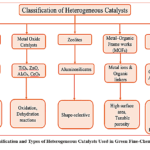 |
Figure 1: Classification and Types of Heterogeneous Catalysts Used in Green Fine-Chemical Synthesis Click here to View Figure |
Mechanistic Aspects of Surface Catalysis
Surface catalysis Surface catalysis Surface catalysis is the reaction of the molecules in the reactant with the active sites of a solid catalyst present on the surface. The classical mechanism is referred to as Langmuir Hinshelwood and EleyRideal models. In the Langmuir Hinshelwood reaction, both the reactants are adsorbed on the catalyst surface where they are reacted to produce the intermediates that desorb to release products17. Eley-Rideal mechanism It is whereby the reactant is adsorbed to the surface and the other reactant is in the gas or liquid state. Major processes in catalysis process include adsorption, surface diffusion reaction and desorption17. The adsorption strength is also much applicable as this is too weak and the reactants do not get attached and too strong and the products are not able to get off, and the poisoning of the catalyst occurs. The indicators of efficiency reactions are kinetic: catalytic turnover frequency (TOF), and activation energy18. The atomic level catalytic performance is determined by distribution and electronic structure of active sites including metal nanoparticles or oxygen vacancies19. These mechanisms are characterized by the aid of the more advanced tools of characterization (e.g., in situ spectroscopy, electron microscopy) and modelling. Knowledge of surface interaction is another indicator that can be used to construct AI-based predictor models to identify the relationship between structural and electronic properties and catalytic performance and selectivity in heterogeneous catalysis20.
Key Parameters Affecting Catalytic Performance
The working efficiency of a heterogeneous catalyst is, therefore, a number of structural and physicochemical parameters. Surface area dictates the surface contact of the reactants with the catalyst, the bigger the surface area the greater the catalytic action, this is because the more contact the reactants had with the active sites the greater the catalytic activity21. Active sites may be of metal, oxygen vacancy or acidic/basic centers which define adsorption and transformation of the reactants22. The nature, density and accessibility of these locations is quite delicate in regard to choice of reactions. Diffusion, adsorption, energy barrier in the reactions are influenced by the morphology including size, shape and crystal facet23. An example in point, selectivity can be increased during an oxidation reaction or a hydrogenation reaction through the assistance of certain crystal planes. An amount of reaction kinetics, reaction turnover frequency (TOF), and activation energy, and diffusion constraints will be the efficiency of a catalyst. Other external conditions also play important roles like temperature, pressure and solvent environment. These parameters demand a world outlook of catalysts optimization. This is a continuously growing trend in AI and machine learning models in which said descriptors can predict the catalytic behaviour and offer a more reliable and faster means of predicting catalytic behaviour than the conventional screening experiment. Finally, the accurate control of these parameters also provides rational design of efficient and sustainable heterogeneous catalysts in the synthesis of fined chemicals24.
Challenges in Correlating Catalyst Structure with Activity and Selectivity
One of the major problems of heterogeneous catalysis is to give direct and quantitative correlations between catalysts structure and catalytic activity25. Catalysts are intricate compounds, and can include a big number of active and inactive species, supports, dynamic surface states, and are changing under reaction conditions. The differences in the structural heterogeneity of particles regarding size, oxidation condition, and concentration of defects render it hard to establish real active locations. Moreover, rather many reactions are through transient intermediates, that are potentially difficult to observe experimentally. The in situ and operando characterization such as the X-ray absorption spectroscopy and transmission electron microscopy which have been developed has improved the understanding though they are more time and space restricted26. Simplification of catalyst environments is often simplified with development of computational tools, like Density Functional Theory (DFT), which can provide interesting results. Its model of composition, morphology, and electronic structure of a non-linear relationship adds further to its impossibility to adopt traditional ways of modeling. Here, AI and ML are a good solution, as a large amount of experimental and computational data is pooled to display the discovered patterns of hidden correlations of prediction. However it is difficult to assure the quality of data and their interpretability and generalizability of the models. To address these gaps, data-driven, explainable models and joint experimental-computational approaches may be used in the next-generation rational design of catalysts to assist sustainable fine-chemical synthesis27.
Artificial Intelligence in Chemical and Catalytic Science
There has been Artificial Intelligence (AI) revolution in the field of modern chemistry and catalysis. AI can be used to handle large volumes of data, to identify trends, to provide predictive data on the basis of computational modelling, machine learning (ML) and data analytics to design molecules, optimize reactions and design catalysts28. Unlike the more traditional experimental or theoretical methods (intuitive and relying on limited information), AI has the ability to easily make a discovery through automatic learning and prediction of models. In catalysis, AI-based approaches have been useful in elucidating complex correlations among catalyst composition, reaction environment and its activity consequently reducing the cost of experiment and enhancing sustainability29. The following subsections explain the underlying concepts of AI, AI workflow, key algorithms and how AI can be used to analysis of big data and cheminformatics in catalytic discovery30, 31.
Overview of AI, ML, and Deep Learning Techniques Relevant to Chemistry
Artificial intelligence (AI) can be described as the concept of computational systems able to learn and make a decision without the explicit programming. Machine Learning (ML) in AI deals with the learning of results or optimization of operations using algorithms using data, and Deep Learning (DL), a sub-branch of ML, deals with the discovery of non-linear complex relationships in large data sets with the assistance of multi-layered neural networks. These devices prove to be highly beneficial in chemistry in the prediction of the characteristics of molecules, reaction mechanism, and catalyst behavior. Experimental and computational data are studied with the help of ML models and identify the structure-property relationships, optimization of reaction parameters, and accelerate material discovery. Convolutional Neural Networks (CNNs) and Graph Neural Networks (GNNs) are deep learning networks that can be used to fold the structure of molecules and to predict chemical reactivity using molecules as molecular graphs. NLP AI tools too can produce knowledge on published literature, and can be useful in curation of large chemical datasets. All in all, AI, ML and DL can enable the establishment of a bridging point between knowledge discovery and data generation and can pave the way to autonomous catalyst design and sustainable production of fine-chemicals32-34.
Typical AI Workflow
The process of AI-assisted catalyst discovery takes a well-organized workflow, which includes data gathering, feature derivation, model training, and forecasting/optimization. This pipeline guarantees systematized learning on chemical data in order to come up with credible predictions.
Data Collection
Any AI model is based on data. Catalysis Experimental Experimental studies, computational simulations (including DFT) and high-throughput screening are all possible sources of catalysis data35. Literature mining Literature mining may also serve as a source of catalysis data. The acquired data are typically compositions of catalysts, reaction conditions, surface characteristics and performance indicators (e.g. yield, selectivity, turnover frequency)36. The model accuracy demands that there be quality and standardized and reproducible information. The recent progress in the automated laboratories and electronic laboratory notebooks (ELNs) has improved data curation, and open databases (e.g., Materials Project, Catalysis-Hub) present materials that can be used to train AI models. The necessity to address the problems such as incomplete data and or different experimental conditions is high in order to build strong datasets that are actually reflective of catalytic behaviour37.
Feature Extraction
The extraction of features from raw chemical data involves converting these raw chemical data into useful numerical form (descriptors) that can be used to reflect structural, electronic and physicochemical properties of catalysts38. The most clear ones are the composition of atoms, coordination, bond lengths, surface area, pore volume and adsorption energy. It is a feature extraction with deep learning that makes the physical interpretability (aka needed by feature engineering) and minimal manual bias possible and reduces manual bias. An example of the connectivity of atoms in catalysts in graph representation is needed to support structure-activity relationships of models. The number of inputs is also reduced by the technique of features selection (e.g. principal component analysis, recursive elimination) which further simplifies the model and makes it more dimensional. Engineered features Proper structure-activity relations (SARS) of heterogeneous catalysis are founded on the properly engineered features39.
Model Training
Model training training is training using based on the input (features) and output (e.g. catalytic activity, selectivity) goals. In order to avoid overfitting, the data is usually divided into training and validation sets. In normal cases, a model is trained through the process of supervised learning, whereby labelled data is fed to the model, and unsupervised learning, which identifies the pattern without additional labels put in place in advance to direct the learning process. The hyperparameters such as learning rate, depth of the decision tree or the number of layers in the neural network are optimized during the training process to improve the accuracy. Cross-validation ensures that one can make predictions on previously unknown data. Prediction of performance metrics, catalyst discovery or proposal of new catalyst candidates are modeled by catalysis. The effective model training transforms the complex chemical knowledge into predictive tools which can guide the experiment design to the best level of accuracy40.
Prediction/Optimization
Forecasting the catalytic activity, selectivity or stability of new materials or optimization, to determine the best conditions of a reaction or catalyst structure is achieved with AI models once trained8. Bayesian optimization and reinforcement learning, are methods that are used to optimize predictions using feedback in experiments / simulations. The multi-objective optimization is especially useful in case of the trade-off between conversion rate, selectivity and eco-friendliness. The ability of predictive models to search thousands of material combinations in minutes means that experiments need not work as hard in a heterogeneous catalysis system, which has been enabled by models. This solution that is based on information will enable the shift of reactive discovery to proactive catalyst design which is consistent with the concept of green chemistry41, 42.
Common Algorithms
Regression (Linear, Random Forest, Support Vector Regression)
Various continuous results are catalytic yield or reaction rate that are predicted via regression models. Linear regression is more than appropriate in the simplest of systems as it is used to directly draw connections between input attributes and outputs13. The tree based ensemble, random forest regression, explains non-linear relations with the help of averaging a group of trees that results in a stronger regression43. The Support Vector Regression (SVR) is a non-parametric algorithm that can employ high dimensional data with the assistance of the kernel functions. The models have been credited to forecast the catalyst performance in terms of structural and operational factors. Catalysis Regression algorithms have been used to estimate adsorption energy and optimise nanoparticles size as well as predict turnover frequencies to a high level of precision44, 45.
Classification and Clustering
The catalysts may be grouped either based on the degree of activity (i.e. active/inactive) or the reaction. The data of the thresholds of features are hierarchically separated into decision trees and are easy to understand and useful in filtering catalysts. Such clustering as k-means uses a cluster-based approach to gather together similar catalysts or reactions without pre-labeling them, and to find hidden patterns of chemical similarities or activity. These methods can assist in finding the structure-activity relationships in various data sets, and provide a description of catalyst families that have acted similar in the gibberish. Such forms of unsupervised analysis allow chemists to know of possibly useful areas of chemical space in which to search46.
Neural Networks and Deep Learning
Neural networks (NNs) are linked nodes (neurons) organized into layers and they execute not linear relationships between non-linear inputs and outputs, which are highly complex. Deep learning is an extension of this concept, and it relies on a large number of layers of hidden representations that allow the model to learn hierarchical representations47. Catalysis neural networks (GNNs and CNNs) are convolutional neural networks and graph neural networks that are direct atom-atom and atom-surface structure models that are trained on raw data or images48. It has been demonstrated that these models are quite precise in predicting adsorption energies, reaction barriers and optimum catalyst geometry. The processing of high-dimensional data in spectroscopy, microscopy and computational chemistry have certain benefits to deep learning, where one can have a complete picture of the catalytic processes49.
Reinforcement Learning for Catalyst Discovery
The approach that is based on machine learning and can be referred to as reinforcement learning (RL) is used to mimic the human pattern of the decision-making process because the former allows AI agencies to engage in an environment, receive feedback (reward or penalty), and improve their behaviors as they mature. Applied Catalyst design RL is able to learn autonomously to discover material compositions, reaction conditions or synthesis pathways to optimize performance metrics. This self-learning capability can be applied in free labs where the AI would be in charge of the experiments and interpret the findings and suggest new experiments. RS forms the basis of future self-optimizing chemical systems because it has already been shown to optimize complex reaction networks, discovery of new catalytic materials, and reduction of the energy consumption of a process50.
Role of Big Data and Cheminformatics
AI-chemistry is estimated on the intersection of big data and cheminformatics. Big data may be characterized by large, multi-source, data obtained because of experimentation, modeling, patents, and publications. This chemical information in chemoinformatics is manipulated, processed, and visualized with the help of the computational chemistry. To apply the chemoinformatics platforms in catalysis, it is feasible to generate molecular descriptors, store reaction data, and normalize reactions to be used in AI modeling. The combination of different types of data spectroscopy, structural and kinetic helps in the power of the models. Large-scale, real-time analytics is now possible with the improvement of data curation, cloud computing and high-throughput experimentation. Cheminformatics can take raw chemical data and convert it into actionable form, by connecting the data generation with AI algorithms, and thus create catalysts in a more rational design, and facilitate the sustainable production of fine-chemicals51.
AI-Driven Catalyst Design and Discovery
The introduction of Artificial Intelligence (AI) into catalyst development is a transition toward data-driven finding, as compared to an empirical approach. One can describe the traditional methods as time-consuming synthesis and screening process, but AI enables identifying, optimizing, and interpreting catalysts in a short time due to learning more complex structure-property correlations. It is possible to predict catalytic activity, suggest novel materials, and optimize reaction conditions with a high level of accuracy with the help of advanced modeling, feature engineering, and generative algorithms using AI. Transferred to the case of green fine-chemical synthesis, AI helps to relieve waste and cost and achieve high-speed discovery of effective, selective, and sustainable heterogeneous catalysts. Here, the author gives a discussion of the key aspects of the AI-based catalyst design i.e. the source of data, predictive modeling, generative design, and real-time optimization of the process8, 52.
Data Sources and Datasets
Experimental Databases, Literature Mining, and High-Throughput Screening Data
Data is the foundation of the AI-based catalysis. The predictive models need sound and diverse datasets to be built. Experimental databases of catalytic materials, surface structures, and reaction energetics have been curated in such databases as Catalysis-Hub, Materials Project and Open Catalyst Project53. Literature mining is an automated process that is applied to the published literature, patents and reports to extract the needed chemical information by use of Natural Language Processing (NLP) technique54. The text-mining systems which are driven by AI identify the reaction parameters, the composition of catalysts and the performance outcomes which would otherwise be spread over thousands of papers30. On the same note, high-throughput screening (HTS) experimental and computational generates large data sets on catalytic reactions by screening large numbers of combinations and condition of materials simultaneously55. Together, all of these sources of data will enable multi-scale learning and enable the creation of training datasets that would be robust and with the capacity to reproduce the behavior of catalysts in the field.
Descriptor Development (Electronic, Geometric, and Surface Features)
Descriptors, in catalysis, are mathematical descriptions of those properties that are a correlation of catalytic activity, selectivity or stability. They are the major inputs of AI and ML models56. Electronic descriptors consist of such parameters as d-band center, electron affinity, and charge density, which characterize the interaction of catalysts with reactant molecules. The adsorption and diffusion depend on geometric values, including the arrangement of atoms, the curvature of the surfaces, and the size of a nanoparticle57. Accessibility and reactivity are characterized by surface features such as porosity, surface energy and density of active sites. Conventional methods of data description need both chemical intuition and computational modeling (e.g., DFT) however more recent methods based on AI feature selection methods may autonomously identify the most suitable variables58. By using a combination of different types of descriptors, it is possible to perform multi-dimensional learning, with models having the ability to learn more complicated correlations that determine catalyst activity. Finally, descriptor engineering fills the gap between machine learning and physical chemistry, which enables making accurate predictions and designing catalysts rationally59.
Predictive Modelling of Catalyst Performance
AI Models Predicting Activity, Selectivity, and Stability
The key role in catalyst design based on AI is placed on predictive modeling. As long as high-quality descriptors and datasets are used, AI models may be capable of forecasting the catalytic activity, the selectivity of the reaction, and its structure stability at an extremely high degree. The guided learning models such as random forest, gradient boosting and neural network are modelled using correlations between predictors of the catalysts and the performance variables. Based on the conditions of the provided reactions as an illustration, the ML models would be able to estimate turnover frequency (TOF) or conversion efficiency. Still more developed machines may use atomic structures as input, to learn local bonding and surface interactions, e.g. graph neural networks (GNNs). In addition to predicting activities, AI models establish the stability of catalysts under reaction conditions, the mechanisms of degradation or vulnerability to sintering. Through such lessons, the chemists are able to focus on materials that are highly reactive and powerful. Since predictions are optimized through repeated experimentation, AI will turn the catalyst discovery process into an iterative, self-targeting, and lowering the cost and speed of experimenting and speeding up the process of innovation60.
Case Studies of Successful Catalyst Prediction Using ML
Machine learning has already proved itself to be effective in predicting and optimization of catalysts in various reactions. ML models trained on DFT data sets have been projected to have higher CO selectivity and lower overpotential in CO2 reduction on projected metal alloy compositions (e.g. Cu-Zn, Ag-Pd). Other algorithms like random forest, support vector regression have been applied in the instance of hydrogenation reactions to scale the size of metal nanoparticles and electronic structure to reaction yield to identify the optimal Pd and Ni based catalysts. The oxidation processes have enabled AI to screen transition metal oxides to active and thermal stability and other experiments to efficient catalysts including MnO2 and Fe2O3. These case studies show that AI is able to search large chemical spaces that would be impractical to search experimentally. It is important to note that non-intuitive correlations within AI model can also encompass the effect of electronic density or defect states that can be utilized to provide mechanistic information that can complement human knowledge and computational chemistry61.
Generative and Inverse Design Approaches
Use of Deep Generative Models (GANs, VAEs) for Catalyst Design
The future of autonomous catalyst discovery is generative AI models (VariationalAutoencoders (VAEs) and Generative Adversarial Networks (GANs). Unlike predictive models that consider the already existing materials, generative models generate new catalyst structures, through statistical distribution of known materials. In GANs, two neural networks are used: one neural network generates new materials and the other neural network gives them a realistic score as opposed to VAEs that are set to explore compact mathematical descriptions of compound space in latent space that generate the plausible new compounds. In the process of catalysis, models can be used to develop new metal-support interactions or ligand structures or active-site structures that are optimized to particular reactions. Indicatively, bimetallic surfaces proposed by GANs are novel during the process of transforming CO2 and porous structures with adjustable selective porous structures. It is the counterintuitive method of design, with the advantage that chemists can define their requirements (i.e. low-energy barrier, high-selectivity) and then AI reverse-computes the most promising catalysts62.
AI for Reaction Pathway Optimization
The use of AI tools also takes place in terms of optimization of the reaction pathways that can establish the optimal pathways to assemble a product. Potential energy surfaces (PES) of complex potential energy systems with reinforcement learning and deep neural networks can be mapped and transition states or intermediates predicted. The techniques outshinear the traditional DFT based techniques in the sense that they can screen the alternative pathways in a relative short period of time rendering them to be cheaper to calculate. Independent methods Heterogeneous catalysis methodology can use the AI to predict the favored adsorption geometry, rate-limiting steps and co-catalysts to improve the reaction kinetics. In order to provide an example, the assessment of the paths controlled by AI has improved the process of learning to produce CO2 hydrogenation and ammonia. The final vision is to combine AI with kinetic modelling and automated experimentation, which would allow optimising a pathway in real-time, and mechanistic understanding of catalyst enhancement63, 64.
AI-Assisted Process Optimization
Reaction Condition Optimization
AI is also good at maximizing parameters of reactions which can play a large role on catalytic behavior. Classical optimization is based on the one-variable-at-a-time method of experimentation but AI algorithms particularly Bayesian optimization and genetic algorithms search the multidimensional parameter space effectively65. These processes have the ability to simultaneously moderate temperature, solvent, pressure, catalyst content and reactant ratios in order to maximize yield or selectivity. As an example, Bayesian models learn each time based on the outcomes of an experiment to suggest new reaction conditions with the most likely success. In fine-chemical synthesis, AI-directed optimization eliminates experimental trials and resource usage and provides almost ideal process parameters. Furthermore, the hybrid methods using AI and mechanistic models are more interpretable and have valuable chemical insights as well as accuracy of prediction66.
Real-Time Adaptive Control and Self-Optimizing Reactors
Making AI interact with automation has resulted in self-optimizing reactors that are able to adjust reaction conditions in real time after receiving real time feedback on data. These systems contain sensors and machine learning software to keep track of the variables of the temperature, conversion and selectivity. It is a self-regulating type of reactor that utilizes the most out of reinforcement learning or the Bayesian control in altering the reactor settings. The methodology decreases the human factor and enhances the reproducibility and can adjust it to dynamic conditions. Exothermic reactions, or multi-step reactions which are hard to control manually, are some examples of reactions that are particularly convenient to use in real-time optimization. The reactors with artificial intelligence also permit the closed-loop experimentation: experimentally tested and retrained model predictions are also possible. The shift towards autonomy in the manufacture of fine-chemicals through catalysts is a step giant size in the direction of liquidity, safety and sustainability in the manufacture of catalysts67.
Integration of AI with Green Chemistry Principles
With the integration of Artificial Intelligence (AI) and Green Chemistry, it will be a revolutionary leap towards being environmentally responsible and economically viable in terms of chemical processes30, 68. The key principles of green chemistry are to minimize waste, to reduce hazardous materials, and to maximize the use of the available resources whereas AI offers the computational intelligence that is required to model, predict, and optimize these targets69. Through the inclusion of AI-based design, predictive analytics, and sustainability modeling categories, researchers will be able to create catalytic processes with high performance, as well as sustainable principles70. This linkage hastens the switch between the empirical design of green processes and data-based sustainability, in which all the catalytic steps of reducing feedstock to isolating the product are designed with the lowest impact on the environment71.
AI Strategies to Minimize Waste, Improve Atom Economy, and Enhance Catalyst Recyclability
Green chemistry, optimization of the reaction conditions, and even the design of catalysts can be supported with the help of AI in order to obtain the ideal number of atoms and the minimum number of waste72. The machine learning algorithms can be used to process the large amounts of experimental data, and the outcomes are high conversion rate and minimum by-products. Multi-objective optimization indicates that AI has guidelines to meet the efficiency and environmental compliance. The design of catalysts with higher turnover rates and life is done through predictive models to ensure the catalysts are not required to be changed frequently. Also, molecular simulations that are based on AI will be able to assist in creating recyclable catalysts through predicting their structural stability through reaction cycles. Adaptive control and automated reaction monitoring also minimize the consumption of energy and solvent used which is in line with the concept of the cyclic economy73. Overall, AI is transforming the design of catalysts to a closed-loop process and is concerned with sustainability but does not diminish productivity.
Sustainable Feedstock Selection and Process Intensification Guided by AI
The AI plays a critical role in the identification of renewable and green feedstocks so as to produce chemicals. The results of the analysis of the databases of biomass-based materials, waste substrates, or CO2-based intermediates can be proposed using AI algorithms that will enable the selection of environmentally friendly raw materials that will simultaneously meet the performance and the sustainability targets. Process intensification also is achieved through the assistance of AI, processes are redesigned to be more efficient to have less use of energy and equipment footprint. Machine learning is used to model reaction networks and optimal reactor designs are suggested that can mitigate scale-up problems. One of them is AI technologies, which can be used to maximize biomass conversion routes or electrocatalyticCO2 utilization, replacing fossil-based routes. The combination of AI and the process model ensures the dynamism of the optimization of the energy flow, solvent selection, and reactor design and defines the environmental and economic benefits. Thus, it is possible to use AI as a strategic resource of green process development and sustainable utilization of feedstock74-76.
AI for Life-Cycle Assessment (LCA) and Eco-Efficiency Evaluation of Catalytic Systems
In the evaluation of the environmental footprint of the catalytic systems between the extraction of raw material and disposal of products, Life-Cycle Assessment (LCA) is required. The AI streamlines the LCA with automating data collection process, massive datasets, and enhanced prediction of emissions, wastes, and energy consumption. Machine learning models, even with incomplete information on an experiment, can calculate eco-efficiency measures such as carbon intensity, energy payback on investment and waste index77. With the sensitivity analysis offered by AI, the stages which have the greatest impact on the environment are revealed, and thus, a better process design might be achieved. The fact that LCA and AI-based predictive modelling allow seeing sustainability in real-time during catalyst development is a plus. The chemists can thus make good decisions at the early phases of the design to have processes that are highly efficient and eco-friendly78.
Case Studies Demonstrating Reduced Energy Consumption and Eco-Impact via AI Optimization
Some recent works give an illustration of how AI can be applied to reduce the environmental impact of catalytic processes79. An example is AI-optimized photocatalytic system to reduce CO2 which is reported to use as much as 40% of less energy than the conventional optimization processes80. Machine learning controlled hydrogenation has reduced the rate of solvents and prediction of yield, thereby minimising the generation of wastes. Elsewhere, AI-managed reactors were able to automatically adjust the temperatures and flow rates of reactions in real-time to guarantee the best conversion, which could save nearly 30 percent of energy. Additionally, AI-aided catalytic selection of biomass valorization have discovered routes with the greatest carbon efficiency and minimum concentrations of greenhouse gases81. The aforementioned case studies indicate that AI does not only raise the grade of catalysis efficiency, but directly affects the indicators of sustainability, thereby becoming an indisputable tool of achieving the goals of green chemistry and low-carbon production.
Experimental–Computational Synergy
Integration of experimental chemistry with computational modelling and artificial intelligence (AI) is an interesting approach that can be adopted in accelerating catalysts and mechanistic understanding12. Traditionally, computational theories are confirmed by experimental observations and reaction energetics and active sites are elucidated using computational techniques including Density Functional Theory (DFT). With this development of AI and Machine Learning (ML), the synergy has now become a closed loop workflow with simulations, experimentation, and predictive models constantly informing and enhancing one another. The convergence enables quick hypothesis testing, better characterizing catalysts, as well as, low research costs. Lastly, real-time, self-optimizing, and self-learning catalyst design systems are becoming experimentally computational82.
Combining Density Functional Theory (DFT) and AI/ML for Catalytic Mechanism Elucidation
Atomistic theories (density functional theory (DFT)) provide you with a picture of both the mechanism of the reaction itself and the energy barriers to reaction along with the properties of the active site, but is too costly to scale to large scale. This can be overcome by combining AI and ML with DFT and learning on the existing readily computed datasets to give predictions of new systems with high efficiency. Fraction of the computational time can also be projected by ML models with DFT-like accuracy and can be useful to investigate catalytic materials immediately. In a more precise sense, such important descriptors like adsorption energy or charge distribution which determine catalytic activity could be found with the help of AI algorithms. This kind of combination allows mapping reaction pathways and reaction transition states in detail, which improves mechanistic insight. This DFT-AI combination is consequently capable of data-guided catalyst discovery containing both theoretical precision and predictive extent that can essentially accelerate catalyst design of high-performance and sustainability83.
Multi-Scale Modelling: From Atomistic Simulation to Process Level
Catalysis is done at very great scales and very small scales in space and in time at the level of interaction of atoms and at the level of process reactor. The combination of these scales, i.e. a quantum mechanical modelling (e.g. DFT) with mesoscale modelling and continuum modelling is known as multi-scale modelling. Along with this mechanism, AI complements the data by extrapolating levels and creating consistency and prediction accuracy. One such instance is that atomistic simulations formulate the behaviour of active sites and AI-based kinetic models can extrapolate this observation to reaction networks and performance on a process level. At the industrial level, ML would be aware of the efficiency of the reactor that can be coupled with the selectivity of the product and the most appropriate process parameters due to the catalyst microstructure. It is a top-down approach, which provides the extrapolation of molecular knowledge into optimization of processes that lead to the generation of fine-chemicals in the sustainable manner that is scaled up. What comes out is a combined, factual model which entails basic chemistry and practical application of engineering84.
Active Learning Loops Integrating Experimental Data into AI Models
Active learning provides an implementation of a fall back loop between AI prediction and experiment validation. In the first case, AI models are trained on small datasets and are used to propose new catalysts or conditions of the reactions. The predictions that have been experimentally tested are then re-selected back into the model and every time the new results are entered into the model, the model will be retrained to increase the quality and reduction of the uncertainty. It is a closed-loop plan that enables to effectively discover large chemical space with few experimental resources. Catalysis, it is also possible to find the most optimal compositions/reaction-paths through active learning and the predictive power of the model is continuously enhanced. It can be applied to complement automated synthesis and high-throughput experimentation in order to be able to produce self-improving catalyst discovery systems that dynamically learn through real-world observations. This kind of synergy will reduce the trial and error work and will help to produce smart and adaptive research processes85.
Example Workflows Coupling Computational Chemistry, ML, Automated Experimentation
The most common kind of workflow involving computational chemistry, ML, and automation is an initial step of DFT simulations providing an initial result, in terms of catalytic reactions, including adsorption energy, and activation barriers. This information is then utilized to train the ML models that are utilized to predict new catalysts with the required characteristics. The predictions are used to guide automated platforms of experimentation which synthesize and screen catalysts under controlled conditions. That forms the self-optimization of the discovery loop where the information of experiments becomes automatically processed and used to update the ML model as though it were a rate and selectivity of the reaction. One such example here is the fact that in the scenario of CO2 reduction research, the approach has been used to determine the best metal alloy catalysts in a fraction of the research time as compared to the traditional research. The experiments on autonomous catalysis are moving towards these combined plans in future and computation, data analytics and robotics are struggling in the same path in order to speed up the innovation and guarantee reproducible and long-lasting consequences86.
Case Studies: AI-Designed Catalysts in Green Fine-Chemical Synthesis
Artificial Intelligence (AI) has transformed catalysis to no longer rely on theoretical prediction, but now through industrial application, data-driven design, predictive modelling, and automated experimentation has become possible, making catalyst discovery faster and more efficient. An example of the use of AI models in predicting optimum catalytic systems involves learning complex structure-performance relationships, improving atom economy, energy efficiency, and selectivity in processes like selective oxidation, hydrogenation, CO2 utilization, biomass conversion and fine-chemical synthesis87, 88. Such developments are in line with the principle of green chemistry besides minimizing the time of discovery. Important examples of the application of AI-based techniques such as ML, DL, and optimal control to the design and optimization of heterogeneous catalysts as shown in Table 1.
Table 1: Representative Case Studies of AI-Designed Catalysts in Green Fine-Chemical Synthesis
|
S. No. |
Reaction / Application | Catalyst System | AI / ML Approach Used | Key Outcomes | References |
| 1 | Selective Oxidation of alkanes and alcohols | Transition metal oxides (MnO₂, Co₃O₄, CeO₂) | Random Forest Regression and Neural Network Models | ML predicted structure–activity correlations and optimized calcination temperature; enhanced selectivity toward partial oxidation products |
89, 90 |
|
2 |
Hydrogenation of nitroarenes and olefins | Pd–Ni and Ru-based supported nanoparticles | Support Vector Regression (SVR) and Bayesian Optimization | AI optimized metal ratios and particle sizes; 25% higher yield and 30% less energy consumption compared to traditional tuning | 91, 92 |
| 3 | CO₂ Utilization and Methanol Synthesis | Cu–ZnO–ZrO₂ and perovskite catalysts | Graph Neural Networks (GNNs) and Deep Reinforcement Learning | Predicted catalyst compositions with improved CO₂ adsorption and conversion efficiency; AI suggested new Cu–Ni–In oxide composition |
93-95 |
|
4 |
Biomass Conversion and Bio-Refining | Zeolite- and MOF-based bifunctional catalysts | Random Forest + Feature Importance Analysis | Identified descriptors (acid strength, pore volume) governing selectivity; optimized reaction for furfural hydrogenation with minimal waste | 96-98 |
| 5 | Fine Chemical Transformations (amination, cross-coupling, esterification) | Pd/C, Ni-phosphine complexes, metal–organic hybrids | Bayesian Optimization and Deep Learning | AI-guided catalyst selection reduced screening time by 70%; achieved superior regioselectivity and atom economy |
99-101 |
|
6 |
Comparative Analysis: Traditional vs AI-Driven Discovery | Multiple heterogeneous catalyst families | Comparative computational–experimental approach | AI-driven methods reduced discovery time by 60–80%, identified novel active sites, and improved energy efficiency |
102-104 |
Current Challenges and Limitations in AI-Driven Catalyst Design
Despite the potential of transformation, several challenges that have enveloped the use of Artificial Intelligence (AI) in catalyst design have challenged its exploitation and commercialization by the industrial world. The great success of AI models is determined by the quality, diversity and consistency of data, and the experimental data in catalysis is often fragmented or incomplete. In addition, the fact that most deep learning models have black-box properties is problematic when it comes to the interpretability and scientific plausibility. Lack of computational predictions which have been experimentally confirmed and the difficulty of extrapolating models to other groups of catalysts hinder generalizations. The sustainability of the use of computational resources is also becoming a pertinent aspect to the sustainable research practice because of the environmental and ethical impacts of their use. The problems, their implications, and possible methods of making AI valid and applicable in the area of heterogeneous catalysis as shown in Table 2.
Table 2: Major Challenges and Limitations in AI-Driven Catalyst Design and Their Mitigation Strategies
| S. No. | Challenge / Limitation | Description and Implications | Possible Mitigation Strategies | |
| 1 | Data Scarcity and Inconsistency | Experimental and computational data are often limited, unstandardized, or non-reproducible, reducing AI model accuracy. | Develop open-access, curated catalyst databases; standardize data formats; use data augmentation and transfer learning. | 105-107 |
| 2 | Model Interpretability and Trust Issues | Deep learning models act as “black boxes,” making it difficult to rationalize chemical predictions. | Employ explainable AI (XAI), feature importance analysis, and integration with physical chemistry principles. | 108-110 |
| 3 | Experimental Validation Gaps | Many AI-predicted catalysts lack experimental confirmation, creating disconnects between theory and practice. | Integrate AI with automated high-throughput experimentation and feedback loops; prioritize lab validation. | 108, 111 |
| 4 | Transferability of AI Models | Models trained on specific catalyst families or reactions often fail to generalize to new systems. | Use meta-learning and cross-domain training; incorporate diverse catalyst datasets; develop adaptive models. | 104, 112 |
| 5 | Ethical and Sustainability Aspects of Computational Resources | High-performance computing demands significant energy and hardware resources, contributing to carbon emissions. | Adopt energy-efficient algorithms; use renewable-powered computing facilities; promote “Green AI” initiatives. | 113, 114 |
Conclusion
The development of Artificial Intelligence (AI) in the field of heterogeneous catalysis has completely transformed the manner in which catalysts are developed and optimised and their utilisation in the generation of green fine-chemicals. Machine learning, deep learning, and predictive modelling, experimental chemistry, and computational chemistry can all be applied to screen catalyst materials, predict performance parameters and optimize the reaction conditions with the aid of AI. It is a knowledge-driven method and rejects the old method of trial and error that is experimentation based on smart, automated workflows, which is more forthcoming, discriminating, and environmentally friendly. High-throughput experimentation and molecular simulations combined with automated data analysis have provided a significant catalyst to innovation in both catalyst discovery and process intensification by using AI.
The future implementation of AI-assisted catalysis as autonomous robotic laboratories, explainable AI (XAI) systems and open databases ought to be developed in a collaborative manner, which would enhance clarity and reproducibility. The AI research will focus on the objectives of green chemistry due to the multi-objective optimization of the catalytic efficiency, the environmental impact, and the energy consumption. Since the tools of computation will keep improving, AI-enabled platforms will be able to learn independently, and will create catalysts, which would allow developing sustainable technologies in a significantly shorter time. To sum it up, AI is among the most powerful catalysis aids that will revolutionize the chemical industry by turning it into a smarter, faster and greener one.
Acknowledgement
The authors express their sincere gratitude to Raghavendra Institute of Pharmaceutical Education and Research (RIPER) Autonomous, Anantapur, Andhra Pradesh, India, for providing for their valuable suggestions and encouragement throughout the preparation of this manuscript.
Funding Sources
The author(s) received no financial support for the research, authorship, and/or publication of this article.
Conflict of Interest
The author(s) do not have any conflict of interest.
Data Availability Statement
This statement does not apply to this article.
Ethics Statement
This research did not involve human participants, animal subjects, or any material that requires ethical approval.
Informed Consent Statement
Not applicable. This study did not involve human participants, and therefore, informed consent was not required.
Authors’ Contributions
- Nithya Shumedha, P. Harathi, M. Jayalakshmi, B. Abhishek, S. Dadu Basha, and R. Dinesh contributed equally to the collection and review of literature, data interpretation, and manuscript drafting.
- Nawaz Mahammed conceptualized the topic, supervised the overall work, critically revised the manuscript for intellectual content, and approved the final version for submission.
References
- Buccioli, M. Sustainable Synthesis of Active Pharmaceutical Ingredients. 2025.
- Shah, N.; Doliente, S. S.; Hellgardt, K.; Barlow, J. Fine Chemicals Sector 2025.
- Shan, C.; Ji, X. Environmental regulation and green technology innovation: an analysis of the government subsidy policy’s role in driving corporate green transformation. Industrial Engineering and Innovation Management 2024, 7 (1), 39–46.
CrossRef - Tickner, J.; Geiser, K.; Baima, S. Transitioning the chemical industry: the case for addressing the climate, toxics, and plastics crises. Environment: Science and Policy for Sustainable Development 2021, 63 (6), 4–15.
CrossRef - Hughes, E. M. The Role of Catalysis in Green Chemistry and Sustainability. Austra & Lian Journal of Basic Sciences 2025, 6 (3), 1–9.
CrossRef - Lakhani, P.; Bhanderi, D.; Modi, C. K. Support materials impact on green synthesis and sustainable processing via heterogeneous catalysis. Discover Catalysis 2024, 1 (1), 2.
CrossRef - Jambhulkar, D. K.; Ugwekar, R. P.; Bhanvase, B. A.; Barai, D. P. A review on solid base heterogeneous catalysts: preparation, characterization and applications. Chemical Engineering Communications 2022, 209 (4), 433–484.
CrossRef - Zhang, L.; Bing, Q.; Qin, H.; Yu, L.; Li, H.; Deng, D. Artificial intelligence for catalyst design and synthesis. Matter 2025, 8 (5).
CrossRef - Ulissi, Z. W.; Medford, A. J.; Bligaard, T.; Nørskov, J. K. To address surface reaction network complexity using scaling relations machine learning and DFT calculations. Nature communications 2017, 8 (1), 14621.
CrossRef - Scattolin, T.; Nolan, S. P.; Casillo, E. Catalysis Meets Machine Learning: A Guide to Data-Driven Discovery and Design. Chemical Communications 2025.
- Ananikov, V. P. Artificial Intelligence Chemistry. Artificial Intelligence 2024, 2, 100075.
CrossRef - Benavides-Hernandez, J.; Dumeignil, F. From characterization to discovery: Artificial intelligence, machine learning and high-throughput experiments for heterogeneous catalyst design. ACS Catalysis 2024, 14 (15), 11749–11779.
CrossRef - Samuel, H.; Etim, E. E.; Nweke-Maraizu, U.; Yakubu, S. Machine Learning in Chemical Kinetics: Predictions, Mechanistic Analysis, and Reaction Optimization. Applied Journal of Environmental Engineering Science 2024, 10 (1), & al./Appl. J. Envir. Eng. Sci. 10 N° 11 (2024) 2036–2061.
- Chong, X.; Li, L.; Zhang, C.; Zhao, Y.; Kraft, M.; Wang, X. AI-Enhanced Multi-Scale Smart Systems for Decarbonization in the Chemical Industry: A Pathway to Sustainable and Efficient Production. Technology Review for Carbon Neutrality 2025.
CrossRef - Sato, T.; Masuda, K.; Sano, C.; Matsumoto, K.; Numata, H.; Munetoh, S.; Kasama, T.; Miyake, R. Democratizing Microreactor Technology for Accelerated Discoveries in Chemistry and Materials Research. Micromachines 2024, 15 (9), 1064.
CrossRef - Li, X.; Zhang, L.; Wang, S.; Wu, Y. Recent advances in aqueous-phase catalytic conversions of biomass platform chemicals over heterogeneous catalysts. Frontiers in chemistry 2020, 7, 948.
CrossRef - Prins, R. Eley–Rideal, the other mechanism. Topics in Catalysis 2018, 61 (9), 714–721.
CrossRef - Boudart, M. Turnover rates in heterogeneous catalysis. Chemical reviews 1995, 95 (3), 661–666.
CrossRef - Li, L.; Feng, X.; Nie, Y.; Chen, S.; Shi, F.; Xiong, K.; Ding, W.; Qi, X.; Hu, J.; Wei, Z. Insight into the effect of oxygen vacancy concentration on the catalytic performance of MnO2. ACS catalysis 2015, 5 (8), 4825–4832.
CrossRef - Savéant, J.-M. Molecular catalysis of electrochemical reactions. Mechanistic aspects. Chemical Reviews 2008, 108 (7), 2348–2378.
CrossRef - Bernard, P.; Stelmachowski, P.; Broś, P.; Makowski, W.; Kotarba, A. Demonstration of the influence of specific surface area on reaction rate in heterogeneous catalysis. Journal of chemical education 2021, 98 (3), 935–940.
CrossRef - Vedrine, J. C. Revisiting active sites in heterogeneous catalysis: Their structure and their dynamic behaviour. Applied Catalysis A: General 2014, 474, 40–50.
CrossRef - Wang, H.; Ren, X.; Liu, Z.; Lv, B. Chemical conversion based on the crystal facet effect of transition metal oxides and construction methods for sharp-faced nanocrystals. Chemical Communications 2022, 58 (7), 908–924.
CrossRef - Zhang, L.; Zhou, M.; Wang, A.; Zhang, T. Selective hydrogenation over supported metal catalysts: from nanoparticles to single atoms. Chemical reviews 2019, 120 (2), 683–733.
CrossRef - Vogt, C.; Weckhuysen, B. M. The concept of active site in heterogeneous catalysis. Nature Reviews Chemistry 2022, 6 (2), 89–111.
CrossRef - Dong, C. L.; Vayssieres, L. In Situ/Operando X‐ray Spectroscopies for Advanced Investigation of Energy Materials. Chemistry–A European Journal 2018, 24 (69), 18356–18373.
CrossRef - Arakawa, H.; Aresta, M.; Armor, J. N.; Barteau, M. A.; Beckman, E. J.; Bell, A. T.; Bercaw, J. E.; Creutz, C.; Dinjus, E.; Dixon, D. A. Catalysis research of relevance to carbon management: progress, challenges, and opportunities. Chemical reviews 2001, 101 (4), 953–996.
CrossRef - Eko, A. S. Catalyst Design: A Narrative Study on Artificial Intelligence. Int J Recent Res Phys Chem Sci (IJRRPCS) 2024, 10, 113–140.
- Al-Akayleh, F.; Ali Agha, A. S.; Abdel Rahem, R. A.; Al-Remawi, M. A mini review on the applications of artificial intelligence (AI) in surface chemistry and catalysis. Tenside Surfactants Detergents 2024, 61 (4), 285–296.
CrossRef - Valavanidis, A. Artificial Intelligence and Green Chemistry. Sci Rev 2024, 1262024.
- Ruiz-Gonzalez, A. AI-Driven Chemical Design: Transforming the Sustainability of the Pharmaceutical Industry. Future Pharmacology 2025, 5 (2), 24.
CrossRef - Tseng, Y. J.; Chuang, P.-J.; Appell, M. When machine learning and deep learning come to the big data in food chemistry. ACS omega 2023, 8 (18), 15854–15864.
CrossRef - Cova, T. F.; Pais, A. A. Deep learning for deep chemistry: optimizing the prediction of chemical patterns. Frontiers in chemistry 2019, 7, 809.
CrossRef - Öztürk, H.; Özgür, A.; Schwaller, P.; Laino, T.; Ozkirimli, E. Exploring chemical space using natural language processing methodologies for drug discovery. Drug Discovery Today 2020, 25 (4), 689–705.
CrossRef - Bozal-Ginesta, C.; Pablo-García, S.; Choi, C.; Tarancón, A.; Aspuru-Guzik, A. Developing machine learning for heterogeneous catalysis with experimental and computational data. Nature Reviews Chemistry 2025, 1–16.
CrossRef - Martinez, T.; Romero, L. S. L.; Rodriguez, D. E.; Amaya, J. A Review for the Design and Optimization of Catalysts: The Use of Statistics as a Powerful Tool for Literature Analysis. Chemistry 2025, 7 (3), 74.
CrossRef - Meng, J.; Jiang, X. Artificial-intelligence-enabled catalysis via standardized batch data. Chem Catalysis 2025, 5 (9).
CrossRef - Mou, L. H.; Han, T.; Smith, P. E.; Sharman, E.; Jiang, J. Machine learning descriptors for data‐driven catalysis study. Advanced Science 2023, 10 (22), 2301020.
CrossRef - Khalid, S.; Khalil, T.; Nasreen, S. A survey of feature selection and feature extraction techniques in machine learning. In 2014 science and information conference, 2014; IEEE: pp 372–378.
CrossRef - Sampaio, P. S.; Fernandes, P. Machine learning: a suitable method for biocatalysis. Catalysts 2023, 13 (6), 961.
CrossRef - ALOTAIBI, S. A.; MONI, M. A. A Comprehensive Review of Green Computing: Past, Present, and Future Research.
- Tai, X. Deep learning strategy for sustainable chemical process. Loughborough University, 2023.
- Ahmad, M. W.; Mourshed, M.; Rezgui, Y. Tree-based ensemble methods for predicting PV power generation and their comparison with support vector regression. Energy 2018, 164, 465–474.
CrossRef - Basak, D.; Pal, S.; Patranabis, D. C. Support vector regression. Neural Information Processing-Letters and Reviews 2007, 11 (10), 203–224.
- Roozbeh, M.; Rouhi, A.; Mohamed, N. A.; Jahadi, F. Generalized support vector regression and symmetry functional regression approaches to model the high-dimensional data. Symmetry 2023, 15 (6), 1262.
CrossRef - Erdem Günay, M.; Yıldırım, R. Recent advances in knowledge discovery for heterogeneous catalysis using machine learning. Catalysis Reviews 2021, 63 (1), 120–164.
CrossRef - Mishra, R. K.; Reddy, G. S.; Pathak, H. The understanding of deep learning: A comprehensive review. Mathematical Problems in Engineering 2021, 2021 (1), 5548884.
CrossRef - Deshmukh, G.; Ghanekar, P.; Greeley, J. Deep Learning for Computational Heterogeneous Catalysis: Fundamentals and Applications. Journal of the Indian Institute of Science 2025, 1–25.
- Li, H.; Jiao, Y.; Davey, K.; Qiao, S. Z. Data‐driven machine learning for understanding surface structures of heterogeneous catalysts. Angewandte Chemie International Edition 2023, 62 (9), e202216383.
CrossRef - Gow, S.; Niranjan, M.; Kanza, S.; Frey, J. G. A review of reinforcement learning in chemistry. Digital Discovery 2022, 1 (5), 551–567.
CrossRef - Biswas, A.; Biswas, M. A. Chemoinformatics; Bioinformatics & AI: tools for drug design and development. SYNERGIES IN HEALING 2025, 81, 160.
- Madika, B.; Saha, A.; Kang, C.; Buyantogtokh, B.; Agar, J.; Wolverton, C. M.; Voorhees, P.; Littlewood, P.; Kalinin, S.; Hong, S. Artificial intelligence for materials discovery, development, and optimization. ACS nano 2025, 19 (30), 27116–27158.
CrossRef - Lappalainen, H. Data-driven materials science: reaction databases for machine learning assisted catalyst design. 2021.
- Navrozidis, J.; Jansson, H. Using natural language processing to identify similar patent documents. LU-CS-EX 2020.
- Baloch, F. High-Throughput Screening Methods for Catalyst Development: Bridging Experimentation and Theory. Frontiers in Chemistry, Materials and Catalysis 2024, 1 (2), 167–182.
CrossRef - Yang, Z.; Gao, W. Applications of machine learning in alloy catalysts: rational selection and future development of descriptors. Advanced Science 2022, 9 (12), 2106043.
CrossRef - Jiao, S.; Fu, X.; Huang, H. Descriptors for the evaluation of electrocatalytic reactions: d‐band theory and beyond. Advanced Functional Materials 2022, 32 (4), 2107651.
CrossRef - Chen, B. W.; Xu, L.; Mavrikakis, M. Computational methods in heterogeneous catalysis. Chemical Reviews 2020, 121 (2), 1007–1048.
CrossRef - Amar, Y.; Schweidtmann, A. M.; Deutsch, P.; Cao, L.; Lapkin, A. Machine learning and molecular descriptors enable rational solvent selection in asymmetric catalysis. Chemical science 2019, 10 (27), 6697–6706.
CrossRef - Ming, Y.; Wang, W.; Yin, R.; Zeng, M.; Tang, L.; Tang, S.; Li, M. A review of enzyme design in catalytic stability by artificial intelligence. Briefings in Bioinformatics 2023, 24 (3), bbad065.
CrossRef - Liu, J.; Wang, S.; Tian, Y.; Guo, H.; Chen, X.; Lei, W.; Yu, Y.; Wang, C. Screening of silver‐based single‐atom alloy catalysts for NO electroreduction to NH3 by DFT calculations and machine learning. Angewandte Chemie 2025, 137 (2), e202414314.
CrossRef - Gunji, T.; Ochiai, H.; Ohira, T.; Liu, Y.; Nakajima, Y.; Matsumoto, F. Preparation of various Pd-based alloys for electrocatalytic CO2 reduction reaction—selectivity depending on secondary elements. Chemistry of Materials 2020, 32 (16), 6855–6863.
CrossRef - Hill, A. On the generation of ab initio potential energy surfaces using machine learning techniques. University of Sheffield, 2023.
- Ye, R.-P.; Ding, J.; Gong, W.; Argyle, M. D.; Zhong, Q.; Wang, Y.; Russell, C. K.; Xu, Z.; Russell, A. G.; Li, Q. CO2 hydrogenation to high-value products via heterogeneous catalysis. Nature communications 2019, 10 (1), 5698.
CrossRef - Damir, S. S.; Probst, J.; deMello, A.; Stavrakis, S. Harnessing Synergies between Combinatorial Microfluidics and Machine Learning for Chemistry, Biology, and Fluidic Design. Chemistry‐Methods 2025, 202500069.
CrossRef - Szekely, G.; Livingston, A. G. Sustainable nanoscale engineering: from materials design to chemical processing; Elsevier, 2019.
- Liu, J. The control and analysis of one-pot multistep reactions by automation and reaction monitoring technologies. University of British Columbia, 2024.
- Abosede, O. O.; Obasi, E. C. Artificial Intelligence (AI) in Green Chemistry: A Transformative Approach. AI and Curriculum Development for the Future.
- Pérez Santín, E.; Rodríguez Solana, R.; González García, M.; García Suárez, M. D. M.; Blanco Díaz, G. D.; Cima Cabal, M. D.; Moreno Rojas, J. M.; López Sánchez, J. I. Toxicity prediction based on artificial intelligence: A multidisciplinary overview. Wiley Interdisciplinary Reviews: Computational Molecular Science 2021, 11 (5), e1516.
CrossRef - Özsoy, H. Ö. AI-driven tools for advancing the industrial design process–a literature review. Gazi University Journal of Science Part B: Art Humanities Design and Planning 2025, 13 (1), 77–96.
- Weber, J. M.; Guo, Z.; Zhang, C.; Schweidtmann, A. M.; Lapkin, A. A. Chemical data intelligence for sustainable chemistry. Chemical Society Reviews 2021, 50 (21), 12013–12036.
CrossRef - Sheldon, R. A. Fundamentals of green chemistry: efficiency in reaction design. Chemical Society Reviews 2012, 41 (4), 1437–1451.
CrossRef - Bhat, S. Technology for Chemical Industry Mixing and Processing. Technology 2015, 2 (2).
- Zou, J.; Gupta, D.; Liang, G. CO 2 utilization in energy storage and conversion. Journal of Materials Chemistry A 2025, 13 (38), 32004–32029.
CrossRef - Ramírez-Márquez, C.; Al-Thubaiti, M. M.; Martín, M.; El-Halwagi, M. M.; Ponce-Ortega, J. M. Processes intensification for sustainability: prospects and opportunities. Industrial & Engineering Chemistry Research 2023, 62 (6), 2428–2443.
CrossRef - Foo, D. C.; El-Halwagi, M. M. Process Intensification and Integration for Sustainable Design; John Wiley & Sons, 2020.
CrossRef - Cerchione, R.; Morelli, M.; Passaro, R.; Quinto, I. A critical analysis of the integration of life cycle methods and quantitative methods for sustainability assessment. Corporate Social Responsibility and Environmental Management 2025, 32 (2), 1508–1544.
CrossRef - Gupta, S.; Patel, P.; Mondal, P. Life cycle analysis (LCA) and economic evaluation of catalytic fast pyrolysis: implication of co-product’s end-usage, catalyst type, and process parameters. Sustainable Energy & Fuels 2022, 6 (12), 2970–2988.
CrossRef - Clark, J. H.; Macquarrie, D. J. Environmentally friendly catalytic methods. Chemical Society Reviews 1996, 25 (5), 303–310.
CrossRef - Haqqi, M.; Benmamoun, Z.; Hachimi, H. AI Empowering Green Hydrogen: Innovating for A Sustainable Energy Future. Analytical and Bioanalytical Electrochemistry 2025, 17 (5), 327–347.
- Kilaparthi, S. K.; Pareek, P.; Addad, A.; Roussel, P.; Szunerits, S.; Sampath, S.; Boukherroub, R. Integrated Electrochemical Conversion of Plastic Waste and CO2 to Formate Using Non-Noble-Metal Catalysts: In Situ Raman Study. ACS Applied Materials & Interfaces 2025, 17 (36), 50591–50602.
CrossRef - Cheng, G.-J.; Zhang, X.; Chung, L. W.; Xu, L.; Wu, Y.-D. Computational organic chemistry: bridging theory and experiment in establishing the mechanisms of chemical reactions. Journal of the American Chemical Society 2015, 137 (5), 1706–1725.
CrossRef - Hosseini-Ardali, S. M.; Yacout, S.; Ragab, A.; Amazouz, M. AI-Assisted Acceleration of Catalytic Materials Design/Discovery: Towards achieving net-zero emissions. In IISE Annual Conference. Proceedings, 2024; Institute of Industrial and Systems Engineers (IISE): pp 1–6.
- Wang, H.; Yan, H.; Rong, C.; Yuan, Y.; Jiang, F.; Han, Z.; Sui, H.; Jin, D.; Li, Y. Multi-scale simulation of complex systems: a perspective of integrating knowledge and data. ACM Computing Surveys 2024, 56 (12), 1–38.
CrossRef - Coley, C. W. Defining and exploring chemical spaces. Trends in Chemistry 2021, 3 (2), 133–145.
CrossRef - Schaaf, L. L.; Fako, E.; De, S.; Schäfer, A.; Csányi, G. Accurate energy barriers for catalytic reaction pathways: an automatic training protocol for machine learning force fields. npj Computational Materials 2023, 9 (1), 180.
CrossRef - Mao, S.; Wang, Z.; Luo, Q.; Lu, B.; Wang, Y. Geometric and electronic effects in hydrogenation reactions. ACS Catalysis 2022, 13 (2), 974–1019.
CrossRef - Pei, Y.; Zhou, G.; Luan, N.; Zong, B.; Qiao, M.; Tao, F. F. Synthesis and catalysis of chemically reduced metal–metalloid amorphous alloys. Chemical Society Reviews 2012, 41 (24), 8140–8162.
CrossRef - Nishimura, S.; Ebitani, K. Selective oxidation of biomass-derived alcohols with supported metal catalysts. Journal of the Japan Petroleum Institute 2017, 60 (2), 72–84.
CrossRef - Sarmah, B.; Satpati, B.; Srivastava, R. Selective oxidation of biomass-derived alcohols and aromatic and aliphatic alcohols to aldehydes with O2/air using a RuO2-supported Mn3O4 catalyst. ACS omega 2018, 3 (7), 7944–7954.
CrossRef - Prakash, S.; Ponnusamy, S.; Rangaraman, J.; Nakkala, K.; Balla, P. Recyclable Platinum Nanocatalyst for Nitroarene Hydrogenation: Gum Acacia Polymer-Stabilized Pt Nanoparticles with TiO2 Support. ChemEngineering 2025, 9 (4), 81.
CrossRef - Zhang, J.-w.; Lu, G.-p.; Cai, C. Chemoselective transfer hydrogenation of nitroarenes by highly dispersed Ni-Co BMNPs. Catalysis Communications 2016, 84, 25–29.
CrossRef - Kourtelesis, M.; Kousi, K.; Kondarides, D. I. CO2 hydrogenation to methanol over La2O3-promoted CuO/ZnO/Al2O3 catalysts: a kinetic and mechanistic study. Catalysts 2020, 10 (2), 183.
CrossRef - Liu, L.; Mezari, B.; Kosinov, N.; Hensen, E. J. Al promotion of In2O3 for CO2 hydrogenation to methanol. ACS catalysis 2023, 13 (24), 15730–15745.
CrossRef - Etim, U. J.; Song, Y.; Zhong, Z. Improving the Cu/ZnO-based catalysts for carbon dioxide hydrogenation to methanol, and the use of methanol as a renewable energy storage media. Frontiers in Energy Research 2020, 8, 545431.
CrossRef - Isaeva, V. I.; Nefedov, O. M.; Kustov, L. M. Metal–organic frameworks-based catalysts for biomass processing. Catalysts 2018, 8 (9), 368.
CrossRef - Qazi, U. Y.; Javaid, R.; Ikhlaq, A.; Khoja, A. H.; Saleem, F. A comprehensive review on zeolite chemistry for catalytic conversion of biomass/waste into green fuels. Molecules 2022, 27 (23), 8578.
CrossRef - Kirtil, E. Universal Prediction of CO2 Adsorption on Zeolites Using Machine Learning: A Comparative Analysis with Langmuir Isotherm Models. ChemEngineering 2025, 9 (4), 80.
CrossRef - Runqiu, S.; Guihua, L.; Su, A. Bayesian Optimization for Chemical Synthesis in the Era of Artificial Intelligence: Advances and Applications. Processes 2025, 13 (9), 2687.
CrossRef - Tachibana, R.; Zhang, K.; Zou, Z.; Burgener, S.; Ward, T. R. A customized Bayesian algorithm to optimize enzyme-catalyzed reactions. ACS Sustainable Chemistry & Engineering 2023, 11 (33), 12336–12344.
CrossRef - Shields, B. J.; Stevens, J.; Li, J.; Parasram, M.; Damani, F.; Alvarado, J. I. M.; Janey, J. M.; Adams, R. P.; Doyle, A. G. Bayesian reaction optimization as a tool for chemical synthesis. Nature 2021, 590 (7844), 89–96.
CrossRef - Zeng, Y.; Wang, J.; Li, F.; Liu, T.; Xu, A. AI-Accelerated Discovery of Electrocatalyst Materials. ACS Materials Au 2025.
CrossRef - Tan, Z.; Yang, Q.; Luo, S. AI molecular catalysis: where are we now? Organic Chemistry Frontiers 2025, 12 (8), 2759–2776.
CrossRef - Xu, Y.; Wang, H.; Zhang, W.; Xie, L.; Chen, Y.; Salim, F.; Zhang, Y.; Gooding, J.; Walsh, T. AI-Empowered Catalyst Discovery: A Survey from Classical Machine Learning Approaches to Large Language Models. arXiv preprint arXiv:2502.13626 2025.
- Semnani, P.; Bogojeski, M.; Bley, F.; Zhang, Z.; Wu, Q.; Kneib, T.; Herrmann, J.; Weisser, C.; Patcas, F.; Müller, K.-R. A Machine learning and explainable AI framework tailored for unbalanced experimental catalyst discovery. The Journal of Physical Chemistry C 2024, 128 (50), 21349–21367.
CrossRef - Nandy, A.; Duan, C.; Kulik, H. J. Audacity of huge: overcoming challenges of data scarcity and data quality for machine learning in computational materials discovery. Current Opinion in Chemical Engineering 2022, 36, 100778.
CrossRef - Medford, A. J.; Whittaker, T. N.; Kreitz, B.; Flaherty, D. W.; Kitchin, J. R. Prospects for Using Artificial Intelligence to Understand Intrinsic Kinetics of Heterogeneous Catalytic Reactions. arXiv preprint arXiv:2510.18911 2025.
CrossRef - Yu, Q.; Ma, N.; Leung, C.; Liu, H.; Ren, Y.; Wei, Z. AI in single-atom catalysts: a review of design and applications. Journal of Materials Informatics 2025, 5 (1), N/A–N/A.
CrossRef - Wu, H.; Chen, M.; Cheng, H.; Yang, T.; Zeng, M.; Yang, M. Interpretable physics-informed machine learning approaches to accelerate electrocatalyst development. Journal of materials informatics 2025, 5 (2).
CrossRef - Liu, C.-Y.; Senftle, T. P. Finding physical insights in catalysis with machine learning. Current Opinion in Chemical Engineering 2022, 37, 100832.
CrossRef - Hosseini, H.; Herring, C. J.; Nwaokorie, C. F.; Sulley, G. A.; Montemore, M. M. Computational Design of Catalysts with Experimental Validation: Recent Successes, Effective Strategies, and Pitfalls. The Journal of Physical Chemistry C 2024, 128 (43), 18144–18157.
CrossRef - Zheng, P.; Han, Z.; Su, B.-L.; Xu, G. Catal-GPT: AI-driven directed efficient design framework for catalysts. National Science Review 2025, 12 (9), nwaf299.
CrossRef - Toderas, M. Artificial Intelligence for Sustainability: A Systematic Review and Critical Analysis of AI Applications, Challenges, and Future Directions. Sustainability 2025, 17 (17), 8049.
CrossRef - Hermann, E.; Hermann, G.; Tremblay, J.-C. Ethical artificial intelligence in chemical research and development: a dual advantage for sustainability. Science and Engineering Ethics 2021, 27 (4), 45.
CrossRef
Accepted on: 25 Apr 2026
Second Review by: Dr. Vijayalakshmi R.
Final Approval by: Dr. Tanay Pramanik


ISSN Online: 2231-5039