Synthesis of New 1,4-dihydropyrimidine Derivatives, Breast Cancer Anticancer, and In-silico Studies

Department of Chemistry, Jamoum University College, Umm Al-Qura University, Makkah, Saudi Arabia.
Corresponding Author E-mail:amaabualnjaa@uqu.edu.sa
DOI : http://dx.doi.org/10.13005/ojc/420440
Download this article as:

This study reports a sustainable and environmentally friendly approach for the synthesis of novel pyrimidine Schiff base derivatives through a multicomponent grinding reaction conducted at room temperature under solvent-free conditions. The synthesis involved pyrimidine, various aldehydes, and p-toluenesulfonic acid as a catalyst. The obtained compounds (1–3) were evaluated for their potential anticancer activity against the breast cancer estrogen receptor alpha (ERα). Structural characterization was carried out using FT-IR, NMR spectroscopy, mass spectrometry, and elemental analysis. In addition, molecular docking studies were performed to investigate the binding interactions of the synthesized 1,4-dihydropyrimidine-5-carboxylate derivatives (1–3) with the ERα protein. Among the tested compounds, derivative (3) demonstrated the most promising biological activity, exhibiting an IC₅₀ value of 8.91 μg/L compared with cisplatin (cis-Pt) as the reference drug, along with the highest binding affinity toward ERα. These findings suggest that compound (3) may serve as a promising lead candidate for breast cancer therapy. Molecular modeling studies were conducted using the Molecular Operating Environment (MOE 2019) software, while toxicity prediction was performed using Osiris software.
KEYWORDS:Anticancer; Insilico Studies; Pyrimidine; p-Toluenesulfonic Acid
Introduction
Cancer remains one of the most serious global health challenges and is among the leading causes of mortality worldwide. Therefore, there is an urgent need to develop novel anticancer agents with enhanced efficacy and reduced side effects. Despite significant advances in cancer therapy, the lack of highly effective and selective anticancer treatments continues to contribute to increasing mortality rates. Consequently, the discovery of safer and more potent therapeutic agents remains a major challenge for researchers, chemists, and pharmacists. Nitrogen-containing heterocyclic compounds have attracted considerable interest in medicinal chemistry and drug discovery, with many such compounds being successfully developed and approved as therapeutic drugs. Among these heterocycles, pyrimidine is considered one of the most important scaffold structures due to its widespread occurrence in nature and its presence in numerous biologically active molecules. Pyrimidine derivatives exhibit a wide spectrum of pharmacological activities, including antihistaminic, antifungal, antileishmanial, calcium channel blocking, anti-inflammatory, anticonvulsant, antioxidant, antihypertensive, antipyretic, antiviral, antidiabetic, antiallergic, analgesic, herbicidal, antibacterial, and anticancer activities. In addition, some pyrimidine derivatives have been reported to possess central nervous system (CNS) depressant properties. Furthermore, molecular docking and in silico toxicological studies using Osiris software are widely employed to investigate the binding interactions, identify potential active sites, and predict the toxicity profiles of pyrimidine derivatives, thereby facilitating the development of promising therapeutic candidates.25-27
Results and Discussion
Chemistry
The synthesized compounds were structurally characterized and confirmed using various analytical techniques, including FT-IR, ^1H NMR, ^13C NMR, mass spectrometry, and elemental analysis. The FT-IR spectra of compounds (1–3) exhibited characteristic absorption bands in the ranges of 3416–3410 cm⁻¹ and 1622–1596 cm⁻¹, corresponding to the NH and C=N functional groups, respectively. The ^1H NMR spectra of compounds (1–3) displayed signals at δ 13.81–13.54 ppm, δ 9.48–8.10 ppm, and δ 7.75–7.12 ppm, which were assigned to the pyrimidine NH proton, the azomethine (N=CH) proton of the Schiff base moiety, and the aromatic protons, respectively. Furthermore, the ^13C NMR spectra showed characteristic resonances at δ 167.31–167.20, 163.77–162.86, 161.47–161.13, and 153.69–153.16 ppm, corresponding to the carbonyl carbon (C=O), imine carbon (N=C), C–NH carbon, and N–C–N carbon atoms of the pyrimidine ring, respectively.
The structures of the synthesized pyrimidine Schiff base derivatives were further confirmed by mass spectrometric analysis and elemental analysis. The synthetic pathway and the proposed structures of the pyrimidine-linked Schiff base derivatives are illustrated in Scheme 1.
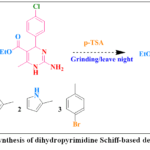 |
Scheme 1: Synthesis of dihydropyrimidine Schiff-based derivatives (1-3). Click here to View Scheme |
Pyrrole-2-carboxaldehyde, thiophene-2-carboxaldehyde, and p-bromobenzaldehyde were employed as starting aldehydes for the synthesis of Schiff bases (1–3), respectively. All reagents and solvents were obtained from commercial suppliers and used as received without further purification.Melting points of the synthesized compounds were determined using open capillary tubes and are reported without correction. The purity of the prepared derivatives was monitored by thin-layer chromatography (TLC) on silica gel plates using a mixture of ethyl acetate and n-hexane as the mobile phase. The developed spots were detected by exposure to iodine vapor.Infrared (IR) spectra were recorded using a PerkinElmer Spectrum RX FTIR spectrophotometer. The ^1H NMR spectra were obtained on a Bruker NMR spectrometer operating at 1000 MHz, using DMSO-d₆ as the solvent and tetramethylsilane (TMS) as the internal reference standard.
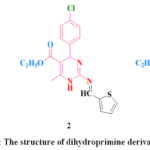 |
Figure 1: The structure of dihydroprimine derivatives 1-3 Click here to View Figure |
Biology
The newly synthesized compounds were evaluated for their in vitro anticancer activity against the MCF-7 human breast cancer cell line. The results demonstrated that all tested compounds exhibited cytotoxic activity toward the cancer cells. Among them, compound (3) showed the highest potency, displaying an IC₅₀ value of 8.91 μg/mL. Although its activity was lower than that of the reference drug cisplatin (IC₅₀ = 4.03 μg/mL), compound (3) emerged as the most active derivative within the synthesized series. These findings indicate that compound (3) possesses promising antitumor potential and may serve as a valuable lead compound for further development of breast cancer therapeutics.
Table 1: In vitro cytotoxic activity of the newly synthesized thiazoles 1a-c, against the human breast cancer cell line (MCF-7)
| Tested compounds | IC50 (μg/mL) |
| 1 | 7.72 ± 1.3 |
| 2 | 8.36 ± 0.9 |
| 3 | 8.91 ± 1.6 |
| Cisplatin | 4.03± 0.61 |
Compound (3) was identified as the most active derivative among the synthesized compounds, exhibiting an IC₅₀ value of 8.91 μg/mL against the MCF-7 breast cancer cell line. Although its cytotoxic activity was lower than that of the reference drug cisplatin (IC₅₀ = 4.03 μg/mL), compound (3) demonstrated the highest activity within the synthesized series.The enhanced activity of compound (3) may be attributed to the presence of the electron-withdrawing nitro group, which could improve its interaction with the biological target and contribute to its anticancer potential.
In-silico studies
Molecular docking
Molecular docking is an in silico method for determining molecular interactions between small ligand molecules and macromolecular protein structures. Molecular docking has been successfully applied in many cases to determine the molecular ligand-protein interactions and binding affinities. It is one of the widely used computational methods in drug design and discovery. Therefore, the present study employed molecular docking to assess interactions between a series of 1,4-dihydropyrimidine-5-carboxylate derivatives (1-3) and the breast cancer estrogen receptor alpha (ERα) protein. ERα is a nuclear hormone that promotes cell proliferation in breast cancer. The inhibition of ERα plays a profound role in cell cycle arrest for the management of breast cancer. PDB: 7UJW is a transcription protein that was targeted to inhibit Erα. The results showed that compound 3 is the most active, with a docking score of -8.1 kcal/mol.
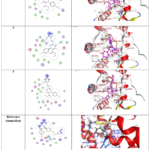 |
Figure 2: 2D and 3D snapshots of the interaction between target molecules and PDB ID: 7UJW Click here to View Figure |
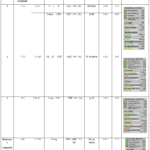 |
Table 2: Molecular docking scores of 1,4-dihydropyrimidine-5-carboxylate derivatives (1-3), and the interaction between target molecules and PDB ID: 7UJW Click here to View Table |
Osiris Toxicity
Prediction tool that enables the assessment of the potential toxicological profiles of newly synthesized compounds. The molecular docking and Osiris toxicity prediction results for the synthesized derivatives are summarized in Table 2. The prediction outcomes are presented using a color-coded system to facilitate interpretation. Properties associated with a high risk of undesirable effects, such as mutagenicity, tumorigenicity, reproductive toxicity, or poor intestinal absorption, are highlighted in red. In contrast, green indicates favorable drug-like behavior and a lower probability of adverse effects. Therefore, Osiris provides a rapid and valuable preliminary evaluation of the safety and drug-likeness of candidate compounds before further biological investigations.
Methodology
Chemistry
The target Schiff base derivatives (1–3) were synthesized through a solvent-free grinding protocol at ambient temperature. Briefly, the corresponding aldehyde (0.01 mol) was combined with the appropriate 1,4-dihydropyrimidine-5-carboxylate derivative (0.01 mol) in the presence of catalytic p-toluenesulfonic acid (p-TSA). The reactants were thoroughly triturated in a mortar until thin-layer chromatography (TLC) confirmed complete consumption of the starting materials. During grinding, the reaction mixture gradually transformed into a viscous mass and subsequently solidified within approximately 30 min. The obtained solid was allowed to stand overnight, washed with cold distilled water to remove residual catalyst and impurities, dried under ambient conditions, and finally recrystallized from ethanol to afford the desired products. The same synthetic protocol was successfully applied for the preparation of compounds 1–3.
Ethyl(E)-2-(((1H-pyrrol-2-yl)methylene)amino)-4-(4-chlorophenyl)-6-methyl-1,4-dihydropyrimidine-5-carboxylate(1)
C19H19ClN4O2: dark orange solid, Yield 86%; mp168°C; IR(KBr) (cm-1); 3349(NH), 3095(Ar-H), 2953(CH3), 1745(C=O- ), 1597 (C=N), 837 (C-Cl); 1H NMR (1200 MHz, DMSO-d6) δ 9.92 (d, J = 6.2 Hz, 1H), 7.96 (s, 1H), 7.45 – 7.43 (m, 2H), 7.36 – 7.33 (m, 2H), 6.95 (ddd, J = 5.3, 3.3, 1.7 Hz, 1H), 6.69 (dd, J = 6.0, 1.5 Hz, 1H), 6.16 (dd, J = 5.9, 3.3 Hz, 1H), 5.70 (t, J = 1.3 Hz, 1H), 4.12 (qd, J = 7.3, 1.5 Hz, 2H), 1.14 (t, J = 7.0 Hz, 3H).13C NMR (300 MHz, DMSO-d6) δ 166.47, 155.74, 148.94, 146.67, 139.34, 133.71, 129.55, 128.66, 127.92, 117.55, 115.84, 112.82, 105.07, 59.66, 55.93, 19.09, 14.34.EI-MS: 370.12, m/z: 370.12 (100.0%), 372.12 (32.0%), 371.12 (20.5%), 373.12 (6.6%), 372.13 (2.0%), 371.12 (1.5%); Elemental AnalysisCalculated: C, 61.54; H, 5.16; N, 15.11; Found: C, 61.58; H, 5.26; N, 15.11.
Ethyl(E)-4-(4-chlorophenyl)-6-methyl-2-((thiophen-2-ylmethylene)amino)-1,4-dihydropyrimidine-5-carboxylate(2)
C19H18ClN3O2S: brown solid, Yield 80%;IR(KBr) (cm-1); 3350(NH), 3029(Ar-H), 2961(CH3), 1755(C=O-Ester), 1603 (C=N), 837(C-Cl); 1H NMR (1200 MHz, DMSO-d6) δ 7.76 (s, 1H), 7.65 (dd, J = 4.8, 1.8 Hz, 1H), 7.55 (dd, J = 5.5, 1.9 Hz, 1H), 7.45 – 7.43 (m, 2H), 7.36 – 7.33 (m, 2H), 7.22 – 7.19 (m, 1H), 5.70 (t, J = 1.3 Hz, 1H), 4.12 (qd, J = 7.2, 1.5 Hz, 2H), 1.14 (t, J = 7.0 Hz, 3H).13C NMR (300 MHz, DMSO-d6) δ 166.47, 156.21, 153.66, 146.66, 139.34, 137.00, 133.71, 130.32, 129.66, 128.66, 128.33, 127.92, 105.07, 59.66, 55.93, 19.09, 14.34. ; EI-MS:387.08, m/z: 387.08 (100.0%), 389.08 (32.0%), 388.08 (20.5%), 390.08 (6.6%), 389.08 (4.5%), 389.09 (2.0%), 391.07 (1.4%), 388.08 (1.1%)Elemental AnalysisCalculated: C, 58.83; H, 4.68; Cl, 9.14; N, 10.83; Found: C, 59.01; H, 4.68; Cl, 9.16 N, 10.83;
Ethyl(E)-2-((4-bromobenzylidene)amino)-4-(4-chlorophenyl)-6-methyl-1,4-dihydropyrimidine-5-carboxylate(3)
C21H19BrClN3O2: dark orange solid, Yield 85%; IR(KBr)(cm-1); 3352 (NH), 3012 (Ar-H), 2942(CH3), 1741(C=O ), 1720 (CO-Ester), 1602(C=N), 837(C-Cl), 641(C-Br) ; 1H NMR (1200 MHz, DMSO-d6) δ 8.84 (s, 1H), 7.78 (s, 1H), 7.76 – 7.73 (m, 2H), 7.60 – 7.57 (m, 2H), 7.45 – 7.43 (m, 2H), 7.36 – 7.33 (m, 2H), 5.70 (t, J = 1.3 Hz, 1H), 4.12 (qd, J = 7.2, 1.5 Hz, 2H), 1.14 (t, J = 7.0 Hz, 3H). 13C NMR (300 MHz, DMSO-d6) δ 166.47, 157.91, 156.70, 146.66, 139.34, 133.71, 131.65, 129.73, 128.81, 128.66, 127.92, 124.20, 105.07, 59.66, 55.93, 19.09, 14.34. EI-MS: 460.76, m/z: 459.03 (100.0%), 461.03 (97.3%), 461.03 (32.0%), 463.03 (31.1%), 462.04 (22.1%), 460.04 (16.2%), 464.03 (7.1%), 460.04 (6.5%), 462.04 (5.2%), 462.04 (2.1%), 461.04 (1.2%), 463.04 (1.2%), 463.04 (1.2%), 460.03 (1.1%), 462.03 (1.1%), 461.04 (1.1%) Elemental analysis Calculated: C, 54.74; H, 4.16; N, 9.12; Found: C, 54.84; H, 4.17; N, 9.12.
Biology
Anticancer
Cell Culture and Cytotoxicity
The cytotoxic potential of the synthesized compounds was evaluated against the human breast adenocarcinoma (MCF-7) cell line. Cells were maintained in RPMI-1640 medium supplemented with 10% fetal bovine serum (FBS), 2 mM L-glutamine, and 1% penicillin–streptomycin under standard humidified incubation conditions (37 °C, 5% CO₂). After overnight attachment in 96-well microplates (5 × 10³ cells per well), the tested compounds were added at the desired concentration and incubated for 72 h. Cell viability was subsequently assessed using the MTT colorimetric assay according to the manufacturer’s protocol. Absorbance values were measured at 570 nm, and IC₅₀ values were calculated using GraphPad Prism version 10.
Molecular docking
Molecular docking simulations were carried out using the Molecular Operating Environment (MOE 2023). Chemical structures of the synthesized compounds were initially generated in ChemDraw and converted into their optimized three-dimensional geometries using Chem3D before docking analysis. The crystal structure of estrogen receptor alpha (ERα, PDB ID: 7UJW) was selected as the biological target. Prior to docking, water molecules and non-essential co-crystallized ligands were removed, while hydrogen atoms and partial charges were assigned using the default MOE preparation protocol. Ligands were docked into the active binding pocket, and the resulting binding poses were ranked according to their docking scores and interaction profiles. The highest-ranked conformations were selected for further analysis of hydrogen bonding, hydrophobic interactions, and binding orientation.
Toxicity Prediction
The drug-likeness and toxicity profiles of the synthesized derivatives were estimated using the Osiris Property Explorer. The software was employed to predict potential risks including mutagenicity, tumorigenicity, reproductive toxicity, and irritant effects, together with selected physicochemical parameters relevant to drug development. The generated predictions were used to support the biological evaluation of the synthesized compounds.
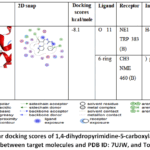 |
Figure 3: IC50, Molecular docking scores of 1,4-dihydropyrimidine-5-carboxylate derivatives (1c), and the interaction between target molecules and PDB ID: 7UJW, and Toxicity prediction |
Conclusion
Pyrimidine derivatives are considered of high priority in pharmaceutical organic chemistry. The data obtained from both biological and theoretical analyses indicate that compound 1c is the most active, with an IC50 of 9.3 (referred to as cisplatin), 4.3, and a docking energy of -8.1 kcal/mol, compared to tamoxifen at 6.2 kcal/mol. This leads us to a discovery in organic chemistry.
References
- Pluskota R, Koba M. Indandione and Its Derivatives – Chemical Compounds with High Biological Potential. Mini Rev Med Chem. 2018;18(15):1321-1330. doi: 10.2174/1389557518666180330101809.
CrossRef - Li, M., Yang, W.-L., Wen, L.-R., and Li, F.-Q., J. Org. Chem. 2008, vol. 16, pp. 2751-2758. http://onlinelibrary.wiley.com/ doi/10.1002/ ejoc.200800035/abstracthttps://doi.org/10.1002/ejoc.200800035
CrossRef - Kuan, H.-H.,Chien, C.-H.,and Chen, K., Lett. 2013, vol.15, pp. 2880-2883.https://doi.org/10.1021/ol4011689
CrossRef - Pizzirani, D., Roberti, M., Grimaudo, S., Cristina, A.D., Pipitone, R.M., Tolomeo, M., and Recanatini, M., Med. Chem. 2009, vol. 52, pp. 6936-6940.https://doi.org/10.1021/jm900907s
CrossRef - Shehab, W.S., EL‐Farargy, A.F., Abdelhamid, A.O., Aziz, M.A., Commun.2019, vol. 49, pp. 3560-3572.https://doi.org/10.1080/00397911.2019.1679538
CrossRef - Maddila, S.N., Maddila, S., van Zyl, WE, Jonnalagadda, S.B., RSC Adv.2015, vol. 5, pp. 37360-37366. https://doi.org/10.1039/C5RA06373F
CrossRef - Siddappa A. Patil, Renukadevi Patil, Shivaputra A. Patil, Recent developments in biological activities of indanones, European Journal of Medicinal Chemistry, V 138, 2017, P182-198, https://doi.org/10.1016/j.ejmech.2017.06.032.
CrossRef - Pavlovskaya, T.L., Yaremenko, F.G., Lipson, V.V., Shishkina, S.V., Shishkin, O.V., Musatov, V.I., and Karpenko, A.S., Beilstein J. Org. Chem. 2014, vol. 10, vol. 117-126. https://doi.org/10.3762/bjoc.10.8
CrossRef - Chate, A.V., Dongre, R.M., Khaire, M.K., Bondle, G.M., Sangshetti, J.N., and Damale, M., Chem. Intermed.2018, vol. 44, pp. 6119-6136. https://doi.org/10.1007/s11164‐018‐3479‐9
CrossRef - Shehab, WS, Assy, M.G., Moustafa, H.Y., Abdellattif, M.H., and Rahman, H.M., Iran. Chem. Soc.2019, vol. 16, pp. 2451-2461. https://doi.org/10.1007/s13738‐019‐01712‐4
CrossRef - Abdel‐Galil, E.A., and Mohamad, M., Med. Chem. 2006, vol. 14, pp. 4341-4352. https://doi.org/10.1016/j.bmc.2006.02.045
CrossRef - Hamdy, N.A., and Gamal‐Eldeen, A.M., J. Med. Chem.2009, vol. 44, pp. 4547-4556. https://doi.org/10.1016/j.ejmech.2009.06.023
CrossRef - El‐Shwiniy, W.H., Shehab, W.S., Mohamed, S.F., and Ibrahium, H.G., Organomet. Chem.2018, vol. 32, pp. e4503-4519. https://doi.org/10.1002/aoc.4503
CrossRef - Reis, A.S., Vogt, A.G., Pinz, M.P., Voss, G.T., da Fonseca, C.A., Paltian, J.J., Peglow, T.J., Vaucher, R.A., Echenique, J.V., and Soares, M.P., Biol. Interact.2019, vol. 311, pp. 108790. https://doi.org/10.1016/j.cbi.2019.108790
CrossRef - Yamagishi, H., Shirakami, S., Nakajima, Y., Tanaka, A., Takahashi, F., Hamaguchi, H., Hatanaka, K., Moritomo, A., Inami, M., and Higashi, Y., Med. Chem.2015, vol. 23, pp. 4846-4859. https://doi.org/10.1016/j.bmc.2015.05.028
CrossRef - Alfaifi GH, Farghaly TA, Magda H. Abdellattif (2023) Indenyl-thiazole and indenyl-formazan derivatives: Synthesis, anticancer screening studies, molecular-docking, and pharmacokinetic/ molin-spiration properties. PLoS ONE 18(3): e0274459. https://doi.org/10.1371/journal.pone.0274459
CrossRef - Shatha Ibrahim Alaqeel, Natarajan Arumugam, Vijayan Viswanathan, Abdulrahman I. Almansour, Raju Suresh Kumar, Ramanathan Padmanaban, Santhakumar Yeswanthkumar, Dhanaraj Premnath, Karuppiah Ponmurugan, Naif Abdullah Al-Dhabi, Karthikeyan Perumal,Synthesis, computational studies, and antibacterial assessment of dispirooxindolopyrrolidine integrated indandione hybrids,Journal of Molecular Structure,Volume 1267,2022,133577,https://doi.org/10.1016/j.molstruc.2022.133577.
CrossRef - Abdellattif MH, Elkamhawy A, Hagar M, Hadda TB, Shehab WS, Mansy W, Belal A, Arief MMH, Hussien MA. Novel saccharin analogs as promising antibacterial and anticancer agents: synthesis, DFT, POM analysis, molecular docking, molecular dynamic simulations, and cell-based assay. Front Pharmacol. 2022 Oct 4;13:958379. Doi: 10.3389/fphar. 2022.958379
CrossRef - Hassan SA, Aziz DM, Abdullah MN, Bhat AR, Dongre RS, Hadda TB, Almalki FA, Kawsar SMA, Rahman AK, Ahmed S, Abdellattif MH, Berredjem M, Sheikh SA, Jamalis J. In vitroand in vivo evaluation of the antimicrobial, antioxidant, cytotoxic, hemolytic activities and silico POM/DFT/DNA-binding and pharmacokinetic analyses of new sulfonamide bearing thiazolidin-4-ones. J Biomol Struct Dyn. 2023 Jul 4:1-17. Doi: 10.1080/07391102.2023.2226713.
CrossRef - Howsaui HB, Basaleh AS, Abdellattif MH, Hassan WMI, Hussien MA. Synthesis, Structural Investigations, Molecular Docking, and Anticancer Activity of Some Novel Schiff Bases and Their Uranyl Complexes. Biomolecules. 2021 Aug 2;11(8):1138. doi: 10.3390/biom11081138.
CrossRef - Shchepin, V.V., Stepanyan, Y.G., and Silaichev, P.S., J. Gen. Chem. 2008, vol. 78, 929-932. http://link.springer.com/article/ 10.1134/S1070363208050162https://doi.org/10.1134/S1070363208050162
CrossRef - Li, M., Yang, W.-L., Wen, L.-R., and Li, F.-Q., J. Org. Chem. 2008, vol. 16, pp. 2751-2758. http://onlinelibrary.wiley.com/doi/ 10.1002/ejoc.200800035/abstracthttps://doi.org/10.1002/ejoc.200800035
CrossRef - Dai, B.F., Song, L.P., Wang, P.Y., Yi, H., Cao, W.G., Jin, G.F., Zhu, S.Z., and Shao, M., Synlett. 2009, vol. 11, pp. 1842-1846. https://www.thieme-connect.com/products/ejournals/abstract/10.1055/s-0029-1217361https://doi.10.1055/s-0029-1217361
CrossRef - Abdellattif, M.H.; Shahbaaz, M.; Arief, MMH; Hussien, M.A. Oxazinethione Derivatives as a Precursor to Pyrazolone and Pyrimidine Derivatives: Synthesis, Biological Activities, Molecular Modeling, ADME, and Molecular Dynamics Studies. Molecules2021, 26, 5482. https://doi.org/10.3390/molecules26185482
CrossRef - De Haven Brandon A, Box G, Hallsworth A, Court W, Matthews N, Herodek B, Arteagabeitia AB, Valenti M, Kirkin V. Identification of ovarian high-grade serous carcinoma cell lines that show estrogen-sensitive growth as xenografts in immunocompromised mice. Sci Rep. 2020 Jul 1;10(1):10799. Doi: 10.1038/s41598-020-67533-1.
CrossRef - Maciag JJ, Mackenzie SH, Tucker MB, Schipper JL, Swartz P, Clark AC. Tunable allosteric library of caspase-3 identifies coupling between conserved water molecules and conformational selection. Proc Natl Acad Sci U S A. 2016 Oct 11;113(41):E6080-E6088. doi: 10.1073/pnas.1603549113.
CrossRef - Titi, A., Badran, I., Dahmani, M., Messali, M., Touzani, R., Zarrouk, A., Garcia, Y., Al-Noaimi, M., Suleiman, M. and Warad, I., 2023. Rapid microwave synthesis of tetrahedral pyrazole/Co (II) complex:[NH··· Cl] synthon, XRD/HSA-interactions, DFT/TD-DFT, physiochemical, antifungal, antibacterial, and POM bio-calculations. Journal of Molecular Structure, 1293, p.136297.
CrossRef
 PlumX:
  Views: 202 Views
  PDF Downloads: 55
 Accepted on: 29 Jul 2026
Second Review by: Dr. Rehman Sheikh
Final Approval by: Dr. Fozia Z. Haque


ISSN Online: 2231-5039