Design and Validation of a Reverse Phase HPLC Method for Simultaneous Determination of Doxycycline and Metronidazole in Targeted Periodontal Therapy
 , Phool Chandra2, Anurag Verma2, Vishal Trivedi1, Amit Sharma3, Himanshu Sharma4, Arvind Raghav5and Neetu Sachan6
1Department of Pharmacy, Faculty of Pharmaceutical Sciences, Madhav University, Bharja, Abu Road, Pindwara, Rajasthan, India
2Teerthanker Mahaveer College of Pharmacy, Teerthanker Mahaveer University, Moradabad, Uttar Pradesh, India
3RIMS Split Campus, Motherhood University, Roorkee, Uttarakhand, India
4Department of Pharmacology, Nims Institute of Pharmacy, Nims University, Jaipur, Rajasthan, India
5Department of Pharmaceutics, Shri Ram Murti Smarak College of Engineering and Technology (Pharmacy), Bareilly, Uttar Pradesh, India
6Department of Pharmaceutical Sciences, School of Pharmaceutical & Biological Sciences, Harcourt Butler Technical University (HBTU), Kanpur, UP, India.
Corresponding Author E-mail:anujpharmacy01@gmail.com
Download this article as:
ABSTRACT:The reverse-phase high-performance liquid chromatography (RP-HPLC) method has been shown to exhibit excellent repeatability, accuracy, and reproducibility when used to simultaneously assess doxycycline and metronidazole for the management of localised periodontal diseases.Low levels of interference were achieved through optimisation and high-resolution separation. Validation was accomplished according to recommendations from the International Conference on Harmonisation (ICH) and included assessments for linearity, accuracy, precision, limits of detection (LOD) and quantitation (LOQ), and robustness. The validation data demonstrated greater than 90% recovery and low %RSD, along with very high linearity (r² > 0.999) for both compounds over the entire concentration range, thereby confirming the reliability of the method.The presented approach is suitable for routine quality control analysis of mixed doxycycline and metronidazole dose forms.
KEYWORDS:Antibacterial; Doxycycline; Localised periodontal therapy; Metronidazole; Validation
Introduction
Periodontal diseases are recognised as among the most prevalent chronic inflammatory conditions affecting the supporting structures of the teeth. Localised periodontitis, frequently resulting from bacterial infections found within the subgingival biofilm, is marked by the progressive deterioration of the periodontal ligament and alveolar bone. Treating these infections usually involves physically cleaning the area and adding antibiotics to improve outcomes. One way to fight gum disease involves doxycycline along with metronidazole. These medicines target many types of harmful microbes, acting more effectively when combined.1 Stopping bacterial growth is part of how doxycycline works, yet it also eases swelling while protecting tissue structure. Deep inside infected areas live oxygen-avoiding germs, surely what metronidazole goes after. When used at once, their strengths overlap in useful ways across different germ families found in progressive cases. Working as a pair, they lift results beyond what either achieves alone.2
The popularity of periodontal rehabilitation is on the rise due to the use of targeted medication-delivery systems, such as gels, films and fibres. As a result, there is an increasing need for reliable methods of analysing these medications in new formulations.3 By administering a local release of a high-concentration medication at the site of application, you will lower the level of medication in the general circulation and therefore reduce the risk of systemic adverse events.4 In addition to ensuring that the medications remain therapeutically effective for the patient and are safeguarded through quality control measures, it is also crucial to measure metronidazole and doxycycline accurately and simultaneously.
High-performance liquid chromatography performs all of the analyses here, it provides high consistency, strong resistance to fluctuations, and high-accuracy results. Developing an efficient RP-HPLC method capable of simultaneously monitoring both compounds remainschallenging.5 One RPHPLC reversed-phase system has been developed by the scientists to detect doxycycline and metronidazole in the pharmaceutical procedures intended for the therapy of gingival diseases. The parameters studied during validation included specificity, linearity, accuracy, precision, limit of detection, limit of quantitation, and stability. After validation, the method is comparably a valuable tool in the scientific environment to study drug delivery to gums, as it is in the production laboratory for monotonous testing of production batches.6–10
Materials and Methods
Instrumentation
Using a reversed-phase HPLC system, the method employs an efficient isocratic mode with solvents, combined with a light-sensitive PDA detector at 270-350 nm and 310-320 nm, to provide high-level signals for both the doxycycline and metronidazole APIs. A long C-18 reverse-phase column containing 5 µm particles was employed for decoupling action, with the room temperature maintained steadily near 25 °C. Instead of plain water mixtures, the mobile phase was an 80:20 mixture of Phosphate buffer (pH 2.2-3.5) with orthophosphoric acid and acetonitrile, carefully selected to provide sharp peaks, reasonable retention times, and good separation of the two compounds on the chromatograms. The flow rate was 1.0 mL/min, resulting in an injection volume of 20 µL and a total run time of 20 minutes. Sample solutions were all filtered through a 0.45 µm membrane filter and degassed to remove air bubbles before analysis. Using Empower software (or others), data recording and processing were performed. This software enabled effective peak integration and accurate measurements.
Materials
Reference standards of metronidazole and doxycycline were developed from certified vendors and were used without further purification. The samples for localized periodontal therapy were prepared from the development laboratory. HPLC-grade acetonitrile and methanol (Merck – India) were used in preparation of the buffer and both potassium dihydrogen phosphate analytical reagent (AR) grade and orthophosphoric acid (LR) gradewere used to prepare buffers. The ultra-pure water that was used for analyses was gained using a Milli-Q purification device. All solutions, including standard and sample preparations, were filtered through a 0.45 μm nylon filter and degassed prior to injection into the HPLC system. The glass containers used in analysis were cleaned with distilled water and rinsed with HPLC-grade solvents to avoid contamination.
Drug profile
Doxycycline is a semi-synthetic and broad-spectrum antibiotic that belongs to the tetracycline class. Mainly, it works as a bacteriostatic drug by inhibiting bacterial protein synthesis by binding to the 30S ribosomal subunit of susceptible bacteria. Because it can target a wide range of Gram-positive and Gram-negative bacteria, and because of its anti-inflammatory and anti-collagenase properties, doxycycline is widely used for the treatment of periodontal diseases. Moreover, as it can protect the tissues from breakdown and keep its action at the site of infection for a long time, it is often included in the localised drug delivery systems for periodontal therapy.11
On the other hand, metronidazole, a nitroimidazole derivative, is well known for its antibacterial action against both anaerobic bacteria and protozoa. It infiltrates microbial cells and disrupts DNA by generating harmful intermediates, leading to cell death.12 Metronidazole is highly potent against obligate anaerobes, such as Porphyromonasgingivalis and Prevotellaintermedia, which are typically associated with periodontitis. If given locally with doxycycline, whole-body exposure is reduced, and the therapeutic outcomeis improved.13 The two, doxycycline and metronidazole, together provide a broad-spectrum antibacterial approach that targets both anaerobic and aerobic bacteria involved in periodontitis. Their different but complementary ways of killing bacteria make them the best candidates for advancing co-formulated, targeted delivery systems that aim to enhance the clinical outcomes of periodontitis treatment. The CAS number of Doxycycline is 564-25-014 And Metronidazole is 443-48-1.15
Structure
The structures of metronidazole and doxycycline are as given below (Figure 1,Figure 2):
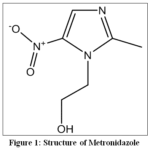 |
Figure 1: Structure of Metronidazole Click here to View Figure |
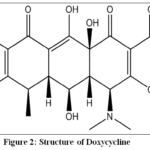 |
Figure 2: Structure of Doxycycline Click here to View Figure |
Preparation of Standard Stock Solution
To create stock standard solutions for Doxycycline and Metronidazole, each compound was accurately weighed at 10 mg and placed into individual 100 mL volumetric flasks. Then an appropriate diluent (usually a 50:50 or 80:20 methanol/water mixture) was added to the flask to dissolve the two compounds, and the flasks were sonicated as needed to ensure complete dissolution of the standards. After the compounds were dissolved in the diluents, the stock standard solutions were brought to the mark (the 100 mL mark) with the same diluents. Each stock standard solution will then have a final concentration of 100 μg/mL or a slightly different concentration specified by the analytical protocol. To prevent light-induced degradation, the stock solutions were stored in amber glass bottles at 2-8 °C. To create working standards from their associated stock standards, each stock standard has been diluted with either a mobile phase or a diluent to obtain an appropriate quantity of each analyte for both calibration and validation. Working standard solutions will generally fall within 40% – 120% of the target concentration.
Method Validation Parameters
Precision
Repeat analyses of injections of metronidazole and doxycycline at three different concentrations (80%, 100%, and 120%) wereused to evaluate the precision of this method. %RSD values generated from the peak regions were consistently below 1%, indicating excellent repeatability. The uniformity of the data across all runs provides assurance that the method is capable of consistent use, despite the lack of direct intermediate-precision data to support this conclusion. Therefore, based on this dataset, we can conclude that the method is valid and reliable.7, 9, 10
Accuracy
Accuracy defines how closely the measured value approximates the true value. For its evaluation, three recovery trials were performed at spiking levels of 80%, 100%, and 120%. The experimental method’s accuracy in quantifying both analytes was demonstrated by the recovery performance results for metronidazole and doxycycline, which were consistently within an acceptable range (98-102%), whereas the %RSD values were below 2%.7, 9, 10
Linearity
Linearity determines the extent to which a technique produces test results that are directly proportional to the concentration of the analyte within a defined range. The dataset of the report features five concentration levels, 40%, 60%, 80%, 100%, and 120%. The results validated the method’s linearity, showing that concentration and peak area were highly correlated for both drugs, while %RSD values remained well within acceptable limits (generally <2%).7, 9, 10
Limit of Detection (LOD) and Limit of Quantification (LOQ)
LOD and LOQ are used to refer to the lowest concentrations of an analyte that can be detected and/or accurately measured. This study used multiple dilutions of doxycycline and metronidazole ranging from 0.005% to 20% by weight. Both doxycycline and metronidazole exhibited noticeable and quantifiable values with low LOD and LOQ values. Peaks with detectable signals have also been recorded, with good S/N ratios, at the lowest weighing ranges (e.g., 0.1%, 0.05%, 0.02%, and 0.005%) for those same drugs.7, 9, 10
Robustness
Robustness is the evaluation of how reproducible a method is exaggerated by the small dissimilarity of its parameters (for example, the flow rate or column temperature). Set up the conditions described in the chromatographic method, and wait for the system to equilibrate. Inject the Metronidazole standard solution (1.8μg/mL), and Doxycycline standard solution (0.6μg/mL) 3 times, and record the response. Then inject the in-house solid dosage tablet formulation 3 times and record the response.7, 9, 10
Results and Discussion
Separation Method’s Optimisation
Chromatographic optimisation was performed to develop the separation method necessary for simultaneous quantitation of Doxycycline and Metronidazole, and was continued through systematic modification of chromatographic conditions to achieve optimal resolution, retention time, and peak symmetry. Several chromatographic runs were performed using diverse columns and conditions to help identify the retention characteristics of both drugs. The retention time of Metronidazole remained consistently short (approximately 2.164 minutes) compared with that of Doxycycline, which had an average retention time of approximately 11.975 minutes (Table 1, Table 2, and Table 3). Because of the relative distance between the two analyte peaks on the chromatogram, a calculated separation distance of 74.91 units was obtained; the two analytes were separated and provided adequate resolution with no interference. The tailing factors for Metronidazole (1.90) and Doxycycline (1.55) indicated that the peaks remained symmetrical and within acceptable limits. The number of theoretical plates for Doxycycline (284,413.84) indicated that the column provided excellent efficiency and that the mobile phase composition was ideal. The consequences of these optimisation tests demonstrated that this method is robust and can be applied in routine quality control assays for combination products containing both drugs.
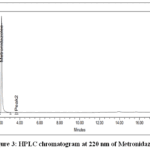 |
Figure 3: HPLC chromatogram at 220 nm of Metronidazole Click here to View Figure |
Table 1: HPLC chromatogram at 220 nm of Metronidazole
|
S. No. |
Peak Name | RT | Area | % Area | USP Tailing | USP Plate Count |
USP Resolution |
|
1 |
Metronidazole | 2.175 | 8603854 | 99.70 | 1.79 | 3586.83 |
– |
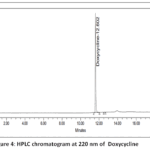 |
Figure 4: HPLC chromatogram at 220 nm of Doxycycline Click here to View Figure |
Table 2: HPLC chromatogram at 220 nm of Doxycycline
|
S. No. |
Peak Name | RT | Area | % Area | USP Tailing | USp Plate Count |
USP Resolution |
|
1 |
Doxycycline | 12.602 | 2174987 | 99.94 | 1.47 | 256754.12 |
– |
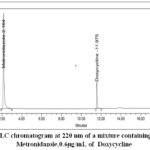 |
Figure 5: HPLC chromatogram at 220 nm of a mixture containing1.8μg/mL of Metronidazole,0.6μg/mL of Doxycycline Click here to View Figure |
Table 3: HPLC chromatogram at 220 nm of Metronidazole and Doxycycline
|
S. No. |
Peak Name | RT | Area | % Area | USP Tailing | USp Plate Count |
USP Resolution |
|
1 |
Metronidazole | 2.164 | 6303338 | 85.67 | 1.76 | 3434.07 | – |
| 2 | Doxycycline | 11.975 | 1054238 | 14.33 | 1.73 | 288317.86 |
75.51 |
Method Validation Parameters
Precision
Both the standard and sample injections of metronidazole demonstrated excellent accuracy, with relative standard deviations (RSDs) of 0.3% (Table 4). With a computed assay resultof 99.39% for metronidazole, the sample closely resembles the anticipated concentration. Both the sample and standard injections of doxycycline had %RSDs of 1.9% and 1.2% (Table 4), respectively, which were well within the allowable limits for analytical accuracy. With a 99.95% test result, Doxycycline exhibits good agreement with the standard.
Table 4: Precision
|
Parameter |
Metronidazole STD | Metronidazole Sample | Doxycycline STD | Doxycycline Sample |
| Mean Area | 6372376.0 | 6,363,737.0 | 1,062,872.2 |
1,063,163.0 |
|
Std.Dev |
19,252.2 | 19,252.5 | 12,615.1 | 20,674.9 |
| %RSD | 0.3 | 0.3 | 1.2 |
1.9 |
These findings demonstrate the great precision and accuracy of the metronidazole and doxycycline samples, with test values quite near to 100%.
Accuracy
Three concentration levels of metronidazole and doxycycline were tested (Table 5): 80%, 100%, and 120%. At 120%, 100%, and 80% levels, the recovery percentages for metronidazole were 81.50%, 113.60%, and 100.80%, respectively.
Table 5: Accuracy
|
Compound |
Level (%) | Mean STD Area | Mean Spiked Area | %RSD (STD) | %RSD (Spiked) | Recovery (%) |
| Metronidazole | 120 | 7848196 | 8361358 | 0.2 | 0.4 |
81.50 |
|
Doxycycline |
1300471 | 1381857 | 0.6 | 0.2 | 82.80 | |
| Metronidazole | 100 | 6355720 | 7075197 | 0.2 | 0.2 |
113.60 |
|
Doxycycline |
1057273 | 1177763 | 0.2 | 0.1 | 116.00 | |
| Metronidazole | 80 | 5165481 | 5807374 | 0.1 | 0.4 |
100.80 |
|
Doxycycline |
861682 | 977651 | 0.2 | 0.3 |
110.10 |
The equivalent recovery values for Doxycycline were 116.00% at 100%, 110.10% at 80%, and 82.80% at 120%. The %RSD values for both standard and spiked samples at all levels were low (range from 0.1 to 0.4), suggesting high accuracy, and all analyses were carried out in triplicate.
Linearity
Analysis of standard solutions at five concentration levels, (Table 6) ranging from 40% to 120% of the target concentration was used to demonstrate linearity. Peak area versus concentration was used to create a calibration curve for every analyte. Metronidazole and doxycycline both showed good linearity, with correlation coefficients (r2)> 0.999.
Table 6: Linearity
|
Concentration (%) |
Metronidazole Mean Area | Metronidazole Std. Dev | Metronidazole %RSD | Doxycycline Mean Area | Doxycycline Std. Dev | Doxycycline %RSD |
| 40 | 2,577,965 | 2,304.5 | 0.1 | 444,585 | 514.07 |
0.1 |
|
60 |
3,881,757 | 342.2 | 0.0 | 657,392.5 | 2,570.33 | 0.4 |
| 80 | 5,129,301.5 | 27,609.0 | 0.5 | 867,040 | 2,105.76 |
0.2 |
|
100 |
6,359,816 | 21,159.5 | 0.3 | 1,059,821.5 | 3,686.15 | 0.3 |
| 120 | 42,769,439 | 49,503,497.8 | 115.7 | 1,293,872 | 660.44 |
0.1 |
Correlation Coefficient- Metronidazole: 1.000, Doxycycline: 1.000
Metronidazole and Doxycycline exhibit excellent linearity from 40% to 100% concentration, as indicated by low %RSD values (≤0.5 for Metronidazole, ≤0.4 for Doxycycline) and perfect correlation coefficients.
Limit of Detection (LOD) and Limit of Quantification (LOQ)
The area responses for metronidazole were quantifiable down to a concentration of 1.0%; smaller concentrations showed no appreciable signal (Table 7). Thus, the LOD for Metronidazole is 1.0%, and the LOQ at 3.0%.
Table 7: LOD & LOQ
|
Concentration (%) |
Metronidazole Area | Doxycycline Area |
| 20% | 1,287,214 |
222,000 |
|
10% |
510,693 | 113,291 |
| 5% | 247,497 |
62,878 |
|
2% |
50,377 | 24,643 |
| 1% | 13,314 |
12,966 |
|
0.5% |
ND | 4,943 |
| 0.2% | ND |
1,523 |
|
0.1% |
ND | 980 |
| 0.05% | ND |
ND |
|
LOD |
1% | 0.10% |
| LOQ | 3% |
0.30% |
ND = Not Detected
With the LOD of 0.10% and the LOQ of 0.30%, Doxycycline showed clearly smaller responses at much lower doses. With declining but still observable responses down to 980 at 0.1%, the area responses for Doxycycline were reported as 222,000 at 20%, 113,291 at 10%, 62,878 at 5%, 24,643 at 2.0%, and 12,966 at 1.0%. The reduced LOD and LOQ values indicate that the analytical technique is more sensitive to Doxycycline than to Metronidazole.
Robustness
The analytical technique for metronidazole and doxycycline is very dependable under a variety of circumstances, including variations in the chromatographic column and flow rate, as the robustness analysis shows (Table 8).
Table 8: Robustness
|
Condition |
Drug | Std. Mean Area | Std. %RSD | Sample Mean Area | Sample %RSD | Assay (%) |
| Different Column | Metronidazole | 5,758,041.7 | 0.2 | 5,603,046.0 | 0.2 |
99.39 |
| Doxycycline | 957,267.0 | 0.2 | 929,078.0 | 0.1 | 99.40 | |
| Flow Increase | Metronidazole | 5762743 | 0.3 | 5,730,988.0 | 0.4 |
99.00 |
|
(1.1 mL/min) |
Doxycycline | 954,371.0 | 0.2 | 949439 | 0.2 | 99.58 |
| Flow Decrease | Metronidazole | 7,071,596.0 | 0.1 | 7,073,446.0 | 0.1 |
99.36 |
|
(0.9 mL/min) |
Doxycycline | 1,203,100.0 | 0.3 | 1,194,972.0 | 0.3 |
99.40 |
The %RSD values for both standard and sample injections remained significantly below 0.5% across all tested conditions, demonstrating exceptional accuracy. The approach’s accuracy and robustness were confirmed by test results that consistently ranged from 99.00% to 99.58% for both medicines.
Need and Significance
Complex infections caused by diverse microbial populations, including anaerobic bacteria found in subgingival biofilms, are referred to as periodontal disorders. Antimicrobial drugs such as metronidazole and doxycycline can now be delivered locally, minimising systemic side effects and enhancing drug concentration at targeted sites. Despite the availability of several HPLC methods for the individual quantification of these medications, a validated, simultaneous estimation approach tailored for localised periodontal drug delivery systems is limited. The development and validation of a stability-indicating, opposite-phase high-performance liquid chromatography (RP-HPLC) method that accurately quantifies both metronidazole and doxycycline in their combination pharmaceutical preparations addresses a major gap. Compared with systemic dosage forms, localised dosage forms are composed of complex matrices, such as gels or films, which can poseanalytical challenges. Thus, the method not only should be accurate but also must be very reliable so that the uniformity, stability and quality control of drug content can be safeguarded. The uniqueness of this work lies in its being the first-ever use of this technique for periodontal treatment with these two drugs, demonstrating good sensitivity, selectivity, and reproducibility, and also complying with the Indian Pharmacopoeia and ICH standards. Since combinable drug delivery is becoming increasingly popular, this method will not only reduce analysis time but also be very accommodating for formulation development, regulatory compliance, and therapeutic monitoring.
Conclusion
A new RP-HPLC method yielded significant advances in determining the concentration of doxycycline and metronidazole without visual distortions, while measuring how the two substances behaved in an experimental setting as soon as they were used in a medicament for the treatment of periodontal disease. To achieve these results, the method had to comply with the ICH guidelines and the applicable drug standards in India; however, in most cases, both substances were measured independently, showed consistent behaviour, and were within expected limits. Because there was a well-defined separation of the two peaks, the peak heights were consistent and easily distinguishable, with no tailing, it was reasonable to establish the application of this method for the evaluation of clinical medications. Additionally, the consistency of the performance of the method across multiple laboratory environments, the ability to accurately detect very small quantities of the two drugs in the sample, and the ability to consistently identify the drugs before the samples were exposed to environmental conditions were all indicators that this method was capable of being applied to actual clinical scenarios.
Acknowledgement
The authors express their gratitude to Prof. Anurag Verma and Prof. Phool Chandra for their guidance and support throughout the conduct of this research.
Funding Sources
The author(s) received no financial support for the research, authorship, and/or publication of this article.
Conflict of Interest
The author(s) do not have any conflict of interest.
Data Availability Statement
This statement does not apply to this article.
Ethics Statement
This research did not involve human participants, animal subjects, or any material that requires ethical approval.
References
- Truong, R.; Tang, V.; Grennan, T.; Tan, D. H. S. A Systematic Review of the Impacts of Oral Tetracycline Class Antibiotics on Antimicrobial Resistance in Normal Human Flora.JAC.Antimicrob.Resist.,2022, 4 (1), dlac009. https://doi.org/10.1093/jacamr/dlac009.
CrossRef - Suárez, L. J.; Arce, R. M.; Gonçalves, C.; Furquim, C. P.; Santos, N. C. Dos; Retamal-Valdes, B.; Feres, M. Metronidazole May Display Anti-Inflammatory Features in Periodontitis Treatment: A Scoping Review. Mol. Oral Microbiol.,2024, 39 (4), 240–259. https://doi.org/10.1111/omi.12459.
CrossRef - Szulc, M.; Zakrzewska, A.; Zborowski, J. Local Drug Delivery in Periodontitis Treatment: A Review of Contemporary Literature. Dent. Med. Probl., 2018, 55 (3), 333–342. https://doi.org/10.17219/dmp/94890.
CrossRef - Li, Y.; Du, M.; Fang, J.; Zhou, J.; Chen, Z. UTMD Promoted Local Delivery of MiR-34a-Mimic for Ovarian Cancer Therapy. Drug Deliv.,2021, 28 (1), 1616–1625. https://doi.org/10.1080/10717544.2021.1955041.
CrossRef - Gawad, D. A.; Elnaggar, M. M.; Belal, T. S. Multi-Analyte HPLC–DAD Method for Concurrent Analysis of Six Antimicrobials and Three Proton Pump Inhibitors Frequently Used in Management of Helicobacter Pylori Infection: Application to Simulated Intestinal Fluid Samples. Chromatographia, 2022, 85 (7), 617–628. https://doi.org/10.1007/s10337-022-04168-6.
CrossRef - Kumar, G. P.; Srivastava, V.; Khandelwal, K.; Kumar, R.; Hiriyanna, S. G.; Kumar, A.; Kumar, P. Simple Isocratic HPLC Method for Determination of Enantiomeric Impurity in Besifloxacin Hydrochloride. Chirality, 2016, 28 (9), 628–632. https://doi.org/10.1002/chir.22626.
CrossRef - Cassidy, B.; Bloomingdale, T.; Carmody, J. Navigating ICH Q2(R2) Compliance in Analytical Method Validation: A Gap Analysis Toolkit to Streamline Risk Assessment and Change Management. J. Pharm. Sci., 2025, 114 (6), 103749. https://doi.org/10.1016/j.xphs.2025.103749.
CrossRef - Committee for Medicinal Products for Human Use. Validation of analytical procedures Q2(R2) https://database.ich.org/sites/default/files/ICH_Q2-R2_Document_Step2_Guideline_2022_0324.pdf (accessed May 29, 2025).
- ICH Q2(R2)/Q14 IWG Work Plan. 2024.
- European Medicines Agency. ICH Topic Q 2 (R1) Validation of Analytical Procedures: Text And Methodology Step 5 Note For Guidance on Validation of Analytical Procedures: Text and Methodology (CPMP/ICH/381/95) APPROVAL BY CPMP November 1994. 1995, 10–14.
- Doxycycline: Uses, Dosage, Side Effects, Warnings – Drugs.com https://www.drugs.com/doxycycline.html (accessed May 29, 2025).
- Sheehy, O.; Santos, F.; Ferreira, E.; Bérard, A. The Use of Metronidazole During Pregnancy: A Review of Evidence. Curr. Drug Saf.,2015, 10 (2), 170–179. https://doi.org/10.2174/157488631002150515124548.
CrossRef - Serbanescu, M. A.; Oveisi, M.; Sun, C.; Fine, N.; Bosy, A.; Glogauer, M. Metronidazole Enhances Killing of PorphyromonasGingivalis by Human PMNs. Frontiers in Oral Health, 2022, 3. https://doi.org/10.3389/froh.2022.933997.
CrossRef - Doxycycline | C22H24N2O8 | CID 54671203 – PubChem https://pubchem.ncbi.nlm.nih.gov/compound/doxycycline (accessed May 29, 2025).
- Metronidazole | C6H9N3O3 | CID 4173 – PubChem https://pubchem.ncbi.nlm.nih.gov/compound/4173 (accessed May 29, 2025).
Accepted on: 29 May 2026


ISSN Online: 2231-5039