Exploring Fe-doped Zeolitic Imidazolate Framework-8 for the Adsorptive Removal of Pharmaceutical Contaminant: Acetaminophen as a Model Pollutant
 , Rozaimy Abdul Rahim2, Nurhani Abdul Aziz1 and Atikah Mohd Nasir2*
1Science Forensic Programme, Faculty of Health Sciences, UniversitiKebangsaan Malaysia, Bangi, Selangor
2Centre of Diagnostic, Therapeutic and Investigative Studies, Faculty of Health Sciences, UniversitiKebangsaan Malaysia, Jalan Raja Muda Abdul Aziz, Kuala Lumpur, Malaysia
Corresponding Author Email: atikahnasir@ukm.edu.my
DOI : http://dx.doi.org/10.13005/ojc/420425
Download this article as:

The occurrence of acetaminophen in aquatic ecosystems has raised environmental concerns due to its toxicity, persistence, and adverse effects. Conventional wastewater treatment plants fail to remove pharmaceutical contaminants like acetaminophen. To address this challenge, Fe-ZIF-8 was successfully synthesized via a facile room-temperature method and evaluated for acetaminophen adsorption from aqueous solution.Fe-ZIF-8 exhibited a well-defined polyhedral morphology, providing a large surface area.The porous framework facilitated the efficient diffusion of acetaminophen molecules, while incorporating Fe ions introduced active catalytic sites, improving adsorption efficiency.Batch adsorption experiments revealed rapid acetaminophen uptake within the first 60 min, reaching equilibrium after 210 min under the optimum conditions of 0.012 g Fe-ZIF-8 in 300 mL of 100 mg L⁻¹ acetaminophen solution, with a maximum experimental adsorption capacity of 1165.82 mg g⁻¹. Kinetic analysis demonstrated that the adsorption process was best described by the non-linear pseudo-first-order model, while equilibrium data were better fitted by the Freundlich isotherm, indicating favourable adsorption on a heterogeneous surface. The Dubinin–Radushkevich model suggested that adsorption was predominantly governed by weak physical interactions. The outstanding adsorption performance of Fe-ZIF-8 is attributed to its high porosity, heterogeneous active sites, and synergistic π-π interactions, hydrogen bonding, and Lewis acid-base interactions between acetaminophen molecules and the Fe-modified framework. These findings demonstrate the considerable potential of Fe-ZIF-8 as an efficient and environmentally sustainable adsorbent for pharmaceutical wastewater remediation.
KEYWORDS:Acetaminophen; Adsorption; Adsorptive Removal; Zeolitic Imidazolate Framework; Metal-Organic Framework.
Introduction
Acetaminophen, commonly known as paracetamol in many parts of the world, is one of the most popular and widely used over-the-counter nonopioid medications globally, known for its analgesic properties that relieve pain, as well as antipyretic, referring to drug used to reduce a fever by lowering the body temperature from a raised state. Depending on the region, acetaminophen is available in different names like Tylenol, Panadol, or Calpol1. This pharmaceutical compound, chemically classified as N-acetyl-p-aminophenol, is commonly used to alleviate a variety of symptoms, including headaches, muscle aches, back pain, toothaches, and menstrual cramps2. It is particularly valued for its efficacy and minimal side effects when used within recommended dosages. Furthermore, acetaminophen is often chosen as an alternative to non-steroidal anti-inflammatory drugs (NSAIDs), to reduce pain, such as ibuprofen or aspirin, especially for individuals at risk of gastrointestinal side effects or bleeding disorders3,4.
The global consumption of acetaminophen has increased significantly, with billions of doses administered annually, reflecting its vital role in healthcare systems5,6. Due to its broad therapeutic applications and relatively low risk of side effects when used as directed, acetaminophen has become a staple in households worldwide. According to the World Health Organization (WHO), acetaminophen is included on its list of essential medicines, which recognizes the drug as one of the most important medications needed in a basic health system7. Despite its widespread therapeutic use, the increasing occurrence of persistent pharmaceuticals in aquatic environments has raised significant environmental concerns8. After human consumption and improper disposal, acetaminophen is released into wastewater treatment plants, where conventional treatment technologies are frequently insufficient for its complete degradation or removal9. As a result, acetaminophen persists in the aquatic environment and has been detected in surface waters, groundwater, and, in some instances, drinking water supplies.
Acetaminophen’s structure, characterized by its aromatic ring with a hydroxyl (-OH) and amide (-CONH-) group, contributes to its environmental persistence and impact. The aromatic ring makes it chemically stable, reducing its susceptibility to natural degradation in aquatic systems. This allows acetaminophen to accumulate in the environment, where it can exert toxic effects on aquatic organisms and potentially disrupt ecosystems over time9. Studies have shown that even low concentrations of acetaminophen in water disrupt aquatic ecosystems, affecting fish behavior, algal growth, and invertebrate reproduction10. Although acetaminophen is generally detected at trace concentrations in aquatic environments, its continuous discharge, persistence, and potential ecotoxicological effects have raised significant concerns regarding the adequacy of current pharmaceutical waste management practices and conventional wastewater treatment technologies. Consequently, there is an increasing need to develop advanced treatment strategies capable of efficiently removing emerging contaminants such as acetaminophen from aquatic systems. Among the available technologies, adsorption using engineered nanomaterials has emerged as a promising approach owing to its high removal efficiency, operational simplicity, and potential for material regeneration11. Therefore, the development of effective nanoadsorbent with enhanced adsorption performance is essential to improve the removal of acetaminophen from contaminated water.
Metal–organic frameworks (MOFs) have emerged as a promising class of porous adsorbents for the efficient removal of pharmaceutical contaminants from water because of their high surface areas, tailorable pore architectures, and chemically tunable frameworks. Among the diverse MOF family, zeolitic imidazolate framework-8 (ZIF-8) has attracted considerable attention owing to its exceptional chemical stability, well-defined microporous structure, and ease of functional modification12.ZIF-8, composed of zinc ions and 2-methylimidazolate linkers, features a crystalline sodalite topology with large internal cavities and small pore apertures, making it highly stable and versatile13. However, functionalization with transition metal ions has emerged as an effective strategy to tailor the physicochemical properties of ZIF-8. Metal incorporation can modify the pore structure, increase the density of active sites, enhance Lewis acidity, and improve adsorption selectivity and catalytic activity.Owing to its unique physicochemical properties, functionalized ZIF-8 has received increasing attention as a promising adsorbent for environmental remediation, particularly for the adsorption of pharmaceutical contaminants from aqueous systems14,15.
In this study, Fe-ZIF-8, an iron-modified derivative of ZIF-8, was employed as the adsorbent for the acetaminophen removal.By incorporating iron (Fe) ions into the ZIF-8 framework, Fe-ZIF-8 gains additional adsorptive properties while retaining the structural advantages of ZIF-8, such as high surface area, tuneable porosity, and chemical robustness16. The presence of Fe enhances its adsorptive capability, enabling it to interact effectively with and degrade persistent contaminants like acetaminophen. This modification positions Fe-ZIF-8 as a promising nanomaterial for sustainable water treatment solution. Furthermore, the practical potential of Fe-doped ZIF-8 was further evaluated by analyzing the kinetic and isotherm models.
Materials and Methods
Materials
All chemicals were of analytical grade and used without further purification. Zinc nitrate hexahydrate (Zn(NO₃)₂·6H₂O, 99%) was purchased from Chemiz (Malaysia). Iron(II) sulfate heptahydrate (FeSO₄·7H₂O, ≥99%) was obtained from Macklin (Shanghai, China). 2-Methylimidazole (C₄H₆N₂, 99%) and acetaminophen (C₈H₉NO₂, ≥99%) were purchased from Sigma-Aldrich (St. Louis, MO, USA). Methanol (HPLC grade, ≥99.9%) was obtained from Merck (Darmstadt, Germany).
Fe-ZIF-8 Synthesis
Fe-ZIF-8 was synthesized using a precipitation method that was adapted from a previous study 17with slight modifications. The synthesis began by dissolving 1.549 g of 20 mmol 2-methylimidazole into 100 mL methanol. Separately, a mixture of 0.0695 g of 0.25 mmol iron (II) sulphate heptahydrate (FeSO4⋅7H2O) and 1.411g of zinc nitrate hexahydrate (Zn (NO3)2⋅6H2O) is added to 100 mL of methanol solution. Next, both solutions were mixed under constant stirring at room temperature for 2 hours.
The light‑yellow mixture was then aged at room temperature for 24 h to complete crystallization. The resulting precipitate was collected by vacuum filtration, washed several times with distilled water, and dried overnight at 60 °C. The final product was a light‑yellow powder, confirming successful Fe incorporation.
Characterization methods
The morphology and elemental composition of Fe‑ZIF‑8 were examined using a ZEISS MERLIN Field Emission Scanning Electron Microscope (FESEM) coupled with Energy Dispersive X‑ray (EDX) spectroscopy. Powder X‑ray diffraction (XRD) patterns were recorded on a Bruker D8 Advanced diffractometer with Cu Kα radiation (λ = 1.5406 Å) over a 2θ range of 5–50°. UV‑Vis absorption spectra of the solid powder were obtained in diffuse reflectance mode using a Shimadzu UV‑1900i spectrophotometer equipped with an integrating sphere.
Adsorption Kinetics
The synthesized Fe-ZIF‑8 material was further tested for acetaminophen removal. The adsorption kinetic study was conducted by adding 0.012 g of Fe-ZIF‑8 into 300 mL of acetaminophen solution (initial concentration 100 mg/L). The mixture was agitated under controlled conditions. At predetermined time intervals (0, 5, 10, 20, 30, 60, 90, 120, 150, 180, 210 min, and after 24 h), 3 mL aliquots were withdrawn, filtered, and analyzed. A kinetic curve was plotted to monitor removal over time, and the data were examined for trends, particularly as the system approached equilibrium after remaining constant for a period.

Whereqₜ (mg g⁻¹), is the amount of acetaminophen adsorbed by Fe‑ZIF‑8 at time t, C₀ and Cₜ (mg L⁻¹) are the initial and concentrations at specified time respectively, V is the solution volume(L) , and m is the mass of adsorbent(g).
In this study, the experimental kinetic data were analyzed using non-linear pseudo-first-order (PFO) and pseudo-second-order (PSO) kinetic models, as non-linear regression preserves the original experimental data and minimizes the potential bias associated with linear transformations. The non-linear PFO model is expressed by Equation 2 as follow:

where k1 (1/min) defined as PFO adsorption rate constant, which can be found out by plotting ln(qe -qt) versuscontact time, t. The qe (mg/g) and qt (mg/g) are the capacities for acetaminophen adsorption at equilibrium and at respective contact times, respectively. Another kinetic model is the non-linearPSO, which isexpressed by Equation 3:
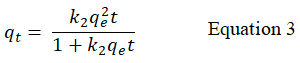
where k2 (g mg⁻¹ min⁻¹) is PSO rate constant obtained from the intercept of the plot of t/qt versus t.
Adsorption Isotherm Experiments
The adsorption isotherm study was conducted to evaluate the equilibrium adsorption behaviour of acetaminophen onto Fe-ZIF-8. A series of acetaminophen solutions with different initial concentrations (66.7, 100.0 133.3, and 200.0 mg L⁻¹) was prepared by dissolving the appropriate amount of acetaminophen in a fixed solution volume of 300 mL. The mass of Fe-ZIF-8 was maintained at 0.012 g for all experiments. The suspensions were agitated under the predetermined optimum adsorption conditions until equilibrium was reached. Subsequently, the adsorbent was separated by centrifugation, and the equilibrium concentration of acetaminophen (Ce) in the supernatant was determined using a UV spectrophotometer at the maximum absorption wavelength.
The equilibrium adsorption capacity (qe, mg g⁻¹) was calculated according to Equation (4):

where Co and Ce (mg L⁻¹) are the initial and equilibrium concentrations of acetaminophen, respectively, V(L) is the solution volume, and m(g) is the mass of Fe-ZIF-8 used.
The equilibrium datawere analysed using the Langmuir, Freundlich and Dubinin–Radushkevich (D–R) isotherm models to investigate the adsorption mechanism and surface characteristics of Fe-ZIF-8. The equilibrium adsorption datawere fitted using the Langmuir, Freundlich, and Dubinin–Radushkevich (D–R) isotherm models to evaluate the maximum adsorption capacity, adsorption behaviour on homogeneous and heterogeneous surfaces, and the mean adsorption energy associated with the adsorption mechanism, respectively.The mathematical expressions of the linear Langmuir, Freundlich and D–Risotherm models are presented in Equations 5,6 and 7 respectively.
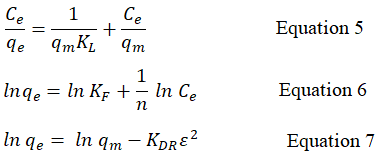
Where:
Ce = equilibrium concentration (mg/L).
qe: equilibrium adsorption capacity (mg/g).
qm: Theoretical monolayer saturation capacity (mg/g).
KL:Langmuir adsorption constant (Langmuir affinity constant)
KF: Freundlich adsorption constant (Freundlich adsorption capacity constant)
KDR: D-R model constant related to the mean adsorption energy (mol2/kJ2)
ε : Polanyi potential, defined as:

R = gas constant (8.314 x 10⁻³ kJ/K mol).
T = temperature in Kelvin (K).
Results and Discussion
Characterization and Morphological Analysis of Fe-ZIF-8
This analysis focused on the comprehensive characterization and morphological analysis of Fe-ZIF-8 itself, utilizing various techniques to confirm its structural and chemical properties. UV-Visible spectroscopy highlights its electronic transitions, while SEM provides insights into the surface morphology and elemental composition. Additionally, XRD analysis verified the crystalline structure and successful incorporation of Fe into the ZIF-8 framework.The well-defined polyhedral morphology of Fe-ZIF-8 as shown in Figure 1 demonstrates its suitability for the removal of acetaminophen from aqueous solutions. The uniform nanoscale structure provides a large surface area, enhancing the adsorption of acetaminophen molecules onto the adsorbent’s surface. Additionally, the porous characteristic allows efficient diffusion of acetaminophen molecules into its pores, while the incorporation of Fe ions introduces active catalytic sites. These Fe sites may also provide additional active sites for adsorption and could potentially contribute to oxidative processes under appropriate conditions, although this was not directly examined in the present study. Furthermore, the absence of significant particle agglomeration maintains the accessibility of active sites, optimizing the material’s adsorption and catalytic performance.
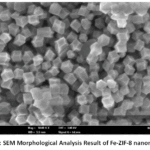 |
Figure 1: SEM Morphological Analysis Result of Fe-ZIF-8 nanomaterial. Click here to View Figure |
On the other hand, the EDX spectrum based on Figure 2, provides insights into Fe-ZIF-8’s elemental composition and the successful incorporation of iron into the framework. The presence of Fe is confirmed by characteristic peaks around 6.4–7.1 keV, indicating that iron has been successfully introduced into the ZIF-8 structure. Zinc (Zn) peaks, typically found at 1.0 keV with the highest peak height and 8.6–9.6 keV, confirm the presence of the original ZIF-8 framework.
Additionally, lower energy peaks around 0.2–0.4 keV correspond to carbon (C) and nitrogen (N), which originate from the 2-methylimidazole organic linker. The relative intensity of Fe in comparison to Zn reflects the 5% Fe doping level, with prominent Fe peaks indicating successful incorporation into the ZIF-8 framework, while weaker Fe signals suggest lower doping efficiency. The Fe content could be optimized by increasing the initial Fe precursor concentration during synthesis process. Sharp, well-defined peaks affirm the strong elemental presence, whereas broadened or weak peaks may imply lower Fe content or instrumental noise. Overall, the clean spectrum with distinct and well-resolved Fe-ZIF-8 peaks confirms the successful synthesis of a high-purity material, rendering it promising for advanced adsorption applications.
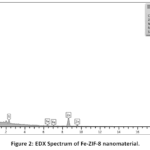 |
Figure 2: EDX Spectrum of Fe-ZIF-8 nanomaterial. Click here to View Figure |
A sharp peak in the UV region (approximately 200-300 nm) as shown in Figure 3 corresponds to π-π* electronic transitions, which are characteristic of the aromatic structures, such as 2-methylimidazole. Next, a broad absorption band extending from 300 to 500 nm is observed, likely indicating metal-to-ligand charge transfer (MLCT) associated due to the incorporation of Fe ions. Beyond 500 nm, the spectrum flattens significantly, showing minimal absorbance in the visible to near-infrared region, suggesting the sample does not strongly absorb light at these wavelengths.
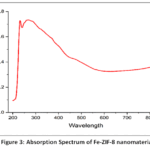 |
Figure 3: Absorption Spectrum of Fe-ZIF-8 nanomaterial. Click here to View Figure |
The XRD graph shown in Figure 4 reveals that the sample exhibits a high degree of crystallinity, as evidenced by the presence of sharp, well-defined peaksthat match the simulated sodalite topology of ZIF‑8, with the main reflection at 2θ ≈ 7.3°. No peaks corresponding to iron oxide or other impurity phases were detected, indicating that Fe ions were incorporated into the framework without disrupting the crystal structure
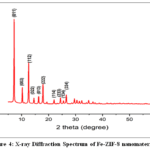 |
Figure 4: X-ray Diffraction Spectrum of Fe-ZIF-8 nanomaterial. Click here to View Figure |
Adsorption Kinetics Analysis
Adsorption kinetic analysis was performed to elucidate the adsorption behavior of acetaminophen onto Fe-ZIF-8 and to identify the kinetic model that best describes the adsorption process. Understanding the adsorption kinetics is essential for evaluating the adsorption rate, estimating the equilibrium adsorption capacity, and providing insights into the interaction between the adsorbate and the active sites of the adsorbent. Under the investigated adsorption conditions (0.012 g Fe-ZIF-8, 300 mL of 100 mg L⁻¹ acetaminophen), the adsorption profile exhibited a characteristic time-dependent behaviour as shown in Figure 5.
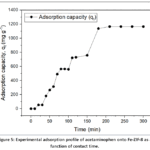 |
Figure 5: Experimental adsorption profile of acetaminophen onto Fe-ZIF-8 as a function of contact time. Click here to View Figure |
Acetaminophen removal occurred rapidly during the first 60 min, indicating the abundant availability of readily accessible active sites on the Fe-ZIF-8 surface and a high concentration gradient between the solution and the adsorbent. Subsequently, the adsorption rate gradually decreased as the available adsorption sites became progressively occupied, reducing the number of vacant active sites and diminishing the driving force for mass transfer. Equilibrium was achieved after approximately 210 min, with no appreciable change in adsorption capacity observed up to 300 min, indicating that the adsorption system had reached dynamic equilibrium. Under these conditions, the experimental equilibrium adsorption capacity (qe) was determined to be 1165.82 mg g⁻¹, and therefore a contact time of 210 min was selected as the equilibrium time for subsequent adsorption experiments and kinetic modelling.
The experimental kinetic data were subsequently analyzed using non-linear PFO (Figure 6) and PSO (Figure 7) kinetic models to determine the adsorption rate parameters and identify the kinetic model that best describes the adsorption behavior of acetaminophen onto Fe-ZIF-8. The values of parameters of PFO and PSO were summarized in Table 1.
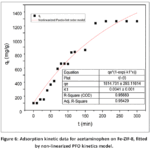 |
Figure 6: Adsorption kinetic data for acetaminophen on Fe-ZIF-8, fitted by non-linearized PFO kinetics model. Click here to View Figure |
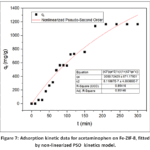 |
Figure 7: Adsorption kinetic data for acetaminophen on Fe-ZIF-8, fitted by non-linearized PSO kinetics model. Click here to View Figure |
The non-linear PFO and PSO models exhibited comparable coefficients of determination (R2 =0.9568 and 0.9542, respectively). However, model selection was based not only on statistical goodness-of-fit but also on the physical relevance of the fitted parameters. The PFO model predicted an equilibrium adsorption capacity qe=1814.73±293mg g−1 that closely matched the experimental value (1165.82 mg g−1), whereas the PFO model considerably overestimatedqe= 3050±671 mg g−1. This discrepancy suggests that the PSO model did not adequately represent the experimental adsorption behaviour despite its similar . Therefore, the PFO model was considered more appropriate for describing the adsorption kinetics of acetaminophen onto Fe-ZIF-8.
Table 1: Kinetic parameters for acetaminophen adsorption onto Fe‑ZIF‑8
| Model | R² | k | qₑ (experimental)
(mgg⁻¹) |
qₑ (calculated)
(g g⁻¹) |
| Non-linearized PFO | 0.9568 | 0.0041±0.0001 min⁻¹ | 1165.82 | 1814.73 |
| Non-linearized PFO | 0.9542 | (8.12±4.20) x 10-7 g mg⁻¹ min⁻¹ | 3050.72 |
Adsorption Isotherms and Mechanism
Adsorption isotherm analysis was conducted to elucidate the equilibrium adsorption behaviour of acetaminophen onto Fe-ZIF-8 and to better understand the interaction between the adsorbate andadsorbent. The equilibrium data were fitted using the Langmuir (Figure 8), Freundlich (Figure 9), and Dubinin–Radushkevich (Figure 10) isotherm models to estimate the adsorption capacity, surface heterogeneity, and adsorption mechanism, respectively.
Figure 8 illustrates the Langmuir adsorption isotherm for acetaminophen adsorption onto Fe-ZIF-8. The Langmuir model exhibited the lowest correlation coefficient (R2=0.777), indicating that the equilibrium data were not adequately described by monolayer adsorption on a homogeneous surface. This suggests that Fe-ZIF-8 possesses adsorption sites with different affinities and energies, deviating from the assumptions of the Langmuir model.
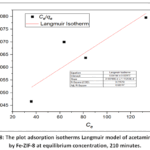 |
Figure 8: The plot adsorption isotherms Langmuir model of acetaminophen by Fe-ZIF-8 at equilibrium concentration, 210 minutes. Click here to View Figure |
Figure 9 presents the Freundlich adsorption isotherm, which provided the best fit to the experimental data (R2 = 0.933). The superior fitting confirms that acetaminophen adsorption occurred on a heterogeneous Fe-ZIF-8 surface with non-uniform adsorption energies. Furthermore, the Freundlich constant (n = 1.63) indicates favourable adsorption, demonstrating the strong affinity of Fe-ZIF-8 towards acetaminophen over a range of adsorption sites.
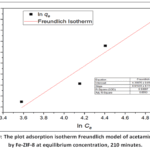 |
Figure 9: The plot adsorption isotherm Freundlich model of acetaminophen by Fe-ZIF-8 at equilibrium concentration, 210 minutes. |
Figure 10 shows the Dubinin–Radushkevich isotherm used to evaluate the adsorption mechanism based on the mean adsorption energy. The D–R model produced a satisfactory correlation ( ), while the calculated adsorption energy ( kJ mol⁻¹) suggests that the overall adsorption process is predominantly governed by weak physical interactions.According to the mean free energy (E) from the D-R model, if E < 8 Kjmol⁻¹, the process is physisorption, whereas E > 8 kJmol⁻¹ indicates chemisorption 18. The Dubinin–Radushkevich (D–R) model yielded a mean adsorption energy of 0.050 kJ mol⁻¹, suggesting that acetaminophen adsorption onto Fe-ZIF-8 is predominantly governed by weak physical interactions. Nevertheless, this result should be interpreted with caution because the D–R model was established using only four equilibrium data points.
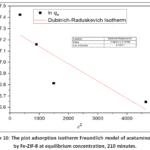 |
Figure 10: The plot adsorption isotherm Freundlich model of acetaminophen by Fe-ZIF-8 at equilibrium concentration, 210 minutes. Click here to View Figure |
Overall, the isotherm analysis indicates that the adsorption of acetaminophen onto Fe-ZIF-8 is best described by the Freundlich model, suggesting favourable adsorption on a heterogeneous surface. This finding is consistent with the porous Fe-ZIF-8 framework, which provides chemically diverse adsorption sites capable of interacting with acetaminophen through multiple adsorption mechanisms. The calculated isotherm parameters are summarized in Table 2.
Table 2: Langmuir, Freundlich and Dubinin–Radushkevich isotherm parameters
| Isotherm model | Parameters (unit) | Values |
| Langmuir | qm(mg g⁻¹) | 3346.85 |
| KL(L mg⁻¹) | 0.00721 | |
| R2 | 0.777 | |
| Freundlich | KF ((mg g⁻¹)(L mg⁻¹ )1/n) | 80.70 |
| n | 1.63 | |
| R2 | 0.933 | |
| Dubinin-Radushkevich | qm(mg g⁻¹) | 1614.7 |
| β (mol² J⁻²) | 0.0002 | |
| E (kJ mol⁻¹) | 0.050 | |
| R2 | 0.934 |
Based on the adsorption kinetic and isotherm analysis, the proposed mechanisms are π-π interactions where the aromatic ring of APAP engages in π-π stacking with imidazolate rings18, hydrogen bonding of the hydroxyl and amide groups of APAP bond with imidazolate linkers19 and electrostatic interactions where ionized APAP interacts with charged Fe-ZIF-8 surfaces, facilitated by Fe ions20. The incorporation of iron ions further enhances adsorptive performance by introducing additional active sites, increasing affinity through hydrogen bonding and π-π stacking 21. Iron ions (Fe²⁺ or Fe³⁺) form coordination bonds with nitrogen atoms of imidazolate ligands (C₃N₂H₄). Van der Waals forces are weak, non‑specific, and reversible, enabling dynamic adsorption and desorption, which makes the process efficient and sustainable. A minor van der Waals contribution cannot be excluded, explaining the slight physisorption character implied by the PSO and Dubinin-Radushkevich fit.
Comparison with Other Adsorbents
The adsorption performance of Fe-ZIF-8 was benchmarked against previously reported adsorbents for acetaminophen removal to assess its relative efficiency. As presented in Table 3, the synthesized Fe-ZIF-8 achieved an adsorption capacity of 1165.82 mg g⁻¹ for acetaminophen, outperforming the other reported adsorbents. Compared to previous studies, Fe-ZIF-8 achieved this high adsorption capacity using an exceptionally low adsorbent dosage (0.04 g L⁻¹), considerably lower than those reported for other adsorbents (0.25–5.0 g L⁻¹), indicating a high utilization efficiency of active adsorption sites and potential cost advantages for practical wastewater treatment.
This interpretation is supported by the Freundlich isotherm, which indicates adsorption on a heterogeneous surface, the pseudo-first-order kinetic model, suggesting progressive occupation of available adsorption sites, and the low Dubinin–Radushkevich adsorption energy (E=0.05 kJ mol⁻¹), indicating that adsorption is predominantly governed by weak physical interactions, including π-π interactions, hydrogen bonding, van der Waals forces, and pore-filling effects.These findings demonstrate the potential of Fe-ZIF-8 as an efficient adsorbent for pharmaceutical contaminants while highlighting the structural heterogeneity that contributes to its adsorption performance. Overall, the remarkably high adsorption capacity together with the exceptionally low adsorbent dosage demonstrates the excellent adsorption performance of Fe-ZIF-8.
Table 3: Comparison of acetaminophen adsorption by various adsorbents.
| Adsorbent | Initial concentration of acetaminophen (mg/L) | Dosage of adsorbent (g/L) | Adsorption capacity (mg/g) | References |
| ZSM-5 nanomaterial | 280.0 | 5.00 | 49.50
|
22 |
| Fe3O4 | 280.0 | 5.00 | 68.90 | |
|
Iron-based metal organic framework-coated cellulose (MIL-100(Fe)@CP |
35.6 | 0.84 | 37.88 |
23 |
| Metal-organic frameworks (MOFs) type MIL101(Cr) | 20.0 | 1.12 | 1.87 | 24 |
| Ni/MIL-101(Cr) | 20.0 | 1.12 | 10.52 | |
| Metal–organic framework composite, CuBTC@NH2 | 50.0 | 0.25 | 125.45 | 25 |
| Fe@ZIF-8 | 100.0 | 0.04 | 1165.82 | This study |
Despite the promising adsorption performance, several limitations should be acknowledged. First, the adsorption experiments were conducted using a single-component acetaminophen solution, which does not fully represent the complexity of real wastewater where multiple pharmaceuticals, dissolved organic matter, and inorganic ions may compete for adsorption sites. Second, the equilibrium isotherm analysis was established using only four equilibrium concentration points, which may reduce the statistical robustness of the Dubinin–Radushkevich parameters, particularly the calculated adsorption energy. Third, adsorption regeneration, structural stability after repeated adsorption-desorption cycles, and potential Fe leaching were not evaluated and should be investigated before practical application.
Future studies should therefore focus on evaluating the long-term stability and reusability of Fe-ZIF-8 through multiple adsorption-desorption cycles, investigating its adsorption behavior in real wastewater matrices, and assessing the influence of solution pH, ionic strength, natural organic matter, and coexisting pharmaceutical contaminants. Such investigations would strengthen the understanding of the adsorption mechanism and facilitate the rational design of next-generation MOF-based adsorbents with even greater adsorption efficiency and environmental applicability.
Conclusion
In conclusion, the combined kinetic and equilibrium analyses suggest that acetaminophen adsorption onto Fe-ZIF-8 proceeds through a multimechanistic adsorption process. The heterogeneous pore structure and chemically diverse active sites of Fe-ZIF-8 promote adsorption through π-π interactions between the aromatic ring of acetaminophen and the imidazolate framework, hydrogen bonding involving hydroxyl and amide functional groups, weak electrostatic attractions, and localized coordination interactions between oxygen-containing functional groups and Fe centres. Among these interactions, weak physical interactions appear to dominate the average adsorption energy, whereas localized stronger interactions at Fe-containing sites contribute to the high adsorption capacity. This interpretation satisfactorily reconciles the superior fit of the Freundlich isotherm, the better predictive capability of the PFO kinetic model, and the low D–R adsorption energy obtained in this study.
Acknowledgment
The authors acknowledge NN-2025-037 and Dana Mutiara for financial support. The authors thank their families and friends for their personal support.Lastly, I appreciate UKM Forensic Lab and ICRIM for providing essential scientific resources.
References
- Jha, M.; Elengoe, A. Study Of Curative Herbs as Substitute for Acetaminophen (Tylenol). Iarjset2021, 8 (9), 8–11. https://doi.org/10.17148/iarjset.2021.8901.
CrossRef - Ayoub, S. S. Paracetamol (Acetaminophen): A Familiar Drug with an Unexplained Mechanism of Action. Temperature2021, 8 (4), 351–371. https://doi.org/10.1080/23328940.2021.1886392.
CrossRef - Kanakaraju, D.; Glass, B. D.; Goh, P. S. Advanced Oxidation Process-Mediated Removal of Pharmaceuticals from Water: A Review of Recent Advances; Springer Berlin Heidelberg, 2025; Vol. 32. https://doi.org/10.1007/s11356-025-36547-5.
CrossRef - Esh, C. J.; Mauger, A. R.; Palfreeman, R. A.; Al-Janubi, H.; Taylor, L. Acetaminophen (Paracetamol): Use beyond Pain Management and Dose Variability. Front. Physiol.2017, 8 (DEC), 1–7. https://doi.org/10.3389/fphys.2017.01092.
CrossRef - Quintero-Álvarez, F. G.; Rojas-Mayorga, C. K.; Mendoza-Castillo, D. I.; Aguayo-Villarreal, I. A.; Bonilla-Petriciolet, A. Physicochemical Modeling of the Adsorption of Pharmaceuticals on MIL-100-Fe and MIL-101-Fe MOFs. Adsorption Science and Technology2022, 2022. https://doi.org/10.1155/2022/4482263.
CrossRef - Fathi, M.; Kazemi, S.; Zahedi, F.; Shiran, M. R.; Moghadamnia, A. A. Comparison of Oral Bioavailability of Acetaminophen Tablets, Capsules and Effervescent Dosage Forms in Healthy Volunteers. Current Issues in Pharmacy and Medical Sciences2018, 31 (1), 5–9. https://doi.org/10.1515/cipms-2018-0001.
CrossRef - World Health Organization. The Selection and Use of Essential Medicines. World Health Organ. Tech. Rep. Ser.2014, No. 985.
- aus der Beek, T.; Weber, F. A.; Bergmann, A.; Hickmann, S.; Ebert, I.; Hein, A.; Küster, A. Pharmaceuticals in the Environment—Global Occurrences and Perspectives. Environ. Toxicol. Chem.2016, 35 (4), 823–835. https://doi.org/10.1002/ETC.3339.
CrossRef - Wu, J. le; Liu, Z. hua; Ma, Q. guang; Dai, L.; Dang, Z. Occurrence, Removal and Risk Evaluation of Ibuprofen and Acetaminophen in Municipal Wastewater Treatment Plants: A Critical Review. Science of the Total Environment2023, 891. https://doi.org/10.1016/j.scitotenv.2023.164600.
CrossRef - Nunes, B. Ecotoxicological Effects of the Drug Paracetamol: A Critical Review of Past Ecotoxicity Assessments and Future Perspectives. Handbook of Environmental Chemistry2020, 96, 131–145. https://doi.org/10.1007/698_2020_546.
CrossRef - Perumal, M. K. K.; Gandhi, D.; Renuka, R. R.; Lakshminarayanan, A.; Thiyagarajulu, N.; Kamaraj, C. Advanced Nano-Based Adsorbents for Purification of Pharmaceutical Residue Polluted Water: A Critical Review. Process Safety and Environmental Protection 2024, 186, 552–565. https://doi.org/10.1016/J.PSEP.2024.04.011.
CrossRef - Chen, R.; Du, J.; Luo, C.; Liu, L.; Liang, P.; Zhang, K.; Liu, Y.; Zhu, G. A Novel Hierarchical Porous ZIF-8 for Effective Removal of Three Non-Steroidal Anti-Inflammatory Drugs Simultaneously from Environment. Environ. Res.2025, 271, 121078. https://doi.org/10.1016/J.ENVRES.2025.121078.
CrossRef - Yu, C.; Kim, Y. J.; Kim, J.; Eum, K. ZIF-L to ZIF-8 Transformation: Morphology and Structure Controls. Nanomaterials2022, 12 (23). https://doi.org/10.3390/nano12234224.
CrossRef - Li, Z.; Zhao, Z.; Zhu, X.; Lin, S.; Wang, J.; Liang, S. X. Selective Adsorption Behavior of Aqueous Quinolones on ZIF-8@TpPa-SO3H Composite: Experimental and DFT Studies. Colloids Surf. A Physicochem. Eng. Asp.2026, 740. https://doi.org/10.1016/J.COLSURFA.2026.140162.
CrossRef - Ke, T.; Rahim, R. A.; Hamzah, N. H.; Awang, N.; Nasir, A. M. Facile Synthesis of Bimetallic Ag–Fe@ZIF-8 for the Synergistic Adsorption Removal of Tetracycline from Aqueous Solutions. Chemistry 2026, Vol. 8,2026, 8 (5). https://doi.org/10.3390/CHEMISTRY8050065.
CrossRef - Park, S.; Kim, J. G.; Cho, Y.; Pak, C. Mesoporous Nitrogen-Doped Carbon Support from ZIF-8 for Pt Catalysts in Oxygen Reduction Reaction. Nanomaterials2025, 15 (2). https://doi.org/10.3390/nano15020128.
CrossRef - Yang, H.; Hu, S.; Zhao, H.; Luo, X.; Liu, Y.; Deng, C.; Yu, Y.; Hu, T.; Shan, S.; Zhi, Y.; Su, H.; Jiang, L. High-Performance Fe-Doped ZIF-8 Adsorbent for Capturing Tetracycline from Aqueous Solution. J. Hazard. Mater.2021, 416 (February), 126046. https://doi.org/10.1016/j.jhazmat.2021.126046.
CrossRef - Hussaini, M.; Onaizi, S. A.; Vohra, M. S. High-Capacity Removal of Crystal Violet Using ZIF-8/Graphene Quantum Dot Composite with RSM Optimization and Explainable Machine Learning. Sci. Rep.2026, 16 (1), 1–22. https://doi.org/10.1038/s41598-026-39933-2.
CrossRef - Javid, F.; Azar, P. A.; Moradi, O.; Kazemipour, M. Green Synthesis of Activated Carbon-ZIF-8 Nanocomposites from Pistachio Hulls for Efficient Antibiotic Adsorption in Water Remediation. Sci. Rep.2026, 16 (1), 1–22. https://doi.org/10.1038/s41598-026-35370-3.
CrossRef - Agboola, O. D.; Benson, N. U. Physisorption and Chemisorption Mechanisms Influencing Micro (Nano) Plastics-Organic Chemical Contaminants Interactions: A Review. Front. Environ. Sci.2021, 9 (May), 1–27. https://doi.org/10.3389/fenvs.2021.678574.
CrossRef - Miao, Z.; Song, X.; Wang, X.; Wang, H.; Li, S.; Jiao, Z. Facile Synthesis of Fe-Doped ZIF-8 and Its Adsorption of Phosphate from Water: Performance and Mechanism. PLoS One 2024, 19 (10 October), 1–19. https://doi.org/10.1371/journal.pone.0311239.
CrossRef - Pirvu, F.; Covaliu-Mierlă, C. I.; Catrina, G. A. Removal of Acetaminophen Drug from Wastewater by Fe3O4 and ZSM-5 Materials. Nanomaterials 2023, Vol. 13,2023, 13 (11). https://doi.org/10.3390/NANO13111745.
CrossRef - Yılmaz, Ş.; Zengin, A.; Şahan, T. Effective Utilization of Fe(III)-Based Metal Organic Framework-Coated Cellulose Paper for Highly Efficient Elimination from the Liquid Phase of Paracetamol as a Pharmaceutical Pollutant. Environ. Technol. Innov.2021, 24, 101799. https://doi.org/10.1016/J.ETI.2021.101799.
CrossRef - Baeza, P.; Astudillo, C.; Diaz, M.; Matus, C.; Ramírez, M. F.; Aguila, G.; Ojeda, J. Effect of the Incorporation of Ni in the Adsorption Capacity of Paracetamol (N-Acetyl-P-Aminophenol) on MIL-101(Cr). Water, Air, & Soil Pollution 2020 231:52020, 231 (5), 245-. https://doi.org/10.1007/S11270-020-04584-0.
CrossRef - Samuel, M. S.; Venkatesan Savunthari, K.; Chandrasekar, N.; Balaji, R.; Selvarajan, E. Removal of Environmental Contaminants of Emerging Concern Using Metal–Organic Framework Composite. Environ. Technol. Innov.2022, 25, 102216. https://doi.org/10.1016/J.ETI.2021.102216.
CrossRef
 PlumX:
  Views: 603 Views
  PDF Downloads: 263
 Accepted on: 25 Jun 026
Second Review by: Dr. Mohan Tewari
Final Approval by: Dr. Naeem Uddin Siddiqui


ISSN Online: 2231-5039