Polyaniline/Tio2 Nanocomposites: Fundamentals, Synthesis Approaches, and Applications in Photodegradation and Corrosion Resistance

Center of Nanotechnology, King Abdulaziz University, Jeddah, Saudi Arabia
Corresponding Author E-mail:moansari@kau.edu.sa
DOI : http://dx.doi.org/10.13005/ojc/420405
Download this article as:

Polyaniline (Pani)/TiO2 nanocomposites have emerged as an important class of multifunctional materials owing to the synergistic integration of the electrical conductivity and redox activity of Pani with the excellent photocatalytic, chemical stability, and corrosion-resistant properties of TiO2. Although numerous studies have reported enhanced functional properties of Pani/TiO2 nanocomposites, a comprehensive understanding of the synthesis, structure and property relationships governing their multifunctional performance needs to be investigated.This review critically examines the current progress in the design, synthesis, and applications of Pani/TiO2 nanocomposites, with emphasis on the relationships between synthesis strategy, microstructure, and functional performance. The major fabrication approaches, including in situ oxidative polymerization, sol–gel processing, hydrothermal/solvothermal synthesis, electrochemical deposition, physical blending, and immobilized film techniques, are comparatively discussed in terms of their advantages, limitations, and resulting morphologies. Special emphasis is placed on correlating composition, crystallinity, particle size, interfacial interactions, surface chemistry, and morphology with the resulting optical, electrical, electrochemical, and photocatalytic properties. The review establishes that enhanced performance primarily originates from strong interfacial coupling, efficient charge separation, optimized composition, and hierarchical nanostructures, which collectively improve visible-light harvesting, charge transport, and electrochemical stability. Recent advances in ternary and heterostructured systems incorporating metal oxides, noble metals, and MXenes are also summarized, highlighting their role in promoting heterojunction formation and suppressing charge recombination. Particular attention is given to photocatalytic degradation of organic pollutants and corrosion protection, where Pani functions as a visible-light sensitizer and redox mediator, while TiO2 provides catalytic activity and an effective barrier against corrosive species. Despite considerable progress, challenges remain in understanding interfacial charge-transfer mechanisms, improving long-term durability, standardizing performance evaluation, and developing scalable, environmentally sustainable synthesis routes. The insights presented in this review provide guidance for the rational design of next-generation Pani/TiO2-based multifunctional materials for environmental remediation, protective coatings, and other advanced technological applications.
KEYWORDS:Corrosion protection; Conducting polymers; Environmental remediation; Heterojunctions; Nanocomposites; Polyaniline; Photocatalysis; Photodegradation; Titanium dioxide
Introduction
The famous 1977 chemical communications paper entitled ‘“Synthesis of Electrically Conducting Organic Polymers: Halogen Derivatives of Polyacetylene, (CH)x” gave birth to new types of polymers i.e. electrically conducting polymers.1 The polymer conducting electricity caught attention of scientists worldwide and the research in this field let to discovery of wide variety of polymers such as polyaniline (Pani), polypyrrole, polythiophene, etc. with similar characteristics. Amongst all these polymers, Pani is most popular due to its low cost, ease of synthesis, long table shelf life, easy tunable redox properties, and its ease to be blended with different polymers and materials, etc.2
Pani and its composites with TiO2 have attracted significant attention in recent past. The combination of high electrical conductivity, redox characteristics of Pani and photocatalytic nature, corrosion resistance and chemical stability of TiO2 leads to swift charge transport and good interfacial connections thus giving composites with much better functional performance in comparison to individual components.
Recently Pani/TiO2 composites have been wide used for wide range of applications particularly photocatalysis, gas sensing and corrosion resistance performance. For gas sensing, the improved and tunable charge transfer in composite structures results in high sensitivity, selectivity and response-recovery cycles.in photocatalysis, the Pani facilitates much higher light absorption and also limits charge recombination. In corrosion protection, TiO2 provides passive barrier effect which combined with electroactive Pani leads to improved corrosion resistance.
This review discusses synthesis, characterization and brief application of Pani and TiO2 composites for gas sensing, photocatalysis, and corrosion protection. The underlying mechanisms governing these properties and future challenges have also been addressed.
Synthesis of Pani/TiO2 composites
A wide variety of synthesis approaches have been adopted for achieving optimal interfacial interaction between the constituents for maximum performance. Some of the widely adopted synthesis strategies have been briefed here:
In Situ Oxidative Polymerization
Insitu oxidative polymerization is largely used strategies where TiO2 is dispersed in liquid phase containing acids and monomer while subsequent addition of oxidants such as ammonium persulphate, potassium persulphate or other oxidants leads to polymerization. This process can lead to growth of Pani chains on the surface of TiO2 or can also engulf TiO2 nanoparticles in between the chains (Fig. 1). Different synthetic strategies can lead to different morphology, for e.g. rapid mixing techniques when used with HCl can lead to short nanofibers.3 while use of surfactants such as CTAB may lead to much larger sized nanofibers.4.
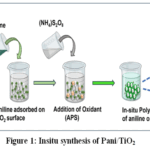 |
Figure 1: Insitu synthesis of Pani/TiO2 Click here to View Figure |
Sol–Gel Method
This method involves synthesis of TiO2 from its precursors such as titanium isopropoxide or titanium butoxide in the presence of Pani or aniline leading to uniform and homogenous Pani-TiO2. The simultaneous synthesis of Pani and TiO2 as employed by Parveen et al.5 termed as one pot synthesis lead to Pani/TiO2 with 2-fold higher surface area than Pani.
Physical Blending and Solution Mixing
In this method early formed TiO2 and Pani are mixed using solvents such as N-methyl 2-pyrrolidone, tetra hydro furan, alcohol, ether or some other solvents. The uniform dispersion is either dried in air oven or solution casted to form film or other usable form. Physical blending without solvents employees grinding the constituents i.e. Pani and TiO2 both either by ball milling or in pestle and mortar.6
Hydrothermal and Solvothermal Synthesis
Hydrothermal and Solvothermal synthesis uses high temperature and pressure which yields Pani-TiO2 with different striking morphologies such as nanoparticles, nanorods, nanotubes, or hierarchical structures. Reddy et al.7 synthesized TiO2 nanoparticles and further incorporated it with Pani by insitu oxidative polymerization. Similarly, Youssef prepared TiO2 nanowires by hydrothermal methodology and further integrated it with Pani by insitu polymerization.8
Electrochemical Deposition
This method is employed to deposit Pani/TiO2 on substrates. A general mechanism involves TiO2 in the electrolyte and electropolymerization of aniline. The advantage of this method is control on film thickness and morphology by changing the potential and time of the reaction. This methodology is used for photoelectrochemical and sensing applications due to strong adhesion with leads to less loss of catalyst and thereby high reproducibility. The report of Chen et al.9 deposited Pani on TiO2 nanotube by electrodeposition. Similarly, Palmas et al.11 first prepared TiO2 by electrochemical oxidation of Ti foil and further galvanostatic electropolymerized aniline over TiO2 to get Pani/TiO2 composites with improved properties.
Immobilized and Flexible Pani/TiO2 Films
This method employs immobilization of TiO2 nanoparticles on Pani substrates either as flexible substrates or supported on some other substrates such as glass or other polymers. Anchoring of TiO2 on flexible Pani film can be done using physical deposition methods such as RF sputtering, atomic layer deposition or pulse laser deposition on Pani substate as reported for CuO sputtered on flexible Pani-graphene films.11 Other methods may involve incorporation of TiO2 in Pani emeraldine base dispersion in solvents for e.g. N-methyl 2-pyrrolidone and coating the dispersion on substates or preparing free standing films by solution casting methods.12 Table 1 shows a comparative comparison of synthesis methodology and morphological features and most suitable applications.
Table 1: Comparison of major synthesis methodologies for Pani/TiO2 nanocomposites, highlighting their key features, limitations, resulting morphologies, and most suitable applications.
|
Synthesis Methodology |
Features | Demerits | General morphology | Best application |
| In-situ polymerization | Good contact between constituents | Difficulty in controlling thickness and other morphological parameters | core-shell, coated particles, nanofibers |
Photocatalysis |
|
Sol-gel |
Uniform dispersion | Residual precursors left after reaction | porous structures | Photocatalysis |
| Hydrothermal | Good crystalline features | Longer duration of synthesis | nanorods/nanowires/nanotubes or hierarchical structures |
Charge transport |
|
Electrochemical |
Good adhesion | Limited substrate geometry | thin films/coatings | Corrosion |
| Physical blending | Ease of synthesis | Weak interactions between constituents | Can result in agglomerated structures |
Poor coatings |
Therefore, for highly efficient Pani/TiO2 following points can be considered:
Interfacial interaction: Close interactions between constituents i.e. Pani and TiO2 leads to uninterrupted easy charge flow which restricts charge recombination process efficiently.
Loading optimization: Higher loading of Pani can block active sites of TiO2 while much lower Pani than optimized amount can lead to composites with poor conductivity and adsorption, hence poor characterstics.
Morphology: Structures which have high surface area such as nanofibers, hierarchical porous structures provide more active sites.
Heterojunction formation: Proper band gap alignment between Pani and TiO2 leads can give efficient Pani-TiO2 heterojunction which can give composites with superior characteristics such as conductivity, low charge recombination and better adsorption.
Crystallinity: Anatase TiO2 in contrast to rutile phase as well as crystalline TiO2is more effective for photocatalysis. Hence higher amount of anatase phase and crystalline TiO2 in composites can lead to better photocatalysts.
Synthesis methodology: Techniques such as insitu polymerization is mostly preferred route as it results in intimate interaction between constituents, here Pani and TiO2 and also gives uniformly distributed TiO2 in the Pani matrix.
Addition of other constituents: Addition of other materials (Ag, ZnO, MoS2, etc.) with Pani and TiO2 to make ternary or quaternary composites can enhance adsorption and enhance charge separation due to synergistic action.
Dense and defect-free coatings: Composites with compact rigid morphological features and uniform TiO2 distribution show efficient barrier properties leading to better electrochemical passivation of the metal surface.
Pani/TiO2nanocomposites in the field of photodegradation
Very early studies of photocatalytic properties of Pani/TiO2 were reported by Liu et.al.13 for the photodegradation of phenol in UV irradiations/sunshine. The superior photocatalytic characteristics of composites in contrast to TiO2 was due to the surface change of TiO2 when in combination with Pani. Later J. Li et al.14 grafted Pani on TiO2 and degraded methyl orange under sunlight. It was interpreted that Pani functions as sensitizer to TiO2 due to its strong forbidden band gap of 2.8 eV of Pani. Similarly, F. Wang et al.15 and S. Min et al.16 also studied TiO2 sensitization by Pani and they showed that Pani can absorb visible and near IR while TiO2 absorbs wavelengths below 380 nm but the nanocomposite can absorb wavelength in the range of 190-800 nm. Another explanation of greater photocatalytic activity was given on the basis of energies of HOMO and LUMO. The greater photocatalytic activity of Pani/TiO2 nanocomposites were explained on the basis of the efficient separation of electron and hole pairs in the excited state where Pani and TiO2 are coupled.17
S.X. Min et al.18 prepared TiO2 by modification with anilinomethyltriethoxysilane (AMTES-TiO2) and later grafting Pani over AMTES-TiO2 nanoparticles resulting into a Pani/AMTES-TiO2 nanocomposite photocatalyst. Thedegradation of methylene blue in uv and solar irradiation showed that ratio of aniline to AMTES-TiO2 was very critical in the photocatalytic performance and highest activity was obtained with the mass ratio of 0.25. Other workers such as F. Wang et al.19 on studying the degradation of methylene blue showed that highest sensitized effect was when mass ratio of Pani to TiO2 was 1:500. Similarly, X. Li et al.20 showed that phenol degradation rate speeded up on changing the Pani/TiO2 molar ratio from 1:60 to 1:100.
The mixing methodology employed by H. Zhang et al.21 to prepare Pani/TiO2 using tetra hydrofuran as a common solvent showed that resultant high photodegradation of dyes was due to the synergistic interaction between Pani and TiO2 resulting in high charge carrier density on Pani and TiO2 interface. A general mechanism is that Pani generated π−π* transition and transfers excited electrons into TiO2’s conduction band. Then these electrons are transferred to the adsorbed electron acceptor producing reactive oxygen species (ROS) which facilitates degradation (Fig. 2).
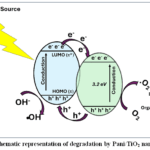 |
Figure 2: Schematic representation of degradation by Pani/TiO2 nanocomposite. Click here to View Figure |
A very different study on the effect of doping acids and surfactants used showed that the experimental polymerization conditions have huge impact on the degradation process. The activity showed direct proportional trend on increasing the amount of aniline and oxidant but decreased on increasing HCl, sodium lauryl sulphate and TiO2. With regards to acids, the activity showed following trend H2SO4> H3PO4> HCl > HNO3.22 Mohammad Reza et al.23 showed that on varying the concentration of acid different states of Pani can be obtained i.e. emeraldine base or non-conducting form was obtained at 0.02 M of HCl while above which the conducting form i.e. emeraldine salt was obtained. It was found that Pani emeraldine base in combination with TiO2 showed high photoluminescence which might be due to the non formation of polarons which acts as charge recombination barrier. The photodegradation studies showed highest diazinon degradation by emeraldine base based composite than that formed with emeraldine salt which might be due to visible-light sensitization at low HCl concentration.
J. Liu et al.24 synthesized Pani/TiO2/V₂O₅ composite photocatalysts and investigated their efficiency in the photocatalytic degradation of methylene blue. The enhanced photocatalytic performance under visible-light irradiation was attributed to the narrowing of the band gap resulting from the synergistic interaction among the composite constituents, which facilitated improved absorption of visible light and more efficient charge transfer. Furthermore, the composite prepared with a TiO2:V2O5 sol volume ratio of 10:1 exhibited the highest photocatalytic activity, demonstrating superior degradation efficiency compared to the other compositions investigated. Similarly, ZrO2 when used in combination showed much higher performance for ternary Pani/TiO2/ZrO2which showed activity in the UV–Visible region and band gap of 2.54 eV while in contrast TiO2–ZrO2 showed response only in the UV region and much higher band gap of 3.43 eV.25
Kazi Hasibur Rahman26reported that the formation of p-n heterostructures suppresses charge recombination. Similar findings were also reported by Somaye et al.27 in their template-free Pani/TiO2 nanocomposite for methyl orange degradation. It has also been found that additives such as H2O2 has positive effect on the degradation process while NaCl can have negative effect.28
Pani/Polyacrylonitrile nanofibers, Ti3C2, MXene or MoS2 on TiO2 by Esmaeil Farmani Gheshlaghi et al.29 shows the formation of Schottky junction in the composite which efficiently restricts charge recombination in comparison to MoS2 type-II heterojunction
Catalyst anchored on Pani film are also interesting as multiple usage is easy and catalyst loss can be avoided which increases efficiency. Conducting Pani/Ag/TiO2 nanocomposites prepared by mixing Ag and TiO2 for Pani dispersion in NMP and further casting on glass substrate showed uniform dispersion of Ag/TiO2 aggregates in Pani film and the synergistic effect between the constituents lead to high catalytic efficiency.12 [12]. Similarly, NiO deposited by direct current sputtering on Pani/MoS2 film was used for the mineralization of 2-chlorophenol with high efficiency.30
Pani/TiO2 nanocomposites in the field of Corrosion
TiO2 coatings have shown to possess anticorrosion properties, Z.H. Chen et al.21 used TiO2 slurry in the anticorrosion coatings and found that a variety of properties of the coatings were improved. T. Liu et al.31 have studied the corrosion of aluminum metal and have found that nano-TiO2coatings exhibited excellent anticorrosion properties in the sterile seawater at room temperature. Several other workers have exploited TiO2as anticorrosion material.32-35
In the recent decades, conducting polymers has been investigated for their anticorrosion characteristics. Pani due to its low cost and ease of preparation is the preferred choice of workers for corrosion protection.36 Deberry in 1985 coated steel plate with Pani and studied corrosion potential and corrosion current.37 Kinlen et al.38,39 reported that organic coatings can protect steel by insoluble iron-dopant formation on metal triggered by metal anodization by Pani. De Souza et al.40 studied Pani based acrylic composites for steel protection and proved by Raman analysis that an additional layer of protection is formed comprising of iron and dopant. These researches led to further studies on anticorrosion properties of Pani based composites for steel and iron protection.41-44
Nanocomposites of Pani/TiO2are expected to show better results, which may be due to the synergism between Pani and TiO2. In-situ polymerization is an efficient way of producing nanocomposites as the nanoparticles and polymers gets uniformly distributed (Fig. 3).
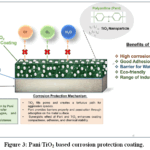 |
Figure 3: Pani/TiO2 based corrosion protection coating. Click here to View Figure |
S. Sathiyanarayanan et al.45 prepared phosphoric acid doped Pani/TiO2 nanocomposites by in-situ polymerization method and studied its anticorrosion behavior on mild steel by applying coatings of the nanocomposites in acrylic resin. It was interpreted that the coatings maintain steel’s passive region potential due to Pani doping and dedoping redox characteristics. Similar results were also for iron protection by Pani/TiO2 coatings as the uniform Pani distribution maintains passive layer uniformly. The redox reaction of conducting to insulating state Pani release phosphate anions which forms iron–phosphate in addition to Pani passive film.46
S. Radhakrishnan et al.47 interpreted that the ions released on corrosion reaction with water, salts or oxidative environment gets doped by redox nature of Pani and dopant ions rea released. These dopant forms a protective passive layer and further block corrosion process. Similar work done has also shown that the nanocomposites of Pani/TiO2 showed better anticorrosion properties than pure Pani in the case of a magnesium alloy.48 O. Zubillaga et al.49 on corrosion protection of aluminum alloys by Pani/TiO2 found much higher protection in AA3105 aluminum alloy that contained TiO2. It was explained that TiO2 forms thin film on outer coating which forms barrier for anodic porous aluminum oxide film. In another report it was claimed that Pani with TiO2 much lower passive current density than with ZrO2 .50 Hebatallah Al Jabri et al.51 showed that dip coated Pani/TiO2 on stainless steel can be a possible solution for corrosion prevention in oil piplines while Shetty et al.52 blended Pani/TiO2 with araldite to form a corrosion protection coating on steel 316.
Electropolymerized aniline reinforced with TiO2 showed elevated polarization resistance of 7.9 ×10⁴ Ω cm2 in contrast to 4.5 ×10³ Ω cm2 for uncoated alloy due to the physical barrier effects and electrochemical passivation effects.53. The Nb doped TiO2 in integrated with Pani and electrodeposited on 316 stainless steel showed that Nb doping lead to increase in the corrosion potential and low corrosion current density of coating leading to much higher barrier effect and anodic passivation.54 The electrocoated Pani with TiO2, Ag, and Zn on Al1050 electrode when studied for corrosion prevention in 3.5% NaCl solution showed that integration of Ag resulted in highest protection efficiency of 97.54% while TiO2 containing composite gave 91.91% efficiency.55. These findings can also open a route for binary or ternary composites such as Pani-Ag-TiO2 for corrosion prevention as Dong et al.56 showed synergistic effect of constituents in Ti3C2/TiO2/TiN/Pani quaternary composite on 304 stainless steel. Comparative studies by Olivares et al.57 on insitu synthesized Pani-chitosan and Pani-TiO2-chitosan coatings on 1018 carbon steel in 3.5 wt% NaCl showed exception performance of Pani-TiO2-chitosan coatings due to high degree of cross-linking in coatings which forms dense protection on steel.
Conclusion
Pani/TiO2 nanocomposites provide a wide array of functional materials, which leverage both conducting polymers and semiconductor metal oxides. From the comprehensive literature survey conducted, it is evident that there is a synergistic interaction between Pani and TiO2, which improves charge transfer, electron-hole recombination and enhances absorption over the visible range as well as interface stability. Therefore, the application of Pani/TiO2 nanocomposites in photocatalytic removal of organic pollutants and protection of metallic surfaces from corrosion have been reported.
Different routes have been investigated for the synthesis of the composites, which include in situ polymerization, sol gel approach, hydrothermal synthesis, electrochemical deposition and film casting. In photocatalysis process, Pani served as a best sensitizer and electron shuttle agent and this together with the TiO2 has resulted in increased efficiency for photocatalytic degradation under visible light irradiation. On the other hand, the combination of barrier property of TiO2 and the redox mediate passivation nature of Pani, has given good protection towards corrosive environment. Furthermore, introduction of other constituents like V2O5, ZrO2, Ag, MXenes, etc into the composites could further improve the properties through the formation of heterojunction and charge separation.
Even though, a lot of work on Pani/TiO2 nanocomposites has been reported in literature; it is challenging to compare with each other due to the variation in synthesis methods, stoichiometry and the conditions of the tests conducted. The findings have clearly shown that Pani/TiO2 nanocomposites exhibit a broad prospect in application areas of environment and protection. With proper design of materials, investigation of mechanism and mass production, the scope of applications would be more extensive in future.
Future challenges and further research
Interfacial Engineering and Charge Transfer Control
As photocatalysis and corrosion performance depend on interfacial charge transfer process, a control on interfacial interaction between Pani and TiO2 should be something to be worked on.
Long-Term Stability and Durability
Pani may undergo degradation in UV and at high temperature, high oxidizing and acid/basic conditions. Thus, efforts should be made to improve durability and chemical resistance of Pani/TiO2 under realistic operating conditions
Pani structure, oxidation states and doping level
Systematic understanding of the effect of Pani molecular structure, doping level, variation in conductivity or structural organization of polymer chains with different acids or surfactants and their effect on photocatalysis and corrosion inhibition needs to be investigated.
Application in Real Wastewater Treatment
Instead of model dyes in lab conditions real industrial and municipal waster should be used to study effects of other pollutants, natural waste materials, pesticides and pharmaceutical contaminants.
Development of Immobilized and Flexible Systems
Loss of nanoparticles is major concern which affects reusability. Flexible films, coatings or immobilized films should be worked on which facilitates recycling
Scalable and Sustainable Manufacturing
Cost effective green synthesis methodologies should be adopted with sustainable processing approaches. The scalability, reproducibility, and commercialization of Pani/TiO2 nanocomposites needs to be worked on.
Commercialization and Practical Implementation
Laboratory scale research should be translated into real usage applications. Multifunctional systems should be developed delivering photodegradation, corrosion protection and other applications on a single platform.Standard protocols and testing conditions should be implemented for precise quantitative comparison among different studies.
Acknowledgement
The author is thankful to the center of nanotechnology, King Abdulaziz university for the research facilities
Funding Sources
The author(s) received no financial support for the research, authorship, and/or publication of this article.
Conflict of Interest
The author(s) do not have any conflict of interest.
Data Availability Statement
This statement does not apply to this article.
Ethics Statement
This research did not involve human participants, animal subjects, or any material that requires ethical approval.
References
- Shirakawa, H.; Louis, E.J.; MacDiarmid, A.G.; Chiang, C.K. and Heeger, A.J. Journal of the Chemical Society, Chemical Communications., 1977, 16, 578–580.
CrossRef - Ansari, M.O. and Mohammad, F. Sensors and Actuators B: Chemical., 2011, 157(1), 122–129.
CrossRef - Wang, Y. and Jing, X. Journal of Physical Chemistry B., 2008, 112, 1157–1162.
CrossRef - Ansari, M.O.; Mohammad, F.; Ansari, S.P.; Yadav, S.K.; Anwer, T. and Cho, M.H. Journal of Industrial and Engineering Chemistry., 2014, 20, 2010–2017.
CrossRef - Parveen, N.; Ansari, M.O. and Cho, M.H. Industrial & Engineering Chemistry Research., 2016, 55, 116–124.
CrossRef - Rahman, K.H. and Kar, A.K. Materials Science in Semiconductor Processing., 2020, 105, 104745.
CrossRef - Reddy, K.R.; Karthik, K.V.; Prasad, S.B.B.; Soni, S.K.; Jeong, H.M. and Raghu, A.V. Polyhedron., 2016, 120, 169–174.
CrossRef - Youssef, A.M. RSC Advances., 2014, 4, 6811–6820.
CrossRef - Chen, C.; Zhao, D.; Zhou, Q.; Wu, Y.; Zhou, X. and Wang, H. Nanoscale Research Letters., 2019, 14, 60.
CrossRef - Palmas, S.; Mascia, M.; Vacca, A.; Llanos, J. and Mena, E. RSC Advances., 2014, 4, 23957–23965.
CrossRef - Ansari, M.O.; Kumar, R.; Alshahrie, A.; Abdel-Wahab, M.S.; Al-Ghamdi, A.A.; Yakuphanoglu, F.; Ahamad, T.; Alshehri, S.M. and Jeon, B.H. Composites Part B: Engineering., 2019, 175, 107092.
CrossRef - Ansari, M.O.; Khan, M.M.; Ansari, S.A.; Raju, K.; Lee, J. and Cho, M.H. ACS Applied Materials & Interfaces., 2014, 6, 8124–8133.
CrossRef - Liu, X.J.; Guo, Z.P. and Jin, C.Q. Synthetic Metals., 1991, 41, 1139–1140.
CrossRef - Li, J.; Zhu, L.; Wu, Y.; Harima, Y.; Zhang, A. and Tang, H. Polymer., 2006, 47, 7361–7367.
CrossRef - Wang, F. and Min, S.X. Chinese Chemical Letters., 2007, 18, 1273–1277.
CrossRef - Min, S.; Wang, F. and Han, Y. Journal of Materials Science., 2007, 42, 9966–9972.
CrossRef - Behnajady, M.A.; Modirshahla, N.; Shokri, M. and Rad, B. Global NEST Journal., 2008, 10, 1–7.
- Min, S.X.; Wang, F.; Zhang, Z.M.; Han, Y.Q. and Feng, L. Acta Physico-Chimica Sinica., 2009, 25, 1303–1308.
- Wang, F.; Min, S.; Han, Y. and Feng, L. Superlattices and Microstructures., 2010, 48, 170–180.
CrossRef - Li, X.; Wang, D.; Cheng, G.; Luo, Q.; An, J. and Wang, Y. Applied Catalysis B: Environmental., 2008, 81, 267–273.
CrossRef - Zhang, H.; Zong, R.; Zhao, J. and Zhu, Y. Environmental Science & Technology., 2008, 42, 3803–3807.
CrossRef - Salem, M.A.; Al-Ghonemiy, A.F. and Zaki, A.B. Applied Catalysis B: Environmental., 2009, 91, 59–66.
CrossRef - Reza, M.; Muharromah, P.S.; Damayanti, N.Y.; Rahmawati, I.; Haryati, T. and Suwardiyanto. Case Studies in Chemical and Environmental Engineering., 2026, 13, 101402.
CrossRef - Liu, J.; Yang, R. and Li, S. Rare Metals., 2006, 25, 636–642.
CrossRef - Ahire, S.A.; Bachhav, A.A.; Koli, P.B.; Jagdale, B.S.; Pawar, R.K.; Sonawane, S.H. and Ahire, P.T. Journal of the Indian Chemical Society., 2025, 102, 101762.
CrossRef - Rahman, K.H. and Kar, A.K. Journal of Environmental Chemical Engineering., 2020, 8, 104181.
CrossRef - Kafash, S.; Moghaddam, H.M.; Hashemi Karouei, S.F. and Khatibani, A.B. Materials Science and Engineering B., 2025, 321, 118548.
CrossRef - Abbas, M. and Trari, M. Desalination and Water Treatment., 2021, 214, 413–419.
CrossRef - Farmani Gheshlaghi, E.; Abdouss, M. and Rashidi, F. Journal of Environmental Chemical Engineering., 2026, 14, 123424.
CrossRef - Ansari, M.O.; Kumar, R.; Abdel-Wahab, M.S. and Taleb, M.A. Journal of the Taiwan Institute of Chemical Engineers., 2021, 129, 370–380.
CrossRef - Liu, T.; Zhang, F.; Xue, C.; Li, L. and Yin, Y. Surface and Coatings Technology., 2010, 205, 2335–2339.
CrossRef - Brindha, T.; Rathinam, R.; Dheenadhayalan, S. and Sivakumar, R. Oriental Journal of Chemistry., 2021, 37(5), 1062–1067.
- Gawai, S.; Rai, S. and Bishnoi, A. Oriental Journal of Chemistry., 2025, 41(2), 445–457.
CrossRef - Wang, Y.; Tian, W.; Zhang, T. and Yang, Y. Materials and Corrosion., 2010, 61, 611–617.
CrossRef - Chen, W. and Gao, W. Electrochimica Acta., 2010, 55, 6865–6871.
CrossRef - Deshpande, P.P.; Jadhav, N.G.; Gelling, V.J. and Sazou, D. Journal of Coatings Technology and Research., 2014, 11(4), 473–494.
CrossRef - DeBerry, D.W. Journal of the Electrochemical Society., 1985, 132(5), 1022–1026.
CrossRef - Kinlen, P.J.; Menon, V. and Ding, Y. Journal of the Electrochemical Society., 1999, 146(10), 3690–3695.
CrossRef - Kinlen, P.J.; Ding, Y. and Silverman, D.C. Corrosion., 2002, 58(6), 490–497.
CrossRef - de Souza, S.; da Silva, J.E.P.; de Torresi, S.I.C.; Temperini, M.L.A. and Torresi, R.M. Electrochemical and Solid-State Letters., 2001, 4(8), B27–B29.
CrossRef - Gasparac, R. and Martin, C.R. Journal of the Electrochemical Society., 2002, 149(8), B409–B413.
CrossRef - Gašparac, R. and Martin, C.R. Journal of the Electrochemical Society., 2001, 148(4), B138–B145.
CrossRef - Gupta, D.K.; Neupane, S.; Singh, S.; Karki, N. and Yadav, A.P. Results in Surfaces and Interfaces., 2026, 24, 100836.
CrossRef - Gao, F.; Mu, J.; Bi, Z.; Wang, S. and Li, Z. Progress in Organic Coatings., 2021, 151, 106071.
CrossRef - Sathiyanarayanan, S.; Azim, S.S. and Venkatachari, G. Electrochimica Acta., 2007, 52(5), 2068–2074.
CrossRef - Sathiyanarayanan, S.; Syed Azim, S. and Venkatachari, G. Synthetic Metals., 2007, 157(4–5), 205–213.
CrossRef - Radhakrishnan, S.; Siju, C.R.; Mahanta, D.; Patil, S. and Madras, G. Electrochimica Acta., 2009, 54(4), 1249–1254.
CrossRef - Sathiyanarayanan, S.; Syed Azim, S. and Venkatachari, G. Progress in Organic Coatings., 2007, 59(4), 291–296.
CrossRef - Zubillaga, O.; Cano, F.J.; Azkarate, I.; Molchan, I.S.; Thompson, G.E.; Cabral, A.M. and Morais, P.J. Surface and Coatings Technology., 2008, 202(24), 5936–5942.
CrossRef - Zubillaga, O.; Cano, F.J.; Azkarate, I.; Molchan, I.S.; Thompson, G.E. and Skeldon, P. Surface and Coatings Technology., 2009, 203(10–11), 1494–1501.
CrossRef - Aljabri, H.; Devi, G. and Al-Shukaili, M.A. Journal of the Indian Chemical Society., 2023, 100(1), 100826.
CrossRef - Karthik, R.; Prabhu, P.; Venkatachalam, K. and Rajendran, N. Materials Today: Proceedings., 2020, 33, 2893–2897.
CrossRef - El Khammassi, K.; Messali, M.; El Aoufir, Y.; El Messaoudi, N. and others. Journal of Materials Research and Technology., 2026, 42, 2196–2208.
CrossRef - Wang, Y.; Zhang, S.; Wang, P.; Lu, Z.; Chen, S. and Wang, L. Progress in Organic Coatings., 2019, 137, 105327.
CrossRef - Ates, M. and Sarac, A.S. Progress in Organic Coatings., 2015, 82, 33–40.
CrossRef - Dong, Y.; Du, X.; Xie, Y.; Wu, K. and Zhou, Q. Electrochimica Acta., 2023, 462, 142806.
CrossRef - Rangel-Olivares, F.R.; Arce-Estrada, E.M. and Cabrera-Sierra, R. Surface and Coatings Technology., 2024, 476, 130163.
CrossRef
 PlumX:
  Views: 740 Views
  PDF Downloads: 191
 Accepted on: 25 Jun 2026
Second Review by: Dr. Tawkir Sheikh
Final Approval by: Dr. Ravindra M Kumbhare


ISSN Online: 2231-5039