Comparative Colorimetric Behavior of Natural and Synthetic Food Colorants in Flexible-Learning Laboratory Activities

Natural and Applied Sciences Department, College of Arts and Sciences, Nueva Ecija University of Science and Technology, Cabanatuan City, Philippines.
Corresponding Author Email: jennicavjove0320@ineust.ph.education
DOI : http://dx.doi.org/10.13005/ojc/420417
Download this article as:

Growing consumer preference for natural food colorants has increased the need to understand their color stability under different processing conditions and to develop accessible laboratory activities for their evaluation. This study evaluated the colorimetric responses of natural and synthetic food colorants under varying pH and thermal conditions using digital image colorimetry (%sRGB) within a flexible-learning laboratory framework. Natural colorants from annatto (Bixa orellana L.), butterfly pea (Clitoria ternatea L.), and alugbati (Basella alba L.) were compared with commercially available synthetic yellow, blue, and purple food dyes. Acidic, neutral, and basic environments were prepared using citric acid, distilled water, and baking soda solution, respectively, followed by microwave heating. Results showed that synthetic colorants generally exhibited greater chromatic stability across treatments, whereas natural pigments demonstrated stronger sensitivity to pH and temperature changes. Natural blue pigment showed the highest instability under acidic heated conditions (−197.14% sRGB), while natural purple pigment exhibited the greatest increase under alkaline heating (30.23% sRGB). The findings demonstrate the applicability of digital image colorimetry as an accessible quantitative tool for flexible-learning food chemistry laboratory activities using household materials and consumer-grade imaging devices while providing insights into the stability behavior of natural food colorants under common processing conditions.
KEYWORDS:Anthocyanins; Annatto; Digital Image Colorimetry; Food colorants; Flexible learning; RGB analysis
Introduction
Color is an essential extrinsic sensory and visual cue that influences consumers’ perceptions of food products.1 The contrast between natural and artificial colors represents a fundamental choice faced by the food industry, balancing visual appeal with considerations of health, safety, and consumer preferences. Natural colors, sourced from plant extracts, minerals, and select animal products, carry appeal due to perceived health benefits and association with wholesome ingredients.2 One of the known properties of natural colors are their ability to change colors given different pH and temperature conditions. In contrast, artificial colors, synthesized through chemical processes, are extensively used in a wide range of industries amongst which textile processing industries are the major consumers3. Artificial colors are also more stable in varying pH and temperature conditions.
Understanding natural and artificial colors are part of learning areas of the BS Food Technology (BSFT) students under the subject, Food Chemistry. The learnings from this area help the student understand the principles and reactions behind visual color displays of foods. Laboratory experiments are mandated to help the learners understand the principles better, since it gives the students practical and realistic experiences which further deepens their knowledge and understandings of the principles behind colors.
However, when COVID-19 occurred and face-to-face classes were suspended for a long period, challenges in the conduct of laboratory activities emerged. This led different learning institutions to develop home-based laboratory activities which can be done without the need to go for face-to-face classes. At-home laboratories became the alternative, designed with easy-to-follow procedures using household materials as safer reagents that can be disposed of as household wastes.4
Although face-to-face instruction has largely resumed following the management of the COVID-19 pandemic, the possibility of future disruptions caused by emerging infectious diseases, natural disasters, economic instability, and geopolitical conflicts remains. Such situations may again necessitate alternative and flexible learning modalities, particularly for laboratory-intensive courses. Consequently, the development of adaptable and accessible home-based laboratory experiments continues to hold relevance in science education.
This activity was therefore designed to provide an adaptive laboratory learning modality for the Food Chemistry course offered under the BSFT program. Specifically, the study aimed to comparatively evaluate the colorimetric behavior of selected natural and synthetic food colorants under varying pH and thermal conditions using smartphone-based digital image colorimetry (%sRGB) within a home-laboratory setup. Furthermore, the activity sought to assess the applicability of accessible household materials and consumer-grade imaging devices as alternative tools for flexible-learning laboratory instruction in food chemistry.
Materials and Methods
The reagents and test samples used by the students in the experiment were procured through online delivery services. The equipment used are kitchen-scale materials such as portable digital weighing scale and pitchers with graduations. Distilled water was used for the preparation all throughout the experiment. Procedures and methods were guided from a reference book5 with few modifications. Students were tasked to pick at least two (2) colors from yellow, blue, and purple.
Preparation of pH Solutions
Acidic and basic solutions were used to alter the condition of the test samples from their original acidity to more acidic and basic conditions. Two percent (2%) citric acid was prepared by dissolving 5 g of citric acid granules in 245 ml of water. Four percent (4%) baking soda solution was made by dissolving 10 g of baking soda to 240ml of water5.
Preparation of Artificial Colors
Three artificial colors yellow, blue and purple were prepared to serve a direct comparison against the stability of natural colorings in different acidity and temperature conditions. Artificial color solutions were made by dissolving 2 g of each color powder to 50 ml of water. The preparation yielded 3 sets of 250-ml color solution (yellow, blue, purple).
Preparation of Natural Colors
Different nature-based colorants were prepared to observe the color changes that happens during the alterations of conditions such as acidity and temperatures. Natural yellow was prepared by immersing about 5 g of annatto (Bixa orellana L.) seeds to 50 ml water for 30 minutes, followed by straining out of annatto seeds from the formed extract. Natural blue was prepared by dissolving about 5 g of commercially available blue butterfly pea (Clitoria ternatea L.) flower powder into 50 ml water. Lastly, natural purple was made by crushing about 5 g of Alugbati (Brasella alba L.) fruits into 50 ml water, followed by removal of residues by cloth filtration.
Alteration of Acidity of Artificial and Natural Colorings
For students to observe different color changes, the acidity of different color solutions and extracts were modified by adding them to acidic and basic solutions. Acidic and basic conditions were created by putting 5 drops of each natural and artificial colors to 50 ml of 2% citric acid solution and 4% baking soda solution, respectively. To provide a baseline observation, 5 drops of each artificial and natural colors were also added to 50 ml of distilled water, which is known to have neutral pH5. The matrix for the experiment is shown in Table 1 below.
Table 1: Amount of artificial and natural colorings added to acidic, neutral, and basic solutions.
|
Color Solution |
Amount Added | 2% Citric Acid Solution (Acidic) | Distilled Water (Neutral) | 4% Baking Soda Solution (Basic) |
| Artificial Yellow | 5 drops | 50 mL | 50 mL |
50 mL |
|
Artificial Blue |
5 drops | 50 mL | 50 mL | 50 mL |
| Artificial Purple | 5 drops | 50 mL | 50 mL |
50 mL |
|
Annatto Solution |
5 drops | 50 mL | 50 mL | 50 mL |
| Blue Butterfly Pea Solution | 5 drops | 50 mL | 50 mL |
50 mL |
|
Alugbati Solution |
5 drops | 50 mL | 50 mL |
50 mL |
Heat Treatment of Artificial and Natural Colorings
To further observe the stability of each color, created samples from Table 1 were subjected to microwave heating at full power for 30 seconds. To avoid overflowing of samples, heating was paused each time the solutions start to boil, then resumed after a few seconds5. Observations and documentations were done after resting the heated samples for 30 seconds.
Visual Observation of Artificial and Natural Colors
To provide comparisons in different conditions, the samples were observed in two stages. First, after the addition of artificial and natural colors to acidic, neutral, and basic solutions. And the second observation was done after heating the treated samples in the microwave. Students were asked to discuss their visual interpretation.
Interpretation of Color Changes by Computation of %SRGB
Computation of percentage Standard Red, Blue, Green (%SRGB) values were important to quantitatively determine the changes in artificial and natural colorings at different conditions. Photos of treatments done to different colors were documented with students’ cellphone cameras with uniform specifications. Photographs were taken in the same proper lighting and captured result were processed through Microsoft PowerPoint. The obtained RGB values were used to compute the %SRGB using the formula below.

Where;
R = red, G = green, and B = blue; Ri, Gi, and Bi = the R, G, and B values of Neutral, Unheated Colors; Rf, Gf, and Bf = the R, G, and B values of treated colors (i.e. after alteration of acidity and heat treatment).
Results and Discussion
The results of the visual observations and computed %sRGB values for all tested colorant systems under varying pH conditions and thermal treatment are presented in the following sections.
Observed Color Changes in Flexible-Learning Laboratory Activities
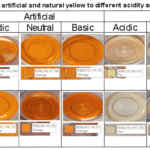 |
Table 2: Color response of artificial and natural yellow to different acidity and temperature conditions. Click here to View Table |
Table 2 shows the comparative color responses of artificial and natural yellow colorants under varying pH and temperature conditions. The artificial yellow colorant consistently exhibited an orange coloration across acidic, neutral, and basic conditions in both heated and unheated treatments. Minimal visual changes and relatively close RGB values were observed among treatments, indicating that the synthetic pigment possessed high stability against pH variation and thermal exposure. Synthetic food colorants are generally recognized for their superior physicochemical stability because they are chemically synthesized to resist degradation during food processing and storage operations. Their resistance to heat and pH changes makes them suitable for products requiring prolonged shelf life and consistent appearance.6
In contrast, the natural yellow colorant demonstrated noticeable color variations under different treatments. Under unheated conditions, the natural colorant appeared tan across acidic, neutral, and basic environments, with slight differences in RGB values. However, upon heating, greater changes became evident, particularly under basic conditions where the color shifted from tan to a more intense gold hue. These observations suggest that the natural pigment was more susceptible to changes induced by pH and temperature. Natural pigments are known to undergo structural modifications when exposed to environmental factors such as heat, acidity, alkalinity, oxygen, and light, resulting in visible changes in color intensity and hue.7
The pronounced color alteration observed in the heated-basic treatment of the natural yellow colorant may be attributed to pigment degradation or transformation reactions accelerated by alkaline and thermal conditions. Many natural pigments, including carotenoids and flavonoid-derived compounds, are sensitive to elevated temperatures and extreme pH levels, which can affect molecular stability and chromatic properties.8 The formation of a stronger golden coloration after heating may indicate concentration effects due to moisture loss or chemical transformation of pigment compounds during thermal exposure.
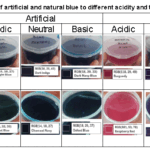 |
Table 3: Color response of artificial and natural blue to different acidity and temperature conditions. Click here to View Table |
Table 3 presents the color responses of artificial and natural blue colorants under varying pH (acidic, neutral, basic) and temperature (unheated and heated) conditions. The artificial blue colorant demonstrated high color stability across acidic, neutral, and basic conditions, even after heating, indicating strong resistance to pH- and temperature-induced degradation. This stability is consistent with synthetic dyes such as Brilliant Blue FCF (E133), which are widely used in food systems due to their high solubility, chemical stability, and resistance to processing conditions such as heat and pH variation.9,10
In contrast, the natural blue colorant exhibited pronounced color variability across treatments. Under unheated acidic conditions, the pigment appeared burgundy, suggesting a structural shift away from a stable blue chromophore. At neutral and basic conditions, the color transitioned to darker purple-blue tones, while heated samples showed further modification toward raspberry red under acidic conditions and deep teal under basic conditions. These observations indicate that the natural pigment is highly sensitive to environmental conditions, particularly pH and heat, which is characteristic of many plant-derived blue pigments such as anthocyanins and related compounds.
Anthocyanin-based colorants are known to undergo structural transformations depending on pH, shifting between flavylium cation, quinonoidal base, and chalcone forms, which result in visible color changes ranging from red in acidic conditions to blue or greenish hues under neutral to alkaline conditions.7,11 Thermal processing further accelerates degradation and polymerization reactions, leading to irreversible color changes and pigment breakdown. A recent review also highlights that natural blue pigments are generally unstable compared with synthetic dyes, particularly under heat and alkaline environments where color fading and structural degradation are commonly observed.12
The more stable performance of the artificial blue colorant aligns with findings that synthetic dyes are engineered for resistance to environmental stressors, including temperature fluctuations, pH variation, and oxidation. In contrast, natural pigments remain structurally sensitive, limiting their direct application in food systems without stabilization techniques such as encapsulation or pH control.6 The heated-basic condition in the natural sample, which produced a deep teal color, may indicate partial pigment transformation or degradation products with altered chromophoric properties rather than true pigment stability.
Overall, the results demonstrate a clear distinction between synthetic and natural blue colorants, where synthetic dyes provide consistent color performance, while natural pigments exhibit dynamic but less stable chromatic behavior. These findings reinforce the importance of pigment stability in food formulation and highlight the challenges of replacing synthetic blue colorants with natural alternatives in food systems.
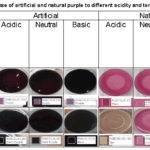 |
Table 4: Color response of artificial and natural purple to different acidity and temperature conditions. Click here to View Table |
The colorimetric behavior of artificial and natural purple colorants under varying pH and temperature conditions is presented in table 4. The artificial purple colorant exhibited relatively stable coloration across acidic, neutral, and basic environments in the unheated treatment, maintaining dark purple tones with only minor RGB variations. Even after heating, although slight darkening was observed (e.g., shift toward black under basic conditions), the overall chromatic identity remained largely consistent. This indicates that the synthetic purple dye possesses high resistance to thermal and pH-induced degradation, consistent with the engineered stability of synthetic food colorants used in food systems.6
In contrast, the natural purple colorant showed marked instability under both pH and thermal stress. In unheated conditions, the pigment ranged from plum to purple hues depending on pH, while heating caused significant degradation, especially under acidic and basic conditions, where the color shifted toward tan and brown tones. These changes suggest breakdown of the chromophoric structure of the pigment, leading to loss of conjugation and formation of degradation products. Anthocyanin-based pigments are well known to exhibit strong pH-dependent structural transformations, shifting between red, purple, and blue forms depending on the dominant molecular species present.7,11 However, these pigments are also highly susceptible to thermal degradation, particularly under prolonged heating, which accelerates pigment breakdown and browning reactions.
The pronounced discoloration of the heated natural purple sample (tan to brown) is consistent with anthocyanin degradation pathways involving polymerization and formation of brown pigments under thermal and alkaline conditions. Such instability limits their direct application in food systems without stabilization strategies such as encapsulation or pH control.11
Furthermore, across all color systems evaluated (yellow, blue, and purple), a consistent trend was observed in the differential stability of natural versus synthetic colorants under variations in pH and thermal treatment. Synthetic colorants demonstrated comparatively stable chromatic behavior across acidic, neutral, and basic conditions, with minimal perceptible shifts in hue or intensity even after heating. This stability is attributed to their well-defined chemical structures and industrial formulation designed to resist degradation during food processing operations.6 In contrast, natural pigments exhibited pronounced variability in color expression, strongly influenced by environmental conditions. For instance, anthocyanin-based pigments in blue and purple samples showed pH-dependent structural transformations, where equilibrium among flavylium, quinonoidal base, and chalcone forms resulted in visible shifts from red to purple to blue tones.11,13 However, these same structural features also contribute to their instability, as thermal exposure accelerates pigment breakdown and formation of brown degradation products.7. Similarly, carotenoid-based yellow pigments such as β-carotene are prone to oxidative and thermal degradation, leading to loss of color intensity and structural isomerization under processing conditions.14,15 Overall, the findings highlight that while natural pigments offer desirable aesthetic and consumer-perceived health advantages, their limited stability under processing stresses remains a key challenge. Conversely, synthetic dyes provide consistent performance across variable conditions, reinforcing their continued use in food systems. These results further demonstrate the value of flexible-learning laboratory activities in enabling students to directly observe fundamental pigment chemistry principles, particularly the relationship between molecular structure, environmental conditions, and visible color expression.
Quantitative Analysis of Color Change through %SRGB
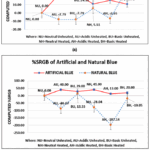 |
Figure 1: Quantitative Analysis of Digital Colorimetric Variations %sRGB of Food Colorants Under Diverse Chemical and Thermal Processing Conditions. |
(Note: NU = %Neutral Unheated; AU = Acidic Unheated; BU = Basic Unheated; NH = Neutral Heated}; AH = Acidic Heated; BH = Basic Heated. Error bars represent the standard deviation of independent triplicate measurements, n = 3.)
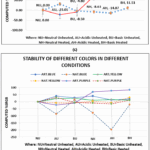 |
Figure 2: (Continued). Quantitative Analysis of Digital Colorimetric Variations %sRGB of Food Colorants Under Diverse Chemical and Thermal Processing Conditions. Click here to View Figure |
(Note: NU = %Neutral Unheated; AU = Acidic Unheated; BU = Basic Unheated; NH = Neutral Heated}; AH = Acidic Heated; BH = Basic Heated. Error bars represent the standard deviation of independent triplicate measurements, n = 3.)
The %sRGB responses of synthetic and natural food colorants under varying pH and thermal conditions are shown in Fig. 1. Distinct differences were observed in the chromatic stability and responsiveness of the tested pigments.
Among all treatments, the synthetic blue colorant (Figure 1b) exhibited the most stable profile. Positive %sRGB shifts were consistently observed across acidic (40%), basic (29%), neutral heated (41%), acidic heated (13%), and basic heated (20%) conditions. Although reductions occurred after heating under acidic and alkaline environments, the values remained within a relatively narrow positive range, indicating strong resistance to environmental stress. Synthetic blue dyes such as Brilliant Blue FCF possess highly stabilized aromatic structures that maintain chromatic integrity across wide pH and temperature conditions.6
In contrast, the natural blue colorant demonstrated the highest instability among all pigments tested. Acidic conditions caused a substantial negative shift (−86.67%), which became more pronounced after heating (−197.14%). Even under neutral heated conditions, a strong reduction (−78.04%) was observed. Only the unheated basic treatment showed partial recovery (13.33%). These findings indicate extreme sensitivity of the natural blue pigment to acidic and thermal conditions. Such behavior is characteristic of anthocyanin-based pigments, which undergo structural transformations depending on pH. Acidic conditions favor formation of the flavylium cation, while heat accelerates degradation and pigment breakdown, resulting in substantial color loss.7,11
The synthetic yellow colorant in Figure 1a displayed relatively moderate and stable positive %sRGB values across all treatments, ranging from 10.72% to 24.51%. The highest response was observed under basic unheated conditions (24.51%), while thermal exposure slightly reduced the magnitude of change. Compared with the blue and purple synthetic systems, the yellow synthetic dye exhibited the narrowest variation range, suggesting comparatively stable chromatic behavior under environmental stress. Synthetic azo dyes are generally formulated for color consistency and thermal stability in processed food systems.16
The natural yellow colorant showed minimal variation under acidic and basic unheated conditions (−7.79%), indicating low initial pH responsiveness. However, a substantial positive shift was observed under heated alkaline conditions (30.23%), representing the largest response within the natural yellow system. Since annatto powder was used as the natural yellow pigment source, this behavior may be associated with thermal and alkaline instability of carotenoid compounds such as bixin and norbixin. These pigments are susceptible to oxidation and structural alteration under elevated pH and temperature conditions, resulting in modified color expression.17
The synthetic purple colorant demonstrated the strongest positive thermal response among all synthetic pigments. While unheated acidic and basic treatments produced slight negative shifts (−23.01% and −8.59%, respectively), heating caused a progressive increase in %sRGB values, reaching 69.94% under neutral heated conditions, 78.53% under acidic heated conditions, and 84.66% under basic heated conditions. This trend suggests that thermal exposure significantly altered the chromatic intensity of the synthetic purple blend while maintaining a predictable response pattern.
Conversely, the natural purple colorant exhibited localized pH sensitivity with comparatively smaller overall variation. The highest positive shift occurred under acidic unheated conditions (31.41%), whereas the remaining treatments remained close to baseline values (−14.87% to 11.51%). This behavior is consistent with anthocyanin-rich purple pigments, which display halochromic properties characterized by reversible color changes in response to pH variation.13,18 Compared with the natural blue pigment, the natural purple system exhibited lower thermal degradation, suggesting possible stabilization through acylation or co-pigmentation effects commonly observed in purple plant extracts.
Overall, synthetic colorants exhibited narrower and more predictable %sRGB variation across treatments, indicating greater chromatic stability under pH and thermal stress. In contrast, natural pigments demonstrated broader fluctuations and stronger environmental responsiveness due to the chemically reactive nature of anthocyanin- and carotenoid-based systems. Despite lower stability, the pronounced colorimetric responsiveness of natural pigments provides valuable educational applications in flexible-learning laboratory activities by allowing direct visualization of halochromism, pigment degradation, and environmental effects on food color chemistry.
Conclusion
This study evaluated the colorimetric responses of natural and synthetic food colorants under varying pH and thermal conditions using digital image colorimetry (%sRGB) within a flexible-learning laboratory setup. The findings demonstrated that synthetic food colorants generally exhibited greater chromatic stability across environmental treatments, while natural pigments showed higher sensitivity to pH and temperature changes. Natural blue and purple pigments displayed pronounced halochromic behavior and thermal susceptibility characteristic of anthocyanin-based systems, whereas the annatto-derived natural yellow pigment showed notable responsiveness under alkaline heated conditions. In contrast, the synthetic dyes maintained comparatively stable and predictable colorimetric profiles throughout the treatments.
The study further demonstrated the applicability of digital image colorimetry as an accessible analytical approach for home-based and flexible-learning laboratory activities. Using readily available materials and consumer-grade imaging devices, the experiment successfully converted observable color changes into measurable quantitative data. This approach provides an effective strategy for demonstrating food chemistry concepts such as pigment stability, halochromism, and thermal degradation in decentralized learning environments.
Acknowledgement
The authors would like to express their sincere gratitude to the Nueva Ecija University of Science and Technology for its continued support of research initiatives and faculty development.
Funding Sources
The authors received no financial support.
Conflict of Interest
The authors declare that there is no conflict of interest regarding the publication of this research.
Data Availability
This treatment does not apply to this article
Ethical Approval
This research did not involve human participants, animal subjects or any material that requires ethical approval
References
- Rui-Ying, C., & Christina, G. International Journal of Contemporary Hospitality Management, 2020, 32(12), p. 3925–3947
CrossRef - Singh, T., Pandey, V.K., Dash, K.K, Zanwar, S.R., Singh, R., J. Agri. Food Res. 2023, 12, p. 100628
CrossRef - Affat, S. University of Thi-Qar J. Sci. 2021, 8(1) p. 130-135
- Duldulao, D., Orient. J. Chem, 2023, 39(4) p. 851-856
CrossRef - Calvert, R., Andolino, C., Running, C., Dept. Nut. Sci. Open Educational Resources, 2020, p. 69-70
- Sigurdson, G.T., Tang, P. and Giusti, M.M., Annu. Rev. Food Sci. Tech., 2017, 8, p. 261-280.
CrossRef
- Khoo, H.E., Azlan, A., Tang, S.T. and Lim, S.M., Food Nutr. Res., 2017, 61(1), 1361779.
CrossRef
- Lavelli, V. and Sereikaitė, J., Foods, 2022, 11(3), p. 437.
CrossRef
- Bişgin, A.T., J. AOAC Int., 2019, 102(1), p. 181–188.
CrossRef
- Lipskikh, O.I., Korotkova, E.I., Barek, J., Vyskocil, V., Saqib, M. and Khristunova, E.P., Talanta, 2020, 218, 121136.
CrossRef
- Castañeda-Ovando, A., Pacheco-Hernández, M. L., Páez-Hernández, M. E., Rodríguez, J. A. and Galán-Vidal, C. A., Food Chem., 2009, 113(4), p. 859–871.
CrossRef
- Neves, M.I.L., Silva, E.K. and Meireles, M.A.A., Trends Food Sci. Tech., 2021, 112, p. 163–173.
CrossRef
- He, J. and Giusti, M.M., Annu. Rev. Food Sci. Tech., 2010, 1, p. 163–187.
CrossRef
- Qian, C., Decker, E.A., Xiao, H. and McClements, D.J., Food Chem., 2012, 132, p. 1221–1229.
CrossRef
- Knockaert, G., Pulissery, S.K., Lemmens, L., Van Buggenhout, S., Hendrickx, M. and Van Loey, A., J. Agric. Food Chem., 2012, 60, p. 10312–10319.
CrossRef
- Downham, A. and Collins, P., Int. J. Food Sci. Technol., 2000, 35(1), p. 5–22
CrossRef - Scotter, M.J., Food Addit. Contam., 2009, 26(9), p. 1220–1237
CrossRef - Giusti, M.M. and Wrolstad, R.E., Curr. Protoc. Food Anal. Chem., 2003, F1.2.1–F1.2.21.
- Rodriguez-Amaya, D.B., Biology and Technology, Wiley-Blackwell, 2016, 328 pp.
- Amchova, P., Kotolova, H. and Ruda-Kucerova, J., Regul. Toxicol. Pharmacol., 2015, 71(1), p. 96–104.
 PlumX:
  Views: 559 Views
  PDF Downloads: 139
 Second Review by: Dr. Diksha Rawat
Final Approval by: Dr. Ayssar Nahle


ISSN Online: 2231-5039