Development of a Novel CMC/f-GO-Glu Composite for Heavy Metal Remediation: Antioxidant, Antimicrobial, and Adsorption Studies
 , G. Lavanya2, T.N. Balaji3, Z. Ansar Ali4, P. Supriya Prasad5, and P.N. Sudha6*
1Department of Chemistry, Government Polytechnic College, Nagapadi, Tiruvannamalai, Tamil Nadu, India.
2Department of Chemistry, Saveetha Engineering College, Thandalam, Chennai, Tamil Nadu, India.
3Department of Chemistry, PERI Institute of Technology, Mannivakkam, Chennai, Tamil Nadu, India
4Department of Chemistry, C. Abdul Hakeem College, Melvisharam, Tamil Nadu, India.
5Department of Chemistry, Muthurangam Government Arts College, Vellore, Tamil Nadu, India.
6Department of Physiology, Saveetha Dental College and Hospitals, Saveetha Institute of Medical and Technical Sciences (SIMATS), Saveetha University, Chennai, Tamil Nadu, India
Corresponding Author E-mail:drparsu8@gmail.com
DOI : http://dx.doi.org/10.13005/ojc/420408
Download this article as:

The present study focuses on the development of a carboxymethyl chitosan-functionalized graphene oxide (CMC/f-GO-Glu) composite for the enhanced removal of heavy metals like copper and chromium from aqueous solutions. Graphene oxide (GO) was synthesized using a modified Hummers' method and further functionalized with carboxylic acid groups. The CMC/f-GO-Glu composite was prepared by crosslinking carboxymethyl chitosan with functionalized graphene oxide using glutaraldehyde. The synthesized composite was characterized using FT-IR, XRD, and SEM techniques. The adsorption capacity of the CMC/f-GO-Glu composite towards copper and chromium was investigated through batch adsorption studies under optimized conditions. The composite exhibited excellent antioxidant and antimicrobial properties. Batch adsorption experiments revealed that the adsorption of both metals was highly dependent on pH, adsorbent dosage, contact time, and initial metal ion concentration. The Freundlich isotherm model fit the equilibrium data quite well, indicating multilayer adsorption. The Freundlich isotherm model fit the equilibrium data quite well. The adsorption mechanism was found to be dominated by chemical interactions such as electrostatic forces and coordinate bonding, along with the influence of the composite's chemical structure and intermolecular interactions. Desorption studies confirmed the reusability of the CMC/f-GO-Glu composite without significant loss in adsorption efficiency. The results demonstrate the potential of the CMC/f-GO-Glu composite as an excellent adsorbent to extract heavy metals from aqueous solutions, with promising applications in environmental remediation.
KEYWORDS:Adsorption; Carboxymethyl chitosan; Composite; Graphene oxide; Heavy metals
Introduction
Water is vital to the existence and well-being of all life on Earth. However, many people worldwide suffer from a lack of potable water due to human activity-induced contamination1. When released directly into natural rivers and sewage systems, industrial effluent containing heavy metals as Ag, Sb, Cr, Cu, Pb, Zn, Co, and Ni has a detrimental effect on aquatic ecosystems2. According to Koester et al.3, these heavy metals harm humans, animals, and plants in several ways. Because heavy metals are found throughout the food chain, removing them from water bodies is essential because they can harm both humans and the environment.
As a result, removing heavy metals from water that has been contaminated has been the subject of numerous studies4. Numerous techniques have been used in the in-depth research on heavy metal removal technology in aqueous solutions to date. Among the modern methods are coagulation, adsorption, membrane filtration, electrodialysis, oxidation, biological treatment, ion exchange, and photocatalysis5. Adsorption is regarded as one of the most prominent and extensively applied heavy metal removal strategies out of all of them. This method’s benefits include its low cost, simplicity, convenience of use, and neutrality to toxic contaminants and dangerous substances6. High adsorption capacity, reusability, affordability, and porosity adjustment would be the material’s ideal characteristics. One of the prospective options created from various polymeric materials for purification of water is bio-based materials, which have the capacity to optimize various properties like dispersibility, hydrophobicity, porosity, surface area, and mechanical strength.
Materials based on graphene are now among the most sought-after materials in recent years because of their special qualities. The substance known as graphene is made up of a single-atom-thick carbon sheet that is organized hexagonally and is sp2-bonded. Another way to define graphene is as a single, sp2-hybridized, hexagonally organized layer of graphite7. In contrast, the highly oxygenated monolayer graphite oxide is called graphene oxide (GO). that is produced when graphene undergoes oxidation and exfoliation8. Chemically modified with functional groups comprising nitrogen and oxygen, graphene is the thinnest nanomaterial, consisting of a layer of graphite that is only one atom thick9. For this investigation, graphene underwent chemical alteration, such as oxidation, to become graphene oxide.
Strong acids like H2SO4 and HNO3 can be used to oxidize graphite powerfully, adding various oxygenated functional groups, including carboxylic, hydroxyl, and epoxy groups, to create graphene oxide (GO)10. These groups decorate the basal plane and the margins of graphene oxide layers in the graphite structure, which increases the gap between the layers and renders the material hydrophilic (i.e., soluble in water). In addition, GO is well recognized for being very hydrophilic, meaning that it dissolves readily in aqueous solutions11. Heavy metal ions exhibit surface complexation with graphene oxide, which improves their adsorption. Graphene oxide-chitosan composites exhibit exceptional mechanical properties and stability when utilized in wastewater adsorption treatment12.
Although the maximum interaction between the heavy metals and the aqueous solution is ensured by GO’s hydrophilicity, it also makes it challenging to separate the adsorbents based on GO from the treated water following adsorption. Furthermore, GO’s adsorption capacity is primarily limited by its small number of functional groupings on the surface13 and propensity to aggregate during adsorption, both of which degrade GO’s performance14. To overcome its shortcomings, GO was modified utilizing a variety of other materials, and in recent years, the approach has been gaining interest. During oxidation, every carbon atom in graphene is changed into -COOH, -C-O-C- (epoxy), and -OH at the edges15. It is also responsible for its high thermal stability and conductivity, unusual optical performance, extraordinary electronic16, electron transport capabilities17, and higher chemical reactivity with higher interplanar distance18. Hybridization of carbon changes from sp2 to sp3, resulting in numerous negatively charged oxygen-oriented groups on the monolayer carbon by preventing them from aggregating19.
According to Huang et al.20, chitin, the second most prevalent naturally occurring biopolymer found in the exoskeleton of crustaceans, undergoes incomplete alkaline N-deacetylation to produce chitosan, a natural polysaccharide. Made from naturally occurring polysaccharide chitosan, carboxymethyl chitosan (CMC) has primary amino, hydroxyl, and carboxyl groups, which is a substitute for chitosan since it is insoluble in water2.
Zhang et al.21 described a porous GO/carboxymethyl cellulose adsorbent that was effective in adsorbing Ni2+ and was made by a unidirectional freeze-drying technique. Zaman et al.22 created a GO/MCC nanocomposite adsorbent by combining GO with microcrystalline cellulose (MCC) produced from leftover jute by modifying Hummers’ method. Thus, it is anticipated that cellulose and hyperbranched polymers may enhance GO’s adsorption capabilities by surface grafting23.
The primary objective of the project is to prepare functionalized graphene oxide-based composites for the examination of their potential applications in the environmental and biomedical domains. The primary focus of the current work is the improved Hummers’ method for synthesizing graphene oxide. Using potent acids, a carboxylic acid group functionalized the produced graphene oxide. Therefore, the f-GO-based composite, which consists of functionalized graphene oxide made with carboxymethyl chitosan and crosslinked with glutaraldehyde (GA), was employed as a material that can be used to remove heavy metals like copper and chromium through adsorption. FT-IR, XRD, and SEM with EDX studies were used to characterize the produced composites. Through batch adsorption tests conducted under ideal conditions, the adsorption capacity of the produced CMC/f-GO-Glu composite towards heavy metals such as copper and chromium from the aqueous solutions was investigated.
Materials and Methods
Materials
India Sea Foods, located in Cochin, Kerala, India, provided the carboxymethyl chitosan. Graphite, glutaraldehyde, potassium dichromate, copper sulphate from MPM Scientific Company, Vellore. Analytical grade compounds were all that were used.
Methodology
Synthesis of functionalized Graphene Oxide
GO was developed by modifying Hummer’s method with graphite powder24. In an ice bath, five milliliters of cold 98% sulfuric acid were used to dissolve one gram of graphite powder. After stirring the liquid below 20°C for 5 minutes, 4 grams of KMnO4 were added progressively over the next 20 minutes. After an hour, the reaction was maintained at 35 °C for 30 minutes. 50 milliliters of deionized water were then progressively added to the reaction mixture. After 20 minutes of reaction time at 98 °C, the solution was further diluted to 200 mL with deionized water. Five milliliters of 30% H2O2 were added to get rid of any remaining KMnO4 and MnO2. The final product was then continuously cleaned four times using deionized water and a 5% HCl solution. For 10 hours at 70°C, the resultant GO (yield 89%) was vacuum-dried in an oven.
Functionalization of Graphene Oxide
Ten milligrams of graphene oxide were utilized for functionalization. Seven of the ten milligrams were added to thirty milliliters of sulfuric acid, and the remaining three milligrams were added to ten milliliters of HNO3 (3:1 ratio, thirty milliliters of sulfuric acid and ten milliliters of nitric acid). After properly mixing the mixture and letting it sit for ten minutes, the supernatant was centrifuged and decanted. When the pH reached 7, the residue was continually washed with distilled water and used as f-GO.
Preparation of Carboxymethyl Chitosan/f-Graphene Oxide-Glu Composite
The carboxymethyl chitosan was dissolved in water to a minimum of one gram. Additionally, 0.5 g of functionalized graphene oxide was dissolved in water at the same interval. The solutions were thoroughly mixed separately for around 20 minutes using a magnetic stirrer. The carboxymethyl chitosan was placed in a beaker and gradually mixed with the stirred functionalized graphene oxide solution. After adding 5 mL of glutaraldehyde as the crosslinking agent, the resultant mixture was once again magnetically agitated for roughly two hours before being allowed to air dry in a Petri dish. Numerous characterization investigations were conducted on the dehydrated composite.
Characterisation
Fourier Transform Infra-red Spectroscopy
The SHIMADZU FT-IR Spectrometer, which has a range of 400–4000 cm–1, was used to record the Fourier transform infrared spectrophotometer (FT-IR) spectrum.
X-ray Diffraction Analysis
The Ni filter Cu Kα radiation source (λ=0.154nm) was used to capture the X-ray diffraction pattern. The D8 ADVANCE Diffractometer was operated with a voltage of 30 kV and a current of 40 mA.
Scanning Electron Microscopy with EDX
To confirm that the polymers were compatible, the surface morphology of the composites was examined using scanning electron microscopy. The topography was studied with a TESCAN, VEGA3-SBH, with a tungsten filament.
Antimicrobial Activity
The resultant composites’ antibacterial effectiveness was evaluated in comparison to two gram-negative and one gram-positive bacterial strains namely E. Coli, Klebsiella pneumoniae, Escherichia coli, Klebsiella pneumoniae, Staphylococcus aureus, Bacillus cereus, and Pseudomonas aeruginosa, utilizing the Muller Hinton Agar (MHA) medium and the disc diffusion method, along with antifungal activity against Aspergillus niger, Rhizopus sp., Mucor sp., and Candida albicans using Sabouraud Dextrose Agar in the present research work.
Antioxidant Activity
Antioxidants have an important role in preventing diseases. Therefore, the DPPH radical scavenging method was used in the current work to assess the antioxidant property of the composite.
DPPH Scavenging Activity
The antioxidant activity of the composite was examined using the DPPH scavenging experiment. The absorbance of DPPH at 517 nm was used to determine the developed composite’s ability to scavenge radicals. The absorbance decreases as a result of the sample scavenging the DPPH by donating hydrogen atoms to develop a stable DPPH complex, when the color changes. A control is a DPPH solution devoid of a sample.
The following formula determined the percentage of inhibition (I%) of free radical generation from DPPH.

Where, Ac – Absorbance of the control
As – Absorbance of the sample solution
Heavy metal chromium and copper removal from an aqueous solution using CMC/f-GO-Glu Composite by Batch Adsorption studies
Batch experiments utilizing CMC/f-GO with crosslinking agent glutaraldehyde composite were conducted using solutions of potassium dichromate and copper sulphate with predetermined starting metal concentrations. The metal solutions were placed in stoppered bottles and shaken at a steady 210 rpm at 30°C in an orbital shaker. By altering the initial concentration of metal ions, contact time, pH, and adsorbent dose, the extent of metal removal was examined individually. Following each treatment step, the adsorption of the heavy metals was investigated using Varian AAA 220 FS Atomic Absorption Spectroscopy.
The metal’s adsorption process under ideal Initial metal ion concentration, adsorbent dose, pH, and contact time were all investigated. The data was fitted to both the Langmuir and the Freundlich isotherms. The formula for the Langmuir equation is
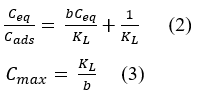
where
Cads are the metal ion adsorbed quantity (mg/g).
Ceq is the metal ion’s equilibrium concentration in solution (mg/dm3). The Langmuir constant, or KL, is represented in dm3/g.
b = Langmuir constant (dm3/mg)
The highest amount of metal ions that can bind to an adsorbent is expressed as Cmax (mg/g). The Freundlich equation used is expressed as:
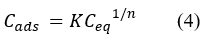
The Freundlich equation was expressed in a linearized form.

where
Cads are the amount of metal ions adsorbed (mg/g).
Freundlich constant (mg.g-1) is represented by 1/n, and Ceq is the equilibrium concentration in solution (mg/dm3).
K = Freundlich constant (g.dm-3)
By conducting a different set of the adsorption at constant temperatures to monitor the adsorption over time, the kinetics of the adsorption process could be investigated. The pseudo-first- and pseudo-second-order models can be used to quantitatively calculate and assess the adsorption rate.
Pseudo-first-order (PFO) equation

Pseudo-Second-order (PSO) equation

The adsorption of pseudo-first order and pseudo-second order kinetics are represented by the expressions qe and qt, respectively, and K1 (min-1) and K2 (g mg-1 min-1) are the amounts of metal adsorbed (mg/g) at equilibrium at time t (min).
The PFO and PSO models are represented in the linear charts by tracing log (qe – qt) versus t and (t/qt) versus t, respectively. The visualization of the experimental data yields the rate constants k1 and k2.
Intraparticle diffusion (IPD) Kinetics
The equation for intraparticle diffusion is expressed as follows.
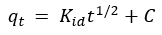
where Kid is the IPD rate constant (mg/g min1/2) and C is the intercept. Plotting qt vs t 1/2 allowed for getting Kid and C values based on the slope and intercept.
Desorption Studies
Following the completion of the adsorption process, a desorption research was also conducted for the composites loaded with copper and chromium. 1N HCl was used as the desorbing agent in the desorption experiments. The 0.5 g of the metal-loaded adsorbent was weighed and treated with 1N HCl, shaken well for 1,2,3,4, and 5 hours, and filtered. AAS experiments were then used to determine the metal concentration in the filtrate.
Results and Discussion
The effectiveness of carboxymethyl chitosan (CMC) and functionalized graphene oxide crosslinked with glutaraldehyde in removing copper and chromium heavy metals was investigated in this work using batch adsorption techniques.
Fourier Transform Infrared spectroscopy
The infrared (IR) spectroscopy data, Figures 1 and 2 for both Carboxymethyl Chitosan (CMC) and modified adsorbent material CMC/f-GO-Glu composite, confirmed their respective structures.
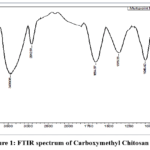 |
Figure 1: FTIR spectrum of Carboxymethyl Chitosan (CMC). Click here to View Figure |
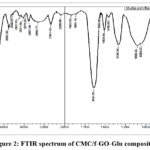 |
Figure 2: FTIR spectrum of CMC/f-GO-Glu composite Click here to View table |
A broad band in the 3000–3600 cm-1 range revealed the presence of hydroxyl groups in the case of unmodified carboxymethyl chitosan. It was discovered that the O-H group buried the N-H stretching vibration group, which is also found as a strong peak but shifted due to the interaction between the constituent materials, such as f-GO and glutaraldehyde25. Additionally, the carbonyl (C=O) stretches of a carboxyl group (R-COO-) typically appear as a very sharp band in the range of 1760-1690 cm⁻¹. Following cross-linking, all functionalized GO plots show the modest new C-O stretch that occurs in the 1000–1300 cm−1 range, indicating the functionality of esters. These patterns are explained by the effective control of the functionalized GO’s physico-chemical characteristics26.
XRD Studies
The crystalline and amorphous properties of the samples, as well as the particle size, are confirmed by X-ray diffraction investigations.
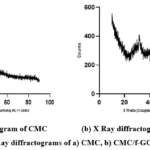 |
Figure 3: X Ray diffractograms of a) CMC, b) CMC/f-GO/Glu composite Click here to View Figure |
Table 1: X-ray diffraction results of a) CMC, b) CMC/f-GO/Glu composite
|
Polymer blend |
2-theta | (Xc %) |
| Carboxymethyl chitosan | 18º, 22° |
22.3 |
|
CMC/f-GO/Glu composite |
29°, 42° |
7.6 |
The X Ray diffractograms and details of plain CMC and CMC/f-GO-GLU composite are presented in Figures 3a and b, and Table 1, respectively. According to Nara and Komiya27, the resultant composite, crosslinked with glutaraldehyde, was found to be exceedingly amorphous when compared to plain carboxymethyl chitosan when the percentage of crystallinity was measured for both samples (Table 1). This may be because the typical ordered semi-crystalline structure is disrupted by the high binding ability of CMC and f-GO to the crosslinking agent glutaraldehyde28.
BET Analysis
A material’s surface area and pore volume are crucial factors to take into account when assessing it for adsorption applications. Using the BET method, a N2 sorption isotherm was performed at 25 °C for both plain CMC and the CMC/f-GO-Glu composite. The surface area of the CMC/f-GO-Glu composite was 98.4 m2 g-1, while that of the carboxymethyl chitosan was 21.20 m2g-1. The pores’ size reduced from larger to smaller (34.5 to 17.20 nm) due to the increased surface area of the CMC/f-GO-Glu composite. The pore volume increased from 1.022 cc/g to 3.12 cc/g in comparison to pure CMC, suggesting that the CMC/f-GO-Glu composite exhibited favorable surface properties29. This demonstrates that a reduced pore size and increased surface area result in greater sorption efficacy. Consequently, this CMC/f-GO-Glu composite is an appropriate adsorbent for the removal of copper and chromium heavy metals.
SEM analysis
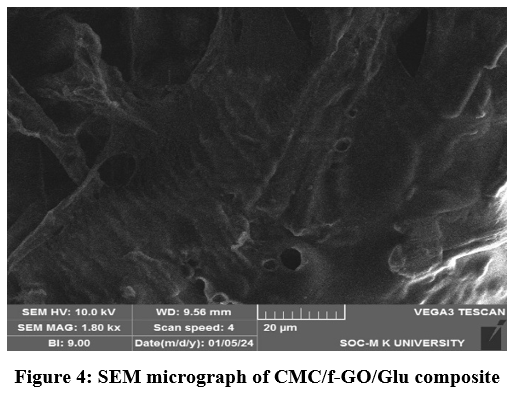 |
Figure 4: SEM micrograph of CMC/f-GO/Glu composite Click here to View Figure |
An extremely rough surface and an uneven porous morphology with irregular forms and numerous fissures and holes were visible in the CMC/f-GO/Glu composite’s SEM picture (Figure 4). The surface’s suitability for adsorption is demonstrated by its roughness. A homogeneous distribution of f-GO in CMC, which is extensively crosslinked by glutaraldehyde, is indicated by the particles’ compact packing and lack of obvious agglomeration30.
Antioxidant Activity (AOA)
The 2,2-diphenyl-1-picrylhydrazyl (DPPH) method was used to assess the glutaraldehyde crosslinked CMC/f-GO-Glu composite’s capacity to scavenge free radicals. The prepared composite’s various concentrations were plotted against the percentage AOA (Figure 5).
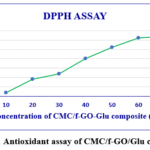 |
Figure 5: Antioxidant assay of CMC/f-GO/Glu composite Click here to View Figure |
Figure 5 indicates that the antioxidant activity rose from 62% to 90% when the composite’s concentration increased from 10 mg/mL to 70 mg/mL. A hydrogen transfer mechanism powers the DPPH scavenging process. Strong and promising antioxidants are chitosan and its derivatives31. Metal chelation and free radical scavenging are accomplished by this polymer’s NH2 and OH functional groups32. Chitosan’s potent ability to donate hydrogen has demonstrated its antioxidant properties. By stopping the oxidation chain reaction, chitosan’s antioxidant effect shields the target organism from damage brought on by oxidative stress33,34.
Antimicrobial Activity
Antibacterial Activity
Five different bacteria, including E. Coli, Klebsiella pneumoniae, Escherichia coli, Klebsiella pneumoniae, Staphylococcus aureus, Bacillus cereus, and Pseudomonas aeruginosa, were used to investigate the antibacterial activity of the produced CMC/f-GO-Glu composite. The common antibacterial drug ciprofloxacin was chosen as a standard. The degree of antibacterial activity was measured as a zone of diameter and plotted as Figure 6.
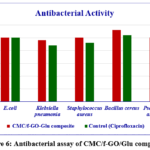 |
Figure 6: Antibacterial assay of CMC/f-GO/Glu composite Click here to View Figure |
It is clear from Figure 6’s antibacterial activity that the developed composite outperformed the drug ciprofloxacin in terms of antibacterial activity, demonstrating the composite’s potent biological qualities. This efficacy is probably caused by the protonation of chitosan’s amino groups in an acidic environment, which raises the amount of positively charged chitosan molecules present. Microbial growth is inhibited, and cell wall rupture occurs as a result of these positively charged chains’ interaction with the negatively charged surfaces of microbial cells35. The bacterial cell wall may be harmed by the protonation of the amino groups in chitosan36.
It is well known that a negatively charged cell membrane is attracted to positively charged chitosan, which interferes with the movement of materials within the cell. Additionally, oligomeric chitosan may be able to enter cells and prevent DNA transcription37. Chitosan diffuses directly into the bacterial cell wall of Gram-positive bacteria due to the lack of an outer membrane38,39. This may help to explain the notion that chitosan works better against Gram-positive bacteria than Gram-negative ones.
Antifungal Activity
According to several studies, chitosan has remarkable antifungal qualities against a wide variety of molds and yeasts40. Hence, the antifungal activity of the prepared composite of carboxymethyl chitosan with f-graphene oxide was evaluated, and the results are plotted in Figure 7. The amphotericin B drug was chosen as the standard and compared for its activity the composite against different species.
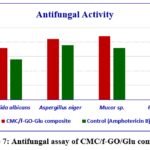 |
Figure 7: Antifungal assay of CMC/f-GO/Glu composite Click here to View Figure |
The findings demonstrate that the CMC/f-GO/Glu composite’s antifungal activity was significantly greater than that of amphotericin B, the conventional drug. This demonstrates the strong antifungal activity of the CMC compound against Aspergillus niger, Rhizopus sp., Mucor sp., and Candida albicans. The theory states that the fungal cell membrane’s negatively charged phospholipids and positively charged chitosan can interact, damaging the membrane and allowing the chitosan to enter the cytoplasm. The literature has demonstrated that chitosan exhibits potent antifungal activity against fungi that are susceptible to it41. According to Qin et al.42, chitosan’s antifungal properties are generally thought to be fungistatic rather than fungicidal, and they are very successful in preventing spore germination, radial expansion, and germ tube elongation.
Adsorption Studies
To adsorb heavy metal ions, the composite adsorbent has a variety of functional groups, such as carboxyl, hydroxyl, and amino groups, which can offer an active binding site. The diverse architectures of the adsorbents make the adsorption mechanism extremely complex. The quantity of available active binding sites, the pollutant’s affinity for the adsorbent surface, and the existence of a range of functional groups that can interact acceptor-donor with the heavy metal ions are the variables that influence the effective adsorption onto the surface of biosorbents. To determine the equilibrium conditions, which are detailed below, adjustments are made to the initial metal ion concentration, contact time, adsorbent dosage, and pH.
Effect of pH
An essential factor in the adsorption process is pH. pH has a significant impact on the adsorption of Cr(VI) and Cu(II) ions. The percentage removal of metal ions with respect to the change in pH from 3 to 8 has been recorded in Figure 8.
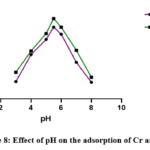 |
Figure 8: Effect of pH on the adsorption of Cr and Cu Click here to View Figure |
It is observed that as the pH increases from 3 to 5.5, it starts lowering from 6 to 8. Thus, in the acid medium, the adsorption capacity of the sorbent increased up to 5.5, which reduced up to 8. Lower pH causes the protonation of imine groups on the adsorbent surface, or active sites. As a result, the protonated groups and the metal cations experience electrostatic repulsions that prevent the metal ions from adhering and, as a result, lowers the uptake of metal ions43. Depending on the ionic concentration and pH of the solution, the several anionic forms of Cr (VI), specifically for chromium, manifest in the aqueous phase as Cr2O72−, HCrO4−, CrO42−, and HCr2O7−. The primary fraction is HCrO4− at low concentrations in the pH range of 2–4, whereas the concentration of the CrO42− moiety increases as the pH value rises and becomes the predominant form at pH > 7.044. Superior chromium removals at low pH are supported by HCrO4– ions, and the protonated sites of the sorbent interact electrostatically. However, the adsorption capability diminishes at higher pH values because the OH− ion competes for the protonated sites with the oxyanions of Cr(VI) (HCrO4− and CrO42−). Free imine groups are accessible on the adsorbent for ion adsorption at higher pH values. Additionally, free carboxylic acid groups are transformed into carboxylate ions at higher pH values, making them accessible for metal ion adsorption45. Similarly, at high pH, copper precipitates as Cu(OH)2, which lowers the ability of both metal ions to adsorb.
Effect of adsorbent dose
The adsorption of chromium and copper was tested with various adsorbent dosages, and the adsorption percentage of metals is plotted against the dosages and presented in Figure 9.
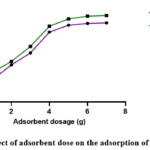 |
Figure 9: Effect of adsorbent dose on the adsorption of Cr and Cu Click here to View Figure |
The percent of adsorption is very high, to the extent of above 60%, for both the metals with the adsorbent dose of 1gm of CMC/f-GO/Glu composite. This further increases with the rise of the adsorbent dosage of up to 5 gms. From there onwards, there is only a very shallow increase, showing that the equilibrium has been reached (Figure 9). Thus, the figure demonstrates that increasing the adsorbent dose increases the total surface area provided for an example adsorption procedure, which is an essential feature for this type of method. Both the number of active sites and the percentage of adsorption that may be accomplished are improved by increasing the amount of adsorbent. The adsorption capacity further decreases when the driving power decreases because some of the adsorbent’s active sites fill up. This is because adsorption sites become saturated when the dose of adsorbent is increased, while the concentration of Cr and Cu and solution volume remain unchanged 46. Zhan et al.48 and Senturk et al.47 reported similar findings.
Effect of contact time
One of the factors influencing batch adsorption tests is adsorption time. In order to ascertain the composite’s effectiveness in removing Cr(VI) and Cu(II) ions from the aqueous solutions, the study varied the contact duration between the adsorbent and adsorbate from 60 to 480 minutes, as shown in Figure 10.
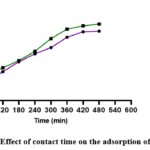 |
Figure 10: Effect of contact time on the adsorption of Cr and Cu Click here to View Figure |
The percentage removal of both copper and chromium grew rapidly at the start of adsorption, but after 180 minutes, the trend slowed. As a result, the copper and chromium ions quickly attached to CMC/f-GO-Glu. The adsorbed quantity of the two metal ions showed almost no change after around 360 minutes, indicating that equilibrium had been established49.
Effect of Initial Metal Ion Concentration
Metal aggregation at the boundary through the solid/liquid segments is a feature of the mass relocation process called “metal ion removal.” As a result, while maintaining other parameters constant, the effect of the start metal quantity has been examined by varying its concentration from 50, 100, 200, 500, and 100 mg L-1. (Figure 11).
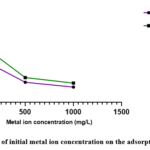 |
Figure 11: Effect of initial metal ion concentration on the adsorption of Cr and Cu Click here to View Figure |
The percentage elimination of both metal ions decreased as the starting metal concentration rose from 50 mg/L to 1000 mg/L. (Figure 11). This decrease is caused by the fact that all adsorbents have a set number of active sites that become saturated at larger doses50. Since the majority of contaminated wastewaters often contain varying quantities of metal ions, determining the impact of the starting concentration of metal ions is essential for a comprehensive adsorption study51.
Adsorption Isotherms
The quantity required to remove a pollutant mass under the system setting is known as the adsorbent capacity, which is revealed by the equilibrium data, sometimes referred to as adsorption isotherms, which are fundamental parameters for designing the adsorption systems52. The Freundlich and Langmuir isotherm models were used to assess the equilibrium sorption data. A monolayer adsorption onto an adsorbent surface that has a limited quantity of identical sorption sites is described by the Langmuir isotherm53. The Freundlich model is used on heterogeneous surfaces for non-ideal sorption54.
Figure 12 (a & b), 13 (a & b), and Table 1 present the Langmuir and Freundlich adsorption isotherm details for the metals chromium and copper on CMC/f-GO-Glu composite.
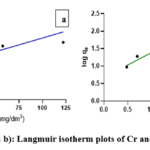 |
Figure 12: (a & b): Langmuir isotherm plots of Cr and Cu adsorption Click here to View Figure |
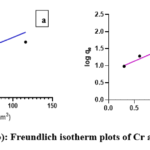 |
Figure 13: (a & b): Freundlich isotherm plots of Cr and Cu adsorption Click here to View Figure |
Table 2: Langmuir and Freundlich isotherm constants
|
Metal ions |
Langmuir constants | Freundlich constants | |||||
| KL
(dm3/g) |
b | Cmax | R2 | KF | n |
R2 |
|
|
Cr (VI) |
2.404424 | 0.00795 | 302.4804 | 0.8582 | 4.7544 | 1.40885 | 0.9514 |
| Cu (II) | 3.018412 | 0.01148 | 262.8812 | 0.8254 | 6.4165 | 1.52906 |
0.953 |
From the Table 2 and Figures 12 & 13 it is very clear that the adsorption of both chromium and copper followed Freundlich adsorption isotherm confirming the multilayer adsorption and the nature of linkages are influenced more by physisorption than by chemisorption. Hence, among various linkages like π-π interaction, H bonding, Van der Waals forces, etc, are more pronounced than the coordinate type of bond and electrostatic interactions.
Adsorption Kinetics
Adsorbate–adsorbent interactions have been described using a variety of kinetic models. The Lagergren pseudo-first-order rate equation is typically used when adsorption occurs before diffusion via a boundary layer5. Therefore, these adsorbents’ adsorption mechanism cannot be described by pseudo-first-order kinetics. Several authors56 have shown that the kinetics of adsorption onto solids are pseudo-second-order. The development of chemisorptive bonds, which the pseudo-second-order model considers to be the rate-limiting stage, involves the electron sharing or exchange between the adsorbent and the adsorbate.
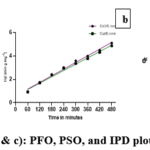 |
Figure 14: (a, b & c): PFO, PSO, and IPD plots of Cr and Cu Click here to View Figure |
Table 3: PFO, PSO, and IPD kinetic parameters
|
Metal ions |
Pseudo-first-order kinetic model | Pseudo-second-order kinetic model | Intraparticle diffusion model | ||||||
| k1
(min-1) |
qe
(mg/g) |
R2 | k2
(g mg-1 min-1) |
qe
(mg/g) |
R2 | Kid | I |
R2 |
|
|
Cr (VI) |
-0.01049 | 107.15 | 0.7927 | 0.0001509 | 105.09722 | 0.9927 | 2.435 | 42.18 | 0.9908 |
| Cu (II) | -0.00920 | 92.897 | 0.884 | 0.0001341 | 111.0124 | 0.9895 | 2.591 | 43.18 |
0.974 |
The CMC/f-GO-Glu composite’s kinetic investigation of metal ion uptake was carried out utilizing feed solutions for both metals with starting ion concentrations of 200 ppm. The experimental adsorption rate and the linear fits of the different kinetic models and the different kinetic parameters derived from these fits are shown in Figure 14 and Table 3, respectively. The PSO kinetic model effectively represented the adsorptive behavior of both Cu2+ and Cr6+ metal ions onto the CMC/f-GO-Glu composite, according to the R2 value determined for the kinetic model fits.
Mechanism of adsorption
The existence of functional groups that contain nitrogen and oxygen on CMC/f-GO-Glu composite offers more metal ion binding sites by means of complexation or coordination processes57. By stabilizing the adsorbed species, hydrogen bonding interactions between metal ions and functional groups on the composite can further aid in the adsorption process. Although the adsorption of heavy metals onto the composite seems to be dominated by chemical interactions, including coordination bonding and electrostatic forces, the chemical structure and intermolecular interactions of the composite with the metals, including oxygen-containing functional groups, van der Waals forces, and hydrogen bonding, may also play significant roles58. To completely understand the impact of these interactions on the adsorption of heavy metals on the composites and to look into the precise contributions of these interactions, further investigation is required.
Desorption Studies
The reusability of CMC/f-GO-Glu composite was evaluated based on its desorption efficiency. The experiment on desorption was conducted during different periods of time and the results are displayed in Figure 15.
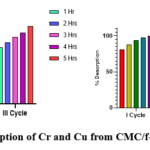 |
Figure 15: Desorption of Cr and Cu from CMC/f-GO-Glu composite Click here to View Figure |
The findings show that the developed CMC/f-GO-Glu composite is highly regenerable and should be used frequently in metal ion adsorption investigations with minimal adsorption efficiency loss9. As an extension of the recently reported study, the CMC/f-GO-Glu composite might be employed in a recirculating fluidized bed column that continuously extracts heavy metal ions from their aqueous streams. Hydrodynamics studies could be conducted as needed, and operating parameters might be optimized using response surface methodology.
Acknowledgment
The authors acknowledge the Instrumentation Center, VIT University, for providing analytical facilities.
Funding Sources
The author(s) received no financial support for the research, authorship, and/or publication of this article.
Conflict of Interest
The author(s) do not have any conflict of interest.
Data Availability Statement
This statement does not apply to this article.
Ethics Statement
This research did not involve human participants, animal subjects, or any material that requires ethical approval.
References
- Pan, S.; Zhang, X.; Qian, J.; Lu, Z.; Hua, M.; Cheng, C.; Pan, B. Nanoscale, 2017, 9(48), 19154–19161.
CrossRef - Luo, J.; Fan, C.; Xiao, Z.; Sun, T.; Zhou, X. Colloids Surf. A Physicochem. Eng. Asp. 2019, 578, 123584.
CrossRef - Koester, C. J.; Simonich, S. L.; Esser, B. K. . Anal. Chem.2003, 75(12), 2813-2829.
CrossRef - Shorie, M.; Kaur, H.; Chadha, G.; Singh, K.; Sabherwal, P. Hazard. Mater.2019, 367, 629-638.
CrossRef - Carolin, C. F.; Kumar, P. S.; Saravanan, A.; Joshiba, G. J.; Naushad, M. Environ. Chem. Eng.2017, 5(3), 2782-2799.
CrossRef - Zhang, Y.; Peng, W.; Xia, L.; Song, S. Environ. Chem. Eng.2017, 5(4), 4157-4164.
CrossRef - Eigler, S.; Hirsch, A. Angew. Int. Ed. 2014, 53(30), 7720-7738.
CrossRef - Ramesh, S.; Khandelwal, S.; Rhee, K. Y.; Hui, D. J Comp B. 2018, 138, 45-54.
CrossRef - Rajesh, A.; Mangamma, G.; Sairam, T. N., Subramanian, S.; Kalavathi, S.; Kamruddin, M.; Dash, S. Sci. Eng. C. 2017, 76, 203-210.
CrossRef - Goenka, S. Control. Release. 2014, 173, 75-88.
CrossRef - Huang, Q.; Chen, Y.; Yu, H.; Yan, L.; Zhang, J., Wang, B.; … Xing, L. Chem. Eng. 2018, 341, 1-9.
CrossRef - Al-Gethami, W.; Qamar, M. A.; Shariq, M.; Alaghaz, A. N. M.; Farhan, A.; Areshi, A. A.; Alnasir, M. H. RSC Adv.2024, 14(4), 2804-2834.
CrossRef - Kong, Q.; Wei, J.; Hu, Y.; Wei, C. Hazard. Mater. 2019, 363, 161-169.
CrossRef - Sitko, R.; Turek, E.; Zawisza, B.; Malicka, E.; Talik, E.; Heimann, J.; … Wrzalik, R. Dalton Trans. 2013,42(16), 5682-5689.
CrossRef - Wen, C.; Zhan, X.; Huang, X.; Xu, F.; Luo, L.; Xia, C. Coat. Technol. 2017, 317125-133.
- Yu, P.; Bao, R.Y.; Shi, X.J.; Yang, W.; Yang, M.B. Polym. 2017, 55, 507-515.
CrossRef - Suk, J.W., Piner, R.D., An, J. and Ruoff, R.S. ACS Nano. 2016, 4, 6557-6564.
CrossRef - Weng, W.; Nie, W.; Zhou, Q.; Zhou, X.; Cao, L.; Ji, F.; Cui, J.; He, C.; Su, J. RSC Advan. 2017, 72753-72765.
- Yao, C. Zhu, J.; Xie, A.; Shen, Y.; Li, H.; Zheng, B.; Wei, Y. Mat Sci Eng C-Mater. 2017, 73, 709-715.
CrossRef - Huang, Q.; Li, G.; Chen, M.; Dong, S. Colloids Surf. A Physicochem. Eng. Asp.2018, 554, 27-33.
CrossRef - Zhang, Y.; Liu, Y.; Wang, X.; Sun, Z.; Ma, J.; Wu, T.; … Gao, J. Polym. 2014, 101, 392-400.
CrossRef - Zaman, A.; Orasugh, J. T.; Banerjee, P.; Dutta, S.; Ali, M. S.; Das, D.; … Chattopadhyay, D. Polym. 2020, 246, 116661.
CrossRef - Liu, Z.; Wang, Q.; Huang, X.; Qian, X. ACS Omega, 2022, 7(13), 10944-10954.
CrossRef - Panwar, V.; Chattree, A.; Pal, K. PHYSICA E.2015, 73, 235-241.
CrossRef - Ibrahim, H. K.; Abdul Ridha, A. A.; Allah, M. A. A. H. J. Biol. Macromol. 2024, 262, 129730.
CrossRef - Mafamadi, M.; Etale, A.; Daramola, M. O. Today Proc. 2024,105, 201-208.
CrossRef - Nara, S.; Komiya, T.J.S.S.Starch ‐ Stärke, 1983, 35(12), 407-410.
CrossRef - Galan, J.; Trilleras, J.; Zapata, P.A.; Arana, V.A.; Grande-Tovar, C. D. Life, 2021, 11(2): 85.
CrossRef - Li, C.; Fi, J.; Zhang, T.; Zhao, S.; Qi, L. Compos Part B-Eng. 2023, 249, 110422.
CrossRef - Hamad, M. T. M. H.; Ibrahim, S. Rep. 2024, 14(1), 11767.
CrossRef - Kusnadi, K.; Purgiyanti, P.; Kumoro, A. C.; Legowo, A. M. Biodiversitas Biol. Divers. 2022, 23 (3).
CrossRef - Aranaz, I.; Alcántara, A. R.; Civera, M. C.; Arias, C.; Elorza, B.; Heras Caballero, A. Polymers, 2021,13 (19), 3256.
CrossRef - El-Araby, A.; Janati, W.; Ullah, R.; Ercisli, S.; Errachidi, F. Chem. 2024, 11, 1327426.
CrossRef - Muthu, M.; Gopal, J.; Chun, S.; Devadoss, A. J. P.; Hasan, N.; Sivanesan, I. 2021, 10 (2), 228.
CrossRef - Li, J.; Fu, J.; Tian, X.; Hua, T.; Poon, T.; Koo, M.; Chan, W. Polym. 2022, 280, Article 119031.
CrossRef - Qian, L.; Jia, R.; Zhao, Q.; Sun, N.; Yang, J.; Wen, J.; … Qin, Z. Food Res Int. 2025, 208, 116269.
CrossRef - Ji, X.; Guo, J.; Ding, D. et al. Food Meas. Charact. 2022, 16, 2191–2200
CrossRef - Duan, C.; Meng, X.; Meng, J.; Khan, Md. I. H.; Dai, L.; Khan, A.; et al. Bioresour. Bioprod.,2019, 4 (1), 11–21.
CrossRef - Wang, W.; Meng, Q.; Li, Q.; Liu, J.; Zhou, M.; Jin, Z.; et al. J. Mol. Sci., 2020, 21 (2), 487.
CrossRef - Bernabé, P.; Becherán, L.; Cabrera-Barjas, G.; Nesic, A.; Alburquenque, C.; Tapia, C. V. Biol. Macromol, 2020, 149, 962–975.
CrossRef - Azmana, M.; Mahmood, S.; Hilles, A. R.; Rahman, A.; Arifin, M. A. B.; Ahmed, S. Int. Biol. Macromol, 2021,185, 832–848.
CrossRef - Qin, Y.; Li, P.; Guo, Z. Polym.2020, 236, 116002.
CrossRef - Saravanan, R.; Ravikumar, L. Water Sci. Technol.2016,74(8), 1780-1792.
CrossRef - Qin, C.; Du, Y.; Zhang, Z.; Liu,Y.; Xiao, L.; Shi, X. Appl. Polym. Sci.2003, 90(2), 505-510.
CrossRef - Schneckenburger, T.; Riefstahl, J.; Fischer, K. Sci. Eur. 2018, 30, 1-15.
CrossRef - Asgari, G.; Ramavandi, B.; Rasuli, L.; Ahmadi, M. Desalin Water Treat. 2013, 51(31-33), 6009-6020.
CrossRef - Senturk, H. B.; Ozdes, D.; Gundogdu, A.; Duran, C.; Soylak, M. Hazard. Mater.2009, 172(1), 353-362.
CrossRef - Zhan, Y.; Lin, J.; Zhu, Z. Hazard. Mater.2011, 186(2-3), 1972-1978.
CrossRef - El-Sayed, G. O.; Dessouki, H. A.; Ibrahiem, S. S. J. Anal. Sci. 2011, 15(1), 8-21.
- Martinez, M.; Miralles, N.; Hidalgo, S.; Fiol, N.; Villaescusa, I.; Poch, J. Hazard. Mater.2006, 133(1-3), 203-211.
CrossRef - Akpomie, K. G.; Dawodu, F. A.; Adebowale, K. O. Eng. J. 2015, 54(3), 757-767.
CrossRef - Peery, R.; Green, D. Perry’s Chemical Engineers Handbook, seventh ed., McGraw-Hill, New York, USA,
- Langmuir, I. Am. Chem. Soc. 1918, 40(9), 1361-1403.
CrossRef - Freundlich, H. Über die adsorption in lösungen. Z. Phys. Chem. 1907, 57(1), 385-470.
CrossRef - Singh, D. B.; Prasad, G.; Rupainwar, D. C.; Singh, V. N. W, A & S Pollution.1988, 42, 373-386.
CrossRef - Sharmila, K.; Srinivasan, L.; Vijayalakshmi, K.; Alshalwi, M.; Alotaibi, K. M.; Sudha, P. N.; … Deepa, M. Biomass Convers Biorefin. 2024, 1-16.
- Gunashekar, S.; Abu-Zahra, N. Porous Mater.2016, 23, 801-810.
CrossRef - Cao, F.; Lian, C.; Yu, J.; Yang, H.; Li, S. Technol. 2019, 276, 211-218.
CrossRef - Pavithra, S.; Thandapani, G.; Sugashini, S.; Sudha, P. N.; Alkhamis, H. H.; Alrefaei, A. F.; Almutairi, M. H. Chemosphere, 2021, 271, 129415.
CrossRef
 PlumX:
  Views: 504 Views
  PDF Downloads: 46
 Accepted on: 19 Jan 2026


ISSN Online: 2231-5039