Kinetic and Thermodynamic Analysis for the Transformation of Poorly Albite-kaolin from Gaya (Niger) into Metakaolin for Sodalite Synthesis
 , Mahamane Sani Ousmane 2, Seydou Yaou Zakariyaou3, Abdoulaye Dan Makaou Oumarou1and Benjamin Kouassi Yao1
1Laboratoire des Procédés Industriels de synthèse, de l’Environnement et des Energies nouvelles (LAPISEN), Institut National Polytechnique Félix Houphouët-Boigny, Yamoussoukro, Coté d’Ivoire
2Département Géoressources et Procédés, Ecole Nationale d’Ingénieries et des Sciences des Energies, Université d’Agadez, Agadez, Niger
3School of Chemistry and chemical Engineering, Central South University, Changsha, China
Corresponding Author Email: asouley2020@gmail.com
DOI : http://dx.doi.org/10.13005/ojc/420311
Download this article as:

Selecting the kaolin calcination temperature is critical for producing amorphous products while minimizing energy use. This study applied the Coats–Redfern model to analyze the kinetic and thermodynamic behavior of poorly-crystalline albite-kaolin from Gaya, Niger, identifying four distinct transformation phases. Phase 1 (45–337°C) involved dehydration with minimal mass loss (0.40%), moderate activation energy (Ea = 0.33 eV), and negative entropy (ΔS = -234.5 J/mol·K). Phase 2 (337–460°C) showed substantial mass loss (4.66%), slightly lower Ea (0.30 eV), and more negative ΔS (-243.0 J/mol·K), indicating increased structural ordering. Phase 3 (460–626°C) exhibited a comparable mass loss (4.42%) but distinct kinetics: thehighest Ea (0.50 eV),the least negative ΔS (-215.8 J/mol·K), and a 32-fold increase in thepre-exponential factor (A = 100.5 s⁻¹). Phase 4 (626–884°C) displayed minimal loss (1.05%), thelowest Ea (0.18 eV), and themost negative ΔS (-267.4 J/mol·K) during eutectic melt formation. Optimal sodalite crystallization occurs in Phase 3, where maximum reaction frequency aligns with active chemical transformation.
KEYWORDS:Albite-kaolin clay; Kinetic; Model of Coats; Red-fern; Sodalite; Thermodynamic
Introduction
Aluminosilicates are minerals composed of aluminum, silicon, oxygen and other elements such as sodium and calcium.1 Due to their physicochemical properties, abundance and low cost, Aluminosilicate clays have several industrial applications. They are used in the production of tiles, sanitary ware, heat resistant materials, catalysts, absorbents, paper, cosmetics and environmental protection.2-4 Kaolin, a type of aluminosilicate mineral, has several properties that influence its industrial applications.5 Kaolin’s chemical composition, thermal stability and plasticity make it a crucial component in ceramic production. Its whiteness, brightness and particule size make it anideal coating material for paper and paints. These properties to which one can add its surface area, porosity and acidity influence also its catalytic applications. Physicochemical properties of kaolin can vary depending on its deposition and location. Several kinds of minerals including quartz, Albite, Muscovite, orthoclase, halloysite, nacriteand dickite occur in natural kaolin.6 These impurities may influence the characteristics of kaolin and impair its utility for industrial applications such as ceramics paper and zeolite. Zeolites, encompassing various forms such as types A, Y, P, cancrinite, and sodalite, can be synthesized from either chemical precursors or natural kaolin. While synthesis using chemical precursors yields pure products, the process is costly, underscoring the need for affordable, abundant alternatives like kaolin. The transformation of kaolin into metakaolin is a crucial step in the synthesis of sodalite. Kaolin, a naturally occurring clay mineral, undergoes a thermal treatment process known as calcination to produce metakaolin, an amorphous aluminosilicate phase. To produce metakaolin, kaolin is typically calcined at temperatures between 500°C to 850°C, where dehydroxylation occurs, and the crystalline structure is transformed into an amorphous phase.7 Recently, Abdoul Aziz et al. synthesized sodalite via calcination of kaolin at 600°C.8 Multiple studies have demonstrated the synthesis of metakaolin at temperatures reaching up to 800°C.9-12 To date, no studies have investigated the kinetics and thermodynamics of kaolin-to-metakaolin transformation using the model of Coats -Redfern. The kinetics and thermodynamics of this transformation play a significant role in determining the properties of the resulting metakaolin and its suitability for sodalite synthesis. This study focuses on the kinetic and thermodynamic analysis of the transformation of kaolin from Gaya into metakaolin, with the aim of optimizing the calcination process for the production of high-quality metakaolin for sodalite synthesis. First, many characterization techniques were used to determine its physical, chemical and mineralogical properties. X-ray fluorescence (XRF) was used to determine the chemical composition including majorand minor elements.The mineralogical composition and crystal structure were investigated using the X-Ray Diffraction (XRD) technique.13 The thermal stability and mass loss were assessed using the Thermogravimetric Analysis. Then, to investigate the kinetic and thermodynamic behavior of this kaolin, the model of Coats-Redfern was employed to calculate the key parameters for each zone of mass loss section. The molecular structure and functional groups of Gaya kaolin assessed using Fourier Transform Infrared spectroscopy was used. Finally, the X-ray diffraction spectroscopy (XRD), the Fourier transform infrared spectroscopy (FTIR), the scanning electron microscopy (SEM) and were used to characterize the synthesized zeolite.
Materials and Methods
Kinetic and thermodynamic analysis
The thermal stabile and mass loss of the raw kaolin were assessed using thermogravimetric Analysis. To investigate the kinetic and thermodynamic behavior of the present sample, the model of Coats-Redfern was employed to calculate the key parameters for each zone previously discussed in the mass loss section. Assuming that all zone conversions are first-order reactions, the following equation and the constants of Planck and Boltzmann is used:

where
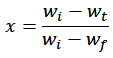
wi: initial weight,
wt: weight of sample at particular temperature T,
wf: final weight.
A: pre-exponential factor,
β: heating rate (10 °C/min),
R: gas constant (8.3143 J mol⁻¹ K⁻¹),
Ea: activation energy,
T: temperature (K) at the peak of the DTG curves.
The slope and intercept values of each zone were calculated from the plot of ln [-ln (1-x) ] versus 1000/T, then further used to calculate the apparent activation energy and other thermodynamic parameters listed in Table 4, such as thepre-exponential factor (A), Gibbs free energy (ΔG), Entropy Change (ΔS), and Enthalpy change (ΔH) [27,82,83,84].
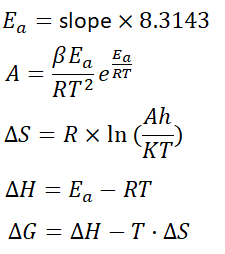
where K is Boltzmann’s constant (1.381 × 10⁻²³ J·K⁻¹), and is h Planck’s constant (6.626 × 10⁻³⁴ J·s).
Synthesis of sodalite
Sodalite was synthesized by first extracting the fraction less than 2 μm from the starting material using a centrifuge. The resulting product was then subjected to calcination at 620°C to produce metakaolin which contained quartz, orthoclase and albite as associated minerals. The fraction less than 2 μm from the starting material was subsequently treated with hydrochloric acid for 96 hours. The treated kaolin was calcined at 620°C to produce metakaolin without albite. The resulting metakaolin was mixed with sodium hydroxide and reacted in an autoclave at 200°C for 2 hours to produce sodalite. The obtained product was filtered, washed with distilled water to eliminate excess alkali.
Characterization of Gaya kaolin and the resulted products
In this study, the physicochemical properties of Bana kaolin, the resulting metakaolin and synthesized sodalite were investigated using several instrumental techniques: The chemical composition of the raw kaolin including major and minor elements,wasdetermined using the X-ray fluorescence (XRF) (Panalytical axios series Phillips). The mineralogical composition and crystal structure of Bana kaolin, the resulting metakaolin and synthesized sodalite were investigated using the Rigaku Miniflex X-Ray Diffraction. The Goniomer has Braggs Brentan geometry with 150 mm radius, and has a measurement range 2 theta of 2° to 145°. The x-ray source is a copper anode (λ Cu kα=1.5418 Å). The obtained sodalite was also characterized using the Fourier transform infrared spectroscopy (FTIR) and the scanning electron microscopy (SEM).
Results and discussion
DSC/TGA Analysis of Gaya Kaolin
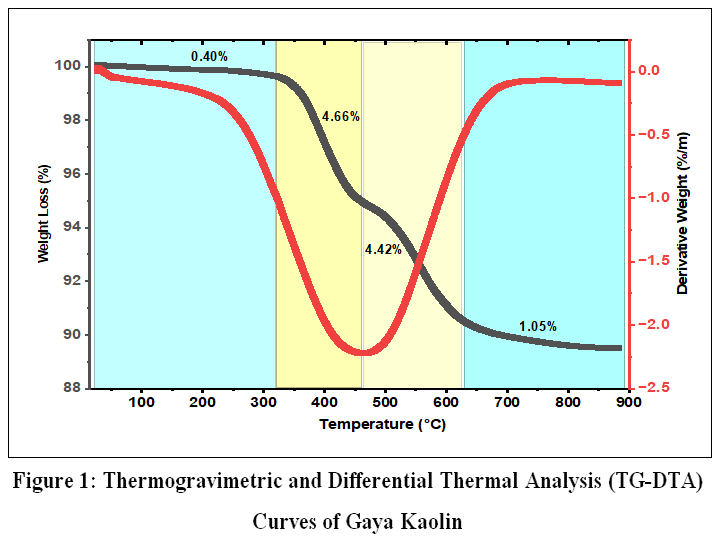 |
Figure 1: Thermogravimetric and Differential Thermal Analysis (TG-DTA) Curves of Gaya Kaolin Click here to View Figure |
The TGA–DTA curve of the kaolin sample heated from 30 to 950 °C at 10.00 °C/min is shown in Fig. 1. The first endothermic mass loss between 30–265 °C is due to the evaporation of adsorbed water. The maximum weight loss occurs above 580 °C. The dehydroxylation above 580 °C with a significant mass loss of around 11 % is due to the loss of structural water to produce disordered metakaolin (Al2Si2O7).14
Kinetic and thermodynamic analysis
The kinetic and thermodynamic parameters for metakaolin formation, combined with weight loss data (Fig.2), reveal a four-phase transformation mechanism with important insights for synthesis optimization. Phase 1 (45-337°C) shows minimal weight loss (0.40%) with moderate activation energy (0.33 eV) and negative entropy (ΔS = -234.5 J/mol·K), corresponding to dehydration and structural reorganization. Phase 2 (337-460°C) exhibits substantial weight loss (4.66%) with slightly decreased activation energy (0.30 eV) and more negative entropy (ΔS = -243.0 J/mol·K), indicating carbonate and hydroxide decomposition with chloride volatilization that increases order in the remaining solid matrix. Phase 3 (460-626°C) demonstrates comparable weight loss (4.42%) but distinctly different kinetic behavior: the highest activation energy (0.50 eV), the least negative entropy (ΔS = -215.8 J/mol·K), and a dramatically increased pre-exponential factor (A = 100.5 M·s⁻¹, a 32-fold increase over Phase 2). This combination indicates a pre-melt activated state where the system achieves maximum crystallization efficiency despite requiring substantial energy input, with active decomposition providing the chemical driving force. Phase 4 (626-884°C) shows minimal weight loss (1.05%) and the lowest activation energy (0.18 eV) as a sodium-aluminosilicate eutectic melt forms, but it has the most negative entropy (ΔS = -267.4 J/mol·K) and a severely reduced pre-exponential factor (A = 0.26 M·s⁻¹, a 387-fold decrease from Phase 3) reveal that despite enhanced diffusion in the melt, the entropic penalty for ordering from a fully disordered liquid severely hinders successful crystallization. The R² values for Phases 1-3 (0.9422-0.9585) validate the kinetic analysis, while the lower correlation in Phase 4 (0.7244) suggests greater mechanistic complexity (Table 1). These findings demonstrate that optimal sodalite crystallization will occur not in the fully developed melt but in the activated decomposition region (Phase 3), where maximum reaction frequency coincides with active chemical transformations. Indeed, the kaolin peaks heated at 460°C had considerably decreased, but a very weak intensity peak is observed at the 2θ position of 25.091°. At 620°C, all kaolin peaks have completely disappeared, indicating complete dehydroxylation and transformation into an amorphous phase (Fig 3).
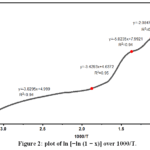 |
Figure 2: plot of ln [−ln (1 − x)] over 1000/T. Click here to View Figure |
Table 1: Kinetic and thermodynamic parameters summery
|
phase |
T°C | T°K | Ea J/mol | ΔS | ΔH | ΔG | A(M.s^-1) | R2 |
Loss |
|
1 |
45.46-337.14 | 538 | 31839.61 | -234.458 | 1.62E+08 | 1.62E+08 | 7.193767187 | 0.9422 | 0.40 |
| 2 | 337.14-460.12 | 823 | 28512.23 | -242.964 | 1.74E+08 | 1.74E+08 | 3.107426758 | 0.9585 |
4.66 |
|
3 |
460.12-626 | 1157.14 | 48418.33 | -215.755 | 3.62E+08 | 3.62E+08 | 100.5135959 | 0.9488 | 4.42 |
| 4 | 626-884.14 | 1157.14 | 17332.82 | -267.422 | 1.67E+08 | 1.67E+08 | 0.258869587 | 0.7244 |
1.05 |
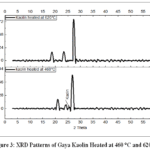 |
Figure 3: XRD Patterns of Gaya Kaolin Heated at 460 °C and 620°C Click here to View Figure |
Oxide composition of Gaya Kaolin
Table 2 summarizes the oxide composition of the studied clay. The material consists primarily of SiO₂ (52.06 wt%), Al₂O₃ (29.8 wt%), and H₂O (8.2 wt%), indicating a high kaolinite content. The SiO₂/Al₂O₃ ratio of 1.74 is close to that of commercial kaolin (1.69).15 The high SiO₂ and Al₂O₃ contents meet the requirements for applications in zeolites, pharmaceuticals, ceramics, porcelain, and paper coatings.Impurities such as Fe₂O₃ and TiO₂ influence mullitization kinetics and grain morphology. The Fe₂O₃ content of 4.96 wt% likely results from oxidation of Fe-bearing silicates like muscovite in the parent rock.16 XRF detects Fe incorporated via isomorphic substitution in clay structures, which is not observable by XRD. The overall composition is comparable to Tamazert kaolin (Algeria), previously evaluated as a substitute for commercial kaolin in mullite-based ceramics.17 Quartz and Fe impurities significantly affect zeolite formation and performance in detergent applications.18 High CaO content can clog pores and block active sites on the zeolite surface, therefore, CaO should be removed prior to synthesis. Na₂O, Cl, and TiO₂ are also present. Na and Cl are essential for stabilizing the sodalite structure during synthesis, while the low K₂O content originates from muscovite.
Table 2: Elemental composition of Gaya kaolin
| Oxide | SiO2 | Al2O3 | V2O5 | MnO | Fe2O3 | K2O | CaO | TiO2 | Cl | ZrO2 | H2O | Na2O |
| Percent (%) | 52.06 | 29.8 | 0.17 | 0.03 | 4.96 | 0.70 | 1.77 | 2.93 | 0.73 | 0.22 | 8.2 | 0.2 |
X-ray diffraction analysis of Gaya Kaolin the resulted metakaolin and the synthesized sodalite
The XRD pattern (Fig. 4) of the raw kaolin is dominated by kaolinite, with characteristic peaks at 2θ = 12.44°, 24.86°, 38.48°, and 62.32°. Quartz and albite are the main impurities, identified at 2θ = 21.38° and 26.88° for quartz. Albite likely formed through weathering of the parent rock and may exist either as the precursor that altered to kaolinite or as a minor associated phase.19 It influences kaolin properties such as particle size distribution, brightness, and rheology.During zeolite synthesis, albite contributes both silica and Na⁺ ions, which act as a structure-directing agent. However, it also competes with kaolin for Al, altering the Si/Al ratio. Heat treatment eliminated kaolinite peaks, while quartz and albite peaks remained unchanged, confirming their thermal stability.The synthesized product exhibits sodalite peaks at 2θ = 20.07°, 22.47°, 28.53°, 38.05°, and 42.11°, with only sodalite and residual quartz detected in the final pattern.
Table 3: 2θ Values for Kaolin, Quartz, and Sodalite
| Mineral | Kaolin | Quartz | Albite | Sodalite |
| 2 Theta | 12.678,
38.62, |
21.38,
26.878, |
35.40 |
14.01 20.07 24.54 31.78 38.05,
|
Fourier Transform Infrared Analysis of Gaya Kaolin
Table 4: FTIR band(cm-1) for Gaya kaolin and the resulting Sodalite
| Raw kaolin | Sodalite | |||
| Assignment | Band(cm-1) | mineral | Band(cm-1) | mineral |
| OH–for Al-OH and Si-OH | 3693.8 | kaolin | 3458.8 | Sodalite |
| Si–O-Si and Si-O-Al | 1002.7 | Kaolin, albite | 1036.2 | Sodalite |
| Surface of OH bends | 909.5 | Kaolin, albite | 913.2 | Sodalite |
| Si–O-Si bonds | 771.6 | Kaolin, albite | 775.3 | Sodalite |
| Bending vibration -OH | 1633 | Water adsorption | Sodalite | |
| Symmetry stretching vibration of T-O-T (T = Si of Al) | 682.1 | Sodalite | ||
| Si-O et Al-O | 689,6 | Kaolin, albite | Sodalite | |
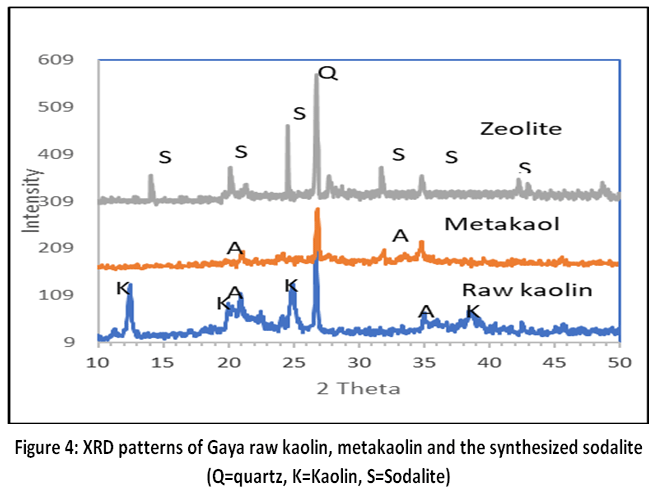 |
Figure 4: XRD patterns of Gaya raw kaolin, metakaolin and the synthesized sodalite (Q=quartz, K=Kaolin, S=Sodalite). |
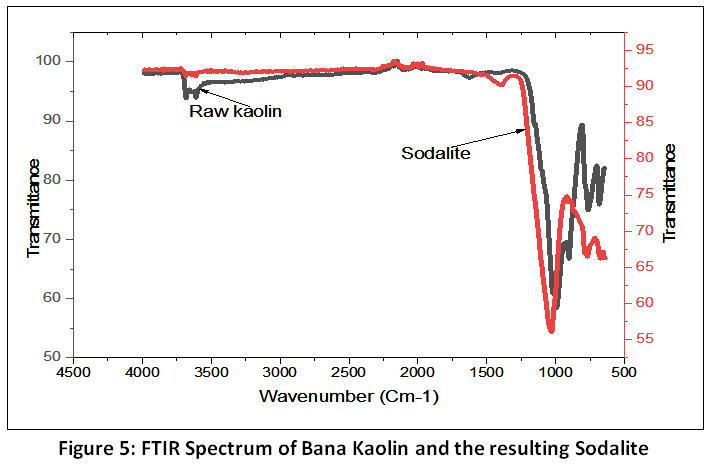 |
Figure 5: FTIR Spectrum of Bana Kaolin and the resulting Sodalite |
Fig. 5. shows the FTIR spectra of the raw kaolin. The FTIR peaks of Bana kaolin are summarized in Table 3. The FTIR spectrum of kaolin shows hydroxyl groups at 1633 and 3693.8 cm-1associated with adsorbed and interlayer water. The band at 909.5 cm⁻¹, near 910 cm⁻¹, corresponds to surface OH bending vibrations. In addition to adsorbed, interlayer, and structural water, kaolinite exhibits active surface groups including Al–OH and Si–O bonds.Si–O symmetric stretching appears in the 900–1200 cm⁻¹ region. The peak at 1002.7 cm⁻¹ is assigned to Si–O–Si and Si–O–Al lattice vibrations, while the band at 771.6 cm⁻¹ corresponds to Si–O–Al inner-surface vibrations. Vibrations between 600 and 800 cm⁻¹ are also observed; the peak at 689.6 cm⁻¹ is attributed toSi–O and Al–O modes. The weak band at 2102.2 cm⁻¹ is likely an artifact or background noise.For the synthesized sodalite, characteristic peaks occur at 682 cm⁻¹ (sodalite cage vibration), 775 cm⁻¹ (Si–O–Al vibration), 913 cm⁻¹ (Al–O vibration), 1036 cm⁻¹ (Si–O–Si vibration), and 3493 cm⁻¹ (O–H vibration).
Morphology of the synthesized sodalite
The EDX analysis (Fig.6.) of sodalite shows that the main detected elements are sodium (Na), aluminum (Al), silicon (Si), oxygen (O), and chlorine (Cl). The morphology of sodalite appears as aggregates of octahedral crystals characteristics of polycrystalline clusters of sodalite[8].
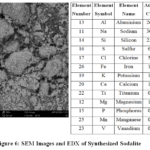 |
Figure 6: SEM Images and EDX of Synthesized Sodalite Click here to View Figure |
Conclusion
The kinetic and thermodynamic analysis of kaolin calcination from Gaya, Niger, reveals a four-phase transformation mechanism, highlighting the importance of optimizing calcination temperature for sodalite synthesis. The optimal conditions for sodalite crystallization occur in Phase 3 (460-626°C), where the highest activation energy and moderate entropy changes facilitate active chemical transformations, rather than in the fully developed melt phase. These findings provide valuable insights for optimizing the calcination process to produce high-quality metakaolin for efficient sodalite synthesis.
Acknowledgment
The authors would acknowledge Agadez University for facilitating the performance of this study in the laboratories of Genie de Procédés
Funding Sources
SONIDEP, SOS NIGER
Conflict of Interest
The author(s) do not have any conflict of interest.
Data Availability Statement
This statement does not apply to this article.
Ethics Statement
This research did not involve human participants, animal subjects, or any material that requires ethical approval.
Referencess
- Hartati; Prasetyoko, D.; Santoso, M.; Qoniah, I.; Leaw, W. L.; Firda, P. B. D.; Nur, H. A., J. Chin. Chem. Soc.,2020, 67 (6), 911-936.
CrossRef - Comin, A. B.; Zaccaron, A.; Saviatto, E.; Acordi, J.; Raupp-Pereira, F.; Abrantes, J. C. de C.; Ribeiro, M. J.; de Souza, G. S., J. South Am. Earth Sci.,2024, 148, 105157.
CrossRef - Al-Ameri, O. B.; Alzuhairi, M.; Bailón-García, E.; Carrasco-Marín, F.; Amaro-Gahete, J. Appl. Sci.,2024, 14 (19).
CrossRef - Mohammed, K. S.; Atlabachew, M.; Derbie, G. W.; Berhie, B. A.,JCIS Open,2025, 20, 100153.
CrossRef - Bahgaat, A. K.; Hassan, H. E.-S.; Melegy, A. A.; Abdel Karim, A.; Mohamed, M. H., Egypt. J. Chem.,2020, 63(10),3791–3800.
- Awad, A. M.; Shaikh, S. M. R.; Jalab, R.; Gulied, M. H.; Nasser, M. S.; Benamor, A.; Adham, S., Sep. Purif. Technol.,2019, 228, 115719.
CrossRef - Liu, Y.; Zhang, B.; Fahimizadeh, M.; Yu, T.; Ou, Z.; Peng, Z.; Yuan, P. Mechanical., Appl. Clay Sci.,2025, 271, 107796.
CrossRef - M.S. Abdoul Aziz,O.M. Sani, B.G. Henri Briton, A.K. Mahamane; Nassirou, and Y. K. Benjamin., Rasayan J. Chem., 2026, 19(1), 498-503.
CrossRef - Li, J.; Zeng, X.; Yang, X.; Wang, C.; Luo, X., Mater. Lett.,2015, 161, 157–159.
CrossRef - Bellucci, S.; Eid, M. H.; Fekete, I.; Péter, S.; Kovács, A.; Othman, S. I.; Ajarem, J. S.; Allam, A. A.; Abukhadra, M. R., Inorganics.,2023, 11 (1), 14.
CrossRef - Jang, K.; Nunna, V. R. M.; Hapugoda, S.; Nguyen, A. V.; Bruckard, W. J.;Minerals Engineering, 2014, 60, 14-22.
CrossRef - Céleri, E. P.; da Silva, C. C. M.; Lacerda Jr, V.; Barañano, A. G., Braz. J. Chem. Eng.,2025, 42 (2), 637-645.
CrossRef - Bahgaat, A. K.; Hassan, H. E.-S.; Melegy, A. A.; Abdel Karim, A.; mohamed, M. H., Egypt. J. Chem.,2020, 63 (10), 3791-3800.
- Wang, H.; Li, C.; Peng, Z.; Zhang, S. J.Q., Therm. Anal. Calorim.,2011, 105 (1), 157-160.
CrossRef - Zewdie, T. M.; Prihatiningtyas, I.; Dutta, A.; Habtu, N. G.; Van der Bruggen, B., Mater. Res. Express., 2021, 8 (11), 115201.
CrossRef - Sadli, N.; May, A.; Hamidouche, M.; Henniche, A.; Belhouchet, H.; Boudouh, H. Investigations on Kaolin Mixtures., Int. J. Appl. Ceram. Technol.,2024, 21 (6), 3950-3966.
CrossRef - Hartati; Prasetyoko, D.; Santoso, M.; Qoniah, I.; Leaw, W. L.; Firda, P. B. D.; Nur, H. A., J. Chin. Chem. Soc.,2020, 67 (6), 911-936.
CrossRef - Yunusa, A.; Hong, H.; Salim, A.; Amam, T.; Liu, C.; Xu, Y.; Zuo, X.; Li, Z., Minerals.,2024, 14 (9).
CrossRef - Li, S.; He, H.; Liang, X.; Tao, Q.; Ji, S.; Yang, M.; He, Y.; Zeng, Q.; Yang, Y.; Zhu, J., ACS Earth Space Chem.,2022, 6 (4).
 PlumX:
  Views: 755 Views
  PDF Downloads: 1026
 Accepted on: 18 May 2026


ISSN Online: 2231-5039