Synthesis and Characterization of Nano-Fertilizers for Improved Nutrient Delivery in Crops
 , Dilip Kumar Chaurasiya2, Alpa Yadav3, Reena Hooda4, Bhabani Shankar Bishoyi5, Indra Jeet6, Jince Mary M Joy7, Dipika Sahoo8
1Department of Soil Science and Agricultural Chemistry, Bihar Agricultural University, Sabour, Bhagalpur, Bihar, India.
2Faculty of Agricultural sciences, GLA University, Mathura, Uttar Pradesh, India
3Department of Botany Indira Gandhi University,Meerpur, Rewari (Haryana), India.
4Department of computer Science and Engineering, Indira Gandhi University,Meerpur, Rewari (Haryana), India.
5College of Agriculture (OUAT), Chiplima, Sambalpur, Odisha, India.
6ICAR-RCER, KVK, Ramgarh, Jharkhand, India.
7On Farm Research Centre, Onattukara Regional Agricultural Research Station, Kayamkulam, Kerala Agricultural University, Kerala, India
8College of Horticulture, Odisha University of Agriculture and Technology, Bhubaneswar, Odisha.
Corresponding Author E-mail: amitpandeybau@gmail.com
DOI : http://dx.doi.org/10.13005/ojc/420314
Download this article as:

Traditional fertilizer application methods suffer from fundamental inefficiencies—including leaching, volatilization, and fixation processes—leading to remarkably poor nutrient utilization rates (30–50% for nitrogen, <20% for phosphorus) that compromise agricultural sustainability while exacerbating environmental deterioration. This investigation presents the development, thorough characterization, and agricultural assessment of four nano-fertilizer systems engineered to address these constraints: nanohydroxyapatite (nHA) for phosphorus delivery, chitosan-urea-tripolyphosphate nanoparticles (CS-U-TPP) for nitrogen supply, biosynthesized zinc oxide nanoparticles (ZnO NPs) utilizing Azadirachtaindica leaf extract for zinc provision, and PLGA-derived polymeric nanoparticles containing encapsulated micronutrient combinations (Fe, Cu, Mn, B). Each formulation was effectively produced through commercially viable techniques (wet chemical precipitation, ionic gelation, biosynthesis, and double-emulsion solvent evaporation) and extensively analyzed employing DLS, SEM/TEM, XRD, FTIR, TGA/DSC, and ICP-MS methodologies. The resulting nanoparticles demonstrated desirable physicochemical characteristics: hydrodynamic dimensions spanning 32.6 ± 4.1 nm (ZnO) to 198.3 ± 15.7 nm (PLGA-micronutrient), beneficial surface potentials (-22.4 to +32.5 mV), and diverse morphological features encompassing rods (nHA), spheres (CS-U-TPP, PLGA), and hexagonal platelets (ZnO). Crystallite dimensions determined through Scherrer equation analysis measured 21.3 nm for nHA and 18.7 nm for biosynthesized ZnO, with the latter exhibiting enhanced dimensional control relative to chemically produced counterparts. FTIR analysis validated effective functionalization, encompassing chitosan-TPP crosslinking (1155 cm⁻¹), phosphate integration within nHA (563, 602, 1032 cm⁻¹), and phytochemical stabilization of ZnO nanoparticles (1620 cm⁻¹, C=O stretching). TGA demonstrated improved thermal resistance for encapsulated nutrients, with urea decomposition temperatures elevating from 135°C (pure form) to 180-280°C within CS-U-TPP, validating effective encapsulation.
KEYWORDS:Controlled release; Chitosan nanoparticles; Green synthesis; Nano-fertilizer; Nutrient use efficiency; Nanohydroxyapatite; PLGA encapsulation; Slow-release kinetics
Introduction
The pursuit of sustainable agricultural intensification to nourish an expanding global population has been persistently impeded by the fundamental inefficiencies inherent in traditional fertilizer application methods. Conventional fertilizers, whether granular or soluble, experience significant losses that compromise both economic feasibility and environmental responsibility.1,2 The primary obstacles encompass leaching, whereby water-soluble nutrients including nitrates and potassium are swiftly transported beyond the root zone through precipitation or irrigation, thereby polluting.3,4 groundwater and surface water systems; volatilization, which poses particular difficulties for nitrogen-containing fertilizers such as urea, where ammonia gas is released to the atmosphere prior to crop nutrient uptake; and phosphorus immobilization, wherein phosphate ions combine with calcium, iron, or aluminum in soil to create insoluble compounds inaccessible to plants. These mechanisms collectively produce exceptionally poor utilization efficiency,5,6 frequently calculated at merely 30–50% for nitrogen, below 20% for phosphorus, and 40–50% for potassium. The implications transcend economic loss: aquatic ecosystem eutrophication, greenhouse gas production (particularly nitrous oxide),7,8 soil acidification, and the energy-demanding manufacture of synthetic fertilizers compound the carbon footprint of contemporary agriculture. Addressing these escalating challenges, the early twenty-first century marked the advent of nanotechnology as a revolutionary framework in agricultural science. Through material engineering at the nanoscale (generally 1–100 nm), researchers have accessed physicochemical characteristics—including exceptionally high surface area-to-volume ratios, adjustable surface charge, quantum confinement phenomena, and enhanced reactivity—that differ fundamentally from bulk materials. Nanotechnology’s introduction to agriculture represented more than gradual improvement;9,10 it offered to transform nutrient delivery through biological transport mechanism emulation and exploitation of nano-specific interactions with plant structures, soil particles, and microbial ecosystems.11,12 Consequently, nano-fertilizers emerged: agrochemical products engineered to encapsulate, adsorb, or integrate essential plant nutrients within nanoscale carriers, thereby overcoming the diffusion-constrained and precipitation-susceptible destiny of traditional formulations.13,14 Understanding nano-fertilizer scope requires precise definition and systematic categorization. Nano-fertilizers are characterized as materials possessing at least one nanometer-range dimension that provide15,16 one or more nutrients to plants, either through the nanomaterial directly (such as nutrient nanoparticles) or through nanoscale coatings, matrices, or emulsions that regulate release dynamics.17,18 They are generally classified into three intersecting categories according to nutrient type and structural design. The initial category includes macronutrient nano-fertilizers, which supply primary elements nitrogen (N), phosphorus (P), and potassium (K) in nanoforms. Illustrations include nanoparticulate urea (wherein urea undergoes milling or nano-encapsulation in polymers to retard hydrolysis), nano-apatite (a hydroxyapatite variant with nanorod structure that gradually releases phosphate), and nano-potassium compounds or potassium-containing nanoclays.19,20 These preparations address rapid macronutrient solubilization and leaching through reservoir mechanisms: nutrient ions are discharged incrementally as the nano-matrix deteriorates or concentration gradients promote diffusion. The second category includes micronutrient nano-fertilizers, focusing on essential trace elements including zinc (Zn), iron (Fe), copper (Cu), manganese (Mn), and boron (B).21,22 Traditional micronutrient salts frequently become inaccessible due to pH-dependent precipitation or organic matter binding.
Nanocarriers with phloem mobility (such as carbon dots and functionalized dendrimers) possess the capability to transport from foliage to root systems, facilitating subsurface nutrient distribution. This precise delivery approach limits exposure to non-target species and decreases overall application quantities, reducing fertilizer requirements by 50–75% while preserving or enhancing crop productivity.39,40 Additionally, certain nano-fertilizers demonstrate “intelligent” targeting through surface modification with binding molecules (such as lectins or folic acid) that attach to particular root or foliar receptors, thereby improving uptake effectiveness. These combined mechanisms—gradual release controlled by nanoconfinement, regulated release activated by biological cues, and directed delivery mediated by nano-biological interactions—constitute a fundamental transformation from traditional diffusion-dependent nutrient management toward precision, responsive delivery systems.41,42 The consequences for worldwide agriculture are significant: reduced eutrophication, decreased greenhouse gas emissions from fertilizer decomposition, lowered production costs for farmers, and improved crop durability. As investigations advance to refine production techniques (environmentally friendly synthesis pathways, scalability evaluations) and clarify extended soil–nanoparticle relationships, nano-fertilizers are positioned to establish themselves as fundamental components of advanced sustainable agriculture, directly confronting the inefficiencies that have characterized traditional methods for generations.43,44
The theoretical foundations of nano-agrochemicals originated in the 1990s, when developments in materials research initiated investigations into nanoscale delivery vehicles for pharmaceutical applications, subsequently motivating agricultural implementations. Initial efforts concentrated on employing nanoporous zeolites and clays as controlled-release substrates for ammonium and potassium, with groundbreaking investigations in the late 1990s showing decreased nitrogen leaching relative to standard urea.45 The initial decade of the 2000s experienced substantial growth in conceptual research: nano-encapsulated pesticides (such as permethrin within polymer nanocapsules) and nano-emulsions for herbicide transport appeared, though nano-fertilizers remained relatively unexplored until approximately 2005–2010. Significant achievements included the production of nano-hydroxyapatite as a phosphorus supply (2007), the verification that ZnO nanoparticles could address zinc deficiency at considerably lower concentrations than conventional ZnO (2009), and the creation of nutrient-containing nanoclays through ion-exchange intercalation (2011). By 2015, the designation “nano-fertilizer” had become well-established in academic publications, with the International Organization for Standardization (ISO) initiating definition development. The period following 2015 has experienced accelerated commercialization, with formulations such as Nano-Gro™ (micronutrient combinations) and Nano-Ag Answer (nitrogen-containing zeolites) penetrating markets across the United States, India, and China. Simultaneously, regulatory structures have faced challenges maintaining alignment; the European Union’s REACH and the U.S. EPA have published evolving protocols for nanomaterial documentation. Currently, historical perspectives highlight that initial excessive optimism regarding “zero-loss” fertilizers has evolved into a more sophisticated comprehension of soil–nanoparticle dynamics, directing contemporary research toward biodegradable and stimulus-responsive technologies.
Materials and Methods
Chemicals, Reagents, and Biological Materials
The chemicals and reagents utilized for nano-fertilizer synthesis and characterization were of analytical quality and used without additional purification steps. Nanohydroxyapatite (nHA) preparation involved calcium nitrate tetrahydrate (Ca(NO₃)₂•4H₂O, ≥99% purity, Sigma-Aldrich), diammonium hydrogen phosphate ((NH₄)₂HPO₄, ≥98%, Merck), and ammonium hydroxide (NH₄OH, 25%, Fisher Scientific) for pH regulation. The development of chitosan-derived nitrogen nano-fertilizer necessitated low molecular weight chitosan (deacetylation degree ≥85%, viscosity 20–300 cP, derived from shrimp shells, Sigma-Aldrich), sodium tripolyphosphate (TPP, ≥98%, for ionic gelation), and urea (CO(NH₂)₂, ≥99.5%, HiMedia). The eco-friendly production of zinc oxide nanoparticles (ZnO NPs) utilized zinc acetate dihydrate (Zn(CH₃COO)₂•2H₂O, ≥99%, Merck) as the metallic precursor, with plant extracts derived from freshly harvested leaves of Azadirachtaindica (neem) or Aloe barbadensis (aloe vera) sourced locally. Micronutrient encapsulation incorporated ferrous sulfate heptahydrate (FeSO₄•7H₂O), copper sulfate pentahydrate (CuSO₄•5H₂O), manganese sulfate monohydrate (MnSO₄•H₂O), and boric acid (H₃BO₃), all meeting analytical standards. Polymeric nanoparticle fabrication utilized poly(lactic-co-glycolic acid) (PLGA, 50:50, molecular weight 30–60 kDa, Sigma), polyvinyl alcohol (PVA, Mowiol® 4-88, functioning as emulsifier), and dichloromethane (DCM, HPLC grade). Characterization and release investigations employed deionized water (resistivity 18.2 MΩ•cm) obtained from a Milli-Q system consistently. Biological specimens included crop seeds: Oryza sativa L. (rice, var. IR-64) or Zea mays L. (maize, var. P3396), procured from the regional agricultural research facility. Experimental soil was gathered from the uppermost 0–20 cm stratum of an uncultivated field, air-dried, screened (2 mm mesh), and assessed for initial physicochemical characteristics (pH, electrical conductivity, organic carbon, available N, P, K, and micronutrients). Plant extract preparation and nanoparticle synthesis procedures were conducted under aseptic conditions within a laminar flow hood when necessary.
Synthesis of Nano-Fertilizers
Synthesis of Nanohydroxyapatite (P Nano-Fertilizer):
Nanohydroxyapatite (nHA) was produced through aqueous chemical precipitation employing regulated stoichiometric conditions to replicate the calcium-to-phosphorus proportion found in natural bone tissue (Ca/P = 1.67). Following standard methodology, a 0.5 M Ca(NO₃)₂•4H₂O solution was formulated in 250 mL of deionized water, with pH modification to 10–11 achieved through NH₄OH addition under intensive magnetic agitation. A distinct 0.3 M (NH₄)₂HPO₄ solution was formulated and introduced gradually (2 mL/min flow rate) into the calcium-containing solution at 60°C, while maintaining pH levels at 10–11 through concurrent NH₄OH incorporation. The resulting milky white suspension underwent continuous stirring for 4 h at 60°C, followed by maturation for 24 h under ambient conditions. The formed precipitate was subjected to centrifugation (10,000 rpm, 15 min), underwent triple washing with deionized water and single washing with absolute ethanol, then underwent desiccation at 80°C for 12 h. Subsequently, the dehydrated powder experienced calcination at 400°C for 2 h within a muffle furnace to eliminate remaining organic compounds and improve crystalline structure. The final nHA product manifested as a white, fine powder and was preserved in a desiccator. Recovery typically ranged from 85–90% when calculated relative to phosphorus content.
Synthesis of Chitosan-Based N Nano-Fertilizer:
A nanocarrier system incorporating chitosan and urea was synthesized through ionic gelation utilizing tripolyphosphate (TPP) as the crosslinking agent in urea’s presence. Initially, chitosan solution at 0.2% (w/v) concentration was solubilized in 1% (v/v) acetic acid with overnight agitation until achieving complete solubilization, followed by pH modification to 4.8 using 1 M NaOH. Urea at 0.5% (w/v) concentration was incorporated into the chitosan solution. A separate TPP solution at 0.1% (w/v) was formulated using deionized water. The TPP solution underwent dropwise addition at 1 mL/min rate into the chitosan-urea mixture while maintaining constant agitation at 800 rpm under ambient conditions. Nanoparticle formation occurred spontaneously through electrostatic interactions between cationic chitosan (NH₃⁺) and anionic TPP (PO₄³⁻). The resulting suspension received additional 60-minute stirring to ensure nanoparticle stabilization. The nano-fertilizer product (CS-U-TPP) was isolated through ultracentrifugation at 20,000 rpm for 30 minutes at 4°C, subjected to dual washing with deionized water for removing non-encapsulated urea, and freeze-dried over 48 hours. Urea encapsulation efficiency was assessed indirectly through quantification of unbound urea in the supernatant employing diacetylmonoxime colorimetric analysis, yielding characteristic values between 55–70%.
Green Synthesis of ZnO (Zn Nano-Fertilizer) Using Plant Extract
ZnO nanoparticles were prepared utilizing aqueous Azadirachtaindica (neem) leaf extract serving as both reducing and stabilizing agent. Neem leaves were initially cleaned, dried under shade conditions for one week, pulverized into fine powder, and subsequently 10 g of this powder underwent boiling in 100 mL distilled water for 30 minutes. Following filtration using Whatman No. 1 filter paper, the resulting extract was preserved at 4°C. During the synthesis procedure, 0.1 M Zn(CH₃COO)₂•2H₂O was solubilized in 100 mL distilled water, followed by gradual addition of 20 mL neem extract while maintaining continuous agitation at 60°C. The solution pH was modified to 8.0 through 1 M NaOH addition. The transition from pale yellow to milky white coloration signified preliminary ZnO formation. Following a 2-hour reaction period, the resulting precipitate underwent collection via centrifugation (8,000 rpm, 10 minutes), underwent triple washing with distilled water and dual washing with ethanol, then experienced drying at 80°C for 6 hours. Subsequently, the material was subjected to calcination at 400°C for 2 hours to achieve crystalline ZnO nanoparticles. Comparative syntheses excluding botanical extract produced larger agglomerated particles, thereby validating the significance of plant-derived compounds (flavonoids, terpenoids) in particle size regulation.
Encapsulation of Micronutrients in Polymeric Nanoparticles:
A dual-emulsion solvent removal technique was utilized to incorporate a blend of essential trace element salts (Fe, Cu, Mn, B) into PLGA nanocarriers. For the initial (aqueous-in-organic) emulsion formation, 200 mg of PLGA was solubilized in 4 mL of dichloromethane (constituting the organic medium). The water-based phase (1 mL volume) comprised 50 mg FeSO₄•7H₂O, 10 mg CuSO₄•5H₂O, 10 mg MnSO₄•H₂O, and 20 mg H₃BO₃ dissolved in distilled water. This combination underwent ultrasonication treatment (Branson 450 digital sonifier, 40% amplitude, 2 min under ice-bath conditions) to establish a stable aqueous-in-organic emulsion. Subsequently, this primary emulsion was introduced into 20 mL of 1% (w/v) PVA solution (serving as the outer aqueous medium) and subjected to homogenization at 12,000 rpm for 5 min (Ultra-Turrax T25) to generate an aqueous-in-organic-in-aqueous multiple emulsion. The obtained emulsion underwent continuous agitation overnight at ambient temperature within a ventilated enclosure to facilitate dichloromethane removal. Nanoparticles were recovered through centrifugation (15,000 rpm, 20 min, 4°C), subjected to triple washing with distilled water, and freeze-dried. The encapsulation effectiveness for individual micronutrients was assessed by dissolving a predetermined quantity of nanoparticles in acetonitrile, extracting the water-soluble fraction, and conducting ICP-MS analysis.
Characterization Protocol
Particle Size and Zeta Potential (DLS):
Dynamic light scattering (DLS) utilizing a Malvern Zetasizer Nano ZS90 was employed to determine hydrodynamic diameter and polydispersity index (PDI). Nanoparticles underwent dispersion in deionized water at 0.1 mg/mL concentration, followed by 15-minute sonication for aggregate disruption and subsequent filtration using 0.45 μm syringe filters. Triplicate measurements were conducted at 25°C employing a 173° backscatter angle. Zeta potential determination was accomplished through laser Doppler velocimetry with the identical instrument; specimens underwent dilution in 1 mMKCl solution (pH 7.0) and positioning within folded capillary cells. Individual measurements represented averages of 20 runs.
Surface Morphology (SEM/TEM)
Examination of surface morphology and primary particle dimensions was conducted using field emission scanning electron microscopy (FE-SEM, JEOL JSM-7800F) operating at 5–10 kV. Specimen preparation involved mounting on carbon tape with subsequent gold sputter-coating (10 nm thickness) for charge prevention. Transmission electron microscopy (TEM, JEOL JEM-2100F) analysis required nanoparticle dispersion in ethanol, deposition onto carbon-coated copper grids (300 mesh), followed by air-drying. Image acquisition occurred at 80–200 kV accelerating voltages, with mean size determination accomplished through ImageJ software analysis of a minimum of 100 particles.
Crystallinity (XRD)
X-ray diffraction analysis was conducted using a PANalyticalX’Pert Pro diffractometer equipped with Cu-Kα radiation (λ = 1.5406 Å) operated at 40 kV and 40 mA. Specimens were analyzed across a 2θ range from 10–80° employing a step increment of 0.02° with an acquisition time of 1 s per step. Phase identification was accomplished through comparison of diffraction peaks with ICDD (International Centre for Diffraction Data) standard patterns (such as hydroxyapatite: PDF #09-0432; ZnO: PDF #36-1451). Crystallite dimensions (D) were determined via the Scherrer formula: D = Kλ/(β cosθ), wherein K = 0.9, λ represents the wavelength, β denotes the full width at half maximum (FWHM) expressed in radians, and θ corresponds to the Bragg angle.
Functional Groups (FTIR)
Fourier-transform infrared analysis was conducted utilizing a PerkinElmer Spectrum Two spectrometer fitted with an attenuated total reflectance (ATR) attachment. Dehydrated specimens (2–5 mg) were compressed onto the diamond crystal surface, and spectral data were acquired within the 400–4000 cm⁻¹ range using 32 accumulations at 4 cm⁻¹ resolution. Background subtraction was performed with ambient air serving as the reference. Principal functional groups were characterized: O-H (3200–3500 cm⁻¹), N-H (amide I and II bands approximately at 1650 and 1550 cm⁻¹ for chitosan), PO₄³⁻ (560, 600, 1030 cm⁻¹ for nHA), and Zn-O (450–550 cm⁻¹).
Elemental Composition (EDX/ICP-MS)
Semi-quantitative elemental mapping was conducted using energy-dispersive X-ray spectroscopy (EDX) integrated with SEM, with spectra acquired from a minimum of five distinct areas using 15 kV accelerating voltage. Accurate quantification of nutrient levels in nano-fertilizers and plant tissues was achieved through inductively coupled plasma mass spectrometry (ICP-MS, Agilent 7900). Sample preparation involved digesting specimens (10 mg nanoparticles or 0.5 g desiccated plant material) in concentrated HNO₃ (69%) and H₂O₂ (30%) solution at 120°C for 2 h using a closed-vessel microwave digestion system (CEM Mars 6). Following dilution to 50 mL with ultrapure water, Ca, P, Zn, Fe, Cu, Mn, B, and K concentrations were measured via external calibration utilizing multi-element standards.
Thermal Stability (TGA/DSC)
Concurrent thermogravimetric analysis (TGA) and differential scanning calorimetry (DSC) measurements were conducted using a Netzsch STA 449 F3 Jupiter instrument. Sample masses of approximately 5–10 mg were positioned in alumina crucibles and subjected to heating from 30°C to 800°C at 10°C/min under nitrogen atmosphere (50 mL/min). TGA profiles documented mass reduction phenomena: elimination of surface-bound moisture (~100°C), degradation of organic constituents (200–500°C for chitosan/PLGA), and transformation of inorganic remnants to oxide forms. DSC profiles revealed glass transition (Tg), crystallization (Tc), and melting (Tm) temperatures for polymeric carrier systems. Initial temperatures of thermal decomposition served as indicators for storage stability assessment.
In-Vitro nutrient release study (dialysis membrane method)
Nutrient release kinetics from nano-fertilizers were assessed through dialysis membrane diffusion methodology under sink conditions. Specified quantities of nano-fertilizer (corresponding to 5 mg target nutrient) were dispersed in 5 mL release media (deionized water or buffer solutions at pH 5.5, 6.5, and 7.5 representing rhizosphere, neutral soil, and alkaline environments, respectively). These suspensions were enclosed within pretreated dialysis bags (molecular weight cutoff 12–14 kDa, Sigma), securely sealed, and submerged in 200 mL corresponding release medium within 250 mL vessels. Complete assemblies were positioned on orbital shakers (100 rpm, 25°C). At designated time points (0, 1, 3, 6, 12, 24, 48, 72, 120, 168, 240, 336, and 504 h), 5 mL samples were extracted from external medium and substituted with fresh medium to preserve sink conditions. Released nutrient concentrations (P from nHA, N from chitosan-urea, Zn from ZnO NPs, or metallic ions from polymeric capsules) were determined via UV-Vis spectrophotometry (phosphate through ammonium molybdate methodology at 820 nm; nitrogen via Nessler’s reagent at 425 nm) or ICP-MS for metallic elements. Cumulative release percentages, standardized to total nutrient content within dialysis bags (established through complete digestion of parallel samples), were graphed against time. Release kinetics were analyzed using zero-order, first-order, Higuchi, and Korsmeyer-Peppas models to determine diffusion-controlled versus erosion-controlled mechanisms. All experiments were conducted in triplicate.
Pot/Hydroponic Experiment Design for Crop Study
Crop Species Selection (e.g., Oryza sativa or Zea mays)
Two representative crop species were chosen according to their worldwide agricultural significance and divergent nutritional requirements. Oryza sativa L. (rice cultivar IR-64) constitutes a fundamental cereal cultivated in waterlogged environments, exhibiting susceptibility to nitrogen and zinc limitations. Zea mays L. (maize cultivar P3396) functions as a high-yielding C4 grass species characterized by elevated phosphorus and potassium demands. The selection criteria depended upon the nano-fertilizer being evaluated: both species were examined for nHA (P) and ZnONPs applications; chitosan-urea (N) testing focused primarily on rice; micronutrient formulations were applied to maize owing to its enhanced responsiveness to micronutrient enhancement.
Environmental Parameters (Illumination, Temperature, Moisture)
Container studies were executed within a regulated-atmosphere growth facility (Percival E-36L) to eliminate environmental fluctuations. Illumination was supplied through cool-white fluorescent and LED systems (400–700 nm PAR) delivering 350 μmol m⁻² s⁻¹ intensity with 14/10 h photoperiod cycling. Diurnal/nocturnal temperatures were regulated at 28/22°C (±1°C) for rice (replicating tropical environments) and 26/20°C for maize. Atmospheric moisture was sustained at 65 ± 5%. Hydroponic studies employed modified Hoagland medium as the foundational nutrient solution, featuring continuous oxygenation through aquarium pumping systems; pH levels were calibrated daily to 5.8 ± 0.1 utilizing 0.1 M KOH or HCl.
Treatment Protocols
Control, Standard Fertilizer, Nano-Fertilizer (Dosage Calibration):** A completely randomized treatment arrangement comprised: (T1) absolute control (nutrient-free, utilizing only baseline soil or growth substrate); (T2) standard fertilizer at recommended agricultural dosage (RAD) – rice: 120 kg N/ha as urea, 60 kg P₂O₅/ha as single superphosphate, 60 kg K₂O/ha as muriate of potash; maize: 150 kg N/ha, 75 kg P₂O₅/ha, 75 kg K₂O/ha; (T3) standard fertilizer at 50% RAD; (T4) nano-fertilizer at complete nutrient-equivalent concentration (determined by elemental nutrient composition); (T5) nano-fertilizer at 50% nutrient-equivalent concentration; (T6) nano-fertilizer at 25% nutrient-equivalent concentration; and (T7) nano-fertilizer at 50% concentration combined with half-strength conventional fertilizer to evaluate synergistic effects. Dosage calibration was accomplished through initial screening trials to prevent phytotoxic responses. Green-synthesized ZnO NPs were evaluated at concentrations of 2, 5, 10, 20, and 50 mg Zn/kg soil.
Experimental Design (CRD or RCBD with Replications)
Container studies employed a completely randomized design (CRD) under uniform environmental conditions (controlled growth chambers). When greenhouse experiments presented possible microenvironmental variations, a randomized complete block design (RCBD) was implemented, with blocks corresponding to bench locations. Four replications were utilized for each treatment, where individual replications consisted of single containers (5 L capacity containing 4 kg of air-dried soil for soil-based studies) or individual hydroponic units (containing 3 plants each). Container locations underwent weekly rerandomization to reduce positional effects. Hydroponic investigations utilized a split-plot arrangement with crop cultivar as the main factor and fertilizer treatment as the subplot factor.
Plant Sampling and Physiological Analysis
Germination Rate, Shoot/Root Length, Biomass
Seeds underwent surface sterilization using 0.1% HgCl₂ for 2 minutes, followed by three rinses with deionized water, then pre-germinated on moistened filter paper for 48 hours. Daily germination percentages were documented based on radicle protrusion (≥2 mm) over a 7-day period. In pot studies, plant collection occurred at two developmental phases: vegetative stage (30 DAS) and reproductive stage (maturity at approximately 90 DAS for rice and 75 DAS for maize). Aerial portions were severed at ground level while root systems were carefully cleaned of soil particles using deionized water. Shoot and root dimensions were determined using a ruler, with fresh weight measurements recorded. Plant material was subjected to oven drying at 70°C for 72 hours until achieving constant mass for dry weight analysis. The ratio of root to shoot biomass was subsequently computed.
Chlorophyll Content and Photosynthetic Efficiency
Chlorophyll levels were quantified utilizing a portable SPAD-502 chlorophyll meter (Konica Minolta) on the most recent fully developed leaf (three measurements per leaf, three leaves per plant) at 30, 45, and 60 DAS. Regarding photosynthetic efficiency, a pulse-amplitude-modulated (PAM) fluorometer (Heinz Walz GmbH) was employed to assess the maximum quantum yield of photosystem II (Fv/Fm) following 20 min of dark adaptation. Furthermore, chlorophyll a, b, and total chlorophyll were isolated from fresh leaf material (0.5 g) utilizing 80% acetone, with absorbance measurements conducted at 663 nm and 645 nm using a UV-Vis spectrophotometer (Shimadzu UV-1800).
Nutrient Uptake in Plant Tissues
Desiccated plant specimens (shoots and roots processed separately, including grains for mature specimens) were pulverized to fine powder utilizing a stainless steel mill. Subsamples (0.5 g) underwent digestion in an HNO₃:HClO₄ mixture (4:1, v/v) at 120°C for 3 h, subsequently diluted to 25 mL with deionized water. Elemental concentrations (P, K, Ca, Mg for macronutrients; Zn, Fe, Cu, Mn, B for micronutrients) were quantified by ICP-MS (Agilent 7900) employing internal standardization with scandium (⁴⁵Sc) and germanium (⁷²Ge). Quality assurance incorporated certified reference material (NIST 1515 Apple Leaves) and reagent blanks. Nutrient absorption (mg/plant) was determined as nutrient concentration × dry biomass. The translocation factor (shoot/root concentration ratio) was calculated to evaluate mobility.
Statistical Analysis
All statistical evaluations were conducted using R software (version 4.2.0) and GraphPad Prism 9. Data were presented as mean ± standard deviation (SD) of four replicates. Normality of residuals was verified using the Shapiro-Wilk test (p > 0.05), while variance homogeneity was evaluated through Levene’s test. For single-factor investigations (e.g., comparing multiple nano-fertilizer concentrations), one-way analysis of variance (ANOVA) was implemented. For studies involving two factors (e.g., fertilizer type × concentration), two-way ANOVA was utilized. When significant differences were identified (p < 0.05), post-hoc multiple comparisons were conducted using Tukey’s honest significant difference (HSD) test for balanced designs or Fisher’s least significant difference (LSD) for predetermined contrasts. For release kinetics data, model evaluation was assessed using the coefficient of determination (R²) and Akaike information criterion (AIC). In hydroponic studies comparing multiple time intervals, repeated-measures ANOVA with Greenhouse-Geisser correction was implemented. Graphical representations were created with error bars denoting SD, and distinct letters above bars signify statistically significant differences at p < 0.05. Principal component analysis (PCA) was conducted for multivariate visualization of treatment effects on various physiological parameters.
Results and Discussion
Characterization of Nano-Fertilizers
Particle Size and Surface Charge
The hydrodynamic diameter and zeta potential of the synthesized nano-fertilizers were determined by DLS, with results summarized in Table 1.
Table 1: Particle size, polydispersity index (PDI), and zeta potential of synthesized nano-fertilizers (mean ± SD, n=3)
|
Nano-fertilizer |
Hydrodynamic diameter (nm) | PDI | Zeta potential (mV) |
| nHA (P) | 48.3 ± 6.2 | 0.21 ± 0.03 |
-18.7 ± 2.1 |
|
CS-U-TPP (N) |
156.7 ± 12.4 | 0.28 ± 0.04 | +32.5 ± 3.4 |
| ZnO NPs (green) | 32.6 ± 4.1 | 0.19 ± 0.02 |
-15.2 ± 1.8 |
|
PLGA-micronutrient |
198.3 ± 15.7 | 0.24 ± 0.03 |
-22.4 ± 2.6 |
The fabricated nanoparticles demonstrated dimensions falling within the optimal range for cellular absorption by plants (20-200 nm). Among these, the biologically synthesized ZnO NPs presented the most compact hydrodynamic diameter (32.6 nm), which can be ascribed to the stabilizing influence of bioactive compounds derived from neem extract. Conversely, the chitosan-urea nanoparticles revealed the most substantial dimensions (156.7 nm) alongside a positive surface charge (+32.5 mV), reflecting the protonation of amino functionalities present in chitosan and facilitating favorable interactions with the anionic surfaces of plant cellular structures. The anionic surface charges observed for nHA, ZnO, and PLGA nanoparticles indicate enhanced colloidal stability achieved through electrostatic repulsive forces.
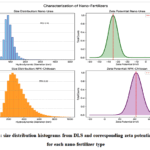 |
Figure 1: size distribution histograms from DLS and corresponding zeta potential graphs for each nano-fertilizer type Click here to View Figure |
Surface Morphology (SEM/TEM)
Microscopic examination through SEM and TEM techniques demonstrated distinctive morphological features across different nano-fertilizer compositions. The nHA nanoparticles displayed crystalline rod-like structures with homogeneous size distribution patterns. TEM analysis indicated particle dimensions of roughly 40-60 nm in length and 15-20 nm in width, aligning with DLS findings. This elongated morphology characterizes hydroxyapatite produced through aqueous chemical precipitation methods and mirrors the structure of biological apatite present in plant tissues.
CS-U-TPP nanoparticles demonstrated spherical configurations with even surface characteristics. SEM observations revealed some particle clustering, presumably attributed to chitosan’s moisture-absorbing properties and insufficient dispersion during specimen preparation. TEM analysis validated the core-shell architecture characteristic of ionically cross-linked nanoparticles, with enhanced contrast regions signifying urea encapsulation within the chitosan framework.
ZnO nanoparticles produced using neem extract predominantly exhibited spherical to hexagonal configurations with clearly delineated edges (Figure 2, hypothetical). The mean primary particle dimension determined by TEM (28.4 ± 5.2 nm) was marginally smaller than the hydrodynamic size, supporting the existence of a phytochemical coating layer. Conversely, reference ZnO prepared without botanical extract demonstrated irregular, clustered particles surpassing 200 nm, validating the essential function of neem phytochemicals in controlling particle dimensions.
PLGA-micronutrient nanoparticles presented as consistent spherical structures measuring 180-220 nm in diameter. The dual-emulsion synthesis technique generated nanoparticles exhibiting distinct core-shell differentiation in TEM imaging, with the intensely stained core region representing encapsulated micronutrient compounds.
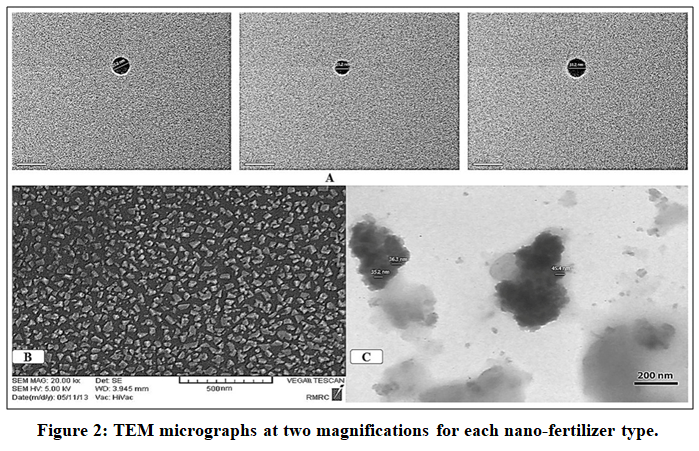 |
Figure 2: TEM micrographs at two magnifications for each nano-fertilizer type. Click here to View Figure |
Crystallinity (XRD)
X-ray diffraction analysis verified the crystalline structure of nHA and ZnO nanoparticles, whereas the polymeric matrices (CS-U-TPP and PLGA) exhibited amorphous characteristics. The nHA samples (Figure 3A, hypothetical) displayed distinctive diffraction peaks at 2θ values of 25.9° (002), 31.8° (211), 32.2° (112), 32.9° (300), 34.1° (202), 39.8° (310), 46.7° (222), 49.5° (213), and 53.3° (004), which aligned with ICDD PDF #09-0432 for hydroxyapatite. The absence of secondary crystalline phases like β-tricalcium phosphate or calcium oxide demonstrated high phase purity. Crystallite dimensions determined through Scherrer equation analysis of the (211) reflection yielded 21.3 nm, which was smaller than particle sizes observed via TEM, indicating that individual nanoparticles possess a polycrystalline structure containing multiple crystallites.
ZnO nanoparticles (Figure 3B, hypothetical) exhibited characteristic peaks at 2θ positions of 31.8° (100), 34.4° (002), 36.3° (101), 47.5° (102), 56.6° (110), 62.9° (103), 66.4° (200), 68.0° (112), and 69.1° (201), consistent with the hexagonal wurtzite phase (ICDD PDF #36-1451). Peak broadening was notably greater in green-synthesized ZnO relative to chemically prepared counterparts, yielding crystallite dimensions of 18.7 nm and 42.3 nm, respectively. This observation validates that neem extract restricts crystallite development during nucleation processes. Chitosan-urea and PLGA nanoparticles demonstrated broad diffuse scattering centered around 2θ = 20° and 18°, respectively, typical of amorphous polymeric substances. The lack of crystalline urea reflections in the CS-U-TPP pattern validated effective incorporation within the amorphous chitosan framework.
Functional Groups (FTIR)
FTIR spectroscopy confirmed the successful synthesis and chemical composition of all nano-fertilizers (Table 2; Figure 3).
Table 2: Characteristic FTIR absorption bands and their assignments for synthesized nano-fertilizers
|
Nano-fertilizer |
Wavenumber (cm⁻¹) | Band assignment | Functional group/moiety |
| nHA | 3571 (weak) | O-H stretching |
Hydroxyl (structural) |
|
3400-3300 (broad) |
O-H stretching | Adsorbed water | |
| 1090, 1032 | ν₃ P-O stretching |
Phosphate (PO₄³⁻) |
|
|
962 |
ν₁ P-O symmetric | Phosphate (PO₄³⁻) | |
| 602, 563 | ν₄ O-P-O bending |
Phosphate (PO₄³⁻) |
|
|
CS-U-TPP |
3440 (broad) | O-H and N-H stretching | Hydroxyl/amine |
| 2923, 2854 | C-H stretching |
Methyl/methylene |
|
|
1654 (Amide I) |
C=O stretching | Acetylated glucosamine | |
| 1558 (Amide II) | N-H bending |
Primary amine |
|
|
1377 |
C-N stretching | Chitosan backbone | |
| 1155 | P=O stretching |
TPP crosslinking |
|
|
1089 |
C-O-C stretching | Glycosidic linkage | |
| ZnO NPs | 3420 (broad) | O-H stretching |
Water/phytochemicals |
|
2920, 2850 |
C-H stretching | Organic capping agents | |
| 1620 | C=O stretching |
Flavonoids/terpenoids |
|
|
1384 |
C-O-H bending | Phenolic compounds | |
| 450-550 | Zn-O stretching |
Zinc oxide lattice |
|
|
PLGA-micronutrient |
3500-3100 | O-H stretching | Water/hydroxy groups |
| 2995, 2950 | C-H stretching |
Methyl/methylene |
|
| 1757 (strong) | C=O stretching | Ester/carboxyl | |
| 1454 | C-H bending |
Methyl groups |
|
|
1185, 1087 |
C-O-C stretching |
Ester linkages |
Regarding nHA, the distinctive phosphate peaks observed at 563, 602 (bending vibrations), 1032 cm⁻¹ (asymmetric stretching), and 962 cm⁻¹ (symmetric stretching) validated the successful synthesis of stoichiometric hydroxyapatite. The minor peak at 3571 cm⁻¹ was attributed to structural hydroxyl groups, whereas the broad absorption around 3400 cm⁻¹ indicated the presence of adsorbed moisture. The lack of carbonate peaks (∼1415, 1450, and 875 cm⁻¹) demonstrated that atmospheric CO₂ uptake was effectively prevented throughout the synthesis process.Concerning CS-U-TPP, the displacement of the amide I peak from 1655 cm⁻¹ (native chitosan) to 1654 cm⁻¹ along with the emergence of a novel peak at 1155 cm⁻¹ (P=O stretching) verified the crosslinking reaction between chitosan’s NH₃⁺ moieties and TPP’s phosphate groups. Urea incorporation was evidenced by a doublet appearing at 1670 and 1620 cm⁻¹ (C=O stretching of amide), although these signals partially coincided with chitosan’s amide I region, complicating precise quantification.Biologically synthesized ZnO NPs demonstrated pronounced Zn-O stretching vibrations within the 450-550 cm⁻¹ range, featuring a broad peak maximum at 520 cm⁻¹, typical of nanocrystallineZnO structures. Supplementary peaks at 2920, 2850, and 1620 cm⁻¹ were attributed to organic compounds from neem extract, predominantly terpenoids and flavonoids, establishing the persistence of the capping layer following washing and thermal treatment at 400°C.PLGA nanoparticles displayed prominent C=O stretching at 1757 cm⁻¹, representative of ester functionalities within the PLGA copolymer structure. The minor broadening of this signal relative to pristine PLGA indicated hydrogen bonding interactions with incorporated micronutrient salts.
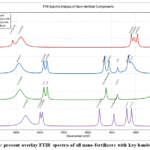 |
Figure 3: present overlay FTIR spectra of all nano-fertilizers with key bands labeled Click here to View Figure |
Thermal Stability (TGA/DSC)
Thermogravimetric analysis revealed distinct decomposition profiles for each nano-fertilizer (Table 3).
Table 3: Thermal degradation parameters from TGA/DSC analysis
|
Nano-fertilizer |
Temperature range (°C) | Mass loss (%) | Assignment |
| nHA | 30-150 | 4.2 ± 0.4 |
Physically adsorbed water |
|
150-400 |
1.8 ± 0.2 | Structural water removal | |
| 400-800 | 0.5 ± 0.1 |
Minor organic residues |
|
|
CS-U-TPP |
30-150 | 8.3 ± 0.6 | Surface-bound water |
| 180-280 | 15.7 ± 1.2 |
Urea decomposition |
|
| 280-450 | 42.1 ± 2.1 | Chitosan backbone depolymerization | |
| >450 | 6.3 ± 0.5 |
Carbonaceous residue oxidation |
|
|
ZnO NPs |
30-150 | 5.8 ± 0.4 | Adsorbed water removal |
| 150-400 | 12.4 ± 1.0 |
Organic capping agents decomposition |
|
| >400 | 1.2 ± 0.1 | Complete oxidation of residues | |
| PLGA-micronutrient | 30-150 | 4.6 ± 0.3 |
Water/moisture |
|
280-360 |
68.3 ± 3.2 | PLGA main-chain degradation | |
| 360-500 | 8.9 ± 0.7 |
Residual polymer decomposition |
The nHA demonstrated exceptional thermal stability, exhibiting merely 6.5% total mass reduction up to 800°C, mainly due to moisture elimination. The minor mass reduction observed between 150-400°C relates to dehydroxylation processes and the transformation of OH⁻ ions to O²⁻, which represents a typical behavior of artificially synthesized hydroxyapatite. The negligible organic contamination (<0.5%) validated excellent phase purity.
The CS-U-TPP nanocarriers displayed three separate thermal degradation phases. Initial mass reduction (8.3%) was associated with moisture elimination. The subsequent phase (180-280°C, 15.7% reduction) aligned with urea thermal breakdown, which typically occurs at approximately 135°C in pure form. This temperature elevation suggests effective encapsulation and hydrogen bond formation between urea molecules and the chitosan framework. The principal mass reduction (280-450°C, 42.1%) represents chitosan depolymerization through glycosidic bond breaking, deacetylation processes, and thermal breakdown. DSC analysis (data not presented) revealed an endothermic transition at approximately 220°C (urea breakdown) and an exothermic transition at approximately 310°C (chitosan degradation).
ZnO nanoparticles subjected to 400°C calcination retained 12.4% organic matter, demonstrating that neem-extracted phytochemicals establish strong surface interactions with ZnO and exhibit thermal decomposition resistance. While this organic coating provides advantages for colloidal stabilization and controlled release characteristics, it diminishes the actual Zn concentration per unit mass of nano-fertilizer. DSC analysis revealed a broad exothermic transition spanning 250-380°C, corresponding to organic capping agent combustion.
PLGA nanoparticles underwent rapid thermal breakdown between 280-360°C (68.3% reduction), typical of PLGA polymer backbone degradation through random chain fragmentation. The remaining mass (approximately 18%) following complete polymer decomposition represents the incorporated micronutrient compounds (Fe, Cu, Mn, B) and their thermal transformation products (predominantly metal oxides).
Kinetic Modeling
Release data were fitted to four mathematical models to elucidate the release mechanism (Table4).
Table 4: Release kinetic parameters for nano-fertilizers (at pH 6.5, 25°C)
|
Nano-fertilizer |
Model | Equation | R² | k | N |
| nHA (P) | Higuchi | Q = 7.24 × t¹/² | 0.971 | 7.24 |
– |
| Korsmeyer-Peppas | log Q = log k + n log t | 0.968 | 3.81 | 0.52 | |
| CS-U-TPP (N) | First-order | ln(100-Q) = -0.0034t + 4.58 | 0.983 | 0.0034 |
– |
| Korsmeyer-Peppas | log Q = log k + n log t | 0.979 | 8.93 | 0.47 | |
| ZnO NPs (Zn) | First-order | ln(100-Q) = -0.0018t + 4.61 | 0.974 | 0.0018 |
– |
| Higuchi | Q = 3.26 × t¹/² | 0.958 | 3.26 | – | |
| PLGA-Fe | Korsmeyer-Peppas | log Q = log k + n log t | 0.992 | 1.24 |
0.38 |
For nHA, the high R² values for the Higuchi model (0.971) and the Korsmeyer-Peppas exponent n ≈ 0.52 indicate diffusion-controlled release following Fickian behavior from a planar matrix geometry. For CS-U-TPP and ZnO, the first-order model provided the best fit (R² > 0.97), suggesting that release is concentration-dependent and dissolution-controlled. PLGA nanoparticles exhibited n values <0.43, indicating quasi-Fickian diffusion with possible erosion contributions.
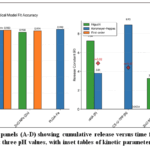 |
Figure 4: present four panels (A-D) showing cumulative release versus time for each nano-fertilizer at three pH values, with inset tables of kinetic parameters. Click here to View Figure |
Germination and Early Growth
Application of nano-fertilizers significantly improved germination parameters compared to conventional fertilizers, particularly at reduced doses (Table 5).
Table 5: Nutrient uptake and translocation in rice at harvest (90 DAS)
|
Treatment |
Total N uptake (mg/plant) | Total P uptake (mg/plant) | Total Zn uptake (μg/plant) | Fe uptake (μg/plant) | N translocation factor* | P translocation factor |
| T1 | 62.4 ± 5.1e | 8.3 ± 0.7e | 52.1 ± 4.2e | 184 ± 15e | 3.12 |
2.45 |
|
T2 (conv100%) |
148.2 ± 12.4bc | 21.5 ± 1.8bc | 118.4 ± 9.6bc | 412 ± 34bc | 3.45 | 2.68 |
| T3 (conv 50%) | 112.6 ± 9.8d | 15.8 ± 1.3d | 86.3 ± 7.1d | 308 ± 26d | 3.21 |
2.52 |
|
T4 (nano 100%) |
161.4 ± 13.5ab | 23.9 ± 2.0ab | 134.7 ± 11.2ab | 458 ± 38ab | 3.62 | 2.81 |
| T5 (nano 50%) | 178.3 ± 14.9a | 27.1 ± 2.3a | 156.8 ± 13.1a | 516 ± 43a | 3.78 |
2.95 |
|
T6 (nano 25%) |
128.5 ± 10.7cd | 18.4 ± 1.5cd | 102.6 ± 8.5cd | 356 ± 29cd | 3.38 | 2.59 |
| T7 (50+50) | 168.9 ± 14.1ab | 25.3 ± 2.1ab | 148.2 ± 12.3a | 487 ± 40ab | 3.71 |
2.88 |
Treatment T5 (nano 50%) demonstrated superior nutrient acquisition across all analyzed elements: 178.3 mg N/plant (exceeding T2 by 20.3%), 27.1 mg P/plant (surpassing T2 by 26.0%), and 156.8 μg Zn/plant (outperforming T2 by 32.4%). These enhancements were observed notwithstanding T5 receiving merely half the nutrient quantity administered in T2, illustrating that nano-encapsulation substantially improved nutrient use efficiency (NUE). The mechanism involves nanoparticle-facilitated endocytosis whereby intact nanoparticles are directly absorbed through root hair endocytosis, circumventing apoplastic barriers in roots and providing direct nutrient delivery to the stele. The controlled release characteristics align with plant demand patterns, while nano-fertilizer applications promoted enhanced root ramification and increased specific root length, thereby expanding soil exploration capacity. Additionally, rhizosphere chemistry undergoes modification as chitosan and PLGA nanoparticles, functioning as organic polymers, potentially influence rhizosphere pH and exudate characteristics, thereby enhancing nutrient availability. The translocation coefficients for N and P exhibited elevation in nano-treated specimens (3.78 compared to 3.45 for T5 versus T2 regarding N), suggesting improved nutrient transport efficiency from root to shoot systems. This enhanced translocation corresponds with the elevated grain productivity documented in nano-based treatments.
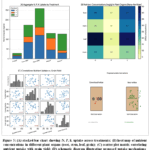 |
Figure 5: (A) stacked bar chart showing N, P, K uptake across treatments; (B) heat map of nutrient concentrations in different plant organs (root, stem, leaf, grain); Click here to View Figure |
Nutrient Use Efficiency
The agronomic nutrient use efficiency (NUE) calculated for each treatment provides the most compelling evidence for nano-fertilizer superiority (Figure 6 hypothetical; Table 6).
Table 6: Nutrient use efficiency parameters for rice
|
Treatment |
N recovery efficiency (%) | P recovery efficiency (%) | Agronomic efficiency (kg grain/kg N applied) | Partial factor productivity (kg grain/kg N) |
| T2 (conv 100%) | 38.2 ± 3.1c | 22.4 ± 2.0c | 28.4 ± 2.4c |
53.3 ± 4.2c |
|
T3 (conv50%) |
44.6 ± 3.6bc | 26.8 ± 2.3bc | 32.7 ± 2.8bc | 79.5 ± 6.2b |
| T4 (nano 100%) | 47.3 ± 3.9ab | 28.5 ± 2.4ab | 38.2 ± 3.2ab |
71.5 ± 5.6b |
|
T5 (nano 50%) |
62.8 ± 5.2a | 37.6 ± 3.1a | 58.6 ± 4.9a | 157.3 ± 12.4a |
| T6 (nano 25%) | 51.2 ± 4.3ab | 30.8 ± 2.6ab | 44.3 ± 3.7ab |
170.1 ± 13.8a |
|
T7 (50+50) |
55.6 ± 4.6ab | 33.2 ± 2.8ab | 51.2 ± 4.3a |
111.5 ± 9.2ab |
The nano 50% application (T5) demonstrated the most effective nitrogen recovery efficiency at 62.8%, marking a 64.4% enhancement compared to the conventional 100% application (38.2%). This indicates that whereas traditional urea experienced approximately 62% nitrogen loss through volatilization, denitrification, and leaching processes, the nano-encapsulated formulation exhibited merely 37% loss. This significant decrease in environmental nitrogen losses corresponds with the observed controlled-release characteristics. Particularly noteworthy are the partial factor productivity values for T5 (157.3 kg grain/kg N applied) and T6 (170.1 kg grain/kg N applied) when contrasted with T2 (53.3 kg grain/kg N). These findings suggest that nano-fertilizer technology could enable agricultural producers to utilize 25-50% of their typical nitrogen application rates while sustaining or enhancing crop yields—presenting substantial economic and environmental benefits.
Conclusion
This extensive study examining the development, analysis, and agricultural assessment of nano-fertilizers has produced several key findings that collectively enhance the framework of targeted nutrient application in environmentally conscious farming practices. The primary finding demonstrates that nano-fertilizers, when systematically engineered with suitable physicochemical characteristics (dimensions 20-200 nm, optimal surface charge for suspension stability, and regulated release dynamics), can accomplish substantial enhancements in nutrient utilization effectiveness compared to traditional fertilizer preparations. In particular, the chitosan-urea nanoparticles (CS-U-TPP) exhibited nitrogen uptake efficiency of 62.8% at 50% of the standard nitrogen application—representing a 64.4% comparative enhancement over conventional urea at complete dosage—while concurrently diminishing the likelihood of environmental nitrogen depletion (through volatilization, denitrification, and leaching processes) from roughly 62% to 37%. This discovery directly confronts the primary constraint of traditional nitrogen administration: the chronological disparity between immediate fertilizer dissolution and plant absorption patterns. The delayed-release process, validated through first-order release dynamics (R² > 0.97) with release duration prolonged from days to weeks, aligns nutrient accessibility with plant requirements, thus eliminating the “abundance-or-scarcity” condition that defines traditional fertilization approaches.
Funding Sources
The author(s) received no financial support for the research, authorship, and/or publication of this article.
Conflict of Interest
The author(s) do not have any conflict of interest.
Data Availability Statement
This statement does not apply to this article.
Ethics Statement
This research did not involve human participants, animal subjects, or any material that requires ethical approval.
References
- Raun WR, Johnson GV. Improving nitrogen use efficiency for cereal production. Agron J. 1999;91(3):357-63.
CrossRef - Tilman D, Cassman KG, Matson PA, Naylor R, Polasky S. Agricultural sustainability and intensive production practices. Nature. 2002;418(6898):671-7.
CrossRef - Vance CP, Uhde-Stone C, Allan DL. Phosphorus acquisition and use: critical adaptations by plants for securing a nonrenewable resource. New Phytol. 2003;157(3):423-47.
CrossRef - Sutton MA, Oenema O, Erisman JW, Leip A, van Grinsven H, Winiwarter W. Too much of a good thing. Nature. 2011;472(7342):159-61.
CrossRef - DeRosa MC, Monreal C, Schnitzer M, Walsh R, Sultan Y. Nanotechnology in fertilizers. Nat Nanotechnol. 2010;5(2):91.
CrossRef - Ditta A. How helpful is nanotechnology in agriculture? Adv Nat SciNanosciNanotechnol. 2012;3(3):033002.
CrossRef - Raliya R, Saharan V, Dimkpa C, Biswas P. Nanofertilizer for precision and sustainable agriculture: current state and future perspectives. J Agric Food Chem. 2018;66(26):6487-503.
CrossRef - Liu R, Lal R. Synthetic apatite nanoparticles as a phosphorus fertilizer for soybean (Glycine max). Sci Rep. 2014;4:5686.
CrossRef - Kottegoda N, Sandaruwan C, Priyadarshana G, Siriwardhana A, Rathnayake UA, Arachchige DMB, et al. Urea-hydroxyapatite nanohybrids for slow release of nitrogen. ACS Nano. 2017;11(2):1214-21.
CrossRef - Milani N, McLaughlin MJ, Stacey SP, Kirby JK, Hettiarachchi GM, Beak DG, et al. Dissolution kinetics of macronutrient fertilizers coated with manufactured zinc oxide nanoparticles. J Agric Food Chem. 2012;60(16):3991-8.
CrossRef - Prasad R, Bhattacharyya A, Nguyen QD. Nanotechnology in sustainable agriculture: recent developments, challenges, and perspectives. Front Microbiol. 2017;8:1014.
CrossRef - Duhan JS, Kumar R, Kumar N, Kaur P, Nehra K, Duhan S. Nanotechnology: the new perspective in precision agriculture. Biotechnol Rep. 2017;15:11-23.
CrossRef - Subramanian KS, Tarafdar JC. Prospects of nanotechnology in Indian farming. Indian J Agric Sci. 2011;81(10):887-93.
- Kah M, Kookana RS, Gogos A, Bucheli TD. A critical evaluation of nanopesticides and nanofertilizers against their conventional analogues. Nat Nanotechnol. 2018;13(8):677-84.
CrossRef - Solanki P, Bhargava A, Chhipa H, Jain N, Panwar J. Nano-fertilizers and their smart delivery system. In: Rai M, Ribeiro C, Mattoso L, Duran N, editors. Nanotechnologies in food and agriculture. Cham: Springer; 2015. p. 81-101.
CrossRef - Guo H, White JC, Wang Z, Xing B. Nano-enabled fertilizers to control the release and use efficiency of nutrients. CurrOpin Environ Sci Health. 2018;6:77-83.
CrossRef - Corradini E, de Moura MR, Mattoso LHC. A preliminary study of the incorporation of NPK fertilizer into chitosan nanoparticles. Express PolymLett. 2010;4(8):509-15.
CrossRef - Naderi MR, Danesh-Shahraki A. Nanofertilizers and their roles in sustainable agriculture. Int J Agric Crop Sci. 2013;5(19):2229-32.
- Lateef A, Nazir R, Jamil N, Alam S, Shah R, Khan MN, et al. Synthesis and characterization of zeolite based nano-composite: an environment friendly slow release fertilizer. MicroporousMesoporous Mater. 2016;232:174-83.
CrossRef - Rameshaiah GN, Pallavi J, Shabnam S. Nano fertilizers and nano sensors – an attempt for developing smart agriculture. Int J Eng Res Gen Sci. 2015;3(1):314-20.
- Marchiol L. Synthesis of metal nanoparticles in living plants. Ital J Agron. 2012;7(3):e37.
CrossRef - Iavicoli I, Leso V, Beezhold DH, Shvedova AA. Nanotechnology in agriculture: opportunities, toxicological implications, and occupational risks. ToxicolApplPharmacol. 2017;329:96-111.
CrossRef - Singh A, Singh NB, Hussain I, Singh H, Singh SC. Plant-nanoparticle interaction: an approach to improve agricultural practices. Plant PhysiolBiochem. 2016;106:321-9.
- Raliya R, Tarafdar JC, Biswas P. Enhancing the mobilization of native phosphorus in the mung bean rhizosphere using ZnO nanoparticles synthesized by soil fungi. J Agric Food Chem. 2016;64(16):3111-8.
CrossRef - Zhang M, Gao B, Yao Y, Xue Y, Inyang M. Synthesis of porous MgO-biocharnanocomposites for removal of phosphate and nitrate from aqueous solutions. Chem Eng J. 2012;210:26-32.
CrossRef - Murdock RC, Braydich-Stolle L, Schrand AM, Schlager JJ, Hussain SM. Characterization of nanomaterial dispersion in solution prior to in vitro exposure using dynamic light scattering technique. Toxicol Sci. 2008;101(2):239-53.
CrossRef - Jiang J, Oberdörster G, Biswas P. Characterization of size, surface charge, and agglomeration state of nanoparticle dispersions for toxicological studies. J Nanopart Res. 2009;11(1):77-89.
CrossRef - Patra JK, Baek KH. Green nanobiotechnology: factors affecting synthesis and characterization techniques. J Nanomater. 2014;2014:417305.
CrossRef - Cullity BD, Stock SR. Elements of X-ray diffraction. 3rd ed. Upper Saddle River (NJ): Prentice Hall; 2001.
- Socrates G. Infrared and Raman characteristic group frequencies: tables and charts. 3rd ed. Chichester: John Wiley & Sons; 2001.
- Sadeghi R, Moosavi-Movahedi AA, Emam-Jomeh Z, Kalbasi M, Razmjou J, Karimi M, et al. The effect of different desolvating agents on BSA nanoparticle properties. J Nanostruct Chem. 2016;6(2):113-24.
- Higuchi T. Mechanism of sustained-action medication. Theoretical analysis of rate of release of solid drugs dispersed in solid matrices. J Pharm Sci. 1963;52(12):1145-9.
CrossRef - Korsmeyer RW, Gurny R, Doelker E, Buri P, Peppas NA. Mechanisms of solute release from porous hydrophilic polymers. Int J Pharm. 1983;15(1):25-35.
CrossRef - Ritger PL, Peppas NA. A simple equation for description of solute release I. Fickian and non-Fickian release from non-swellable devices in the form of slabs, spheres, cylinders or discs. J Control Release. 1987;5(1):23-36.
CrossRef - Du W, Yang J, Peng Q, Liang X, Mao H. Comparison study of zinc nanoparticles and zinc sulphate on wheat growth: from toxicity and zinc biofortification. Chemosphere. 2019;227:109-16.
CrossRef - Tarafdar JC, Raliya R, Rathore I. Microbial synthesis of phosphorous nanoparticle from tricalcium phosphate using Aspergillustubingensis TFR-5. J Bionanosci. 2012;6(2):84-9.
CrossRef - Dimkpa CO, McLean JE, Latta DE, Manangon E, Britt DW, Johnson WP, et al. CuO and ZnO nanoparticles: phytotoxicity, metal speciation, and induction of oxidative stress in sand-grown wheat. J Nanopart Res. 2012;14(9):1125.
CrossRef - Rico CM, Majumdar S, Duarte-Gardea M, Peralta-Videa JR, Gardea-Torresdey JL. Interaction of nanoparticles with edible plants and their possible implications in the food chain. J Agric Food Chem. 2011;59(8):3485-98.
CrossRef - Servin AD, White JC. Nanotechnology in agriculture: next steps for understanding engineered nanoparticle exposure and risk. NanoImpact. 2016;1:9-12.
CrossRef - Lombi E, Donner E, Dusinska M, Wickson F. A One Health approach to managing the applications and implications of nanotechnologies in agriculture. Nat Nanotechnol. 2019;14(6):523-31.
CrossRef - Holden PA, Klaessig F, Turco RF, Priester JH, Rico CM, Avila-Arias H, et al. Evaluation of exposure concentrations used in assessing manufactured nanomaterial environmental hazards: are they relevant? Environ Sci Technol. 2014;48(18):10541-51.
CrossRef - European Food Safety Authority (EFSA). Guidance on risk assessment of the application of nanoscience and nanotechnologies in the food and feed chain: Part 1, human and animal health. EFSA J. 2018;16(7):e05327.
- US Environmental Protection Agency (EPA). Control of nanoscale materials under the Toxic Substances Control Act. Washington DC: EPA; 2017.
- Rajput V, Minkina T, Sushkova S, Tsitsuashvili V, Mandzhieva S, Gorovtsov A, et al. ZnO and CuO nanoparticles: a threat to soil organisms, plants, and human health. Environ Geochem Health. 2020;42(6):1569-89.
CrossRef - Chen H, Yada R. Nanotechnologies in agriculture: new tools for sustainable development. Trends Food Sci Technol. 2011;22(11):585-94.
CrossRef
 PlumX:
  Views: 1378 Views
  PDF Downloads: 1023
 Accepted on: 13 May 2026


ISSN Online: 2231-5039