Isolation and Identification of Endophytic Fungi from Piper Hymenophyllum Miq. and their Antioxidant Activity and Anti-Bacterial Activity Against MDR Bacteria
 , Anandaraj K1 and Vishnu Kumar S2
1Department of Microbiology, Shanmuga industries arts and science college (Co-Education) Thiruvannamalai, Thiruvalluvar university, Vellore, Tamil Nadu, India.
2Sasi Bioprospecting Laboratory Coimbatore, Tamil Nadu, India.
Corresponding Author E-mail: nishayrg@gmail.com
DOI : http://dx.doi.org/10.13005/ojc/420338
Download this article as:

Bacteria or fungi that live inside plant tissues or organs without posing a threat are known as endophytic microorganisms. Apart from generating biotechnologically significant compounds, they have potential to protect plants from diseases and insect attacks. In India, Piper hymenophyllum is known as "Kattukurumulaku". Research objective was to examine biotechnological potential of fungal endophyte's crude extracts, isolated from P. hymenophyllum, Neofusicoccum parvum (PQ001944.1) and Pestalotiopsis sp. (PP849886.1).The study assesses the secondary metabolites, in vitro antioxidant, and MDR pathogen activities of ethyl acetate from P. hymenophyllum. The results demonstrated the high levels of total phenols (760.86mg GAE/g), tannin (760.31mg GAE/g), along with flavonoids (48.84mg RE/g) in the Pestalotiopsis sp. ethyl acetate extract. Pestalotiopsis sp. ethyl acetate extract exhibited good resistance to phosphomolybdenum (106.02 mg AAE/g extract), superoxide (38.78%), DPPH (26.48 μg/L), and ABTS (74097.2μM TE/g extracts). Furthermore, Pestalotiopsis sp ethyl acetate extract demonstrated strong antibacterial activity at dosage of 10mg/ml against Staphylococcus aureus (11mm), Enterococcus faecalis (12mm),Enterobacter cloacae (12mm) and Pseudomonas aeruginosa (12mm). According to these findings, P. hymenophyllum leaves of endophytic fungi Pestalotiopsis sp.,particularly ethyl acetate extract, are a significant source of antioxidants and have a high potential for containing components of MDR pathogen activity.
KEYWORDS:MDR pathogen; Neofusicoccum parvum; P. hymenophyllum; Pestalotiopsis sp
Introduction
Since we haven’t sampled or described the diversity of fungal species, we don’t know much about their roles in ecosystems. With increased knowledge of endophytes, the study of their ecology, life history, and phylogeny has exploded in the last three decades. The term “endophyte” has become nearly synonymous with mutualism, despite some disagreement regarding its etymology. Even though endophytes in woody plants may significantly affect plant populations and communities, very little study have been done on this topic. They are essential for plants to repel pests, nematodes, and insects. They also assist plants resist environmental illnesses1. These enhance the nitrogen fixation process and promote plant development. In an effort to create or uncover new chemicals, endophyte research has lately shifted from documenting species to evaluating dynamics of endophyte-plant interactions, with focus on medicinal plant-associated fungi2.
Endophytic microorganisms include bacteria and fungi that, at least once during their life cycle, invade intracellular or intercellular areas of plant tissues3. Since they don’t seem to harm host plants4 and live asymptomatically5, their relationship with them is frequently stable.
Researchers extracted a range of compounds from plant endophytes3. Accordingly, there is rising number of investigations focused on extraction and/or application of endophytes from medicinal plants6. A range of biotechnologically intriguing compounds, including secondary metabolites with pharmacological uses7 and antimicrobials that prevent growth of pathogens8, can be produced by the interaction of endophytes and plants.
One of the many flowering plant families is the Piperaceae, which includes Piper. Thirteen genera under the family Piperaceae are known to include around 3,600 species. Both Piper and Peperomia are major genera in the Piperaceae family, with over 2,000 species between them. Black and long peppers contain the alkaloidal component piperine (1-piperoyl piperidine), which is used all over the world9. The bitter, peppery, and harsh-tasting root and fruits of the Piper nigrum plant are used medicinally. Suffering from digestive issues, aphrodisiac, lumbago, palsy, gout, stomachic, emmenagogue, abortifacient, or liver tonics, you might want to give one a try. The tongue becomes numb and saliva production increases when pepper is overdone. According to Ganesh et al.(10), the fruits and roots can be administered topically to alleviate muscle soreness, treat respiratory tract disorders such as asthma, bronchitis, and cough, and function as a counter-irritant. Toothaches, headaches, stomachaches, coughs, rheumatism, colds, and bronchitis are just some of the many ailments that Piper peepuloides is believed to alleviate. Therefore, secondary metabolites, antioxidant activity and antimicrobial activityare for the current investigation.
Materials and Methods
Plant sample collection
The climbing Piper hymenophyllum plants were randomly sampled in Western Ghats region (Nilgiris, Tamil Nadu, India) for their mature, healthy, symptom-free leaves. A specimen of P. hymenophyllum was sampled from the foothills of Coonoor in the Nilgiris region of Tamil Nadu, India (BSI/SRC/5/23/2023/Tech-837). The plant material an icebox to transport the sterile polythene bags containing the leaf samples to the lab. Endophytic fungi were isolated from samples kept at 4ºC within 24hrs of collection.
Endophytic strains
Garcia et al.(11) molecularly identified endophytic strains that were chosen to obtain crude extracts from leaves of a Piper hymenophyllum Miq. Sequences of Neofusicoccum parvum isolates (PQ001944.1) and Pestalotiopsis sp. isolates (PP849886.1) were deposited in NCBI.
Obtainment of crude extracts
Crude extracts were produced using modified version of process outlined12. In accordance with Smith and Onions (13) and modification by Pamphile et al.(14), endophytic fungus was incubated in culture media using Potato Dextrose (PD) for 10 days at 25ºC. Centrifuged resulting fermented medium 3,600rpm for 10min. Equal volume of crude ethyl acetate was added to a separatory funnel containing the supernatant. The phases were separated by polarity differences after the funnel was vigorously shaken. This procedure was carried out twice. Ethyl acetate solution with fungal metabolites was 98% concentrated using Büchi R-3000 Rotavapor at 40°C.
Quantification Assays
Quantification of total phenolic contents
Parimelazhagan method (15) was employed for estimating total phenolic content of plant extracts. Phenolics were present in incubated test tubes, indicated by formation of blue color. Absorbance was assessed at 725nm shortly after incubation against reagent blank and reported as gallic acid equivalents per gram of extract (GAE/g Extract).
Quantification of total tannin contents
There are tannins and non-tannin phenolics in the total phenolics. To find amount of phenolics that aren’t tannins, we subtracted the tannin content from the total phenolics (15). We also measured total and free phenolics three times and reported the findings as tannic acid equivalents (TAE). Following these 2 outcomes, following was used to determine tannin concentration of plant samples:
Tannins=Total phenolics-Non tannin phenolics
Quantification of total flavonoid contents
Method described by Parimelazhagan(15) was used to quantify flavonoid contents of extracts. Flavonoids’ presence was detected at 510nm via spectrophotometer, which resulted in a pink color. The experiment was conducted in triplicates with rutin as the standard, and outcomes were represented as rutin equivalents (RE).
In vitro antioxidant assays
DPPH% scavenging activity
In accordance with Parimelazhagan technique(15), extract’s antioxidant activity was assessed by estimating its capacity for donating hydrogen or scavenging radicals by employing stable radical DPPH. Each sample, standard (Rutin and BHT), and control were tested for absorbance at 517nm relative to methanol blank. IC50-value, which indicates sample concentration needed to block 50% DPPH concentration, was employed for expressing samples’ radical scavenging activity.
ABTS scavenging activity
ABTS radical cation decolorization test was performed in accordance with Parimelazhagan method(15), was utilized to establish overall antioxidant activity of samples. Comparison was made between samples and standards (BHT and Rutin) to determine the ethanol absorbance at 734nm after the incubation process was completed. According to the findings, the amount of extracts that were equivalent to μM Trolox was reported.
Phosphomolybdenum assay
The generation of green phosphomolybdenum complexes was subjected to the Parimelazhagan procedure(15), which was utilized to evaluate antioxidant activity of products. Milligrams (mg) of ascorbic acid equivalents per gram (g) of extract were used to report the findings, with ascorbic acid acting as standard of reference.
Superoxide radical scavenging activity
Experiment was designed to determine whether or not various extracts had the capacity for scavenging superoxide radicals that were produced by riboflavin-light-NBT system, hence preventing formation of formazan Parimelazhagan(15). The formula for determining percentage inhibition of superoxide anion generation is as follows: % Inhibition=[(A0-A1)/A0]x100. This formula is based on assumption that A1 indicates absorbance of sample extract or standard while A0 indicates absorbance of control.
Assessment of antimicrobial activity
Disk diffusion technique (cup plate) was used to quantitatively analyze antimicrobial activity in triplicate. P. aeruginosa, E. faecalis,S. aureus and E. cloacae were human MDR pathogenic bacteria that were employed in this test.
Bacteria were grown in liquid Luria Bertani (LB) mediumfor 24hrs,adjusted to 106cells/ml, and then distributed (100μl) on Petri dishes having solid LB media to test antibacterial activity. 4 disks of sterile Whatman no.-4 (6mm) filter paper infected with 30μl of extracts were included in each dish, evenly spaced apart.Absolute ethanol and autoclaved distilled water were used to inoculate paper disks as negative controls. 50μg ml-1 of tigecycline was employed as a positive control. For 24hrs, plates were incubated at 37°C. State that the creation of inhibitory halos was used to measure the antibacterial activity16-17.
Results and Discussion
Quantification assays
Quantification of total phenolics content
Total phenolics content in P. hymenophyllumhad been assessed by employing Folin-Ciocalteu reagent. Endophytic fungi Pestalotiopsis sp.and Neofusicoccum parvum leaf ethyl acetate extracts were included in the analysis. With an R2 value of 0.9919, the gallic acid standard graph was drowned. Gallic acid equivalents per gram of extract (mg GAE/g extract) are units used to measure total phenolic content in the conventional graph equitation method. Findings are demonstrated in Table 1 after statistical analysis. Phenolic content of ethyl acetate extracts of Pestalotiopsis sp. and Neofusicoccum parvum was observed to be 760.86mg GAE/g extract, with lowest concentration recorded at 586.2mg GAE/g extract, respectively. Aromatic phenols protect plants from stress and boost antioxidant capacity18-19. Phenolic chemicals disturb cellular chain oxidation reactions as persistent phenoxyl radicals20. These specifically scavenge free radicals21. These chemicals boost antioxidant capability, protecting against serious diseases22, stronger secondary metabolites in plant samples indicate stronger antioxidant potential.
Quantification of total tannins content
Table 1 displays the total tannins content of P. hymenophyllum-associated endophytic fungus Neofusicoccum parvum and Pestalotiopsis sp.The Pestalotiopsis sp.ethyl acetate extract showed stronger radical scavenging activity (760.31 mgRE/g extract) than the other extracts. According to Zheleva-Dimitrovaet al.(23), tannins are bitter-tasting organic molecules with potent astringent qualities, including antibacterial, anti-inflammatory, and antioxidant activity that cause protein precipitation. Tannin is a naturally occurring antioxidant that helps the body defend itself when it is present in the plant system.
Quantification of total flavonoid content
In Table 1, we can see the amounts of total flavonoids found in P. hymenophyllum leaf extracts, fungus isolates Neofusicoccum parvum and Pestalotiopsis sp. There was a respectable amount of flavonoid content in the ethyl acetate extracts of Pestalotiopsis sp.,and Neofusicoccum parvum with the former having the greatest concentration at 40.84mg RE/g extract and the latter at 40mg RE/g extract. Of all the natural phenolics, flavonoids are among the most significant and diverse. Both ethyl acetate extracts have a considerably high flavonoid concentration (p<0.05).Flavonoids are the most widespread polyphenolic chemicals. These antioxidant derivatives scavenge free radicals and chelate trace elements24-26. Flavonoids are essential for cell cycle regulation26. It is crucial for treating cardiovascular illnesses due to its antioxidant and anti-inflammatory characteristics27.
Table 1: Phenolic, Tannin and flavonoids content of Endophytic Fungus
|
Extracts |
Phenolic GAE/g extract |
Tannin
GAE/g extract |
Flavonoids
RE/100 g |
| Pestalotiopsis sp. | 760.86 ± 4.16 | 760.31 ± 3.97 |
48.84 ± 0.89 |
|
Neofusicoccum parvum |
586.2 ± 2 | 585.04 ± 1.6 |
40 ± 1.02 |
GAE: Gallic Acid Equivalents Values are mean of triplicate determination (n=3) ± standard deviation
In vitro antioxidant assays
DPPH scavenging activity
IC50 value, which estimates radical scavenging activity against DPPH 2 (2-diphenyl-1-picrylhydrazyl), after 30min of reaction, was determined by finding concentration that removed 50% of the free radical. In comparison to rutin and BHT, the antioxidant activity of P. hymenophyllum leaves, Neofusicoccum parvumand Pestalotiopsis sp.fungus isolates. The ethyl acetate extract of Pestalotiopsis sp. had the greatest radical scavenging activity at 26.48μg/mL, while ethyl acetate extract of Neofusicoccum parvum had a remarkably low level at 31.26μg/mL. As a positive control in this investigation, rutin exhibited IC50 value of 22.24μg/mL, while BHT exhibited IC50 value of 17.57μg/mL.Due to its inability to disintegrate in methanol, ethanol, or water, DPPH, organic chemical compound with a constant free radical molecule has been widely studied for antioxidant potential. DPPH free radicals can quickly produce stable diamagnetic molecules by receiving electrons or hydrogen from antioxidant molecules28. According to Wang et al. (29), the plant extract reduces stable DPPH radicals, turning purple to yellow.
ABTS scavenging activity
ABTS scavenging activity of P. hymenophyllum leaves, Neofusicoccum parvumand and Pestalotiopsis sp.fungus isolatesand standards have been indicated in Table 2. Neofusicoccum parvumethyl acetate extract demonstrated higher radical scavenging activity (76458.33μM TE/g extract) in comparison to other extracts whereas standards rutin and BHTdemonstrated 94166.7 and 95347.2μM TE/g extract respectively. Plants store antioxidant-rich chemicals. This assay uses potassium persulfate to test the sample’s hydrogen-donating ability by watching for discolouration at a relevant wavelength30-31. Lowering the sample amount halves the color intensity, indicating increased antioxidant content32. In lipophilic and hydrophilic environments, soluble ABTS radical scavenging activity shows hydrogen-donating ability33. According to Oliveira-Neto et al. (34), high-molecular-weight phenolic compounds quench free radicals better.
Phosphomolybdenum assay
Table 2 displays the findings of phosphomolybdenum assay, which was employed for measuring total antioxidant capacity of extracts from P. hymenophyllum leaves, Neofusicoccum parvum, and Pestalotiopsis sp. fungus. Nonetheless, the data are extrapolated from a normal linear curve for ascorbic acid (y=0.0159x +0.0695; R2=0.9891). With a reducing ability of 106.02±1.1mg AAE/g extract, ethyl acetate extract of Pestalotiopsis sp. outperformed other extracts, while the ethyl acetate extracts of Neofusicoccum parvum leaves also displayed a considerable amount of reduction ability, at 53.09±1.55mg AAE/g extract. P.hexapetalum leaf extracts’ radical reducing ability along with commercially available antioxidants has following order: Neofusicoccum parvum<Pestalotiopsis sp.< rutin <BHT.This basic test is inadequate for antioxidant assays. Antioxidant activity is measured in mg/g ascorbic acid equivalents. Antioxidants reduce Mo (VI) to Mo (V) and develop green phosphate/Mo (V) complex with peak absorbance at 695nm Kumaran and Karunakaran(35).
Superoxide radical scavenging activity
Capacity of superoxide radicals produced by dissolved oxygen to diminish NBT is a good indicator of their concentration. The ability of plant extract, reference substance rutin, and BHT for quenching superoxide radicals in reaction mixture is demonstrated by their reduction in absorbance at 560nm. According to Table 2, ethyl acetate extract of Pestalotiopsis sp. had considerable inhibitory effect (38.78%), whereas ethyl acetate extract of Neofusicoccum parvum had lowest efficiency estimate (33.85%). In comparison, rutin and BHT were determined to have scavenging activities of 54.7 and 53.4%, respectively.
Superoxide anions occur when mitochondrial electron transport system reduces molecular oxygen. Lipid peroxidation generates superoxides, which create ROS like hydroxyl radicals and damage lipids, proteins, and DNA. Superoxide anions are pioneers of active free radicals that can combine with biological molecules to harm tissue and induce other significant illnesses36. Phenolic hydroxyl groups in aromatic amino acids donate electrons to scavenge free radicals37.
Table 2: DPPH, ABTS scavenging activity, Phosphomolybdenum assayand Superoxide radical of Endophytic Fungus
|
Samples |
Extracts | DPPH
IC50 (µg/mL) |
ABTS Scavenging
Activity (μM TE/g extract) |
Phosphomolybdenum assay
mg AAE/g (extract) |
Superoxide radical scavenging activity (%) |
|
P. hymenophyllum |
Pestalotiopsis sp. | 26.48 | 74097.2 ± 661.54d | 106.02 ± 1.1c | 38.78 ± 1.32c |
| Neofusicoccum parvum | 31.26 | 76458.33 ± 551.19c | 53.09 ± 1.55d |
33.85 ± 1.72d |
|
|
Standard |
Rutin | 22.24 | 94166.7 ± 416.6b | 176.25 ± 2.74b | 54.7 ± 0.25a |
| BHT | 17.57 | 95347.2 ± 636.4a | 270.07 ± 3.64a |
53.4 ± 0.1b |
Values are mean of triplicate determination (n = 3) ± standard deviation, TE- Trolox Equivalents, AAE – Ascorbic Acid Equivalent, statistically significant at p <0.05 whereas a>b>c>din each column.
Anti-bacterial Activity
Antibacterial activity of P. hymenophyllum leaves, Pestalotiopsis sp. and Neofusicoccum parvum, fungus ethyl acetate extract was checked against Four MDR pathogens. Antibacterial activity results are indicated in Table 3 and Plate 1. Ethyl acetate extract of endophytic fungi Pestalotiopsis sp. demonstrated better zone of inhibition for Staphylococcus aureus (11mm), Enterococcus faecalis (12mm), Enterobacter cloacae(12mm), Pseudomonas aeruginosa (12mm) at concentration of 10mg/ml. and Neofusicoccum parvumdemonstrated significant zone of inhibition for Staphylococcus aureus (8mm), Enterococcus faecalis (10mm), Enterobacter cloacae(10mm), Pseudomonas aeruginosa (13mm) at concentration of 10mg/ml. and Results revealed that Neofusicoccum parvum ethyl acetate extracts showed promising antibacterial activity.Since fungi isolate more often, increasing the possibility of finding an antibacterial chemical from a range of species, Radi’c and Strukelj (38) state that fungi develop more secondary metabolites than any other endophyte. A lot of phenolic chemicals and flavonoids are made by the endophytic fungus Colletotrichum gloeosporioides39.
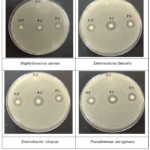 |
Plate 1: Anti-bacterial activity of Endophytic Fungus Click here to View Plate |
Table 3: Anti-bacterial activity of Endophytic Fungus
|
MDR pathogen |
Concentration
(10mg/ml) |
P. hymenophyllum | Positive control (Tigecycline) | |
| Pestalotiopsis sp. |
Neofusicoccum parvum |
|||
|
Negative Control (Ethyl acetate) |
30 μl | – | – |
– |
|
Staphylococcus aureus |
30 μl | 11 ± 0.03 | 8 ± 0.06 | 12 ± 0.07 |
| Enterococcus faecalis | 30 μl | 12 ± 0.03 | 10 ± 0.02 |
16 ± 0.04 |
|
Enterobacter cloacae |
30 μl | 12 ± 0.06 | 10 ± 0.01 | 15 ± 0.04 |
| Pseudomonas aeruginosa | 30 μl | 12 ± 0.04 | 13 ± 0.04 |
15 ± 0.02 |
Values are mean of triplicate determination (n = 3) ± standard deviation
Conclusion
The current study concludes that endophytic fungi isolated from P. hymenophyllum, a medicinal plant, exhibited antioxidant and antibacterial activity in vitro, as well as the presence of powerful secondary metabolites. Endophytes derived from P. hymenophyllum are exceptional since they represent a naturally occurring source of metabolites with biological activity. An exciting new avenue for cancer prevention, care, and progression reduction has opened up thanks to the bioactive compounds discovered in P. hymenophyllum. Molecular characterization of the medicinal components of P. hymenophyllum and elucidation of their unique mechanisms of medicine interaction require further investigations employing advanced databases and multidisciplinary approaches.
Acknowledgement
The authors are thankful to Head, Sasi bioprospecting Laboratory Coimbatore who provided his supportthroughout the study.
Funding Sources
The author(s) received no financial support for the research, authorship, and/or publication of this article.
Conflict of Interest
The author(s) do not have any conflict of interest.
Data Availability Statement
This statement does not apply to this article.
Ethics Statement
This research did not involve human participants, animal subjects, or any material that requires ethical approval.
Reference
- Tan,B.L.; Norhaizan, M.E.; Liew, W.P.; Sulaiman Rahman., H. Front Pharmacol.,2018, 16(9),1162.
CrossRef - Suryanarayanan, T. S.; Thirunavukkarasu, N.; Govindarajulu, M. B.; Sasse, F.; Jansen, R.; Murali., T. S. Fungal Biology Reviews,2009, 23(1-2), 9–19.
CrossRef - Kandel, S.L.; Joubert, P.M.; Doty., S.L. Microorganisms, 2017, 5(4),77-85.
CrossRef - Sharma, M.; Kansal, R.; Singh., D. Crop Improvement Through Microbial Biotechnology,2018, 391–413.
CrossRef - Devi, R.; Verma, R.; Dhalaria, R.; Kumar, A.; Kumar, D.; Puri, S.; Thakur,M.; Chauhan, S.; Chauhan, P.P.; Nepovimova, E.; Kuca., K. Planta,2023, 257(4), 85- 70.
CrossRef - Sasidharan, S.; Chen,Y.; Saravanan, D.; Sundram, K.M.; Yoga Latha, L. Afr J Tradit Complement Altern Med.2011, 8(1), 1-10.
CrossRef - Gouda, S.; Das, G.; Sen, S.K.; Shin, H.S.; Patra, J.K. Front Microbiol.,2016, 29(7),1538.
CrossRef - Tiwari, P.; Thakkar, S.; Dufossé., L. Crit Rev Biotechnol.,2025, 45(1), 164-190.
CrossRef - Salehi, B.; Zakaria, Z.A.; Gyawali, R.; Ibrahim, S.A.; Rajkovic, J.; Shinwari, Z.K.; Khan, T.; Sharifi-Rad, J.; Ozleyen, A.; Turkdonmez, E.; Valussi, M.; Tumer, T.B.; Monzote Fidalgo, L.; Martorell, M.; Setzer., W.N. Molecules, 2019, 24(7),1364.
CrossRef - Ganesh, P.; Suresh Kumar, R., , P. Cent. Euro. J. Exp. Bio.,2014, 3 (2), 36-41.
- Garcia, A.; Rhoden, S.A.; Rubin-Filho, C.J.; Nakamura, C.V.; Pamphile, J.A. Biol Res.2012,(45), 139-148.
CrossRef - Li, H.; Qing, C.; Zhang, Y.; Zhao, Z.World J Microbiol Biotechnol. 2005, (21), 1515-1519.
CrossRef - Smith D., Onions AHS.The preservation and maintenance ofliving fungi.Page Bros, Norwick (1983).
- Pamphile, J.A.; Rocha, C.L.M.S.C.; Azevedo, J.L. Genet Mol Biol.2004; (27), 253-258.
CrossRef - Parimelazhagan, T. Springer International Publishing, Switzerland, 2016, pp. 1–183.
- Sambrook, J,; Russel, D.W. Molecular cloning: A laboratorymanual. 3. ed. Cold Spring Harbor Laboratory Press, New York (2001).
- Souza, A.Q.L.; Souza, A.D.L.; Filho, A.S.; Pinheiro, M.L.B.; Sarquis, M.I.M.; Pereira, J.O. Acta Amaz. 2004; 34: 185-195.
CrossRef - Noreen, H.; Semmar, N.; Farman, M.; McCullagh., J. S. O. Asian Pacific Journal of Tropical Medicine,2017, 10(8), 792–801.
CrossRef - Hajam, Y.A.; Lone, R.; Kumar., R. Springer, 2023.
- Pandey, B.; Rajbhandari., M. Nepal Journal of Science and Technology, 2015, 15(1), 53–60.
CrossRef - Brighente, I. M. C.; Dias, M.; Verdi, L. G.; Pizzolatti., M. G. Pharmaceutical Biology,2007, 45(2), 156–161.
CrossRef - Sowndhararajan, K.; Kang., S.C. Saudi J Biol Sci.,2013, 20(4),319-25.
CrossRef - Zheleva-Dimitrova, D.; Nedialkov, P.; Kitanov., G. Pharmacogn Mag.,2010, 6(22):74-87.
CrossRef - Dias, M.C.; Pinto, D.C.G.A.; Silva., A.M.S. Molecules,2021, 26(17), 5377.
CrossRef - Newairy, A.S.; Abdou., H.M. Food and Chemical Toxicology, 2009, 47, 813-818
CrossRef - Corradini, E.; Foglia, P.; Giansanti, P.; Gubbiotti, R.; Samperi, R.; Lagana., A. Nat Prod Res., 2011,25(5), 469-95.
CrossRef - Baba, S. A.; , S. A. Journal of Taibah University for Science,2015, 9(4), 449–454.
CrossRef - Mosquera, O. M.; Correa, Y. M.; Buitrago, D. C.; Niño., J. Memórias Do Instituto Oswaldo Cruz,102(5), 2007, 631–634.
CrossRef - Wang, H.F.; Wang, Y.K.; Yih., K.H. International Journal of Cosmetic Science,2009, 31(6), 475–476.
CrossRef - Chaves, N.; Santiago, A.; Alías., J.C. Antioxidants (Basel). 2020, 9(1), 76-80.
CrossRef - Ilyasov, I. R.; Beloborodov, V. L.; Selivanova, I. A.; Terekhov., R. P. International Journal of Molecular Sciences,2020, 21(3), 1131.
CrossRef - Rajurkar, N.S.; Hande., S.M. Indian J Pharm Sci.2011, 73(2), 146-151.
CrossRef - Demirkiran, O.; Sabudak, T.; Ozturk, M.; Topcu., G. Journal of Agricultural and Food Chemistry, 2013, 61(51), 12598–12603.
CrossRef - Barbosa Santos, T.; de Araujo, F. P.; Neto, A. F.; de Freitas, S. T.; de Souza Araújo, J.; de Oliveira Vilar, S. B.; Lima., M. S. International Journal of Fruit Science,2021, 21(1), 255–269.
CrossRef - Kumaran, A.; , R.J. Plant Foods Hum Nutr.2006, 61(1),1-5.
CrossRef - Robak, J., Gryglewski., R.J. Biochem Pharmacol.,1988, 37(5):837-841.
CrossRef - Muller, F. J Am Aging Assoc.,2000, 23(4), 227-253.
CrossRef - Álvarez-Martínez, F. J.;Barrajón-Catalán, E.; Herranz-López, M.; Micol., V. Phytomedicine,2021, 90, 153626.
CrossRef - Zargar, M.; Hamid, A.A.; Bakar, F.A.; Shamsudin, M.N.; Shameli, K.; Jahanshiri, F.; Farahani., F. 2011, 16(8), 6667-6676.
CrossRef
 PlumX:
  Views: 697 Views
  PDF Downloads: 951
 Accepted on: 06 Apr 2026
Second Review by: Dr. Isidro Favian Bayas Morejon
Final Approval by: Dr. B. K Sharm


ISSN Online: 2231-5039