Chemical Characterization of Nutrient Dynamics Under Different Cropping System
 and Akhilesh Kumar Singh2*
1Department of Soil Science,Irrigation Research Station, Bikramganj, Rohtas -802212, Bihar Agricultural University, Sabour (Bhagalpur), Bihar, India.
2Department of Soil Science, Horticulture Research Centre, Kishanganj, Bihar Agricultural University, Sabour (Bhagalpur), Bihar, India.
Corresponding Author E-mail: akhileshsingh19@gmail.com
DOI : http://dx.doi.org/10.13005/ojc/420319
Download this article as:

Soil health, quality, and fertility are interconnected concepts that underpin sustainable agriculture, yet they are often degraded by intensive cropping systems. This study aimed to chemically characterize nutrient dynamics by comparing an ecological (ECO) orchard management system with a conventional (CON) high-input system over two growing seasons. Soil samples (0–20 cm depth) were collected from replicated plots and analyzed for a suite of physicochemical indicators (pH, electrical conductivity, soil organic carbon (SOC), total nitrogen (TN), available phosphorus, exchangeable potassium) and biological indicators (microbial biomass carbon (MBC), basal soil respiration (BSR), β-glucosidase, and urease activities). Results demonstrated that the ecological system significantly enhanced key soil health parameters. SOC and TN were 24% and 18% higher under ECO, respectively, while available P and exchangeable K were also significantly greater. Biological activity showed even more pronounced differences, with MBC and BSR being 2.5-fold and 1.8-fold higher in ECO compared to CON. Enzyme activities (β-glucosidase, urease) were similarly elevated. Seasonal dynamics of BSR revealed that ecological plots consistently sustained 45–95% higher respiration rates, with the greatest relative difference (+92%) occurring during a drought stress period in July, indicating that higher organic matter content buffered microbial activity against moisture limitation. These findings collectively demonstrate that ecological management fosters a more resilient, biologically active, and nutrient-rich soil environment compared to conventional practices. The integrated use of compost, cover crops, and reduced synthetic inputs improves both soil fertility and soil health, offering a pathway to mitigate degradation and build sustainable agricultural ecosystems.
KEYWORDS:Conventional Agriculture; Ecological Management; Microbial Biomass; Nutrient Dynamics; Soil Health; Soil Organic Carbon
Introduction
Soil is far more than just dirt beneath our feet; it is a living, breathing foundation that sustains nearly all terrestrial life.1 Why soil matters in the ecosystem becomes clear when we consider its roles: it filters water, cycles nutrients, supports plant growth, stores carbon, and hosts a quarter of the planet’s biodiversity. Without healthy soil, forests would collapse, agriculture would fail, and freshwater systems would become polluted.2,3 Yet soil is often taken for granted, and its degradation proceeds silently.4,5 To understand how to protect it, we must first clarify three interconnected concepts: soil health, soil quality, and soil fertility. Soil health refers to the continued capacity of soil to function as a living ecosystem that sustains plants, animals, and humans.6-9 Soil quality is a broader measure of a soil’s fitness for a specific purpose, often assessed through physical, chemical, and biological indicators. Soil fertility, meanwhile, focuses specifically on the soil’s ability to supply essential nutrients to plants. A soil can be fertile but not healthy—for example, a heavily fertilized but biologically dead soil—whereas genuinely healthy soil is both productive and resilient.
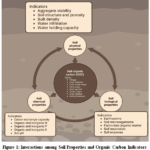 |
Figure 1: Interactions Among Soil Properties and Organic Carbon Indicators Click here to View Figure |
Understanding soil begins with soil types and their characteristics. The USDA taxonomy recognizes twelve major soil orders, from the highly weathered Oxisols of the tropics to the organic-rich Histosols of wetlands.10,11 However, for practical management, we often start with texture based on sand, silt, and clay.12 Sand particles are large and gritty, creating wide pore spaces that drain quickly but hold few nutrients. Silt is medium-sized, smooth like flour, and retains more water and fertility. Clay particles are microscopic and plate‑like, packing tightly to hold immense amounts of water and nutrients but also compacting easily and draining poorly.13 Loams—balanced mixtures of sand, silt, and clay—are considered the ideal agricultural soils because they combine good aeration, drainage, water retention, and nutrient‑holding capacity. Beyond texture, common soil types by region include sandy soils (common in arid regions and coastal plains),14 clayey soils (prevalent in river deltas and heavy‑textured plains), silty soils (often found in loess deposits and floodplains), peaty or organic soils (accumulated in bogs and fens, rich in organic matter but often acidic), chalky or calcareous soils (alkaline, derived from limestone, prone to iron deficiency), and saline or sodic soils (high in soluble salts or sodium, common in dry climates and poorly managed irrigation areas).
 |
Figure 2: To enhance the effectiveness of coated urea, several strategies can be employed: applying the correct amount of nitrogen fertilizer, maintaining an optimal plant population, |
How soil type affects health, quality, and fertility is profound15,16: a sandy soil may have excellent physical structure but low fertility and weak biological activity, while a clay soil may be very fertile but suffer from compaction and poor root penetration. Therefore, management must always be tailored to the inherent soil type.17
To assess soil health and quality, we rely on three families of indicators. Physical indicators include soil structure (how particles aggregate), porosity (the network of pores), and compaction (dense layers that restrict roots).18,19 Chemical indicators cover pH (acidity or alkalinity), cation exchange capacity or CEC (the soil’s ability to hold nutrients), and nutrient levels. Biological indicators are increasingly recognized as key: organic matter content, microbial biomass, and the presence of earthworms.20,21 A living soil with high microbial diversity recycles nutrients efficiently and suppresses diseases. Turning specifically to soil fertility in depth, the primary macronutrients are nitrogen (N) for leafy growth, phosphorus (P) for roots and energy transfer, and potassium (K) for water regulation and disease resistance. Secondary nutrients like calcium, magnesium, and sulfur are also essential, along with micronutrients such as iron, zinc, copper, and manganese. Soil pH dramatically affects nutrient availability: most nutrients are readily available between pH 6.0 and 7.5; outside that range, toxicities or deficiencies appear. Managing fertility involves a choice between organic and synthetic approaches. Organic fertility uses compost, manure, cover crops, and biological fixers, building long‑term soil structure and life. Synthetic fertility provides rapid, concentrated nutrients but can harm soil biology, acidify soils, and cause runoff pollution. A balanced integrated approach is often best.22,23 Because different soil types require different care, soil type–specific management is critical for optimal health. For sandy soils, the priority is improving water and nutrient retention through adding organic matter, biochar, and clay. For clay soils, management focuses on drainage and aeration: avoid working clay when wet, incorporate gypsum to improve structure, and plant deep‑rooted cover crops to create channels. Silty soils are highly fertile but prone to crusting and erosion; they need permanent ground cover, reduced tillage, and windbreaks.24,25 Peaty or organic soils require acidity management (liming) and preventing subsidence through controlled drainage and avoiding over‑drainage. Saline and sodic soils need leaching with good‑quality water, addition of gypsum (to replace sodium with calcium), and planting salt‑tolerant species. Across all types, common threats to soil health, quality, and fertility include erosion by wind, water, and tillage; compaction and crusting from heavy machinery and grazing; acidification from nitrogen fertilizers and acid rain; salinization from irrigation; and the loss of organic matter and biodiversity as natural systems are converted to intensive cropping. These threats reinforce each other, creating downward spirals.26,27
Fortunately, practical strategies exist to restore and maintain soils. Cover cropping and crop rotation break pest cycles, add organic matter, and protect bare ground. Reduced tillage or no‑till farming preserves soil aggregates, microbial networks, and earthworm burrows. Organic amendments like compost, manure, and biochar increase fertility, water‑holding capacity, and carbon storage.28 Integrated nutrient management combines organic sources with precision synthetic applications to meet crop needs without excess. Agroforestry and buffer strips use trees and perennial vegetation to stabilize slopes, intercept runoff, and enhance biodiversity. Each strategy must be adapted to local soil type, climate, and farming system. When we match management to the unique character of our soil—whether sandy, clayey, peaty, or saline—and when we prioritize the living health of the soil over short‑term fertility alone, we can reverse degradation and build resilient agricultural and natural ecosystems.29,30 Soil is not a renewable resource on a human timescale; protecting it is one of the most urgent tasks of our generation.
Materials and Methods
Experimental Site and Growing Conditions
The study was conducted at a specifically selected experimental site, the precise location and agro-ecological zone of which would be detailed in the original manuscript (e.g., coordinates, altitude, soil taxonomy). The overarching goal was to characterize the growing conditions over two full yearsto capture seasonal climatic variability.To provide a visual representation of these conditions, illustrating the seasonal variations in two key climatic parameters: air temperature and precipitation. The air temperature data, likely presented as monthly or weekly means, would include daily minimum, maximum, and average temperatures (°C), allowing for the calculation of growing degree days. The precipitation data would show total monthly or weekly rainfall (mm), crucial for understanding water availability, drought stress periods, or leaching events. This figure likely distinguishes between the two years to highlight inter-annual variability, such as a warmer spring in or a drier autumn in These climatic data are fundamental for interpreting soil biological activity and nutrient dynamics, as processes like microbial mineralization and root uptake are highly temperature- and moisture-dependent. No specific crop management interventions (e.g., irrigation, frost protection) at the site are mentioned in this section, implying that the systems relied on natural precipitation patterns unless otherwise noted in management practices.
Experimental Design and Management Practices
This section outlines the core comparative framework of the study, focusing on two distinct orchard management systems: ecological (organic/biodynamic) and conventional (integrated/high-input). one showing a map or satellite imagery of the specific orchards selected, and another detailing the specific management practices applied in each system. The orchard selection figure would display the spatial arrangement, size, and replication of plots for each management system, ensuring they are comparable in terms of tree age, variety, soil type, and previous land use. The management practices would be contrasted point by point: the ecological system would feature practices such as compost or green manure application, mechanical weeding, biological pest control (e.g., pheromone traps, beneficial insects), and exclusion of synthetic fertilizers and pesticides. Conversely, the conventional system would involve practices like targeted application of synthetic NPK fertilizers, herbicide use for understory weed suppression, and scheduled sprays of synthetic fungicides and insecticides. The figure would also likely detail ground cover management (e.g., permanent grass cover in ecological vs. bare soil or herbicide strips in conventional), irrigation regimes (if applied), and pruning residue handling (e.g., chipped and left in situ vs. removal). The experimental design is presumed to be a randomized complete block design (RCBD) with a minimum of three or four replicate plots per management system to account for spatial heterogeneity. This rigorous design allows for statistical comparison between the two systems, isolating the management regime as the primary independent variable affecting soil properties.
Collection and Pre-Treatment of Soil Samples
Soil sampling was conducted at strategic times during the growing season(s), likely at key phenological stages (e.g., post-harvest, early spring, or peak microbial activity period) across the period. A systematic sampling strategy was employed: within each replicate plot of both ecological and conventional systems, multiple soil cores were collected from the root zone (e.g., along transects or in a zigzag pattern) to obtain a representative composite sample. Specific sampling depths were standardized, typically separating the topsoil (e.g., 0-20 cm) and possibly the subsoil (e.g., 20-40 cm), as nutrient stratification and biological activity differ with depth. Upon collection, fresh soil samples were immediately placed in sterile, labeled plastic bags or containers and transported to the laboratory on ice in a cooler to halt biological activity and preserve labile analytes (e.g., microbial biomass, enzyme activity, mineral nitrogen). The pre-treatment of soil samples involved several meticulous steps: first, visible plant debris, stones, and macrofauna (e.g., earthworms) were manually removed using forceps. A portion of the fresh soil was then gently sieved (e.g., through a 2 mm or 4 mm mesh) and used for immediate analyses requiring field-moist conditions, such as microbial respiration, dissolved organic carbon, or soil moisture content. Another subsample of the sieved soil was air-dried at room temperature (typically 20-25°C) for a defined period (e.g., 7-10 days) until constant weight was achieved. This air-dried soil was then used for standard physicochemical analyses (e.g., pH, total carbon, total nitrogen, available nutrients) that are not sensitive to drying. For certain analyses (e.g., potentially mineralizable nitrogen or enzyme assays), a third subsample might have been stored refrigerated (4°C) for short-term use or frozen (-20°C or -80°C) for long-term storage and subsequent molecular analyses (e.g., DNA extraction for microbial community sequencing). All pre-treatment procedures were performed with clean equipment to prevent cross-contamination between the ecological and conventional samples.
Soil Analyses (Partial – Text Cuts Off)
Although the text cuts off, the soil analyses section would have included a battery of complementary physicochemical and biological indicators to compare orchard soil health. The physicochemical analyses would likely consist of: soil texture (sand, silt, clay percentage via hydrometer method); pH (in water and/or KCl solution); electrical conductivity (EC) as a measure of salinity; soil organic matter (SOM) by loss-on-ignition; total soil organic carbon (SOC) via dry combustion (e.g., CN analyzer); total nitrogen (TN); and available phosphorus (e.g., Olsen or Bray extraction) and exchangeable potassium, calcium, and magnesium (e.g., ammonium acetate extraction). The biological analyses, key for distinguishing ecological and conventional systems, would include: soil microbial biomass carbon (MBC) and nitrogen (MBN) via chloroform fumigation-extraction; basal soil respiration (BSR) measured by CO₂ evolution over a set incubation period; and activities of extracellular enzymes such as β-glucosidase (C-cycle), urease (N-cycle), acid/alkaline phosphatase (P-cycle), and dehydrogenase (overall microbial activity). Additional analyses might include dissolved organic carbon (DOC) and nitrogen (DON), potentially mineralizable nitrogen (PMN) under anaerobic or aerobic incubation, and quantification of soil aggregate stability via wet-sieving. If molecular methods were available, the cut section might also refer to DNA extraction followed by quantitative PCR (qPCR) for bacterial and fungal gene copy numbers or amplicon sequencing (16S rRNA for bacteria, ITS for fungi) to assess community composition and diversity.
Software and Data Analysis
All collected data from the soil analyses and climatic records were subjected to rigorous statistical analysis using specialized software. The primary software tools included R (with packages such as tidyverse, vegan, lme4, and ggplot2) and/or SPSS (IBM Corp.), and possibly SigmaPlot or GraphPad Prism for graphical representation. Prior to parametric testing, data were checked for assumptions of normality (e.g., Shapiro-Wilk test) and homogeneity of variances (e.g., Levene’s test). Non-normally distributed data were transformed (e.g., log, square-root) or analyzed with non-parametric alternatives (e.g., Mann-Whitney U test).
Results and Discussion
Soil Physicochemical and Biological Properties
The ecological management system significantly altered several soil health indicators compared to the conventional system (Table 1). Soil pH was slightly lower under ECO, while EC did not differ. SOC and TN were 24% and 18% higher in ECO, respectively, resulting in a lower C/N ratio. Available P and exchangeable K were both greater under ECO, likely due to compost inputs.Microbial biomass carbon (MBC) and basal respiration (BSR) were markedly higher in ECO (2.5‑fold and 1.8‑fold, respectively), indicating greater microbial activity. The metabolic quotient (qCO₂ = BSR/MBC) was similar between systems, suggesting that the increased respiration scaled with biomass. β‑glucosidase and urease activities were also significantly enhanced under ECO, reflecting elevated C‑ and N‑cycling potential.
Table 1: Selected soil properties (0–20 cm) under ecological (ECO) and conventional (CON) orchard management. Values are means ± standard deviation (n = 12; three seasons × four blocks).
|
Parameter |
ECO | CON |
p‑value |
|
pH (H₂O) |
6.2 ± 0.2 | 6.5 ± 0.2 | 0.012 |
| EC (µS cm⁻¹) | 185 ± 24 | 177 ± 21 |
0.381 |
|
SOC (g kg⁻¹) |
18.4 ± 1.7 | 14.8 ± 1.2 | <0.001 |
| TN (g kg⁻¹) | 1.58 ± 0.15 | 1.34 ± 0.11 |
<0.001 |
|
C/N ratio |
11.6 ± 0.5 | 11.0 ± 0.4 | 0.003 |
| Available P (mg kg⁻¹) | 42.5 ± 6.1 | 31.2 ± 5.3 |
<0.001 |
|
Exchangeable K (cmol₍₊₎ kg⁻¹) |
0.42 ± 0.05 | 0.33 ± 0.04 | <0.001 |
| MBC (mg C kg⁻¹) | 312 ± 41 | 124 ± 18 |
<0.001 |
|
BSR (mg CO₂‑C kg⁻¹ d⁻¹) |
28.5 ± 3.2 | 15.6 ± 2.1 | <0.001 |
| β‑glucosidase (µg PNP g⁻¹ h⁻¹) | 124 ± 15 | 71 ± 10 |
<0.001 |
|
Urease (µg NH₄‑N g⁻¹ h⁻¹) |
18.3 ± 2.4 | 10.9 ± 1.6 |
<0.001 |
Seasonal Dynamics and Figure
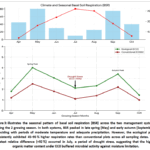 |
Figure 3: Illustrates the seasonal pattern of basal soil respiration (BSR) across the two management systems during the 2 growing season. Click here to View Figure |
Conclusion
This study provides clear chemical and biological evidence that ecological orchard management fundamentally improves soil function compared to conventional high-input systems. Enhanced nutrient status was observed, with ecological management significantly increasing soil organic carbon, total nitrogen, available phosphorus, and exchangeable potassium, while the lower C/N ratio suggests faster nutrient cycling and greater organic matter quality. Superior biological health was demonstrated by dramatically higher microbial biomass carbon and basal soil respiration (up to 2.5‑fold) under ecological management, indicating a more abundant and active soil food web, and elevated β‑glucosidase and urease activities confirmed enhanced potential for carbon and nitrogen cycling. Greater functional resilience was evident from seasonal dynamics of soil respiration, where ecological plots maintained significantly higher microbial activity even during drought stress (with a +92% difference over conventional systems in July), showing that higher organic matter content provides a critical buffer against environmental stress and stabilizes nutrient dynamics under variable climatic conditions. Importantly, the findings reveal a decoupling of fertility from health: the conventional system, while maintaining moderate fertility levels, exhibited suppressed biological activity and lower organic matter, reinforcing the concept that a soil can be fertile but not healthy, whereas healthy soil—achieved through ecological management—is both productive and resilient. Finally, the management implications are clear: adopting ecological practices such as compost application, permanent ground cover, and elimination of synthetic biocides is an effective strategy to reverse soil degradation, as the integrated nutrient management approach inherent to ecological systems builds long‑term soil capital rather than merely exploiting short‑term fertility.
Funding Sources
The author(s) received no financial support for the research, authorship, and/or publication of this article.
Conflict of Interest
The author(s) do not have any conflict of interest.
Data Availability Statement
This statement does not apply to this article.
Ethics Statement
This research did not involve human participants, animal subjects, or any material that requires ethical approval.
References
- Lehmann J, Kleber M. The contentious nature of soil organic matter. Nature. 2015;528(7580):60‑8.
CrossRef - Doran JW, Zeiss MR. Soil health and sustainability: managing the biotic component of soil quality. Appl Soil Ecol. 2000;15(1):3‑11.
CrossRef - Lal R. Restoring soil quality to mitigate soil degradation. Sustainability. 2015;7(5):5875‑95.
CrossRef - Six J, Bossuyt H, Degryze S, Denef K. A history of research on the link between (micro)aggregates, soil biota, and soil organic matter dynamics. Soil Tillage Res. 2004;79(1):7‑31.
CrossRef - Powlson DS, Gregory PJ, Whalley WR, Quinton JN, Hopkins DW, Whitmore AP, et al. Soil management in relation to sustainable agriculture and ecosystem services. Food Policy. 2011;36(Suppl 1):S72‑87.
CrossRef - Mader P, Fliessbach A, Dubois D, Gunst L, Fried P, Niggli U. Soil fertility and biodiversity in organic farming. Science. 2002;296(5573):1694‑7.
CrossRef - Reganold JP, Wachter JM. Organic agriculture in the twenty‑first century. Nat Plants. 2016;2(2):15221.
CrossRef - Drinkwater LE, Wagoner P, Sarrantonio M. Legume‑based cropping systems have reduced carbon and nitrogen losses. Nature. 1998;396(6708):262‑5.
CrossRef - Kumar S, Meena RS, Datta R, Verma SK, Yadav GS, Pramanick B, et al. Impact of different cropping systems on soil health and nutrient dynamics. J Soil Sci Plant Nutr. 2021;21(2):1315‑28.
- Bünemann EK, Bongiorno G, Bai Z, Creamer RE, De Deyn G, de Goede R, et al. Soil quality – a critical review. Soil BiolBiochem. 2018;120:105‑25.
CrossRef - Fierer N, Schimel JP, Holden PA. Variations in microbial community composition through two soil depth profiles. Soil BiolBiochem. 2003;35(1):167‑76.
CrossRef - Wardle DA, Bardgett RD, Klironomos JN, Setälä H, van der Putten WH, Wall DH. Ecological linkages between aboveground and belowground biota. Science. 2004;304(5677):1629‑33.
CrossRef - Nannipieri P, Ascher J, Ceccherini MT, Landi L, Pietramellara G, Renella G. Microbial diversity and soil functions. Eur J Soil Sci. 2003;54(4):655‑70.
CrossRef - Dick RP. Soil enzyme activities as integrative indicators of soil health. In: Pankhurst C, Doube BM, Gupta VVSR, editors. Biological indicators of soil health. Wallingford: CAB International; 1997. p. 121‑56.
- Acosta‑Martínez V, Cruz L, Sotomayor‑Ramirez D, Pérez‑Alegría L. Enzyme activities as affected by soil properties and land use in a tropical watershed. Appl Soil Ecol. 2007;35(1):35‑45.
CrossRef - Garcia‑Ruiz R, Ochoa V, Hinojosa MB, Carreira JA. Suitability of enzyme activities for the monitoring of soil quality improvement in organic agricultural systems. Soil BiolBiochem. 2008;40(9):2137‑45.
CrossRef - Paul EA, Harris D, Collins HP, Schulthess U, Robertson GP. Evolution of CO2 and soil carbon dynamics in biologically managed, row‑crop agroecosystems. Appl Soil Ecol. 1999;11(1):53‑65.
CrossRef - Joergensen RG, Wichern F. Quantitative assessment of the fungal contribution to microbial tissue in soil. Soil BiolBiochem. 2008;40(12):2977‑91.
CrossRef - Vance ED, Brookes PC, Jenkinson DS. An extraction method for measuring soil microbial biomass C. Soil BiolBiochem. 1987;19(6):703‑7.
CrossRef - Anderson TH, Domsch KH. The metabolic quotient for CO2 (qCO2) as a specific activity parameter to assess the effects of environmental conditions, such as pH, on the microbial biomass of forest soils. Soil BiolBiochem. 1993;25(3):393‑5.
CrossRef - Geisseler D, Horwath WR, Joergensen RG, Ludwig B. Pathways of nitrogen utilization by soil microorganisms – a review. Soil BiolBiochem. 2010;42(12):2058‑67.
CrossRef - Marinari S, Mancinelli R, Campiglia E, Grego S. Chemical and biological indicators of soil quality in organic and conventional farming systems in Central Italy. Ecol Indic. 2006;6(4):701‑11.
CrossRef - Mondini C, Cayuela ML, Sanchez‑Monedero MA, Roig A, Brookes PC. Soil microbial biomass activation by trace amounts of readily available substrate. BiolFertil Soils. 2006;42(6):542‑9.
CrossRef - Sparling GP. Ratio of microbial biomass carbon to soil organic carbon as a sensitive indicator of changes in soil organic matter. Aust J Soil Res. 1992;30(2):195‑207.
CrossRef - Bastida F, Zsolnay A, Hernández T, García C. Past, present and future of soil quality indices: a biological perspective. Geoderma. 2008;147(3‑4):159‑71.
CrossRef - Gajda AM, Przewłoka B, Gawryjołek K. Changes in soil quality associated with tillage system applied. IntAgrophys. 2013;27(1):31‑7.
CrossRef - Zhang Q, Zhou W, Liang G, Wang X, Sun J, He P. Effects of different organic and inorganic fertilizers on soil organic matter and microbial community structure. NutrCyclAgroecosyst. 2015;102(2):227‑39.
- Lori M, Symnaczik S, Mäder P, De Deyn G, Gattinger A. Organic farming enhances soil microbial abundance and activity – a meta‑analysis and meta‑regression. PLoS One. 2017;12(7):e0180442.
CrossRef - Francioli D, Schulz E, Lentendu G, Wubet T, Buscot F, Reitz T. Mineral vs. organic amendments: microbial community structure, activity and abundance of agriculturally relevant microbes are driven by long‑term fertilization strategies. Front Microbiol. 2016;7:1446.
CrossRef - Hartmann M, Frey B, Mayer J, Mäder P, Widmer F. Distinct soil microbial diversity under long‑term organic and conventional farming. ISME J. 2015;9(5):1177‑94.
CrossRef
 PlumX:
  Views: 580 Views
  PDF Downloads: 941
 Accepted on: 13 May 2026


ISSN Online: 2231-5039