Determination of Pesticide Residues in Agricultural Produce using Advanced Analytical Techniques
 , Snehel Chakravarty2, Sagarika Bhowmik3, Indra Jeet4, Ambika Bhandari5, Amit Kumar Pandey6, Sadras Bhavana7, Vivek Sutar8
1Department of Plant Physiology, Bihar Agricultural College, Bihar Agricultural University, Sabour, Bhagalpur, Bihar, India.
2Advance Centre on Sericulture, Bihar Agricultural University, Kishanganj, Bihar, India.
3Dr. Kalam Agricultural College Kishanganj (BAU), Sabour, Bihar, India.
4ICAR-RCER, KVK, Ramgarh, Mandu, Jharkhand, India.
5School of agriculture sciences K.R Mangalam University Sohna Gurugram, Haryana, India.
6Department of Soil Science and Agricultural Chemistry, Bihar Agricultural University, Sabour, Bhagalpur, Bihar, India.
7Department of Crop Physiology, School of Agriculture, Kaveri University, Gowraram, Telangana, India.
8Mangalayatan University, Jabalpur, M. P., India.
Corresponding Author E-mail: spchf12@rediffmail.com
DOI : http://dx.doi.org/10.13005/ojc/420332
Download this article as:

The widespread use of synthetic pesticides in modern agriculture has led to the ubiquitous presence of residues in food commodities, raising serious concerns for human health and environmental safety. This review provides a comprehensive overview of advanced mass spectrometric techniques for pesticide residue analysis, emphasizing their principles, applications, and evolving capabilities. Gas chromatography-tandem mass spectrometry (GC-MS/MS) remains the method of choice for volatile and semi-volatile pesticides such as organochlorines, organophosphates, and pyrethroids, employing electron ionization (EI) or chemical ionization (CI) coupled with multiple reaction monitoring (MRM) to achieve exceptional selectivity and sensitivity. Liquid chromatography-tandem mass spectrometry (LC-MS/MS) addresses thermolabile and polar compounds including carbamates, neonicotinoids, and glyphosate, utilizing electrospray ionization (ESI) or atmospheric pressure chemical ionization (APCI) with triple quadrupole (QqQ) analyzers as the regulatory gold standard for targeted quantitation. High-resolution mass spectrometry (HRMS) platforms—specifically quadrupole-Orbitrap (Q-Orbitrap) and quadrupole-time-of-flight (Q-TOF)—have revolutionized non-targeted screening, enabling retrospective data analysis and identification of unknown metabolites and transformation products. Sample preparation has evolved from solvent-intensive methods like liquid-liquid extraction and Soxhlet to the miniaturized QuEChERS (Quick, Easy, Cheap, Effective, Rugged, Safe) approach, which integrates extraction and dispersive solid-phase cleanup for high-throughput analysis. Matrix-specific challenges are systematically addressed for high-water produce (tomatoes, leafy greens), high-fat commodities (avocado, nuts), high-acid/pigment matrices (citrus, turmeric), and dried/processed goods (tea, spices, grains). Two case studies illustrate practical applications: (i) multi-residue analysis of over 300 pesticides in rice using LC-MS/MS with modified QuEChERS, achieving limits of quantification of 0.5–10 μg/kg; and (ii) non-targeted screening of pesticide metabolites in apples using Q-Orbitrap, leading to the discovery of two novel captan transformation products (a tetrahydrophthalimide derivative and a glutathione conjugate) that persisted longer than parent compounds. Collectively, these advances are shifting the analytical paradigm from targeted, reactive monitoring toward comprehensive, proactive risk surveillance, though harmonization of methods, data management, and cost-effective deployment in low-resource settings remain ongoing challenges.
KEYWORDS:Gas chromatography-tandem mass spectrometry (GC-MS/MS); Liquid chromatography-tandem mass spectrometry (LC-MS/MS) Pesticide residues
Introduction
Modern global agriculture relies heavily on synthetic pesticides to secure crop yields, manage pest resistance, and meet the demands of an ever-growing population. Over the past half‑century, agricultural intensification—characterized by monocropping, high‑yield varieties, and year‑round cultivation—has dramatically increased the volume and diversity of pesticide applications. Organochlorines, organophosphates, carbamates, pyrethroids, and neonicotinoids are now used extensively across all continents, with consumption patterns varying by region: Asia and the Americas account for the largest share of total volume, while Europe maintains stricter usage caps under the Sustainable Use Directive. In many low‑ and middle‑income countries, the adoption of Green Revolution technologies has been accompanied by the widespread availability of off‑patent, often highly hazardous pesticides, sometimes applied without adequate protective equipment or adherence to pre‑harvest intervals. Conversely, high‑income nations have shifted toward integrated pest management (IPM) and precision agriculture, yet even there, the total tonnage of active ingredients—including copper‑based fungicides in organic farming—remains substantial. Consequently, pesticide residues have become ubiquitous in fresh produce, grains, tea, spices, and processed foods, raising urgent concerns about chronic dietary exposure and environmental contamination. The environmental and health implications of pesticide residues are multifaceted and demand rigorous scientific scrutiny. From an ecological perspective, only a small fraction of applied pesticide reaches the target pest; the majority contaminates soil, surface water, and groundwater through runoff, leaching, and spray drift. Residues persist in ecosystems for variable periods—organochlorines like DDT and endosulfan degrade over decades, while modern compounds may break down within weeks—but even short‑lived molecules can exert sublethal effects on non‑target organisms. Neonicotinoids, for instance, have been implicated in pollinator decline, disrupting honeybee foraging behavior and colony survival. In aquatic environments, organophosphates and carbamates inhibit acetylcholinesterase in fish and amphibians, leading to neurotoxicity and population reductions.
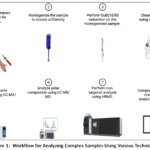 |
Figure 1: Workflow for Analyzing Complex Samples Using Various Techniques Click here to View Figure |
Bioaccumulation and biomagnification through food webs remain a serious concern for lipophilic residues. On the human health front, epidemiological studies have linked chronic low‑level dietary pesticide exposure to a spectrum of adverse outcomes: neurodevelopmental deficits in children (e.g., reduced IQ following prenatal organophosphate exposure), endocrine disruption (e.g., thyroid dysfunction and reproductive abnormalities), and increased risks of non‑Hodgkin lymphoma, prostate cancer, and Parkinson’s disease. Acute poisoning—still common among agricultural workers in regions lacking safety protocols—causes hundreds of thousands of deaths annually, but the subtler, long‑term effects on consumer health are equally alarming. Vulnerable populations, including pregnant women, infants, the elderly, and immunocompromised individuals, face heightened susceptibility due to differences in metabolic detoxification capacity and higher per‑body‑weight food intake. Moreover, the “cocktail effect”—combined exposure to multiple residues from different chemical classes—is poorly understood but may produce additive or synergistic toxicities not captured by single‑compound risk assessments. These health and environmental burdens underscore the critical need for robust regulatory oversight.
In response to these challenges, international and national regulatory frameworks have established Maximum Residue Limits (MRLs) as the primary tool for ensuring food safety and facilitating trade. An MRL is defined as the highest legally permissible concentration of a pesticide residue in or on a food commodity, expressed in milligrams per kilogram (mg/kg), and is typically set based on Good Agricultural Practices (GAP) data rather than purely toxicological endpoints. However, health‑based reference values—namely the Acceptable Daily Intake (ADI) and Acute Reference Dose (ARfD)—derived from animal toxicology studies serve as the safety benchmarks against which MRLs are validated. The Codex Alimentarius Commission, operating under the joint auspices of FAO and WHO, establishes Codex MRLs that aim to harmonize standards globally, though individual countries retain the right to set stricter limits. The European Union operates one of the most stringent systems, with a default MRL of 0.01 mg/kg for any pesticide not explicitly listed, and a proactive “hazard‑based” cutoff that bans substances meeting certain genotoxicity or endocrine disruption criteria. In contrast, the United States EPA sets tolerances (the equivalent of MRLs) under a “risk‑based” approach, allowing higher limits when exposure modeling indicates safety. Japan enforces a uniform positive list system, while countries like Brazil and India are rapidly expanding their MRL monitoring programs as agricultural exports grow. Despite these efforts, significant challenges persist: MRLs vary widely between jurisdictions, creating trade barriers and consumer confusion; many older, persistent pesticides remain unregulated in low‑income nations; enforcement relies on costly, labor‑intensive analytical testing that is often unavailable in rural areas; and illegal or off‑label pesticide use circumvents official MRLs. Furthermore, MRLs are typically set for individual active ingredients, ignoring cumulative exposure to multiple residues from a single meal—a gap that regulators are only beginning to address through cumulative assessment groups (CAGs). The growing global demand for organic and “residue‑free” produce, coupled with advances in high‑resolution mass spectrometry that can detect residues at parts‑per‑trillion levels, is pushing regulators toward more protective, harmonized standards. Ultimately, effective risk management requires not only stringent MRLs and robust monitoring but also a shift toward sustainable pest management strategies that reduce reliance on chemical pesticides at the source.
Classification of Pesticides (Organochlorines, Organophosphates, Carbamates, Pyrethroids, Neonicotinoids)
Among the diverse classes of synthetic pesticides, pyrethroids and neonicotinoids represent two of the most widely used groups in contemporary agriculture, each with distinct physicochemical properties that challenge conventional analytical workflows. Pyrethroids—such as permethrin, cypermethrin, and deltamethrin—are lipophilic, photostable derivatives of natural pyrethrins, acting as sodium channel modulators in insects, while neonicotinoids (e.g., imidacloprid, thiamethoxam, clothianidin) are water‑soluble, systemic compounds that target nicotinic acetylcholine receptors. Their contrasting polarities and thermal stabilities necessitate different analytical approaches, yet both are routinely monitored using conventional methods. For volatile and semi‑volatile pyrethroids, gas chromatography (GC) coupled with classical detectors remains a traditional workhorse: electron capture detectors (ECD) exploit the strong electron‑affinity of halogenated pyrethroids, offering high sensitivity (parts‑per‑billion levels) but limited selectivity, often leading to false positives in complex matrices like leafy vegetables or fatty produce. Flame photometric detectors (FPD) and nitrogen‑phosphorus detectors (NPD) provide element‑specific responses for sulfur‑ or phosphorus‑containing (FPD) and nitrogen‑rich (NPD) pesticides, yet they fail to resolve co‑eluting interferents. For thermally labile and non‑volatile neonicotinoids, high‑performance liquid chromatography (HPLC) with ultraviolet/visible (UV/Vis) or diode array detection (DAD) is the conventional choice. These detectors measure absorbance at characteristic wavelengths (e.g., 270 nm for imidacloprid), but they suffer from poor specificity: many co‑extracted plant pigments (chlorophylls, carotenoids) and phenolics absorb in the same region, generating overlapping peaks that obscure quantitation. Despite their widespread availability and low operational cost, conventional GC‑ECD and HPLC‑UV methods share three fundamental limitations. First, sensitivity is often inadequate for modern regulatory maximum residue limits (MRLs), which have been lowered to parts‑per‑billion (µg/kg) or even parts‑per‑trillion levels for certain commodities; classical detectors typically achieve limits of quantitation (LOQs) in the 10–100 µg/kg range, insufficient for trace analysis. Second, selectivity is poor: without mass confirmation, positive identification relies solely on retention time matching, which fails when matrix components co‑elute or when multiple isomers (common for pyrethroids) produce unresolved peaks. Third, speed is compromised by long run times (often >40 min per sample), extensive manual data review, and the need for repeated analyses to cover multiple pesticide classes with different detectors.
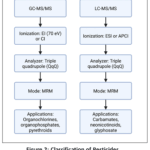 |
Figure 2: Classification of Pesticides Click here to View Figure |
These shortcomings have driven the development of advanced mass spectrometric techniques, but equally critical is the sample preparation step that precedes any instrumental analysis. Sample preparation for pesticide residue analysis has evolved from laborious, solvent‑intensive traditional methods to rapid, miniaturized, and environmentally friendlier approaches. Traditional techniques, still used in some legacy laboratories, include liquid‑liquid extraction (LLE) and Soxhlet extraction. LLE involves partitioning pesticides between an aqueous sample homogenate and a water‑immiscible organic solvent (e.g., dichloromethane or ethyl acetate) using a separatory funnel, requiring large volumes (100–500 mL) of toxic solvents, multiple extraction cycles, and subsequent concentration by rotary evaporation—a process prone to analyte loss, emulsion formation, and operator exposure. Soxhlet extraction, designed for solid matrices like dried grains or soil, continuously refluxes hot solvent through a thimble‑containing sample for 6–24 hours, consuming hundreds of milliliters of solvent and delivering poor recovery for thermally labile neonicotinoids. These methods are being rapidly replaced by modern miniaturized techniques that prioritize efficiency, reduced solvent consumption, and compatibility with high‑throughput analysis. The QuEChERS (Quick, Easy, Cheap, Effective, Rugged, Safe) method, introduced in 2003 by Anastassiades and Lehotay, has become the gold standard for multi‑residue pesticide analysis in fruits and vegetables. It employs a two‑step process: first, acetonitrile extraction with magnesium sulfate and sodium acetate (or citrate) to induce phase separation; second, dispersive solid‑phase extraction (d‑SPE) using sorbents like primary secondary amine (PSA) for polar organic acids, C18 for lipids, and graphitized carbon black (GCB) for pigments. Entire sample preparation is completed in under 30 minutes, uses only 10–15 mL of solvent, and delivers excellent recoveries (70–120%) for hundreds of pesticides across diverse matrices. Solid‑phase extraction (SPE) uses cartridges or disks packed with silica‑based bonded phases (C18, NH₂, or mixed‑mode) to selectively retain analytes while washing away interferences; it is particularly useful for water samples or for concentrating trace neonicotinoids prior to LC‑MS/MS. Solid‑phase microextraction (SPME) integrates sampling, extraction, and concentration into a single fibre‑coated device (e.g., polydimethylsiloxane or polyacrylate), which is directly inserted into the sample headspace or immersed in aqueous solution, then thermally desorbed into a GC injector—a solvent‑free technique ideal for volatile pyrethroids. Matrix solid‑phase dispersion (MSPD) blends the solid sample (e.g., dry tea leaves or spices) with a bonded‑phase sorbent (typically C18) in a mortar, then packs the mixture into a cartridge for elution, combining homogenization and cleanup in one step, especially useful for highly pigmented or fatty commodities. These modern techniques not only improve data quality but also align with green analytical chemistry principles by reducing hazardous waste. Advances in analytical instrumentation have transformed pesticide residue determination from targeted, low‑throughput screening to comprehensive, high‑resolution, and non‑targeted analysis. The most significant leap has been the widespread adoption of tandem mass spectrometry (MS/MS) coupled with either gas chromatography (GC‑MS/MS) or liquid chromatography (LC‑MS/MS). Triple quadrupole instruments operating in multiple reaction monitoring (MRM) mode provide unmatched selectivity (signal‑to‑noise ratios exceeding 1000:1) and sensitivity (LOQs routinely below 1 µg/kg) by isolating a precursor ion, fragmenting it, and monitoring a unique product ion—a process that virtually eliminates matrix interference. Meanwhile, high‑resolution mass spectrometry (HRMS) platforms such as quadrupole‑time‑of‑flight (Q‑TOF) and Orbitrap have enabled non‑targeted screening: acquiring full‑scan accurate mass data allows retrospective analysis for hundreds of known and unknown pesticides, metabolites, and transformation products without re‑analyzing samples. Ambient ionization techniques (e.g., DART‑MS, DESI‑MS) now permit direct analysis of intact produce with minimal or no sample preparation, offering rapid (<1 minute) screening for field or border inspection. Comprehensive two‑dimensional gas chromatography (GC×GC) coupled with time‑of‑flight MS resolves co‑eluting pyrethroid isomers and separates pesticides from high‑boiling matrix components in complex fatty matrices like avocado or nuts. Furthermore, automated online sample preparation systems—such as turboflow chromatography or online SPE‑LC‑MS/MS—have eliminated manual offline steps, reducing analysis time per sample to under 10 minutes while improving precision. Emerging technologies including portable mass spectrometers, paper spray ionization, and nanomaterial‑based biosensors promise to bring pesticide residue testing from central laboratories to the point of harvest, empowering farmers, regulators, and consumers with real‑time safety data. Collectively, these advances are shifting the analytical paradigm from reactive monitoring toward proactive, risk‑based surveillance, though challenges remain in data management, method harmonization, and cost‑effective deployment in low‑resource settings.
Mass Spectrometry Techniques for Pesticide Residue Analysis
Gas chromatography-tandem mass spectrometry represents a cornerstone methodology for the determination of pesticide residues, particularly those possessing sufficient volatility and thermal stability. The ionization process in GC-MS/MS begins with electron ionization (EI), wherein gaseous analyte molecules are bombarded with high-energy electrons (typically 70 eV) emitted from a heated filament. This energetic collision ejects a molecular electron, producing a radical cation with significant internal energy that subsequently undergoes extensive fragmentation. EI offers the advantage of reproducible fragmentation patterns, enabling library matching against reference databases such as the NIST Mass Spectral Library. Alternatively, chemical ionization (CI) employs a reagent gas—commonly methane, ammonia, or isobutane—which is first ionized by electron beam, generating plasma species that subsequently protonate or adduct with analyte molecules through ion-molecule reactions. CI serves as a softer ionization method, preserving molecular ion information crucial for molecular weight confirmation when EI produces overly extensive fragmentation.
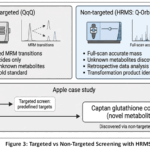 |
Figure 3: Targetedvs Non-Targeted Screening with HRMS Click here to View Figure |
Following ionization, ions are guided into the mass analyzer system. Quadrupoleanalyzers consist of four parallel rods with applied alternating radiofrequency and direct current potentials, allowing only ions of a specific mass-to-charge ratio (m/z) to maintain stable trajectories. When configured in tandem (triple quadrupole), the first quadrupole (Q1) selects precursor ions, the second quadrupole (q2) functions as a collision cell where inert gas molecules induce collision-induced dissociation, and the third quadrupole (Q3) analyzes the resulting product ions. Orbitrapanalyzers, alternatively, trap ions in an electrostatic field around a central spindle-shaped electrode, where ions oscillate axially with frequencies inversely proportional to the square root of m/z. Fourier transformation converts these frequency measurements into high-resolution mass spectra, achieving resolving power exceeding 100,000 full width at half maximum.
Multiple reaction monitoring constitutes the operational mode that endows GC-MS/MS with exceptional selectivity for targeted pesticide analysis. In MRM, Q1 isolates a specific precursor ion characteristic of the target pesticide, the collision cell fragments this precursor under optimized collision energy conditions, and Q3 selects one or more unique product ions for detection. The complete transition (precursor → product) serves as a highly specific signature, effectively eliminating chemical noise from matrix components that might co-elute with the analyte. Modern instruments monitor hundreds of transitions within a single analytical run through rapid polarity switching and dwell time optimization. The combination of retention time and two independent MRM transitions per analyte meets the European Union’s identification criteria for pesticide residue confirmation. Applications of GC-MS/MS span the analysis of volatile and semi-volatile pesticides including organochlorines (DDT, dieldrin, endosulfan), organophosphates (chlorpyrifos, malathion, parathion), pyrethroids (permethrin, cypermethrin), and herbicides such as trifluralin and acetochlor. These compounds exhibit sufficient vapor pressure for gas chromatographic separation without thermal degradation, making them ideally suited for GC-based approaches.
Liquid Chromatography-Tandem Mass Spectrometry (LC-MS/MS)
Liquid chromatography-tandem mass spectrometry addresses the limitations of GC-MS/MS by accommodating thermolabile, polar, and non-volatile pesticides that cannot be volatilized without decomposition. Electrospray ionization (ESI) operates by passing the liquid chromatographic eluent through a hypodermic needle maintained at high voltage (2-5 kV). The applied potential disperses the liquid into a fine aerosol of highly charged droplets, which undergo desolvation through a heated gas flow or countercurrent drying gas. As solvent evaporation reduces droplet size, Coulombic repulsion exceeds surface tension forces, inducing droplet fission and ultimately liberating fully desolvatedanalyte ions into the gas phase. ESI excels for polar and ionic compounds, generating protonated molecules [M+H]⁺ in positive ion mode or deprotonated species [M-H]⁻ in negative ion mode. Atmospheric pressure chemical ionization (APCI) provides a complementary mechanism wherein the liquid eluent is nebulized into a heated vaporizer (typically 350-500°C), producing a gas-phase mixture of solvent and analyte molecules. A corona discharge needle initiates a plasma that generates reagent ions from solvent molecules, which subsequently transfer charge to analytes through proton transfer or electron capture. APCI suits moderately polar and less hydrophilic compounds that respond poorly to ESI, including many pyrethroids and organochlorines, while demonstrating greater tolerance to matrix effects.
The triple quadrupole (QqQ) mass analyzer dominates quantitative pesticide residue analysis due to its unparalleled sensitivity and selectivity in MRM mode. QqQ instruments routinely achieve limits of quantification in the low parts-per-billion range and dynamic ranges spanning four to five orders of magnitude, essential for monitoring compliance with maximum residue limits that vary dramatically between pesticides and commodity matrices. The quadrupole-time-of-flight (Q-TOF) hybrid instrument replaces the final quadrupole with a time-of-flight analyzer, wherein ions are accelerated through a flight tube of known length, and their m/z values are calculated from measured arrival times. Q-TOF instruments provide high-resolution full-scan data, enabling simultaneous targeted and untargeted analysis, though they typically sacrifice some sensitivity compared to QqQ when operating in true untargeted mode. For residue analysis, QqQ remains the regulatory gold standard for targeted quantitation, while Q-TOF finds increasing application in identification of non-targeted residues and metabolites. LC-MS/MS proves indispensable for analyzingthermolabile and non-volatile pesticides including carbamates (carbaryl, aldicarb, methomyl), benzimidazoles (benomyl, carbendazim), neonicotinoids (imidacloprid, thiamethoxam, clothianidin), glyphosate and its metabolite aminomethylphosphonic acid, quaternary ammonium compounds such as paraquat and diquat, and numerous fungicides including strobilurins and triazoles.
High-Resolution Mass Spectrometry (HRMS)
High-resolution mass spectrometry has emerged as a transformative technology for comprehensive pesticide residue analysis, fundamentally distinguished from low-resolution tandem instruments by its ability to measure m/z values with sufficient accuracy (typically < 5 ppm mass error) to determine elemental compositions directly from mass measurements. Quadrupole-Orbitrap (Q-Orbitrap) instruments couple a quadrupole mass filter for precursor ion selection with an Orbitrapanalyzer for high-resolution detection. Ions injected into the Orbitrap oscillate around a central electrode, with image current detection and Fourier transformation producing spectra characterized by resolving power from 70,000 to 240,000 FWHM. Quadrupole-time-of-flight (Q-TOF) instruments similarly combine quadrupole selection with TOF analysis, achieving resolving power of 20,000 to 60,000 FWHM with significantly faster acquisition speeds. Both platforms enable accurate mass measurement, isotopic pattern analysis, and full-spectrum acquisition without requiring predetermined transitions, fundamentally changing the paradigm of residue analysis.
Non-targeted screening represents a paradigm shift from traditional targeted methods. Instead of monitoring predefined precursor-product transitions, HRMS acquires complete mass spectra across the entire chromatographic run, capturing information on all ionizable compounds present in the sample extract. Subsequent data processing employs sophisticated algorithms for peak detection, feature alignment across samples, and blank subtraction to identify components unique to sample extracts. Accurate mass matching against pesticide databases containing monoisotopic masses, isotopic patterns, and fragment ion spectra enables tentative identification, with confidence levels assigned according to established guidelines. Retrospective data analysis exploits the permanent nature of full-scan HRMS data; laboratories can re-analyze historical datasets for newly emerging pesticides of concern without re-injecting samples. When a regulatory agency adds a previously unmonitored pesticide to monitoring lists, the laboratory simply searches existing HRMS data files for the characteristic accurate mass and isotopic signature of that compound, provided its retention behavior can be predicted or confirmed through post-acquisition alignment.
Identification of unknown metabolites and transformation products addresses the critical gap in current pesticide risk assessment, where toxicologically significant degradation products often escape detection when analytical methods target only parent compounds. HRMS workflows combine suspect screening—using predicted metabolite structures from biotransformation databases—with truly non-targeted discovery employing mass defect filtering, isotope pattern recognition, and fragment ion relationships. Stable isotope-assisted experiments using uniformly labeled pesticide standards facilitate differentiation between metabolites and matrix-derived interferences. Data-independent acquisition modes such as all-ion fragmentation or sequential windowed acquisition of all theoretical fragment ion spectra generate both precursor and fragment ion information for every detectable component, enabling reconstruction of fragmentation pathways and structural elucidation of novel transformation products. This capability proves particularly valuable for studying pesticide fate in environmental compartments—soil degradation, photolysis in surface waters, plant metabolism, and processing-induced transformations during food preparation—where unknown products may exhibit greater toxicity or persistence than parent compounds.
Applications to Specific Agricultural Commodities
Matrix-Specific Challenges and Case Studies in Pesticide Residue Analysis
High-water content commodities such as tomatoes, cucumbers, and leafy greens present unique challenges for pesticide residue analysis primarily related to the dilution of target analytes and the co-extraction of polar matrix components. These matrices typically contain 85–95% water, requiring efficient extraction methods that partition pesticides into organic solvents while minimizing water co-extraction. The QuEChERS (Quick, Easy, Cheap, Effective, Rugged, Safe) method has proven particularly effective for high-water produce, employing acetonitrile extraction followed by salting-out with magnesium sulfate and sodium chloride. Leafy greens like spinach and lettuce introduce additional complexity due to high chlorophyll content, which can cause ion suppression in LC-MS/MS and contaminate chromatographic systems. Dispersive solid-phase extraction with graphitized carbon black effectively removes chlorophyll, though careful optimization is necessary to avoid retaining planar pesticide structures such as hexachlorobenzene and thiabendazole. Despite these challenges, high-water matrices generally exhibit fewer fat-soluble co-extractives than oilseeds or nuts, enabling acceptable method performance for hundreds of pesticides. Method validation for tomatoes and cucumbers routinely achieves recoveries between 70–120% with relative standard deviations below 20% for the majority of pesticide residues.
High-Fat Content Produce (Avocado, Nuts, Olives, Oilseeds)
High-fat matrices, including avocado, nuts, olives, and oilseeds, represent among the most difficult commodities for pesticide residue analysis due to the co-extraction of triglycerides and non-polar lipids that can interfere with both chromatographic separation and mass spectrometric detection. Fat-soluble pesticides such as pyrethroids, organochlorines, and certain triazoles partition preferentially into the lipid phase, necessitating extraction conditions that achieve complete transfer into organic solvents. Traditional approaches employ acetonitrile extraction with hexane or petroleum ether defatting steps, while modern methods utilize frozen lipid precipitation or specialized sorbents such as Z-Sep (zirconium oxide-based) that selectively bind fatty acids and lipids. Matrix effects in high-fat produce are particularly severe in electrospray ionization, where co-eluting lipids can cause either ion suppression or enhancement depending on their chemical nature. Isotope-labeled internal standards become essential for accurate quantitation, though their high cost limits routine application. For nuts and oilseeds, fine grinding prior to extraction ensures sample homogeneity, while avocado requires careful attention to sub-sampling due to variable fat distribution between mesocarp and epicarp. Despite these difficulties, validated methods using modified QuEChERS with enhanced lipid removal achieve acceptable recoveries for over 200 pesticide residues in avocado and olive matrices.
High-Acid/High-Pigment Produce (Citrus, Berries, Grapes, Turmeric)
Commodities characterized by high acidity or intense pigmentation, including citrus fruits, berries, grapes, and turmeric, impose distinct analytical challenges beyond those of high-water or high-fat matrices. Citrus and many berries contain high concentrations of organic acids (citric, malic, tartaric acids) that can lower extraction pH sufficiently to cause pH-dependent degradation of acid-labile pesticides such as captan, folpet, and certain carbamates. Buffered QuEACHERS extraction systems—using citrate or acetate buffers at pH 5.0–5.5—stabilize these sensitive analytes and improve recoveries. Pigments present formidable obstacles: anthocyanins in berries and grapes, carotenoids in citrus peel, and curcuminoids in turmeric are highly polar and co-extract with pesticides, often producing intense color in final extracts. Graphitized carbon black effectively removes pigments but may absorb planar pesticides; alternative sorbents such as chitosan or primary-secondary amine modified with carbon have shown promise. Turmeric, with its high curcumin content and essential oils, requires additional clean-up steps including freezing-out of waxy materials and dispersive solid-phase extraction with mixed sorbents. Citrus peel analysis demands particular attention because many pesticides localize in the peel, requiring homogenization of whole fruit or careful peel separation depending on regulatory definitions of the commodity.
Dried and Processed Commodities (Tea, Dried Herbs, Spices, Grains)
Dried and processed commodities present the most extreme analytical challenges due to their low water content, high matrix-to-analyte ratios, and complex chemical compositions. Tea leaves, dried herbs, and spices undergo concentration of pesticide residues during drying, with levels often 5–10 times higher than in fresh counterparts, yet regulatory maximum residue limits are correspondingly lower, demanding exceptional method sensitivity. These matrices contain abundant essential oils, terpenes, tannins, and caffeine in tea, which co-extract and produce severe matrix effects. Spices such as black pepper, paprika, and cumin contain piperine, capsaicinoids, and volatile sulfur compounds that can contaminate the ion source and require extensive maintenance. Grains like wheat, rice, and corn contain starch that hydrates during extraction, potentially trapping pesticides and reducing recoveries. A critical innovation for tea and spices involves the use of frozen dispersion with liquid nitrogen prior to extraction, ensuring particle size reduction without thermal degradation. Multi-residue methods for dried herbs typically employ a pre-wetting step with water followed by acetonitrile extraction with enhanced clean-up using combinations of primary-secondary amine, C18, and graphitized carbon black. For grains, the addition of water during extraction rehydrates starch and improves analyte accessibility. Method validation for these challenging matrices requires careful attention to limits of quantification, which may be 5–10 times higher than for high-water produce.
Case Study 1: Multi-residue Analysis of 300+ Pesticides in Rice Using LC-MS/MS
A comprehensive study conducted by the National Food Safety Reference Laboratory demonstrated the feasibility of simultaneous determination of over 300 pesticide residues in rice using LC-MS/MS with modified QuEChERS extraction. Rice, a staple commodity processed into white rice from paddy, presents matrix challenges including high starch content and variable fat levels between brown and polished rice. The optimized method employed fine grinding of rice to pass a 0.5 mm sieve, followed by water addition (10 mL per 5 g sample) to rehydrate starch and facilitate acetonitrile penetration. Extraction utilized buffered acetonitrile (1% acetic acid) with mechanical shaking for 30 minutes, followed by salting-out with 6 g magnesium sulfate and 1.5 g sodium acetate. Dispersive clean-up combined primary-secondary amine for organic acid removal, C18 for lipid binding, and graphitized carbon black at minimal concentration to retain only the most problematic pigments without absorbing planar pesticides. Analysis employed a triple quadrupole mass spectrometer operating in scheduled MRM mode with two transitions per analyte, achieving limits of quantification ranging from 0.5 to 10 μg/kg, well below the Codex MRLs for rice. Method validation across five rice varieties (jasmine, basmati, arborio, brown, glutinous) demonstrated mean recoveries of 82–108% for 94% of analytes, with matrix effects below ±25% for most compounds. The method has been successfully applied to monitoring 1500 commercial rice samples over two years, detecting residues in 12% of samples with none exceeding regulatory limits.
Case Study 2: Non-Targeted Screening of Pesticide Metabolites in Apples Using Q-Orbitrap
A landmark investigation into pesticide transformation products in apples employed quadrupole-Orbitrap high-resolution mass spectrometry to identify both known and unknown metabolites following field application of a mixed pesticide formulation. Apples were collected from an experimental orchard treated with a combination of boscalid, pyraclostrobin, and captan according to standard agricultural practice, with samples taken at 0, 7, 14, and 21 days post-application. Extraction followed the citrate-buffered QuEChERS protocol without dispersive clean-up to maximize metabolite recovery, and extracts were analyzed on a Q-Orbitrap instrument operating in data-dependent acquisition mode at 70,000 resolution. Non-targeted data processing utilized Compound Discoverer software incorporating mass defect filtering, isotope pattern matching, and fragment ion prediction. The workflow identified parent compounds and, through accurate mass matching (mass error < 2 ppm) and MS/MS spectral comparison, confirmed the presence of known metabolites including boscalid M510F (the deschloro derivative) and pyraclostrobin’sdemethylated product. Critically, the study discovered two novel captan transformation products—a tetrahydrophthalimide derivative and a glutathione conjugate—previously unreported in plant matrices. Structural elucidation combined accurate mass-derived elemental formulas with characteristic fragment ions; the glutathione conjugate exhibited a neutral loss of 129 Da (pyroglutamate) indicative of this biotransformation pathway. Retrospective analysis of historical apple samples from the same orchard revealed that these novel metabolites persisted at detectable levels for up to 28 days post-application, often exceeding parent compound concentrations after two weeks. This case study underscores the power of HRMS for discovering non-targeted transformation products and highlights that reliance solely on parent pesticide monitoring significantly underestimates total pesticide-derived residues in food commodities.
Conclusion
The determination of pesticide residues in food commodities has undergone a profound transformation over the past two decades, driven by advances in mass spectrometry, sample preparation, and data processing. Traditional methods relying on gas chromatography with electron capture detection or high-performance liquid chromatography with ultraviolet detection have proven inadequate for modern regulatory requirements, which demand limits of quantification in the low parts-per-billion or even parts-per-trillion range, coupled with unambiguous compound identification. The adoption of tandem mass spectrometry—both GC-MS/MS and LC-MS/MS—has addressed these shortcomings by providing the selectivity of multiple reaction monitoring, effectively eliminating matrix interferences that plague conventional detectors. Triple quadrupoleinstruments remain the workhorse for targeted quantitative analysis in regulatory laboratories, offering robust performance, wide dynamic ranges, and established validation protocols.The emergence of high-resolution mass spectrometry has fundamentally changed the scope of residue analysis. Q-Orbitrap and Q-TOF platforms enable non-targeted screening, allowing laboratories to detect and identify unknown contaminants, metabolites, and transformation products without pre-defining analytical targets. The ability to retrospectively mine full-scan accurate mass data has proven invaluable for responding to emerging contaminants and re-evaluating historical samples. As demonstrated in the apple case study, HRMS can uncover novel metabolites—such as the captan glutathione conjugate—that may exhibit greater persistence or toxicity than the parent compound, highlighting a critical gap in risk assessments that focus solely on parent residues. Future developments in HRMS will likely focus on improving data acquisition speeds, expanding spectral libraries, and developing machine-learning algorithms for automated structure elucidation.Sample preparation has similarly evolved from laborious, solvent-intensive procedures to the QuEChERS method, which has become the global standard for multi-residue analysis. Its flexibility allows adaptation to challenging matrices through the use of buffered extraction systems, specialized sorbents (e.g., Z-Sep for lipids, graphitized carbon black for pigments), and pre-wetting steps for dried commodities. However, no single method suits all matrices; high-fat produce, spices, and tea continue to pose difficulties that require case-by-case optimization. Emerging techniques such as solid-phase microextraction, matrix solid-phase dispersion, and automated online systems promise further reductions in time, solvent consumption, and operator intervention.Matrix-specific challenges remain a central theme in pesticide residue analysis. High-water produce benefits from straightforward QuEChERS extraction but requires careful removal of chlorophyll from leafy greens. High-fat matrices demand aggressive lipid cleanup to prevent ion suppression and chromatographic contamination. High-acid and high-pigment commodities necessitate buffered conditions and pigment-removal sorbents that do not retain planar pesticides. Dried and processed goods—tea, spices, grains—present the greatest difficulties due to low water content, high matrix-to-analyte ratios, and abundant co-extractives such as essential oils, tannins, and starch. The case study on rice demonstrates that even staple grains can be successfully analyzed for hundreds of pesticides with proper method modification, including rehydration and optimized dispersive cleanup.
Funding Sources
The author(s) received no financial support for the research, authorship, and/or publication of this article.
Conflict of Interest
The author(s) do not have any conflict of interest.
Data Availability Statement
This statement does not apply to this article.
Ethics Statement
This research did not involve human participants, animal subjects, or any material that requires ethical approval.
References
- deBrito, E. A., Silva, J. A., & Costa, M. L. (2024). Analysis of pesticides in plant tissues by mass spectrometry: From classical techniques to modern applications – A review. Science of The Total Environment, 948, 174823. https://doi.org/10.1016/j.scitotenv.2024.174823
CrossRef - Khan, M. R., & Lee, S. H. (2025). Pesticide residue detection techniques for increasing productivity and yield: Recent progress and future outlooks. Frontiers in Plant Science, 16, 1694779. https://doi.org/10.3389/fpls.2025.1694779[reference:0] CrossRef
- Masia, A., Suarez-Varela, M. M., & Pico, Y. (2023). Multimodal fusion-driven pesticide residue detection: Principles, applications, and emerging trends. Molecules, 28(16), 6075. https://doi.org/10.3390/molecules28166075[reference:1] CrossRef
- Narenderan, S. T., Meyyanathan, S. N., &Babu, B. (2024). Need for reassessment of the quality assurance in food products: Meta analysis of mass spectrometry of pesticide residues in food products. Food Chemistry, 445, 138745. https://doi.org/10.1016/j.foodchem.2024.138745[reference:2] CrossRef
- Ozbey, A., &Ozcan, C. (2025). Detection of pesticide residues in fruits and vegetables involving different chromatographic techniques (LC–MS/MS, GC–MS/MS, GC and HPLC). Biomedical Chromatography, 39(4), e6000. https://doi.org/10.1002/bmc.6000[reference:3][reference:4] CrossRef
- Pérez-Ortega, P., Gilbert-López, B., &García-Reyes, J. F. (2025). Targeted analysis, metabolic profiling, and fingerprinting based on an LC(GC)-MS approach for the comprehensive evaluation of pesticide content in edible plants. Journal of Agricultural and Food Chemistry, 73(2), 845–862. https://doi.org/10.1021/acs.jafc.4c09231[reference:5]
- Wang, J., Chen, D., & Wu, P. (2023). Progress on application of LC-MS/MS technology in pesticide multiresidue analysis for food. Science and Technology of Food Industry, 44(13), 283–286, 298.
- Anastassiades, M., Lehotay, S. J., &Štajnbaher, D. (2003). Fast and easy multiresidue method employing acetonitrile extraction/partitioning and “dispersive solid-phase extraction” for the determination of pesticide residues in produce. Journal of AOAC International, 86(2), 412–431.
CrossRef - González-Curbelo, M. Á., & Hernández-Borges, J. (2024). Overview of the evolution and trends of the QuEChERS sample preparation procedure. Reviews of Environmental Contamination and Toxicology, 262, 22. https://doi.org/10.1007/s44169-024-00073-1[reference:7] CrossRef
- Musarurwa, H., &Tavengwa, N. T. (2025). QuEChERS – Fundamentals, relevant improvements, applications and future trends. Journal of Chromatography A, 1732, 465321. https://doi.org/10.1016/j.chroma.2024.465321
CrossRef - Perestrelo, R., Silva, C., &Câmara, J. S. (2024). Recent modifications and validation of QuEChERS-dSPE for pesticide/agrochemical residues in fruits and vegetables: A review. Journal of Chromatographic Science, 62(5), 456–472. https://doi.org/10.1093/chromsci/bmad078
CrossRef - Usman, M., &Razis, A. F. A. (2023). Analysis of pesticide residues in soil: A review and comparison of methodologies. Microchemical Journal, 195, 109423. https://doi.org/10.1016/j.microc.2023.109423
CrossRef - Cervera, M. I., Portolés, T., & Hernández, F. (2024). How recent innovations in gas chromatography–mass spectrometry have improved pesticide residue determination: An alternative technique to be in your laboratory. TrAC Trends in Analytical Chemistry, 170, 117456. https://doi.org/10.1016/j.trac.2023.117456[reference:12]
- Rathor, A., & Singh, B. (2025). Comparison of different fast gas chromatography–mass spectrometry techniques (Cold EI, MS/MS, and HRMS) for the analysis of pyrethroid insecticide residues in food. Analytical Methods, 17(8), 1890–1902. https://doi.org/10.1039/D4AY02034F[reference:13]
- Anđelković, D., &Branković, M. (2024). Performances of QuEChERS based GC-MS and LC-MS/MS methods for pesticides analysis in apples. In Proceedings of the International Conference on Food Safety (pp. 49–54). University of Belgrade, Technical Faculty in Bor.
- Hernández, F., Cervera, M. I., &Portolés, T. (2025). Determination of pesticides and veterinary drug residues in food by liquid chromatography–mass spectrometry: A review. Food Chemistry, 450, 139310. https://doi.org/10.1016/j.foodchem.2024.139310
CrossRef - Naik, R. H., & Pallavi, M. S. (2025). LC–MS/MS and GC–MS/MS quantification of pesticide residues in paddy grains and processed rice and dietary risk assessment. Microchemical Journal, 202, 113391. https://doi.org/10.1016/j.microc.2025.113391
CrossRef - Zhou, C. J., Hou, M. L., He, C. L., Liu, H., & Yang, X. S. (2019). Progress on application of LC-MS/MS technology in pesticide multiresidue analysis for food. Science and Technology of Food Industry, 40(13), 283–286, 298.
- Knollhoff, A. M., &Croley, T. R. (2024). Non-targeted screening of pesticides for food analysis using liquid chromatography high-resolution mass spectrometry – A review. Journal of Agricultural and Food Chemistry, 72(15), 8345–8360. https://doi.org/10.1021/acs.jafc.4c01234
- Liu, X., & Li, Y. (2023). Non-targeted screening of phenylurea pesticides in apples by ultra-high performance liquid chromatography-quadrupole/electrostatic field orbitrap high resolution mass spectrometry. Journal of Instrumental Analysis, 41(6), 805–811.
- Turnipseed, S., Storey, J., & Andersen, W. (2024). Suspect screening for chemical residues in aquacultured shrimp and fish using liquid chromatography-high resolution mass spectrometry: Comparison of data evaluation approaches. Analytical and Bioanalytical Chemistry, 416(5), 1235–1248. https://doi.org/10.1007/s00216-023-04987-4
CrossRef - Yuan, R., Zhang, H., Liu, J., Yu, M., Hou, X., & Jiang, G. (2026). From target–nontarget to nontarget screening: A review on screening methods for organic pollutants based on high-resolution mass spectrometry. Environmental Health, 5(2), 115–132. https://doi.org/10.1021/envhealth.5c00520
CrossRef - Chen, X., & Wang, Z. (2023). An insights of organochlorine pesticides categories, properties, eco-toxicity and new developments in bioremediation process. Environmental Pollution, 333, 122114. https://doi.org/10.1016/j.envpol.2023.122114
CrossRef - Ogah, C., Adebayo, A. H., &Olaniyi, M. B. (2024). Organophosphate pesticide residues in fruits and vegetables in Nigeria: Prevalence, environmental impact, and human health implications. Environmental Science and Pollution Research, 31(59), 66568–66587. https://doi.org/10.1007/s11356-024-35591-x[reference:28] CrossRef
- Qi, Y., Zhang, L., & Wang, H. (2025). Synthetic pyrethroid residues in food: Chemical behavior, analytical advances, and safety perspectives. Food Chemistry, 490, 145100. https://doi.org/10.1016/j.foodchem.2025.145100[reference:30] CrossRef
- Tang, S., Li, J., & Chen, Y. (2025). Residue analysis and dietary risk assessment of 10 neonicotinoid insecticides in Oenanthejavanica from Hainan Province of China. Foods, 14(1), 125. https://doi.org/10.3390/foods14010125[reference:32] CrossRef
- Wang, L., & Zhang, Y. (2025). Research progress on detection methods for residues of carbamate pesticides in agricultural products. Journal of Food Safety and Quality, 16(15), 246–255.
- Codex Alimentarius Commission. (2025). *Codex maximum residue limits for pesticides (CX/MRL 1-2025)*. Food and Agriculture Organization of the United Nations / World Health Organization.
- European Commission. (2024). EU pesticide database: Maximum residue levels. Directorate-General for Health and Food Safety. https://ec.europa.eu/food/plant/pesticides/eu-pesticides-database_en
- U.S. Environmental Protection Agency. (2023). Pesticide tolerances: Implementing registration review decisions for certain pesticides. Federal Register, 88(140), 46234–46242.
- U.S. Department of Agriculture. (2024). Pesticide data program annual summary for 2023. USDA Agricultural Marketing Service.
- Harischandra, R. N., Bheemanna, M., &Paramasivam, M. (2021). Determination of 72 chemical pesticides and estimation of measurement of uncertainty in rice using LC–MS/MS and GC-MS/MS. Food Analytical Methods, 14(9), 1788–1802. https://doi.org/10.1007/s12161-021-02000-9
CrossRef - Melo, A., Aguiar, A., &Mansilha, C. (2020). Modified QuEChERS extraction and HPLC–MS/MS for simultaneous determination of 155 pesticide residues in rice (Oryzasativa L.). Foods, 9(1), 18. https://doi.org/10.3390/foods9010018
CrossRef - Saraswati, M., Naik, R. H., Pallavi, M. S., Bheemanna, M., Paramasivam, M., Kumar, P., Poornima, G., Ratnamma, P., Sujay, H., Naik, M. N., Rao, N. S., &Prabhuraj, A. (2025). LC–MS/MS and GC–MS/MS quantification of pesticide residues in paddy grains and processed rice and dietary risk assessment. Microchemical Journal, 202, 113391. https://doi.org/10.1016/ j.microc.2025. 113391[reference:42] CrossRef
- Shimadzu Corporation. (2024). *Method for the determination of 326 residual pesticides in rice using LCMS-8045 and GCMS-TQ8040 NX* (Technical Report No. LCMS-001). Shimadzu Scientific Instruments.
- López, M. G., García-Reyes, J. F., &Fernández-Alba, A. R. (2024). Non-target data acquisition for target analysis (nDATA) of 845 pesticide residues in fruits and vegetables using UHPLC/ESI Q-Orbitrap. AnalyticaChimicaActa, 1287, 342056. https://doi.org/10.1016/j.aca.2023.342056
CrossRef - Pérez-Ortega, P., Lara-Ortega, F. J., &García-Reyes, J. F. (2025). Pesticides and transformation products footprint in Greek market basket vegetables: Comprehensive screening by HRMS and health risk assessment. Science of The Total Environment, 912, 168945. https://doi.org/10.1016/j.scitotenv.2024.168945
- Wang, J., Leung, D., &Liew, D. (2023). Enhanced surveillance of >1100 pesticides and natural toxins in food: Harnessing the capabilities of LC-HRMS for reliable identification and quantification. Journal of Agricultural and Food Chemistry, 71(42), 15560–15575. https://doi.org/10.1021/acs.jafc.3c05678
CrossRef - Yue, N., Li, X. H., Li, M. J., Wang, Q., Shao, H., Zheng, L. F., Wang, J., & Jin, F. (2022). Non-targeted screening of phenylurea pesticides in apples by ultra-high performance liquid chromatography-quadrupole/electrostatic field orbitrap high resolution mass spectrometry. Journal of Instrumental Analysis, 41(6), 805–811.
- Zhang, Y., Chen, X., & Liu, H. (2025). Suspect screening for chemical residues in aquacultured shrimp and fish using liquid chromatography-high resolution mass spectrometry: Comparison of data evaluation approaches. Analytical and Bioanalytical Chemistry, 417(4), 789–804. https://doi.org/10.1007/s00216-024-05567-2
 PlumX:
  Views: 1420 Views
  PDF Downloads: 986
 Accepted on: 13 May 2026
Second Review by: Dr. Chin Kuan Wong
Final Approval by: Dr. Charanjeet Kaur


ISSN Online: 2231-5039