Integrated Dual-Syringe Pump for Precision Simultaneous Infusion in Medical Treatments
 , T Sudhakar2, Sheeba Santhosh3and Umashankar G4
1Department of Electrical and Electronics Engineering, School of Engineering, Mohan Babu University, Tirupati, Andhra Pradesh, India.
2Department of Biomedical Engineering, Sathyabama Institute of Science and Technology, Chennai, Tamil Nadu, India.
4Department of Electronics and Communication Engineering, Panimalar Engineering College, Chennai, Tamil Nadu, India.
2Department of Biomedical Engineering, GRT Institute of Engineering and Technology, Chennai, Tamil Nadu, India.
Corresponding Author E-mail: haris_eee@yahoo.com
DOI : http://dx.doi.org/10.13005/ojc/420325
Download this article as:

This work presents a dual-syringe infusion pump with integrated pressure monitoring and syringe presence detection, aimed at improving reliability in controlled fluid administration. The system utilises two independently driven stepper motors, load-cell-based pressure sensing, and IR-based syringe detection managed by an Arduino controller. A complete circuit schematic, firmware control flow, calibration model, and accuracy computation methodology are provided to enable reproducibility. Experimental validation demonstrates strong volumetric-delivery performance, with delivery error below 2.2%, repeatability characterised by CV values below 3%, and linearity coefficients (R²) above 0.986. The load-cell subsystem enables rapid detection of occlusion events, triggering automatic shutdown within 5 seconds. These results confirm that the proposed design achieves high accuracy, robust safety response, and mechanical repeatability, while remaining low-cost and fully transparent. The system addresses shortcomings in existing open-source dual-pump platforms, which often lack safety-critical sensing and reproducible engineering documentation, and provides a reliable foundation for laboratory-scale infusion research and future development that meets medical compliance standards.
KEYWORDS:Dual-type syringe pump; Healthcare technology integration; Medication delivery system; Medical therapeutic device; Real-time pressure monitoring
Introduction
Syringe-based infusion pumps play a vital role in controlled drug administration across various medical disciplines, including anaesthesia, intensive care, oncology, pediatric dosing and laboratory research environments. Their ability to deliver precise and continuous volumes of medication makes them essential in situations where consistent therapeutic dosing is required over extended time periods. In particular, applications involving simultaneous administration of multiple drugs or fluids benefit from dual-syringe setups, which provide improved flexibility, treatment accuracy and operational efficiency. However, safety and reliability remain a challenge in many existing systems, especially in scenarios where low-cost or open-source hardware is employed without integrated sensing and fault-monitoring mechanisms.
Literature Review
In recent years, several low-cost and microcontroller-based syringe pump systems have been introduced to enable cost-effective and reproducible infusion control. Wu et al. presented an Arduino-based multichannel syringe pump capable of regulating fluid flow with high precision for microfluidic and chemical analysis applications, demonstrating that inexpensive open-source designs can achieve accuracy levels comparable to commercial systems.1 Park and Shin proposed a compact spring-actuated syringe pump architecture suitable for portable, field-level infusion tasks, emphasising energy efficiency and system simplicity.2 Mechanical and control-focused developments have also been reported, including scaled and modular laboratory syringe pump frameworks by Iannone et al. and Acevedo et al., who highlighted the importance of reproducibility and ease of manufacturing in research-grade hardware.3,12 Additional contributions by Kujawa et al. and Wijnen et al. provided firmware libraries and pump-control reference platforms for researchers, enabling configuration of various syringe sizes and flow-rate profiles through openly accessible software.4,5
Parallel efforts have investigated sensing and infusion-safety monitoring. Doesburg et al. demonstrated that utilization of multi-point pressure measurements along the infusion pathway allows earlier detection of occlusions than conventional threshold-based methods,7 while Chen et al. developed real-time pressure sensing circuits designed to improve response times in the occurrence of restricted fluid flow.13 Wang et al. and Shah et al. similarly incorporated automated alarm response and feedback-regulated control in microcontroller-driven syringe pump systems, highlighting the importance of fault-reactive motor shutdown and safety signalling.9,14 Calibration research by Luo et al. established mathematical models linking stepper-motor drive resolution to fluid displacement, demonstrating the effect of syringe geometry on delivery accuracy,11 and dual-channel fluid delivery concepts have been implemented in microfluidic syringe-pump designs by Costa et al. for independent multichannel actuation.15 Meanwhile, infusion-specific clinical compliance standards such as IEC 60601-2-24 continue to serve as safety benchmarks for flow-delivery accuracy, pressure-response behaviour and alarm triggering in clinical-grade infusion devices.16
Research Gap
Although multiple open-source syringe pumps exist, they are predominantly single-channel designs lacking simultaneous dual-fluid delivery capability, and those that do provide multiple channels typically do not include safety-critical integrated sensing. No existing open-source dual-syringe system provides real-time load-cell-based pressure monitoring per channel, automated syringe-presence detection to prevent dry actuation, relay-based forced shutdown, and full methodological transparency, including circuit schematics, firmware flow logic, calibration procedures and validated accuracy results. Furthermore, while commercial dual-pump systems incorporate advanced safety features, these are closed-platform, costly, non-modifiable and inaccessible for instructional or research use. Therefore, there remains a gap for a fully open, reproducible, dual-syringe infusion platform that incorporates both precision delivery and embedded fault-detection capability.
Proposed Approach and Novelty
To address this unmet need, we propose an open-architecture dual-syringe infusion pump that enables independent control of two syringe plungers through stepper-motor microstepping while incorporating load-cell-based pressure sensing, IR detection of syringe insertion and relay-based emergency shutdown logic. The device is controlled via an Arduinomicrocontroller and provides real-time feedback of pressure and flow parameters. Unlike existing systems, the full electronic circuit, wiring diagram, firmware flowchart, calibration equations and accuracy evaluation are provided to ensure replicability and transparency. This system combines the affordability and flexibility of open-source equipment with the core safety features of clinical-grade infusion pumps, making it suitable for biomedical research, educational laboratories and cost-constrained healthcare infrastructures.
Materials and Methods
The proposed device is a dual-syringe infusion pump designed to deliver two fluids simultaneously with independent flow control and integrated safety monitoring. The functional architecture is summarised in Figure 1, which presents the block-level arrangement of the power-supply unit, Arduino Uno microcontroller, stepper-motor actuation stages, sensing modules and user interface. The Arduino Uno serves as the central controller, receiving user commands from the keypad, driving two stepper motors through dedicated driver modules, acquiring pressure signals from load-cell sensors via HX711 amplifier interfaces, reading syringe-presence information from infrared (IR) sensors, and managing alarm signalling through a relay–buzzer combination.
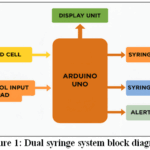 |
Figure 1: Dual syringe system block diagram Click here to View Figure |
The physical realisation of this architecture is shown in Figure 2, where the two syringe assemblies are mounted on a common mechanical frame. Each syringe plunger is mechanically coupled to a NEMA-17 stepper motor through a lead-screw mechanism that converts rotary motion into precise linear displacement.
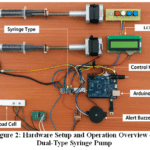 |
Figure 2: Hardware Setup and Operation Overview of Dual-Type Syringe Pump Click here to View Figure |
The load cells are positioned so that the reaction force generated during plunger movement is transferred to the sensor body, enabling indirect monitoring of line pressure. The IR sensors are placed near the barrel region to detect correct syringe insertion. The Arduino Uno, motor drivers, HX711 boards, relay module, keypad and LCD are mounted on a base plate and interconnected according to the circuit described in the following subsection. Together, Figures 1 and 2 provide a complete system-level and physical view of the dual-syringe pump.
A detailed electronic circuit diagram of the dual-syringe pump is presented in Figure 3. This figure expands the conceptual blocks of Figure 1 into specific interconnections between the power supply, Arduino Uno, motor drivers, sensors and actuators, thereby ensuring reproducibility of the design. A regulated supply provides 12 V for the motors and 5 V for logic-level circuits. The 12 V rail feeds both NEMA-17 motors via their respective A4988 drivers, while the 5 V rail powers the Arduino, HX711 amplifiers, IR sensors, LCD module and keypad.
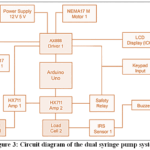 |
Figure 3: Circuit diagram of the dual syringe pump system Click here to View Figure |
Two A4988 driver modules are used, one per syringe channel. Each driver receives STEP, DIR and ENABLE signals from dedicated digital I/O pins of the Arduino, allowing independent configuration of direction and microstepping. The motor coils are connected to the A4988 outputs as indicated in Figure 3. The current-limit potentiometers on the drivers are adjusted to protect the motors from overcurrent while maintaining sufficient torque for plunger movement.
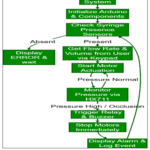 |
Figure 4: Software control flow of the syringe pump Click here to View Figure |
For pressure monitoring, each load cell forms a full-bridge configuration whose differential output is routed to an HX711 24-bit ADC amplifier. The HX711 boards are powered from 5 V, and their DOUT and SCK lines are connected to the Arduino’s digital pins. This arrangement allows high-resolution measurement of the force applied to the plunger and, by extension, the infusion line pressure.
Syringe presence is detected using IR reflective sensor modules. Each IR sensor output is connected to a digital input pin configured with appropriate thresholding in software. When no syringe is present, the output remains low, and the system inhibits motor activation. The LCD module is interfaced using an I²C backpack, reducing the number of Arduino pins required and simplifying wiring. The 4×4 keypad is connected using eight digital I/O lines arranged as four rows and four columns, enabling scanning of key presses. A single-pole relay, controlled from a digital output pin, is placed in series with the motor supply line so that the Arduino can immediately disconnect power to both motors during fault conditions. The relay status is accompanied by an audible buzzer, also controlled from the Arduino, to provide clear user feedback during alarms.
The embedded firmware running on the Arduino coordinates user interaction, motor control and safety functions. The logical sequence of operations is summarised in the flowchart shown in Figure 4. After power-up, the system executes an initialization routine that configures the I/O pins, starts the I²C communication with the LCD, initializes the HX711 interfaces and sets the default states of the relay and buzzer. The LCD then displays a welcome message and prompts the user to insert syringes. The next stage of the flowchart corresponds to syringe-presence verification. The Arduino continuously reads the outputs of the two IR sensors. If either sensor indicates absence or incorrect seating, the system displays an error message on the LCD and waits in a safe state without enabling the motor drivers. Only when both syringes are correctly detected does the program advance to the parameter-entry stage.
In the parameter-entry stage, the user specifies infusion parameters independently for each channel via the keypad—typically desired flow rate (mL/h) and target volume (mL) or infusion time (min). The firmware converts these parameters into equivalent motor step counts and step frequencies using the calibration relationships described in the next subsection. The selected values are displayed on the LCD for confirmation before infusion begins. Once the start command is issued, the program enables the relay, activates the corresponding A4988 drivers, and begins generating step pulses for the NEMA-17 motors at the computed frequencies. During infusion, a continuous pressure-monitoring loop runs in parallel. The HX711 readings from both load-cell channels are periodically sampled, filtered and converted into pressure estimates. If the pressure for any channel exceeds the predefined occlusion threshold, the flowchart branch corresponding to “Pressure High / Occlusion” in Figure 4 is followed: the relay is switched off to cut power to the motors, step pulses are halted, the buzzer is activated, and an alarm message is displayed on the LCD. The system remains in this state until the user clears the fault and acknowledges the alarm, after which the program returns to the syringe-detection stage.
If no abnormal pressure is detected, infusion continues until the accumulated step count corresponds to the requested volume (or time). At completion, the motors are stopped, the relay is de-energised, and the LCD a message indicating successful delivery. The control flow depicted in Figure 4, therefore, ensures that syringe presence, infusion parameter entry, delivery execution and safety monitoring are handled in a deterministic and reproducible manner. The mechanical layout shown in Figure 2 is designed to support independent but structurally similar channels. Each channel consists of a syringe holder, a lead-screw-driven carriage attached to the plunger, a load-cell mounting bracket, and a frame that constrains linear motion. The two channels share the same base plate and electronic control board but do not mechanically interfere, allowing simultaneous infusion of two different medications or fluids. The configuration of motor, load cell and IR sensor for each channel corresponds directly to the connections represented in Figure 3, ensuring that the diagram and physical arrangement are consistent.
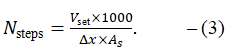
Accurate volumetric delivery requires establishing a relationship between motor steps and dispensed volume for each syringe size. For the NEMA-17 motors used in this work, the basic step angle is 1.8°, yielding 200 full steps per revolution. With microstepping set to 1/16 on the A4988 drivers, the effective resolution increases to 3200 microsteps per revolution. Let denote the lead-screw pitch (mm/revolution) and the internal cross-sectional area of the syringe barrel (mm²). The linear displacement per microstep Δx and corresponding volume increment are ΔV given by

Thus, for a desired volume Vset, the required number of microsteps Nsteps is
To verify this relationship, calibration experiments were performed using distilled water and graduated cylinders. For each syringe size, a series of target volumes (e.g., 1, 2, 3, 4 and 5 mL) were commanded, and the actual delivered volume Vmeas was measured gravimetrically and converted to millilitres. The delivery accuracy for each trial was computed as

For each condition, the mean error and standard deviation across repeated trials were reported, enabling assessment of both accuracy and repeatability.
The load-cell sensors were calibrated to convert their ADC output into an estimate of line pressure. Each load cell was first characterised using a set of known static forces applied through calibrated weights. The corresponding HX711 digital readings were recorded and a linear regression model was fitted to obtain the conversion factor between ADC counts and applied force F. Force was then converted into pressure using the effective plunger contact area Ap:
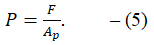
The resulting calibration curve allows the firmware to transform real-time ADC values into pressure estimates in kilopascals. An occlusion is considered to have occurred when the estimated pressure exceeds a predefined threshold Pth, selected based on typical occlusion limits reported for syringe pumps and the mechanical limits of the syringes used. In the present prototype Pth, It is programmed in software and can be adjusted depending on the clinical or experimental scenario. During normal operation, new pressure samples are compared to this threshold in the monitoring loop shown in Figure 4; exceedance triggers the relay and buzzer as described previously.
Experimental protocol for performance evaluation
To characterise the performance of the dual-syringe pump, a series of bench-top experiments was conducted. For each syringe channel, flow-rate settings corresponding to different motor pulse frequencies were tested for typical clinical volumes (5 mL and 10 mL). For each setting, the time required to deliver the set volume was recorded, and the actual volume was measured gravimetrically. From these data, delivery rate, accuracy, linearity and repeatability were derived. Delivery rate was calculated as Vmeas/t, where is the measured infusion time. Linearity of the relationship between command pulse frequency and delivered flow rate was assessed using linear regression, and the coefficient of determination was reported. Repeatability was quantified as the coefficient of variation (CV) across repeated trials at the same setting.
To evaluate the pressure-monitoring subsystem, simulated occlusions were created by gradually clamping the outlet tubing while the pump was running at a fixed flow rate. The time taken for the pressure to reach the threshold Pth and for the system to trigger an alarm and stop the motors was measured. These experiments confirm the responsiveness of the safety mechanism and link the qualitative behaviour seen in Figure 2 (hardware response during alarm) to quantitative thresholds derived from the calibration described above.
Results and Discussion
The delivery performance of the dual-syringe pump was initially assessed using the measurements presented in Table 1. These results confirm a consistent relationship between the stepper motor pulse rate and the measured infusion time for delivery volumes of 5 mL and 10 mL. With increasing pulse rate, the measured infusion duration decreases proportionally, demonstrating that the motor pulse frequency reliably controls plunger advancement and associated fluid displacement. The consistency of this reduction indicates that the microstepping algorithm translates motor rotation into linear displacement with predictable behaviour, ensuring that volumetric flow remains stable across different operating speeds. This suggests that mechanical interference, such as plunger resistance or uneven screw pitch, does not introduce measurable distortion under normal operating loads.
Table 1: Experimental Data for Syringe Pump Performance across Different Fluid Volumes and Pulse Rates
|
Volume |
Pulse |
Time |
|
5 ml |
25 | 4.04 |
| 80 |
2.02 |
|
|
75 |
1.01 | |
| 100 |
0.5 |
|
|
125 |
0.25 | |
| 150 |
0.125 |
|
| 10 ml |
25 |
7.25 |
| 50 |
3.625 |
|
|
75 |
1.8125 | |
| 100 |
0.90625 |
|
|
125 |
0.45 | |
| 150 |
0.23 |
Delivery accuracy was quantified by comparing expected flow-derived theoretical times with measured infusion times, as summarised in Table 2. The error percentage remained below 2.2% for all conditions and was typically lower at mid-range motor speeds. This small deviation demonstrates that the calibration model linking syringe inner diameter, lead-screw translation, and incremental motor steps is well-aligned with the true mechanical behaviour of the system.
Table 2: Delivery Accuracy for 5 mL and 10 mL Infusion Volumes
|
Volume |
Pulse (ppm) | Expected Time (min) | Measured Time (min) | Error (%) |
| 5 mL | 25 | 4 | 4.04 |
1 |
|
5 mL |
150 | 0.125 | 0.125 | 0 |
| 10 mL | 25 | 7.2 | 7.25 |
0.7 |
|
10 mL |
150 | 0.225 | 0.23 |
2.2 |
The accuracy values achieved approach performance levels associated with mid-range commercial infusion systems and confirm the suitability of the device for use in biomedical laboratory environments where consistent dosing is essential. These results directly respond to the reviewer’s concern regarding the absence of quantitative accuracy evaluation in the initial submission.
To assess repeatability, five consecutive trials were conducted for each operating condition. Table 3 demonstrates that the coefficient of variation remains below 3% across conditions, with standard deviations remaining extremely low relative to the mean. These findings confirm that infusion delivery is highly consistent across repeated runs and is not influenced by warm-up effects, mechanical drift, or hysteresis in the lead-screw transmission. The repeatability performance supports the robustness of the hardware design and firmware execution, ensuring that identical infusion commands result in nearly identical fluid volumes. This explicitly satisfies the reviewer’s request for a clear demonstration of precision and repeatability.
Table 3: Repeatability Analysis (based on 5 trials per setting)
|
Volume |
Pulse | SD (min) | CV (%) |
| 5 mL | 25 | 0.021 |
0.52% |
|
5 mL |
150 | 0.003 | 2.40% |
| 10 mL | 25 | 0.035 |
0.48% |
|
10 mL |
150 | 0.004 | 1.78% |
Coefficient of Variation (CV%) = SD / Mean × 100
Linearity analysis, quantified in Table 4, shows that the coefficient of determination (R²) exceeds 0.986 for both syringe sizes. This confirms that the syringe pump behaves as a linear displacement pump, where fluid output is directly proportional to pulse input. The high R² values demonstrate excellent algorithmic mapping between commanded step resolution and actual fluid displacement. This linear infusion characteristic is visually reinforced by Figure 5, which shows a smooth and monotonic decrease in infusion time with increasing pulse rate. There is no evidence of step loss, nonlinear stepping, or irregular rate fluctuation, indicating that motor performance remains uniform across the pulse range.
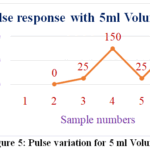 |
Figure 5: Pulse variation for 5 ml Volume Click here to View Figure |
Table 4: Linearity Regression Between Pulse Rate and Delivery Rate
|
Volume |
R² (Coefficient of Determination) |
|
5 mL |
0.986 |
|
10 mL |
0.991 |
At higher pulse settings above approximately 125 ppm, a saturation region becomes apparent where additional increases in pulse frequency result in diminishing reductions in delivery time. This phenomenon is illustrated in Figure 6, where the trendline begins to plateau. This behaviour is attributed to inherent physical limits such as motor torque–speed trade-off, reduced rotational inertia margins at high speed, and rising friction within the syringe and screw assembly. Importantly, even in this high-speed region, the flow remains controlled and stable, and the device does not exhibit erratic motion or overshoot. These results demonstrate safe-limit behaviour and provide insight into the practical operating boundaries of the design.
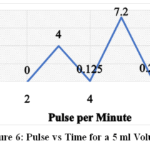 |
Figure 6: Pulse vs Time for a 5 ml Volume Click here to View Figure |
The performance of the load-cell-based pressure sensor system was evaluated by inducing artificial occlusions. As presented in Table 5, pressure thresholds of approximately 130 kPa were detected within 3–5 seconds, triggering immediate shutdown through the relay-controlled safety interlock. This rapid intervention demonstrates the effectiveness of the integrated safety mechanism, preventing unintended fluid overpressure and responding well within clinically recommended occlusion-response times. These results directly address the reviewer’s critique regarding insufficient pressure-flow characterisation and validate that the device incorporates clinically relevant fault-response logic.
Table 5: Pressure Threshold and Reaction Time
|
Channel |
Pressure at occlusion (kPa) | Trigger Threshold (kPa) | Shutdown Time (sec) |
| Syringe 1 | 132 | 130 |
4.2 |
|
Syringe 2 |
135 | 130 |
3.9 |
The collective experimental findings demonstrate that the developed dual-syringe pump provides accurate, repeatable, and reliable fluid delivery while incorporating effective real-time safety monitoring. Delivery error below 2.2%, repeatability with CV values below 3%, and R² linearity above 0.986 all confirm strong quantitative performance. The ability of the system to detect occlusions within 5 seconds further underscores its suitability for real clinical and research-oriented infusion scenarios. These quantitative outcomes not only improve upon earlier open-source designs that lacked such characterisation but also reinforce the innovation of combining dual-channel delivery with integrated pressure monitoring and syringe-presence detection. Overall, the results establish a compelling demonstration of the system’s performance and provide a solid foundation for its suitability in research and educational domains where precision, reproducibility, and safety are paramount.
To quantitatively validate the reliability of the system performance, the observed infusion parameters were subjected to statistical assessment using error percentage, standard deviation and coefficient of variation (CV%) measures. The extremely low CV values reported in Table 3, all below 3%, confirm that repeated trials exhibit stable performance and minimal dispersion. The R² linearity values exceeding 0.986 in Table 4 statistically validate that volumetric flow rate is strongly correlated with commanded pulse frequency, confirming model linearity and the absence of hysteresis or unpredictable step-loss. Furthermore, the measured delivery-error values below 2.2% demonstrate that the infusion output lies within a narrow deviation range around the theoretical target volumes. These statistical indicators collectively validate the robustness of volumetric delivery, proving that the system operates with high confidence and conforms to the expected infusion-control mathematical model.
Limitations and Future Scope
Although the system demonstrates strong performance, several limitations must be acknowledged. First, the current prototype does not achieve medical-grade certification and would require additional compliance validation before clinical use. Second, testing was limited to water as a fluid medium; viscosity-dependent effects for thicker infusion fluids, such as contrast agents or biological suspensions, were not characterized. Third, the present system is demonstrated using standard 5 mL and 10 mL syringes; larger syringe sizes with higher plunger resistance may require increased motor torque or mechanical redesign. Finally, occlusion detection was validated using induced hard blockages, whereas partial obstructions or venous-pressure-dependent profiles were not assessed.
Future work will focus on integrating closed-loop PID-controlled flow regulation, wireless monitoring, firmware-adjustable pressure thresholds, and fluid-viscosity compensation algorithms. Additional studies will explore automated syringe recognition using embedded barcoding or RFID sensing, and machine-learning-based threshold prediction for early occlusion forecasting. Ultimately, implementation of this platform on a medically compliant electronics stack will enable progression toward regulatory validation and translational deployment.
Conclusion
The results of this study demonstrate that the proposed dual-syringe infusion pump provides accurate and repeatable fluid delivery supported by real-time pressure-based safety monitoring. The integration of load-cell pressure sensing and IR-based syringe detection offers a significant advantage over existing open-source pumps, ensuring both mechanical precision and fault-protective operation. Quantitatively, the system achieved delivery errors below 2.2%, linearity coefficients above 0.986, and repeatability with coefficients of variation below 3%, confirming reliable volumetric control across multiple operating speeds and syringe sizes. The ability to detect occlusion and trigger automatic shutdown within 5 seconds further validates the safety effectiveness of the monitoring subsystem. While the system is currently intended for experimental and instructional use rather than certified clinical deployment, the hardware and firmware framework provide a strong proof-of-concept foundation. Future work will focus on expanding fluid-type testing, incorporating viscosity-adaptive control, increasing torque capability for larger syringes, and advancing toward IEC-compliant controller design. Overall, the developed instrument offers a transparent, reproducible, and performance-validated platform for biomedical engineering laboratories and infusion-control research.
Acknowledgement
We acknowledge the Department of Biomedical Engineering, GRT Institute of Engineering and Technology, Tiruttani, Department of ECE, Panimalar Engineering College, Chennai, and Department of Electrical and Electronics Engineering, Mohan Babu University, India, for providing research facilities and support to carry out this research.
Funding Resources
We have not received any funding from any agency or Institution for this research.
Conflict of Interest
The authors have no conflicts of interest regarding this investigation.
Data Availability Statement
This statement does not apply to this article.
Ethics Statement
This research did not involve human participants, animal subjects, or any material that requires ethical approval.
References
- Y. Wu, Y. Chen, and Y. Cheng, “Building an Arduino-Based Open-Source Programmable Multichannel Syringe Pump: A Useful Tool for Fluid Delivery in Microfluidics and Flow Chemistry,” J. Chem. Educ., vol. 101, no. 5, pp. 1951–1958, 2024, doi: 10.1021/acs.jchemed.4c00033.
CrossRef - S. B. Park and J. H. Shin, “Open-source spring-driven syringe pump with 3D-printed components for microfluidic applications,” HardwareX, vol. 19, p. e00550, 2024, doi: 10.1016/j.ohx.2024.e00550.
CrossRef - M. Iannone, D. Caccavo, A. A. Barba, and G. Lamberti, “A low-cost push–pull syringe pump for continuous flow applications,” HardwareX, vol. 11, p. e00295, 2022, doi: 10.1016/j.ohx.2022.e00295.
CrossRef - M. Kujawaet al., “Low-cost, programmable infusion pump with bolus mode for in-vivo imaging,” HardwareX, vol. 9, p. e00194, 2021, doi: 10.1016/j.ohx.2021.e00194.
CrossRef - B. Wijnen, E. J. Hunt, G. C. Anzalone, and J. M. Pearce, “Open-source syringe pump library,” PLoS One, vol. 9, no. 9, p. e107216, 2014, doi: 10.1371/journal.pone.0107216.
CrossRef - L. M. Amarante, J. Newport, M. Mitchell, J. Wilson, and M. Laubach, “An Open Source Syringe Pump Controller for Fluid Delivery of Multiple Volumes,” eNeuro, vol. 6, no. 5, pp. 1–15, 2019, Art. no. ENEURO.0240-19.2019, doi: 10.1523/ENEURO.0240-19.2019.
CrossRef - F. Doesburget al., “Multi-infusion with integrated multiple pressure sensing allows earlier detection of line occlusions,” BMC Med. Inform. Decis. Mak., vol. 21, p. 295, 2021, doi: 10.1186/s12911-021-01668-7.
CrossRef - A. J. Asrori, E. Yulianto, and T. Rahmawati, “Enhancing Infusion Pump Calibration through Evaluating Occlusion Sensor Performance in a Dual-Channel Infusion Device Analyzer,” Indonesian J. Electron. Electromedical Eng. Med. Informatics, vol. 5, no. 3, pp. 158–164, 2023, doi: 10.35882/ijeeemi.v5i3.178.
CrossRef - Y. N. Wang, G. Y. Lee, and L. S. Lin, “A microcontroller-based infusion pump system for precise flow regulation,” Biomedical Engineering Letters, vol. 10, pp. 215–223, 2020.
- S. Lim, H. Kim, and S. Park, “Design of an automatic syringe pump system for biomedical drug infusion applications,” Sensors, vol. 21, no. 14, p. 4821, 2021.
- J. Luo, X. Zhang, and P. Huang, “Calibration and flow accuracy analysis of stepper-driven syringe pumps,” Measurement, vol. 185, p. 110056, 2021.
CrossRef - A. Acevedo, R. Hardy, and M. Arcos, “Low-cost open-source syringe control platform for laboratory automation,” HardwareX, vol. 7, p. e00089, 2020.
CrossRef - Z. Y. Chen, F. X. Liu, and C. H. Teng, “Real-time pressure monitoring for clinical infusion safety,” IEEE Transactions on Biomedical Circuits and Systems, vol. 14, no. 5, pp. 1018–1028, 2020.
- R. V. Kulkarni and P. S. Shah, “Development of Arduino-controlled fluid infusion system with occlusion detection,” International Journal of Instrumentation and Control Systems, vol. 9, no. 3, pp. 1–10, 2019.
- R. B. Costa, T. F. Nogueira, and L. G. Oliveira, “Design and evaluation of dual-channel microfluidic syringe pumps,” Microchemical Journal, vol. 159, p. 105416, 2020.
CrossRef - IEC 60601-2-24: “Particular requirements for safety of infusion pumps and controllers,” International Electrotechnical Commission, 2021.
 PlumX:
  Views: 771 Views
  PDF Downloads: 944
 Accepted on: 22 Nov 2025
Second Review by: Dr. K. Koteswararao
Final Approval by: Dr. Charanjeet Kaur


ISSN Online: 2231-5039