Recent Developments and Applications of Nanotechnology to Develop Novel Medical Devices, Infectious Disease Diagnosis, and its Treatment.
 , Chetna Tyagi1 and Tejpal Singh Chundawat2
1Department of Applied Science, The NorthCap University Gurugram, Haryana, India
2Guru Jambheshwar University of Science and Technology, Hisar, Haryana, India
Corresponding Author Email reversepraveen@gmail.com
DOI : http://dx.doi.org/10.13005/ojc/420315
Download this article as:

Increasing rate of emergency infections and novel diseases is a serious threat to livelihood and health. Pathogens in the form of virus, bacteria, fungi, and molds are responsible for antibiotic resistance which give birth to the novel diseases/ infections like COVID-19 (Coronavirus disease of 2019). Scientific research, drug discoveries, and specific treatments are not enough to mitigate these challenges. This article reviews the distinct aspects of nanotechnology against emergency infections and novel diseases, development of nanoparticles, usage, and applications for various support functions of human, animal, and plant life. This article also covers the classification, preparation method, development of silver nanomaterials and its promising antimicrobial properties as solution of current infectious environment. It also covers the synthesis of various nanomaterials, properties, challenges, and applications in various domains like biomedical, food, textile, environment, and water. It represents various gaps and associate challenges with medical devices and consumables. Coating nanomaterials are part of this review which provides a hope to develop the novel antimicrobial medical devices as an immediate need of current infectious environment. It includes recent clinical advancements, applications, various challenges and future prospectives of nanotechnology.
KEYWORDS:Applications; Antimicrobial(s); Disinfectant; Medical devices; Nanotechnology; Silver nanoparticles
Introduction
Emerging infections and novel diseases are badly impacting the world’s health and livelihood. Over three hundred contagious diseases were reported till 2004 caused by different strains like bacteria, fungi, viruses, and protozoa. Specific ecological and environmental factors influenced the viral spread of infectious diseases.1 Recently, some novel disinfecting agents and techniques have been discovered to control some typical diseases, such as cholera, tuberculosis, and pneumonia.2 Reusable medical devices undergo multiple usage and reprocessing steps, causing the accumulation of organic residues, which enhance microbial growth. Removal of these resistive contaminants is a challenging process.3 Several techniques are available to control this spread of microorganisms but still need to develop some fast, cost-effective, and consistent approaches.4 To overcome these challenges, nanotechnology may be an alternate fast-growing science approach. Nanotechnology is a science which works with a defined scale of 1 to 100 nanometers, inclusive of various domains like biology, chemistry, physics, and material science.5 Nanotechnology includes silver nanoparticles, surface coating, nanocomposites, and Quantum dots, among others. Due to silver nanoparticles’ antimicrobial properties, it acts as an effective disinfectant used for the development of silver-enabled air and liquid filters, textiles, food packaging and biomedical.6 Surface coatings have a high potential to better the life of reusable medical devices. Improvements in coatings can help in reprocessing, disinfection, and sterilization by minimizing the corrosion, discoloration, bubble formation, and erosion of the outer surface.7,8 In current scenario, there are limited materials and consumables which have the potential to resolve the issue of antibacterial resistance.
As per current challenges, it is required to develop a sustainable solution to reduce the bacterial adherence probability over the medical devices and different type of consumables. Development of novel coating material by using silver nanocomposite may be a sustainable solution for these challenges. To prevent infections and diagnosis of bacterial disease, it is required to develop novel nanocomposites as a powerful weapon in healthcare sector. This review article highlights the advancement of nanotechnology and applications in medical, water, air, and food organizations.
Various infectious challenges
There is an extensive list of diseases caused by high concentrations of microbes, for example, biofilm treatment is more resistant to “traditional biofilm” and develops in wet environments.9 Endoscope is one recent example of infection due to Enterobacteriaceae.10 Health care units are currently facing the issue of the resistant nature of some specific microorganisms against multiple antibiotics. Due to that, health care experts are unable to provide proper support to patients.11 Due to limited resources and dense population, contaminants in water in microbial form, along with excess contents of chemicals which, may cause severe disease.12 In present scenario, airborne particles are encouraging the growth of microorganisms like viruses, fungi, and other bacterial strains which cause multiple diseases, for example, anthrax, SARS (severe acute respiratory system), and asthma.13 Hospital environment is always prone to spreadinfection and responsible for spreading severe infections to the environment.14,15 Textile industries are struggling for stable, durable, sweating free and safe one.16,17 Silver release from food packages system needs more research to evaluate its impacts for consumers.18 Initial source of contamination in food industry is the processing plant having biofilm. These biofilms sometime become resistant to the disinfection and cleaning detergents.19 In hatchery rooms viruses, bacteria, bacterial toxins, fungi, spores, pesticides are the contaminants which are produced due to feed residues, feathers, feces, and epiderm.20 Now a days food industries are struggling due to unavoidable bacterial, fungal, parasites and viral infections 21 Hospital acquired infections now a days a major challenge which is causing multiple death.22 There are some cases which reported lapses in reprocessing (cleaning, disinfection/ sterilization) even fulfilled the requirements of applicable guidelines. Effectiveness of disinfectant may be increased based on these specific comparisons.23 These challenges can be taken care of by following standard precautions, transmission-based precautions, and monitoring.24 Usage of nanosilver and nanocomposites are playing a key role in infection control.25 It may be a mistake by regulatory authorities if nano silver does not declare as a new chemical with its multiple properties.26,27
Proposed practices for safe usage of medical devices, infection diagnosis, and controls
Simulated Reprocessing, cleaning validation, and sterilization:
To control microbial worldwide spread surgeons and researcher proposed few innovative techniques against infectious strains. Disinfection and sterilization technique reduced the infections significantly for different areas like hospitals, clinical areas, and biological research.28 Disinfection process eliminates a variety of pathogenic microorganism but are limited to bacterial spores. Multiple disinfectants were developed from time to time for specific applications. Disinfectants were used as liquid chemicals or wet pasteurization to inhibit the spread of microorganism over a surface.29 Cleaning and disinfection of environmental surfaces plays a significant role in effective infection prevention program for example pulsed-xenon device having mercury bulb to produce UV (ultraviolet) light of range 200-320 nm range is also effective at patient rooms as it significantly decreases the pathogen concentration.30. Along with these innovations, there are some opportunities which can be adopted for further improvements, for example nanotechnology.31,32
Nanotechnology overview and its advantage over other infection diagnosis and control
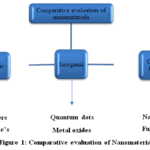 |
Figure 1: Comparative evaluation of Nanomaterials Click here to View Figure |
Types of nanomaterials
In combination with above Fig. 1, there are below several types of exemplary nanomaterials which are being used in numerous applications.
Non-metallic inorganic nanomaterials (TiO2, SiO2, ZnO, Al(OH)3, Fe₂O₃, Fe₃O₄,ZrO2, CaO, ITO, ATO, CeO2).
Metal alloys and metals (Au, Ag, Pt, Pd, Cu, Fe, Ni, Co, Al, Mn, Mo).
Nanomaterials enabled with carbon like fullerenes, carbon nanotubes, carbon nanofibers, graphene.
Dendrimers and nano polymers (polymeric nanoparticles, polymer nanotubes, nanowires and nanorods, nanocellulose, nanostructured polymer films).
Quantum dots (cadmium telluride, cadmium selenide, quantum dots free of cadmium).
Out of these nanoparticles, silver nanoparticles have various advantages due to antimicrobial potential. Other nanomaterials require more research and experiments to prove their credibility. Except silver nanomaterial, limited data is available for other nanomaterials. Refer below synthesis methods of silver nanoparticles:
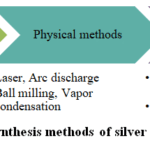 |
Figure 2: Synthesis methods of silver nanoparticles Click here to View Figure |
It was also found that some novel nanoparticles formed by placing silver sources in contact with surfaces. Same scenario is also applicable for copper silver nanoparticles. As there are multiple nanoscale objects which remain in contact with human also the source of incidental nanoparticles in the environment.33 Apart from the methods explained in Fig. 2, there may be some other innovative methods to develop silver nanoparticles which require more scientific research.
Antibacterial functioning of silver nanoparticles
As per Fig. below Fig. 3, silver ions are responsible for damaging cell wall of the gram positive and gram-negative bacteria responsible for various infectious diseases. Oxidative stress of silver ions generates disruption in metabolic activities which denature the ribosome in cytoplasm and cause cell death.
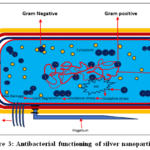 |
Figure 3: Antibacterial functioning of silver nanoparticles Click here to View Figure |
Various methods for “silver nanoparticle” synthesis, relative benefits, and limitations [34]:
Table 1: Various methods used for silver nanoparticles’ synthesis
|
Method |
Nano Size (nm) | Benefits | Drawbacks |
| Starch:
Reducing and stabilizing agent, synthesis through AgNO3 reduction to NS. |
10 to 34 | – Green synthesis
– Stable for >90 days – Quite simple – Reproducible – Starch Biocompatibility |
-Weak binding interactions – Reversible at higher temperatures |
|
Enterobacteria: Bacterial enzymes, Synthesis through AgNO3 to NPs. |
28 to 122 | – Environmentally safe
– Used natural strain – Chemical free synthesis |
– Less control over NP size
– Unstable size distribution |
| Chitosan:
AgNO3 mix dropwise to chitosan in the presence of acetic acid, Ag+ reduced to NS |
4 to 5 | – Small NS
– Narrow size allocation – Inhibit NP accumulation. |
– Modify the NS properties. |
|
[Ag(NH3)2]+: N vinyl- 2-pyrrolidone with UV light, synthesized by reacting ammonia and silver oxide |
4 to 6 | – Stable synthesis
– Narrow size distribution – No accumulation – Stabilizing sense |
– Hard to increase size
– PVP impact biological things |
| Electrical current:
applied among two silver wires in presence of deionized water, it helps surface Ag atoms to concentrate aqueous NS |
5 to 35 | – Simple
– Chemical free – Narrow size distribution – Kill S. aureus |
– NP agglomeration – Less term stability |
| Penicillium
Brevicompactum: Reduce AgNO3 to NPs |
23 to 105 | – Environmentally friendly
– No accumulation |
– Wide size distribution
– Lengthy process (>72 hours) |
| UV:
Reduce AgNO3 by using sodium dodecyl sulfate (SDS) and ethanol |
23 to 67 | – Kill P. aeruginosa
– Reduced SDS-capped |
– Superior antibacterial activity – mammalian cytotoxicity
|
| Peptide:
AgNO3 stirred with peptide solution at different pH values for 12 hours |
19 | – Effective capping agents – Decrease NS toxicity |
– Risk in medical applications |
Silver and its salts are also beneficial in drug manufacturing, imaging and drug delivery systems35 restorative dentistry, ophthalmology, skin/ tissue repair, and nano biosensors.36 It required more studies to understand the broad application of silver nanoparticles for various medical devices.
Different methods of nanoparticle’s “Surface coating,” relative benefits and limitations:
For any of the metallic device, it is important to understand the type, structure, and its coating process. For example, in food industry, engineered nanoparticles like photocatalyst metal oxides may be the promising agent to manage these resistive contaminants through surface coatings. It includes the development methods of antimicrobial surface coatings, associated characterization methods, evaluation of physical stability of coating along with antimicrobial efficiency.37 There are few exemplary techniques below which can be used for coating metal oxide. Due to metal-to-metal compatibility, surface coating has more potential to increase shelf life of coated materials. Now a days, industries have advanced techniques to develop surface coating, for example coating of metal oxide.
Table 2: Various techniques for coatings of metal oxide
|
Coating Technique |
Description of process/ technique | Used References |
| Sputter accumulation | Electron beam irradiation on metal mold steel surface to develop ceramic film |
38 |
|
Atomic layer deposition |
TMA–H₂O -process | 39 |
| Vapor deposition (chemicals) | Pressure vapor deposition process for the deposition.
of MA3Bi2I9 perovskite film using co-sublimation of methylammonium |
40 |
|
Sol-gel synthesis |
Semicrystalline system (liquid and solid phases) with morphology for convert discrete particles to polymer networks | 41 |
| Coating with binders | Arc ion plating helps coating of TiCN-based cermets |
42 |
|
Melt-blending |
Nanotube/polymer composites diluted through pure polymer with the help of melt mixing process | 43 |
| Plasma-spraying | Additive manufacturing based on velocity and enthalpy of particle stream to strengthen the adhesion by using some specific mathematical models |
44 |
|
Anodic oxidation |
Plasma Electrolytic Oxidation (PEO) ionized Al alloy | 45 |
| Electrophoretic deposition | By this technique, movement of charged particles through liquid in the presence of electric field which deposited on conductive substrate (opposite charged) |
46 |
Metal oxides demonstrated improved coating stability for the food packaging system along with other necessary cleaning and sanitization protocols. Ventilation, walls, floors, machinery, cause infections in hospitals.47. To overcome some critical surface infections, coating is best alternative. Shelf life of coating material and surface leaching are main challenges which need to be overcome for a stable coated product.
Different methods for “Nanocomposites” development, relative benefits, and limitations
There are some studies which stated novel development of nanocomposites, for example, 3% Ag/TiO-2 nanocomposites developed with UV. It was the better alternative for antimicrobial activity for Gram-negative and gram-positive bacteria [2]. Now a days, nanocompositemembranes are developed to increase the bacterial removal efficiency.48 Also, antimicrobial experiment proved that efficiency of Nanocomposite membrane is greater than 98%.49 Another example is Titanium dioxide which is synthesized by photocatalytic, can easily perform at ambient conditions, also it is eco-friendly50 Few models have capability for treatment of diabetic wound healing process.51,52 Plasma at low temperature activates the fiber surface to help strong binding of silver nanoparticles onto polyester fabrics.53 Effective composites form can be potential antibacterial agent for sanitation and disinfection industries.54,55 Based on iodine antibacterial nature and its effects against drug resistant organisms, iodine nanocomposite was developed by iodine immobilization through metal–organic frameworks can be beneficial for orthopedic implant.56 If there are alternative approaches to treat microbial infections, usage of silver-based products should be avoided. Overall, it is always a choice to use silver products based on their antimicrobial efficiency over cellular toxicity. Due to limited scope of few materials, nanocomposites have potential to tackle antibacterial resistance. Now a days in industries, advanced techniques are available for alloys combination or development of nanocomposites.
Different methods for “Quantum dots” development, relative benefits, and limitations
Carbon Quantum Dots as assembled Spermidine are found active against resistant bacteria strain. This synthesis used ammonium citrate through pyrolysis and modified spermidine by simple heat treatment. In vitro wound healing studies were performed in mice to show quick healing, quick formation of collagen and better epithelialization when Spd/ CQDs used as a material for dressing.57 Biocompatibility results demonstrated no cytotoxic impact on mouse embryonic fibroblast cell lines but showed cytotoxicity against epithelial cell line of human. Few synthesis mechanisms can be used to develop disinfection material.58 Minor effect as hemolytic against red blood cells were seen in some cases.59
Different methods for “Other nanotechnology approaches,” relative benefits and limitations
Other nanotechnology approaches are more related to air, water, textile, and food applications.
Nanotechnology approaches in “aerosol technology”
To control the aerosol contents, one of the studies was performed in which silver nanoparticles of approximate size 11 mm in diameter were coated onto a medium filter as antiviral agent. This coating was performed by spark discharge generation system. Required parameters like filtration efficiency, anti-viral ability and pressure drop were evaluated with dust loading. Below Fig. 4 states the mechanism of this process. Results show that the purification capability and drop of pressure increase with dust, but the antiviral capability decreases. This mechanism can be useful to predict the filter life, anti-viral abilities of filter.60
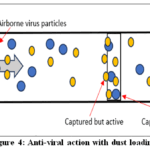 |
Figure 4: Anti-viral action with dust loading Click here to View Figure |
Silver ions also play vital role against SARS coronavirus due to its bacteriostatic and active ingredients properties. Based on these properties it is using for disinfection of medical equipment, wound therapy, and water purification. Recent studies also demonstrated effectiveness of iodophor iodine against non-enveloped virus.61
Nanotechnology approaches in “Textile technology”:
Textile industries have been using nanotechnology for a long time. There are few assumptions about nanotoxicity that nanomaterial release during washing, but recent studies showed it is safe to human health as per regulatory requirements. Main concerns for this developing market are to keep the environment safe from residues developed through climate change.64 Functionalized technologies are being used to release the total silver and nanoparticles from textiles in the form of artificial sweat. Results of textiles functionalization lab prepared textiles showed the presence of embedded silver nanoparticles.65 Also, some other lab prepared textiles that showed presence of silver on coated fiber surface. This silver release from composites was found less as compared to surface coated textiles.66 Synthetic fibers can be used in cloth textiles for manufacturing comfortable clothes like sports clothes. Antimicrobial effect can be evaluated on woven and non-woven fabric with defined methods like padding or exhaust methods. Addition of antimicrobial agent in spinning mass is an effective and durable method to treat the synthetic fibers.67
Nanotechnology approaches in “Food technology”:
There is a variety of consumer products developed by nanotechnology for children for example, sippy cups, cleaning goods, breast milk storing cups, cleaning products as well as humidified fitment. Ionic silver release was noticed as 1:50 product to liquid mass ration with synthetic saliva, sweat, urine, orange juice, onto dermal wipes and into air. In case of fabrics silver leaching was noticed via dissolution. In case of consumer products used by children silver leach is very minimum, also bioavailable silver can be iconic than normal form of silver.68 There are specific approaches for antimicrobial packaging as below:
Table 3: Antimicrobials into polymers and food packaging applications
|
Antimicrobial agents |
Polymeric agents | Target organisms | Used References |
| Organic acids and anhydrides: acetic, benzoic, malic, sorbic | Edible layers, ethylene vinyl acetate, linear low-density polyethylene | Molds |
69 |
|
Metal: Ag |
Different polyolefins | Bacterial, yeast and fungal | 70 |
| Fungicide:
Imazalil, Benomyl |
low density polyethylene | Mold strains |
71 |
|
Bacteriocins: : LacticinNisin, pediocins |
Edible layers, LDPE, cellulose | Bacterial strains of type Gram positive | 72 |
| Enzymes:
Glucose, Lysozyme |
PS, Cellulose acetate | Bacterial strains of type Gram negative |
73 |
|
Oxidase |
Edible films | Bacteria | 74 |
| Chelating agent:
EDTA |
Edible layers | Bacterial strains of type Gram negative |
75 |
|
p-coumaic acids, Cinnamic, caffeic |
Nylon, PS (polystyrene) | Molds, yeast, bacteria | 76 |
| plant extracts, seed extract, | LDPE, cellulose | Molds, yeast, bacteria |
77 |
Migration of nanoparticles from food composites to food is also examined by insignificance level of migration inductively and attached ICP-MS (Inductively Coupled Plasma Mass Spectrometry) and based on improved specifications, Ag/PVC nanocomposites films are much promising of long-term food packaging applications.78
Nanotechnology approaches in “water purification technology”:
Availability of Safe and clean water now a days is a big concern worldwide. There are some specific steps by which this challenge can also be resolved, for example, development of green materials, polymers, adsorbents, and nanomaterials used for purification of water.62 There is defined procedure and protocol to develop new materials for water treatment.63 Refer below flow diagram in Fig. 5 for one of the water purification approaches:
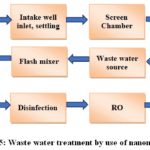 |
Figure 5: Waste water treatment by use of nanomaterial. Click here to View Figure |
For water treatment, if method used in combinations, it would show more effective results for water treatment. Specific absorbent may help with fast cleaning of water. There are other specific protocols which can be used for removing pollutants in water.
Associated risks or limitations of Nanotechnology
In present scenario, world is facing several types of medical challenges which cause the degradation of healthy life. Nanotechnology is playing a vital role in eliminating the infectious challenges through innovative developments. Based on novel innovations of nanotechnology there is much relief in healthcare sector but still there are many factors that function as major limitations in growth of nanotechnology. Few of them are summarized in the table below:
Table 4: Limitations of Nanotechnology
|
Sr. No. |
Risk Factors | Description of associated risk factors | Used References |
| 1 | Cost | Initial set up or stages required high input amount |
2 |
|
2 |
Safety | Usage beyond the shelf and not referring IFU | 23 |
| 3 | Consumption | Contact with toxic nanoparticles |
79 |
|
2 |
Development time | From research & development to final approval it takes long time in case of drug development | 80 |
| 3 | Nanotoxicity | For sensitive domains, it is not easy to control toxicity |
81,82 |
|
4 |
Control release | Few specific nanoparticles are difficult to control release | |
| 5 | Manufacturing and scale up challenges | Pharmaceutical science always faces challenges in manufacturing and scales up |
83,84 |
|
6 |
Target areas and bioavailability | In medical field, it is hard to target area such as lungs, Poor bioavailability can alter the properties of nanomaterials and have adverse impacts |
85 |
For above risks or limitations, regulatory support is required to develop and sustain advancement in nanotechnology. ISO (International Organization for Standardization), ASTM (American Society for Testing and Materials) and FDA (Food and Drug Administration), can play a vital role in continual improvement in product and processes. More studies are required to understand the toxic aspects of nanomaterials. These studies can be planned with risk-based approaches.
Applications of Nanotechnology
Nanotechnology plays a vital role in diagnosis and disease control due to its antibacterial properties. To sustain a healthy life, free from any type of bacterial infection is possible through innovative approach of nanotechnology. Nanotechnology is useful in different sector due to its advanced applications. Different fields like medicine, food, household, water, hospitals, labs, and pharmaceuticals are taking advantage of these innovative approaches to nanotechnology. Few of them are explained in the table below:
Table 5: Nanotechnology’s applications
|
Application factor |
Description of application | Used References |
| Medical bioengineering | Diagnostic tests and tissue bioengineering |
86 |
|
Medical devices |
Develop biocompatibility, resist the biofilm creation | 87 |
| Food science | Detect pesticides, pathogens, and toxins |
88 |
|
Food packaging |
Develop intelligent food packaging system | 20 |
| Wound management | Wound healing by metal oxide, bio-kill approach in ICU |
89,90 |
|
Paints and coatings |
Used in automotive, aerospace, construction, and hygiene industry | 91 |
| Antibacterial agent | Wide particle size range, high stability, variable morphological characteristics, and stable physical and chemical properties |
92,93 |
|
Water treatment |
Medicinal items, consumer products, and agriculture | 49,63 |
| Laboratories & industries | Semiconductor nanocrystalline oxides have the capability to absorb substrates |
53 |
|
Photocatalysis |
Chemically stable, capability of transmission in infra and visible regions | 94 |
| Coatings | Device coating which helps in infection control |
95 |
|
Nanocomposites |
Key role in sensors, catalysis, and electronic devices due to their thermal stability | 94 |
| Hospital textiles | Antimicrobial efficient Fabrics |
17,53 |
|
Food applications |
Development of supplements, cooking oil catalyzation, crop pesticides, novel food packaging, and increase of food texture | 96 |
| Wound healing management | Nanostructure of plant extracts helps to release phytochemicals at the wound site |
95 |
|
Pharmaceuticals nano systems |
Carbon nanotubes , quantum dots, nano shells, nanobubbles, paramagnetic nanoparticles, liposomes, niosomes, dendrimers, nano emulsions, and solid lipid nanoparticles | 46,97,98 |
| Biodegradable polymers | Food packaging edibility, renewability, and biocompatibility |
99 |
|
SHOMAL |
Developed for disinfection and disease prevention for poultry, livestock, and aquatics | 27 |
| Silver nanoparticles | Weapon against antibiotic resistant strains, animal husbandry, water/air filters, biomedical, and food packaging and antiviral applications, powerful weapon against COVID-19 infection |
100-102 |
|
Iodine |
Useful for orthopedics antibacterial therapy | 56 |
| Quantum dots | Effective against Staphylococcus aureus, epidemic methicillin-resistant, Staphylococcus aureus, Pseudomonas aeruginosa and Escherichia coli |
103 |
|
Disease diagnosis with treatment |
Cervical cancer detection through tumor markers, photodynamic therapy, drug delivery system, in-vivo imaging, therapy techniques, and tissue engineering | 104,105 |
| lipid nanoparticles | Used in drug delivery and biomedical applications |
29,30 |
|
Coating on SS |
Used in treatment of burn with antibacterial coating |
106 |
Conclusion/ Future prospectives
Nanotechnology is the interlinked branch of various sciences which have nanoparticles within range of 1 nm to 100 nm. Nanoparticles exist in different forms like silver nanoparticles, gold nanoparticles, surface coating metals, nanocomposites, Quantum dots, nano polymers. Due to antimicrobial properties of silver nanoparticles, it has shown effective disinfection. As a disinfectant, silver nanoparticles are used to develop air filters, animal farming, fabrics, biomedical and food wrapping items. Silver nanoparticles development is possible by three major methods i.e., biological methods (by algae, bacteria, plant extracts, fungus), physical methods (laser, arc-discharge, ball- milling, vapor condensation) and chemical methods (reduction, electrochemical, irradiation, pyrolysis). Out of these methods, biological method is effective and preferrable for synthesis of silver nanoparticles. To overcome various infectious challenges in biomedical field, silver nanoparticles are much promising agent. Risk associated with reusable medical devices can be minimized through surface coating of silver nanoparticles. Such coatings have high potential to improve the life of reusable medical devices. Based on specific features of silver nanoparticles, it is used in biomedical applications (devices, wound healing, hospital acquired infections), industries applications (textile, food packaging, animal husbandry), environmental applications (air disinfectants, water disinfectants, medical premises), drug delivery, catalytic actions, biomagneticseparations, biodetection and labelling. Silver nanoparticles are effective against different type of bacterial infections, and they are effective agents for the cases of antibiotic resistance. As per these properties and applications, usage of silver nanoparticles can save time, efforts, and cost. This new field of silver nanoparticles can function as a strong backbone for industrial challenges and therapeutic issues. Reusable medical devices and medical consumables are always prone to get infectious if not fulfill the criteria of appropriate cleaning, disinfection, and sterilization. Non-fulfillment of monitoring, effectiveness checks and required evaluations are the possible root cause of current infectious stage. COVID-19 was one of the examples for such type of infectious environment. Nanotechnology in aspects of different nanomaterials can be the solution to these challenges. Silver nano particles have immense scope to develop innovative medical devices and related consumables. For development of antimicrobial material/ devices, more research work is required to understand the concept of biocompatibility (sensitivity/ toxicity).
Discussion
Nanotechnology provides a strong platform to evaluate antimicrobial properties of different nanomaterials. As per review, silver nanomaterials can be used as an effective weapon against antibiotic resistance. Life of reusable medical devices can be increased through coating of silver nanomaterials. Nanotechnology can help in different areas like food, medicine, water, and air but there are certain limitations which require more scientific advancement and research. Development of nanomaterial required high input amount and time for initial set up with appropriate safety and consumption. Aper from that if devices are developed as implants, then biocompatibility evaluation is the area which required more experiments are research.
Acknowledgement
I would like to express my profound gratitude to The NorthCap University Gurugram, Haryana for its world class research facility in terms of labs, faculty, and library as valuable assets to complete this review article.
Funding Sources
The author(s) received no financial support for the research, authorship, and/or publication of this article.
Conflict of Interest
The author(s) do not have any conflict of interest.
Data Availability Statement
This statement does not apply to this article.
Ethics Statement
This research did not involve human participants, animal subjects, or any material that requires ethical approval.
References
- Jones, K. E.; Patel, N. G.; Levy, M. A.; Storeygard, A.; Balk, D.; Gittleman, J. L.; Daszak, P. Nature 2008, 451, 990–993
CrossRef - Deshmukh, S. P.; Mullani, S. B.; Koli, V. B.; Patil, S. M.; Kasabe, P. J.; Dandge, P. B.; Pawar, S. A.; Delekar, S. D. Photochem. Photobiol. 2018, 94, 1249–1262
CrossRef - Humphries, R. M.; McDonnell, G. J. Clin. Microbiol. 2015, 53, 3118–3125
CrossRef - Ko, Y.-S.; Joe, Y. H.; Seo, M.; Lim, K.; Hwang, J.; Woo, K. J. Mater. Chem. B 2014, 2, 6714–6722
CrossRef - Nimodiya, A. R.; Ajankar, S. S. Int. J. Creative Res. Thoughts 2022, 1–4
- Deshmukh, S. P.; Patil, S. M.; Mullani, S. B.; Delekar, S. D. Mater. Sci. Eng. C 2018, 1–12
- Roberts, C. G. Am. J. Infect. Control 2013, 41, S77–S80
CrossRef - Reprocessing Medical Devices in Health Care Settings: Validation Methods and Labeling- Guidance for Industry and Food and Drug Administration Staff 2015
CrossRef - Kumar, D.; Sonawane, U.; Gohil, M. K.; Pol, R.; Patil, A. S.; Mittal, R.; Agarwal, A. K. Trans. Indian Natl. Acad. Eng. 2020, 5, 299–303
CrossRef - Mahmoud, E. R. I.; Algahtani, A.; Tirth, V. Met. Mater. Int. 2020, 12540–020–00825–3
- Ben-Sasson, M.; Lu, X.; Bar-Zeev, E.; Zodrow, K. R.; Nejati, S.; Qi, G.; Giannelis, E. P.; Elimelech, M. Water Res. 2014, 62, 260–270
CrossRef - Dankovich, T. A.; Gray, D. G. Environ. Sci. Technol. 2011, 45, 1992–1998
CrossRef - Mehta, Y.; Gupta, A.; Todi, S.; Myatra, S. N.; Samaddar, D. P.; Patil, V.; Bhattacharya, P. K.; Ramasubban, S. Indian J. Crit. Care Med. 2014, 18, 149–163
CrossRef - Nadaf, N. Y.; Kanase, S. S. Dig. J. Nanomater. Bios. 2015, 10, 1189–1199
- Sharifi-Rad, J.; Hoseini Alfatemi, S. M.; Sharifi Rad, M.; Iriti, M. Ann. Med. Health Sci. Res. 2014, 4, 863–868
CrossRef - Peter, A.; Mihaly-Cozmuta, L.; Mihaly-Cozmuta, A.; Nicula, C.; Indrea, E.; Barbu-Tudoran, L. J. Food Process Eng. 2014, 37, 596–608
CrossRef - von Goetz, N.; Lorenz, C.; Windler, L.; Nowack, B.; Heuberger, M.; Hungerbühler, K. Environ. Sci. Technol. 2013, 47, 9979–9987
CrossRef - Echegoyen, Y.; Nerin, C. Food Chem. Toxicol. 2013, 62, 16–22
CrossRef - Mitrano, D. M.; Barber, A.; Bednar, A.; Westerhoff, P.; Higgins, C. P.; Ranville, J. F. J. Anal. At. Spectrom. 2012, 27, 1131
CrossRef - Chmielowiec-Korzeniowska, A.; Tymczyna, L.; Dobrowolska, M.; Banach, M.; Nowakowicz-Dębek, B.; Bryl, M.; Drabik, A.; Tymczyna-Sobotka, M.; Kolejko, M. Open Chem. 2015, 13, 1269–1274
CrossRef - Owusu, E. G. A. Ph.D. Thesis, University College London, 2020, 1–282
- Seavey, R. Am. J. Infect. Control 2013, 41, S111–S117
CrossRef - Khan, I.; Saeed, K.; Khan, I. Arabian J. Chem. 2019, 12, 908–931
CrossRef - Boyce, J. M. Antimicrob. Resist. Infect. Control 2016, 5, 10
CrossRef - Weber, D. J.; Rutala, W. A. Am. J. Infect. Control 2013, 41, S67–S71
CrossRef - Glover, R. D.; Miller, J. M.; Hutchison, J. E. Nano Lett. 2011, 11, 8950–8957
CrossRef - Nia, J. R. Using of Nano Silver in Poultry, Livestock, and Aquatic IndustryUS Patent, 2009, 1–3
- Chaloupka, K.; Malam, Y.; Seifalian, A. M. Trends Biotechnol. 2010, 28, 580–588
CrossRef - Burdus, A.-C.; Gherasim, O.; Grumezescu, A. M.; Mogoanta, L.; Ficai, A.; Andronescu, E. Nanomaterials 2018, 8, 681
CrossRef - Sim, S.; Wong, N. K. Biomed. Rep. 2021, 14, 1–9
CrossRef - Valavanidis, A. Nanotechnological Breakthroughs in Medical Devices, ResearchGate 2019, 1–28
- Ruggeri, M.; Bianchi, E.; Rossi, S.; Vigani, B.; Bonferoni, M. C.; Caramella, C.; Sandri, G.; Ferrari, F. Pharmaceutics 2020, 12, 815
CrossRef - Pantic, I. Rev. Adv. Mater. Sci. 2014, 37, 15–19
CrossRef - Li, Y.-J.; Harroun, S. G.; Su, Y.-C.; Huang, C.-F.; Unnikrishnan, B.; Lin, H.-J.; Lin, C.-H.; Huang, C.-C. Adv. Healthcare Mater. 2016, 1–10
- Wigginton, N.; De Titta, A.; Piccapietra, F.; Dobias, I.; Nesatyy, V. J.; Latmani, R. B. Environ. Sci. Technol. 2010, 44, 2163–2168
CrossRef - Weckman, T.; Laasonen, K. Phys. Chem. Chem. Phys. 2015, 17, 1–13
CrossRef - Marassi, V.; Di Cristo, L.; Smith, S. G. J.; Ortelli, S.; Blosi, M.; Costa, A. L.; Reschiglian, P.; Volkov, Y.; Prina-Mello, A. R. Soc. Open Sci. 2017, 4, 170726
- Misumi, S.; Okada, A.; Okamoto, Y.; Inoue, M. ProcediaCIRP 2013, 5, 486–491
CrossRef - Weckman, T.; Laasonen, K. Phys. Chem. Chem. Phys. 2015, 17, 1–13
CrossRef - Chen, X.; Myung, Y.; Thind, A.; Gao, Z.; Yin, B.; Shen, M.; Cho, S. B.; Cheng, P.; Sadtler, B.; Mishra, R.; Banerjee, P. J. Mater. Chem. A 2017, 5, 1–39
CrossRef - Badanayak, P.; Vastrad, J. V. Pharma Innovation J. 2021, 10, 1023–1027
- Xian, G.; Xiong, J.; Zhao, H.; Xian, L.; Fan, H.; Li, Z.; Du, H. Wear 2020, 460–461
CrossRef - Kamble, S.; Bhosale, K.; Mohite, M.; Navale, S. Int. J. Adv. Res. Sci. Commun. Technol. 2023, 1–7
- Vu, D. Eng. Technol. Appl. Sci. Res. 2023, 10367–10371
CrossRef - Trivinho-Strixino, F.; Delgado-Silva, A. O.; Santos, J. S.; Rodrigues, A.; Mambrini, G. P.; Sikora, M. S. Plasma 2023, 235–249
CrossRef - Marchewka, J.; Kołodziejczyk, E.; Bezkosty, P.; Sitarz, M. Sci. Rep. 2023, 1–15
- Boyce, J. M. Antimicrob. Resist. Infect. Control 2016, 5, 10
CrossRef - Al-Maamori, M. H.; Al-Tamimi, D. H.; Braihi, A. Mattingley Publ. Co., Inc. 2020, 23142–22164
- Liu, Y.; Rosenfield, E.; Hua, M.; Mi, B. Water Res. 2013, 47, 2949–2958
CrossRef - Patil, S. M.; Deshmukh, S. P.; Dhodamania, A. G.; Morea, K. V.; Delekara, S. D. Curr. Org. Chem. 2017, 21, 821–833
CrossRef - Xu, Q.; Aa, S.; Gao, Y.; Guo, L.; Creagh-Flynn, J.; Zhou, D.; Greiser, U.; Dong, Y.; Wang, F.; Tai, H.; Liu, W.; Wang, W.; Wang, W. Adv Mater2018, 1–38
- Pal, S.; Nisi, R.; Stoppa, M.; Licciulli, A. ACS Omega 2017, 2, 3632−3639
CrossRef - Ilic, V.; Saponjic, Z.; Vodnik, V.; Lazovic, S.; Dimitrijevic, S.; Jovanc, P.; Nedeljkovic, J. M.; Radetic, M. Ind. Eng. Chem. Res. 2010, 49, 7287–7293
- Duncan, T. V. J. Colloid Interface Sci. 2011, 363, 1–24
CrossRef - Mohan, A. N.; Manoj, B. Mater. Chem. Phys. 2019, 232, 137–144
CrossRef - Teng, W.; Zhang, Z.; Wang, Y.; Ye, Y.; Yinwang, E.; Liu, A.; Zhou, X.; Xu, J.; Zhou, C.; Sun, H.; Wang, F.; Zhang, L.; Cheng, C.; Lin, P.; Wu, Y.; Gou, Z.; Yu, X.; Ye, Z. Small 2021, 1–13
- Li, Y.-J.; Harroun, S. G.; Su, Y.-C.; Huang, C.-F.; Unnikrishnan, B.; Lin, H.-J.; Lin, C.-H.; Huang, C.-C. Adv. Healthcare Mater. 2016, 1–10
- Shi, H.; Wang, W.; Zhang, L.; Tang, Z.; Fan, J. J. Environ. Chem. Eng. 2021, 9, 1–11
- Kovacova, M.; Markovic, Z. M.; Humpolicek, P.; Micusik, M.; Švajdlenkova, H.; Kleinova, A.; Danko, M.; Kubat, P.; Vajdak, J.; Capakova, Z.; Lehocky, M.; Munster, L.; Todorovi, B. M.; Spitalsky, Z. ACS Biomater. Sci. Eng. 2018, 1–50
- Joe, Y. H.; Park, D. H.; Hwang, J. J. Hazard. Mater. 2016, 301, 547–553
CrossRef - Teng, W.; Zhang, Z.; Wang, Y.; Ye, Y.; Yinwang, E.; Liu, A.; Zhou, X.; Xu, J.; Zhou, C.; Sun, H.; Wang, F.; Zhang, L.; Cheng, C.; Lin, P.; Wu, Y.; Gou, Z.; Yu, X.; Ye, Z. Small 2021, 1–13
- Saleh, T. A. Environ. Technol. Innov. 2021, 1–18
- Yang, W.; Hu, W.; Zhang, J.; Wang, W.; Cai, R.; Pan, M.; Huang, C.; Chen, X.; Yan, B.; Zeng, H. Chem. Eng. J. 2020, 1–36
- Levard, C.; Hotze, E. M.; Lowry, G. V.; Brown, G. E. Environ. Sci. Technol. 2012, 6900–6914
CrossRef - Reed, R. B.; Zaikova, T.; Barber, A.; Simonich, M.; Lankone, R.; Marco, M.; Hristovski, K.; Herckes, P.; Passantino, L.; Fairbrother, D. H.; Tanguay, R.; Ranville, J. F.; Hutchison, J. E.; Westerhoff, P. K. Environ. Sci. Technol. 2016, 50, 4018–4026
CrossRef - Zille, A.; Fernandes, M. M.; Francesko, A.; Tzanov, T.; Fernandes, M.; Oliveira, F. R.; Almeida, L.; Amorim, T.; Carneiro, N.; Esteves, M. F.; Souto, A. P. ACS Appl. Nano Mater. 2015, 4, 7020–7028
- Manna, J.; Goswami, S.; Shilpa, N.; Sahu, N.; Rana, R. K. ACS Appl. Mater. Interfaces 2015, 1–25
- Quadros, M.; Pierson, R. IV; Tulve, N.; Willis, R.; Rogers, K.; Thomas, T.; Marr, L. C. Environ. Sci. Technol. 2013, 1–31
- Cuq, B.; Gontard, N.; Guilbert, S. Active Food Packaging, 1995, 111–142
CrossRef - Ishitani, T. Active Packaging for Food Quality Preservation in Japan, Royal Society of Chemistry, 1995, 177–188
- Weng, Y.; Chen, M.; Chen, W.LWT – Food Sci. Technol. 1999, 191–195
CrossRef - Prudencio, C. V.; dos Santos, M. T.; Vanetti, M. C. D. J.Food Sci. Technol. 2015, 5408–5417
CrossRef - Beacham, I. R. Int. J. Biochem. 1979, 877–883
CrossRef - Yousefi, M.; Nematollahi, A.; Shadnoush, M.; Mortazavian, A. M.; Khorshidian, N. Front. Nutr. 2022, 1–14
- Abarca, R. L.; Medina, J.; Alvarado, N.; Ortiz, P. A.; Carrillo, B. L. PLoS ONE 2022, 1–19
- Konzock, O.; Tous-Mohedano, M.; Cibin, I.; Chen, Y.; Norbeck, J. AMB Express 2023, 1–10
- Ordon, M.; Zdanowicz, M.; Nawrotek, P.; Stachurska, X.; Mizielinska, M. Int. J. Mol. Sci. 2021, 1–17
- Azlin-Hasim, S.; Cruz-Romero, M. C.; Morris, M. A.; Padmanabhan, S. C.; Cummins, E.; Kerry, J. P. Food Bioprocess Technol. 2016, 1–13
- Liu, Y.; Rosenfield, E.; Hua, M.; Mi, B. Water Res. 2013, 47, 2949–2958
CrossRef - Herzog, F.; Clift, M. J. D.; Piccapietra, F.; Behra, R.; Schmid, O.; Petri-Fink, A.; Rothen-Rutishauser, B. Part. Fibre Toxicol. 2013, 10, 11
CrossRef - Gliga, A. R.; Skoglund, S.; Wallinder, I. O.; Fadeel, B.; Karlsson, H. L. Part. Fibre Toxicol. 2014, 1–17
- Pulit-Prociak, J.; Banach, M. Open Chem. 2016, 14, 76–91
CrossRef - Levard, C.; Hotze, E. M.; Lowry, G. V.; Brown, G. E. Environ. Sci. Technol. 2012, 6900–6914
CrossRef - Kumari, S.; Sarkar, L. J. Sci. Res. 2021, 65, 42–46
CrossRef - Calderon, L.; Han, T.; McGilvery, C. M.; Yang, L.; Subramaniam, P.; Lee, K.-B.; Schwander, S.; Tetley, T. D.; Georgopoulos, P. G.; Ryan, M.; Smith, R.; Chung, K. F.; Lioy, P. J.; Zhang, J.; Mainelis, G. Atmos. Environ. 2017, 160, 42–52
- Agboklu, M. J. Nanotechnol. Res. 2024, 1–5
- Ramasamy, M.; Lee, J. Biomed Res. Int. 2016, 1–17
CrossRef - Banach, M.; Tymczyna, L.; Chmielowiec-Korzeniowska, A.; Pulit-Prociak, J. Bioinorg. Chem. Appl. 2015, 1–15
CrossRef - Duncan, T. V. J. Colloid Interface Sci. 2011, 363, 1–24
CrossRef - Behbudi, G. Adv. Appl. NanoBio-Technol. 2021, 2(2), 63–67
- Edwards-Jones, V. Lett. Appl. Microbiol. 2009, 49, 147–152
CrossRef - Haleem, A.; Javaid, M.; Singh, R. P.; Rab, S.; Suman, R. Glob. Health J. 2023, 7, 70–77
CrossRef - Agboklu, M. J. Nanotechnol. Res. 2024, 1–5
- Dunnill, C. W.; Page, K.; Aiken, Z. A.; Noimark, S.; Hyett, G.; Kafizas, A.; Pratten, J.; Wilson, M.; Parkin, Patil, S. M.; Dhodamani, A. G.; Vanalakar, S. A.; Deshmukh, S. P.; Delekar, S. D. J. Phys. Chem. Solids 2018, 115, 127–136
CrossRef - Hajialyani, M.; Tewari, D.; Sobarzo-Sánchez, E.; Nabavi, S. M.; Farzaei, M. H.; Abdollahi, M. Int. J. Nanomed. 2018, 13, 5023–5043
CrossRef - Cushen, M.; Kerry, J.; Morris, M.; Cruz-Romero, M.; Cummins, E. Trends Food Sci. Technol. 2012, 24, 30–46.
CrossRef - Ansari, N.; Ali, J.; Zulfequar, M. Austin Publishing 2021, 71–90
- Wagener, S.; Dommershausen, N.; Jungnickel, H.; Laux, P.; Mitrano, D. M.; Nowack, B.; Schneider, G.; Luch, A. Environ. Sci. Technol. 2016, 1–17
- Metak, A. M.; Ajaal, T. T. Int. Schol. Sci. Res. Innov. 2013, 7, 1103–1109
- Li, Y.-J.; Harroun, S. G.; Su, Y.-C.; Huang, C.-F.; Unnikrishnan, B.; Lin, H.-J.; Lin, C.-H.; Huang, C.-C. Adv. Healthcare Mater. 2016, 1–10
- Chen, X.; Xu, J.; Ji, B.; Fang, X.; Jin, K.; Qian, J. Front. Bioeng. Biotechnol. 2023, 1–13
- Behbudi, G. Adv. Appl. NanoBio-Technol. 2021, 2(2), 63–67
- Owusu, E. G. A. Ph.D. Thesis, University College London, 2020, 1–282
- Agboklu, M. J. Nanotechnol. Res. 2024, 1–5
- Huang, Y.; Guo, X.; Wu, Y.; Chen, X.; Feng, L.; Xie, N.; Shen, G. Signal Transduct. Target. Ther. 2024, 1–50.
- Shirani, S.; Emadi, R.; Eslami, A.; Saboori, A. Mater. Today Commun. 2025, 1–15
 PlumX:
  Views: 789 Views
  PDF Downloads: 884
 Accepted on: 09 Apr 2026


ISSN Online: 2231-5039