Elucidation of Weed Interference and Its Impact on the Growth, Development and Productivity of Indian Mustard (Brassica juncea L.) in the Trans-Gangetic Plains
 and Santosh Korav*
Department of Agronomy, School of Agriculture, Lovely Professional University (Phagwara) Jalandhar, Punjab, India
Corresponding author Email: santoshkorav@gmail.com
DOI : http://dx.doi.org/10.13005/ojc/420227
Download this article as:

A field experiment was conducted at agriculture field of Lovely Professional University, Punjab, India. The randomized block design was used with ten treatments viz., weeds until 20, 40, 60, 80 days after sowing (DAS), weedy check and weed free until 20, 40, 60, 80 days, weed free check, and replicated thrice. Crop-weed competition is at its critical period between 5 and 10% of relative yield loss. Results showed that weed-free conditions throughout the crop cycle produced the maximum dry matter, comparable to other weed-free and weedy conditions. Weed free conditions greatly enhanced mustard yield; weeds that were present for a longer period of time decreased both growth and yield, with weedy check plots producing the lowest yield. Increased weedy competition initially reduced plant height by 7.19 to 13.04%, dry matter by 4.60 to 14.44%, LAI by 8.47 to 12.42%, number of leaves by 10.20 to 14.76%, grain yield by 2.74 to 29.67% and stover yield by 1.43 to 14.86% over weed free from 20 to 40 DAS. The CPWC was at 19 to 52 DAS under 5% yield loss and at 25 to 44 DAS under 10% relative yield loss. Hence the early growth stage of mustard at 19 to 20 DAS is more crucial to manage weeds in Indian mustard.
KEYWORDS:Competition; Critical Period; Relative yield loss; Weed Free; Weedy Check
Introduction
Indian mustard (Brassica juncea L.) is one of the dominant oilseed cultivated in India, playing a crucial role in national edible oil production and the rural agrarian economy. Globally, mustard seed production reached approximately 12 million tonnes (MT) during the 2023–2024 season, with India contributing nearly 40% of the global output 1. The estimated production for 2024–2025 in India stands at 11.52 MT, with about 9.2 M ha under cultivation 1. Major mustard-growing states include Rajasthan, Haryana, Madhya Pradesh, Uttar Pradesh, and Punjab. Specifically in Punjab, the crop is cultivated over 32 thousand hectares, producing 41.8 thousand tonnes with a productivity of 1306 kg/ha 2, 3. Mustard seeds are nutritionally rich, containing essential fatty acids, dietary fibre, selenium, and glucosinolates that offer anti-inflammatory, antioxidant, and anti-cancer benefits 4. The Brassica genus is known for its high content of protein, Ca, Mg, P, and omega-3 fatty acids, along with bioactive phytochemicals that enhance immunity and reduce chronic disease risk. Owing to these health and economic benefits, sustaining and enhancing mustard productivity in India, particularly in the Trans-Gangetic Plains, is imperative.
Despite its economic importance, mustard productivity is significantly constrained by weed interference at initial stage of crop growth. The presence of dominant weed flora such as Rumex dentatus, Avena ludoviciana, Chenopodium album, Phalaris minor, Melilotus indica, , Convolvulus arvensis, Cirsium arvensis and Anagallis arvensis in Rajasthan 5 and Phalaris minor, Melilotus alba, Anagallis arvensis, Chenopodium album, Vicia hirsuta, Cyperus rotundus, and Lathyrus aphaca, in Uttar Pradesh 6, exemplifies the diversity and severity of weed pressure in mustard fields. These weed interference with mustard for light, moisture, nutrients, and space, leading to substantial yield losses ranging between 15% and 30% if not adequately managed. The concept of the critical period of weed competition becomes crucial in this context. It refers to the specific timeframe in the crop’s life cycle when weed interference must be prevented to avoid irreversible yield loss.
To manage weeds sustainably and optimize productivity, a range of integrated weed management (IWM) strategies are being employed. These include cultural practices like timely sowing, higher seed rates, and crop rotation to suppress weed emergence; mechanical methods such as hand weeding and hoeing, especially during the CPWC; and biological methods involving the use of bio-herbicides or allelopathic crops to naturally suppress weed growth 5. For Indian mustard, the CPWC typically lies between 15 to 40 days after sowing (DAS), during which timely weed management is critical 7. But, based on region to region and time of sowing, CPWC is varying. Hence the present study is planned to determine the CPWC, and evaluate their impact on crop growth and productivity under the agro-ecological conditions of the Trans-Gangetic Plains, particularly Punjab. The findings aim to support the formulation of efficient, site-specific weed control protocols to reduce crop-weed competition, enhance growth attributes, and maximize mustard yield sustainably.
Material and Methods
The experiment was conducted at Agriculture field of Lovely Professional University, Punjab, India. Situated at 29.30° to 32.32° North latitude and 73.55° to 76.50° East longitude. The sandy loam soil was dominated in experimental site. The randomized block design was used with three replications and ten treatments viz., WC (weedy check), weeds up to 20, 40,60, 80 DAS, and WFC (weed free check), weed free up to 20, 40, 60, 80 DAS. The gold medal variety of mustard was sown with standard cropping geometry of 30 × 10 cm. Recommended doses of N, P and K (60-80:30:40 NPK kg/ha) was applied initially. The crop was grown according to standard agronomic procedures suggested by PAU package and practices, and it was harvested when it reached maturity.
Statistical Analysis
The data was analyzed using the conventional analysis of variance approach. The standard error of the mean (S.Em±) for each treatment effect was tested using the (F) test of significance. In cases where the treatment effects were significant, the 5% probability level of critical difference (C.D.) was calculated to know the significance of the treatment difference. The methodology presented by Gomez and Gomez 8 served as the foundation for the interpretation.
Results and Discussion
Plant height
Effect of CPWC was significantly influenced on plant height of Indian mustard during 2024-25 (Table 1). The maximum plant height at maturity (126.17 cm) was found in Weed free plot which was statistically similar with weed free up to 40, 60, and 80 DAS. Weedy until 20 to 40 DAS, reduced the plant height by 7.19 to 13.04% over the weed free up to 40 DAS. Significantly lowest plant height (98.12 cm) was found in weedy check. As more and more room was taken up by weeds and plants, the mustard’s capacity to compete grew. In the beginning, weeds grow more quickly than mustard and cover the plant canopy. The lower space limits the number of resources that each individual plant can access, which may be causing the mustard plant to grow shorter. However, weeds’ height rose in proportion to their control over the crop. Similarly, Hirani et al. 9 concluded that weedy check treatment produced shorter plants, the weed-free check treatment produced higher plants. Chowdhury et al. 10 reported in paddy, crop left unchecked by weeds (no weeding) exhibited significantly lower height compared to plots where weeds were removed at 15 and 30 DAS. They observed that weed competition was severe in no weeding condition and thus plant height of rice was reduced.
Dry matter accumulation
Effect of CPWC was significantly influenced on dry matter of Indian mustard during 2024-25 (Table 1). The maximum dry matter content at maturity (82.60 g/plant) was found in Weed free plot which was statistically similar with weed free up to 40, 60, and 80 DAS. Weedy until 20 to 40 DAS, reduced the dry matter by 4.60 to 14.44% over the weed free up to 40 DAS. Significantly lowest dry matter accumulation (59.06 g/plant) was found in weedy check. A higher leaf area index led to the accumulation of a significant amount of dry matter because it enabled the plants to more effectively use the resources at their disposal for photosynthetic processes and movement to other locations, which ultimately increased the production of dry matter. Jadhav et al. 11 concluded that weed-free until the harvest of the crop and weed free by two hoeing at 15 and 30 DAS achieved maximum plant dry matter (164.0- 168.0 g). Patel et al. 12 found that prolonged weed interference significantly reduced the dry biomass of green gram (Vigna radiata), with season-long weed presence lowering dry matter accumulation by approximately 34% compared to weed-free controls, highlighting the crop’s high sensitivity to weed competition during early growth stages. Korav et al. 13 discovered that, in comparison to the other periods of weed-free and weedy plots, the weed-free check treatment accumulated more dry matter at harvest, in Kharif, and Rabi.
No. of leaves per plant
Effect of CPWC was significantly influenced on number of leaves of Indian mustard during 2024-25 (Table 1). The maximum number of leaves at maturity (8.83) was found in Weed free plot which was statistically similar with weed free up to 40, 60, and 80 DAS. Weedy until 20 to 40 DAS, reduced the number of leaves per plant by 10.20 to 14.76% over the weed free up to 40 DAS. Significantly lowest number of leaves (6.34) was found in weedy check. There is a clear pattern to the progressive development of leaves, with fresh leaf growth and development relying on the mustard plant’s height rise and branch development in relation to internode length. Proper availability of moisture 9 and nutrients 14 to the crop and also effective management of weeds throughout the crop growth provides more favorable environment for the crop, consequently, the crop attained more growth having a smothering effect on weeds. Ghamari et al. 15 reported that in dry bean, prolonged weed interference—with weeds maintained until 10, 20, 30, 40, and 50 DAS—significantly reduced the number of leaves per plant, with the lowest leaf counts observed under season-long weed pressure, confirming the crop’s sensitivity to duration of weed competition.
Leaf area index
Effect of CPWC was significantly influenced on leaf area index of Indian mustard during 2024-25 (Table 1). The maximum leaf area index at maturity (1.82 m²/m²) was found in Weed free plot which was statistically at par with weed free up to 40, 60, and 80 DAS. Weedy until 20 to 40 DAS, reduced the leaf area index by 8.47 to 12.42% over the weed free up to 40 DAS. Significantly lowest leaf area index (1.45 m²/m²) was found in weedy check. There is a definite pattern to the leaves’ progressive development, with fresh leaf growth and development relying on the mustard plant’s height rise and branch development. The weeds’ enhanced canopy development limits the plants’ ability to grow and develop. Additionally, it disrupted the mineral supply, as seen by its allelopathic action, low water potential, and weeds’ variance in nutrient intake, which led to less leaf growth and development and a lower leaf area index. Lower leaf area and leaf area index may also be caused by leaf senescence, which happens later in crop growth and renders older leaves incapable of photosynthesizing. Weeds canopy spreads quicker than plants and restricts the growth and development of the plants consequently the foliage coverage of the groundnut abridged 16, 17. Further, it alters nutrient supply cycle, its allelopathic effect, low water potential by weeds which resulted in reduced growth of leaves as a result lower leaf area index. Singh et al. 18 observed that in direct-seeded rice (Oryza sativa L.), the longer weed interference period significantly reduced the leaf area index (LAI) compared to weed-free controls.
No. of siliqua per plant
Effect of CPWC was significantly influenced on number of siliqua per plant of Indian mustard during 2024-25 (Table 1). The maximum number of siliqua per plant at maturity (127.46) was found in Weed free plot which was statistically similar with weed free up to 40, 60, and 80 DAS. Weedy until 20 to 40 DAS, reduced the number of siliqua per plant by 0.21 to 9.34% over the weed free up to 40 DAS. Weedy check achieved significantly lowest number of siliqua per plant (106.40). The primary factor influencing mustard seed output is the quantity of siliqua that each plant produces. When compared to weedy check, siliqua per plant differed by weed free and weed interference durations. Pirdwad and Mala 19 reported that in winter canola (Brassica napus L.), the number of siliqua per plant was significantly higher under weed-free conditions compared to the weedy check, with weed removal at 0, 15, 30, 45, 60, 75, and 90 DAS showing that increased weed interference duration negatively impacted siliqua formation and overall yield. Silva et al. 20 reported that in canola (Brassica napus), plants under a weed-free regime consistently produced significantly more siliqua per plant compared to the full-season weedy check, and that prolonging weed interference beyond 28 DAS led to a 37.7% reduction in siliqua count—highlighting the importance of early weed removal for optimal siliqua formation.
Grain yield
Effect of CPWC was significantly influenced on grain yield of Indian mustard during 2024-25 (Table 1). The maximum grain yield at maturity (20.5 q/ha) was found in Weed free plot which was statistically similar with weed free up to 40, 60, and 80 DAS. Weedy until 20 to 40 DAS, reduced the grain yield by 2.74 to 29.67% over the weed free up to 40 DAS. Significantly lowest grain yield (10.00 q/ha) was found in weedy check. These results are corroborated with Korav et al. 14 Similarly, weeds required longer weedy periods reduced growth, yield component, and yield correspondingly14. Crop-weed competition might have increased the allelopathic effect, directly affecting crop yield. Weed interference at the initial stage of the crop increases yield loss, so initial weed competition is considered the primary mechanism of yield loss. at initial weedy treatments, the crop competes more for resources. Due to less availability of resources, their growth could have been affected, and they showed lesser growth and yield attributes 14. Jat et al. 21 found that in kharif groundnut (Arachis hypogaea), the weed‑free treatment produced the highest values across key yield attributes including mature pods per plant, 100‑kernel weight, shelling percentage, and test weight while the unweeded control was significantly lower. This underscores the importance of maintaining weed‑free conditions for optimal yield formation. Crop-weed competition might have increased the allelopathic effect, directly affecting crop yield. Weed interference at the initial stage of the crop increases yield loss, so initial weed competition is considered the primary mechanism of yield loss. At initial weedy treatments, the crop competes more for resources. Due to less availability of resources, their growth could have been affected, and they showed lesser growth and yield attributes. Castro et al. 22 reported that canola plants experienced significant declines in yield components including grain yield, 1,000‑seed weight, plant height, stem diameter, and silique count with increasing duration of weed interference, while extended weed-free periods corresponded to marked improvements in all these attributes.
Stover yield
Effect of CPWC was significantly influenced on straw yield of Indian mustard during 2024-25 (Table 1). The maximum straw yield at maturity (46.82 q/ha) was found in Weed free plot which was statistically at par with weed free up to 40, 60, and 80 DAS. Weedy until 20 to 40 DAS, reduced the straw yield by 1.43 to 14.86% over the weed free up to 40 DAS. Significantly lowest straw yield (27.76 q/ha) was found in weedy check. Because there was less competition among the plants, maximum leaf area, high light use efficiency, and less weed pressure, there was less weed competition with an allelopathic effect on the crop, resulting in increased seed index, seed, and straw production in the weed-free check. Kumar et al. 23 reported that in maize, a weed-free check achieved a stover yield of 9.99 t ha⁻¹, whereas the weedy check had significantly lower stover yield. Singh et al. 24 reported that in Indian mustard, the weed-free check produced a stover yield of 5.64 t ha⁻¹, while the weedy check yielded just 3.75 t ha⁻¹, with differences attributed to effective weed removal by 25 DAS, underscoring the importance of early weed control for maximizing biomass production.
Table 1: Effect of CPWC plant height and dry matter accumulation of Indian mustard during 2024-25.
|
Treatments |
Plant height (cm) | Dry matter content (g/plant) |
| Weedy check | 98.12d ± 0.87 |
59.06e ± 2.89 |
|
weedy up to 20 DAS |
114.22b ± 0.91 | 76.63b ± 1.76 |
| weedy up to 40 DAS | 107.02c ± 1.23 |
68.73d ± 1.77 |
|
weedy up to 60 DAS |
102.11d ± 1.17 | 65.93d ± 1.86 |
| weedy up to 80 DAS | 98.42d ± 1.44 |
62.06e ± 2.49 |
|
Weed free check |
126.17a ± 1.99 | 82.60a ±1.51 |
| Weed free up to 20 DAS | 112.13b ± 1.42 |
72.13c ± 1.68 |
|
Weed free up to 40 DAS |
123.07a ± 0.91 | 80.33a ± 1.07 |
| Weed free up to 60 DAS | 123.67a ± 2.28 |
81.33a ± 0.58 |
|
Weed free up to 80 DAS |
124.57a ± 0.52 | 81.80a ± 0.23 |
| SEm (±) | 1.403 |
1.093 |
|
CD (p=0.05) |
4.202 |
3.272 |
*Figures not sharing the same letters in the same column differ significantly at p<0.05. ± SE standard error of the treatments.
Table 2: Effect of CPWC on grain and stover yield of Indian mustard during 2024-25.
|
Treatments |
Grain yield
(q ha-1) |
Yield loss (%) | Stover yield
(q ha-1) |
Yield loss (%) |
| Weedy check | 10.00e ± 6.08 | 51.21 | 27.77g ± 0.27 |
40.68 |
|
weedy up to 20 DAS |
17.70b ± 11.93 | 13.65 | 39.79 ± 0.26 | 15.01 |
| weedy up to 40 DAS | 12.80d ± 0.06 | 37.56 | 34.37e ± 0.69 |
26.59 |
|
weedy up to 60 DAS |
10.90e ± 1.53 | 46.82 | 34.17e ± 0.39 | 27.01 |
| weedy up to 80 DAS | 10.50e ± 4.36 | 48.78 | 30.72f ± 0.13 |
34.38 |
|
Weed free check |
20.50a ± 5.77 | — | 46.82a ± 0.42 | — |
| Weed free up to 20 DAS | 15.50c ± 7.09 | 24.39 | 35.38e ± 0.61 |
24.43 |
|
Weed free up to 40 DAS |
18.20b ± 2.08 | 11.21 | 40.37cd ± 0.27 | 13.77 |
| Weed free up to 60 DAS | 20.10a ± 6.35 | 1.95 | 41.60c ± 0.46 |
11.14 |
|
Weed free up to 80 DAS |
20.40a ± 12.12 | 0.48 | 44.66b ± 0.49 | 4.61 |
| SEm (±) | 0.62 |
0.43 |
||
|
CD (p=0.05) |
1.85 |
1.31 |
*Figures not sharing the same letters in the same column differ significantly at p<0.05. ± SE standard error of the treatments.
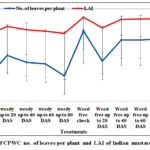 |
Figure 1: Effect of CPWC no. of leaves per plant and LAI of Indian mustard during 2024-25. |
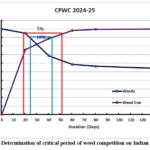 |
Figure 2; Determination of critical period of weed competition on Indian mustard. |
Critical weed interference period
In Indian mustard, weed interference had drastically lowered crop development and yield. The current study, under a relative yield loss threshold of 5% and 10% was between 19 and 52 and 25 to 44 DAS, respectively. It has been discovered that early weed presence significantly impairs crop development and resource utilization, especially up to 19–20 DAS. These results highlight the significance of prompt weed control, particularly in the first three to seven weeks after sowing. As per Korav et al. 14 the critical period of weed competition in groundnut under 5% RYL began at 16 to 66 DAE in rainy and 15 to 63 DAE in winter. In the rainy and winter seasons, 23 to 62 and 21 to 61 DAE was the critical period at 10% RYL, respectively.
Conclusion
The study clearly demonstrated that early-season weed competition significantly impairs the growth and productivity of Indian mustard in the Trans-Gangetic Plains of Punjab. Weeds present during the initial crop stages (especially up to 40 DAS) reduced vital growth parameters including plant height, number of leaves per plant, LAI, and dry matter accumulation. This, in turn, led to considerable losses in grain yield (up to 29.67%) and stover yield (up to 14.86%). The critical period of weed competition (CPWC) was established between 19–52 DAS for a 5% yield loss threshold, and between 25–44 DAS for a 10% loss, underscoring the importance of weed-free conditions during this timeframe. Weed-free plots maintained up to 40 DAS or beyond significantly enhanced all growth and yield attributes. These findings highlight the necessity of timely and effective weed management during the early growth stages to ensure optimal resource utilization, canopy development, and yield potential. Therefore, integrating cultural and mechanical weed control measures targeting the CPWC is strongly recommended for achieving sustainable and profitable mustard production in this agro-ecological region.
Acknowledgement
We sincerely thank the Department of agronomy, School of Agriculture, LPU Punjab for their required assistance in our research.
Funding Sources
The author(s) received no financial support for the research, authorship, and/or publication of this article.
Conflict of Interest
The author(s) do not have any conflict of interest.
Data Availability Statement
This statement does not apply to this article.
Ethics Statement
This research did not involve human participants, animal subjects, or any material that requires ethical approval.
Reference
- USDA-FAS, Global Agricultural Trade System (GATS) (U.S. Census Trade Data Product Group: BICO-HS10)., S. Department of Agriculture., 2025. https://apps.fas.usda.gov/gats/
- Ramli, N. H.; Sulaiman, Z. A., Effects of different fertilizers formulas on the growth and development of leaf mustard, Brassica juncea., Journal of the Academy of Nutrition and Dietetics., 2021, 9, 145–152.
- Sinha, T.; Mishra, A.; Mishra, U. S.; Sachan, R.; Singh, D., Interaction effect of sulphur and boron on growth characteristics, yield components and productivity parameters of mustard (Brassica juncea) under rainfed condition of Chitrakoot region., International Journal of Plant and Soil Science., 2022, 34, 1329–1336.
CrossRef - USDA, Food Data Central., S. Department of Agriculture., 2021. https://fdc.nal.usda.gov/
- Singh, R. P.; Singh, S. P.; Singh, A. K., Effect of different weed management practices on yield attributes and yield of Indian mustard (Brassica juncea)., Indian Journal of Weed Science., 2020, 52(1), 60–63.
- Raj, R.; Das, T. K.; Kaur, R.; Shekhawat, K.; Singh, R.; Singh, V. K., Effects of nitrogen and densities on interference and economic threshold of Phalaris minor in wheat., Crop Protection., 2020, 135, 105215.
CrossRef - DRMR, Brief about Rapeseed-Mustard. http://www.drmr.res.in
- Gomez, K. A.; Gomez, A. A., Statistical procedures for agricultural research, 2nd edn. International rice research institute, Los Banos, Philippines. Jon Willey and Sons, New York, 1984, 324.
- Hirani, A. K.; Korav, S.; Rajanna, G. A.; Elansary, H. O.; Mahmoud, E. A., Determination of critical crop-weed competition period: Impact on growth, nutrient dynamics and productivity of green gram (Vigna radiata)., Heliyon., 2024, 10(17).
CrossRef - Chowdhury, R.; Dash, S.; Pradhan, A., Weed management in direct seeded rice-mustard-sesame crop sequence in lateritic soil of Birbhum, West Bengal., Pesticide Research Journal., 2021, 33(2), 43-51.
CrossRef - Jadhav, V. D.; Korav, S.; Sujatha, H. T.; Rajanna, G. A., Impact of weed management methods on growth, productivity and economics of spring maize under north-western Indo-Gangetic plains of India., Ecology, Environment and Conservation., 2023, 29, S7–S13.
CrossRef - Patel, T. U.; Parmar, P. V.; Italiya, A. P.; Chaudhary, C. S.; Patel, D. D., Weed management effect on density, growth parameters and yield of cowpea., Indian Journal of Weed Science., 2023, 55, 276–281.
CrossRef - Korav, S.; Ram, V.; Ray, L. I. P.; Krishnappa, R.; Singh, N. J.; Premaradhya, N., Weed pressure on growth and yield of groundnut (Arachis hypogaea L.) in Meghalaya, India., International Journal of Current Microbiology and Applied Sciences., 2018, 7, 2852–2858.
CrossRef - Korav, S.; Ram, R.; Sujatha, T.; Paramesh, V.; Sridhara, S.; El Ansary, H.; Moussa, H., Elucidation of critical period of crop weed competition in groundnut (Arachis hypogaea) under mid-hills of Meghalaya., Cogent Food and Agriculture., 2024, 10, 2354470.
CrossRef - Ghamari, H., Weed interference effects on leaves, internode and harvest index of dry bean (Phaseolus vulgaris L.)., Notulae Scientia Biologicae., 2015, 7, 111–115.
CrossRef - Korav, S.; Ram, V.; Ray, L. I. P., Critical period for crop-weed competition in groundnut (Arachis hypogaea L.) under mid altitude of Meghalaya., Journal of Crop and Weed., 2020a, 16, 217–222.
CrossRef - Korav, S.; Ram, V.; Krishnappa, R.; Premaradhya, N., Agro‑physiological assessment of weed interference in groundnut (Arachis hypogaea L.) at sub‑Himalayan hill region of Meghalaya., Bangladesh Journal of Botany., 2020b, 49, 313–327.
CrossRef - Singh, R.; Singh, V. P.; Kumar, S.; Singh, Y., Effect of different weed management practices on growth and yield of Indian mustard (Brassica juncea)., Science Heritage Journal., 2023, 7, 61–65.
CrossRef - Pirdwad, K. M.; Galalaey, A. M. K., Determination of the critical period of weed competition and its impact on yield and yield components of rapeseed (Brassica nupus L.)., Journal of Medicinal and Industrial Plants., 2025, 3(1), 55–65.
CrossRef - Silva, P. R.; Ferreira, J. F. S.; Oliveira, M. A., Effect of weed interference on growth and yield attributes of canola (Brassica napus)., Communications in Plant Sciences., 2021, 11, 15–23.
- Jat, G.; Singh, R.; Jat, M. L., Critical period of weed competition in Indian mustard (Brassica juncea L)., Journal of Oilseed Brassica., 2020, 12, 173–177.
- Castro, M. A.; Lima, S. F. D.; Tomquelski, G. V.; Andrade, M. G. O. D.; Martins, J. D., Crop management and its effects on weed occurrence., Bioscience Journal., 2021, 37, 1981-3163.
CrossRef - Kumar, P.; Patel, J. N.; Alam, M. S., Effect of weed management practices on nutrient content and their uptake by green gram (Vigna radiata L.)., Journal of Experimental Agriculture International., 2024, 46, 1144–1152.
CrossRef - Singh, R. J.; Meena, R. N and Mishra, J., Effect of weed management on Indian mustard (Brassica juncea L.) cultivars., Journal of plant development science., 2016, 8, 179-181.
 PlumX:
  Views: 736 Views
  PDF Downloads: 818
 Accepted on: 03 Mar 2026
Second Review by: Dr. Majid Khan
Final Approval by: Dr. Ioana Stanciu


ISSN Online: 2231-5039