Acute Oral Toxicity Evaluation of Hydroalcoholic Extracts of Saracaindica and Bauhinia variegata with the HPTLC -Fingerprinting and IR Characterization of Targeted Phytoconstituents
 , Hemant Khambeteand Sanjay Jain
Faculty of Pharmacy, Medicaps University, Indore, Madhya Pradesh, India
Corresponding Author E-mail:joshi@medicaps.ac.in
DOI : http://dx.doi.org/10.13005/ojc/420226
Download this article as:

The Present study investigates the acute toxicity of hydroalcoholic extract of Saracaindica, Bauhinia variegata. The hydro-alcoholic extracts of SA and BV were prepared by Soxhlet extraction method. The temperature for Soxhlet extraction was 90℃ for both the extracts. The obtained extract of BV is slight sticky in appearance and the extract of SA is powder. The phytochemical Screening were performed for both the extracts. These plants are traditionally used for the various therapeutic purposes like diabetes, gynecological disorders, obesity etc. Extracts were evaluated for its safety profile in accordance with OECD guidelines for acute toxicity study. Single doses of extract of varying concentrations of 150,350,2000mg/kg body were administered to the healthy adult Wistar rats and the signs of toxicity that include, behavioral alteration, body weight and mortality were observed. The findings show that all herbal extracts of SAHE and BVHE do not cause any serious side effects or death at a dose of 2000mg/kg body weight despite the significant toxicity being present. The paper concludes that the extracts can possibly possess a positive safety profile with acute administration.
KEYWORDS:Bauhinia vareigata; BVHE (Hydroalcoholic extract of Bauhinia vareigata); Herbal Medicine; OECD; PCOS; Polycystic Ovarian Syndrome; Saracaasoca; SAHE (Hydroalcoholic extract of Saracaasoca)
Introduction
Polycystic Ovary Syndrome (PCOS) is a highly common endocrine disorder in women of menopausal age. It is an intricate association of hormonal imbalances, metabolic disorders 5- 10% of women and, therefore, plays a major role in female infertility. The disorder usually occurs with abnormal or no menstual cycles, hyperandrogenism (elevated levels of male hormones), polycystic ovarian morphology as revealed in ultrasonography, and insulin resistance. All these physiological disturbs tend to translate into clinical changes of hirsutism, acne, obesity, alopecia and menstrual abnormalities. Along with reproductive complications, type 2 diabetes mellitus, cardiovascular disorde3rs, and endometrial hyperplasia or cancer are also the long-term health risks related to PCOS. PCOS is regarded as a hyperandrogenic disorder that is often followed by persistent oligo-ovulation or anovulation. Polycystic ovarian structure may be frequently determined with the help of ultrasonography or other imaging procedures, but not every woman with polycystic ovaries can have the clinical and biochemical conditions of PCOS. It has been reported that pregnancy prevalence of polycystic ovarian morphology has a range of between 20 and 33 percent in the general population. PCS women can exhibit a number of typical signs such as menstrual problems, obesity, hirsutism, acne, and changes in the biochemical parameters of leutinizing hormone (LH), testosterone, androstenedione, and insulin. Because of the complex nature and rising prevalence, there is need to create more awareness and research on the topic to enhance therapeutic interventions of managing PCOS.
The Precise etiology is unclear but, it is believed that a mixture of genetic predisposition, environmental factors and lifestyle factors are the cause of the etiology as hyperinsulinemia can stimulate excessive androgen secretion by the ovarian theca cells, which further worsens hormonal imbalance. The Rotterdam criteria are the most commonly used to diagnose PCOS by the presence of two or more of the following: oligo- or anovulation, clinical or biochemical hyperandrogenism, and ovarian polycystic or morbpholy on ultrasound.
The traditional treatment methods involve change in lifestyle, hormonal therapy (e.g., oral contraceptives), insulin-sensitizing drugs such as metformin and ovulation-inducing infertility medications. Nonetheless, more attention towards herbal medicines has been developing given their natural source and the possibility of fewer side effects that provides herbal medicines with a potential complementary option in the management of PCOS symptoms.
Materials and Methods
Plant Material and Extraction
Bark of Saracaindica and Bauhinia variegata were collected and processed. The plant materials underwent ethanol and aqueous(1:1 ratio) extraction using Soxhlet apparatus. Further HPTLC and IR has been done for the extract and their targeted phytoconstituents.
Preliminary Phytochemical screening
Standard qualitative texts for alkaloids , flavonoids tannins and saponins has been done .
HPTLC fingerprinting
A CAMAG Llinomat-5applicator with a Hamilton microcrsyringe was used to apply bands in the chromatography analysis. The stationary phase was the use of pre-coated silica gel 60 F254 TLC plates.
FT-IR Analysis
Scanned under UV 254 nm and 366 nm. ATR spectra of extracts were captured in 4000- 400 cm-1 range of the functional groups that appeared as characteristic peaks on the instrument Shimadzu.
Experimental Animals
Animals were monitored during 14 days after the administration.Wistar rats of 190 ±10 g, 190 g were placed in a healthy condition in controlled laboratory conditions. The animals were put in a standardized environment and light and dark cycle was in a 12-hour cycle, temperature was maintained at 25 ±2 and relative humidity at 50-60. The ad libitum pellet diet and drinking water were administered during the period of study. All the experimental procedures were done in line with ethics, and they were approved by the Institutional Animal Ethics Committee (IAEC).
Acute Toxicity Study Protocol
The experiment was based on OECD guideline 423 ( Acute Oral Toxicity – Acute Toxic Class Method). The animals were assigned to four groups (n = 6 rats each group) and given one dose of extract Saracaindica and Bauhinia variegata at the rates of 5 mg/kg, 50 mg/kg, 300mg/kg, and 2000mg/kg orally.
Results
Preliminary studies of Extracts
|
Sr. No. |
Chemical Test | HE-SA | HE-BV |
| 1. | Alkaloid- Test | + |
+ |
|
2. |
Tannin-Test | ++ | + |
| 3. | Flavonoid-Test | + |
+ |
|
4. |
Amino acid-Test | – | – |
| 5. | Saponin-Test | – |
+ |
HE-SA: Hydroalcoholic extract of Saracaasoca, HE-BV: Hydroalcoholic extract of Bauhinia variegata,
+: Present, – :Absent
HPTLC fingerprinting of Saracaindica and Bauhinia variegata
HPTLC fingerprinting of Saracaindica
Application- Linomat-5 Applicator (CAMAG)
Sample Volume Applied- 20 µl
Solvent material- Chloroform: Acetone: Formic Acid =[75:16.5: 8.5]
Scan Wavelength- 254nm, 366nm
TLC Plate Development- Pre-saturated Twin Trough Chamber
ReferenceStandards:Catechin
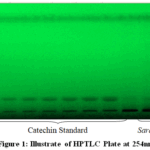 |
Figure 1: Illustrate of HPTLC Plate at 254nm Click here to View Figure |
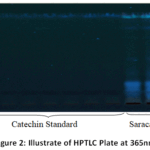 |
Figure 2: Illustrate of HPTLC Plate at 365nm Click here to View Figure |
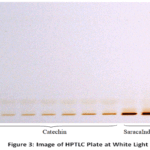 |
Figure 3: Image of HPTLC Plate at White Light Click here to View Figure |
Table 1: Interpretationgraph ofSaracaasoca and Catechin
|
peak |
Start position | Initial Height | Maxm
Position |
Max. height | Maxm % | End point | height End | Area | Area % |
Assigned substance |
|
1 |
0.11RF | 3.8 Au | 0.2.1 Rf | 394.6 Au | 93.21 | 0.31 R.f | 0.5
Au |
141485.2 Au | 94.99 | Catechin |
| 2 | 0.53RF | 1.1Au | 0.5.8 Rf | 15.6Au | 3.69 | 0.64 R.f | 1.4
Au |
435.8 Au | 2.92 |
Unknown |
|
3 |
0.74 RF | 5.8 Au | 0.7.8 Rf | 13.1 Au | 3.10 | 0.82 R.f | 1.5
Au |
312.8 Au | 2.09 |
Unknown |
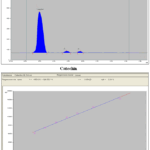 |
Figure 4: Calibration curve of catechin Click here to View Figure |
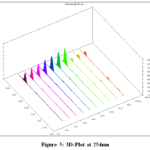 |
Figure 5: 3D-Plot at 254nm Click here to View Figure |
HPTLC fingerprinting of Bauhinia variegata
Application- Linomat-5 Applicator (CAMAG)
Sample Volume Applied- 20 µl
Solvent System:-Toluene : Ethyl acetate : Formic acid (5:4:1)
Scan Wavelength- 254nm, 366nm
TLC Plate Development- Pre-saturated Twin Trough Chamber
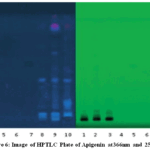 |
Figure 6: Image of HPTLC Plate of Apigenin at366nm and 254nm Click here to View Figure |
Apigenin standard typically shows a sharp fluorescent yellow band under 366 nm.
Rfvalue of Apigenin: ~0.45–0.60 (depending on mobile phase system).Bauhinia variegata extract shows multiple bands due to mixed phytoconstituents.A band matching the Rf of apigenin standard confirms its presence in the extract.
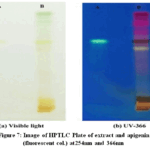 |
Figure 7: Image of HPTLC Plate of extract and apigenin (fluorescent col.)at254nm and 366nm Click here to View Figure |
FTIR Analysis
FTIR Analysis of Saracaindica extract and catechin
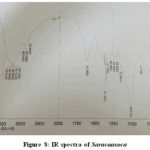 |
Figure 8: IR spectra of Saracaasoca Click here to View Figure |
Table 2: IR interpretation of Saracaasoca and Catechin
|
Sr. no. |
Functional Group | Observations cmˉ1
Saracaasoca |
Observations cmˉ1
Catechin |
Reference range |
| 1 | -OH | Stretching at at 3273 | Stretching at 3398 |
Stretching at 3550- 3200 |
|
2 |
-CH | Stretching at 2924 | – | Stretching at 3000- 2840 |
| 3 | -CH2 | Bending at 1352 | Bending at 1352 |
Bending at1350- 1150 |
|
4 |
-CO | Stretching at 1284 | Stretching at 1284 | Stretching at 1260-1000 |
| 5 | -C=C | Stretching at 1609 | Stretching at 1612 |
Stretching at 1600-1500 |
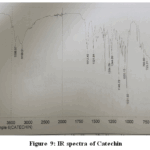 |
Figure 9: IR spectra of Catechin Click here to View Figure |
FT-IR Analysis of Bauhinia variegata extract and Apigenin
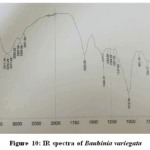 |
Figure 10: IR spectra of Bauhinia variegata Click here to View Figure |
Table 3: IR interpretation of Bauhinia variegata and Apigenin
|
Sr. no. |
Functional Group | Observations cmˉ1
(Bauhinia variegata) |
Observations cmˉ1
(Apigenin) |
Reference range |
| 1 | -OH | Stretching at at 3242 | Stretching at 3257 |
Stretching at 3550- 3200 |
|
2 |
-C= C | Stretching at group at 1609 | Stretching at 1649 | Stretching at 1600-1500 |
| 3 | -CH2 | Bending at 1346 | Bending at 1346 |
Bending at1350- 1150 |
|
4 |
-CO | Stretching at 1282 | Stretching at 1282 | Stretching at 1260-1000 |
| 5 | -CH | Stretching at at 3242 | Bending at 754.17 |
Stretching at 3550- 3200 |
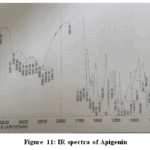 |
Figure 11: IR spectra of Apigenin Click here to View Figure |
AcuteOral.Toxicity
Acute oral toxicity of Test sample Saracaindica
Table 4: Body weight changes and Mortality
|
Animal group |
(mg/kg.) | No. of Rat | Sex | Day of Death | Body Wt. (gm) | No. dead/Dosing | ||
| 0-Day | 7-Day | 14-Day | ||||||
| I | 5 mg/kg. | R1 | F | — | 213.45 | 217.33 | 225.00 |
0/3 |
|
“ |
R2 | F | — | 209.23 | 214.37 | 221.57 | ||
| “ | R3 | F | — | 216.54 | 219.21 |
228.44 |
||
|
II |
50 mg/kg | R1 | F | — | 207.25 | 211.39 | 218.51 |
0/3 |
|
“ |
R2 | F | — | 196.37 | 201.55 | 208.71 | ||
| “ | R3 | F | — | 195.48 | 201.73 |
211.82 |
||
|
III |
300 mg/kg | R1 | F | — | 203.67 | 207.33 | 214.38 | 0/3 |
| “ | R2 | F | — | 215.68 | 220.72 |
226.16 |
||
|
“ |
R3 | F | — | 212.52 | 216.92 | 224.68 | ||
| IV | 2000 mg/kg | R1 | F | — | 190.78 | 196.44 |
201.34 |
0/3 |
|
“ |
R2 | F | — | 203.55 | 207.67 | 210.76 | ||
| “ | R3 | F | — | 192.73 | 195.63 |
202.59 |
||
Table 5: Acute toxicity behavior changes of Saracaindica
|
Parameters |
Observations of isolated compoundof SA | |||
| (5.mg/kg) | (50 .mg/kg) | (300 mg/kg) |
(2000 mg/kg) |
|
|
Changes in skin and fur |
No Change | No Change | No Change | No Change |
| Eyes | No Change | No Change | No Change |
No Change |
|
Mucous membranes |
No Change | No Change | No Change | No Change |
| Salivation | No Change | No Change | No Change |
No Change |
|
Stool |
No Change | No Change | No Change | No Change |
| Diarrhea | None | None | None |
None |
|
Sleeping pattern |
No Change | No Change | No Change | No Change |
| Behavior pattern | No Change | No Change | No Change |
No Change |
|
Somatomotor activity |
Not-visible | Not-visible | Not-visible | Not-visible |
| Mortality (14 days) | No | No | No |
No |
Acute oral toxicity of Test sample Bauhinia Vareighata
Table 6: Body weight changes and Mortality
|
Animal groups |
Dose. (mg/kg) |
No. of rat |
Sex(M/F) | Day of Death | Body Weight (gm) | No. dead/Dosing | ||
| 0 Day | 7 Day | 14 Day | ||||||
| I | 5.mg/kg | R1 | F | — | 211.45 | 214.09 |
220.33 |
0/3 |
|
“ |
R2 | F | — | 205.67 | 209.54 | 215.64 | ||
| “ | R3 | F | — | 210.37 | 213.54 |
221.22 |
||
|
II |
50 mg/kg | R1 | F | — | 204.56 | 206.42 | 213.51 | 0/3 |
|
“ |
R2 | F | — | 199.88 | 203.00 |
209.66 |
||
| “ | R3 | F | — | 191.88 | 195.55 |
202.00 |
||
|
III |
300 mg/kg | R1 | F | — | 203.55 | 207.13 | 213.58 | 0/3 |
|
“ |
R2 | F | — | 204.66 | 207.89 |
214.11 |
||
| “ | R3 | F | — | 206.75 | 209.22 |
216.16 |
||
|
IV |
2000 mg/kg | R1 | F | — | 202.00 | 206.13 | 211.98 | 0/3 |
|
“ |
R2 | F | — | 201.25 | 204.93 |
211.31 |
||
| “ | R3 | F | — | 190.56 | 194.12 |
203.88 |
||
Table 7: Acute toxicity behavior changes of Bauhinia Vareighata
|
Parameters |
Observations of isolated compoundofBV | |||
| (5.mg/kg) | (50.mg/kg) | (300. mg/kg) |
(2000. mg/kg) |
|
|
Changes in skin and fur |
No Change | No Change | No Change | No Change |
| Eyes | No Change | No Change | No Change |
No Change |
|
Mucous membranes |
No Change | No Change | No Change | No Change |
| Salivation | No Change | No Change | No Change |
No Change |
|
Stool |
No Change | No Change | No Change | No Change |
| Diarrhea | None | None | None |
None |
|
Sleeping pattern |
No Change | No Change | No Change | No Change |
|
Behavior pattern |
No Change | No Change | No Change | No Change |
| Somatomotor activity | Not Visible | Not Visible | Not Visible |
Not Visible |
|
Mortality (14 days) |
No | No | No |
No |
Discussion
The acute toxicity analysis of Saracaindica and bauhinia variegata plant extract in female Wistar rat species showed that there were no changes in its toxicity at the maximum dose of 2000mg/kg body weight. During the 14 days of observation, it was found that all the animals showed a slow and steady increase of their body weight, and there were no deaths in any group of doses. Additionally, close examination of behavioral and physiological parameters, including state of skin and fur, eye and mucous membranes looks, salivation, stool, sleep, somatomotor activity, and overall behavior revealed no deviations or any negative response. These results suggest that extraction of Saracaindica and bauhinia variegata does not produce any acute toxicity and has a high level of tolerance in animals when used in experimental studies.
The lack of mortality along with a considerable clinical effect even at the highest dose indicate that LD50 (lethal dose of 50 percent of the population) of extract of Saracaindica is higher than 2000 mg/kg, which makes this extract practically non-toxic in terms of OECD guidelines. This captive safety margin is especially necessary in the light of increased interest in herbal medicines as complementary or alternative therapeutic tools in the management of chronic endocrine disorders like Polycystic Ovary Syndrome (PCOS). PCOS may be a long-term condition, so it is important to determine the safety of herbal extracts in advance to avoid the possible adverse effects.
Saracaindica and bauhinia variegata extract has a high potential in the development as a therapeutic agent against PCOS based on its promising safety profile as evidenced in this study. Nevertheless, more research is suggested to be undertaken such as chronic toxicity research, reproductive toxicity research and in-depth pharmacodynamics and pharmacokinetics research. Such studies in the future will aid in assuring long term safety and efficacy which will open the way to clinical trials and a possible application of these therapeutic modalities in future in the management of PCOS.
Conclusion
This analysis showed that no acute toxic effects were observed with Saracaindica and bauhinia variegata extract at the highest dose of 2000mg/kg in female Wistar rats. The weight gain and lack of mortality and normal physiological and behavioral parameters indicate that the extract is practically non-toxic in acute exposure situations. This means that Saracaindica can be deemed safe to continue with further investigations on its chronic toxicity and pharmacological implications on the treatment of PCOS.
These results coincide with the other studies that suggested low toxic effect of related plant extract. This research contributes to the non-toxicity of bauhinia variegata and Saracaindica as therapeutic agents due to the current interest in the natural treatment of PCOS.
Funding Sources
The author(s) received no financial support for the research, authorship, and/or publication of this article.
Conflict of Interest
The author(s) do not have any conflict of interest.
Data Availability Statement
This statement does not apply to this article.
Ethics Statement
This research did not involve human participants, animal subjects, or any material that requires ethical approval.
References
- Sharma, A., Chandel, V. & Roy, S. Exploring the bioactive properties and diverse uses of Bauhinia variegata: a comprehensive review. Plants2, 86 (2025). https://doi.org/10.1007/s44372-025-00167-7
CrossRef - Kathole, N. S., Karande, V. V., Ghumare, B. C., Mote, C. S., Lonkar, V. D., Jadhav, S. N., &Bachapalle, P. P. (2023). Evaluation of Antiangiogenic Potential of Ethanolic Extract of Bauhinia variegata Leaves in Mice. Indian Journal of Veterinary Sciences and Biotechnology, 19(5), 70-73. https://doi.org/10.48165/ijvsbt.19.5.14.
CrossRef - Ziyaurrahman A.R, Mohammed Saad, Reehan Khan, Tufail Dana, BeldarShmashad, &Dilnawaz Pathan. (2023). Acute AndSubacute Oral Toxicity Of SaracaAsoca In Rats. Journal for ReAttach Therapy and Developmental Diversities, 6(1), 870–888. https://doi.org/10.53555/jrtdd.v6i1.2331
- Fathima, Faiza& Parveen, Rabea& Khan, Mohammad & Malik, Zoya& Mustafa, Saad & Massey, Sheersh& Husain, Syed. (2023). Saracaasoca: From Traditional Herb to Modern Drug as a Cure for Various Diseases.
CrossRef - Khare, Pragati& Kishore, Kamal & Sharma, Dinesh. (2022). Acute Oral Toxicity of Bauhinia Variegata and MadhucaLongifoliaIn Mice. International Journal of Current Pharmaceutical Research. 69-71. 10.22159/ijcpr.2022v14i2.1966.
CrossRef - Choudhary, Y., Deshpande, S. V., Patil, S. B. ., & Chaudhari, A. L. . (2022). Acute toxicity study of the nanoparticles of Bauhinia variegata Linn bark hydro-alcoholic extract in Wistar Albino rats. International Journal of Ayurvedic Medicine, 13(3), 777–782. https://doi.org/10.47552/ijam.v13i3.2895
CrossRef - Jangra, Ashwani & Saharan, Vikas Anand & Dubey, R.C. &Goel, Kapil. (2016). Toxicological evaluation of Bauhinia variegata Linn. for estimating the neurological, hematological and physical alterations in the albino mice. Environment Conservation Journal. 97-102. 10.36953/ECJ.2016.17318.
CrossRef - Kumar, A. ., Anand, V., Dubey, R. ., & K. Goel, K. . (2016). Toxicological evaluation of Bauhinia variegata Linn. for estimating the neurological, hematological and physical alterations in the albino mice. Environment Conservation Journal, 17(3), 97–102. https://doi.org/10.36953/ECJ.2016.17318
CrossRef - Chaudhari NB, Suralkar A, ZiyaurrahmanAR.Preclinical Safety Evaluation of Aqueous Bark Extract of SaracaAsocaRoxb : Acute And Subacute Oral Toxicity. (2015). International Journal of Pharmacological research.5 (12);332-337; http://doi.org/10.7439/ijpr.v5i12.2791
- Mali RG, Dhake AS. Evaluation of effects of Bauhinia variegata stem bark extracts against milk-induced eosinophilia in mice. Journal of Advanced Pharmaceutical Technology & Research. 2011 Apr;2(2):132-4. doi: 10.4103/2231-4040.82949. PMID: 22171306; PMCID: PMC3217693.
CrossRef - Makadiya, V. S., Kulkarni, Y. A., &Apte, K. G. Acute and 28-Day Repeated Dose Oral Toxicity of Bauhinia variegata(Caesalpiniaceae) Stem Bark Extract. (2014). Journal of Herbs, Spices & Medicinal Plants, 21(2), 161-172
CrossRef - Yadav NK, Saini KS, Hossain Z, Omer A, Sharma C, Gayen JR, Singh P, Arya KR, Singh RK. Saracaindica bark extract shows in vitro antioxidant, antibreast cancer activity and does not exhibit toxicological effects. Oxid Med Cell Longev. 2015:205360. doi: 10.1155/2015/205360.
CrossRef - Gupta M, Sasmal S, Mukherjee A. Therapeutic Effects of Acetone Extract of Saracaasoca Seeds on Rats with Adjuvant-Induced Arthritis via Attenuating Inflammatory Responses. (2014). ISRN Rheumatol. doi: 10.1155/2014/959687.
CrossRef - Kolhe, Rasika&Acharya, Rabinarayan&Ravishankar, Basavaiah. (2014). Chronic toxicity study of stem bark powder of Kanchanara (Bauhinia variegata L.) in albino rats. Indian journal of Natural product and resourses. 5. 244-248.
 PlumX:
  Views: 638 Views
  PDF Downloads: 1000
 Accepted on: 17 Feb 2026
Second Review by: Dr. Devendra Dixit
Final Approval by: Dr. Abdelwahab Omri


ISSN Online: 2231-5039