Applications of Macrocyclic Metal Complexes in Molecular Electronics, Environmental Remediation, and Energy Technologies
 < and Nidhi Bansal2*
1Department of Biotechnology JECRC University, Jaipur, Rajasthan, India.
2Department of Chemistry, JECRC University, Jaipur, Rajasthan, India.
Corresponding Author E-mail: nidhi.bansal@jecrcu.edu.in
DOI : http://dx.doi.org/10.13005/ojc/420221
Download this article as:

Macrocyclic metal complexes have emerged as multifunctional materials with significant potential across diverse technological domains. This review focuses on their advanced applications in molecular electronics, environmental remediation, and energy technologies, highlighting how structural design and metal–ligand interactions govern their functionality. The coordination environment, donor atom type, and central metal ion collectively influence the stability, redox behavior, and electronic properties of these complexes, enabling their integration into molecular switches, conductive frameworks, and nanoscale devices. In the environmental context, macrocyclic complexes play a pivotal role in pollutant degradation, catalytic detoxification, and sensing of hazardous species, demonstrating high selectivity and reusability. Their contribution to energy-related applications including fuel cells, batteries, and solar energy conversion is also analyzed, emphasizing their tunable electrochemical and photophysical characteristics. Recent synthetic advancements, structure–property correlations, and challenges in scalability and practical implementation are discussed to provide a comprehensive outlook on the future of macrocyclic metal complexes in sustainable and electronic technologies.
KEYWORDS:Catalysis, Pollutant degradation; Environmental remediation; Energy technologies; Macrocyclic metal complexes; Molecular electronics
Introduction
Macrocyclic metal complexes, featuring cyclic ligands capable of coordinating to one or more metal centers, have Attracted significant research attention due to their structural rigidity, tunable donor atoms, and diverse functional properties. These systems exhibit remarkable thermodynamic stability and kinetic selectivity, making them invaluable across a broad spectrum of scientific and technological applications. Their versatility in catalysis, environmental remediation, analytical sensing, and energy conversion/storage arises from their ability to fine-tune metal–ligand interactions and electronic characteristics.
Macrocyclic complexes demonstrate exceptional performance as homogeneous and heterogeneous catalysts in industrial processes, facilitate pollutant degradation through redox and photo catalytic pathways, and function as active components in chemical sensors and biosensors . Furthermore, their integration into energy-related devices such as fuel cells, rechargeable batteries, and dye-sensitized solar cells (DSSCs) underscores their potential in addressing modern energy challenges.
Beyond these technological domains, macrocyclic metal complexes are emerging as promising candidates in nanomedicine, targeted drug delivery, and phototherapy, attributed to their biocompatibility, tunable coordination behavior, and responsiveness to physiological stimuli.1
Given these attributes, macrocyclic metal complexes stand at the intersection of chemistry and materials science, offering a versatile platform for innovations in molecular electronics, sustainable catalysis, and energy technologies as shown in Fig.1. This review aims to provide an integrated overview of their structural characteristics, coordination behavior, and recent advancements, with a particular emphasis on their applications in molecular electronics, environmental remediation, and energy systems.
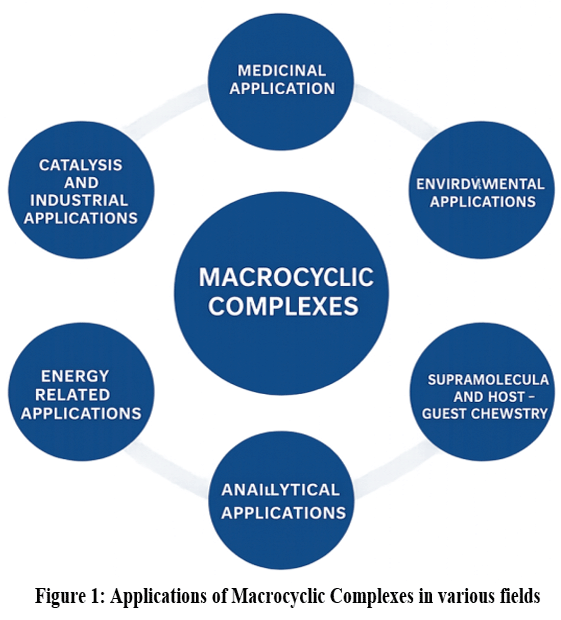 |
Figure 1: Applications of Macrocyclic Complexes in various fields Click here to View Figure |
Applications of Macrocyclic Complexes
Macrocyclic metal complexes as catalysts
Macrocyclic metal complexes serve as highly efficient homogeneous catalysts across a wide range of chemical transformations due to their well-defined geometries, rigid coordination environments, and tunable electronic properties. Among these, porphyrin as shown in Fig.2 and Salen-type complexes of transition metals such as Fe, Mn, and Co have been extensively utilized in oxidation reactions, including epoxidation, hydroxylation, and sulfoxidation, owing to their redox-active centers and stability under catalytic conditions .2 Similarly, Rh and Ru-based macrocyclic complexes exhibit exceptional activity in hydrogenation and transfer hydrogenation reactions, demonstrating high selectivity and turnover frequencies.3
Ni and Co phthalocyanine complexes have shown remarkable potential in olefin polymerization and hydroformylation processes due to their ability to stabilize reactive intermediates during catalytic cycles .4 In addition, Ni and Pd macrocyclic complexes have proven effective in cross-coupling reactions, contributing significantly to the synthesis of pharmaceuticals, agrochemicals, and advanced materials for molecular electronics.5
Photocatalytic macrocyclic systems, particularly Zn–porphyrins, play a vital role in artificial photosynthesis and solar energy conversion. Their capacity for efficient light absorption, charge separation, and electron transfer enables photoredox transformations relevant to renewable energy technologies.6 Another notable example involves Co(III)/Alkali-metal(I) macrocyclic complexes, which act as catalysts in the ring-opening copolymerization (ROCOP) of CO₂ and propylene oxide (PO). These systems exhibit high activity and selectivity for poly(propylene carbonate) (PPC) formation under optimized conditions of catalyst loading, CO₂ pressure, and temperature, demonstrating significant potential for CO₂ utilization and polymer synthesis.7
Macrocyclic metal complexes thus contribute significantly to the advancement of green chemistry, offering advantages such as enhanced selectivity, reusability, and high catalytic efficiency. Beyond CO₂ reduction, these complexes are increasingly explored for water oxidation, hydrogen evolution, and other key reactions relevant to sustainable and renewable energy conversion.
To further enhance catalytic performance, several strategic modifications have been proposed:
Functionalization of the macrocyclic framework with donor or electron-withdrawing groups to improve substrate binding and activation .8
Development of heterobimetallic macrocyclic systems that combine the catalytic properties of two distinct metal centers, enabling multi-step or cooperative catalysis.
Immobilization of macrocyclic complexes on solid supports to facilitate catalyst recovery, recyclability, and stability during repeated use .9
Design of stimuli-responsive macrocyclic catalysts that can be activated or deactivated by external factors such as light, temperature, or pH changes .10
Exploration of tandem or cascade catalytic systems in which multiple transformations are integrated within a single catalytic cycle, enhancing overall process efficiency.11
 |
Figure 2: Macrocyclic Complexes containing Porphyrin ring Click here to View Figure |
Environmental Applications of Macrocyclic Complexes
Heavy Metal Ion Detection and Removal
Macrocyclic ligands are highly effective in the detection and sequestration of heavy metal ions such as lead (Pb²⁺), mercury (Hg²⁺), cadmium (Cd²⁺), and arsenic (As³⁺) due to their high selectivity and strong binding affinities as shown in Fig.3. Crown ethers, cryptands, and cyclams form stable complexes with these toxic metals, preventing their bioavailability and facilitating removal from aqueous environments.12
For example, cyclam-based ligands functionalized with sulfonic or carboxylic acid groups enhance aqueous solubility and binding to Pb²⁺, making them useful in environmental remediation filters.13 Macrocyclic ligands immobilized on solid supports or incorporated into membranes have also been employed in water purification systems.14
Environmental Sensing and Monitoring
Macrocyclic complexes are increasingly used as molecular sensors to monitor environmental pollutants as shown in Fig.3, including anions (e.g., nitrate, phosphate), small organic toxins (e.g., pesticides), and gases (e.g., NO₂, SO₂, CO). The selectivity of the macrocyclic cavity, combined with redox- and photochemical activity of metal centers, allows for precise recognition and reporting.15
Phthalocyanine and porphyrin complexes have been employed in gas sensors for air quality monitoring. These materials exhibit changes in electrical conductivity or optical properties upon binding gaseous analytes, allowing for real-time detection in electronic nose-type devices.16
Crown ether-based sensors have also been developed for ammonium and potassium ion monitoring in agricultural runoff. These sensors offer rapid response times and are compatible with remote sensing platforms .17
Catalytic Degradation of Pollutants
Macrocyclic metal complexes function as efficient catalysts as shown in Fig.3 for the degradation of organic pollutants, such as dyes, phenols, and pesticides. They facilitate oxidative degradation via redox-active metal centers (e.g., Fe, Mn, Cu) in the presence of oxidants like H₂O₂ or O₂.
For instance, iron(III)-porphyrin complexes catalyze the oxidation of phenolic compounds, mimicking peroxidase enzymes and enabling eco-friendly treatment of industrial effluents. Cu(II) and Mn-based phthalocyanine complexes have shown high catalytic activity in the degradation of azo dyes under mild conditions.18
Some macrocyclic complexes also support photocatalytic degradation. Zn-porphyrin systems absorb visible light and generate reactive oxygen species that oxidize persistent organic pollutants.19
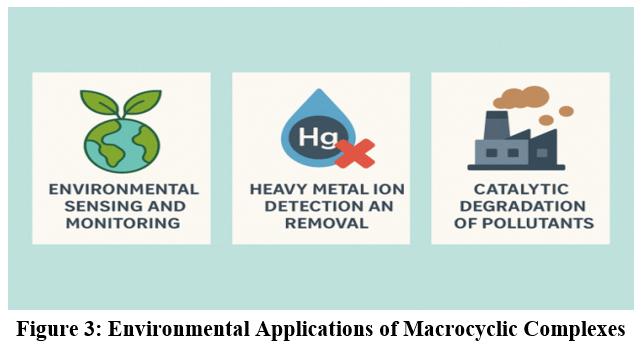 |
Figure 3: Environmental Applications of Macrocyclic Complexes Click here to View Figure |
Supramolecular and Host–Guest Chemistry Applications of Macrocyclic Complexes
Macrocyclic ligands, such as crown ethers, cyclodextrins, calixarenes, and cucurbiturils, have long served as foundational components in supramolecular chemistry due to their ability to form stable, non-covalent host–guest complexes. Their well-defined cavities allow selective encapsulation of guest molecules, ions, or neutral species.20
Metal–macrocycle frameworks (MMFs) exhibit enhanced host–guest behavior, where the metal centers can further modulate binding affinities through coordination geometry and charge. 21 These systems have been employed in molecular switches, recognition systems, and self-assembled nanostructures.
For example, cucurbituril-metal complexes have shown promise in pH- or redox-responsive molecular containers for drug delivery and nanovalves in mesoporous materials.22.Beyond environmental cleanup, macrocyclic complexes also hold promise in revolutionizing energy storage and conversion.
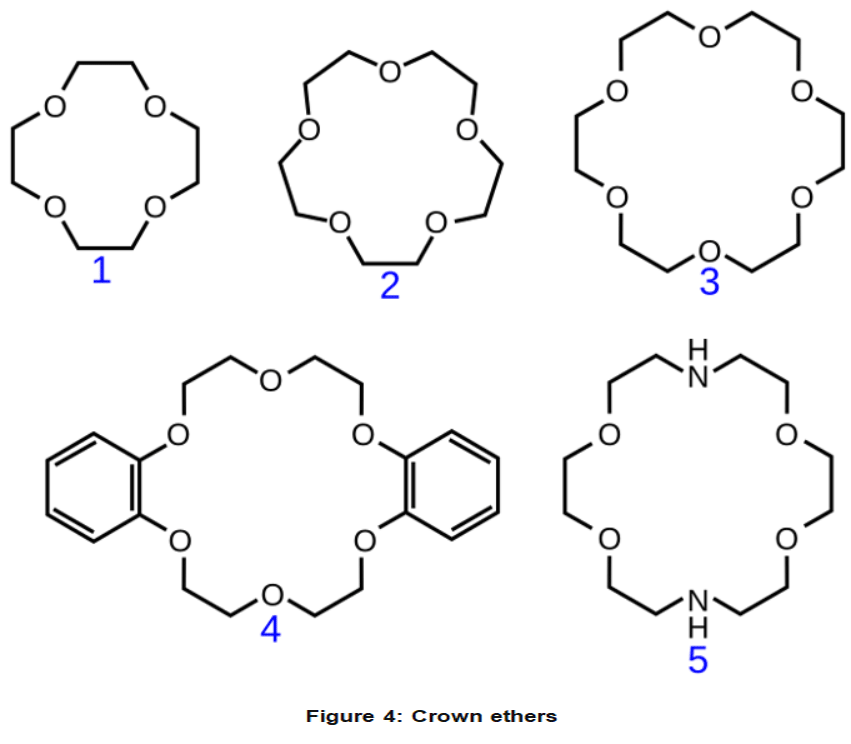 |
Figure 4: Crown ethers Click here to View Figure |
Macrocyclic Complexes Applications in Molecular Electronics and Devices
Macrocyclic complexes are gaining momentum in molecular electronics due to their conjugated structures, redox tunability, and ability to undergo charge transfer. Porphyrins and phthalocyanines, in particular, have been used as molecular wires, rectifiers, and transistors.
In devices, metal–phthalocyanines serve as active layers in organic thin-film transistors (OTFTs) and organic photovoltaics (OPVs), owing to their excellent thermal stability and semiconducting behavior.23 Transition metal complexes of porphyrins have also been integrated into single-molecule junctions where they demonstrate controlled electron transport and switching behavior.
Recent studies have explored metal–salen complexes in ferroelectric and memory devices due to their bistable redox states.24
Conducting and Magnetic Materials
Macrocyclic metal complexes are used in the development of conducting polymers and magnetic materials. Extended π-conjugation in macrocyclic ligands, such as phthalocyanines, allows delocalization of electrons across the molecule, making them suitable for semiconducting or conducting applications as shown in Table 1 and 2.25
Metal-phthalocyanines (MPcs) doped with electron donors or acceptors have been employed in conducting thin films for use in sensors and electrochromic devices .The spin-state variability of certain macrocyclic complexes also lends them to single-molecule magnets (SMMs) and spintronic applications, especially with lanthanide or transition metal ions.26
Moreover, cobalt and nickel-based macrocyclic frameworks have been designed for 2D magnetic materials with switchable spin states, paving the way for future quantum information systems.27
Gas Storage and Separation
Porous macrocyclic frameworks—such as metal–organic frameworks (MOFs) and supramolecular cages constructed from macrocyclic ligands—are highly effective for gas storage and selective separation as shown in Table 3. These structures combine high surface area, specific binding sites, and tunable pore environments.
Porphyrin-based MOFs have shown significant uptake of gases like H₂, CO₂, and CH₄, driven by their ability to coordinate or interact with gas molecules at the metal centers.28 For example, Fe-porphyrin MOFs display high CO₂/N₂ selectivity due to strong quadrupolar interactions.
Crown-ether-based materials have been applied in selective ion and gas sieving membranes, while calixarene–metal hybrids exhibit high efficiency in volatile organic compound (VOC) capture.29
Table 1: Macrocyclic Complexes as Conducting Materials
|
Device Type |
Macrocyclic Component | Function |
Key Properties |
|
Molecular Wires |
Phthalocyanines | Electron transport element | High conductivity, delocalized π-system |
| Memory Devices | Redox-active porphyrins | Charge storage and switching |
Bistable redox states |
|
OLEDs |
Zn–porphyrin complexes | Light-emitting layer | Tunable emission spectra |
| Molecular Switches | Rotaxane with macrocyclic rings | Switchable under voltage/light stimuli |
Reversible on/off states |
Table 2: Macrocyclic Complexes as Magnetic Materials
|
Material |
Macrocyclic Complex | Property |
Application |
|
Organic Conductors |
Ni–phthalocyanines | Electrical conductivity | Organic electronics |
| Magnetic Thin Films | Mn–porphyrin arrays | Spin alignment |
Molecular magnets |
|
Coordination Polymers |
Schiff-base macrocyclic complexes | Long-range magnetic order |
Magnetic materials |
Table 3: Gas Storage and Separation of Macrocyclic Complexes
|
Macrocyclic Complex |
Gas Targeted |
Mechanism |
|
Porphyrin/Zn–phthalocyanine |
H | Physisorption, π–π interaction |
| Crown ether–polyimides | CO |
Size-exclusion and dipolar interaction |
|
β-CD-MOFs |
NH | Hydrogen bonding |
| Calixarene–metal hybrids | VOCs, noble gases |
Host–guest selectivity |
Analytical Applications of Macrocyclic complexes
Chemical Sensors and Biosensors
Macrocyclic metal complexes particularly those derived from porphyrins, phthalocyanines, calixarenes, and crown ethers have gained wide recognition in the design of chemical and biosensors owing to their selective binding capabilities, redox activity, and structurally tunable coordination sites. Their ability to reversibly interact with analytes such as metal ions, gases, and biomolecules makes them highly effective as sensing elements.30
For instance, porphyrin-based sensors have been developed for the detection of ammonia, nitrogen dioxide (NO₂), and volatile organic compounds (VOCs), exhibiting high sensitivity, rapid response times, and excellent reversibility .30Similarly, calixarene and crown ether metal complexes have demonstrated significant utility in ion-selective electrodes for the detection of alkali and alkaline earth metals, providing reliable and reproducible analytical performance.
In the realm of biosensing, macrocyclic complexes often serve as enzyme mimics or electron-transfer mediators, enabling efficient signal transduction. For example, Cu(II)–cyclam derivatives have been employed in glucose and cholesterol detection through electrochemical and optical methods, highlighting their potential in medical diagnostics and biochemical assays.31
Spectroscopic Probes
The unique optical and electronic properties of macrocyclic metal complexes particularly porphyrins and phthalocyanines render them valuable as spectroscopic and fluorescent probes. These compounds exhibit sharp and intense absorption bands (notably Soret and Q-bands), long-lived excited states, and high molar extinction coefficients, which collectively contribute to their superior photophysical behavior.
Gd(III)-DOTA conjugates are used as contrast agents in magnetic resonance imaging (MRI), while Zn-porphyrin and Ru–polypyridine macrocycles function as luminescent or two-photon imaging probes in cellular studies.32
Macrocyclic compounds serve as stationary phases or selectors in chromatographic techniques such as high-performance liquid chromatography (HPLC), gas chromatography (GC), and capillary electrophoresis.33
Cyclodextrins and crown ethers immobilized on silica gels have been used for chiral separations and ion-exchange chromatography. Metal–macrocycle complexes, especially those with crown ether or calixarene frameworks, allow for selective separation of metal ions and organic molecules through size, charge, or polarity-based discrimination. 34 Thus, Macrocyclic complexes have wide range of applications in analytical fields as shown in Table 4.
Table 4 :Analytical Applications of Macrocyclic Metal Complexes
|
Application |
Macrocyclic Complex |
Function |
|
Chemical Sensors |
Cu(II)-Cyclam, Zn-Porphyrin | Electrochemical detection |
| Biosensors | Crown ether-Cu(II) complexes |
Ion-selective electrodes |
|
Spectroscopic Probes |
Zn–Porphyrins, Gd–DOTA | Fluorescence/MRI contrast |
| Chromatographic Selectors | Crown ethers, Cyclodextrins |
Stationary phase for separation |
Energy-Related Applications of Macrocyclic Complexes
Fuel Cells and Batteries
Macrocyclic complexes, particularly Co and Fe porphyrins and phthalocyanines, are promising non-precious metal catalysts in oxygen reduction reactions (ORR) in fuel cells. These complexes offer high catalytic activity and durability in both acidic and alkaline media as shown in Fig.5.
In battery applications, Mn and Ni macrocyclic complexes have been explored as cathode materials for lithium-ion and redox-flow batteries due to their multielectron redox capabilities and structural robustness.35
Dye-Sensitized Solar Cells (DSSCs)
Porphyrin-based dyes are among the most efficient sensitizers for DSSCs due to their strong visible light absorption and facile electron injection into TiO₂. The incorporation of metal centers like Zn or Ru in these macrocycles improves photoelectric conversion efficiency and stability.36
Phthalocyanine complexes with extended π-systems have also been optimized to broaden light-harvesting in near-infrared regions, making them valuable for third-generation photovoltaics.37
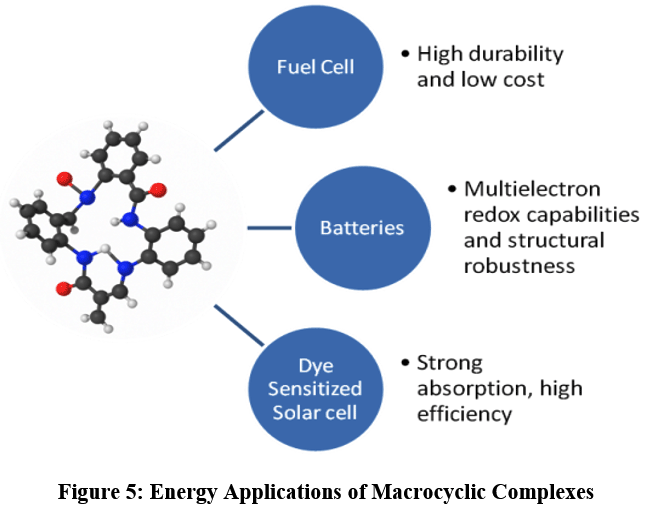 |
Figure 5: Energy Applications of Macrocyclic Complexes Click here to View table |
Recent Advances and Future Prospects
Recent progress in modular synthesis, click chemistry, and templated self-assembly has expanded the design of macrocyclic ligands with improved selectivity, stability, and functionality. The integration of redox-active, photoactive, or biofunctional groups into macrocyclic scaffolds allows multifunctional applications.
Advances in supramolecular chemistry have also paved the way for the creation of architecturally complex assemblies, such as rotaxanes, catenanes, and metal–organic framework (MOF) cages derived from macrocyclic building blocks. These sophisticated architectures exhibit precise molecular recognition, tunable porosity, and dynamic host–guest interactions, which have opened new opportunities in molecular electronics, drug delivery, and catalytic nanoreactors.
Despite their versatility, scaling up the synthesis of macrocyclic complexes remains a challenge due to low yields, complex purification, and high costs of starting materials. Stability in real-world environments (e.g., pH, temperature, solvents) and metal leaching are also concerns in applications like catalysis and medicine.
Efforts are underway to develop greener, solvent-free, and automated synthetic protocols to enhance industrial viability.38
Parallel to this, the incorporation of artificial intelligence (AI) and machine learning (ML) into macrocyclic ligand design represents a transformative advancement, enabling the predictive modeling of structures, reactivities, and functions. These computational approaches promise to accelerate the discovery of new macrocyclic architectures with precisely tailored properties for catalysis, environmental remediation, sensing, and energy conversion technologies.
The future of macrocyclic metal complex research lies in the synergistic integration of synthetic innovation, computational intelligence, and sustainable design principles. By coupling data-driven discovery with modular and eco-friendly synthesis, researchers can unlock a new generation of adaptive, multifunctional macrocyclic systems. Such systems are expected to play pivotal roles in addressing global challenges related to clean energy, environmental protection, and advanced healthcare. With ongoing efforts to bridge the gap between fundamental coordination chemistry and practical applications, macrocyclic metal complexes are poised to remain at the forefront of interdisciplinary materials and molecular innovation.
Acknowledgement
The authors acknowledge the contribution and support provided by their respective departments and institution.
Funding Sources
The author(s) received no financial support for the research, authorship, and/or publication of this article.
Conflict of Interest
The author(s) do not have any conflict of interest.
Data Availability Statement
This statement does not apply to this article.
Ethics Statement
This research did not involve human participants, animal subjects, or any material that requires ethical approval.
References
- Buskes, M. J.; Coffin, A.; Blanco, M.J.; Troast, D. M.; Stein, R. ACS Med. Chem. Lett.2023,14(4), 376–385
CrossRef - Brewer, S. M.; Jones, D. G.; Ayala, M. A.; Wilson, K. R.; Prior, T. J.; Archibald, S. J.; Green, K. N.; Foster, A. L.; Reinheimer, E. W.; Hubin, T. J. Chem. 2018 ,57(15), 8890–8902
CrossRef - Wu, B. X.; Wang, C.; Xiao, J. Met. Rev.2010, 54(1), 3–19
CrossRef - Yorimitsu, H.; Kotora, M.; Patil, N. T. Special Issue: Rec. Adv. in Trans.Met.Catalysis. The Chem.Rec.2021 21(12), 3335–3337
CrossRef - Len, C.; Parmar, V.;Bruniaux, S.; & Delbecq, F. 2017, 7(5), 146-164
CrossRef - Kuttassery, F.; Suzuki, H.; Ishitani, O.; Abe, R.; Kumagai, H.; Ebato, Y.;Higashi, M.; Kamata, R. Sci.2021, 12(39), 13216–13232
CrossRef - Deacy, A. C.; Moreby, E.; Phanopoulos, A.; Williams, C. K. of the Amer. Chem.Soc. 2020 ,142(45), 19150–19160
CrossRef - Chen, K.; Zhu, H.; Bai, J.; Ding, K.; Guo, Y.; Wang, X.; Liu, S.; Peng, Q. of the Am. Chem.Soc..2023 ,146(2),1276-1281
- Abd El Sater, M.; Jaber, N.; Schulz, E. ChemCatChem.2019 ,11(16), 3662–3687
CrossRef - Ghosh, I.;König, B. (2016). Angewandte Chemie. Int.Ed.2016, 55(27), 7676–7679
CrossRef - Camp, J. E. J. ofOrg.Che.2016,2017(3), 425–433
CrossRef - Diamantis, S. A.;Lazarides, T.; Armatas, G. S.; Pournara, A. D.; Moularas, C.;Hatzidimitriou, A. G.;Deligiannakis, Y.; Koutsouroubi, E. D.;Manos, M. J. Inorganic Chemistry, 2022 ,61(20), 7847–7858
CrossRef - Lelong, E.; Suh, J.M.;Tripier, R.; Bernard, H.; Raphael, T.; Kim, G.;Royal, G.; Cordier, M.; Lim, M. H.; Esteban-Gómez, D.;Delgado, R.;Platas-Iglesias, C. Am. Chem.socie. 2021, 60(15)
CrossRef - Modak, A.; Selvaraj, M.;Bhanja, P.;Bhaumik, A. Environmental Science: Nano. 2020, 7(10), 2887–2923
CrossRef - Zhao, F.; Yu, L.; Wang, J.; Cao, W.;Zhang, H.;Wang, H.;Wang, P.H.; Qiao, Z. ACS Sens. 2024, 9(8), 4007–4016
CrossRef - Duan, X.; Zhang, Y.;Chen, Y.;Dai, F.; Wang, H.;Yang, G. New J. of Chem. 2020, 44(31), 13240–13248
CrossRef - Kim, Y.; Jeon, Y.; Na, M.; Hwang, S.J.;Yoon, Y. Sensors .2024, 24(2), 431
CrossRef - Gamelas, S. R. D.; Tomé, J. P. C.; Lourenço, L. M. O.;Tomé, A. C. RSC Advan.2023,13(48), 33957–33993
CrossRef - Silvestri, S.; Fajardo, A. R.; Iglesias, B. A. Chem. Lett. 2021,20(1), 731–771
CrossRef - Zhu, H.; Chen, L.; Stoddart, J. F.;Sun, B.;Wang, M.; Huang, F.;Li, H. Nature Rev. Chem.2023, 7(11), 768–782.
CrossRef - Dey, N.;Haynes, C. J. E. Plus.Chem. 2021,86(3), 418–433
CrossRef - Assaf, K. I.;Nau, Soc.Rev.2015,44(2), 394–418.
CrossRef - Lessard, B. H. ACS Appl. Mat.& Inte. 2021 ,13(27), 31321–31330
- Chepurnaya, I. A.; Levin, O. V.; Lukyanov, D. A.; Karushev, M. P.;Alekseeva, E. V. Pure and Applied Chemistry, 2020 ,92(8), 1239–1258
CrossRef - Madhuri, K. P.; Angappane, S.; Bertram, F.;Santra, P. K.; John, N. S. The J. of Phy.Chem.C. 2018 ,122(49), 28075–28084
CrossRef - Liu, J.H.;Jin, Y.S.; Kou, H.Z.;Tang, J.;Liu, C.M. (2025). Molecules. 2025, 30, 2043
CrossRef - Song, X.; Chen, L.;Zhang, T.;Liu, J. China Chem.2020, 63(10), 1391–1401
CrossRef - Zhao, D.; Chen, B.;Yu, K.; He, Y.; Han, X. Chemical Commun.2022 , 58(6), 747–770
CrossRef - Liu, J.; Lu, J.; Jiang, Y.; Ye, T.Ji, W.;Wang, J.; Zheng, J.; Yu, P.; Jiang, Y.; Liu, N.; Lu, G.;Mao, L. Chem. 2024, 96(6), 2651–2657.
CrossRef - Ganesh Moorthy, S.; Bouvet, M.;Meunier-Prest, R.; Wang, H.;Arvidson, J. ACS Sens.2024 9(2), 883–894
CrossRef - Ding, C.W.; Luo, W.; Li, D.; Chen, G.H.;Zhou, X.P.;Ma, X.J.; Zhou, J.Y. ACS App. Mat. Inte. 2019,11(49), 45621–45628
CrossRef - Mishra, P.; Sethi, P.; Kumar, S.;Rathi, P.;Umar, A.; Umar, A.;Umar, A.;Kumar, R.;Chaudhary, S.; Alkhanjaf, A. A. M.; Ibrahim, A. A.; Ibrahim, A. A.;Baskoutas, S. of Molec.Str.2024, 1317, 139098
CrossRef - Della Sala, G.; De Riccardis, F.; Sicignano, M.; Schettini, R.; Izzo, I. Synthesis, 2018 ,50(24), 4777–4795
CrossRef - Kuhn, R.;Stoecklin, F.; Erni, F.1992,33(1–2), 32–36
CrossRef - Saygili, Y.; Hagfeldt, A.; Flores-Díaz, N.;Grätzel, M.;Zakeeruddin, S. M.; Stojanovic, M.;Vlachopoulos, N. Inorganics. 2019 ,7(3), 30
CrossRef - Krishna, N. V.; Giribabu, L.; Mrinalini, M.;Krishna, J. V. S.; Prasanthkumar, S. Sus.Chem. 2017, 10(23), 4668–4689
CrossRef - George, J.; Joseph, A. P.; Balachandran, M. J.of E. Res.2022 46(15), 21856–21883
CrossRef - Mamta, M.; Chaudhary, A. Biometals : An Int. J. on the Role of Met. Ions in Bio., Biochem., and Med.2024,37(6), 1431–1456
CrossRef
 PlumX:
  Views: 821 Views
  PDF Downloads: 898
 Accepted on: 22 Jan 2026
Second Review by: Dr. Sumit Kumar
Final Approval by: Dr. Abdelwahab Omri


ISSN Online: 2231-5039