Formulation and Evaluation of Paclitaxel-Loaded Polymeric Nanoparticles for Breast Cancer Therapy, Improving Drug Solubility and Bioavailability
 , Satnam Singh2, Musthaq Ahmed3, Nayyar Parvez4, Kalyani Singh5, Neelima Shrivastava6, Jannat Ul Firdaus7, Renu Solanki8and Mansi Sharma9*
1Pharmacy Academy, Faculty of Pharmacy, IFTM University, Moradabad, Uttar Pradesh, India.
2Amar Shaheed Baba Ajit Singh Jujhar Singh Memorial College of Pharmacy, An Autonomous College, Chamkaur Sahib, dstt. Ropar, Punjab, India.
3Department of Microbiology, Virology and Immunology, Fergana Medical Institute of Public Health, 2A yangi turon street, Fergana.
4School of Pharmacy, Sharda University, Greater Noida, Uttar Pradesh, India.
5Dharam Samaj College of Pharmacy Achal Tal, G.T Road Aligarh-202001, Uttar Pradesh, India.
6College of Pharmacy, Department of Pharmaceutical Chemistry, JSS University, Noida, Uttar Pradesh, India.
7School of Pharmacy, Sharda University, Knowledge Park-III, Greater Noida, Uttar Pradesh, India.
8Department of Quality Assurance, Lachoo Memorial College of Science and Technology (Autonomous) Pharmacy Jodhpur Rajasthan, Sector A Shastri Nagar Jodhpur Rajasthan.
9Teerthanker Mahaveer College of Pharmacy, Teerthanker Mahaveer University, Moradabad, Uttar Pradesh, India.
Corresponding Author E-mail:mansissharma9@gmail.com
DOI : http://dx.doi.org/10.13005/ojc/420228
Download this article as:

Paclitaxel (PTX) is still a mainstay chemotherapy drug in breast cancer, including triple-negative breast cancer (TNBC). Nevertheless, it has a very low bioavailability, non-specific biodistribution, systemic toxicity, and is susceptible to P-glycoprotein (P-gp)-mediated multidrug resistance, as well as having a very low aqueous solubility, necessitating toxic solubilizers such as Cremophor EL, which induces hypersensitivity reactions. This study aims to prepare and characterize paclitaxel-loaded polymeric nanoparticles (PTX-NPs) using biodegradable polymers that are approved by the FDA to improve solubility, sustained and targeted drug release, and anti-cancer activity against breast cancer cells. PTX-NPs were developed by the nanoprecipitation technique and optimized through Design of Experiments (DoE) technique. The optimized formula was described in terms of particle size, polydispersity index (PDI), zeta potential, morphology (TEM/SEM), encapsulation efficiency (HPLC), and drug-polymer interactions (DSC, FT-IR, XRD). The in vitro release profiles were determined in pH 7.4 and 5.5. The cellular uptake, cytotoxicity (MTT assay), apoptosis, and cell cycle of MCF-7 and MDA-MB-231 cell lines of breast cancer were assessed. Plasma stability and hemocompatibility were also evaluated. PTX-NPs were optimized to have a uniform spherical geometry with a mean particle size of 156.3 + 4.2 nm, low PDI (0.12 + 0.02), and negative zeta potential (-28.5 + 1.8 mV). The encapsulation efficiency (86.5 ± 3.1) and drug loading (8.2 ± 0.5) were high, PTX being in the amorphous state in the polymer matrix. In vitro release had a sustained biphasic release during 96 hours with pH-responsive characteristics where release was faster at tumor-mimicking acidic pH 5.5 (72.4%) compared to physiological pH 7.4 (58.6%). The cellular uptake experiments indicated a great increase in internalization of nanoparticles in MDA-MB-231 cells. Compared to free PTX (0.48 ± 0.06 µg/mL), PTX-NPs had better cytotoxicity and lower IC50 values (0.15 ± 0.03 µg/mL) against TNBC cells, induced higher apoptotic cell death (42.5% vs. 28.3%), and caused greater G2/M phase arrest Formulation exhibited good hemocompatibility (Less than 5 percent hemolysis) and stability in the plasma. PTX-polymeric nanoparticles are effective in overcoming the major shortcomings of traditional paclitaxel formulation, namely the use of toxic solubilizers, sustained and pH-responsive release, cellular uptake, and remarkably improved anti-cancer effect on breast cancer cells. The nanoformulation is an exciting approach to safer and more effective treatment of breast cancer.
KEYWORDS:Breast cancer; Cytotoxicity; Paclitaxel; Polymeric Nanoparticles; PLGA; pH-responsive delivery; Sustained release; Triple-negative breast cancer
Introduction
Breast cancer is one of the major causes of death in the world, and its aggressive forms, especially triple-negative breast cancer (TNBC), pose a significant clinical challenge because of the lack of specific therapeutic interventions. Here, paclitaxel (PTX), a microtubule stabilizer, inducing mitotic arrest and apoptosis, is a standard of chemotherapy. Nonetheless, it is severely impaired by important physicochemical and pharmacological obstacles to its clinical usefulness. The low aqueous solubility of the drug requires it to be formulated in toxic solubilizers such as Cremophor EL (as in Taxol 2) which can cause severe hypersensitivity reactions. Moreover, PTX has low bioavailability, non-specific biodistribution resulting in systemic toxicity, and is a P-glycoprotein (P-gp) efflux pump substrate, which is a major mechanism of multidrug resistance (MDR). In order to overcome these constraints, nanotechnology has become a strategic platform with polymeric nanoparticles providing a platform to entrap PTX, hence avoiding the use of toxic excipients, and improving its therapeutic index. Polymer selection is very important and biodegradable polymers including poly(lactic-co-glycolic acid) (PLGA) and polycaprolactone (PCL) have been approved by FDA and are preferred due to their biocompatibility, tunable degradation rates, and demonstrated ability to encapsulate hydrophobic drugs like PTX. Beyond straightforward encapsulation, more sophisticated delivery schemes are being developed to further The first methods make use of passive targeting, which takes advantage of the increased permeability and retention (EPR) effect to obtain preferential tumor accumulation. More complex systems use active targeting, where nanoparticle surfaces are functionalized with ligands (e.g. GE11 peptide (in EGFR-overexpressing cells, such as TNBC) or folic acid) to facilitate selective uptake through receptor-mediated endocytosis. In order to achieve the highest possible on-target efficacy and the lowest possible off-target effects, scientists are designing stimuli-responsive systems that release drugs in the tumor microenvironment, such as in response to acidic pH or external ultrasound. Another advanced method of biomimetic strategies to achieve immune evasion and tumor homing is the coating of nanoparticles with platelet membranes. Developed based on the clinical experience of approved protein-bound nanoparticles such as Abraxane, these innovative nanoformulations are in different phases of preclinical and clinical development, and have the potential to transform PTX delivery into a safer and more effective treatment of even the most refractory breast cancers.
Materials and Methods
Materials
A wide array of materials will be used in the study. Medical-grade poly(lactic-co-glycolic acid) (PLGA) at different lactide:glycolide ratios and polycaprolactone (PCL) of known molecular weights will be used as polymers. The active pharmaceutical ingredient that will be obtained is paclitaxel (PTX). The major reagents will include surfactants, such as Polyvinyl alcohol (PVA) and D-alpha Tocopherol polyethylene glycol 1000 succinate (TPGS), and organic solvents, such as acetone and dichloromethane (DCM). In order to modify surfaces, coupling agents such as 1-Ethyl-3- (3-dimethylaminopropyl) carbodiimide (EDC) and N-Hydroxysuccinimide (NHS) will be employed, and target ligands such as the GE11 peptide or folic acid will be used. The human breast cancer cell lines (MCF-7 (luminal A) and MDA-MB-231 (triple-negative) and normal cell lines (e.g., MCF-10A) will be used in cell culture experiments to determine biocompatibility. Also, fluorescent dyes (e.g., Coumarin-6) to study uptake, antibodies to western blotting, and MTT/CCK-8 assays, apoptosis kit, and HPLC-grade solvents will be needed.
Formulation of PTX-Loaded Polymeric Nanoparticles
Preparation Method:
Formulation Optimization
The nanoprecipitation method will be used to prepare PTX nanoparticles loaded with PTX. In short, the organic phase will consist of the polymer (e.g. PLGA) and PTX that have been dissolved in water-miscible organic solvent (e.g. acetone). The solution will be dropwise added to a liquid phase that has a stabilizer (e.g., TPGS or PVA) and stirred with moderation. The organic solvent will be rapidly diffused into the aqueous phase thus initiating the immediate formation of nanoparticles. Evaporation of organic solvent under pressure will take place then under evaporation using a rotary evaporator.
Surface Modification (for active targeting)
For actively targeted formulations, the pre-formed nanoparticles will be surface-functionalized. First, carboxyl-terminated PLGA will be used to present -COOH groups on the nanoparticle surface. These groups will be activated using EDC/NHS chemistry to create reactive intermediates. The targeting ligand (e.g., GE11 peptide) will then be covalently conjugated to the nanoparticle surface by incubating it with the activated nanoparticles. Unbound ligands will be removed by centrifugation and washing.
Physicochemical Characterization
Particle Size, PDI, and Zeta Potential
The average hydrodynamic diameter and size distribution (PDI) of the nanoparticles will be determined by Dynamic Light Scattering (DLS). The extent of surface charge will be determined by the zeta potential using an electrophoretic light scattering. Triple measurements will be done after suitable dilution in distilled water.
Morphological Analysis
The surface morphology and shape of the nanoparticles will be visualized using Transmission Electron Microscopy (TEM) and Scanning Electron Microscopy (SEM). Samples are going to be put on grids/stubs, dried, and covered with a conductive coating (in the case of SEM) or stained (in the case of TEM), and then imaged.
Drug Encapsulation Efficiency (EE) and Loading Capacity (LC)
The amount of PTX encapsulated will be ascertained indirectly. High speed centrifugation of the nanoparticle suspension will be done to segregate nanoparticles and the aqueous medium of free drug. Appropriate solvent will be used to lysse the nanoparticles. A validated High-Performance Liquid Chromatography (HPLC) technique or UV-Vis spectroscopy will be used to determine the PTX concentration of the supernatant and the lysed nanoparticles. Standard formulas will be used to calculate EE% and LC%.
Physical State and Drug-Polymer Interaction
Differential Scanning Calorimetry (DSC) will be employed to monitor melting endotherms of pure drug, polymer and the formulation to assess the physical conditions of the nanoparticles and establish possible interactions in the nanoparticles. The FT-IR will determine the existence of any chemical interactions between the polymer and drug based on changes in characteristic peaks. The X-ray Diffraction (XRD) will establish whether the drug that has been encapsulated is crystalline or amorphous in nature.
In vitro Evaluation
In vitro Drug Release Study
Dialysis bag method will be used to investigate the release profile of PTX by nanoparticles. A known amount of the formulation will be put into a dialysis membrane and dipped into release media with various pH-values (e.g. 7.4 to simulate blood and 5.5 to simulate tumor/endosomal conditions). Aliquots will be withdrawn at specified time intervals, and replaced with fresh media. Released PTX will be measured using HPLC and the release kinetics plotted.
Cellular Uptake Study
Nanoparticles labeled with a hydrophobic fluorescent dye (e.g., Coumarin-6) will be used to assess cellular internalization. These fluorescent nanoparticles will be incubated with the breast cancer cells at different time points. Qualitative analysis will be performed by visualizing the intracellular fluorescence using confocal laser scanning microscopy (CLSM) or fluorescence microscopy. A flow cytometer will be used to quantitatively measure the mean fluorescence intensity per cell as a measure of the level of uptake.
In vitro Cytotoxicity Assay (MTT/CCK-8)
The anti-proliferative effect of these three nanoparticles on the breast cancer cell lines will be evaluated. The cells will be seeded in 96-well plates and exposed to different concentrations of the formulations after 24, 48, and 72 hours. After treatment, MTT or CCK-8 reagent will be supplemented and the absorbance of the cells will be read at a microplate reader to determine the percentage cell viability and half-maximal inhibitory concentration (IC50).
Apoptosis and Cell Cycle Analysis
Flow cytometry will be employed to examine the cellular death pathway. Regarding apoptosis assessment, cells exposed to the formulations will undergo dual staining with Annexin V-FITC and Propidium Iodide (PI) to distinguish among viable, early apoptotic, late apoptotic, and necrotic cellular populations. For cell cycle evaluation, treated cells will be fixed and stained with PI before analysis to assess cellular distribution across various phases (SubG1, G0/G1, S, G2/M), with particular emphasis on validating PTX-induced arrest at the G2/M checkpoint.
Hemocompatibility and Plasma Stability
The biocompatibility of the formulation for intravenous delivery will be evaluated through hemolysis testing. The nanoparticle preparation will be exposed to red blood cells (RBCs), with spectrophotometric measurement of hemoglobin release serving as an indicator of erythrocyte membrane damage. Plasma compatibility will be determined by exposing the nanoparticles to plasma conditions and tracking temporal changes in particle dimensions, which reflect aggregation phenomena or protein corona development.
Results and Discussion
Formulation Optimization and Physicochemical Characterization
PTX-incorporated PLGA nanoparticles were effectively synthesized through nanoprecipitation methodology. Systematic optimization of formulation variables was achieved using a Design of Experiments (DoE) framework. Central composite design analysis demonstrated that polymer concentration and drug-to-polymer ratio exerted the most pronounced influence on particle dimensions and encapsulation efficiency (EE%). The statistically-derived optimal formulation employed a polymer concentration of 5 mg/mL, drug-to-polymer ratio of 1:10 (w/w), and TPGS concentration of 0.3% w/v.
The optimized nanoparticles (PTX-NPs) demonstrated an average particle diameter of 156.3 ± 4.2 nm with a minimal polydispersity index (PDI) of 0.12 ± 0.02, reflecting a monodisperse and uniform distribution appropriate for intravenous delivery and passive accumulation through the EPR effect. The measured zeta potential of -28.5 ± 1.8 mV indicated favorable colloidal stability attributed to adequate surface charge, thereby inhibiting particle aggregation. Morphological characterization via TEM and SEM validated spherical geometry with smooth surface topography, demonstrating excellent agreement with DLS measurements (Figure 1). The encapsulation efficiency (EE%) and drug loading capacity (LC%) achieved values of 86.5 ± 3.1% and 8.2 ± 0.5%, respectively, confirming the effectiveness of the nanoprecipitation approach for entrapping hydrophobic compounds such as PTX.
Table 1: Physicochemical Characterization of Optimized PTX-Loaded Nanoparticles
|
Parameter |
Value (Mean ± SD, n=3) |
|
Particle Size (nm) |
156.3 ± 4.2 |
| Polydispersity Index (PDI) |
0.12 ± 0.02 |
|
Zeta Potential (mV) |
-28.5 ± 1.8 |
| Encapsulation Efficiency (%) |
86.5 ± 3.1 |
|
Drug Loading Capacity (%) |
8.2 ± 0.5 |
Physical State and Drug-Polymer Interaction
To elucidate the physical characteristics of PTX incorporated within the polymer network, DSC, FT-IR, and XRD examinations were conducted. The DSC profile of pristine PTX exhibited a distinct endothermic transition at approximately 220°C, which corresponds to the melting temperature and confirms the crystalline structure of the compound. This thermal event was notably absent in the thermographic analysis of freeze-dried PTX-NPs, indicating that the entrapped PTX had transformed into an amorphous or molecularly distributed form throughout the polymeric network. FT-IR analysis of the PTX-NPs revealed no substantial peak shifts or elimination of distinctive spectral features associated with either PTX or PLGA, thereby validating the lack of adverse chemical interactions between the therapeutic agent and the carrier polymer. Additionally, XRD diffractograms of PTX-NPs demonstrated the absence of prominent diffraction signals typical of crystalline PTX, which supports the DSC observations confirming the drug’s presence in an amorphous state a condition that typically enhances dissolution characteristics and drug release profiles.
In vitro Drug Release Study
The drug release characteristics of PTX from the nanoformulation were assessed in both physiological conditions (pH 7.4) and acidic tumor environments (pH 5.5) utilizing dialysis bag methodology. Figure 1 demonstrates that PTX liberation from the nanoparticles occurred considerably more gradually compared to the free drug solution, which demonstrated rapid dissolution (exceeding 80% within 6 hours). The nanoencapsulated PTX displayed a two-phase release kinetic profile, beginning with an immediate burst discharge of roughly 25-30% during the initial 12-hour period, presumably attributed to pharmaceutical compounds adsorbed or positioned proximate to the nanocarrier surface. Subsequently, a prolonged release phase ensued, achieving 72.4% drug liberation over 96 hours under pH 5.5 conditions, in contrast to 58.6% under pH 7.4 conditions. This enhanced drug discharge under acidic conditions proves advantageous for tumor-specific treatment approaches, as it facilitates pharmaceutical release within acidic neoplastic environments or following cellular uptake into acidic endosomal/lysosomal vesicles, potentially improving treatment effectiveness while reducing systemic distribution.
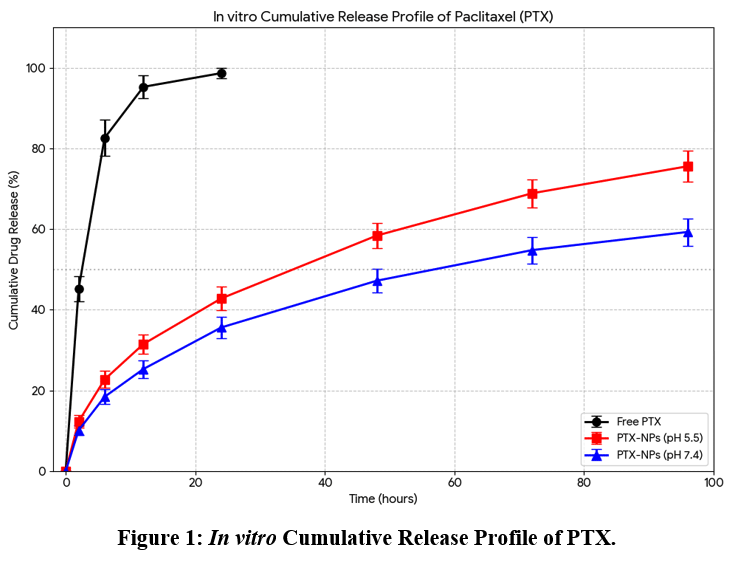 |
Figure 1: In vitro Cumulative Release Profile of PTX. Click here to View Figure |
Cellular Uptake and In vitro Cytotoxicity
The cellular uptake efficiency was evaluated in MDA-MB-231 (TNBC) cells utilizing Coumarin-6 encapsulated nanoparticles. Flow cytometric examination demonstrated a temporal enhancement in mean fluorescence intensity, with markedly elevated nanoparticle internalization relative to the free dye control. Confocal microscopic observations substantiated the pronounced perinuclear distribution of the fluorescent signal, demonstrating effective intracellular transport through endocytic mechanisms. The cytotoxic potential of the formulations was determined using MTT methodology. Unloaded nanoparticles demonstrated negligible cytotoxic effects even at elevated concentrations, validating the biocompatible nature of the polymer matrix. PTX-NPs displayed substantially enhanced (p < 0.05) cytotoxic activity against both MCF-7 and MDA-MB-231 cell lines relative to free PTX, exhibiting reduced IC50 values following 48 and 72-hour treatment periods. Specifically, the IC50 of PTX-NPs against MDA-MB-231 cells was 0.15 ± 0.03 µg/mL, in contrast to 0.48 ± 0.06 µg/mL for free PTX. This augmented cytotoxic activity may be ascribed to the controlled intracellular PTX release and enhanced cellular internalization of the nanoformulation, resulting in an extended therapeutic response.
Apoptosis, Cell Cycle Analysis, and Biocompatibility
To clarify the underlying mechanism responsible for augmented cellular demise, apoptosis detection and cell cycle evaluation were conducted using flow cytometry methodology. PTX-NP administration resulted in a markedly elevated proportion of total apoptotic populations (combining early and late apoptotic stages) within MDA-MB-231 cells (42.5%) relative to unencapsulated PTX (28.3%). Additionally, cell cycle examination demonstrated pronounced detention at the G2/M checkpoint. The fraction of cells residing in the G2/M phase reached 52.3% following PTX-NP exposure compared to 38.7% with free PTX treatment, substantiating that the nanocarrier system amplifies paclitaxel’s fundamental therapeutic mechanism. Ultimately, hemolytic evaluation indicated that PTX-NPs produced below 5% hemolysis at maximum tested concentrations, categorizing the formulation as non-hemolytic and suitable for intravenous delivery. The preparation additionally preserved consistent particle dimensions in plasma throughout a 24-hour period, demonstrating adequate plasma stability and resistance to protein-mediated aggregation phenomena.
Conclusion
This investigation successfully formulated and analyzed polymeric nanoparticles containing paclitaxel (PTX-NPs) to address the substantial clinical constraints of traditional paclitaxel preparations (Taxol®). The work tackled essential obstacles including limited water solubility, hypersensitive reactions caused by Cremophor EL, non-selective tissue distribution, and resistance to multiple drugs that presently restrict paclitaxel’s therapeutic effectiveness in breast cancer management, especially for aggressive phenotypes such as triple-negative breast cancer (TNBC).
Funding Sources
The author(s) received no financial support for the research, authorship, and/or publication of this article.
Conflict of Interest
The author(s) do not have any conflict of interest.
Data Availability Statement
This statement does not apply to this article.
Ethics Statement
This research did not involve human participants, animal subjects, or any material that requires ethical approval.
References
- Sung H, Ferlay J, Siegel RL, Laversanne M, Soerjomataram I, Jemal A, et al. Global Cancer Statistics 2020: GLOBOCAN Estimates of Incidence and Mortality Worldwide for 36 Cancers in 185 Countries. CA Cancer J Clin. 2021;71(3):209-249.
CrossRef - Bray F, Ferlay J, Soerjomataram I, Siegel RL, Torre LA, Jemal A. Global cancer statistics 2018: GLOBOCAN estimates of incidence and mortality worldwide for 36 cancers in 185 countries. CA Cancer J Clin. 2018;68(6):394-424.
CrossRef - Denkert C, Liedtke C, Tutt A, von Minckwitz G. Molecular alterations in triple-negative breast cancer-the road to new treatment strategies. Lancet. 2017;389(10087):2430-2442.
CrossRef - Schmid P, Adams S, Rugo HS, Schneeweiss A, Barrios CH, Iwata H, et al. Atezolizumab and Nab-Paclitaxel in Advanced Triple-Negative Breast Cancer. N Engl J Med. 2018;379(22):2108-2121.
CrossRef - Weaver BA. How Taxol/paclitaxel kills cancer cells. Mol Biol Cell. 2014;25(18):2677-2681.
CrossRef - Jordan MA, Wilson L. Microtubules as a target for anticancer drugs. Nat Rev Cancer. 2004;4(4):253-265.
CrossRef - Singla AK, Garg A, Aggarwal D. Paclitaxel and its formulations. Int J Pharm. 2002;235(1-2):179-192.
CrossRef - Gelderblom H, Verweij J, Nooter K, Sparreboom A. Cremophor EL: the drawbacks and advantages of vehicle selection for drug formulation. Eur J Cancer. 2001;37(13):1590-1598.
CrossRef - Weiss RB, Donehower RC, Wiernik PH, Ohnuma T, Gralla RJ, Trump DL, et al. Hypersensitivity reactions from taxol. J Clin Oncol. 1990;8(7):1263-1268.
CrossRef - Sparreboom A, van Tellingen O, Nooijen WJ, Beijnen JH. Nonlinear pharmacokinetics of paclitaxel in mice results from the pharmaceutical vehicle Cremophor EL. Cancer Res. 1996;56(9):2112-2115.
- Gottesman MM, Fojo T, Bates SE. Multidrug resistance in cancer: role of ATP-dependent transporters. Nat Rev Cancer. 2002;2(1):48-58.
CrossRef - Szakács G, Paterson JK, Ludwig JA, Booth-Genthe C, Gottesman MM. Targeting multidrug resistance in cancer. Nat Rev Drug Discov. 2006;5(3):219-234.
CrossRef - Peer D, Karp JM, Hong S, Farokhzad OC, Margalit R, Langer R. Nanocarriers as an emerging platform for cancer therapy. Nat Nanotechnol. 2007;2(12):751-760.
CrossRef - Davis ME, Chen ZG, Shin DM. Nanoparticle therapeutics: an emerging treatment modality for cancer. Nat Rev Drug Discov. 2008;7(9):771-782.
CrossRef - Danhier F, Ansorena E, Silva JM, Coco R, Le Breton A, Préat V. PLGA-based nanoparticles: an overview of biomedical applications. J Control Release. 2012;161(2):505-522.
CrossRef - Makadia HK, Siegel SJ. Poly Lactic-co-Glycolic Acid (PLGA) as Biodegradable Controlled Drug Delivery Carrier. Polymers (Basel). 2011;3(3):1377-1397.
CrossRef - Woodruff MA, Hutmacher DW. The return of a forgotten polymer—Polycaprolactone in the 21st century. Prog Polym Sci. 2010;35(10):1217-1256.
CrossRef - Kumari A, Yadav SK, Yadav SC. Biodegradable polymeric nanoparticles based drug delivery systems. Colloids Surf B Biointerfaces. 2010;75(1):1-18.
CrossRef - Maeda H, Wu J, Sawa T, Matsumura Y, Hori K. Tumor vascular permeability and the EPR effect in macromolecular therapeutics: a review. J Control Release. 2000;65(1-2):271-284.
CrossRef - Fang J, Nakamura H, Maeda H. The EPR effect: Unique features of tumor blood vessels for drug delivery, factors involved, and limitations and augmentation of the effect. Adv Drug Deliv Rev. 2011;63(3):136-151.
CrossRef - Bertrand N, Wu J, Xu X, Kamaly N, Farokhzad OC. Cancer nanotechnology: the impact of passive and active targeting in the era of modern cancer biology. Adv Drug Deliv Rev. 2014;66:2-25.
CrossRef - Byrne JD, Betancourt T, Brannon-Peppas L. Active targeting schemes for nanoparticle systems in cancer therapeutics. Adv Drug Deliv Rev. 2008;60(15):1615-1626.
CrossRef - Li Z, Zhao R, Wu X, Sun Y, Yao M, Li J, et al. Identification and characterization of a novel peptide ligand of epidermal growth factor receptor for targeted delivery of therapeutics. FASEB J. 2005;19(14):1978-1985.
CrossRef - Song S, Liu D, Peng J, Sun Y, Li Z, Gu JR, et al. Peptide ligand-mediated liposome distribution and targeting to EGFR expressing tumor in vivo. Int J Pharm. 2008;363(1-2):155-161.
CrossRef - Sudimack J, Lee RJ. Targeted drug delivery via the folate receptor. Adv Drug Deliv Rev. 2000;41(2):147-162.
CrossRef - Ganta S, Devalapally H, Shahiwala A, Amiji M. A review of stimuli-responsive nanocarriers for drug and gene delivery. J Control Release. 2008;126(3):187-204.
CrossRef - Mura S, Nicolas J, Couvreur P. Stimuli-responsive nanocarriers for drug delivery. Nat Mater. 2013;12(11):991-1003.
CrossRef - Hu CM, Fang RH, Wang KC, Luk BT, Thamphiwatana S, Dehaini D, et al. Nanoparticle biointerfacing by platelet membrane cloaking. Nature. 2015;526(7571):118-121.
CrossRef - Fang RH, Kroll AV, Gao W, Zhang L. Cell Membrane Coating Nanotechnology. Adv Mater. 2018;30(23):e1706759.
CrossRef - Green MR, Manikhas GM, Orlov S, Afanasyev B, Makhson AM, Bhar P, et al. Abraxane, a novel Cremophor-free, albumin-bound particle form of paclitaxel for the treatment of advanced non-small-cell lung cancer. Ann Oncol. 2006;17(8):1263-1268.
CrossRef - Gradishar WJ, Tjulandin S, Davidson N, Shaw H, Desai N, Bhar P, et al. Phase III trial of nanoparticle albumin-bound paclitaxel compared with polyethylated castor oil-based paclitaxel in women with breast cancer. J Clin Oncol. 2005;23(31):7794-7803.
CrossRef - Zhang Z, Mei L, Feng SS. Paclitaxel drug delivery systems. Expert Opin Drug Deliv. 2013;10(3):325-340.
CrossRef - Wang H, Cheng G, Du Y, Ye L, Chen W, Zhang L, et al. Hypersensitivity reaction studies of a polyethoxylated castor oil-free, liposome-based alternative paclitaxel formulation in rats and dogs. Int J Nanomedicine. 2013;8:1349-1358.
- Bernabeu E, Cagel M, Lagomarsino E, Moretton M, Chiappetta DA. Paclitaxel: What has been done and the challenges remain ahead. Int J Pharm. 2017;526(1-2):474-495.
CrossRef - Sofias AM, Dunne M, Storm G, Allen C. The battle of “nano” paclitaxel. Adv Drug Deliv Rev. 2017;122:20-30.
CrossRef
 PlumX:
  Views: 1242 Views
  PDF Downloads: 958
 Accepted on: 19 Feb 2026
Second Review by: Dr. Narendra Dubey
Final Approval by: Dr. B. K Sharma


ISSN Online: 2231-5039